The comp.publish.* groups — electronic publishing
comp.publish.* was Usenet’s branch for the production side of publishing: electronic prepress, the hardware and software of CD-ROM publishing, and general electronic-publishing questions. The gateway’s roster carried no group page under this branch, and the address is preserved here because it is still cited from outside; the groups the branch currently lists are comp.publish.prepress, comp.publish.cdrom.hardware, comp.publish.cdrom.software and comp.publish.electronic.misc.
On this page
- What the record lists today
- How the branch got its shape
- Desktop publishing, dated
- Prepress: the half the public never saw
- Screening, dot gain and the proof
- The font wars
- Formats for moving a page between programs
- Colour management and the ICC
- CD-ROM publishing: the standards and the years
- Premastering, one-off recording and the hardware arguments
- The multimedia boom and what the web did to it
- Who was in the rooms
- What became of the branch, and what this page does not carry
What the record lists today
The place to start with a branch like this one is the paperwork rather than the memory. The Internet Systems Consortium distributes the two files with which Usenet describes itself: the master newsgroups list, which pairs every group name it knows of with a one-line description, and the active file, which records each group's posting status. Checked against those files while this page was written, the list carried 45,003 group names across 479 top-level hierarchies, 677 of them under comp. Exactly four begin with comp.publish, and these are their own descriptions, quoted as the file gives them:
comp.publish.prepress— Electronic prepress.comp.publish.cdrom.hardware— Hardware used in publishing with CD-ROM.comp.publish.cdrom.software— Software used in publishing with CD-ROM.comp.publish.electronic.misc— General electronic publishing issues.
All four are flagged y in the active file: ordinary unmoderated groups to which posting is permitted. The article numbers shipped beside them are placeholders — the same pair of numbers appears against all 45,003 entries — and should not be read as a measure of traffic. These files list the names a hierarchy's administrators still maintain, which is not the same question as whether any given server carries the articles.
There is no comp.publish group in that list, and no comp.publish.cdrom or comp.publish.electronic sitting above its children either. This is a branch with four leaves and no trunk, which is unremarkable in comp.*, where the middle levels of a name are classification rather than address. The control-message archive records one attempt on the trunk, and it was not a serious one: on 16 June 1998 a newgroup message for a bare comp.publish was emitted by a Netscape Collabra server at Hewlett-Packard, and the moderator of news.announce.newgroups answered it four times over the following month with rmgroups saying that comp.publish was "widely considered a bogus newsgroup given that it has not been approved by accepted USENET group creation procedures", and noting that comp.publish is the name of a node in the namespace and that the removal did not apply to its subgroups. What the shape does mean is that this page is a hub for a branch and not a page about a group, and it says so plainly rather than pretending to a coverage it has not got.
The register also keeps a record of subtraction. Seven groups have been created under a comp.publish name by vote. Three of them — comp.publish.cdrom.multimedia, comp.publish.electronic.developer and comp.publish.electronic.end-user — were created alongside the survivors and removed together in 2011, in circumstances the last section of this article sets out. The branch as it stands is what was left after that clear-out.
How the branch got its shape
Unusually for a small corner of comp.*, the whole administrative history survives. The ISC mirrors the archive of news.announce.newgroups, and for this branch it is close to complete: three separate proposals, their calls for votes, their tallies and the control messages that created the groups.
The CD-ROM groups came first. On 11 March 1993 Henry Manaster, posting from Yeshiva University in New York, filed a Request for Discussion for three groups named comp.cdrom.pub.hardware, comp.cdrom.pub.software and comp.cdrom.pub.multimedia, with Jay Marme at Indiana University as co-proposer. His rationale was that the existing venues — alt.cd-rom and comp.multimedia — did not have publishing as their focus, and that a mailing list was not, and ought not be, a replacement for a newsgroup. A second RFD on 30 March recorded that the name had been reconsidered: he had been advised that a comp.publish.cdrom hierarchy would be more appropriate than comp.cdrom.pub and, in his own words, decided to follow their sage advice. The name change, he added, was the only difference between the two documents. That advice is the reason the branch exists under this name at all; had it gone the other way, this page would be about comp.cdrom.*.
Voting closed on 21 May 1993 with 294 ballots cast. The software group passed 240 to 38, hardware 234 to 38 and multimedia 227 to 45. The result was published late — the votetaker was away from the network for the whole of June, and the moderator of news.announce.newgroups appended a note saying so — and the formal RESULT article appeared on 8 July 1993. The newgroup control messages for all three went out on 15 July 1993.
Prepress followed nine months later, and its founding document is worth quoting because it names the constituency exactly. On 7 February 1994 Sterling Ledet posted a thirteen-line RFD asking for a group serving the color trade shops, service bureaus and commercial printers who are integrating electronics technology, one that would support multiple platforms including Unix, Macintosh and Windows and would also offer support for scanners and imagesetters. The Call for Votes was handled by Ian Jackson on behalf of the Usenet Volunteer Votetakers, and its charter listed the intended subject matter: advice, tips, hints and troubleshooting for users of electronic prepress equipment, reviews of software, hardware and peripherals, the application of Kodak Photo CD technology, and new products and technology in the field — the charter's own examples being Live Picture, stochastic screening, short-run colour printing, OPI and Hi-Fi Color — together with announcements of important trade shows. The audience, it added, was expected to be both users and vendors of electronic prepress equipment, and those with a general interest in the subject.
comp.publish.prepress passed 360 to 24 with three abstentions, on 387 valid ballots, and the newgroup message was issued on 18 April 1994. It remains the largest majority in the branch's record, and the ratio is worth noting: the rule of the period required twice as many yes votes as no votes and at least a hundred more of the former than the latter, and neither test was remotely in question.
The third proposal came from Germany. On 9 March 1995 Mark Torben Rudolph and Mike Gilpin proposed comp.publish.electronic.misc, .developer and .end-user, for what they called the creation of serious publications in electronic form — the publication of documents, images and sound in a digital format for use with computer-based viewing applications. Their rationale was a complaint about both neighbours: the comp.text hierarchy had no suitable forum, desktop publishing being only a specific subset of electronic publishing; and the comp.publish.cdrom groups, they wrote, typically discussed games software and suffered from a considerable amount of noise. The vote, taken by Kenneth Herron, returned 207 valid ballots and six invalid ones on 21 June 1995 — 171 to 27 for misc, 173 to 25 for developer, 168 to 28 for end-user — and the three groups were created on 19 July 1995.
The boundaries the branch had to respect are visible in the crosspost lines of those proposals, which read like a map of the neighbourhood. Markup and word-processing questions belonged to comp.text.* — comp.text.desktop, created on 23 May 1991, was the general desktop-publishing group, with comp.text.frame, comp.text.interleaf, comp.text.sgml and comp.text.tex around it. Image manipulation and the drawing applications belonged to comp.graphics.*, which by convention put applications under comp.graphics.apps: Photoshop, PageMaker, Corel and Paint Shop Pro each had a group there, and all four are still listed. The page description language had its own home in comp.lang.postscript and typefaces theirs in comp.fonts. Devices as devices went to comp.periphs.printers, comp.periphs.scanners and comp.periphs.scsi. Where a manufacturer ran its own branch, the questions went there instead; those hierarchies are described on this directory's Adobe and Microsoft hub pages, and the comp.* hierarchy itself on its own page.
What was left for comp.publish.* after all that subtraction was the production line: not the design of a page, not the drawing of a picture and not the internals of a language, but the business of getting a job from a designer's disk onto paper or onto a pressed disc without it failing somewhere in between.
Desktop publishing, dated
The field these groups served is usually said to have been created by three products arriving within months of each other in the middle 1980s, and because the story is retold so often the dates are worth setting out separately.
The first was a language. PostScript was written at Adobe between 1982 and 1984 by John Warnock, Charles Geschke, Doug Brotz, Ed Taft and Bill Paxton, and was released to the market in 1984. It described a page as a program rather than as a grid of dots, which meant the same file could be rendered at whatever resolution the output device happened to have. The second was a printer. Apple announced the LaserWriter at its annual shareholder meeting on 23 January 1985 and shipped it from that March at 6,995 US dollars — the first laser printer to use the PostScript language, driven by a Motorola 68000 running at 12 MHz with 512 KB of workspace memory and a megabyte of frame buffer, using the same 300 dots-per-inch Canon CX engine as Hewlett-Packard's LaserJet, and carrying four PostScript type families in ROM: Times, Helvetica, Courier and Symbol. Because it spoke AppleTalk it could be shared between as many as sixteen Macintoshes, which brought the per-user cost of a seven-thousand-dollar machine under 450 dollars. The third was an application: Aldus PageMaker 1.0, announced the same day as the LaserWriter and shipped for the Macintosh in July 1985.
The phrase itself is attributed to Aldus's founder Paul Brainerd, who wanted a marketing catchphrase for the small size and relative affordability of the combination compared with the commercial phototypesetting equipment of the day. Adobe's own corporate history, and the dating of Acrobat and PDF, belong to this directory's Adobe hub and are not retold here.
What the conjunction displaced had itself displaced something else only a generation earlier. Mass-market typesetting had been done in hot metal since the late nineteenth century — Linotype, Intertype and Monotype machines casting type from molten alloy — and it was displaced in turn by phototypesetting and then by electronic processes over the decades between the 1950s and the 1980s. Phototypesetting, or cold type, replaced the metal with light: the Photon Corporation of Cambridge, Massachusetts developed equipment from 1949 based on the Lumitype of René Higonnet and Louis Moyroud, the Lumitype-Photon set a complete published book in 1953 and did newspaper work in 1954, and Mergenthaler, Monotype, Compugraphic, Alphatype and Varityper followed with machines of their own. From the middle 1960s a further generation projected characters from a cathode-ray tube instead of flashing light through a film negative; Linotype's Linotron 1010 of 1966 was among the first. The output of all of these was a strip of photographic paper or film, which somebody then cut up and pasted onto a board.
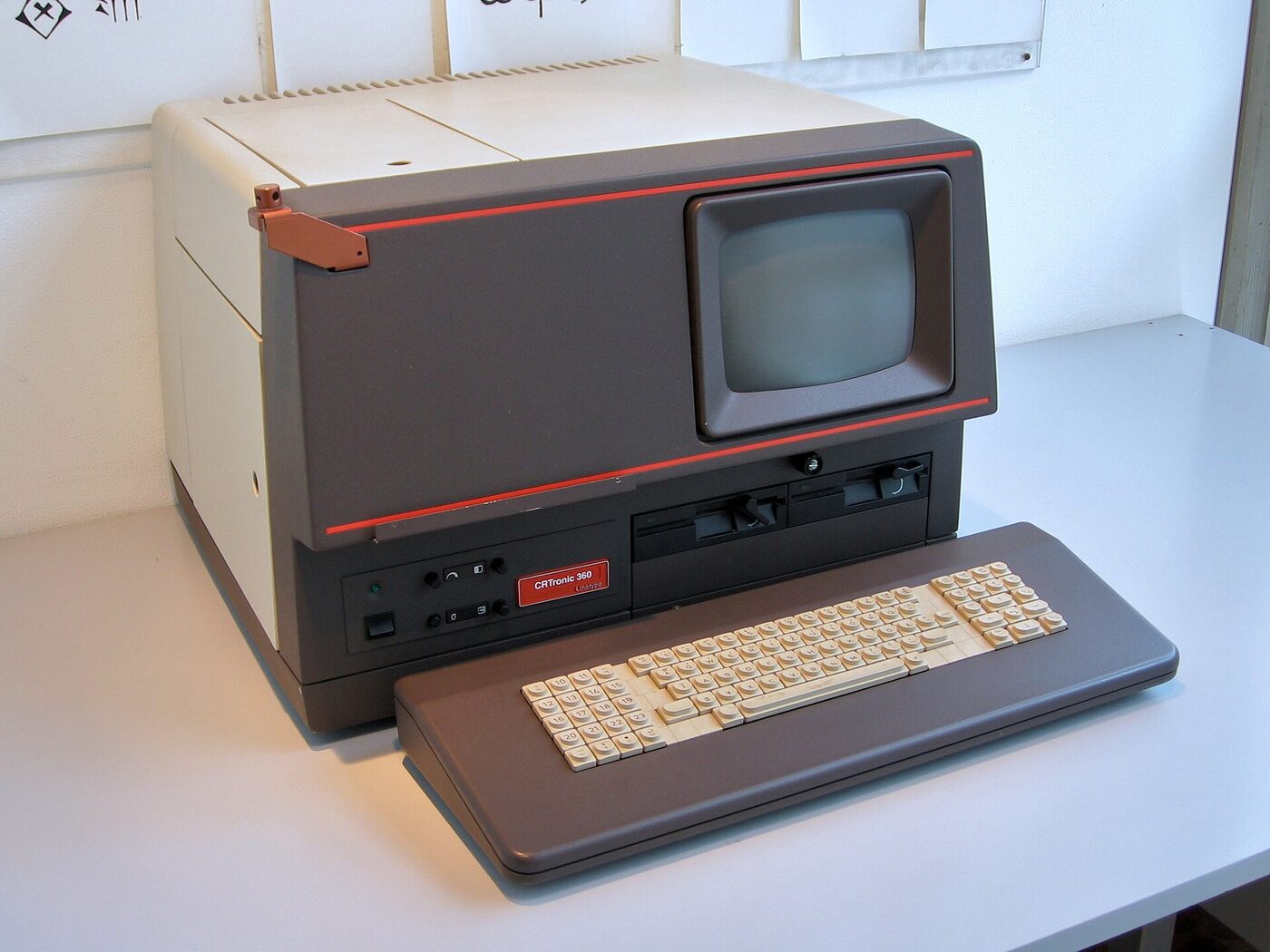

That is the labour the LaserWriter and PageMaker attacked. A page-layout program with a pasteboard metaphor let one person set type, place pictures and see the result, and a PostScript printer let them proof it on their desk and then send the identical file to a high-resolution device elsewhere. The rest of the decade filled in the market: Ventura Publisher arrived for MS-DOS machines in 1986, distributed worldwide by Xerox, working from tags and style sheets rather than a pasteboard and therefore suited to manuals and long documents; QuarkXPress was released for the Macintosh on 31 March 1987, added its XTensions plug-in interface in 1989, reached Windows with version 3.1 in 1992 and is estimated to have held about 95 per cent of the professional page-layout market through the 1990s. PageMaker, having lost almost the entire professional market by 1998, was superseded by InDesign from 1999.
Setting type by markup rather than by layout took a different road entirely, and the group for that is described on this directory's comp.text.tex page. The prepress world and the TeX world shared a subject and almost nothing else, including their vocabularies.
Prepress: the half the public never saw
Prepress is everything between a finished layout and a printing plate, and for most of the twentieth century almost none of it was visible outside the trade. Before computers reached it, a job arriving at a printer was camera-ready copy: a physical board. A large-format process camera photographed it onto film; the film was assembled by hand on a light table — stripping in American usage, planning in British — with each element positioned so that the several films for the several inks would register with one another; and the assembled film was laid on a coated plate and exposed, the unexposed coating washing away to leave the image. Stripping was skilled work measured in hours per form, and digital methods made it first less necessary and then impossible: a page written straight onto a plate cannot be adjusted with a sharp knife.
Electronic prepress replaced the camera and eventually the film. The machine that did it was the imagesetter, a high-resolution output device that wrote a page directly onto photographic film from a digital file — the workflow now called computer to film. Each ink got its own piece of film and its own plate; between one and six colours was typical, twelve or more possible in a single production run. Behind the imagesetter sat the raster image processor, the RIP: the interpreter that turned a page description into the grid of dots the exposure head could write. Adobe's early finances were built on that interpreter rather than on software sold over a counter — the PostScript royalty was five per cent of a printer's list price, 350 dollars on the LaserWriter's 6,995, and such royalties provided nearly all of the company's income in its first years.
Because imagesetters cost more than most design studios could justify, an intermediary trade grew up around them. The service bureau took a designer's file, ripped it, imaged the film and handed it on, and it is the service bureau that explains a great deal of what a group like comp.publish.prepress was for. A file that printed correctly on a 300 dot-per-inch laser proof could fail on a 2,400 dot-per-inch imagesetter for a dozen reasons — a font that was not embedded and had been silently substituted, an image linked rather than included, a colour defined as a spot when the job was to be printed in process, a nested EPS the RIP could not parse — and the cost of finding out was measured in film, in bureau time and occasionally in a spoiled press run.
Scanning was the other half of the input problem. High-end colour work used drum scanners, in which the original is mounted on a rotating acrylic cylinder and read by photomultiplier tubes; the type descends from the first drum scanner, patented by Alexander Murray and Richard Morse at Eastman Kodak in 1937 for exactly this purpose, colour separation for printing presses. The first scanner to store its images digitally onto a computer was also a drum scanner, built in 1957 at the United States National Bureau of Standards by a team led by Russell Kirsch. Photomultipliers hold shadow detail that charge-coupled devices lose, which is why drum scanners survived the arrival of cheap flatbeds at the top of the market long after they had vanished from the middle of it.
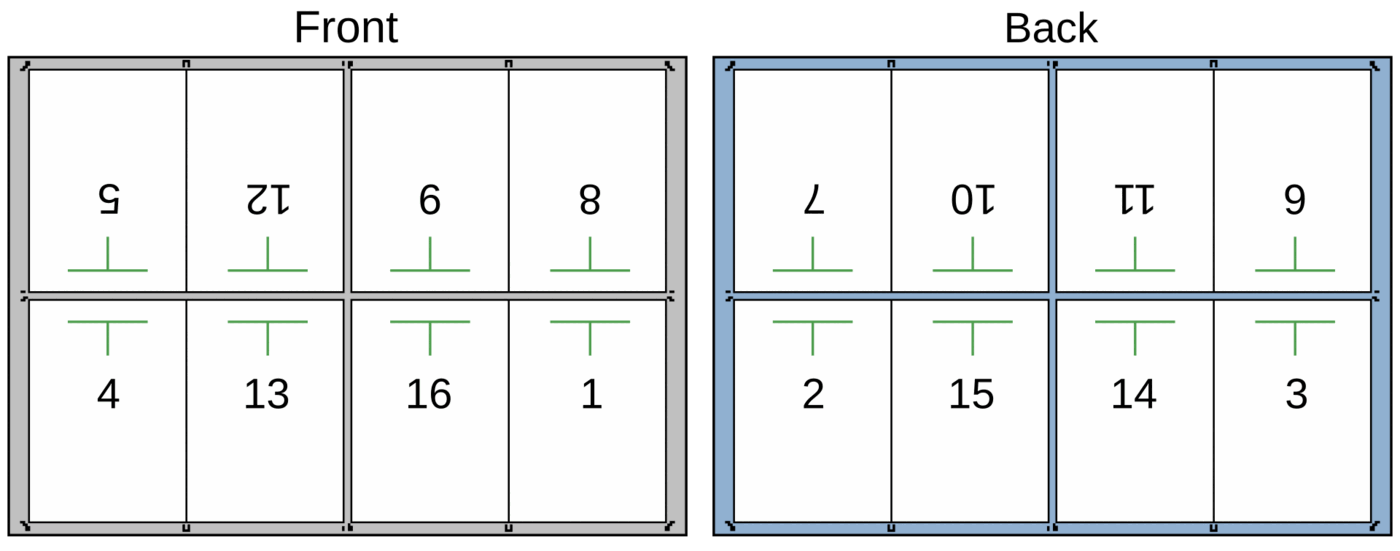
Between the scan and the plate came the operations that a designer never saw and a prepress operator did all day. Colour separation split a composite image into the process inks — cyan, magenta, yellow and black. Trapping compensated for the fact that four plates never register perfectly: the operation deliberately overlaps adjacent colours so that a misregistration shows as a slightly thickened edge instead of a white gap, and the old trade terms for the two directions of overlap were chokes and spreads. Imposition arranged the pages on the press sheet in the order that folding and trimming would put them back into sequence — eight pages to each side of a sheet makes a sixteen-page signature — with an allowance for creep as the inner leaves of a folded section push outwards.

The last step to go digital was the plate itself. Computer to plate removes a whole generation from the process, writing the image onto the plate with a laser and eliminating the film and its chemistry along with the scratches, the exposure variations and the roughly two per cent tolerance an imagesetter carries. The change did not merely save a step; it altered what could be argued about, because a job that never becomes film cannot be corrected on a light table.
Screening, dot gain and the proof
Printing presses cannot print grey. They print ink or no ink, and every intermediate tone in every printed photograph is an illusion produced by halftone screening: a pattern of dots too small to resolve, varying in size so that the eye integrates them into a tone. The idea is credited to William Fox Talbot, who suggested photographic screens or veils in an 1852 patent; the first printed halftone photograph was an image of Prince Arthur published on 30 October 1869, Frederic Ives of Philadelphia patented the first truly successful commercial method in 1881, and Georg Meisenbach patented the Autotypie process in Germany the following year.
Everything a prepress operator argued about follows from that. The screen ruling, measured in lines per inch, sets how fine the pattern is, and it is chosen for the paper and the press rather than for the picture: newsprint takes a coarse screen, coated stock a fine one. Colour work needs four screens at once, and if they are laid at the same angle they interfere and produce a moiré pattern, so the industry standardised on a set of known angles at which the four dots group into small rosettes instead. Dot gain is the tendency of a halftone dot to print larger than it was specified: a pattern covering 30 per cent of the area on film may cover 50 per cent on paper, and the effect is worst in the midtones, between about 40 and 60 per cent, above which the dots begin to touch and the perimeter available to spread from is reduced. On top of the mechanical gain sits the Yule–Nielsen effect, described in a 1951 paper, in which light scattering inside the paper makes dots absorb more light than their size accounts for — optical dot gain, which is not strictly gain at all, since the dot has not changed size.
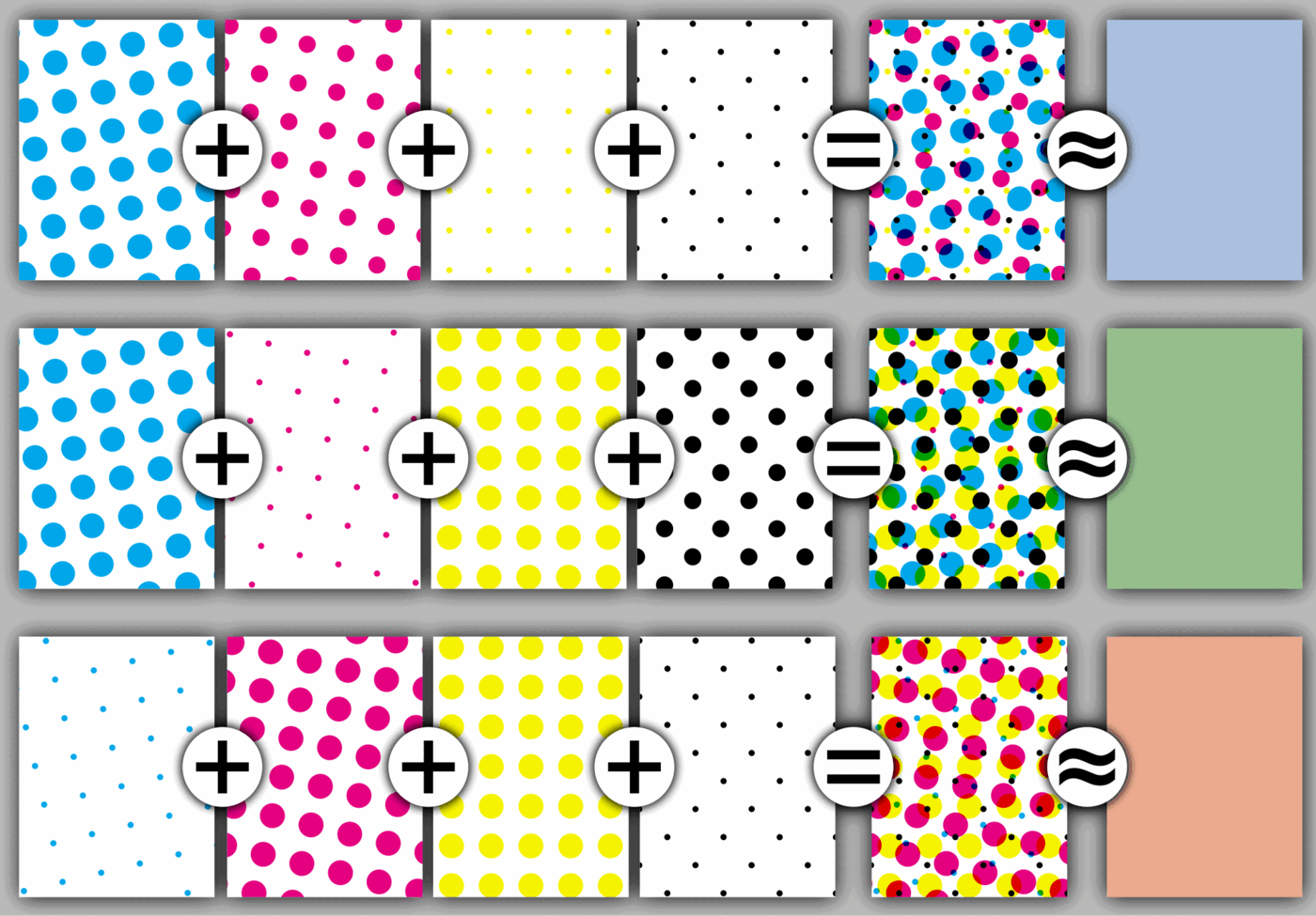

An alternative existed and was named in the prepress group's own charter: stochastic, or frequency-modulated, screening, which keeps the dot size fixed and varies the density of a pseudo-random distribution instead. It eliminates screening moiré, produces no rosettes and gives a wider colour gamut, at the price of dots so small that plate-making from film demands special care and cleanliness. That is exactly why it was a live subject in 1994 and became routine later: its revival is generally credited to computer to plate, which removed the step that made it difficult.
Because none of this can be judged by looking at the file, proofing was its own discipline. A soft proof is a simulation on a calibrated display; a hard proof is a physical print made to predict the press; and a contract proof is the one that serves as an agreement between customer and printer, settling in advance what the customer has agreed to accept. When a printed sheet and a signed proof disagree, somebody pays, and a great deal of the technical apparatus described in the rest of this article exists to make them agree.
The font wars
Typefaces were the branch's most reliable source of trouble, and for a decade the reason was a standards dispute conducted between three companies with the whole industry as collateral. The 1990s were an era of aggressive competition in font technology, and the period is still referred to as the font wars.
Adobe introduced two font formats with PostScript in 1984. Type 3 fonts allowed all the sophistication of the PostScript language but had no standardised approach to hinting. Type 1 used a simplified set of drawing operations and added hints — instructions that help low-resolution rendering, keeping stems even and letters legible when a curve is written onto a coarse grid of pixels. Adobe kept the details of the hinting scheme undisclosed, used an encryption scheme to protect Type 1 outlines and hints, and nevertheless required anyone working with the format to license its technology. The scheme was reverse-engineered quickly enough by others in the industry, but the licence remained, and its cost was considered very high.
Apple's response was to build its own outline format, developed under the codenames Bass and then Royal and released as TrueType with the launch of Mac System 7 in May 1991. Its first outline fonts deliberately replicated the LaserWriter's PostScript set, and Apple licensed TrueType to Microsoft, taking in exchange a licence to TrueImage, a PostScript-compatible page description language Microsoft owned. Microsoft put TrueType into Windows 3.1 and worked with its contractors at Monotype on a matching set of faces — Times New Roman, Arial and Courier New — made to carry the same character widths as their PostScript counterparts so that a document could be switched between them without reflowing.
Adobe answered on two fronts. Adobe Type Manager scaled Type 1 fonts smoothly on the monitor at any point size, which had previously required a separate screen bitmap for each size, and became a practical necessity for anyone doing this work at all. And, immediately following the announcement of TrueType and its licence to Microsoft, John Warnock gave a speech in which he claimed Apple and Microsoft were selling snake oil and announced that the Type 1 format was open for anyone to use; Adobe then published the Type 1 font format specification, opening a format it had licensed rather than documented since 1984. The effect, whatever the intent, was that font development tools such as Fontographer added the ability to create Type 1 fonts, and font design underwent an explosion.
The dispute cost the working world a decade of incompatibility. A prepress shop received Type 1 fonts from designers and TrueType fonts from clients, had to send the right ones to the service bureau with the job, and had to hope that the RIP resolved the same name to the same outline that the layout had been made with. Substitution was silent and its consequences arrived on film. It was resolved by merger rather than by victory: Microsoft's TrueType Open of 1994 became OpenType in 1996, when Adobe joined the effort and support for Type 1 glyph outlines was folded in, and the format reached formal approval as an ISO standard, ISO/IEC 14496-22, the Open Font Format, in March 2007. Apple's parallel extensions — TrueType GX in 1994, which offered font axes allowing a face to be adjusted smoothly from light to bold — and Adobe's competing multiple master fonts both failed to find an audience, and their idea returned in OpenType 1.8's variable fonts.
Usenet's dedicated typeface group was comp.fonts, which is still listed; the font questions that reached comp.publish.prepress were the production ones — embedding, substitution, encoding and what the imagesetter would actually do. A quite different font question, arising from a typesetting system that describes its own letterforms, is covered on the comp.text.tex page.
Formats for moving a page between programs
The other permanent department of the subject was interchange: how a picture made in one program is placed in a page made in another and survives being sent to a device made by a third.
Encapsulated PostScript, developed as early as 1987 by Adobe's founders together with Aldus, was the workhorse. An EPS file is a self-contained PostScript program describing one image, carrying a structuring comment that declares the rectangle the image occupies so that a layout program can position it without being able to render its contents. Since almost nothing in 1987 could render PostScript on screen, an EPS normally carried a low-resolution preview as well — and the mechanism differed by platform, which was a fertile source of confusion. On the Macintosh the PostScript went in the data fork and a PICT preview in the resource fork, so the two travelled as one file; on Windows a TIFF preview was encoded into the header section of the same file, which caused printing errors in any program that could not extract only the PostScript; on Unix an EPSI carried an ASCII-encoded preview bitmap that could only be black and white. An application unable to interpret a preview would typically show an empty box on screen and print the file correctly anyway, which is a description of a normal day's work.
TIFF carried the pictures. It was created by Stephen Carlsen, an engineer at Aldus, for use in desktop publishing, first released in September 1986, and reached revision 6.0 in June 1992 — the version that introduced a distinction between a baseline every implementation had to support and extensions it might not, an admission that the format had accumulated enough optional behaviour to earn the trade joke that TIFF stood for thousands of incompatible file formats. The prepress industry took its own subset, TIFF/IT, standardised as ISO 12639. Quark introduced Desktop Colour Separation, an enhanced EPS in which a CMYK graphic is separated into five files, a main file and one pre-separation file for each process colour, so that the separations were fixed before the job ever reached the RIP. The Open Prepress Interface addressed the same problem from the other end, letting a layout carry low-resolution placeholders while the high-resolution originals stayed elsewhere and were substituted at output time.
PostScript itself moved twice more. Level 2 arrived in 1991 with in-RIP separations, image decompression and support for composite fonts; PostScript 3 came at the end of 1997 with smooth shading at up to 4,096 shades of grey rather than the 256 of Level 2, and DeviceN, a colour space allowing additional ink colours to be added to composite colour pages — capabilities aimed squarely at displacing the proprietary colour electronic prepress systems then still widely used for magazine production.
PDF belongs in this list as one interchange format among several, and specifically in its constrained printing form: PDF/X, first issued as ISO 15930-1:2001, whose earliest conformance level requires that all fonts be embedded and all images be CMYK or spot colours, and which was the profession's way of turning a general-purpose document format into something a printer could accept blind. The history of the format itself, its release to ISO and the product built on it are dealt with on this directory's Adobe hub, with a page reserved for Acrobat; they are not retold here.
Colour management and the ICC
Colour was the subject on which the branch's two halves met, because a photograph scanned on one device, judged on a second and printed on a third has to mean the same thing three times, and by default it does not. A monitor mixes light and a press mixes ink; their gamuts overlap but neither contains the other; and until the middle 1990s every manufacturer's answer to the mismatch was its own.
The body that standardised the answer was the International Color Consortium, formed in 1993 by eight vendors — Adobe, Agfa, Apple, Kodak, Microsoft, Silicon Graphics, Sun Microsystems and Taligent — to create an open, vendor-neutral colour management system that would function transparently across all operating systems and software packages. Of the eight, Silicon Graphics, Sun and Taligent have since left, which is a fair summary of the decade. The mechanism is the ICC profile: a set of data characterising how a particular device's colours relate to a device-independent connection space, so that a transformation between any two devices can be composed from their two profiles rather than written by hand. The version 2 specification was issued as ICC.1:2001-04 and version 4 in December 2001; the format is published by ISO as ISO 15076-1, and is referenced in turn by the prepress standards, TIFF/IT and PDF/X among them.
What the profiles did not remove was judgement. A profile states what a device can do; it does not decide what to do when a colour is asked for that the device cannot produce, and the rendering intent that governs that choice — closest possible colour matching, or remapping the entire colour range to fit the smaller gamut — is a matter of taste as much as of measurement. Nor did profiles displace the older apparatus: spot colours mixed to a swatch book, printed reference charts, and a spectrophotometer to check that the ink on the sheet matched the number on the docket. A colour-managed workflow was a system with a great many places to go wrong, each of which produced a characteristic complaint, and the complaints were the traffic.
CD-ROM publishing: the standards and the years
The CD-ROM half of the branch had two groups to itself, and it earned them, because publishing a disc in the 1990s meant negotiating a stack of standards that had been designed by different committees for different purposes and then made to coexist.
The physical format came first. Philips and Sony published the audio compact disc specification on 19 September 1980, in the document universally known as the Red Book, and adapted it for arbitrary data in 1983 in the Yellow Book, later standardised as ISO/IEC 10149. The Rainbow Books that followed are the period's whole vocabulary in one shelf: Green in 1986 for CD-i, Orange in 1990 for the recordable and magneto-optical formats, Beige in 1992 for Kodak's Photo CD, White in 1993 for Video CD, Blue in 1995 for the Enhanced Music CD that put audio and data tracks on one disc. CD-ROM XA, an extension allowing audio and data sectors to be interleaved, was published by Philips and Sony in 1991. The CD-ROM itself was announced in 1984 and introduced by Denon and Sony at the first Japanese COMDEX in 1985; the first drive released to the public was Philips's CM 100 in July 1985. One of the first products made available to the public on CD-ROM was the Grolier Academic Encyclopedia, presented at the Microsoft CD-ROM Conference in March 1986.
The Yellow Book, however, said nothing about how to arrange data into files, with the predictable result that every early publisher invented its own scheme. The fix is the standard the group's readers lived inside. In November 1985 representatives of a dozen or so companies — Apple, AT&T, Digital Equipment, Hitachi, LaserData, Microsoft, 3M, Philips, Sony and others among them — gathered at the High Sierra Hotel and Casino at Stateline, Nevada, and became the High Sierra Group. Their proposal was published in May 1986, was adopted with changes by ECMA as ECMA-119 in December 1986, and was submitted for fast-tracking to ISO, where it was accepted as ISO 9660 in 1988. It is a deliberately austere design: a hierarchy no more than eight directories deep, and, at its most conservative interchange level, file names of eight characters with a three-character extension. That austerity was the point — it defined a minimal set of file and name attributes that every operating system of 1986 could be relied on to honour — and it was also the thing everybody spent the next fifteen years working around.
The workarounds are a catalogue of the era's platform politics. Rock Ridge, the Rock Ridge Interchange Protocol drafted as IEEE P1282, added POSIX file-system semantics and long names for Unix. Joliet, specified and endorsed by Microsoft and supported by every version of Windows from Windows 95 and Windows NT 4.0 onwards, added a second set of file names encoded in Unicode and stored in a supplementary volume descriptor that ISO 9660 readers safely ignore. Romeo, from Adaptec, wrote long names of up to 128 characters straight into the primary volume descriptor in whatever code page the machine happened to be using, with results abroad that were exactly as bad as that sounds. El Torito, announced in November 1994 and first issued in January 1995 as a joint proposal by IBM and Phoenix Technologies, made discs bootable. And the Apple ISO 9660 extensions carried the file characteristics that the classic Mac OS could not do without, resource forks among them.
Which brings up the problem that defined commercial disc publishing: one pressing had to mount on more than one platform. The answer was the hybrid disc, carrying an ISO 9660 volume and an Apple HFS volume on the same pressing. This works because the headers that define the contents sit in different places: the ISO 9660 primary volume descriptor begins 32,768 bytes into the disc, while an Apple partition map, if present, begins 512 bytes in, and where there is no partition map the HFS master directory block begins at 1,024. Each system finds its own and ignores the other. In a true or shared hybrid, files common to both are stored only once, with one file system's directory pointing at content held in the other's area; done badly, the same files are written twice and a disc that should have fitted does not. Publishers who wanted one SKU for both platforms cared about this a great deal, and the arithmetic was unforgiving: a 74-minute disc holds 650 mebibytes of Mode 1 data and no more.
The stack kept growing. Kodak announced Photo CD in 1990 and the first products, scanners for processing labs and players for consumers, became available in 1992; at a then relatively low cost of three dollars an image it became a common route from film into a prepress workflow, and it is named in comp.publish.prepress's charter for that reason rather than as a consumer product. The Optical Storage Technology Association released the first revision of the Universal Disk Format on 24 October 1995, a profile of ISO/IEC 13346 well suited to incremental updates on write-once and rewritable media. And the format that ended the argument arrived at the end of the same year: after a standards contest between the Multimedia Compact Disc and Super Density camps, Philips and Sony agreed on 15 September 1995 to unify with the Super Density backers, the format's details were finalised on 8 December 1995, and DVD launched in Japan on 1 November 1996 with 4.7 gigabytes on a single-sided single-layer disc — some seven times a CD-ROM, on a disc the same size.
Premastering, one-off recording and the hardware arguments
Between a directory full of files and a pressed disc lie two steps that the hardware and software groups divided between them. Premastering is the construction of the disc as an object: deciding the volume layout, choosing which file systems to write and how they will share content, ordering the files so that the sequences a title reads together sit near one another on a medium whose head takes an appreciable time to seek, and building the image. Mastering proper — cutting a glass master, growing a stamper, pressing polycarbonate — was done by a plant, in quantities that made sense only in the thousands.
Which is why one-off recording mattered so much and why it took so long to become ordinary. The recordable disc was originally named CD Write-Once, CD-WO, and is specified in Part II of the Orange Book by Philips and Sony; Taiyo Yuden produced the first CD-R media in 1988. The recorders were another matter. Systems available in 1990 were similar to the washing-machine-sized Meridian CD Publisher, built around a two-piece rack-mount Yamaha PDS audio recorder costing 35,000 dollars, and that figure did not include the external error-correction circuitry, the SCSI hard-drive subsystem and the MS-DOS control computer the thing needed to work at all. By 1992 the cost of a typical recorder was down to ten or twelve thousand dollars. In September 1995 Hewlett-Packard introduced its model 4020i, manufactured by Philips, at 995 dollars: the first recorder to cost less than a thousand. Between 1990 and 1995, in other words, the price of the machine fell by a factor of about thirty-five, and the constituency for a newsgroup about using one grew accordingly.

Recording in that period was also unforgiving in a way now hard to recall. Once writing has started it cannot be stopped and resumed flawlessly, so a machine whose buffer ran dry produced a disc whose data was invalid, and the blank was gone. Verifying the result meant reading it back on other people's drives, which did not all behave alike, and a disc that mounted on the recorder's own drive and nowhere else was a recognised category of failure.
The hardware group's remit was set out at length in its founding proposal, and the list is a fair index of what the questions were about: CD-R equipment, data-capture hardware, scanners, video and audio capture hardware, networking hardware, MIDI hardware, Photo CD hardware, publishing systems, CD-i and DVI hardware, compression and encryption hardware, and keyboarding. Explicitly excluded were reviews of and questions about already published discs, and requests for help installing an ordinary drive; the exclusion was carried unchanged through both requests for discussion and all three calls for votes, so a reader of the archive meets it five times.
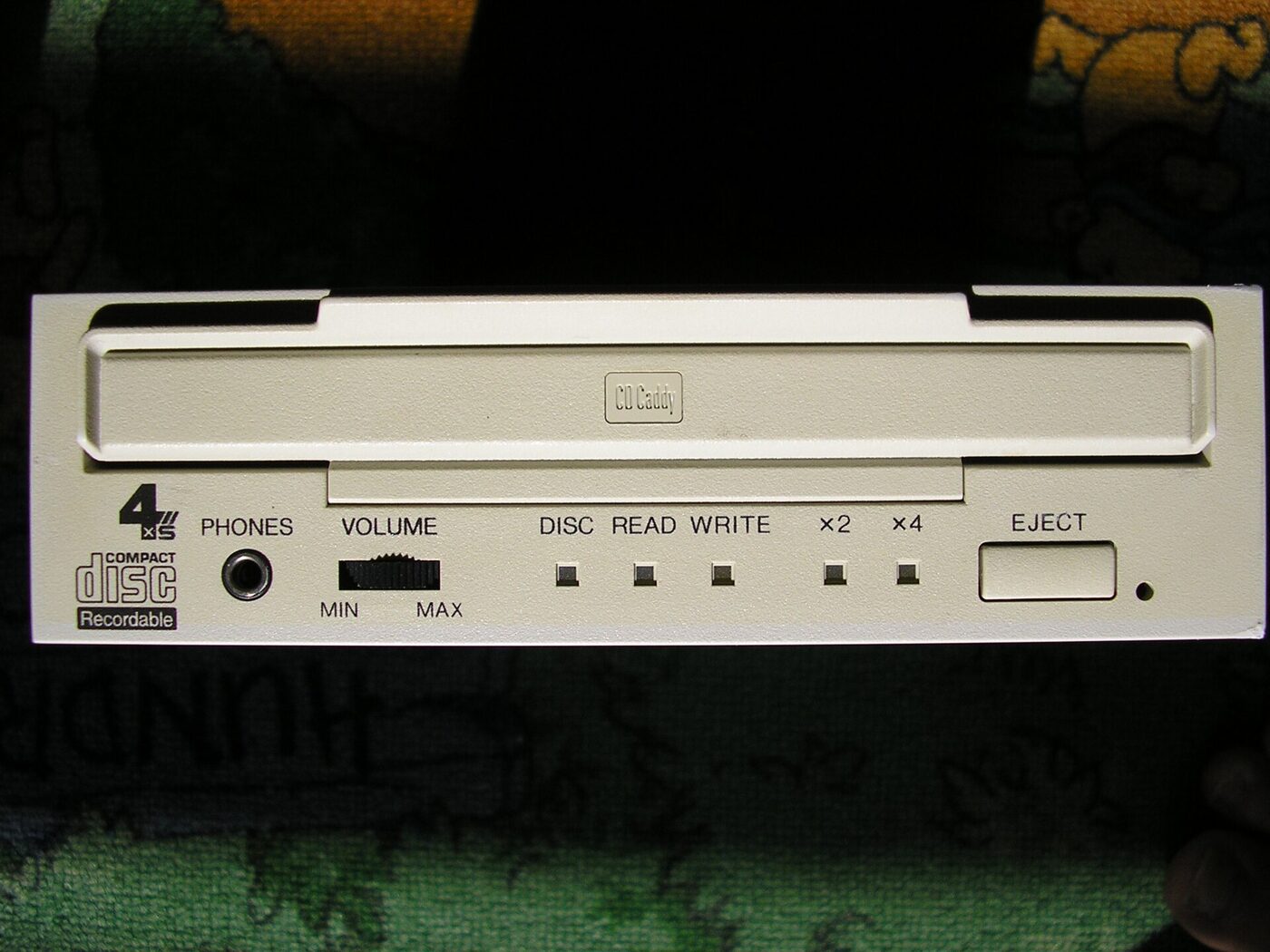
Half the hardware argument, though, was about equipment the publisher would never own: what the reader's machine could be assumed to do. Some early drives loaded discs in a caddy, a tougher plastic cartridge meant to protect the disc, which never gained wide acceptance because of the extra cost and because bare discs had to be loaded into one by hand; tray loading won. Drive speed was quoted as a multiple of the audio rate, 1x being 150 kibibytes a second, and a title that played acceptably at quadruple speed might stutter at double. The industry's attempt at an answer was the Multimedia PC specification, set by the Multimedia PC Marketing Council — a working group of the Software Publishers Association whose members included Microsoft, Creative Labs, Dell, Gateway and Fujitsu — which defined minimum configurations at Level 1 in 1991, Level 2 in 1993 and Level 3 in 1996. No further specification followed, the council dissolved not long afterwards, and the problem was handed to the phrase system requirements on the back of the box.
The multimedia boom and what the web did to it
For about five years the CD-ROM was not a distribution medium but a publishing format in its own right, and the titles that defined it are well dated. Compton's Multimedia Encyclopedia appeared in 1989, published by Britannica, and the New Grolier Multimedia Encyclopedia in 1992; Microsoft, having been turned down by Encyclopaedia Britannica in 1985 and having struck a deal with the publishers of Funk and Wagnalls in 1989 instead, launched Encarta in 1993. Myst was released for the Macintosh on 24 September 1993 and for Windows in March 1994, sold more than six million copies, remained the best-selling personal-computer game until The Sims overtook it in 2002, and did as much as any single product to put a drive in the average machine.
The publishing question this raised was genuinely new, and it is the question comp.publish.electronic.* was created to hold: what is a serious publication when it has no pages? The 1995 proposal's own division is instructive — a group for the tools used to create and develop electronic publishing data collections, naming Director, Adobe Distiller, CD-ROM formatters, Authorware and Toolbook, and a group for the applications an end user views them with, naming Common Ground, Acrobat and WorldView. That second list is the one that has aged most sharply: the assumption in 1995 was that electronic documents would be read in a chosen viewer application, several of which were competing, and the argument was over which.
The web settled it, and settled the medium too. A disc has to be pressed, boxed, shipped and shelved, and its contents are fixed on the day the stamper is cut; a website has none of those costs and no such date. The same three-dollar-an-image scan that had justified Photo CD looked different once the images were going onto a server. Reference publishing went first and went completely: Microsoft announced in March 2009 that it was discontinuing Encarta in both its disc and its online forms, and the MSN Encarta sites closed that October. The disc survived as a carrier — for software distribution, for archives, for anything too large to send down a telephone line — and as a carrier it lasted until the line got faster.
Something of the strain shows in the branch's own paperwork. The March 1995 proposal for the electronic groups complained in as many words that the CD-ROM groups typically discussed games software and suffered from a considerable amount of noise, and it invented two examples of the traffic it meant, a question about getting past a level in a game and a question about which double-speed drive to buy for a ZX81. Whether or not that was fair, it records something real: the CD-ROM groups had been founded in 1993 for people manufacturing discs, and within two years they were being read by people who had merely bought one.
Who was in the rooms
The constituency can be described from the founding documents without guessing at it. The prepress proposal named colour trade shops, service bureaus and commercial printers integrating electronic technology; its charter said the audience was expected to be both users and vendors of electronic prepress equipment, together with those with a general interest in the subject. The CD-ROM proposal was addressed to anyone engaged or interested in publishing CD-ROM material of any sort and asked to be reposted to any newsgroup, listserver or reflector that might reach them. The electronic-publishing proposal came from two people writing from German company addresses and was written for those making publications in digital form.
Two further details of the record fill the picture out. The prepress Call for Votes was posted not only to the newsgroups but to four mailing lists — a publishing list, Kodak's Photo CD list, a QuarkXPress list on BITNET and a Photoshop list — which tells you that the trade was already organised online before it had a newsgroup, and that a Usenet group was being added to an existing conversation rather than starting one. And the 1993 CD-ROM vote published its roll, as the rules of the period required: 294 named voters, at universities on several continents, at national laboratories and research institutes, and at hardware and software companies. It is, on the face of the list, a professional electorate.
The genre of traffic follows from the charters rather than from anyone's recollection, because the charters enumerate it: advice, tips, hints and troubleshooting for users of the equipment; reviews of software, hardware and peripherals; discussion of new products and technology; and announcements of trade shows. To that the CD-ROM charters add index and retrieval software, premastering and simulation software, scanning and imaging, OCR and its clean-up, hypertext and SGML, data capture and clean-up, compression and encryption, and the copyright and legal questions of publishing on a disc.
What is not recoverable from the paperwork is the temper of the traffic, and this page does not invent it. What the paperwork does establish is the cost of being wrong. In most of comp.* a mistaken answer wasted an evening. Here it could waste a print run: film already imaged, plates already burned, a press already running, and in the CD-ROM case a stamper cut and several thousand discs pressed with the fault in every one. That is the standing condition the charters were written under, and it is visible in their insistence on naming exact equipment.
What became of the branch, and what this page does not carry
The branch's last flurry of activity was an attempt to grow. In December 1997 Siamak Ansari filed a proposal for comp.publish.cdrom.mac, on the ground that the existing CD-ROM groups were mainly concerned with Windows issues and that Macintosh authoring questions were scattered among them and among various Mac groups. In November 2000 Paul Durrant proposed comp.publish.apps.quarkxpress, arguing that QuarkXPress had been the main professional page-layout application for the past ten years or so without a group of its own, that comp.graphics.apps was the wrong hierarchy because QuarkXPress was a page-layout rather than a graphics program, and that an apps level under comp.publish would make it easy to add a group for another application such as InDesign later. He supported the case with his own traffic count: a Deja.com search of the thirty days to 19 October 2000 found 232 posts in comp.publish.prepress with quark or xpress in the subject line, over seven a day. Neither group was created. There is no Call for Votes or result for either in the archive, and neither name appears in the current list.
Removal proposals came next. In September 2006 Thomas Armagost filed an RFD to remove comp.publish.electronic.misc, citing low traffic, spam, malicious postings and off-topic material, and noting in its own history section that an attempt to revive interest in the group had begun on 21 November 1999, had succeeded for quite a few months, and had lapsed when its author unsubscribed in March 2002. That proposal produced no result either.
What did happen came in 2011, and it was not aimed at this branch in particular. Following a Last Call for Comments on 10 April 2011 and the five-day comment period it opened, the Big-8 Management Board voted to remove 198 unmoderated groups in what the control messages themselves call the Great Downsizing. The criteria for the first round were published in the body of every rmgroup: no moderated groups, no group names matching *.misc, and zero on-topic, non-crossposted threads in the past eighteen months, with the pointed rider that on-topic questions which received no on-topic answer did not count. The rmgroup messages for comp.publish.cdrom.multimedia, comp.publish.electronic.developer and comp.publish.electronic.end-user were issued on 7 May 2011; comp.text.desktop, created on 23 May 1991 and the general desktop-publishing group for twenty years, went two days later. comp.publish.electronic.misc was exempt on the second criterion, its name ending in .misc; comp.publish.prepress and the two CD-ROM groups were not removed, which under the third criterion means at least one on-topic, non-crossposted thread had appeared in them since late 2009.
The record contains one earlier disturbance worth setting out for accuracy's sake. On 31 August 1998 rmgroup messages for all seven groups in this branch, and for comp.text.desktop, were issued from an address that was not the hierarchy's administrator. Each claimed that the group had passed a vote for removal reported in news.announce.newgroups two days earlier; the news.announce.newgroups archive for these groups contains no such call for votes and no such result. Newgroup messages restoring every one of them were sent from [email protected] on 1 September and repeated on 8 September. Under the access-control file that governs Big-Eight control messages this was never going to work in any case: the file directs servers to drop newgroup and rmgroup messages for comp.* from every source and to honour them only from [email protected] with a verified news.announce.newgroups signature.
Where the traffic went is the ordinary story of the period with an industry-specific twist. Vendor support forums took the product questions — the pattern is set out on the Adobe and Microsoft hubs — and the trade press and equipment manufacturers moved their own documentation and their user communities onto the web. Prepress standards themselves moved into ISO committees, where a question about whether a file conforms has a published answer rather than an argued one. And the shops thinned: computer to plate removed the film generation, PDF workflows removed several of the reasons a file failed, and the service bureau, which had been the reason a great many of these questions were asked out loud, largely ceased to be a separate business.
This page is a hub and not a group page, and the limits should be stated plainly. This directory holds no page for comp.publish.prepress, for comp.publish.cdrom.hardware, for comp.publish.cdrom.software or for comp.publish.electronic.misc: the mail-to-news gateway from whose roster this archive was built carried none of them, so there are no group pages beneath this address and none is implied by the branch listing. Nothing here reconstructs what was said in any of the four groups; the article describes what they were chartered for, who chartered them, and the world of standards and equipment that made those charters necessary. The address itself exists because outside pages — including a mirrored reference page about CD-ROM and DVD hardware — still link to it, and a link that leads to a 404 teaches a reader nothing. Corrections and documents from anyone who read or posted in these groups are welcome; the administrative record is complete, and almost nothing else is.