soc.culture.* — the culture groups
One group per country, region or people. During the 1990s these rooms carried war news, diaspora letters home, language revival projects and a planet’s worth of arguments about food. The groups carried by the gateway are listed below.
- soc.culture.afghanistan
- soc.culture.african
- soc.culture.albanian
- soc.culture.algeria
- soc.culture.arabic
- soc.culture.argentina
- soc.culture.armenian
- soc.culture.asean
- soc.culture.asian
- soc.culture.assyrian
- soc.culture.asturies
- soc.culture.australian
- soc.culture.austria
- soc.culture.azerbaijan
- soc.culture.baltics
- soc.culture.bangladesh
- soc.culture.basque
- soc.culture.belarus
- soc.culture.belgium
- soc.culture.bengali
- soc.culture.berber
- soc.culture.bolivia
- soc.culture.bosna-herzgvna
- soc.culture.brazil
- soc.culture.breton
- soc.culture.british
- soc.culture.bulgaria
- soc.culture.burma
- soc.culture.cambodia
- soc.culture.canada
- soc.culture.caribbean
- soc.culture.catalan
- soc.culture.chile
- soc.culture.costa-rica
- soc.culture.croatia
- soc.culture.cuba
- soc.culture.ecuador
- soc.culture.estonia
- soc.culture.ethiopia
- soc.culture.ethiopia.misc
- soc.culture.ethiopia.moderated
- soc.culture.haiti
- soc.culture.honduras
- soc.culture.iraq
- soc.culture.jewish
- soc.culture.jordan
- soc.culture.kenya
- soc.culture.kuwait
- soc.culture.kuwait.moderated
- soc.culture.laos
- soc.culture.lebanon
- soc.culture.liberia
- soc.culture.malaysia
- soc.culture.misc
- soc.culture.nepal
- soc.culture.nicaragua
- soc.culture.pakistan
- soc.culture.palestine
- soc.culture.peru
- soc.culture.puerto-rico
- soc.culture.quebec
- soc.culture.rep-of-georgia
- soc.culture.russian
- soc.culture.sierra-leone
- soc.culture.singapore
- soc.culture.singapore.moderated
- soc.culture.slovenia
- soc.culture.slovenia
- soc.culture.somalia
- soc.culture.south-africa
- soc.culture.south-africa.afrikaans
- soc.culture.sri-lanka
- soc.culture.syria
- soc.culture.thai
- soc.culture.uruguay
- soc.culture.yugoslavia
- soc.culture.zimbabwe
On this page
Before the ballot: net.nlang
Long before there was a soc.culture.* namespace to argue about, there was a corner of the old net.* world where culture was already the subject. The periodically posted List of Active Newsgroups, in its edition of March 1986 — the last spring of the old order — records a small cluster called net.nlang, glossed as “Natural languages, cultures, heritages, etc.”, with four offshoots: net.nlang.africa (“Discussions about Africa & things African”), net.nlang.celts, net.nlang.greek and net.nlang.india. The abbreviation stood for “natural language”, which was a programmer’s way of saying human affairs. The cluster’s shape — one general room, plus a room for any people that turned up to want one — is recognisably the soc.culture.* pattern in miniature, worked out a year before the namespace existed.
The Great Renaming of 1986–87 swept the whole net.* sprawl into seven topical hierarchies, a reorganisation whose politics and machinery are told on this directory’s soc.* page and need not be retold here. What matters for this branch is where the culture rooms landed: under soc, in a new sub-branch named soc.culture.* — in time the largest branch of soc — with the old net.nlang subjects re-assembling there under national and regional names. The net.nlang label itself disappeared in the shuffle. Its idea — the unit of conversation is a people, not a topic — did not, and soc.culture.* spent the next fifteen years demonstrating how far that idea could stretch.
One documented case shows that the branch’s founding was political as well as tidy-minded. According to a contemporary account of the Renaming, which cites the group’s own FAQ, the group now called soc.culture.jewish began life as net.religion.jewish; when the reorganisers proposed moving religious discussion into the new talk.* hierarchy, its posters objected that talk.* was designed to be easy for cost-conscious sites to drop, and that a group filed there would simply reach fewer people. The solution was to file the group under soc.culture.* instead. In other words, soc.culture.* was understood from its first months as the protected shelf — the part of the namespace a community wanted its group on if it wanted the group to survive. Every vote drive of the following decade was, in a sense, an application for shelf space.
The machinery: votes as a diaspora sport
Growth was procedural rather than organic. A new group required a Request for Discussion posted to news.groups, a written charter, and a formal Call for Votes; the proposal passed only if the yes votes outnumbered the no votes by at least a hundred, with a two-thirds majority. The full governance story belongs to the soc.* page; what belongs here is how that machinery felt from inside a scattered community. The hundred-vote margin was indifferent to population. It did not ask how many million people spoke a language or lived under a flag; it asked whether a hundred-odd of them, net of objectors, had e-mail accounts and could be found within the voting period.
In practice this meant each country’s group exists because some individual — very often an expatriate student — sat down, drafted the charter and rounded up the voters. Vote drives ran along the channels a diaspora already had: student associations, departmental mailing lists, friends-of-friends at other universities, a plea forwarded from account to account across three continents. For a community of millions the margin was a formality; for a small or thinly connected one it was a genuine campaign, and the difference explains much about which groups exist and when they appeared. The namespace is a map of who wanted to talk — and of who could be reached in 1993 — not of who was thought important.
The process also guaranteed that a group’s founding was a public event, archived like everything else. The discussion phase happened in the open, in news.groups, where anyone on the network could object to the name, the charter, the necessity of the group or the legitimacy of its proposers — and, for the culture branch, “anyone” regularly included a neighbouring community with strong views. The result is that the branch’s birth records are arguments. Before a group carried its first recipe thread it had usually survived a small referendum on what its people should be called, conducted in front of strangers.
Even the votes themselves were public in a way that now looks startling. Ballots went by e-mail to a volunteer vote-taker, and the posted result customarily listed the voters — the tally was checkable precisely because everyone could see who had voted which way. For the culture branch this had a particular edge: a community could read, name by name and address by address, exactly who had turned out for its group, and who from a rival community had turned out against it. The privacy norms of a smaller network, applied to the founding documents of diaspora institutions.
Naming a people in fourteen characters
The names preserve the constraints of their era. The earliest news software stored groups in a flat structure that required the first fourteen characters of a group’s name to be unique — a limit lifted by B News 2.11 in 1986, on the eve of the Renaming, but the habit of short components outlived the reason for it, and name components were conventionally kept to fourteen characters. That is why Bosnia and Herzegovina trades under the compressed soc.culture.bosna-herzgvna, a spelling that looks like a typo and is in fact an engineering artefact. It is also why the Caucasus republic posts under soc.culture.rep-of-georgia rather than sharing a room with the American state: the namespace had no other way to say which Georgia it meant.
Where the state itself was contested, the name was never just a name. A community in exile from a country that had changed its own name, or that another community considered a province rather than a nation, discovered that the proposal form’s first blank — what shall the group be called? — was a political question with a voting deadline. News.groups hosted these arguments in the open, and they followed a recognisable pattern: each side understood perfectly well that whichever name went into the namespace would be typed, propagated and tacitly ratified on tens of thousands of servers for years. The specific battles are better told on the individual group pages; the general truth is that the branch’s names were fought over precisely because everyone involved sensed, correctly, that Usenet namespace was a kind of map, and that maps have a way of outlasting the arguments that draw them.
More striking is what the namespace never did: it drew no line between states and peoples. Basques, Bretons, Berbers and Assyrians hold groups on precisely the same terms as UN member states — the same charter form, the same hundred-vote margin, the same shelf. A stateless nation that could muster the voters got the same fourteen characters as a G7 member. Few atlases of the period extended that generosity, and it is one reason the branch’s directory reads less like a list of countries than like a census of self-descriptions.
Nor was the country the only unit on offer. The branch carried umbrella rooms wider than any state — soc.culture.african, soc.culture.asian, soc.culture.arabic, soc.culture.asean — some of them older than the national groups that later budded off them, in the pattern net.nlang.africa had set before the Renaming. The two layers coexisted uneasily: an umbrella group offered a bigger audience, a national group a more precise one, and the question of whether a conversation belonged to the continent or the country was itself a standing thread. The namespace, characteristically, declined to rule, and carried both.
Letters home, posted in public
For most of the 1990s the people best placed to read these groups were exactly the people furthest from home. Internet access in much of the world was scarce, while emigrants and foreign students had university accounts, so a group named for a country was written largely from outside it. Add the economics of the era — international calls priced by the minute, letters taking weeks, home newspapers unavailable or days old — and the newsgroup was often the cheapest and fastest channel a diaspora had. The result was a strange, durable genre: the letter home composed in public, addressed to a homeland that mostly could not read it, and answered instead by fellow exiles several time zones away.


What the groups carried, day to day, follows from that geometry. News from home was relayed second-hand: someone with a phone line to a parent, someone whose cousin had faxed a newspaper page, someone home for the summer filing impressions on return. Requests ran the other way — for word of a town, a football score, the price of things, whether a rumour was true. The traffic looks mundane in the archive and was anything but; for many posters the group was the only room on earth where their two countries coexisted, and checking it was the first act of the day.
The groups also did quiet linguistic work. Usenet was for years effectively a seven-bit ASCII medium, so communities writing in Greek, Cyrillic or Arabic scripts improvised romanisation schemes, argued over them, and standardised them through sheer use. Which language a group should use at all — the home language, English as a lingua franca for the second generation, some braided mixture — was a perennial thread in most non-anglophone rooms, and the answers the groups worked out are themselves part of the record. For the smaller languages, the branch’s Breton, Basque, Asturian and Berber rooms among them, a newsgroup was somewhere the language could be written daily to a scattered readership, at a time when almost nothing else on the net accommodated it.
The geometry did not hold still. As the decade wore on, access spread — academic networks in more countries, the first commercial providers, connections that no longer required a university card — and the homeland began to log on. Groups that had been written almost entirely from abroad acquired posters writing from inside the country, with fresher news and less patience for the exile’s picture of home, which had a way of freezing at the year of departure. The resulting arguments between those who left and those who stayed are among the most human threads in the archive, and they mark, group by group, the moment a room stopped being a letter home and became a party line.
And argument was not a failure mode; it was the glue. A group where nobody disputed politics, history, orthography or the correct preparation of the national dish was a group nobody felt strongly about. The branch’s rooms stayed alive for a decade and a half on the strength of disagreements that could be neither won nor abandoned — which is roughly the definition of a community.
Lifelines and battlegrounds
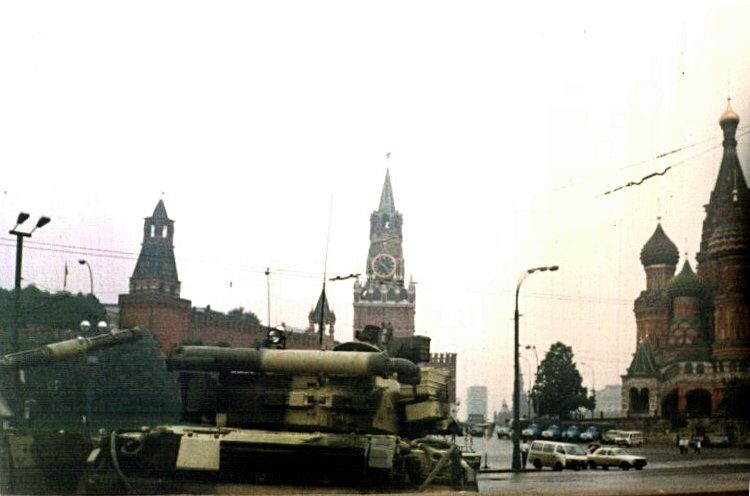
When something broke at home, the groups changed state. During the August 1991 coup attempt in Moscow, the Russian Relcom network kept passing eyewitness reports and news bulletins out to Usenet while the plotters controlled the television — an early, well-documented demonstration that a store-and-forward text network was genuinely hard to switch off, and that the people most desperate for its output were the diaspora reading abroad.

The Yugoslav wars are the branch’s documented model of what a crisis did to a culture group, and that story is told in full on the soc.culture.yugoslavia page; the short version is that the branch mirrored the collapse in its own directory, which still holds Yugoslavia’s group beside the groups of its successor states. What generalises from that case is the double life a group led under fire. It became a lifeline — firsthand accounts, relayed news, threads asking after a city or a family — and a battleground, carrying propaganda, atrocity claims and rebuttal, sometimes all in a single thread with the same subject line. The archive does not separate the two, because the participants could not.
Crisis also redrew a group’s population overnight. Rooms that had run for years on recipes and remittance advice were flooded by strangers with opinions, journalists trawling for colour, partisans crossposting from a rival group, and — slowly, as refugees resettled into countries with better connectivity — by people who had lived the events being argued about. A culture group in wartime was frequently the only public space its two or three warring communities still shared. That is a heavy load for a text file, and the groups bore it imperfectly and continuously.
The family resemblance
For all their different alphabets and grievances, the groups ran on the same furniture. Nearly every established room had its periodic FAQ — part charter, part encyclopaedia, part etiquette manual — maintained by a volunteer and posted on a schedule, explaining the group’s scope, its romanisation conventions, its recurring arguments and why you should not restart them, and, sooner or later, how to use a killfile. The FAQs were often the most organised documents a scattered community had ever produced about itself; many were mirrored into the public FAQ archives of the early web, where a number can still be read, and many outlived the traffic they were written to manage.
Peacetime traffic rhymed from group to group: recipe threads and disputes over the authentic version; music and film recommendations; visa, immigration and airline-fare advice traded like currency; homesick meditations every new year; classified-style notices — a room to let near a campus, in some communities matrimonial introductions — using the group as the diaspora’s noticeboard. A reader who fell asleep in one group and woke in another would need a while to notice, until the food changed.
Charters got quoted the way constitutions are: selectively, and mostly during fights. Every group developed border disputes over its own scope — whether politics belonged in a culture group at all, whether religion did, whether the diaspora’s host-country grievances counted as home affairs — and the standard remedies were the standard ones: point at the charter, propose a split, or give up and argue on. Some communities did split, voting politics or religion or a moderated version of themselves into separate rooms; others decided, in effect, that the fighting was the culture. Both answers are preserved, and neither ever quite won.
The family also shared its pathologies. The crosspost header made every border dispute a joint possession: a provocation posted across two or three neighbouring groups at once guaranteed that each community’s worst arguments were conducted in front of the others. Serial provocateurs toured the branch the way the FAQs toured the calendar, and old hands could watch the same performance open in room after room. The standard defences — ignore, killfile, answer only in the FAQ — were themselves part of the shared culture, passed from group to group like everything else.
A walk along the shelf
This directory describes more than forty of the branch’s groups — the full list stands at the top of this page — out of a family that by the late 1990s ran to well over a hundred. A handful, spanning the branch’s range, suggest the shape of the shelf; each link leads to that group’s own page and story.
- soc.culture.afghanistan — a group whose country spent the entire decade in some stage of war, written almost wholly from exile; nowhere in the branch was the gap wider between the name on the door and the news inside.
- soc.culture.jewish — the family’s documented elder, descended from net.religion.jewish and filed under soc.culture.* during the Renaming precisely to keep it on the well-propagated shelf.
- soc.culture.baltics — one room shared by Estonia, Latvia and Lithuania; the name is a period piece, preserving the years when the three re-emerging states were most legible from outside as a bloc.
- soc.culture.russian — where the post-Soviet decade was argued out in two alphabets: Cyrillic where the software allowed, improvised romanisation where it did not.
- soc.culture.burma — the country’s military government renamed it Myanmar in 1989; the group’s name never followed, and the namespace preserves the dispute in amber.
- soc.culture.assyrian — a people without a state, holding a group on the same terms as any republic; its threads stitched together a community scattered across continents and several churches.
- soc.culture.berber — a written public space for the Amazigh languages of North Africa and their emigration, in years when few other corners of the net accommodated them.
- soc.culture.quebec — proof that the branch’s unit was the people rather than the passport: a francophone room alongside soc.culture.canada rather than inside it.
- soc.culture.argentina — one of the branch’s South American rooms; like most of the family’s non-anglophone groups it ran on a mixture of the home language and English, with the choice itself a recurring argument.
- soc.culture.caribbean — a sea rather than a state: one of the regional rooms that gathered an archipelago the national grid would have scattered.
- soc.culture.catalan — a European language community holding its own shelf space beside the states it spans, on the branch’s usual terms: enough voters, one group.
- soc.culture.zimbabwe — a smaller room and a reminder of the branch’s reach; the archive preserves quiet groups as faithfully as loud ones.
The selection is deliberately uneven, because the branch was. Giant rooms and near-empty ones, states and stateless nations, groups named for countries that outlived them and groups named for countries that did not — the shelf holds them at the same height, which is the most honest thing about it.
Quiet rooms, and what remains
The branch declined the way it had grown: unevenly, and for legible reasons. The conditions that made a newsgroup the diaspora’s best channel — expensive calls, scarce access at home, no better tools — were dismantled one by one through the 2000s by cheap telephony, satellite television, web forums in home languages hosted at home, and finally social media, which let the letter home become a phone call home. Spam and unmoderated drift did their part; so did simple succession, as the next cohort of students arrived already carrying their communities in other pockets. The groups mostly did not die so much as empty, and many still exist on modern news servers, far quieter than they were.
Usenet itself competed with the branch, in the end. As national and regional hierarchies grew — German, French, Italian and many other language communities built their own top-level namespaces with their own culture and society groups — a poster in the home country no longer needed an English-lettered international branch to talk about home; there was a hierarchy in the right language, carried well by local servers, full of people in the same time zone. soc.culture.* had been built for the situation in which the scattered and the settled had nowhere else to meet. As that situation dissolved, so, gradually, did the meeting.
The posts survive, though by a narrow route. DejaNews began archiving Usenet in 1995; Google bought that archive in 2001 and folded it into Google Groups, alongside donated tape archives reaching back to 1981. Google withdrew Usenet support in 2024 and the archive’s search has decayed badly, but substantial copies circulate through the Internet Archive and private collections. The record has gaps — cancelled posts, feeds that were never complete — yet for the soc.culture.* groups the bulk of the decade is there.
What it amounts to is a primary source of a kind historians rarely inherit: years of unedited, timestamped, everyday writing by diasporas reacting to events on the day they happened, unrevised by memory. It is also, incidentally, an atlas. The group names alone preserve the political geography of the moment of their creation — the compressed spellings, the contested labels, the countries that no longer exist — which is why Yugoslavia keeps its group here two decades after keeping little else.
For a reader arriving from one of the old web directories that still point this way, the practical note is simple: the e-mail gateway is long retired, but the groups are the durable object. The pages linked above describe each one, and the 1990s traffic — the vote drives, the romanisation schemes, the recipes, the wars — is where the history sits.