All groups
179 newsgroups, alphabetically. Hierarchy pages: soc · alt · comp · rec.
- adobe.acrobat
- alt.america
- alt.astrology
- alt.astrology.metapsych
- alt.autos.ford.focus
- alt.bbs.elebbs
- alt.bible
- alt.binaries.autographs
- alt.binaries.e-books
- alt.bmx
- alt.books.arthur-clarke
- alt.cellular.nokia.ringtones
- alt.comp
- alt.complainers.bitch-n-moan
- alt.conspiracy.jfk
- alt.culture.zambia
- alt.dcom.telecom
- alt.drugs.chemistry
- alt.evolution
- alt.fan.godzilla
- alt.fan.regular-guys
- alt.fan.starwars.jar-jar-binks.die
- alt.food.mexican-cooking
- alt.fr.comp.os.ms-windows.xp
- alt.humor.best-of-usenet
- alt.idiot.marsrules
- alt.impeach.bush
- alt.music.bluegrass
- alt.music.country.classic
- alt.music.ontario-emperor
- alt.netscape.sucks
- alt.nettime
- alt.new-england
- alt.new.cracks
- alt.newbie
- alt.nl.support
- alt.pets.chia
- alt.politics.bush
- alt.privacy
- alt.psychology
- alt.psychology.help
- alt.psychology.jung
- alt.psychology.nlp
- alt.psychology.personality
- alt.support.jock-strap
- alt.support.ocd
- alt.support.ocd.moderated
- alt.tesla
- alt.verizon-sucks
- comp.databases.pick
- comp.databases.pick
- comp.lang.ruby
- comp.os.msdos.4dos
- comp.os.psos
- comp.society.privacy
- comp.soft-sys.math.maple
- comp.sys.arm
- comp.text.tex
- de.alt.augenoptik
- de.alt.motorroller
- de.rec.motorroller
- de.sci.genealogie
- de.talk.liebesakt
- fr.soc.religion
- free.it.religioni
- microsoft.public.dotnet.framework.wmi
- microsoft.public.excel.programming
- microsoft.public.fr.jpp
- microsoft.public.fr.scripting.ie-oe-animation
- microsoft.public.outlook
- microsoft.public.platformsdk.security
- microsoft.public.scripting.vbscript
- microsoft.public.win32.programmer.directx.managed
- microsoft.public.win32.programmer.wmi
- microsoft.public.windows.mediacenter.hometheaterpc
- microsoft.public.windowsmedia
- microsoft.public.windowsupdate
- microsoft.public.windowsxp.wmi
- microsoft.public.word.numbering
- news.software.nn
- nl.comp.hacken
- qc.politique
- rec.arts.sf.written.robert-jordan
- rec.drugs.smart
- rec.folk-dancing
- rec.food.cooking
- rec.games.roguelike.adom
- rec.music.country.western
- rec.sport.football.college
- rec.sport.hockey
- rec.sport.hockey.field
- rec.sport.olympics
- rec.travel.caribbean
- sci.agriculture
- sci.agriculture.poultry
- sci.geo.oceanography
- sci.math.symbolic
- sci.psychology.personality
- sci.psychology.psychotherapy
- sci.space.station
- soc.answers
- soc.culture.afghanistan
- soc.culture.african
- soc.culture.albanian
- soc.culture.algeria
- soc.culture.arabic
- soc.culture.argentina
- soc.culture.armenian
- soc.culture.asean
- soc.culture.asian
- soc.culture.assyrian
- soc.culture.asturies
- soc.culture.australian
- soc.culture.austria
- soc.culture.azerbaijan
- soc.culture.baltics
- soc.culture.bangladesh
- soc.culture.basque
- soc.culture.belarus
- soc.culture.belgium
- soc.culture.bengali
- soc.culture.berber
- soc.culture.bolivia
- soc.culture.bosna-herzgvna
- soc.culture.brazil
- soc.culture.breton
- soc.culture.british
- soc.culture.bulgaria
- soc.culture.burma
- soc.culture.cambodia
- soc.culture.canada
- soc.culture.caribbean
- soc.culture.catalan
- soc.culture.chile
- soc.culture.costa-rica
- soc.culture.croatia
- soc.culture.cuba
- soc.culture.ecuador
- soc.culture.estonia
- soc.culture.ethiopia
- soc.culture.ethiopia.misc
- soc.culture.ethiopia.moderated
- soc.culture.haiti
- soc.culture.honduras
- soc.culture.iraq
- soc.culture.jewish
- soc.culture.jordan
- soc.culture.kenya
- soc.culture.kuwait
- soc.culture.kuwait.moderated
- soc.culture.laos
- soc.culture.lebanon
- soc.culture.liberia
- soc.culture.malaysia
- soc.culture.misc
- soc.culture.nepal
- soc.culture.nicaragua
- soc.culture.pakistan
- soc.culture.palestine
- soc.culture.peru
- soc.culture.puerto-rico
- soc.culture.quebec
- soc.culture.rep-of-georgia
- soc.culture.russian
- soc.culture.sierra-leone
- soc.culture.singapore
- soc.culture.singapore.moderated
- soc.culture.slovenia
- soc.culture.slovenia
- soc.culture.somalia
- soc.culture.south-africa
- soc.culture.south-africa.afrikaans
- soc.culture.sri-lanka
- soc.culture.syria
- soc.culture.thai
- soc.culture.uruguay
- soc.culture.yugoslavia
- soc.culture.zimbabwe
- talk.philosophy.humanism
On this page
- How many newsgroups are there
- Four hundred and seventy-nine first components
- The line, and the format nobody quite standardised
- checkgroups, and the machinery of agreeing what exists
- What happens when a server and the list disagree
- The list as a document: Spafford, Lawrence and the periodic postings
- The list today, and what it has lost
- The bogus-group problem
- Why a gateway needed a list
- What this directory's list is, and what it is not
- What a catalogue is worth when the rooms are empty
- Scope and limits
How many newsgroups are there
The list above this article is finite, alphabetical and countable. The namespace it is drawn from is none of those things, and the reason has to be set out first, because it governs every other claim on this page. There is no register of Usenet newsgroups. There is no body with the standing to keep one. What exists instead is a small number of lists maintained by people who have agreed to compare notes, and a much larger number of news servers that consult those lists when it suits them.
The nearest thing to an authoritative count is published by the Internet Systems Consortium, which mirrors the administrative record of Usenet at ftp.isc.org. Two files there do the work. One is called active, the other newsgroups, and they are the same list twice over: one line per newsgroup, in the two formats a news server actually consumes. On the copies retrieved while this page was written, both timestamped 26 August 2026 at 06:00 UTC, each file contained exactly 45,003 lines, and the set of names in one is identical to the set in the other. That is the number, with its date and its source attached, and it should never be quoted without them.
The active file gives, for each group, the name, a high and a low article number, and a single-letter flag recording whether the group accepts posts and whether it is moderated. In the 26 August 2026 file, 39,188 groups carry the flag y for ordinary posting and 5,809 carry m for moderated. Six carry n, and those six are worth naming, because they are not conversations at all: control, control.cancel, control.checkgroups, control.newgroup, control.rmgroup and junk, the reserved pseudo-groups a server keeps so that administrative messages and unwanted articles have somewhere to be filed. The headline count therefore includes six entries nobody has ever subscribed to, which is a small illustration of a large point: this is a list of names a server may hold, not a list of rooms in which people talk.
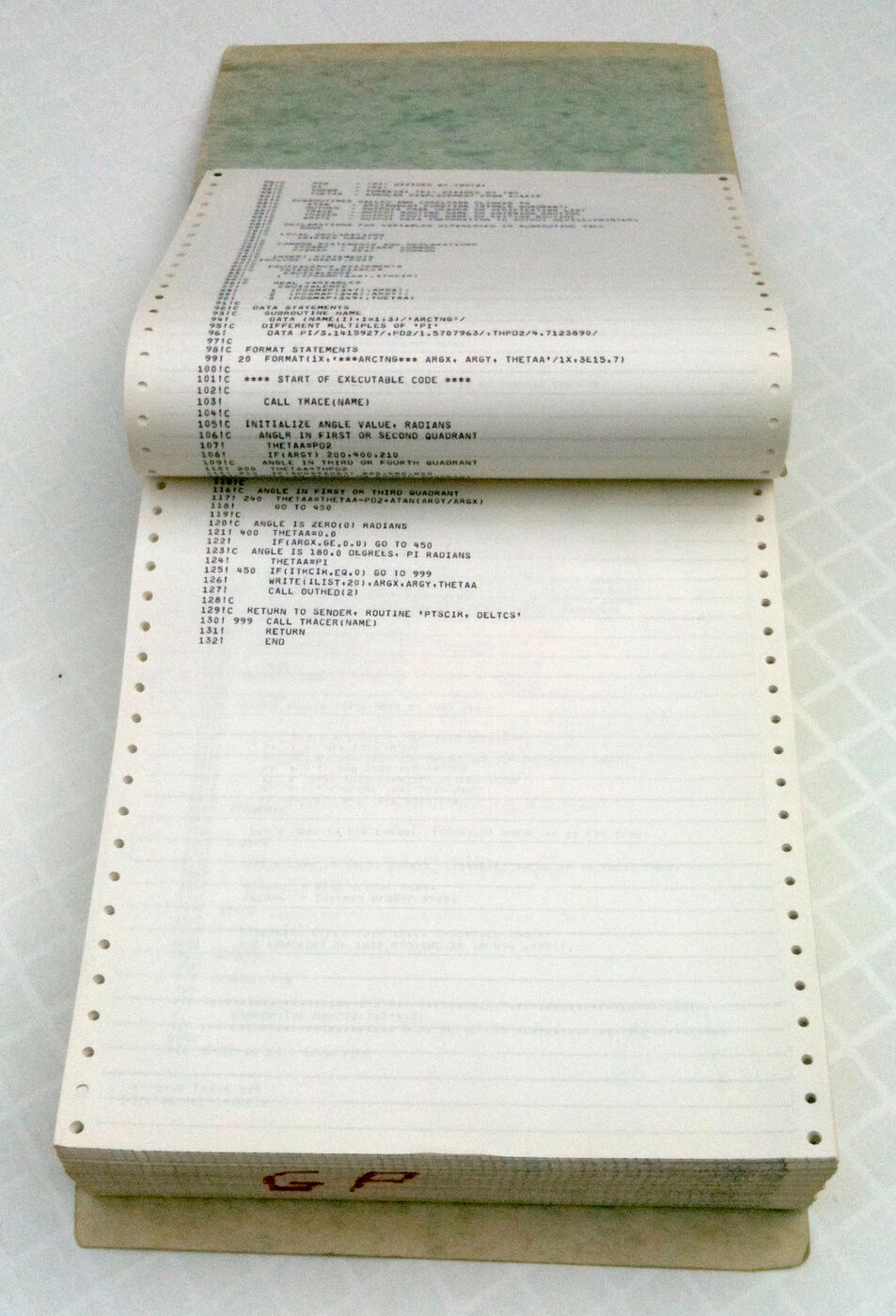

The newsgroups file gives the name and the one-line description a newsreader shows beside it, for exactly those 45,003 names. Of the descriptions, 10,016 — 22.3 per cent — consist of some variant of the words No description, which is the file's honest way of saying that a group was created by a control message that never bothered to explain itself.
ISC states its ambition for these files plainly in the policy document that sits beside them: the intention is for the active and newsgroups files here to be complete for all publicly available hierarchies. The same document asks readers to report discrepancies with other authoritative lists, which is a quiet admission that other authoritative lists exist and do not always agree. The archive updates hourly by processing incoming control messages; the policy warns that a control message from a well-connected site takes about two hours to show up.
So the figure is real, dated, sourced and reproducible. It is still provisional, and not because anybody has been careless. A newsgroup is not an object that exists somewhere; it is a name that some set of servers has agreed to keep a spool directory for. A server carries what its administrator configures it to carry, and no two carry the same set. A provider selling access to binary groups has reason to carry a great many names it has never examined; a small site run for a single department has reason to carry very few. A hierarchy's own administrator may consider a group dead while a server elsewhere has been quietly accepting posts to it for years. The ISC file is the best available answer to what does the record say exists. It is not, and does not claim to be, an answer to what exists.
Four hundred and seventy-nine first components
Split the same file by the first component of each name — the top-level hierarchy — and the shape of the namespace becomes visible, along with the reason nobody can tidy it. The 45,003 groups of 26 August 2026 sit under 479 distinct first components.
alt.*— 20,466 groups, forty-five per cent of everything.free.*— 3,565.fido7.*— 3,242, described in the reference configuration file simply as the Russian FidoNet hierarchy.microsoft.*— 1,770, a vendor's support tree that outlived the vendor's interest in it. Microsoft closed its public news server in June 2010 and moved product support to web forums; the configuration file notes that control messages for the hierarchy are issued not by Microsoft but by a Usenet volunteer, to improve the propagation of groups their nominal owner had stopped using.- The Big Eight together — 1,898:
comp677,rec659,soc213,sci185,misc100,talk31,news26,humanities7. - The remaining 467 first components share about 14,000 groups between them: national hierarchies, city hierarchies, campus hierarchies, company hierarchies, and a long tail of names carried by nobody in particular.
Two numbers in that list explain most of the difficulty. alt.* and free.* between them account for 24,031 groups, or 53.4 per cent of the whole file, and both are hierarchies in which anyone may create a group and nobody may delete one. The reference configuration file that news administrators install — control.ctl, distributed with INN and mirrored by ISC — states the alt.* policy in a sentence and four rules: accept all newgroups, except any forged over the addresses of the Big Eight newgroup issuers, who never send alt.* control messages at all, and silently ignore every rmgroup from everybody. The section heading for the other hierarchy reads, in full, FREE (Open Hierarchy where anyone can create a group), and its rules have the same shape. Over half the Usenet namespace is therefore a ratchet that only turns one way, and the file's own commentary is candid about the consequence: tons of alt.* newgroups, it observes, are sent out regularly with the intent more to create nonsense entries in active files than to actually create a useable newsgroup.
The other half of the difficulty is abandonment. control.ctl, last revised on 5 August 2023, carries 310 hierarchy sections. Twelve of them are marked DEFUNCT, forty-five LOCAL and eleven PRIVATE — that is, sixty-eight hierarchies whose entries exist mainly to tell an administrator to delete the groups unless he has arranged a feed with the contact address given. Between them the sections name 309 first components. Set that against the 479 first components in the active file and 264 of them have no rule in control.ctl at all, covering 2,060 groups. These are the fossils: campus and company trees that leaked out of their institutions decades ago and were never recalled, because there is nobody left to recall them. ISC's policy is explicit about what happens to such a hierarchy — where no authority exists, the list of groups was taken from whatever the generally agreed set was, and is now static. A static list is not a wrong list. It is simply a list that has stopped being about anything.
The file also preserves the limits of its own rules. ISC will not add a name unless every component is drawn from a small character set, contains at least one non-digit, avoids the reserved sequences all and ctl, and the whole name is at most eighty characters — criteria based on RFC 5536, with the eighty-character ceiling chosen rather than the standard's soft limit of seventy-two because two existing non-joke groups have longer names than that. The current file nonetheless contains two names longer than eighty characters, both in alt.*, the longer running to ninety-five. Rules applied from a certain date do not retroactively tidy what arrived before them, which is true of catalogues generally and of this one in particular.
The line, and the format nobody quite standardised
Everything above rests on a single line of text repeated forty-five thousand times, and the line is worth looking at closely, because its quirks are the reason certain kinds of error are permanent.
The format is a group name, one or more hard tabs, and a description. ISC publishes guidance on how the line ought to look, and the guidance is entirely a product of the terminal: tab stops are assumed to be eight columns apart, the whole line should be at most 79 columns for good display in the traditional terminal width, and the description should therefore run to no more than about 55 characters and should start with a capital. There is even a note that the traditional trailing full stop is unnecessary and steals away one character that is occasionally useful for forming a better description — which is the kind of remark that only appears in a document maintained by somebody who has spent years trying to fit a description of a newsgroup about Byzantine counterfactuals into fifty-five characters.
If a group is moderated, the description must end with the string (Moderated). Not moderated, not a translation, not a variant: exactly that text, because news software searches for it to decide how to handle a post. The Usenet Hierarchy Administration FAQ, which is the practical handbook for anyone running one of these lists, concedes the point with visible weariness — sadly, it notes, you cannot translate the word to another language; it is an ugly wart on the protocol. The result is that in the current file 5,809 lines end with that exact English string, and 5,809 groups carry the m flag in the parallel active file. The same fact is stored twice, once as a machine-readable flag and once as a magic phrase at the end of a free-text field, and a hierarchy administrator writing in Japanese or Bulgarian must still append that one English word or the group will be treated as unmoderated by every server that reads the line.
The descriptions themselves are not edited by anybody. ISC states the rule flatly: the description in the newsgroups file is taken from the most recent control message for that group, whether a newgroup or a checkgroups. The policy document adds that the maintainers do not have the time to fix up lines being automatically included from newgroup messages, and offers the formatting advice only so that senders can craft better control messages. Whatever was in the last message is what the world sees, indefinitely, including the 10,016 lines that say nothing at all.
The oldest unsolved problem in the file is character encoding. Many non-English hierarchies write their descriptions in their own language, which is obviously the right thing to do for their own readers, and those lines are included verbatim. But the format has no field in which to declare an encoding, so, as ISC's own document puts it, different lines of the file will require different character set settings to read properly, and those character sets are not documented in the file. UTF-8 is recommended; it is not enforced, and the file long predates the recommendation. Measured on the 26 August 2026 copy, 1,907 of the 45,003 lines contain non-ASCII bytes, and 1,788 of those are not valid UTF-8. They are not obscure exceptions either: the cn.* descriptions are in a mainland Chinese encoding, the tw.* ones in a Taiwanese encoding, han.* in a Korean one, and Italian and Spanish groups in an eight-bit Western European set — all in the same file, each line legible only to a reader who already guesses which. A catalogue that cannot say what alphabet it is written in is an unusual sort of catalogue, and it has been that way for so long that the condition is simply part of the format.
One further trap is documented and worth repeating because it is invisible when it strikes. If the software used to post a control message wraps the description line, everything after the wrap is silently discarded by most servers. A hierarchy administrator can therefore issue a perfectly valid creation request and end up with a group whose published description stops in the middle of a word, with no error anywhere and no way to tell from the result that anything was lost.
checkgroups, and the machinery of agreeing what exists
If no one can compel a server to carry a group, how does any hierarchy stay coherent? The answer is a control message called checkgroups, and it is the single most important object in this article. A newgroup message says please add this one; an rmgroup says please drop this one; a checkgroups message says here is the entire list; make yours look like this. It is the periodic reconciliation that keeps a thousand independently administered servers roughly in step without anyone being in charge of any of them.
It is also older than most people assume, and it has quietly changed its meaning. RFC 1036, the December 1987 Standard for Interchange of USENET Messages by Mark Horton and Rick Adams, already describes it in section 3.7, and describes it as an advisory: the body is a list of official newsgroups, they are compared against the local active file, and the names of any obsolete or new groups are mailed to the user "usenet". In 1987 a checkgroups message added no group and removed none. It wrote to the administrator, filed the new descriptions in the posting help file, and left the decision with him.
RFC 5537, Netnews Architecture and Protocols, published in November 2009 by Russ Allbery as editor with Charles Lindsey and obsoleting RFC 1036, states the modern reading in section 5.2.3: the message requests that a news server update its valid newsgroup list for that hierarchy to include the groups specified, remove any groups not specified, and update group descriptions and moderation status to match. Two arguments were added at the same time, both of them lessons learned the hard way. A scope argument lets the sender say precisely which sub-trees the list is exhaustive for, so that a hierarchy can be reconciled without a partial list silently deleting a branch: the RFC's own example, Control: checkgroups de !de.alt #2009021301, covers every group in de.* except de.alt.*. And a serial number, which must never decrease, lets a server decline an older list replayed by someone hoping to undo the last six months of a hierarchy's history.
Who is allowed to send one is settled entirely at the receiving end, in control.ctl. The file's default rules are worth reading in the order they appear, because they are the whole security model. The first is all:*:*:drop: ignore any control message not specifically recognised. The defaults immediately after it are only slightly warmer — a checkgroups, newgroup or rmgroup from anybody at all is mailed to the administrator rather than acted on. Everything else in the file is an exception, granted by name. For the Big Eight the exception reads: drop all newgroups and rmgroups from anyone, then honour checkgroups, newgroup and rmgroup from [email protected], and only if the message verifies against the PGP key held for news.announce.newgroups. Many managed hierarchies have an entry of that shape, with their own address, their own key fingerprint, and their own administrative group where disputes are supposed to be aired. The signature is not decoration. Before it was normal, a control message was authenticated by nothing but a From line, and the results are the subject of a later section.
The machinery is not a historical curiosity, and this directory has met it more than once. The nl.* hierarchy hub documents the Dutch hierarchy's signed checkgroups run in detail, and that page is the place to read how one hierarchy actually operates the procedure rather than merely permits it. The generalisation belongs here: reconciliation is now the habit of a handful of hierarchies and nobody else. ISC's own logs record checkgroups messages processed in July 2026 for us.* on the 1st, de.* on the 3rd, the Big Eight on the 15th and nl.* on the 21st — and, in the whole of that month, not one addition, removal or description change to the active file. August 2026 brought the same four, joined by three fr.* messages, and that month the file did record twenty removals and thirty-four altered descriptions. June 2026 had only three of them, nl.* having missed its turn. That is what a living namespace looks like now: a few maintainers posting a signed inventory into the void most months, and a month in which the inventory turns out to be unchanged being an entirely ordinary month.
What happens when a server and the list disagree
Nothing happens. That is the answer, and it is more interesting than it sounds.
Every mechanism described above is a request. A newgroup is a request, an rmgroup is a request, and a checkgroups is a request with a longer body. Each arrives at a server whose administrator has already decided, in a configuration file, whose requests are worth reading; and even an honoured request produces only a local change to one machine's idea of the world. There is no acknowledgement, no reconciliation report, no mechanism by which the sender learns which servers complied. The Usenet Hierarchy Administration FAQ, posted monthly to news.admin.hierarchies and maintained by Russ Allbery, points hierarchy administrators at the ISC archive for want of anything better: the list updates once an hour, it says, so if you send a control message and the result is not reflected there within a few hours, something may have gone wrong — a forgotten Approved header, perhaps, or a signature that failed to verify. That is close to the whole of the available feedback.
The consequence is that a group can be, at the same instant, removed and alive. A hierarchy's maintainer may have issued an rmgroup, the ISC file may no longer list the name, and other servers may still be carrying it and delivering posts to it, either because they never honoured control messages for that hierarchy or because nobody there has run a reconciliation in a very long time. This directory holds a fully worked example of that condition, traced message by message through the ISC control archive, on the page for alt.support.jock-strap; there is no point retelling it here. The general lesson it teaches is the one that matters for a catalogue: the list of newsgroups is not a description of a state of the world. It is a description of what one archive concluded from the control messages it happened to receive, and any given reader's server may have concluded something else.
This is also why removal is so much harder than creation everywhere on Usenet, and impossible in the two largest hierarchies. To create a group you need one server to say yes. To remove one you need every server to say yes, and there is no way to ask them all. Deletion is therefore not an operation; it is a rumour that spreads unevenly and never quite finishes.
The list as a document: Spafford, Lawrence and the periodic postings
Long before there was an FTP archive there was a posting, and for most of Usenet's life the canonical list of newsgroups was an article that arrived in your newsreader on a schedule. The genre matters: the list of groups was not infrastructure that users consulted, it was reading matter, distributed by the same mechanism as everything else, and it acquired a maintainer, a masthead and a set of standing disclaimers accordingly.
The document was called List of Active Newsgroups, and its headers record its own lineage with unusual precision. Its original author was Gene Spafford of Purdue; a Comment line in every instalment notes that it was enhanced & edited until 5/93 by him. From then on it was maintained by David C Lawrence, posting as [email protected] with a Sender line reading [email protected] — the same address that control.ctl still names today, three decades later, in the rules that tell servers to ignore alt.* control messages forged over it. The posting went to news.lists, news.groups and news.announce.newgroups, split into three parts by hierarchy, under the archive name active-newsgroups/part1 and its successors. The instalment of 2 December 1996 opens by describing itself as a list of currently active newsgroups as of that date, which is the correct way to describe any such list and one that almost nobody imitates.
Two passages from that introduction do more for an understanding of the problem than any amount of later commentary. The first concedes that the eight worldwide classifications are not in fact distributed worldwide: these groups are usually circulated around the entire network, it says, but not all groups actually enjoy such wide distribution, some sites take only a selected subset of the more technical groups, and controversial groups are often not carried by many sites. The second concedes the list's boundaries outright — there are groups in other subcategories, local to institutions and to geographic regions, and they are not listed here. The canonical list of Usenet newsgroups, in other words, told its readers on its first page that it was neither complete nor uniformly true.
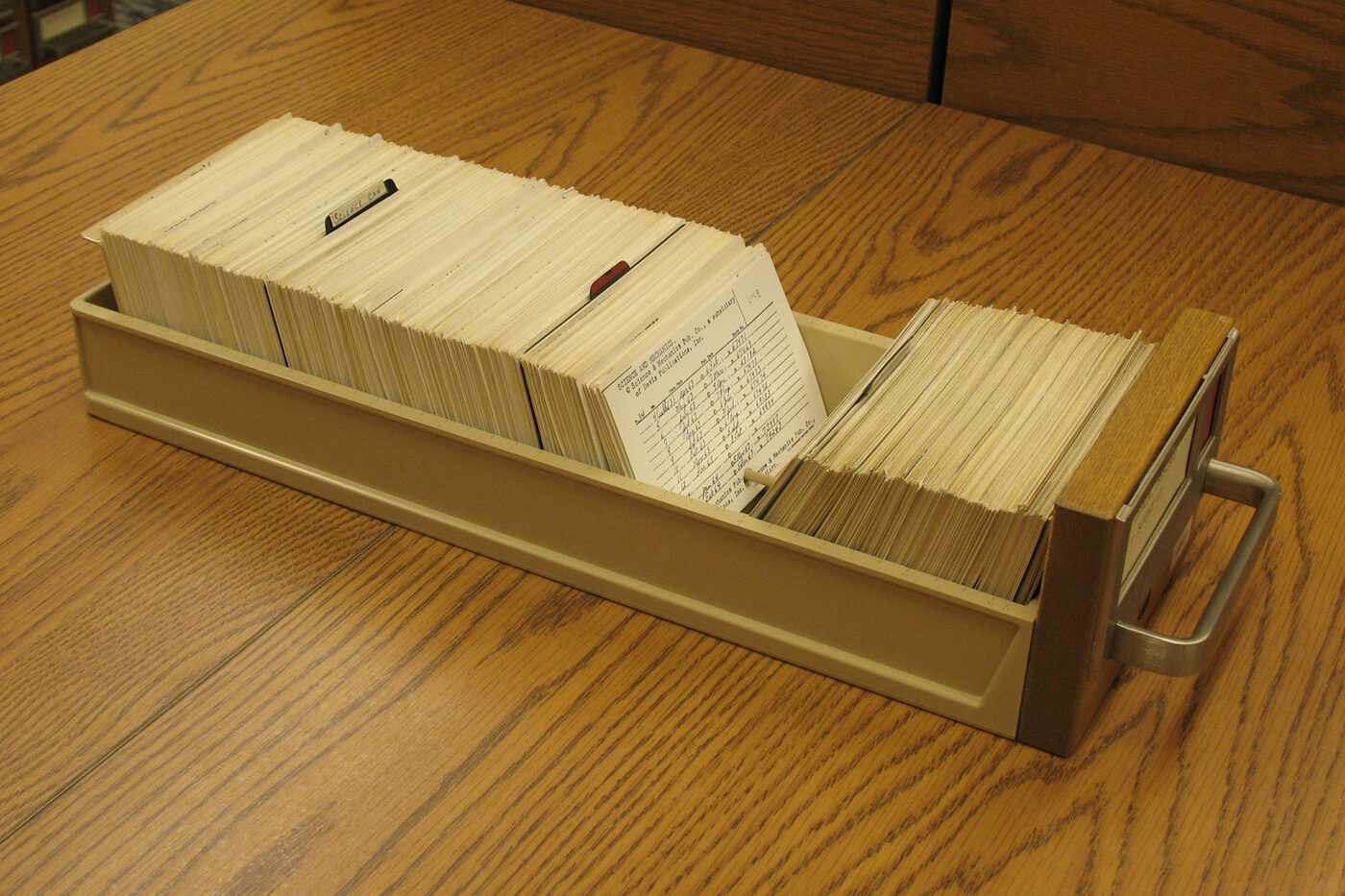

Its companion was the Alternative Newsgroup Hierarchies posting, archived as alt-hierarchies/part1 and running to five parts, which covered everything the first document excluded. Its headers credit John Gilmore and Gene Spafford as original authors, record the same handover to Spafford's editing until May 1993 and then to David C Lawrence, and the instalment of 9 August 1996 went to the same three newsgroups. Its introduction explains the arrangement that made non-Big-Eight hierarchies possible at all — that such groups travel only to sites that ask for them, and that forwarding them to a neighbour without asking first is bad manners as well as bad practice, since the freedom to say what one likes in those groups depends on their reaching only people who chose to receive them. Then it says this, in the middle of the document that was the standard reference on the subject:
Also note -- the lists in this article are totally unofficial and possibly incomplete or inaccurate. I try to keep the lists up-to-date, but make no guarantee that any of the information contained corresponds with the named groups in any significant way.
Both documents were preserved the way everything periodic on Usenet was preserved: by carrying an Archive-name header, which is what let the FAQ archives collect them automatically and mirror them onward to the web archives that outlived the postings themselves. That mechanism — the *.answers newsgroups, the archive names, the posting robots — is the subject of the page for soc.answers, and the administrative groups the lists were posted into are described on the hub for news.*. What belongs here is only the consequence: the reason we can still read a 1996 list of newsgroups is that the list was, technically, a FAQ.
The list today, and what it has lost
The lineage did not stop, though it did break. The modern successor is called List of Big Eight Newsgroups, posted from [email protected] over the name of the news.announce.newgroups Moderation Team, cross-posted to news.announce.newgroups, news.groups and news.lists.misc, and PGP-signed. Its own preamble explains its relationship to the machinery: a normal checkgroups control message is posted monthly for automated processing, and this posting supplements it by providing the same list in a regular news article, for reference or for readers without access to control messages. The list sits between two marker lines reading cut to this line and cut from this line, so that a reader can extract it and feed it to a checkgroups script by hand.
ISC's archive holds 202 instalments of it, from 16 October 2002 to 15 August 2026, and two hundred of those are dated the fifteenth of a month. The run is not continuous. There is nothing at all between 15 July 2014 and 15 July 2021 — a gap of exactly seven years in the middle of the series. The machine half of the arrangement carried on regardless: the logs show the Big Eight checkgroups control message being processed in June 2016, June 2018 and June 2020, in each of the years when its human-readable companion was not being archived. The article was the part that lapsed, which is a fair description of the period generally.
Counted between the marker lines by the same method, the first instalment contains 2,354 Big Eight newsgroups and the most recent contains 1,898. Comparing the two files name by name, 507 names present in 2002 are gone and 51 have been added. And the August 2026 posting agrees exactly, to the group, with the Big Eight subset of the active file described at the top of this page — which is the least glamorous and most reassuring fact in this article, because it means the two independent expressions of the same list have not drifted.
A large share of the 507 losses were deliberate. In February 2011 the Big-8 Management Board issued a Request for Discussion titled The Great Downsizing 2011/1, proposing the removal of 198 unmoderated newsgroups on a stated and checkable criterion: no moderated groups, no group whose name matched *.misc, and zero on-topic, non-crossposted threads in the past eighteen months — with the pointed clarification that an on-topic question receiving no on-topic answer did not count as a thread. A second proposal followed that July for 23 moderated groups, chosen because they had had no on-topic traffic for years and because moderator-vacancy investigations posted between 29 May and 17 June 2011 had precipitated no interest in retaining them. The Big-8 process itself, from the vote-taking era to the board that replaced it, belongs to the soc.* hierarchy page and is not retold here.
The downsizing reaches this directory directly. Two of the groups catalogued above — soc.culture.estonia and soc.culture.singapore.moderated — appear by name in the 2011 proposal for moderated groups, and neither is in the current ISC file. Their pages here remain, describing groups the record now says do not exist. That is not an error to be corrected. A directory of what a gateway once offered is a historical document, and the whole value of comparing it against a current list is that the comparison produces a difference.
The bogus-group problem
Lists of groups that ought not to exist were maintained with the same seriousness as lists of groups that did, and for a while the negative catalogue grew faster than the positive one.
The document was called Bogus USENET Groups, and ISC's archive holds 168 instalments of it, from 1 December 1992 to 3 July 2000 — roughly two a month for seven and a half years. The first, posted by David C Lawrence from uunet.uu.net, is six kilobytes long and lists seventy-seven names, each with a reason in the right-hand column: defunct, no proposal, superseded by a named replacement, revoted as another name, once questionable vote recalled and failed, and twice the flat verdict should be followed by the correct spelling. Its explanatory note is the clearest statement of the whole problem ever committed to a periodic posting:
While USENET is a co-operative anarchy, and doesn't really have "official" and "bogus" groups that are enforcable anywhere other than at each individual site, groups listed in this article are considered by a majority of admins to be not valid based on the reasons above. Keeping a coherent picture of what most admins think the USENET namespace looks like helps everyone to use network news more effectively by being better able to target appropriate audiences.
Note what the document claims and what it declines to claim. It does not say these groups are invalid; it says a majority of administrators consider them so, and that recording the majority view helps people find each other. The same note explains the entry criterion — a name earned its place by having had a well-propagated newgroup message or a remarkably high number of articles posted to it. Later instalments spell out the practical consequence for anyone who ignored the list: people posting to groups on it would probably find the propagation of their articles poor, and their reading audience limited, leading to fewer responses if any.
By the final instalment of 3 July 2000 the list had grown from seventy-seven names to 8,211, and the shape of the growth is the interesting part. It is not eight thousand independently bad ideas, and it did not accumulate steadily. The instalment of 4 January 1995 lists 182 names; that of 2 January 1996, 282; that of 17 January 1997, 382; that of 4 February 1998, 437. On 3 August 1998 the count stood at 692. By 19 October 1998 it was 5,524, and by 4 January 1999, 7,802. Something happened in the autumn of 1998, and the final list still shows plainly what it was.
Some 2,111 entries in that last file begin news.groups., a further 2,273 begin news.admin. and another 2,122 begin news.misc. — 6,506 of the 8,211, or seventy-nine per cent of the whole document. In 6,441 of them the reason column reads should be followed by the real name: news.groups.lang.forth should be comp.lang.forth, news.admin.agriculture.poultry should be sci.agriculture.poultry, and so on for thousands of lines. Someone had taken most of the Big Eight namespace and reissued it three times over, under three prefixes inside the administrative hierarchy. That is what forged group creation looked like at scale in the late 1990s: not a joke group, but a mechanical mirror of the whole catalogue, injected in bulk because injecting it cost nothing and cleaning it up cost everyone else something.
The countermeasure recorded in the same posting is a small masterpiece of resignation. Administrators at INN and C News sites are advised not to delete such groups but to add them locally with an x flag, cutting their propagation via the local junk spool and lessening the appearance to others that they are widely accepted — the fix being not to remove the name from the world but to make it a dead end on your own machine. The same paragraph warns that articles cross-posted from a flagged bogus group to an otherwise valid group will still propagate normally, so even the dead end leaks. The two remedies that actually worked arrived later and are visible in the files described above: PGP-signed control messages, so that a forged From line buys nothing, and a default policy of dropping or merely mailing every control message from everybody unless a named exception applies.
The problem did not end; it moved to where signatures cannot follow. Because alt.* honours creation from anyone and ignores removal from anyone, its portion of the current file is the sediment of every flood that was ever aimed at it. The residue is legible in the descriptions: the August 2026 newsgroups file contains seventy-seven groups sharing one identical description, a single short sentence naming one private individual, spread across a fan of invented sub-names; a further sixty-eight carry an identical line crediting the users of one named piece of software with having created them as a public service. None of these were newsgroups in any sense that involved reading or posting. They are names, created because names were free, and they will be in the file for as long as the file exists, because alt.* has no mechanism that could take them out.
Why a gateway needed a list
This site is the reconstruction of a mail-to-news gateway. How that service worked, and what it bridged, is set out on the front page. What belongs on this page is a narrower point about the architecture of such a service: for a subscription gateway, the catalogue is not an accessory. It is the product.
A newsreader connecting to a news server does not need a catalogue at all in the ordinary case. It asks the server for its group list over the wire, receives whatever that particular server carries, and the user browses it. There is nothing to publish, because the authoritative list for that user is whatever their own server says, which is exactly the right answer for them. A gateway has no such luxury. Its users have no server and no newsreader; they have a mailbox and a web page. Every group the service could deliver had to be named somewhere a stranger could read it, described in a sentence, and given a form to submit. The list was the interface. A group not on the list did not exist for that service's users in any operative sense, however healthy it might be on the wire.

_cover.jpg)
That constraint shaped what such catalogues contained, and it is why they are worth preserving. A gateway operator had no incentive to list groups nobody would want and every incentive to list groups people asked for. The selection is therefore not a sample of Usenet; it is a record of demand, filtered through whatever the operator could obtain a feed for and could be bothered to write a page about. Read that way, a gateway's catalogue is a different kind of document from the ISC file: not an inventory of what existed, but a partial transcript of what somebody thought worth offering to people who had heard of Usenet and could not reach it.
What this directory's list is, and what it is not
The list above holds 179 entries covering 177 distinct newsgroups. Two names appear twice, under two different paths — comp.databases.pick and soc.culture.slovenia — because the original site carried two pages for each and the reconstruction preserves both addresses rather than silently choosing a winner. Anyone can check the count by reading the page above; the arithmetic in this section is offered so that the checking has something to disagree with.
Against the 45,003 groups in the ISC file of 26 August 2026, 177 is 0.39 per cent of the namespace. That is the honest headline, and the composition matters more than the fraction. Broken down by first component, the directory holds 77 groups under soc.*, 48 under alt.*, 14 under microsoft.*, 11 under rec.*, 8 under comp.*, 7 under sci.*, 5 under de.*, and one each under adobe, fr, free, news, nl, qc and talk.
Set that beside the namespace it is drawn from and the skew is severe in both directions. soc.* is 0.47 per cent of the ISC file and 43.5 per cent of this directory. alt.* is 45.5 per cent of the file and 27 per cent of this directory. microsoft.* is 1,770 groups in the file and 14 here. The single largest concentration is narrower still: 76 of the 177 are in soc.culture.*, which is 55 per cent of the 139 soc.culture.* groups ISC currently lists — so this directory covers more than half of one branch of one hierarchy and essentially nothing of everything else. Moderation tells the same story: three of the 177 groups are moderated, against 12.9 per cent of the namespace at large.
Of the 177, 155 are in the current ISC active file and 22 are not. The reasons for the twenty-two are various and each is checkable. Some were removed by a hierarchy's own maintainer: nl.comp.hacken is gone from a hierarchy that still runs a signed checkgroups most months. Some were removed by the Big-8 board, including the two named in the 2011 downsizing above. Some belong to hierarchies whose lists are static because no authority remains. And four are in alt.*, where removal is not possible — which means they are absent not because anyone deleted them but because ISC never accepted them in the first place. The archive shows why for one of them: alt.new.cracks has a newgroup control message on file from 30 December 1994, but its body carries no For your newsgroups file: line, and ISC's published policy requires that line before a creation request can be processed automatically. A removal request followed the same day; under the alt.* rules it was ignored, which changed nothing, since nothing had been added.
So: this directory's list is a catalogue of what one mail-to-news gateway offered its subscribers, reconstructed from what survives of that site. It is not a list of Usenet newsgroups, not a sample of them, and not a selection made on any editorial principle that would survive scrutiny. It is heavily weighted towards national and cultural groups, towards vendor support hierarchies, and towards the European hierarchies a European service could get a feed for. Its silences are as characteristic as its contents: there is almost no comp.*, nothing from most of the four hundred and seventy-nine first components, and no binaries traffic to speak of. The one thing it is authoritative about is itself.
What a catalogue is worth when the rooms are empty
Most of the groups in any list of newsgroups are silent, and have been for years. This is not a claim that needs pathos attached to it; it is close to being a measurement. The Big-8 board's 2011 criterion for removal — zero on-topic, non-crossposted threads in eighteen months — was met by 198 unmoderated groups out of the 2,215 that the Big Eight list held that February, and that was fifteen years ago, applied conservatively, sparing every .misc group and every moderated one. The 10,016 groups in the current file with no description at all were never given one by whoever created them, which is at least evidence that nobody thought it worth a sentence. The seventy-seven identically described alt.* groups aimed at one person were never intended to be read.
What survives, then, is not a record of conversation. It is a record of intention: a list of the rooms people thought worth building. That is a genuinely different kind of evidence, and in some ways a better one. Traffic tells you what a community argued about in the months an archive happens to cover. A namespace tells you what categories a population believed it needed, at the moment of asking, and the asking is dated and attributable. Somebody wanted a newsgroup for the culture of a particular country, for one make of scooter, for a single spreadsheet's macro language, for classic country music, for a support group, for a joke. Each of those wants produced a name, a one-line description, and in the managed hierarchies a written charter and a public argument about whether the name was correct.
A list of newsgroups is therefore best read as a gazetteer rather than a transcript — the same way a nineteenth-century trade directory is read. Nobody consults a trade directory to find out what the ironmonger said. They consult it to find out that in that year, on that street, there was an ironmonger, and a corn chandler, and three public houses. The English Wikipedia's own list of newsgroups opens by describing itself as a partial list of groups significant for their popularity or their position in Usenet history, which is a reasonable thing for an encyclopaedia to attempt and a reminder that the complete version is not an encyclopaedia's kind of object. The complete version is 45,003 lines of tab-separated text, updated hourly, mostly consisting of rooms nobody entered.
The unsentimental summary is that the catalogue outlasted the content, and did so because it was small, structured and posted on a schedule. That is a general fact about archives and not a special virtue of Usenet's. What people said mostly went where spool expiry sends things. What people named is still in a file on an FTP server, in a format designed in the 1980s, with a description column and a moderation flag.
Scope and limits
Every count in this article comes from one of four primary sources and can be reproduced. The namespace figures come from the ISC active and newsgroups files of 26 August 2026, 06:00 UTC; a reader running the same arithmetic on a later copy will get different numbers, and should. The policy statements come from the README beside those files and from control.ctl as last revised on 5 August 2023. The historical postings come from the news.announce.newgroups archive, which holds the Bogus Usenet Groups series from 1992 to 2000 and the Big Eight group lists from 2002 to the present, together with the 2011 downsizing proposals. The protocol definitions come from RFC 1036 and RFC 5537.
Those sources have known blind spots, and it is better to name them than to let a number imply more than it can carry. ISC's list reflects control messages that reached one archive; hierarchies that never sent control messages, or whose messages were dropped by a rule, are represented by whatever list was supplied to ISC by hand, possibly years ago. Hierarchies internal to a company or a campus are not in it at all, by design and by their own preference. Groups that exist on individual servers and nowhere else — a category with no upper bound — cannot appear in any published list, which is the reason no published list can be complete. The Alternative Newsgroup Hierarchies posting said as much about itself in 1996 and the honesty has not aged.
This directory's own list is narrower still, and its boundaries are not editorial. It contains the groups a single mail-to-news gateway served, as recovered from what remains of that site. It does not contain groups the gateway declined to carry, groups created after it stopped in 2004, or groups it may have carried whose pages did not survive. Where a page here describes a group that the current record says no longer exists, both statements are true of their own dates and the page says so.
Finally, a limit of a different kind. Nothing on this page establishes what was said in any of the 177 groups. A catalogue entry is evidence that a name existed, that somebody proposed it, and in most cases that somebody wrote a sentence describing what it was for. It is not evidence of a community, a volume of traffic, or a single conversation. Where this directory can show more than that — a control message, a charter, a vote result, an archived posting — it is shown on the group's own page, with its source. Where it cannot, the page says nothing, which is the correct amount to say.