The rec.* hierarchy
Recreation: music, sport, travel, and the arts. rec.* groups were where fandoms and hobbies organised themselves decades before dedicated platforms existed.
- rec.arts.sf.written.robert-jordan
- rec.drugs.smart
- rec.folk-dancing
- rec.food.cooking
- rec.games.roguelike.adom
- rec.music.country.western
- rec.sport.football.college
- rec.sport.hockey
- rec.sport.hockey.field
- rec.sport.olympics
- rec.travel.caribbean
On this page
- What rec.* inherited
- The shape of the tree today
- How to read a rec.* name
- When a subject earned its own level
- The rooms beside the room
- The FAQ, and the discipline of the periodic posting
- Spoiler space, and the cipher that was not one
- Fan canon, and the showrunner in the room
- From lists to a database
- Reviews, and the economics of an edited room
- Moderation in a recreation hierarchy
- When a joke group met a university
- Recreation and the binary problem
- How a rec.* group actually ended
- Where the traffic went
- Scope and limits of this page
What rec.* inherited
rec.* is the branch the Great Renaming handed to everything people did when they were not working. The general account of that reorganisation — why it was wanted, who made it stick, and what the B News changes of 1986 had to do with it — belongs on the Usenet explainer and is not retold here. What matters on this page is what was poured into the new tree, because the recreation groups were not created by the renaming: they already existed, scattered through the old flat namespace under names that told a reader nothing about where to look.
Three of those ancestors can be named with confidence. net.jokes, one of the busiest rooms on the old network, became rec.humor; the moderator who then built a group beside it recorded the change in his own history of it, noting that “rec” stood for recreational. net.cooks, which the cooking group’s own long-maintained FAQ dates to January 1982, became rec.food.cooking. net.sf-lovers became rec.arts.sf-lovers and then, in October 1991, the rec.arts.sf.* family. There is a fourth witness of a different kind: when RFC 850, Mark Horton’s 1983 standard for the interchange of Usenet messages, needed an example of a legal newsgroup name to set against an illegal one, the pair it reached for was net.all, illegal, and net.sport.football, permitted. Recreation was not an afterthought in the namespace. It was what the standard used to explain the namespace.
The volume was there too, and it is the reason a separate tree made sense. A call for discussion on splitting up the music groups, posted on 5 March 1991 and preserved with the rest of the administrative record on the Internet Systems Consortium’s archive, turns on a complaint that is the whole argument in one line: its author wrote that every time he logged in and saw more than two hundred messages waiting in rec.music.misc, he felt like unsubscribing, even if there might be some good articles there. Four years later, when Brian Reid’s readership survey measured the network group by group for March 1995, the rec.* groups between them carried around 1,400 megabytes of text a month against comp.*’s 775 and soc.*’s 481. If comp.* was Usenet at work, rec.* was Usenet after hours, and after hours was busier.
What resulted is, today, the second-largest branch of the Big Eight. Counting a branch is possible because the ISC publishes the master files a news server builds its group table from, described on the comp.* hub; the edition consulted while this page was written, timestamped 28 August 2026, holds 45,003 names in all. Of those, 659 begin with rec, against 677 for comp.*, 213 for soc.*, 185 for sci.*, 100 for misc.*, 31 for talk.*, 26 for news.* and 7 for humanities.*. Eighteen names separate the two largest hierarchies.
Two cautions about that number, because it is easy to over-read. It counts names that the hierarchy’s administrators still maintain, not rooms anybody is sitting in; and the article counters shipped beside each name in the active file are placeholders, identical for all 45,003 entries, so nothing in that file measures traffic. Every traffic figure on this page comes from Reid’s published surveys of the period, not from this directory, which holds no message archive of its own.
The shape of the tree today
Counted in the current master file, rec.* distributes across its second level like this. rec.arts.* is the largest department at 103 names, followed by rec.music.* at 91 and rec.games.* at 91, then rec.sport.* at 56, rec.photo.* at 24, rec.autos.* at 24, rec.crafts.* at 23, rec.aviation.* at 20, rec.collecting.* at 18, rec.video.* at 16, rec.radio.* at 15, rec.pets.* at 15, rec.food.* at 15 and rec.travel.* at 12. Below those come the small departments — outdoors, models, boats, aquaria, skiing, gambling, audio, toys, motorcycles, humor, bicycles, gardens, drugs, antiques, scuba, scouting — and then a long tail of subjects that never needed a second word at all.
Thirty-three rec.* names are only two components long, and twenty-two of those have no children at all. The list is a map of what one particular network thought was worth a permanent room of its own: rec.answers, rec.backcountry, rec.birds, rec.climbing, rec.equestrian, rec.folk-dancing, rec.guns, rec.heraldry, rec.hunting, rec.juggling, rec.kites, rec.knives, rec.martial-arts, rec.misc, rec.nude, rec.ponds, rec.pyrotechnics, rec.roller-coaster, rec.running, rec.skydiving, rec.windsurfing and rec.woodworking. The remaining eleven — rec.antiques, rec.boats, rec.collecting, rec.gardens, rec.humor, rec.mag, rec.motorcycles, rec.pets, rec.puzzles, rec.scuba and rec.video — kept a room of their own and acquired children beside it. A hierarchy that gave coats of arms and kites permanent addresses was not being whimsical. It was applying the same rule as everywhere else in the tree: a name existed because enough readers had voted for it, and not before.
The rule cuts the other way as well, and the master file records the casualties. There is no group called rec.arts, rec.music, rec.games or rec.sport: those are pure prefixes, shared by their children and owned by nobody. The same is true one level down of rec.arts.movies, rec.arts.startrek, rec.arts.comics, rec.arts.anime, rec.games.mud, rec.games.video, rec.games.computer, rec.pets.cats, rec.pets.dogs, rec.crafts.textiles, rec.autos.makers, rec.autos.sport and rec.travel — every one of them a busy room in its day, every one of them dissolved into its own children once the children were created. The control archive dates several of the executions precisely: rec.travel was removed by control message on 29 September 1994, rec.arts.movies on 26 June 1995, rec.arts.sf-lovers on 21 January 1992.
One entry in the master file deserves to be quoted for its own sake. rec.misc, the catch-all at the root of the whole hierarchy, is described there as “General topics about recreational/participant sports”, while rec.sport.misc, one branch over, is described as “Spectator sports”. The description of the hierarchy’s own miscellany has been about sport, and nothing else, for as long as the file has been distributed. Nobody has troubled to rewrite it, which is a fact about how the namespace is maintained: by control message, only when somebody proposes one.
How to read a rec.* name
A rec.* name is read left to right as a narrowing, and the second component is the department. Learn the departments and you can find a group without a group list, which was the entire point: a reader who had never heard of a room could often guess its address, and be right.
- rec.arts.* — the things that are made to be watched, read or looked at, sorted by medium rather than by genre: movies, television, comics, books, theatre, anime, dance, origami, bonsai, poems and prose. Science fiction is the branch that grew deepest, all the way down to a group for one novelist — rec.arts.sf.written.robert-jordan, whose newgroup control message went out on 27 July 1994.
- rec.music.* — music divided three ways at once, which is why the branch is untidy. Genre groups take the plain names (rec.music.classical, rec.music.reggae, rec.music.early, rec.music.country.western); the twenty-three-name rec.music.makers.* shelf belongs to people who play rather than listen, with a room per instrument from bagpipe and dulcimer through french-horn and squeezebox, plus rooms for builders, bands and songwriting; and rec.music.artists.* holds the groups devoted to a single performer.
- rec.sport.* — fifty-six names, one branch per sport and then one per league, competition or level within it: rec.sport.football.college beside rec.sport.football.pro, rec.sport.football.canadian and rec.sport.football.australian; rec.sport.hockey beside rec.sport.hockey.field; and rec.sport.olympics, created by control message on 13 May 1992. The branch has its own page here: see rec.sport.*.
- rec.games.* — games sorted by how they are played rather than by what they are about: rec.games.frp.* for tabletop role-playing, down to rec.games.frp.dnd; rec.games.board.*, rec.games.chess.*, rec.games.video.* including rec.games.video.arcade, rec.games.computer.*, rec.games.mud.* for the multi-user dungeons, rec.games.trading-cards.*, rec.games.int-fiction for interactive fiction, and the eight-group rec.games.roguelike.* family that this directory joins at rec.games.roguelike.adom, created on 27 February 1997.
- rec.food.* — cooking and its neighbours, split by process and by ingredient: rec.food.baking, rec.food.preserving, rec.food.sourdough, rec.food.chocolate, rec.food.historic for the history of the craft, rec.food.restaurants for eating out, and the drink shelf rec.food.drink.beer, .coffee and .tea.
- rec.travel.* — travel split by region and by mode: rec.travel.air for the mechanics of getting there, rec.travel.budget.backpack for doing it cheaply, and the regional rooms rec.travel.africa, .asia, .europe, .australia+nz and rec.travel.caribbean, whose newgroup message was issued on 8 November 1995 and whose entry in the master file still reads, in full, “Travel to the islands of the Caribbean, sans pirates”.
- rec.crafts.* — making things by hand, one group per technique: beads, carving, glass, knots, metalworking, polymer-clay, pottery, rubberstamps, scrapbooks, woodturning, winemaking, meadmaking, brewing, distilling, and the seven-group textile shelf that runs from rec.crafts.textiles.sewing to rec.crafts.textiles.needlework, defined in the master file as “Any form of decorative stitching done by hand”.
- rec.autos.* — cars split by what you do with them rather than by what you own: rec.autos.driving for the road, rec.autos.tech for the workshop, rec.autos.sport.f1, .indy, .cart and .nascar for the track, rec.autos.simulators for the screen, rec.autos.antique for the past, and rec.autos.makers.* for the marque loyalists, down to individual model lines.
- rec.pets.* — animals kept for company, with the two large families divided not by breed but by the kind of question being asked. Dogs get rec.pets.dogs.behavior, .health, .breeds, .activities, .rescue and .misc; cats are cut differently, with behaviour and health together in rec.pets.cats.health+behav and separate rooms for community, rescue and misc, plus rec.pets.cats.anecdotes for the stories that were never really questions at all. Beside them sit rec.pets.birds, rec.pets.birds.pigeons and rec.pets.herp.
- rec.humor.* — six names, of which three are moderated: rec.humor for jokes, rec.humor.d for arguing about the jokes, rec.humor.funny, described in the master file as “Jokes that are funny (in the moderator’s opinion)”, rec.humor.funny.reruns for the archive, and rec.humor.oracle and rec.humor.oracle.d for the collaborative comic institution described below.
Two departments show the scheme being applied with unusual rigour. rec.aviation.* is split by what a pilot is doing rather than by what make of aircraft they own — piloting, owning, student, ifr, homebuilt, restoration, soaring, aerobatics, military, simulators, products, stories — and where a name does denote a machine it denotes a whole class that flies differently, not a manufacturer: balloon, rotorcraft, ultralight, powerchutes, hang-gliding. In twenty names there is not one marque. rec.collecting.* runs the opposite way and splits by what is collected, which produces the finest-grained taxonomy in the hierarchy: coins, paper-money, phonecards, pins, dolls, stamps, postal-history, collectible villages, and separate rooms for baseball, basketball, football and hockey memorabilia with a fifth for everything else.
And two of this directory’s pages sit at the awkward edges of the scheme, which is why they are worth pointing at. rec.folk-dancing is a two-component name for a subject that arts, music and sport could all have claimed, and it kept that name for its whole life. rec.drugs.smart exists because “recreation” was read literally: the rec.drugs.* branch was voted into being in July 1995 — rec.drugs.cannabis 365 votes to 93, rec.drugs.psychedelic 356 to 99, rec.drugs.misc 362 to 99 — expressly to give a chaotic set of alt.* groups a stable home, and the proposal drew the boundary of its own subject in a single sentence, directing debates about the merits of legalisation or the morality of drug-taking to talk.politics.drugs instead. rec.drugs.smart, for nootropics, followed by control message on 8 April 1996. The hierarchy was for the doing of things; the arguing about whether they ought to be done belonged next door.
When a subject earned its own level
Depth in rec.* had to be earned, and the mechanism for earning it was public. A subject started as one group; if that group became unreadable, its readers proposed a split; the proposal succeeded or failed on whether enough of them wanted the extra rooms. Nobody built empty scaffolding in advance. The full Big-8 procedure — Request for Discussion, Call for Votes, a neutral votetaker, the hundred-vote margin and the two-thirds ratio, the five-day objection period, and the newgroup control message that every administrator remained free to ignore — is set out in detail on the comp.* page and in the news.* page’s account of the groups that ran it. What follows is what the machinery did to recreation subjects in particular.
The best-documented case in the hierarchy is the roguelike games, and it is worth following in full because every stage survives verbatim. On 2 July 1993 Andrew Solovay posted a Request for Discussion proposing a rec.games.dungeon.* hierarchy to gather the scattered rooms for Rogue, Moria and Hack, on the ground that the games were character-based and portable and so fitted none of the machine-specific comp.sys.*.games groups. Ten days later he issued a second RFD under a different name: the consensus, he reported, was that “dungeon” described far too wide a variety of games, and that “roguelike” described all the games in the proposal and no others, since the one thing they had in common was descent from Rogue. A third RFD on 20 July closed the discussion with a sentence that is as good a summary of Usenet naming as exists: those who agreed on a name seemed to favour roguelike “as the least of all available evils”.
The Call for Votes went out on 27 July 1993 and the result was posted on 18 August. Three hundred and thirty-seven people voted. Two proposals passed — rec.games.roguelike.announce, moderated, 229 to 100, and rec.games.roguelike.misc, 228 to 99 — and the three that would have renamed the existing groups failed both tests, the two-thirds ratio and the hundred-vote margin: 212 to 115 for moria, 214 to 116 for nethack, 207 to 120 for rogue. The proposer’s own charter for the announce group is a fair inventory of what such a room was for: FAQ lists, announcements of new patches and versions, small official patches, and announcements of new games, with the moderator free to add the word SPOILERS to a subject line where it was needed.
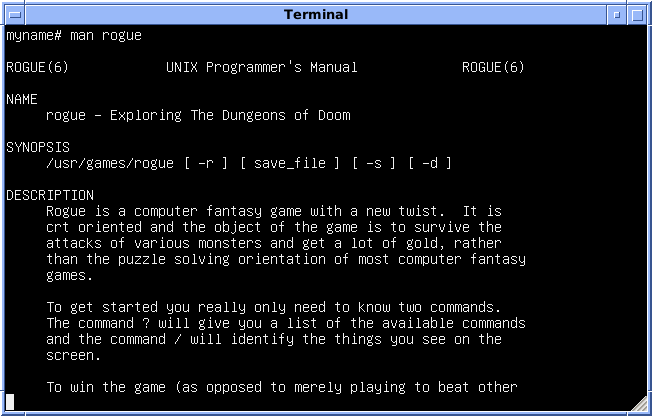

What happened next is the part that generalises. The hierarchy was left incoherent — the new Angband group had gone in as rec.games.roguelike.angband while Moria, Hack and Rogue kept their old second-level names — and a second vote was called precisely on that inconsistency, its proposer opening the case in April 1994 with the observation that seven months after the hierarchy’s creation it was still inconsistent. The vote closed on 30 May 1994 with 295 valid ballots, and this time all three renames passed comfortably: 229 to 45, 230 to 60, 219 to 59. Readers who would not vote to be sorted voted, nine months later, to be tidied.
The same seam is visible in rec.music, and it never healed. A Request for Discussion of 17 April 1992 observed that rec.music held three distinct kinds of group at once — genre groups, artist groups and musician-oriented groups — and proposed to gather them into rec.music.artists.*, rec.music.makers.* and rec.music.collecting.*, naming rec.music.beatles, rec.music.dylan, rec.music.gdead and rec.music.phish as the four artist groups to be moved; rec.music.phish, the youngest of them, had been newgrouped only on 9 March 1992, five weeks before the proposal that wanted to move it. The makers and collecting subhierarchies exist today, with the vinyl and compact-disc rooms the proposal asked for. The four band groups do not: they are still sitting at the second level. Nor did the door close behind them — rec.music.rem was created by control message in March 1994 and rec.music.tori-amos in September 1994, both at the second level, two years after the proposal that was meant to have settled the question, while fourteen other artist groups did go under rec.music.artists.*. Two schemes, running side by side, in the same branch, for more than thirty years.
Sport supplies the neatest demonstration of what a name does when a subject outgrows its slot, and it is a demonstration about defaults rather than about volume. rec.sport.hockey means ice hockey; the master file says so in as many words, and gives rec.sport.hockey.field as “Discussion of the sport of field hockey”. The game that most of the world simply calls hockey is thus the child of the one it is not a subset of, created by control message on 2 January 1992, because the unmarked name had already been taken by the sport that reached a North American network first. The alternative was a rename, and renames were expensive: a Request for Discussion of 21 November 1993 proposed breaking rec.sport.hockey into scores, NHL and non-NHL rooms, a second on 8 December added a fourth for hockey outside North America, and no Call for Votes ever followed. rec.sport.hockey and rec.sport.hockey.field are still the only two hockey rooms in the hierarchy. That branch has its own page, and its story is told there.
Science fiction shows the fourth pattern: subdivision so successful that the parent became a ghost. rec.arts.sf.written, rec.arts.sf.misc and rec.arts.sf.fandom were created by control message on 21 October 1991 — one room for the books, one for the people who read them, one for everything else; rec.arts.sf-lovers, the room they replaced, was removed on 21 January 1992. It went on being read anyway. Reid’s survey for March 1995 still lists rec.arts.sf-lovers, carried by 32 per cent of sites, receiving 68 messages a month, 89 per cent of them crossposted from somewhere else — three years after its formal abolition. A control message is a request, not an order, and a group with readers can outlive the paperwork that kills it by years.
And the depth could run further than the parent could bear. In that same March 1995 survey, rec.arts.sf.written.robert-jordan — a fourth-level group for the works of a single living novelist, eight months old — carried 5,388 messages that month against its parent rec.arts.sf.written’s 4,040, and did it while reaching 54 per cent of sites to the parent’s 71. The child was busier than the department it hung from, on worse propagation. That is what a fandom waiting for the next volume of a series looked like when measured.
The rooms beside the room
Recreation groups generated three kinds of traffic that did not belong in a discussion: notices, advertisements, and the reference documents that discussion kept regenerating. rec.* dealt with each by building a separate room for it, and the shape of those rooms is one of the hierarchy’s real inventions.
The first is the moderated companion. A busy unmoderated group would acquire a low-volume sibling ending in .announce or .info where nothing appeared without a moderator’s approval, so that release dates, results, calendars and version announcements could not be buried under argument. Six survive in the master file today — rec.games.mud.announce, rec.games.frp.announce, rec.games.roguelike.announce, rec.arts.tv.mst3k.announce, rec.radio.info and rec.sport.pro-wrestling.info — and many more existed, including rec.arts.anime.info, rec.arts.startrek.info and rec.arts.drwho.info. The arrangement was cheap: one volunteer, a few postings a week, and a room a reader could subscribe to without committing to the argument next door. In Reid’s March 1995 figures rec.games.mud.announce reached an estimated 47,000 readers on 17 messages a month.
The second is the marketplace group, and rec.* built more of them than any other hierarchy: 39 names in the current master file contain the word marketplace, against eight in comp.*, two in misc.*, one each in soc.* and sci.* and none at all in talk.*, news.* or humanities.*. They run from rec.antiques.marketplace and rec.aviation.marketplace through rec.crafts.textiles.marketplace to the four-deep rec.games.trading-cards.marketplace.magic.auctions. The principle was that buying and selling is not discussion and should not be read as though it were, and the descriptions enforce it with unusual bluntness: rec.music.collecting.cd is annotated “NO wanted or forsale”, and so are its vinyl and miscellany siblings. It worked, in the sense that the traffic went where it was sent: in March 1995 rec.games.trading-cards.marketplace was the single largest rec.* group by volume at 107 megabytes a month, more than four times the volume of the busiest discussion group in the hierarchy.
The third is the discussion group attached to a digest, marked with a bare .d. rec.humor.d exists to argue about what appeared in rec.humor; rec.humor.oracle.d exists to comment on what the Oracle said. The convention kept the edited room clean and gave the unedited reaction somewhere legitimate to go, and it is the direct ancestor of every modern comment thread hanging off a published piece — with the difference that on Usenet the two were separate publications, and a reader could take one without the other.
The fourth is rec.answers, created by control message on 12 January 1993 as the hierarchy’s repository for periodic postings. Its entry in Reid’s 1995 survey is the most eloquent line in the whole report: an estimated 67,000 readers, 695 messages a month, and a crossposting rate of 100 per cent. Nothing was ever posted to rec.answers alone. Every article in it was a FAQ that already existed somewhere else, filed into a common room so that it could be found. The equivalent room in the technical hierarchy, comp.answers, and the MIT archive that collected all of them, are described on the comp.* page.
The FAQ, and the discipline of the periodic posting
The frequently asked questions document was not invented in rec.*. It was invented on an ARPANET mailing list: new subscribers were expected to read the archived messages before posting, most of them did not, and between 1982 and 1985 Eugene Miya of NASA coined the acronym for the SPACE list to stop the same answers being typed out again. What rec.* did was turn a labour-saving device into a genre.
The form worked because it was married to a mechanism. A FAQ was not a page somebody maintained; it was an article somebody re-posted, on a schedule, so that it arrived in front of every reader who had joined since the last edition. The postings carried an Archive-Name header naming their place in a filing system, an Expires header keeping them visible until the next edition was due, and often a Supersedes header that quietly cancelled the previous copy. They were crossposted into the moderated answers groups. Most were generated by scripts that ran unattended for years. In a hierarchy whose subjects were hobbies, this produced something genuinely new: buyer’s guides, technique notes, discographies, breed guides, rules summaries and glossaries, revised by public argument between editions and reissued on a timetable, maintained by people with no professional reason to bother.
The strength of the arrangement, and its pathos, are both visible in the administrative record. When the Big-8 Management Board proposed the removal of rec.arts.anime.creative — a moderated group for fan-written stories, poems and artwork whose creation vote passed 292 to 51 on 13 March 1996 — it set out the group’s traffic history in one line: the last posting of any kind was in 2017, and every posting from 2013 to 2017 was a FAQ. The last actual contribution was made in 2012. For five years, an automated periodic posting kept a reference document up to date in a room that nobody was in. That RFD was issued on 23 July 2026 and repeated on 6 August; it is the most recent entry in the rec.* section of the ISC archive.
What the FAQ habit produced beyond its own hierarchy is the part worth insisting on. The convention that a community writes down its settled knowledge once, in public, in a document anyone may correct, and then republishes it where newcomers will meet it, is now the default architecture of the internet: it is the fan wiki, the pinned post, the community-maintained help page and the stack of answers under a question. Every one of those is rec.answers with better typography.
Spoiler space, and the cipher that was not one
A newsgroup posting arrives whole. There is no click to hide half of it behind, and in 1990 there was no reliable way to know what a reader had already seen. The arts groups therefore had to invent a way of publishing a fact while giving the reader a chance to refuse it, and what they invented is now so completely absorbed that its origin has been forgotten.
The word came first and from outside: the first print use of spoiler in the modern sense was an April 1971 article in National Lampoon that gave away the endings of famous films and novels on the stated ground that it saved time and money. The term appeared on the internet in 1979 and became common in newsgroups through the late 1980s — which is to say, in rec.arts.*, because that is where the problem was.
The practice that grew round it had three parts, and all three were eventually written into an IETF document. RFC 1855, Netiquette Guidelines, published as FYI 28 in October 1995, states the rule for exactly the groups this hierarchy contains:
In groups which discuss movies or books it is considered essential to mark posts which disclose significant content as “Spoilers”. Put this word in your Subject: line. You may add blank lines to the beginning of your post to keep content out of sight, or you may Rotate it.
The subject-line marker let a newsreader skip the article unread. The blank lines — spoiler space — were counted against the hardware: enough of them to push the revelation off a twenty-five-line terminal screen, so that seeing it required a deliberate keystroke. And Rotate meant ROT13, the substitution that shifts every letter thirteen places along the alphabet and, applied a second time, undoes itself. It is not encryption, was never meant to be, and its uselessness is the point: it costs one menu command to read and therefore makes reading a decision. Usenet had been using it since the early 1980s in net.jokes to bury punchlines that some readers would rather not meet by accident, and the same RFC recommends it for that purpose in the paragraph immediately before the one about spoilers.
Both conventions turn up in the administrative record as things moderators were expected to enforce, and the record also shows how far practice varied. The charter of rec.games.roguelike.announce, voted through in August 1993, gives the moderator discretion to change a subject line, especially to add the word SPOILERS. The charter of rec.arts.erotica, whose vote closed on 28 February 1990, went the other way and said so plainly: its moderator promised not to edit submissions at all, offered only to add “some keywords or extra description on the subject line, if appropriate”, and stated that postings would not be rot13’d — a monthly reminder explaining the nature of the group would do that work instead. Six years later the moderators of the Babylon 5 group wrote the opposite policy into their charter, undertaking to insert spoiler protection by hand wherever a poster had left it out: the subject line marked as a spoiler, and then a form feed, twenty-five blank lines and another form feed before the text. That is the twenty-five-line terminal, written into an editorial policy. These are editorial rules of a recognisably modern kind, argued out by volunteers, a decade before the phrase content warning existed.
Fan canon, and the showrunner in the room
The arts groups did something else that has no real precedent: they put the audience and the author in the same room, on equal terms, in public, while the work was still being made. The documented case is Babylon 5, and it is documented unusually well — the newsgroup has its own encyclopaedia article, its moderator was profiled in the Wall Street Journal, and it has been the subject of academic books from three university presses.
J. Michael Straczynski, the series’ creator, had been posting about the show on GEnie and CompuServe before the pilot aired on 22 February 1993, and was on Usenet while the first season was in production; rec.arts.sf.tv.babylon5 itself, the group most associated with him, was created by control message on 28 March 1994. There he answered questions about the writing process, the business of television and the show’s planned arc. He is widely credited as the first notable creator to talk to an audience this way, and the consequences ran in both directions: he had to abandon a script already in pre-production because fans had posted the same idea to the group, and by the end of 1995 the attention had turned into sustained personal harassment. He left the unmoderated group.
What the fans did next is the point. Rather than follow him off Usenet, they proposed a moderated version of the group, and the result, posted on 26 March 1996, was 2,241 in favour to 109 against — 2,350 valid ballots, three abstentions and fourteen spoiled papers, cast about one television programme. For a sense of the scale, the comp.os.linux reorganisation of 1992, a landmark ballot in the technical hierarchies, counted 613 votes in all. rec.arts.sf.tv.babylon5.moderated was created by control message on 2 April 1996, seven days after the result and so after the five-day objection period the procedure required, and its entry in the master file still reads “Babylon 5 creators meet Babylon 5 fans”.
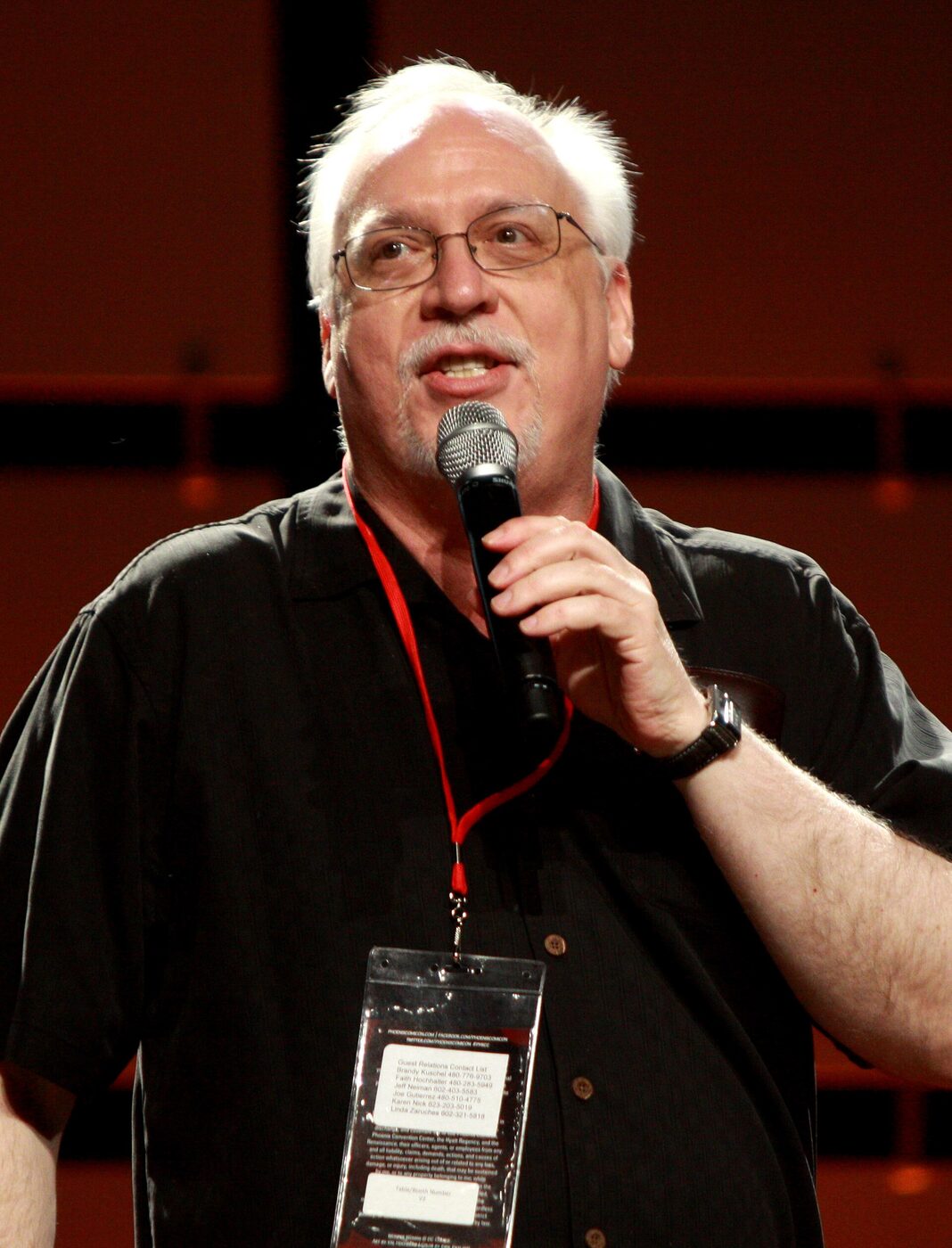

Its moderation policy is worth stating because it is not what a modern reader would expect. The encyclopaedia article on the group summarises it as: no topic is off topic, and the only things not allowed are spam, trolling, flame wars, and story ideas for anything the creator might be working on — a rule written to protect the writer from the audience rather than the other way round. The charter as filed is a shade stricter, since it also treats an unmarked spoiler as unacceptable; and it limits the moderators to two edits, inserted spoiler protection and bracketed initialled comments, forbidding any change to the body of a posting. New contributors and new threads were approved by hand; follow-ups from established contributors were passed automatically by software. In December 1997 the Wall Street Journal profiled one of the volunteer moderators, Jay Denebeim, and put the labour at as much as thirty hours a week of sifting hundreds of e-mailed submissions. That is the true cost of a moderated newsgroup, stated by a newspaper rather than by a participant.
The scale of that audience is easy to underrate. Star Trek fandom alone occupied five of the fifty most-read newsgroups on the entire network in Reid’s March 1995 survey: rec.arts.startrek.current at an estimated 230,000 readers, rec.arts.startrek.info at 210,000, rec.arts.startrek.misc at 190,000, rec.arts.startrek.tech at 170,000 and rec.arts.startrek.fandom at 160,000 — a division of labour, incidentally, that is itself a piece of taxonomy: one room for the episodes now showing, one moderated room for announcements, one for the invented engineering, one for the people who watch it, and one for everything else. The first two of those went in together by control message on 2 January 1992. rec.arts.tv, the general television group, drew 140,000 readers in the same report. Those numbers were assembled without a broadcaster’s involvement, without a platform and without anybody being paid.
Around the groups grew the apparatus that fandom now takes for granted. The Lurker’s Guide to Babylon 5, a fan-run site of episode guides, analyses, production notes and background material, took its name from the show’s own term for the station’s underclass and became the archive of record for what the creator had said and where. Episode guides, timelines, continuity notes and canon disputes were being compiled in rec.arts.tv, rec.arts.startrek.* and rec.arts.sf.tv.* years before there was a web page to put them on; the wikis that hold them now inherited both the practice and, in many cases, the text.
From lists to a database
The best-documented thing rec.* ever produced began as housekeeping. Col Needham, an English engineer working for Hewlett-Packard in Bristol, had kept a private database of every film he watched since 1987, and joined rec.arts.movies in the late 1980s. A posting of his about actresses with striking eyes — it was titled “Those Eyes” — drew replies, additions and rival lists, and the group settled into maintaining several of them in parallel: Needham’s Actors List, a Directors List begun by Dave Knight, and the list eventually known as the Actress List, which passed from Hank Driskill to Andy Krieg. Because the lists were originally restricted to performers who were alive and working, a separate Dead Actors and Actresses List had to be started when the project grew. Another contributor, Steve Hammond, began collecting character names and merging them back into the main lists.
These were plain text files, passed around and corrected by whoever knew better. By late 1990 they covered nearly ten thousand films and television series. On 17 October 1990 Needham posted to the group a collection of Unix shell scripts that could search all four lists at once, and the collection stopped being a set of files and became a database. It was known, for a while, as the rec.arts.movies movie database. By 1992 it had acquired filmmaker categories, trivia, biographies and plot summaries, integrated ratings, and a centralised e-mail query interface written by Alan Jay; contributions were handled by volunteer section managers drawn from the group’s own readers.
On 5 August 1993 it moved to the young World Wide Web as the Cardiff Internet Movie Database, running on the servers of the computer science department at Cardiff University with a web interface written by Rob Hartill, and then on a network of donated mirrors. In 1996 it was incorporated in the United Kingdom as Internet Movie Database Ltd, with Needham as principal owner. In April 1998 Amazon bought it outright, as part of a purchase of three companies for 55 million dollars, and attached it as a subsidiary. IMDb is the rec.arts.movies lists, continuously maintained for thirty-six years, with a commercial company built around them.


It is not the only such lineage, and the second one makes the pattern unmistakable. Speculative-fiction author bibliographies were posted to the written-SF groups between 1984 and 1994 by Jerry Boyajian, Gregory J. E. Rawlins and John Wenn, who worked out a more or less standard bibliographic format for them along the way. In 1995 Al von Ruff, who had already built a searchable database of awards information, began constructing a full database with a prolific rec.arts.sf.written contributor who posted as Ahasuerus, using the format Wenn had settled. The first version of the Internet Speculative Fiction Database went live on 8 September 1995. It is still running, still volunteer-moderated, and now catalogues more than two million story titles.
Both projects follow the same three steps: a group keeps a list because arguing without one is tedious; somebody writes a search tool over the list; the tool outlives the group. A reference work nobody commissioned, assembled in public in fragments by people who wanted it to exist, is what rec.* left the web.
Reviews, and the economics of an edited room
Recreation runs on recommendation, and rec.* built a whole family of moderated rooms whose only business was the review: rec.arts.movies.reviews, rec.arts.sf.reviews, rec.arts.books.reviews, rec.arts.comics.reviews, rec.arts.startrek.reviews, rec.music.reviews, rec.video.reviews. A reader sent a review to the moderator by e-mail; the moderator checked that it was a review, and posted it; nothing else appeared. There was no rating aggregate, no comment box and no reply.
The economics of that arrangement were extraordinary, and Reid’s March 1995 survey lets them be stated exactly. rec.arts.movies.reviews was the sixteenth most-read group on the entire network that month, with an estimated 230,000 readers — on 92 messages and 0.3 megabytes of traffic. rec.arts.movies, the unmoderated discussion group it sat beside, drew 180,000 readers and carried 11,323 messages and 19 megabytes. Three edited messages a day out-drew a group that carried a hundred and twenty times as many messages. The same shape recurs throughout the hierarchy, and what it measures is a preference for edited traffic over abundant traffic.
The review groups also crossposted to one another, which is how a science-fiction film review reached the film audience and the genre audience at once, and it is how their eventual failure can be dated. When the Big-8 Management Board opened a Moderator Vacancy Investigation into rec.arts.sf.reviews on 9 August 2010, it recorded that the last regular posting approved to the group had been on 7 December 2004, that the last crossposted review approved by the moderators of rec.arts.movies.reviews had arrived on 26 April 2005, and that a probe message sent to the submission address had bounced with “User unknown”. The board resolved to remove the group on 9 October 2010, and the rmgroup control message went out two days later. rec.arts.movies.reviews is the only group with reviews in its name still in the master file.
Moderation in a recreation hierarchy
A moderated group, on Usenet, is a routing arrangement before it is an editorial stance. A posting to a moderated group is not injected into the network; the poster’s software mails it to the moderator, who either discards it or reposts it carrying an Approved header, without which conforming servers will not propagate it. The header was trivially forgeable, so the whole arrangement ran largely on the honour system.
rec.* used it less than any other part of the Big Eight. Of the 659 rec.* names in the current master file, 23 are flagged moderated — about three and a half per cent, against comp.*’s five, sci.*’s six and soc.*’s six. The reason is structural rather than cultural. The technical hierarchies moderated to keep signal in a stream that professionals depended on, and the social hierarchies moderated because their subjects attracted crossfire; the moderated digest tradition in comp.* has its own long history, told on the comp.* page. A hobby group had neither problem. Nobody’s job depended on the answer, and a room about kites does not get invaded. Where rec.* did moderate, it moderated for one of three reasons — to keep a noticeboard clear, to run a submissions-only collection such as a review or recipe group, or to publish an edited digest — and the whole surviving list is short enough to give in full: rec.answers, rec.arts.anime.creative, rec.arts.comics.creative, rec.arts.movies.reviews, rec.arts.sf.tv.babylon5.moderated, rec.arts.tv.mst3k.announce, rec.audio.high-end, rec.aviation.stories, rec.food.veg.cooking, rec.games.frp.announce, rec.games.mecha, rec.games.mud.announce, rec.games.roguelike.announce, rec.guns, rec.humor.funny, rec.humor.funny.reruns, rec.humor.oracle, rec.hunting, rec.photo.moderated, rec.radio.amateur.moderated, rec.radio.info, rec.sport.pro-wrestling.info and rec.sport.pro-wrestling.moderated.
The standing example of the edited digest is rec.humor.funny, and its history is documented from both ends: by its moderator, at length, on the site that still publishes it, and by the readership surveys that measured it. Brad Templeton found rec.humor — the renamed net.jokes — too raucous to be funny, and proposed a moderated group beside it in which he would exercise editorial judgement rather than merely keep order, accepting one or two jokes a day instead of several hundred. The name was itself a joke at the parent group’s expense. By his own account the 1987 vote failed on the arithmetic, drawing roughly sixty votes in favour and one against where the rules demanded a hundred more yes than no; backbone operators let it go ahead regardless. He created the group on 7 August 1987.
What followed is the best-measured success in the hierarchy. By the moderator’s own reading of the readership reports, the group was the twentieth most-read on the network by September 1987, seventh by October, third of some three hundred groups by December, second by August 1988, and first by January 1989. Reid’s report for March 1995 puts it third on the whole network, behind only news.announce.newusers and alt.sex, with an estimated 440,000 readers, carried by 82 per cent of sites, on 57 messages a month, a tenth of a megabyte, and nought per cent crossposted. Templeton records the last report, in June 1995, at 460,000. A moderated digest with the readership of a national newspaper and the bandwidth of a rounding error is as good an argument for editing as rec.* ever made.
The group had a proper publication history to go with it. Templeton edited a series of best-of books from 1987 through 1991, and a compendium, The Internet Jokebook, appeared in 1995; he ran a parallel edition on the GEnie online service from 1989 as the TeleJoke Round Table; and the software and servers behind it belonged to ClariNet Communications, the company he founded in 1989 and which is generally described as the first business founded to trade over the internet. He handed the editorship to Maddi Hausmann in 1992, when readership estimates were approaching 200,000 and the work had become impossible to combine with running a company; she edited it for three years, and Jim Griffith took over in June 1995 and held it longer than his two predecessors together. A companion group for the archive, rec.humor.funny.reruns, was created on 18 December 1996 and is still in the master file, still moderated. Note, for anyone chasing sources, that the encyclopaedia article for the group now redirects to Templeton’s own biography: the readership claim above is supported by that biography and by Reid’s surveys themselves, not by an article about the group.
The hierarchy’s other durable moderated institution is stranger and, in its way, more inventive. The Usenet Oracle was a collaborative comic engine rather than a discussion: a user mailed in a question, the system anonymously handed it to another user to answer, and handed the first user somebody else’s question in return, so that everyone who asked also served. The completed pairs, called Oracularities, were selected by a team of volunteer priests and published as periodic digests in rec.humor.oracle, created by control message on 24 February 1992, with rec.humor.oracle.d beside it for the commentary. Its ancestry runs back to a 1976 program written by Peter Langston at the Harvard Science Center; Lars Huttar wrote a fresh version and posted the source to alt.sources in August 1989; Steve Kinzler, a graduate student and system administrator at Indiana University, deployed it, and Ray Moody at Purdue added the e-mail interface that opened it to the whole internet. It was renamed the Internet Oracle in March 1996 and ran on an Indiana University machine until 2014. In March 1995 an estimated 54,000 people were reading nine postings a month.
When a joke group met a university
rec.humor.funny also produced an early and unusually well-documented collision between a newsgroup and the institutions that carried it, and the collision was resolved in a way that mattered far beyond the group.
In late 1988 a reader objected to an ethnic joke that had gone out unencrypted — by the moderator’s later admission, one he would ordinarily have rot13’d and had simply forgotten to. The complaint found no traction with the moderator or in the newsgroups, but it did find traction in the local press in Waterloo, Ontario, where the moderator lived and where the university acted as the area’s news hub. The University of Waterloo cut off his feed; the compromise that followed sent the university an expurgated edition while the group found another distribution point, and the ban stood until late 1991. The affair then crossed the continent: in early 1989 the administration of Stanford University banned rec.humor.funny from its central machines, a decision taken at the level of a vice-president and, on the account of one of the participants, involving the university president.
What happened next is on the record because one of the participants wrote it down. John McCarthy, professor of computer science at Stanford, organised the opposition — an e-mail petition, a unanimous vote of his department’s faculty, a vote of the computer science students — and, when the matter reached the Academic Senate, argued that it should go not to the Committee on Research but to the Committee on Libraries, on the ground that freedom of expression applies to electronic media exactly as it applies to print. The Committee on Libraries agreed. Its minute of 10 April 1989 held that the university’s 1974 Statement on Academic Freedom — which asks that expression of the widest range of viewpoints be encouraged, free from institutional orthodoxy and from coercion — applied to material received on computer bulletin boards on campus, and that acquisition and access should be limited only by cost and the ordinary criteria of collection. The ban was lifted.

_Stanford_2006_(272020300).jpg)
Two things about that episode are worth stating plainly, and neither requires taking a side on the joke. The first is that a university committee in 1989 classified a newsgroup feed as a library acquisition, and thereby subjected it to a collections policy rather than to a conduct policy — a framing that most institutions took another decade to reach. The second is that the attempted suppression is generally credited with driving the group’s readership sharply upwards; by its moderator’s account it ended with a joke digest reaching more people than the daily circulation of the newspaper whose coverage had started the affair. McCarthy’s account is that of a participant and he later noted that he had heard a different version of how the Stanford ban began; the committee minute he reproduces is the document that settles the outcome.
Recreation and the binary problem
Every subject in this hierarchy generates pictures. Cars, aeroplanes, cats, quilts, models, coins, gardens, holidays and film stars are all things people want to show each other, and by the early 1990s the hardware to digitise them was reaching hobbyists. Usenet could carry them: an image encoded as printable text, split across several articles and reassembled by the reader’s software, is just a long posting. So why did rec.* stay, almost entirely, a text hierarchy?
The honest answer is that the question was put to a vote, and lost. In February 1992 two academics at Western Illinois University — an associate professor of art and an assistant professor of computer science — opened a Request for Discussion for a moderated group to distribute images of fine art, both computer-generated and digitised. They put the jurisdictional question with admirable directness: it was unclear, they wrote, whether such groups belonged in alt.* or in the mainstream hierarchy, since “so far, pictures are being transmitted in the alt domain only”, and they added that they had been “unable to find documentation to the effect that pictures are not permitted in non-alt groups” and would be glad to be shown any. By the Call for Votes the proposal had retreated to a discussion group alone: the images themselves would go to alt.binaries.pictures.fine-art.graphics and .digitized, while rec.pictures.fine-art.d would carry the artists’ biographies and the discussion. Even that failed. The result of 15 May 1992 records 48 votes in favour and 38 against, and the proposers’ own diagnosis is more interesting than the tally: there were simply not enough artists on Usenet to justify a specialised group, they wrote, with rec.arts.fine running about twenty postings a week. The pictures went to alt.*, and stayed there.


The scale of what stayed there can be measured. In Reid’s March 1995 survey the alt.binaries.* groups between them carried close to 4,000 megabytes a month against the whole of rec.*’s 1,400 — and rec.*’s own largest contributor to that figure was a trading-card marketplace group posting long text lists. A single alt.binaries group carried 761 megabytes that month, more than half of everything in rec.*. The traffic was not merely elsewhere; it was of a different order, and it was elsewhere for reasons of cost as much as of taste. Reid’s report costed the transmission of each group per reader, and by that measure alt.binaries.pictures.erotica ran at a dollar and a half per reader per month against a few cents for a typical rec.* discussion group. The alt.* hierarchy’s binary branch, how it worked and why it grew where it did, is the business of the alt.* page.
What rec.* kept was the discussion of the images rather than the images. rec.photo.* is the clearest case: 24 groups about photography — equipment, darkroom technique, digital cameras, restoration, marketplace — and not one of them chartered for posting photographs. The pattern held for the erotica question too, in the one Big-Eight group where it was put explicitly: rec.arts.erotica, whose result of 28 February 1990 recorded 508 votes in favour to 38 against, was chartered for original fiction and for reviews, lists and bibliographies of material available elsewhere, moderated only to check that submissions fitted that description — text, in other words, with pointers to everything else. By March 1995 it had an estimated 180,000 readers and was receiving three postings a month. The room was famous and empty; the traffic it was named for had gone to a hierarchy with no moderator and no vote.
How a rec.* group actually ended
Groups in this hierarchy did not usually end in a decision. They ended when the last person who was maintaining something stopped, and the paperwork caught up years later. Because the Big-8 Management Board documents its removals, the sequence can be followed exactly, and it took three forms.
The first was the traffic cull. The Great Downsizing, opened on 1 February 2011 and set out in full on the comp.* hub, proposed removing 198 unmoderated newsgroups against a test of use rather than merit. The result of 24 April 2011 removed all 198, of which 29 were in rec.*: among them rec.arts.comics.elfquest, rec.arts.sf.tv.quantum-leap, rec.autos.sport.rally, rec.crafts.dollhouses, three Quake groups, rec.games.bolo, rec.music.artists.stevie-nicks, rec.parks.theme, rec.sport.orienteering and rec.sport.footbag. Set against comp.*’s 149 removals in the same action, 29 is a small number for a hierarchy of nearly the same size, and it says something about the two subjects: recreation groups named after a hobby outlive the hobby’s fashions, while technical groups named after a product die with the product.
The second was the moderator vacancy. A moderated group whose moderator disappears does not fill up with unapproved postings; it goes silent, because nothing can be approved. The board’s procedure for this is the Moderator Vacancy Investigation, which establishes when the group last functioned, probes the submission address, and then proposes either a new moderator or removal — the board records that it considers the third option, converting the group to unmoderated, as likely to cause more harm than good. The investigation into rec.arts.sf.reviews, described above, is a model of the form. Twenty-three moderated groups across the Big Eight went that way in a single action ending on 30 August 2011, taking rec.gambling.blackjack.moderated with them. Some were saved: rec.arts.anime.info found new moderators in June 2011 after its own investigation.
The third is recent, and it caught one of the hierarchy’s landmarks. A board proposal opened on 3 January 2025 to remove, in bulk, the moderated groups that had no moderator at all; it was reissued in February and March, and a last call for comments followed in May. On 18 June 2025 the removal control messages went out. Among the rec.* names in that batch were rec.arts.anime.info, saved fourteen years earlier; rec.arts.erotica, thirty-five years after its 508-to-38 vote; and rec.food.recipes — a group that in March 1995 had an estimated 150,000 readers, filing recipes by category for anyone with an e-mail address. It was removed for want of one volunteer.
That last case is the honest emblem of how this hierarchy ended. Not censorship, not a shutdown, not a migration announcement: a submission address that bounced, and nobody to fix it.
Where the traffic went
rec.* emptied earlier and more completely than most of the Big Eight, and the reasons are structural rather than mysterious. Every subject in the hierarchy was one that somebody could profitably build a website around, and from the late 1990s hobby-specific web forums did exactly that. There was no news server to find and no newsreader to configure; an owner set the rules of the room and could remove a person rather than merely a posting; photographs displayed inline, which matters enormously to crafts, cars, aircraft, gardens and pets; and the archive was searchable from a browser and indexed by search engines, which mattered to everybody. Usenet’s advantages — one client for every subject, no account anywhere, propagation without a host — were advantages to administrators more than to enthusiasts.
The reference works went first and went furthest, because they had somewhere better to be. The lists became databases and the databases became sites; IMDb and the ISFDB are the two documented cases, and the fan wiki is the same instinct with software behind it. FAQs became web pages, then wiki pages, then the answers in a search result. Episode guides became dedicated sites. Buyer’s guides became forums with sticky threads and then reviews sites. In each case what moved was not the conversation but the accumulated document that the conversation had been maintaining, and once the document had left, the conversation had less reason to reconvene.
The infrastructure followed the readers. AOL discontinued Usenet access for its subscribers in 2005; several large American providers restricted or dropped their news services in 2008 and 2009; in May 2010 Duke University, where Usenet had been devised three decades earlier, decommissioned its news server, citing low usage and rising costs, and the news link at the University of North Carolina at Chapel Hill, the other end of the original connection, is reported to have been retired in February 2011 after thirty-two years. None of that killed rec.*, which had thinned long before, but it removed the assumption that a news feed came with an internet connection.
What survives is in three places. The namespace survives: 659 rec.* names are still distributed in the master file, still carried by text news servers worldwide, and the Big-8 Management Board still processes proposals about them — the most recent in the rec.* archive is dated August 2026. The archive survives: Usenet postings from the early 1980s onwards were collected commercially from 1995, and the collection passed into Google Groups, which is why a rec.arts.movies thread from 1990 can still be read. And the conventions survive, so completely absorbed that nobody attributes them: the spoiler warning, the FAQ, the volunteer-maintained canon, the edited digest with a discussion room beside it, and the compiled list that turns into a database because somebody wrote a search tool for it.
Scope and limits of this page
This page describes a hierarchy, not a message archive. No rec.* articles are preserved here: this directory is the residue of a mail-to-news gateway’s view of Usenet, and what it holds for this branch is the group pages listed above, together with the sports sub-hub, each carrying what can honestly be established about its own group. Everything on this page about names, descriptions, creation dates, votes and removals comes from documents that can be checked — the ISC’s master active and newsgroups files, its archive of control messages, and its archive of the news.announce.newgroups postings in which every Request for Discussion, Call for Votes, result and removal notice was published.
Every traffic figure quoted above comes from one source, Brian Reid’s periodic Usenet readership reports, and specifically from the full report for March 1995 posted to news.lists on 1 April 1995. Those figures are estimates: the reports extrapolated worldwide readership from a sampled population, and their own column headings say so. They are the best contemporaneous measurement of Usenet that exists and they are not a census. Where this page gives a reader estimate, a message count or a monthly volume, that is Reid’s arithmetic, not this site’s; nothing in the master file measures traffic at all, and this directory measures nothing.
Where the record is silent, this page is silent. The creation dates given are the dates of the earliest relevant control message in the ISC archive, which for groups predating the archive’s bulk reissue of May 1991 establishes only that the group is older than that. No thread titles, poster names, subscriber counts or quotations have been invented for any group in this hierarchy; the quotations that appear are from documents named in the text. What individual groups did with the conventions described here belongs on their own pages, and the sports branch, which is large enough to need its own account, is at rec.sport.*.