The nl.* hierarchy — Dutch-language Usenet
nl.* is the Dutch-language hierarchy, self-governed like the other national hierarchies and carrying discussion in Dutch. Only the groups the gateway served are described here.
On this page
- Before nl.*: mcvax and the European end of the wire
- A domain, a superlative, and what it actually says
- Who ran nl.*
- The procedure, as written down
- Checkgroups, culls, and groups with an expiry date
- The world the hierarchy sat inside
- Dutch on the wire
- The shape of the hierarchy
- Decline, and what still runs
- Scope and limits
Before nl.*: mcvax and the European end of the wire
A national hierarchy needs a nation that is already on the network, and the Netherlands was on it early. The institution responsible was the Centrum Wiskunde & Informatica in Amsterdam, founded on 11 February 1946 as the Mathematisch Centrum by six mathematicians and renamed in 1983, when a government push towards computer science caught up with what the place had been doing for two decades. Its earliest missions were of the reconstruction kind, including prediction models for large Dutch engineering works such as the Delta Works. The first Dutch computers, the Electrologica X1 and X8, were designed there. Edsger Dijkstra did most of his early influential work on algorithms and formal methods there, and it was at the Mathematical Centre in 1956, wanting a demonstration of the institute's new ARMAC machine that a non-technical audience could follow, that he thought up the shortest-path algorithm now named after him.
The machine that matters for this page was a VAX called mcvax. EUnet — the European UNIX Network, run under the auspices of the European UNIX Users Group — dates its roots to 1982 and the first international UUCP links, which ran between four countries: the United Kingdom, the Netherlands, Denmark and Sweden. The Dutch node of that arrangement sat at CWI, and NLnet, the organisation that grew out of it, describes itself as the main node of EUnet, operating out of the institute. mcvax was accordingly a junction through which a great deal of European mail and news passed on its way to and from the United States; when the Soviet IP network RELCOM was connected to EUnet in 1990, it was joining a network whose centre of gravity lay in Amsterdam.
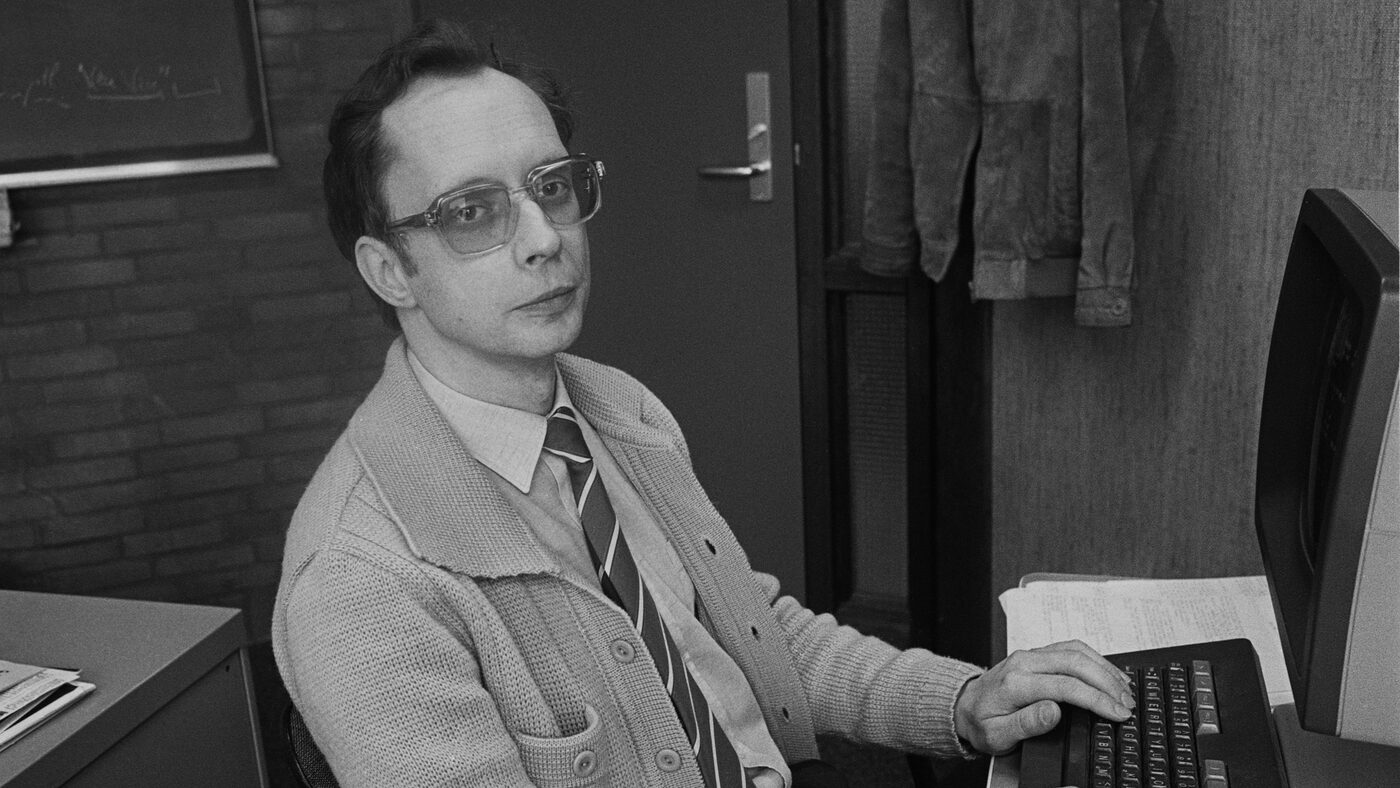
The administrator of mcvax was Piet Beertema, and the best-known thing ever sent from it was a lie. On 1 April 1984 an article appeared purporting to come from kremvax, a Usenet site at the Kremlin, over the name of the Soviet leader Konstantin Chernenko; two further fictitious sites, moskvax and kgbvax, were mentioned in passing. It was forged at mcvax as an April Fool — Beertema's own explanation was that the notion of Usenet ever penetrating the Iron Curtain seemed totally absurd at the time — and it worked well enough that six years later, when a genuine Moscow site, demos.su, joined the network, some readers needed convincing that its postings were not another prank. Vadim Antonov, the senior programmer at Demos, later arranged for the domain's gateway site to be named kremvax.demos.su, which is the rare case of a joke made retrospectively true by administrative action.
.webp)
The point here is not the prank but what it implies. In 1984 a machine in Amsterdam was well enough connected, and its administrator well enough known, for a forged article from it to be believed across the network. The Dutch were not customers at the far end of somebody else's feed; they were running a hub. When Dutch-language groups were eventually wanted, the plumbing and the people to operate it were already in place.
A domain, a superlative, and what it actually says
The Dutch country-code domain is routinely described as the first ever created, and the claim is worth taking apart, because the true version is more interesting than the folklore. The IANA root-zone record for .nl gives a registration date of 25 April 1986. The equivalent records give 15 February 1985 for .us, 24 July 1985 for both .uk and .gb, 24 October 1985 for .il and 5 March 1986 for .au. On the root zone's own arithmetic, then, at least five delegations are older than the Dutch one. Whatever .nl was first at, it was not that.
The careful formulation, the one the Dutch registry actually makes, is different: when CWI registered cwi.nl on 1 May 1986, .nl became the first active country-code domain outside the United States — that is, the first one under which a name was genuinely in use. CWI's own history page puts it a third way again, claiming no superlative for the domain at all and saying simply that Beertema managed the .nl administration for ten years from his room at the institute, until the explosive growth in the number of domains made the task too large for one person. All three statements can be true at once; only the flattened version is wrong. Registration passed to the foundation now known as SIDN, set up in 1996; the domain has been registered through it since 31 January 1996, and by CWI's account SIDN took over the registration work itself in January 1997. Beertema then joined its board, and in 1999 he received a knighthood in the Order of the Netherlands Lion for his part in building the network.
The same care is owed to 1988. CWI's website says the institute established the first connection between Europe and the Internet, on 17 November 1988, that it was the first non-American organisation to gain access to the American science network NSFNET, and that the result was the first open transatlantic internet connection. The English Wikipedia article on Beertema says he linked the Netherlands as one of the first two countries to NSFNET at 2:28 that afternoon, shortly after France's INRIA achieved a connection of its own; the article on CWI says he established the first sustained connection to NSFNET outside the United States, on behalf of EUnet. Each qualifier — open, sustained, non-American, one of the first two — is doing real work. What survives all of them is the substance: from late 1988 there was a permanent, non-military transatlantic Internet link at a research institute in Amsterdam, and the traffic of a whole continent's UNIX sites could use it.
Around that link stood a set of organisations whose names recur throughout this page. The NLUUG, the Dutch UNIX user group, was founded in 1983 and stood at the cradle of Stichting NLnet in 1989. NLnet's own history begins earlier still, in April 1982, with the announcement by Teus Hagen, as chairman of the European UNIX Users Group, of the EUnet initiative. Stichting NLnet was formally constituted as a foundation in February 1989 and created NLnet BV as a commercial operating subsidiary in November 1994; the operating company was sold to UUnet in 1997, leaving the foundation with an endowment it has spent on network research ever since. SURFnet, the Dutch research and education network, was established in 1987 and incorporated on 26 January 1989, and is run by the SURF cooperative of Dutch educational and research institutions. That last name is not incidental: the administrative contact address for all of nl.* was [email protected], and it is still the address printed in the news-server configuration operators install today, long after the administrators themselves moved their post elsewhere.

Who ran nl.*
Every hierarchy on Usenet is only as real as the control messages news administrators are willing to obey, and the file in which they record that willingness is control.ctl, distributed with the INN news server and mirrored at the Internet Systems Consortium. Its entry for nl.* is short and entirely unambiguous. Control messages for the hierarchy from any sender are dropped; newgroup, rmgroup and checkgroups messages from [email protected] are honoured if, and only if, they verify against a PGP key whose user identifier is the name of the hierarchy's administrative group, nl.newsgroups. A fingerprint is printed in the file. It belongs to a 1024-bit RSA key created on 8 January 1997, which the administration replaced on 27 April 2024 with a 4096-bit successor and noted in its own change log on 7 June 2025 — and which the distributed control file, at the time of writing, still lists. That is a fair illustration of how slowly the plumbing of Usenet turns over.
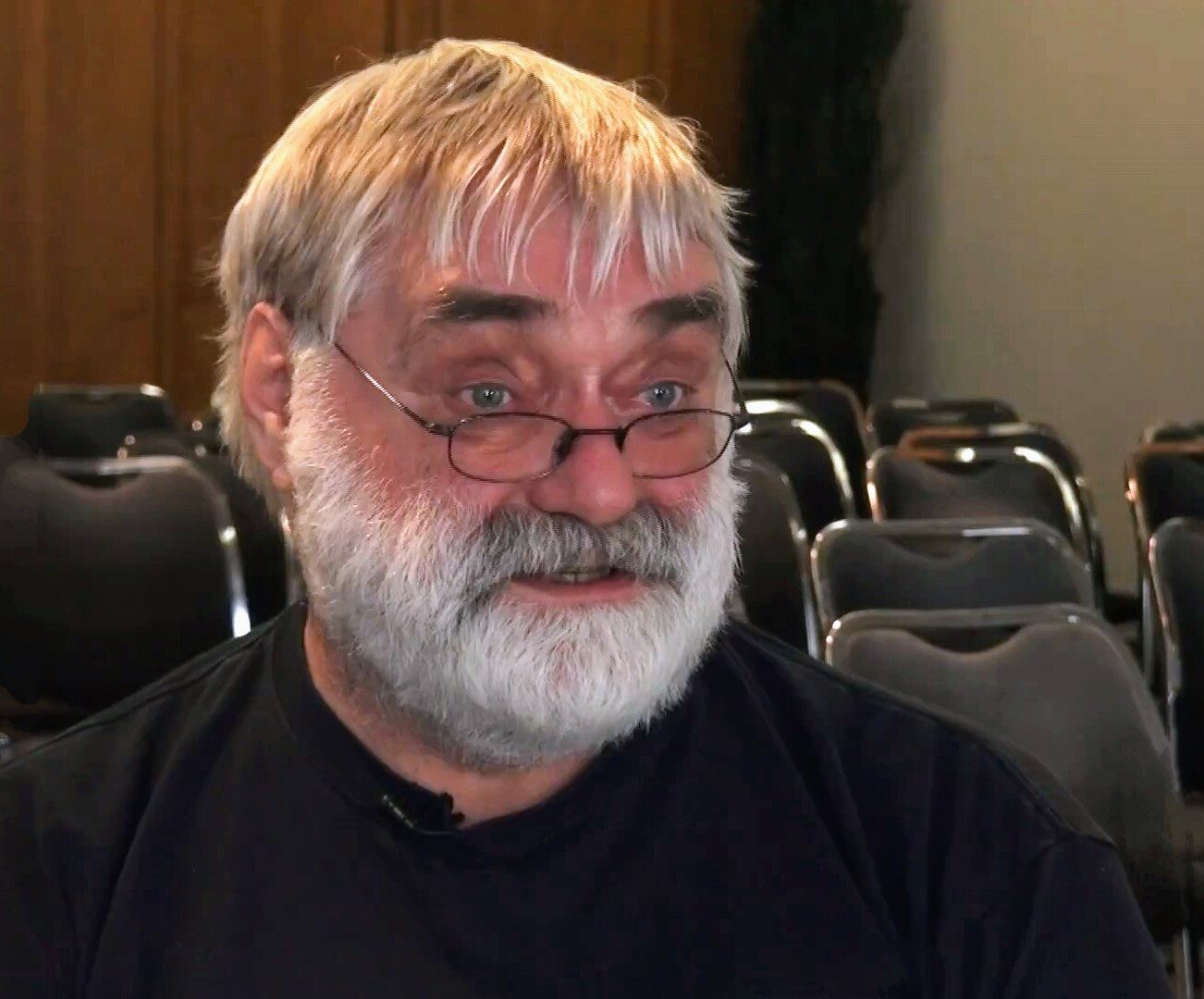
Behind the key are two people. The hierarchy's newsadmins FAQ, compiled by Adri Verhoef and posted monthly on the second day of the month, states that in May 1995 two persons were nominated and accepted as administrators of the nl hierarchy, that they oversee the process of creating and removing groups in nl.*, and that together they constitute nl-admin. It has been two people ever since. The FAQ's own change log records personnel changes on 28 February 1998, 31 May 2001 and 9 August 2007; the copy of the creation guidelines archived in January 2004 names Adri Verhoef and Erik Hensema; the version of the FAQ last modified on 13 September 2025 names Johan van Selst and Adri Verhoef. Verhoef appears in both lists, twenty-one years apart. The copy of the FAQ consulted for this page was posted to nl.newsgroups.announce, nl.newsgroups and nl.internet.welkom, although the monthly checkgroups message directs readers to look for it in news.admin.hierarchies.
What nl-admin does is deliberately narrow. The FAQ describes the job as keeping the administration of which nl.* groups exist, which should be created or removed, and whether and by whom they are moderated. Discussion of creating groups happens in nl.newsgroups, where a document setting out how to request one is posted weekly. Execution happens by control message: newgroup, rmgroup and checkgroups, the three kinds nl-admin sends, respectively creating, removing and auditing the list. Nothing in the arrangement resembles an executive. Asked which groups an administrator must carry, the FAQ answers: whichever you like — take a full feed and accept nl-admin's periodic control messages and nobody else's, or take less if your interest or your disk is limited.
This is the same settlement every durable Usenet hierarchy has reached, and the differences between them are differences of paperwork rather than of principle. The German-language hierarchy arrived at it with a great deal more written procedure, and that story is told on its own hub page here, linked further down, rather than retold in this one. The general machinery it all rests on — control messages, checkgroups, and the news.* groups in which administrators argue with one another — has its own page here as well.
The procedure, as written down
The document that governed group creation in the gateway's own years survives: Richtlijnen voor het aanmaken van een newsgroup in de nl-hierarchie, referred to in its own cross-references as RICHT, maintained by André van Kooij and Jeroen Scheerder and posted periodically to nl.newsgroups. The copy archived in January 2004 carries revision 1.17, last modified on 7 October 2003. It opens by stating what it is: an adaptation, to the specific situation of the nl hierarchy, of what Usenet generally accepts as appropriate for creating a group in the standard hierarchies — the Big-8 procedure described on the soc.* hub, whose canonical text it cites by its authors, Greg Woods, Gene Spafford and David C. Lawrence. It is candid, in the same breath, about its own status: these are guidelines and not absolute rules, because it is impossible to know in advance what extraordinary circumstances might look like, and the decision whether to create a group on any given machine belongs, as always, to that machine's administrator.
The Dutch adaptation had one feature the model lacked. Before proposing anything, a would-be proponent was encouraged — recommended but not obliged — to approach the mailing list [email protected], described as a group of volunteers experienced in the process, who would assign a mentor to help turn a rough sketch of an idea into a properly drafted proposal. A hierarchy that supplies mentors to the people who want to change it is making a particular bet about how arguments go.
Thereafter the route was formal, and the guidelines set it out step by step:
- A Request For Discussion was posted to the moderated group nl.newsgroups.announce and to nl.newsgroups, plus any other group or mailing list the subject touched, with a Followup-To header pointing the discussion at nl.newsgroups. Readers at sites where posting to moderated groups was awkward could mail the full article to the moderator instead.
- The discussion had to settle four things: the name, the charter, the one-line description — at most 55 characters — and whether the group would be moderated and by whom. Names were restricted to components of at most 14 characters drawn from lower-case a to z, the digits, plus and minus, each component containing at least one letter.
- If thirty days of discussion produced no broad agreement, the argument was to be taken off Usenet and settled by mail, after which a new and more specific proposal could start the clock again.
- A Call For Votes could then be issued, and the ballot was run by a stembureau — a voting bureau that collected and counted votes neutrally and independently. Two of them served the hierarchy: nl-stembureau, coordinated by Peter Peters, and nl-stembureau-2, coordinated by Rejo Zenger.
- The voting period ran for at least 21 and at most 31 days, with the exact closing date stated in the call. Only votes that reached the bureau by mail counted; votes posted to Usenet did not, and neither did votes cast on behalf of other people. A vote had to be unambiguous and had to refer to one proposal only: a vote for a group under one name was not a vote for the same idea under another name, another charter, another moderation status or another moderator.
- The bureau published the result — the tally, the e-mail addresses, and so far as they were available the names of the voters, with each voter's vote shown, so that the count could be checked — in nl.newsgroups.announce and nl.newsgroups.
- Five days then passed, during which errors in the result or in the conduct of the ballot could be corrected. A separate document, maintained by one of the votetakers, set out how to lodge an objection; the grounds it named, without limiting itself to them, were partisan calls for votes by the proponent and outright fraud.
- If no serious objection survived, and if at least 50 more votes favoured creation than opposed it, and at least twice as many favoured it as opposed it, nl-admin sent the newgroup control message. A proposal that failed at this point could not be brought again for six months.
The two thresholds are worth holding side by side with the Big-8 rule they were adapted from, which required at least 100 more yes votes than no votes and at least twice as many yes as no. The Dutch hierarchy kept the ratio and halved the margin: fifty net votes is a low bar for a large country and a high one for an enthusiasm, which is roughly what a quorum is for. The published-tally rule is the same instinct in a different register — a ballot that is general, equal and free but emphatically not secret, because a Usenet vote is a headcount of interest rather than an election, and a headcount nobody can audit is not evidence of anything. The 55-character limit, incidentally, has held up: of the 177 descriptions in the hierarchy's current list, exactly three overrun it, and then by one or two characters.
One caution belongs here. The Dutch Wikipedia article on the hierarchy states that management is now carried out by an nl-raad, formerly by nl-admin, that this body decides on group creation while asking the community for advice, and that ballots have become exceptional. The administration's own maintained FAQ, last modified in September 2025, describes no such body: it still names nl-admin, still describes two administrators, and still points proponents at the weekly procedure document in nl.newsgroups. Something in the practice plainly did shift away from full ballots as participation fell — the pattern of the control-message log below is consistent with it — but the sources consulted for this page do not establish that a body called the nl-raad was ever constituted, when, or with what membership, and this article does not assert it.
Checkgroups, culls, and groups with an expiry date
The hierarchy audits itself on a fixed calendar. A list of current groups goes to nl.newsgroups.announce on the seventh of each month in Dutch; on the twenty-first, a checkgroups control message — which tells a news server exactly which nl.* groups should exist, and removes the ones that should not — goes out in English to nl.newsgroups.announce, nl.newsgroups and news.lists.misc. Both are PGP-signed. The message consulted for this page is headed checkgroups nl.* [augustus 2026], is dated 21 August 2026, and states that it is the list of all 177 currently valid newsgroups in the nl.* hierarchy. The independently maintained newsgroups and active files at the Internet Systems Consortium, fetched the same week, contain exactly 177 nl.* groups, and the names match. The audit works.
Because control messages are logged, the hierarchy's housekeeping is visible in a way that ordinary Usenet history is not. The public log of nl.* control articles begins in May 2003, and it shows the mechanism running in both directions. On 21 June 2014 a checkgroups message removed five groups — nl.taal, nl.religie, nl.huishouden, nl.comp.netwerken and nl.newsgroups itself — and six days later individual newgroup articles put all five back: a list and a set of servers being brought into agreement, with the administrative group temporarily deleting itself along the way. The log also shows deliberate culls. On 3 April 2009 seventeen dormant groups went in a single sweep, and on 26 September 2011 twenty-nine more, including nl.comp.hacken.
The log's most distinctive entries are the temporary groups. nl.actueel is the branch for news with large social impact, and across the 2000s the hierarchy used it to open a group for an event and then close it again when the event was over. nl.actueel.prinses-juliana was created at 16:20 on 20 March 2004; Princess Juliana, queen of the Netherlands from 1948 to 1980, had died in her sleep early that same morning. The group was removed on 27 April. nl.actueel.koninginnedagdrama was created at 17:40 on 30 April 2009, hours after a man drove a car into the crowd watching a Queen's Day procession at Apeldoorn; seven bystanders and the driver died of their injuries over the following days. That group was removed on 30 May. Between them sit nl.actueel.sinterklaas, created on 15 November 2004 and removed on 15 December; nl.actueel.eu-grondwet, created on 14 May 2005 for the referendum on the European constitution and removed on 22 June; nl.actueel.terrorisme, created in November 2004 and removed in March 2008; and nl.actueel.wikileaks, created as a moderated group on 18 December 2010, deleted by checkgroups four days later, created again on New Year's Day 2011 and removed for good that July.
Set against the Big-8 practice of the same period — thirty days of discussion, three weeks or more of voting, a five-day wait — a hierarchy that could stand up a group the same afternoon and take it down five weeks later was doing something structurally different with its namespace: treating a newsgroup as disposable civic furniture rather than as a permanent address. The same log records the tidier kind of reorganisation as well. Three financial groups, nl.financieel.beurs, nl.financieel.belastingen and nl.financieel.verzekeringen, were created on 10 December 2003; their predecessors nl.beurs, nl.belastingen and nl.verzekeringen were removed on 12 March 2004, after an odd interlude on 11 February in which control articles appeared to flip all three to moderated status, an anomaly the hierarchy-tracking tools still flag for inspection.
The world the hierarchy sat inside
Dutch Usenet in Dutch became possible at the moment when access stopped being a privilege of the research network, and the sequence by which that happened in the Netherlands is unusual enough to be worth stating precisely. Selling Internet access to the general public was not initially permitted; access had to run through a closed user community, of which one had to be a member. NLnet, the first Internet provider in the country, was in any case convinced that there was no market among private individuals and sold only to companies, while the universities were served by SURFnet. The Netherlands happened to possess an exceptionally large closed community.
The Hobby Computer Club was founded on 27 April 1977, after Dick Barnhoorn published a letter in several Dutch computing and electronics magazines and four people met in Leiden to constitute an association. It was modelled on the British Amateur Computer Club, founded in 1973, down to an adapted version of its logo. Its first newsletter, in July 1977, ran to three sheets of A4 stapled into a booklet and announced a meeting in the electrical engineering building at Delft; the club had twelve members. It has some forty thousand today. Its members were exactly the constituency a closed-community rule created, and in 1991 the subscribers of HCC's hobbynet became the first private individuals in the Netherlands with Internet access, reached at first by e-mail and news over UUCP links; SLIP followed in 1995 and PPP in 1996.
The commercial sequence followed quickly. NLnet was offering companies local dial-in facilities from 1989. Knoware began in 1993 from a single dial-in point in the house of its owner in Utrecht, and the Internet Access Foundation was set up in Groningen in 1992. XS4ALL opened in 1993, as an experiment in selling access run by the hacker magazine Hack-Tic: the projected five hundred customers for the first year arrived on the first day. The English-language record calls it the sixth provider in the Netherlands, after NLnet, SURFnet, HCC!hobbynet, Knoware and IAF, and the second company to offer Internet access to private individuals; Dutch accounts of the same queue put it fourth among providers for private customers, and the discrepancy is a good indication of how contested a founding order can be when the founding took eighteen months. Then came the mass market: Planet Internet and World Access, both starting in 1995 and both eventually inside KPN; World Online, founded the same year, which reached the stock exchange on 17 March 2000 in one of the more instructive disasters of the period and was absorbed by Tiscali before the year was out. Consolidation followed as reliably as growth. XS4ALL bought Cistron in 2004, took over the 35,000 subscribers of HCCnet in 2005, and absorbed the 70,000 Dutch customers of Demon Internet in 2006.
The public-access experiment of the period was De Digitale Stad, which opened in Amsterdam on 15 January 1994 on the model of the WELL and the North American freenets. It was free; anyone with a modem could have an account with e-mail, Internet access and space for a home page, and there were public terminals in the city. It was conceived as a ten-week experiment around the March 1994 municipal elections, and unlike its American models it did not press a regional restriction on its users. Digital cities followed — Eindhoven on 30 December 1994, then Leiden and Vlaardingen, and Lopik became the first digital village in 1995 — while the Amsterdam original was taken private in a management buy-out in 1999 and partly sold to the British company Energis in 2000. The hacker press, the outdoor camps and the scene that produced several of these institutions are the subject of nl.comp.hacken, the one group of this hierarchy that this directory preserves, and are not retold here.
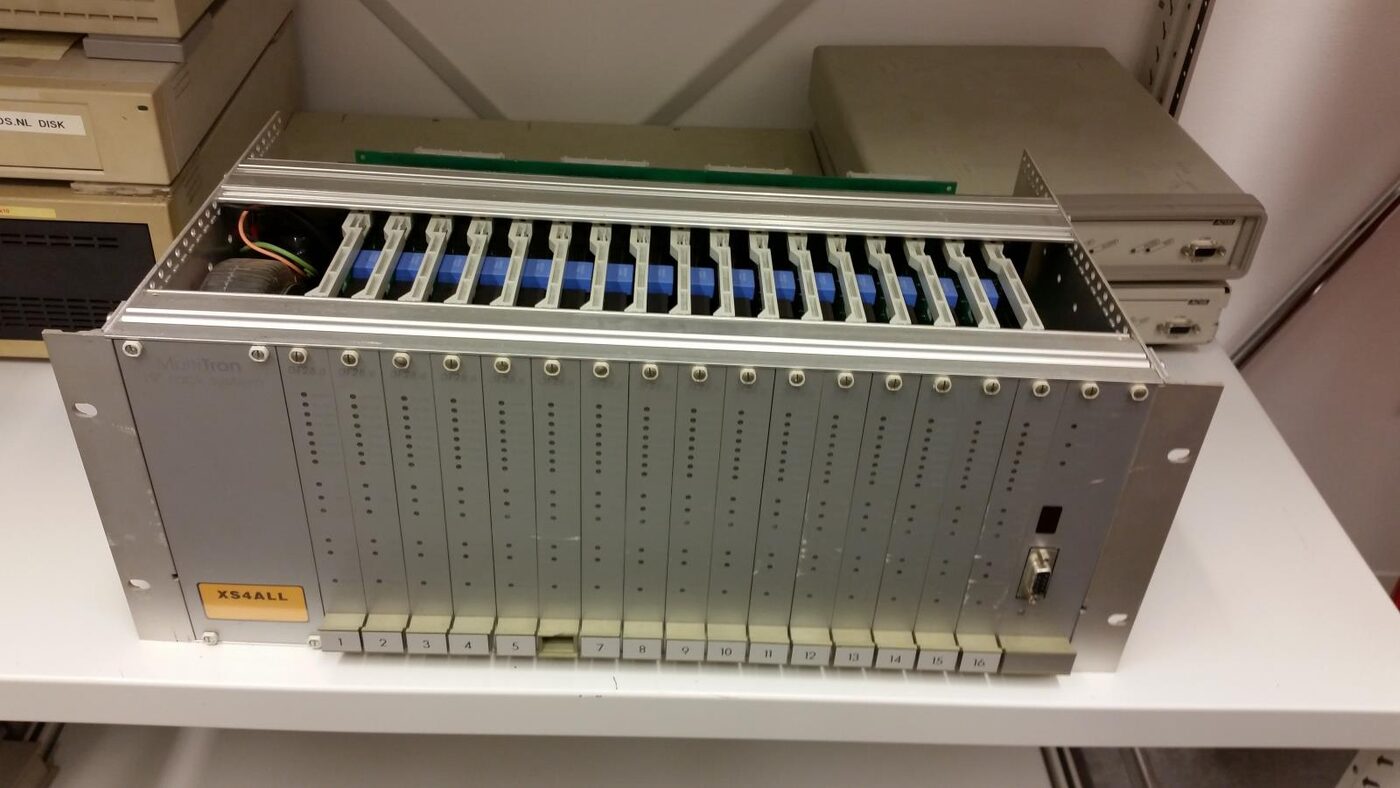

Two things follow for the hierarchy. First, its readership through the 1990s was assembled out of three very different populations — university users on SURFnet, hobbyists reached through a club, and retail subscribers of half a dozen young providers — which is a plausible part of why nl.* grew a namespace so heavily weighted towards ordinary domestic life rather than towards computing. Second, the people administering it were visibly of that world: in the 2003 guidelines, the personal addresses given for one of the two administrators, one of the two votetakers, the author of the RFD and CFV templates, the translator of the newsgroup-naming rules and the author of the announcement group's own FAQ are all at xs4all.nl, and the janitor address for the neighbouring nl-alt.* hierarchy still is.
Dutch on the wire
RFC 1036, Horton and Adams's Standard for Interchange of USENET Messages of December 1987, defines a news article as a restricted kind of Internet mail message and says so explicitly: in any situation where the news standard conflicts with the Internet standard, RFC 822 should be considered correct and the news standard in error. RFC 822 messages were US-ASCII. The successor standard, RFC 5536 of November 2009, relaxed a great deal but not that: the character set for header fields is US-ASCII, and anything else must be encoded by MIME. A hierarchy conducted in Dutch therefore had to fit a language into 128 characters, or find a way round.
Dutch is, by the standards of its neighbours, an easy language to squeeze. It has no letter of its own outside the Latin alphabet. Its two working diacritics are the acute accent, which marks emphatic stress and distinguishes a handful of word pairs, and the diaeresis — the trema — which marks a hiatus where two vowel letters would otherwise be read as a digraph: geïnd, coördinaat, reëel, zeeën, egoïstisch. Loanwords bring in the grave and the circumflex, and Frisian brings Fryslân. Every one of those characters exists in ISO 8859-1, so Dutch prose in Latin-1 was complete in a way that some languages' was not.
What ASCII costs Dutch is therefore not letters but distinctions, and the hierarchy's own files show exactly which ones it was willing to lose. The official one-line descriptions are pure seven-bit ASCII throughout — not one byte above 127 in all 177 of them — and the accents are simply dropped: Forum waarin ouders over hun kinderen discussieren, Het reizen en recreeren met de tent, Voor ME/CVS/CFS-patienten, where the correct spellings are discussiëren, recreëren and patiënten. Nothing is unreadable; nothing is quite right either. The genuinely lossy case is the acute: een is the indefinite article and één is the numeral one, voor is for and vóór is before, and a medium that cannot write the accent cannot write the difference. Dutch writers on Usenet solved that the way Dutch writers had always solved it in telegrams, with word order, emphasis capitals and resignation.
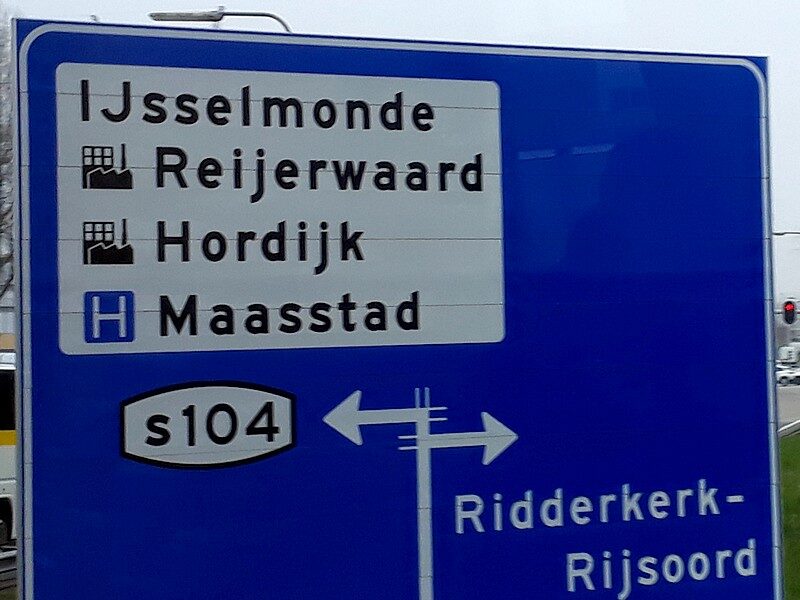
The awkward case is the IJ. Dutch treats ij as a single unit — the Winkler Prins encyclopedia calls it the twenty-fifth letter of the alphabet, the Dutch Language Union and Onze Taal insist it is a digraph of i and j, and the argument is old enough to be a national pastime — and the practical rule is that when a word beginning with it is capitalised, both halves are: IJsselmeer, IJmuiden, IJzertoren. It is not in ASCII and it is not in any of the ISO 8859 encodings; it survives as a national-use character in the Dutch variant of ISO 646, and Unicode carries IJ and ij at U+0132 and U+0133 as compatibility characters whose use is officially discouraged. In practice the digraph is written as two ordinary letters and the difficulty moves from the character set to everything that processes text: poorly localised autocorrect routines helpfully lowercase the second of two initial capitals, and language-aware capitalisation on the web — the case where a stylesheet must know that Dutch capitalises IJ as a pair — went unimplemented outside a single browser for years. The accent problem compounds it, since marking stress on a diphthong means accenting both vowels, and an acute on a j has been beyond most software for most of the medium's life.

The hierarchy legislated the part it could. Group names were confined to lower-case a to z, digits, plus and minus, which is why the science-fiction group is nl.kunst.sf+fantasy and the attention-deficit support group is nl.support.adhd+add. Article bodies were another matter, and the general Usenet difficulty applied here as everywhere: an eight-bit body was legal by convention rather than by standard, transport paths of uncertain vintage could strip or mangle the eighth bit, and text that arrived intact might still be labelled with the wrong character set or, if a reader could not decode quoted-printable, arrive as a rash of equals signs. The German hierarchy's version of that argument, which turns on characters Latin-1 does and does not contain, is told on its own page. The Dutch version is quieter, because for Dutch the encoding was never really the problem; the typography was.
The shape of the hierarchy
The first thing a reader of the Big-8 notices about nl.* is that it has no top-level taxonomy at all. There is no nl.comp-versus-nl.rec-versus-nl.soc division of the world; there is nl.comp, and there is also nl.fiets. Subjects sit at whatever depth they need, and mostly they need very little: of the 177 groups in the August 2026 list, 40 sit directly under nl, 116 are three components deep, 19 are four deep and exactly two reach five. Thirty of those forty top-level groups have no sub-groups at all — nl.juridisch for law, nl.humor, nl.politiek, nl.filosofie, nl.geschiedenis, nl.folklore, nl.naturisme, nl.scouting, nl.uitkeringen for social security, nl.verkeer for road users, nl.roze for matters concerning homosexuality, nl.doe-het-zelf for do-it-yourself, nl.culinair for, in the description's own words, gourmands and gluttons.
The branches that do exist are shallow and concrete. The largest is nl.comp with 21 groups, followed by nl.support with 15, nl.sport with 12, nl.internet with 9, nl.hobby with 8 and nl.kunst with 7; then a long tail of two-to-six-group families — nl.taal, for instance, carrying the Dutch language itself alongside groups for quotations, for English and for the classical languages. Some of the divisions are pleasingly local. There are four city groups — Amsterdam, Rotterdam, The Hague and Utrecht — and three regional ones, of which nl.regio.wadden covers life on and around the tidal flats from the Marsdiep to the Graadyb, which is to say from the channel between Texel and Den Helder to the approach to Esbjerg, a stretch of water shared by three countries. nl.media.radio.zeezenders exists for the friends of the offshore stations. nl.dranken splits three ways into beer, wine and whisky. nl.hulpdiensten splits into ambulance, fire brigade and police. nl.eeuwig, the eternal branch, contains three groups of which one is nl.eeuwig.september, a name that needs no gloss for anyone who remembers what began happening to Usenet in September 1993, and whose description promises a beacon in a turbulent sea of postings.
Only five groups in the whole hierarchy are moderated: nl.announce for conference and course announcements, nl.newsgroups.announce for proposals and results, nl.internet.welkom as a starting point for beginners, nl.internet.misbruik.rapport for abuse reports, and nl.support.sysadmin, where system administrators unburden themselves. That last one is the only moderated group in a branch of fifteen. The other fourteen are mutual-support groups — for cancer, diabetes, divorce, burnout, unemployment, chronic illness, autism, borderline personality disorder, giving up smoking, transsexuality, informal care and a self-chosen death, among others — and a hierarchy that moderates the sysadmins and not the patients has made a fairly strong statement about what it believes moderation is for.
nl.* is not the only Dutch-language namespace. nl-alt.* exists alongside it with looser rules: removals are verified against a PGP key, but a newgroup message from anyone at all is honoured, and its janitor address sits at an XS4ALL machine. nlo.*, hosted at nl.linux.org for open-source and free-software subjects, is administered separately again and is much the larger of the two in practice — the Internet Systems Consortium's active file carries 109 nlo.* groups against 3 for nl-alt.*. And Dutch-language traffic also accumulated in the international alt.* hierarchy, which answers to nobody; alt.nl.support is this directory's example of that side of the split.
Of all of it, this directory preserves exactly one group, and that is an artefact of what this site is rather than a judgement about the hierarchy. These pages were reconstructed from the subscription roster of a mail-to-news gateway that ran between 2000 and 2004, and the roster records what that gateway's users asked to receive, which in the Dutch case was nl.comp.hacken and nothing else. How the gateway worked, and why its coverage is shaped the way it is, are set out on the front page. A reader who arrives here from a citation of a Dutch newsgroup that is not listed on this site has not found a gap in the record; they have found the edge of one small window onto it.
Decline, and what still runs
The hierarchy's contraction is legible in its own housekeeping. The sweep of 3 April 2009 removed groups for baseball, draughts, martial arts, skating, IRC, DSL, Quake, tea, coffee, reiki, e-zines and reality soaps; the sweep of 26 September 2011 removed twenty-nine more, including architecture, MP3, volleyball, running, darts, cryptography, OS/2, CD burning, camping supplies and nl.comp.hacken. Groups are not usually removed from a healthy namespace in batches of thirty. What the log cannot tell us is where the conversations went, and it is worth resisting the tidy causal story: Dutch web forums absorbed an enormous amount of this traffic through the 2000s, but so did mailing lists, chat and later social platforms, and the surviving record does not apportion them.
On the infrastructure side the honest answer is narrower than the question. It is routinely said that Dutch providers withdrew news service through the 2000s, and the general direction is not in doubt — the market consolidated hard, with XS4ALL absorbing Cistron, HCCnet and Demon's Dutch subscribers between 2004 and 2006, and KPN announcing in January 2019 that it would phase out the XS4ALL brand altogether. One dated withdrawal can be pinned down: HCC!hobbynet, the club service that had carried news to Dutch households since 1991, lists 2009 in its own timeline as the year news was phased out. A provider-by-provider timetable is not something the sources consulted for this page establish, and none is asserted here. The one dated withdrawal that certainly touched every nl.* reader was not Dutch at all: Google Groups stopped accepting or displaying new Usenet content on 22 February 2024, leaving its archives readable but taking the network's most-used reading interface out of the network.
What has not stopped is the administration, and the evidence for that is unusually current. A PGP-signed checkgroups message for nl.* went out on 21 August 2026 listing 177 valid groups. The newsadmins FAQ was last modified on 13 September 2025 and continues to go out on the second of each month. The signing key was rolled over on 27 April 2024, which is a thing organisations do when they expect to still be signing things. Both the newsgroups and active files at the Internet Systems Consortium carry the full hierarchy, which means any server taking a broad feed still has it available. Thirty-one years after two people were nominated to keep a list, the list is still being kept, on the twenty-first of the month, by two people.
Scope and limits
This article is built from documents rather than from memory. The domain dates come from the IANA root-zone delegation records for .nl and, for comparison, for every other two-letter delegation in the root, and from CWI's own published history. The governance material comes from primary administrative documents: the control.ctl distributed with INN and mirrored at the Internet Systems Consortium; the nl.* newsadmins FAQ as maintained by the hierarchy's own administrators; the PGP-signed checkgroups posting of 21 August 2026; the ISC newsgroups and active files; the public log of nl.* control messages, which begins in May 2003; and an archived January 2004 capture of revision 1.17 of the creation guidelines, dated 7 October 2003, together with the objection procedure it cites. The group counts, depth distribution and character-set observations are the result of counting the ISC and checkgroups files directly. The remainder — CWI, EUnet, the domain, the providers, the club, the orthography — is drawn from encyclopaedia articles in English and Dutch, cross-checked against institutional sources where those exist.
Several things the record does not settle. It does not say when nl.* was founded, by whom, or what its first group was: the administration's own account begins in May 1995 with the appointment of two administrators, and the control-message log begins eight years after that, so the hierarchy is demonstrably older than any document consulted here. It does not establish whether a body called the nl-raad ever succeeded nl-admin, as the Dutch Wikipedia article states and the maintained FAQ does not. It gives no readership figures for any nl.* group at any date, and none should be inferred from group counts. It does not date the withdrawal of news service by Dutch providers beyond the single case named above. And the log's entry showing a newgroup article for nl.comp.hacken on 13 January 2004 is not that group's creation date — this directory's own gateway was carrying the group from 2000, and the log only opens in May 2003 — but a re-issue of the kind the log shows happening routinely when a list and a set of servers fall out of step.