The soc.* hierarchy
Society and culture. The soc.culture.* branch gave nearly every country and people on earth a standing room on Usenet — for many diasporas of the 1990s, the first public online space they had.
- soc.answers
- soc.culture.afghanistan
- soc.culture.african
- soc.culture.albanian
- soc.culture.algeria
- soc.culture.arabic
- soc.culture.argentina
- soc.culture.armenian
- soc.culture.asean
- soc.culture.asian
- soc.culture.assyrian
- soc.culture.asturies
- soc.culture.australian
- soc.culture.austria
- soc.culture.azerbaijan
- soc.culture.baltics
- soc.culture.bangladesh
- soc.culture.basque
- soc.culture.belarus
- soc.culture.belgium
- soc.culture.bengali
- soc.culture.berber
- soc.culture.bolivia
- soc.culture.bosna-herzgvna
- soc.culture.brazil
- soc.culture.breton
- soc.culture.british
- soc.culture.bulgaria
- soc.culture.burma
- soc.culture.cambodia
- soc.culture.canada
- soc.culture.caribbean
- soc.culture.catalan
- soc.culture.chile
- soc.culture.costa-rica
- soc.culture.croatia
- soc.culture.cuba
- soc.culture.ecuador
- soc.culture.estonia
- soc.culture.ethiopia
- soc.culture.ethiopia.misc
- soc.culture.ethiopia.moderated
- soc.culture.haiti
- soc.culture.honduras
- soc.culture.iraq
- soc.culture.jewish
- soc.culture.jordan
- soc.culture.kenya
- soc.culture.kuwait
- soc.culture.kuwait.moderated
- soc.culture.laos
- soc.culture.lebanon
- soc.culture.liberia
- soc.culture.malaysia
- soc.culture.misc
- soc.culture.nepal
- soc.culture.nicaragua
- soc.culture.pakistan
- soc.culture.palestine
- soc.culture.peru
- soc.culture.puerto-rico
- soc.culture.quebec
- soc.culture.rep-of-georgia
- soc.culture.russian
- soc.culture.sierra-leone
- soc.culture.singapore
- soc.culture.singapore.moderated
- soc.culture.slovenia
- soc.culture.slovenia
- soc.culture.somalia
- soc.culture.south-africa
- soc.culture.south-africa.afrikaans
- soc.culture.sri-lanka
- soc.culture.syria
- soc.culture.thai
- soc.culture.uruguay
- soc.culture.yugoslavia
- soc.culture.zimbabwe
See also the full culture branch: soc.culture.*
On this page
From net.* to soc.*: the Great Renaming
For the first seven years of its life, Usenet had no soc.* at all. Groups lived in three loose hierarchies: net.* for ordinary unmoderated discussion, mod.* for the moderated groups, and fa.* for traffic gatewayed “from ARPANET”. Within net.* the names had grown by accretion rather than design — net.singles, net.motss, net.religion and net.roots sat in the same flat namespace as net.unix-wizards and net.jokes, and nothing about a group’s name told a site administrator what it would cost to carry or a newcomer where to look.
By the mid-1980s this was becoming unmanageable. The reason usually given for the reorganisation is the plainest one: the list of all existing groups had simply become too hard to maintain. But the software was also in the way. B News, the dominant news transport, required the first fourteen characters of every group name to be unique, forced moderated groups to carry the mod. prefix, and made posting to a moderated group a matter of separate e-mail rather than something a newsreader could do. Rick Adams, B News’s maintainer and later the founder of UUNET, removed all three constraints in B News 2.11 during 1986 — and with them the technical excuse for leaving the namespace alone.
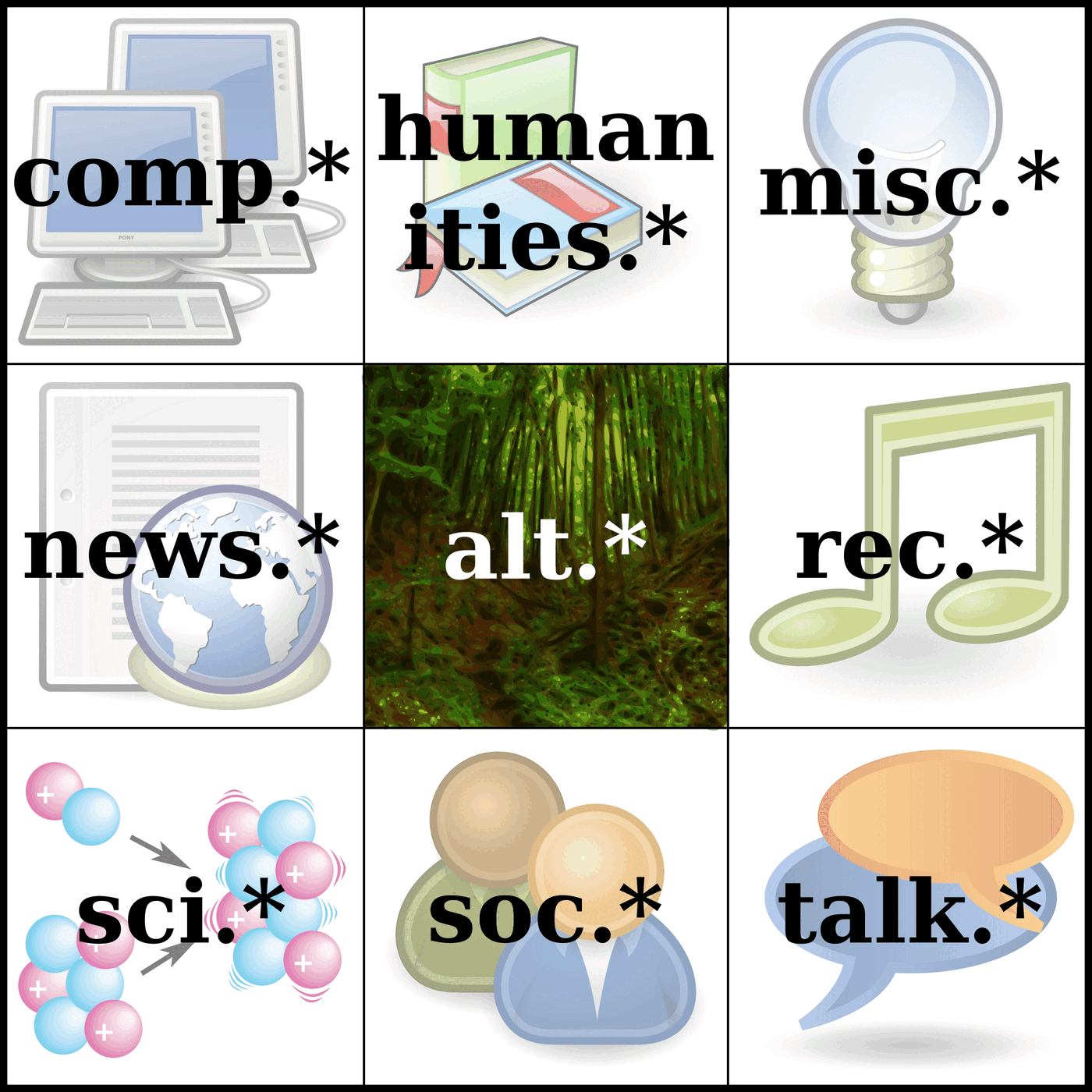

Adams is generally credited as the initiator of what followed. Over 1986–87 the Great Renaming sorted the old groups into seven topical trees — comp, misc, news, rec, sci, soc and talk — known thereafter as the Big Seven, and as the Big Eight once humanities.* joined them in April 1995. soc.* took the subjects that were about people rather than machines or pastimes: culture, religion as practice, history, genealogy, and the support communities that had nowhere else to meet.
A second explanation for the Renaming survives alongside the official one. European networks, paying dearly for transatlantic transfer, objected to carrying high-volume, low-content groups — the endless arguments about religion and race in particular — and a categorised namespace let a site drop a whole branch at a stroke. Both explanations are on the record; the proportions have been argued about ever since, which is itself a very Usenet outcome.
Almost immediately afterwards the anything-goes alt.* hierarchy appeared alongside the Big Seven as the escape valve from precisely the formalities described below — its story is told on its own page.
The backbone cabal: folklore with a mailing list
No account of the Renaming gets far without the backbone cabal, and few Usenet subjects have a wider gap between the folklore and the paperwork. The facts are prosaic. In 1983 Mary Ann Horton designed a physical backbone for Usenet and recruited the administrators of large, well-connected sites to run it: machines that exchanged news around the clock, in an era when many servers only placed their long-distance calls at night to save money. Gene Spafford then set up a mailing list of those backbone administrators plus a handful of influential posters, and that list — a political backbone to match the physical one — is what came to be called the cabal. Brian Reid, Richard Sexton, Chuq von Rospach and Rick Adams were among its better-known members.
Because the backbone sites carried most of the traffic, their administrators could make a decision stick on an otherwise ungovernable network, and the Renaming is the standard example: it happened largely because the backbone operators agreed to implement it. Contemporary accounts add a sharper suggestion — that some members had an interest in bundling the most controversial groups into talk.*, where their employers were less likely to notice what the company news feed was carrying.
The folklore came afterwards. Members took to denying the cabal’s existence on principle — “There Is No Cabal”, abbreviated TINC, became one of Usenet’s stock jokes — and the mystery outlived the institution by a comfortable margin: the mailing list disbanded in late 1988 after an internal falling-out, while the legend of a shadowy committee running Usenet was still being invoked, half-seriously, a decade later. The honest summary is that the cabal was entirely real as a mailing list and entirely mythical as a conspiracy; it governed by rough consensus for about five years and then stopped existing, which real conspiracies rarely manage.
soc versus talk: where the line fell
The Renaming’s most consequential editorial decision, for this hierarchy, was the split between soc.* and talk.*. Both inherited groups about religion, politics and society; the difference was intent. soc.* was for social subjects — communities discussing their own culture, practice, history and circumstances — while talk.* was reserved for open-ended debate: the high-volume, low-resolution arguments that had made net.religion and its kin famous, where the discussion was the point and agreement was neither expected nor especially wanted.
The line was drawn with one eye on the accountants. talk.* was, by contemporary account, the suggested destination for exactly the groups that European networks were refusing to pay to import, and — per the suspicion recorded above — for the groups administrators preferred to keep under a label that was easy to exclude from a feed. A site could carry soc.* for its communities and quietly decline talk.* altogether, and many did.
The result shows in the pairings. Questions of faith as lived practice went to soc.religion.*, several of whose groups were moderated; questions of whether the faith was true at all went to talk.religion.*. A country’s culture, food, language and diaspora belonged in soc.culture.*; the border dispute belonged, in principle, in talk.politics.*. In principle. The distinction — roughly, soc for talking with people and talk for arguing at them — always held better in charters than in threads, and any soc.culture group whose country was at war carried as much talk as any group in talk.*. But as a default sorting of intent, backed by moderation where it mattered, the split shaped the hierarchy’s character for twenty years.
How a soc.* group got made
Creating a Big-Seven group was Usenet’s most elaborate ritual, and soc.* proposals — which tended to involve someone’s nation, faith or identity — gave it its liveliest performances. The process began with a Request for Discussion: a formal proposal, posted to the moderated group news.announce.newgroups and cross-posted for debate in news.groups, giving the proposed name, a charter, and whether the group would be moderated. Discussion ran for about thirty days, in which the name might be picked apart character by character — Usenet took namespace taxonomy as seriously as some societies take heraldry.
If the proposal survived, a neutral third party issued a Call for Votes. From the early 1990s this was normally handled by the Usenet Volunteer Votetakers, a standing pool of experienced neutrals; votes were cast by e-mail over a defined period, at least 21 days and at most 31, and the votetaker published the full tally, names included, so the result could be verified.


The passing rule deserves its exact statement, since it is half-remembered in two forms. In the wording of the periodically posted guidelines, creation required “100 more valid YES/create votes” than NO votes, and “at least 2/3 of the total number of valid votes received” in favour. The second condition is the same arithmetic as the often-repeated rule of thumb that yes votes had to outnumber no votes two to one — two phrasings of one requirement, not two requirements. The 100-vote margin kept tiny electorates from creating groups; the supermajority kept large hostile ones from being steamrollered.
A successful vote still created nothing by itself. After the result was posted came a mandatory five-day waiting period, in which irregularities could be challenged; only then was the newgroup control message sent out, by the moderator of news.announce.newgroups. And even that message was, formally, a request: every news administrator on the network decided — individually, by configuration — whether to honour it. For Big-Seven groups they almost always did, which was the entire practical meaning of the hierarchy: a namespace whose control messages administrators trusted. The guidelines were candid about their own status — guidelines, they said, not absolute rules, with the decision on any given machine resting with that machine’s administrator; a vote measured whether enough readers wanted a group to justify its carriage, nothing more.
The machinery outlived its electorate. As participation fell in the 2000s, the mass vote was retired: a Big-8 Management Board, formed in 2005 from former moderators of news.announce.newgroups, took over group creation and removal, with proposals still aired publicly — latterly in news.groups.proposals — but decided by board vote. The board still exists, tending a hierarchy far quieter than the one the votetakers knew.
The families of soc.*
soc.* grew as a set of families, each a namespace experiment of its own. The largest by far was soc.culture.* — one group per country, region or people, dozens of them voted into existence through the 1990s, and for many diasporas the first public online space their community ever had. That family’s story, from its net.nlang ancestry to its wartime years, is told in depth on its own hub page and not retold here; it is enough to note that during the Yugoslav wars the group-creation votes themselves became political events, with each proposed successor-state group debated by the very people the maps were dividing — see soc.culture.yugoslavia for that story.
Around the culture branch stood the rest of the family:
- soc.history.* — the past argued at length, with a celebrated counterfactual corner in soc.history.what-if, where the Confederacy won weekly and Byzantium never fell.
- soc.religion.* — faith as practice and community rather than debating point, home to some of Usenet’s earliest and most durable moderated groups; the mechanics are described below.
- soc.genealogy.* — the family-history groups and their mailing-list gateways, covered in the next section.
- soc.support.* — groups for people sharing an illness, disability or circumstance, whose quiet usefulness rarely made the histories precisely because it was quiet; support groups measured success in members helped, not flamewars won.
- soc.singles — dating, relationships and their discontents, descended from net.singles, one of the social fixtures of the old net.* namespace.
- soc.penpals — the exchange of correspondents across borders, a reminder that for much of the network’s life international friendship was still conducted partly on paper.
- soc.college, soc.org.nonprofit, soc.rights.human and others — student life, the running of voluntary organisations, human-rights reporting: the miscellany of social life that fitted nowhere else.
The weighting of this directory reflects the gateway that produced it: the culture branch dominated the feed, and dominates the group list below. But the smaller families were where the hierarchy’s founding idea — social subjects treated socially — was most visible, precisely because there was least to fight about.
Genealogy: soc.roots and the gateway lists
Family history came to Usenet early. The renamed hierarchy inherited soc.roots — formerly net.roots, a name that nodded to the television miniseries that had set off a popular genealogy boom — as its single genealogy group, and for years it served as a general trading floor for surname queries, source questions and methodology. In 1994 the trading floor was subdivided: after a reorganisation vote in which every proposed group passed, soc.roots was renamed soc.genealogy.misc, with a family of sibling groups splitting the subject by region, method and language.
What distinguished the genealogy family technically was its plumbing. The 1994 reorganisation was designed around e-mail from the start: the call for votes went out not only to the newsgroups but to ROOTS-L — one of the oldest genealogical mailing lists on the Internet — and its sister lists, and the proposal specified, group by group, whether each would be moderated, archived and gatewayed to a mailing list. Several soc.genealogy.* groups accordingly ran as two-way gateways, the same conversation readable as news or received as post, whichever a researcher’s connectivity allowed. Genealogists were disproportionately likely to be on the far end of a thin e-mail-only link, and the family was built accordingly.
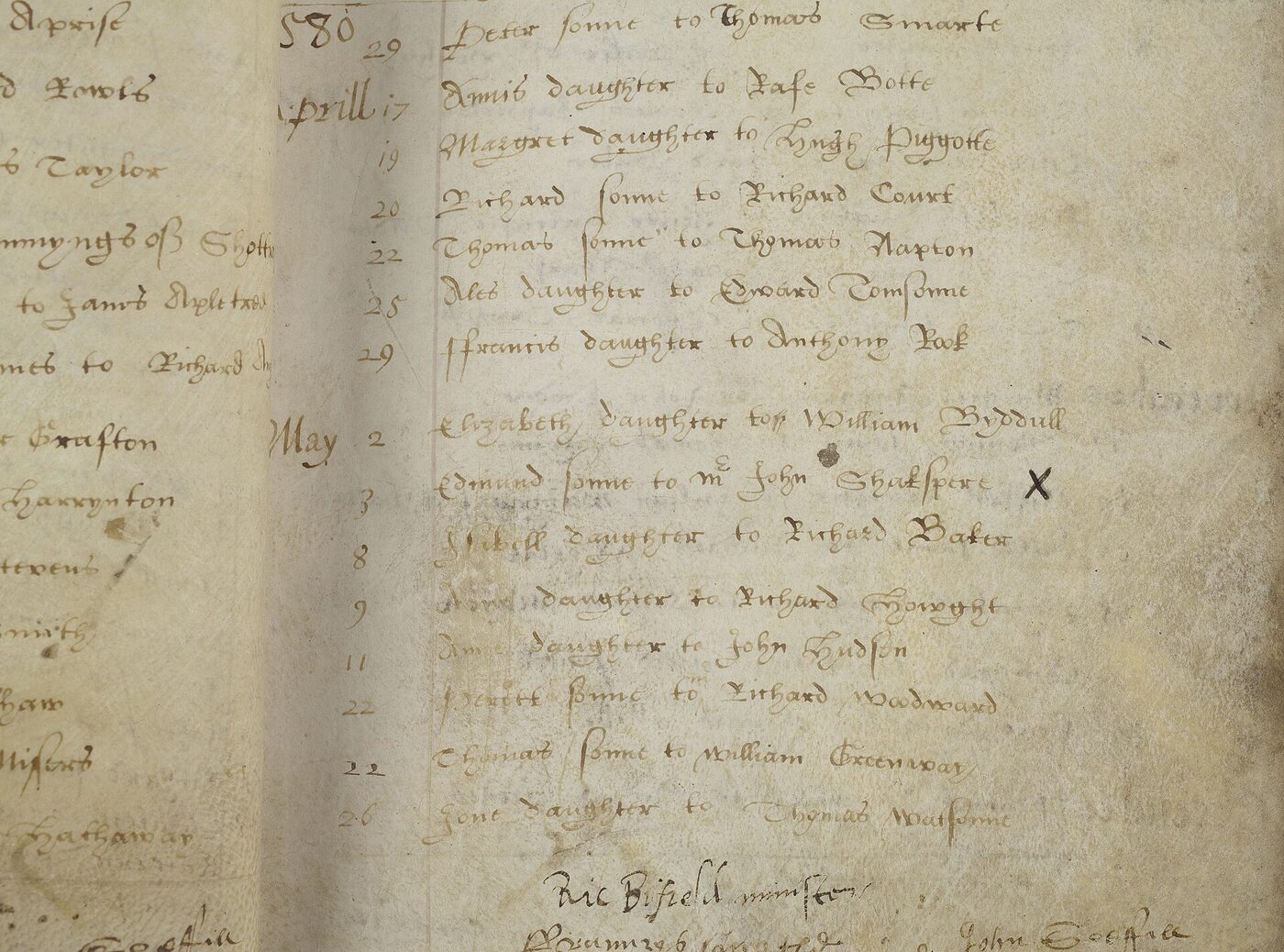

The family also imported its hobby’s working habits. Surname-query groups enforced posting conventions strict enough to make the queries machine-searchable; and the surrounding community ran on the volunteer transcription and indexing culture genealogy had practised for a century — parish registers, census returns and passenger lists copied out and shared — a culture that flowed through these groups and their gatewayed lists into the free genealogy projects of the early web. German-language family history, meanwhile, had its own home in de.sci.genealogie — filed, in the German hierarchy’s stern taxonomy, under science.
soc.motss: older than the hierarchy
The most historically significant group in soc.* predates soc.* by four years. In October 1983 Steve Dyer, a Boston programmer, created net.motss — the earliest documented online community specifically for gay and lesbian people, anywhere. His opening post set out an agenda that reads as deliberately sober: discussion of health, parenting, relationships and job security, among other topics, at a time when all of those carried professional risk.
The name was protective colouring. MOTSS stands for “members of the same sex” — one of a small family of abbreviations in Usenet slang, alongside MOTOS for “member of the opposite sex”, that traced back to the wording of the 1970 United States census forms. A group named net.gay, it was feared, would be conspicuous in every site’s group list, and administrators worried their employers would read carriage as endorsement; net.motss said nothing to anyone who did not already know. Usenet folklore remembered the choice as the “net.motss compromise”, the settlement of a long and bitter argument over whether the group could exist under its own name at all. The Great Renaming carried it into the social hierarchy as soc.motss in 1987, by which time it had been a functioning community for four years.


It became one of Usenet’s durable institutions. Brian Reid’s readership surveys in the early 1990s estimated that around three per cent of all Usenet readers — on the order of eighty thousand people — read soc.motss, and the group developed the apparatus of a settled society: long-running in-jokes, FAQs, and, from 1987, in-person gatherings — the motss.cons — that moved the community intermittently off the wire. It weathered the periodic arrival of hostile crossposters with a repertoire of collective composure that later communities would have to reinvent from scratch. For a generation of isolated readers, particularly outside large cities, it was the first evidence that a public queer commons could exist at all; historians of the early Internet now treat it as a landmark for precisely that reason. It is also a standing corrective to the idea that the great renamed hierarchies were designed from above: some of what soc.* organised had organised itself years earlier, and the hierarchy’s achievement was to give it a durable address.
What moderation actually meant
Moderation on Usenet was a mechanism before it was a policy, and the mechanism is worth stating plainly because nothing on the modern web works quite like it. A moderated group’s articles did not flow from poster to network. When a reader posted to one, their news software — after B News 2.11 made this transparent — mailed the article to the group’s moderator instead of injecting it. The moderator, a volunteer with an inbox, read the submission and either discarded it or posted it to the network with an Approved: header attached. Servers propagated articles in moderated groups only if that header was present. The header was trivially forgeable — the whole arrangement ran on the honour system, like most of Usenet — but forgery was rare enough that the system held for decades.
Before the Renaming, moderated groups were segregated into the mod.* hierarchy by technical necessity. Once B News dropped that requirement, moderation became a property any group could have, declared in its charter and voted on with everything else — and soc.* made heavier use of it than most of the Big Seven, for the obvious reason: its subjects attracted crossfire, and its communities wanted conversation rather than siege.
soc.religion.* was the showcase. Its groups included some of Usenet’s earliest moderated spaces, and the best-documented example, soc.religion.christian, was moderated for many years by Charles Hedrick at Rutgers University, with submissions flowing by e-mail through the university’s machines and period network surveys counting its readership in the tens of thousands. A working moderated group of that size meant a volunteer reading every single article, every day, for years — unpaid editorial labour on a scale the histories rarely acknowledge. The reward, visible to anyone comparing archives, was signal: moderated soc.* groups stayed readable through storms that reduced their unmoderated neighbours to noise.
Moderation also marked the hierarchy’s philosophical distance from alt.*, where the absence of gatekeeping was the founding principle. soc.* took the opposite bet — that some conversations survive only behind a gate — and its support and religion groups were the evidence entered in that argument for twenty years.
Decline and afterlife
The hierarchy’s decline followed Usenet’s, with local colour. The inflection point usually cited is the Eternal September: from late 1993 the commercial online services began delivering a permanent stream of newcomers — America Online opened its Usenet gateway in March 1994 — and the network’s old rhythm, in which each autumn’s influx of students was gradually absorbed, never recovered. soc.*’s discussion groups, whose value lay in accumulated context and thick skins, felt the change keenly; the mid-1990s also brought industrial-scale spam, to which open discussion groups about nations, religions and dating were almost comically exposed.
The web then unbundled the hierarchy’s reasons to exist. Diaspora portals and web forums took the culture traffic; dedicated genealogy sites, built partly by the same volunteers, took the family historians; support communities moved to spaces with privacy controls Usenet could never offer. Traffic thinned through the 2000s, and the infrastructure followed the traffic: major American ISPs dropped or curtailed their news servers in the late 2000s — a wave accelerated by the 2008 agreements between New York’s attorney general and several large providers — and in 2010 Duke University, where Usenet had been invented three decades earlier, retired its news server. The Big-8 Management Board continues to tend the namespace; new soc.* groups are now rare events.
The afterlife is archival, and unusually rich. Deja News began archiving Usenet in 1995; Google acquired the archive in 2001 and folded it into Google Groups, alongside donated collections reaching back to the early 1980s — which is why a soc.culture argument from 1991 or a soc.motss thread from the Reagan years can still be read verbatim, a durability few web communities of the same era achieved. Researchers now mine these archives as primary sources for diaspora politics, early online queer history and the sociology of virtual community — subjects for which soc.* is often the oldest large corpus in existence. And the hierarchy itself is not gone: text-only news servers still carry soc.* worldwide, its moderated groups still enforce their charters where moderators remain, and a reader with an NNTP client can still post to groups first created by hundred-vote majorities a quarter of a century ago.
This site is part of that afterlife: a preserved directory built from a mail-to-news gateway’s view of the hierarchy, heaviest where the gateway’s users were — the culture branch above all. How the gateway worked, and what else it carried, is told on the front page. The group list below is the soc.* branch of that snapshot: not the whole hierarchy, but an honest sample of what one corner of the network thought worth reading.