alt.fan.starwars.jar-jar-binks.die
An anti-Jar-Jar joke group name.
An address this directory carried in the wake of The Phantom Menace (1999): a protest vote conducted through the group-creation mechanism itself. The exact name is absent from the ISC active and newsgroups files, while closely similar names — alt.fan.starwars.jar-jar-binks.die.die.die among them — are documented there in full.
Traffic was mostly the name; the name was the point. It is preserved here as a specimen of alt.* culture at its most alt.*.
On this page
- What the record holds
- The two names that do exist
- Sixteen days in 1999
- The case the proposers made
- The case for removal
- Why the removals lost
- A name as the thing said
- die.die.die as a documented formula
- The film, dated
- The reception, as the record reports it
- The character and the performer
- What it cost, in his own account
- The racial-caricature argument, and the answers to it
- Measuring a pile-on in 1999
- The Phantom Edit and the other artefacts
- What the episode is now understood to have been
- Why this directory keeps the address
- What the record does not show
- Scope and limits
What the record holds
The address at the head of this page is alt.fan.starwars.jar-jar-binks.die. Before anything else is said about it one fact has to be settled, because it governs everything that follows: that exact name cannot be found in the administrative record of Usenet. The Internet Systems Consortium maintains the reference copy of the namespace — a newsgroups file pairing every known group name with a one-line description, and an active file listing the names a well-connected server would carry. In the copy consulted for this article those files hold 45,003 group names, 20,466 of them in alt.*. Neither file contains a line that begins alt.fan.starwars.jar-jar-binks.die and stops there. The consortium also keeps an archive of Usenet control messages, one compressed file per group name, running to 36,208 files for alt.* alone. For this name it returns 404. There is no newgroup message, no rmgroup, no listing line.
The group is easy to describe as one of Usenet’s best-remembered joke names. That is a claim, and this page treats it as one. No published source consulted here — encyclopaedic, journalistic or administrative — describes a group of that name, remembers it, or records its creation. What can be established is narrower and, as it turns out, more interesting: the directory carried the address; the wider record does not corroborate it; and two names that differ from it by three characters are documented in exhaustive detail, from the hour of their creation to the hour of their last removal.
So the record consulted here breaks into three parts, and they disagree. The consortium’s reference files: silent on this name. The control archive: silent on this name. This directory’s own roster, which lists the group on its alt.* hierarchy page and in the all-groups index: the only place, among the sources consulted, where the four-part form appears at all. Everything below works outward from that disagreement.
The two names that do exist
Searching the consortium’s current newsgroups file for the character’s name returns exactly two lines, and both are longer than the address on this page:
alt.fan.starwars.jar-jar-binks.die.die.die— description field: No description.alt.fan.starwars.jarjarbinks.die.die.die— description field: No description.
Both appear in the active file as well, flagged y, the marker for an unmoderated group that accepts posting. They sit in a small family: the reference files also carry alt.fan.starwars, described as “George Lucas’s Star Wars.”, along with alt.fan.starwars.charlie-maul and alt.fan.starwars.galactic-empire. The control archive holds a file for every one of those five names. It holds nothing for the four-part name.
Two readings of that gap are available and this page cannot choose between them on the evidence. The first is that the four-part form is the five-part form shortened — by a gateway index, a hand-typed listing, a truncation somewhere in the chain of copying that produced this directory’s roster. Repeated final elements are exactly the sort of thing a copyist drops, and the surviving pair of names shows that even the people issuing control messages could not agree on whether to hyphenate the character’s name. The second is that somebody genuinely used the shorter form on a news server somewhere, in a manner that never produced a valid archived control message. Neither reading can be confirmed. What can be said is that the four-part name has no independent documentary existence outside this directory, and that the story the directory was trying to tell by carrying it is fully attested under the longer names.
For the remainder of this article, then, “the group” means the documented pair, and the page is explicit whenever it is describing the longer names rather than the address in the title bar.
Sixteen days in 1999
The archived file for alt.fan.starwars.jar-jar-binks.die.die.die contains forty-six control messages. Twenty-eight ask the world’s news servers to create the group; eighteen ask them to remove it. The first is dated Tue, 25 May 1999 03:59:32 GMT. The last is dated Wed, 09 Jun 1999 06:00:02 GMT. The whole administrative life of the name, as the archive preserves it, runs across sixteen calendar days — a little over a fortnight of elapsed time.
Forty-six messages are not forty-six separate acts, and the distinction matters for everything counted below. The file holds thirty-six distinct Message-IDs. One article — the very first newgroup message — accounts for eleven of the forty-six on its own, the same three lines arriving again and again by different routes as different feeds passed it on. Counting this file honestly means counting documents rather than arrivals, and the article says which it is doing each time.
The companion file for alt.fan.starwars.jarjarbinks.die.die.die is much thinner: eight messages, four newgroups and four rmgroups, the first dated 26 May 1999 01:05:51 GMT and the last 6 June 1999 18:49:51 GMT. The four newgroups are one article relayed four times. Its body is five words above a quoted signature — “You know you want it.” — and it was answered thirteen minutes later by a removal opening with the words “Joke group”, and thirteen hours after that by a signed one that added “Duplicate Newsgroup” to the usual list of objections. The un-hyphenated spelling was, on the archive’s own account, a second attempt at a name that already existed.
The dates matter. The Phantom Menace had its Los Angeles premiere on 16 May 1999 and opened in the United States on 19 May. The first newgroup message was sent six days after that general release. Nothing in this record predates the film; the group is a response to it, issued within a week, and finished within three.
Four signatures account for forty-one of the forty-six messages. Twelve come from an address signed Jeffrey Smith, eleven from one signed Douglas Mackall, ten from the alt.config removal account operated by Jay Denebeim, and eight from two Australian addresses signed David Proctor. Two further creations come from an address signed David Ritz, and the remaining three from addresses whose senders are not otherwise identifiable. These are counts of messages, not of people and not of arguments: several of the messages are byte-for-byte repetitions of an earlier one, relayed by a different path, and the archive counts each arrival.
The case the proposers made
The first newgroup message is three lines long. Its Summary header reads “Discussed in alt.config, no significant objections, substantial interest” — the standard formula — and its body offers the description line that the proposer wanted news administrators to paste into their newsgroups files. That line reads, in full: Death to Jar Jar Binks. This article quotes it once, because it is the record’s own words and the whole argument of the page turns on what a description line was being used for. It reproduces nothing further in that register.
Five days later a second proposer, posting under a signature naming a mock Usenet police unit affiliated with the Church of the SubGenius parody religion, replaced the three-line message with a PGP-signed one carrying a charter and a justification. The charter is a single sentence naming the group’s purpose. The justification is three paragraphs of argument, and it is a more careful document than the name suggests. It grants at the outset that opinion on the film was divided — “There are thousands of diverse opinions on how good the movie is” — describes the release as “one of the most anticipated movies in history, if not *the* most anticipated”, and attributes the reaction to expectations the hype had made impossible to meet. It then sets out two aims: the first, to communicate to the film’s writer and director that one element had not worked, in the hope that the two sequels then in preparation would avoid the same mistake; the second, stated with no pretence of restraint, being the one the name announces.
Read as a document rather than as a joke, the justification is doing something specific. It argues that dislike of one character was a widely shared reaction to a film almost everyone had seen, and that a name of its own would give the reaction somewhere to go. A later message completes the argument in the conventional form: the volume of hostile posting, a booster of 8 June asserts, was heavy enough to verge on flooding other groups with off-topic threads. That is the standard case for splitting any Usenet group, and the proposers made it in standard terms. Whether they made it in earnest is precisely what the fortnight was spent disputing.
Fifteen of the twenty-eight newgroup messages announce themselves in their first line as boosters — the alt.* convention for a repeat creation message sent to keep a name alive on servers that missed or discarded the first. The remaining thirteen are relayed copies of only three distinct articles, so more than half the creation traffic in this file is booster traffic. One of them opens: “Contrary to what some have stated, this newsgroup already has a wide readership and is not a joke.” The booster as a device, and the reason an alt.* group needed one, belong to alt.complainers.bitch-n-moan, which sets them out at length; here it is enough to note how much of a two-week argument consisted of repeating oneself.
The case for removal
The removals are, if anything, better documented than the creations, because the principal remover ran a signed, automated account and gave written reasons with every message. Ten of the eighteen rmgroups come from the alt.config removal account, each carrying an identical block:
This rmgroup is being issued for the following reasons: * No Charter * No Traffic Rate Measurement * Does not meet current standards for alt group creation * Joke Group
The four objections are procedural, not aesthetic, and they map onto the conventions that had accumulated in alt.config over the previous decade: a proposal should carry a charter, should offer a measurement of the traffic that justifies a new name, should follow whatever the current practice was, and should not be a joke. Two of the four were answered within a fortnight — a charter arrived on 30 May and arithmetic on 4 June — and the removals continued anyway, the reason block still listing “No Charter” in messages sent long after a charter had been posted. From 30 May the block acquires a one-line postscript, the only sentence in it that is not a procedural finding:
I sympathise, but it’s still a joke group.
The Australian remover was terser. His first rmgroup body consists of the two words “Joke group.” set above a quotation of the message he was removing. By the morning of 4 June, after the charter had been posted, he was issuing four removals in eleven seconds with the body “Joke group - DESPITE the protestations of the proponent!” That escalation, from two words to a rebuttal, indicates that the proposers’ documents were being read rather than filtered.
What nobody in the file argues is that the group’s subject was objectionable. The dispute is entirely about whether a name of this shape counted as a newsgroup. The removers treated it as a slogan wearing a newsgroup’s clothes; the proposers treated it as a newsgroup that happened to have a slogan for a name. The archive preserves the disagreement without resolving it, and there was no forum in the hierarchy competent to resolve it either.
Why the removals lost
Twenty-seven years later, both five-part names are in the reference copy of the namespace and the removals are not. The reason is structural and has nothing to do with the merits argued in 1999. The shipped default configuration for handling Usenet control messages — the file that tells a news server which requests to honour — instructs a site to accept every alt.* newgroup message apart from those forged in the names of the Big Eight issuers, and to discard every alt.* rmgroup silently. Its own accompanying comment is blunt about the consequences: tons of alt.* newgroups are sent out regularly, it observes, with the intent more to create nonsense entries in active files than to actually create a useable newsgroup, and it advises small sites to drop both kinds of message and add groups only on request. Under the default, a name proposed once outlives a name removed eighteen times.
The removal account’s messages carried their own remedy: each one ends with a line a news administrator could paste into the configuration file to make that account’s signed removals take effect automatically. How many administrators added it is not recoverable from the archive, and this page does not guess. What can be checked is the file as it now stands: the current shipped configuration does not contain that line, and no alt.* removal authority appears in it at all. The authority the 1999 removals invoked was always opt-in, and it is no longer offered by default.
This asymmetry — creation is cheap and permanent, removal is expensive and ignored — is set out in detail on this directory’s page for alt.idiot.marsrules, and is not re-argued here. Its specific consequence for this page is worth stating, though: the record we have of a two-week argument survives because the losing side wrote its reasons down. If the removers had simply configured their own servers and said nothing, there would be no archive file at all.
One further detail follows from the same mechanism. The description line the proposers asked administrators to install never reached the reference file. Both names sit there today with the description field reading “No description.” — the placeholder carried by 9,951 of the 45,003 entries in that file. The names propagated; the slogan attached to them did not.
A name as the thing said
This is the part of the story worth preserving, and it is not really about a film. Creating a group in the Big Eight required a proposal, a public discussion, a vote and a waiting period. Creating one in alt.* required a control message: a short article with a Control header, sent to strangers, which each of them could honour or ignore. The mechanics belong to the alt.* hierarchy page and are not retold here. The consequence is what matters. When the cost of putting a string into the world’s newsgroups files falls to one message, the string itself becomes the utterance. A group name stops being an address and becomes a placard.
Once that is possible, several distinct genres appear, and this directory keeps a specimen of each. There is the vanity name, a group named for its proposer as a way of existing in the namespace, which alt.music.ontario-emperor documents. There is the mocking name aimed at a named individual, which alt.idiot.marsrules documents, along with the tracking culture that produced it. There is the parody, a name that works by imitating the shape of a serious group, which alt.support.jock-strap documents. There is the plain grievance name aimed at a product, which alt.netscape.sucks documents. And there is this one: the protest vote, a name whose entire content is an opinion about a piece of culture.
What distinguishes the protest vote from the others is that it does not need readers to work. A vanity group wants an audience; a parody wants recognition; a grievance group about a browser wants bug reports. A name that says a thing has already said it the moment it enters a newsgroups file, and it goes on saying it, unattended, for as long as the file is copied. The proposers of this group appear to have understood that. Their first message did not describe a discussion they hoped to hold. It supplied a line for other people’s configuration files.
The removers understood it too, which is why their objection was procedural. “No Traffic Rate Measurement” is a demand that a name justify itself as a room rather than as a statement. It is the exact point at which the two views of what alt.* was for collide, and the archive preserves the collision in a few pages of plain text.
die.die.die as a documented formula
The suffix was not invented in 1999. The current reference copy of the namespace contains twenty-six group names ending in die.die.die, twenty-four of them in alt.* and two in the free.* hierarchy, and the control archive holds a file for each. Their first archived control messages run from October 1990 to August 2006. Their targets divide untidily: fictional characters — a Star Trek ensign, a purple television dinosaur, a South Park schoolboy, the character at issue here — real and identifiable people, and a scattering of everything else, among them a computer magazine, a television station and a web-television service. This page is concerned with the first kind; the second is the subject of the mocking-name genre described elsewhere in this directory.
The earliest of them in the control archive is alt.ensign.wesley.die.die.die, whose first newgroup message is dated 3 October 1990 — nine years before The Phantom Menace, and aimed at a character in a television series then still in production. Its body is two lines: since everyone hates the character so much, the sender writes, this seemed an appropriate group to have out on the net. Two days later a news administrator removed it in one line, saying he had had enough of this nonsense and that the newsgroup was completely bogus. Five days after that a second sender recreated it, explaining that co-workers had asked him to, and a third participant answered with a removal arguing that the recreating address did not exist and the message was therefore a forgery. Six control messages in all, the last of them in 1996.
The shape of the 1999 argument is already complete in that file: a name that is a complaint rather than a subject, an administrator who calls it bogus, a re-creation, a dispute about who is really sending what, and no mechanism for settling any of it. What 1999 added was volume and paperwork, not novelty.
alt.tv.dinosaurs.barney.die.die.die arrived on 26 February 1993, and its file is three messages long. The first is three lines of complaint about a children’s television character’s late-night advertising, and its header block carries a jibe in an ad-hoc X-Newsgroups-Text field. Two further creations arrived a fortnight later from a university address, each with a one-line body consisting of the sender’s statement that he wanted the group. Three messages, and the name has been in the reference files ever since, carried there with a four-word description that is itself a jibe. A second and unrelated name aimed at the same character, alt.barney.dinosaur.die.die.die, was first created in December 1994 and attracted twenty-one control messages spread across nine years.
Behind that lies an older habit still: the reduplicated tail as pure sound. alt.swedish.chef.bork.bork.bork has a single archived control message, dated 13 June 1992 and issued from a corporate news server in Japan with a body describing it as a newsgroups cleanup rather than an original creation — a reminder that the archive records control messages and not origins, and that a name can be older than its oldest surviving paperwork. The current reference file also carries alt.bork, whose entire description observes that people just love the sound of that word. The tripled ending is a rhythm before it is an argument, which is part of why it travelled: it is memorable, it is obviously not a taxonomy, and it signals at a glance that the name is doing something other than filing.
By 1999 the formula was nine years old and standard equipment, and using it was itself a statement about how the proposers wished to be read. They were not inventing a way of protesting through the namespace. They were reaching for the established one, six days after a film opened.
The film, dated
Star Wars: Episode I – The Phantom Menace was written and directed by George Lucas, produced by Lucasfilm and distributed by 20th Century Fox. It premiered in Los Angeles on 16 May 1999 and opened in the United States on 19 May, with a runtime of 134 minutes and a reported budget of $113.8 million. It was Lucas’s first film as director since the original Star Wars, released in 1977.
The anticipation is part of the record and not an embellishment. Queues formed outside cinemas more than a month before tickets went on sale; cinemas were initially barred from selling advance tickets until two weeks into the run, on a first-come-first-served basis, out of concern that families would be unable to get tickets or would be forced to pay more for them; and enough employees announced plans to attend the opening that many companies closed for the day. Reviewing it for Variety, Todd McCarthy called it “the most widely anticipated and heavily hyped film of modern times”.
Commercially it did what the queues implied. It took more than $28 million on its opening day, a record at the time, and $64.8 million over its opening weekend, then the second-highest opening weekend recorded; it reached $100 million in five days, faster than any film before it; it was the most successful film of 1999, staying in the North American top ten until 5 August, eleven weeks in all, and earning $431.1 million in the United States and Canada, against an overseas total of $493.2 million. After a 3D re-release in 2012 its cumulative worldwide gross passed a billion dollars.
The reception, as the record reports it
Critical opinion was divided rather than uniformly hostile, and the division is worth stating precisely, because the group’s existence has often been used to imply otherwise. Following an advance screening on Saturday 8 May 1999, several newspapers broke an agreement with the distributor and published reviews the next day; the Los Angeles Daily News gave three and a half stars, the New York Daily News two and a half. Roger Ebert, in the Chicago Sun-Times, gave three and a half out of four and called the film “an astonishing achievement in imaginative filmmaking”. James Berardinelli, writing for ReelViews, called it a “distinct improvement” on Return of the Jedi; reviewing the sequel three years later he described it as “probably the most overhyped motion picture of the last decade”. McCarthy, in the same review quoted above, found it “neither captivating nor transporting”.
The aggregate figures point the same way. Metacritic records a weighted average of 51 out of 100 from 36 critics, which the site classes as mixed or average. Audiences polled by CinemaScore gave the film an average grade of A− on a scale running from A+ to F — a grade that sits oddly beside the reputation the film acquired later, and one of the reasons the reaction is better described as something that grew after the release than as something that greeted it.
The character introduced in the film became the focus of a large share of the negative commentary, and did so in print as well as online. Kenneth Turan in the Los Angeles Times called the character a major miscue and a comic-relief character who was frankly not funny; critics writing in the New York Times, Slate and the Los Angeles Times treated the character as emblematic of the film’s wider problems. Writing in Vanity Fair, Bruce Handy summarised the case as it had settled: the character had come to symbolise, for many fans, a set of complaints about the prequel trilogy as a whole — characters nobody much cared about, humour pitched at the youngest conceivable audience, an over-reliance on computer graphics, and storylines given over to convoluted political machinations.
Lucas responded publicly. Interviewed by the BBC in July 1999, he said there was a section of the audience unwilling to accept that the films are for children, and that a small group of fans who do not like comic sidekicks become very upset and opinionated about anything childlike. That is his argument, reported as he made it; whether it accounts for what followed is not a question this page answers.
The character and the performer
The character is a Gungan from the planet Naboo, introduced early in the film as a guide to the two Jedi and present through to its closing sequence. Technically he was a landmark: the first computer-generated supporting character in a live-action film. The performance behind the animation was a physical one. Ahmed Best, cast on the strength of his work in the stage production Stomp, played the part on set in a prosthetic costume reported to have cost about $100,000, which gave the other actors something to act against, the animators a performance to base their work on, and the digital artists a lighting reference to match. In a small number of shots — those showing only the character’s hands or feet — the costume was not replaced with animation at all.
This is the fact that the name at the top of this page obscures, and it is why the page is written the way it is. A newsgroup name aimed at a fictional character appears to have no victim; a sibling page in this directory says as much in passing, noting that this group’s target cannot be harassed. That is true of the Gungan. It was not true of the man who performed him, and the distinction is the whole of what the later record has to say about the episode.
What it cost, in his own account
Best has spoken about this publicly, in his own words, years afterwards, and because he chose to make it public it can be reported here. In July 2018 he said that the criticism of the character had damaged his career and had brought him to consider suicide. The remarks were carried by BBC News on 4 July 2018 under the headline “Star Wars actor: ‘I considered suicide’” and by The Guardian the same day, and were reported again in January 2019 in the course of a longer interview in which the racialised element of the hostility he had received was discussed. He returned to the subject in a Guardian interview in July 2023.
The response to those statements is also part of the record. Frank Oz, who performed Yoda, wrote that he had loved the character, that he would never understand the harshness of people’s dislike of him, and that as someone who does character work he considered it a great character. Rian Johnson, who directed The Last Jedi, posted a message of support. Liam Neeson, speaking in 2020, praised Best’s humour and talent and called him probably one of the funniest and most talented people he had ever worked with. Anthony Daniels, who has played C-3PO since 1977, said in 2019 that the treatment of Best was “beyond cruel”, described him as intelligent, talented and energetic, and observed that he had done exactly what the director asked of him. John Knoll, the film’s visual effects supervisor, said that the vicious comments were not Best’s fault, that he was an actor who did a really good job with a character he did not write, and that seeing the warm reception Best later received was moving.
That is the human cost, reported and attributed, and the page does not dwell on it further. What it establishes for the purposes of a Usenet directory is narrow and worth being exact about: a genre of group name that was understood at the time as harmless because its target was imaginary turned out to have a person at the end of it. Nothing in the surviving control messages suggests the proposers had any intention of that kind. Nothing in the surviving control messages suggests they thought about it either.
The racial-caricature argument, and the answers to it
A separate line of criticism ran alongside the aesthetic one from the first weeks of release, and it is documented in mainstream publications from 1999 onwards. In the Wall Street Journal of 19 May 1999, the film critic Joe Morgenstern described the character in terms drawing an explicit parallel with the stock racial types of early American screen comedy. In The Nation of 5 July 1999, the legal scholar Patricia J. Williams argued in a piece titled “Racial Ventriloquism” that many aspects of the characterisation recalled the blackface archetypes of the minstrel show. Brent Staples made a related argument in the New York Times of 20 June 1999. In the academic literature the reading recurs: Paul J. Ford, writing in Ethics and Information Technology in 2001, treated the character as a laid-back clown figure drawing on stereotypes of Afro-Caribbean people, in an article on the ethics of representation in multi-user virtual environments.
The denials are equally on the record. Lucasfilm rejected any racist intention in the character’s creation in a statement reported by CNN in June 1999. Lucas himself, quoted in John C. McDowell’s Identity Politics in George Lucas’ Star Wars (McFarland, 2016), dismissed the reading on the grounds that the character is an orange amphibian. Best, interviewed by Rolling Stone in June 1999, also rejected the claim, saying that the character had nothing to do with the Caribbean. Two decades later, in the 2019 interview cited above, he spoke about racism directed at him personally — a distinct matter from the question of how the character was designed, and one on which he is a first-hand witness rather than a party to an interpretive dispute.
Both sides of that argument are set out here because both are documented and because the argument is a substantial part of why the episode is still written about. This directory takes no position on it. What is relevant to a page about a newsgroup name is only this: the hostility that produced the name was not a single phenomenon with a single cause, and reading the control archive alone would give no hint that any of this was in progress at the same time. The archive records four procedural objections and a slogan. It records nothing about what the slogan was carrying.
Measuring a pile-on in 1999
One feature of this record has no parallel in the older joke-group files, and it is the feature that makes the episode legible as an early networked pile-on rather than merely an early networked joke: the proposers could measure the thing they were proposing to house, and they did.
The 30 May justification is followed, in a booster of 4 June sent from a third address, by a section headed “Numerical Justification”. Its author reports having searched the Deja archive — by then trading as deja.com — for the words “die jar jar binks” over a thirty-day window and finding exactly 438 posts; he samples twenty of them, estimates that about eighty per cent express hostility to the character, converts that to an average of 14.6 posts a day, discounts for error to 11.7, and concludes that this is enough to keep a group alive and healthy. A booster of 8 June goes further: it claims 114 messages in the new group between 4 and 7 June, reports abandoning a sixty-day search for “jar” after 5,500 entries, and offers 654 hits for a narrowed search restricted to newsgroups containing the word starwars.
These are claims made by interested parties in the middle of an argument they were losing, and none of them can be checked against anything this directory has access to. They are cited for what they show about method rather than for their values. What they show is that by May 1999 a participant in a Usenet argument could quantify a wave of hostile posting from a web browser, in an afternoon, and put the arithmetic in a control message.
The capability was four years old. Deja News had been running since March 1995, started by Steve Madere in Austin, Texas; it was available to the public, offered a simple web interface, allowed searches across all archived newsgroups, returned immediate results and retained messages indefinitely. Its own encyclopaedic history records the effect precisely: the search facilities transformed Usenet from a loosely organised and ephemeral communication tool into a valued information repository, and the archive’s relative permanence, combined with the ability to search messages by author, raised concerns about privacy and bore out long-standing warnings that posters should be careful what they said about themselves and others. Deja’s Usenet archive was acquired by Google, and Google Groups became operational in February 2001.
The historical point is not that people were unpleasant on Usenet in 1999; they had been unpleasant on Usenet since Usenet. It is that the unpleasantness had become countable, and that being countable changed what could be done with it. A search result was now an argument for creating a room, and the room was a name, and the name was the argument. That loop is visible in this one archive file, complete, in a fortnight of 1999.
The Phantom Edit and the other artefacts
The newsgroup was not the only object produced by the reaction, and the others help date the phenomenon. The Phantom Edit, a re-cut of the film that removed several scenes of what its maker called the character’s antics, circulated through Hollywood studios in 2000 and 2001 and is described as the first fan edit of a feature film to be shared with an online audience. Its maker, Mike J. Nichols of Santa Clarita, California, was identified in the Washington Post of 7 September 2001, having initially been rumoured to be Kevin Smith, who acknowledged seeing the re-cut but denied making it. Lucasfilm did not pursue legal action against its distributors.
Television took its turn as well: Best reprised the character in voice-over for the Robot Chicken Star Wars specials, in one of whose sketches the character is revealed to have been a Sith Lord all along. A documentary released in 2010, The People vs. George Lucas, directed by Alexandre O. Philippe, took the relationship between the franchise, its creator and its more vehement admirers as its explicit subject.
Set beside those, the newsgroup is the smallest and the cheapest artefact of the lot, and the only one that required no work at all beyond a single message. That is the argument for keeping it in view. The fan edit needed a copy of the film and an editing suite; the documentary needed a production company; the group needed three lines of text and a news server that accepted them by default.
What the episode is now understood to have been
A substantial reassessment has taken place, and it runs along three separate tracks that are easy to confuse.
The first is a reassessment of the film. By the twentieth anniversary in 2019 the audience the film was made for had grown up, and Best himself identified that as the mechanism: the children who saw it are now in their twenties and thirties, he said, and while the original trilogy is their parents’ Star Wars and the sequels their children’s, the prequels are theirs, and they defend them. Anthony Daniels made a similar observation in his memoir, writing that the years had been kinder to the first prequel and that many who were young at the time still hold it, and the character, as their dearest memory of the saga. The animation director Rob Coleman has said that twenty years on he still meets younger viewers who name the character as their favourite.
The second is a reassessment of the character. In late October 2015 a user of the Reddit Star Wars forum, posting as Lumpawarroo, published a long theory arguing that the character had been written as a concealed antagonist and written out of that role after the backlash; a reply in the same thread supplied the name “Darth Jar Jar”. The theory was covered by The Guardian, the Washington Post, the New York Times and Forbes, and drew a measured public response from Best, who said in an interview some months later that a lot of it was true and some of it was not, that Lucasfilm had backed off the character a great deal because of the backlash, and that much of what he had put into the performance mirrored material already in the setting. In 2019 he confirmed that he had based the character’s physical comedy on Jackie Chan’s drunken-boxing performance in the 1978 film Drunken Master, and said of the theorists that they had caught something he never thought anybody would see. J. J. Abrams, who directed two of the sequel films, described the argument in 2015 as an unbelievably lengthy analysis made in a very seriously thought-out way.
The third, and the one that matters most to a Usenet directory, is a reassessment of the reaction itself. “Toxic fandom” is the term now used in accounts of the Star Wars following for hostility of this kind, and those accounts record later instances with different targets; none of the sources consulted for this page traces the term back to 1999, and this article does not either. What the record does show is a change of tone in public. At the 2019 Star Wars Celebration in Chicago, Lucas named the character as his favourite in the saga and told Best from the stage that he had done a fantastic job and that it had been very hard. Best, who had been reluctant to attend because he expected to spend the event defending the film and the character, said afterwards that he was overwhelmed by the love and support he received at the anniversary panel.
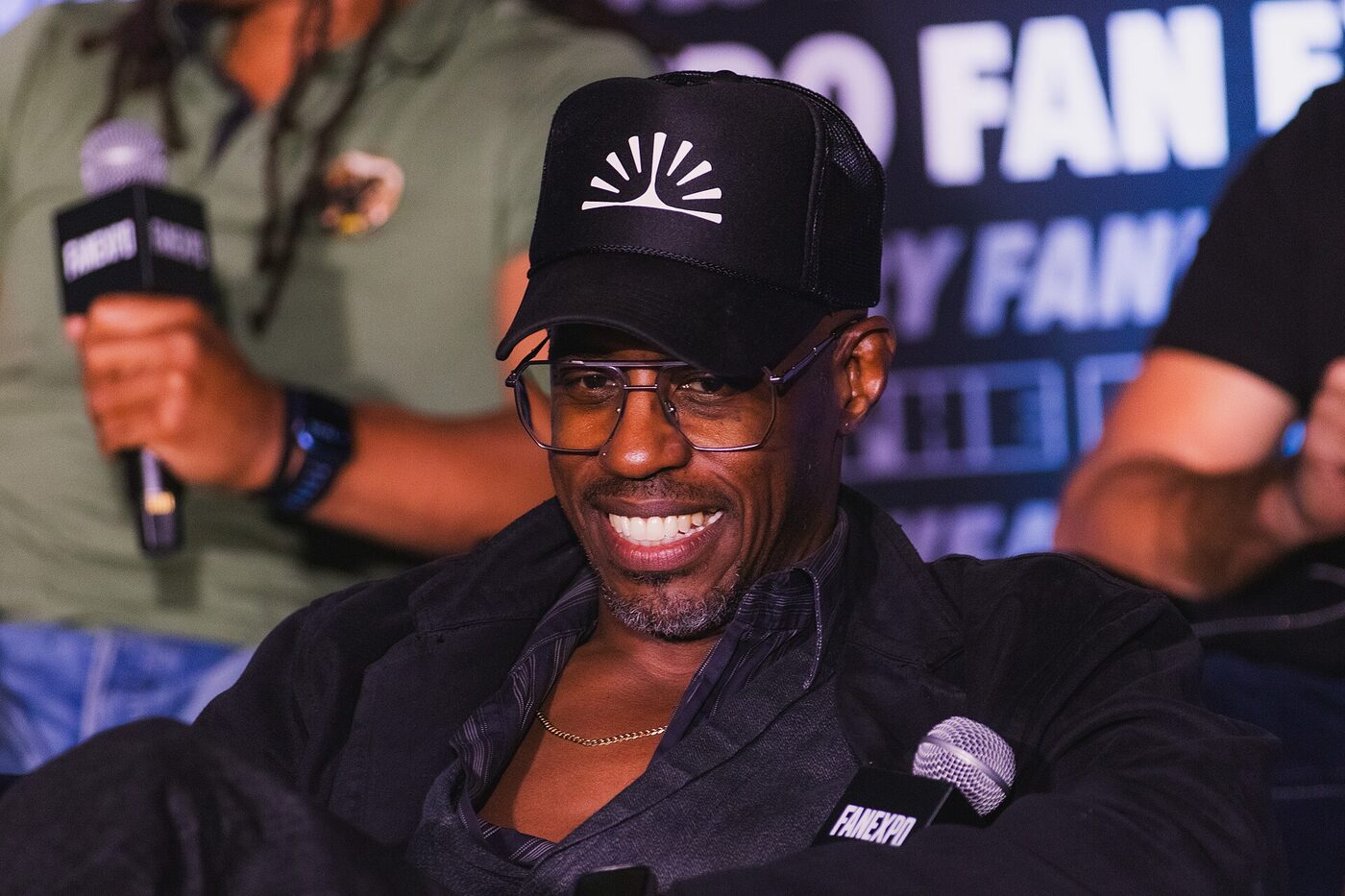

What none of that literature does is remember the newsgroup. The reassessment is of the film, the character, the performer and the audience; the administrative residue of the argument — a name in a configuration file — has not been part of the story anyone has told. That is the gap this page exists to fill, and it is a small one.
Why this directory keeps the address
Somewhere in the link lists, course pages and bibliographies that once mapped Usenet for people who had to navigate it, a reference resolves to this path. A reference that resolves to nothing is a small, permanent piece of damage to the record, and keeping an address alive costs almost nothing. That is the general case for every skeleton page in this directory.
The particular case here is that the address is the only surviving trace of the four-part form of a name, and that the name — in whatever form — documents something about how alt.* worked that is otherwise hard to demonstrate. A reader arriving at this page gets the administrative facts as the consortium holds them, the fortnight of argument that produced the documented pair of names, the practice those names belonged to, the dated history of the film and reaction they responded to, and an account, attributed to the people who gave it, of what the reaction cost and how it has since been reconsidered.
What such a reader does not get, and is not meant to get, is a re-performance of the joke. The name is preserved as evidence. The register it was written in is not reproduced beyond the single description line quoted above, which is quoted because the record wrote it and because the argument of this page depends on what a description line was being used for.
What the record does not show
The gaps are large, and listing them is more useful than filling them.
- Whether the four-part name ever existed on a news server. It is in this directory’s roster. It is in no reference file, no active file and no control-message archive consulted here. The truncation hypothesis offered above is a hypothesis.
- Whether anybody posted to the documented pair. The consortium’s files record names, not traffic; the article numbers in the active file are placeholders identical for every entry. No article archive available to this directory holds messages from either group. A booster asserts 114 messages over four days in June 1999, but a booster is an interested party arguing for its own group’s survival.
- Who read them. There is no subscriber count for any Usenet group, then or now. The readership reports circulated in the 1990s were extrapolations from a sample of participating sites, not headcounts.
- What was said in alt.config. The first newgroup message claims prior discussion there with no significant objections. The control archive holds control messages only, and this directory has not located a verifiable archive of alt.config for late May 1999.
- Whether the proposers and the removers were the same handful of people all along. The file shows addresses and signatures, several of them deliberately mangled against address harvesting. It does not show who was behind them, and at least one exchange in an older file of the same kind turns on an accusation of forgery.
- When either group stopped. Groups in alt.* do not close. They stop receiving articles on a date nobody records. The last control message is dated 9 June 1999, which is not an end date and is not presented as one.
- Any connection between this group and any of the later reassessment. None of the sources describing the backlash mentions a newsgroup by name. The connection drawn in this article is between a documented practice and a documented reaction, not between specific people.
Scope and limits
The group’s own material amounts to two listing lines, two active-file lines and fifty-four archived control messages, of which forty-one are distinct documents and the rest are relayed copies; and none of it is filed under the address at the top of this page. What surrounds that thin record here is drawn instead from the public history of the film, of its reception, and of the reassessment that followed — each attributed to the source that carries it. It runs long because the surrounding record is unusually complete for a group of this kind, not because the group is unusually important.
On register, deliberately: this page reports what was argued and does not argue it. It reproduces exactly one line of the group’s own idiom — the description line from the first newgroup message — and nothing else in that register: no abuse, no insults, no mockery of the character or of the man who performed him, no examples of what was posted about either, and no summary of such material. The charter’s own wording is described rather than quoted for the same reason. The performer is named only in connection with statements he chose to make publicly and with the professional facts of his work, and the account of the harm he described is given once, briefly, with its sources, and is not elaborated. No verdict is offered on the racial-caricature argument, on the film, on the character, or on the people who issued any of the fifty-four control messages. No figure accompanies this article, and none would be appropriate.
Reading alt.fan.starwars.jar-jar-binks.die today
- Historical archive: Google Groups — alt.fan.starwars.jar-jar-binks.die (coverage varies by group and era).
- Open in a newsreader:
news:alt.fan.starwars.jar-jar-binks.die— the original site offered exactly this link, and it still works if your system has a newsreader registered for thenews:scheme. - Live access: point an NNTP newsreader at a modern server — see accessing Usenet today.
- The original news2mail e-mail subscription service ended in the mid-2000s and no longer operates.