rec.food.cooking
Food, cooking, cookbooks, and recipes.
One of the busier rec.* groups: technique questions, ingredient substitution, equipment argument and recipe exchange, carried on by home cooks and professionals together across two decades.
Recipe groups were among Usenet’s most practically useful rooms, and among the first whose content the web absorbed wholesale. The group remains in the Usenet namespace today.
On this page
- A group older than its own paperwork
- What the control archive holds
- Counting the branch from the ISC files
- Two attempts to break it up
- The 1996 settlement, and the last proposal
- The recipe as a Usenet document
- Whether a recipe can be owned at all
- The FAQ that ran the room
- What a general cooking room carried
- The era it covered
- What arrived after the gateway closed
- Why this kind of room emptied first
- Off the wire
- What the record does not show
- Scope and limits
A group older than its own paperwork
The Internet Systems Consortium keeps the administrative record of Usenet. For a Big Eight group created from about 1990 onwards, that record is usually a single file under the news.announce.newgroups archive, named for the group, holding the Request for Discussion, the Call for Votes, the result with its tally, and whatever notices followed. For rec.food.cooking there is no such file; the request returns a 404. That is not a hole in this page's research but the first fact about the group. The archive's rec branch holds 915 files, and the oldest documents inside the ones consulted here date from January 1990. It does not reach back to the reorganisation that gave the group its name, and groups that were renamed rather than voted into being have no proposal on file anywhere, because there was no proposal. rec.food.cooking is one of them.
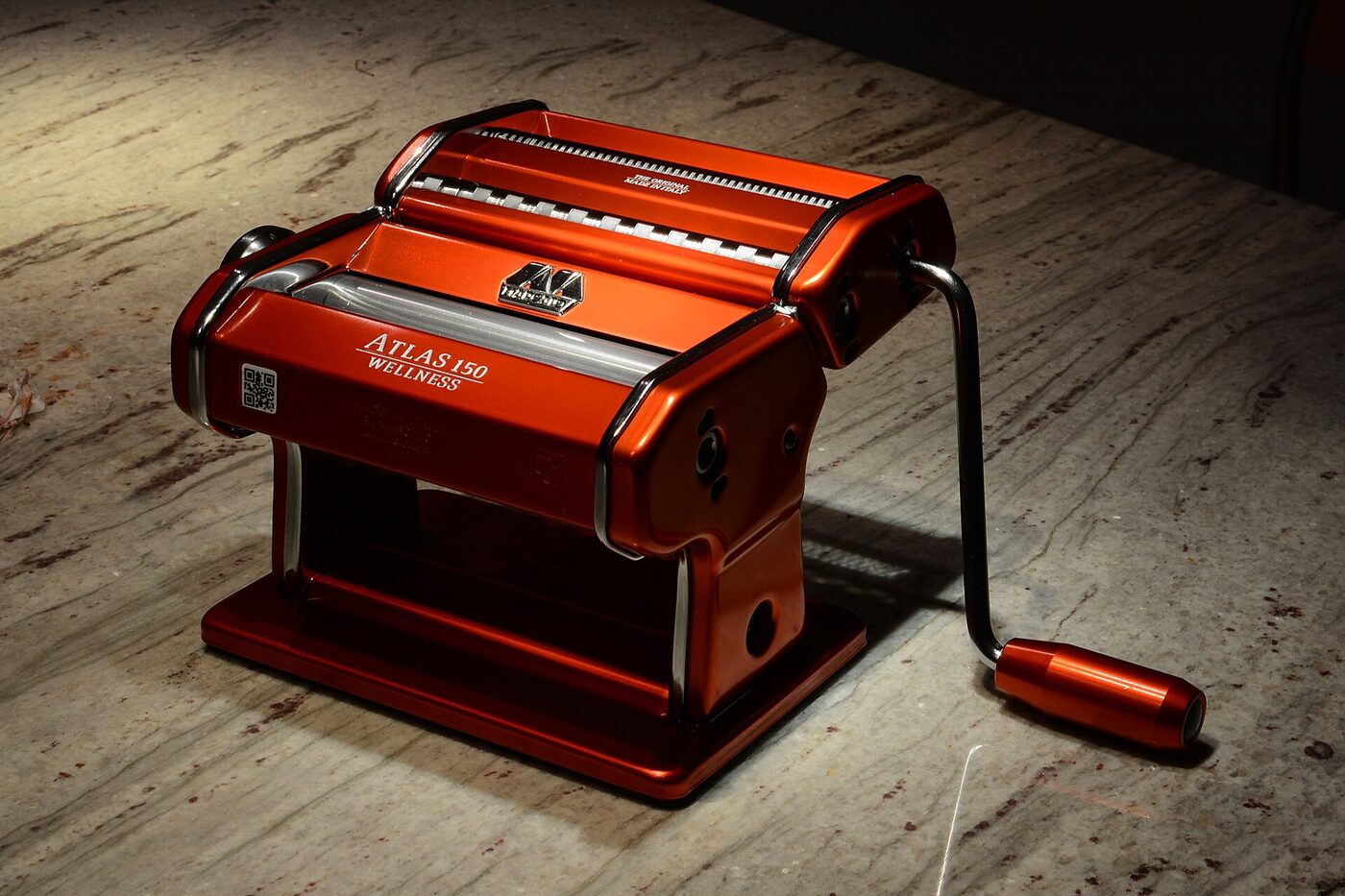
What it has instead of paperwork is a genealogy, and the genealogy was written down by the group itself. The Cooking and Conversions FAQ — the group's long-maintained reference document, which also asks to be cited as the rec.food.cooking FAQ and conversion file — carries an origin note contributed by Max Hauser. The group began as net.cooks, launched by Steve Upstill in Berkeley in January 1982 with a posting on pragmatic pasta sauces, which was what Upstill was then often cooking; the circle around him, in Hauser's account, were cranking out a lot of fresh ribbon pasta on Atlas 150 roller-and-cutter machines and needed things to do with it. The note cites an original posting of 29 January 1982 and a net.general announcement two days later describing the new group as All about food, cooking, cookbooks, recipes and other alimentary effluvia. That sentence, the FAQ says, was the group's charter — with the dry parenthesis that nobody on net.cooks or rec.food.cooking used the specific language of charter until 1987, five years later, and then about a different newsgroup. The note adds that posted statistics showed net.cooks becoming popular immediately, one of the most popular newsgroups of its moment.

net.cooks became rec.food.cooking in the Great Renaming, the reorganisation that replaced the flat net.* namespace with comp, misc, news, rec, sci, soc and talk. The FAQ dates the group's change of name to late 1986; the renaming as a whole is generally dated to 1987, the work having been made practical by improvements to the news software during 1986. The FAQ notes that a Gene Spafford list of active newsgroups then carried the group with the summary Food, cooking, cookbooks, and recipes. That line is the one at the head of this page, and it has not been edited since. It appears word for word in the body of the newgroup control message archived for 23 May 1991; in the Big Eight newsgroup list of 16 October 2002; and in the Big Eight newsgroup list of 15 August 2026, the most recent at the time of writing. Four decades of namespace politics have passed over it without leaving a mark.
Upstill's own afterlife is fitting. The FAQ records that he went on to work on recipe-formatting software and, as Hauser recalls it, to commercialise a typesetting macro package — which is to say that the man who started Usenet's cooking group spent part of his career on the problem of how to set a recipe in type. The group would spend twenty years on the same problem in plain ASCII.
What the control archive holds
The other half of the administrative record is the control-message archive, which stores the newgroup and rmgroup messages that create and destroy groups on a news server. Its policy document, written by Russ Allbery, states that the archive holds messages received since early 1991; that it began at rpi.edu, moved to uu.net in the autumn of 1992 and later reached isc.org; and that a month or so of traffic around August 1992 is missing. It therefore starts four and a half years after rec.food.cooking acquired its present name, which is why the group's creation is not in it either.
For rec.food.cooking the archive holds exactly four messages, and they make a small and rather characteristic history of the network's plumbing.
- 23 May 1991 — a newgroup message from the news administrator at a company in Wakefield, Massachusetts, sent with world distribution. Its entire body is the description line: Food, cooking, cookbooks, and recipes. This is not the group's creation; it is a routine re-announcement of a group that already existed, of the kind sites sent to keep each other's newsgroups files in step.
- 26 April 1992 — the same control action from a machine in the computer science department at the University of Maine, this time with no body at all and with
Distribution: umcs, meaning it was never meant to leave the campus. It escaped anyway, which is how it comes to be in a world archive. The same operator's leaked messages caused enough confusion elsewhere in the branch that the moderator of news.announce.newgroups had to post a correction about a neighbouring group. - 25 November 1995 — a newgroup message from a server in Novosibirsk, whose body reads For your newsgroups file: followed by the group name and an empty description. Somebody in Siberia was tidying up.
- 4 November 2001 — an rmgroup, the message that tells a server to delete a group. Its From and Approved headers name Urs Janßen, the long-time maintainer of the tin newsreader, and its Organization line names a students' association in Karlsruhe; but it was injected through a host in Quebec, it carries no cryptographic signature, and it is signed off with a line of machine-generated nonsense. Its one-line body asks administrators to please remove the bogus newsgroup rec.food.cooking, a group that had been among the highest-volume rooms in the hierarchy for most of the preceding decade.
Nothing came of it. rec.food.cooking is present in the ISC active file today, flagged y for unmoderated posting, and in the accompanying newsgroups file with its unchanged description. The rmgroup is worth recording all the same, because it is the only attempt anyone ever made to remove this group, and it was not a legitimate one. Big Eight groups are removed by procedure and announced by a signed control message from the hierarchy's administration; this was neither.
Counting the branch from the ISC files
The current ISC newsgroups file — the same file that supplies the description at the head of this page — lists fifteen groups under rec.food, and the shape of the branch is easiest to see by simply reading them off:
- rec.food.baking — Baking and baked goods, e.g. bread, pastries.
- rec.food.chocolate — Chocolate.
- rec.food.cooking — Food, cooking, cookbooks, and recipes.
- rec.food.drink — Wines and spirits.
- rec.food.drink.beer — All things beer.
- rec.food.drink.coffee — The making and drinking of coffee.
- rec.food.drink.tea — Tea as beverage and culture.
- rec.food.equipment — Food-related equipment, appliances, utensils.
- rec.food.historic — The history of food making arts.
- rec.food.marketplace — Buying and selling food-related items.
- rec.food.preserving — Preserving foodstuffs, herbs, and medicinals.
- rec.food.restaurants — Discussion of dining out.
- rec.food.sourdough — Making and baking with sourdough.
- rec.food.veg — Vegetarians.
- rec.food.veg.cooking — Vegetarian recipes, cooking, nutrition. (Moderated)
Two more stood there in 2002 and are gone now. The Big Eight list of October 2002 also carried rec.food.recipes, described as Recipes for interesting food and drink. (Moderated), and rec.food.cuisine.jewish, All matters concerning Jewish cuisine. (Moderated). Both were removed on 18 June 2025, in a batch of eighty-nine moderated groups that had lost their moderators; the Big-8 Management Board's rmgroup message records a Last Call for Comments on 5 May 2025, three preceding Requests for Discussion on 3 January, 2 February and 11 March, and a board vote of three in favour of deletion with one member not voting. The rationale is stated plainly in the message: the groups could not be used for discussion because they had no moderator, most had been unused for years, and revival was thought unlikely. The whole rec hierarchy has thinned over the same period, from 730 groups in the October 2002 list to 659 in August 2026.
Most of those specialist groups exist because someone found the general room too broad, and the general room is what they were carved away from. That relationship was stated in so many words in a 1996 proposal, which described rec.food.cooking as already the de facto misc group of the rec.food sub-tree and argued that it represents a strong brand name which should be left alone. Usenet taxonomy rarely used the language of branding; the fact that a group-creation proposal reached for it says something about how the group was regarded.
Outside rec.food there were two other neighbourhoods. The unvoted alt hierarchy filled with single-subject food rooms that needed no election to exist — alt.gourmand, whose importance to this story is set out below, and later arrivals such as alt.food.mexican-cooking, which owns Mexican regional cooking, its regional map and its cookbook literature and is not retold here; the mechanics of creating groups without a vote belong to the alt hierarchy page. And national cuisine, as opposed to cooking in general, tended to be discussed where the nation was discussed, in the soc.culture branch, one group per country and the food threads running alongside the politics. rec.food.cooking sat in the middle of all this as the room with no qualifier: the place you posted when your question was not about a country, a cuisine, a beverage or a single appliance. The wider hierarchy it belonged to is described on the rec hub page.
Two attempts to break it up
The best documentation the group has of itself is, ironically, the record of two failed attempts to abolish it. Both are preserved in full in the ISC archive under the name rec.food.cooking-reorg, a file of about 150 kilobytes containing every proposal, ballot and tally.
The first came on 14 September 1994, from Stephanie da Silva, who was then moderating rec.food.recipes. Her Request for Discussion is unusually candid about its own motive. Traditionally, rec.food.cooking has been an amazingly civil, calm and flame-free newsgroup, so a split never seemed to be justified, it says; but in recent weeks the noise level and number of inappropriate posts has skyrocketed, and polite pointers to the FAQs (which usually did the trick before) now go ignored or become targets for flames. The remedy proposed was five groups: misc, cookware, recipes, books and discuss. The last of these has the most memorable charter in the file, and reads as an inventory of everything the regulars had stopped enjoying — it was to be the destination for all the spam and tripe that currently plagues the group, for flames and rumours, for controversial topics such as food poisoning, for the two-hundred-and-fifty-dollar cookie, and for those threads that bear marginal relevance that seem to go on forever like, "What did you have for dinner last night?"
Over the next month the proposal shrank. A second Request for Discussion on 27 September cut it to three groups; by the time Ron Dippold of the Usenet Volunteer Votetakers issued the Call for Votes on 12 October it was down to two, rec.food.cooking.misc and rec.food.cooking.equipment. The rationale by then leaned on numbers rather than temper: according to the July 1994 readership report, the group had carried 4,351 articles that month, which the proposal glossed as over a thousand a week and about 145 a day.
The result was posted on 4 November 1994. Four hundred and sixty-six valid votes were cast, with four more rejected as invalid. rec.food.cooking.misc drew 257 yes to 200 no; rec.food.cooking.equipment drew 280 to 180. Both failed. The Big Eight rule of the day required two things at once — at least a hundred more yes votes than no votes, and at least two-thirds of the yes-and-no votes in favour — and while the equipment group cleared the hundred-vote margin by exactly one hundred, neither came near two-thirds. Rather more than a third of those voting was enough to keep the group whole, and rather more than a third turned out to be reliably available.
The second attempt, in the summer of 1995, was much larger and failed much harder. Da Silva's June Request for Discussion opened with a traffic series taken, as its revised version says explicitly, from Brian Reid's Usenet readership reports, and reproduced here as it appeared: 4,351 articles in July 1994; 6,576 articles and 10.0 megabytes in January 1995; 7,391 articles and 10.3 megabytes in March; 7,483 articles and 10.8 megabytes in May. Traffic had almost doubled in a year, to something close to 250 articles a day. The proposal that followed was the most ambitious ever made for the group: four subgroups under rec.food.cooking plus two new siblings, rec.food.spicy and rec.food.bread, revised in a second Request for Discussion in July to seven groups in all, including a rec.food.cooking.modified-diet whose newsgroups line read Lowfat, sugarfree, wheatfree, low-sodium, etc.
Jim Davis of the Usenet Volunteer Votetakers posted the result on 22 August 1995. Seven hundred and eighty-three valid votes were cast, nine invalid. Every single part of the proposal failed:
- rec.food.spicy+hot — 442 yes, 273 no
- rec.food.bread — 474 yes, 246 no
- rec.food.cooking.equipment — 406 yes, 314 no
- rec.food.cooking.marketplace — 349 yes, 340 no
- rec.food.cooking.books+tv — 330 yes, 372 no
- rec.food.cooking.modified-diet — 350 yes, 345 no
- rec.food.cooking.misc — 370 yes, 350 no
rec.food.bread had a majority of nearly two to one and still fell short of the supermajority. The pattern in the numbers is worth noticing: the two proposals that would have created genuinely new subjects, bread and spicy food, came closest, and were the only two to clear the hundred-vote margin; the proposal that would have renamed rec.food.cooking itself came in at 370 to 350, which is to say that the group was almost exactly evenly divided on whether it should continue to exist under its own name, and evenly divided was more than enough to keep it.
The 1996 settlement, and the last proposal
The lesson was drawn by somebody else. On 26 February 1996 Dan Masi posted a Request for Discussion which began by conceding both defeats and then argued past them. Over the previous year and a half, it noted, there had been two serious efforts to redistribute the traffic, both involving subgroups of rec.food.cooking, and both had failed. The reason offered is the most useful single paragraph anyone wrote about this group: a significant fraction of the readership liked the broad range of discussion and did not wish to see it changed; rec.food.cooking was already the branch's general room and should go on being one; and if new groups were wanted they should be broad, and should sit in rec.food rather than under rec.food.cooking. The proposal explicitly declined to change rec.food.cooking's status at all, and said that significant reduction of its traffic was not an immediate objective. It also warned, in a phrase that reads like a verdict on the previous two years, that nothing short of destructive decomposition of the group was likely to change its volume.
Three groups were put to the vote — rec.food.baking, rec.food.equipment and rec.food.marketplace — with Warren Lavallee as votetaker. The result of 17 April 1996 was not close. From 437 valid ballots, baking passed 390 to 35, equipment 384 to 30, marketplace 365 to 39. The identical subjects that had been rejected as rec.food.cooking.equipment and rec.food.cooking.marketplace eight months earlier passed by roughly ten to one once they were proposed as siblings rather than as amputations. Whatever the electorate had been voting on in 1994 and 1995, it was not the merits of an equipment group.
One more split was attempted. In February 1999 a proposal appeared for a moderated rec.food.cooking.vegetables, and its rationale shows both how big the group still was and how the argument had modernised: traffic was said to be often times exceeding 200 messages per day, and the proponents supported the case with a Deja News search of recent postings run on 13 February 1999, which found that roughly a fifth of them were vegetable-related. The vote closed in April. It failed 42 to 265 — the most lopsided verdict in the group's history, and delivered by an electorate of 307, less than half the number that had turned out four years earlier. Big Eight voting was itself running down by then. Nobody proposed splitting rec.food.cooking again.
So the group was never divided, never renamed, and never moderated. It kept the description Spafford's list gave it and the scope Upstill's announcement gave it, and everything that had annoyed the regulars in 1994 stayed exactly where it was.
The recipe as a Usenet document
What makes this room unlike any other in this directory is that it had a native document form. A recipe is a structured object — a title, a yield, a list of quantities against ingredients, an ordered procedure, sometimes a source and a note — and Usenet gave it none of the tools a printed page has. No table, no rule, no italic, no image; seven-bit ASCII in a fixed-width column of the seventy-odd characters that convention allowed, arriving whole in a reader's window. Every convention the group developed was an answer to that constraint.
The most ambitious answer predates the group's recipe traffic and came from outside it. The USENET Cookbook was an experiment in electronic publishing run by Brian Reid between 1985 and 1987 — years before the web, and conceived precisely as publishing rather than printing, that is, as the whole process from solicitation through editing to distribution. Recipes were gathered from contributors worldwide, heavily copy-edited, and issued weekly, first by electronic mail and then on the newsgroup alt.gourmand. Each went out in two forms: plain ASCII, and the same text marked up in troff, the typesetting system that came with Unix. About three hundred people contributed, some thirteen thousand subscribed, and over five hundred recipes were collected. They carried a copyright held by the USENET Community Trust, under a notice that reads today like a rough draft of a free-content licence:
Permission to copy without fee all or part of this material is granted provided that the copies are not made or distributed for direct commercial advantage, the USENET copyright notice and the title of the newsgroup and its date appear, and notice is given that copying is by permission of the USENET Community Trust or the original contributor.
When alt.gourmand wound down, its traffic had nowhere obvious to go, and that is the stated reason rec.food.cooking acquired a sibling. On 24 January 1990 a.e.mossberg of the University of Miami posted a Call for Discussion for rec.food.recipes, whose opening sentence names the problem directly: with the apparent end of alt.gourmand and rising readership on rec.food.cooking, a separate group for recipes alone seemed a good idea, leaving rec.food.cooking for discussions of technique, equipment and ingredients. Mossberg initially thought moderation unnecessary, on the ground that rec.food.cooking had historically shown a high quality of posting and few flames; discussion converted him, on the ground that somebody would have to redirect the non-recipes back where they came from. The vote closed on 11 March 1990: 349 ballots, 233 in favour and 116 against — enough for both the two-to-one ratio and the hundred-vote margin, as the result posting works out on its own face — and the group was created after the customary five-day waiting period, with Mossberg as its first moderator and submissions arriving by electronic mail at his university address.
The moderation had one piece of engineering behind it that defines the relationship between the two rooms better than either charter does. As the FAQ later explained, the moderators' software automatically set the Followup-To header of every accepted recipe to rec.food.cooking, because no discussion at all was permitted in the recipe group; anyone who hit reply to a recipe found themselves posting next door. Recipes flowed one way and argument the other, mechanically, without anyone having to police it. Later moderators included Stephanie da Silva, whose reorganisation proposals are described above, and then a team whose lead moderator was Patricia D. Hill; the group posted its own weekly FAQ explaining how to format a submission.
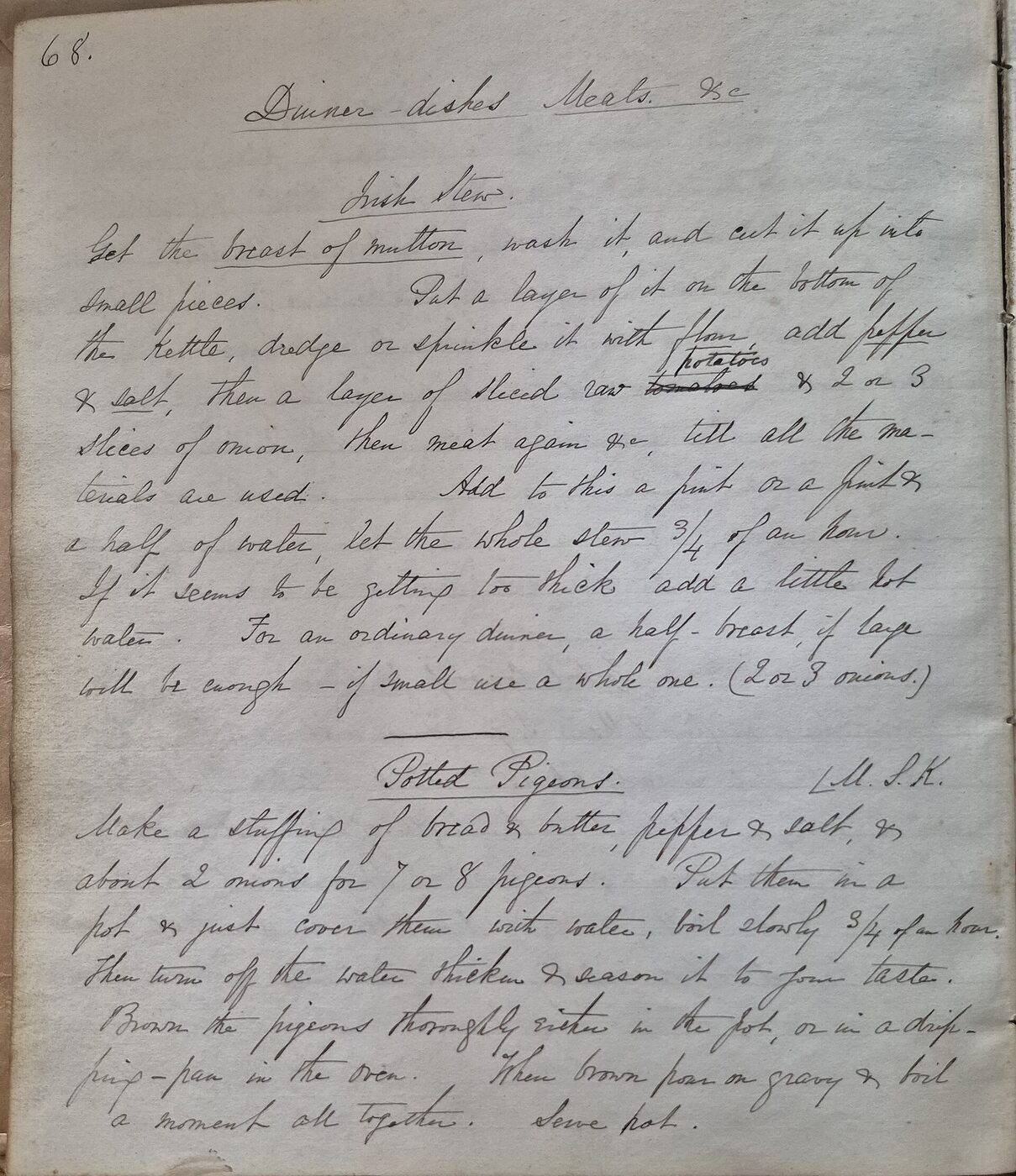
What a recipe actually looked like can be checked rather than guessed, because a large sample survives in a public archive. The commonest form was not a single recipe but the collection: somebody asked for, say, bean soups, several people answered, and one of them gathered the replies and reposted them as one article with a table of contents. A collection dated 16 August 1993 and credited to Micaela Pantke shows the mature convention — four contributed recipes, each carrying the name and address of the person who sent it, two of them adding a Source: line naming the cookbook the recipe came from; each title in capitals underlined with a row of equals signs; a (Serves 8) or (Servings: 12) under the title; Ingredients: and Instructions: as labelled sections underlined with hyphens; quantities in a left-hand column so that they line up under a fixed-width font; and long rows of percent signs between one recipe and the next, doing the work of a horizontal rule. It is a typographic system built entirely out of punctuation, and it was legible on any terminal on earth.

Those postings were collected almost from the beginning. Amy Gale's archive of rec.food.recipes records its own start date as 14 July 1993 and its own scope as everything then current in the group plus everything posted until some time that October or November. It began on a machine at Victoria University of Wellington and later moved to Carnegie Mellon's School of Computer Science, where it is still online, indexed under twenty-five headings that run from appetizers, bread and cake through crockpot, ethnic dishes and preserves to souffles, sourdough and soups. Its front page records, in passing, that when Gale needed new hosting she was offered space by several people, among them Stephanie da Silva and Roy T. Fielding, then at the University of California, Irvine, and later one of the authors of the HTTP specifications. The same page cheerfully describes the archive as horribly out of date and tells the reader to try the newsgroup itself, or one of the more up-to-date archives, instead.
It was not alone. By the time the group's FAQ was last substantially revised, its recipe-archive section opened by observing that there were hundreds if not thousands of recipe archives on the net, and then listed seventeen of the larger ones: the official rec.food.recipes archive maintained by Stephanie da Silva; a mirror of the old alt.gourmand Usenet Cookbook hosted at Cardiff; the Searchable Online Archive of Recipes, by then RecipeSource; Gale's own archive; a searchable database of more than seventy-six thousand recipes maintained by Leon Brocard; a commercial site claiming over two hundred thousand, itself including a rec.food.recipes archive; and collections of medieval cookery, copycat restaurant recipes and recipe links sorted by language. The group had, in other words, spent a decade producing a corpus that other people were indexing better than Usenet ever could.
Whether a recipe can be owned at all
A group whose stock in trade was other people's recipes, frequently typed out of books with the book named in a Source: line, was living on a legal question that most of its members had probably never examined. The question has an answer, at least in the United States, and it is unusually clear.
The first layer is regulatory. Since 1959 the Copyright Office's own rules have listed the things that cannot be registered, and the list in section 202.1 of title 37 of the Code of Federal Regulations includes, in paragraph (a), among names, titles, slogans and familiar symbols, the mere listing of ingredients or contents. An ingredients list is not a work of authorship. It has never been one.
The second layer is judicial, and it arrived in the middle of the group's life. In Publications International, Ltd. v. Meredith Corp., 88 F.3d 473, decided by the United States Court of Appeals for the Seventh Circuit on 8 July 1996, two publishers fell out over recipes from a promotional booklet of Dannon yogurt dishes that Meredith had published and registered. Publications International sued first over trade practices; Meredith counterclaimed for copyright infringement, and the district court granted it a preliminary injunction on the view that the recipes were protected. The Seventh Circuit vacated the injunction. Judge Kanne's opinion treats the two halves of a recipe separately. Of the ingredients: The identification of ingredients necessary for the preparation of each dish is a statement of facts, and the court went on, We do not view the functional listing of ingredients as original within the meaning of the Copyright Act, invoking both the Supreme Court's decision in Feist five years earlier and the Copyright Office regulation quoted above. Of the directions: the court held that they fall squarely within the class of subject matter excluded from protection by section 102(b) of the Copyright Act, which withholds copyright from any idea, procedure, process, system, method of operation, concept, principle, or discovery.
The court was careful about the limits of what it had decided, and the careful part is the part that matters to anyone reading an archive of recipes. It expressly declined to express any opinion on whether recipes are or are not amenable to copyright as a class, observing that the recipes before it contain no expressive elaboration upon either of these functional components, as opposed to recipes that might spice up functional directives by weaving in creative narrative. A recipe with a story attached, a headnote, a photograph, or a distinctive turn of phrase can carry protection in that added material; and a cookbook as a whole can be protected as a compilation, which is a right in the selection and arrangement rather than in the constituent recipes.
Set that against the USENET Community Trust notice quoted above and the shape of the thing becomes clear. Reid's project had asserted a copyright and licensed it generously; the courts would eventually hold that most of what a plain recipe contains was never anyone's to assert in the first place. For rec.food.cooking the practical consequences were three. A Source: line crediting a cookbook was courtesy and scholarship rather than a licence condition. The recipe archives could exist, and could be mirrored, indexed and republished, without anyone needing permission. And the commercial recipe sites that later took the group's traffic were building on a supply of raw material that was, as a matter of law, mostly free.
One caveat is owed to a group whose voters wrote in from a dozen countries: the foregoing is United States law only. Other jurisdictions treat functional texts and compilations differently, and this page takes no view on any of them.
The FAQ that ran the room
Big Eight groups were governed on paper by charters and in practice by their FAQs. rec.food.cooking's was the Cooking and Conversions FAQ, and its copyright line is also its history: Cindy Kandolf 1992 to 1993, Amy Gale 1993 to 1999, Mary Frye and Victor Sack 1999 to 2003, Victor Sack from 2003. Its credits thank Kandolf for putting the whole thing together and Gale — the same person who ran the recipe archive — for maintaining and extending it for many years, and then run to dozens of contributor addresses at universities, laboratories and companies in North America, Europe and Australia. The document reserved its own rights firmly, granting free redistribution with credits intact and explicitly refusing permission to reproduce it for profit.
Its anatomy is more revealing than any summary of it. In outline the document ran:
- Substitutions and equivalents — flours, leavening agents, dairy products, starches, sugar and other sweeteners, fats, chocolates, meats, salt.
- US, UK and metric conversions — oven temperatures; food equivalencies broken out by class, from flours and cereals through fats and cheeses to dried fruit, preserves and egg sizes; American liquid measures; British liquid measures; British short cuts; the energy output of cooktops; general conversion tables for weight and volume, including one large weight-to-volume chart that is the single longest passage in the FAQ; Australian metric cups and spoons; catties; some old measurements; and a short section headed Authorities.
- A glossary of culinary terms in five parts, A to Z, which is the largest chapter in the document.
- Cooking methods — poaching, frying, sauteing and deglazing, broiling, the caramelising of onions, braising, cooking with alcohol, roasting.
- Distilled wisdom on equipment — woks and cast iron.
- The group itself — its origins, a short list of highlights in its life, and a section headed What's all this about xxxx? for the group's private vocabulary.
- This has come up once too often — the standing repeat offenders.
- Recipe archives and other food sites, the neighbouring newsgroups and the mailing lists, other people's FAQs including a section for humorous ones, the unofficial group web site, sources and contributors, and a bibliography.
Measured by length, the glossary and the conversion chapter together are more than half the document, and that is the single best evidence of who was in the room. A group with American, British, Australian, Canadian and continental European readers had to reconcile volume measurement against weight, Fahrenheit against Celsius against gas marks, an American pint against an imperial one, and — for anyone cooking from a Chinese source — the catty. It also had to agree what the words meant, which is what a five-part glossary running from A to Z is for. The FAQ's opening paragraphs say as much outright: its primary purpose, it announces, is to help cooks from different countries communicate with one another, because measurements and terms for food vary from country to country even when both countries speak English. A general cooking group is, among other things, a permanent translation problem. The section headed Authorities is a four-line key identifying the cookbooks the conversion figures were taken from, which tells you that the numbers were sourced rather than invented, and that somebody had asked where they came from.
The What's all this about xxxx? section is the other half of that picture, and it is where the group stops being a reference work and becomes a place. It glosses the running jokes and the standing corrections together: that aluminium has not been linked to Alzheimer's disease in a reproducible experiment; that Elbonia is a mythical country borrowed from a newspaper comic strip; that Ingrid was a regular's car, used for flattening chicken breasts, and is now deceased; and that ObFood, an obligatory food reference, is an old tradition of the group, by which anyone posting off topic is expected to add something about food, ideally something interesting or useful. Much of the section, the FAQ says, was copied from a MiniFAQ that Amy Gale used to post.
The This has come up once too often section is the group's own account of its besetting nuisance, and the entry it leads with is the two-hundred-and-fifty-dollar cookie: the story of a shopper who ate a cookie at a bakery chain's or a department store's cafe, asked for the recipe, was told It will cost you two-fifty, took that to mean two dollars fifty, discovered it meant two hundred and fifty dollars, and is now circulating the recipe out of revenge. The FAQ handles it with weary precision — there are a number of holes in the story, no one has ever brought forth any evidence that it really happened, and anyone who knows someone who knows someone it happened to is directed to alt.folklore.urban, where they will proceed to have you for breakfast if you have no evidence. It adds that the recipe had by then found its way into the source distributions of GNU Emacs and XEmacs, in a file in the etc directory called COOKIES, and that readers who want it should ask for it by mail and, most importantly, stop posting it. The same legend appears by name in the 1994 reorganisation proposal, in the charter of the group that was to have absorbed it. It outlived the proposal.
None of the FAQ was ever voted on, and it had no formal standing whatever. It was nonetheless the group's real constitution: the thing a regular pointed a newcomer at, and — per the 1994 Request for Discussion, which dated the trouble from the moment polite pointers to the FAQs began to be ignored — the thing whose loss of authority was taken as the sign that something had gone wrong.
What a general cooking room carried
Reconstructing the traffic of an unmoderated group two decades on is a matter of reading the documents it left rather than the threads it lost, and four such documents between them describe the genres fairly completely: the FAQ's own table of contents, the charters written for the groups that were proposed to relieve it, the categories of the recipe archive, and the group's own description of what belonged in it. The FAQ's answer to the last was disarming — a group for the discussion of cooking in general, where recipes and requests for recipes are welcome, as are discussions of cooking techniques, equipment and the like, and in short, if it has to do with cooking, it probably belongs here.
Technique is mapped by the FAQ's methods chapter, which chose to write up poaching, frying, sauteing and deglazing, broiling, braising, roasting, cooking with alcohol and the caramelising of onions. Those are not an arbitrary selection; a FAQ documents what is asked repeatedly, and this is a list of the operations that home cooks get wrong or disagree about. The presence of a standing entry on caramelising onions in particular will be recognised by anyone who has watched the same argument on any cooking forum since.
Substitution has a chapter of its own, running through flours, leavening agents, dairy products, starches, sweeteners, fats, chocolates, meats and salt, and the reason is period as much as culinary: a cook working from an American recipe in Britain, or a British recipe in Australia, or any recipe at all in a town with one supermarket, needed to know what could stand in for what. The chapter is organised by ingredient class rather than by dish, which is how a reference work behaves rather than a conversation.
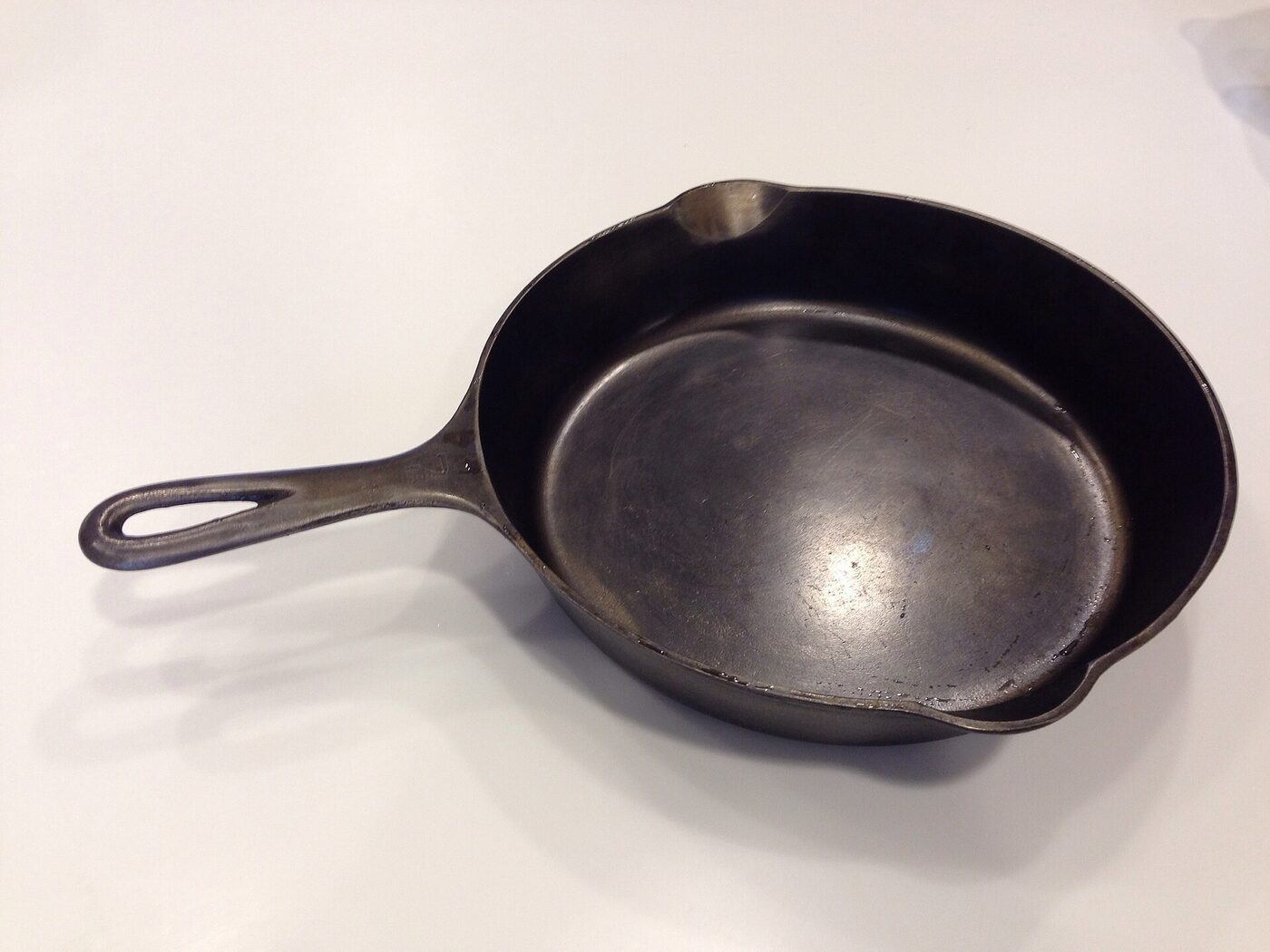
Equipment is documented with unusual precision, because two separate proposals had to define it. The charter drafted in 1994 for a rec.food.cooking.cookware group lists the subjects it expected to inherit: bread machines, microwaves, crockpots, knives, cutting boards, glass-top stoves, barbecues, cast iron, woks, Calphalon, aluminium, dehydrators, pasta makers and rice cookers. Later drafts added equipment sources, care and repair, and which brands of appliance to buy. That list is a snapshot of the mid-1990s domestic kitchen and of the arguments it generated, and it is the closest thing the record offers to a contents page for the group's equipment traffic. The FAQ's own equipment chapter is narrower still, and tells you which two arguments had been settled often enough to be worth writing down: woks and cast iron.

Sourcing barely needs a document to explain it. For most of the group's life, finding an ingredient meant knowing a shop, a mail-order house or somebody who lived near one, and a large international group was the fastest available directory. The 1995 proposal for a spicy-food group expected to carry, among other things, advice on procuring seeds — which is a reminder that the answer to a sourcing question in 1995 was sometimes to grow the thing yourself.
Food safety recurred, and this page reports only that it did. The clearest evidence is negative: the 1994 proposal listed controversial topics, and named food poisoning as its example, among the things it wanted moved into a separate group so that the main one could get on with cooking. What was argued, and what conclusions individual posters reached, is not summarised here, and no guidance of any kind is offered on the subject.
As for who was doing the arguing, one contemporary document allows an actual count. The final results posting for the rec.food.recipes vote in March 1990 published every voter's address, as the rules of the period required, and the roll yields 326 parseable addresses: 169 under .edu, 70 under .com, 21 .net, 10 .org, 6 .gov, 5 .mil and 2 .us, with 39 under other national country codes — 11 Canadian, 11 British, 5 Finnish, 3 Swedish, 3 Dutch, and single entries from Germany, Italy, France, Denmark, Iceland and Switzerland — and four more on legacy hosts that resolve to no domain at all. Those figures understate the group's reach rather than overstating it, because several European voters reached the network through American gateways and are counted under the gateway: an Irish address arrives through a City University of New York relay and lands in the .edu column, and German and Italian addresses arrive through the CSNET relay and land in .net. The picture is still plain enough: in 1990 this was a heavily North American academic and corporate readership with a real but minority European and Commonwealth presence, which is exactly the readership the FAQ's conversion tables and glossary were written for.
What the record does not support is a month-by-month account of the group's seasons. A cooking group with that readership will have run on a northern-hemisphere calendar, and the inference is a safe one, but no traffic breakdown by month survives in any source consulted for this page, and none of the surviving documents describes the group's annual rhythm. It is stated here as an inference and not as a finding.
The era it covered
A general cooking group is a seismograph for what is happening in kitchens, and the two decades this one covered were unusually active ones. Most of what follows can be traced in the group's own documents, because a subject that becomes important enough eventually turns up in somebody's proposal for a new newsgroup.
The clearest instance is the bread machine. The first self-contained domestic breadmaker was released in Japan in 1986 by Matsushita Electric Industrial, now Panasonic, developed by a team including the software developer Ikuko Tanaka, who trained with the head baker at the Osaka International Hotel in order to work out how the machine should knead. By 1994 it heads the list of appliances in the proposed cookware group's charter. By 1995 it had become a proposal in its own right: rec.food.bread, whose charter covered yeast breads, quick breads and sweet breads, flours, yeasts, techniques, baking by hand and especially by machine, and recommendations for particular models. That charter also contains one of the most quietly telling sentences in the whole file — a rule, written in advance, that meta-discussions about whether baking by hand is better than baking with a bread machine were inappropriate and should be avoided. The proposers knew exactly which argument was going to eat their group.


Television arrived on almost the same schedule. Food Network was formed as TV Food Network on 19 April 1993, launched that November and began live broadcasting on 23 November 1993, taking its present name on 1 April 1996; in Japan, Fuji Television premiered Iron Chef on 10 October 1993, and it ran to 309 episodes before ending in September 1999, its reruns eventually finding their way onto North American food channels. The celebrity chef as a mass-market figure was not new — Julia Child's The French Chef had begun its run as a weekly series in February 1963 — but a channel that broadcast nothing else was, and the group registered it in the only way a newsgroup can, by arguing about where to put it. The 1994 proposal wanted a rec.food.cooking.books group for cookbooks, cookbook authors and television shows; the 1995 revision named the group rec.food.cooking.books+tv outright, with a newsgroups line reading Cooking shows, cookbooks, recipe software. It was the only part of the 1995 slate to attract more no votes than yes.
Ingredients that had been specialist became ordinary across the same years, and here the group's documents are more useful than any general history, because they record what was interesting enough in 1995 to want a room of its own. The proposed spicy-food charter, across its two drafts, covers traditionally spicy cuisines (Thai, Mexican, East Indian, etc), varieties of chile, advice on growing chile plants, restaurant recommendations, ratings of commercially available hot sauces and the procurement of seeds. A subject with a thriving mailing list, a proposed newsgroup and a market in bottled sauces is a subject in the middle of going mainstream; that the proposal failed twice, in 1993 as a first Request for Discussion that went no further and in 1995 at the vote, changes nothing about the trend it was reporting. Regional Mexican cooking, one large component of that interest, eventually got its own alt group and is covered at alt.food.mexican-cooking rather than here.
And the recipe database arrived, first as a volunteer project and then as an industry. Amy Gale's archive of the recipe group opened in July 1993; Conde Nast created Epicurious in 1995; Allrecipes was founded in Seattle in 1997; Recipezaar, originally Cookpoint, was built outside Seattle in 1999 by two former Microsoft technologists, Gay Gilmore and Troy Hakala, and eventually became Food.com. Food blogging began in the same year as Allrecipes: the first food blog is generally dated to July 1997, when Jim Leff, a co-founder of the restaurant site Chowhound, started a running feature called What Jim Had for Dinner cataloguing his daily eating. Every one of those is a competitor for the traffic rec.food.cooking was carrying, and every one of them was founded while such groups were at their busiest.
What arrived after the gateway closed
news2mail carried this group to electronic mail between 2000 and 2004, and a reader working through an archive of those years should know which parts of the modern food conversation had not started yet. Three landmarks fall on the far side of the gateway.
Sous vide is the clearest. The technique is old — cooking and storing food under vacuum was developed by American and French engineers in the mid-1960s as an industrial preservation method, adopted for the restaurant kitchen by Georges Pralus at Restaurant Troisgros in Roanne in 1974, and systematised by Bruno Goussault, who founded a research centre for it in 1991 — but it was restaurant equipment throughout the gateway period. Enthusiasts cooking at home used laboratory-grade immersion circulators bought second-hand; inexpensive controllers that could be strapped to a rice cooker only became available from 2008, and the first machines actually intended for domestic kitchens appeared late in 2009. Anything about sous vide in a 2000 to 2004 posting is therefore a report from a professional kitchen or an improvisation, not a description of ordinary home practice.
The commercial consolidation of the recipe web also postdates the gateway. Allrecipes was sold to Reader's Digest for sixty-six million dollars in 2006; Recipezaar was acquired by Scripps Networks in 2007. And the branch itself changed after the gateway closed: rec.food.recipes, the group created in 1990 to take the recipes off rec.food.cooking, was formally removed from the Big Eight in June 2025 for want of a moderator, thirty-five years and three months after it passed its vote. Its unmoderated parent is still there.
Why this kind of room emptied first
Practical question-and-answer traffic was the first thing the web took from Usenet, and food was among the very first subjects the web covered comprehensively. The argument does not need to be made in the abstract, because the group's own documents record it happening.
Start with the mechanics. The value of a general cooking group was that a question asked into it reached several thousand people, some of whom knew the answer, and that the answer arrived within a day. The cost was that the answer arrived once, in a stream, and was gone. Somebody who wanted the same answer six months later either searched an archive — which for most of the group's life meant knowing that an archive existed and where — or asked again. The FAQ and the recipe archives were both attempts to fix this from inside the medium, and both are admissions that the medium could not fix it: the FAQ existed because the same questions recurred, and the archives existed because the postings did not persist usefully.
A web page has exactly the opposite properties. It answers once and stays answered, it can be found by search rather than by membership, and it can carry a photograph. For a subject whose atomic unit is a short structured document that people want to look up rather than discuss, that is not an improvement at the margin; it is a different and better tool.
The founding of Allrecipes is this argument compressed into an anecdote. The company was started in Seattle in 1997 by a group of University of Washington archaeology students, and the stated reason is that two of them had trouble finding a cookie recipe on the internet. Their first site was called CookieRecipe.com; then came Cakerecipe, Chickenrecipe, Pierecipe, Beefrecipe, and eventually thirty-eight separate single-subject domains, which were later consolidated into one. That is what the demand looked like in 1997 — not a place to talk about cooking, but a place to look up one dish — and it was demand a newsgroup could not serve, however knowledgeable its readers were.
The group's own FAQ is the best exhibit, because it changed sides. The recipe-archive section described earlier is not a list of Usenet resources; it is a list of web addresses, and the last of them is a commercial site with a rec.food.recipes archive bolted onto it. In its own reference document, the group was directing its readers to the places that were replacing it. There is no better evidence of how the transition felt from inside.
The conversation followed the reference material, and it went to spaces built for the subject. Chowhound launched in 1997 for restaurant talk; food blogging began on it in July of that year; dedicated discussion boards for cooks and restaurant professionals followed. Each offered what Usenet structurally could not: photographs of the finished dish, threads that stayed put and could be linked to, and moderation that did not require a volunteer to read every article by electronic mail.
There is a commercial layer under all of this, and the legal section above supplies the missing piece. Recipes attract advertising, are cheap to acquire because readers supply them free, and — as the Seventh Circuit confirmed in 1996 — are for the most part not anybody's property. A subject with those three characteristics was always going to be among the first to be industrialised on the web, and it was: Epicurious in 1995 under a magazine publisher, Allrecipes and Chowhound in 1997, Recipezaar in 1999, and a sixty-six-million-dollar sale by 2006. The industry then consolidated on itself, with a coda that is either an irony or a coincidence: in 2012 Reader's Digest sold Allrecipes for a hundred and seventy-five million dollars to the Meredith Corporation — the same publisher whose yogurt booklet had established, sixteen years earlier, that the recipes everybody was trading were not protected in the first place. Against all that, an unmoderated text newsgroup with a FAQ and a volunteer archivist was competing for the same readers with none of the same resources.
The general decline of Usenet through the 2000s — the spam, the withdrawal of news service by large providers, the collapse of the group-creation electorate visible in the 1999 vote above — is told on the hierarchy pages of this directory and is not repeated here; see the rec hub. What is specific to rec.food.cooking is that it did not need Usenet's general troubles to lose its practical traffic. It had already been outbuilt.
Off the wire
The group did one thing that a purely practical room would not have done: it acquired a social existence away from the network, and its own FAQ kept a short list of the results.
- Cook-ins. The FAQ records quite a few of them across the United States, as well as a small one in Germany. The first was hosted by Anne Bourget in Sacramento, California, in 1994 — the same year as the first attempt to split the group.
- A T-shirt. Early in 1997 the group produced one, with the proceeds donated to charity; some 220 were sold, all of them to readers of the group.
- A cookbook. In 2002 and 2003 the group published its own, in two printings — one late in 2002 and one early in 2003 — selling about 740 copies, again to its own readers. The proceeds went to City Harvest, which the FAQ describes as a New York affiliate of Second Harvest, to help the victims of the September 2001 attacks.
- A web site. An unofficial group site was maintained by readers, latterly carrying cook-in reports, a list of members' signature dishes, birthdays, and a map of the readership set up by one of them.
None of that appears in any charter, and none of it was voted on. It does, however, explain the voting record. A group that has held cook-ins on two continents, printed a T-shirt and published a cookbook is not a bulletin board that happens to be about food; it is a society with a permanent address, and when somebody proposes dividing the address into five, the society turns out and votes no. It did so in 1994, in 1995 and in 1999, and the description at the head of this page is the result.
What the record does not show
The gaps are worth stating precisely, because a reference page that does not distinguish between what is documented and what is merely likely is of no use to anyone.
- There is no creation record. No Request for Discussion, Call for Votes or result exists for rec.food.cooking, and none ever did; the group was renamed, not created. The January 1982 origin of net.cooks rests on the account contributed to the group's own FAQ by a participant, which cites archived postings of 29 and 31 January 1982. This page has not independently inspected those two postings.
- There are no subscriber figures. The only readership and volume numbers used here are those the 1994 and 1995 proposals quoted from Brian Reid's periodic Usenet readership reports, and the 1999 proposal's claim of more than two hundred messages a day. They are quoted as the proposals give them; the underlying reports have not been re-examined here, and no figure for the group's readership at any date is asserted.
- There is no complete traffic series, no monthly or seasonal breakdown, and therefore no basis for describing the group's annual rhythm beyond the inference flagged above.
- No thread, poster or exchange is named here except where it appears in a document quoted by name. The group's day-to-day conversation survives only in the general archives, and this page makes no claims about its content beyond the genres its own reference documents describe.
- The provenance of two sets of control messages is unestablished. The 2001 rmgroup described above bears the name of a well-known newsreader author but was injected from an unrelated network, carries no signature and ends in an obviously generated line of nonsense. Separately, the control archive for the sibling group rec.food.recipes fills up between August and November 1998 with newgroup messages asserting that the group had become unmoderated; they are self-evidently not from the Big Eight administration, since they invite anyone to create groups in a hierarchy called meow, are signed off with a cat noise, and cannot even agree with one another about the vote they claim to be reporting, two of them giving tallies of 199 to 23 and 108 to 43 for the same imaginary ballot. The Big Eight list of 2002 still shows rec.food.recipes as moderated, so they had no effect. Who sent either set, and why, is not established here.
- The FAQ carries no single revision date. The copy consulted here is a sectioned mirror of the news.answers text; its copyright line runs from 1992 to 2006 across four sets of maintainers, and its content is plainly the accretion of many years. Where its statements are period-specific they are attributed to it rather than asserted, and no individual section is dated.
Scope and limits
This page is about a newsgroup. Where it describes cooking, television, appliances or the recipe web, it does so because those things arrived in the group and can be shown to have done so, usually through the group's own paperwork. It is not a history of food in the 1990s, and it is not a cooking reference.
Three subjects that neighbour this one are deliberately left alone. Mexican regional cooking, its regional map, its cookbook literature and the chemistry of its ingredients belong to alt.food.mexican-cooking. The structure and history of the recreation hierarchy belong to the rec hub. National cuisines belong with their nations in the soc.culture branch, and are mentioned here only in passing.
Two further limits are self-imposed. Nothing on this page is advice: the food-safety, technique and equipment material above reports what a newsgroup discussed and takes no position on any of it. And the copyright discussion states United States law as courts and regulations have stated it, because that is the jurisdiction with a clear and citable answer; it should not be read as describing the position anywhere else, and it is not offered as guidance to anybody deciding what to do with a recipe.
Reading rec.food.cooking today
- Historical archive: Google Groups — rec.food.cooking (coverage varies by group and era).
- Open in a newsreader:
news:rec.food.cooking— the original site offered exactly this link, and it still works if your system has a newsreader registered for thenews:scheme. - Live access: point an NNTP newsreader at a modern server — see accessing Usenet today.
- The original news2mail e-mail subscription service ended in the mid-2000s and no longer operates.