microsoft.public.* — the branch address
This address stands for the microsoft.public.* hierarchy — the groups Microsoft ran on its own public news server, peered widely enough that most providers carried them. It is preserved because it is still cited from outside. The account of how the hierarchy was administered, who answered the questions and how it was retired in 2010 is on the Microsoft branch page; the groups this directory holds under the branch are listed below.
- microsoft.public.dotnet.framework.wmi
- microsoft.public.excel.programming
- microsoft.public.fr.jpp
- microsoft.public.fr.scripting.ie-oe-animation
- microsoft.public.outlook
- microsoft.public.platformsdk.security
- microsoft.public.scripting.vbscript
- microsoft.public.win32.programmer.directx.managed
- microsoft.public.win32.programmer.wmi
- microsoft.public.windows.mediacenter.hometheaterpc
- microsoft.public.windowsmedia
- microsoft.public.windowsupdate
- microsoft.public.windowsxp.wmi
- microsoft.public.word.numbering
On this page
- How this page was counted
- 1,770 in proportion
- The other vendor namespaces
- Depth: how far down the names go
- Branches: 226 of them, and a long tail
- Nearly half the namespace is not in English
- Two conventions in the same branch
- The product catalogue, counted
- What else got rooms besides products
- The descriptions: 735 strings for 1,770 names
- Punctuation as a fingerprint
- Names that outlived the products
- A namespace that outlived its server
- The fourteen groups in this directory
- Scope and limits
How this page was counted
Everything below is arithmetic done on two files. The Internet Systems Consortium keeps the Usenet administrative record on a public server, and two of the files it publishes are a master active file and a master newsgroups file: the first a list of every group name a well-connected server might be expected to carry, the second the same list with a one-line description against each name. The archive updates hourly, and its stated intention is that both files be complete for all publicly available hierarchies. The edition used for this page is the one timestamped 26 August 2026. Each file carries 45,003 lines; the name columns of the two are byte-for-byte identical, which is the first thing worth checking and the first thing usually assumed.
Against that list, the count for this branch is 1,770. Both files agree exactly. Every name under the top-level microsoft begins microsoft.public: no other second-level component appears beneath it anywhere in the file, so microsoft.* and microsoft.public.* are here the same 1,770 names. Whatever else the company ran on its own server, the master list records only the public branch.
This page does one thing: it measures the namespace. The institutional history is set out on the Microsoft branch page and is not retold here. The general difficulty of counting Usenet at all, and what this directory's own list covers, belongs with the all-groups list. What follows is the shape of the thing: how big, how deep, how branched, in what languages, described how, and why the names are still in the file sixteen years after the server that fed them was switched off.
Two cautions before any of the numbers. First, a master file is a list of names, not a census of articles: it says a group is known to exist, and says nothing whatever about whether anybody ever posted to it. Second, coverage is uneven by construction. The archive depends on hierarchy maintainers telling it what exists, so a hierarchy with an active maintainer is represented better than one without, and the counts below should be read as counts of this file rather than counts of Usenet. That caveat cuts in every direction at once, which is the honest way to leave it.
1,770 in proportion
1,770 names out of 45,003 is 3.93 per cent of the file — roughly one name in twenty-five. Put another way, a reader who downloaded a full group list from a well-fed server in 2026 would find that one line in every twenty-five of it belonged to a hierarchy one company created for its own product support, and stopped feeding in 2010.
Ranked by number of names, microsoft is the fourth-largest top-level in the file, behind three hierarchies that grew by very different rules. The archive's own policy document names alt.* and free.* as the two hierarchies in which any properly formatted creation message from anyone is executed automatically; fido7.* is the Russian FidoNet hierarchy, whose group list follows a network of message areas that was not built on Usenet at all.
alt.*— 20,466 namesfree.*— 3,565fido7.*— 3,242microsoft.*— 1,770uw.*— 796comp.*— 677rec.*— 659
The comparison that carries the most weight is with the Big Eight, the consensus-governed hierarchies that were, for most of Usenet's life, what people meant by Usenet. Counted in the same file on the same day: comp 677, rec 659, soc 213, sci 185, misc 100, talk 31, news 26, humanities 7. The total is 1,898. One vendor's support catalogue is therefore 93 per cent the size of all eight of the voted hierarchies put together, and two and a half times the size of the largest of them.
The national hierarchies lose by a wider margin. The biggest in the file is japan.* at 490, followed by it.* at 449, fj.* at 412, hr.* at 379, uk.* at 342, tw.* at 329, pl.* at 252, dk.* at 247 and de.* at 233. No single country's hierarchy in this file reaches a third of the microsoft.public count; Japan's two hierarchies together, japan.* and fj.*, reach 902, which is barely half.
None of this is a claim about traffic, readership or importance, and it would be a poor reading of the figures to make it one. It is a claim about names — about how many rooms were built, not how many were occupied. But it does establish the plain fact that gives this page its subject: measured by names in the master list, this one company's namespace is larger than any national hierarchy and very nearly larger than the entire Big Eight.
The other vendor namespaces
The phrase largest single-vendor namespace deserves testing rather than repeating, and the same file tests it. The 45,003 names divide between 479 distinct top-level components. Most are countries, regions, cities, universities and networks. A small number belong to a software company or to a single piece of software, and can be picked out because the archive's control file says so in the comment that heads each hierarchy's entry. Counted on 26 August 2026, that set comes out like this:
microsoft.*— 1,770 namesnetscape.*— 93opera.*— 39staroffice.*— 26hamster.*— 19arkane.*— 16codewarrior.*— 12idoctra.*— 10grisbi.*— 8openwatcom.*— 5sybase.*— 1
The runner-up is smaller by a factor of nineteen. It is also, and this is the more interesting part, built to the same plan: all 93 netscape names are netscape.public.* names, the same second component used for the same reason, in a hierarchy whose control-file entry gives an address at the company and a PGP key and names netscape.public.admin as its administrative group. Two companies of the same era, running news servers for the same purpose, reached for the same word to mark off the part of their namespace the public was invited into.
Where the two diverge is in the writing. Netscape's 93 groups carry 93 distinct description lines — one sentence per group, and the sentences are sentences: Discussion of accessibility in mozilla., BeOS port of Mozilla., Hierarchy administration. Opera's 39 groups carry 39 distinct lines and StarOffice's 26 carry 26. Every one of these smaller hierarchies describes its groups individually, because at that size there is no reason not to. Microsoft's does not, and the section on descriptions below measures how far it does not: 735 sentences for 1,770 rooms.
Size changes what a namespace can be. Below about a hundred groups a vendor hierarchy is a list somebody maintains; at 1,770 it is a database somebody generates. That is the difference this page is really about, and it is visible in the file long before any question of who read the groups arises.
Depth: how far down the names go
Every name here begins with the same two fixed components, microsoft.public, so the shallowest possible name has three components and the interesting question is how many further levels the naming went. Counting components in the full name, the distribution is:
- three components (one level below the stem) — 82 names
- four components — 999 names
- five components — 489 names
- six components — 170 names
- seven components — 26 names
- eight components — 4 names
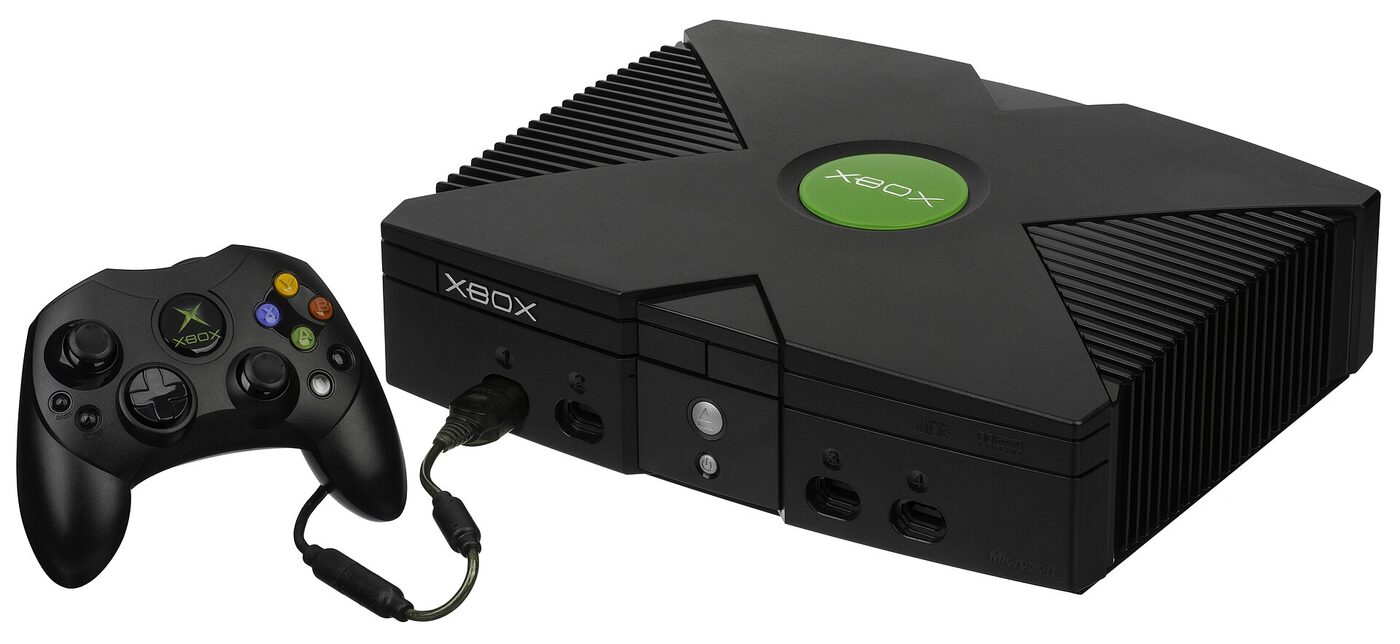

The mass sits at four and five components: 1,488 of the 1,770 names, 84 per cent, are one of those two lengths. Only 82 names — under five per cent — stop at a single component below the stem, and those are mostly whole products that never generated enough distinct questions to be subdivided: microsoft.public.encarta, microsoft.public.masm, microsoft.public.money, microsoft.public.visio, microsoft.public.xbox.
The mean depth is 4.48 components. For the whole 45,003-name file it is 3.56, and for the Big Eight 3.47. Mean name length tells the same story more bluntly: 34.5 characters here against 22.1 across the file. This hierarchy is, by a clear margin, the deepest and wordiest large namespace in the list — which is what one would expect of a namespace whose subdivisions were driven by a support queue rather than by a discussion about whether a subdivision was warranted.
The longest name in the branch is 69 characters: microsoft.public.microsoft.transaction.server.administration.security, in which the company's name appears twice, once as the top-level and once because the product was called Microsoft Transaction Server. The four deepest names, at eight components each, are all Spanish, and all four spell out their purpose in the name itself: microsoft.public.es.espanol.soporte.entre.usuarios.exchange and its three siblings for internet, office97 and windows95. Twenty-one of the twenty-six seven-component names are German. Of the 200 names six components or deeper, 121 sit in a language branch — the deep end of this namespace is disproportionately not in English, a point the next sections return to with numbers.
Branches: 226 of them, and a long tail
Immediately below the stem there are 226 distinct components — 226 branches, in other words, ranging from a single group to well over a hundred. The distribution is the familiar lopsided one: 106 of the 226 branches contain exactly one group, while the 21 branches holding twenty-five or more between them account for 981 names, 55 per cent of the hierarchy. Rather more than half the namespace lives in under a tenth of its branches.
The twelve largest branches, with their group counts:
microsoft.public.de.*— 129microsoft.public.fr.*— 103microsoft.public.es.*— 93microsoft.public.windows.*— 72microsoft.public.jp.*— 53microsoft.public.it.*— 50microsoft.public.dotnet.*— 49microsoft.public.cn.*— 49microsoft.public.nl.*— 43microsoft.public.tr.*— 40microsoft.public.br.*— 36microsoft.public.sqlserver.*— 29
Nine of the twelve are language or country branches. The largest branch named after a product, windows, is fourth, and it is smaller than the German, French and Spanish branches; the largest branch named after a technology, dotnet, is seventh. That single fact reorganises how the whole namespace should be read. At the top level this is not a catalogue of products with a few translations bolted on: it is a catalogue of markets, inside each of which the products appear again.
Below the twelve, the next tier is entirely recognisable as a product line — vb 28, access 28, word 27, windowsxp 26, win2000 25, win32 24, office 23, platformsdk 20, opsmgr 18, windowsmedia 17, vc 16 — interleaved with more market branches: tw 26, pt 25, il 25, arabic 25, kr 24, pl 17, ru 15. And then the long tail of 106 branches with one group each, which is where most of the odder corners are: microsoft.public.masm, microsoft.public.cinemania, microsoft.public.upnp, microsoft.public.usasalesinfo.developer.visualc++.
Nearly half the namespace is not in English
The description lines make the language axis countable exactly, because they are formulaic to a degree that would be tedious if it were not so useful. A localised group's description opens with a nationality or language adjective — German Microsoft Windows newsgroup., Czech Microsoft desktop newsgroup. — and a non-localised one opens with the word Microsoft. Splitting the 1,770 descriptions on that one test gives 944 English-or-global entries and 826 localised ones: 46.7 per cent of the hierarchy, distributed across 37 distinct language or nationality markers.
Ranked, those 826 fall out as: German 129, French 103, Spanish 96, Japanese 53, Chinese 53, Italian 50, Dutch 43, Turkish 40, Brazilian 36, Portuguese 27, Taiwanese 26, Arabic 26, Hebrew 25, Korean 24, Polish 17, Russian 15, Czech 8, Indian 6, Greek 6, South African 5, Urdu 4, Lithuanian 4, Hungarian 4, Danish 4, Thai 3, Romanian 3, Finnish 3, Swedish 2, Filipino 2, Bulgarian 2, and one apiece for Ukrainian, Swiss, Slovenian, Norwegian, Nordic, Canadian and Belgian.

The two-letter components that carry those markers are not drawn from one standard. Some are language codes: cs is the ISO 639 code for Czech, and the eight microsoft.public.cs.* groups are all described as Czech, though the country code for the Czech Republic is CZ and CS in the country standard belonged first to Czechoslovakia and then to Serbia and Montenegro before being withdrawn. ar is the ISO 639 code for Arabic and also, awkwardly, the country code for Argentina; the file settles the ambiguity itself, since the single microsoft.public.ar.* group is described as Arabic. Others are plainly country codes: jp for Japanese, where the language code is ja; br for Brazilian Portuguese and pt for European Portuguese, kept deliberately apart; cn, tw, kr, il, in, za, hk, pk, ph. And uk is the British branch, following the Internet's domain convention rather than ISO 3166-1, whose alpha-2 code for the United Kingdom is GB and which lists UK only as exceptionally reserved. That choice quietly avoided a collision, since uk is also the ISO 639 code for Ukrainian; the Ukrainian group in this hierarchy is microsoft.public.ua.developer, under the country code.
What makes the language branches more than a translation layer is that the localisation went below the language component. The French branch names its topics in French: microsoft.public.fr.windows.server.reseau for networking, microsoft.public.fr.windowsxp.materiel for hardware, microsoft.public.fr.windowsxp.debutants for beginners, plus fr.securite, fr.accessoires, fr.associations, fr.education, fr.jeuxmicrosoft and fr.handicap.accessibilite. The German branch does the same with entwickler for developers, einsteiger for beginners, allgemein for general discussion, datenbank, spiele, dateisystem, sonstiges, terminaldienste, flugsimulator, and a signposting group called microsoft.public.de.german.newsgroup.wegweiser. The Spanish deep names spell out soporte entre usuarios — support among users — in the name itself, which is as clear a statement of what these groups were for as anything the company printed.
One of the French names is not a market or a topic but a national administrative subject: microsoft.public.fr.securite_sociale. Vendor namespaces acquire this sort of thing when a product is sold into a particular national process, and the name outlasts the reason.
Two conventions in the same branch
A namespace grown by accretion carries the joins, and this one carries several that are visible without leaving the name list. The German branch is the clearest. Of its 129 names, 70 sit under microsoft.public.de.german.* and 59 sit directly under microsoft.public.de.*. Both conventions were in use at once, for the same language and often for the same products: microsoft.public.de.german.office and microsoft.public.de.access are siblings in intent and cousins in the tree.
Spanish shows the same seam in a smaller way: 89 names directly under microsoft.public.es.* and four under the longer microsoft.public.es.espanol.soporte.entre.usuarios.*. Portuguese has both pt (25) and portugal (2). Arabic has both the language code ar (1) and the spelled-out arabic (25).
The certification groups make the point in English. There are sixteen of them, all sharing one description string, split across two parallel branches that nobody ever merged: twelve under microsoft.public.cert.* — with sub-levels for exam, itpro, developer and architect — and four under microsoft.public.certification.*.
The most economical illustration is a single German word. Group policies, Gruppenrichtlinien, appear four times in the namespace and are spelled three different ways: microsoft.public.de.german.win2000.gruppen_richtlinien with an underscore, microsoft.public.de.german.windows.gruppenrichtlinien run together, microsoft.public.de.german.windowsxp.gruppen.richtlinien split across two components, and microsoft.public.de.windows.vista.gruppenrichtlinien run together again but under the other German convention. In a hierarchy where every name had to survive a public discussion before it existed, that is four arguments waiting to happen. Here it is simply what four different teams did on four different days.
The product catalogue, counted
That the names amount to an index of the product line is the observation the Microsoft branch page makes from the shape of the list. The measurement behind it is this. Stripping the nationality prefix and the trailing word from each description leaves a product phrase, and there are 227 distinct product phrases for 1,770 groups. Grouped by the leading word of that phrase, the families come out as:
- Windows, in all its versions and editions — 406 groups
- Office and the individual Office applications — 333
- Visual Basic, Visual C, Visual FoxPro, Visual Studio and the rest of the Visual line — 124
- .NET — 109
- Internet Explorer, Internet Information Services, Internet Security and Acceleration Server — 88
- Exchange — 51
- SQL Server — 47
Those seven families cover 1,158 of the 1,770 names, a little under two-thirds. The largest slices of the Windows total are 181 groups described simply as Windows, then 75 for Windows XP, 39 for Windows 2000, 25 for Windows Media, 21 for Windows 98, 13 apiece for Windows NT, Windows CE and Windows Me, and six for Windows 95, with a score of stragglers for Windows Update, Windows Server Update Services, Windows Vista and a few named components. The Office total is 75 for Office products in general and then, application by application, Access 42, Word 39, Outlook 26, Excel 25, SharePoint 22, Visio 20, Project 16, FrontPage 14, Design Gallery 14, PowerPoint 11, Publisher 9, and four each for OneNote and InfoPath, with a dozen more in entries of one to three groups for Office XP, Office 97, Office 2000, Groove, the Clip Gallery, Live Communications Server and Office Accounting.
The crucial point is where those families sit in the tree, which is: everywhere. Groups described as Windows are spread across 45 of the 226 branches, and Office groups across 45 as well. Because the top level of the namespace sorts by market before it sorts by product, there is no single place in the tree where the Windows groups live. A reader wanting every Windows group in 2005 would have had to know that they were under windows, windowsxp, win2000, win98, windowsme, windowsnt, win95, win16, win3x_wfw_dos, windowsce and win32, and then again under every one of the language branches.
Version numbering is baked into 163 of the 1,770 names — the digits are in the name, not in a field. That is what makes the namespace a dated object. win95 holds 4 groups, win98 14, windowsme 11, windowsnt 11, win2000 25, windowsxp 26, and Vista and Live between them 24 under microsoft.public.windows.*. The versions with the most rooms are the ones that were current when the hierarchy was at its largest, and the taper at both ends of that list is the taper of the hierarchy's own working life.
What else got rooms besides products
A vendor namespace is a product catalogue, but it is also, at a slant, an organisation chart, because internal programmes that dealt with the public got addresses of their own. The programme branches are small and easy to enumerate in full: microsoft.public.msdn.* (7), microsoft.public.technet.* (4), microsoft.public.msdnaa.discussion, microsoft.public.msdntraining.trainer.discussion, microsoft.public.facultyconnection.* (2), microsoft.public.learningessentials, microsoft.public.classserver, microsoft.public.skills_assessment, microsoft.public.shared_source.cli, microsoft.public.research.aura.discussion, and, best of all as a fossil of an internal reporting line, microsoft.public.usasalesinfo.developer.visualc++.
Sixteen groups cover the certification programme, and twelve of them are named after the credentials themselves: MCSE, MCSD, MCSA, MCAD, MCDST, MCDBA, MCT, MCITP, MCTS, MCPD, MCA and Office Specialist. The Philippines branch has a certification group with a jobs group under it, microsoft.public.ph.philippines.certified.jobs. It is one of only two names in the 1,770 that mention work at all; the other is microsoft.public.fox.helpwanted.
Beta programmes got ten groups, and they are worth listing because they date themselves: microsoft.public.internetexplorer.beta, microsoft.public.windowsxp.beta.general, microsoft.public.windowsxp.beta.help-and-support, three under microsoft.public.windowsmedia.beta, microsoft.public.win32.programmer.tapi.beta, and localised beta groups in Arabic, Hebrew and Taiwanese. Five names are for testing rather than for reading: microsoft.public.test, microsoft.public.test.here, microsoft.public.nntp.test and microsoft.public.z.newsmon, which share the description Microsoft test newsgroup., together with the Japanese microsoft.public.jp.test. Two more concern the news service itself: microsoft.public.news.server and microsoft.public.msnewservers.
What is almost entirely missing is the social furniture that a community-built hierarchy accumulates without being asked. In 1,770 names there is one group for chat (microsoft.public.fox.chatter), one for job adverts (microsoft.public.fox.helpwanted), one for events (microsoft.public.fox.events) — all three in the Visual FoxPro branch, which had arrived with a user community already formed around a product Microsoft bought rather than wrote. Beyond those, eighteen names end in discussion or announcements, and every one of the eighteen hangs off a product or a programme rather than off the hierarchy itself. There is no microsoft.public.jobs, no microsoft.public.misc at the top level, nothing analogous to the meta-groups where a voted hierarchy argues about itself. The namespace was designed to receive questions and nothing else, and it shows.
The descriptions: 735 strings for 1,770 names
The newsgroups file gives every name a description, and in a consensus hierarchy that line is a compressed charter — the sentence a proposal was voted on. Here it is a catalogue field. Across the 1,770 microsoft.public entries there are exactly 735 distinct description strings, an average of 2.4 names per string. 573 of those strings are used once. The other 162 cover 1,197 names between them: two-thirds of the hierarchy is described by fewer than 170 sentences.
The most-repeated strings, quoted exactly as they stand in the file:
- Microsoft Windows newsgroup. — 75 groups
- Microsoft .NET technology newsgroup. — 49
- German Microsoft Windows newsgroup. — 30
- Microsoft SQL Server newsgroup. — 29
- Microsoft Visual Basic newsgroup. — 28
- Microsoft Office Access newsgroup. — 28
- Microsoft Office Word newsgroup. — 27
- Microsoft Windows XP newsgroup. — 26
- Microsoft Windows 2000 newsgroup. — 25
- Microsoft Office products newsgroup. — 24
- Microsoft 32-bit development newsgroup. — 24
- French Microsoft Windows newsgroup. — 22
The form is rigid. All 1,770 descriptions contain the word Microsoft; 1,739 of them end with the word newsgroup and a full stop; 944 begin with Microsoft and the remaining 826 with a nationality. Not one is the string No description. that so many orphaned groups elsewhere in the file carry, and not one is marked (Moderated). The template is [Nationality] Microsoft [product] newsgroup. and every one of the 1,770 lines is a filling of it; the thirty-one that do not end in newsgroup. are the same template with the end knocked off.
Those thirty-one are length casualties. The archive's own formatting guidance asks that a group name, a tab and a description together fit inside 79 columns, and that the description itself run to no more than about 55 characters. The longest description in this branch is 57, and every one of the thirty-one exceptions is 52 characters or more. Ten of them are Internet Security and Acceleration Server groups, whose lines read Turkish Microsoft Internet Security and Acceleration. and the like, with the product's last word and the word newsgroup both sacrificed; the rest are the other long product names — Customer Relationship Manager, Internet Information Services, Windows Server Update Services, BackOffice Small Business Server, System Center Virtual Machine Manager — several of which merely lose the news and end group. instead.
Where the lines came from is documented too, and it explains the uniformity better than any guess about house style. The archive states that it builds the newsgroups file from the For your newsgroups file: lines carried inside individual group-creation messages, or from the complete list supplied in a periodic checkgroups message. A description in this file is therefore whatever the hierarchy's control-message sender put in the control message, arriving in bulk and machine-formatted, which is exactly what 735 strings for 1,770 names looks like from the inside.
What the ratio says is exact and worth stating plainly, because it is the sort of thing that is usually asserted and rarely measured. A hierarchy in which 1,770 rooms share 735 labels, 735 labels are built from 227 product phrases and 37 nationality words, and the whole vocabulary fits one sentence template, was not administered group by group. It was administered list by list. Nobody sat down to write a charter for microsoft.public.windowsxp.wmi; somebody generated a line for it.
Punctuation as a fingerprint
Usenet naming has a house style, and this hierarchy does not share it. The character set available for a name component is small — letters, digits, plus, hyphen and underscore, as fixed by the Netnews article format standard of November 2009 and enforced by the archive's own admission rules — and how a namespace spends that budget turns out to be a reliable signature of who built it.
Across the whole 45,003-name file, 9,226 names contain a hyphen: 20.5 per cent. Within microsoft.public, 14 names contain a hyphen: 0.8 per cent. Underscores run the other way. The file at large has 274 names containing an underscore, 0.6 per cent. This branch has 99, or 5.6 per cent — which means a hierarchy holding 3.9 per cent of the file's names holds 36 per cent of the file's underscores.
The fourteen hyphens are few enough to set out entire, and they are a fair sample of where a hyphen survives at all: de.hyper-v, facultyconnection.k-12teachers, fox.vfp.mac-specific, fox.vfp.queries-sql, fr.scripting.ie-oe-animation, isa.sdk-dev, platformsdk.adsi.iis-admin, platformsdk.internet.server.isapi-dev, streets-trips, tr.oyun-donanim, tr.win9x-ntw, windowsxp.beta.help-and-support, word.word6-7macros and xml.msxml-webrelease. Half of them are hyphenated because the product name or the abbreviation already was.
The reason for the imbalance is not mysterious once stated: Usenet spelled compound words with hyphens because that is what Usenet did, and a corporation with an internal naming habit spelled them with underscores or ran them together, because that is what filenames and identifiers looked like where the names were being written. microsoft.public.win98.gen_discussion, microsoft.public.dotnet.distributed_apps, microsoft.public.games.zoo_tycoon, microsoft.public.rights_mgmt_svcs and microsoft.public.softwareupdatesvcs are all, in their small way, evidence about the room the name was invented in.
The nine names containing a plus sign are the most literal case of the catalogue overriding the convention: microsoft.public.java.visualj++ and its four sub-groups, microsoft.public.visualj++.migration, microsoft.public.cn.vc++, microsoft.public.it.dotnet.vc++ and microsoft.public.usasalesinfo.developer.visualc++. The product was called Visual J++, so the group was called visualj++, and a character almost nobody else on Usenet used went into the name and stayed there. 163 names carry a digit.
Reuse is the other signature. There are 789 distinct final components in the branch, and 1,233 of the 1,770 names — 70 per cent — end in a component that also terminates some other name. The single most reused is general, which closes 49 names, followed by setup at 27, server at 25, security at 25 and office at 22. The whole namespace draws on a vocabulary of just 938 distinct components filling 7,921 slots. A community namespace tends to spend its inventiveness on names; this one spent it on coverage.
Names that outlived the products
Because names entered the list when a product shipped and were never withdrawn when it stopped shipping, the branch preserves the catalogue as it accumulated rather than as it ended. Some of the entries had already been obsolete for years while the server was still running, and all of them have outlived the products by a wide margin now.
microsoft.public.cinemania stands for Cinemania, the CD-ROM film guide published annually from 1992 until 1997. microsoft.public.encarta stands for Encarta, published from 1993 to 2009 — a group name for a multimedia encyclopedia, sitting in a file maintained by volunteers on a protocol older than either. microsoft.public.masm is the Macro Assembler; microsoft.public.win16.programmer.kernel and microsoft.public.win3x_wfw_dos are sixteen-bit Windows and Windows for Workgroups over DOS; microsoft.public.photodraw.discussion and microsoft.public.imagecomposer.discussion are graphics tools of the late 1990s; microsoft.public.money and microsoft.public.moneycentral are the personal-finance line, sold from 1991 until 2009; microsoft.public.siteserver.* is Site Server, first released in 1996.
Nine groups under microsoft.public.java.* record a product line whose end came out of a lawsuit rather than out of obsolescence, and five of the nine name Visual J++, introduced in 1996 and discontinued in January 2004. All nine carry the same description, Microsoft Java newsgroup. A tenth name sits outside that branch and exists to help people leave the product: microsoft.public.visualj++.migration, described as Microsoft Visual J newsgroup. — the two plus signs lost, this time, to the description rather than to the name.
Acquisitions left their own stratum. Great Plains Software, of Fargo, North Dakota, was bought in a deal announced in December 2000 and completed in April 2001; Navision A/S of Denmark, which by then had merged with Damgaard and its Axapta product, was bought in July 2002. All four of the enterprise lines that came out of those deals have branches here under their pre-acquisition names — microsoft.public.greatplains, microsoft.public.navision, microsoft.public.solomon and five groups under microsoft.public.axapta.* — together with microsoft.public.frx, microsoft.public.forecaster, microsoft.public.smallbusinessmanager and microsoft.public.xal, the last described as Microsoft eXtended Application Language newsgroup. There is even microsoft.public.dk.c5, Danish Microsoft C5 newsgroup. — a Danish accounting product, in a Danish-language group, acquired along with the company that made it and given a room in an American vendor's Usenet hierarchy. microsoft.public.winternals is the same phenomenon four years later; that company was acquired on 18 July 2006.
And there is a spelling mistake preserved in amber. Thirteen entries describe Windows Me, released to manufacturing on 19 June 2000 and to retail on 14 September 2000, as Windows Millenium — one n short of Millennium. It appears in eleven microsoft.public.windowsme.* groups and in the Spanish and French equivalents, which means the error was made once and copied out. Nothing in the master files says when it was made, but it is in the edition of 26 August 2026, on a product whose support ended two decades ago, in a hierarchy nobody is editing.

A namespace that outlived its server
The company stopped feeding these groups in 2010; the names are still here in 2026. It is worth being precise about what that does and does not mean, because the file offers one piece of evidence that looks conclusive and is not.
In the active file every microsoft.public line ends with the same three fields: a high-water mark of 0000000000, a low-water mark of 0000000001, and the flag y. Empty article ranges, in other words. But every one of the 45,003 lines in the file carries the same two water marks, including groups that carry heavy traffic today, because this file is a seed list for administrators setting up a server rather than a report of any server's spool. The zeroes say nothing about whether a group is empty. Anyone citing them as proof of abandonment — and it is an easy mistake — would be citing the file format.
The flag is another matter, and it is real. y means local posting is permitted. Every one of the 1,770 carries it: not one is marked m for moderated, or n for no local posting. That is not the ordinary condition of the file, which holds 5,809 moderated groups against 39,188 unmoderated ones — nearly one line in eight. This hierarchy has no moderated group at all, and no group anybody has switched off. Any administrator who installs the file today creates 1,770 open, unmoderated, postable groups for a product-support service that closed in 2010.
The mechanism that keeps them there is documented in the archive's control file, and it is more interesting than mere inertia. Control messages for this hierarchy — the messages that create and delete groups — are not issued by the company. The entry states in its own comment that they are issued instead by a Usenet participant, in the file's words, in order to improve the quality of the propagation of Microsoft newsgroups, and it names the address and the PGP key fingerprint that a server should verify before acting on them. Anything purporting to create or delete a microsoft.* group from any other sender is configured to be dropped. The entry still lists msnews.microsoft.com as the syncable server for the hierarchy, which has not answered since 2010.
The archive's own policy document supplies the rest. Where a hierarchy has no current authority, it says, the list of groups is taken from whatever set was generally agreed and is thereafter static; changes are made reluctantly and only where similarly agreed. The maintainers would far rather someone volunteered to be the authority than that they edited the list by hand. So the 1,770 names persist for the plainest possible reason: they were entered by a process that worked, the entity that would have had standing to remove them stopped participating, the volunteer who took over the propagation had an interest in the names being carried and none whatever in their being deleted, and removal would require somebody to do something. A newsgroup name is a line in a distributed configuration file. Lines in configuration files are not deleted by the passage of time; they are deleted by an act, and here there is nobody with a motive to perform it.
The result is a species of ruin peculiar to networked systems. Not a decayed building, which announces its condition, but a perfectly intact index entry pointing at nothing — replicated onto every server that installs the master file, arriving complete, correctly formatted, cryptographically signed, and empty. The control file that records this arrangement carries entries for some 310 hierarchies and was itself last modified in August 2023; the software that reads it, INN, was first released in 1991. There is a certain symmetry in a 1990s corporate product catalogue being preserved by a 1990s volunteer administrative system that has outlasted it.
The fourteen groups in this directory
The pages listed below this article are the microsoft.public.* groups this gateway carried, and there are fourteen of them. Against 1,770, that is 0.79 per cent — and the sample is not random in any sense. It is what a mail-to-news gateway's subscribers asked to receive by e-mail between 2000 and 2004: a slice selected by the interests of a few hundred people in a four-year window, not by any property of the hierarchy.
The bias is legible even at this size. Eight of the fourteen are unambiguously about programming or systems administration rather than end-user support, which is what one would expect of people willing to receive newsgroups by e-mail. Three are about Windows Management Instrumentation under three different parents — a duplication whose reasons the Microsoft branch page explains. Two are French, from a directory whose French holdings are otherwise thin. And the depths run from three components, as in microsoft.public.outlook, to six, as in microsoft.public.win32.programmer.directx.managed — a span of three to six components, which is the range 1,740 of the 1,770 names fall inside.
Thirteen of the fourteen names are still in the master file as of this edition. The exception is microsoft.public.fr.jpp, which does not appear in the 26 August 2026 active or newsgroups files at all. This directory records that the gateway carried it; the current master list does not record that it exists. Both statements can be true at once, and the gap between them is exactly the sort of thing a preserved directory is for. The other French page here, microsoft.public.fr.scripting.ie-oe-animation, is present in the file with the description French Microsoft scripting newsgroup., which is one of the 826 localised lines counted above, is shared word for word with its parent microsoft.public.fr.scripting, and tells a reader nothing at all about what either group discussed.
That last point generalises. For thirteen of these fourteen groups, the master file's entire testimony is a name and a sentence from a template. Whatever else is known about them is known from their own pages here, and from their archives elsewhere.
Scope and limits
What has been measured on this page is a list of names and a list of descriptions, on one date, from one archive. That is a narrow instrument, and it is worth setting out precisely what it cannot see.
It carries no traffic figures. Nothing in either file indicates whether a group received ten thousand articles or none, and the empty article ranges, as set out above, are an artefact of the file's purpose and not a measurement. No readership estimate for any microsoft.public group is available to this page, and none should be inferred from the fact that a group was subdivided: a deep name records that somebody expected questions, not that questions arrived.
It carries no dates. The master files record no creation date, no closure date and no modification history for any of the 1,770 names, so nothing here can say when a branch was opened, in what order the products got their rooms, or in what order the groups were closed in 2010. The proportions between branches are proportions at a single instant in a hierarchy that grew for a decade and a half and has been frozen for sixteen years.
It carries no per-group history and no people. There is no moderator, no charter, no proposal document and no vote for any of these names, because the hierarchy was never created that way. The description lines reached the archive inside control messages rather than out of any editorial process, and the sentence template above is all of them there is. The volunteers who answered questions in these groups are not in these files and are not named here.
And the counts themselves will drift. A future edition of the archive may hold a different total for microsoft.public.* — most plausibly through a correction rather than through any change to the hierarchy, since nothing is creating or removing groups in it. The figures on this page are the figures for the edition of 26 August 2026, checked against both files, and they should be read with that date attached.