microsoft.public.windowsmedia
Microsoft Windows Media newsgroup.
The public group for Windows Media: the player, the codecs and formats, encoding and streaming, and the digital-rights machinery that surrounded them through the format wars of the late 1990s and 2000s.
This address is preserved under the exact extension it is cited by, with no HTML suffix, because the citing page links it that way and a redirect would waste the reference.
On this page
- The group's own paperwork
- Before it was Windows Media, it was NetShow
- Six things called Windows Media
- The player, version by version
- The codecs and the container
- The server, the encoder, and a group for a product that never shipped
- The format wars, dated
- Quality per bit: the claims and the tests
- Streaming before broadband
- Digital rights management, as record
- When the licence server is switched off
- Three trades in one room
- The other bundling question
- What superseded it, and when
- What the record does not show, and the limits of this page
The group's own paperwork
The italic line at the head of this page is not an editorial summary. It is the group's entry in the newsgroups file that circulates with Usenet's configuration data, and it still reads, word for word, Microsoft Windows Media newsgroup. So do the entries for all sixteen surviving siblings under the same stem — the player groups, the encoder groups, the server group, the rights-management group. One sentence was written once and copied down a whole branch, which tells a reader nothing about any individual group and a great deal about how the hierarchy was administered.
The creation record is better. The Internet Systems Consortium mirrors the Usenet control archive, and for this name it holds two messages. The first is dated Monday 27 March 2000 at 09:10:26 Pacific time, sent from [email protected], approved by the same address, and injected from a host recorded in the headers as tide72.microsoft.com. Its body is five lines: a machine-written stamp reading Post from PSSOLOPS tool by dhite, the group name, the timestamp repeated, then the line For your newsgroup file: and the bare name again. There is no charter, no description and no statement of purpose, because a vendor hierarchy owed none.
The group was not created alone. Nine names in this branch carry newgroup messages stamped within four seconds of each other that morning, which is the signature of an operator running a tool over a list rather than of nine separate decisions:
microsoft.public.windowsmediaandmicrosoft.public.windowsmedia.player— 09:10:26...server,...toolsand...player.web— 09:10:27...sdk,...drmand...player.skins— 09:10:28...player.visualizations— 09:10:29
Eighteen days later somebody changed their mind, at least partly. On 14 April 2000, at 12:40 Pacific time and within four seconds of each other, rmgroup messages went out for ...drm, ...sdk and ...server; on 25 April, at 14:34:02, newgroup messages went out for all three again. The parent group was not touched in either sweep. Nothing in the archive explains the round trip, and this page will not invent an explanation for it.
The second message for this group is dated 27 November 2000 at 10:40:38 Pacific time, and its body is two lines — For your newsgroups file: and the name. That stamp will be familiar to anyone who has read the other pages in this branch: it belongs to the bulk re-announcement of the entire microsoft.* namespace that went out that morning in a burst of a few minutes, sweeping up names that plainly already existed. This group shares it. What makes it unusual is that here the sweep is not the earliest surviving record. For most groups on this directory the November 2000 stamp is all there is, and the honest statement has to be that the name existed and was propagating by then. For microsoft.public.windowsmedia there is an earlier, individual, dated creation message, and the sweep is exactly what it appears to be: housekeeping. The administration of the hierarchy at large — who minted the names, who answered in the groups, and how the whole thing was retired in 2010 — belongs to the microsoft.public.* hub page and is not retold here.
The group is still in the namespace. The current active file distributed by the ISC lists seventeen microsoft.public.windowsmedia names, this one among them, all marked as accepting posts. What has changed is who speaks for them. Usenet's control.ctl now instructs servers to drop control messages purporting to come from Microsoft, and to honour instead those signed by a volunteer at [email protected] — noting, in a comment that has aged into an epitaph, that control articles for the hierarchy are not issued by Microsoft itself but by a Usenet active participant in order to improve the quality of the propagation of Microsoft newsgroups.
That volunteer's work is visible in the branch. In December 2009, six months before Microsoft began closing the public groups, a sibling group was made defunct by a PGP-signed article whose text explains the whole arrangement in five sentences:
The newsgroup microsoft.public.windowsmedia.encoder.studioedition has recently been removed from Microsoft news servers so I send this PGP-signed control article to make it defunct. Please remove this group from your news server if you want to carry the official and up to date list of Microsoft newsgroups. Note that 535 rmgroup control articles like this one are going to be sent during five days (that is to say 107 per day). As a matter of fact, 535 obsolete newsgroups were removed on December, 10th 2009.
A corporate namespace, tidied on the network's behalf by somebody who did not work for the corporation, at a rate of 107 removals a day.
Before it was Windows Media, it was NetShow
The group's subject had a previous name, and the previous name has its own paperwork a little further back in the same archive. Microsoft NetShow was the company's first framework for network broadcasting, built to compete with RealNetworks and with Vivo Software, which RealNetworks bought in 1998. NetShow 1.0 appeared in 1996; version 2.0 shipped with Windows NT 4.0 Service Pack 3 in 1997; version 3.0 came out in the middle of 1998. The whole line was renamed Windows Media in October 1999, four months before Windows 2000 appeared, and the parts were relabelled one by one: NetShow Services became Windows Media Services, NetShow Encoder became Windows Media Encoder, NetShow Channel became Windows Media Station.
The oldest control messages in this corner of the hierarchy all belong to a single morning: Thursday 12 December 1996, Pacific time. Between 10:00:54 and 10:16:12, rmgroup messages removed six microsoft.public.netshow.beta.* names — the live and on-demand client and server groups, the general beta group, and a group for content-creation tools. Two minutes after the last of those, at 10:18:17 and 10:18:34, newgroup messages created microsoft.public.netshow.live and microsoft.public.netshow.ondemand. All eight came from [email protected], carried the subject line msn control, were approved as msn, and bore message identifiers from a host in the moswest.msn.net domain. The split in the two names that survived that morning is the product's own: live streams and on-demand streams were different jobs, needing different servers and different answers, and Microsoft gave each a room three years and three months before it gave Windows Media one.
The parent group microsoft.public.netshow is stranger. Its earliest surviving newgroup message is dated 25 July 1997 — and it did not come from Microsoft. It came from [email protected], whose Organization header reads EUROCONTROL, and its body consists of one line: Control message generated by Netscape Collabra Server. Something of the same kind happened again on 28 October 1999, when the first microsoft.public.windowsmedia.technologies newgroup message went out from [email protected], organisation Concentrex, carrying the header Distribution: collabra-internal. Two of the founding documents of Microsoft's streaming namespace were emitted not by Microsoft but by other people's Netscape groupware servers, one of them tagged for a distribution that was meant to stay internal and plainly did not.
This is worth a moment, because it is the clearest possible illustration of what a control message actually was. It was not a registry entry and not an instruction. It was an article, which anybody's software could emit, requesting that administrators add a name to their list — and every administrator decided privately, by configuration, whether to comply. A misconfigured groupware server in Brussels had exactly the same standing on the wire as Microsoft's own tool in Redmond. The difference was only that most sites believed one of them.
The retirement of the NetShow name is recorded with unusual candour. An rmgroup for microsoft.public.netshow went out on 14 April 2000, in the same sweep that briefly removed three of the new Windows Media groups. Then, on 5 June 2000, the tool issued a newgroup at 10:42:48, an rmgroup at 10:44:34, a newgroup at 10:54:01, an rmgroup at 10:59:20 and a newgroup at 12:55:06 — followed by a final rmgroup at 07:38:12 the next morning. Six control messages for one group in about twenty-one hours, alternating. The archive holds nothing for the name afterwards. The interim name went the same way: microsoft.public.windowsmedia.technologies was removed on 8 November 2000, nineteen days before the sweep re-announced its replacement.
Six things called Windows Media
The single most useful service this page can perform is to take the phrase apart. Windows Media was a brand over a framework, and the framework contained at least six separable products, several of which shared version numbers with each other and with the operating system for reasons that were marketing rather than engineering. People conflated them constantly — in the trade press, in support documentation, and inevitably in a newsgroup whose name was the umbrella term itself. The pieces, with their real names:
- Windows Media Player — an application. It plays files and streams. It is not a format and never was one.
- Windows Media Audio (WMA) — a family of four mutually incompatible audio codecs, not one codec and not a file format.
- Windows Media Video (WMV) — a family of three video codecs, one general and two for specialised content.
- Advanced Systems Format (ASF) — the container. A
.wmafile and a.wmvfile are both ASF files; the extension says what is inside, not what the file is. - Windows Media Services — a streaming server, an installable component of Windows Server, unrelated to the player except that they talked to each other.
- Windows Media Rights Manager, later Windows Media DRM — the encryption and licensing system, which lived partly in the container, partly in the player and partly on somebody's licence server.
Around those sat the tooling: Windows Media Encoder, the free application that produced the files; the Windows Media Format SDK, for programs that wanted to read or write them; and a scatter of small formats that did the plumbing — ASX redirector files, WPL playlists, NSC station files for multicast, SAMI caption files, and the DVR-MS recording format used by Media Center.
The namespace itself made most of these distinctions before its readers did. By 2002 the branch had separate groups for the player, the encoder, the server, the SDK, the tools, rights management and devices, plus a sub-branch for the player's skins, visualizations and web embedding. A reader who could tell which of those their problem belonged to had already solved half of it. The parent group — this one — kept everything that did not obviously belong to any of them, which is the customary fate of the root of a hierarchy.
Two further confusions are worth heading off. Windows Media Center was a different product entirely: a media-centre and digital-video-recorder application for a television-attached PC, first shipped in a special edition of Windows XP and later included in the higher editions of Vista and Windows 7. It has its own group and its own page here. And the plumbing beneath the player for most of this period was DirectShow, the filter framework released in May 1996 under the name ActiveMovie, bundled with the beta of Internet Explorer 3; Microsoft announced in March 1997 that it would join the DirectX family, and by that July was calling it DirectShow. Its programming groups are covered separately. Codec troubles in a Windows Media file were very often DirectShow troubles.
The player, version by version
The application has the longest history of anything in the family and the most confusing version numbers. A program called Media Player shipped in October 1991 with Windows 3.0 with Multimedia Extensions, playing animation files through the Media Control Interface; it was a component of Windows and carried the version number of the Windows it came with. Video for Windows followed in November 1992, bringing the AVI container and the first codecs. ActiveMovie arrived in 1996 — announced in March, released in May with the Internet Explorer 3 beta — and added the one thing the old Media Player could not do: handle a stream. (Reference works differ here. One dates ActiveMovie to 1995 and the DirectShow rename to 1996; the dates given above are the ones tied to Microsoft's own contemporaneous announcements.)
In 1999 the versioning broke away from the operating system, and the numbering that the newsgroup lived with began. Windows Media Player 6.4 was released on 15 September 1999 and proved almost impossible to kill: it survived, hidden, inside Windows Me, Windows XP and Windows Server 2003, and remained the tool of choice for people who wanted a media player rather than a media library. Version 7.0 arrived on 19 June 2000, a large revamp with a new interface, visualizations and skins; 7.1 on 16 May 2001; a version shipped with Windows XP and numbered 8 on 24 August 2001; Windows Media Player 9 Series on 7 January 2003; version 10 on 25 August 2004; version 11 on 18 October 2006; and version 12 on 22 July 2009, which was the last.
The group was created three months before version 7 shipped, which is the ordinary rhythm of a vendor hierarchy: the room opens when the product is announced, not when it arrives. The same pattern is visible in the ports. Groups for ...player.mac and ...player.solaris were created on 16 June 2000; Windows Media Player 6.3 for Mac OS and for Solaris was released on 17 July 2000, a month later. A Macintosh beta group appeared in the November sweep and was removed on 30 March 2001. A group for the Windows CE player was created on 19 January 2001, re-announced on 2 March, and removed on 11 May — three months and three control messages, which is about as short a life as a name in this hierarchy got.
The codecs and the container
Windows Media Audio came out of Microsoft Research, from a team working on a project called MSAudio under Henrique Malvar, then a senior researcher and manager of the Signal Processing Group. The first finished codec was internally called MSAudio 4.0 and was released on 17 August 1999 as part of Windows Media Technologies 4.0. Its bitstream syntax was altered in minor ways the same year, producing what is retrospectively called WMA 2. Windows Media Audio 7 followed in 2000, version 8 in 2001 and version 9 in 2003.
The important structural fact is that WMA is four codecs, not one, and that they are mutually incompatible. In 2003 Microsoft released three siblings alongside the original: WMA 9 Professional, for multichannel and high-resolution audio, up to eight discrete channels and 96 kHz; WMA Lossless; and WMA Voice, for speech at very low bitrates. Hardware that decoded one of them did not thereby decode any of the others, and a great deal of the device-compatibility misery of the period followed from that single sentence. Technically the standard codec is a transform coder built on the modified discrete cosine transform, in the same broad family as AAC and Vorbis, distinguished chiefly by its use of five different block sizes where its rivals used two.
Windows Media Video began at version 7 in 1999, built on Microsoft's own implementation of MPEG-4 Part 2 and aimed explicitly at RealVideo. Its bitstream was not frozen until WMV 9. Two specialised siblings existed: WMV Screen, for screencast material with large static areas and small palettes, and WMV Image. In 2003 Microsoft drafted a specification based on WMV 9 and submitted it to the Society of Motion Picture and Television Engineers; it was approved in 2006 as SMPTE 421M, better known as VC-1, and went on to be one of the three mandatory video formats on Blu-ray Disc alongside MPEG-2 and H.264, as well as the official video format of the Xbox 360. Reference works disagree about the exact month of approval within 2006 — February, March and April all appear in print — so this page gives the year and leaves it there.
Advanced Systems Format is the container, and it changed its name twice without changing its acronym: Active Streaming Format, then Advanced Streaming Format, then Advanced Systems Format. Microsoft released it proprietarily on 16 September 1996 and published a specification on 26 February 1998; the last revision, 01.20.03, is dated December 2004. It is a serialised sequence of objects each identified by a GUID, it does not specify which codec the contents use, and it was designed from the start for playback from a streaming server, an HTTP server or a local disc. The extensions .asf, .wma and .wmv denote the same container; Microsoft's own documentation says the different names exist to make it easier to identify the content of a file. That convenience produced a permanent supply of confusion, since renaming a file changed nothing about whether a given machine could decode what was in it.
ASF also carried the rights-management framework, and it carried Microsoft's patents. The company licensed the format on terms that did not permit distribution of source, which put it out of reach of open-source implementations; the author of VirtualDub reported being told by a Microsoft employee that his software infringed a Microsoft patent on ASF playback. The Library of Congress's digital preservation programme, assessing the format's long-term sustainability, treats ASF as the de facto successor to the older RIFF container.
The server, the encoder, and a group for a product that never shipped
The server product ran the whole way from NetShow to the end without ever quite being a separate business. Its releases were NetShow Server 3.0 and NetShow Services 4.0 for Windows NT 4.0; Windows Media Services 4.1, included with the Windows 2000 Server family; Windows Media Services 9 Series with Windows Server 2003; and Windows Media Services 2008, which was no longer in the box and had to be downloaded. It was not supported at all on Windows Server 2012, having been superseded by IIS Media Services.
What it did, beyond pushing bytes, is the list of things a broadcaster asks about: caching and recording streams, authentication, connection limits and access restriction, usage statistics, forward error correction, distribution between servers so that one machine fed several others, and both unicast and multicast delivery. Multicast needed a small side file — a Windows Media Station file, extension .nsc, partially encrypted — which the player fetched in order to know how to join the stream. That file is the sort of detail that generates support traffic out of all proportion to its size.
On the production side, NetShow Encoder became Windows Media Encoder, distributed free. The line ran through version 4.0, version 7.1, a command-line Media 8 Encoding Utility, Windows Media Encoder 9 — released on 7 January 2003, the same day as the 9 Series player — and an x64 edition. Encoder 9 could target WMV 7, 8 or 9 and the WMA 9.2 profiles, offered two-pass and variable-bitrate encoding, and could be driven in bulk from a script, wmcmd.vbs, written in VBScript. It shipped with a File Editor, a Profile Editor and a Stream Editor, and the graphical application was a wrapper over an object model that anyone could call themselves.
One entry in the namespace deserves its own sentence. Windows Media Encoder Studio Edition was a planned version with segment encoding and multiple audio channels; it was cancelled after beta 1 and never shipped. It nevertheless had a newsgroup, microsoft.public.windowsmedia.encoder.studioedition, and the group outlived the product by years — it was still in the list in December 2009, when the volunteer signing the hierarchy's control messages removed it along with 534 other obsolete names. A namespace built by catalogue will occasionally catalogue something that does not exist.
The format wars, dated
The group's working life fell inside the period when it was not settled which formats digital audio and video would be delivered in, and the answer mattered commercially, because choosing a format chose the software the audience had to install. The field, with origins and dates:
- QuickTime — Apple, first released on 2 December 1991, demonstrated publicly that May. Its file format later became the basis of the MPEG-4 file format, which is why the eventual winner of the container argument is a descendant of the oldest entrant.
- Cinepak (1991-92) and Indeo (from 1992, discontinued in 2000) — the CD-ROM generation, designed to get moving pictures off a single-speed disc rather than off a network.
- RealAudio — Progressive Networks, April 1995. The company renamed itself RealNetworks in September 1997 ahead of its flotation. RealVideo followed in 1997. For most of the late 1990s Real was the incumbent that everyone else was attacking.
- MP3 — formally MPEG-1 Audio Layer III, developed largely at the Fraunhofer Society under Karlheinz Brandenburg; approved as a committee draft in 1991, finalised in 1992 and published in 1993 as ISO/IEC 11172-3, then extended with lower sample and bit rates in 1995 as ISO/IEC 13818-3. Not a company's format, and that turned out to matter.
- AAC — developed by Dolby, AT&T, Fraunhofer and Sony, standardised in December 1997 as ISO/IEC 13818-7 and improved under MPEG-4 as ISO/IEC 14496-3. Designed as MP3's successor.
- Vorbis — the Xiph.Org Foundation's free and open-source audio format, bitstream frozen in May 2000 and version 1.0 released on 19 July 2002. Its specification is in the public domain and it carried no licence fee, which no other serious entrant could say; Xiph.Org has never gone the further step of calling it patent-free, on the stated ground that no such claim can honestly be made about any codec.
- MPEG-4 Part 2 and its implementations, DivX and Xvid, from 1999 onwards.
- H.264, also called MPEG-4 AVC — a Joint Video Team of the ITU-T's video coding experts and MPEG, formed in December 2001; formal approval in March 2003 and the first version completed in May 2003. It is what eventually won.
One episode in that list belongs squarely to this group's subject. The codec called DivX ;-) version 3.11 Alpha was not an independent product at all: it was a hacked build of Microsoft's own MPEG-4 Version 3 video codec, taken out of Windows Media Tools 4 around 1998 by Jerome Rota in Montpellier, working with Max Morice, and altered so that its output could be written into an AVI file instead of the ASF container Microsoft's version insisted on. Rota's stated motive was domestic rather than ideological: newer builds of Windows Media Player would no longer play the video portfolio he had encoded with the older codec, and reverse-engineering it took about a week. DivXNetworks was formed around the result in early 2000, OpenDivX source was published on 15 January 2001, and Xvid was forked from that code later the same year after the open project stalled. Microsoft's video codec, in other words, spent the turn of the century circulating on the file-sharing networks under somebody else's name. Its namesakes were not its descendants: DivX 4, released in July 2001, and Xvid were both built on new encoding code written inside the OpenDivX project, not on the hacked Microsoft codec.
Quality per bit: the claims and the tests
Every codec vendor of the period made comparative claims, and the claims are part of the record even where they did not survive testing. Microsoft's, at the launch of WMA, were that the format could produce files half the size of equivalent-quality MP3 and that it delivered near CD-quality audio at 64 kbit/s. RealNetworks disputed both in a published rebuttal titled Analysis of the Microsoft Audio Codec. For video, Microsoft's own description of the WMV 9 codec claimed high-definition content at one-half to one-third the bit rate of MPEG-2, and VC-1 was marketed as a lower-complexity alternative to H.264 rather than a better one.
Against the marketing stood an amateur institution that the era invented for itself: the public double-blind listening test, organised by enthusiasts, run over the web, and published with its methodology and its statistics attached. Their results are worth stating precisely, and only as far as they go.
- A test published by the tester known as ff123 in 2001 compared six encoders at about 128 kbit/s, including WMA version 8 produced by Windows Media Player 7.1, with sixteen listeners; Musepack and AAC came first. A follow-up run from October 2001 to January 2002, with 25 to 28 listeners, put Musepack or Vorbis first.
- A test organised by Roberto Amorim in July 2003, at about 128 kbit/s, included Windows Media Audio 9 Professional in two-pass bitrate-managed VBR. Musepack came first, with AAC, WMA and Vorbis tied in close second.
- The same organiser's test of September 2003, at about 64 kbit/s, included Windows Media Audio 9 and five rivals, with 30 to 43 listeners. Nero's HE-AAC won. The finding the test is remembered for, however, was an aside: listeners preferred 128 kbit/s MP3 encoded by LAME to every codec tested at 64 kbit/s, with greater than 99 per cent confidence. The published summary put it flatly — No codec delivers the marketing plot [sic] of same quality as MP3 at half the bitrates.
These were volunteer tests with panels of a few dozen and sample sets running from a single clip to a dozen, and they should be read as what they were: the period's own attempt to hold vendors to their advertising, conducted by the people the advertising was aimed at. On the evidence they produced, WMA at 128 kbit/s was competitive with its contemporaries and not obviously ahead of them, and the claim that it halved MP3's bitrate at equal quality did not stand up. That is as far as the record goes, and further than most marketing of the period went.
What all this meant inside a support group is structural rather than dramatic. The commonest question a person preparing content could ask — what bitrate should I use — had no answer that was not a negotiation between the audience's connection, the material, the codec version installed on the listener's machine and the encoding profile. Everyone answering had a different one of those variables in mind.
Streaming before broadband
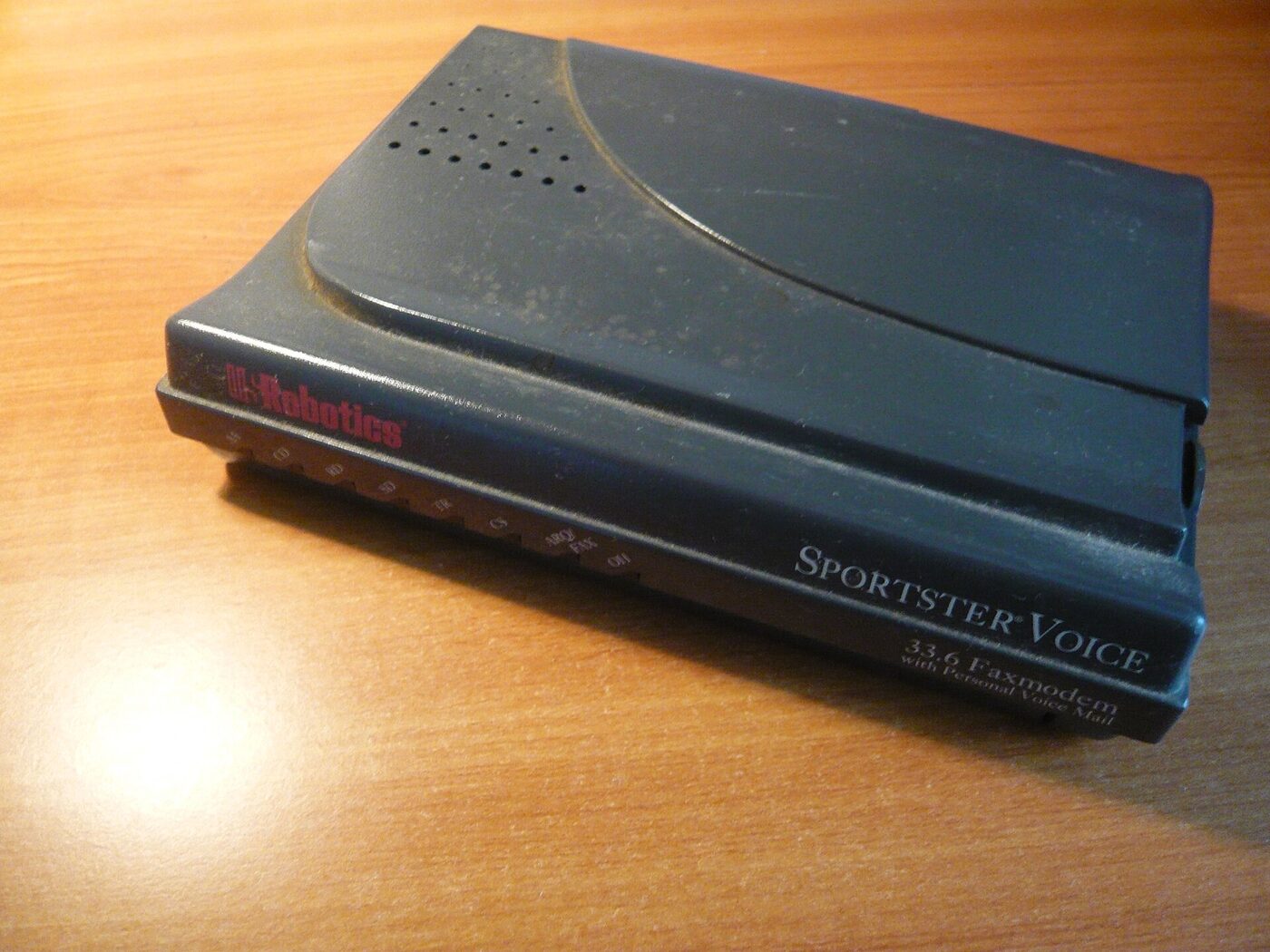
It is easy to forget how thin the pipe was. The ITU's V.34 recommendation, ratified in 1994, gave dial-up modems 28.8 kbit/s and a 1996 revision took it to 33.6; the 56 kbit/s V.90 standard was approved only in September 1998, and its nominal rate was a ceiling that few lines reached. Early consumer broadband was better but not lavish, and it was a minority of connections for most of this group's active life. Every decision on the encoding side was made inside that budget, with headroom left over for the network having a bad minute.

The mechanism that made it work at all was the buffer. A streaming player does not begin at the beginning; it downloads several seconds ahead, starts playing from the store it has accumulated, and continues to fill from the front while draining from the back. As long as the average arrival rate exceeds the playback rate, the buffer absorbs congestion, retransmission and the general unpunctuality of a packet network. When it does not, the buffer empties, playback stops, and the player refills — the rebuffering pause that is the defining sensory memory of the period, announced in Windows Media Player by a status line counting up in per cent.
Microsoft's own transport was the Microsoft Media Server protocol, MMS, proprietary, carried over UDP or TCP, on port 1755 by default. It was deprecated in 2003 in favour of RTSP with the release of Windows Media Services 9 Series, kept for compatibility for some years, and finally dropped in Windows Media Services 2008; the specification was published in February 2008, by which time others had reverse-engineered and documented it. Because several transports coexisted, the player performed what Microsoft called protocol rollover: given an mms:// address, versions 9, 10 and 11 tried RTSP over UDP first, then RTSP over TCP, then — in versions 9 and 10 — MMS over UDP and MMS over TCP, and finally a modified HTTP over TCP. A stream that failed for one user and worked for another had very often simply rolled over to a different protocol at one end and not the other.
The standards-based side of the picture is documented in the RFC series, and the dates are worth having exactly:
- RTP, the real-time transport protocol, RFC 1889, January 1996; revised as RFC 3550 in July 2003, with its audio and video profile as RFC 3551.
- RTSP, the Real Time Streaming Protocol, RFC 2326, April 1998 — the session control protocol, the thing that carries play, pause and seek. Version 2.0 was published much later as RFC 7826 in December 2016.
- SDP, the Session Description Protocol, RFC 2327, April 1998, revised as RFC 4566 in July 2006 — the small text document that tells a client what streams exist and how they are encoded.
- IP multicast, RFC 1112, August 1989, Host Extensions for IP Multicasting, out of Stanford.
RTSP's authorship is a fact worth pausing on. The three names on RFC 2326 are Henning Schulzrinne of Columbia University, Anup Rao of Netscape and Rob Lanphier of RealNetworks. The open control protocol for streaming media was written by a university and by Microsoft's two most conspicuous competitors, and Microsoft adopted it in 2003 to replace its own.
Multicast was the era's great unfulfilled promise, and it explains a good deal about why streaming cost what it did. Under unicast, a live broadcast to ten thousand viewers means ten thousand copies of the same stream leaving the server. Under multicast, the server sends one copy and the network duplicates it only where paths diverge, so a link carries one copy no matter how many viewers sit behind it. The arithmetic was irresistible, and it never happened on the public internet. Operators of most Internet routers disabled IP multicast, over concerns about bandwidth tracking and billing; the Mbone — the multicast backbone, created in 1992 by Van Jacobson, Steve Deering and Stephen Casner on a suggestion from Allison Mankin — existed precisely to tunnel multicast traffic across an internet that would not route it natively. Its first significant use was at the IETF meeting of 16 to 20 March 1992 in San Diego, with twenty sites listening. Bands played on it: Severe Tire Damage in June 1993, and in November 1994 a Rolling Stones concert at the Cotton Bowl in Dallas that was billed as the first major multicast concert, at which Mick Jagger welcomed everyone who had climbed into the Internet and got into the M-bone, and added that he hoped it did not all collapse.
It did not collapse; it simply stayed inside campuses, research networks and corporate LANs. Windows Media Services supported multicast to the end, and the .nsc station file existed to make it usable, and on a company network it worked well. On the open internet the unicast stream — one copy per viewer, paid for by the sender — is what actually shipped, which is why a broadcaster's questions in a group like this one were, in the last analysis, always bandwidth questions.
Digital rights management, as record
Rights management was not an add-on to Windows Media; it was designed into the container, and the group's branch had a room for it from the first morning. Windows Media DRM had four visible components: the Windows Media Rights Manager SDK, for packaging content and issuing licences; the Windows Media Format SDK, for applications that handled protected files; Windows Media DRM for Portable Devices, codenamed Janus, for offline playback on a player that was not connected; and Windows Media DRM for Network Devices, codenamed Cardea, for streaming protected content around a home network.
The mechanism, stated plainly and without judgement: the media data inside the ASF container is encrypted, and the key is not in the file. A licence, obtained separately from a licence server, carries the key together with the rights the publisher chose to grant — how many times the file may be played, until when, whether it may be burned to an audio CD, whether it may be transferred to a portable device, and how many times. Published analyses of the scheme describe a combination of elliptic-curve key exchange, DES, a custom block cipher, the RC4 stream cipher and SHA-1. Version 1 was released in April 1999; version 2 in January 2003, numbered 7.x and 9 to stay in step with the player; version 3, generally called DRM v10, in 2004.
The system was explicitly designed to be renewable — that is, built on the assumption that it would be broken and would then be updated. It was broken several times and updated each time; version 10 was cracked in early 2005 and a software update closed the hole shortly afterwards. The published attacks generally did not break the cryptography, which was not feasible, but hooked the client-side component while it ran and recovered the keys or the decrypted content from memory.
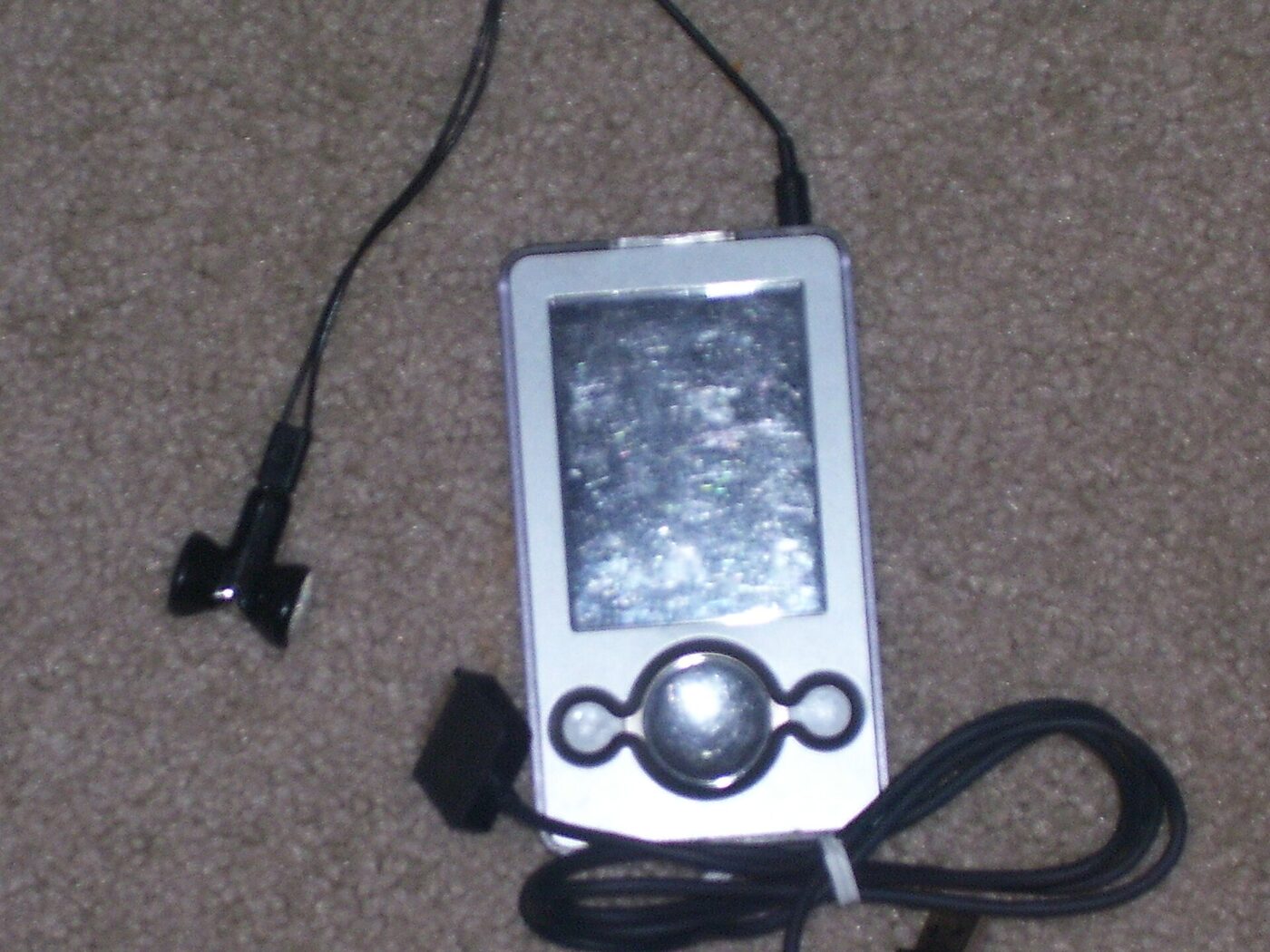
The consumer-facing half of the arrangement was PlaysForSure, introduced in 2004: a certification programme applied to portable players, network media receivers, media-capable phones and to online stores, testing several hundred requirements — codec support, DRM support, synchronisation speed, gapless playback, interface responsiveness. The logo on a box was a promise to a buyer that a protected file bought from a certified store would play on a certified device. In 2007 Microsoft rebranded and scaled the programme back into a subset called Certified for Windows Vista.
The stores that used it are a fair census of the legal download business of the mid-2000s outside Apple's: MSN Music, Yahoo! Music Unlimited, AOL MusicNow, MTV URGE, Napster To Go, Musicmatch, Wal-Mart's download store, Rhapsody, SpiralFrog, Ruckus Network, PassAlong Networks, iMesh and BearShare. Several later switched to unprotected MP3. Video certification existed too, and here the record is blunt: although Microsoft certified players for protected video, no online store ever offered video content certified to play on all of them.
The programme's most-cited feature is an internal contradiction. Microsoft's own Zune player, launched in 2006, did not support PlaysForSure; it worked only with Zune Marketplace. Both the Zune and PlaysForSure music were Certified for Windows Vista, and a track bought from Microsoft's MSN Music store would not play on Microsoft's Zune. Whatever one thinks of rights management as policy — and this page thinks nothing of it in public — that outcome is a clean illustration of what a licensing dependency does to a catalogue.

When the licence server is switched off
This is the most checkable part of the story and the part with the clearest documentary trail, so it is set out here as record and nothing else.
MSN Music had existed as a website since April 2001; its download store opened on 1 September 2004 with about 500,000 tracks, bundled with Windows Media Player 10 and aimed at the iTunes Music Store. It sold protected WMA files under PlaysForSure. On 14 November 2006 it ceased selling music and redirected visitors to the newly launched Zune or to Real Rhapsody. When announcing the closure in the United States, Microsoft told customers that the licence servers would be maintained for five years. In April 2008 it announced instead that the DRM servers would be deactivated at the end of that year, after which purchased songs could no longer be reauthorised when a customer changed computer or operating system, and suggested that customers back up their purchases by burning them to CD. After the public reaction, the company relented and committed to keeping the licence servers running through the end of 2011.
Yahoo! Music Unlimited launched in May 2005, a subscription service whose downloads were DRM-protected Windows Media Audio; Yahoo's music business was sold to Rhapsody early in 2008 and the service was discontinued on 30 September 2008. Wal-Mart's download store, which had also sold protected WMA, switched to unprotected MP3. Microsoft's own Zune service was relaunched as Xbox Music in October 2012, rebranded Groove Music in July 2015, and music purchasing on the Windows Store was discontinued after 31 December 2017.
The general mechanic is worth stating carefully, because it is the thing the specific dates illustrate. Nothing happens to the files. A purchased track sits on the disc, byte for byte identical to the day it was bought, and remains completely unplayable on any machine that does not already hold a valid licence for it — because the key is elsewhere and the elsewhere has been switched off. A machine that has already been authorised typically keeps working until it is rebuilt. The standard mitigation offered at the time, burning the tracks to an audio CD while the licences still functioned, worked by converting the purchase back into a form that predated the entire system, at the cost of a transcoding generation.

Reference works now file this alongside the other cases of the same shape, including Adobe's Content Server for protected PDF, whose story belongs to the Acrobat page. For the Windows Media family the sequel came in the Windows 10 Anniversary Update, which removed Windows Media DRM in favour of Microsoft PlayReady — with the incidental consequence that Windows Media Encoder 9, which depended on it, stopped working on current Windows.
Three trades in one room
What can be said about this group's traffic can be said structurally, from the shape of the subject and the shape of the namespace, and no further. Three quite different occupations had business with Windows Media, and the unsplit parent group was where all three arrived before the branch grew rooms for them.
The first was production: people preparing content, whose questions were about the encoder — which codec version, which profile, what bitrate, one pass or two, constant or variable, whether to encode once for the worst connection or several times for several. Their work was measured against listening and viewing, and their constraint was the audience's link.
The second was playback: listeners and viewers whose question was some version of why this file will not play. That question has a large number of distinct causes that look identical from the outside — a codec not installed, a codec installed but of the wrong version, a container the player recognises with contents it does not, a DirectShow filter chain hijacked by something else on the machine, a protocol that failed to roll over, a licence that could not be acquired, or simply a file renamed from one extension to another by somebody who believed that the extension was the format.
The third was operations: broadcasters and administrators running Windows Media Services, whose questions were about concurrent connections, bandwidth, firewalls and ports, multicast on a network that supported it, distribution between servers, authentication and logging. Their unit of trouble was not a file but a service level.
Those three trades share a vocabulary and almost nothing else. An answer that satisfies an encoder is invisible to a listener; an answer that satisfies a listener is irrelevant to somebody sizing a server. The subsequent shape of the namespace reads as a record of the split being made: ...encoder in July 2000 and ...encoder.optimization in October 2000, the player sub-branch for skins, visualizations and web embedding from the first morning, ...devices in March 2002 as portable hardware became the pressing question, and the SDK and server groups for the two professional audiences.
The room was also international by construction. The current newsgroups file still lists Windows Media groups in Chinese, Spanish, French, Hebrew, Italian, Japanese, Korean and Turkish, each a separate name under a language component inserted after the microsoft.public stem. This directory's snapshot carried the English parent group; the language variants were their own rooms with their own populations.
The other bundling question
Windows Media was the subject of a competition case in its own right, distinct from the browser dispute that is usually meant by the phrase. The browser war and the antitrust record around it are told on the alt.netscape.sucks page and are not retold here; what follows concerns the media player only, and is given as record.
In March 2004 the European Commission fined Microsoft 497 million euros, the largest penalty it had imposed to that date, and gave the company ninety days to produce a version of Windows without Windows Media Player and a hundred and twenty days to divulge the information competing server software needed in order to interoperate fully with Windows desktops and servers. The negotiated result was an edition called Windows XP N, and N editions followed for later versions of Windows; the player could be reinstalled afterwards, and the N editions found very little demand. Microsoft paid the fine in full in July 2004 and lost its appeal in September 2007. Separately, in October 2005, Microsoft agreed to pay RealNetworks 460 million dollars to settle an antitrust suit.
The bearing of all this on the newsgroup is indirect but real. The reason a support group for a media format could be busy at all was that the player was on essentially every Windows desktop by default, which is the same fact the Commission was examining from the other end. Neither the decision nor the settlement altered a single technical answer given in the group; what they altered was the assumption underneath the questions, which was that whatever you encoded, the audience would already have something that could open it.
What superseded it, and when
This directory's gateway ran from 2000 to 2004, so most of what follows postdates the snapshot these pages were built from. It is included because the group itself lived through it, and because a reader arriving at this address from a link made in the period is entitled to know how the story ended.
The framework was replaced from within. Media Foundation superseded the Windows Media SDK with Windows Vista in 2007; Windows Media Player 11 came in October 2006 and version 12, the last, in July 2009. Microsoft Silverlight was released on 5 September 2007 and compared from the start with Adobe Flash; it carried NBC's coverage of the Beijing Olympics in 2008, gained H.264 support at version 3, and reached its fifth and final major version on 8 May 2012.
The delivery model changed more fundamentally than the codecs did. Adaptive bitrate streaming over ordinary HTTP replaced dedicated streaming protocols and dedicated streaming servers: the file is cut into short segments at several qualities, an index lists them, and the client decides second by second which quality to fetch next, so the stream adapts to the connection instead of the connection being estimated in advance. Microsoft's implementation was Smooth Streaming, an extension to IIS Media Services, with a container called PIFF built on the ISO base media file format and using WMA Professional for audio; Apple released HTTP Live Streaming in 2009 with iOS 3.0; and MPEG-DASH, begun in 2010 and an International Standard in November 2011, was published in April 2012 as ISO/IEC 23009-1, the only one of the adaptive-bitrate schemes to become an international standard. Neither DASH nor the UltraViolet consortium adopted WMA, choosing the more prevalent MPEG and Dolby audio codecs instead. Windows Media Services was not supported on Windows Server 2012; IIS Media Services took its place, and the streaming business moved to content delivery networks and then to the cloud.
The codecs went the way of the delivery model. H.264 with AAC in an MP4 container became the default combination for online video, and the browsers eventually learned to play it without a plug-in at all. Windows Media DRM gave way to PlayReady. The Media Player name survives on a different application, offered to Windows 11 users from 15 February 2022 and to Windows 10 users from January 2023, which is the successor to Groove Music rather than a continuation of the old player.
Parts of the family outlived the brand. VC-1 remains a mandatory format on Blu-ray players, so a decoder descended from Windows Media Video 9 sits in a great deal of consumer hardware. Windows Media Photo, renamed HD Photo, was standardised as JPEG XR. ASF is read by VLC and by FFmpeg, which is the practical reason a .wmv file from 2003 will still open today on a machine with no Microsoft software on it at all. The framework is discontinued; its formats are legacy rather than dead.
What the record does not show, and the limits of this page
Nothing on this page has been drawn from the group's own postings. No thread is named, no participant is named, no message count, subscriber count or traffic figure is given, and no article is quoted, because none has been read for this page and inventing any of it would be worse than admitting the gap. The public archive of microsoft.public.* exists and this group is in it; what is written above is drawn from the control archive, from Usenet's own configuration files and from the documented history of the products the group existed to support.
There was never a charter in the sense the Big-8 process meant by the word. The newgroup message carries no rationale, and the one-line description in the newsgroups file is boilerplate shared with the entire branch. How the hierarchy was governed, why it had no votes and how it was closed is the hub page's subject.
The date of 27 March 2000 is the earliest surviving control message, which is not the same thing as the date of creation. A control message is a propagation request; the archive records requests, not a registry. The group may have existed before that morning and left no trace that the public can reach. Equally, the closing date is unknown for this group in particular: Microsoft retired the public newsgroups in a phased programme between June and October 2010, promising each group its own date, and no consolidated list of those dates appears to have been preserved.
The archive is also incomplete in a way that can be measured. Three names in the current active file — ...beta.sdk, ...beta.server and ...player.plugins — have no control message in the ISC archive at all, and eight names that do have control messages are no longer in the listing, every one of them having been explicitly removed. A namespace of this kind is maintained by two mechanisms at once, individual control articles and periodic signed checkgroups postings, and the two do not agree perfectly.
One line in the founding message has been quoted above exactly as it stands: Post from PSSOLOPS tool by dhite. That is the tool's own text, identifying whoever ran it. Nothing further about that person is asserted here, and nothing further is known from the record.
Finally, a note about this address. The page is served at /microsoft/public/windowsmedia.htm. The second paragraph above describes that as having no HTML suffix, which is not quite right: .htm is an HTML suffix, in its three-letter form. Every other page in this directory ends .html. This is the only one that does not, and the difference is a transcription rather than a choice.
Reading microsoft.public.windowsmedia today
- Historical archive: Google Groups — microsoft.public.windowsmedia (coverage varies by group and era).
- Open in a newsreader:
news:microsoft.public.windowsmedia— the original site offered exactly this link, and it still works if your system has a newsreader registered for thenews:scheme. - Live access: point an NNTP newsreader at a modern server — see accessing Usenet today.
- The original news2mail e-mail subscription service ended in the mid-2000s and no longer operates.