rec.folk-dancing
Folk dancing: traditions, steps and events.
International folk dance on Usenet — balkan lines, contra, morris, Israeli circles — with event calendars and step-notation arguments carried on by a small devoted community.
The group’s festival lists were, for years, the most complete calendar the scene had.
On this page
- The group's own paperwork
- A hyphen from the flat era
- The argument the record does show
- Three things called folk dance
- A fourth thing, and the one that travelled furthest
- The collectors and their societies
- The gymnasium, the playground and the school
- Where the recreational scene came from
- The camp and the syllabus
- How a dance gets written down
- The plain-text problem
- The record collection
- The archives
- State sponsorship, nationalism and internationalism
- The authenticity question, as the scholarship has it
- What the group carried
- Neighbouring scenes
- Where it went
- What the record does not show
- Scope and limits
The group's own paperwork
The administrative trace rec.folk-dancing left behind is thin, and almost all of it sits in one file. The Internet Systems Consortium mirrors the Usenet control archive — the newgroup and rmgroup messages that told news servers what to create and what to delete — and for this group the archive holds four messages spread across ten and a half years, and nothing else at all.
The first is dated 23 May 1991 and was issued from Compass, Inc., of Wakefield, Massachusetts. Its body is a single line, and that line became the group's description on every server that carried it:
Folk dances, dancers, and dancing.
The sentence outlived the group's traffic. It still stands, tab-separated, in the newsgroups file ISC publishes for the whole namespace — rec.folk-dancing Folk dances, dancers, and dancing. — and the matching line in the active file, rec.folk-dancing 0000000000 0000000001 y, ends in the flag y, meaning that postings are permitted directly: unmoderated, as most of rec.* was.
Two of the four messages are local rather than global, and they are the most human thing in the file. On 26 April 1992 a newgroup message went out from the computer science department of the University of Maine carrying Distribution: umcs; on 21 October 1992 another went out from Colorado State University with Distribution: csu and a two-word body, chkgroup rec.folk-dancing. Neither created anything for the network. Each is a site administrator making sure that one particular campus had the group, at a moment when a newsgroup arrived at a university only because somebody there took the trouble. They are the closest thing the record offers to a map of who was reading.
The fourth message, dated 4 November 2001, asked for the group's destruction. It is an rmgroup control whose body reads, in full, please remove the bogus newsgroup rec.folk-dancing. Its headers do not hang together: the From, Sender and Approved lines all carry one identity, the Organization line names a student computing club in Karlsruhe, the article was injected through a host in Quebec whose abuse contact belongs to a Canadian provider, the Message-ID belongs to a university machine in Karlsruhe and repeats the identifier pattern of an unrelated article, and the signature block is a line of machine-assembled nonsense. It did not take. Nearly twenty-five years later rec.folk-dancing is still in the current newsgroups file and still in the current active file, which is the ordinary fate of an rmgroup that news administrators decline to honour.
What the archive does not hold is the paperwork of creation. ISC's news.announce.newgroups collection for rec.* preserves the proposals, calls for votes and results for 915 groups, with file timestamps beginning on 18 February 1992, and there is no file for rec.folk-dancing. Whatever discussion produced it, and whatever vote was or was not taken, is not in the surviving record. That is unremarkable for a group of its vintage and it is worth saying plainly rather than filling in.
A hyphen from the flat era
The name is itself a small piece of evidence. Nearly all of rec.* is at least three levels deep — rec.arts.dance, rec.music.country.western, rec.sport.hockey — because the branch acquired its sub-trees as it grew. rec.folk-dancing sits directly at the second level, which in the current newsgroups file only 33 of the 659 rec.* groups do, and it is one of just three second-level rec.* names containing a hyphen. The other two are rec.martial-arts and rec.roller-coaster. A hyphen was how a two-word activity got written when group names could not contain spaces and nobody had yet decided that folk dancing was a sub-heading of anything.
The consequence was that the group had no siblings. There was no rec.folk-dancing.balkan and no rec.folk-dancing.contra to absorb a specialism and no obvious mechanism for making one; the whole subject, in all its unrelated parts, lived in a single flat group. The naming conventions of the branch, and the machinery by which its sub-trees were proposed and named, belong to the rec.* hierarchy page. What matters here is the effect: one room, several activities, and a standing question about which of them the room was for.
The argument the record does show
The group's own creation is undocumented, but its first recorded quarrel is not, because it survives inside a neighbour's paperwork. On 9 February 1990 a Call for Discussion for a new group, rec.arts.dance, was posted to news.announce.newgroups under a Newsgroups line naming ten groups, rec.folk-dancing among them. Its charter opens by describing the state of the network:
This is to be an unmoderated discussion forum on all dance forms and issues not already represented on Usenet. Currently, the only dance-oriented news group on Usenet is rec.folk-dancing. This group is devoted to any folk-dancing form or issue. This includes international folk, contra, square, round, cajun (including two-step), western square, morris, and country-type dancing (clogging).
Two things follow from that paragraph. The first is chronological: in February 1990 rec.folk-dancing was not merely in existence but was the only dance group on Usenet, fifteen months before the oldest surviving newgroup message for it, and the same document reports discussion inside the group in late December 1989, which pushes the group's demonstrable existence back seventeen months before that message. The 1991 control message is a re-issue, not a birth certificate.
The second is that the group argued about its own scope, and the proposal says so. The idea of a broader dance group, the document records, got kicked about in the rec.folk-dancing news group in late December and early January, and suggestions to expand the charter of rec.folk-dancing to include a broader forum were met with “very” mixed feelings. The outcome of that disagreement was a separate group rather than a wider charter — the standard Usenet resolution, and the charter of rec.folk-dancing was left as it stood.
The Call for Votes that followed on 12 March 1990 recorded a second boundary problem, and recorded it with unusual candour. The e-mail responses had turned up an ambiguity about where country and western dancing belonged, since many people regarded it as American folk dance. The revised charter met the difficulty by declining to settle it:
Country and western dancing pose a special problem. Whereas, just over a majority of the people considered them “American folk” dances, many people do not; this is a gray area as one person put it. For people's convenience then, one may wish to cross post country- and western-dance discussions to both groups with a Followup-To line directed to rec.folk-dancing.
Voting was announced to run until 3 April 1990; a corrected Call for Votes went out on 16 March after a fault in the ballot address, and a mass acknowledgement of 28 March extended the deadline to 10 April. rec.arts.dance exists today with the description Any aspects of dance not covered in another newsgroup.; no result posting with a tally survives in the archive, so no tally is given here. But the gray area is the whole subject of this page in miniature. Whether a living American social dance form counts as folk, and who gets to say, was unresolvable in 1990 by a vote of Usenet readers, and the eventual arrangement — cross-post to both, follow up to the folk group — is a fair emblem of how the scene handled its categories. Country music as a subject has its own group and its own page here, as does bluegrass; the dance question is a different one and stayed with the dancers.
Three things called folk dance
Underneath every recurring argument in the group sat a distinction its participants policed constantly and never settled, because at least three genuinely different activities share the words folk dance. They are related by descent and they are not the same activity, and a great deal of confusion — in the newsgroup, and outside it — comes from using one name for all of them.
The first is dance as continuously practised community tradition: done where it belongs, by people who inherited it, at weddings, feast days, saint's days and village occasions, learned by growing up within earshot of it rather than from an instruction. Nobody teaches it as a subject; nobody writes it down in order to do it. Its transmission is unremarkable to the people doing it, which is exactly why so little of it was recorded before outsiders arrived with notebooks.
The second is the revival movement: an organised, self-conscious effort to collect, notate, publish and teach material that the collectors believed to be disappearing. It is a documented enterprise with dates, societies and printed books — the Folk-Song Society founded in London in 1898, the English Folk Dance Society in 1911, the American Folk Dance Society in 1916 — and it necessarily changes what it touches, because a dance written into a book and taught from the book is being transmitted by a mechanism the village never used.

The third is the international recreational folk-dance scene, which is what most of rec.folk-dancing's readership actually did. International folk dance is a hobby with a following in the United States, Europe, Canada, Japan and Australia, in which a club or class teaches dances from many countries to people from none of them. It developed in the immigrant communities of the United States in the first half of the twentieth century, and its creation is often attributed to the Lithuanian-American teacher Vytautas Beliajus (1908–1994). Its characteristic institutions — the weekly club night, the master class, the residential summer camp, the printed syllabus, the record — have no counterpart in either of the other two.
These are not three stages of one thing. A village dance at a feast day, a page in a printed collection of 1913 and a weekly class in a hired hall are three different social facts with different participants, different purposes and different rules, and the sentence “this is a folk dance” means something different in each. The group's habitual move was to insist on the difference; its standing difficulty was that the three feed one another constantly, so that a single dance can pass through all three before it reaches a hall on another continent.
A fourth thing, and the one that travelled furthest
Between the village and the class sits a fourth practice that complicates the scheme, because for much of the twentieth century it was the main route by which dances moved between countries: the staged folkloric ensemble, in which village material is choreographed, costumed, rehearsed and set on a proscenium stage for an audience that watches rather than joins.
The model was the ensemble established by Igor Moiseyev in Moscow in 1937, which combined folk dance with classical ballet technique and has toured in more than a hundred countries; it began touring the United States in 1958 under the Lacy–Zarubin agreement, the first appearance there by a major Soviet dance company. By coincidence of date, the Duquesne University Tamburitzans were formed in Pittsburgh on 3 February 1937, when an existing tamburitza orchestra moved north from Texas; they work South Slavic and East European material with full-time students on scholarship, are the longest-running multicultural song and dance company in the United States, and became independent of the university in the 2010s. The Macedonian state ensemble Tanec was founded in 1949 by the government of the People's Republic of Macedonia and toured North America in 1956.
The effect of these companies on the recreational hobby is documented and large. The Moiseyev ensemble and the Karmon Israeli Dancers both appeared on The Ed Sullivan Show in 1958; national tours followed; and international folk dance performing groups — amateur and semi-professional, among them the Aman Folk Ensemble in Los Angeles — emerged in the United States through the 1960s in their wake. By 1970 major portions of the club repertoires in the United States were Balkan and Israeli. A great deal of what an American class danced in the 1970s had reached North America as a stage arrangement first and a class dance second.
The collectors and their societies
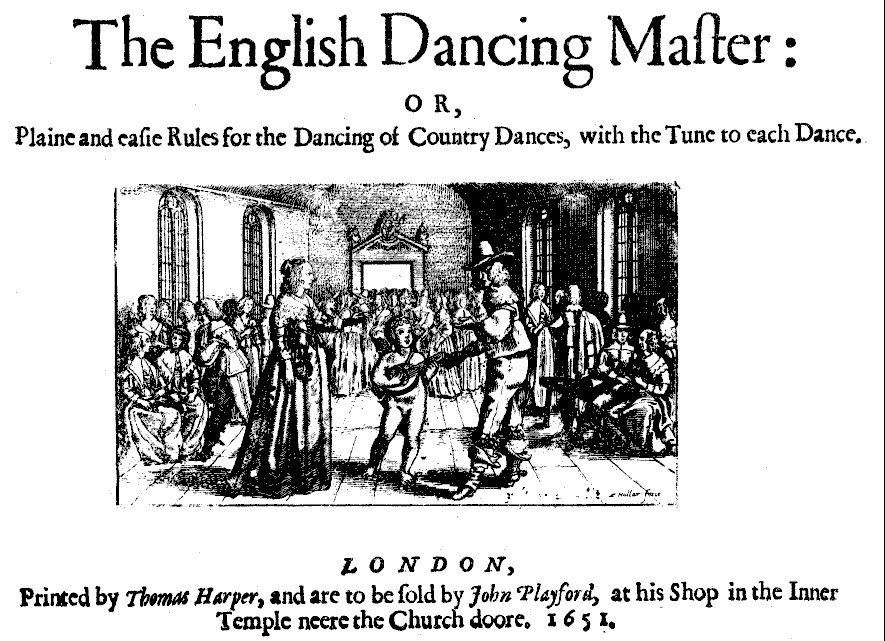
The revival movement that produced the printed repertoire has a paper trail going back further than the revival itself. English country dances were being published for use before anyone thought of them as folklore: John Playford's The English Dancing Master, printed in London in 1651, gives a single-line melody and the figures for each of its hundred and five dances, and the book ran to at least eighteen editions between 1651 and 1728. It is a commercial dance manual, not a preservation project, but it is the document the twentieth-century English revival worked back from.
The vocabulary came later. The word folk-lore was coined in 1846 by the English antiquarian William Thoms, in a letter to The Athenaeum, for “the traditions, customs, and superstitions of the uncultured classes”; the term draws on a German Romantic usage of Volk for the people as a whole, and folk song and folk dance are extensions of Thoms's coinage, which is to say that the category is younger than most of the material in it.
The English institutions followed quickly. The Folk-Song Society was founded in London in 1898. Cecil Sharp (1859–1924) published the first volume of The Morris Book with Herbert MacIlwaine in 1907, and the volumes of The Sword-Dances of Northern England from 1911, describing the rapper traditions of Northumbria and the long sword traditions of North Yorkshire when both were close to extinction; he co-founded the English Folk Dance Society in 1911. In 1932 that society merged with the Folk-Song Society to form the English Folk Dance and Song Society, which was incorporated in 1935 and became a registered charity in 1963.
The revival's first great argument arrived before its first great institution. In 1905 Sharp met Mary Neal (1860–1944), organiser of the Espérance Girls' Club, a philanthropic body for working-class young women in London who was looking for dances for them to perform. The partnership began cordially and soured over what the participants themselves understood as a matter of principle: Sharp's insistence on correct traditional practice came up against Neal's preference for flamboyance and energy, and the disagreement developed into a struggle over control of the morris revival and finally into a public feud. The same argument — whether a dance tidied for a class is still the dance — recurs from that point onward, and rec.folk-dancing was conducting it eighty-five years later in much the same terms.
Sharp's American work supplied both the material and the criticism. During the First World War he made collecting expeditions into the southern Appalachians — Virginia, North Carolina, Kentucky and Tennessee — with Maud Karpeles, guided in part by Olive Dame Campbell and her husband John. He notated by ear, having experimented with the phonograph and rejected it as insufficiently portable and likely to intimidate a singer — a decision that shaped what survives, since what he wrote down is what there is.
The gymnasium, the playground and the school
The recreational scene did not descend from the collectors alone. Its other parent was physical education, and in the United States the connection is documented in one career. Elizabeth Burchenal (1875–1959) taught physical education at Teachers College, Columbia University from 1903 to 1905, served as executive secretary of the Girls' Branch of the Public School Athletic League of New York from 1906 to 1916, and in 1909 was appointed inspector of athletics by the New York City Department of Education, with responsibility for promoting and overseeing dance instruction in the city's schools.
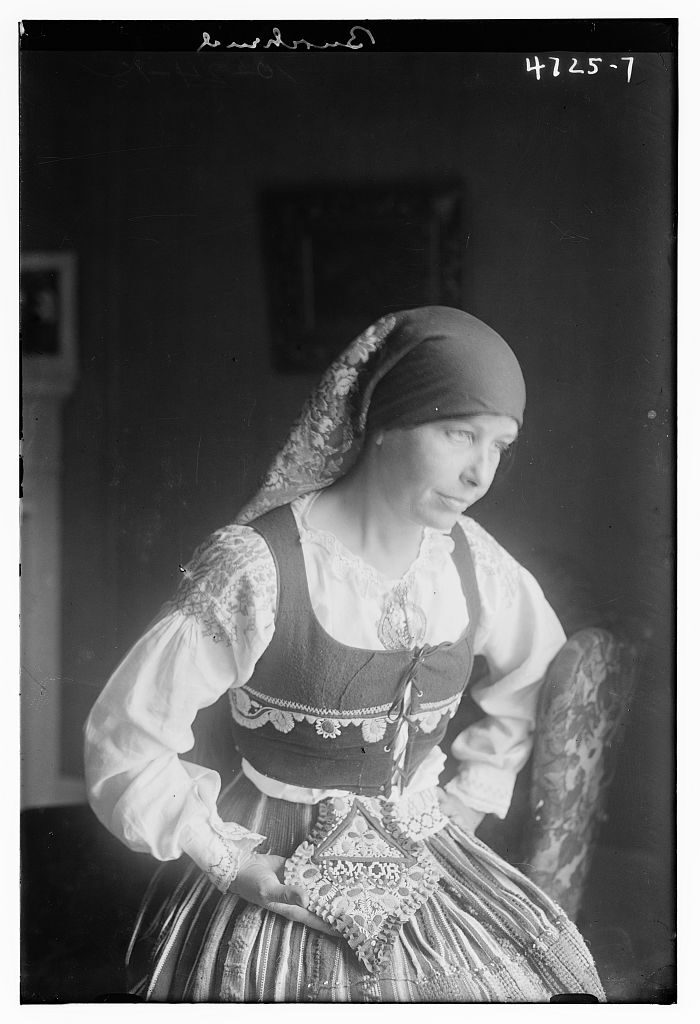

What that meant in practice is legible in her titles. Her 1908 collection with C. Ward Crampton was published as Folk-Dance Music: A Collection of Seventy-Six Characteristic Dances of the People of Various Nations Adapted for Use in Schools and Playgrounds for Physical Education and Play, which states the transaction with unusual clarity: dances of various nations, adapted, for use in schools. Folk-Dances and Singing Games followed in 1909, Dances of the People in 1913, Folk-Dances of Denmark in 1915, American Country Dances in 1917, Folk-Dances from Old Homelands and Folk-Dancing as a Popular Recreation: A Handbook in 1922, National Dances of Ireland in 1925 and Folk Dances of Germany in 1938. She also arranged dance music for commercial recordings, which put the class and the gramophone together decades before the recreational clubs did.
The institutions came with the books. Burchenal founded the American Folk Dance Society in 1916 and was its first president; when the society became part of the National Committee of Folk Arts of the United States in 1929 she was its director and national chairman, and with her sister Ruth she founded the Folk Arts Center of New York as an exhibit, library and archive. She was an American delegate to the International Commission of Popular Arts when it met in Prague in 1928 and in Belgium in 1930, and she was still publishing in March 1951, with an article on the regional types and origins of folk dances of the United States in the Journal of the International Folk Music Council.
This is one of the lineages behind what rec.folk-dancing was. A hobby in which people learn dances belonging to communities they do not come from, from written descriptions, in a hall, to recorded music, was built by school inspectors and playground reformers as much as by folklorists, and its materials were designed from the start to be teachable to strangers.
Where the recreational scene came from
The international scene proper begins in Chicago. Beliajus was born in what is now Lithuania, emigrated at fourteen, opened a dance studio in Chicago in 1929, was chosen in 1933 both to create a Lithuanian presentation for the world's fair in Chicago and to teach folk dancing as part of the Chicago Park District's recreational activities council, and from 1937 taught at the International House of the University of Chicago. He founded the folklore magazine Viltis in the 1940s, later published from Denver; in 1986 he founded the National Folk Organization in Chicago with Mary Bee Jensen, George Frandsen and L. DeWayne Young; and he received the National Dance Association's Heritage Award in 1972.
He was not alone, and the scene's own accounts are careful to say so. In the mid-1930s Scandinavian dancing began to take hold outside Scandinavian communities, and clubs formed around it. One of the pioneers of that moment was Song Chang, an ethnic Chinese illustrator who was struck by the absence of bigotry among the Scandinavian dancers, encouraged others to join, advised clubs, and had a club named in his honour — Chang's International Folk Dancers, still going in San Francisco.
Then the institutions. The Folk Dance Federation of California was founded in 1942. By 1946 there were approximately a hundred clubs in California alone, and the inaugural Statewide Festival at Ojai on 11 May 1946 drew over five hundred dancers and three thousand spectators. In 1948 the College of the Pacific Folk Dance Camp was founded — now the Stockton Folk Dance Camp — and Beliajus was invited to teach there in 1949.
The teachers of the middle decades are the names the traffic assumed everyone knew: Michael and Mary Ann Herman; Jane Farwell (1916–1993), who devised her own major in rural community leadership at Antioch College and graduated in 1938, and who specialised in Scandinavian material; and Dick Crum (1928–2005), who danced, advised and choreographed for the Duquesne University Tamburitzans from 1950, became programme director of the Festival of Nations in St Paul in 1952, made seven research visits to the Balkans, learned Bulgarian, Macedonian, Serbo-Croatian, Slovene and Romanian among other languages, and was still on a National Endowment for the Arts panel on vernacular dance in America in 1996.
A later layer was urban rather than institutional. In 1964 two dancers in Los Angeles, taking a cue from the folk music scene, opened The Intersection, a coffeehouse that doubled as a place to dance in the evening without renting a hall; others followed with their own, and Ashkenaz opened in Berkeley in 1973. The Folk Arts Center of New England was founded in 1975. Costs escalated in the 1980s, the number of active clubs shrank, camps and festivals went into abeyance while their organisers regrouped, and The Intersection closed in 1984 on falling attendance. Interest recovered in the 1990s, and Chinese, Japanese and Hispanic material entered repertoires that had been dominated by European and Middle Eastern dances.
The Israeli repertoire that reached those rooms had its own documented origins. Gurit Kadman (1897–1987) organised a First Fruits dance pageant for Shavuot at Kibbutz Dalia in 1944 and the first folk dance festival there in the same year, which became a regular event; Rivka Sturman (1903–2001), who had studied modern dance in Leipzig and Berlin before emigrating in 1929, joined a newly formed Histadrut-sponsored body devoted to the creation of folk dances and is credited with around 150 of them. That the choreographers are known by name, and their dances datable, is precisely what makes the label folk contested for this repertoire within the wider scene.
The camp and the syllabus
The residential camp is the institution the recreational scene invented for itself, and by the late 1940s it had become characteristic: a week in the woods, a visiting teacher or several, a repertoire taught from morning to night, and a printed syllabus to take home. It is worth stating what a syllabus is, because it is the scene's central document: a booklet of dance descriptions, prepared for a specific camp in a specific year, giving for each dance its name, its claimed origin, its music, its formation and its figures counted bar by bar.
The camps have real histories. Pinewoods, on about thirty-one acres of woodland between Long Pond and Round Pond in Plymouth, Massachusetts, was founded in 1919 as Pine Tree Camp, the first national Girl Scout leadership training school; the site was converted for use as a dance camp in 1933, took the name Pinewoods in 1935, passed to a non-profit in 1976 and was added to the National Register of Historic Places in December 2009. It is the oldest continuously run folk dance camp in the United States. Its summer is run by five separate programme providers, which is why one camp site can host quite different dance cultures in consecutive weeks.
Among those providers is the body now called the Country Dance and Song Society, which dates its beginnings to 1915 as American chapters of Cecil Sharp's English society, united in 1933 as the English Folk Dance and Song Society of America, consolidated in 1940, renamed the Country Dance Society in 1949 and given its present name with the addition of “and Song” in 1967. It moved its office from New York City to western Massachusetts in 1987. It covers contra and English country dance, square dance, morris, rapper sword and clogging, and runs week-long summer camps at several sites.
Stockton, founded in 1948, is the international scene's equivalent, and the two traditions of camp have run in parallel for three quarters of a century with overlapping attendees and almost no overlap of repertoire. A dancer could go to both and use two entirely separate vocabularies in the same fortnight.
How a dance gets written down
A scene that teaches dances from written descriptions has to solve a problem that the village does not have: how do you record a body moving in three dimensions through time, on a flat page, accurately enough that a stranger can reproduce it? The attempts are old and none of them has won.
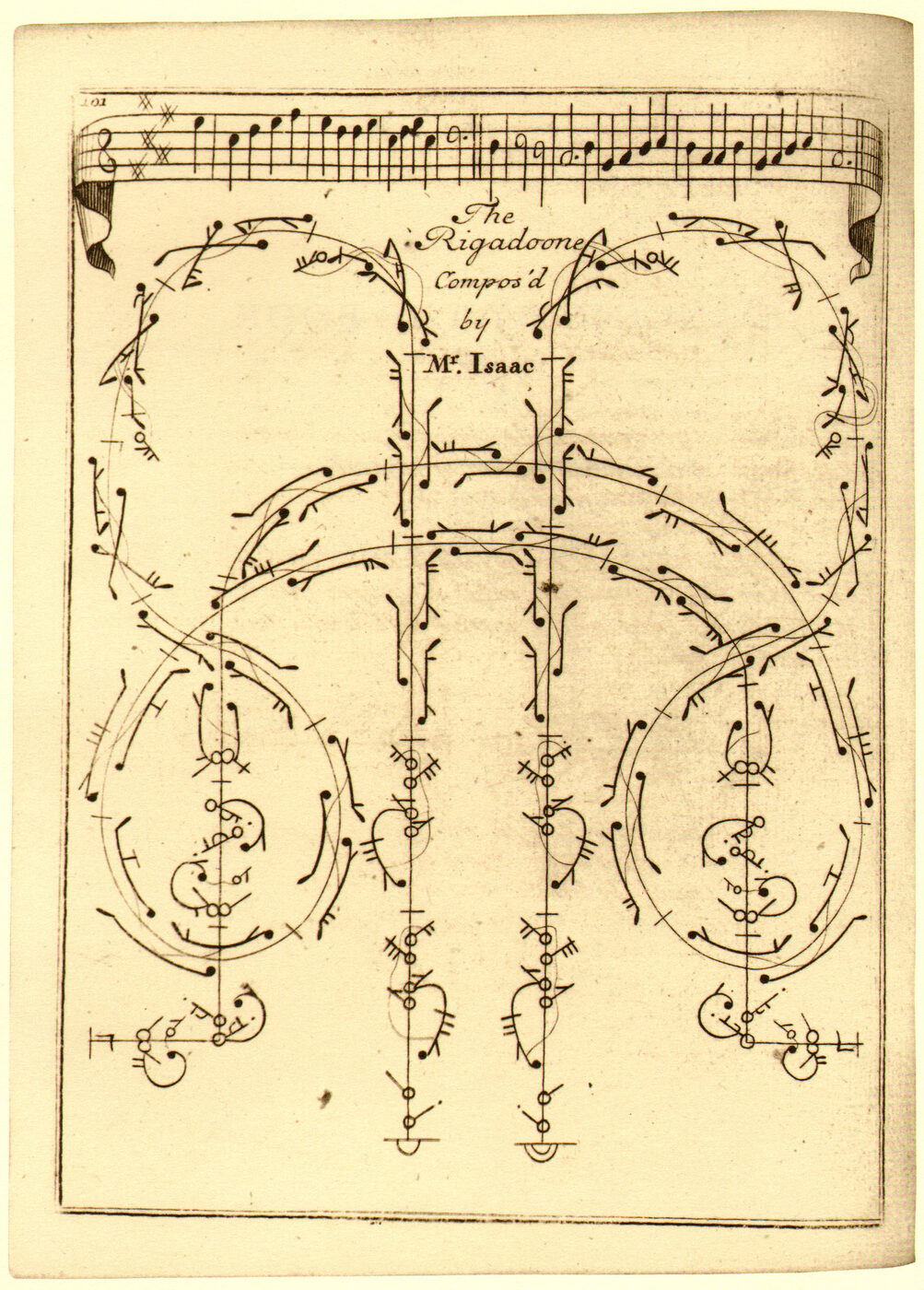
Beauchamp–Feuillet notation was devised in the 1680s by Pierre Beauchamp and first described in detail in Raoul-Auger Feuillet's Chorégraphie, ou l'art de décrire la danse of 1700. It draws the floor pattern as a line across the page and hangs symbols for the steps along it, with the music printed above. John Weaver translated it into English as Orchesography in 1706, and it was the working notation of the baroque dancing master. It records what that repertoire needed recorded — feet, track, timing — and very little else.

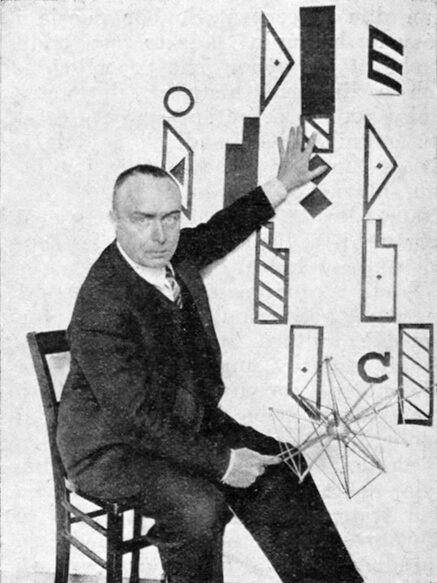
Labanotation, known in Europe as Kinetography Laban, was developed by Rudolf von Laban (1879–1958) through the 1920s and published in German as Schrifttanz in 1928, with a similar version in French and English in 1930. It sets movement on a vertical staff whose centre line corresponds to the centre line of the body, with the position of a symbol defining which part of the body it belongs to, its length defining the duration of the movement, and bar lines borrowed from music notation marking the measures. The apparatus grew around it: the Dance Notation Bureau was founded in New York in 1940, and the International Council of Kinetography Laban was created in 1959 to reconcile the American and European branches, which had evolved separately since the 1930s.

Benesh Movement Notation was invented by Joan and Rudolf Benesh in the late 1940s and publicly introduced in 1955. It plots the dancer as seen from behind on a five-line stave whose lines fall at head, shoulders, waist, knees and feet, read left to right with bar lines for time, so that it can be printed in synchrony beneath a musical score. Eshkol-Wachman Movement Notation was published by Noa Eshkol (1924–2007) and Abraham Wachman (1931–2010) as Movement Notation in London in 1958; it writes numbered limb positions into a ruled grid, was designed to notate any movement rather than dance specifically, and has since been used on sign language and on animal behaviour.
All four are graphic systems requiring symbols, staves or grids. None of them was in general use in the recreational folk-dance scene, whose actual medium of record was and remains the prose dance description of the camp syllabus: formation, hold, direction, foot, and a count for every bar. It is far less precise than any of the notations and vastly more portable, and it is what the arguments were conducted in.
The plain-text problem
Usenet imposed a constraint that fitted this material badly and shaped the writing that appeared in the group. An article was plain text: no diagrams, no staves, no grids, no photographs, no film. Everything the notations do with a symbol had to be done with a sentence.
The result was a body of writing in which footwork was described in prose, counted bar by bar, in conventions borrowed from printed dance descriptions and the syllabi people had at home — and in which a disagreement about how to write a step down was frequently a disagreement about the step. If two dancers describe the same figure with different weight changes, either they learned it differently or one of them is writing it badly, and from a plain-text article there is often no way to tell which. The medium made the ambiguity visible in a way that a class never does, because in a class you can simply look.
It made the group a poor substitute for the syllabus and a serviceable one for the club noticeboard, which is a fair description of what it was used for.
The record collection
Recreational folk dance ran on recordings, and the dependence was structural rather than incidental. A club night needs music at the right tempo for the right length, week after week, in a hall with no musicians; so the repertoire was, in practice, the set of dances for which an obtainable record existed. A handful of small specialist labels served the field, several of them run by teachers who had arranged for the music to be recorded themselves. Pressings were short, they went out of print, and a dance whose record had vanished tended to fall out of class programmes regardless of its merits.
The formats moved and the repertoire moved with them, unevenly. Class music began on 78s, where a ten-inch side held roughly three minutes; the microgroove LP, introduced by Columbia in 1948, made longer dances and whole camp programmes practical; the Compact Cassette, introduced by Philips in August 1963 and freely licensed to other manufacturers from 1966, became the working medium of the touring teacher, because a syllabus could travel with its tape; the compact disc, first released in Japan in October 1982, made reissue possible without making it automatic. Each transition stranded part of the repertoire. What stayed in circulation was decided less by judgement than by who had troubled to transfer what, which is not the criterion the syllabi themselves used.
This is why discography was a live subject in the group rather than a hobbyist's sideline. Where a recording could be found, whether a label's back catalogue had been reissued, what tempo a particular pressing ran at, and whether a dance ought to be done to a recording at all when musicians were available: these were practical questions with consequences for what people danced next Tuesday.
The archives
What the field kept, it kept on paper, and it kept a great deal. The Society of Folk Dance Historians, formed in 1987, describes its holdings as 200,000 pages of dance descriptions and histories, 15,000 books, magazines and syllabi, and 35,000 phonograph records, besides uncounted films, cassettes, CDs and DVDs, and describes itself as the largest independent archive and library of international folk arts in the world.
On the English side, the library founded in 1930 as the Cecil Sharp Library, now the Vaughan Williams Memorial Library, holds the manuscripts, field notes and transcriptions of many of the collectors of British song, dance and music at Cecil Sharp House in Camden. The building was damaged by bombing in 1940 — the basement and library came through mostly undamaged, the entrance, stairs and main hall did not — and it reopened in 1951. In 1998 the society deliberately shifted its strategy towards education and archiving, with the library as the national resource for the material.
In the United States the Archive of Folk Culture was established at the Library of Congress in 1928, as the Archive of American Folk Song, and is now part of the American Folklife Center, created by Congress in 1976. The Dance Notation Bureau, founded in 1940, holds notated scores along with videotapes, photographs, programmes and production papers, and exists so that choreography can be restaged long after the lifetime of the people who made it.
Set beside collections like those, the archived newsgroup is a narrow and particular document: not the record of the field but the running commentary on it, generated by people who were simultaneously depositing the real material in the archives above.
State sponsorship, nationalism and internationalism
Folk revival movements have documented political histories, and the recreational scene inherited material from several of them at once. This section reports what is on the record; it does not adjudicate.
State sponsorship of folk ensembles is a matter of public administration in several countries. The Moiseyev ensemble was established in Moscow in 1937. Bulgaria's first professional, state-supported ensemble — the State Ensemble for Folk Song and Dance — was founded in 1951 by the composer Filip Kutev with his wife Maria Kuteva; the Bulgarian side of that story belongs to soc.culture.bulgaria. The Macedonian ensemble Tanec was founded by government in 1949. Contemporary accounts of the American scene identify two strong influences on it in the late 1950s and 1960s: eastern European national performing troupes, described as part of efforts promoting a national socialist folk culture, and Israeli folk dance, whose dances were composed to help build a common national culture out of multiple immigrant and refugee communities. Both influences travelled to American clubs by way of touring companies and television.
The nationalist use of folk material is older than either. The term folklore entered the vocabulary of many continental European nations, each of which had its own collectors and revivalists, working from a German Romantic idea of the Volk; the scholarly literature on nation-building and invented tradition, of which the 1983 collection The Invention of Tradition, edited by Eric Hobsbawm and Terence Ranger, is the standard reference, argues that practices presented as ancient are frequently recent and consciously made, and that the phenomenon is particularly clear in the modern development of the nation and of nationalism. Several of the national traditions represented in club repertoires were codified in exactly the period, and by exactly the institutions, that literature is about. The individual national cases are the property of the culture pages here — soc.culture.yugoslavia among them — and are not retold on this one.
Against that runs the recreational scene's own explicitly internationalist framing, which also has institutions and dates. The International Folk Music Council was founded in London on 22 September 1947 and is, under its later name the International Council for Traditional Music, a non-governmental organisation in formal consultative relations with UNESCO. The International Council of Organizations of Folklore Festivals and Folk Arts was founded at Confolens in France on 8 August 1970, and in 1971 the nominated representatives of nineteen countries meeting there confirmed its statutes; its own published account of the founding meeting records a delegate of the Soviet ministry of culture present and states that the vice-presidencies were given to Poland and to Spain in order to protect the political balance, which is part of the record of how the founding meeting was arranged. UNESCO adopted the Convention for the Safeguarding of the Intangible Cultural Heritage in Paris on 17 October 2003.
The recreational clubs sat inside all of this without controlling any of it. They took repertoire from state ensembles founded to project a nation, from revivals founded to define one, and from village practice that had no such intention, and taught the results in a hall where the stated principle was that anyone could dance anything.
The authenticity question, as the scholarship has it
Whether a dance survives its own transmission is a contested question among scholars and practitioners, and the contest is old, documented and unresolved. What follows is an account of positions, not a ruling on them.
One useful marker is the definitional one. The International Folk Music Council's definition, drawn up in 1954 with Maud Karpeles among its authors and quoted in reference works for decades afterwards, extends the term to music that has originated with an individual composer and has subsequently been absorbed into the unwritten, living tradition of a community, but adds that the term does not cover a song, dance, or tune that has been taken over ready-made and remains unchanged. Read strictly, that second clause excludes a great deal of what the recreational scene does, since teaching a dance from a syllabus in order to reproduce it unchanged is the method. Whether the strict reading is the right one has been argued about ever since; the definition was written to draw a line and the line has never sat comfortably.
A second marker is the critical literature on the collectors themselves. Sharp's ideas held sway for half a century after his death, and the criticism when it came was sustained. David Harker's Marxist analysis in the 1970s questioned the motivations and methods of the folk revivalists and accused Sharp of manipulating his research for ideological ends; Harker expanded the argument in Fakesong in 1985, which one later commentator described as having taken on the status of an orthodoxy in some quarters of the British left while also representing the beginning of critical work on the early folk music movement. Separately, Sharp has been criticised for treating Appalachian music as an overwhelmingly Anglo-Saxon or Celtic tradition: his guides had led him and Karpeles to areas with a high concentration of people of English or Scots-Irish ancestry, so the collectors saw little of the mixed cultural landscape actually present, and the square dance form he named the “Kentucky Running Set” and read as a surviving seventeenth-century English style in fact carried significant African-American and European elements. A 2020 biography of another collector of the region argued that he under-acknowledged female and Scottish-diaspora sources. The counter-argument, also on the record, is that the collection preserved a large body of song, much of it in versions extinct in Britain, that would otherwise have been lost.
A third is the question of what is owed to the community a dance came from, which practitioners have raised in their own terms for a long time. Documented positions include the view that teaching a tradition widely is the surest form of preservation; the view that a dance shortened, regularised or restyled for a class on another continent is a different dance wearing the name; the view that the credit and the money should follow the source community; and the view that the recreational scene's habit of learning from a stage arrangement rather than from the village practice puts a second layer of interpretation between the class and the source. The scene has also documented cases in which the intermediary is explicit — the choreographed Israeli repertoire, where the choreographers are named and the dates known, is the clearest — and cases in which it is not.
rec.folk-dancing held these arguments and did not settle them. This page records that they were held. It takes no position on them.
What the group carried
No message counts, thread titles or named posters are given here; the descriptions below are classes of traffic, characteristic of the subject and the medium, not summaries of specific postings.
- Dance identification. The commonest species of query in a scene where dances travel without paperwork: a name half-remembered, a tune hummed in text, a figure described in prose, and a request for the region, the correct name and where the description could be found.
- Music and recordings. Where to obtain a specific record, whether a catalogue had been reissued, what a dance's tempo should be, what a particular label had put out, and the standing question of recorded music against live musicians.
- Events and calendars. Festival dates, camp and workshop announcements, which teachers were touring and where, and the travelling dancer's perennial question — where can I dance next week in a city I do not know — answered by people who lived there.
- Teaching and terminology. How to write a step down, what a figure should be called, which of two teachers' versions a club should adopt, and how much a dance may be simplified for beginners before it stops being the dance.
- Authenticity and its neighbours. The recurring arguments described above: adaptation, transmission, the chain from village to ensemble to festival to class, and what is owed to the source.
- Boundary questions. Whether a given form belonged in this group at all — the country-and-western gray area of 1990 being the documented example.
The readership those classes imply was already organised before it arrived. Recreational folk dance in North America had half a century of clubs, federations, camps and printed magazines behind it by 1990, and many of the people posting ran the classes, edited the newsletters and booked the teachers. The traffic assumes that vocabulary throughout — step names, camp syllabi, teacher reputations — and reads accordingly: a readership of practitioners rather than of spectators.
Neighbouring scenes
The English and Anglo-American traditions the group also carried had institutions of their own and did not depend on it in the same way, which shows in how differently they are organised. International folk dance is organised by class: a teacher, a repertoire, a hall, an audience of learners. Morris is organised by side — a standing team that dances a particular tradition, recruits, practises and turns out — and its umbrella bodies federate teams rather than certify teachers. The Morris Ring was founded in 1934 by six sides: Greensleeves, Cambridge, East Surrey, Letchworth, Oxford and Thaxted. The Women's Morris Federation was created in 1975 in response to the Ring's policy of excluding all-female and mixed teams, holding its first meeting at the University of Bath that October; it broadened its criteria to admit mixed teams in 1980 and dropped gender restrictions altogether by 1982, and later became the Morris Federation. Open Morris was formed in 1979, largely by dancers in East Anglia, for the mixed sides that fitted neither of the other two. The named styles — Cotswold, North West, Border — carry their own literatures and their own arguments.
On Usenet the nearest neighbour was rec.arts.dance itself, created in 1990 out of the boundary dispute described above and carried in the newsgroups file as Any aspects of dance not covered in another newsgroup. Its own charter shows what that meant in practice — modern, ballet, tap, jazz, the whole ballroom and Latin list, polka, disco, hustle, nightclub freestyle, belly dance and, in the proposer's parenthesis, slam — so the working border between the two groups was one of repertoire rather than of principle. The soc.culture.* groups for the countries a good deal of the Balkan repertoire came from sat a short cross-post away, and dancers moved between the contra, morris and international scenes carrying their traffic with them. The vocabularies never merged.
Where it went
Nothing dramatic ended the group. What ended it was a change of infrastructure, and the sequence is the same one that emptied a great many special-interest newsgroups. Dance-specific mailing lists took the specialists first, since a list could be run by the people who cared and kept off the general feed. Then club websites and web calendars absorbed the listings, which had been among the things the group did best; a calendar kept by hand in a shared public inbox cannot compete with one that updates itself, and the scene's own web resources took over the reference material. Social platforms took the event announcements last.
The forged rmgroup of November 2001 is a marker of the period rather than a cause; the group survived it and outlived it in the newsgroups file, if not in traffic. Volume thinned through the 2000s and the group's later years in the Google Groups archive are dominated by the automated spam that settled on unmoderated Usenet generally, with the dance traffic long gone. Google Groups now states that it no longer supports new Usenet posts or subscriptions and that historical content remains viewable.
What is left is a long run of a hobby explaining itself to itself: how dances were learned, argued over, written down and passed on, by the same people who were depositing the two hundred thousand pages of the real thing in the archives.
What the record does not show
A number of things a reader might reasonably want are simply not available, and it is worth being explicit about which.
- The group's creation. No Request for Discussion, Call for Votes or result survives in the news.announce.newgroups archive for rec.folk-dancing. The oldest surviving newgroup control message is from May 1991, but the group was demonstrably in use by late December 1989, so that message records a re-issue and not a founding. No creation date, proponent or vote tally is given here because none is available.
- Its size. No subscriber estimate, message count or readership figure is offered. Usenet readership surveys of the period exist for some groups and none has been located for this one.
- Its origins in a mailing list. Accounts of the group hold that it grew out of an existing folk-dance mailing list which continued alongside it, relaying articles by e-mail to readers without a news feed. This matches how several rec.* groups of the era worked, but no primary source for it was located during this pass, and it is recorded here as an account rather than a verified fact.
- Any FAQ. No periodic posting or FAQ for the group was located in the surviving news.answers material.
- Individuals. No poster or regular is named on this page. The control messages and proposals quoted above carry the names of the administrators and proponents who wrote them, and those names are not reproduced here.
Scope and limits
This page is about a newsgroup and about the recreational scene that used it. It is not a history of any national dance tradition. Where an example from one is needed it is named in a clause and the page that owns it is linked; the traditions themselves — their repertoires, their regional styles, their politics and their disputes — belong to the soc.culture.* pages of this directory and are not retold here.
Dates and institutional facts above were checked against published reference sources during this pass. The quotations from Usenet documents are transcribed from the Internet Systems Consortium's mirror of the control and news.announce.newgroups archives and are given exactly as they appear there, including their original spelling. Where the record is silent, this page says so rather than reconstructing.
Reading rec.folk-dancing today
- Historical archive: Google Groups — rec.folk-dancing (coverage varies by group and era).
- Open in a newsreader:
news:rec.folk-dancing— the original site offered exactly this link, and it still works if your system has a newsreader registered for thenews:scheme. - Live access: point an NNTP newsreader at a modern server — see accessing Usenet today.
- The original news2mail e-mail subscription service ended in the mid-2000s and no longer operates.