rec.sport.* — the sports groups
Every sport with three fans and a season had a room here. The branch was global by construction — cricket, field hockey and football (both kinds) argued across continents in the same threads.
On this page
- A branch you can count
- Football: the word that was already taken
- The codes arrive with adjectives attached
- Soccer beside football, and a newsgroup that was never voted on
- Rugby, and the name that was retired instead
- Why a posting could beat the newspaper to the score
- Five days, several continents: cricket and its moderated scorecard service
- The numbers habit
- An argument with rules: rec.sport.baseball.analysis
- Leagues run by post
- How a sport group split, and how often it did not
- Names that were never voted
- Where the argument went, and what still carries
- Scope and limits of this page
A branch you can count
rec.sport.* is not a newsgroup and never was one. Like rec.arts and rec.music it is a pure prefix: two components shared by its children, owned by nobody, and never carrying a message of its own. What sits beneath it can be counted exactly, because Usenet’s namespace has always been distributed as a plain text file that any administrator can read for himself. The master newsgroups list carried by news servers today holds fifty-six names beginning rec.sport. What that file is, and how a name gets into or out of it, is set out on the comp.* page and is not repeated here.
Sport arrived in the hierarchy with everything else recreational at the Great Renaming, the 1987 restructuring that sorted Usenet into seven top-level names and gave leisure to rec.*. That story, and where the hierarchy’s naming scheme came from, belongs to the rec.* hub. What the branch grew into can be counted: fifty-six names put sport fourth among the departments of the recreation hierarchy, behind rec.arts.* at 103 names, rec.music.* at 91 and rec.games.* at 91, and ahead of every other branch. What follows is about the sport subtree alone — how its names were argued over, how it split, and what a sports newsgroup could do in 1993 that nothing else could.
The shape of the branch is unusually regular. Thirty-two of the fifty-six names have three components — rec.sport.tennis, rec.sport.curling, rec.sport.sumo — one sport, one room, no further ceremony. The other twenty-four have four components or more, and every one of them descends from just seven subjects that grew large enough to be subdivided. Counted together with the parent group where one survives, those seven account for twenty-seven of the fifty-six names: baseball four, basketball four, football six, hockey two, professional wrestling four, rugby two and skating five. Three of the seven kept a bare parent beside their children, and rec.sport.baseball, rec.sport.hockey and rec.sport.pro-wrestling all still exist as groups in their own right. Four did not. There is no rec.sport.basketball, no rec.sport.football, no rec.sport.rugby and no rec.sport.skating — only the children. Each of those four absences is the residue of a specific decision, and two of them, football and rugby, are examined below.
The subject list is wider than any broadcaster would have commissioned. Beside baseball, soccer, cricket, tennis and golf sit rooms for sumo (“This group is dedicated to the Japanese sport Sumo”), unicycling (“All sorts of fun on one wheel”), rodeo, water polo, curling, squash, fencing, archery, rowing, paintball, snowmobiles and personal watercraft. rec.sport.disc covers “flying disc based sports”; rec.sport.table-soccer covers “Table-soccer of all types: foosball and subbuteo” in a single line; rec.sport.officiating was for “Sports officials and officiating athletic contests” — the people in the middle rather than the people watching. rec.sport.triathlon is glossed as multi-event sport in general, rec.sport.swimming as “Training for and competing in swimming events”, and rec.sport.misc, the room left over, as “Spectator sports”. A sport needed no market to obtain a group. It needed only enough readers willing to send an e-mail ballot, and enough traffic afterwards to keep a thread alive between seasons.
Two of the fifty-six are flagged moderated in the master file, and both are under professional wrestling: rec.sport.pro-wrestling.info, “Informational postings about wrestling”, and rec.sport.pro-wrestling.moderated, whose one-line description reads simply “Sports Entertainment”. Everywhere else in the branch, the separation of results from reaction was left to the readers — a fact with consequences, examined below. Four names in the branch have pages of their own in this directory and are not written about again here: rec.sport.olympics, “All aspects of the Olympic Games”; rec.sport.hockey, “Discussion about ice hockey”, and rec.sport.hockey.field, “Discussion of the sport of field hockey”; and the college football group, whose own story is taken up in the next section.
Football: the word that was already taken
The most revealing thing about rec.sport.* is its address book, because every name in it had to be agreed in public before anything could be posted to it, and the argument is preserved. Nowhere is this clearer than in football, where a global namespace ran into a national vocabulary and the vocabulary that had arrived first won.
Until the end of 1990 all American football was argued about in one room called rec.sport.football. In the autumn of that year a proposal to break it up went to a vote; the vote passed on 3 December 1990, and on 14 January 1991 a control message went out across the network removing the parent group. That message is the founding document of the tree the branch still carries: rec.sport.football.pro and rec.sport.football.college created afresh, and rec.sport.football.misc “aliased from the current rec.sport.football”. The reorganisation itself belongs to rec.sport.football.college, which tells it in full. What matters here is what it left behind.
It left a subtree whose unmarked case was American. Every definition in the control message says so: the professional group was for “professional football (America style football), be it CFL or NFL”, the college group for “college football (America style football)”, the miscellaneous group for discussion “not specific to either professional or college America style football, but rather specific to both”. The master file has never revised the wording. rec.sport.football.misc is described to this day as “Discussion about American-style football”, with rec.sport.football.college as “US-style college football” and rec.sport.football.pro as “US-style professional football”. Three of the six names in the football subtree are American, and none of the three says which country it means anywhere except in its description — which is why the misc group could be described three years later, in a proposal written by somebody else, as the place for “miscellaneous football questions (for example, international play)”, a reading its own founding message does not support.
The other three names are less shy. rec.sport.football.australian is “Discussion of Australian (Rules) Football” and rec.sport.football.canadian is “All about Canadian rules football”: the adjective is in the name, where the American groups have none. The sixth name declares no code at all — rec.sport.football.fantasy is glossed only as “Rotisserie (fantasy) football play” — but the charter it was voted in under in 1993 describes leagues in which fans draft real NFL players, so it is American too. The asymmetry was not an accident of drafting. It was discussed at the time, by the people it affected, in documents that survive with their dates on them.
The codes arrive with adjectives attached
On 4 April 1991 a Request for Discussion went to news.announce.newgroups from the Information Technology Division of the University of Adelaide, proposing a group for Australian football. It did not propose putting the code under football at all. The proposed name was rec.sport.aussie-rules, and the proponent explained why in a sentence that states the whole problem: “In an ideal world there would be rec.sport.football.australian (just like rec.sport.football.american :-) but it’s probably too much to expect a reorganisation to group all the football codes in one place.” The joke is in the parenthesis. There was no rec.sport.football.american, and there never would be; the American code had taken the unqualified name four months earlier and was under no pressure to give it up.
Ten days later a second RFD reversed the proposal. “Everyone seems to be pretty positive about creating the group but the only real question is what to call it,” it began. Australians were comfortable with aussie-rules; readers elsewhere had said the name was not obvious. So the proponent put the question to the room next door in terms that no summary improves on: “Do the readers of the existing rec.sport.football groups think it will be a problem with a non US-style code ‘invading’ their hierarchy?” He asked the same of soccer and rugby: if rec.sport.football had split before their groups existed, would they have been created inside it? The RFD closed by wondering whether he was making a mountain out of a molehill.
The vote that followed is a useful lesson in how the Big-Seven creation rules interacted with geography. Voting closed in May 1991 and the result, posted on 24 May, recorded 106 votes for and 39 against. That is 73 per cent in favour — comfortably over the two-thirds threshold — and the proposal failed anyway, because the rules also required at least a hundred more yes votes than no votes, and the margin was sixty-seven. A sport followed intensely by a few million people, almost all of them in one country a long way from the network’s centre of gravity, could not assemble two hundred voters in 1991. The votetaker’s closing note is dryly practical: he would write to everyone who had voted yes and ask what they wanted to do instead, use a mailing list or take over an existing newsgroup.
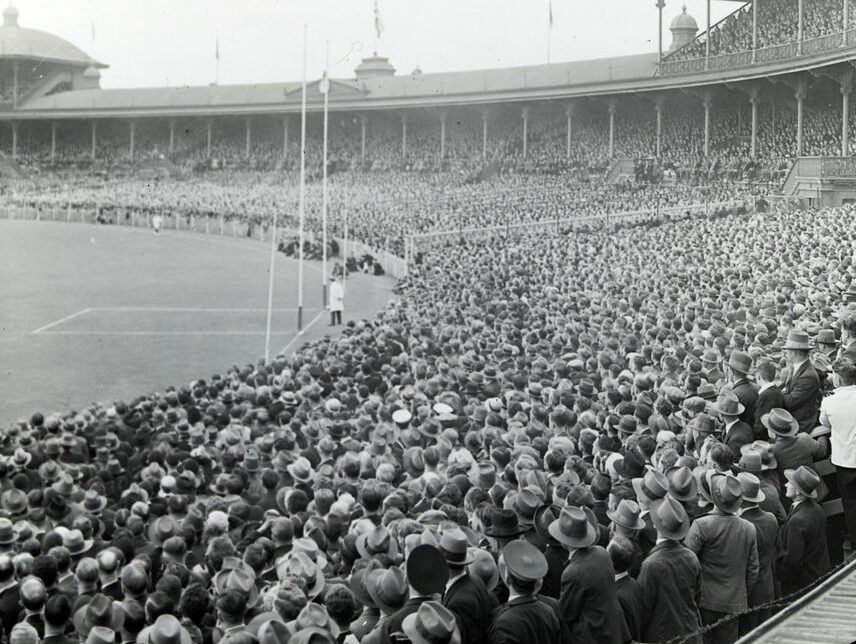
He tried again the following year. The RFD of 3 March 1992 argued from traffic — the volume of Australian football postings that had gone into rec.sport.football.misc through the previous season — and pre-empted the objection of the first attempt in one line: “Australian Football is NOT the same as American Football, and I’m not trying to be a smart alec in proposing to create this group. Australian and American football have about as much in common as cricket and baseball.” This time the group passed, on 24 April 1992, by 247 votes to 28. The name was rec.sport.football.australian. The code had gone into the hierarchy, and it had gone in with a national adjective attached.

Canada followed the same route. An RFD of 4 May 1993 from Queen’s University at Kingston observed that there was “currently no appropriate group in which to discuss Canadian football and specifically the Canadian Football League” — which was true in practice and awkward in principle, since the 1990 charter for rec.sport.football.pro had expressly covered professional football “be it CFL or NFL”. The proposal listed among its reasons the expansion of the CFL into the United States and the need to explain three-down football and a larger field to Americans encountering it for the first time. It passed on 8 July 1993 by 175 to 27.
Soccer beside football, and a newsgroup that was never voted on
Association football never entered the football subtree at all. It sits one level up, as rec.sport.soccer, described in the master file as “Discussion about soccer (Association Football)” — the parenthesis doing quiet diplomatic work for the majority of its readers, who would never have used the first word. A 1995 reorganisation proposal dates the group’s inception to late 1989, which puts it a year ahead of the American split and explains the arrangement completely: by the time rec.sport.football became a prefix rather than a group, the world’s most popular football code already had an address of its own and no reason to move.
That same 1995 RFD contains the branch’s most explicit statement of the problem, and it is worth quoting in full because the proponent evidently expected to be misread. “For purposes of this RFD, the more globally used term ‘football’ will be used, although the names of the proposed newsgroups use the word ‘soccer.’ Please do not read any agenda into the usage of terminology. Although ‘football’ is more commonly used around the world, deference to tradition and the current Usenet hierarchy dictate the use of ‘soccer’ in the names.” Two sentences, and the whole mechanism is in them: the word used in the argument was football, the word used in the address was soccer, and the reason given for the gap was not correctness but precedent.
Not everybody accepted the precedent quietly. On 5 December 1993 a newgroup control message went out across the network from a British site creating rec.sport.football.pro.liverpool. It carried no vote and no Request for Discussion, and it was approved by nobody but its own sender; the whole justification was six lines long, and four of them read: “Newsgroup for discussion of Liverpool football club. I don’t see why the Americans should have all the newgroups. If they think we’re interested in their bloody football teams, they can read about ours.” A companion message sent in the same minute, identical but for the club, created a group for Tottenham Hotspur. Neither group ever entered the master file, and the two control messages survive only because the archive keeps everything sent to the control channel, valid or not. As a piece of Usenet administration it was a nullity. As evidence of how the namespace felt from the far side of the Atlantic in 1993, it is unimprovable.
Rugby, and the name that was retired instead
Rugby shows the third possible outcome, and the only one in which the unmarked name was given up rather than defended. On 20 July 1995 a proponent posting from a British address filed an RFD to create rec.sport.rugby.league and to rename the existing rec.sport.rugby as rec.sport.rugby.union. The rationale was two sentences of taxonomy and one of arithmetic: “The two different versions of Rugby, Rugby League and Rugby Union, are effectively two separate sports. For example both sports have their own individual World Cup and set of rules. The existing rec.sport.rugby has more than 150 posts a day; a split would allow readers to view only the posts about the sport they are interested in.” The proposal noted that the only other rugby group on the network, aus.sport.rugby-league, could not be obtained by many readers outside Australia, so that a Big-Seven group was the only way to cover both codes worldwide.
The vote closed on 11 September 1995 with 210 valid ballots. rec.sport.rugby.league passed 164 to 28; rec.sport.rugby.union passed 177 to 27. One vote was invalid. The result, posted the next day by a votetaker working under the banner of the Usenet Volunteer Votetakers, named the date of execution as well as the outcome: “The following newsgroup will be removed on 20 Nov 1995: rec.sport.rugby (replaced by rec.sport.rugby.union).” The rmgroup control message duly went out on 20 November 1995, and was reissued on 27 November, on 20 December and again on 28 March 1996 for the benefit of servers that had missed it. The following day one site answered back. A control message from the Geophysical Laboratory of the Carnegie Institution of Washington, one line long, said: “Create rec.sport.rugby locally.” That is roughly the level of ceremony a purely local decision required.
The master file today carries rec.sport.rugby.league, “Everything related to playing/supporting Rugby League”, and rec.sport.rugby.union, “Everything related to playing/supporting Rugby Union”, and no unqualified rugby group at all. Compare the other two cases and the pattern is complete. Football kept its unmarked name for the code that got there first and made the others qualify. Hockey did the same, and the ice game still holds rec.sport.hockey while the grass game is a child of it. Rugby, uniquely, abolished the unmarked name and made both codes qualify equally. Nothing in the rules produced these three different answers; the same procedure, run by different electorates in different years, simply reached them.
Why a posting could beat the newspaper to the score
It is easy to forget what the alternative was. In 1992 a reader in Europe who wanted to know how a match in Melbourne or Karachi had gone had four options: wait for the next morning’s newspaper, wait for a bulletin on a shortwave broadcast, place an expensive telephone call, or subscribe to a wire service he could not afford. Usenet offered a fifth, and where the links were good it beat all four.
The mechanism is worth stating plainly, because it is the opposite of how the modern web delivers a score. A Usenet article was not fetched by the reader; it was pushed. Somebody at the ground, or in front of a television, typed the result into a newsreader and injected it into his local server, which passed it to its neighbours, which passed it on again, each hop taking as long as the next scheduled transfer allowed. There was no central site to be overwhelmed at full time, no page to be reloaded and no query to be answered: a single posting propagated outward at whatever speed the network’s links ran, and arrived at every subscribing site in the world without anyone asking for it. Nobody had to be awake at the receiving end, which mattered enormously for sport, because the receiving end was usually asleep.
The consequence was that a whole season could run as one public conversation with no local time attached to it. A match finishing near midnight in Sydney was read over breakfast in Manchester and argued about that afternoon in Toronto, in the same thread, with the article carrying its own timestamp so that everyone could see how stale their information was. Reaction was not live in the modern sense; it was close enough, and it was global in a way that no broadcaster of the period attempted.
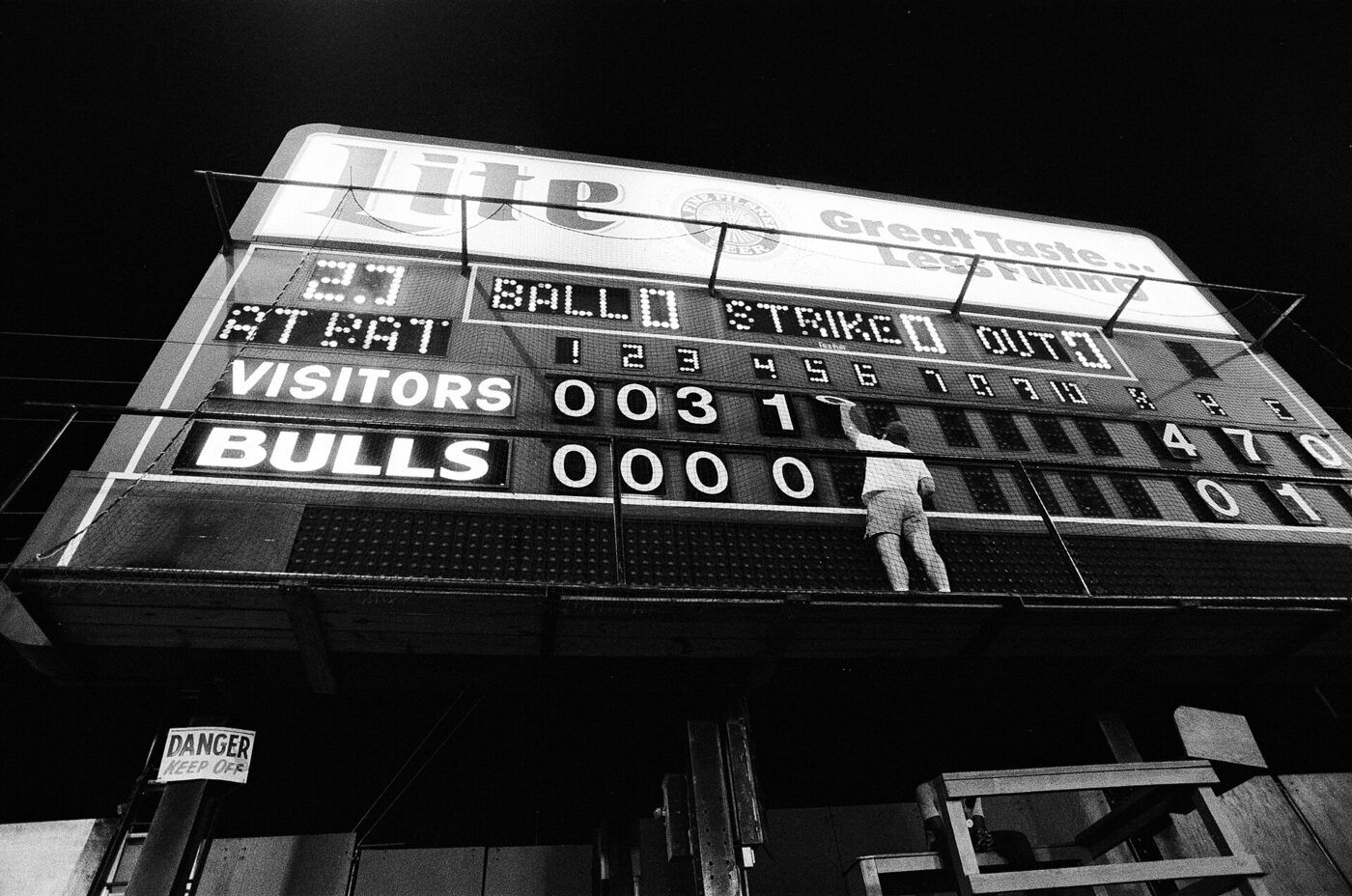

The groups developed conventions to keep the score separable from the argument, and the paperwork records them. The 1995 soccer reorganisation proposal explained why it was not asking for a separate results group: no one had volunteered to moderate one, and in any case “a good and widely-observed convention already exists for posting results onto r.s.s of using [R] in the subject line for results, [T] for tables, and [RT] or [R/T] for both. Such articles could then be posted to the appropriate newsgroup.” A reader with a newsreader that could filter on subject lines had, in effect, a results feed and a discussion feed out of one group, maintained entirely by the goodwill of the people posting.
Where a formal split was attempted, speed was the argument against moderating it. The 1994 charter for rec.sport.baseball.data set out the reasoning in as many words: the group would be unmoderated because “in many cases the data posted is time-sensitive and reducing the moderation ‘double lag’ will make this data more useful”. The double lag is exact and unavoidable. A moderated article travels first by e-mail to the moderator and then, once approved, into the news system — two propagation delays and one human being in between. For an argument about a manager’s substitution that cost a few hours and bought a great deal of order; for a score it made the group useless.
There was one more constraint on the data groups, and it explains why so much of what follows was compiled by volunteers rather than copied. The rec.sport.baseball.data charter’s list of prohibited postings opens with the words “NO COPYRIGHTED MATERIAL!!!” and returns to the subject twice more in the same short list, including a flat ban on “copyrighted material clipped from the clari.* hierarchy” — ClariNet, the commercial service that delivered newspaper and wire copy through a proprietary newsgroup hierarchy of its own alongside the Big Seven. The wire services owned the fast copy. What the newsgroups could lawfully circulate was what their readers had watched, counted or worked out for themselves — which turned out to be the more interesting half.
Five days, several continents: cricket and its moderated scorecard service
rec.sport.cricket carries a flat description, “Discussion about the sport of cricket”, and served a readership spread across the subcontinent, Britain, Australasia, southern Africa, the Caribbean and the North American diaspora, for many of whom it was the only daily contact with a domestic season at all. A Test match lasts five days and keeps the hours of the host country, which means that wherever a series is played it is being followed somewhere in the middle of the night. Spread across those longitudes, the readership had no common waking hour, and any session of play fell inside somebody’s day.
Following a match that way meant reading rather than watching: a total at each interval, the fall of wickets, a session summarised by whoever had the broadcast, and then most of a day’s argument about a declaration before the next morning’s play began. The branch built machinery for it. A moderated group called rec.sport.cricket.scores was created by control message on 2 January 1992 to carry scorecards, leaving the unmoderated group for everything else.
By early 1994 the arrangement was thought unsatisfactory in both directions. An RFD of 4 February 1994 from the University of Kent at Canterbury proposed moderating rec.sport.cricket itself and creating a discussion group beside it, on the ground that “the level of ‘noise’ in the group often obscures the news”. That proposal went no further. What did proceed was a rename: an RFD of 29 March 1994 from the same author converted rec.sport.cricket.scores into rec.sport.cricket.info with a broader charter, and the vote passed on 31 May 1994 by 197 to 22. The control message creating the group went out on 6 June 1994, and rec.sport.cricket.scores was removed a month later. The submission address printed in that message, [email protected], is the first of two places in this branch’s paperwork where a newsgroup and the service that outgrew it turn out to be the same people.
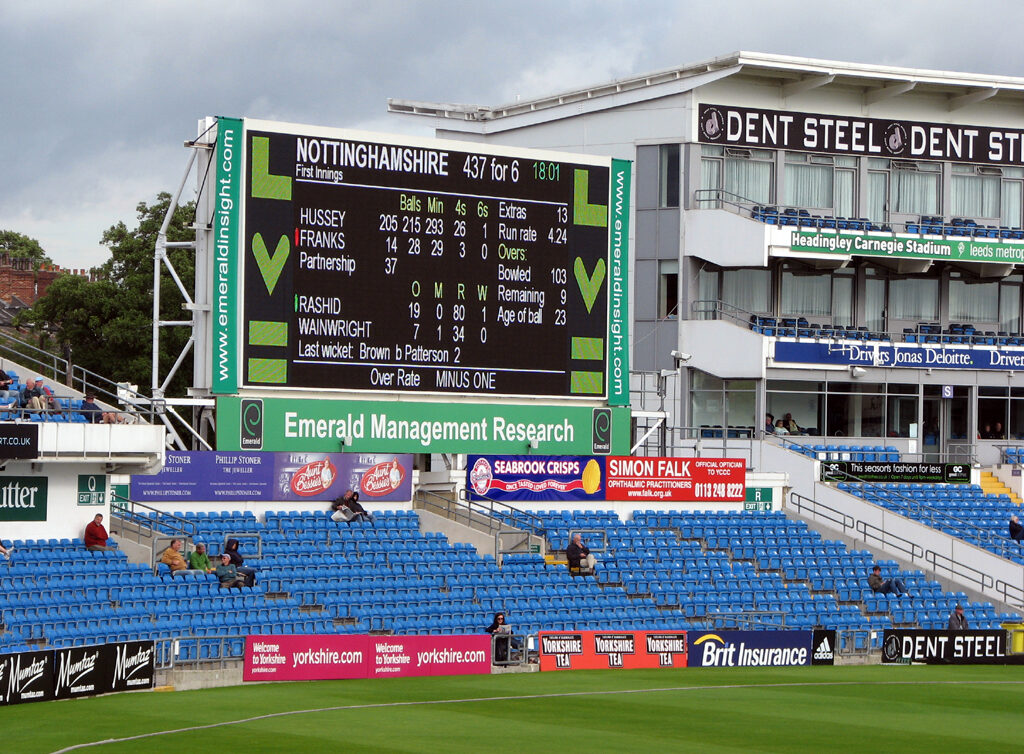
Its charter is the most complete description anywhere in the branch of what a sports information service looked like before the web. The stated purpose was “to provide a quality cricket information service for a general audience on USENET”, and the content was enumerated in ten numbered classes: completed scorecards of one-day matches; end-of-day scorecards of Tests and first-class matches; brief scores from any other level of match available; combined scorecards and match reports; match reports alone; statistical data on individuals and teams; articles, news, profiles and player facts; schedules for a season, tour or tournament; book reviews and extracts; and anything else the moderator judged useful. The prohibitions were as tightly drawn as the permissions: no in-progress updates, only completed scores; and “No discussion of any kind will be allowed either original or as a followup”, with all follow-ups directed back to the unmoderated group. Errors of fact were to be corrected by the moderators, who would either cancel and repost the article or follow it up, “also acknowledging the first person who pointed out such a mistake”.

Two clauses in that charter are worth pausing on. The first is that everything approved for the information group was to be cross-posted automatically to the discussion group, so that the accurate version travelled with the argument rather than behind it. The second is a removal provision written into the constitution at birth: the moderator could be removed if a clear majority of the readers of the discussion group voted to do so, subject to a quorum of at least 150 voters. These were volunteers writing themselves a rulebook, and they wrote in an exit.
Volunteer effort of exactly this kind then produced a service that outgrew the newsgroups entirely. CricInfo was launched on 15 March 1993 by the British researcher Simon King, and it was not a website; the web barely existed. It was a bot, designed to distribute cricket information through Usenet newsgroups, e-mail mailing lists and Internet Relay Chat, fed by volunteers who supplied scorecards, match summaries and other material. The same volunteers began adding scorecards of historical matches, and that back-filling became the foundation of the statistics archive the service still runs. It became the official site for scores and live updates at the 1996 World Cup, the tournament during which ball-by-ball text commentary — later the core of what it offered — was born; it was incorporated in the United Kingdom in 1997, having been funded until then by its volunteers and the International Cricket Council; and outside investment arrived in 1998, by which time it had long since left the newsgroups for the web. A majority stake was acquired by the Wisden group in 2003, and the site was sold to ESPN in 2007 and renamed accordingly. What began as a distribution bot for a newsgroup readership ended as the sport’s reference work of record.
The newsgroup it had been built alongside did not survive the transfer. When the Big-8 Management Board opened a proposal to remove rec.sport.cricket.info on 15 March 2007, the rationale and the history attached to it contained the whole story: the last approved message had been in June 1999; approvals had once been “moderately heavy with roughly 5 articles per day”, broken by outages from August to October 1997 and from November to December 1998; a reactivation had been discussed in September 2002 and come to nothing; and “Since the 1990’s widespread access to the internet and WWW may have made the group obsolete”. After a last call for comments on 3 May 2007 and a five-day comment period, the Board decided by consensus to remove the group, and the control message went out on 15 May 2007. The unmoderated discussion group beside it is still in the master file.
The numbers habit
The branch’s most durable contribution was not commentary but arithmetic, and it belongs to baseball. Sabermetrics takes its name from the Society for American Baseball Research, founded in 1971; Bill James coined the word in about 1980, having begun issuing his annual Baseball Abstracts in 1977. The approach reached general readers only with Michael Lewis’s Moneyball in 2003, and much of the two decades in between is a Usenet story — not because the newsgroups invented the ideas, but because they were where the ideas were checked in public by people with no professional stake in the answer.
What the groups supplied first was raw material. rec.sport.baseball.data is still in the master file, described in the terse register of the newsgroups list as “Raw baseball data (Stats, birthdays, scheds)”. Its 1994 charter is more expansive, and the list of what belonged there is a fair inventory of what a statistically minded fan could not otherwise obtain: statistics conventional or otherwise, standings, box scores, birthday lists, quiz results, contest standings, all-star vote totals, historical facts, objective game summaries, injury reports, factual player updates and schedules. Requests were permitted only for facts, only if the answer was not already in the group’s frequently-asked-questions document, and only if prefixed with the word REQUEST in the subject line — the example given in the charter being a request for the World Series champions from 1901 to the present. The periodically posted FAQ, the convention that made such a rule enforceable, is described on the rec.* hub; the moderated repositories that collected those documents are still carried in the master file under their original gloss, “Repository for periodic USENET articles”, as rec.answers for this hierarchy and news.answers for Usenet as a whole.
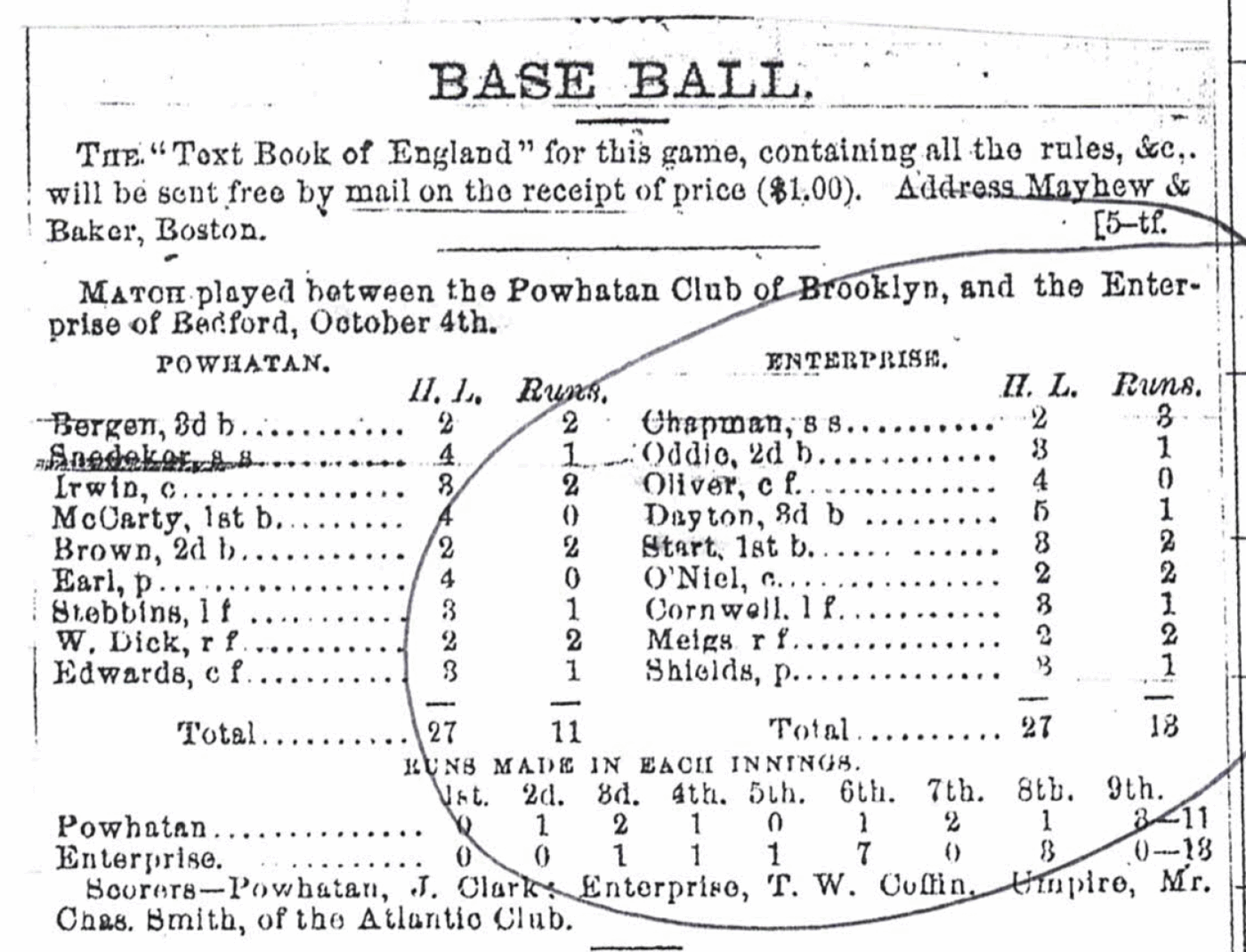

The datasets grew the same way and outlived the discussion. Bill James had started Project Scoresheet in 1984 to collect play-by-play accounts of games; building on it, Retrosheet was begun in 1989 by David W. Smith, a microbiologist at the University of Delaware who directed its undergraduate biology programme, with the object of compiling an accessible database of accounts of major league games that had never been public. It added a quarterly newsletter and a website in 1994. None of it was commissioned by a league or a broadcaster. It was assembled by volunteers who wanted the numbers to exist, and given away when finished; where the records were missing, play-by-play accounts were reconstructed from newspaper reports. In the newsgroups the same instinct showed up as public correction, a wrong figure challenged in the thread that carried it, in front of everybody who had read it.
An argument with rules: rec.sport.baseball.analysis
rec.sport.baseball carried the argument; a moderated companion carried the working. The Request for Discussion for rec.sport.baseball.analysis went out on 9 May 1994, a second RFD on 20 May added rec.sport.baseball.data beside it, the Call for Votes followed on 27 June, and the result was posted on 21 July 1994: the analysis group passed 205 to 36 and the data group 202 to 37, voted on independently. The newgroup control message for the analysis group went out on 1 August 1994.
Its charter is one of the more remarkable documents in the archive, because it attempts to specify what an argument is. The purpose was “the intelligent, reasonable discussion of baseball and baseball-related topics, with an emphasis on analysis”, and analysis was expressly not required to be statistical. The test for admission was three conditions: “1. The post must contain an opinion; 2. The opinion must be accompanied by a reason or a justification; and 3. The post must meet at least basic standards for Usenet conduct.” The charter then worked the test through an example, built on the player who had won the American League’s most valuable player award the previous season. “Frank Thomas just hit a grand slam!” was a fact and not an opinion, and did not qualify. “Frank Thomas should not have been MVP last year” was an opinion with no explanation, and did not qualify. “Frank Thomas should not have been MVP because Olerud batted as well and his defense was better” did qualify. Postings without opinions, and opinions without justifications, were directed to the unmoderated group next door; postings that failed the conduct test were directed, with the period’s customary lack of ceremony, to the alt.* hierarchy.
One of the two moderators named in the proposal was Gary Huckabay, and the sequel is the clearest single instance in the branch of a newsgroup habit turning into an industry. In 1996 Huckabay founded Baseball Prospectus, recruiting a group of contributors and publishing the first annual set of forecasts. By the account of one of those contributors, that first year it charged twenty dollars for a statistics guide produced on a photocopier, printed around three hundred copies and sold about a hundred and seventy of them, with one team missing from the book. The domain name was registered that September for a reason its own later account states plainly: so that the founders’ Usenet readers could find out more about the annual they had just self-published. The website followed in 1997. Baseball Prospectus is now accredited by the Baseball Writers’ Association of America.
The best-documented single posting in the branch’s history also went to the baseball groups. In 1999 Voros McCracken published his ideas about defence-independent pitching to the Usenet baseball newsgroup, opening in the flat register of a man expecting little: “I’ve been working on a pitching evaluation tool and thought I’d post it here to get some feedback. I call it ‘Defensive Independent Pitching’ and what it does is evaluate a pitcher base[d] strictly on the statistics his defense has no ability to affect…” The finding — that pitchers have far less control than the profession assumed over whether balls put into play become hits, and that the rate at which they do so does not correlate from season to season — sat there without much consequence until he set it out again on the Baseball Prospectus site in 2001 under the title “Pitchers and Defense: How Much Control Do Hurlers Have?”. An ESPN column by Rob Neyer picked it up, and by McCracken’s own account to a later historian of the subject, all hell broke loose: he received nearly two thousand e-mails within days and thousands more over the following months. Bill James expressed scepticism and then, in his New Historical Baseball Abstract of 2001, agreed. Craig Wright, another sabermetrician, credited him as the man who got people to understand how far the profession had overestimated a pitcher’s influence on balls in play.
The moderated group did not last as long as the idea. The Big-8 Management Board opened a removal proposal on 23 August 2010, noting that according to the Google archive the last regular post had been approved on 29 October 2003 and that a probe message to the submission address had bounced with the words “retry timeout exceeded”. A second RFD followed on 6 September, a last call for comments on 2 October, and the result on 9 October 2010: rec.sport.baseball.analysis was removed. It is not among the fifty-six names carried today. rec.sport.baseball.data, its unmoderated sibling from the same vote, still is.
Leagues run by post
Rotisserie League Baseball was created in 1980 by a group of journalists, and named after La Rotisserie Française, the New York restaurant where they met for lunch and first played it; the magazine writer and editor Daniel Okrent is credited with introducing the concept to the group and inventing the scoring system. Its early cost was clerical. Statistics had to be compiled by hand out of newspaper box scores, and the categories used by early leagues were often chosen because they were the ones that could be compiled easily from a newspaper. Usenet did not invent the game. It gave the paperwork somewhere to live, and the master file still records the result: rec.sport.baseball.fantasy and rec.sport.football.fantasy are both glossed as “Rotisserie (fantasy)” play, and so is rec.sport.pro-wrestling.fantasy, “Rotisserie league professional wrestling” — a statistical competition conducted over a sport whose outcomes are settled in advance.
The route by which the baseball group arrived is documented in unusual detail, because it took three attempts. The proposal had been made and dropped twice before the RFD of 6 April 1992 — once by the same proponent the previous autumn, and once, a month earlier, as somebody else’s plan for a whole fantasy sports sub-hierarchy. The 1992 RFD argued its case from an existing mailing list: the Rotisserie and Fantasy Baseball list then had “more than 100 participants, with in excess of 30 postings per day”, and had been set up expressly “to funnel off discussions of Rotisserie or Fantasy baseball from the existing newsgroup rec.sport.baseball”. The list’s own charter, reproduced in the RFD, is the best short description of what these leagues actually needed a public medium for: formation of leagues; trading of players and analysis of trades; selection of the statistics used to rate teams; expansion and removal of teams; player auctions; league government; related board and simulation games; updates on individual players, injured or demoted; and the selection of league and team names.
The proposed name was rec.sport.baseball.roto. A second RFD on 1 May 1992 changed it, and the reason is a small masterpiece of namespace pedantry: a straw poll of the mailing list had come out “clearly in favor of fantasy over .roto, principally because there are various varieties of fantasy baseball other than classic Rotisserie”, while those who preferred roto had done so mainly for its simplicity. The same RFD explains why the branch has no rec.sport.fantasy.* subtree: the proponent judged that a general fantasy sports group would ultimately split along the lines of the sports themselves, and that it was better to build it that way at the outset. rec.sport.baseball.fantasy passed on 2 June 1992 by 149 votes to 45 — a margin of 104, four votes clear of failure. The football group followed the same reasoning and had an easier time of it, passing on 2 November 1993 by 267 to 34.
What these groups then did, week after week, was administration rather than conversation. A commissioner kept the ledger; a draft was conducted in order and in public; rosters, trades and transactions were recorded where every participant could check them. A discussion medium was being used as a registry, and the properties that made a newsgroup awkward for small talk suited the job exactly: every article carried a date and a message identifier, went to everybody at once, and could not be quietly amended afterwards. The fantasy games that eventually replaced it were, at bottom, the same ledger with the clerk automated.
Automation arrived quickly and from outside. ESPN launched its website in April 1995 under the name ESPNET SportsZone, and the same year launched its first entirely Internet-based fantasy baseball game; other large sports and entertainment companies followed. CBS Sports began offering fantasy football leagues in 1997. The Fantasy Sports Trade Association was formed in 1998. In July 1999 Yahoo began giving its fantasy football product away free, a decision generally credited with putting it ahead of its competitors. Each of these did automatically, for an audience with no interest whatever in how a news server worked, the part of the newsgroup’s work that had always been drudgery.
How a sport group split, and how often it did not
Sport groups proposed splits often, for a structural reason: their traffic is seasonal and their readers are partisan, so a room that is comfortable in February becomes unreadable in September, and the people who find it unreadable are exactly the people who care enough to write an RFD. The mechanism was always the same. Someone counted the traffic, proposed a division along whatever fault line seemed natural — league, level, country, competition — and put it to a vote in which the hundred-vote margin decided almost everything. The archive preserves the successes and the failures in equal detail, and the failures are more instructive.
The largest failure was soccer. On 11 November 1993 a reader at the Norwegian Institute of Technology proposed breaking rec.sport.soccer into five groups: domestic.england, domestic.misc, international.clubs, international.country and misc. He supported it with a four-day census of the group’s own traffic, sorted into the proposed buckets — 85 postings that would have gone to the England group, 41 to the rest of domestic football, 119 to international club competition, 69 to internationals between national teams and 87 to the catch-all. The paperwork conceded the obvious objection in advance: some readers were sceptical of a geographical division, but “it is felt that there is a natural division among the readers between English and non-English interest”. Voting closed and the result was posted on 6 January 1994. All five groups failed, on both conditions. Out of 476 valid ballots the best-supported name, domestic.england, drew 183 yes votes against 278 no; the others did worse. The electorate had been asked whether it wanted to be divided and had answered, emphatically, that it did not.
A second attempt in 1995 proposed a smaller division — a United Kingdom group, an international-cups group, and a misc group replacing the existing one — and argued from volume: “Since its inception in late 1989, rec.sport.soccer has become a well-trafficked newsgroup, with around 100-200 posts per day, depending on current events. This would already be difficult to manage for many people, particularly those on slow network links or who only read news once a day.” That RFD is the last document in the file. No Call for Votes followed it. rec.sport.soccer is still a single group, and it is the only name in the branch to have survived two organised attempts to dismantle it.
Elsewhere the votes went through. Basketball produced two: rec.sport.basketball.women, proposed in November 1992, allowed to lapse, re-proposed on 22 January 1994 and passed on 9 March 1994 by 243 to 21; and rec.sport.basketball.europe, proposed on 13 March 1995 under the name rec.sport.basketball.european, renamed in a second RFD eleven days later and passed on 5 June 1995 by 245 to 13. The master file describes the latter, with an economy bordering on indifference, as “A European basketball forum” — a room for a sport whose loudest coverage came from somewhere else.
The clearest case of a split proposed along a fault line the branch never adopted is baseball by club. On 14 August 1997 an RFD proposed four groups under a new rec.sport.baseball.teams prefix, for the Braves, the Dodgers, the Giants and the Yankees, arguing among other things that the four teams already had “successful newsgroups (approx. 50-100 posts/day) in the alt.* hiearchy, but each team in this select group deserves its own ‘Big-8’ group”. The four charters were identical except for the name, and each ended with the same clause: postings against the club “with the sole purpose to harasse and irritate” its fans were forbidden. No Call for Votes was ever posted. The RFD is instructive twice over: it records that club-level argument had already left for the unregulated hierarchy where no vote was needed, and it records what a club room believed it had to legislate against on day one.
What sank proposals late in the decade was the hundred-vote margin rather than the two-thirds test, as the pool of people willing to send a ballot shrank. rec.sport.golf.equipment, proposed on 19 January 1998, went to a vote and failed on 1 April 1998 by 59 to 25 — more than two-thirds in favour, and nowhere near a hundred clear. The rule that had kept small factions from creating groups in 1990 was, by 1998, stopping ordinary proposals with nobody against them.
One vote in the branch is preserved together with its own audit. Professional wrestling’s moderated information group was announced as passing 332 to 50 on 11 April 1996; four days later the votetaker superseded that announcement with a corrected result of 314 to 51, having examined the ballots and struck out seventeen of them, all transmitted from inside a single provider’s network and at least some of them forged. He published the seventeen addresses, noted that invalidating them did not change the outcome, and left the arithmetic to be checked — which is how a volunteer system without any enforcement powers maintained its credibility. rec.sport.pro-wrestling.moderated followed two years later, passing 199 to 72 on 7 March 1998.
Names that were never voted
The control archive keeps everything that was ever sent to the network’s control channel, which means it keeps the failures, the jokes and the forgeries alongside the record. For rec.sport.* the residue is substantial: more than a hundred group names appear in the control archive against fifty-six in the master file, and the gap is made up of groups that were removed, groups that were tested locally, and groups that never existed at all.
The largest single batch is dated late August and early September 1998. A run of newgroup control messages went out purporting to come from the moderator of news.announce.newgroups at his real address, each carrying an organisation header reading “The Cabal”, a block of characters where a signature should be, and a sentence announcing that some invented rec.sport.* name had passed a vote reported on a specified date. The tallies alone give them away: one claims creation by 87 votes to 14, another by 88 to 28, neither of which could have passed under rules that had required a hundred-vote margin for a decade. Several of the messages purport to create groups that already existed, and one of those announces an existing moderated group as unmoderated. None of the invented names entered the master file. The episode is a reminder of what the Big-8 machinery actually rested on — not authority, since anyone with a news feed could emit a control message, but the willingness of administrators to check who had signed it.
Alongside the forgeries sit the genuine proposals that simply stopped, and the ones that arrived in a shape nobody kept. A call for discussion on 7 March 1991 proposed rec.sport.ultimate, “or more generically rec.sport.disc”, with subgroups for ultimate, disc golf and freestyle; what the network created two months later was the general group alone, and the subgroups never followed. rec.sport.swimming.masters was proposed in January 1998 and got no further than its RFD. rec.sport.championships was proposed on 12 January 2004 for “World/Regional championships” in any sport, complete with a suggested subject-line tagging scheme, and reached no vote; its rationale — that the branch had a miscellaneous group and an Olympic group and individual sports, but nothing for world championships as such — is a fair description of a gap that was never filled. These are the ordinary sediment of an open process: for every name in the fifty-six there are one or two that somebody wanted and nobody voted for.
Where the argument went, and what still carries
Sport left Usenet earlier and more completely than most subjects, and the reasons are not mysterious. The branch’s best work was reaction, standings, scorecards and fantasy paperwork, and those were precisely the first things a newer venue could do faster and without asking anyone to learn what a news server was. ESPN’s site was up in April 1995, two years after CricInfo had begun as a bot serving newsgroup readers and while the cricket information group was still approving about five articles a day. Sport also fragments unusually well: one club, one league, one commissioner’s roster each fill a dedicated board more comfortably than a shared newsgroup, and the web supplied those boards in quantity, with social media behind them.
The archive dates the retreat group by group. The cricket information group approved its last message in June 1999 and was formally removed on 15 May 2007. The baseball analysis group approved its last regular post on 29 October 2003 and was removed on 9 October 2010. The moderated wrestling group’s last approval was on 19 May 2016 — and, according to the Moderator Vacancy Investigation opened on 12 September 2017, that message probably slipped through because the moderation robot had already died. The Board’s investigation records that probe postings produced no result and that contact was eventually made with the remaining moderator by way of Twitter, who reported that the robot had failed and that he had little or no interest in resurrecting it. A branch that had once run its own scorecard service was, by 2017, being administered through the social network that had replaced it.
Two rec.sport.* names went in the removals of 2011 that the Big-8 Management Board called the Great Downsizing, whose criteria are set out in full on the comp.* hub of this directory and are not repeated here: rec.sport.orienteering, created by control message on 27 February 1995, and rec.sport.footbag, created on 27 February 1996. Both were removed by control message on 12 May 2011, in a round that took out 198 unmoderated groups in all, the removal reissued three times over the following month for servers that had missed it. Two names out of fifty-six is a light toll by the standards of that action, and it says something about how the branch was named. A group called after a sport survives the sport’s changes of fashion in a way that a group called after a product does not.
What still carries rec.sport.* is, first, the namespace itself. Fifty-six names remain in the master file that news servers distribute, the master file is still maintained by control message, and a reader with a newsreader can still post to rooms voted into existence a third of a century ago. Second, the written record. Deja News began archiving Usenet in March 1995 from Austin, Texas; Google acquired the archive and its service went live in February 2001, with donated collections reaching back to 1981. Google Groups stopped carrying new Usenet content on 22 February 2024, but the existing archive remains available at groups.google.com and its equivalents for the other groups, which is why an argument about a declaration or a substitution from 1994 can still be read in the words in which it was made. Third, and least visibly, the habits. The compiled dataset given away when finished, the correction published in the thread that carried the error, the statistical claim required to show its working: all three were ordinary manners in these groups a decade before they were anything else, and all three outlived the rooms they were practised in.
Scope and limits of this page
This page describes a branch of a namespace, not a message archive. No rec.sport.* articles are preserved in this directory: what it holds for this branch are the four group pages listed above, each carrying what can honestly be established about its own group. No traffic or readership figures for any rec.sport.* group are held here either. Where numbers of postings appear above — a hundred to two hundred a day in the soccer group, more than a hundred and fifty in rugby, roughly five approvals a day in the cricket information group, fifty to a hundred in the club groups over in the unregulated hierarchy, and more than thirty a day on the fantasy baseball mailing list — they are the claims made by proposals and removal notices in support of their own arguments, quoted as such, and are not independent measurements.
Everything above about names, descriptions, charters, dates, votes and removals comes from documents that can be checked: the master newsgroups file distributed to news servers, the archive of control messages, and the archive of news.announce.newgroups postings in which every Request for Discussion, Call for Votes, result and removal notice of the period was published. Quotations are from those documents and are given verbatim, including their spelling. Creation dates are the dates of the earliest relevant control message, which for groups predating the archive’s bulk reissue of 23 May 1991 establishes only that the group is older than that; rec.sport.baseball, rec.sport.cricket and rec.sport.soccer all fall into that category, and the ages given for them here come from later paperwork rather than from the control record.
No thread titles, poster names, scores, subscriber counts or message counts have been invented for any group on this page. Where the record is silent — and for most of the fifty-six names it is almost entirely silent, since a group that worked well generated no paperwork at all — this page is silent too.