rec.sport.hockey
Ice hockey worldwide.
The main hockey room: NHL seasons thread by thread, Olympic tournaments, European leagues, and the eternal fighting-in-hockey argument.
Volunteer statistical compilation of the period fed the hockey databases of the early web; which of them began in which room the surviving record does not settle.
On this page
- The name is the claim
- The child group and its paperwork
- A qualifier that entered the description but never the name
- Where the qualifier goes if you are not in North America
- The subtree that was proposed twice and never built
- The clubs went to alt, and the wire went to clari
- What a season looked like in one room
- Summer: the draft, the trade and the list
- The labour disputes, with dates
- The road east, and then the road west
- Best on best: the Summit Series and the Canada Cup
- The federation, the amateur rule and the spring tournament
- Nagano, and the question finally put
- The arguments the rulebook answered
- The map the group was reading changed
- Counting the game
- The historians, and a committee that said no
- Why the database question stays open
- Where the conversation went
- What the record does not show
- Scope and limits
The name is the claim
The address is the first fact about this group, and it is an argument in four words. rec.sport.hockey means the game played on ice. The game played on grass — older, played in more countries, and the one most of the world calls simply hockey — sits underneath it, as a child of the ice game’s name, at rec.sport.hockey.field. A namespace that gives the unqualified word to one code and a qualifier to the other has settled a question about which game is the default, and on Usenet that kind of settlement is not a matter of usage drifting. It happened on a particular date, in a particular document, and the document survives.
What survives for the parent, though, is thin, and thin in an informative way. The Internet Systems Consortium’s mirror of news.announce.newgroups — which for most Big-8 groups holds the Request for Discussion, the Call for Votes, the Result and any later administrative notice, in one file, with the dates and the tally — has no file for rec.sport.hockey at all. The neighbouring control-message archive cannot help either, and says so in its own policy document: it is “an archive of all newgroup, rmgroup, and checkgroups control messages seen on Usenet received since early 1991”, with a month or so around August 1992 missing. A group that already existed when that archive opened has no birth certificate in it.
What the archive does hold for rec.sport.hockey is three reissues, which is the ordinary residue of a group being propagated to sites that had not heard of it. The earliest is dated 23 May 1991 and was sent from a company news server in Wakefield, Massachusetts, with a world distribution and a one-line body: Discussion about hockey. The second, from the computer science department at the University of Maine on 26 April 1992, has an empty body and a distribution limited to that department. The third, on 25 November 1995, came from a server whose address places it in Novosibirsk, went out with a world distribution, and carries the standard formula — “For your newsgroups file:” followed by the group name. Two sites in New England and one in Siberia, telling their neighbours about a group that none of them created.
The conclusion is a negative one and worth stating plainly, because it is the frame for everything that follows: rec.sport.hockey is older than the paperwork that would have recorded its creation. It held the unqualified word before there was any procedure to contest it. Everything documented about the naming question is therefore documented from the other side — from the group that had to be voted into existence beside it.
The child group and its paperwork
The field game’s file is complete, and it is the document that settles the namespace. On 2 January 1992 the moderator of news.announce.newgroups issued a newgroup control message from Rensselaer Polytechnic Institute. Its first sentence is the record of the vote:
rec.sport.hockey.field is an unmoderated newsgroup which passed its vote for creation by 157:30 as reported in news.announce.newgroups on 19 Dec 1991.
By the voting rules of the period a proposal needed a two-thirds majority of valid ballots and at least a hundred more yes votes than no. A tally of 157 to 30 clears both conditions with room to spare: 84 per cent in favour, and a margin of 127. This was not a contested creation. The same message then gives the line for the master file and the charter, both quoted here as the archive has them:
For your newsgroups file:
rec.sport.hockey.field Discussion of the sport of field hockey.
This group will exclusively discuss field hockey and the various national and international events connected with this sport.
Read as a piece of address design, that is the whole settlement. The proposal could have asked for rec.sport.field-hockey, a sibling standing beside the ice game with both codes qualified and neither subordinate. It did not. It asked for a name that begins by conceding that hockey already means something else, and it was granted by better than five votes to one by an electorate that plainly agreed. The word “exclusively” in the charter does the same work from the other direction: it is a promise not to spill back upstream.
The branch reached different answers elsewhere with the identical procedure — rugby abolished its unmarked name and made both codes qualify, football kept its unmarked name for the code that arrived first — and the comparison belongs to the hub page for rec.sport, which sets out the general politics of a name in this hierarchy. What is specific here is that hockey is the only one of the three where the qualified code was filed as a child of the unqualified one, so that the subordination is visible in the address every time it is typed. The field game’s own history, institutions, tournaments and readership are the subject of rec.sport.hockey.field and are not retold here.
The child collected reissues too, and they show how quickly a new name travelled and how unevenly it landed: a site-local newgroup from the Stern School of Business at New York University on 1 April 1992, and another from the University of Maine on 26 April 1992, both with empty bodies and both restricted to their own campuses. Three and four months after the group was created, administrators at two American universities were still catching their servers up.
A qualifier that entered the description but never the name
There is a second, quieter piece of evidence in the same archive, and it is the closest thing to an admission the record contains. The 1991 control message glosses the group as Discussion about hockey. The master file distributed by the Internet Systems Consortium today reads:
rec.sport.hockey Discussion about ice hockey.
rec.sport.hockey.field Discussion of the sport of field hockey.
Somewhere between those two the word ice was inserted, and the checkgroups archive catches the change happening. Checkgroups messages are the periodic postings by which a site publishes its whole list of groups and descriptions, and the archive keeps them by year, as received from whichever sites sent them. In the 1993 file, seventeen of the surviving messages still carry “Discussion about hockey.” and five already carry “Discussion about ice hockey.”; in the 1994 file the proportion has reversed, six to three the other way; from 1995 onwards only the second reading appears. The correction was made where corrections are cheap — in the one-line description, which any administrator’s checkgroups run will quietly overwrite — and never where it would have cost a vote, in the name. Thirty years later the group is still called hockey and still described as ice hockey, which is a reasonably exact summary of the position.
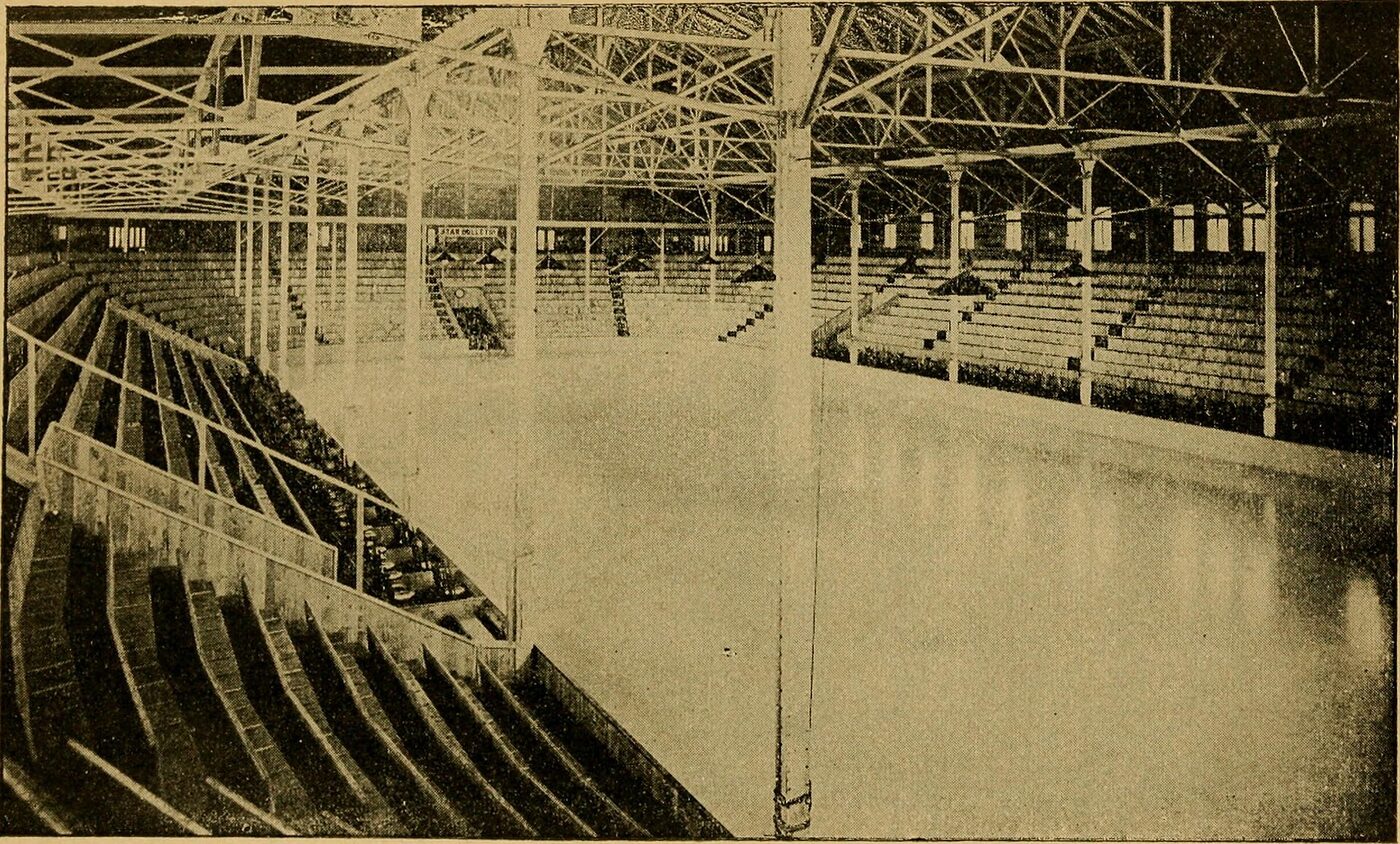
_(14784366615).jpg)
Both names remain in the active file distributed today, both flagged y for unmoderated and open to posting. Control messages for the whole Big Eight, this branch included, are now accepted only when signed for [email protected] and verified against news.announce.newgroups, with the Big-8 Management Board named as the contact and messages from anyone else dropped unread; the arrangement that once let a company in Massachusetts and a server in Siberia each announce the group on its own authority has been closed off.
Where the qualifier goes if you are not in North America
The best commentary on rec.sport.hockey’s name is the rest of the master file, because the national and regional hierarchies solved the same problem for their own readerships and mostly solved it the other way. The British hierarchy has uk.sport.ice-hockey, described as “For discussion of ice hockey as played in and by GB”: the qualifier is in the name, because in Britain the unqualified word was already spoken for. Denmark has dk.sport.ishockey; Finland has sfnet.urheilu.jaakiekko, from jääkiekko, ice puck; Sweden has swnet.sport.hockey, Slovakia sk.rec.hockey, and there is an alt.fr.sport.hockey. At Georgia Tech somebody once created git.club.fieldhockey, glossed “this is for field hockey at georgia tech”, qualified in the other direction.
The prize belongs to Norway, whose group no.sport.hockey is described in the master file as a group for discussion of hockey både med og utan is — both with and without ice. One line of a newsgroups file, and the whole ambiguity is disposed of by refusing to choose.
A third code tried the branch and was refused. A proposal for rec.sport.air-hockey went to a Call for Votes in July 1997 and the result was posted on 1 August: 18 yes, 30 no, 48 valid votes and one abstention, against a requirement of two-thirds and a hundred-vote margin. Its proposed master-file line was “Anything related to the sport of air-hockey”, and its charter allowed advertisements for tables from individuals and manufacturers alike, at not more than one a week. Notably, it asked for a name at the rec.sport level rather than under hockey; nobody proposed rec.sport.hockey.air. The game found its room in the unregulated hierarchy instead, where alt.sport.air-hockey sits today, and where a group needs no votes at all.
One more curiosity is worth recording because it is precisely dated. On 2 December 1997 a PGP-signed control message from [email protected] created net.sport.hockey in the net.* hierarchy of Usenet II, the rules-compliant alternative network built in the late 1990s, which peered only between sites that accepted its rules. The message carries the distribution 4gh that Usenet II required of every article on its network. Its description is not a description at all: He shoots, he scores! The group is still in the master file today, long after the network it belonged to stopped growing.
The subtree that was proposed twice and never built
rec.sport.hockey was, for its whole working life, a single unmoderated room for an entire sport. That was not for want of trying. The reorganisation file in the news.announce.newgroups archive contains two Requests for Discussion and no vote.
The first, posted on 21 November 1993 by a reader at the University of Washington, proposed splitting the group three ways: a moderated rec.sport.hockey.scores for “all the score postings, current standings of the leagues that current r.s.h. readers support and follow”; an unmoderated rec.sport.hockey.nhl for “all matters pertaining to the National Hockey League, other than scores”; and an unmoderated rec.sport.hockey.misc for leagues other than the NHL. Its rationale is the only surviving contemporary description of what the group actually contained: a review of several days’ traffic yielded, in order of volume, ongoing discussion of the NHL; scores and standings from a variety of leagues and nations; and discussion of leagues other than the NHL. That is a three-line inventory of a hockey newsgroup in 1993, written by somebody who had counted.
A second RFD followed on 8 December 1993, expanding the proposal to four groups by adding rec.sport.hockey.world — for hockey outside North America, with the frank observation that “with the upcoming Olympics, the majority of discussion will be centered around” that, without excluding the British, Swedish and other European leagues. The misc group was narrowed to North American leagues below the NHL: major junior, the American and International leagues, the college conferences, “how to play”. The proposer named himself as moderator of the scores group. Both RFDs invoked the same constituency: the proposer maintained a mailing list for a major junior league, corresponded with other list owners, and had subscribers reaching him over Fidonet, where a bulletin-board network run by the same junior league was expanding through its member cities at the same time. That is a fair picture of what a sport’s online infrastructure looked like in 1993 — a newsgroup, some mailing lists and a store-and-forward BBS network, all carrying the same conversation by different means.
No Call for Votes ever followed. The file ends with the second RFD.
Two months later, on 12 February 1994, a reader at the University of Massachusetts Lowell filed a separate RFD for rec.sport.hockey.college, to carry “NCAA (ECAC, Hockey East) hockey scores, standings, polls, schedules, etc.”, on the argument that college basketball and college football already had groups of their own and that college hockey had “thousands” of followers. That file, too, contains one document and no vote.
The result is visible in the active file to this day. Of the four subgroups proposed in 1993 and the one proposed in 1994, none exists. rec.sport.hockey has exactly one child, and it is the field hockey group that was voted in before any of them were thought of. The subject divides naturally by league, by level and by continent; the address never divided at all.
The clubs went to alt, and the wire went to clari
Traffic that a Big-8 vote would not accommodate went where votes were not required. The alt hierarchy carries a per-club group for essentially every NHL franchise of the period — alt.sports.hockey.nhl.mtl-canadiens, alt.sports.hockey.nhl.det-redwings, alt.sports.hockey.nhl.vanc-canucks and some thirty more like them, most glossed with the same four-word formula, “club name NHL hockey talk.” Beside them sits alt.sports.hockey.nhl.chat, whose own one-line description in the master file is an instruction to go elsewhere: “Use rec.sport.hockey instead.”
Two of those names are fossils: alt.sports.hockey.nhl.que-nordiques and alt.sports.hockey.nhl.hford-whalers are still in the active file, decades after both clubs left those cities, because nothing in Usenet’s machinery removes a group that no longer has a subject. There is a duplicate too — both pit-penguins and pitt-penguins exist, the second described only as “Use alt.sports.hockey.nhl.pit-penguins.” — which is the characteristic signature of a hierarchy in which creating a name costs one message and correcting it costs another.
Below the top league the alt tree carries groups for the American, International and East Coast leagues, for junior hockey — “Junior Hockey Discussions Worldwide” — for a single Swiss club, for street hockey, and for fantasy play, glossed with admirable brevity as “Rotisserie league ice hockey”. The group for the professional roller league is described, in the same register as the Norwegian entry, as “Some hockey league, maybe.” Two separate names exist for the women’s game, alt.sport.hockey.women and alt.sport.icehockey.women, neither of which ever acquired a description at all. There is alt.collecting.hockey-pucks, and beside it alt.colllecting.hockey-pucks, with three ls, created by somebody who mistyped and could not take it back.
The commercial hierarchy solved the other half of the problem. ClariNet, the subscription wire service distributed as Usenet groups, ran clari.sports.hockey and beneath it clari.sports.hockey.nhl, clari.sports.hockey.nhl.games for “NHL previews, recaps, box scores” and clari.sports.hockey.nhl.stats for “NHL stats, standings, summaries”, with separate groups for the American and International leagues alongside — all moderated, all fed by a news agency and all available only to sites that paid. A reader whose university took the ClariNet feed had the box scores delivered; a reader whose university did not had rec.sport.hockey and whoever in it had watched the game.
Set against that, the shape of the Big-8 group becomes clear. It was not the whole of hockey on Usenet. It was the one room in the whole namespace that belonged to no club, no league and no country — which is why the arguments that had no other home ended up in it.
What a season looked like in one room
The rhythm was the calendar’s. From the autumn openings to the Stanley Cup final in late spring, a National Hockey League season ran through the group as one rolling conversation: game nights, injuries, standings recomputed, coaching decisions relitigated the following morning. A full evening’s slate is a dozen or more games; in a room with no subdivision, a dozen games arrive as a dozen overlapping threads, and a reader who wants one of them filters out the rest by hand.
Three things followed from that. The first is that the group was permanently multi-partisan. A Boston reader, a Calgary reader and a Helsinki reader shared one thread space, and none of them could claim it. Club rivalry in such a room is not a hostile encounter with strangers; it is a running argument between people who read each other every day, which is a different and generally more durable social form.
The second is time zones. A game finishing near midnight on the eastern seaboard is a mid-morning read in Sweden and an afternoon argument in Finland, and the article carries its own timestamp so that everyone can see how stale their information is. The general mechanism — a posting pushed outward from one server to the next rather than fetched by a reader, arriving at sleeping sites without anyone asking — is set out on the rec.sport hub and not repeated here. What it meant for hockey specifically is that a European reader could follow a North American league on the morning after rather than the week after, at a time when the alternative was a wire-service paragraph in a newspaper, if the newspaper carried one at all.
The third is that somebody had to type. Before any league published an archive that anyone could use, the raw material of the group was posted by hand: box scores transcribed from a broadcast or a programme, standings recomputed after a night’s results, historical season data keyed in from printed guides, and the corrections that followed. That habit is the through-line of this page, and it comes back in the section on counting the game.
Summer: the draft, the trade and the list
The off-season had its own traffic, and it is a different kind of subject: not results, which are settled, but transactions, which are speculative. The NHL entry draft is held each summer, and it puts a hierarchy of teenage players from junior and college leagues into the public record all at once, in an order that can be argued about immediately and re-argued for a decade. Trades and the contract market fill the rest. None of this produces a score to check; all of it produces rankings, and rankings are what a large unmoderated room does best and worst.
The 1993 reorganisation proposal is again the useful witness, because it names where the non-NHL end of that traffic was coming from: a mailing list for a major junior league, other list owners, and Fidonet subscribers reached through a bulletin-board network then expanding city by city. Junior hockey is a scouting subject before it is a spectator one, and the people who followed it were exactly the people who wanted their own room. They did not get it.
The arithmetic of the summer changed once, sharply and by contract. The collective agreement that ended the 2004–05 dispute introduced a hard salary cap calculated as a share of league revenues — formally the upper limit of a payroll range, with a lower limit beneath it that clubs were obliged to reach — and, as a transitional measure, a one-week window in which clubs could buy players out at two-thirds of the remaining contract without the cost counting against the cap. From that point a trade was not only a hockey judgement but an accounting one, and the group’s summer conversation acquired a second vocabulary.
The labour disputes, with dates
The stoppages are the part of the sport’s chronology that carries exact dates, and they fell squarely inside the group’s working life. There were four in twenty-one years.
- 1992. The players’ association called the first strike in its history on 1 April 1992. It lasted ten days. The settlement increased playoff bonuses, gave players more control over the licensing of their likenesses, altered the free-agency and arbitration systems, expanded the season from 80 games to 84 and required each club to play two games a season in neutral, non-NHL cities. The league’s president was removed in the aftermath.
- 1994–95. A lockout ran from 1 October 1994 to 11 January 1995 — three months and ten days — costing 468 games and the All-Star Game. The season that followed ran from 20 January to 3 May, the first time the regular season had ever extended into May, was cut from 84 games to 48, and was restricted to games within each conference. The settlement contained no salary cap, and the two sides agreed to shorten future seasons to 82 games.
- 2004–05. The lockout began on 16 September 2004, one day after the previous agreement expired. The season was cancelled outright on 16 February 2005 — 1,230 unplayed games, and the first time a major North American professional league had lost an entire season to a labour dispute. The Stanley Cup was not awarded for the first time since 1919. An agreement was reached on 13 July and the lockout ended with ratification on 22 July 2005, ten months and six days after it began; the new agreement contained a salary cap and revenue sharing.
- 2012–13. A fourth lockout began at 11:59 p.m. Eastern time on 15 September 2012. A tentative agreement was reached on 6 January 2013 and ratified with a memorandum of understanding by 12 January, 119 days after the old agreement expired. A 48-game season, again limited to games within each conference, ran from 19 January to 28 April 2013.
For a newsgroup these were not merely interruptions. A group organised around a season has nothing to report when there is no season, and what fills the silence is procedure: the arithmetic of revenue shares, the legal position, and the question of whether either side was telling the truth about the finances — a question on which, in November 2004, a magazine’s estimate of the league’s losses came in at less than half the figure the league itself claimed. Whatever else may be said about it, an unmoderated newsgroup full of partisans is an efficient machine for circulating a disputed number and having it checked by strangers.
The road east, and then the road west
The other structural change of the period was the movement of players, and it ran in both directions inside a single decade. Until the late 1980s a player from the Soviet bloc reached the National Hockey League by defecting; the best-known Czechoslovak case left for Quebec in the summer of 1980 and played sixteen NHL seasons. In 1989 the Soviet federation began releasing players officially: the first permitted to go signed with Calgary that March, and within a few seasons a group of Soviet-trained players was assembled at Detroit and, from October 1995, played together as a five-man unit. The dissolution of the Soviet Union in December 1991 put nine former republics into the international federation as members in their own right, and the top division of the world championship was enlarged from eight teams to twelve to accommodate the new entrants.
The traffic reversed once, spectacularly, and it can be counted. During the cancelled 2004–05 season 388 NHL players spent the winter in European leagues: 78 in Russia, 75 in Sweden, 51 in the Czech Republic, 45 in Finland and 43 in Switzerland, with smaller numbers in Germany, Slovakia and the Latvian league. Many returned to the clubs where they had begun. For one winter the European leagues had the strongest rosters in their history and the North American league had none at all.
This matters to the group because its readership was already mixed. Readers in Sweden, Finland, the Czech Republic, Slovakia and Russia followed their domestic leagues in the same room as the North Americans, which is why national comparisons in rec.sport.hockey were arguments between people who had read each other for years rather than exchanges across a distance. It is also why one of the group’s permanent subjects — whether Canadian and European styles of play were converging, or one displacing the other — had informed advocates on every side of it and never came near a conclusion.
Best on best: the Summit Series and the Canada Cup
Behind the club season sat a second calendar, and it supplied the group’s most durable arguments because it kept posing a question the sport had structurally refused to answer: what would happen if the best players in the world played each other.
The first attempt is exactly dated. The Summit Series ran from 2 to 28 September 1972 — four games in Canada, at Montreal, Toronto, Winnipeg and Vancouver, and four in Moscow at the Luzhniki ice palace. It was the first meeting between the Soviet national team and a Canadian side made up of National Hockey League professionals, and it was arranged outside the federation calendar precisely because the federation calendar had no room for it. Canada took it by four wins to three with one game drawn, the deciding goal coming in the last minute of the eighth game. The terms had been settled in a letter of agreement signed at a Prague hotel on 18 April 1972 by the president of the Canadian amateur association, the general secretary of the Soviet federation and the president of the international federation; the games were played under international rules, with two referees rather than the North American system of one referee and two linesmen.
Out of that came a tournament. The Canada Cup was played five times — 1976, 1981, 1984, 1987 and 1991 — sanctioned jointly by the international federation, Hockey Canada and the NHL, held in North American venues in the NHL off-season, and open to the best players of the participating nations regardless of professional status. Six teams contested each edition: Canada, the Soviet Union, Czechoslovakia, Sweden, the United States and Finland, with West Germany replacing Finland in 1984. Canada won four of the five; the Soviet Union won once, in 1981, by 8–1 in a single-game final. The 1987 edition ended in three consecutive 6–5 games between Canada and the Soviet Union, two of them decided in overtime.
The competition was succeeded by the World Cup of Hockey, an eight-team tournament first held in 1996, when the United States beat Canada in a best-of-three final. It was played again in 2004 and 2016, Canada winning both. A 2020 edition was planned and then abandoned; in February 2024 the league announced instead that the tournament would return in 2028 and be held every four years thereafter. For the whole of the newsgroup’s working life, therefore, best-on-best hockey happened about once every four or five years, which is precisely the interval at which an argument stays open.
The federation, the amateur rule and the spring tournament
The governing body is older than any of this. The International Ice Hockey Federation was founded on 15 May 1908 in Paris as the Ligue Internationale de Hockey sur Glace. The tournament at the 1920 Summer Olympics is recognised as the first world championship; the first held as an event in its own right ran from 30 January to 10 February 1930, across Chamonix, Vienna and Berlin, with twelve nations entered; and from 1920 to 1968 the Olympic tournament counted as that year’s world championship as well.
From the 1920 Olympics until 1976 the tournament was open only to athletes designated amateur, which excluded the National Hockey League and its senior minor leagues while leaving intact the arrangement by which Eastern bloc players were nominally soldiers, students or factory employees. At its 1969 congress the federation voted to let Canada use nine non-NHL professionals at the 1970 world championship, which was to be held in Canada for the first time. The decision was reversed at an emergency meeting in January 1970, after the president of the International Olympic Committee warned that any national team which played against professionals would be ineligible for the 1972 Winter Olympics; five of the eight top-division nations then voted against professionals of any kind. Canada withdrew from international competition, gave up the hosting rights — the tournament went to Stockholm — and did not enter the 1972 or 1976 Olympic tournaments either. The 1976 world championship at Katowice was the first at which professionals were permitted, and only the United States made use of the rule, recalling eight professionals from two Minnesota clubs. The first fully open championship was Vienna in 1977, at which Canada returned after an eight-year absence with a team drawn entirely from NHL clubs eliminated from the playoffs, and finished fourth, losing both games to the Soviet Union by a combined 19–2.
The record of the intervening years explains why the question mattered so much to the group. Between 1963 and 1991 the world championship was contested twenty-six times, and the Soviet Union won twenty of them. In that same period only four countries won a medal of any colour — the Soviet Union, Czechoslovakia, Sweden and Canada — and the Soviet team medalled in every tournament it entered from 1954 to 1991, thirty-four in all. Whether that record was a measure of the world’s best hockey or a measure of who was allowed to play is not a question the results can settle, and the newsgroup did not settle it either.
One structural fact keeps the argument permanently live, and it is a scheduling fact rather than a sporting one. The world championship falls each spring, overlapping the later rounds of the NHL playoffs. The strongest North American players are therefore either unavailable, because their clubs are still playing, or arrive at the end of a long season having been eliminated. The tournament’s standing is consequently an open question every single year, by construction.
Nagano, and the question finally put
The International Olympic Committee voted in 1986 to admit professional athletes from the 1988 Games onward. Ice hockey was slower than most sports, for the obvious reason that the Winter Games fall in the middle of the NHL season and admitting its players meant stopping the league. It happened in 1998.
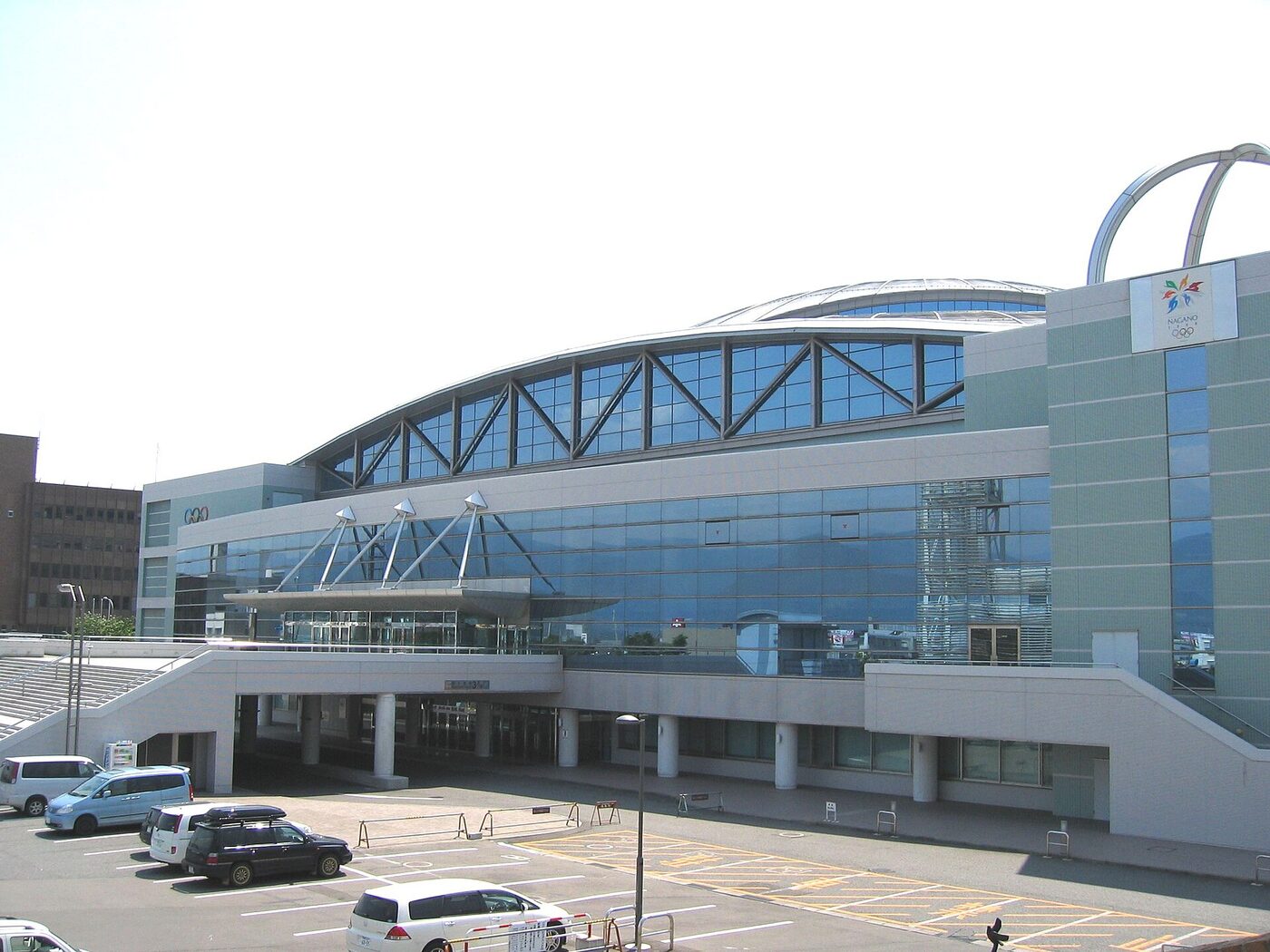
The Nagano tournament ran from 7 to 22 February 1998 at the Big Hat and the Aqua Wing Arena, with 426 competitors from fifteen nations. For the first time in its history the league stopped its regular season — seventeen days, from 8 to 24 February — so that its players could join their national teams. As a preview, the All-Star Game held at Vancouver on 18 January that year was reorganised into North America against the World. The Czech Republic won the men’s tournament, Russia took silver and Finland bronze. The women’s tournament, the first at any Olympics and limited to six teams by agreement with the organising committee, went to the United States ahead of Canada and Finland; among the Canadian squad was the goaltender who on 23 September 1992 had become the first woman to play in an NHL game, taking a period of a Tampa Bay exhibition.
.jpg)
For a readership that had spent two decades arguing about how the national teams would compare at full strength, the question had at last been put in the one setting where nobody could claim the answer was compromised. It was put again in 2002, 2006, 2010 and 2014; the league then skipped the 2018 and 2022 Games and returned in 2026. The Olympic side of the calendar in general is the subject of rec.sport.olympics.
The arguments the rulebook answered
Some of the group’s perennial subjects can be dated precisely, because the rulebook eventually answered them. This is the most useful thing about writing up a sports newsgroup: the arguments were interminable, but the legislation that ended them was not, and it has dates.
The officiating question came first. The league phased in a four-official system — two referees and two linesmen in place of one referee and two linesmen — over three seasons: twenty selected games per club in 1998–99, fifty per club in 1999–2000, and every game from 2000–01, with all playoff games under the new system from 1999 onwards.
Then the crease. The rule forbidding an attacking player’s skate in the goal crease was abolished for 1999–2000, in direct reaction to the goal that had decided the previous season’s Stanley Cup final in overtime and had been scored with a foot in it. The same season brought four skaters a side in regular-season overtime and a point in the standings for losing in overtime rather than none — both aimed at teams playing for the guaranteed single point of a tie. In that same season, no player in the league reached 100 points, the first time that had happened in a season not shortened by a labour dispute since 1967–68; the scoring leader finished on 96.
That statistic is the whole case for the prosecution in the group’s longest-running argument, about the low-scoring, obstruction-heavy style associated with the neutral-zone trap: four defenders stationed across the middle of the ice, one forechecker, and passing lanes closed until the puck carrier surrenders possession. Its critics said it made the sport unwatchable; its defenders said it was a legitimate answer to better players; an American television analyst said it should be banned outright.
The answer arrived with the 2005–06 season, in a package assembled during the lockout and tested the previous year in the American Hockey League. The two-line offside pass was abolished, so that the centre red line no longer stopped a long pass out of the defensive zone. Officials were instructed to call every obstruction penalty regardless of circumstance, hooking and holding included, because obstruction is what makes a trap work against faster players. Tied regular-season games were decided by a shootout. Goaltending equipment was reduced in size by eleven per cent. A trapezoidal area was marked behind each net, outside which a goaltender behind the goal line may not play the puck — a rule aimed at goaltenders good enough with the puck to defeat a dump-in, and universally named after the most conspicuous of them. The neutral zone was narrowed by four feet, and a team icing the puck was forbidden to change lines afterwards.
It is worth being clear about what that sequence shows. The group’s arguments about the trap, about goaltending equipment and about scoring were not resolved by anybody persuading anybody. They were resolved by legislation, which is the ordinary fate of a long argument about rules, and the newsgroup’s value is that it recorded the argument while the outcome was still open. The other perennials — whether fighting belongs in the game, above all — got no such adjudication, and were argued season after season to no conclusion at all.
The map the group was reading changed
Underneath all of this the league itself was moving, and for a group organised as one room the arithmetic mattered. Between 1992 and 2000 the National Hockey League grew from twenty-two clubs to thirty. The San Jose franchise had been approved on 9 May 1990 and began play in 1991–92, just before the run started; Tampa Bay and Ottawa joined in 1992–93, Anaheim and Florida in 1993–94, Nashville in 1998, Atlanta in 1999, and Minnesota and Columbus in 2000.
Five franchises moved in the same period or shortly after. The Minnesota North Stars went to Dallas in 1993, the Quebec Nordiques to Denver in 1995, the Winnipeg Jets to Phoenix in 1996, the Hartford Whalers to North Carolina in 1997, and — reversing the direction of travel — the Atlanta franchise to Winnipeg in 2011. Each addition brought a fan base, a set of local sources and a set of grievances to the same address; each departure subtracted a city that had readers in it, and left a per-club alt group with nothing to discuss.


The reasons given for the two Canadian departures were consistent: a small market, an arena built for an earlier era, and a payroll denominated in American dollars against a weakening Canadian one. The league set up a currency assistance plan for the remaining small-market Canadian clubs in 1996. That subject has a second life as a question about Canadian institutions and a larger neighbour’s market, and it is treated in that register at soc.culture.canada; here it is a fact about where the group’s readers lived.
Counting the game
Hockey is a harder sport to count than baseball, and everyone who has tried to count it knows why: possession changes constantly, the units on the ice change roughly every forty seconds, and almost nothing that happens is discrete enough to be a countable event. The consequence is a statistical culture built on a very small number of official measures and a very large amount of argument about what they mean — which is exactly the kind of subject an unmoderated newsgroup handles well.
The printed record was the anchor. The league’s Official Guide & Record Book was published annually from 1932 until the edition following the 2017–18 season, when the league stopped printing it and moved the material to a website. It was the book issued to reporters, broadcasters, scouts and general managers, and it was the object against which a claim in a newsgroup posting could be checked, if anyone in the thread owned a copy. Behind it stands a trophy older than the league: the Stanley Cup was commissioned in 1892 as the Dominion Hockey Challenge Cup, first awarded in 1893 to the Montreal Hockey Club, opened to professional challengers in 1906, and became the NHL’s own championship trophy in law only in 1947. A sport whose principal trophy predates its principal league by a quarter of a century generates a lot of arguments about what counts, and they surface in the group as origin questions and precedence questions.
The one league statistic that tries to measure a player’s effect rather than his production is plus–minus: every skater on the ice for an even-strength or short-handed goal is credited with a plus, every skater on the ice against one with a minus, with power-play and penalty-shot goals excluded. It was first used in the 1950s by the Montreal Canadiens as an internal measure of their own players and later adopted by the league. The date of that adoption is given two ways, and the difference is worth stating rather than smoothing over: the league began keeping the statistic in 1967–68, but has since compiled league leaders back to 1959–60, and reference works cite whichever of those they are counting from. The award history is unambiguous. A trophy for the season’s leader, restricted to players appearing in at least sixty games, was first given for 1982–83 as the Emery Edge Award, ran afterwards under a succession of sponsors’ names, and was discontinued after 2007–08.
Plus–minus is also the statistic everybody attacks, on the straightforward ground that it credits a player with his teammates’ work and his goaltender’s luck in equal measure. The response, when it came, came from outside the sport’s institutions. A coach later elected to the Hockey Hall of Fame is credited with keeping measures of his own invention as early as the late 1960s while coaching junior hockey; but the modern vocabulary was built by bloggers and amateur statisticians in the middle 2000s, and its naming conventions record that origin with some candour. The shot-attempt differential now called Corsi — shots on goal plus missed shots plus blocked shots, for and against, at even strength — was devised by a financial analyst writing under a pseudonym, who named it after a goaltending coach whose photograph he happened to find. Its variant excluding blocked shots is named after another blogger, who proposed it in a post in 2007. A third measure, the sum of a team’s shooting and save percentages and a rough proxy for luck, is called PDO, which is not an acronym at all but the online handle its proposer had used on forums and for playing a video game. The league itself adopted the family in the 2014–15 season, in partnership with a software company, publishing shot attempts as “SAT” and unblocked shot attempts as “USAT” on a new statistics site — the institutional endorsement arriving roughly a decade after the amateurs had done the work.
None of that vocabulary was coined in rec.sport.hockey; the dates put most of it after the group’s active life. What belongs to the group is the habit that made it possible — readers keeping standings by hand, correcting one another’s arithmetic in public, and treating a claim about the game as something with a checkable answer.
The historians, and a committee that said no
That habit had an organised counterpart away from the network, founded in the same year as the earliest surviving control message for the newsgroup. The Society for International Hockey Research was formed in 1991, when seventeen people attending a Canadian sports heritage meeting at Kingston, Ontario, met in a special session to found a body dedicated to establishing an accurate historical account of the game. Its founding president was Bill Fitsell, a retired journalist from the Kingston Whig-Standard, and its stated objective was “to encourage and cultivate the study of ice hockey as an important athletic and social institution in Canada and other countries in which it was played”. A twenty-five-article constitution was adopted at Montreal on 22 May 1993. The society had 29 members in its first year and 52 in its second — a roster that fitted on one page — and now has more than 550, in every Canadian province, in thirty-one American states and the District of Columbia, and in a dozen or more countries beyond North America. From 2003 it built a statistical database, available to members, running back to the 1886–87 season and covering professional, semi-professional and amateur leagues, men’s and women’s.
Its best-known piece of work shows the method, and it is the method a good newsgroup thread uses too. At its 2001 annual meeting the society struck a committee to examine the claim of Windsor, Nova Scotia, to be the birthplace of ice hockey. The report, released in May 2002, found that the town’s proponents had not offered credible evidence, and expressed no opinion on when or where the game did originate. What it offered instead was a floor:
It is the earliest eyewitness account known, at least to this SIHR committee, of a specific game of hockey in a specific place at a specific time, and with a recorded score, between two identified teams.
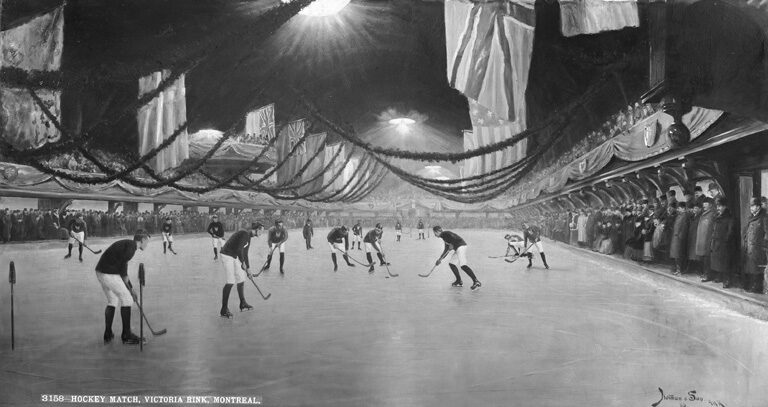
The game in question was played at the Victoria Skating Rink in Montreal on 3 March 1875. The committee did not say hockey was invented there; it said that this was the earliest instance anyone had been able to document to that standard, and invited a better one. Origin questions of exactly that shape recurred in the newsgroup — who was first, where, and on whose testimony — and they turn on the same test: establish what happened, then establish who says so.
.jpg)
Why the database question stays open
The volunteer compilation that fed the free hockey databases of the early web is noted above this article, and the point of returning to it here is not to repeat the claim but to say why it stops where it does. Through the 1990s volunteers transcribed material no league had put online: box scores, junior and minor-league rosters, pre-expansion season records, career totals for players whose careers ended before anyone thought to keep the file. That the people doing it overlapped heavily with the people reading hockey newsgroups is safe to say.
What cannot be said is which database began in which room, or which compiler was recruited from which thread. The Usenet archive of the period is incomplete for exactly the traffic that would answer the question — the routine, unglamorous postings in which somebody offers a file and somebody else volunteers to check it — and the projects themselves rarely documented their own recruitment. Attributing a named database to a named newsgroup would be a plausible sentence with nothing behind it, and this page therefore names none of them. It is a small case, but it is the standard case for early-web history: the surviving record is dense where the paperwork was formal and empty where the work was done.
Where the conversation went
Hockey left Usenet early and almost completely, and the schedule explains most of it. A club plays three or four times a week for six months, and the natural unit of conversation is one club’s night rather than the sport’s. In a single unmoderated room, thirty clubs’ game nights arrive interleaved and a reader who wants one must discard twenty-nine. Usenet’s own answer was the scatter of per-club groups in the alt hierarchy; the web’s answer was a message board per club, and a board per club does the filtering simply by existing. The web also took the material readers had once relayed by hand: club sites, local newspapers and eventually the league itself put line-ups, injury notes, transaction wires and live scoring straight on a page that refreshes on demand, which suits a conversation unfolding between periods better than a protocol that moves articles when servers next speak to one another. Social media took most of what the club boards had left.
The archive side of the story has its own dates. Deja News, which made Usenet searchable from a web browser, began in March 1995 in Austin, Texas; Google acquired the archive and Google Groups became operational on 12 February 2001, and by the end of that year the archive had been extended back to May 1981 with material donated from a Canadian university’s tape collection. For most of the following two decades that was how a hockey thread from 1994 got read at all. On 22 February 2024 Google Groups stopped supporting the posting or viewing of new Usenet content, leaving the existing archive in place — which is to say that the conversation’s most-used front door was closed while the room behind it stayed open.
What was left to the newsgroup after the club boards took the club business was the traffic that had never belonged to a single club in the first place: the international calendar, the arguments about the rules, and the comparisons across eras and continents for which no club board is the right room. Both groups remain in the master file today, unmoderated, carrying the descriptions they have had since the middle 1990s.
What the record does not show
A directory page is more useful if it is explicit about its holes, and this group has several.
- There is no creation record. No RFD, no Call for Votes, no Result and no tally survives for rec.sport.hockey, because the group predates the archives that would have kept them. Any date given for its creation elsewhere is not sourced from the administrative record, and this page gives none.
- There are no readership figures. Usenet had no subscriber count, the various traffic surveys of the period are not preserved in a form that can be quoted for a single group across its life, and no number of readers, postings or threads appears anywhere on this page.
- There is no membership. The only individuals identifiable in the surviving Usenet paperwork are the proposers of the reorganisations and the administrators who issued control messages, and they are described here by their institutions rather than named. No thread title, no posting, no quotation from a posting and no score attributed to a poster appears here, because none could be verified.
- The date on which the group’s description acquired the word ice is not recoverable to better than a year or two. The 1993 and 1994 checkgroups archives contain both readings, circulating simultaneously from different sites; the counts given above are counts of surviving archived messages, not of installed servers, and they establish the direction of the change rather than its date.
- The volunteer statistical projects of the 1990s cannot be traced to particular rooms, for the reasons set out above.
Scope and limits
This page is about a newsgroup and the world it reported on. The verified administrative facts come from the Internet Systems Consortium’s mirrors of the Usenet control-message archive, the news.announce.newgroups archive and the master newsgroups and active files; every quotation from a control message, a charter, an RFD or a master-file line is transcribed from those sources. The sporting and institutional history — tournaments, rule changes, labour disputes, expansions and relocations, statistical practice — is verified against standard reference works and is included because it is what the group’s readers were discussing, not as a substitute for the group’s own story.
Boundaries with neighbouring pages in this directory are deliberate. The field game — its history, governing bodies, tournaments and its own readership — belongs to rec.sport.hockey.field; this page covers only the naming question, because that is a fact about this group’s address. The general politics of names in the sports branch, the mechanics of how a posting reached a reader before the web, and the pattern of splits and floods across rec.sport.* belong to the rec.sport hub. The Olympic Games as a subject belong to rec.sport.olympics. Hockey as a Canadian cultural subject belongs to soc.culture.canada. The rec.* branch as a whole is described at rec.
Nothing here is intended as a verdict on any of the arguments the group conducted. Where a dispute is described — about fighting, about styles of play, about whether a world championship without its strongest players means anything — the description is of what was argued and when, and of what the rulebook or the calendar subsequently did about it. The group reached no conclusions, and neither does this page.
Reading rec.sport.hockey today
- Historical archive: Google Groups — rec.sport.hockey (coverage varies by group and era).
- Open in a newsreader:
news:rec.sport.hockey— the original site offered exactly this link, and it still works if your system has a newsreader registered for thenews:scheme. - Live access: point an NNTP newsreader at a modern server — see accessing Usenet today.
- The original news2mail e-mail subscription service ended in the mid-2000s and no longer operates.