sci.agriculture
Agricultural science and practice.
Farming as science on Usenet: agronomy, livestock, extension-service knowledge and practical questions from smallholders, answered by researchers and working farmers alike.
The branch’s poultry group (below) outdrew the parent — a pattern Usenet repeated everywhere: the specific beats the general.
On this page
- The group's own paperwork
- The electoral roll, read as a census
- A science group whose readers had mud on their boots
- The subtree, and how a working subject subdivides
- A forged rmgroup, and what a control message is worth
- The Green Revolution behind the conversation
- The criticisms, and who made them
- What the group carried
- Precision agriculture and the satellites
- The biotechnology question
- Animal disease and the subsidy argument
- Where it went
- What the record does not show
- Scope and limits
The group's own paperwork
Most of the groups in this directory left almost nothing behind but a name in a control file. sci.agriculture is an exception. The Internet Systems Consortium’s mirror of news.announce.newgroups holds the whole sequence for it — proposal, two calls for votes, result, and the control message that brought the group into being — and the dates and figures in that file are exact rather than remembered.
The Request for Discussion went out on 26 October 1993. Its author was David Bromage, then in the Department of Chemistry at Monash University in Clayton, Victoria, and it asked for a single unmoderated group whose “main aim … is to provide a forum for the discussion of agricultural matters and related fields”. Where he cross-posted it is as informative as what it said. Besides the two procedural groups, news.announce.newgroups and news.groups, the RFD went to sci.environment, talk.environment, sci.misc, bionet.general, bionet.agroforestry and alt.sustainable.agriculture: four hierarchies at once, canvassed because the proposed readership was already scattered across them. Bromage also asked readers to “mention it to colleagues and friends who might be interested and benefit from an agriculture group but do not normally read these newsgroups” — a proposal drafted on the assumption that the people it was for might not be on Usenet yet.
The first Call for Votes was issued on 24 November 1993 by L. Todd Masco on behalf of the Usenet Volunteer Votetakers, with ballots to be mailed to a single address by 23:59:59 UTC on 15 December; a second CFV followed on 7 December. One line in both is worth preserving, because it says something about the subject that no amount of general description would: once each CFV had appeared on the newsgroups, it was also to be mailed to [email protected], a sustainable-agriculture mailing list running out of Washington State University’s Tri-Cities campus. The electorate was recruited partly off Usenet, from people who read their agriculture by post.
The charter, printed identically in both calls for votes and again in the result, is short enough to give whole:
This newsgroup is intended for the discussion of any topics related to farming and agriculture.
Topics for discussion include, but are not limited to: Land management; Water management; Soils; Erosion (prevention of); Forestry; Hydroponics; Aeroponics; Aquaculture; Permaculture; Economic aspects; Advice and assistance including personal experience; Announcement of forthcoming courses and conferences; Discussion and criticism of literature.
It is a practitioner’s list rather than a discipline’s. Land, water, soil and erosion come first; forestry, hydroponics, aeroponics, aquaculture and permaculture are admitted as neighbours; and the last three items are frankly clerical — personal experience, course announcements, and arguing about the literature. Nothing in it mentions a laboratory.
The result was posted on 6 January 1994. The group passed 309 to 10, with three ballots marked ABSTAIN, clearing both bars the guidelines of the day set: at least a hundred more YES votes than NO votes, and at least two-thirds of the YES-and-NO votes in favour. After the mandatory five-day period for challenges, David C Lawrence — as moderator of news.announce.newgroups, and under the address [email protected] that appears on almost every Big-Eight control message of the period — issued the newgroup on 11 January 1994. The line he supplied for administrators to paste into their newsgroups files reads:
sci.agriculture Farming, agriculture and related topics.
A small textual fossil sits inside that. The calls for votes printed the description without a closing full stop; the control message added one; and the full-stopped version is what the ISC newsgroups file still carries today, more than thirty years later. The same control message was reissued on 19 August 1994, which was routine: a newgroup message is a request, not an instruction, and sites that had missed it in January could act on it in August. How that whole apparatus worked — the Request for Discussion, the neutral votetaker, the master files that record it — is described on the comp.* hub, and is not retold here.
The electoral roll, read as a census
Usenet vote results published the voters. Every ballot was listed by address and, where the mailer supplied one, by name, so that anybody could check the arithmetic. The by-product is a dated snapshot of who cared about a farming group on the Internet at the end of 1993, and for this group it is the single most useful document that survives.
Counting the domains in the published YES roll gives 130 addresses in .edu, 45 in .com, 16 in .gov, seven in .org and four in .net. The remaining 107 lines are almost all national: Australia 32, Canada 30, the United Kingdom nine, Germany seven, South Africa and New Zealand five each, Belgium three, Brazil, Sweden and the Netherlands two each, and one apiece from Poland, Switzerland, Japan, Austria, the Czech Republic, Italy, France and Finland — eighteen country codes in all. One line carries a name and an institution with no address at all, and one German address is so mangled by mail quoting that only the university in it can still be read, which is what 1993 mail looked like.
The character of the list matters more than the count. Agricultural faculties and research farms are thick on it — Waite and Roseworthy in South Australia, Massey and Lincoln in New Zealand, Guelph, Purdue, Cornell, North Carolina State, Wisconsin, Texas A&M — and so are the institutions that exist specifically to move findings off those farms: county extension offices in North Carolina and state extension services in Missouri and Maine, the United States Department of Agriculture’s research and extension services, a Dutch agricultural university, a French national agronomic research institute, a Swiss federal technical school, a Swedish agricultural university, a Scottish land-use research institute, and Brazil’s national agricultural research corporation. Alongside them, and voting in the same list, sit research addresses at chemical and seed companies. It is a roll on which a plant breeder, a county agent, a soil scientist and an agrochemical company’s biologist all cast one vote each.
That is the group in miniature, and it is the fact that distinguishes it from most of its hierarchy.
A science group whose readers had mud on their boots
Most of sci.* was organised around disciplines, and a discipline’s Usenet group tends to be a common room: the people in it share a training, a literature and a set of instruments, and the outsider who wanders in is visibly an outsider. Agriculture is not a discipline in that sense. It is an industry with a science attached, and the science exists to be handed over. The consequence for a newsgroup is that the room contained researchers and non-researchers on more or less equal terms, and that the non-researchers frequently held the information that settled the question.
This was not a habit the group had to invent, because an entire institutional apparatus for handing research over had been built, in law, over the previous century and a quarter, and much of the readership had been trained inside it. The United States built it in three statutes. The Morrill Land-Grant Act of 1862 endowed colleges of agriculture and the mechanic arts with grants of federal land. The Hatch Act of 1887 gave those colleges federal money — fifteen thousand dollars each to begin with — to run agricultural experiment stations attached to them. And the Smith–Lever Act, signed by President Woodrow Wilson on 8 May 1914, created a cooperative extension service to carry what the stations found to the people who would use it.
The Act formalised something already running. States had been holding farmers’ institutes — travelling short courses, sometimes called movable schools — since the 1860s, and twenty-six of them had institutes by 1890. In 1903 the USDA established the Office of Farmers’ Cooperative Demonstration Work under Seaman A. Knapp, and the county agent system originated inside it: agents who worked directly with farmers, demonstrating a method on the farmer’s own ground rather than describing it in a bulletin. President Theodore Roosevelt’s Country Life Commission of 1908 gave the whole business a policy rationale. By the time the newsgroup existed, the same system also ran 4-H, whose first club is generally dated to A. B. Graham’s corn-and-tomato club in Clark County, Ohio, in 1902.
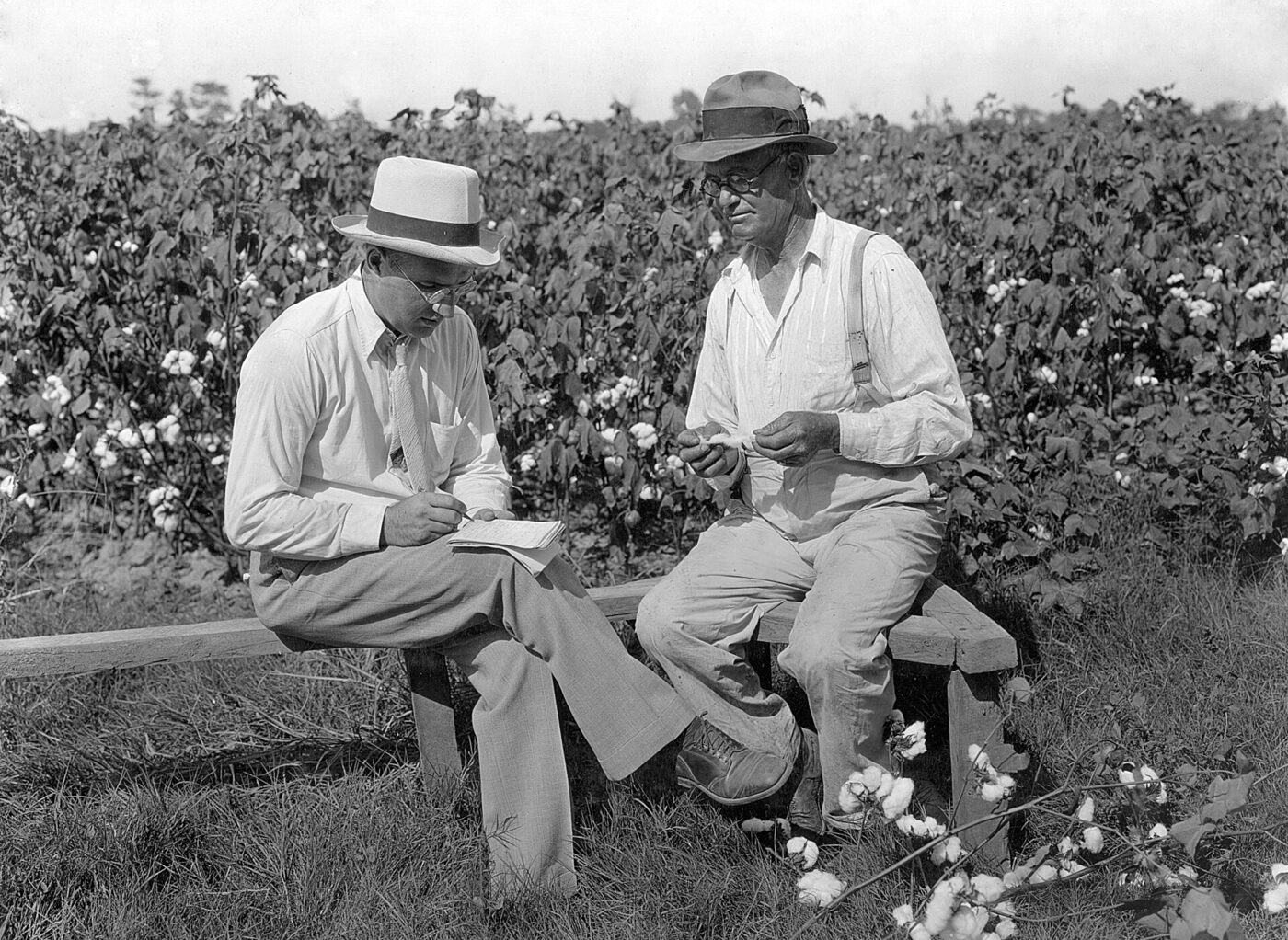

Britain built the same thing later and unbuilt it faster. The National Agricultural Advisory Service was established in 1946 as the advisory and research arm of the Ministry of Agriculture, Fisheries and Food, with plant pathologists, entomologists and soil advisers distributed around the country in a period when wartime rationing had not yet ended. It was rebranded as the Agricultural Development Advisory Service — ADAS — in 1971, made an executive agency of the Ministry in 1992, and privatised in 1997. That last sequence ran through exactly the years these groups were busiest, and it turned the ministry’s own advisory arm into a commercial consultancy over the space of five years.
Readers formed by any of these arrangements arrived with a shared and slightly deflationary assumption: that a result is of no use until somebody outside the station can repeat it on ground the station does not control. On Usenet, that assumption cashed out as a particular kind of authority. A farmer with thirty seasons on one soil series held information that no visiting researcher had and no journal contained, and standing in a thread came, more often than not, from being able to say precisely what had happened on a particular field, in a particular year, under a particular sky. The literature was still cited — frequently, and sometimes furiously — but it was cited as evidence in an argument whose referee was the field.
The pattern was not confined to the parent group. When Patricia Atkins proposed sci.agriculture.aquaculture in 1998, she wrote the constituency into the rationale without embarrassment: the group, she said, was “needed by farmers, hatcheries, feed mills, processors etc, which have a hands on daily operation of actually producing aquatic life”. That is a job description, not a research programme.
The subtree, and how a working subject subdivides
Four children were eventually created below sci.agriculture, and the pattern of which proposals passed and which failed is a small case study in how a namespace responds to a subject that is practised rather than studied.
The first arrived almost immediately. Adam Finkelstein, then at the University of Virginia, posted an RFD for sci.agriculture.beekeeping on 12 February 1994, five weeks after the parent group was created; the result was posted on 8 April 1994, 271 to 27, and the control message went out on 14 April. Its charter is unusually candid about who it expected:
Sci.agriculture.beekeeping will provide beekeepers, bee scientists, farmers, and the general public one place for apicultural information. A FAQ is needed for bee-culture and beekeeping from African bees, to bee venom therapy. The curious are invited to discuss bee lore or ask questions, and the experienced beekeepers will be able to advise and help with the anecdotal information so necessary to beekeeping.
“The anecdotal information so necessary to beekeeping” is a phrase no group in sci.physics.* could have written down without irony, and it is meant here perfectly straight.
The next attempt was ambitious and failed completely. In August 1995 a reorganisation was put to a vote: rename sci.agriculture to sci.agriculture.misc as a catch-all, and create sci.agriculture.livestock.misc (“For any animal considered livestock”) and sci.agriculture.livestock.birds.misc (“Domesticated and farmyard birds only”), with a companion proposal for sci.agriculture.livestock.birds.ratites running in parallel. The results, posted on 19 September 1995, were: sci.agriculture.misc 63:32, livestock.misc 71:20, livestock.birds.misc 64:24, and the ratites group 84:20. Three of the four had their two-thirds majority. None of the four had a hundred more YES votes than NO votes. The ratites result was even reposted to three specialist mailing lists — one for domesticated birds in Poland, one for emu and ratite keepers, and one on Prince Edward Island — and the group still finished with a margin of 64 where a hundred was required. The whole reorganisation died on that rule, which is exactly what the rule was for: it existed to stop small enthusiastic electorates from carving up a namespace. The effect here was to leave the parent group undivided and its name unchanged.
The same subject came back six months later, and the second attempt was visibly better prepared. Dennis Hawkins opened it on 20 January 1996 with a request for a moderated sci.agriculture.poultry; a second RFD two weeks later dropped the moderation, added sci.agriculture.ratites alongside it, and carried five named proponents where the first had carried one. With flatter names and a wider canvass, both passed handsomely. The vote on sci.agriculture.poultry and sci.agriculture.ratites closed on 22 March 1996 with 391 valid ballots: poultry 363 to 19, ratites 327 to 26. The close was three days after the six-month bar on re-voting a failed proposal expired, and both control messages were issued on 28 March 1996. The comparison is instructive. sci.agriculture.livestock.birds.ratites had drawn 84 votes in favour; sci.agriculture.ratites, the same subject two levels shallower, drew 327. Some of that is the wider canvassing behind the second proposal; but the shape of the name plainly did not help the first attempt.
The last successful child was sci.agriculture.fruit, proposed by Joel Clark on 3 May 1996 and passed 125 to 16 on 4 August, with the control message following on 12 August 1996. Its rationale is the most Usenet-specific document in the whole subtree, and it is about spam rather than about fruit. A group on the subject already existed as alt.agriculture.fruit; the proposal complained that as much as half its traffic was off-topic, and argued that moving the subject into sci.* would reduce it. The Big-Eight namespace was being used, quite explicitly, as a quieter room.
After that the subdivision stopped. The aquaculture proposal of 1998 failed on 19 August, 74 to 13 — another two-thirds majority defeated by the hundred-vote margin, three years after the same rule had killed the 1995 reorganisation. Aquaculture had been in the parent charter’s topic list since 1993 and stayed there.
What remains in the ISC files today is a subtree of exactly five groups: the parent, plus beekeeping, fruit, poultry and ratites — the last of them still described in the newsgroups file as Ostrich, emu, rhea, or cassowary ranching. sci.agriculture.poultry has its own page in this directory and its own history to tell, and nothing about the poultry industry is told here. The usual Usenet pattern applied to all of them: a group with one defined subject could carry a large share of the traffic of the general room above it. The archive gives one checkable measure of that. Two 1996 proposals were cross-posted to the parent and to the beekeeping group together, and the Xref line on each records the article numbers one and the same server had by then assigned in both: 10,015 in sci.agriculture against 4,072 in sci.agriculture.beekeeping on 22 March, and 11,177 against 4,472 on 3 May. Those are a single server’s running counts rather than readership or a network total, and they include cross-posts; but on that measure a group about bees had accumulated something like two-fifths of the whole of agriculture within two years of its creation.
One more line in the ISC newsgroups file deserves quoting, because it is the entire relationship between two hierarchies compressed into three words. The description for the alt.* group covering the same ground reads: alt.agriculture.misc Use sci.agriculture instead.
A forged rmgroup, and what a control message is worth
The control file for sci.agriculture contains three messages, not two. After the newgroup of January 1994 and its reissue in August, there is an rmgroup dated 3 November 2001, whose entire body reads: “please remove the bogus newsgroup sci.agriculture”.
It was not honoured, and the group is still in the ISC active and newsgroups files today. Several things about the message mark it as unauthorised rather than official. Genuine Big-Eight control messages of that period were issued from the hierarchy’s own newgroups-request address and carried a PGP signature in their headers — the 1996 newgroup for sci.agriculture.fruit, a few files away in the same archive, carries both. This message carries neither. It was posted through a consumer news provider in Quebec rather than issued by the hierarchy’s maintainer; its Newsgroups header lists three groups in sci.* for which the control archive holds no record at all; and it attributes itself to a person with no role in Big-Eight group maintenance at all. Forged rmgroups were a recognised nuisance of the late 1990s and early 2000s, and the standard defence against them was the same one that made the whole system work in the first place.
That defence is worth stating plainly, because it is the mechanical fact behind everything above. A newgroup message did not create a group and an rmgroup message did not destroy one. Both were requests, evaluated by every news administrator on the network independently, and honoured or discarded according to that administrator’s configuration. A Big-Eight vote was evidence offered to those administrators that enough people wanted the group to justify the disk and the bandwidth; it was never a command. sci.agriculture survived November 2001 for the same reason it existed at all — because the people who ran the servers had decided, one machine at a time, that it should.
The Green Revolution behind the conversation
Any argument about yield conducted in the 1990s was conducted downstream of the Green Revolution, and most of the group’s regulars had either worked inside it, been taught by somebody who had, or farmed on its terms. The chronology is worth setting out as a dated record rather than a legend, because both the achievements and the objections are documented, and both were available to anybody arguing about seed choice or input costs in 1996.
The Mexican programme came first. The Cooperative Wheat Research and Production Program was a joint venture of the Rockefeller Foundation and the Mexican Ministry of Agriculture; George Harrar assembled its wheat team in late 1944, and Norman Borlaug, having turned down a doubled salary at DuPont, flew to Mexico City in July 1944 to work on it as a geneticist and plant pathologist. He stayed sixteen years and bred a series of high-yield, disease-resistant, semi-dwarf wheats — Pitic 62 and Penjamo 62 among the first, then Lerma Rojo 64, Siete Cerros, Sonora 64 and Super X, all released in 1964. By 1963 the semi-dwarf varieties accounted for 95 per cent of the Mexican wheat crop, and that year’s harvest was six times the size of the 1944 one. Mexico had been importing half its wheat in 1943; it was self-sufficient by 1956 and exporting half a million tons by 1964.
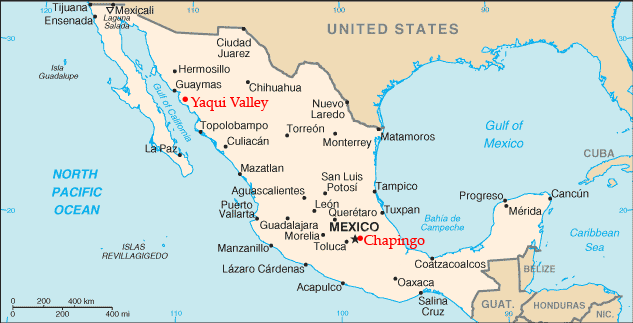

The transfer to South Asia is documented down to the tonnage. In 1965 Borlaug’s team shipped about 450 tons of Lerma Rojo and Sonora 64 seed — 250 tons to Pakistan, 200 to India — a consignment that was delayed in Mexican customs, rerouted by road to Los Angeles, held up again by the closure of a freeway during the Watts riots, and finally loaded onto a freighter that put to sea twelve hours before war broke out between the two countries it was bound for. The purchases that followed were much larger: India imported 18,000 tons in 1966, then the largest single seed purchase recorded anywhere; Pakistan 42,000 tons and Turkey 21,000 tons in 1967. Pakistan’s wheat harvest went from 4.6 million tons in 1965 to 7.3 million in 1970; India’s from 12.3 million to 20.1 million over the same five years, and India was self-sufficient in all cereals by 1974.
The rice half ran through the International Rice Research Institute, established at Los Baños in the Philippines in 1960 by the Philippine government with the Ford and Rockefeller Foundations. A cross between the varieties Dee-Geo-woo-gen and Peta was made there in 1962; in 1966 one of the resulting breeding lines was released as the cultivar IR8. In 1968 the agronomist S. K. De Datta published findings that IR8 yielded about five tons per hectare with no fertiliser at all and close to ten tons per hectare under optimal conditions. Annual rice production in the Philippines rose from 3.7 to 7.7 million tons over the following two decades.
The name arrived in 1968 as well. William S. Gaud, administrator of the United States Agency for International Development, used the phrase “Green Revolution” in a speech on 8 March 1968 to describe what was happening; the term stuck to the whole enterprise, retroactively and permanently. Borlaug was awarded the Nobel Peace Prize in 1970 and received it on 10 December. His Nobel lecture the following day was noticeably less triumphant than the citation: “The green revolution has won a temporary success in man’s war against hunger and deprivation; it has given man a breathing space.”
The institutional settlement followed the science. The Rockefeller Foundation proposed a worldwide network of agricultural research centres under a permanent secretariat in 1970; with the World Bank, the Food and Agriculture Organization and the United Nations Development Programme behind it, the Consultative Group on International Agricultural Research was established on 19 May 1971 to coordinate them. By 1983 thirteen centres sat under its umbrella, IRRI and the International Maize and Wheat Improvement Center among them. This is the structure that the researchers on the group’s voting roll worked inside, and the structure whose outputs the extension officers on the same roll were employed to explain.
The criticisms, and who made them
The objections are as much part of the inheritance as the yield figures, and they were made early, in print, by identifiable people. Reporting them is not the same as endorsing them, and the group settled none of them; neither does this page.
The most-cited critic writing in English is Vandana Shiva, whose book The Violence of the Green Revolution: Ecological Degradation and Political Conflict in Punjab appeared in 1989, followed by an article, “The Green Revolution in the Punjab”, in The Ecologist in March–April 1991. The argument advanced there and by others runs along several lines at once: that the new varieties returned their yields only with far greater quantities of fertiliser, irrigation water and pesticide than the landraces they displaced; that land degradation and nutrient depletion subsequently pushed cultivation into land that had not been farmed before; and that the political and ecological costs fell where the benefits did not.
A second line of objection is about credit rather than agronomy, and the Philippine case documents it. IR8 was promoted through the Masagana 99 programme, which came with a credit scheme attached; by 1980 the problems with that scheme had made the loans accessible mainly to wealthier landowners while leaving poorer farmers in debt. A third concerns diversity: sowing a small number of related varieties across very large areas reduces the crop and varietal diversity that the displaced landraces represented, and the loss is not easily reversed.
Against this stands a body of argument in the other direction, also on the record. Borlaug himself put the counterfactual in terms of land rather than food, telling an audience in Oslo in 2000 that had the global cereal yields of 1950 still prevailed in 1999, roughly 1.8 billion additional hectares of comparable land would have been required to match the harvest actually taken from 600 million. Estimates of lives saved by his work, generally traced to a 1997 magazine article and repeated widely since, run to a billion or more; those who cite the figure and those who dispute its derivation have both been doing so for decades. Malthusian predictions of the period fared poorly: Paul Ehrlich’s The Population Bomb of 1968 held that India could not possibly feed two hundred million more people by 1980, and a study published in 2021 found, contrary to Malthusian expectation, that the Green Revolution was associated with reduced rather than increased population growth.
All of that was in the water when somebody asked the group whether a landrace was worth keeping, whether an input regime paid for itself, or whether a trial-plot yield meant anything on a smallholding. The arguments arrived with thirty years behind them; they did not start on Usenet and they did not finish there.
What the group carried
No thread-level history of sci.agriculture survives in any form that can be summarised honestly, and none is attempted here. What can be described are the classes of subject the charter admitted and that the group evidently ran on, and the shapes of exchange those subjects produce.
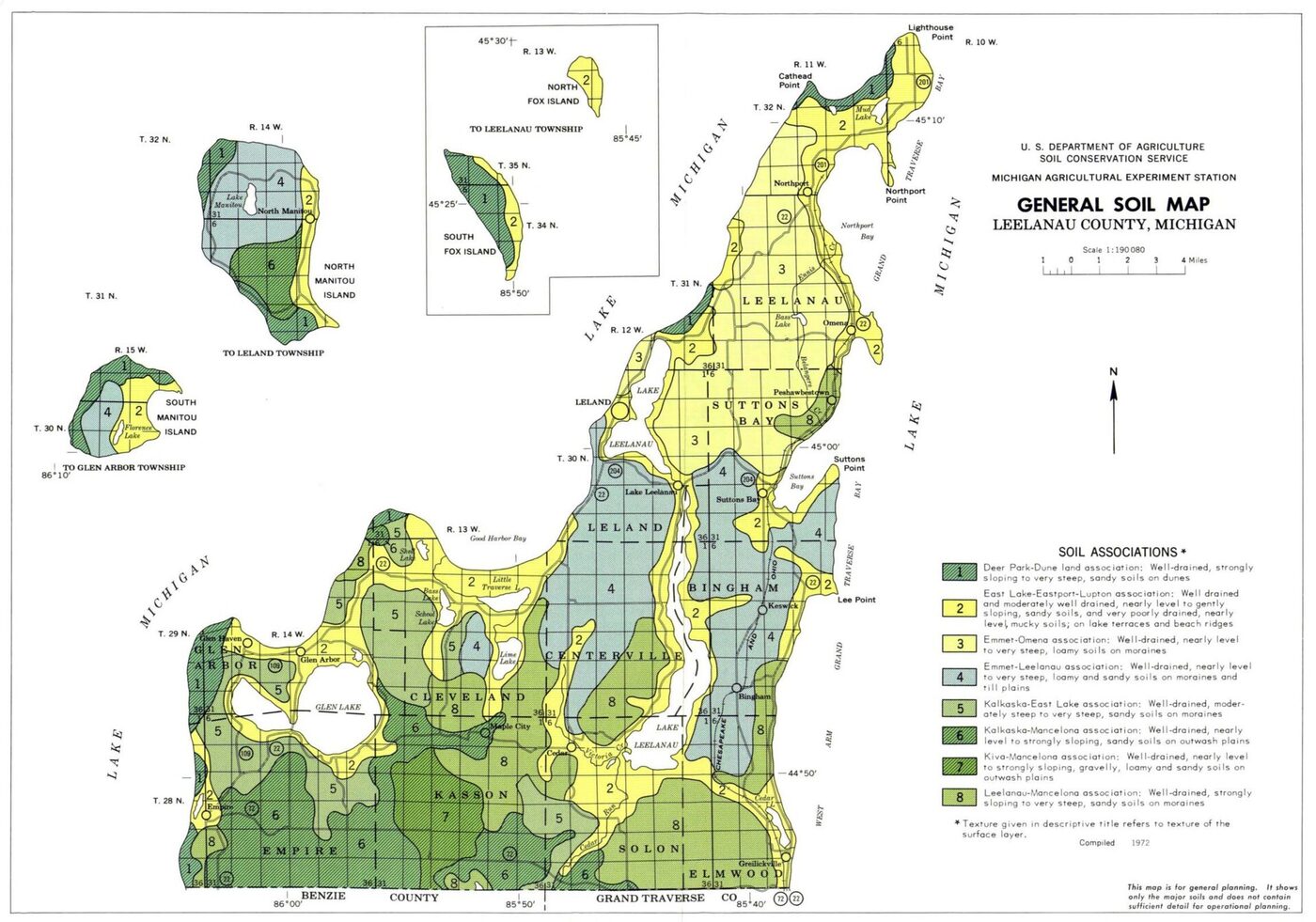
Soils came first in the charter and first in practice: structure, texture and drainage class; organic matter; pH and liming; soil testing and, more often, the reading of the results, which is the harder half. The published county soil survey, the laboratory report and the farmer’s own knowledge of where the field goes wet are three different kinds of evidence about the same twenty hectares, and reconciling them is a characteristic problem of the subject.

Crop protection came with a vocabulary already standardised by the literature. Integrated pest management had a foundational text: “The Integrated Control Concept”, published in Hilgardia in October 1959 by Vernon M. Stern, Ray F. Smith, Robert van den Bosch and Kenneth S. Hagen, which set out the economic injury level — the pest population at which damage exceeds the cost of treating it — and the economic threshold at which action must be taken to stop the population reaching it. Those two ideas turned spraying from a calendar operation into an arithmetic one. IPM became United States national policy in February 1972 by presidential direction; the Huffaker Project of the same year put nearly 300 scientists to work on pest management programmes for six major crops, and in 1979 an interagency coordinating committee was established to push implementation. By the 1990s a group discussing thresholds, scouting and resistance management was using terms with thirty years of formal definition behind them and thirty years of field argument about whether the definitions held.
Beyond those: rotation, cover cropping and the long argument between conventional tillage, reduced tillage and no-till, which is simultaneously an argument about erosion, about soil organic matter, about herbicide use and about the cost of a machine. Irrigation scheduling, water rights and field drainage. Livestock husbandry, feeding and herd health. Machinery, from hydraulics and implement geometry to the more practical question of what can be kept running on a holding without a dealer’s workshop. And farm economics throughout — margins, land prices, contracts, and the arithmetic that decides whether a technically sound practice is affordable this year, which is a different question from whether it works.
Underneath all of it ran the group’s characteristic question, the one implied by its readership: the distance between what works on a trial plot and what works on a farm. The recurring shapes of exchange followed from it. Diagnosis threads, in which a symptom was described — a pattern of yellowing, a stand failure, an animal off its feed — and a shortlist of candidate causes came back, usually with a request for the information the description had omitted. Requests for the actual paper behind a claim, which in a subject with a large extension literature and a large trade literature is a substantive move rather than a rhetorical one. And regional-variation threads, in which the same practice was reported thriving in one climate and failing in another, and the interesting work was establishing which difference mattered. The seasons showed through in what was asked and when; a subject with a calendar has a newsgroup with a calendar.
Precision agriculture and the satellites
Of everything the group carried, precision agriculture is the material that sits closest to Usenet’s own concerns, because it turned a farm into a data-collection problem within the group’s own lifetime, and because the people arguing about it on the network were arguing while the equipment was still new.
The concept emerged in the United States in the early 1980s. In 1985 researchers at the University of Minnesota varied lime inputs across crop fields, and grid sampling appeared at about the same time — a fixed grid, typically one sample per hectare, replacing the single composite sample that had stood for a whole field. By the end of the 1980s those grids were being used to derive the first input recommendation maps for fertiliser and pH correction. The precursor countries were the United States, Canada and Australia; in Europe the United Kingdom went first, with France following in 1997–98; in Latin America, Argentina from the middle 1990s with the support of its national agricultural technology institute, and Brazil through its state agricultural research corporation.
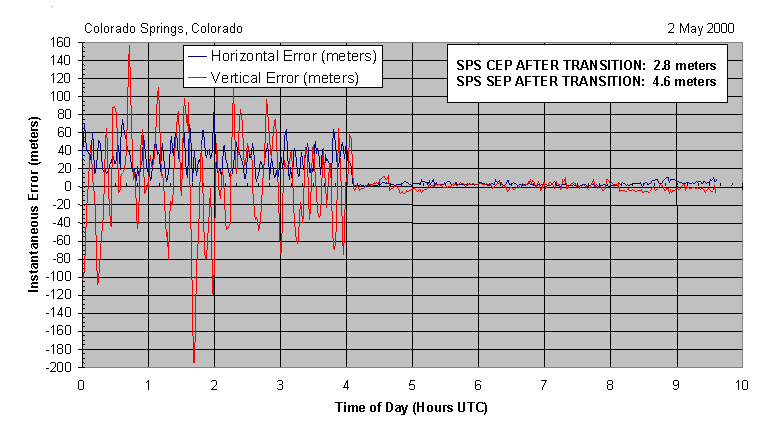
All of it depended on knowing exactly where in a field a machine was standing, and for most of the group’s life satellite navigation would not say. The civil GPS signal carried Selective Availability, a deliberate, time-varying degradation that added errors of up to about 100 metres — typically some 50 metres horizontally and about 100 metres vertically. The degradation was recoverable, but only in part and only with extra equipment: differential corrections broadcast from fixed reference stations whose own positions were known. The United States Coast Guard ran the best-known of these networks, on longwave frequencies between 285 and 325 kHz near major waterways and harbours; production-quality signals began on a limited basis in 1996 and the network was expanded to cover most American ports and, in partnership with the Canadian Coast Guard, the Saint Lawrence Seaway. Britain and Ireland built their equivalent in 1998, twelve transmitters around the coastline run by the two countries’ General Lighthouse Authorities, partly to fill the gap left by the closure of the Decca Navigator System in 2000. These were maritime aids that agriculture borrowed.
Then it stopped. A United States executive order of 1996 had required Selective Availability to be set to zero by 2006; in the event President Bill Clinton announced the decision on 1 May 2000 and the degradation was switched off at midnight, on 2 May. Ordinary horizontal accuracy improved several-fold at a stroke; a receiver under a clear sky now averages about five metres. The same event, seen from the navigation and earth-science side, is described on the sci.geo.* page.

What that made ordinary was yield mapping and variable-rate application. A sensor on the combine logs a yield figure against a position several times a second; a season of those logs becomes a map of how much a field varies within its own boundaries, which is generally more than its owner expected; and seed, fertiliser or lime rates are then set against the map rather than averaged across the whole. Guidance and automatic steering ran off the same signal and arrived alongside it, with the immediate and unglamorous benefit of eliminating overlap on every pass.
The questions this raised were exactly the kind the group was built to test, and they were being asked before the answers existed. Whether the variation a map showed was real and stable between seasons, or partly an artefact of a sensor calibrated on a moving machine in dust. Whether a management zone drawn from three seasons of maps would still be the right zone in the fourth. Whether the capital cost was recoverable on a given size of holding, at a given commodity price, on land whose variation might be small. And, increasingly towards the end of the group’s active life, who owned the resulting data. None of those had settled answers in 1999, and the group was a place where people with the equipment and people with the statistics could disagree about them in public.
The biotechnology question
Agricultural biotechnology is contested, and it was contested on this group. What follows is a chronology of instruments, approvals and stated positions, attributed to the bodies that issued them. It reaches no conclusion, because the page has none to reach.
The technical sequence predates the newsgroup by a decade. The first genetically engineered crop plant, a tobacco carrying an antibiotic-resistance marker, was reported in 1983. The first field trials of engineered plants took place in France and the United States in 1986, using herbicide-resistant tobacco. In 1987 Plant Genetic Systems, founded by Marc Van Montagu and Jeff Schell, engineered insect resistance into tobacco by incorporating insecticidal-protein genes from Bacillus thuringiensis. The People’s Republic of China was the first country to commercialise a transgenic plant, a virus-resistant tobacco, in 1992.
Approvals for food crops began in 1994. Calgene obtained approval to release the Flavr Savr delayed-ripening tomato, which went on sale that year and was withdrawn from production in 1997. Also in 1994, the European Union approved a tobacco engineered for tolerance of the herbicide bromoxynil — the first genetically engineered crop commercialised in Europe, a fact that sits awkwardly against later summaries of European policy. In 1995 the United States Environmental Protection Agency approved a Bt potato, the first pesticide-producing crop approved there, and a cluster of other crops took marketing approval in the United States the same year: glyphosate-tolerant soybeans, Bt maize and Bt cotton, cotton tolerant of the herbicide bromoxynil, canola with a modified oil composition, virus-resistant squash and a second delayed-ripening tomato. By 1996 a total of 35 approvals had been granted for commercial growing of eight transgenic crops and one flower crop, carrying eight different traits, in six countries plus the European Union. Planted area went from 1.7 million hectares in 1996 to 185.1 million in 2016, about 12 per cent of global cropland; herbicide tolerance and insect resistance, singly or stacked, account for almost all of it.
The regulatory divergence is the part that mattered to farmers, and it is a matter of named instruments. The United States and Canada take substantial equivalence as the starting point for a safety assessment and treat labelling as voluntary. The European Union authorises cultivation case by case. A Bt maize event, MON810, was approved for commercial cultivation in Europe in 1998, and remained the only crop authorised there for cultivation until the Amflora potato was approved for industrial use in 2010, because the Union stopped approving new GMOs altogether almost at once. That de facto moratorium is dated by some accounts from 1998 and by others from 1999; it held while replacement legislation was written, and was lifted on 19 May 2004. The European Food Safety Authority was created in 2002. The laws passed in 2003 required that any food or feed containing more than 0.9 per cent of approved genetically modified material be labelled as such, and gave individual member states a safeguard clause under which an authorised variety could still be banned nationally on stated evidence of harm; by April 2011 twenty-two such bans were active across six member states. In 2006 a World Trade Organization panel, ruling on complaints brought against the European Communities over the approval and marketing of biotech products, concluded that the moratorium had violated international trade rules.
Positions taken by professional bodies during the group’s active years are also on the record and are best quoted rather than characterised. The Royal Society’s 2002 review concluded that the risks to human health from the use of specific viral DNA sequences in genetically modified plants were negligible, while calling for caution over the introduction of potential allergens. The British Medical Association’s second interim statement of March 2004 held that “the potential for GM foods to cause harmful health effects is very small” and that many of the concerns raised applied with equal force to conventionally derived foods, while adding that safety concerns could not yet be dismissed completely and that it was prudent to err on the side of caution. Both statements are more carefully hedged than either side’s summary of them.
Organic production changed legal status over the same years, which is why the two subjects were frequently argued in the same threads. The European Community’s organic regulation of 1991 set standards across twelve countries; the United Kingdom added a national programme in 1993 and Japan one in 2001. In the United States the Organic Foods Production Act of 1990 required the Department of Agriculture to develop national standards and a national list of permitted and prohibited substances; the final rule establishing the National Organic Program was published in the Federal Register on 21 December 2000 and took effect on 20 February 2001, with a further implementation period before every covered operation had to comply; the programme was in operation in 2002. The effect was to convert “organic” from a claim into a certified standard with an inspection regime behind it, administered through private and state certifiers — a change that organic growers themselves argued over at least as vigorously as anybody else did, since certification imposes costs and definitions on the people it also protects.
Animal disease and the subsidy argument
Two epidemics and two subsidy settlements ran through the years in which such groups were busiest, and between them they account for a great deal of what a farming newsgroup in the English-speaking world had to absorb between 1994 and 2002.
Bovine spongiform encephalopathy had a longer sequence than its famous date suggests. The first confirmed instance of an animal falling ill with the disease occurred in the United Kingdom in 1986, and by November 1987 the Ministry of Agriculture accepted that it had a new disease on its hands. Confirmed cattle cases went on rising despite bans on feeding offal to cattle, and peaked at around 100,000 in 1992–93. The announcement everybody remembers came a decade into the epidemic: on 20 March 1996 the Secretary of State for Health, Stephen Dorrell, told the House of Commons that variant Creutzfeldt–Jakob disease was linked to eating BSE-infected meat. A week later, on 27 March 1996, the European Union imposed a worldwide ban on exports of British beef; it lasted ten years and was lifted on 1 May 2006. A total of 4.4 million cattle were slaughtered over the course of the outbreak, and more than 184,000 animals were diagnosed between 1986 and 2015. The public inquiry chaired by Lord Phillips reported in October 2000.
The foot-and-mouth outbreak of 2001 was a different kind of event: fast, visible and over within a year. The first case was detected at the Cheale Meats abattoir at Little Warley in Essex on 19 February 2001, in pigs from Buckinghamshire and the Isle of Wight; on 23 February a case was confirmed at Heddon-on-the-Wall in Northumberland, and Burnside Farm there — where improperly heat-treated swill had been fed to pigs — was later established as the source. Some 2,000 cases followed across the British countryside, Cumbria worst of all with 893. Over six million cattle and sheep were slaughtered. Public rights of way were closed by order, which damaged rural tourism at least as heavily as it damaged farming: the Cheltenham Festival was cancelled, Crufts was postponed from March to May, and the general election, together with the local elections it had been due to share a day with, was put back by a month, to 7 June. The last case was reported at Whygill Head Farm near Appleby in Cumbria on 30 September; the last cull took place on 1 January 2002; the United Kingdom declared itself free of the disease on 14 January 2002, eleven months after the first case. The episode was later estimated to have cost around £8 billion.
Subsidy was argued in parallel on both sides of the Atlantic, and here too the instruments have names and dates. In the European Union, the MacSharry reforms of 1992 reduced support levels by 29 per cent for cereals and 16 per cent for beef, introduced set-aside payments to withdraw land from production, and began the decoupling of income support from production support — partly under pressure from the Uruguay Round negotiations then under way. The Agenda 2000 package of 1999 divided the Common Agricultural Policy into two pillars, production support and rural development. In the United States, the Federal Agriculture Improvement and Reform Act — the FAIR Act, or Freedom to Farm — was signed on 4 April 1996 and removed the link between income support payments and farm prices, authorising seven-year production flexibility contract payments fixed independently of prices and production, and greatly widening planting flexibility. The Farm Security and Rural Investment Act signed on 13 May 2002 established the Direct and Counter-cyclical Program for the 2002 through 2007 crop years, reintroducing a payment that moved with prices alongside the fixed one.
What was argued about all of this is on the record in outline and lost in detail. None of it was settled in the group, and none of it is settled here.
Where it went
The decline of sci.agriculture looks like substitution rather than collapse, and the substitutes are identifiable.
The extension services went online themselves, and they went online early, because publishing bulletins to a dispersed audience is precisely what they had been built to do and the web did it better than the post. A pest alert that is current, searchable and dated is worth more than the same alert as a thread reply, and it does not need a moderator. Soil-test interpretation guides, variety trial results, spray thresholds and enterprise budgets moved onto university and ministry servers over the second half of the 1990s, and the county agent acquired a mailbox and then a website.
Commodity-specific forums and mailing lists took much of the practical traffic, on the sound principle that a dairy farmer’s questions are best put to dairy farmers. This was the same logic that had produced the subtree in the first place, applied off Usenet, and it worked harder as the audience grew. The agricultural press, which had been carrying exactly this conversation in its correspondence columns for two centuries, moved its own operation onto the web alongside them.
What was lost in the move is the thing the group had that none of the successors reproduced: researchers and practitioners in the same thread, in public, in writing, arguing in front of each other. An extension bulletin is authoritative and one-directional. A commodity forum is peer to peer. sci.agriculture, for a few years, was both at once, and the record of that is its value.
The groups themselves have not been removed. All five still appear in the ISC active and newsgroups files, still carried by text news servers, and a reader with an NNTP client can still post to a group created by a 309-to-10 majority in January 1994.
What the record does not show
The paperwork above is unusually complete, and it is worth being explicit about how narrow a slice of the group’s life it covers.
- No readership figures survive. No count of subscribers to sci.agriculture has been located in any form that can be cited, and any number offered for how many people read it should be treated as an invention.
- No thread-level history survives in usable form. Article numbers can be read off the headers of archived postings, but they are one server’s running counts, they include cross-posts, and they cannot be apportioned by period. They are a rough guide to relative size and nothing better.
- No moderator, and therefore no moderator’s record. The parent group was unmoderated from the first line of the RFD onwards, so there is no submission archive, no editorial correspondence and no vacancy notice — the documents that, for moderated groups, often preserve more of the daily texture than the vote does.
- No FAQ has been located for the parent group. The beekeeping charter states that a FAQ is needed and the fruit proposal hopes that one will be developed, which is evidence of intention rather than of existence.
- The vote roll is a census of an electorate, not of a readership. It records who cared enough to mail a ballot in the last six weeks of 1993. Who actually posted over the following decade, and in what proportions, is not recoverable from it.
The honest summary is that we know precisely how this group was made, what it was licensed to discuss, which of its proposed children lived and which died and by what margins, and what world it was discussing. We do not know what any particular thread said.
Scope and limits
This page describes a newsgroup and the documented world it discussed. It quotes the charter, the newsgroups-file line and the vote results from the Internet Systems Consortium’s mirror of the Usenet administrative record, and every date, tally and institutional fact in the historical sections is drawn from published sources and attributed where the claim is contested. It invents no thread titles, no posters, no quotations from the group and no message counts.
Agricultural biotechnology, pesticide regulation, the Green Revolution and farm subsidy are live disputes with committed advocates on several sides. The register here is deliberately flat: what was approved, by which body, on what date; what was found, by which panel; what was argued, by whom, in which publication. Where a figure is disputed, the dispute is reported rather than resolved. Nothing on this page is advice, and nothing on it is a verdict.
The hierarchy this group belonged to — its origins, its naming conventions, its moderated research groups and its long-running quarrels with cranks and with the literature — is covered on the sci.* page, and the group-creation machinery on the comp.* page. The poultry branch has its own page and its own account of an industry this one deliberately leaves alone.
Reading sci.agriculture today
- Historical archive: Google Groups — sci.agriculture (coverage varies by group and era).
- Open in a newsreader:
news:sci.agriculture— the original site offered exactly this link, and it still works if your system has a newsreader registered for thenews:scheme. - Live access: point an NNTP newsreader at a modern server — see accessing Usenet today.
- The original news2mail e-mail subscription service ended in the mid-2000s and no longer operates.