The sci.* hierarchy
Science on Usenet: one of the Big-8 hierarchies from the Great Renaming of 1986–1987, carrying research-adjacent discussion from mathematics and geology to agriculture and psychology, with working scientists posting under their own names more often than anywhere else on the network.
- sci.agriculture
- sci.agriculture.poultry
- sci.geo.oceanography
- sci.math.symbolic
- sci.psychology.personality
- sci.psychology.psychotherapy
- sci.space.station
On this page
- From net.* to sci.*
- How to read a sci.* name
- The branches with no parent
- Who was in the room
- The open letterbox
- sci.skeptic, and skepticism as an organised activity
- The moderated research groups
- What moderation actually did, and did not do
- The periodic postings
- Two FAQs that outlived their newsgroups
- sci.* and the actual literature
- What reached the world through sci.crypt
- sci.space, and the traffic that came the other way
- Where the readers went
- The tidying: 2011 and 2025
- What still carries sci.*
- Scope and limits of this page
From net.* to sci.*
The science groups came through the Great Renaming with less argument than most. Under the old flat namespace their discussion sat in net.physics, net.math and their neighbours, filed alongside the jokes and the Unix wizards with nothing in a name to say which was a discipline and which a pastime. Across 1986 and 1987 the whole of net.* was sorted into seven topical trees and those groups moved in under a single label. The general account of why the reorganisation happened, what the news software had to do with it and who made it stick belongs on this site's Usenet explainer and is not repeated here. What is specific to this branch is the label itself, because sci made a promise about content that rec and soc did not, and the promise shaped who posted under it for the next twenty years.
The tree that resulted has always been middling in size. The Internet Systems Consortium's master active and newsgroups files, whose formats the comp.* hub sets out, are what makes a count possible; the edition consulted while this page was written, timestamped 28 August 2026, holds 45,003 names. Of those, 185 begin with sci., which puts the hierarchy fourth of the Big Eight by name count. On the same day comp.* runs to 677 names, rec.* 659, soc.* 213, misc.* 100, talk.* 31, news.* 26 and humanities.* 7. Of the 185 sci.* names, 174 are flagged y in the active file, meaning unmoderated and open to posting, and eleven are flagged m for moderated.
Two cautions before any of that is read as a measure of anything. The count is of names a hierarchy's administrators still maintain, not of groups anybody reads. And the article counters shipped beside each name in the active file are placeholders — the same pair appears against all 45,003 entries — so no figure anywhere on this page is a statement about how busy a group was. What follows is drawn from the administrative record: proposals, votes, results and control messages, each of which carries its own date.
How to read a sci.* name
A sci.* name narrows from left to right, and the second component names the discipline. That is the whole convention, and it is why a reader who had never heard of a particular group could often guess its address: sci.chem for chemistry, sci.geo.geology for solid-earth science, sci.med.cardiology for cardiovascular disease. The guess worked because the second level was a small vocabulary that barely changed in two decades.
What that vocabulary is not is a faculty list. A field earned a room by persuading a general Usenet electorate that enough of its people were online to justify one, which is why the branch has twenty-six names under medicine and exactly one under logic. Counted in the current master file, the second level distributes like this:
- sci.med.* (26 names) — the largest branch in the hierarchy, and the one least like an academic department. Alongside sci.med.pathology, sci.med.radiology, sci.med.pharmacy, sci.med.informatics, sci.med.nutrition and sci.med.physics sit rooms named for a single condition: sci.med.diseases.als, sci.med.diseases.cancer, sci.med.diseases.lyme, sci.med.diseases.osteoporosis, and a three-name shelf under sci.med.prostate. Those rooms had patients in them as well as clinicians, and the descriptions show the strain: sci.med.telemedicine is still filed as "Hospital/physician networks. No diagnosis questions."
- sci.engr.* (25) — engineering by trade rather than by science: civil, chemical, mechanical, control, biomedical, metallurgy, mining, surveying, welding, lighting, heating and ventilation, semiconductors, micromachining, radar and sonar, and two television groups for broadcast facilities and for the advanced-standards argument.
- sci.bio.* (15) — botany, ecology, ethology, fisheries, food science, microbiology, systematics, herpetology, palaeontology, and three entomology rooms, two of them for particular insect groups.
- sci.geo.* (12) — the earth sciences, from cartography and geology through earthquakes, meteorology, hydrology and geophysical fluid dynamics to mineralogy, petroleum and satellite navigation. The branch has its own hub page on this site.
- sci.physics.* (11) — accelerators, acoustics, condensed matter, electromagnetism, particle physics, plasma, relativity, computational fluid dynamics, fusion, and the moderated sci.physics.research.
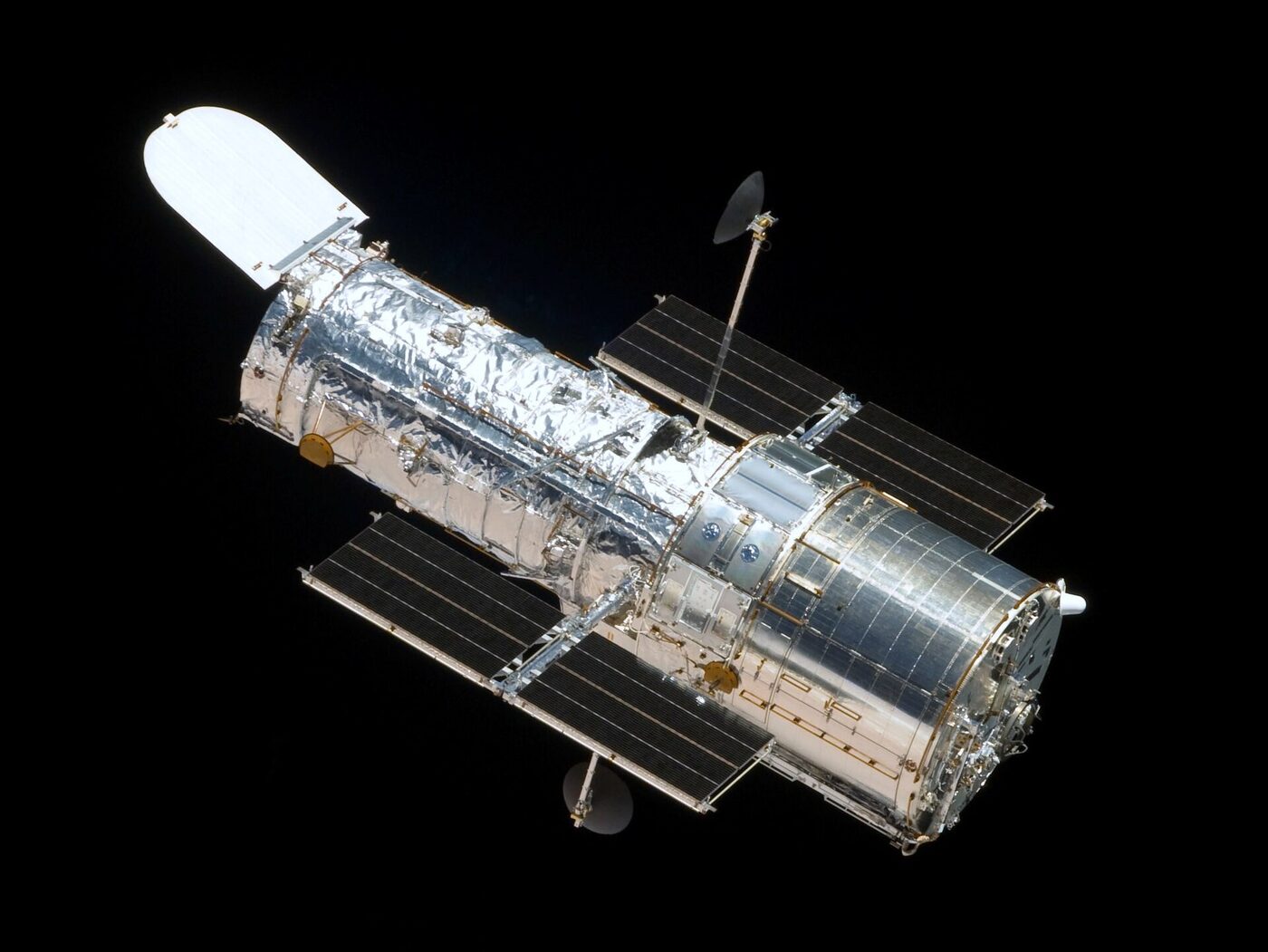
- sci.astro.* (9) — professional and amateur in the same shelf: sci.astro.research and sci.astro.hubble beside sci.astro.amateur, sci.astro.planetarium and sci.astro.satellites.visual-observe.
- sci.chem.* (7) and sci.electronics.* (7) — analytical chemistry, electrochemistry and its battery sub-room, organometallics, coatings and labware; and, on the electronics side, a set of rooms split by what a reader wanted rather than by subject: basics, components, design, equipment, cad, repair and misc.
- sci.techniques.* (6) — methods rather than fields: magnetic resonance, microscopy, spectroscopy, crystallography and two testing rooms. A rare case of the namespace organising itself by instrument.
- sci.space.* (6) and sci.psychology.* (6) — both the products of reorganisations described below.
- sci.agriculture.* (5) — the parent plus beekeeping, fruit, poultry and ratites, the last of which is for ostrich, emu, rhea and cassowary ranching.
- sci.math.* (4) and sci.lang.* (4) — a thin shelf for mathematics: sci.math, sci.math.num-analysis, the moderated sci.math.research and sci.math.symbolic, whose subject overlaps the computer-algebra rooms on the computing side of the namespace, among them comp.soft-sys.math.maple. Language gets sci.lang, sci.lang.japan and two translation groups.
- sci.crypt.*, sci.stat.* and sci.research.* (3 each) — the last of these is the profession discussing itself: sci.research ("Research methods, funding, ethics, and whatever."), sci.research.careers and sci.research.postdoc.
- The two-name branches (2 each) — a subject that divided once and then stopped. sci.anthropology keeps sci.anthropology.paleo for human and primate evolution; sci.archaeology keeps a Mesoamerican room; sci.energy keeps one for hydrogen as a fuel; sci.environment one for waste; sci.materials one for ceramics; sci.optics one for fibre optics. sci.philosophy is the odd member, having no parent and only sci.philosophy.meta and sci.philosophy.tech beneath it.

Below those sit the single rooms, and in this namespace a bare two-component name with no children is a statement that the subject is broad but was never busy enough to divide: sci.skeptic, sci.logic, sci.econ, sci.edu, sci.misc, sci.fractals, sci.nonlinear, sci.systems, sci.cognitive, sci.comp-aided, sci.cryonics, sci.life-extension, sci.polymers, sci.op-research. A handful are odder still — sci.image.processing, sci.data.formats, sci.mech.fluids and sci.military.naval are three-component names whose parent branch contains nothing else at all.
The branches with no parent
Five of the larger second levels have no group at the top of them. The master file lists twelve names beginning sci.geo and nothing called sci.geo; fifteen beginning sci.bio and nothing called sci.bio; and the same pattern for sci.space, sci.psychology and sci.electronics. sci.stat, sci.techniques, sci.philosophy, sci.mech, sci.military, sci.data and sci.image are branch addresses too, existing only as the shared prefix of their children. None of this is an accident of naming. In each case a single overloaded group was voted out of existence and replaced by a family, and the paperwork for each of those votes survives with its tallies intact.
sci.space, 1993. George William Herbert opened the discussion on 5 October 1993; Jay Maynard took the vote for the Usenet Volunteer Votetakers; the result was posted on 7 December 1993 on 480 valid votes. sci.space.tech passed 413 to 64, sci.space.science 412 to 63, and sci.space.policy 399 to 66. The third of those was not a new room but a renaming: talk.politics.space moved bodily out of the debating hierarchy and into the science one, which is about as clear a statement of intent as the namespace ever made. The result promised that sci.space itself and talk.politics.space would be removed three months later, and the control archive shows the rmgroup for sci.space going out on 14 March 1994, which is very nearly to the day.
sci.electronics, 1995. Mark Zenier proposed the split on the stated ground that traffic had reached about two hundred postings a day at peak and had become difficult to deal with. Bill Aten took the vote; the result of 24 October 1995 rested on 213 valid votes. sci.electronics.basics passed 164 to 37, components 163 to 37, design 169 to 35, equipment 160 to 36, and sci.electronics.misc, which renamed the parent, 169 to 38. One proposal failed: sci.electronics.history, to have been described as "Tesla, Edison, Marconi ...", drew 144 yes votes to 46 no. That is comfortably two-thirds in favour and ninety-eight more yes than no — two votes short of the hundred-vote margin the guidelines required. The rule that kept small electorates from creating groups occasionally took a group nobody objected to.
sci.psychology, 1995. John M. Grohol proposed a reorganisation on 14 March 1995; Michael Handler took the vote; the result of 5 June 1995 rested on 171 valid votes. Eight groups passed and two failed, and the two that failed — sci.psychology.journals.misc at 122 to 28 and sci.psychology.marketplace at 113 to 30 — failed on exactly the same arithmetic as the electronics history group: two-thirds in favour, short of the hundred-vote margin. Among the eight that passed were sci.psychology.personality at 122 to 19 and sci.psychology.psychotherapy at 122 to 18, which separated the measurement of personality from the practice of therapy on the same afternoon, and sci.psychology.misc, which replaced the old catch-all parent.
sci.bio, 1995. No reorganisation vote for the biology parent appears in the archive, but the control record is unambiguous: David C. Lawrence, then moderator of news.announce.newgroups, sent rmgroup sci.bio in August 1995 and again that September. The branch has run from sci.bio.misc downwards ever since.
sci.geo. The earth-science branch grew the other way, by accretion rather than by one decisive split, and the individual votes could be very large. sci.geo.oceanography, proposed by Charles Radley and Lachlan Cranswick in June 1994 with a charter running from ocean dynamics and sea-floor drilling to data formats and instrument specifications, passed 620 to 9 on 18 August 1994 — one of the widest margins anywhere in the hierarchy. Its own page on this site, and the branch hub, carry that story further.
Underneath all of these is one governing rule: depth had to be earned. A subject started as one group; if the traffic became unreadable, its readers proposed a split and the proposal succeeded or failed on whether enough of them turned out. The machinery — the Request For Discussion in news.announce.newgroups, the argument in news.groups, the Call For Votes taken by a neutral third party, the requirement of two-thirds in favour and a hundred more yes than no, the five-day objection period and the control message at the end — is described in detail on the comp.* page, and the groups where it all happened have their own hub. The alt.* hierarchy dispensed with the whole apparatus and is the natural comparison. What distinguished a sci.* vote from a soc.* one was mostly the subject of the argument: soc.* proposals tended to concern somebody's nation or faith, while sci.* proposals turned on whether a specialism had a hundred people online at all.
Who was in the room
The second thing that shaped the hierarchy, after the label, was the return address. A large share of posters wrote from university and laboratory accounts under names their colleagues would recognise. That did not make the groups polite. It made them accountable in a particular way: an assertion drew a request for the reference, the reference drew somebody who had read it, and hand-waving cost more than it did where everyone was a pseudonym.
The administrative record is the one place where this is directly visible, because a proposal carries its author's affiliation in the header. The people who wrote the sci.* paperwork of the 1990s posted from Worcester Polytechnic Institute, Lawrence Berkeley Laboratory, NASA's Marshall Space Flight Center, the Jet Propulsion Laboratory, the University of Arizona, Boston University, Aarhus University, the University of Auckland and Monash University, among others. That is a statement about who did the organising, not about who read the groups, and it should not be stretched into one.
The tension the hierarchy lived with was between three populations in one room: working researchers, students, and an interested public. Every serious attempt to manage it insisted on the same distinction, and insisted on it explicitly. The charter of the moderated astronomy group put it as plainly as anyone ever did — the test was the posting, not the poster:
The criterion is not the credentials of the author (contributions by amateurs are encouraged), but the relevance of the post to research issues.
The physics proposal of 1992 framed the same audience in a single sentence, offering "a congenial location in which professional physicists, physical chemists, fellow scientists and engineers in other disciplines, and serious amateurs may discuss science in a high signal-to-noise environment". Nobody in the record proposes excluding the public. What they propose, over and over, is a second room.
The open letterbox
An unmoderated newsgroup named for a discipline is an open letterbox, and the ones named for physics and mathematics received a steady arrival of unsolicited theory: perpetual motion, relativity overturned, the angle trisected, the primes explained. This is worth treating as a property of the medium rather than as a joke. For most of human history the address of a discipline was a building; for a few years in the late twentieth century it was a name in a file that propagated to every news server on earth, free, with no gatekeeper and no postage. That is a genuinely new situation, and the volume of correspondence it produced was the predictable consequence of it.
The people who dealt with it wrote about it in the record, and their language is more careful than the folklore suggests. The first proposal for a moderated physics group, put forward in February 1992 by George D. Phillies of Worcester Polytechnic Institute, set out the moderator's task in these terms:
As a general rule the moderator shall refer "paradoxers" — critics who claim to find non-mathematical contradictions in special relativity, quantum mechanics, and other standard theories — to sci.physics (unmoderated). The borderline between radical innovation and crackpottery is sometimes vague; the duty of the moderator is to raise the signal-to-noise ratio by pruning doubtful contributions.
The same document is careful to add that "the moderator is not a referee/editor, and need not decide whether or not a contribution is right. Moderation is not editing." The distinction being drawn is between a claim that is wrong and a claim that is in the wrong room, and it is the distinction the whole moderated-group experiment rests on.
The clearest single case is fusion. sci.physics.fusion exists in the current master file with the description "Info on fusion, esp. 'cold' fusion.", and by early 1995 its readers were unhappy enough to propose splitting it. Dieter Britz of Aarhus University wrote the proposal, and stated the rationale bluntly: the existing group carried "a large volume of postings that are not about fusion", including "propaganda for what amounts to perpetual motion machines under the catch cry of 'cold fusion' and plain crank postings". His remedy was a moderated sci.physics.fusion.research, to be run by Scott Hazen Mueller with an automatic accept-list rather than a queue, and a renaming of the parent to sci.physics.fusion.misc.
The electorate declined. On 12 May 1995, on 158 valid votes, sci.physics.fusion.research drew 112 yes to 31 no — two-thirds in favour, but only eighty-one clear of the no votes — and the renaming failed outright at 98 to 50. Both groups therefore failed, and sci.physics.fusion carried on exactly as it had been. It is a useful corrective to the idea that Usenet's science groups were run by a professional caucus: when a professional caucus proposed to partition one of them, the wider electorate said no.
The genre eventually got a scale. In 1992 the mathematical physicist John Baez circulated a numbered scoring scheme, revised in 1998, that awarded points for the rhetorical features that recurred in the mail — the crackpot index. It was offered half seriously and read as humour, and it spread far beyond the newsgroups. What it records, taken as evidence rather than as a verdict, is that the pattern had become recognisable enough to be enumerated.

In the unmoderated groups themselves there was no enforcement mechanism at all, and the honest summary is that most of what the groups did about the problem was social: long courteous replies, then shorter ones, then killfiles, then a frequently-asked-questions document that answered the standard objection once so that nobody had to answer it again. The last of these turned out to be the durable one.
sci.skeptic, and skepticism as an organised activity
One sci.* name is not a discipline. sci.skeptic is described in the master file as "Skeptics discussing pseudo-science", it has never had children, and it sat deliberately on the boundary of the hierarchy: the room where claims that no discipline group would host were examined, frequently by people with scientific training who had run out of patience elsewhere. Its position in the namespace was functional rather than rhetorical. When the fusion reorganisation was proposed in 1995, the Request For Discussion was crossposted to nine sci.* groups besides the two administrative ones, and sci.skeptic was one of them, alongside sci.chem, sci.energy, sci.physics and sci.philosophy.tech. It was where boundary questions were expected to be argued.
The group produced a document substantial enough to have been picked up outside Usenet altogether. The sci.skeptic FAQ divided the skeptical spectrum into "wet" and "dry" skeptics: on the account reproduced by the historian of religion Olav Hammer in the Handbook of New Age (2007), dry skeptics preferred to debunk and ridicule, on the reasoning that engagement lends credence, while wet skeptics preferred slower and more considered argument, on the reasoning that ridicule looks sloppy. That a taxonomy of an intellectual movement, written by volunteers for a newsgroup, is now cited in a scholarly handbook of that movement is about as clear a demonstration as this hierarchy offers of what its documentation was worth.
One boundary was drawn by the biology groups rather than by sci.skeptic, and it was drawn firmly: the creation-and-evolution argument was kept out of sci.bio by charter — sci.bio.paleontology's description still reads "Life of the past (but no creation vs evolution!)", and the moderated sci.bio.evolution undertook to reject creationist submissions and redirect their authors to talk.origins — and that argument, and the group that hosted it, belong to the talk.* hierarchy and are covered there.
The moderated research groups
The structural answer to the open letterbox was not to close the letterbox but to open a second, edited room beside it. Between 1991 and 1994 the hierarchy built seven of these, each by public vote, and in each case an open group was left standing beside the new one to take whatever the moderator returned.
sci.math.research was first, and by some margin. It passed 293 to 34, the result reported on 5 September 1991, and David C. Lawrence sent the newgroup control message on 12 September 1991; submissions went to an address at the University of Illinois at Urbana-Champaign. It predates the physics equivalent by seventeen months, which is not the order most accounts of Usenet would predict.
sci.physics.research took two attempts. Phillies's proposal of February 1992 did not reach a vote; Matt Austern of Lawrence Berkeley Laboratory reopened it in December 1992 with a lighter proposal, the Call For Votes went out on 14 January 1993, and the group passed 365 to 26 on 1 February 1993, with the control message following on 16 February. Austern set the threshold deliberately low: the group would "allow almost anything, and just filter out the content-free personal attacks, the wild claims that are 'not even wrong,' and the articles that have nothing to do with physics". His Call For Votes did something unusual and worth noting — it published the moderators in advance, with short curricula vitae. The panel was John Baez, then at the University of California, Riverside; Cameron Bass of the University of Virginia; Bill Johnson of Los Alamos National Laboratory; and H. Lee Sawyer, who described himself in that document as an experimental high-energy physicist. An article was to be assigned at random to one of the four, with consultation between them reserved for borderline cases.
sci.astro.research followed in 1994. Martin Sulkanen of NASA's Marshall Space Flight Center proposed it on 9 March, with Michael V. Newberry of the University of Arizona as backup moderator; Brenda J. Roder of the Jet Propulsion Laboratory took the vote; it passed 466 to 15 on 27 April 1994 and was created on 2 May. Its charter is the most detailed of the set. It admitted enquiries about current or historical research, discussion of technique and instrumentation, observations of transient phenomena, announcements of conferences and grants — and, in a clause that matters for the next part of this page, "announcement of recent publications submitted to refereed journals or of collections of such publications received as preprints". It also undertook to flag unverified observations as unverified, defining a verified one as an observation certified by a supporting institution.
sci.crypt.research arrived in the same year. The idea had first been floated by Thomas W. Strong in January 1993; Peter Gutmann of the University of Auckland revived it in July 1994; Dave Cornejo took the vote; it passed 348 to 23 on 8 September 1994 and was created on 14 September. Its charter runs to a single sentence and is candid about its motive: the aim was discussion of cryptography and cryptanalysis "in a more civilised environment than is currently provided by sci.crypt". Five moderators shared the queue: David Wagner, Greg Rose, Mark Lomas, Michael Paul Johnson and Gutmann himself.
Others followed the same pattern outside physics and mathematics. sci.econ.research passed 405 to 21 on 4 June 1993. sci.bio.evolution, proposed by Chris Colby of Boston University with Josh Hayes as moderator, passed 517 to 25 on 3 January 1994 and was created a week later. sci.psychology.research passed 222 to 11 on 1 April 1994 and was created on 6 April. A moderated sci.chem.research was proposed in August 1996 and no vote for it appears in the archive. Beside these sat the other edited rooms the hierarchy accumulated: sci.astro.hubble for the processing of telescope data, sci.physics.plasma, sci.psychology.announce, the moderated halves of the 1993 space reorganisation, and sci.answers, created on 12 January 1993 to collect the hierarchy's periodic postings.
What moderation actually did, and did not do
The mechanism was unglamorous. An article addressed to a moderated group was not posted at all: the news software diverted it as mail to a submission address, where a moderator either returned it to the author or injected it into the group carrying an Approved header, the line the news protocol requires before a moderated article will propagate. Nothing in the protocol requires the moderator to be one person, which is why sci.physics.research could run with a panel of four and sci.crypt.research with five.
What the moderators repeatedly said they were doing was filtering by level, not by doctrine. The physics group's own documentation is explicit that it "is not a peer reviewed journal; the moderators are not referees or editors, and they do not have the time to check whether the physics (or the grammar!) in each posting is actually correct". Its four categories of clearly inappropriate posting were personal attacks, material not about physics, repetitive responses, and postings that were "not even wrong" — and a rejected article was to be returned to its author, sometimes with the suggestion of a better group. The open parent was always there to take it. That was the intended division of labour rather than a failure of it.
The moderated groups also carried the hierarchy's better housekeeping. sci.astro.research undertook to post a monthly FAQ covering "the moderation philosophy and other administrivia", and to archive its contributions with access "through Mosaic and anonymous ftp" — a sentence that dates itself to 1994 as precisely as a coin.
The weakness of the arrangement was structural and took two decades to show. An unmoderated group needs nobody. A moderated group needs a person, indefinitely, to hold a queue. What happened when those people stopped is the subject of a later section, and it is the single largest fact about what remains of sci.* today.
The periodic postings
Much of what the hierarchy left behind is not argument but documentation. Because the same questions arrived with every new intake of readers, groups answered them once and then went on answering them mechanically: a frequently-asked-questions document, maintained by a volunteer, posted at a fixed interval — monthly in most cases, more often where traffic warranted — and revised as corrections came in. The form was not invented in sci.*, but it suited a discipline group better than it suited anywhere else, because a discipline's recurring questions mostly have settled answers that can be written down, sourced and defended.
The network built machinery around the practice, and sci.* plugged into it. sci.answers was created as a moderated group on 12 January 1993, at the head of the hierarchy: a maintainer posted the document to their own group and crossposted it there, an Archive-Name header on the article gave the file its address, and from there the documents were archived off the network in the news.answers collection so that a periodic posting outlived the expiry of the article carrying it. The general account of that machinery, and of the archive at MIT that held it, belongs on the comp.* page.
The mechanics of repetition are visible in the surviving administrative postings, which used the same two headers a monthly FAQ used: a Supersedes line naming the article the new copy replaces, and an Expires line giving the date the copy should drop out of the spool. Without them a group would have accumulated a year's worth of identical documents; with them, a reader who arrived in March saw March's copy and nothing else.
What sci.* contributed to the tradition was substance. A FAQ for a hobby group is a page of house rules. A FAQ for a physics group is a reference work, and several of them are still being maintained, on university servers, decades after the newsgroups that produced them went quiet.
Two FAQs that outlived their newsgroups
The Usenet Physics FAQ is the largest of them and the easiest to verify, because it is still there. Its own front matter records that the list was created by Scott Chase in 1992 to provide good answers to questions that had been discussed often in sci.physics and neighbouring groups, and that the articles were based on those discussions and on reference sources; it was later maintained and enlarged by Michael Weiss and Philip Gibbs. The collection's copyright notice names Scott Chase, Michael Weiss, Philip Gibbs, Chris Hillman and Nathan Urban, over the range 1992 to 2016, with individual articles credited to their own authors. It is edited today by Don Koks, a retired research scientist of Australia's Defence Science and Technology Organisation who took a doctorate in mathematical physics at Adelaide in 1996; the version date on the front page when this article was written was June 2023. It is hosted on a mathematics server at the University of California, Riverside.
Its table of contents is the most useful surviving evidence of what a physics newsgroup was actually asked. Why is the sky blue. Does hot water freeze faster than cold. Why do mirrors reverse left and right but not up and down. What is the mass of the photon. The EPR paradox and Bell's inequality. What is the Casimir effect. Do tachyons exist. Is glass a liquid. What is a leap second. Open questions in physics. These are the questions of an intelligent public and of undergraduates, and they were answered at length by people who had read the literature. The FAQ's own editors make a claim for that provenance — that the entries were written when most contributions to the Internet came from authors with a great deal of knowledge of their subject, and that this gives them academic credibility. It is their claim, offered here as theirs; the entries are signed and a reader can weigh them.
The sci.math FAQ is the other survivor, and it is older. Its title page reads "The Sci.Math FAQ Team. Editor: Alex López-Ortiz", and its copyright line runs from 1989 to 1997 — the first of those years predates the World Wide Web entirely. It is hosted at the University of Waterloo. The document's own change log records the pattern of maintenance: new record primes in December 1995 and again in March 1997, a section on algebraic numbers contributed by a reader, a reorganisation into chapters in October 1995, and an HTML edition in November 1995; the HTML pages themselves carry a generation date of 23 February 1998, and nothing later.
Its section on Fermat's Last Theorem is a period document in the strict sense: it tracked a result as the news arrived. Andrew Wiles announced his proof at Cambridge in June 1993. The FAQ records that "the proof was found to be wanting"; that in the summer of 1994 Wiles acknowledged that a gap existed; and that on 25 October 1994 two preprints were released, one by Wiles announcing the proof and a shorter one by Richard Taylor and Wiles supplying a crucial step, with the Euler-system construction abandoned in favour of an approach Wiles had tried earlier and set aside. A newsgroup's reference document, written by volunteers, keeping pace with the most-watched result in twentieth-century number theory, and still readable on a university server thirty years later. Other sci.* groups maintained documents of comparable ambition; their survival is uneven, and this site holds none of them.
sci.* and the actual literature
The question a reader of a science newsgroup archive eventually asks is whether anything of scientific consequence appeared there first. It is the point on which an unsupported claim is easiest to write, so it is worth separating three quite different relationships and being exact about each.
The newsgroup as noticeboard. This is the commonest relationship and the least remarkable. sci.astro.research's charter explicitly welcomed announcements of papers submitted to refereed journals and of preprint collections received; the groups were where people said that something existed and where they argued about it once it did. The work itself lived in the journals. This function had a competitor almost immediately, and the competitor won.
The preprint server. arXiv has a precise beginning and a precise cause. Around 1990 Joanne Cohn began e-mailing physics preprints to colleagues as TeX files, and the number being sent soon filled the mailboxes receiving them. On 14 August 1991 Paul Ginsparg, then at Los Alamos National Laboratory, set up a central repository that could be reached from any computer; access by file transfer came the same year, Gopher in 1992, the Web in 1993. Its address was xxx.lanl.gov. Ginsparg moved to Cornell University in 2001 and the repository took the name arxiv.org; it separated from Cornell as an independent non-profit on 1 July 2026. What it gave a physicist was exactly what a newsgroup could not: the paper itself, dated, stable, citable and retrievable long after a news article had expired from the spool.


It inherited the hierarchy's other problem too, and answered it in recognisably the same way. arXiv moderates; since 2004 an author new to certain categories must be endorsed by an established one; and submissions judged out of place are generally reclassified rather than deleted, which is the preprint server's version of redirecting an article to the unmoderated parent. Whether the endorsement system draws the line in the right place has been disputed in print, including in the correspondence pages of Nature. The argument is the sci.physics argument, conducted thirty years later with better infrastructure.
The newsgroup as the journal. This is the relationship that is genuinely unusual, and it happened in psychology. Psycoloquy was a refereed electronic journal, ISSN 1055-0143, sponsored on an experimental basis by the American Psychological Association and edited by Stevan Harnad; it published brief reports on which authors wanted rapid peer feedback, together with open peer commentary, and it ran from 1990 to 2002. Its distribution channel was a Usenet newsgroup. It reached readers first through sci.psychology.digest and then, after the 1995 reorganisation, through sci.psychology.journals.psycoloquy. In the same vote the consciousness journal PSYCHE, ISSN 1039-723X, edited by Patrick Wilken, received sci.psychology.journals.psyche.
The proposal explains the arrangement in its own words, and the reasoning is precise: each refereed journal was to have its own newsgroup so that "each journal's board of directors and editors" could "control the content and interactivity of the newsgroup, based upon moderation", and to "make the clear distinction between a refereed journal and other, unrefereed publications in psychology". A separate group for unrefereed publications was proposed at the same time and failed to reach the vote margin. In other words: the moderated-newsgroup mechanism — a submission address, a queue, an Approved header — was being used as the delivery layer of a peer-reviewed journal, with the referees upstream of it, and the namespace itself was being used to mark the difference between refereed and unrefereed material.
Harnad had a term for what the medium made possible: scholarly skywriting, coined around 1987, meaning text written where everybody can see it and everybody can annotate it. He proposed it as a supplement to classical peer review rather than a replacement for it, and the journal groups were an operating instance of exactly that reading — open commentary bolted onto a refereed core, not instead of one.
Results that arrived through a newsgroup first. These exist. They are concentrated almost entirely in one branch, for reasons that had more to do with law than with science, and they are the subject of the next section. Everywhere else, the honest summary is that sci.* was not where the science was published. It was where the science was explained, checked and argued over by people who had read it — which is a different thing, and not a lesser one, but it should not be described as publication.
What reached the world through sci.crypt
sci.crypt was one of the places where the public argument over civilian cryptography ran through the 1990s, alongside the mailing lists. It was also, unusually for a Usenet group, a channel through which three ciphers reached the public, and the reason it could be is that cryptography in that decade was a subject where the science was open and the artefacts were regulated.
Khufu and Khafre. Under a voluntary scheme, Xerox submitted Ralph Merkle's designs to the National Security Agency before publication. The agency asked Xerox not to publish, citing national security, and Xerox — a large government contractor — complied. A reviewer of the paper passed a copy to John Gilmore, who made it available through sci.crypt; his posting is dated 13 July 1989. The scheme was published at the CRYPTO conference the following year.
RC4. A description of the cipher, then a trade secret of RSA Security, was posted anonymously to the Cypherpunks mailing list in September 1994. It appeared on sci.crypt shortly afterwards, where it was broken within days by Bob Jenkins. The following year Andrew Roos published, in two sci.crypt postings, the experimental observation that the first byte of the keystream correlates with the first three bytes of the key — a bias that went unexplained until it was proved in the academic literature in 2007.
RC2. On 29 January 1996 source code for RC2 was posted anonymously to sci.crypt. References in it to two well-known debuggers suggested that it had been reverse-engineered.
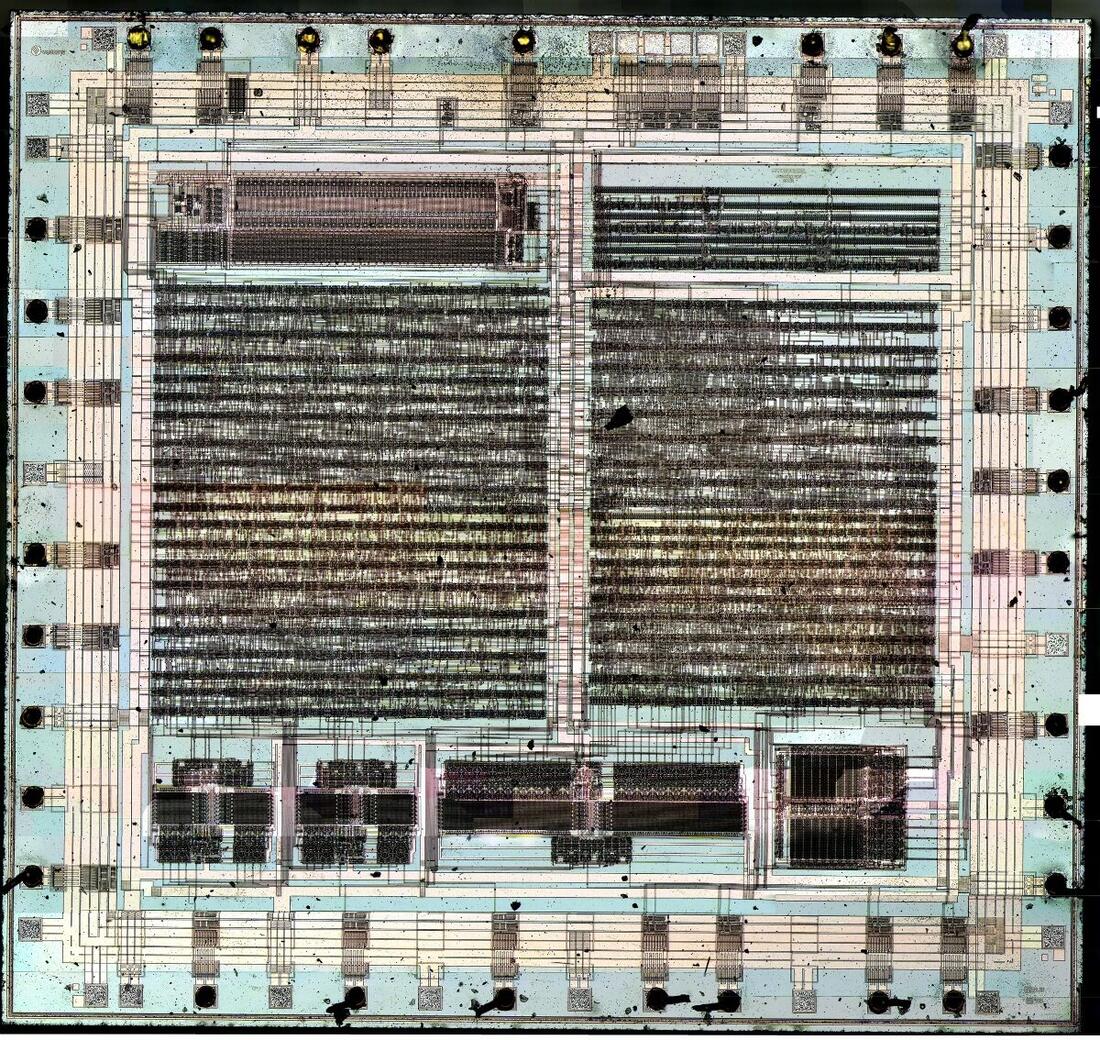
The policy argument had two halves and the group carried both. The first was key escrow. In 1993 the United States government put forward the Clipper chip, a telephony encryption device built around an NSA-designed cipher called Skipjack, with logic designed by Mykotronx and fabrication by VLSI Technology, whose keys were to be lodged with the government at manufacture so that traffic could be recovered later under legal process; the scheme became a federal standard under the name Escrowed Encryption Standard. It was taken apart in public. On 20 August 1994 Matt Blaze published "Protocol Failure in the Escrowed Encryption Standard", showing that the 128-bit Law Enforcement Access Field carrying the escrowed key was protected by a sixteen-bit hash — short enough that a brute-force search would find another field value with the same hash, letting the chip encrypt while the escrow quietly failed. Yair Frankel and Moti Yung published a further attack in 1995. Clipper was defunct by 1996, the only significant purchaser of telephones carrying it having been the United States Department of Justice. Skipjack was declassified on 24 June 1998, shortly after the public cryptography community had independently arrived at its design principle; Eli Biham and Adi Shamir broke sixteen of its thirty-two rounds within a day of the release.

The second half was export. Cryptography was placed on the United States Munitions List on 17 November 1954, which put a strong implementation in the same regulatory category as a weapon. A 1992 arrangement between the NSA and the Software Publishers Association made forty-bit RC2 and RC4 straightforwardly exportable, which is why the international builds of mid-1990s browsers shipped with their key lengths cut to that ceiling while the domestic builds did not. Executive Order 13026, signed in November 1996, moved commercial encryption from the Munitions List to the Commerce Control List.
What the group made visible, and what its surviving postings still show, is the oddity underneath all of this: the technique was never secret. Designs, attacks and analyses were posted to a newsgroup that propagated worldwide by default and that anyone with a news feed could read, while implementations of the same mathematics were controlled at the border as munitions. The wider dispute is documented under the name Crypto Wars. The branch itself is now three names: sci.crypt, the moderated sci.crypt.research, and sci.crypt.random-numbers, which passed 134 to 12 on 29 March 2000 and is among the last sci.* groups created by a public vote.
sci.space, and the traffic that came the other way
Every mechanism described so far was built to keep a lay readership from overwhelming a professional one. sci.space is the branch where the traffic ran the other way, and where nobody wanted to stop it. Missions were followed there by readers with no professional stake at all, and the 1993 reorganisation split the subject not by sub-discipline but by what a reader wanted from it: it made sci.space.tech for the engineering, sci.space.science for the science and sci.space.policy for the politics. sci.space.news and sci.space.shuttle were already in place and the result said in as many words that they were unaffected, and a room for the subject's own past followed later. The current master file holds six names — sci.space.history, sci.space.policy, sci.space.science, sci.space.shuttle, sci.space.station and sci.space.tech — and no other science in the hierarchy needed a room for its own past.


sci.space.station is the latest of them and one of the last well-supported creations anywhere in sci.*. John Eckart opened the discussion on 4 January 1999; the vote closed in March; the result of 27 March 1999 recorded 194 yes to 25 no. The group was voted into existence while the station it was named for was being assembled in orbit, and its charter reads like a list of everyone its proponent hoped would turn up:
This newsgroup is needed for international collaboration, discussion and support for world governments, aerospace corporations, engineers, scientists, amateur radio operators and the private sector as well as the home enthusiast.
A second version of the proposal added schools to the list. It is not a charter that any of the research groups would have written, and it is a fair statement of what the space branch was for.
One more space group was voted through after that. sci.space.moderated passed 193 to 15 on 13 March 2002. It did not survive; the reason is in the section after next.
Where the readers went
The decline was a migration rather than a collapse, and the things that took the traffic arrived in a sequence that can be dated. arXiv, from 1991, took the function of circulating work early. Departmental and learned-society mailing lists took the shop talk, sometimes by gateway rather than by migration — the 1995 psychology proposal specifies that sci.psychology.consciousness would be gatewayed to the PSYCHE-D mailing list, which the proposal said had over five hundred subscribers and more daily mail than its readers could keep up with. Journals put their own contents on the web, and then behind their own subscription pages.
Then the question-and-answer sites took the questions, and they took the habits with them. MathOverflow was started on 28 September 2009 by Berkeley graduate students and postdoctoral researchers — Anton Geraschenko, David Zureick-Brown and Kim Morrison — and the mathematician Terence Tao described it three weeks later as "the venerable newsgroup sci.math, but with more modern, 'Web 2.0' features". Stack Exchange sites for physics and mathematics were in beta testing by November 2010, and the network launched publicly in January 2011. What those sites inherited from the sci.* groups was not only the readership but the reflexes: read the standing document before asking, show your working, expect the reply to come from someone who has read the same papers, and treat an answer as a document that strangers will read years later.
The archives changed hands in parallel. Usenet had been archived in various places for as long as it existed, but the searchable web archive began with Deja News in 1995, whose database Google acquired in 2001 and folded into Google Groups, which is why a sci.crypt posting from 1989 or 1994 can still be read at all; on 22 February 2024 Google Groups stopped supporting new Usenet content while leaving the accumulated archive readable. The dates and the detail of that transfer are on the comp.* page.
What did not migrate is worth naming, because it is the thing the archive is evidence of. A sci.* group was a public room, in a namespace anybody could enumerate from a file, replicated to every participating server rather than held on one company's, with a written record of every proposal, every tally and every removal. A modern equivalent lives on one company's servers and can be closed by its owner without notice or archive. The sci.* record predates that enclosure, and its value is that the working is visible: a reader can follow a disagreement from the opening claim to the citation somebody produced against it, and see which objections the specialists thought worth answering.
The tidying: 2011 and 2025
The Great Downsizing of 1 February 2011 applied the same test across the Big Eight, on criteria the comp.* hub gives in full: use rather than merit, measured over the previous eighteen months. The result of 24 April 2011 removed all 198, with the board's vote recorded against each name. Four were sci.* groups: sci.aquaria, sci.engr.coastal and sci.engr.marine.hydrodynamics, each unanimously at seven votes to nil, and sci.med.occupational at six to one. Against 149 comp.* names and 29 rec.* ones in the same list, that is a very small share, and the reason is structural: sci.* was rarely named after a product that could stop shipping.
The board recorded the objection to its own proposal, which is more than most institutions manage while closing something down. The discussion, it noted, raised opposition to removals in principle and the notion that some groups have a function beyond mere traffic; the claim that these particular groups had not been used for a long time, it added, "was not disputed".
Then came the moderated groups, and this is where sci.* lost most of what it lost. On 19 July 2011 a second proposal covered 23 moderated newsgroups whose moderators had gone. Formal Moderator Vacancy Investigations had been posted for them between 29 May and 17 June 2011 and, in the board's words, "precipitated no interest in retaining the newsgroups". The result, posted late on 30 August 2011 and logged in the proposal's own change history as the 31st, removed all 23. Ten of them were sci.* names: sci.aeronautics.airliners, sci.aeronautics.simulation, sci.med.aids, sci.med.midwifery, sci.med.obgyn, sci.physics.discrete, sci.techniques.mass-spec, sci.virtual-worlds, and both of the electronic-journal groups — sci.psychology.journals.psyche and sci.psychology.journals.psycoloquy, the latter nine years after Psycoloquy itself had stopped publishing.
Fourteen years later the same thing happened at four times the scale. Through a sequence of Requests for Discussion beginning on 3 January 2025 and running through three revisions, the board proposed removing 89 moderated groups for the same stated reason: no moderator, no traffic, no realistic prospect of revival. The result of 21 May 2025 approved it — three board members in favour of deletion and one not voting — and the signed rmgroup control messages for all 89 went out on a single day, 18 June 2025. Thirteen of the 89 were sci.* names: sci.aeronautics, sci.archaeology.moderated, sci.bio.evolution, sci.bio.phytopathology, sci.chem.organic.synthesis, sci.econ.research, sci.med.orthopedics, sci.military.moderated, sci.nanotech, sci.physics.foundations, sci.physics.strings, sci.space.moderated and sci.space.news.
Read against the creation votes, that last list is the hierarchy's whole history in a paragraph. sci.bio.evolution was voted into existence 517 to 25 in January 1994. sci.econ.research passed 405 to 21 in June 1993. sci.archaeology.moderated passed 481 to 44 in April 1996. sci.space.moderated passed 193 to 15 in March 2002. Every one of them commanded a large public majority, and every one of them needed a person to hold a queue for as long as it existed. The groups that needed nobody are, for the most part, still on the list.
What still carries sci.*
The namespace has not been retired. In the master files of 28 August 2026 sci.* is 185 names, 174 of them open unmoderated groups and eleven moderated. The eleven are sci.answers, sci.astro.hubble, sci.astro.research, sci.crypt.research, sci.math.research, sci.physics.plasma, sci.physics.research, sci.psychology.announce, sci.psychology.research, sci.space.science and sci.space.tech. The moderated research groups of 1991 to 1994 in mathematics, physics, astronomy, cryptography and psychology are all still listed. The two casualties of that wave were the economics group and sci.bio.evolution, both removed in 2025.
Nobody has rewritten the descriptions, and they are a small archaeological record in themselves. sci.astro.fits is still filed under "Issues related to the Flexible Image Transport System". sci.geo.eos still reads "NASA's Earth Observation System (EOS)". sci.physics.fusion still says "Info on fusion, esp. 'cold' fusion." sci.bio.paleontology still carries the parenthesis its proponents fought for. Those lines were written into control messages by the people who proposed the groups, and they change only when somebody proposes a change, which is a fact about how the namespace is maintained rather than about the groups.
Some of the survivors are the quietest corners of the hierarchy and among the most useful. sci.agriculture was proposed in October 1993 by David Bromage of the chemistry department at Monash University, with a topic list running from land and water management, soils and erosion through hydroponics and permaculture to the economics of it and the criticism of the literature; it passed 309 to 10 on 6 January 1994. Its children arrived later: sci.agriculture.poultry and sci.agriculture.ratites passed together on 22 March 1996, joining beekeeping and fruit. It is a branch where agronomists and smallholders shared a room by design, and the master file still describes the poultry group in six words: "Chickens, ducks, geese, and other poultry."
Scope and limits of this page
This site preserves no sci.* postings. This directory holds pages about groups, not postings, and nothing above is drawn from a body of saved articles. No traffic figures are given either, because none exist here in a form worth quoting: the counters in the master active file are placeholders identical across all 45,003 entries, and the article numbers visible in the Xref headers of the administrative postings cited above are per-server sequence numbers rather than measures of readership.
Everything dated above comes from two sources. The first is the Internet Systems Consortium's mirror of the Usenet administrative record — Requests for Discussion, Calls for Votes, results, moderator-vacancy investigations and control messages, each carrying its own date and, where a vote was held, its own tally. The second is the master active and newsgroups files of 28 August 2026. Where a characterisation appears in quotation marks it is quoted from the person or body that wrote it into that record, and attributed to them; the page does not adopt any of those characterisations as its own.
What the record cannot tell you is how many people read any of these groups, who most of them were, or what share of the posting came from professionals. The professional presence thinned well before the groups went quiet, and no honest number is available. What the record does support is a narrower question with almost no other source: how a discipline explained itself to outsiders, which of its disputes it was willing to have where anyone could watch, and what a specialist sounded like when the reply came from somebody who had read the same papers and disagreed.