sci.agriculture.poultry
Poultry science and small-flock keeping.
From commercial broiler genetics to backyard hens: disease diagnosis threads, incubation logs and feed arguments, mixing veterinary science with hard-won coop experience.
Small-flock keepers kept it busy with practical questions, and directory sites of the era listed it among their poultry resources.
On this page
- The group’s own paperwork
- Why a species earned its own level
- The charter, and the neighbours it named
- The electorate, read as evidence of two readerships
- The industry the group was half about
- The breeding pyramid and its consolidation
- The fancy, the show and the standards
- Incubation
- Brooding, and the manipulation of day length
- Breeds, conservation and the narrowing of the commercial base
- Disease as the subject that crossed both readerships
- Avian influenza, biosecurity and the vaccination question
- Welfare regulation, by instrument and date
- What the group carried
- Where it went
- What the record does not show
- Scope and limits
The group’s own paperwork
sci.agriculture.poultry is one of the better-documented groups in this directory, because the Internet Systems Consortium’s mirror of news.announce.newgroups holds its whole file: two Requests for Discussion, two Calls for Votes, the result with its full roll of voters, and the control messages that followed. The dates and the arithmetic below are read off those documents rather than remembered.
The first Request for Discussion went out on 20 January 1996, over the name of Dennis Hawkins, and it asked for something the group did not end up being: a moderated newsgroup, with the proposer as its moderator. Its newsgroups line read sci.agriculture.poultry Raising chickens and other poultry. (Moderated). The reason given for wanting a moderator is worth quoting, because it is a small piece of Usenet self-knowledge written in January 1996: “After having seen what happens to unmoderated newsgroups when nobody is left in charge, I feel that a moderator is necessary to keep the peace and ensure that articles make at least a good faith attempt to obey the charter rules.” The proposal was cross-posted to four groups only — the two procedural ones, plus sci.agriculture and sci.agriculture.beekeeping.
Two weeks later the proposal came back visibly rebuilt. The second RFD, dated 4 February 1996, dropped the moderation, added a companion proposal for sci.agriculture.ratites, listed five proponent entries where the first had carried one name, and was cross-posted to nine groups across five hierarchies: news.announce.newgroups, news.groups, sci.agriculture, sci.agriculture.beekeeping, alt.agriculture.misc, alt.sustainable.agriculture, misc.rural, rec.birds and rec.pets.birds. The two proposed newsgroups lines were now plainer and unmoderated:
sci.agriculture.poultry Chickens, ducks, geese, and other poultry.
sci.agriculture.ratites Ostrich, emu, rhea, or cassowary ranching.
The Call for Votes was issued on 1 March 1996 by Bill Aten for the Usenet Volunteer Votetakers, with a second CFV on 11 March. Voting closed at 23:59:59 UTC on 22 March 1996 and the result went out the same evening, United States time, which is why the control message that followed dates the announcement to 23 March. There were 391 valid ballots and 11 invalid ones. sci.agriculture.poultry passed 363 to 19; sci.agriculture.ratites passed 327 to 26. Both cleared the two conditions the guidelines of the day imposed — at least two-thirds of the valid YES and NO votes in favour, and at least a hundred more YES than NO — and cleared them with room to spare, which is not what had happened when much the same subject had been put to the electorate six months earlier under a deeper name. That earlier failure, and the shape of the whole five-group subtree, belong to the parent group’s page and are not retold here.
After the five-day period for challenges the result announcement provides for, David C Lawrence — as moderator of news.announce.newgroups, from the address that appears on almost every Big-Eight control message of the period — issued the newgroup on 28 March 1996. The line he supplied for administrators to paste into their newsgroups files is the one the ISC newsgroups file still carries, unaltered, three decades later:
sci.agriculture.poultry Chickens, ducks, geese, and other poultry.
The control archive holds four newgroup messages rather than one, and the sequence is a compressed history of how Usenet secured its own administration. The message was reissued on 4 April 1996, which was routine housekeeping for sites that had missed it. It appears again on 5 April, re-injected from a small news host at Penn Valley in California, with a Message-ID one digit different from the original — the sort of well-meaning manual relay that was common and that a signature scheme would later make unnecessary. And on 28 April 1996 it was issued once more, this time carrying an X-PGP-Sig header and a pointer to the pgpcontrol documentation. Within a month, the same group’s creation notice had gone out both unsigned and cryptographically signed.
There is one more message in the file. On the evening of 3 November 2001 an rmgroup arrived whose entire body read “please remove the bogus newsgroup sci.agriculture.poultry”. It was posted through a consumer news provider in Quebec, carried no PGP signature where the newgroup of April 1996 in the same archive carries one, and named three sci.* groups that had never existed alongside this one in its Newsgroups header. It was not honoured; the group is still in the ISC active and newsgroups files. The identical forgery hit the parent group one minute earlier the same evening, and what a control message is actually worth — a request evaluated by every news administrator independently, never an instruction — is set out on the sci.agriculture page.
Why a species earned its own level
This directory documents, again and again, the moment at which a working subject subdivides. Usually the argument for a child group has to be reconstructed from the shape of the namespace. Here it does not: the proposal makes the case explicitly, in numbers, and the numbers are the ordinary ones of 1996.
The first RFD stated the position flatly — “Currently there is no poultry specific newsgroup on the internet” — and then went looking for the traffic that would justify one. It found two mailing lists. PLTRYNWS ran from a listserv at South Dakota State University and, in the proposers’ reading, specialised in scientific and medical poultry topics; DOM_BIRD ran from a listserv in Poland and specialised in domesticated birds as pets. The second RFD put figures against them: about 400 subscribers and five posts a day for the first, about 200 subscribers and ten posts a day for the second, and “over 600 subscribers” between them generating about fifteen posts a day. Against the existing newsgroup it recorded, with commendable modesty, “sci.agriculture Seen up to 5 daily posts about poultry.”
The argument built on that is the classic parent-and-child argument, and the proposal states it without rancour: “While there is some discussion of chickens in sci.agriculture, the volume of poultry posts there combined with the volume of posts to the mailing lists demonstrates a clear need for a new poultry specific newsgroup.” It then goes out of its way to say that the child is not an attack on the parent — “By creating this newsgroup, we will not be competing with the existing sci.agriculture group” — and notes, disarmingly, that the proposers had not known there was any poultry discussion in the parent group at all until one of the volunteer group-mentors mentioned it.
The proposal’s second body of evidence is the World Wide Web, which in February 1996 was young enough that six pages could be listed as a representative sample. It named The Chicken Coop, The Chicken Page, FeatherSite, a Poultry Fancy Page hosted at an Oxford college, Chickens On The Electronic Highway, and Chick Map, the chicken genome mapping project then running at the Roslin Institute. It even reported one site’s traffic: 990 hits in December 1995, 1,450 in January 1996, and an average of five poultry-related e-mails a day to its author. A newsgroup proposal citing web-page hit counts as proof of demand is a precise fossil of the moment: the web was already the place the audience could be counted, and the newsgroup was still the place they were expected to talk.
The proposal also defended its name in the terms a search engine would recognise. sci.agriculture.poultry was chosen because it is “highly suggestive of its proposed content”, and the first RFD had spelled out the reasoning: “When people search for poultry related newsgroups, they either use the keyword ‘poultry’ or the specific type of fowl such as ‘chicken’.” In 1996 a Usenet namespace was still, in part, an index.
The charter, and the neighbours it named
The charter that was voted on and then reprinted in the control message is short, and it is a working document rather than a manifesto. Its opening sentence is the whole of its scope:
This unmoderated newsgroup is open to discussion of material relating to the humane farming of chickens and other livestock fowl. All articles that are concerned with poultry farming topics are welcome in the group.
Under that sit three lists. The first names the birds, and it is broader than the group’s short description suggests: chickens, expressly subdivided as “home flock, commercial and fancy breeds”; ducks; doves, homing and fancy; geese; jungle fowl; peafowl; pheasants; turkeys. The second names the admissible subjects:
- Breeding and breeders
- Clubs and organisations
- Equipment used
- Exhibit and show announcements
- Genetics
- Health, veterinary care and management
- Housing
- Legislation and regulations concerning domesticated animals
- Marketing
- Nutrition and nutritional research
- Places to purchase and sell
Read that list against the two audiences and it resolves into a single column with two readings. “Genetics” means a breeding company’s pedigree programme and it means whether the neighbour’s cockerel will throw the right comb. “Housing” means tunnel ventilation in a growout house five hundred feet long and it means a coop built from salvage. “Clubs and organisations” and “exhibit and show announcements” belong entirely to the fancy; “nutritional research” and “marketing” belong mostly to the trade; “legislation and regulations” belonged, over the following decade, to everybody.
The third list is the most revealing, because a charter’s exclusions describe the arguments its authors expected to have. Ruled inappropriate were:
- Animal rights — referred to talk.animal.rights
- Exotic, caged birds — referred to rec.pets.birds
- Hunting — referred to the rec.hunting.* groups
- Non-poultry-related advertising, glossed in the charter itself as “spamming”
- Vegetarianism
- Wild birds — referred to rec.birds
Four of the six are simple traffic direction, the ordinary courtesy of a namespace in which every subject is supposed to have an address. Two are not. A group whose charter opens with the words “humane farming” and then rules animal rights and vegetarianism off-topic has taken a position on where an argument belongs, not on how it should come out; the same charter admits legislation and regulation without reservation, which is the channel through which the welfare question actually reached the group over the following years, in the form of directives, ballot measures and cage dimensions. Whether that separation held in practice is not recoverable from any surviving record, and this page does not guess.
The electorate, read as evidence of two readerships
Usenet vote results published their voters, address by address, so that the arithmetic could be checked by anyone. The by-product is a dated census of who cared about a poultry newsgroup in March 1996, and for this group it is the single most informative document that survives.
Of the 391 valid ballots, 177 came from addresses in .com, 75 from .edu, 64 from .net, eight each from .gov and .org, one from .mil, one from a bare numeric address, and 57 from national domains — Canada 17, Australia 14, Denmark and the United Kingdom four each, New Zealand and Germany three each, Israel, Finland and the United States’ own country code two each, and one apiece from Switzerland, the Netherlands, Norway, South Africa, Brazil and France. Those figures are a count of the published roll, and they sum to 391.
The interesting part is what lies inside the two largest columns. Thirty-nine of the commercial addresses were at a single consumer online service, with smaller clusters at three others and at the early dial-up providers; these are householders, not firms. The academic column is different in kind: its 75 ballots come from 56 distinct .edu hosts belonging to 45 institutions, and several of the addresses are unmistakably occupational — a poultry science department at a Texas university, an animal health diagnostic laboratory attached to a college of veterinary medicine in Michigan, three ballots from one United States Department of Agriculture research service address and a fourth from another, others from land-grant universities across the American Midwest and South. One large petroleum company supplied nine votes, which is a reminder that an employer’s domain says nothing about what its holder does at the weekend.
Set beside the parent group’s roll, whose voting closed on 15 December 1993 and which ran the other way with 130 academic addresses to 45 commercial ones, the contrast is the whole argument of this page in one table. In twenty-seven months the composition of an agricultural electorate on the Internet had inverted, and the group that inverted it was the one about an animal that ordinary people keep in the garden. Both populations were present in the same ballot, and both were about to be present in the same threads.
The roll should not be read as a readership. It records who cared enough to mail a ballot in a three-week window in early 1996, nothing more; who actually posted afterwards, and in what proportions, is not recoverable. But as a snapshot of the constituency the group was built for, it is exact, and it is the only exact thing of its kind the group left behind.
The industry the group was half about
The scale gap between the two readerships is not a matter of degree but of arithmetic. The global chicken population passed 26.5 billion in 2023, and more than 50 billion birds a year are produced for consumption. A dozen hens in a garden is a rounding error in those figures. What makes the pairing coherent is that it is the same biology at both ends: a hen’s respiratory tract, her parasites and her response to day length do not care how many others are in the building. Only the arithmetic changes, and with it the questions that can be asked and the evidence available to answer them.
The industry the group’s professional readers worked in was very young by the standards of agriculture, and its origin story is unusually well dated. Commercial broiler production began in the 1920s and 1930s in a handful of places — the Delmarva Peninsula, Georgia, Arkansas, New England — and the person usually cited as its pioneer is Cecile Long Steele of Sussex County, Delaware, who in 1923 raised a flock of 500 chicks intended for meat and by 1926 was able to build a house for 10,000 birds. Her original building survives: a sixteen-foot-square wood-frame colony house that held 500 chickens and was heated by a coal stove, moved from the Steele farm and preserved at the University of Delaware’s agricultural experiment station near Georgetown, on the National Register of Historic Places since 1974.
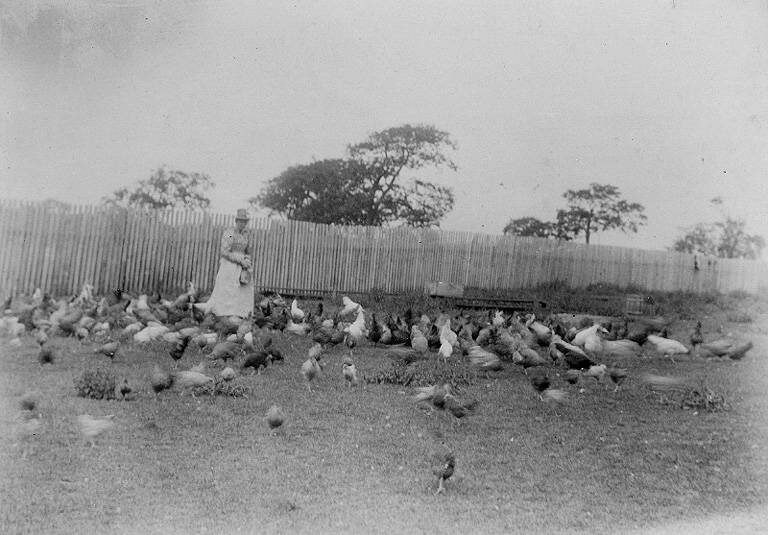
.jpeg)
Everything that followed was the assembly of a supply chain, and its end state has a name. In the American arrangement a single firm called an integrator owns the breeder flocks, the hatcheries, the feed mills and the processing plants, and supplies the grower with chicks, feed, medication, part of the fuel for brooding and technical advisers to supervise production; the grower supplies the house, the land and the labour. That division — capital and birds on one side, buildings and hours on the other — is the structural fact behind most of what is argued about contract growing to this day. The consolidation it produced can be read off the count of hatcheries alone: 11,405 in 1934, 323 in 2001, by which date those 323 held an incubator capacity of 862 million eggs, an average of 2.7 million each.
Processing industrialised on its own timetable. Birds had been sold “New York dressed”, with only blood and feathers removed; in 1942 an Illinois plant became the first to win government approval for on-line evisceration, and ice-packed ready-to-cook whole carcasses became the norm. The United States Department of Agriculture launched a voluntary grading programme in 1949, and federal inspection of broilers became mandatory in 1959. By 1952 broilers had overtaken farm chickens as the leading source of chicken meat in the United States.
The bird itself was rebuilt by competition, and the competition had a name and a sponsor. The Chicken of Tomorrow contest was organised from 1945 by the grocery chain A&P in partnership with the Department of Agriculture: breeders submitted a case of thirty dozen hatching eggs, the chicks were raised to market weight under controlled conditions and slaughtered, and the entries were judged on growth rate, feed conversion efficiency and the amount of meat on breasts and drumsticks. Qualifying trials ran in 1946 and 1947 and the national final was held in 1948 at the University of Delaware’s experiment station. The White Plymouth Rocks of Henry Saglio’s Arbor Acres, in Glastonbury, Connecticut, won the purebred category in 1948 and again in 1951; the industry’s standard bird came from crossing white-feathered Rocks of that kind with the higher-performing but dark-feathered Red Cornish, white feathering being preferred because dark pin feathers show in a plucked carcass. Though held only three times, the contest established Peterson, Vantress, Cobb, Hubbard, Pilch and Arbor Acres as brands — names that, half a century later, were still on the tags of the birds the group’s commercial readers were housing.
The breeding pyramid and its consolidation
The structure that most distinguishes poultry from other livestock is the breeding pyramid, and it is worth setting out plainly because it explains both the industry’s productivity and the anxiety about its genetic base. Pedigree or “pure line” stock is kept on a small number of high-biosecurity farms and hatched in dedicated hatcheries. Its progeny become great-grandparent stock, then grandparent stock, then parent stock, which is what a production hatchery actually buys. The multiplication at each stage is extreme: a single pedigree-level hen may have on the order of 25,000 parent-stock descendants, which in turn may produce some three million broilers. Worldwide the primary sector has produced in the region of 417 million parent stock a year; of an estimated world poultry population of 18 billion in 2006, about three per cent was breeding stock, and about a quarter of the world’s grandparent stock was supplied from the United States.
Research and development at that level is expensive, and the sector consolidated accordingly. A report in 2005 recorded that only two or three breeding companies supplied around 90 per cent of the world’s breeder-broilers; by 2017 two sizeable groups remained — Aviagen, carrying the Ross, Hubbard, Arbor Acres, Indian River and Peterson brands, and Cobb-Vantress, carrying Cobb, Avian, Sasso and Hybro. In the United Kingdom two international firms supply about 90 per cent of parent stock. The layer side narrowed in parallel: Lohmann, Hy-Line, H&N and, since 2022, Novogen all sit within the EW Group, the German family holding formed in 1999 out of the division of the older Lohmann-Wesjohann business, which bought Aviagen in 2005, Aviagen Turkeys — itself created from the merger of British United Turkeys and Nicholas Turkey Breeding Farms — in 2006, and Hubbard from Groupe Grimaud in an acquisition announced in 2017 and completed into Aviagen the following year. Something between two and three billion of the world’s roughly seven billion laying hens come from that group’s breeding programmes. Turkeys narrowed hardest of all: for decades the breeding stock behind the overwhelming majority of North American turkeys was held by three multinational companies.
What that machinery produced can be stated as a single number that changed. The average American broiler’s feed conversion ratio was 4.70 kg of feed per kilogram of liveweight in 1925 and 1.91 in 2011; a modern commercial bird reaches about 2 kg in five to seven weeks, against about eight weeks for free-range birds and about twelve for the slower-growing strains used in organic systems. The industry’s own series, compiled by the National Chicken Council from Department of Agriculture and comparable figures, traces the same curve in its own units: an average market age of 112 days at 2.5 lb liveweight in 1925, with 18 per cent mortality; 70 days at 3.08 lb in 1950; 56 days at 3.76 lb in 1975; 47 days at 5.03 lb in 2000; and 47 days at 6.54 lb in 2023, at a feed-to-gain ratio of 1.75 and mortality of 5.7 per cent. The chicken genome was published in December 2004, at which point the primary breeders’ research turned decisively towards genomics; the industry’s own literature notes that, because variation in the chicken genome remains high, no biological ceiling on performance has yet been reached.
Attached to that productivity is a set of findings that the same literature records without softening. Selection for very fast early growth produces a mismatch between the energy-supplying and energy-consuming organs of the bird: sudden death syndrome from acute heart failure has been reported killing up to three per cent of birds in Europe, and ascites, a slower heart failure, a further five per cent worldwide. Breeding for breast muscle alters gait and loads the hips and legs; in one study of birds given outdoor access, 80 per cent had a detectable gait abnormality at seven weeks, and the authors proposed leg weakness as the reason so little use was made of the extra space. Increased inactivity is associated with contact dermatitis from time spent lying on litter. These are the published findings of the welfare literature, stated here as such.
The fancy, the show and the standards
The other readership has institutions of its own, and they are older than the industry by a clear century. Exhibition poultry is a Victorian invention with a documented calendar. The first poultry show in the United Kingdom was held in London in 1845, and exhibition was promoted as an alternative to cock fighting after that activity was banned in 1849. Queen Victoria exhibited her Cochins at the Royal Dublin Show in 1846; Charles Darwin regularly attended the Crystal Palace shows and showed pigeons at them from 1857. Those Crystal Palace Great Poultry Shows were the height of the thing: the largest of them filled 10,533 cages, though the number of birds is unknown because many cages held pairs. They ran until the palace burned down.
Judging requires a written standard, and the absence of one is the reason the American story begins in farce. The first poultry show in North America was held on 15 and 16 November 1849 at Quincy Market in Boston. It surpassed expectations with over 1,400 entries, and judging was cancelled: with no standard in existence there was no way to decide what counted as a purebred. An association was organised afterwards, another show was attempted the following year, 12,000 birds arrived, and overcrowding led to judging being cancelled again. P. T. Barnum staged a National Poultry Show at his American Museum in 1854 to rules that have not survived.
The written standards arrived from London. In 1865 the first Poultry Club of Great Britain published The Standard of Excellence in Exhibition Poultry, edited by William Bernhardt Tegetmeier — 56 pages, and the earliest publication of its kind in the world. That first club lasted only three years; the second Poultry Club of Great Britain, founded in 1877 and still in existence, took the standard over and maintains it as British Poultry Standards, a title adopted in 1905, the seventh edition in the current numbering having been published in 2019. The club acts as the overseeing body for the British breed clubs, which draft the individual breed standards themselves, and the book now carries standards for more than 150 breeds of chicken, duck, goose and turkey.
The American Poultry Association was constituted in 1873, and its first order of business was a standard. Six members of the founding meeting drafted it, and it was adopted at the meeting of 15 January 1874 in Buffalo, New York: 46 breeds, some with multiple varieties, in 102 pages. The following January the second edition ran to 243 pages and 79 breeds and varieties. The book is universally known now as the American Standard of Perfection, and the change of title is worth stating carefully because the sources differ: the Association’s own account has the name changed from Excellence to Perfection in 1888, at the request of one member, on the reasoning that there are many degrees of excellence but only one perfection, while the standard reference on the book itself dates the first work actually published under the Perfection title to 1902. What is not in dispute is that the 1874 book was issued as a standard of excellence, and any citation of an 1874 Standard of Perfection is a retrospective label. The Association today recognises nineteen classes of poultry, eleven of them for chickens — six for standard fowl, grouped as American, Asiatic, Continental, English, Mediterranean and All Other Standard Breeds, and five for bantams.
Continental Europe organised too. The Entente Européenne d’Aviculture et de Cuniculture was founded in Brussels on 18 June 1938, its founding members drawn from Belgium, France, Luxembourg and the Netherlands, and it now represents some 2.5 million members across 31 countries, covering rabbits, pigeons, guinea pigs and cage birds alongside poultry. A group whose charter admitted “clubs and organisations” and “exhibit and show announcements” was opening itself to a network of that size, with its own vocabulary, its own judges and its own quarrels about what a comb should look like.
Incubation
Artificial incubation is very much older than the industry that now depends on it. A method was in use in Egypt by about 400 BC, using a cylindrical oven with a fire at the bottom, the eggs in a woven basket sitting on banked ash and a roof that let the smoke out but kept the rain off. Controlled incubation, though, needed a repeatable thermometer: René Antoine Ferchault de Réaumur proposed his alcohol thermometer and its scale in 1730, and used it in the incubator he presented to the Académie des sciences in 1747 and published in 1749 under a title that promises the hatching and rearing of domestic birds of all species in all seasons, by the heat of dung or of an ordinary fire. Lyman Byce built a coal-lamp machine in 1879; Hearson made the first commercial one in 1881; Ira M. Petersime of Gettysburg, Ohio, is credited with the electric incubator in 1922, and an early Petersime model held 15,000 eggs, which is the point at which hatching detached itself both from the hen and from the season.
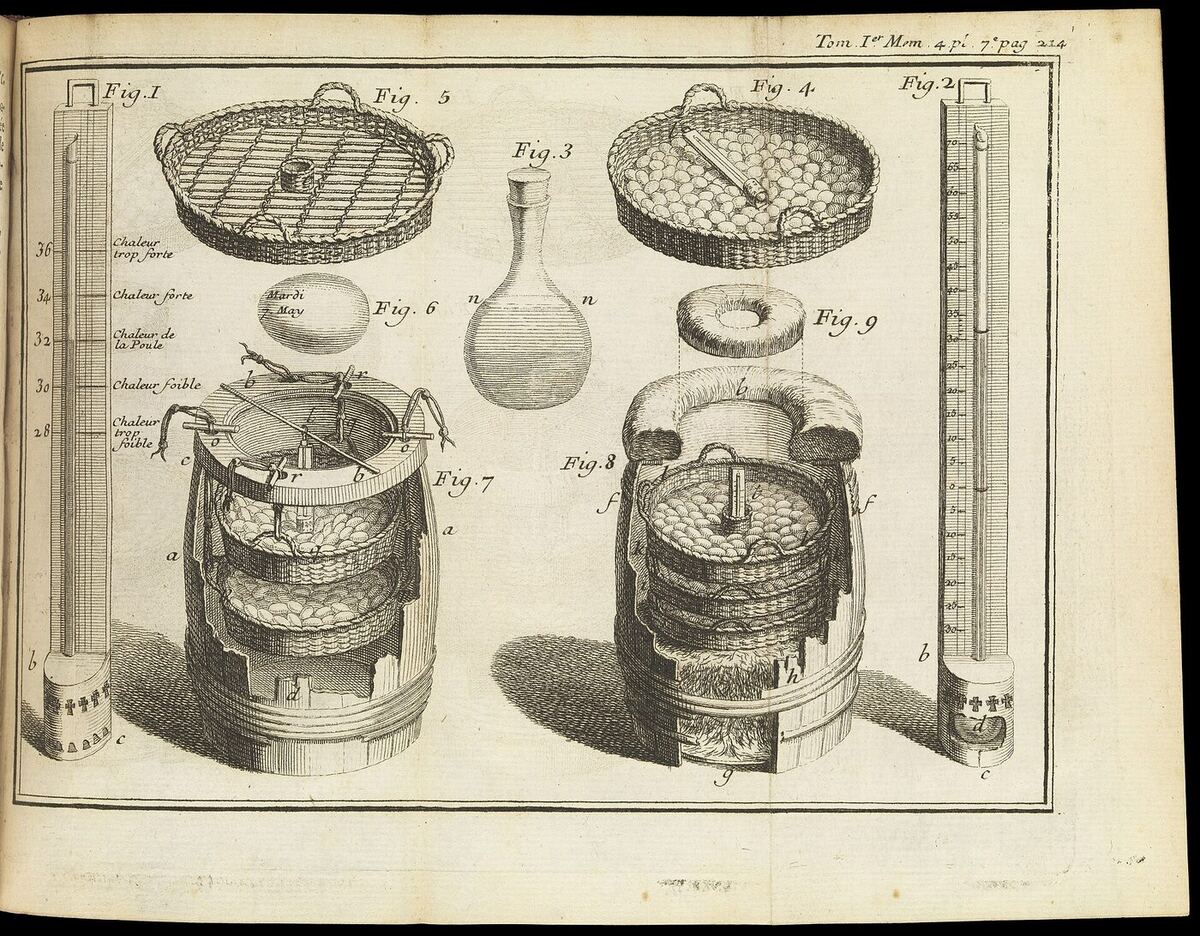

The periods are fixed by the species and are the first thing a beginner learns. A chicken egg hatches at 21 days; a duck egg at 28, except the Muscovy at 35; a goose egg at 28 to 33; turkey at 28; pheasant at 24 to 26; Coturnix quail at 16 to 18; bobwhite quail at 23 to 24; ostrich at 42. The tolerances around temperature are narrow, and humidity is the other controlled variable, because it governs how much water the egg loses through the shell: an incubating egg becomes lighter and its air space larger as water evaporates, and air that is too dry takes away too much for the chick to hatch. Development is suspended until incubation begins, which is what makes the practice of collecting a clutch possible at all; fresh fowl eggs will keep for about two weeks below 5 °C before they are set.
Turning runs through the first two and a half weeks and stops at transfer. By hand the eggs are turned several times a day and conventionally marked on opposite faces so that the operator can see what has been done; in a commercial setter the whole rack pivots from side to side, usually on the hour. At about day eighteen the eggs move from the setter to the hatcher, where they lie on flat trays so that the chicks can walk, and on day twenty-one the trays are pulled. What has been happening inside is not only growth: the inner layers of the shell are dissolved in the egg’s acidic environment and their calcium carbonate is taken into the skeleton of the embryo, so the chick that finally breaks out with its egg tooth has partly built itself from its own container.
Commercial practice is the same sequence in a much larger box. One commercial setter holds up to 124,416 eggs and measures about 4.7 metres wide by 7.2 metres deep; a large hatcher holds 15,840 and measures about 3.3 by 1.8 metres. Multi-stage setters carry several age groups at once and use the heat of the older embryos to warm the younger, at the cost of running every batch on a compromise; single-stage machines take one hatch at a time, can be tuned to the flock and to the day of the cycle, and are cleaned out completely between hatches, which is a biosecurity argument as much as an incubation one. Hatchability is the number the whole apparatus is judged on: a typical Canadian figure for 2011 was 82.2 per cent of eggs set producing a saleable chick, with a British estimate of 90 per cent.
Candling belongs to both scales and has not changed in principle. A bright light behind the shell shows detail through it — an infertile egg with only a round yolk sac, a blood ring where a fertilised egg has died, the vessels of a live embryo at eleven days — and the same technique, applied to eggs destined for the kitchen rather than the hatcher, is used in the egg industry to assess quality. The egg as food, and the arguments about cooking it, belong to rec.food.cooking and are not pursued here.
One practice sits exactly on the seam between the hatchery and the disease chapter below: in ovo vaccination, in which the vaccine is injected into the egg late in incubation rather than into the chick after hatching, which is an established method of protecting poultry and requires no handling of chicks at all. The hatchery is also where the sexes are separated. Vent sexing — reading a minute eminence on the wall of the cloaca — was described in a Japanese paper by Masui and Hashimoto in 1933, was translated into English soon afterwards, and spread worldwide as breeders hired practitioners trained in the technique or sent representatives to Japan to learn it. Feather sexing uses a sex-linked slow-feathering gene, so that in the right cross the primary wing feathers of the female chicks are noticeably longer than the coverts at hatch; colour sexing uses the sex-linked silver and gold genes. Auto-sexing breeds, in which the chicks can simply be told apart by their down, were created at Cambridge from the late 1920s by crossing Barred Rocks with a range of other breeds, the first of them the Cambar, produced by Reginald Punnett in 1928. The keeper of a garden flock, having none of this, waits four to six weeks for secondary characteristics to declare themselves — which is why the question of what to do about an unexpected cockerel is perennial wherever small flocks are kept. Automated systems for determining sex inside the egg were first introduced in 2018, well after the group’s active life.
Brooding, and the manipulation of day length
What follows hatching is heat, because a hatchling cannot regulate its own body temperature for the first few weeks. Commercial rearing schedules put numbers on it: a brooder temperature of 34 to 35 °C at day-old falling to 31 to 32 °C at fourteen days, with whole-house heating some three degrees below the brooder at day-old and six or seven degrees below it a fortnight later, by which time the birds are generating a good deal of their own warmth. The small-flock version is the same curve in a smaller box: a warmed area under a hover or a lamp, stepped down week by week until supplemental heat can be withdrawn, with temporary barriers used in the first days to keep the chicks near the heat, exactly as they are at the commercial end of the scale.
The instrument that everybody actually uses, at either scale, is the birds. Chicks crowded in a heap under the lamp are cold; chicks pressed against the far wall are too hot; chicks spread evenly with some of them asleep have the temperature right. With an infrared lamp this is not merely a convenience but a necessity, since radiant heat warms objects rather than air and an air thermometer reads the wrong thing. It is the clearest case in the whole subject of a practice that transfers intact between a house of twenty-five thousand birds and a cardboard ring in a garage.
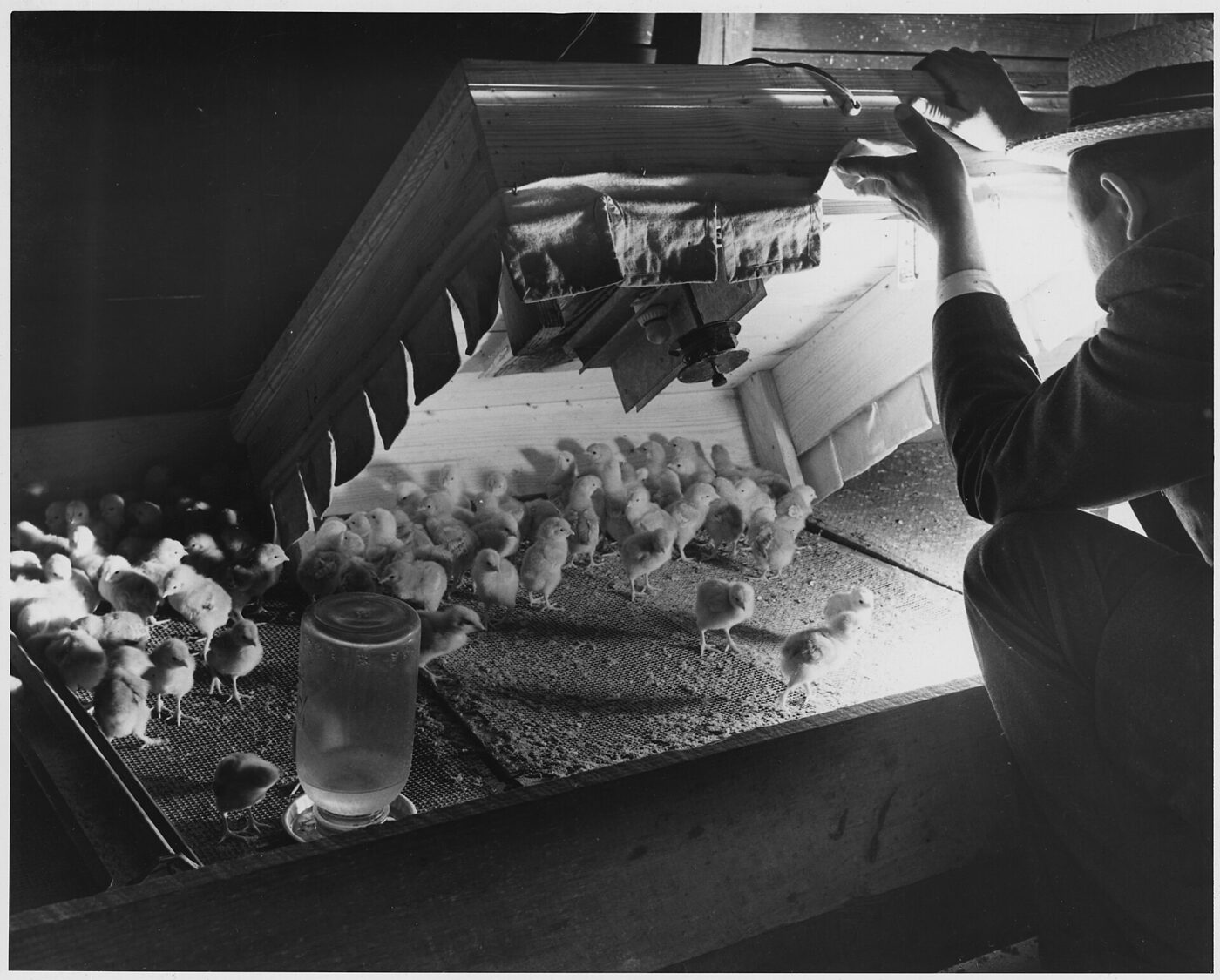

Day length is the other controlled variable, and it is the reason an entire genre of anxious question exists. Laying follows the light: left to the year, a flock lays in the warmer months and stops. In commercial layer housing the light phase is first extended to bring pullets into lay at sixteen to twenty weeks and then set to imitate a summer day, which keeps birds in production all year round; some commercial strains lay over 300 eggs in a year, and the highest authenticated rate on record is 371 eggs in 364 days. Production falls away from about twenty-five weeks of lay, and in many countries flocks are considered economically finished at around seventy-two weeks of age, after roughly twelve months of laying. For the keeper of a garden flock the same physiology arrives as the autumn moult, when laying stops and every first-season keeper asks whether something is wrong.
For a garden flock the whole apparatus is a choice rather than a schedule. Light the coop through the winter and the birds keep laying; do not, and they follow the year and stop. That is the smallest possible illustration of the page’s argument: identical physiology, identical numbers, two completely different decisions, and one newsgroup in which both were discussed in the same terms.
Breeds, conservation and the narrowing of the commercial base
A breed is a written description before it is a bird, and once the descriptions existed it became possible to notice that some of the birds were disappearing. Conservation of poultry genetics is organised, and by named bodies with dated methods.
The Rare Breeds Survival Trust was founded in the United Kingdom in 1973 by Joe Henson to secure the country’s native farm animal genetic resources, poultry included; no UK-native breed has become extinct since. It maintains a watch list, and in 2021 it replaced its five classifications — critical, endangered, vulnerable, at risk, minority — with two, priority and at risk. In the United States the equivalent body was incorporated in Vermont on 16 March 1977 as the American Minor Breeds Conservancy, was renamed the American Livestock Breeds Conservancy in 1993 and shortened its name again to The Livestock Conservancy in 2013. It conducted its first comprehensive survey of American livestock breeds in 1985 — called at the time the most comprehensive assessment of livestock genetic resources ever made in the United States — and has repeated it every five years since, monitoring endangered breeds in between. Its Conservation Priority List grades breeds as critical, threatened, watch, recovering or study, on thresholds of annual United States registrations and estimated global population; the 2024 list carried 51 chicken breeds, of which eleven were critical, sixteen threatened, seventeen watch, five recovering and two in study, alongside fifteen breeds of duck, thirteen of geese and eight of turkey.
The Conservancy also defines what may be sold as heritage chicken, and the definition is a set of conditions rather than a look. The bird must come from parent and grandparent stock of breeds recognised by the American Poultry Association before the middle of the twentieth century, with traits meeting the Standard for the breed; it must be reproduced and genetically maintained through natural mating at both grandparent and parent level; it must have the genetic ability to live a long, vigorous life outdoors, with breeding hens productive for five to seven years and roosters for three to five; and it must grow slowly, reaching market weight for its breed in no less than sixteen weeks, so that skeleton and organs develop before muscle mass. Birds sold as heritage must carry the variety and breed name on the label, and the Conservancy treats “heirloom”, “antique”, “old-fashioned” and “old timey” as implying heritage and bound by the same definition.
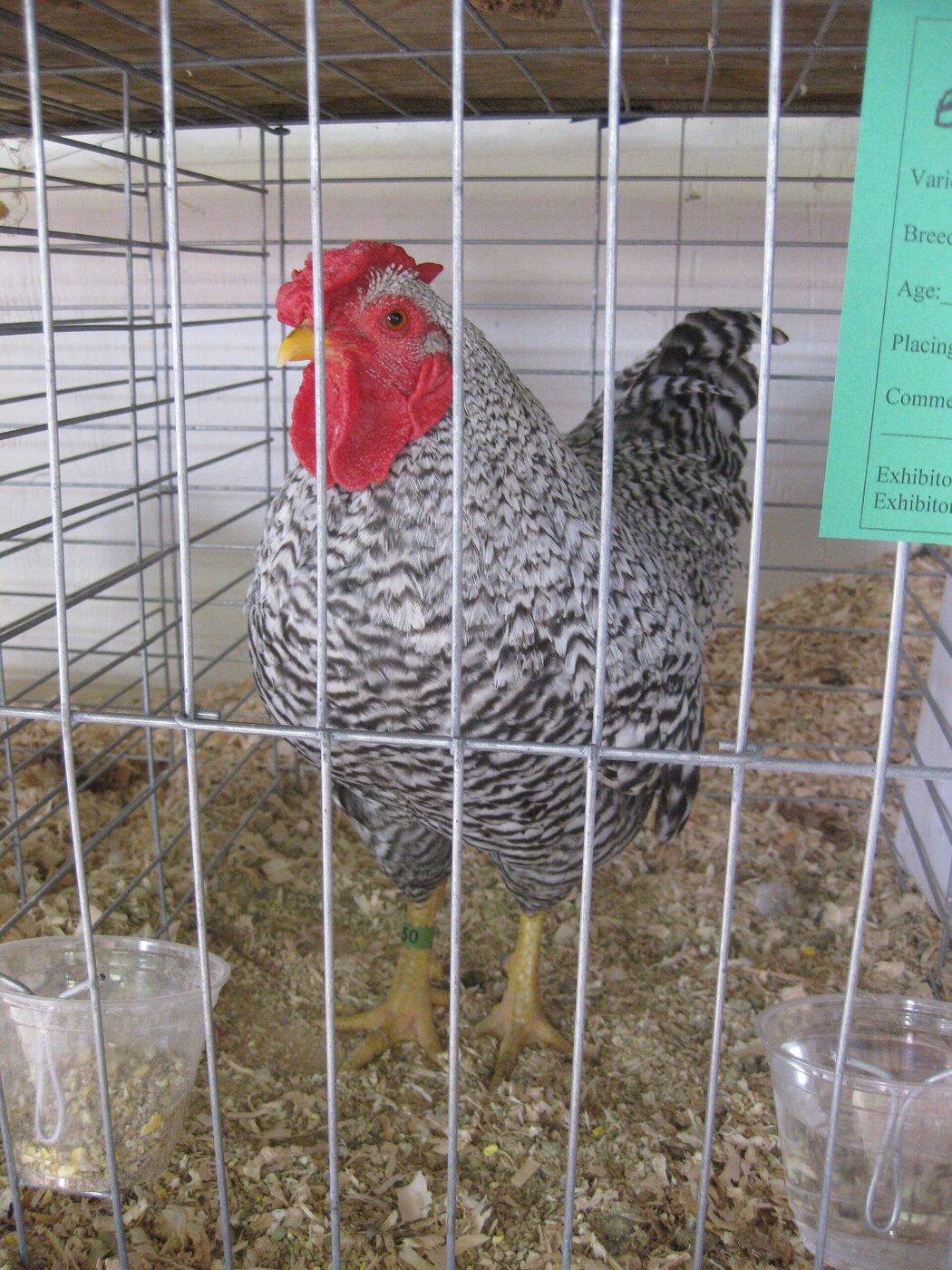
The Dominique is the standard illustration, and it is a full circuit. Barred, rose-combed birds of this type were well known in America by about 1750 and widely distributed in the eastern states by the mid-nineteenth century. In the 1860s the Plymouth Rock was created by crossing Black Java with large single-combed Dominiques, and at a poultry show in New York in 1870 the organisers ruled that only rose-combed barred birds could be exhibited as Dominiques, single-combed ones going in as Plymouth Rocks — a ruling confirmed by a written standard for the breed in 1871. The Dominique was in the Association’s first standard of 1874; the bantam form was added in 1960. Numbers declined through the twentieth century until by the 1970s the breed was close to disappearing; a recovery initiative was launched and from 1983 numbers began to rise, though it remained listed as critical, with fewer than 500 breeding birds in North America, until about 2003. In 2021 it was listed as watch.

Turkeys show the same narrowing more starkly. Broad-breasted birds displaced all other types in commercial production between the 1920s and the 1950s, first the Broad Breasted Bronze and then, once producers began in the 1960s to avoid dark pin feathers in the carcass, the Broad Breasted White. Selection for a single trait has left about 70 per cent of the weight of a mass-market turkey in its breast, and the birds are completely incapable of reproducing without artificial insemination. Around 1997 the Conservancy considered heritage turkeys the most critically endangered of all domestic animals; its survey that year found 1,335 breeding birds across all heritage varieties, with some breeds down to fewer than a dozen individuals. A census in 2003 found the breeding population had risen to 4,275, an increase of more than 200 per cent; by 2006 the count stood at 8,800 breeding birds and by 2007 above ten thousand, with seventeen breeds no longer close to extinction. That recovery was the work of the conservation bodies, a handful of dedicated breeders and the small farms that had quietly kept isolated strains going — which is to say, of exactly the readership that shared this newsgroup with the industry.
Disease as the subject that crossed both readerships
Nothing united the two audiences like a sick bird, and the veterinary material is the part of the subject where the same facts apply at every scale. Four things sit under poultry keeping everywhere.
Marek’s disease is a herpesvirus lymphoma of chickens named for József Marek, the Hungarian veterinarian who described it in 1907. The virus is shed in dander from the feather follicles and transmitted by inhalation; infected birds carry and shed it for life; newly hatched chicks are protected for a few weeks by maternal antibody. The classical form causes asymmetric paralysis of one or more limbs, with lymphomatous tumours in nerves, skin, muscle and viscera; the acute form is an epidemic in an unvaccinated flock and can kill up to 80 per cent of it, with onset at four to eight weeks of age. Vaccination, using the related and benign herpesvirus found in turkeys, is the only known way to prevent the tumours. It does not prevent infection, and it does not prevent a vaccinated bird from shedding the virus — which makes it what the literature calls a leaky vaccine, and the evolutionary implication has been argued in print for years: a vaccine that keeps hosts alive while permitting transmission removes the selective penalty on highly virulent strains, and virulent strains have duly been selected to the point that an unvaccinated bird will die if infected. Marek’s is accordingly the standard worked example in the wider argument about imperfect vaccines, and the same argument has been raised about avian influenza vaccination.
Coccidiosis is managed rather than eliminated. It is caused by protozoa of the genus Eimeria — E. tenella, E. acervulina, E. necatrix, E. brunetti and others — which tend to be host-specific and spread by oocysts in droppings. The commercial approach is a coccidiostat in chick feed to hold exposure low while immunity builds, coccidiocidal drugs such as amprolium or toltrazuril once an outbreak starts, and dry litter, since a shed oocyst has to meet oxygen and moisture to sporulate and takes two to seven days to become infectious. Birds that survive repeated small exposures become resistant, which is why the disease is a chick problem rather than an adult one, and why litter management is a disease intervention rather than housekeeping.
External parasites are a subject of their own, and their biology explains why they are so easily missed. The poultry red mite, Dermanyssus gallinae, normally feeds on the bird at night and hides by day in cracks and crevices away from the light, where it mates and lays; in favourable conditions it completes its life cycle in seven days, so populations grow explosively, and heavy infestations feed around the breast and legs, cause pain, irritation, scabbing and feather loss, depress egg production and can produce anaemia. It survives up to ten months in an empty house and has been implicated as a vector of salmonellosis, avian spirochaetosis, avian influenza virus and Erysipelothrix rhusiopathiae. The northern fowl mite, Ornithonyssus sylviarum, resembles it closely but lives permanently on the bird instead, has been recorded on 72 host species of North American birds in 26 families, and has been a major pest of the poultry industry since the early 1900s. One is found by searching the housing after dark; the other by parting the feathers of a bird in the hand. A keeper who does not know which of the two is present will look in the wrong place.
Newcastle disease is the fourth. It was identified in Java in 1926 and at Newcastle upon Tyne in 1927, though a disease that wiped out the domestic fowl of north-west Scotland in 1898 may have been the same thing. Strains are graded velogenic, mesogenic or lentogenic by virulence: the velogenic forms produce severe nervous and respiratory signs, spread rapidly and can kill up to 90 per cent of a flock; the mesogenic forms cause coughing, damage egg quality and production and kill up to a tenth; the lentogenic ones produce mild signs with negligible mortality. It is endemic to many countries, there is no treatment, and prophylactic vaccines and sanitary measures are what reduce the likelihood of outbreaks. Britain’s slaughter policy for fowl pest was ended in England and Wales on 31 March 1963, except for the peracute form of Newcastle disease and for fowl plague, while Scotland kept the slaughter policy for all forms. It has not gone away: from May 2018 the California Department of Food and Agriculture and the United States Department of Agriculture worked to eliminate an outbreak of virulent Newcastle disease in the south of the state, with more than 400 birds confirmed infected, the quarantine area extended on 27 February 2019 and further cases confirmed in northern California in March and in Arizona in April that year.
Avian influenza, biosecurity and the vaccination question
Avian influenza has the longest documented history of any poultry disease and the shortest fuse. It was identified as fowl plague by Edoardo Perroncito in 1878, distinguished then from the other diseases that killed birds in numbers; in 1955 the fowl plague virus was shown to be closely related to human influenza, and by 1972 it was clear that many subtypes were endemic in wild bird populations. Between 1959 and 1995 fifteen outbreaks of highly pathogenic avian influenza were recorded in poultry, with losses ranging from a few birds on one farm to many millions; between 1996 and 2008 at least eleven more were recorded, four of which killed or led to the culling of birds in the millions.
The subtype that dominated the group’s later years has a precise chronology. H5N1 was first detected in 1959 in Scotland, in two flocks of chickens. The strain behind everything that followed was found in a goose in Guangdong, in southern China, in 1996. In 1997 an epizootic in Hong Kong’s poultry produced the first known human infections with the subtype: eighteen people infected, six of whom died. The outbreak was stopped by killing the entire domestic poultry population of the territory — 1.3 million chickens — and by suspending imports from the mainland. The first human cases since 1997 were diagnosed in 2003; in January 2004 a major outbreak surfaced in the Vietnamese and Thai poultry industries and within weeks had spread to ten countries and regions across Asia. From 2020 a further panzootic, of the clade designated 2.3.4.4b, produced cases on every continent and adapted to a much wider range of species, mammals included — but that is well after this group’s active life, and is noted here only so that the earlier dates are not mistaken for the whole story.
What made avian influenza a subject for both of the group’s readerships was that the response is regulatory and applies to everyone who keeps birds. Avian influenza is a listed disease of the World Organisation for Animal Health — founded by international agreement in January 1924 as the Office International des Epizooties, and known by its present name since May 2003 — and national veterinary authorities are required to report detections of high-pathogenicity viruses in both poultry and non-poultry species including wild birds, and of low-pathogenicity viruses that have shown natural transmission to humans with severe consequences. The Organisation’s standards for the disease sit in chapter 10.4 of its Terrestrial Animal Health Code. Where an infection is found in poultry, the normal policy is to cull infected birds and those in close contact, together with movement restrictions, improved hygiene and biosecurity, and enhanced surveillance.
Biosecurity, in that framework, is not advice but a specification: prevent contact between poultry and wild birds; minimise movement around the enclosures; keep strict control over access by vehicles, people and equipment, and clean and disinfect housing and equipment; avoid introducing birds of unknown disease status; dispose properly of manure, litter and dead animals; report any suspicious case, alive or dead, to the veterinary authorities. Every one of those clauses reads differently in a sealed house with a shower-in entry and in a garden with a pop-hole and a bird table twenty feet away, and it is precisely that translation problem that a group containing both kinds of keeper was in a position to discuss. The published literature notes the difficulty directly: biosecurity measures designed for commercial farms can be less effective when applied to chickens that spend time outdoors in direct contact with wildlife, and avian influenza is a significant risk in backyard flocks for exactly that reason. The traffic runs the other way too — 45 outbreaks of salmonella in the United States between 1996 and 2012 were linked to the mail-order hatcheries that small keepers buy from.
Vaccination is the contested part, and the positions are on the record. The World Organisation for Animal Health holds that vaccination of poultry may be recommended under certain specific conditions, that this measure alone should not be considered a sustainable solution, that it must sit inside a comprehensive control strategy alongside the other health measures, that vaccines should comply with the standards in its Terrestrial Manual, and that vaccination will not affect a free country’s or zone’s status where surveillance supports the absence of infection; the decision rests with each national veterinary authority, on a risk analysis that takes in the international context, the potential economic consequences of current outbreaks and the capacity of the veterinary services to run an effective campaign at all. Practice varies accordingly: in China, the world’s biggest poultry producer, vaccination has been mandatory since 2017, with a bivalent or trivalent vaccine against the H5 and H7 subtypes, while other countries have relied on stamping out. The same body encourages its members to develop compensation schemes for producers whose birds are culled by order, on the ground that compensation is a key incentive for early detection and transparent reporting. Nothing in this paragraph is a recommendation; it is a summary of published positions, attributed.
Welfare regulation, by instrument and date
Intensive husbandry and animal welfare are contested, and this page takes no position. What can be set out without taking one is the sequence of instruments, the bodies that issued them and the dates on which they took effect — which is, not incidentally, the form in which the subject was admissible under the group’s own charter.
Switzerland banned battery cages from 1 January 1992, the first country to impose such a ban. In its 1996 report the European Commission’s Scientific Veterinary Committee condemned the system, concluding: “It is clear that because of its small size and its barrenness, the battery cage as used at present has inherent severe disadvantages for the welfare of hens.” The same committee also stated that enriched cages and well-designed non-cage systems had already been shown to have a number of welfare advantages over battery systems in their present form. Supporters of cage husbandry have argued that alternative systems such as free range carry welfare problems of their own, notably increases in cannibalism, feather pecking and vent pecking; a review of the question has made the point that those are problems of management, unlike the behavioural deprivation that is inherent in keeping hens in cramped and barren conditions. That exchange is reported here, not adjudicated.
Council Directive 1999/74/EC, passed in 1999, prohibited the conventional battery cage in the European Union from 1 January 2012, after a phase-out of more than a decade. It did not prohibit cages. Enriched or furnished cages remained lawful, and the directive specifies them: at least 750 square centimetres per hen, of which 600 must be usable area and the remaining 150 is a nest box; a cage at least 45 centimetres high; litter for scratching and pecking; 15 centimetres of perch and 12 centimetres of feed trough per hen; and a claw-shortening device. Welfare organisations including Compassion in World Farming criticised the compromise at the time and called for enriched cages to be prohibited too, on the view that they offered no significant or worthwhile benefit over the cage they replaced. One clause of the directive matters particularly for this page: it does not apply to establishments with fewer than 350 laying hens, which are covered instead by the general farmed-animal directive 98/58/EC. The instrument that reorganised European egg production therefore leaves the garden flock, and most of one of this group’s two readerships, formally outside it.
American measures came state by state, by ballot as well as by statute, and used a different kind of standard. California’s Proposition 2, approved on 4 November 2008 with 63 per cent of the vote — 8,203,769 votes for to 4,731,738 against — set its requirement by the animals’ ability to turn around freely, lie down, stand up and fully extend their limbs, rather than by any cage dimension; the operative part of the statute took effect on 1 January 2015, and a suit alleging that the wording was unconstitutionally vague for want of a stated cage size was dismissed, with the Ninth Circuit upholding the measure on 4 February 2015. Massachusetts adopted Question 3 on 8 November 2016 by 2,530,143 votes to 728,654, about 78 per cent of the ballots cast on the question. Michigan’s ban on battery cages and on the sale of eggs from them, adopted in November 2019, came into force at the end of 2024. By March 2020 California, Massachusetts, Washington, Michigan, Ohio and Rhode Island had all passed laws against battery cages, the first three also banning the sale of eggs produced in them.
The pattern across those instruments is worth naming because it is the reason the argument does not resolve: European regulation legislates the equipment, American ballot measures legislate the animal’s freedom of movement, and the two produce different compliance regimes, different inspection problems and different figures. Both were live during the group’s lifetime and after it, and both were, under the charter, on topic.
What the group carried
No thread-level history of sci.agriculture.poultry survives in usable form, and this page invents none. What can be described honestly are the classes of question that a group with this charter and this electorate necessarily carried, each of which is a recognisable genre in every practical newsgroup of the period.
The first is the smallholder’s first incubation. It is a question with a fixed answer set — temperature, humidity, turning, when to stop turning, when to stop worrying — asked afresh by a new person every spring, because the answers are not obvious and the consequences of getting them wrong are visible three weeks later and not reversible. Its natural companion is the post-mortem of a poor hatch, in which a described outcome (early pips that did not progress, chicks stuck to the shell, a tray of clears) is matched against the standard list of causes: temperature high or low, humidity wrong at the wrong stage, ventilation, turning, or eggs that were too old or too warm before they were ever set.
The second is the commercial producer’s ventilation problem, which is a different kind of question entirely. A growout house is a climate-control system with birds in it: minimum ventilation to bring fresh air in during the heating period, tunnel ventilation with evaporative cooling for the last weeks of a hot summer, automatically adjusted inlets, negative pressure to keep dust out, black-out construction and timer-controlled dimmable lighting so that the day can be set rather than received, and litter that must stay dry because dry litter is what keeps ammonia down and coccidial oocysts from sporulating. The problems are engineering problems with a biological deadline, and the people who could answer them were other people running similar houses.
The third is the exhibitor’s question about a standard, which is textual criticism conducted on a live bird: what the book says about a comb, a colour, a carriage or a leg feather, whether a given bird matches it, and whether a judge is right. It is the only one of the three where the authority is a published document rather than an outcome, and it is the reason the fancy generates so much precise vocabulary.
Around those sit the genres a group about an animal cannot avoid. The diagnosis thread, in which a bird is described in text — posture, comb colour, droppings, whether the breathing is audible, how many others are affected and how fast — and readers offer differentials, usually with a caution about diagnosing at a distance and a recommendation to have a dead bird examined properly. Predator questions, which are unavoidably regional: foxes, raccoons, hawks, mesh gauges and buried aprons mean different things in Australia, Canada and the American South, all of which were on the vote roll. Feed arguments, about protein percentages, calcium for hens in lay and the merits of scratch grain. Breed threads, weighing dual-purpose heritage birds against the hybrids bred to out-lay them — a distinction the industry itself had made sharp, since the arrival of specialised laying and meat hybrids split functions that older breeds had combined. And over all of it a calendar: chick orders in late winter, brooders in spring, heat management in summer, and the autumn moult. A group organised around an animal inherits that animal’s year.
Where it went
The unusual thing about this group’s decline is that its successor was already named in its own founding document. The February 1996 RFD listed six poultry websites as evidence that the demand existed; by the time the group quietened, sites of that kind were where the demand had gone. One of the six, FeatherSite — an on-line zoological garden of domestic poultry, with photographs and information on breeds of chickens, ducks, geese, guinea fowl, peafowl, pigeons and turkeys — is still online three decades later, which is a longer continuous run than most of the forums that replaced Usenet have managed. Chick Map, listed alongside it, was the chicken genome mapping project at the Roslin Institute, and the genome it was working towards was published in December 2004.
The substitution followed the shape of the readership. The commercial side moved to trade publications with websites, to the breeding companies’ own management guides — which are revised, dated documents rather than threads — and to the extension services, which took their bulletins online early because publishing to a dispersed audience was what they had been built to do; that institutional story belongs to the parent group and is not retold here. The small-flock side moved to large, long-lived, specialist web forums with searchable archives, breed sub-forums and photographs, which answered the one thing a text-only medium could never do for a keeper trying to describe a sick bird: show it. The fancy, which had had clubs, shows and standards for a century and a half before Usenet existed, carried on much as before with its correspondence moved onto the web.
The same years carried a revival at the small end of the scale that no one in 1996 had predicted. Keeping a few hens in a town garden became visible again through the 2000s: municipalities that had banned urban poultry began removing the old regulations or making permits easier to get, campaigns of the kind that produced Madison’s “Chicken Underground” overturned bans outright, and in the United Kingdom as many as 200,000 households became involved. The commercial marker usually cited is that sales of the Eglu, a moulded plastic hen house designed by four graduates of the Royal College of Art whose company was founded in 2004, rose ten-fold between 2004 and 2009. Many of the people arriving had no farm to have learned on and no neighbour who kept birds. What they had was the network — by then the web forum rather than the newsgroup.
The group itself was never removed. It survived the forged rmgroup of November 2001, it is still in the ISC active and newsgroups files, it is still carried by text news servers, and a reader with an NNTP client can still post to a group created by a 363-to-19 majority in March 1996.
What the record does not show
The paperwork above is unusually complete, and it is worth being explicit about how narrow a slice of the group’s life it covers.
No readership figures survive. The RFD’s subscriber counts describe two mailing lists in early 1996, not this newsgroup, and were themselves offered as claims by the list owners rather than measurements; no count of sci.agriculture.poultry’s readers has been located in any citable form, and any number offered for one should be treated as an invention.
No thread-level history survives in usable form. Article numbers can be read off the headers of archived postings, but they are one server’s running counts, they include cross-posts and they cannot be apportioned by period. No FAQ for the group has been located. The group was unmoderated from the second RFD onwards, so there is no submission archive, no editorial correspondence and no moderator’s record — the documents that, for moderated groups, often preserve more of the daily texture than the vote does. The first proposal’s plan for moderation, and the reasoning behind it, survive only because the first RFD does.
The vote roll is a census of an electorate, not of a readership. It records who mailed a ballot in a three-week window in March 1996. The domain counts in this article are a tally of that published roll and can be recounted by anyone; the inferences drawn from them about occupation are inferences, and are marked as such above. No individual voter is named here, and none of the roll’s names is matched to anything outside it.
The honest summary is that we know precisely how this group was made, what it was licensed to discuss, who voted for it and from where, and what world it was discussing. We do not know what any particular thread said.
Scope and limits
This page describes a newsgroup and the documented world it discussed. The proposal, the charter, the newsgroups-file line, the vote tally and the control messages are quoted from the Internet Systems Consortium’s mirror of the Usenet administrative record. Every date, tally and institutional fact in the historical sections is drawn from published sources; where two reputable sources disagree — as they do about when the American standard changed its title — the disagreement is reported rather than resolved. The page invents no thread titles, no posters, no quotations from the group and no message counts.
Intensive husbandry, cage systems, growth rate, vaccination policy and the culling of flocks are live disputes with committed advocates on several sides. This page keeps to the record and stays out of the argument: approvals with their issuing body and date, findings with the committee that made them, positions with the publication that carried them. Nothing on this page is advice about keeping, treating or killing birds, and nothing on it is a verdict.
The hierarchy this group belonged to, its conventions and its long quarrels with cranks and with the literature are covered on the sci.* page; the group-creation machinery and the master files that record it are described on the comp.* hub. The parent group, the rest of the sci.agriculture.* subtree, and agriculture’s own institutions and controversies are on the sci.agriculture page, which leaves poultry entirely to this one.
Reading sci.agriculture.poultry today
- Historical archive: Google Groups — sci.agriculture.poultry (coverage varies by group and era).
- Open in a newsreader:
news:sci.agriculture.poultry— the original site offered exactly this link, and it still works if your system has a newsreader registered for thenews:scheme. - Live access: point an NNTP newsreader at a modern server — see accessing Usenet today.
- The original news2mail e-mail subscription service ended in the mid-2000s and no longer operates.