alt.psychology.jung
Carl Jung and analytical psychology.
Archetypes, individuation, typology and dream-work discussed by an unusual mix of analysts, academics and enthusiasts — with the MBTI’s pop-Jungian legacy both used and disputed.
Reading-group threads on the Collected Works give it lasting reference value.
On this page
- The group and its neighbours
- Basel, the Burghölzli and the clinic years
- The association experiments
- Freud, 1906 to 1913
- The Black Books, the Red Book and 2009
- The vocabulary of analytical psychology
- Institutes, associations and the analyst's route
- The Collected Works and the memoir
- Psychological Types and the MBTI
- Contested ground
The group and its neighbours
The alt.* hierarchy asked nobody's permission: a group existed once a control message had been issued and enough news administrators chose to honour it, which is why it accumulated groups for single techniques, single grievances and, occasionally, single thinkers. alt.psychology.jung is one of the last sort. In the newsgroup lists carried by news servers it sits inside a small alt.psychology.* subtree whose other branches included alt.psychology.psychoanalysis, alt.psychology.transpersonal, alt.psychology.dramatherapy and alt.psychology.mindmachine, alongside the three siblings this directory also documents: alt.psychology.help, alt.psychology.nlp and alt.psychology.personality. The Big Eight carried its own psychology groups in parallel, among them sci.psychology.psychotherapy and sci.psychology.personality.
A named school is unusual ground for a discussion group, and Jung's suits the medium better than most. The primary literature is finite, wholly translated into English, numbered by volume and equipped with a general index, so a disagreement can be answered by citation rather than by assertion. At the same time the vocabulary has escaped the literature completely: introvert and extravert are ordinary English words, and a commercial personality-testing industry traces its descent to a single book of 1921. A group covering Jung has to hold both registers at once, and the friction between them is structural rather than accidental. What follows is background for a reader coming to the archive cold: history rather than instruction.
Basel, the Burghölzli and the clinic years
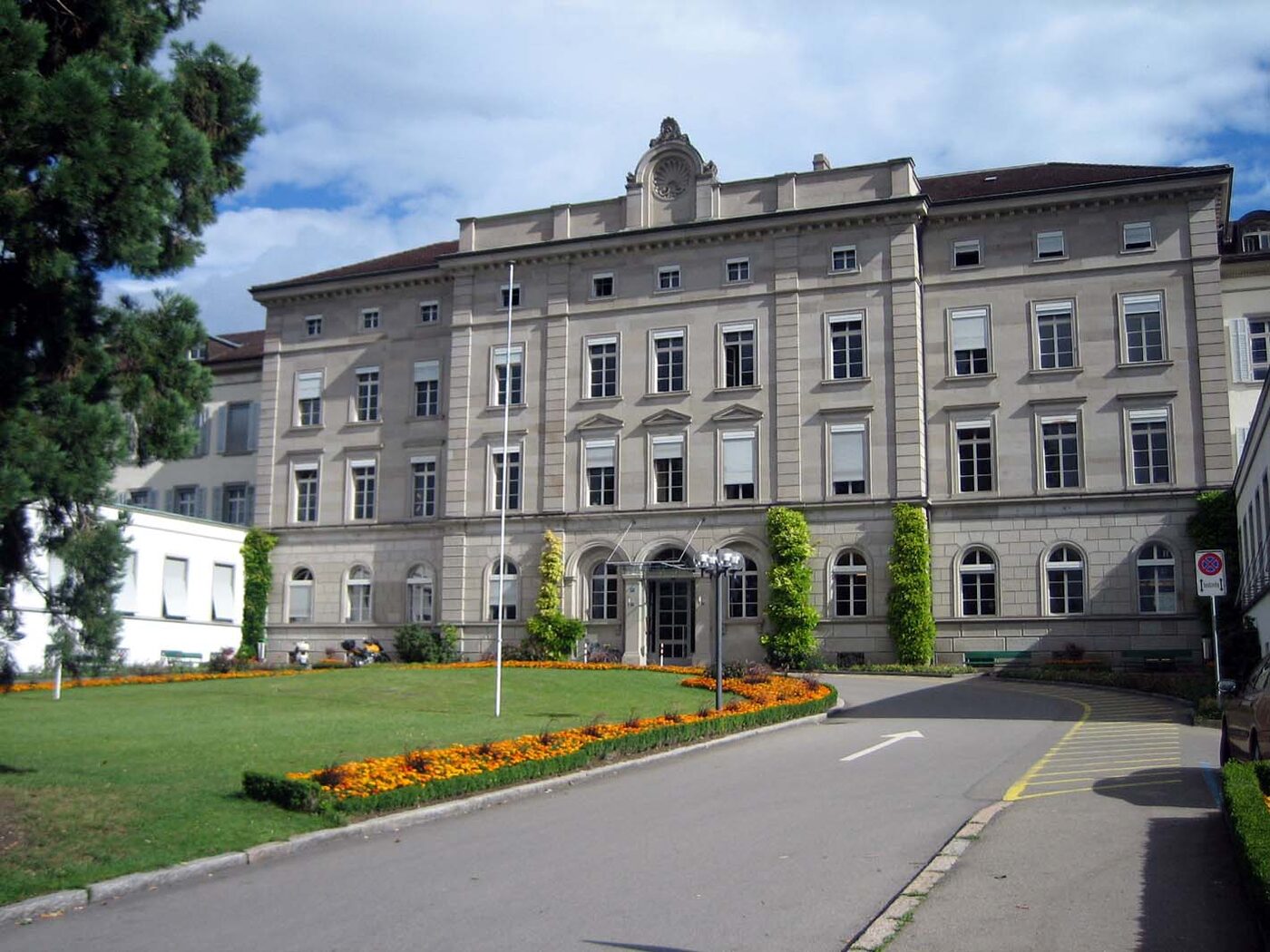
Carl Gustav Jung was born on 26 July 1875 at Kesswil, in the Swiss canton of Thurgau, into a family with clergy on both sides and very little money. He began medicine at the University of Basel in 1895 on a grant; his father died barely a year later, leaving the family nearly destitute, and relatives paid for the rest of his studies. His doctoral thesis, on the séances of a young medium who was his cousin, was published in 1903 as On the Psychology and Pathology of So-Called Occult Phenomena — a subject not eccentric by the standards of the day, following an earlier study by Théodore Flournoy.
In December 1900 he moved to Zurich as an intern at the Burghölzli, the cantonal psychiatric hospital, under Eugen Bleuler, who would later coin the term schizophrenia and who was already in correspondence with Sigmund Freud. Bleuler set Jung to review Freud's The Interpretation of Dreams. At the Burghölzli Jung's attention moved from neurosis to what was then called dementia praecox, and psychotic patients remained his primary clinical concern thereafter. In 1902 he took leave to study in Paris with Pierre Janet, whose idée fixe subconsciente he would later treat as the near equivalent of his own central term.
He married Emma Rauschenbach in 1903; the family wealth, from the Schaffhausen watch manufacturer IWC, secured the household for decades. In 1905 he was appointed a permanent senior doctor at the Burghölzli and a Privatdozent in the medical faculty of Zurich University. In 1909 he left the hospital and opened a private practice at his house at Küsnacht on the lake, which he kept until his death there on 6 June 1961.

The association experiments
Jung's first international reputation was made not by any doctrine but by a laboratory procedure. In the word association experiment as run at the Burghölzli, a researcher read a list of a hundred stimulus words to a subject, who was asked to answer each as quickly as possible with the first word that came to mind; the reaction time was measured in fifths of a second, and the experimenter noted the anomalies — hesitations, misheard words, slips of the tongue, visible signs of emotion, failures to answer at all. Clusters of anomalies around related stimulus words indicated, on Jung's reading, an emotionally charged group of associations operating outside the subject's control.
For that group of associations he used the term complex, or more fully the feeling-toned complex of ideas — a word he took up while still a close associate of Freud, and the one piece of his terminology that passed into general psychological use without dispute. The experimental work was published with Franz Riklin as Diagnostic Association Studies in 1904 and, in the English collection Jung sent to Freud, as Studies in Word Association. It gave psychoanalysis a measurable, repeatable procedure, produced in a respected teaching clinic rather than a consulting room. Jung also located the foundations of his later typology here, in the observation that some subjects answered to the objective meaning of the stimulus word while others were derailed by private, subjective associations.
Freud, 1906 to 1913
Jung sent Freud his word association work in 1906. Preceded by a lively correspondence, the two met for the first time in Vienna on 3 March 1907, in a conversation Jung remembered as running thirteen hours. In 1908 he became an editor of the newly founded Yearbook for Psychoanalytical and Psychopathological Research, and in September 1909 he sailed with Freud and Sándor Ferenczi to the twentieth-anniversary conference at Clark University in Worcester, Massachusetts, where Freud was the featured lecturer, Jung also spoke and both received honorary degrees — the occasion generally treated as the turning point in the American reception of psychoanalysis. In 1910 Freud proposed Jung, “his adopted eldest son, his crown prince, and successor”, as lifetime president of the new International Psychoanalytical Association; after objections from Freud's Viennese colleagues the office was reduced to a two-year term.
The rupture had several strands. The theoretical one was the libido: Jung declined to make sexual development the single motor of personality and was already reaching for an inherited, impersonal layer beneath the personal unconscious. The personal one included what Jung called the Kreuzlingen gesture, Freud's 1912 visit to Ludwig Binswanger without a call on Jung in nearby Zurich. In the same year Jung gave a six-week series of lectures at Fordham University in New York, published later that year as Psychology of the Unconscious and afterwards revised as Symbols of Transformation; of that book he said flatly that it cost him his friendship with Freud. At a meeting in Munich in November 1912, while Jung was speaking, Freud fainted.
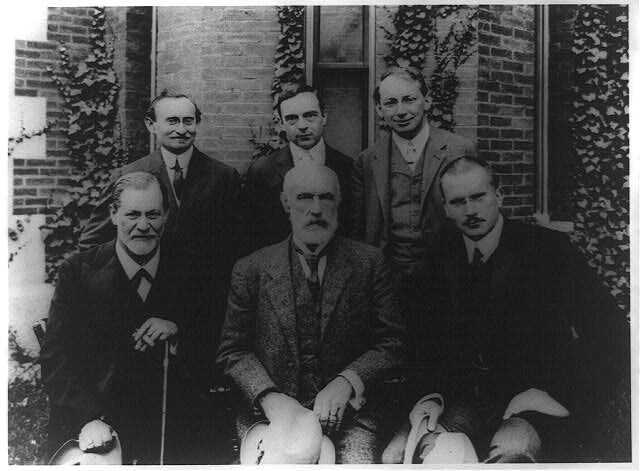

In early January 1913 Freud wrote proposing that the two of them “abandon our private relationship entirely”, and Jung agreed. They met for the last time in September 1913 at the Fourth International Psychoanalytical Congress in Munich, where Jung gave a paper on the introverted and extraverted types. He had by then begun calling his own approach analytical psychology, a name chosen expressly to mark the distinction. The precise causes of the final break are still argued over by Jungians and Freudians.
The Black Books, the Red Book and 2009
The years after 1913 were, by Jung's own later account, a period of severe disturbance which he called a confrontation with the unconscious and which the outbreak of war in August 1914 sharpened. He recorded seeing visions and hearing voices, and worried that he was menaced by a psychosis; he gave up his lectureship at Zurich University, though he continued in private practice. The historian of psychiatry Henri Ellenberger described the episode as a creative illness and compared it to Freud's own difficult years. He served through the war as a Swiss army doctor, commandant of an internment camp for British service personnel who had crossed the frontier.
He deliberately induced and then recorded the material, using the technique he named active imagination, in a series of small journals he called collectively the Black Book. Around 1915 he commissioned a large folio bound in red leather and began transcribing the entries into it in a formal script, painting as he went; he worked at it intermittently for some sixteen years, and about two-thirds of the pages carry his own illuminations. His title for the work was Liber Novus.
Jung left no instructions about what should become of it, and the family did not release it: up to September 2008 fewer than about two dozen people had seen the book. The historian of psychology Sonu Shamdasani spent three years persuading the heirs, and Ulrich Hoerni, Jung's grandson and the manager of the archive, decided to proceed once funds were raised through the Philemon Foundation. The manuscript was scanned in 2007 for W. W. Norton, and The Red Book was published on 7 October 2009 as a full-size facsimile of the German text with a separate English translation and Shamdasani's introduction and notes. The original folio and several of the Black Books were exhibited at the Rubin Museum of Art in New York from the day of publication, and a Reader's Edition carrying text and apparatus without the facsimile followed in December 2012. A primary source of the first importance thus entered the record forty-eight years after its author's death.
The vocabulary of analytical psychology
The terms below are given as Jung's published positions and as terms of art, which is how a reading group has to handle them; they are not reported here as established findings. Jung distinguished a personal unconscious, made of material once conscious and since repressed or forgotten, from a collective unconscious which on his account is not acquired within a life at all and “consists of pre-existent forms, the archetypes, which can only become conscious secondarily”. He defended the hypothesis by analogy rather than by evidence, writing that it “is, therefore, no more daring than to assume there are instincts”.
The archetype he described as a concept borrowed from anthropology to name a process of nature: the functional unit of the collective unconscious, inferred from recurring motifs in mythology, religious art and fairy tale across cultures. His definitions of it varied over his career and their usefulness has been debated since; it proved impossible in the first half of the twentieth century to isolate or categorise an archetype within a materialist frame. Among those he elaborated at length are the shadow, the repressed or disowned qualities of the conscious personality; the persona, named for the masks of Roman actors and described as “a compromise between the individual and society as to what a man should appear to be”; the anima and animus, the contrasexual figures; and the Self, which he treated as the central archetype of the whole process and as the thing mandalas symbolise.
That process is individuation, defined in the standard summaries of analytical psychology as the fulfilment of each individual “which negates neither the conscious or unconscious position but does justice to them both”. Jung regarded it as the main task of human development rather than as a cure for a disorder, and after his turn to alchemy treated analysis more as an instrument of personal growth than as treatment for particular illnesses. Dream material remained central, but he argued after the separation from Freud that dreams are better approached through active imagination and amplification — setting the image beside its parallels in myth and religion — than through free association.
Two further strands account for much of the later writing. Synchronicity, subtitled an acausal connecting principle, was his proposal that certain meaningful coincidences are not to be explained causally; he developed it partly with the physicist Wolfgang Pauli, with whom he published a joint volume in 1952. Alchemy entered through Richard Wilhelm's translation of The Secret of the Golden Flower, which reached Jung between 1928 and 1930; he read the alchemical operations as symbolic descriptions of individuation, and that reading produced Psychology and Alchemy in 1944 and Mysterium Coniunctionis, his last major book.
Institutes, associations and the analyst's route
From 1933 Jung was a regular participant at Eranos, the annual gathering founded that year by Olga Fröbe-Kapteyn at Ascona on Lago Maggiore, where analytical psychology was set beside the history of religions, indology and classical scholarship; Karl Kerényi, Heinrich Zimmer and Mircea Eliade were among the other participants. Eranos placed his vocabulary in the humanities as well as the clinic, which is one reason the readership of these texts has never been confined to analysts.
The institutional apparatus followed the war. In 1946 Jung became the first Honorary President of the newly formed Society of Analytical Psychology in London, having approved the training programme devised by Michael Fordham. In 1948 the C. G. Jung Institute was founded in Zurich to provide training and conduct research, with Marie-Louise von Franz and Jolande Jacobi active in its foundation; Jung led it until his death in 1961, and it moved to its present site at Küsnacht in 1979, where its library holds around fifteen thousand books and periodicals. Institutes of the same name were later established elsewhere, among them New York, Los Angeles and Chicago. In 1955 the International Association for Analytical Psychology was founded in Zurich by analysts close to Jung; it acts as the accrediting body for the field and by its own account now recognises fifty-eight groups or societies worldwide, with more than three thousand analysts in membership.
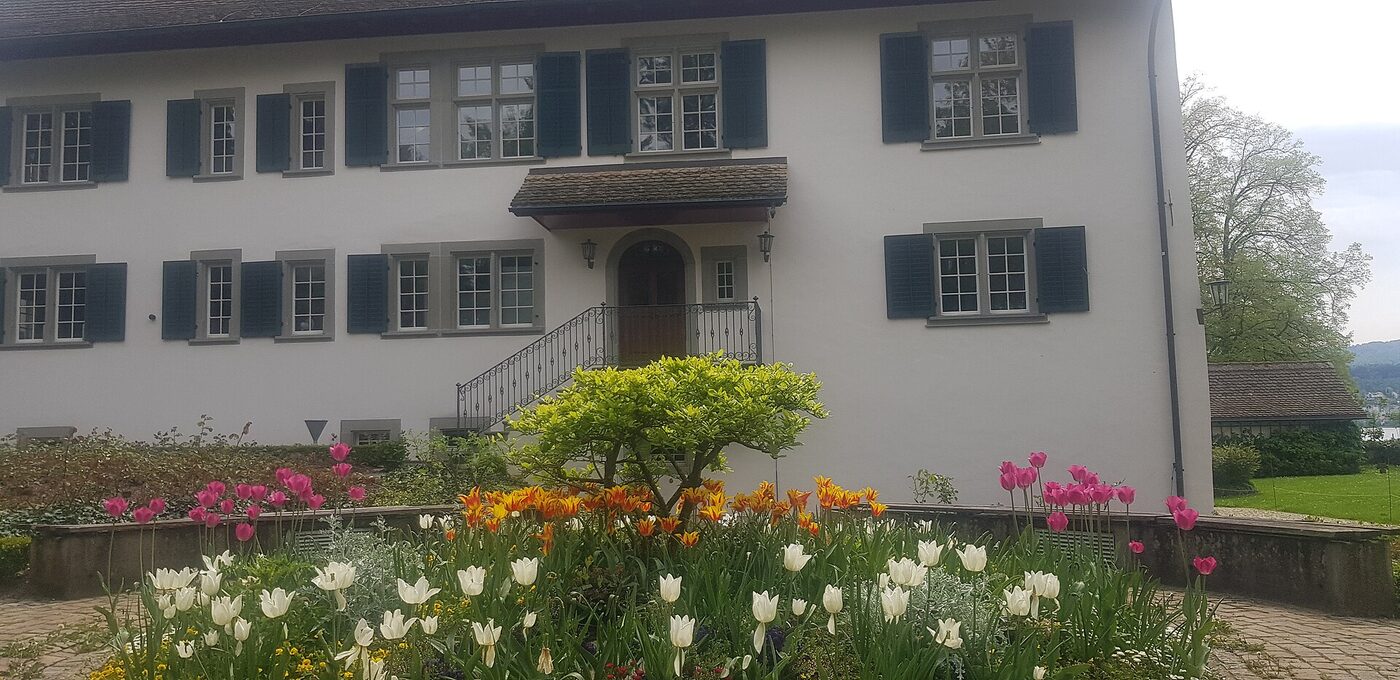

The training route is not a university degree but a long apprenticeship at an accredited institute, commonly undertaken as a second career: the Zurich institute's current published psychoanalysis programme runs to at least eight semesters and requires fifty hours of Jungian analysis before a candidate is admitted at all. Jung himself held it an imperative that trainees undergo their own analysis and continue self-analysis after qualifying. The result is a professional population that is small, scattered, textually trained and accustomed to arguing from sources — and, from the mid-1990s, reachable by anyone with a news server.
The Collected Works and the memoir
The reference edition is The Collected Works of C. G. Jung: twenty volumes, edited by Herbert Read, Michael Fordham and Gerhard Adler with William McGuire as executive editor, translated by R. F. C. Hull, and published in London by Routledge and Kegan Paul and in the United States by Princeton University Press in the Bollingen Series, the volumes appearing from the early 1950s into the following decades. Volume 6 is Psychological Types; volume 9 appears in two parts, The Archetypes and the Collective Unconscious and Aion; volume 12 is Psychology and Alchemy and volume 14 Mysterium Coniunctionis. Volume 19 is a general bibliography and volume 20 the general index of 1979, and a separate series prints the seminars. It is this apparatus, rather than any single title, that makes a group-wide reading programme feasible at all.
The book most often quoted against the Collected Works is Memories, Dreams, Reflections, published in German in 1962 as Erinnerungen, Träume, Gedanken and in English in 1963 by Pantheon, translated by Richard and Clara Winston. It is not a straightforward autobiography and was never presented as one: it was compiled by Aniela Jaffé, Jung's secretary and collaborator. Jung himself wrote the first three chapters, on childhood and early adulthood, the part of the travel chapter dealing with Kenya and Uganda, and the concluding chapter of late thoughts; Jaffé wrote the remainder in collaboration with him. The text was also cut before publication: the family sought deletions on grounds of privacy, the publisher wanted the length reduced, and Jaffé rewrote passages on Christianity she judged too controversial. Anyone quoting the memoir as Jung's own words is quoting a composite document.
Psychological Types and the MBTI
Psychological Types appeared in German in 1921 and in H. Godwyn Baynes's English translation in 1923. Jung set out two attitudes, introversion and extraversion, defined not as sociability or shyness but as the direction in which psychic energy moves, towards the subject or towards the object; and four functions, thinking and feeling as the rational or judging pair, sensation and intuition as the irrational or perceiving pair. Combining the two attitudes with the four functions yields eight types. Jung was explicit that an absolutely pure type is rare and that a secondary function ordinarily blurs the picture. His introversion and extraversion consequently do not mean what the same words mean in later trait psychology, where Eysenck's model and the Big Five define them through observable social behaviour.
The instrument that carried the typology into offices and career guidance was built by two people outside the profession. Katharine Cook Briggs had begun her own work on personality in 1917; reading the 1923 translation, she recognised a theory that resembled hers and went far beyond it, and published two articles on Jung in The New Republic in 1926 and 1928. She and her daughter Isabel Briggs Myers began constructing an indicator during the Second World War, in the belief that knowing one's preferences would help women entering industrial work find the jobs in which they would be most comfortable and effective; neither had formal training in psychology. The Briggs Myers Type Indicator Handbook was published in 1944 and reissued under the Myers-Briggs name in 1956; the first manual proper came from the Educational Testing Service in 1962, and publication passed to Consulting Psychologists Press in 1975.
The instrument's four dichotomies are extraversion or introversion, sensing or intuition, thinking or feeling, and judging or perceiving. Only the first three correspond to Jung's scheme: the judging-perceiving pair was added by Myers and Briggs. That derivation, part inherited and part invented, is the root of most of the arguments about it.
The documented criticism is specific and can be dated. A National Academy of Sciences committee reviewing the research in 1991 found that the introversion-extraversion scale correlated well with comparable scales on other instruments while the sensing-intuition and thinking-feeling scales showed relatively weak validity; it concluded that there was “not sufficient, well-designed research to justify the use of the MBTI in career counseling programs”, and that “the popularity of this instrument in the absence of proven scientific worth is troublesome”. Test-retest studies report that between 39 and 76 per cent of respondents receive a different classification after only five weeks. Most studies find scores on the individual scales distributed in a centrally peaked manner rather than the bimodal pattern discrete types would predict, so that the cut at the middle of each scale assigns a letter to people sitting near the centre; Robert McCrae and Paul Costa, comparing the indices with their own five-factor model, reported “no support for the view that the MBTI measures truly dichotomous preferences or qualitatively distinct types”. Reference works now routinely describe the instrument's claims as pseudoscientific — a judgement about the questionnaire and its marketing, not in itself a verdict on the 1921 book from which it took its first three letters.
Contested ground
Two further disputes attach permanently to the name, and both predate the newsgroup by decades. The first concerns Jung's conduct in the 1930s. In 1933, after the Nazis took power in Germany, he became president of the newly international General Medical Society for Psychotherapy, whose German affiliate, led by Matthias Göring, excluded Jews; that year the society's journal, the Zentralblatt für Psychotherapie, printed a statement endorsing Nazi positions and Hitler's book. In an essay published in the same journal in 1934, “The State of Psychotherapy Today”, Jung wrote that “the Aryan unconscious has a greater potential than the Jewish unconscious”. Also in 1934 he wrote in the Swiss Neue Zürcher Zeitung of his “great surprise and disappointment” at finding his name associated with the journal's pro-Nazi statement; he did not sever the connection, but arranged the appointment of a new managing editor, the Swiss analyst Carl Alfred Meier, under whom the journal continued to acknowledge Jewish doctors' contributions. He resigned the presidency in 1939. Scholarly assessments differ sharply: Andrew Samuels has argued that the remarks on the Aryan unconscious demonstrate an antisemitism “fundamental to the structure of Jung's thought”, while holding at the same time that the “pioneering nature of Jung's contributions” remains intact. The record is set out here; the verdict is not this page's to give.
The second is the standing of the work within psychology as a discipline. A survey published in Review of General Psychology in 2002 ranked Jung twenty-third among the most-cited psychologists of the twentieth century, though the list was compiled from United States journals by a single department. A study in the Journal of the American Psychoanalytic Association in 2008 found that psychology departments and textbooks treated psychoanalysis as, in its phrase, desiccated and dead. Jung is read seriously in religious studies, literary criticism, anthropology and art history, and by a training profession of a few thousand accredited analysts, while having little presence in empirical personality research — where, by a recurring irony, the best-known derivative of his typology is the one the discipline rejects.
Neither quarrel was invented on Usenet and neither was settled there. What a newsgroup adds is the collision itself: the historical record, the training profession, the humanities reception and the office questionnaire arriving in the same place, in a medium where each is expected to show its sources.
Reading alt.psychology.jung today
- Historical archive: Google Groups — alt.psychology.jung (coverage varies by group and era).
- Open in a newsreader:
news:alt.psychology.jung— the original site offered exactly this link, and it still works if your system has a newsreader registered for thenews:scheme. - Live access: point an NNTP newsreader at a modern server — see accessing Usenet today.
- The original news2mail e-mail subscription service ended in the mid-2000s and no longer operates.