qc.politique
Politics of Quebec.
The qc.* hierarchy served Quebec, and this was its politics room — sovereignty and federalism, language legislation and provincial elections, conducted mainly in French.
A province with its own hierarchy is unusual, and qc.* is one of the clearer cases of a Usenet namespace drawn around a political community rather than a country or a language alone.
On this page
- Two control messages, one hundred and fourteen seconds apart
- The shape of qc.*: three groups and no branches
- Small, but not unusually small
- The alternatives already on the shelf
- What a provincial namespace offered that the others did not
- How it was administered, so far as anyone can tell
- The calendar the room ran on: constitutional rounds
- The calendar the room ran on: elections
- The parties, and what distinguished them
- Language legislation as a political fact
- French as the working language of a hierarchy
- What became of qc.*
- What the record does not show
- Scope and limits
Two control messages, one hundred and fourteen seconds apart
Most Usenet hierarchies leave a paper trail with some pretension to procedure: a request for discussion, a call for votes, a published tally, a charter argued over clause by clause. The control-message archive mirrored by the Internet Systems Consortium holds four files under the qc.* heading, and two of them are the entire founding record. On 5 May 1994, at 23:40:38 and 23:42:32 Eastern Daylight Time — one hundred and fourteen seconds apart — a machine at McGill University in Montreal emitted the newgroup control messages for qc.general and qc.politique.
The two messages are word for word identical except for the name each carries. Both are signed From: [email protected] (Steve Robbins); both are stamped Organization: Centre for Intelligent Machines, the McGill research centre from whose host they were injected; both carry Approved: [email protected]. And both were posted not to news.announce.newgroups, the Big Eight's register of record, but to can.general and mtl.general — the Canadian national group and the Montreal city group, which is to say the two rooms in which the people affected were already sitting. The body of each runs to four lines above a two-line signature.
It seemed time to create qc.general and qc.politique, and there was almost no debate since I proposed this two weeks ago, so we will assume the silent majority thinks these are a fantastic idea, and we hope you create these two groups.
That is the documented creation procedure of the qc.* hierarchy in full. No request for discussion survives in the archive, no call for votes, no result posting, no five-day correction window, no neutral votetaker. For a Big-Eight group every one of those was compulsory, and the machinery is described at length on the soc.* hub page. For a regional hierarchy none of them was. A newgroup message was never an instruction; it was a request addressed to every news administrator on the network, each of whom decided individually whether to act on it. The last clause above is not a rhetorical flourish. It is an exact statement of what the message could and could not do.
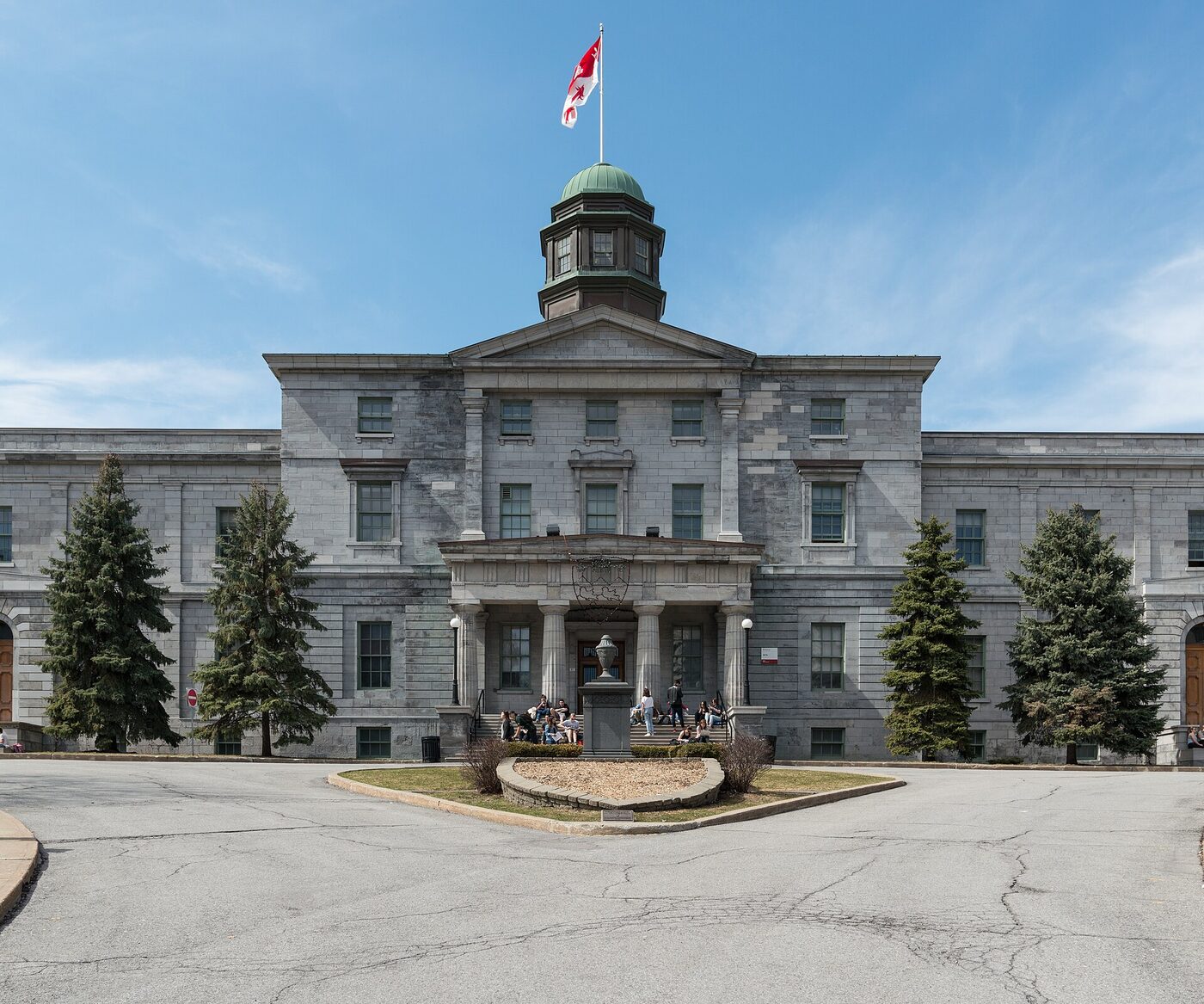

The wording repays a second reading for what it concedes rather than what it claims. Somebody had floated the two groups a fortnight earlier — the message does not say where, though the two groups it was sent to are the obvious candidates — and almost nobody had answered. Rather than read silence as failure, the proposer read it as consent, said so in writing, and shipped. A good deal of the regional namespace was founded on that reasoning, and it held up better than a constitutional lawyer would predict, for the plain reason that nobody who objected was obliged to carry the result.
Three decades on, the group is still on the list. The newsgroups file that the ISC publishes as the canonical description of the world's Usenet namespace — 45,003 entries in the copy dated 25 August 2026 — carries this line:
qc.politique — Politics of Quebec.
Three words and a full stop. That entry, and the two control messages above, are the primary sources for everything this page can say with confidence about the hierarchy itself. What follows separates them carefully from the much better documented history they point at.
The shape of qc.*: three groups and no branches
A hierarchy is conventionally a tree. This one is a shrub. The current ISC list contains three names under the qc.* prefix, none of them below the second level, and the companion active file flags all three y: unmoderated, posting permitted. There are no sub-branches, no qc.rec.*, no qc.comp.*, nothing corresponding to the elaborate topic trees of the German or Italian hierarchies, which run to hundreds of groups apiece.
qc.general— General interest items about Quebec.qc.jobs— Jobs in Quebec.qc.politique— Politics of Quebec.
Those one-line descriptions, quoted exactly as the canonical list carries them, are the nearest thing any qc.* group possesses to a charter. No fuller statement of scope for any of the three appears in the ISC files, and none is quoted in the control messages.
Two of the three have a deliberate creation on record. The third does not. The only control messages the archive holds for qc.jobs are three newgroup messages, identical in content, sent within three seconds of one another on 10 July 1998 from a host at a software company in the United States, each carrying a three-line body whose only sentence reads Control message generated by Netscape Collabra Server. No proposal, no discussion, no human sentence.
The same signature appears one rung higher up. On 19 August 1997, over two minutes and forty-five seconds, a news server identifying itself as belonging to Discreet Logic, Inc. — its message identifiers stamped with a host in the qc.ca domain — emitted an rmgroup for the bare top-level name qc, then a newgroup for it, then another rmgroup, then another newgroup. All four bodies say the same thing about where they came from. The archive files them under qc.* because that is what their control headers name; they tell us nothing whatever about Quebec.
The practical consequence is worth stating plainly, because it is the kind of thing that gets rounded off in secondary accounts: as the namespace now stands, two of its three groups have a documented human origin and the third has an origin that its own message body attributes to a piece of server software. Whether qc.jobs was ever wanted, discussed or used is not answerable from the administrative record.
Set beside the neighbouring province, the trio looks less improvised than it might. Alberta's ab.* holds four groups in the same list: ab.arnet, ab.general, ab.jobs and ab.politics. General discussion, work and politics were, in effect, the minimum viable provincial hierarchy on this network. Quebec's version of that minimum arrived in two instalments: politics and general discussion in the first two minutes, employment four years later and by machine.
Small, but not unusually small
The base text above describes a province with its own hierarchy as unusual. The current namespace invites a refinement of that, and this page would rather be accurate than striking. The ISC list of 25 August 2026 contains 45,003 groups distributed across 479 distinct top-level names. Of those 479, one hundred and forty-five have three groups or fewer; the median top level has eight. A three-group hierarchy is not an anomaly. It is close to the ordinary size of a top-level name on Usenet, once the handful of giants is set aside.
Nor was a Canadian province an unusual thing to name one after. Eight provincial codes appear as top-level names in the current list:
ab.*(Alberta) — 4 groupsbc.*(British Columbia) — 13nb.*(New Brunswick) — 5nf.*(Newfoundland and Labrador) — 13ns.*(Nova Scotia) — 6ont.*(Ontario) — 13pei.*(Prince Edward Island) — 1qc.*(Quebec) — 3
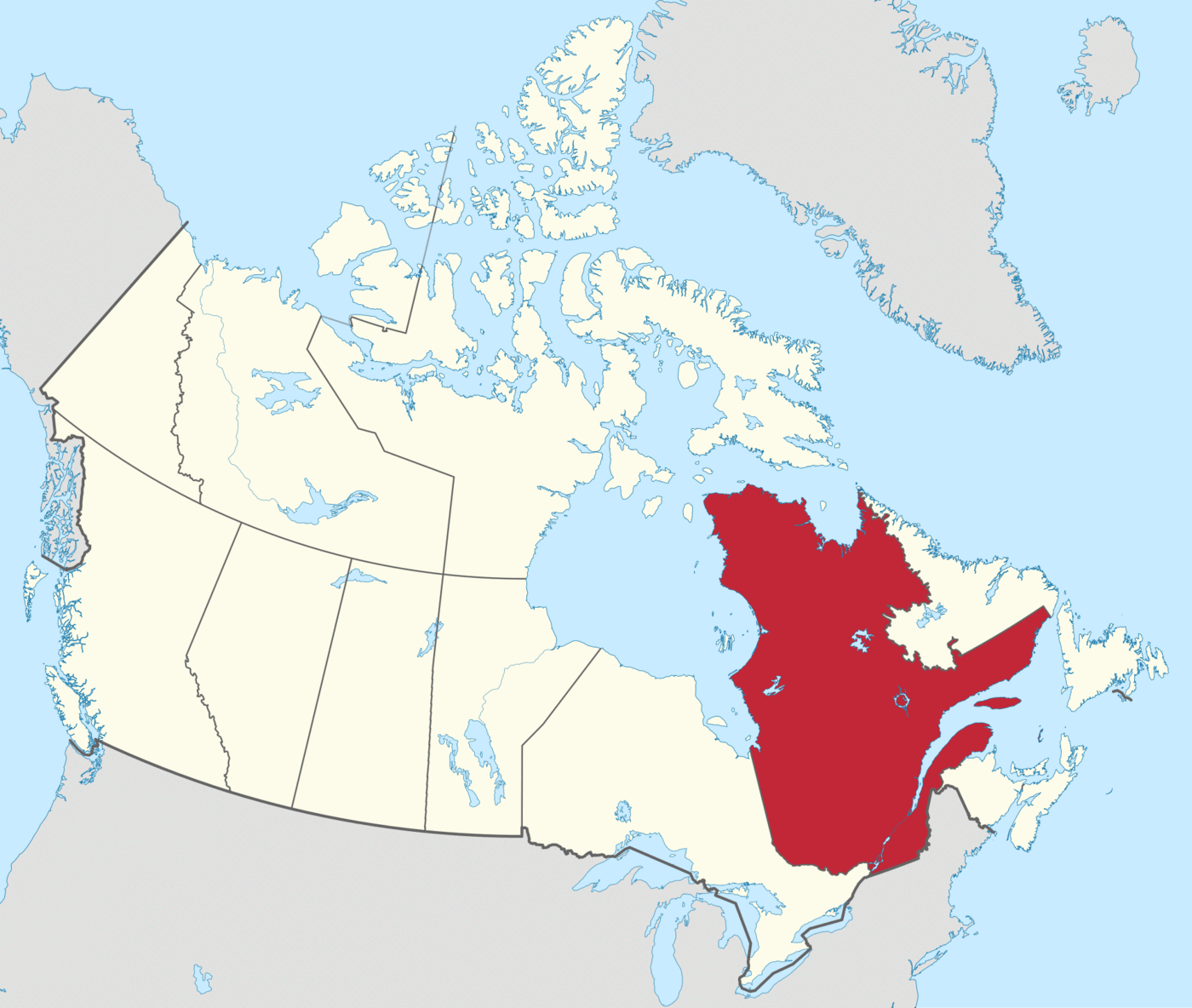

Manitoba and Saskatchewan have no provincial top level in the list at all; the two-letter code sk, which a Canadian reader will expect to mean Saskatchewan, belongs in this namespace to Slovakia, which holds thirty-two groups under it. Alongside the provinces sit a dozen Canadian city and regional hierarchies — Calgary, Edmonton, Halifax, Kingston, Kitchener-Waterloo, Montreal, the Niagara Peninsula, Ottawa, St John's, Toronto, Vancouver and Winnipeg — of which Ottawa's ott.*, at twenty-seven groups, is the largest. The geography of Usenet was allocated the way most of Usenet was allocated: by whoever asked, in whatever order they asked.
What distinguishes qc.* is therefore not that it exists, nor that it is small, but its composition. In bc.* politics is one group of thirteen. In ont.* it is one of thirteen. In the national can.* it is one of forty-eight. In qc.* it is one of three, and one of the two the hierarchy was born with. In the province's namespace politics had a room from the first minute; employment arrived four years later, and classified advertising, weather and computing — all of which other Canadian hierarchies found room for — never arrived at all.
Regional politics groups were themselves common enough — the current list carries ab.politics, bc.politics, edm.politics, ont.politics, ott.politics, wpg.politics and the national can.politics, among many outside Canada. Quebec's differs from every other Canadian one in a single visible respect, and it is the respect a reader notices first: the subject word is French.
The alternatives already on the shelf
The structural question this page exists to ask is why anyone bothered. In May 1994 a francophone Quebecer with a news feed had several established places to argue about Quebec, none of which required creating anything. Establishing what those places were, and how large they are today, is possible from the same files.
The first is the obvious one, and its timing is the surprise. soc.culture.quebec, the Big-Eight group for Quebec society and culture, did not yet exist when qc.politique was created. Its request for discussion is dated 8 June 1994 — a month after the qc.* control messages — and was posted by two proposers, one writing from the University of Montreal and one from a network in New Brunswick, to news.announce.newgroups, news.groups, soc.culture.french, soc.culture.belgium, soc.culture.canada and soc.culture.swiss; its own text adds the French hierarchy's announcement group, fr.announce.newgroups, to that list. A call for votes, bilingual throughout and conducted by a neutral votetaker from the Usenet Volunteer Votetakers, followed on 11 July, and a second on 28 July. Voting closed at 23:59:59 GMT on 13 August 1994. The result, dated 15 August, was 440 in favour and 80 against with, in the votetaker's words, no abstentions — comfortably clearing both the hundred-vote margin and the two-thirds supermajority the Big Eight required. The newgroup message went out on 22 August 1994 over the signature of the moderator of news.announce.newgroups. The whole process, from proposal to creation, took seventy-five days and produced an archive file of 1,490 lines, including the full roll of voters. The provincial hierarchy had taken one hundred and fourteen seconds and a four-line message.
The charter printed in that call for votes opens with an argument directly on this page's subject, and is worth quoting because it is the clearest surviving statement of how Usenet's rule-makers thought about sub-national territories:
Several culture-oriented groups have names reflecting a particular region or population, whose culture is distinct to a nation. There currently exists the newsgroup soc.culture.puerto-rico, for example. Puerto-Rico in the United States, like Quebec, a province of Canada, has a specific culture, language and territory.
One absence in that document is conspicuous. It lists soc.culture.french and soc.culture.canada as the groups in which Quebec was currently being discussed, and nowhere mentions qc.general or qc.politique, which had been in existence for a month. The likeliest explanation is prosaic rather than pointed: the two namespaces were separate worlds, a Big-Eight proposer was addressing a worldwide electorate most of whose members would never see a Canadian regional feed, and there was little to be gained by citing groups the voters could not read. The archive does not say, and this page will not pretend otherwise. What the culture group became once it existed — including the referendum year, which it lived through in real time — is told on its own page and is not retold here.
The second alternative was the national hierarchy. can.* stands today at forty-eight groups, and its list is a small monument to how a bilingual federation organises a namespace: can.politics (Canadian politics), can.english (the Canadian English-speaking population, in English), can.francais (the Canadian Francophone population, in French), and can.talk.bilingualism, whose official description in the canonical list reads, in full, Flames about Canadian English or French, depending. Whoever wrote that line had read the group. Canada is covered on its own page.
The third was the French-language hierarchy. fr.* is the largest of the alternatives by a distance — 144 groups in the current list — and it is organised by language rather than by territory, which is precisely the distinction at issue here: any francophone anywhere was in principle at home in it, and its administration, documentation and centre of gravity were European. Its relationship with the parallel alt.fr.* tree is covered on the page for alt.fr.comp.os.ms-windows.xp, and one of its social groups on the fr.soc.religion page.
The fourth was the city. mtl.* holds five groups — activism, the Montreal FreeNet, general discussion, testing and small advertisements — and it was one of the two places the qc.* control messages were posted, which establishes that it already existed in May 1994. Montreal had a namespace when Quebec did not.
Four answers, then, to the question of where a Quebec political argument belonged in 1994: a world culture group that had not yet been voted on, a bilingual national hierarchy, a language hierarchy centred on another continent, and a city. qc.* was a fifth, and the only one drawn around the province as a political unit.
What a provincial namespace offered that the others did not
The honest answer is that no surviving document says. There is no qc.* charter, no hierarchy FAQ, no policy statement, no administrative posting of any kind in the archives consulted for this article. What can be done is to set out, without attributing them to anyone, the properties a separate top-level name actually had on this network, and to leave the reader to judge which of them mattered.
The first is carriage. A hierarchy was a unit of subscription. A news administrator configured feeds in terms of whole prefixes, and a site could take qc.* entire, or decline it entire, without touching anything else. For a Quebec university or provider that meant a single line in a configuration file delivered the province's groups to every local reader; for a site in Bavaria or Adelaide the same line, omitted, saved the traffic. A group buried inside soc.culture.* or can.* had no such switch: it arrived, or failed to arrive, with everything around it. On a network where transatlantic bandwidth was metered and news administrators pruned feeds for a living, this was not a small property.
The second is the absence of an electorate. A Big-Eight group needed a hundred more yes votes than no votes and a two-thirds majority of a worldwide, overwhelmingly anglophone franchise. A regional group needed one person to send a control message and enough administrators to act on it. Whatever else can be said about the two paths, only one of them let the people affected decide the question among themselves.
The third is naming. In a hierarchy of its own, the province could call its groups whatever it liked in whatever language it liked. Inside soc.culture.*, the name would have been settled in English and argued over by strangers, since the Big Eight treated the shape of its namespace as a matter of general concern rather than local preference.
The fourth is that Canada's own Internet was already organised this way. The .ca country-code domain was delegated in May 1987 and run for its first thirteen years from the University of British Columbia on an explicitly geographic plan: nationally incorporated organisations could register directly under .ca, but provincially incorporated ones registered under a provincial third level, so that a Quebec company was something.qc.ca and an Ontario one something.on.ca. Anyone administering a machine in Quebec in 1994 typed qc as a routine part of its address; the Canadian Internet Registration Authority did not take over the domain until December 2000, and new third-level registrations were closed only on 12 October 2010. The hierarchy label and the domain label were the same two letters, and the voter roll of the soc.culture.quebec ballot is full of addresses that show it — the provincial electric utility's research and engineering hosts, a national optics institute and a handful of small providers, all under .qc.ca. That a provincial namespace felt natural in this particular federation is not much of a mystery.
None of that is evidence of intent. It is the set of things a hierarchy did, arranged so that a reader can see what was on offer. The one thing the record does establish is that the offer was taken up twice, in two minutes, by one administrator, and not extended afterwards.
How it was administered, so far as anyone can tell
The file that answers this question for most hierarchies is control.ctl, the access-control table shipped with the INN news server and maintained collectively by news administrators. For each hierarchy it records who is entitled to create and remove groups, and — for the better-organised ones — the PGP key their control messages must be signed with, the URL of the hierarchy's documentation, and the name of its administrative newsgroup. The canonical copy on the ISC server, last modified on 5 August 2023, carries three hundred and ten named hierarchy blocks.
Not one of them is qc.*. There is no entry for the Quebec hierarchy under any spelling, no contact address, no key, not even the this hierarchy is defunct, please remove it annotation that the file attaches to several dead namespaces. The national can.* and the Montreal mtl.* are absent too. In the absence of a specific rule, the file's opening defaults apply: newgroup:*:*:mail and rmgroup:*:*:mail, meaning that a control message affecting these groups is not acted on but mailed to the local news administrator to deal with by hand.
Twenty-one Canada-related blocks do appear in the file: British Columbia, Ontario, Newfoundland, St John's, Ottawa, Halifax, Hamilton, Winnipeg, Vancouver, the Niagara Peninsula, Kitchener-Waterloo, three community networks in Ottawa and Toronto, and a run of individual universities. Exactly one of the twenty-one has anything to do with Quebec, and it is not a Quebec hierarchy: Concordia University in Montreal maintains concordia.*, a university's own namespace with a named contact at its news server. The province, as a province, has no entry.
The contrast with hierarchies that were governed is stark and easily read off the file. fr.*, the French-language hierarchy, lists a documentation URL, an administrative group for announcements, a published key fingerprint, and a rule that drops any unsigned control message outright. Ottawa's ott.* lists seven authorised addresses for each of the three control actions. British Columbia, Ontario and Newfoundland each name a single maintainer whose messages are to be obeyed. These are the marks of a hierarchy someone is looking after.
The second place to look is inside the hierarchy itself, because a self-governing namespace normally keeps its constitution in a group of its own. British Columbia has both bc.config (bc.* hierarchy maintenance) and the moderated bc.admin.announce. Ottawa has ott.config, Toronto tor.config, Newfoundland nf.config, Kitchener-Waterloo kw.config, the Niagara Peninsula niagara.config. Canada has can.config, described as managing the Canadian can.* newsgroups and itself created in September 1994, from a host at Carleton University, with a body reading There seems to be general agreement that this group is needed. — the same constitutional theory as Steve Robbins's message four months earlier, and by then evidently the house style. Quebec has no such group. It has general, jobs and politics, and no room in which to discuss its own namespace.
The third place is the archive itself. It holds no checkgroups message for qc.* — the periodic signed posting by which a maintained hierarchy tells the world's servers exactly which groups it contains — and the ISC's Special hierarchy notes, the file in which the archive's former maintainers recorded what they knew about particular namespaces, does not mention Quebec at all.
The plain reading is that qc.* had no documented governance: no procedure, no administrator of record after 1994, no signing key, no administrative group. It should not be assumed to have worked like the German or Dutch hierarchies, each of which appears in control.ctl with a published key fingerprint and a rule dropping unsigned messages; there is no evidence that it worked like anything. The 1997 and 1998 machine-generated control messages are the practical demonstration. In a hierarchy with a key and a rule they would have been dropped at the door. Here, one of them appears to have left a group behind.
The calendar the room ran on: constitutional rounds
A politics group takes its rhythm from a calendar it does not control. The dates below are the public record of the subject qc.politique was named for, given as chronology and nothing more; the arguments made about them on Usenet were made by people who are not this page's to characterise, and the referendum year itself belongs to the culture page.
The sequence begins before the group by a full generation. On 20 May 1980 the province held its first referendum on sovereignty; the proposal was defeated, 59.56 per cent to 40.44. Constitutional negotiations followed and produced, on the night of 4 November 1981, an agreement between the federal government and nine provinces from which Quebec's delegation was absent — an episode Quebec nationalists came to call la nuit des longs couteaux, a label whose propriety was itself argued about for decades afterwards. The United Kingdom Parliament passed the Canada Act on 29 March 1982, and the patriated constitution was proclaimed at Ottawa on 17 April 1982. Quebec's National Assembly never gave its assent, and until the change of provincial government in 1985 every statute it passed invoked the new constitution's notwithstanding clause.
The two attempts to settle that are the events the group's founding generation had most recently lived through. The Meech Lake Accord was negotiated by the prime minister and all ten premiers at a conference convened for 30 April 1987 at Willson House on Meech Lake, and concluded at a final roll call in the small hours of 3 June 1987. Quebec ratified it on 23 June 1987, which under section 39(2) of the Constitution Act, 1982 started a three-year clock; when the Manitoba and Newfoundland legislatures had not ratified in time, the amendments lapsed on 23 June 1990. The Charlottetown Accord, a broader package agreed on 28 August 1992, was put to referendums across the country on 26 October 1992 and rejected. The details of that result are on the culture page.
qc.politique opened on 5 May 1994, that is, into the gap between a constitutional decade that had failed twice and a provincial election five months away. What happened next — the change of government in September 1994 and the referendum of October 1995 — is the best-documented year in the group's lifetime and is told elsewhere on this site. The slower legal sequence that followed it, from the Supreme Court's 1998 reference on secession through the federal Clarity Act of 2000 to the House of Commons motion of November 2006 recognising that the Québécois form a nation within a united Canada, is likewise set out on the culture page, and is mentioned here only so that a reader following the chronology does not lose the thread.
The calendar the room ran on: elections
Between constitutional rounds, the province ran on an ordinary electoral cycle, and a group called qc.politique had one every few years whether it wanted one or not. The dates and outcomes are matters of record.
Robert Bourassa, Liberal premier since December 1985, left office on 11 January 1994, four months before the group existed; Daniel Johnson Jr succeeded him and served until 26 September. The general election of 12 September 1994 returned the Parti Québécois, and Jacques Parizeau became premier on 26 September 1994. He was succeeded on 29 January 1996 by Lucien Bouchard, who won a second Parti Québécois mandate at the election of 30 November 1998 — the last at which that party has taken both a majority of seats and more than forty per cent of the vote — and who left office on 8 March 2001. Bernard Landry served from that date until 29 April 2003.

The election of 14 April 2003 returned the Quebec Liberal Party under Jean Charest, who became premier on 29 April 2003 and remained in office until September 2012. The election of 26 March 2007 produced the province's first minority government since 1878 and, in the same result, the Action démocratique du Québec as official opposition with forty-one seats and 30.84 per cent of the vote; the party fell to seven seats and lost official status again at the election of 8 December 2008. On 4 September 2012 the Parti Québécois returned as a minority under Pauline Marois, the first woman to hold the office, with the newly formed Coalition Avenir Québec third and Charest losing his own seat.
The window in which this directory's parent gateway operated — news2mail carried Usenet to e-mail between 2000 and 2004 — therefore spans the end of the Bouchard ministry, the whole of Landry's, and the first year of Charest's. Whatever qc.politique looked like to the subscribers who reached it through a mail gateway, that is the political weather they arrived in.
The parties, and what distinguished them
Readers coming to an archived Quebec political thread from outside Canada tend to be defeated first by the party names, so they are worth setting out. The distinguishing axis in provincial politics through the group's lifetime was constitutional rather than left and right, and the parties are best described by where they placed themselves on it.
- Parti Québécois — founded on 11 October 1968 from the merger of René Lévesque's Mouvement Souveraineté-Association with the Ralliement national. Sovereigntist and social-democratic; it advocates independence for Quebec, and has at various times proposed a negotiated economic and political association with the rest of Canada. It formed the provincial government from 1994 to 2003 and again from 2012 to 2014.
- Quebec Liberal Party — dating from Confederation on 1 July 1867 and formally independent of the federal Liberal Party of Canada since 1955. Federalist; the standing alternative government, and the party in office for three of the language statutes in the timeline below, Bill 22, Bill 178 and Bill 86.
- Action démocratique du Québec — founded on 6 January 1994, four months before qc.politique, by Liberal dissidents who had backed the decentralising Allaire Report and rejected the Charlottetown Accord. Its first leader was Jean Allaire, author of that report, who resigned within a few months for health reasons and was succeeded by Mario Dumont. On the constitutional question it described itself as autonomist, drawing support from nationalists and federalists alike; for eight years Dumont was its only member of the National Assembly. Its membership approved a merger with the Coalition Avenir Québec on 21 January 2012, and the merger took effect the following month.
- Bloc Québécois — federal rather than provincial, and thus a frequent import into any Quebec political thread. It formed in 1990 as a grouping of Progressive Conservative and Liberal members of Parliament who left their parties around the collapse of Meech Lake, was registered as a party on 15 June 1991, and at the federal election of 1993 won fifty-four of Quebec's seventy-five seats — enough, given the fragmentation of the opposition vote elsewhere, to make a party running candidates in one province the official opposition in the House of Commons. It fell to forty-four seats in 1997.
- Québec solidaire — founded on 4 February 2006, after the years in which such groups were busiest, from the merger of the Union des forces progressistes with the Option citoyenne movement; left-wing and sovereigntist.
Behind all of these stands the older axis the Quiet Revolution displaced: from Confederation to the 1930s the Liberals' main opponent was the provincial Conservative party, and from then until the 1970s its successor the Union Nationale. By the time Usenet reached Quebec that alignment was history, and the question that sorted the parties was the one the group was named after.
Language legislation as a political fact
Language law is the other subject a room called qc.politique could not avoid, and it is treated here strictly as legislation: statute numbers, dates and what each instrument did. The lived argument about language — how it worked in a newsgroup, what it meant to the people conducting it — belongs to the culture page and is not repeated.
- Bill 63 (1969), An Act to promote the French language in Quebec — the first legislative attempt, and one widely perceived among francophones at the time as insufficient.
- Bill 22 (1974), the Official Language Act, passed under the Liberal government of Robert Bourassa — made French the official language of Quebec. Before it, the province had no official language and was subject only to article 133 of the British North America Act, 1867.
- Bill 101 (1977), the Charter of the French Language — introduced by Camille Laurin, Minister of Cultural Development in the first Parti Québécois government, and given royal assent on 26 August 1977. It defines French as the language of the provincial government and is one of the three principal statutes conventionally named as the foundation of Quebec's legal order, alongside the provincial Charter of Human Rights and Freedoms and the Civil Code of Quebec.
- Ford v. Quebec (Attorney General), decided 15 December 1988 — the Supreme Court of Canada struck down the Charter's prohibition on commercial signs in languages other than French as a breach of freedom of expression.
- Bill 178 (December 1988) — enacted within days of that judgment by the Bourassa government, it kept French as the sole language of outdoor commercial signage and invoked the notwithstanding clause to shield the provision from judicial review.
- Ballantyne v. Canada (complaint filed 1989, decided 1993) — with the domestic courts closed off, complainants went to the United Nations Human Rights Committee, which found the sign provisions to have violated their rights.
- Bill 86, passed on 17 June 1993 — the Liberal government amended the Charter to permit languages other than French on outdoor signs provided French was predominant, bringing the statute into line with the court rulings without the override.
Bill 86 was eleven months old when qc.politique was created, which is to say that the group opened onto a settlement that was very recent and, in the ordinary course of Quebec politics, provisional. The Charter has been amended more than six times since 1977, most recently in 2022 — long after the group's active life — by the Act respecting French, the official and common language of Québec, commonly called Bill 96.
French as the working language of a hierarchy
A single group operating in French inside an anglophone network is a local arrangement, negotiated thread by thread. A hierarchy operating in French is a claim about a namespace, and it shows up in the naming rather than in the traffic. qc.politique is the only group among the Canadian regional hierarchies in the current list whose subject word is an ordinary French word for its topic rather than an English one. can.francais and nb.francais name the French language as their topic in French, which is not the same thing; mtl.vendre-forsale splits the difference by using both languages in one label, a solution with an unmistakably Montreal flavour.
The claim was also incomplete, and the incompleteness is instructive. Of the hierarchy's three names, one is French, one is English and one reads identically in both: qc.politique, qc.jobs, qc.general. The two control messages that founded it are in English. And the descriptions by which the world's news servers are told what these groups are for remain, to this day, English sentences — Politics of Quebec, General interest items about Quebec, Jobs in Quebec — because the canonical list is maintained in English and describes all 45,003 of its groups in it, whatever language they are read in. A francophone room, catalogued in the network's working language: not a contradiction so much as an accurate picture of where the room stood.
The Big-Eight route showed what the alternative looked like in practice. The soc.culture.quebec call for votes was issued in French and English side by side, paragraph for paragraph, and its charter set out which character sets the group would accept; the qc.* control messages settled the same question by not raising it. The mechanics of getting accented French through seven-bit news software, and the wider francophone side of the network, are covered on the Quebec culture page; the relationship between the French hierarchy and its alt.* counterpart is on the page for alt.fr.comp.os.ms-windows.xp.
What became of qc.*
It is still there, which for a Usenet hierarchy of this vintage is the interesting part. All three groups appear in the ISC newsgroups and active files dated 25 August 2026, each flagged y. The high-water marks in the active file are placeholders — every one of the 45,003 lines carries the same pair of numbers, so the file records that a group exists and whether it accepts posts, and says nothing at all about traffic. Nobody should read a subscriber count out of it, and this page does not.
The control archive records nothing for the hierarchy after the machine-generated messages of July 1998. There has been no removal, no reorganisation, no checkgroups, no change of maintainer, because there is no record of a maintainer to change. A hierarchy with no rule in control.ctl persists on the servers that already carry it by inertia rather than by decision, which is a reasonable description of a good deal of the modern Usenet namespace.
This directory's own snapshot is a small piece of evidence about which of the three groups people actually wanted. The gateway that produced these pages carried qc.politique and neither of its siblings, and carried no can.* group at all. That is one gateway's view, taken in the early 2000s, and it should not be pressed further than it will go; but of the three rooms the province had, the one a mail-to-news service found worth relaying was the political one.
What the record does not show
An honest reference page is at least as useful for the gaps it marks as for the facts it states. The following were looked for during the preparation of this article and not found.
- The proposal itself. The control message refers to a proposal made about two weeks earlier. That posting is not in the control archive, which holds only control messages, and no copy of it was located. Its wording, the group it appeared in and the responses to it are unknown.
- Any charter. Beyond the three-word list entry, no statement of scope for qc.politique survives in the sources consulted. Nothing establishes whether the group was meant for provincial politics narrowly or for the constitutional question generally.
- Any administration. No qc.* administrator is named anywhere after the 1994 control messages, no policy document exists, and there is no administrative group.
- Traffic of any kind. No post counts, no subscriber estimates, no readership survey figures, and no propagation data. Whether qc.politique was carried outside Quebec, or outside Canada, is not established.
- The language balance in practice. The group's name is French. Whether its traffic was, and in what proportion, is not something the administrative record can answer.
- Why a hierarchy rather than a group. The reasoning in the earlier section is a reconstruction of what a hierarchy offered, not a report of anyone's stated motive. No such statement survives.
This is the ordinary condition of a regional Usenet hierarchy. The Big Eight kept minutes because its procedure required them; regional namespaces were run by people who had a news server and a reason, and the minutes were the control message. Where this page has had to choose between a general sentence that is true and a specific one that would be pleasing, it has chosen the general sentence.
Scope and limits
The claims made here about qc.* itself come from four sources, all of them mirrored by the Internet Systems Consortium and all consulted directly on 25 August 2026: the control-message archive for the qc, can and soc branches; the canonical newsgroups and active files of that date; the control.ctl access-control table last modified on 5 August 2023, together with the archive's Special hierarchy notes; and the news.announce.newgroups archive, from which the soc.culture.quebec paperwork quoted above is taken. Group counts, descriptions, medians and the absence of hierarchy rules were computed or read off those files rather than taken from any secondary account.
The political, legislative and electoral dates were checked individually against encyclopaedic sources during the writing. Where a source gave a date only to the month, this page gives it only to the month.
What this page deliberately does not cover: Quebec as a culture, the character of the francophone community online, the writing of French over seven-bit infrastructure and the referendum of 1995, all of which belong to soc.culture.quebec; Canada as a subject, which belongs to soc.culture.canada; the French-language hierarchies, which are treated on the fr.soc.religion page and the page for alt.fr.comp.os.ms-windows.xp; and the mechanics of Big-Eight group creation, which are on the soc.* hub.
Finally, the register. Sovereignty and federalism are live questions with committed adherents on every side, and the people who argued them in this group are in many cases still alive and still of the same mind. This page documents what was legislated, decided and voted, and what the administrative record of a newsgroup contains. It does not adjudicate, and nothing in it should be read as doing so.
Reading qc.politique today
- Historical archive: Google Groups — qc.politique (coverage varies by group and era).
- Open in a newsreader:
news:qc.politique— the original site offered exactly this link, and it still works if your system has a newsreader registered for thenews:scheme. - Live access: point an NNTP newsreader at a modern server — see accessing Usenet today.
- The original news2mail e-mail subscription service ended in the mid-2000s and no longer operates.