rec.travel.caribbean
Travel in the Caribbean.
Practical island-by-island advice: which beaches, which seasons, hurricane-risk realism, all-inclusive scepticism and ferry timetables supplied by people who had actually used them.
Trip reports here functioned as the review sites of their day, searchable and blunt.
On this page
- Carved out of Latin America
- The vote, and the line that stuck
- What the charter committed the group to
- The trip report as a form
- Where the reports were kept, and where they were not
- The only traffic figures the record actually leaves
- The hurricane year
- The storms of the group's own decade
- A season that is the inverse of the tourist season
- The matching problem, and the logistics under it
- What abroad means in this region
- The cruise question
- Diving and sailing: the two activities that chose the island
- The all-inclusive argument, and its paper trail
- The industry, as documented fact
- The festival calendar as a booking problem
- The neighbours, and where the boundaries fell
- Where the traffic went
- What the record does not show
- Scope and limits of this page
Carved out of Latin America
Most of the recreational hierarchy's regional rooms have no paperwork left. This one has a complete file. The Big-8 administrative record mirrored by the Internet Systems Consortium holds, for rec.travel.caribbean, an abandoned proposal from 1994, a successful Request For Discussion from 1995, two Calls For Votes, a result, and the control messages that created the group — enough to date every step of its creation to the day. For a leisure group about beaches and ferry timetables, that is an unusually good archive, and it is the right place to start, because the group's existence was an argument about where the Caribbean belongs in a namespace.
Before 1994 the whole subject of travel lived in one room, rec.travel, inside the recreational hierarchy that the Great Renaming of 1987 had established for subjects of that kind. The reorganisation Request For Discussion posted on 21 April 1994 by James Chokey, then at Stanford, opens with the reason: rec.travel was a high traffic newsgroup, receiving roughly 175 posts a day on an average day, and well over a thousand posts a week on an average week. Chokey canvassed the alternatives honestly — splitting by kind of travel (backpacking, business, luxury, honeymoons), or by item (accommodation, transportation) — and reported that the most popular suggestion was geography. His first list of seven proposed groups included rec.travel.latin-america, described as Travel in Latin America and the Caribbean, and he said plainly why the Caribbean was a sub-clause rather than a group: the combinations are made primarily for reasons of traffic.
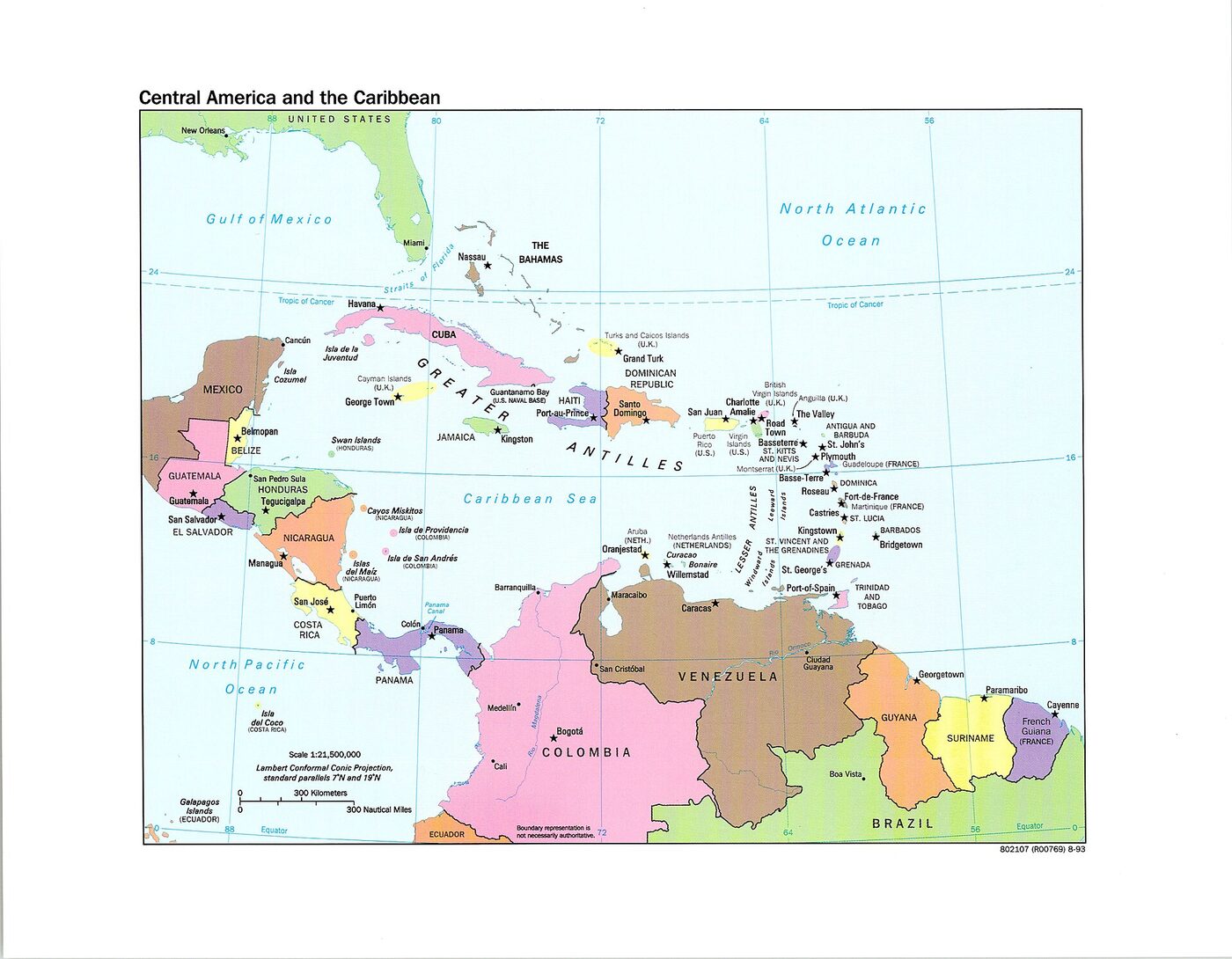

The proposal shrank under discussion. A second RFD on 16 May 1994 cut it to three new groups on the ground that a wholesale split would be opposed, and the result posted on 24 June 1994 recorded 413 valid votes and four passes: rec.travel.asia 353:52, rec.travel.europe 360:47, rec.travel.usa-canada 358:49, and rec.travel.misc — which replaced rec.travel outright — 349:54. The parent group was removed by control message on 29 September 1994, superseded by its own miscellaneous child. The Caribbean got nothing.
The first attempt to fix that came ten weeks later. On 7 September 1994 Kent Huffman posted an RFD for rec.travel.caribbean, cross-posted to rec.scuba, rec.travel.cruises, rec.travel.marketplace, rec.travel.misc, rec.travel.asia, rec.travel.europe, rec.travel.usa-canada and soc.culture.caribbean — a list that is itself a map of where Caribbean travel talk was scattered. Its rationale is the standard one: After the reorganization of the rec.travel categories, there seems to be no logical place for Caribbean discussions, as they really don't fit in .usa-canada, .europe, .asia or even .misc (too broad). Nothing followed it. There is no Call For Votes and no result in the archive; the proposal simply stops.
What happened instead was that the region got half a group. An RFD of 23 May 1995 proposed rec.travel.latin-america for travel in the Caribbean, Central and South America, arguing that one posting in five in rec.travel.misc concerned that region. It passed 426:17, announced on 13 July 1995, and entered the master file as rec.travel.latin-america Travel in Caribbean, Central and South America. The Caribbean lasted in that description for under four months.
The vote, and the line that stuck
The second Caribbean proposal was posted on 5 September 1995 by Michael James, with Ilana Stern as mentor — the same mentor named on the Latin America proposal that had just succeeded, which is a fair sign that nobody involved regarded the split as a rebuke. Its rationale is a piece of tourism geography rather than netiquette: while Latin America is relatively close geographicly, they are 2 widely diverse travel destinations, and, it added, Many people do not automaticly relate Latin America and the Caribbean together — a searchability argument, made five years before anyone would have called it that.
The date is a coincidence worth recording without making anything of it. The RFD went out on 5 September 1995. That was the morning the eyewall of Hurricane Luis skimmed Antigua and passed directly over Barbuda. The proposal makes no mention of it; the storm is not the reason for the group. But the group's first full season of traffic began in the aftermath of a storm that cost Antigua and Barbuda damage equal to about 60 per cent of its gross domestic product in a night, and that shaped what the room was for.
The RFD proposed a plain newsgroups line: rec.travel.caribbean Travel to the Caribbean. By the time the Call For Votes went out on 10 October it had been replaced by a better one, and this is the line that reached the master file and is still in it:
rec.travel.caribbean Travel to the islands of the Caribbean, sans pirates.
Voting was run by Waleed Meleis for the Usenet Volunteer Votetakers, with a second CFV on 19 October and a close at 23:59:59 UTC on 31 October 1995. The result was posted on 2 November: unmoderated group rec.travel.caribbean passes 193:18, from 211 valid votes with one abstention and one invalid ballot. The result restates the passing rule in the form the guidelines used — two-thirds of valid votes in favour, and at least a hundred more yes votes than no — and notes the mandatory five-day window for allegations of irregularity. None were raised.
David C Lawrence, then moderator of news.announce.newgroups, issued the newgroup control message on 8 November 1995 and repeated it on 15 November and 8 December, the usual practice for catching servers that had missed the first. A fourth control message in the file is a local one, from the Geophysical Laboratory of the Carnegie Institution of Washington on 29 March 1996, reading in full: Create rec.travel.caribbean locally. There is no rmgroup. The group was never removed, and it is still listed as an unmoderated group in the current Big-8 newsgroups list. Its former parent's line, meanwhile, has quietly lost a word: rec.travel.latin-america now reads Travel in Central and South America.
What the charter committed the group to
The charter is short, and the control message reproduces it in full. It is worth reading whole, because it names this page's subject in its second paragraph:
The rec.travel.caribbean newsgroup is open to discussion about all facets of travel to the Caribbean. It will include discussion about air travel to the region; hotels, condos, campsites, etc. in the region; as well as general discussion about place to go, and things to see.
The scope of the discussion will include questions about specific islands, comparisons between islands, personal anecdotes and trip reports, as well as general informational posts.
The general "nettiquete" FAQs posted in news.announce.newusers and news.answers apply to rec.travel.caribbean.
Excessive flaming is politely discouraged.
Posts that are blatant commercials are discouraged, but are directed to rec.travel.marketplace.
Four things are settled there. The group is unmoderated, so there is no gatekeeper and no approval header. Commercial postings are not banned but redirected, to a group created in 1992 for exactly that purpose — the standard Usenet arrangement, which kept hoteliers and agents in the namespace while keeping them out of the room. Conduct is handled by reference to documents posted elsewhere rather than by rules of its own. And the deliverables are named: comparisons between islands, personal anecdotes, and trip reports.
What the charter does not do is as informative. It mandates no FAQ, appoints no archivist, and provides for no periodic posting. The rec.travel.* branch had groups whose founding documents did all three; this one did not. Everything the group produced was to be produced by whoever felt like producing it, and kept by whoever happened to keep it.
The trip report as a form
The phrase personal anecdotes and trip reports is doing a lot of work in that charter, because the trip report was the most durable thing the rec.travel groups made. The convention held across the branch and was recognisable on sight: a traveller came home and wrote the journey up, in the first person, at length, unpaid, unedited, uncommissioned, and posted it for an audience of strangers most of whom would never reply.
The useful ones followed a shape. They gave the dates travelled, because a Caribbean price in February means nothing about the same place in September. They gave the route actually taken rather than the one planned, which is where the information was. They gave costs — fares, room rates, car hire, the taxi from the airport — in a region where the Eastern Caribbean dollar has been pegged to the United States dollar at 2.70 since 7 July 1976, so that a figure quoted in 1997 was still arithmetically legible a decade later. And they said what went wrong: the ferry that did not run, the hotel under renovation, the road the map showed and the ground did not.
That combination was scarcer then than it now sounds. Guidebooks were revised on annual or biennial cycles and written to a house voice, so a rate printed in a 1996 edition had been gathered in 1995 and would be reprinted in 1997. Magazine travel writing was frequently the product of a hosted trip, whether or not the piece said so. Neither form was well placed to tell a reader that a named property had changed hands and gone downhill in March.
The trip report also carried something the review economy later gave up: an address. A Usenet article has a From line, a Path line recording every machine it crossed, and a poster who could be replied to, argued with, and asked follow-up questions in public. The author of a trip report was accountable in the same room to the people who read it, and was frequently held to account there by residents who knew the place better. It was not a system with any guarantees. It was a system in which the guarantee was reputational and visible.
Where the reports were kept, and where they were not
Usenet's standard method of preserving reference material was the periodic posting: a document reposted monthly, or in some cases weekly, so that a new reader would meet it within one cycle. These accumulated in such volume that the moderated *.answers groups were created to collect them, and two of them are still in the current Big-8 list under the same description they were given at the start — news.answers and rec.answers, Repository for periodic USENET articles. (Moderated).
Trip reports fitted that system badly. A FAQ is authoritative and impersonal and improves by revision; a trip report is dated, personal and improves by nothing at all, since its whole value is that it describes one journey at one moment. The branch tried to solve the problem in other ways, and the paperwork records the attempts. The charter for rec.travel.cruises, which passed 244:23 on 27 April 1994, promised an FTP site for the group's files, a Frequently Asked Questions set, and this:
Members of the newsgroup who go on cruises will be asked to write reviews of their experiences. These cruise reviews will be stored at the FTP site and will serve as a very valuable resource to anyone looking into sailing on the same ship or itenarary.
That is a plan for a user-review database, written down in a Usenet charter in 1994, six years before the company that industrialised the idea was founded. The same instinct appears in rec.scuba.locations, created by control message on 20 November 1995 — twelve days after this group — after passing 195:47. Its charter states the purpose as exchanging information (preferably first-hand) about dive sites, dive operations, how to get yourself and your gear there, and where to stay, eat and play once you do. The parenthesis is the whole convention in one word.
For rec.travel.caribbean itself, no periodic posting survives that this page has been able to locate: no group FAQ, no maintained island index, no archive site named in its own paperwork. That is the expected outcome for an unmoderated group whose charter appointed nobody to the task, and it should be stated rather than filled in. What survives of the group survives in the general article archives, alongside everything else.
The only traffic figures the record actually leaves
Nobody counted this group's subscribers, and nothing in the archive reports its volume. There is, however, one oblique measurement, and it is worth setting out precisely because it is the sort of number that is otherwise invented.
Every Usenet article carries an Xref header written by the server that filed it, listing the group names and that server's own local article numbers. Four administrative postings preserved in the news.announce.newgroups archive were cross-posted to rec.travel.caribbean and carry UUNET's numbering for it: 4,797 on 18 April 1996; 5,877 on 30 May 1996; 6,176 on 10 June 1996; and 6,471 on 22 June 1996.
Read as differences rather than as totals, those give a rate: roughly 1,670 articles across the sixty-five days from mid-April to late June 1996, about 300 in the eleven days to 10 June, and about 295 in the twelve days after it. All three intervals land between twenty-four and twenty-eight articles a day. The caveats are large and should travel with the figure: this is one server's spool, not the network's; the numbering counts crossposts and any spam the server accepted; the group was five months old; and April to June is the shoulder of the Caribbean season, so this is neither the winter peak nor the late-summer trough. What it does establish is the order of magnitude — a busy but not enormous room, a couple of dozen articles a day, small enough that a regular reader would recognise the names.
The hurricane year
Everything else in this group's calendar bent around one span of dates. The Atlantic hurricane season runs by convention from 1 June to 30 November. The convention is younger than it sounds: the monitoring period was originally defined as 15 June to 31 October, the start was later moved back to 1 June, and the end went first to 15 November and settled at 30 November by 1965. Peak activity falls from late August through September, with a climatological midpoint on 10 September. The physics of why — the seasonal maximum of the gap between sea-surface and air temperature — belonged to sci.geo.oceanography rather than here; what belonged here was the consequence.
The naming system that gives the storms their first-name familiarity is also documented and also younger than most readers assume. Ahead of the 1953 season, when no agreement could be reached over which phonetic alphabet to use, it was decided to name Atlantic storms from a list of female names instead; the names were used in the press that season with only a few objections recorded, and the same list was reused the next year. In 1977 the World Meteorological Organization decided to form a hurricane committee, which held its first meeting in May 1978 and took control of the Atlantic naming lists. At that meeting the director of the National Hurricane Center asked that both men's and women's names be used, and the committee adopted five new mixed lists for the following year; the lists deliberately carried Spanish and French names as well as English ones, so that they would reflect the languages spoken around the basin, which is to say around this newsgroup's subject. The Atlantic today runs six rotating alphabetical lists of twenty-one names, skipping Q, U, X, Y and Z. When a storm acquires what the committee's procedures call a special notoriety — a large number of deaths, a large amount of damage, or some other special reason — the name is retired from the rotation and a replacement is submitted to the committee and voted on.
That machinery is why a Caribbean travel group could keep a shared vocabulary at all. A name retired from the rotation is a name that will never be reused, so it fixes a year, an island and a set of consequences in a single word for as long as anyone is still talking about it. The storms below are the ones whose names the group would have used that way, and every one of them was retired.
The storms of the group's own decade
The group was created in the middle of a very active Atlantic season that is generally taken as the start of an ongoing era of high-activity tropical cyclone formation. The 1995 season produced nineteen named storms, eleven hurricanes and five major hurricanes, and it supplied the group's first vocabulary before the group was a fortnight old.
Luis, September 1995. A slow-moving Category 4 storm with a wind field measured at 345 to 365 miles across. Its eyewall skimmed Antigua and passed directly over Barbuda on 5 September before it moved along Saint Barthélemy and Saint Martin and crossed Anguilla. Total damage across the affected areas is put at $3.3 billion in 1995 dollars, with nineteen confirmed deaths and nearly twenty thousand people made homeless. The National Hurricane Center's report gives Antigua and Barbuda three deaths and $350 million in damage — about 60 per cent of the country's gross domestic product — with most houses on Barbuda damaged or destroyed and nearly 45 per cent of residences on Antigua damaged. On the Dutch side of Saint Martin the official toll was eight dead and around US$1.8 billion; Philipsburg was at least 70 per cent wrecked, some towns went roughly three months without water and power, and of 1,500 boats sheltering in Simpson Bay Lagoon about 1,300 were sunk or run aground.
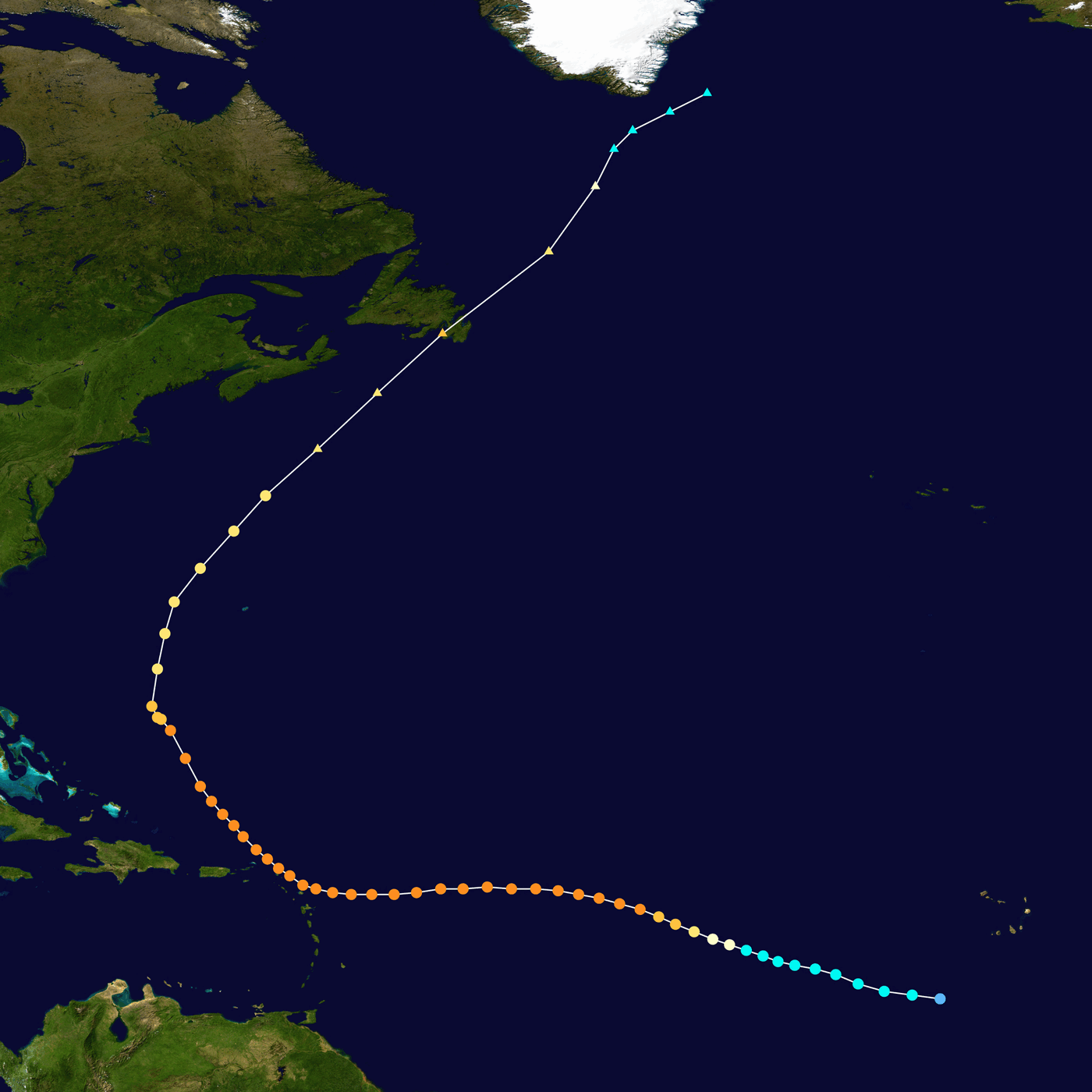

Marilyn, September 1995. Ten days behind Luis. It passed over Dominica on 14 September, intensified rapidly in the north-eastern Caribbean and struck the United States Virgin Islands, peaking as a Category 3 north of Puerto Rico on 16 September. Thirteen people were killed; eleven thousand were left homeless on Saint Thomas; damage in the United States Virgin Islands is put at about $2 billion in 1995 dollars. One explanation offered for the severity is complacency: Luis had been forecast to pass very close and had not, which made the preparations for the second storm less thorough than for the first.
Georges, September 1998. A long-lived storm that made seven landfalls, crossing Antigua and Barbuda, Puerto Rico, Hispaniola and Cuba before the Gulf of Mexico. It killed 615 people, overwhelmingly on Hispaniola, caused just under $10 billion in damage and left nearly half a million people homeless across Saint Kitts and Nevis, Puerto Rico, Hispaniola and Cuba. It was the costliest Atlantic hurricane since Andrew in 1992 and the deadliest since Gordon in 1994.
Lenny, November 1999. The strange one, and the strongest November Atlantic hurricane since 1932. Lenny formed in the western Caribbean Sea on 13 November and held an easterly track for its entire duration — unprecedented in the record, and the reason it is still called Wrong Way Lenny. It intensified rapidly over the north-eastern Caribbean on 17 November, reaching peak winds of 155 mph about twenty-one miles south of Saint Croix, then weakened through the Leeward Islands and dissipated on 23 November. Because it arrived from the west, it struck coasts that face away from the direction Atlantic storms normally come from, and it did so after the season's conventional end had been widely treated as its practical end.
Ivan, September 2004. Ivan passed just north of Grenada on 7 September as a strong Category 3 and damaged or destroyed 85 per cent of the structures on the island. It killed 39 people there and caused $1.1 billion in damage — about 200 per cent of Grenada's gross domestic product. About 90 per cent of houses were damaged and 30 per cent destroyed; every major building in St George's was damaged or destroyed, including the home of the parliament; 75 primary and secondary schools were damaged or destroyed, leaving two in working condition; the whole island lost power and running water; and, on the figures relevant to this page, an estimated 60 per cent of hotel rooms were damaged and about 70 per cent of the island's crops were lost, including 80 per cent of the nutmeg that was its main agricultural export.
A season that is the inverse of the tourist season
The practical point is a calendar collision. The Caribbean's dry season runs from December through April, when the region is most often clear to mostly sunny; the wet season runs from May through November, with more frequent cloud. The hurricane season runs from June to November. The dry season and the storm season are, near enough, complements — which is why the high season, the peak air fares and the peak hotel rates sit in the northern winter, and why the cheap months are cheap.
That single fact organised a large share of the group's traffic. The recurring questions were priced questions: whether a September rate was a bargain or a gamble; whether a property closed for part of the low season and when; what travel insurance did and did not cover; whether to book refundable. Threads of that kind arrived with the calendar and subsided with it, and the archive is accordingly seasonal in a way that a general discussion group is not.
When a major storm made landfall, the room changed character for a few weeks. Planning threads gave way to relayed word from affected islands and to the blunt question of whether a booked trip should go ahead. The answer was always island by island, and had to be, because the region's geography makes generalisation useless: a storm that flattens one destination leaves another untouched a few hundred miles away, and Lenny demonstrated that even which side of an island was hit could decide whether an airport, a harbour or a hotel strip was usable. The questions that mattered afterwards were narrow and practical — was the airport working, was the water back on, how long would rebuilding take — and were answerable only by people on the spot. Then the planning resumed.
The matching problem, and the logistics under it
The characteristic opening move in a regional travel group was a matching problem. A poster described a party — divers, hikers, honeymooners, families, or a combination refusing to compromise — and the group argued them towards an island. This is the work the charter meant by comparisons between islands, and it is the work a single regional room does better than either a global one or a per-island one, because the answer is nearly always comparative.
From there the threads ran to the logistics that guidebooks handled worst, and the classes are stable across the archive:
- Accommodation form: villa or apartment rental against hotel against all-inclusive resort, and what each implies about food, transport and how much of a week is spent driving.
- Inter-island movement: which routes actually operate out of season, what connects to what on the same day, and the difference between a published schedule and a flown one.
- Ground transport: car hire and the local driving licence requirement, driving on the left in the former British territories and on the right in most of the rest, road quality, and taxi fares in places where they are set by tariff rather than metered.
- Money: which currency to carry where, in a region running the Eastern Caribbean dollar (issued since 1965, pegged to the US dollar at 2.70 since 1976), the euro in the French departments, and a range of national currencies and de facto US dollar economies elsewhere.
- Entry formalities: passports, onward-ticket requirements and departure taxes, which varied by territory and by nationality and changed without notice.
Air links were their own subject, and the archive is a record of a network that no longer exists. LIAT was founded in Montserrat on 20 October 1956 by Frank Delisle as Leeward Islands Air Transport Services, beginning with a single Piper Apache between Antigua and Montserrat, and grew into the eastern Caribbean's connecting carrier, latterly owned by eleven Caribbean governments; the 1974 company went into court-appointed administration in 2020 and ceased operations on 24 January 2024. BWIA had been established on 27 November 1939 by the New Zealander Lowell Yerex and was replaced by Caribbean Airlines, which began flying on 1 January 2007. Air Jamaica was established in October 1968 and started operations on 1 April 1969 from Kingston and Montego Bay to New York and Miami; it was merged into Caribbean Airlines in 2015. A trip report from this group naming its carrier is, more often than not, naming an airline that has since been liquidated or absorbed.
Traffic ran in both directions, too. Alongside first-time visitors were residents, returning emigrants, students and people travelling home at short notice, and their questions were the harder scheduling ones. Who they were, and the constitutional and linguistic patchwork they were travelling across, are the subject of the next section.
What abroad means in this region
One class of question in a Caribbean travel group has no equivalent in most regional rooms: which country the traveller is actually going to, and what that implies for money, papers and law. The region's constitutional map makes abroad an unreliable word, and the answer changes from island to island in a way no single rule covers.
Guadeloupe and Martinique are overseas departments and regions of France and integral parts of it. They are outermost regions of the European Union and part of the eurozone, so the currency is the euro and any EU citizen may settle and work there, though neither is in the Schengen Area; Saint Barthélemy and Saint Martin were detached from Guadeloupe as separate collectivities in 2007. Aruba, Curaçao and Sint Maarten are constituent countries of the Kingdom of the Netherlands: Aruba took that status in 1986, and the other two in 2010, when the Netherlands Antilles was dissolved and Bonaire, Saba and Sint Eustatius became special municipalities of the Netherlands instead. Eight territories of the eastern Caribbean share the Eastern Caribbean dollar, issued since 1965 and pegged to the United States dollar at 2.70 since 7 July 1976; elsewhere national currencies, and in practice the US dollar, do the work.
Subject matter of that shape cannot be monolingual. Place names, signage, timetables, ferry schedules and festival names arrive in English, Spanish, French and Dutch, and in the creoles spoken beside them, and a question asked in one language is often answerable only from a source in another. The committee that fixed the storm vocabulary made the same concession for the same reason, mixing Spanish and French names into the Atlantic lists from 1979.
The readership reflected all of it. Twentieth-century emigration had put large island-descended populations in Britain, the Netherlands, France, the United States and Canada — in Britain, the arrivals from 1948 onwards later known as the Windrush generation — and their travel questions were not the first-time visitor's questions. The emigrations themselves, and the diaspora's own institutions, are the subject of soc.culture.caribbean and are told there; what belongs here is that people travelling home asked about baggage allowances for goods rather than luggage, about connections nobody advertises, and about which airline actually flies a route in September.
The cruise question
A large share of the region's visitors arrived by ship rather than by air, and the namespace had already provided for them. rec.travel.cruises passed 244:23 on 27 April 1994, more than a year before this group existed, with a charter covering the relative merits of ships and lines, ports of embarkation, ports of call, shore excursions, cuisine and the getting of good deals. It also contained a request that turns out to matter for this page: that articles posted to rec.travel.cruises not be crossposted to rec.travel or the other travel newsgroups. The boundary between the ship and the shore was drawn in writing, by the cruise group, before there was a Caribbean group to draw it against.
The cruise group then tried to become moderated, and failed. A proposal to convert it went to a vote in August 1995 with an elaborate charter providing for multiple moderators, a recruitment procedure, and a rule that three-quarters of the moderators had to agree before one of them could be removed. The result, posted on 5 September 1995, was 139:69 from 208 valid votes: just past the two-thirds threshold, and seventy votes clear of the no side where the rules required a hundred. The arithmetic that protected small groups from capture also, routinely, prevented them from reforming themselves.
The argument the two rooms carried between them is a genuine one and this page will not adjudicate it. On one side, a single fare buys sight of half a dozen islands, and a first visit is reasonably spent deciding where to return to at length. On the other, a call is a few hours inside a terminal precinct, little of an island's evening or its food is visible before sailing, and the share of the fare that reaches the island is small. The two sides were describing different holidays, which is why the thread was infinitely renewable.
The economic half of it is measurable and is worth stating with its source attached. A 2012 study by Business Research and Economic Advisors for the Florida-Caribbean Cruise Association put direct cruise-sector revenue to the Caribbean islands at over $2 billion for that year, with more than 45,000 people in the region directly employed by the industry. Those are large numbers and small ones at the same time, depending on what they are set against — which is precisely the shape the argument took in the archive.
Diving and sailing: the two activities that chose the island
For two constituencies the matching problem answered itself, because the activity dictated the destination, and both had rooms of their own next door. rec.scuba was on the distribution list of the very first Caribbean RFD in 1994. rec.scuba.locations followed in November 1995, chartered for first-hand information about dive sites, live-aboards, dive operations and the logistics of moving a diver and their gear.
The diving map was shaped by conservation policy as much as by geology. Bonaire designated its entire coastline a marine sanctuary in 1979 and established the Bonaire National Marine Park in the same year, covering some 2,700 hectares of coral reef, seagrass and mangrove; STINAPA, the national parks foundation set up for the Netherlands Antilles in 1962, had already established the territory's first nature preserves on Bonaire in 1969, the Washington park and the flamingo nesting sanctuary. A destination that protected its reef early ended up with a reef worth flying to, and the group's diving threads reflect that: the questions were about which operator, which shore entry, which month, and how the flight connections worked.
Sailing pointed at a different set of islands and a different calendar. Antigua Sailing Week, founded in 1967, anchored a spring regatta season in the eastern Caribbean; the bareboat charter trade concentrated in the Virgin Islands and the Grenadines, where short passages between sheltered anchorages suit a chartered week. The threads that generated were about charter companies, provisioning, mooring fees and clearance formalities between jurisdictions — and about insurance, because charter and ownership both run into the hurricane season. Simpson Bay Lagoon in 1995 is the standing illustration: a well-known hurricane hole in which about 1,300 of 1,500 sheltering boats were lost in a single storm.
The all-inclusive argument, and its paper trail
Of all the arguments the group carried, the one about all-inclusive resorts is the only one with its own voting record, and the record is unusually informative because it names this group.
Hal Segal proposed rec.travel.resorts.all-inclusive and rec.travel.resorts.misc in an RFD of 30 January 1995. The vote failed on 20 April 1995 in the most frustrating way available: 108:29 for the all-inclusive group and 102:34 for the miscellaneous one, both comfortably past two-thirds, neither past the hundred-vote margin. He resubmitted on 18 April 1996, after the six-month waiting period, with the content unchanged — and the resubmitted RFD, cross-posted to rec.travel.caribbean, argues its case partly against this group:
Another group that includes articles on all-inclusive resorts, rec.travel.caribbean, is limited to just the Caribbean geographic area, while a large number of all-inclusive resorts are in other areas like Mexico and Tahiti.
That is a contemporaneous, third-party statement, five months after this group's creation, that rec.travel.caribbean was already one of the recognised venues for the subject. The charter also supplies the period's working definition, which is more precise than the marketing use of the term: a resort qualifies if it includes lodging, all meals and entertainment; includes all tips and taxes; and includes every guest at the resort in the plan, so that a property offering an optional meal plan does not qualify. It named Club Med as the originator of the format and counted roughly a hundred other resorts meeting the definition in 1996.
The second vote closed on 20 June 1996: rec.travel.resorts.all-inclusive passed 127:26 as a moderated group, and rec.travel.resorts.misc failed 116:30, again on the margin rather than the ratio. The subject therefore ended up with a moderated room for one half of the argument and nothing for the other — which meant the comparison between an all-inclusive week and an independent one, the version travellers actually argue about, stayed where it had been: in the regional groups, including this one.
The coda is dated too. A Last Call for Comments on removing rec.travel.resorts.all-inclusive went out on 4 April 2009, and the Big-8 Management Board issued the rmgroup control message on 22 April, giving the reason without decoration: two posts that year and nineteen the year before, and a question in the group about whether to end it that drew no replies. The removal notice also records the group's own history — that it had passed its vote on 22 June 1996, and that Hal Segal moderated it until 6 March 2004, when David E. Bath took it over.
The wider argument was not confined to Usenet, and the era produced its own literature: Polly Pattullo's Last Resorts: The Cost of Tourism in the Caribbean appeared in 1996, the same year the moderated group was voted into existence, and is still cited in accounts of the region's cruise and resort economy. This page notes it as a published position of the period rather than endorsing it; the group's own threads argued the same ground without resolution, which is what one would expect of a room containing both visitors and residents.
The industry, as documented fact
Tourism dependence in the Caribbean is not an opinion about the region; it is a set of published figures, and the honest way to carry them is with their dates and sources attached, because the shares move.
The regional machinery is older than the internet by decades. The Caribbean Tourism Organization was established in 1989 by the merger of the Caribbean Tourism Association, founded in 1951, and the Caribbean Tourism Research and Development Centre, founded in 1974. It is headquartered in Barbados and its membership spans the English-, French-, Spanish- and Dutch-speaking countries and territories of the region — an institution that, like the newsgroup, treats the Caribbean as one market made of several dozen jurisdictions.
On national shares, the standard reference figures run like this. In Antigua and Barbuda, tourism accounts directly or indirectly for more than half of gross domestic product and is the principal earner of foreign exchange; a 2024 assessment puts more than 70 per cent of the population as employed in the industry and tourism receipts at more than two-thirds of GDP. In Saint Lucia, tourism is described as the island's biggest industry and main source of jobs, income and foreign exchange, at 65 per cent of GDP. In the Bahamas, tourism was estimated at 45 per cent of national GDP in 2021, with the United States supplying approximately 85 per cent of international visitors and, on a 2005 estimate, roughly half the workforce employed in the sector. Barbados's economy is conventionally described as resting on tourism, international business and foreign direct investment, with tourism overtaking manufacturing and sugar to become the chief earner.
Visitor volumes over the group's own lifetime were flatter than the growth narrative suggests. International tourist arrivals to the Bahamas, on figures compiled from United Nations World Tourism Organization data, sat around 1.6 million in 1995 and were still around 1.5 to 1.6 million a decade later — a mature market rather than a booming one, which is part of why price and value were such durable subjects in a travel group.
The clearest statements of what dependence means are the disaster figures, which is why the storms above belong in an economic section as much as a meteorological one. Luis cost Antigua and Barbuda a sum equal to about 60 per cent of its GDP in a single night in 1995. Ivan cost Grenada about 200 per cent of GDP in 2004, damaged an estimated 60 per cent of the island's hotel rooms, and was followed by a contraction of nearly 3 per cent in an economy that had been projected to grow by 4.7 per cent; in October 2004 the government described public debt at 130 per cent of GDP as unsustainable and began a restructuring completed in November 2005. An industry that is two-thirds of an economy is also two-thirds of the exposure.
The seasonal structure completes the picture. A high season fixed in the northern winter, a low season that coincides with the storm months, an arrivals mix split between stopover visitors who sleep and spend ashore and cruise passengers who mostly do not, and a source market concentrated overwhelmingly in North America: those four facts between them explain most of what a traveller in this group was being told about prices, closures and crowding.
The festival calendar as a booking problem
A visible share of the region's visitors travelled for a date rather than a place, and in a travel group the festival calendar is a scheduling constraint before it is anything else. The two festivals most often named sit on opposite sides of the storm calendar, which is the whole point of mentioning them here.
Trinidad and Tobago's Carnival falls on the Monday and Tuesday before Ash Wednesday, opening with J'ouvert — French for break of day — in the dark of Monday morning. It therefore falls in February or early March, inside the dry season, inside the high season, and safely outside the hurricane months; the constraint it imposes is availability and price rather than weather. Panorama, the steelband competition held since 1963 in the Queen's Park Savannah in Port of Spain, falls at Carnival, and its scale is part of the reason accommodation in and around the capital behaves the way it does in the weeks before Lent.
Crop Over in Barbados sits at the opposite pole and has an explicitly touristic origin. The harvest festival dates in its original form to 1687, lapsed under the pressures of the Second World War, was first relaunched on 1 June 1970 and was organised as a national festival in 1974 by local stakeholders working with the Barbados Tourist Board, expressly to attract visitors and to revive interest in local folk culture. It now runs from June to Grand Kadooment on the first Monday in August — which places the entire festival inside the hurricane season, and makes it one of the few large fixed points in the Caribbean calendar that a traveller books into the risky months on purpose.
.jpg)
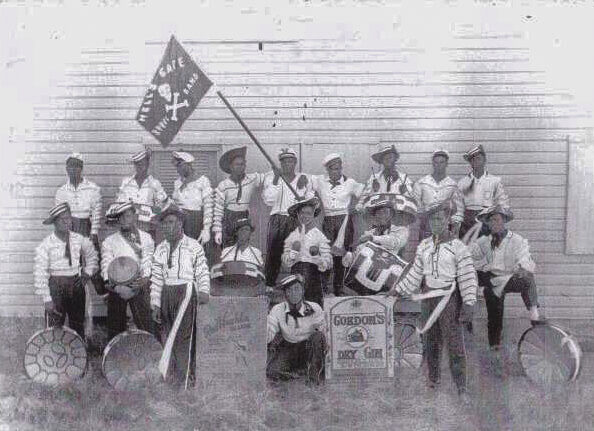
The music itself is contested ground and belongs next door. The steelpan developed in Trinidad and Tobago during the 1930s and 1940s out of the earlier Carnival percussion tradition of tamboo bamboo, by way of the frying pans, dustbin lids and oil drums taken up in Laventille in 1937; the 55-gallon oil drum came into use from about 1947, and the Trinidad All-Steel Pan Percussion Orchestra, formed for the 1951 Festival of Britain, was the first band whose instruments were all made from oil drums. Soca is credited to Garfield Blackman, who performed as Lord Shorty and later as Ras Shorty I, and who spent the better part of a decade fusing calypso with Indo-Caribbean elements before debuting what he called the soul of calypso in the early 1970s; he spelled the word sokah, and the spelling that stuck followed a journalist's misspelling in an article, carrying an interview with him, published during the 1976 Trinidad Carnival season. Zouk was pioneered by Kassav', a band that originated in Guadeloupe in 1979 and gave the form its shape from the French Antilles in the early 1980s. Beyond those three, what a visitor would hear depended on which colonial history an island had. The francophone islands carry zouk alongside the older biguine, which came out of Saint-Pierre in Martinique in the nineteenth century, and Haiti's compas, created by Nemours Jean-Baptiste in the second half of the 1950s and since taken up across the French Antilles. The hispanophone islands carry son, which originated in the highlands of eastern Cuba in the late nineteenth century, and salsa; the Dominican Republic has merengue, which Rafael Trujillo imposed on every level of Dominican society after taking power in 1930 and made a national symbol, and bachata. Jamaica carries reggae and dancehall, and the Dutch islands their tumba. Questions of deeper origin, and the lineages that cross the region's language borders, were argued at far greater length in soc.culture.caribbean and are that page's subject, not this one's. What belonged here was narrower and more useful: what would actually be on when the reader landed, what sells out, and what a Carnival-season air fare looks like.
The neighbours, and where the boundaries fell
The group sat in a well-populated corner of the namespace and its brief was defined as much by what was next door as by its own charter. Twelve rec.travel.* groups survive in the current Big-8 list. Several more were proposed and never created, and one that was properly created has since gone: rec.travel.resorts.all-inclusive, made by control message on 27 June 1996 and removed in April 2009. Names such as rec.travel.bed+breakfast, rec.travel.resorts and rec.travel.mexico appear in the control archive only as unauthorised newgroup messages sent by individuals rather than by the moderator of news.announce.newgroups, which is a different thing from a group that lived and died. The branch as a whole, its naming conventions and its place in the recreational hierarchy are the subject of the rec.* branch page.
The immediate neighbours divided the subject three ways. rec.travel.marketplace, created in 1992, took the commercial postings this group's charter redirected. rec.travel.cruises took the ship. rec.travel.latin-america kept the continental mainland, having lost the islands to this group. rec.scuba.locations and, for chartering, the rec.boats groups took the activity-led enquiries. And rec.travel.air took the mechanics of getting there, which for an island region with one or two long-haul gateways per island is not a small subject.
The other boundary was with the social hierarchy, and it was observed with unusual care in both directions. soc.culture.caribbean carried the region as culture, politics, language and diaspora; this group carried it as a destination. The individual island groups took their own countries: soc.culture.cuba, whose subject includes the American restrictions that made Cuban travel a legal question rather than a logistical one for a large part of this group's readership, soc.culture.puerto-rico, and soc.culture.haiti. A poster who wanted to argue about a government's record was in the wrong room; a poster who wanted to know whether the ferry ran was in the right one.
Where the traffic went
The succession is datable, and it began before the group did. Cruise Critic was co-founded in 1995 by Anne Campbell and Kathleen Tucker as a feature of America Online — a commercial online service, not a newsgroup — and was acquired by TripAdvisor in 2007. Lonely Planet's Thorn Tree forum was created in 1996, named after a tree in Nairobi that had served as a message board since 1902, and ran until it was shut down in September 2021. Tripadvisor itself was founded in February 2000 by Stephen Kaufer, Langley Steinert, Nick Shanny and Thomas Palka. By the middle of the 2000s a traveller with a question about a Caribbean hotel had somewhere to ask it that required no newsreader, no server, and no understanding of what a hierarchy was.
What changed was not only the venue but the unit. A trip report was long, narrative, chronological and about a journey; it was signed, addressable, and threaded into a conversation that could correct it. A platform review is short, about a single property, scored on a fixed scale, and aggregated with thousands of others into a ranking. The second form is enormously better at one thing — telling you quickly how a named hotel compares with the hotel next door — and structurally worse at another, which is telling you what a fortnight in a place is actually like, in order, with the parts that went wrong left in.
It also relocated the accountability. On Usenet the author was visible and the room was the same room in which they could be contradicted. On a review platform the author is a handle, the platform mediates disputes, and the incentives to fabricate are commercial. That is not a matter of opinion either: after a complaint from the investigations company KwikChex, the United Kingdom's Advertising Standards Authority investigated Tripadvisor's claims about its reviews from September 2011 and ruled in February 2012 that the company should not claim or imply that all its reviews were from real travellers, or were honest, real or trusted — while also recognising that the company operated advanced and highly effective fraud systems. Both halves of that finding belong in any honest account of what replaced the trip report.
On the Usenet side the decline followed the branch's standard curve, and the mechanics of it — the spam load, the withdrawal of news service by large providers, the thinning of the feed — are told on the rec.* branch page rather than here. The local detail is only this: nobody ever proposed removing rec.travel.caribbean. There is no rmgroup in its control file, no removal RFD in the archive, and the group is still listed in the current Big-8 newsgroups list, unmoderated, with the same description it was given in 1995. The room was not closed. People stopped coming.
What the record does not show
The paperwork above is complete for the group's creation and silent about almost everything afterwards, and the gap should be described rather than filled.
- There is no readership figure of any kind. The votes tell you 211 people cared enough about the proposal to post a ballot in October 1995; they tell you nothing about how many read the group in 1998.
- There is no message count. The four Xref numbers above are one server's local numbering over ten weeks of one year, and they are the entire quantitative record this page has found.
- No FAQ, island index or archive maintained by the group has been located, and its charter appointed nobody to maintain one.
- No individual thread, poster, trip report, price or quotation from the group is reproduced anywhere on this page, because none has been verified. Everything quoted here comes from the administrative archive — RFDs, CFVs, results, control messages — and is quoted from the file rather than paraphrased.
- The group's ending is undocumented, because there was nothing to document: no final post is identifiable as final, no removal was proposed, and the decline is visible only as absence.
None of that is unusual. It is the normal condition of an unmoderated Big-8 group that did its job quietly for a decade, and the honest value of a page like this one lies in the parts that can be checked: the dates, the tallies, the charter, the storms and the published economics of the industry the group was talking about.
Scope and limits of this page
This page covers rec.travel.caribbean as a travel group: its creation and paperwork, the trip report as a documented form, the hurricane calendar that organised its year, the classes of practical question it carried, the tourism economy it discussed, and the review platforms that replaced it.
It deliberately does not cover several adjacent subjects held elsewhere in this directory. The rec.* hierarchy itself — its structure, its naming conventions, the FAQ discipline and the way its groups declined — is on the branch page. The Caribbean as culture, politics and language — the West Indies Federation and CARICOM, the University of the West Indies, the region's languages and creoles, cricket as a regional institution, how the islands got online, and the diaspora — is the subject of soc.culture.caribbean and is not retold here. Cuba, Puerto Rico and Haiti have their own pages and carry their own national histories.
Storm figures are given as their sources give them, with damage in the dollars of the year concerned and casualty tolls as reported by the National Hurricane Center and the relief agencies cited in the standard accounts; readers comparing them across decades should adjust for that. Tourism shares of GDP and employment are quoted with the year of the estimate attached, because they are volatile and because different bodies measure direct and total contribution differently. Where the record is thin, this page says so rather than rounding the gap up into a story.
Reading rec.travel.caribbean today
- Historical archive: Google Groups — rec.travel.caribbean (coverage varies by group and era).
- Open in a newsreader:
news:rec.travel.caribbean— the original site offered exactly this link, and it still works if your system has a newsreader registered for thenews:scheme. - Live access: point an NNTP newsreader at a modern server — see accessing Usenet today.
- The original news2mail e-mail subscription service ended in the mid-2000s and no longer operates.