alt.comp
General computing chatter, alt-style.
The informal annex to the comp.* hierarchy: quick questions, opinionated hardware talk and OS advocacy without the comp.* groups’ charters or patience.
Useful then as a low-barrier entry point; useful now as a sample of everyday computing concerns of its era.
On this page
- The group's own paperwork
- Six control messages, and what they say
- There is no vote to find
- Two hierarchies for one subject: the count
- What a charter buys
- The genres of a low-barrier computing room
- The alt.comp.* branch and what it accumulated
- The furniture: config, newusers, test and answers
- Advocacy as a Usenet form
- Where the questions went
- The branch after the gateway
- What the record does not show
- Scope and limits
The group's own paperwork
Usenet has no registrar, but it has something that functions as one. In a directory called CONFIG, hosted by the Internet Systems Consortium, sit an active file and a newsgroups file. The policy document beside them — originally written by David Lawrence and now maintained by Russ Allbery — states that the archive updates hourly and that the intention is for both files to be complete for all publicly available hierarchies. The active file lists every group a well-connected server would accept; the newsgroups file lists every group with its one-line description. They are the closest thing the network has to a register of its own contents, and alt.comp is in both.
In the copies fetched for this page on 25 August 2026, each file runs to 45,003 lines — one newsgroup per line — and alt.comp is line 4,656 of each. Its entry in the active file reads alt.comp 0000000000 0000000001 y. The two long numbers are the low and high article watermarks and they are placeholders: every one of the 45,003 lines carries that identical pair, so the file records that a group exists and says nothing whatever about how much has ever been posted to it. The final field is the moderation flag, and y means unmoderated. That much is unremarkable — 39,188 of the file's groups are flagged unmoderated, 5,809 moderated and six carry a third flag.
The newsgroups file is where the interesting silence is. The entry reads, in full:
alt.comp No description.
It is tempting to read that as a shrug by the archive's maintainers, a gap they never got round to filling. It is not. The rules governing this file are published alongside it, and they are specific: newsgroup descriptions are taken from the most recent valid control message for that group, and a control message that creates a group is only accepted if its body contains a line reading exactly For your newsgroups file: followed on the next line by a description. A description is mandatory. What that entry records is therefore not an omission by an archivist but a positive act by a sender: somebody supplied, in the field reserved for saying what the group is about, the words No description.
How unusual is that? Across the whole register, 9,951 of the 45,003 entries carry the phrase, so as a network-wide phenomenon it is common enough. The distribution is what matters. Within alt.*, 7,776 of 20,466 groups are undescribed — better than a third of the hierarchy. Within comp.*, the number is zero, out of 677. Every single group in the hierarchy that alt.comp shadows has a sentence saying what it is for; the group named after it has, on the record, none.
Six control messages, and what they say
The same archive keeps the control messages themselves. Its coverage is stated plainly: all newgroup, rmgroup and checkgroups control messages seen on Usenet since early 1991, with about a month around August 1992 missing — although the archive's own policy document declines to guarantee that the collection is complete, since propagation and archiving software both fail occasionally. The whole file for alt.comp is 137 lines long and contains six messages.
- 1 December 1997 — an rmgroup, asking servers to delete the group, sent from an internet provider in Malaysia.
- 11 December 1997 — a newgroup, ten days later, from a company giving its Organization as MTS GmbH Braunschweig / Germany / Earth.
- 17 July 1998 — a newgroup from a corporate news server whose Organization header reads, in full, Another Netscape Collabra Server User.
- 25 February 1999 — a newgroup from a fourth corporate news server, Organization: HTE Inc.
- 21 February 2003 — a newgroup labelling itself, in a Comment header, a Booster message.
- 18 March 2003 — a second booster, near-identical to the first.
The first four have a family resemblance more telling than their dates. Each carries the same three-line body, of which the only content is the sentence Control message generated by Netscape Collabra Server. None of them contains a description line at all. Four unrelated organisations emitting identical creation notices for the same group over fourteen months is not four independent decisions to found a discussion forum. The archive supports the obvious reading elsewhere: in the control file for alt.comp.periphs.mainboard.asus, two later Collabra-generated newgroups for that group carry the header Distribution: collabra-internal, which is a request that the message not leave the sending organisation. Control traffic meant to stay on one company's servers evidently did not always stay there. What is on the record for alt.comp is the four messages and their shared body; the inference that at least four sites held a local group of that name, and that their server software announced it to the world by accident, is an inference, and is offered as one.
The 1997 removal request went nowhere, and could not have gone anywhere. The register's published policy treats alt.* and free.* as special cases: properly formatted newgroups in those hierarchies are executed automatically, and rmgroups are ignored. Deletion is not a service this hierarchy offers. The mechanics of why — that a control message is a request to several thousand independent operators rather than an instruction — are set out on the alt.* hierarchy page and are not repeated here. The consequence for alt.comp is simply that the only message anyone ever sent asking for its removal had no effect at all, and the group has been in the register continuously ever since.
The two 2003 messages are of a different species. Both were sent from the same address, over the name Cmsg Experts, within a month of each other. Both carry a Newsgroups header naming four groups that have nothing to do with computing administration — comp.lang.fortran, alt.music.sandra, alt.test and alt.flame.cats — a Path header ending in a chain of joke hostnames, and a User-Agent header naming a script called newgroup.pl. Neither is the work of anyone with an interest in the subject; both are the output of a tool.
Both open with the marker line For your newsgroups file: followed on the next line by alt.comp, a tab, and the words No description. Below that, each closes with two lines of self-identification, one in English and one in German, announcing itself as a booster.
Whatever else those messages were, they are the reason the register says what it says. The description is taken from the most recent control message; the most recent control message is the booster of 18 March 2003; and its description line matches the current register entry character for character, the file merely adding a tab for column alignment. The group's official description was set, and has stood for twenty-three years, by a message that declined to describe it.
Nothing has been added to the control archive for alt.comp since that day.
There is no vote to find
For a group in the Big Eight, the same server holds a second and far richer set of papers. Under news.announce.newgroups sit the Requests for Discussion, the Calls for Votes, the results with their full tallies, and the proposals' own charter text — the documentary trail of a group being argued into existence. The directory has a subdirectory for each of the Big Eight — comp, humanities, misc, news, rec, sci, soc and talk — alongside directories of guidelines, group lists and status reports. It has no subdirectory for alt, because there has never been anything to put in one. The comp directory alone holds 849 files, one per proposed group, running alphabetically from comp.admin.policy onward.
What those files record is a procedure, and the procedure is set out in a guidelines document that the moderation team reposted monthly. A proposal began with a Request for Discussion which, to be valid, had to contain a rationale and a charter for every group it proposed to create. The discussion period ran a minimum of twenty-one days. A Call for Votes followed, no sooner than twenty-one days after the first RFD, and the ballot itself ran another twenty-one days, conducted not by the proponent but by a member of the Usenet Volunteer Votetakers. A proposal passed only if it drew at least a hundred more YES votes than NO votes and at least twice as many YES as NO. Then came a five-day window in which the count could be challenged. Only after that did anybody send a control message.
The contrast is written into control.ctl, the configuration file that tells news servers whose control messages to believe. For the Big Eight, newgroups and rmgroups from everybody are dropped, and the single exception is the address that signs with the Big-8 Board's key, verified against the news.announce.newgroups key before anything is acted on. For alt.* the corresponding lines read newgroup:*:alt.*:doit and rmgroup:*:alt.*:drop — accept a creation from anyone at all, discard every deletion. Two hierarchies, one file, opposite constitutions.
So for alt.comp there is no Request for Discussion, no Call for Votes, no vote tally, no charter, no waiting period and no moderator. These are not documents that were lost; they are documents that were never written, because the procedure that would have produced them does not apply and never did. This needs saying without embarrassment, because the absence is the finding. A reader who comes to this page hoping for a founding document is looking for an artefact of a different constitutional system.
It follows that the charter line printed at the head of this page, and the two paragraphs under it, are editorial summaries written for this archive. They describe what the group was for. They are not quotations from anything, because there is nothing to quote.
Two hierarchies for one subject: the count
This is the question the page exists to answer. Computing on Usenet was organised twice. The comp.* hierarchy was chartered, balloted and mapped: proposals discussed for at least three weeks, votes counted by neutrals, charters published, descriptions agreed. alt.comp.* was none of those things. Both are still in the register, side by side, in the same file, described by the same rules. The comparison is straightforward to make and does not appear to have been published.
- comp.* — 677 groups.
- alt.comp.* — 361 groups beneath alt.comp, plus alt.comp itself: 362.
The chartered hierarchy is a shade under twice the size of the unchartered annex. That in itself is worth pausing on, because the intuition usually runs the other way: a namespace anyone can extend for the price of one message ought to swamp one that requires three weeks of argument, a three-week ballot and a hundred-vote margin. In computing it did not. It got to roughly half.
The differences show up in the quality of the entries rather than their number. All 677 comp.* groups carry a description; of the 361 alt.comp.* groups, 297 do and 64 do not. Not one of the 361 is moderated, in a file that contains 5,809 moderated groups. And the shapes of the two namespaces differ in a way that is legible in the arithmetic alone. Counted by the number of dot-separated components in the name, comp.* runs 34 groups of two components, 287 of three, 241 of four, 78 of five and 37 of six. alt.comp.* — which starts one component deeper by construction — runs 50 of three, 217 of four, 82 of five, ten of six, one of seven and one of eleven.
The branch weights tell the same story more directly. The heaviest second-level branches of comp.* are sys with 163 groups, os with 98 and lang with 87, followed by unix and databases with 29 each, infosystems with 22, and graphics and dcom with 20 apiece. The heaviest third-level branches of alt.comp.* are lang with 56, periphs with 49, apps with 28, os with 26, software with 19, hardware with 14 and issues with 12.
Set those two lists beside each other and the divergence is not one of size but of subject. comp.* is heaviest where the machines and the operating systems are: comp.sys.* alone is a quarter of the hierarchy. alt.comp.* is heaviest where the languages and the parts are. comp.sys.* is about computers; alt.comp.periphs.* is about the things you put inside one. The chartered hierarchy organised the field as a computing department would; the unchartered one organised it as somebody with the case open would.
One caution about all these numbers, since it applies to every count on this page. They are counts of names in one snapshot of one file, taken on 25 August 2026. A name in the register is a name a well-connected server will accept. It is not a reader, not a posting, and not a year of activity, and nothing in the register distinguishes a group that carried a decade of traffic from one created by a single message and never used.
What a charter buys
A charter, in Big-Eight practice, is a short document produced by the proposal process; the guidelines required one in every Request for Discussion, for every group the proposal would create or change, together with moderator information wherever moderation was proposed. Its surviving trace in everyday use is the one-line description in the register, which is why those descriptions read as they do. comp.misc, for instance, is described as General topics about computers not covered elsewhere. That is the chartered general computing room, and it has been in the file the whole time alt.comp has.
What the document buys is the ability to say off-topic and mean something checkable by it. In a chartered group, off-topic is a claim about a text: the charter says the group is for X, this posting is not about X, and anyone can look. Enforcement was almost never formal — the ordinary comp.* groups were unmoderated, and what happened to an off-topic posting was that regulars said so, or the periodically posted FAQ had already said so, or nobody answered. But the ground under the objection was documentary. Where the group was moderated, the same document told the moderator what to approve.
An unchartered group cannot do this. alt.comp had no document of any kind. It could not rule anything off-topic, because it had no topic on record — only a name, and a name is not an argument. This is usually presented as a defect, and half of it is: nothing could be excluded, so anything that arrived stayed. The other half is less often noticed and matters more to the history. An unchartered group also cannot be captured. There is no text for a determined faction to claim is on its side, no charter to reinterpret, no procedure to win. If you disliked what a room was doing, your options were to stop reading it or to start another one, and starting another one cost a single control message.
Both halves are visible in the branch beneath alt.comp, which is why that branch is the best evidence on this page for what the two procedures actually did. A hierarchy in which disagreements about scope are settled by adding a name will accumulate names, and the shape of the accumulation is a record of every disagreement nobody had to resolve.
The genres of a low-barrier computing room
Nothing survives here of what was posted to alt.comp. No archive of the group was consulted for this page, and no thread, subject line or poster from it appears anywhere in this article, because none has been verified. What can be described honestly is the kinds of posting a low-barrier computing room carried, because those kinds are documented across the network — in the etiquette literature that was written precisely because they were universal.
The primary text is RFC 1855, Netiquette Guidelines, published in October 1995 by Sally Hambridge of Intel as FYI 28, the product of the IETF's Responsible Use of the Network working group. It is a bulleted document, deliberately written to be adapted and reissued by any organisation that needed a house rulebook, and it is unusually candid about the behaviour it is trying to shape.
The quick question. This was the staple, and the RFC's treatment of it says everything about how common it was. Readers are told to consider using reference sources — computer manuals, newspapers, help files — before posting a question, because asking a newsgroup where the answer is readily available elsewhere generates, in the document's own words, grumpy RTFM messages. An instruction that specific only exists in a culture where asking first was the default. The same document sets the apprenticeship at one to two months of reading a group before posting anything to it, a standard of patience that reads today as science fiction. The counterpart room for people who had not served that apprenticeship is in this directory as alt.newbie; the alt.comp branch grew its own, described below.
The hardware opinion. Which motherboard, which video card, which drive, which of two chipsets handles a particular card without falling over. The distinguishing feature of this genre is that its answers were specific and perishable: worth a great deal for perhaps eighteen months and then worth nothing at all, which is why very little of it has been re-read since and why the groups that carried it look so strange in a register today. It is also the genre that pulled the alt.comp branch into its most characteristic shape, since it is the traffic that alt.comp.periphs.* later split out one manufacturer at a time.
The operating-system advocacy thread. Large enough, and formalised enough, to have its own section below.
The crosspost. RFC 1855 advises that an article of interest to more than one group be crossposted rather than posted separately, and adds that in general probably only five or six groups will have similar enough interests to warrant it. A general computing room in a hierarchy that already has a chartered general computing room — and which also holds a second general room one level down, alt.comp.misc — is by construction a crosspost destination rather than a place people go first. Three overlapping general rooms for one subject is the natural output of a namespace where nobody can retire a name.
The does anyone else see this report. Bug reporting before bug trackers, and the only way most people had of establishing whether a fault was theirs or everybody's. This genre transferred to the web earlier and more completely than any other, because a searchable archive of other people's faults is worth more than a conversation about your own.
The test post. Universal, unloved, and provided for: the branch has alt.comp.test, described as General test group for alt.comp.* sub-hierarchy, which is the local equivalent of misc.test.
The alt.comp.* branch and what it accumulated
Three hundred and sixty-one names sit beneath alt.comp. They fall into families, and the families are informative about what an unchartered procedure produces.
- Languages (56). alt.comp.lang.* covers the expected ground — c, c++, java, javascript, perl, php, pascal, fortran, cobol, ada, forth, rexx, haskell, lua, sed, awk — and then keeps going into shells (bourne-bash, csh-tcsh, korn, dcl, os2, and separate groups for MS-DOS, Windows NT and enhanced batch files) and into pocket calculators, with alt.comp.lang.calculators groups for Casio, HP, Sharp, TI and other.
- Peripherals (49). Motherboards, video cards, sound cards, CD writers, scanners, printers, modems, keyboards, mice, hard disks, webcams and PCMCIA — largely subdivided by manufacturer.
- Applications (28). The alt.comp.apps.* set: editors, e-mail, browsers, spreadsheets, databases, graphics, publishing, word processors, translation, FTP, telnet, IRC, NNTP.
- Operating systems (26). Thirteen Windows names, plus BeOS, GEM, HP-UX, the HP-48, OS/2, Palm, SCO Unix, Solaris, Xenix, the TI-99, MS-DOS, the Mac and Linux.
- Issues (12). alt.comp.issues.* for accessibility, censorship, education, ethics, internationalisation, net abuse, open source, privacy, safety, security, spam, and viruses and worms — the reflective end of the branch.
- Free and cheap software (12). Shareware, freeware, pricelessware and trialware, with groups for authors, for discussion, for games and for children.
- Business systems. A scattering of vertical-market groups — Baan, J.D. Edwards, Symix, GoldMine, Movex, Peachtree, QuickBooks, Quicken, the AS/400 and Tandem users — which are the least glamorous and, for anyone reconstructing what people actually did with computers for a living, among the most interesting.
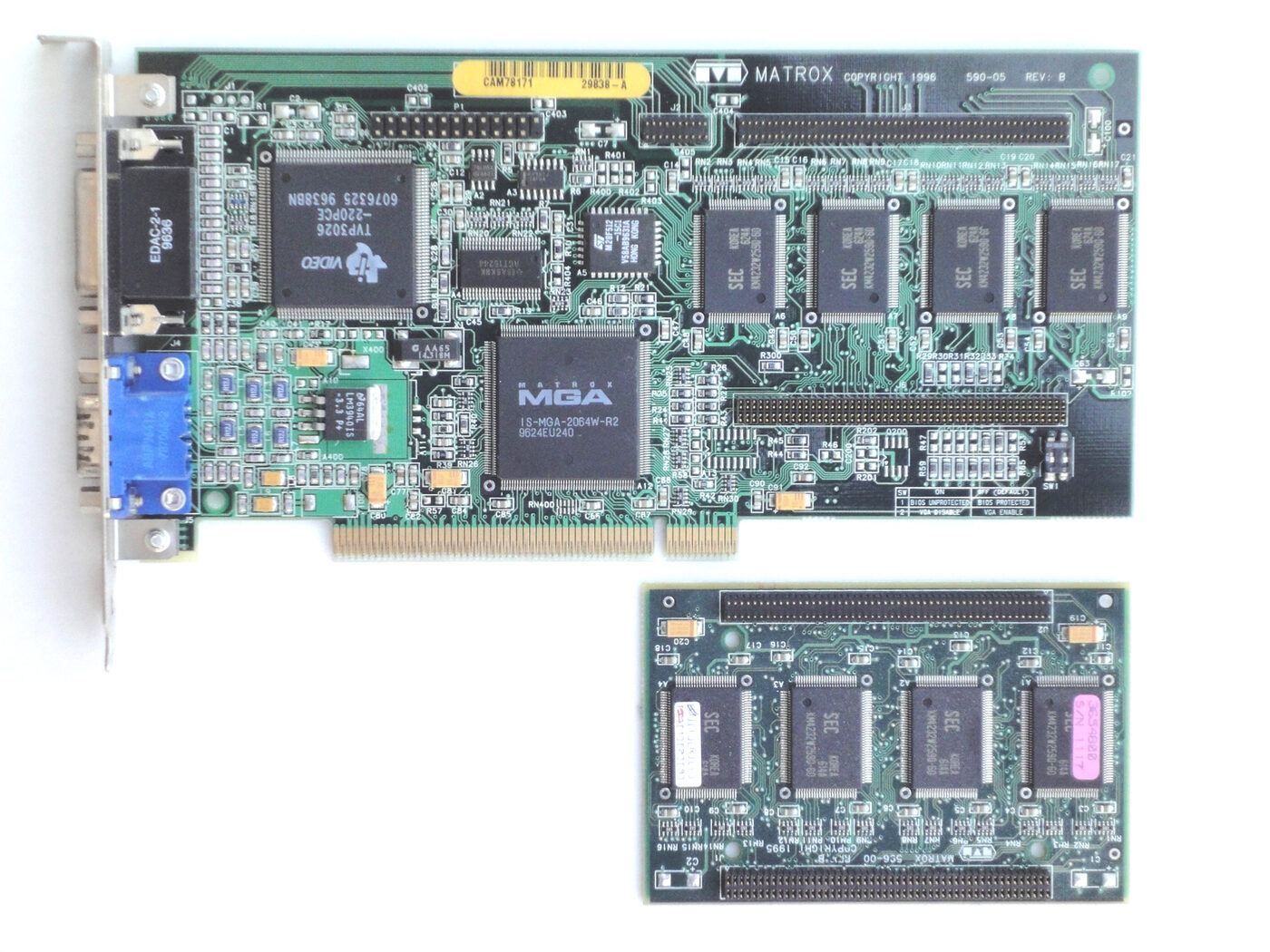
Two comparisons make the procedural difference concrete. The Big Eight's room for PC components is comp.sys.ibm.pc.hardware.*, and it contains exactly eight groups, divided by function: cd-rom, chips, comm, misc, networking, storage, systems and video. Its alt counterpart contains forty-nine, divided by manufacturer and product. Twenty of them sit under alt.comp.periphs.mainboard, naming Abit, AOpen, ASUS, Chaintech, Elitegroup, Epox, FIC, Gigabyte, Iwill, M-Tech, MSI-Microstar, Octek, QDI, Shuttle, Soltek, Soyo, Supermicro and Tyan among others; the video card groups name ATI, ELSA, Matrox, Nvidia and S3-Via; the sound card groups name AVM, Pulsar and the Sound Blaster Live. No comp.* group in the register is named after any of those companies. That is the difference between the two procedures rendered as arithmetic: a Big-Eight ballot would have asked whether the network needs a newsgroup for one manufacturer's motherboards and would have answered no, at length, over six weeks. The alt procedure did not ask.

The second comparison is Windows. comp.os.ms-windows.* has 34 groups and organises them by activity — programmer.*, nt.admin.*, networking.*, apps.* — and it stops at Windows 95, NT and CE. There are thirteen alt.comp.os.windows names and they are organised by release: windows3, windows-95, windows-98, windows-98se, windows-me, windows-2000, windows-nt4, windows-xp, windows-ce, windows-8, windows-10, windows-11, plus windows.registry-editing. The chartered hierarchy files by what you are doing. The unchartered one files by what you have got. The second scheme dates much faster and is much easier to use.
A mailing list in a hurry
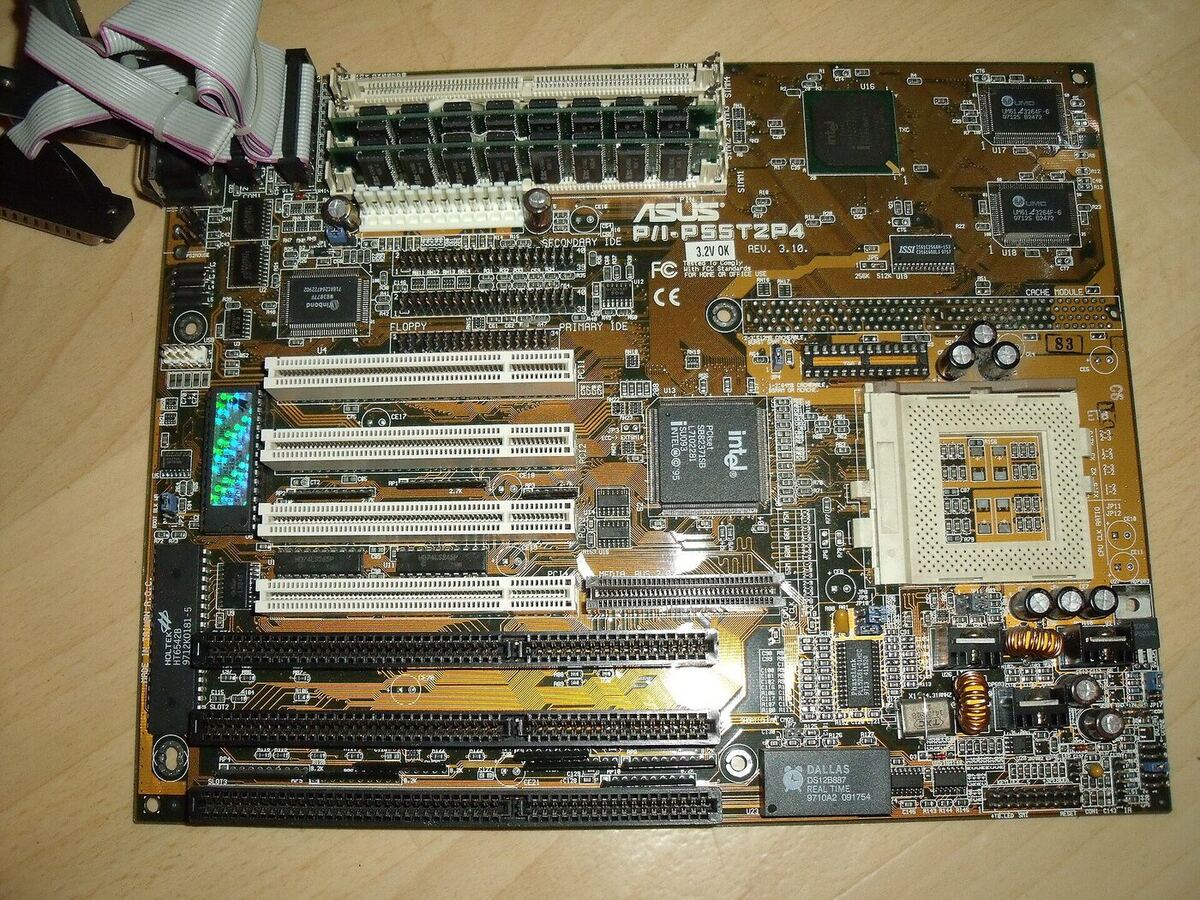
Occasionally the paperwork explains itself. The newgroup message that created alt.comp.periphs.mainboard.asus is dated 2 August 1994 and was sent by Chris Tubutis, then at Colorado State University; of the twenty mainboard groups it is the earliest in the control archive by more than a year. Unlike most alt control messages it carries an explanation, and the explanation is this article's thesis stated by a participant who did not know he was stating it:
This is to take the mailing list to an alt group. A vote was taken and the majority preferred creating this group, as opposed to a comp group. The mailing list is getting out of control, and only 5% voted to try and keep the discussions there.
The ultimate goal is to take it to a comp group, and thus a proposed charter is in the works and will soon be on alt.config.
The rest of the message explains the urgency: the list's administrator, running a worldwide list on inadequate listserv software, was being severely overwhelmed, and several hundred participants needed somewhere to go immediately. The comp group never came. Thirty-two years later there is still no comp.* group for ASUS motherboards, and alt.comp.periphs.mainboard.asus is still in the register. alt.* as the temporary measure that quietly becomes the permanent arrangement is the hierarchy's single most typical story, and here it is in a founder's own words, at the exact moment he expected the opposite.

A quarter of the branch is one sender's filing project
Ninety-one of the 361 descriptions in the branch end with the tag multi-lingual — two of them spelled mutli-lingual. Their descriptions share one house style, one punctuation habit and one set of typographical errors: Database discusison, Spreadsheet discusison, Word processor discusison. The control archive settles what the register only hints at. Every one of those ninety-one groups has, as its earliest archived control message, a newgroup from the same address over the same name — Cmsg Experts, the sender of the alt.comp boosters — and eighty-nine of the ninety-one arrived in a single fifteen-minute burst in the small hours of 17 February 2003, about seven seconds apart. A quarter of the branch is therefore not an accumulation at all but one afternoon's filing by one sender, and in the register it is completely indistinguishable from the groups that grew from demand. This is the honest limit of the register as evidence: it records what was proposed, never what was wanted.
Typos are permanent
Because nothing checks a name against anything, a misspelling becomes a group and stays one, sitting in the file beside the name it mistypes. The branch holds alt.comp.issues.net-abuse and alt.comp.isues.net-abuse; alt.comp.lang.visualbasic.ver3 and alt.comp.lang.visulabasic.ver3; alt.comp.periphs.mainboard.supermicro and alt.comp.pheriphs.mainboard.supermicro — and in that pair the misspelling is the older of the two by three days, which tells you how little the order matters. Three separate spellings of one motherboard manufacturer survive in alt.comp.periphs.mainboard.gigabyte, alt.comp.periphs.mainboard.giga-byte and alt.comp.periphs.gigabyte. One Windows dynamic-DNS client managed four names for itself — alt.comp.ddns.clients.dynsite-for-windows, alt.comp.ddns.clients.windows.dynsite, alt.comp.dynamic-dns.clients.dynsite-for-windows and alt.comp.dynamic-dns.clients.windows.dynsite. In a hierarchy where removal requests are ignored on principle, a slip of the finger is a permanent institution.
The same absence of review shows in the descriptions themselves. alt.comp.programming.anti-oop's entry in the register begins newgroup alt.comp.programming.anti-oop and then reads Criticism of Object Oriented, breaking off mid-phrase. The control message explains both halves: the sender pasted the whole command, the word newgroup included, into the field meant for the description, and then let it wrap onto a second line. The register's own instructions warn about exactly this — that any text a client wraps onto a following line will be ignored — and so the sentence was cut where the line ran out. It has read that way ever since, because nothing revisits a description that nobody resends.
Names that are arguments
A namespace with no editor eventually gets used as a noticeboard. alt.comp.hello-world is described as A group which doesn't exist. alt.comp.cancel is described as Any article posted to this group will be cancelled. alt.comp.hardware.homebuilt promises Designing devious devices in the den.; alt.comp.programming.pro-goto states, in its entirety, real programmers use goto. Fourteen groups named alt.comp.something.cancelbots divide the writing of cancel robots by implementation language — assembly, C, COBOL, Fortran, Java, Pascal, Perl, Rexx, Visual Basic, the Bourne, C and Korn shells, and INTERCAL — and nine of them carry the identical two-word description The original. And the longest name in the branch, at eleven components, is alt.comp.rec.misc.fuck.the.big8.you.have.ruined.usenet, created on 1 April 2008 with the description Happy birthday! A grievance against the chartered hierarchies, filed as a permanent entry in the register of both. No vote was required, which was the point being made.
The furniture: config, newusers, test and answers
Four of the 361 groups are not about computing at all. They are about alt.comp.*, and between them they reproduce, in miniature, the administrative machinery the hierarchy existed to avoid.
- alt.comp.config — New group discussion and announcements for the alt.comp.* sub-hierarchy.
- alt.comp.newusers — New user information for the alt.comp.* sub-hierarchy
- alt.comp.test — General test group for alt.comp.* sub-hierarchy
- alt.comp.answers — Answers group for the alt.comp.* sub-hierarchy
Each has an obvious original. news.groups and alt.config are where group proposals are aired; news.newusers.questions is the moderated room for beginners' questions; misc.test is where you post to see whether posting works; and news.answers, comp.answers and alt.answers are the repositories for periodically posted articles, all three described identically in the register as Repository for periodic USENET articles. and all three moderated. The names and the functions were copied together.
Who copied them is the part the register cannot show and the control archive can. alt.comp.config was created on 20 November 2002 by an address signing itself IBU Ljubljana Net Ops, with the same newgroup.pl script in its User-Agent header that the alt.comp boosters used. The other three arrived in the February 2003 run: alt.comp.test on the 17th, alt.comp.newusers and alt.comp.answers on the 20th, all three from the address that sent the ninety-one multi-lingual names and the alt.comp boosters. Nor did they arrive quietly. The archive for alt.comp.answers records rmgroups sent against it within hours, counter-newgroups from two further addresses using absurd organisation names, and further boosters — a week of control-message traffic between anonymous parties, of which the register preserves only the outcome, because rmgroups in alt.* are discarded and the last newgroup wins. What looks in the newsgroups file like a branch growing its own institutions is, in the archive, a handful of scripts arguing.
Whoever sent them, the copy omitted the hinge. alt.comp.answers is flagged y — unmoderated — and so is every other group in the branch: not one of the 361 is moderated. But the answers convention is only a moderation arrangement. The whole point of a group called comp.answers is that a moderator decides what counts as a periodic posting and refuses everything else; without that decision an answers group is an ordinary unmoderated group with an aspirational name. Nothing in alt.* could have supplied the missing piece, because the register sets a group's moderation status to whatever the last control message said, and the last control message can be sent by anyone.
alt.comp.config has the same character. What it proposes to do for the branch is what alt.config does for the hierarchy as a whole: provide a room in which someone can be asked what a proposed group is for and whether an existing one covers it, an arrangement described on the alt.* hierarchy page and binding on nobody. Whether alt.comp.config was ever used for that is not something the control archive can answer. What the archive does show is that the largest single act of group creation in the branch's history came three months after alt.comp.config existed, from a sender who plainly did not consult it.
The imitation is still worth dwelling on, because it cuts against the usual telling in a way that survives the correction. alt.* is remembered as the hierarchy that rejected procedure. What its computing branch ended up with was the furniture of procedure — a config group, a newcomers' group, a test group, an answers group — installed in a week by parties with no standing and no means of enforcing anything, as though the forms alone might do some of the work. On the evidence of the register, they did not.
Advocacy as a Usenet form
Advocacy — the sustained argument about which operating system, editor, language or machine is better — is one of very few Usenet genres with a formal address in the namespace. The Big Eight did not merely tolerate it. It chartered rooms for it, put the proposals through the ballot like any other, and left the resulting descriptions in the register, where they can still be read. There are ten of them in comp.*:
- comp.lang.java.advocacy — Support for and criticism of the Java System.
- comp.lang.smalltalk.advocacy — Discussion of Smalltalk Language pros/cons.
- comp.os.linux.advocacy — Benefits of Linux compared to other operating systems.
- comp.os.ms-windows.advocacy — Speculation and debate about Microsoft Windows.
- comp.os.os2.advocacy — Supporting and flaming OS/2.
- comp.sys.acorn.advocacy — Why Acorn computers and programs are better.
- comp.sys.amiga.advocacy — Why an Amiga is better than XYZ.
- comp.sys.atari.advocacy — Attacking and defending Atari computers.
- comp.sys.mac.advocacy — The Macintosh computer family compared to others.
- comp.sys.powerpc.advocacy — Why the PowerPC is Good/Evil (delete one).
Read as a set, their function is unmistakable, and it is the best working demonstration anywhere in the register of what a charter is actually for. These are not groups created because anyone wanted more advocacy. They are chartered relief valves: a formal address for an argument, so that the neighbouring technical group could rule the argument off-topic and point at a document while doing so. Chartering comp.sys.mac.advocacy is what allowed comp.sys.mac.programmer to be about programming. A procedure that put the whole proposal, charter and all, to a public vote approved Supporting and flaming OS/2 and Why the PowerPC is Good/Evil (delete one), which suggests the electorate knew exactly what it was doing and had a sense of humour about it.
The form had a pedigree long before it had addresses. The Emacs-versus-vi rivalry is documented as one of the original holy wars conducted on Usenet groups, with flame wars over it recorded from at least 1985, and the same pattern of argument spread to operating systems, programming languages, version-control systems and even indentation style — the editor war being merely the best-remembered instance. The alt hierarchy's own contribution to that particular front is filed, deadpan, as alt.advocacy.pico, described in the register as To support those oppressed by vi and emacs.
The surest sign that a genre has arrived is that the etiquette literature has to deal with it, and RFC 1855 deals with it twice over, in two different registers. In its sections on mailing lists and newsgroups it says flatly, and identically in both places, that readers should not get involved in flame wars and should neither post nor respond to incendiary material. Several pages earlier, in the guidance on ordinary person-to-person mail, it has already conceded the point and supplied a markup convention for doing it anyway:
FLAME ON: This type of argument is not worth the bandwidth it takes to send it. It's illogical and poorly reasoned. The rest of the world agrees with me. FLAME OFF
An informational RFC, in 1995, standardising the delimiters of an argument it elsewhere advises against — an accommodation which tells you more about how normal the practice was than any amount of description. Flaming as a general internet phenomenon is treated at length elsewhere; what belongs here is the narrower and more particular fact that on Usenet it acquired a taxonomy, a place in a voted namespace, and a recommended syntax.
In alt.comp.* the same energy needed no container and got none. alt.comp.linux-sucks was newgrouped on 28 February 2002 by a poster signing as Kadaitcha Man; the message's entire body is the words For your newsgroups file: alt.comp.linux-sucks on a single line, where the format requires the description on the line following the marker, so nothing valid was supplied. The description the register carries today was set a year later, by one of the February 2003 boosters from the same address that boosted alt.comp, and it reads No description. The group sits in the same file as alt.comp.os.linux, alt.comp.linux and alt.comp.linux.isp. Nothing arbitrated between the four, and in an unchartered branch nothing had to: a disagreement about scope is settled by adding a name, and the register keeps every name anyone ever added.
One closing observation about the form, offered as a historian's rather than a partisan's. Advocacy is the part of the computing record that has aged best. A thread resolving a 1997 interrupt conflict is now of interest to almost nobody; an argument about whether Windows NT or OS/2 was the better design is a first-hand record of what well-informed people believed at the time and what evidence they thought counted. The groups contemporaries complained about most are, predictably, the ones a historian opens first.
Where the questions went
Of all the traffic a room like alt.comp existed to carry, the quick question with a specific answer left Usenet earliest and most completely, and it went to places that can be dated.
Forum software came first. Web message boards existed through the 1990s, but the cheap, self-hostable kind that let any user group run its own arrived at the turn of the century: vBulletin was launched in 2000 by James Limm and John Percival, and phpBB was begun by James Atkinson on 17 June 2000 and released as version 1.0.0 on 16 December 2000. What a board offered that a newsgroup did not was registration, appointed moderators, working search and a pinned FAQ that stayed at the top of the page — the last two being things Usenet did badly and left to volunteers respectively. What a board took away was that it existed on exactly one server, owned by exactly one person, and vanished when that person lost interest.
Vendor support moved in the same direction, though the first move was made on Usenet's own protocol rather than away from it: microsoft.public.* was a manufacturer's support hierarchy carried over NNTP, and this directory holds a sample of it. The pattern of a vendor running its own rooms, on its own terms, with its own staff answering, was established on Usenet before it moved to the web.
Then the knowledge markets. Experts Exchange went live in October 1996, selling access to the answering of exactly the questions the newsgroups had been answering for nothing. Google Answers ran from April 2002 to December 2006 on a different model again: the asker named a price, and the answering was done by vetted contract researchers who had to pass an application process. Both are contemporaneous with the years this gateway operated, and both are evidence that the migration was under way while alt.comp was still being carried.
The rest postdates the gateway entirely, and should be read accordingly. news2mail carried Usenet to e-mail between 2000 and 2004; nothing below can have shaped what it saw. Yahoo Answers opened in beta to the general public on 8 December 2005 and closed on 4 May 2021. Stack Overflow's public beta opened on 15 September 2008, created by Jeff Atwood and Joel Spolsky and positioned, by its own account, as a more open alternative to earlier question-and-answer sites such as Experts Exchange. By the time it existed the question genre had already left the newsgroups; what Stack Overflow did was consolidate where it had gone.
Each step traded specific things for other specific things, and it is worth being exact about both, because the losses are easy to sentimentalise and the gains are easy to forget. Usenet gave you one client for every subject, offline reading, a namespace you could enumerate in full, and propagation to every server rather than storage on one company's. The answer sites gave you search that worked, an answer that could be corrected when it went stale, and an identity that carried reputation between questions. For the quick technical question the second set wins decisively, for one reason above all: a newsgroup cannot edit yesterday's wrong answer, and a wrong answer that stays at the top of a search result for a decade is worse than no answer. The fuller account of where computing's Usenet traffic dispersed to belongs to the comp.* hierarchy page.
The branch after the gateway
There is a reason to keep counting names, which is that the count is not finished. alt.comp itself has been inert in the control record since March 2003. The branch beneath it was still being extended a decade and two decades later, long after the gateway closed and long after almost everybody had stopped looking.
- alt.comp.os.windows-8 — newgroup dated 14 February 2012. Its From header reads [email protected] and its Organization header reads Micro$oft Corporation, which is as good a demonstration as the archive offers that neither field establishes anything: alt.* control messages carry no signature and never have.
- alt.comp.os.windows-10 — newgroup dated 19 October 2014, nine months before Windows 10 became generally available on 29 July 2015.
- alt.comp.lang.rust — newgroup dated 17 July 2018.
- alt.comp.os.windows-11 — newgroup dated 20 September 2021, just over a fortnight before Windows 11 was released on 5 October 2021.
Four groups created between 2012 and 2021, in a branch whose parent had not seen a control message since 2003, in a hierarchy whose readership had been declining for many years. Nobody voted, and nobody could have — but three of the four messages are interesting precisely because they behave as though somebody might. The windows-10, windows-11 and rust bodies each carry a section headed Charter, and two of them add a Justification of Readership; the windows-10 message opens by reporting that the proposal was discussed in alt.config, and the rust message cites a discussion held on Twitter. These are the forms of the Big-Eight procedure, voluntarily observed, in a hierarchy that requires none of them and checks none of them. Somebody noticed that a new version of Windows was coming and reserved the name before it shipped, which is exactly the behaviour a low-barrier namespace is designed to make cheap. Whether anyone then posted to the groups is a different question, and the register does not answer it.
The register treats these newcomers exactly as it treats alt.comp: as groups that exist because a server will accept them. That is the whole of what the entry means, and it is worth being clear that it has meant no more than that for the entire life of the group. The gateway that produced this directory carried alt.comp between 2000 and 2004, squarely in the middle of that undocumented life; what the gateway itself was, and how a newsgroup reached a reader's inbox through it, is described on the front page of this directory.
What the record does not show
The honest inventory of gaps is long, and stating it is part of the point of a page like this one.
- No creation date. The earliest archived message concerning alt.comp is a request for its removal, in December 1997, in an archive that begins in early 1991. That is consistent with a group older than the archive; it is equally consistent with a group that first entered active files through a leaked local control message and was noticed only when somebody objected. The archive cannot tell the two apart and neither can this page.
- No founder. The four addresses attached to the 1997–99 messages are the earliest in the record, and not one of them is a claim of authorship. They are server administrators, or their software.
- No charter, no FAQ, no guidelines. None was found for this article, and the procedure that would have produced a charter does not exist in alt.*.
- No traffic figures. The active file's watermarks are placeholders identical on all 45,003 lines. Nothing in the administrative record distinguishes a busy group from an empty one.
- No readership estimate. No survey figure for alt.comp was verified for this page, and none is quoted.
- No thread, no subject line, no poster. Nothing from inside the group is quoted anywhere above, because nothing from inside the group was verified. Every quotation on this page is from a control message, a configuration file, a published procedure or an RFC.
It is worth naming the temptation this page has declined. A group like alt.comp is exactly the kind that invites invented colour — a plausible anecdote about a Pentium overheating, a plausible flamewar, a plausible regular. The material exists to write that article and none of it would be true. What can be established about alt.comp is administrative, and the administrative record turns out to be more interesting than the invention would have been, because it is about how a network decided what could exist.
One further caution about the four Netscape Collabra messages, since they are the most concrete thing in the file. What they document is the behaviour of news server software in the late 1990s. They document nothing at all about anybody reading alt.comp, and they should not be read as evidence of a community.
Scope and limits
This account is built almost entirely from one body of evidence: the administrative record of Usenet as published by the Internet Systems Consortium — the active and newsgroups files, the archive of control messages, the news.announce.newgroups proposal archive with its guidelines, and the control.ctl file that records which hierarchy is trusted from whom. Every count in it is a count of names in a snapshot of those files taken on 25 August 2026, and the alt.* portion of that snapshot changes whenever somebody, anywhere, sends a control message. A reader repeating the counts next year should expect small differences and, in alt.*, should expect them upward. The control archive additionally warns that it cannot guarantee completeness, so an absence in it is weaker evidence than a presence.
The comparisons drawn here are between namespaces, not between communities. That comp.* holds 677 groups and alt.comp.* 361 says something exact about two procedures and nothing at all about how many people used either. Where this page makes a claim about behaviour rather than paperwork — about genres of posting, about what a charter allowed a group to say — it rests on the general etiquette literature of the network rather than on anything specific to this group, and it has been written to be read that way.
Three neighbouring pages carry what is deliberately absent here. The comp.* hierarchy covers how the chartered computing hierarchy came to be, what lived in it, its branch map, the software it distributed as postings and the August 1991 posting in comp.os.minix. The alt.* hierarchy covers the hierarchy's origins, the mechanics of creation by control message, the binaries branch and the spam history. The front page covers the medium and the mail-to-news gateway that produced this directory. For the same phenomenon in another language's corner of alt.*, this directory also holds alt.fr.comp.os.ms-windows.xp — a French-language Windows XP group which, like its parent here, appears in the register with no description at all.
Reading alt.comp today
- Historical archive: Google Groups — alt.comp (coverage varies by group and era).
- Open in a newsreader:
news:alt.comp— the original site offered exactly this link, and it still works if your system has a newsreader registered for thenews:scheme. - Live access: point an NNTP newsreader at a modern server — see accessing Usenet today.
- The original news2mail e-mail subscription service ended in the mid-2000s and no longer operates.