alt.evolution
Evolution: the science and the argument.
A general evolution group living beside talk.origins — same creation/evolution battleground, looser rules, with genuine biology explainers surfacing between rounds.
Its threads mirror the online evolution debates of the era, FAQ citations and all.
On this page
Where the argument lived on Usenet
The centre of gravity for this subject on Usenet was talk.origins, whose first post — a starter message by Mary Horton — is dated 5 September 1986. The group began as the unmoderated net.origins and took its later name in the Great Renaming of 1987. Its stated purpose was administrative rather than doctrinal: to draw origins debates out of the science groups, among them sci.bio.evolution and sci.bio.paleontology, so that those groups could get on with their own business.
In 1997, after discussion within the group itself, talk.origins was voted moderated by the ordinary Usenet request-for-discussion and call-for-votes procedure. The moderation adopted was procedural rather than editorial — only spam and excessive crossposting are filtered — and the group has been run since by a named moderator with a designated alternate.
The alt.* hierarchy supplied the venues where no vote had ever been taken: a group there needed neither an approved charter nor a ballot, unlike the talk.* hierarchy into which the Renaming had swept talk.origins. In practice the boundary between the two mattered less than the header lines. Crossposting carried a single exchange into several groups at once, so that a thread opened in one arena was read, and answered, in another; the religion groups catalogued alongside this one, among them alt.bible, carried much of the same material.
The archive that grew out of the newsgroup
By the early 1990s a number of frequently-asked-question documents on particular topics were being posted to talk.origins on a periodic schedule, in the manner then normal across Usenet. In 1994 Brett J. Vickers gathered several of those separately posted FAQs and made them available from a single anonymous FTP site. In 1995 Vickers, then a computer science graduate student at the University of California at Irvine, turned the collection into a web site: the TalkOrigins Archive.
Custody of it changed twice on the record. In 2001 Vickers transferred the Archive to Wesley R. Elsberry, who organised a group of volunteers to handle its maintenance. In 2004 Kenneth Fair incorporated the TalkOrigins Foundation as a Texas 501(c)(3) non-profit organisation, whose stated purposes include funding and maintaining the Archive and holding the copyrights to its articles, so that reprinting and updating them is simplified; the copyright question had become awkward precisely because the FAQs had started as a small collection assembled with little thought given to it. The Foundation was granted tax-exempt status by the Internal Revenue Service in 2005.
The Archive's contents are organised as FAQs and FRAs — frequently rebutted assertions — across evolutionary biology, geology, astronomy and hominid evolution. Among the named components are Mark Isaak's Index to Creationist Claims, which lists positions, responses to them and links to primary source material; Jim Foley's Fossil Hominids sub-site; and the Quote Mine Project, which examines the practice of quoting out of context. A feedback system collects readers' comments and publishes a compilation with responses each month, and a sister site, TalkDesign, was set up to address the arguments of the intelligent design movement.
The site accumulated a documented trail of outside notice. The New York Times described it in 1999 as a good antidote to the creationist web sites that had appeared by then; Scientific American singled it out in August 2002 for its detailed discussions and bibliographies; The Dallas Morning News made it its Web Site of the Week in October 2006. Link pages maintained by the National Academy of Sciences, the Smithsonian Institution, the Leakey Foundation and the National Center for Science Education have pointed readers to it, and the Archive records its material being used in more than twenty college or university courses.
Statutes and trials in the United States, 1925 to 1968
The American court cases named in these debates form a chronology that can be stated as a matter of record. Tennessee's Butler Act, which prohibited the teaching of human evolution in the state's universities and other public schools, passed the House on 28 January 1925 and the Senate on 13 March, and was signed into law by Governor Austin Peay on 21 March 1925. Its author was John Washington Butler, a farmer and a member of the Tennessee House of Representatives between 1923 and 1927.
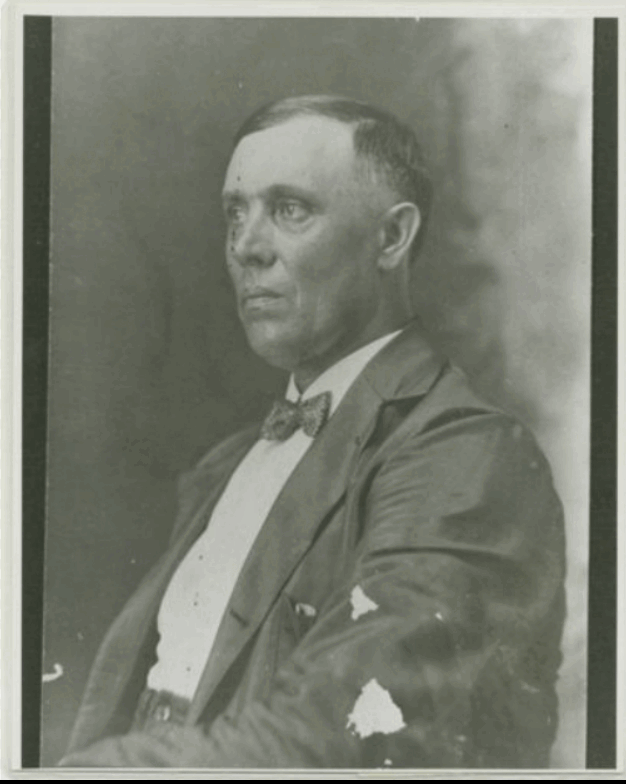

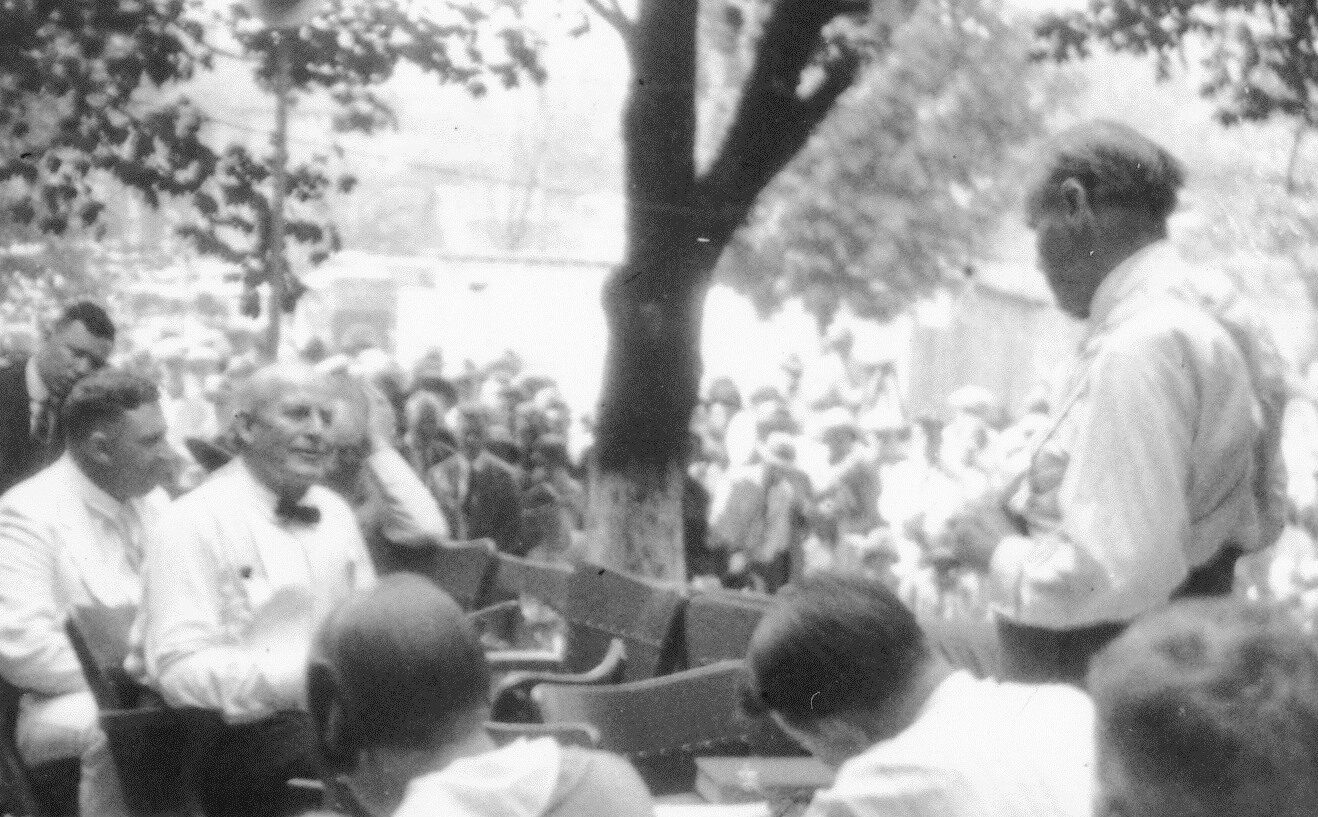
The prosecution that followed, the trial of John T. Scopes, a high-school science and mathematics teacher who had substituted for the regular biology teacher, ran from 10 to 21 July 1925 at Dayton, Tennessee; Scopes had been served with a warrant on 5 May and indicted on 25 May. William Jennings Bryan, a three-time presidential candidate and former Secretary of State, appeared for the prosecution; Clarence Darrow, a labour and criminal defence lawyer, appeared for the defence. Scopes was found guilty and fined one hundred dollars.
The verdict did not survive intact. In 1927 the Tennessee Supreme Court set the conviction aside on a technicality: the fine should have been fixed by the jury rather than by the judge, because the state constitution did not then permit Tennessee judges to impose fines above fifty dollars, and the Butler Act specified a minimum of one hundred. The case was not retried. The statute itself was not struck down, and it stayed on the Tennessee books until its repeal in 1967.
_(2898243103)_crop.jpg)
Arkansas had enacted a comparable statute in 1928, forbidding the teaching in public schools and universities that mankind ascended or descended from a lower order of animals. It reached the Supreme Court of the United States as Epperson v. Arkansas, argued on 16 October 1968 and decided on 12 November 1968. The Court held the statute unconstitutional under the Establishment Clause of the First Amendment, on the ground that states may not require curricula to conform to the views of any particular religion. The decision was unanimous in result, with separate concurring opinions.
From Edwards to Dover, 1987 to 2005
Louisiana's Balanced Treatment for Creation-Science and Evolution-Science Act provided that where evolution science was taught, creation science had to be taught as well. A federal district court and, in 1985, the Court of Appeals for the Fifth Circuit both ruled against the state. In Edwards v. Aguillard, decided on 19 June 1987 by a vote of seven to two, the Supreme Court applied the three-part standard derived from Lemon v. Kurtzman — a legitimate secular purpose, a primary effect that neither advances nor inhibits religion, and no excessive entanglement between government and religion — and held the Act unconstitutional as an attempt to advance a particular religion. Amicus briefs filed in support of the challenge included one from seventy-two Nobel Prize-winning scientists, seventeen state academies of science and seven other scientific organisations.
Two years later the Foundation for Thought and Ethics, a non-profit organisation based in Richardson, Texas, published Of Pandas and People: The Central Question of Biological Origins, a supplementary school textbook by Percival Davis and Dean H. Kenyon, edited by Charles Thaxton; a second edition followed in 1993. Drafts prepared before publication used cognates of the word creationist; after the Edwards ruling these were changed to refer to intelligent design. The sequence of drafts later became evidence in court.
In 2004 the Dover Area School District in Pennsylvania adopted a policy under which a statement was read to ninth-grade science classes presenting intelligent design as an explanation of the origin of life differing from Darwin's view, with Of Pandas and People made available as a reference book. Eleven parents sued on 14 December 2004, represented by the American Civil Liberties Union among others. Because the plaintiffs sought equitable relief, the case was tried without a jury, from 26 September to 4 November 2005, before the United States District Court for the Middle District of Pennsylvania; Judge John E. Jones III issued his 139-page decision on 20 December 2005.


The court held in Kitzmiller v. Dover Area School District that intelligent design is not science and that presenting it in public school science classes violated the Establishment Clause, writing that intelligent design cannot uncouple itself from its creationist, and thus religious, antecedents. The substitution of terminology in the Pandas drafts formed part of the evidence: the drafts were found by Nick Matzke of the National Center for Science Education and put before the court through the expert testimony of Barbara Forrest. A newly elected school board rescinded the policy on 3 January 2006 and did not appeal; in February 2006 the board voted to pay 1,000,011 dollars in legal fees and damages.
What the scientific bodies put on record
Alongside the litigation runs a documented series of institutional statements. One of the earliest was a resolution of the American Association for the Advancement of Science in 1922, readopted in 1929; another was a petition circulated in May 1966 by the Nobel Prize-winning biologist Hermann J. Muller and signed by 177 American biologists. In the autumn of 1972 the AAAS passed a resolution stating in part that the theory of creation is neither scientifically grounded nor capable of performing the rules required of science theories; the National Academy of Sciences passed a similar resolution in the same season. The governing board of the American Geological Institute issued a supporting statement in November 1981, and the AAAS passed a further resolution on the teaching of creationism in science classes shortly afterwards.
After intelligent design became the disputed term, the statements were reissued in its vocabulary. The National Academy of Sciences has stated that intelligent design and other claims of supernatural intervention in the origin of life are not science, on the ground that they cannot be tested by experiment, generate no predictions and propose no new hypotheses. In September 2005 thirty-eight Nobel laureates issued a statement describing intelligent design as fundamentally unscientific because its central conclusion rests on belief in the intervention of a supernatural agent, and in October 2005 a coalition representing more than seventy thousand Australian scientists and science teachers issued a statement to similar effect.
The Academy also published at book length. Science, Evolution, and Creationism, whose authors include Francisco J. Ayala and Bruce Alberts, appeared on 3 January 2008 and was released as a free PDF by the National Academies Press. It was written for a lay readership rather than for specialists, gave much of its space to the relationship between science and religion, and drew on recent material including the 2006 description of the transitional fossil Tiktaalik. It reached print as several states, Texas and Florida among them, were considering revisions to their science standards.
One organisation runs through this chronology: the National Center for Science Education, incorporated by 1983 and based in Oakland, California, whose stated mission is to promote and defend science education. Eugenie Scott became its first executive director in 1987 and held the post until 2013; Ann Reid was appointed that year, and Amanda L. Townley has held it since December 2023. The Center is also responsible for Project Steve, announced in a press release on 16 February 2003 at the AAAS meeting in Denver: a deliberately light-hearted counter-petition restricted to scientists named Steve or a variant, named in honour of the palaeontologist Stephen Jay Gould, who had died in 2002. Signatories endorse a single sentence — that evolution is a vital, well-supported, unifying principle of the biological sciences, and that the scientific evidence is overwhelmingly in favour of the idea that all living things share a common ancestry. Its original target of a hundred signatures was reached in about ten days, more than two hundred Steves signed in the first month, and the total stood at 305 by 21 April 2003.
The recurring structure of the argument
What made the Usenet version of this dispute distinctive was less its content than its apparatus. Because the same assertions returned every few weeks with a fresh cohort of posters, regulars stopped composing replies and started maintaining them. The periodically posted FAQ, and after 1995 the web archive built out of those FAQs, converted a repeated argument into a fixed document that could be pointed at. The characteristic move of the era was consequently the citation rather than the rebuttal: a URL or a FAQ title supplied in place of an answer, on the understanding that the answer already existed elsewhere.
The Index to Creationist Claims formalised the arrangement further by giving individual assertions catalogue numbers, each paired with a response and with references — an arrangement that makes a claim answerable by reference rather than by argument, and makes repetition visible as repetition.
Two other documented categories belong to the same apparatus. Quote mining — quoting an author out of context so that the excerpt appears to support a position the author did not hold — is catalogued in the Archive's Quote Mine Project, which sets the excerpts beside their surrounding text; the term is one used within the creation-evolution controversy for the practice. The term Gish gallop was coined in 1994 by the anthropologist Eugenie Scott, after the creationist Duane Gish, whom she described as the technique's most avid practitioner, for a method in which one party attempts to overwhelm the other by presenting an excessive number of arguments without regard to their accuracy or strength. Both terms describe the mechanics of an exchange rather than the merits of either side.
The medium supplied its own structure on top of this. Usenet was asynchronous and had no floor to hold, which meant that an argument criticised in oral debate for moving too fast for a reply could be answered at any length by anyone with the time; it also meant that no exchange had to end. Threads drifted, subject lines became unreliable guides to their contents, and crossposting drew in participants who had not read the earlier articles. In talk.origins the stated expectation was that any claim would be backed by evidence, preferably a peer-reviewed publication in a reputable journal.
House customs of talk.origins
talk.origins accumulated the sort of in-house apparatus that long-running groups tend to develop. Its running jokes included the fictitious University of Ediacara, which acquired a web domain of its own, the equally fictitious Evil Atheist Conspiracy, invoked as the body that allegedly hides all the evidence supporting creationism, pun cascades, and a habit of quoting Monty Python.
Two recurring awards gave the group a periodic rhythm. A monthly Chez Watt award was voted for statements that, in the group's own formulation, make you go say what; and a Post of the Month was selected from articles posted to the group and archived on the TalkOrigins site, where the series runs from 1996 to 2015 — so that a single Usenet article each month became a permanent page.
The group's afterlife
talk.origins is now largely defunct, a condition attributed both to the general decline of the creation-evolution debate as a live online genre and to Google Groups ceasing, on 22 February 2024, to carry new Usenet content, accept posts to Usenet groups or handle subscriptions to them.
What survives is unevenly distributed. The TalkOrigins Archive remains online under the Foundation incorporated in 2004, though the copyright notice on its front page runs only to 2016. The newsgroups themselves are still carried by NNTP servers that retain the alt.* hierarchy, and material posted to Google Groups before February 2024 remains viewable and searchable there, though its coverage varies considerably by group and by year.
For a reader working through this directory, the useful comparison is lateral. The same crossposted argument can be followed across the religion and science groups catalogued here — alt.bible is the nearest neighbour — and the practical routes into any of them are the same: an NNTP server and a newsreader, as set out on the page about accessing Usenet today.
Reading alt.evolution today
- Historical archive: Google Groups — alt.evolution (coverage varies by group and era).
- Open in a newsreader:
news:alt.evolution— the original site offered exactly this link, and it still works if your system has a newsreader registered for thenews:scheme. - Live access: point an NNTP newsreader at a modern server — see accessing Usenet today.
- The original news2mail e-mail subscription service ended in the mid-2000s and no longer operates.