alt.privacy
Privacy in the information age.
From the crypto wars of the 1990s onward, alt.privacy carried the practical end of the privacy debate: surveillance law, anonymous remailers, PGP for civilians, workplace monitoring, and the slow realisation that databases talk to each other.
Privacy advocacy organisations listed the group as a standing resource for years — the Australian Privacy Foundation’s resource page still does, which is how many readers arrive here.
On this page
A group without a gatekeeper
The creation of alt.privacy is unusually well documented for an alt group. The earliest surviving control message ordering it into existence is dated 28 March 1991, and it was sent by John Gilmore — a founder of the Electronic Frontier Foundation the year before, and one of the creators of the alt hierarchy itself. Gilmore was writing from the first Computers, Freedom and Privacy conference in Burlingame, California, where, his message records, a new organisation called the US Privacy Council was being founded that very day; he was creating the newsgroup, he wrote, “to provide a means for Usenet and Internet users to communicate on this topic”. The timing deserves a moment's attention. In March 1991 the World Wide Web existed as a handful of pages on a computer at CERN; Phil Zimmermann would not release PGP for another ten weeks. The group, in other words, is not a product of the crypto wars. It predates them, and was waiting when they arrived.
What it does not predate is Lotus Marketplace, which hung over that spring and set the register for everything that followed. Announced in April 1990 by Lotus Development and the credit bureau Equifax, it proposed to sell CD-ROMs profiling tens of millions of American households to anyone with a desktop computer. The protest campaign that killed it in January 1991 — lawsuit threats, tens of thousands of demands for removal from the database, and a torrent of electronic complaints, complete with a newsgroup formed for the purpose — demonstrated two things at once: that ordinary records, aggregated, had become something new and unwelcome, and that the network itself was the natural place to organise against it. Nine weeks after the cancellation, Usenet had a standing group for the general subject.
That it appeared in alt.* rather than the managed hierarchies was fitting. The alt hierarchy was Usenet's unregulated quarter — groups created outside the formal Big Eight process, carried or dropped at each news administrator's discretion, answerable to no moderator; the alt.* page explains the machinery. The arrangement suited the subject. A privacy group with a gatekeeper would have faced awkward questions about the gatekeeper, and the readership was in any case temperamentally opposed to being approved. Anyone could post, under any name or none — and a fair number posted under none.
The crypto wars, watched from the cheap seats
The group's formative decade was punctuated by documented collisions between governments and cryptography, and alt.privacy served as one of the public galleries. Phil Zimmermann released PGP in June 1991 by having friends upload it to the Internet and to Usenet, and spent years afterwards as the formal target of a United States criminal investigation — opened in February 1993 — for exporting munitions without a licence, cryptographic software with keys longer than 40 bits then falling under the arms-export regulations. The investigation was closed without charges in early 1996, and the closing letter from the US Attorney's office identified the conduct at issue precisely: the posting of an encryption program to Usenet. For this readership, the lesson wrote itself. The distribution channel under criminal scrutiny was the one they were standing in.
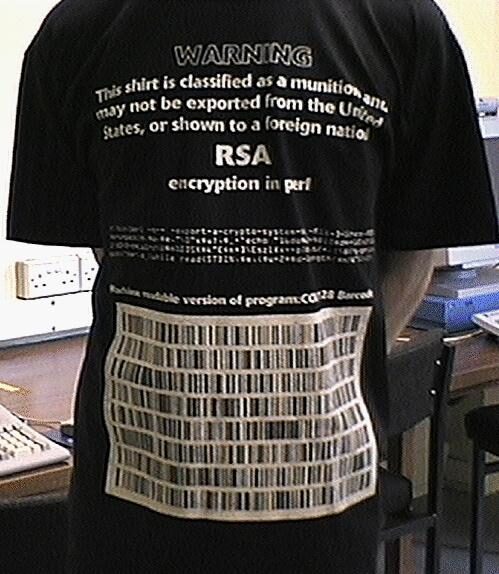
Export control was the argument that would not die. Strong cryptography could be published in a book and mailed abroad — a route widely believed, though never tested in court, to be protected by the First Amendment — yet the same algorithm on a floppy disk was a munition; campaigners printed export-restricted code on T-shirts to make the absurdity wearable, and court challenges — most famously Bernstein v. United States — pressed the claim that source code was protected speech. On alt.privacy this material circulated as running news: pointers to filings, redistributed announcements, and long threads relitigating whether the restrictions were security policy or theatre. The regulations were substantially relaxed at the decade's end, by which point the group had spent years treating their eventual collapse as obvious.
.jpg)
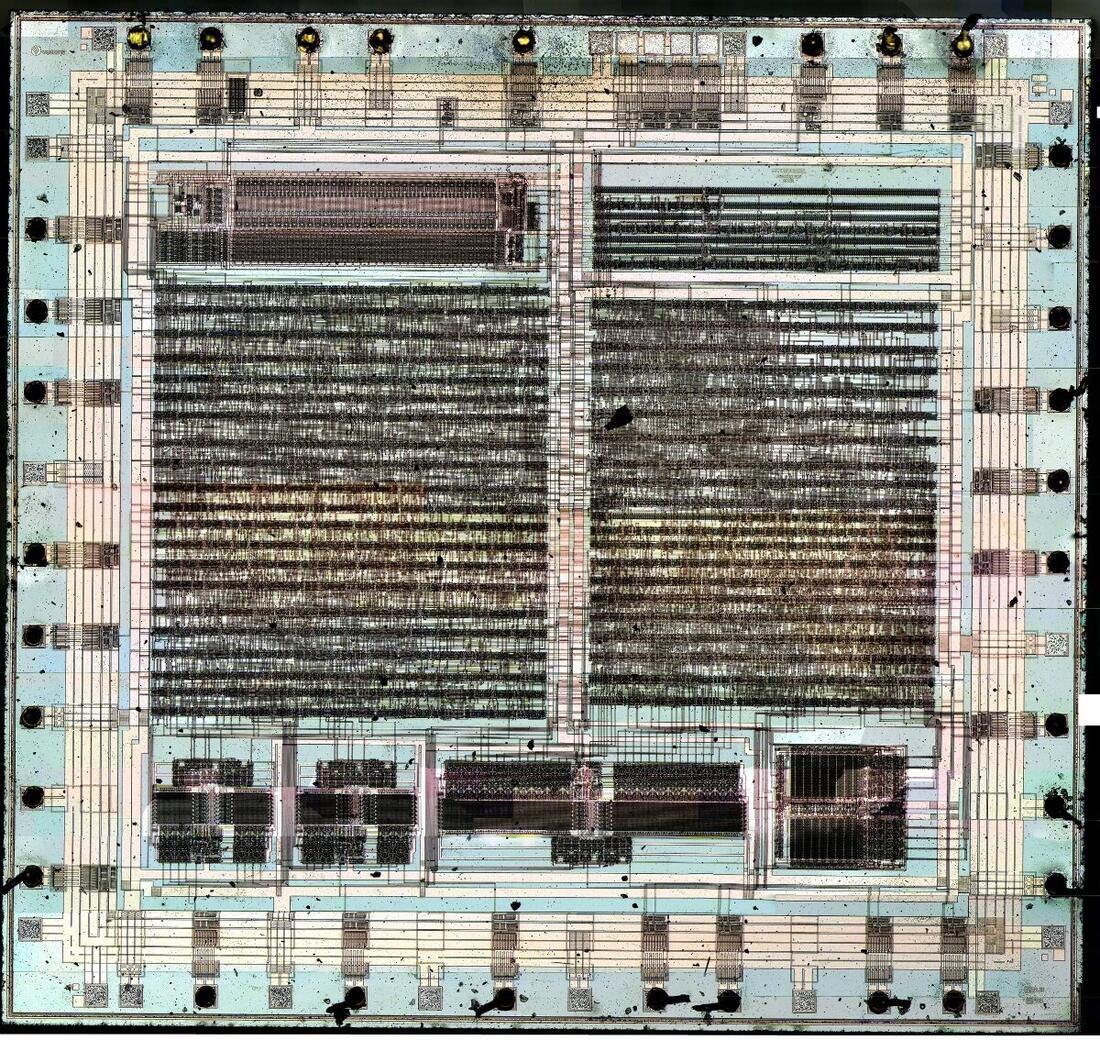
The era's set-piece battle was key escrow. In April 1993 the Clinton administration announced the Clipper chip, an NSA-designed encryption device whose keys would be held in escrow for government access. Opposition assembled with remarkable speed across Usenet, mailing lists and the young advocacy organisations; an electronic petition against the scheme circulated widely. Matt Blaze demonstrated a protocol flaw in 1994, adoption never materialised, and the proposal was effectively dead by 1996. None of this was abstract to the readership. It was the running news the group lived on, and the arguments rehearsed there — that escrowed keys are a target, that access mechanisms do not stay exclusive — were rehearsed again, largely unchanged, in every key-escrow revival since.

The Finnish lesson
The other landmark of the period was the Penet remailer, anon.penet.fi, which from 1993 let anyone post to Usenet or send mail pseudonymously: the service stripped the sender's identity and substituted a numbered alias, keeping the mapping on file in Finland. Its operator, Johan Helsingius, ran it as a public utility of sorts, and for three years it was the standing answer to the question of how to say something on Usenet without signing it.
It ended as a cautionary tale. In litigation pursued on behalf of the Church of Scientology over documents posted through the service, Finnish courts ordered Helsingius to disclose user identities, and in 1996 he shut the remailer down rather than operate it under those terms. The episode was dissected at length on alt.privacy and its siblings, and the moral drawn there has kept its force: the service's weakness was not cryptographic but institutional — a database of real identities existed, therefore it could be demanded. Anonymity by administrative promise, the group concluded, is weaker than anonymity by mathematics. The successor systems discussed in the technical groups — chained remailers that kept no such database — were engineered on exactly that principle.
Around the technology ran a moral argument the group never exhausted: whether anonymity was worth defending at all. One camp held it to be the precondition of honest speech — for the whistleblower, the abuse survivor, the employee of a litigious company, the poster in alt.support groups asking questions they could not sign. The other pointed to what unaccountable speech actually looked like in practice on an unmoderated network: harassment, libel and, increasingly, spam, all wearing the same mask. alt.privacy was an unusually well-placed venue for this debate because it experienced both halves of it first-hand, sometimes in the same thread. The positions on record are recognisably the positions still argued about online pseudonymity today, minus thirty years of examples.
The neighbourhood
alt.privacy sat at the centre of a small documented constellation, and the creation dates of its neighbours track the era's flashpoints with some precision. alt.security.pgp was created in September 1992, as PGP use spread and shortly before the Zimmermann investigation opened. alt.privacy.anon-server followed in April 1993, the year the Penet remailer opened and the Clipper chip was announced, and became the working group for the running and use of anonymising servers; it stayed active well after the parent group thinned. On the managed side of the fence, comp.society.privacy had been created in April 1992 as a moderated group, passing its creation vote by 189 to 16; gatewayed to an Internet mailing list and chartered for “the effect of technology on privacy”, it covered adjacent ground at a rather lower temperature until it was formally removed from the comp.* hierarchy in 2010.
The division of labour was never enforced, but it was real. The specialist groups filtered for competence: a question about remailer configuration got better answers in alt.privacy.anon-server, and a key-signing dispute belonged in alt.security.pgp. The moderated group filtered for temperature. What alt.privacy offered was the absence of any filter at all, and a name anyone could guess. Newcomers landed there first; cross-posted threads passed through it on their way everywhere else; and subjects that fitted no specialist charter — which, in privacy, is most of them — had nowhere else to go. The general group stayed the crossroads because being general was the one job the offshoots could not take away.
The resulting thread population was the usual Usenet mixture: periodic FAQ postings maintaining the group's accumulated answers, newcomers asking practical questions and receiving replies of variable patience, long-running arguments among regulars who knew each other's positions by heart, and a persistent fringe for whom every question had the same answer. That mixture is worth stating plainly because it is what a reader of the archive will actually meet — the signal was real, but it was never separated from the noise, and learning to tell them apart was part of the price of admission that the moderated alternative charged in delay instead.
The standing questions
Beneath the news-driven traffic ran a layer of perennial questions, and the most characteristic of them was some variant of how to disappear. Posters asked how to get an unlisted existence: how to keep a home address out of databases, whether a post-office box defeated the marketers, how to leave less of a trail. The answers on record range from the practical to the fatalistic, and the honest summary of two decades of such threads is that the fatalists gained ground steadily. What the exchanges document is not a body of technique but a shifting baseline — each year's askers were trying to recover a level of obscurity the previous year's askers had taken for granted.
The traffic was heavily American, and two US institutions supplied its most durable arguments. The Social Security number's drift from pension bookkeeping into a universal identifier — demanded by banks, universities, video shops — was documented, denounced and defended in threads that recurred for years, along with practical questions about when the number could lawfully be refused. The credit bureaux ran a close second: error rates, the difficulty of correcting a file, and the realisation that a private company's database had quietly become a licence to transact. Junk mail and telemarketing supplied the comic relief, if fights conducted with that much fury can be called comic — opt-out lists, list brokers, and the era's caller-ID rollout, which the group understood immediately as a genuine two-sided problem: the same service that unmasked the telemarketer unmasked the caller ringing a helpline.
Employer monitoring formed another steady stream — whether the company could read your e-mail (the era's case law generally said yes), what a workplace login conceded, how drug testing and keystroke logging fitted into an employment relationship. And because Usenet was international even when its assumptions were not, the group carried a running comparative seminar: Europeans explaining data-protection law and census boycotts to Americans, Americans explaining credit scoring to Europeans, and posters from countries with identity cards and countries without each regarding the other arrangement as self-evidently sinister.
The quieter record-keeping domains each had their innings too. Medical records were computerising through exactly these years, and threads worried over insurers, employers and the absence, for most of the decade, of any comprehensive US federal privacy rule on the subject. The spread of CCTV — furthest advanced in Britain — supplied a running argument about watching in public places. And the group kept a fond place for the United States' oddly specific Video Privacy Protection Act of 1988, passed after a newspaper obtained and published a Supreme Court nominee's video-rental history: a demonstration that legislators could move briskly on privacy once the records in question might be their own.
Statute versus mathematics
Legislation supplied a second stream of set texts. The United States' CALEA wiretap-assistance law of 1994, the European Data Protection Directive of 1995, Britain's Regulation of Investigatory Powers Act in 2000 and the USA PATRIOT Act the year after each arrived trailing long analytical threads — what the text actually said, what it would be used for, and whether the two had anything to do with each other.
The period's privacy argument divided between those who saw privacy as a policy problem, to be fixed by statute, and those who saw it as an engineering problem, to be fixed by encryption — each side finding the other naive. The policy camp pointed out that most privacy injuries of ordinary life — the sold mailing list, the leaked medical record, the merged database — are not defeated by any cipher. The engineering camp pointed out that statutes are amended, agencies are captured, and promises are subpoenaed, as the Penet affair had usefully demonstrated. The argument was never settled on the group, and has not been settled since; it is, near enough, the same division that still organises privacy debate between its regulatory and cryptographic wings.
The database decade and the arrival of the cookie
While the crypto wars supplied the drama, the quieter through-line of the group's 1990s was database marketing — the slow realisation, thread by thread, that records collected for one purpose were being matched, merged and sold for others. Supermarket loyalty cards, warranty registration cards, motor-vehicle records, subscription lists: each got its turn as the example of the week. The Lotus Marketplace affair had shown the pattern at the decade's start; the rest of the decade generalised it.
Then the pattern moved onto the web. The HTTP cookie was devised at Netscape by Lou Montulli in June 1994 to solve an engineering problem — letting a shopping site remember its customer between page requests — and shipped in Netscape's first browser beta that October. Users were not told; cookies were accepted silently, by default. The public learned of their existence only when the Financial Times reported on them in February 1996, and the reaction ran through alt.privacy along entirely familiar rails: a database was being built about you, without your knowledge, by parties you had never dealt with. The IETF working group that standardised cookies in 1997 flagged third-party tracking cookies as a privacy threat and recommended they be off by default; the major browsers declined to follow, and the advertising industry built itself on the result. Few threads of the era look more clairvoyant in retrospect, and the group can claim no special genius for it — the participants had simply spent five years watching offline databases behave, and recognised the species.
By the early 2000s the group's mix had shifted accordingly: spam, browser cookies, spyware and identity theft — the point at which privacy stopped being a specialist's worry and became a consumer-protection beat. The traffic grew less technical and more anxious, which is its own kind of historical evidence.
Talking about privacy in public
The group's structural joke was visible to everyone in it: this was a discussion of privacy conducted in a public, unmoderated, worldwide-distributed and increasingly well-archived forum, by people posting under their real names from accounts that identified their employers. Every article carried headers disclosing, at minimum, the machine it was posted from; a reader wanting to profile a regular needed nothing more exotic than patience. The participants knew this — it was, after all, their subject — and the group's archive is consequently a study in the full range of responses: some posted under their own names on the argument that privacy advocacy should not have to hide; some used pseudonyms or the remailers the group discussed; and some conducted both halves of the experiment at different times.
The era's one gesture towards ephemerality was X-No-Archive, a header requesting that archiving services skip the article — a request, not an enforcement, honoured by the major archives and ignored by anyone else, and famously incapable of stopping a reply from quoting the entire message it was attached to. Its origin story belongs to the front page of this directory. On alt.privacy it functioned mainly as a worked example in the group's own curriculum: the difference between asking for privacy and having it was the difference the whole group existed to discuss.
The archive question sharpened in the mid-1990s, when web-based Usenet archives made the whole back catalogue searchable by anyone with a browser. The change was retroactive, which was the unsettling part: articles written in 1992 as ephemeral conversation — the electronic equivalent of remarks at a meeting — became permanently indexed documents under their authors' names, years after the fact and without anyone's consent being asked. For most newsgroups this was an inconvenience; for a privacy group it was the syllabus made flesh, and the threads it provoked read today as an early rehearsal of every later argument about data collected under one set of expectations and used under another.
Why a privacy NGO listed a newsgroup
Readers arriving from Australia bring a longer history to the subject than the group's own. The Australia Card, a proposed national identity card, was abandoned in 1987 after one of the first mass campaigns anywhere against computerised identification, and the federal Privacy Act 1988 followed; the Australian Privacy Foundation itself was founded in the course of that fight. When Australian privacy advocates went online in the 1990s, groups like this one were where a national argument about data matching could join the same argument being had everywhere else — and where the Australian corner of Usenet met a global one.
That was the point of listing a newsgroup as a resource at all. Before web forums existed, Usenet was the discussion layer of the internet, and a link to a newsgroup was a link to a live community rather than to a document: subscribing to alt.privacy was, for most of the 1990s, simply how an interested person joined the conversation. An NGO compiling a resource page had almost nothing else of the kind to point to. As conversation migrated to mailing lists, forums and weblogs through the 2000s, such links became markers of an earlier referral culture — accurate about what the internet was when they were made.
For the researcher, the same fact cuts the other way and makes the group a primary source. The 1990s privacy debate is well documented at the institutional level — bills, white papers, court filings — and thinly documented at the level of what ordinary technically-minded people believed, feared and advised one another. The newsgroup archive is one of the few places the second register survives in bulk, unedited and datestamped. It should be read with the usual cautions: the sample is self-selected, largely American, largely male, and tilted towards the alarmed. But those are the cautions one applies to any archive of letters, and nobody proposes to stop reading letters.
Afterlife
The group declined the way most of Usenet declined: gradually through the 2000s, as the conversation dispersed to mailing lists, web forums and weblogs, and as unmoderated groups filled with spam faster than regulars could be replaced. The discourse itself did not decline; it institutionalised. The Electronic Frontier Foundation (founded 1990) and the Electronic Privacy Information Center (founded 1994) — the one slightly older than the group, the other its junior, and both suppliers of the announcements and alerts that circulated through it for years — became the durable homes of the same arguments, staffed and funded in a way a newsgroup could never be. What was lost in the transition was the undifferentiated public square: the place where the lawyer, the cypherpunk, the marketing man and the worried newcomer argued in one thread, on equal and equally anonymous footing.
What remains is the record. The group's traffic survives in the public Usenet archives, which is where the modern reader will encounter it — access details live in the box below this article. The arguments have aged better than the medium. Key escrow, mandatory identification, the quiet linkage of records held for unrelated purposes: each has returned, at intervals, essentially unrevised.
Reading alt.privacy today
- Historical archive: Google Groups — alt.privacy (coverage varies by group and era).
- Open in a newsreader:
news:alt.privacy— the original site offered exactly this link, and it still works if your system has a newsreader registered for thenews:scheme. - Live access: point an NNTP newsreader at a modern server — see accessing Usenet today.
- The original news2mail e-mail subscription service ended in the mid-2000s and no longer operates.