soc.culture.berber
Berber (Amazigh) peoples, language and identity.
A forum for Amazigh identity across Morocco, Algeria, Kabylia, the Tuareg regions and the diaspora — decades before Tamazight gained official status anywhere. Tifinagh script revival and language-teaching threads were staples.
The group’s debates with (and within) Arab-nationalist perspectives make it a primary source on North African identity politics of the era.
On this page
The group and its era
In the standard newsgroup rosters, soc.culture.berber carried the one-line description “The berber language, history, and culture” — lower case and all — a compact label for a large subject. The group was in place by the mid-1990s, unmoderated, and served as the Big 8’s principal forum for a people whose lands stretch from the Canary Islands to the Siwa Oasis and sit under half a dozen flags.
Its timing was pointed. The mid-1990s were a hinge for Amazigh activism: the 1994–95 school boycott in Kabylia demanded Tamazight in Algerian classrooms and was answered in 1995 by a new state commission for Amazigh affairs; the World Amazigh Congress was founded in the same period as the first transnational Amazigh organisation; and the Tuareg rebellions in Mali and Niger were winding down towards fragile peace accords. The newsgroup opened just as the movement it served was learning to organise across borders.
As across most of soc.culture.*, the early posting population skewed towards the diaspora — students and émigrés with university accounts in France, elsewhere in Europe and North America — many of them of the generation politicised by the Berber Spring of 1980, when the banning of a lecture on ancient Kabyle poetry set off protests across Kabylia. Threads ran chiefly in French and English, with Tamazight appearing in whatever transcription a poster favoured.
A note on names is owed before anything else. The group’s title, its one-line description and the rosters of the period all said Berber; much of the writing produced by the movement the group followed says Amazigh, plural Imazighen, and rejects the older word as an outsiders’ term. Both appear on this page, each where a source, an institution or the newsgroup itself used it. The directory takes no position on which is right, and nothing should be read into the page’s title, which is only the name Usenet gave the group.
Who could reach a newsreader
The delegation dates in IANA’s root database fix the outer limit of home participation. Mali’s .ml was registered on 29 September 1993, Morocco’s .ma on 26 November 1993, Algeria’s .dz on 3 January 1994 and Niger’s .ne on 24 April 1996. In Algeria the sponsoring organisation named in the record, CERIST, was also the country’s first public internet provider, from 1994 until 2000, after which it reverted to serving the universities through the national academic research network. In Morocco telecommunications remained with the state monopoly ONPT until it was split at the end of the 1990s into Poste Maroc and Maroc Telecom. Provision began as a research-and-state affair on both sides of the border and reached ordinary subscribers only late in the decade.
The penetration series bears that out. The World Bank’s indicator for individuals using the internet, compiled from ITU returns, gives Algeria 0.01 per cent of the population in 1997, 0.02 in 1998, 0.20 in 1999, 0.49 in 2000, 0.65 in 2001 and 2.20 in 2003; Morocco 0.02 per cent in 1997, 0.18 in 1999, 0.69 in 2000, 1.37 in 2001, 3.35 in 2003 and 15.08 in 2005. The same series for the countries where the diaspora lived reads very differently: France 4.26 per cent in 1997, 14.31 in 2000 and 26.33 in 2001; Belgium 4.94 per cent in 1997 and 29.43 in 2000; the Netherlands 14.10 per cent in 1997 and 43.98 in 2000.
Through the years in which soc.culture.berber was busiest, a reader in Kabylie, the Aurès, the Rif or the Souss came from a fraction of one per cent of the people around him, while a reader in Paris, Brussels or Amsterdam came from a tenth or more of his neighbours. The same series gives Mali 0.14 per cent in 2000 and Niger 0.04, so in the Tuareg regions the gap was wider still.
What was discussed
News from home was the constant. The years in which such groups were busiest coincided with Algeria’s civil conflict of the 1990s, and Kabylia supplied more than its share of grief: the assassination of the singer and activist Matoub Lounès in June 1998, days before a law generalising the use of Arabic came into force, and the Black Spring of April 2001, in which well over a hundred protesters were killed in the unrest that followed the fatal shooting of a young man in gendarmerie custody. Events of that order reached the group as they reached every Amazigh forum — reported, mourned and argued over.
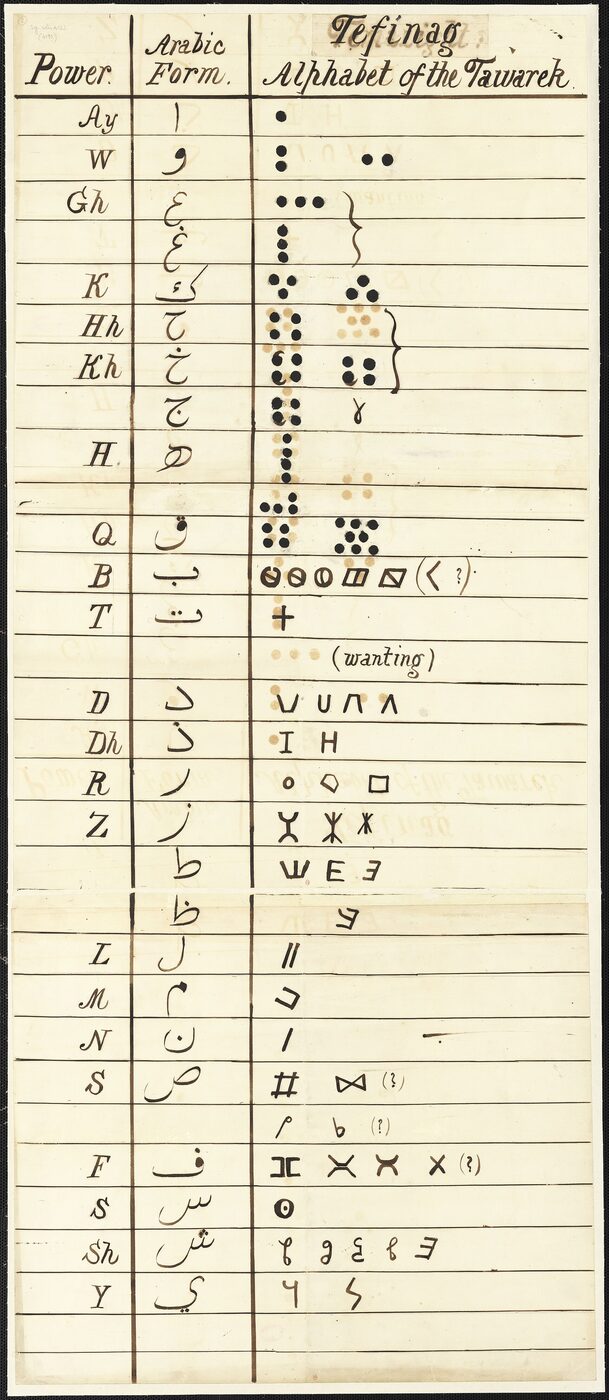
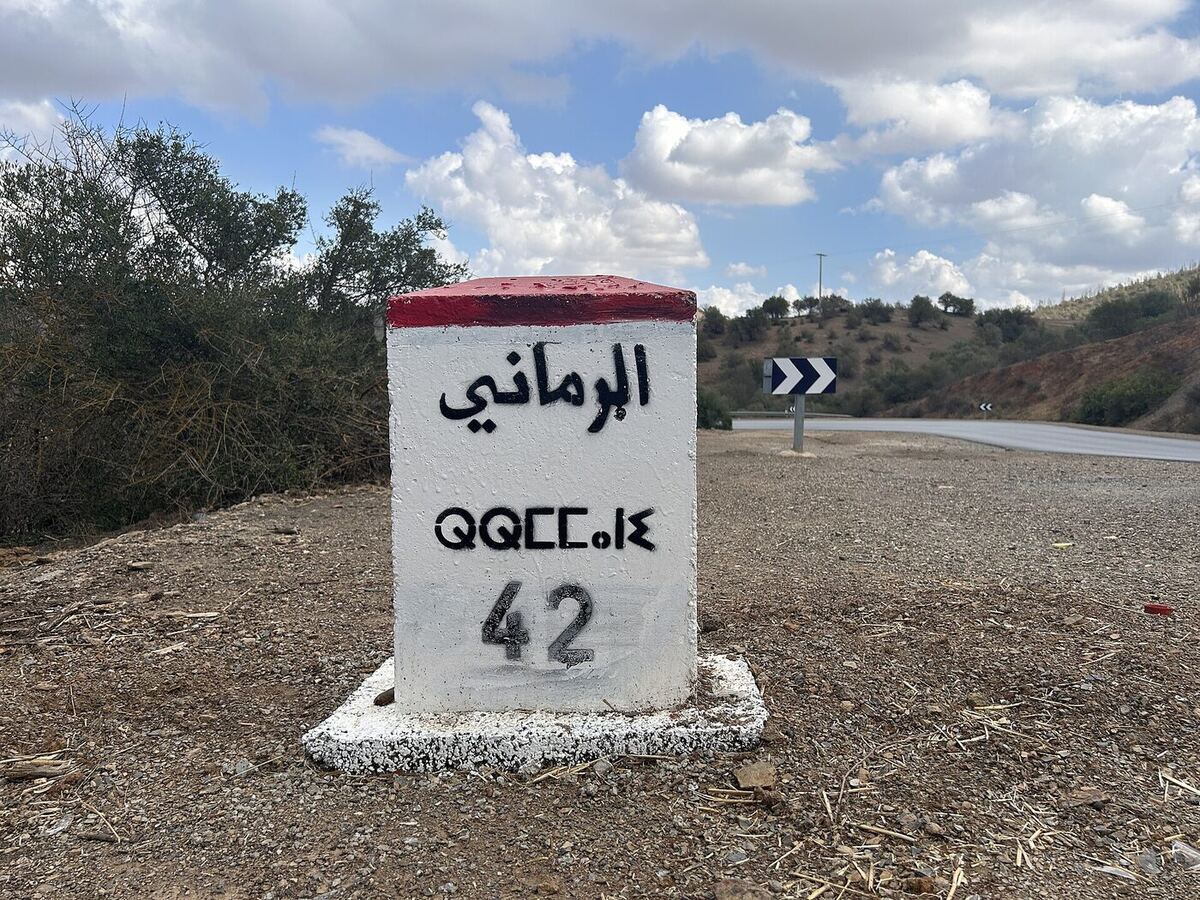
The perennial arguments were about names and letters. Whether to say “Berber” — an exonym descended from the Greek for “barbarian” — or “Amazigh”, and what the choice implied, could sustain a thread indefinitely. So could the question of script: whether Tamazight should be written in Tifinagh, in Latin letters or in Arabic ones, a contest in which every alphabet carried a politics. Beneath both ran the linguists’ question of whether Kabyle, Tashelhit, Tarifit and Tamasheq were dialects of one language or a family of several.
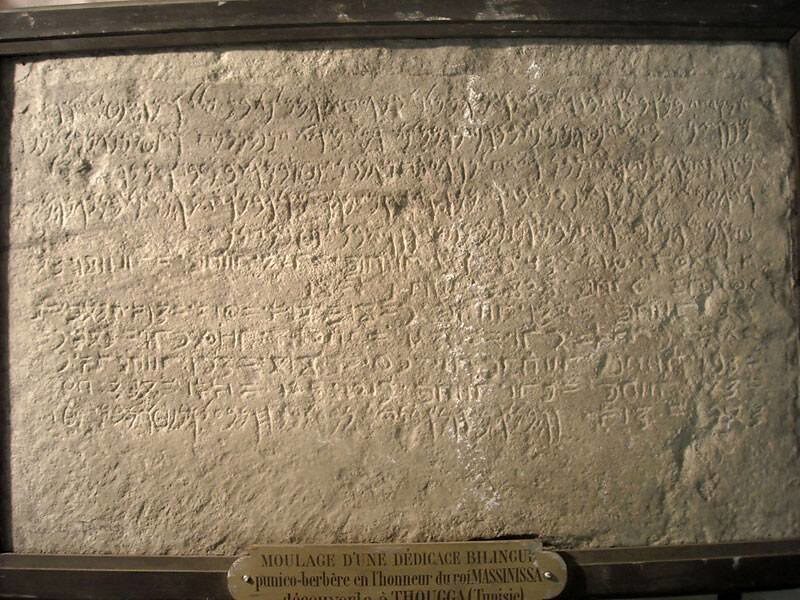
History threads reached a long way back — Numidia, Massinissa and Jugurtha, Augustine of Hippo’s North African origins, Ibn Khaldûn’s account of the Berbers — and music was never far away, Kabyle song having carried the identity movement for a generation. The sharpest disagreements were often internal: between those who pressed Amazigh demands within their own states and those who spoke of a single Tamazgha, and between secular and religious readings of what Amazigh identity required. All sides argued as neighbours do — at length.
The languages, named and placed
What the group’s title covered is a branch of the Afro-Asiatic family rather than a single tongue. With the exception of Zenaga, Tetserret and the Tuareg varieties, the Berber or Amazigh languages form a dialect continuum, and linguists differ over where to draw boundaries within it; the tree model of historical linguistics is difficult to apply to them. The unresolved question is the same one the newsgroup argued, in less technical language.
In Morocco the three principal varieties are Tashelhit, spoken in the Souss, the Anti-Atlas and the western High Atlas; Central Atlas Tamazight in the Middle Atlas; and Tarifit in the Rif. The 2004 census counted 3,894,805 speakers of Tashelhit, 2,343,937 of Central Atlas Tamazight and 1,270,986 of Tarifit among those over five years of age — 14.6, 8.8 and 4.8 per cent of the surveyed population, about 28.2 per cent combined. The 2014 census returned roughly 26 per cent, the 2024 census 24.8.
In Algeria the largest variety by far is Kabyle, spoken in Kabylia; Shawiya in the Aurès is second. Smaller communities include Mozabite in the Mzab valley, with some 150,000 speakers, Chenoua west of Algiers with about 76,300, Tamahaq in the Hoggar with about 71,400, and the oasis varieties of the south-west. Algeria has no recent figure to set against Morocco’s censuses: the last census to ask about mother tongue was that of 1966, and secondary sources report its result variously as 17.9 or 19 per cent. Estimates of about a quarter of the population are commonly given.
Beyond the two states the numbers are smaller and the geography wider. Ethnologue figures put Nafusi in Libya’s Nafusa mountains at about 247,000 speakers, Ghadamès at 13,400 and Awjila at 2,690; Djerbi in Tunisia at about 50,000; Siwi in Egypt at about 20,000; and Zenaga in Mauritania at about 200. For the Tuareg varieties the estimates run to 450,000 speakers of Tawellemmet and 250,000 of Air Tamajaq in Niger, 420,000 of Tawellemmet and 378,000 of Tamasheq in Mali, and 122,000 of Tamasheq in Burkina Faso.
.jpg)
Writing Tamazight on a network built for ASCII
RFC 1036 of December 1987, the standard for the interchange of Usenet messages, built articles on the RFC 822 mail format, whose text is US-ASCII; the MIME documents that allowed anything else reached their current form as RFC 2045 and RFC 2047, both dated November 1996, and were deployed unevenly for years afterwards. Everything below follows from that. Three scripts are in use for these languages — Tifinagh, the Arabic alphabet and the Latin one — and only the third had any chance of crossing a 1990s news feed intact.
The Berber Latin alphabet uses twenty-three standard Latin letters and ten additional ones — Č, Ḍ, Ɛ, Ǧ, Ɣ, Ḥ, Ṛ, Ṣ, Ṭ and Ẓ, with Ř further used for Tarifit. Its form was fixed by the writer and linguist Mouloud Mammeri in the 1960s, which is why Kabyle writers call it Tamɛemrit, and a workshop at INALCO in Paris on 24 and 25 June 1996 proposed a common notation to serve several varieties at once. Not one of those ten additional letters exists in ISO-8859-1, the eight-bit set that carried French accents. They are scattered across four separate parts of Unicode: Č at U+010C in Latin Extended-A; Ǧ at U+01E6 and the capitals Ɛ and Ɣ at U+0190 and U+0194 in Latin Extended-B; the lower-case ɛ and ɣ at U+025B and U+0263 in IPA Extensions; and the letters with a dot below in Latin Extended Additional, the block U+1E00 to U+1EFF added in Unicode 1.1 in 1993.
The workaround that developed was carried over from typewriters: Greek letters of similar shape stood in for the Latin epsilon and gamma — Σ for the capital epsilon and Γ for the capital gamma, ε and γ for the lower case — because keyboards and encodings offered nothing nearer. The practice is discouraged now, and it leaves a residue in any archive of the period, where one word may be spelled with a Greek letter, with a digraph, or with the letter dropped. Arabic-script posting had two registered character sets to choose between, ISO-8859-6 and windows-1256, and the same problem of a reader whose newsreader knew neither.
Tifinagh had no code point at all. The block named Tifinagh, U+2D30 to U+2D7F, was added to the Unicode Standard in March 2005 with version 4.1, carrying 55 characters; two more were added in version 6.0 in 2010 and two in version 6.1 in 2012, giving the 59 assigned today. For the whole of the group’s active life, in other words, the script whose revival the group discussed could not be sent through it as text. It travelled as descriptions, as transliterations, as images and as fonts with private encodings. The yaz, the letter carried on the Amazigh flag, has been U+2D63 TIFINAGH LETTER YAZ only since 2005 — the emblem was thirty-five years old by the time it could be typed.
_(2_grandes_feuilles_d%C3%A9pliantes)_-_btv1b52516345r_(1_of_2).jpg)
The consequence for anyone searching the archive today is practical. A query in Tifinagh characters returns nothing at all from before 2005; queries for Berber and for Amazigh or Tamazight return different and only partly overlapping sets, because the choice of word was itself one of the arguments; and place and personal names appear in French-based, English-based and Berber-Latin spellings at once, so a name has to be searched several ways before an absence means anything.
A dated record
The following are dated events of the period, set down as a record and nothing more. The newsgroup was in place by the mid-1990s and its traffic belonged to the decade that followed; items outside that span are marked.
- 1970 — the flag now used as an Amazigh emblem is designed by Mohand Arav Bessaoud, founder of the Berber Academy in Paris. Predates the group.
- 27 May 1995 — a presidential decree creates the Haut Commissariat à l’Amazighité in Algeria, attached to the presidency; the first official body in the Maghreb devoted to Berber language and culture.
- 1–3 September 1995 — a pre-congress at Saint-Rome-de-Dolan in France gathers about a hundred delegates from Berber associations in North Africa, Europe and the Americas and founds the World Amazigh Congress, seated in Paris. 27–30 August 1997 — its first congress, at Tafira, Las Palmas, in the Canary Islands, makes the 1970 flag official.
- 18 April 2001 — Massinissa Guermah, an eighteen-year-old secondary-school pupil, is fatally shot at the gendarmerie post at Beni Douala in Kabylie.
- 17 May 2001 — at Illoula Oumalou, delegates of village and district committees form the Coordination des aârchs, daïras et communes.
- 11 June 2001 — the El Kseur platform, a list of demands addressed to the Algerian government, is issued.
- 14 June 2001 — a march converges on Algiers to present the platform to the presidency. The Algerian League for the Defence of Human Rights later put the year’s toll at 126 dead and more than 5,000 injured.
- 17 October 2001 — dahir no. 1-01-299 creates the Royal Institute of Amazigh Culture in Rabat, announced the same day in the king’s Ajdir speech.
- March 2005 — Unicode 4.1 adds the Tifinagh block; in August the World Amazigh Congress holds its fourth congress at Nador, its first in North Africa.
- 30 July 2011 — dahir no. 1-11-91 promulgates the Moroccan constitution, under which Amazigh is an official language alongside Arabic. Postdates the group’s active life.
- 7 February 2016 — the Algerian parliament adopts a constitutional revision making Tamazight a national and official language, by 499 votes to 2 with 16 abstentions; the text is promulgated on 6 March 2016. Postdates the group.
- 27 December 2017 — an Algerian presidential decision makes Yennayer a paid public holiday, first observed officially on 12 January 2018; a Moroccan royal declaration of 3 May 2023, formalised by decree on 23 November 2023, does the same there, first observed on 14 January 2024. December 2020 — UNESCO inscribes the knowledge and practices of couscous on its Representative List, on a joint nomination by Algeria, Mauritania, Morocco and Tunisia. All postdate the group.
Where the readers were
France held the largest concentration outside North Africa; the linguistic literature estimates about 1.5 million speakers of Berber languages there. The census of 2011 recorded 433,026 residents born in Morocco and that of 2023 recorded 892,000 born in Algeria, the largest single foreign-born nationality in the country. Kabyle emigration in particular went overwhelmingly to France, and in smaller numbers to Quebec and the United States. Readers in Algiers and Oran also had soc.culture.algeria, and those after the wider Arab conversation had soc.culture.arabic; soc.culture.berber matched neither and both.
The Netherlands mattered out of proportion to its size, and for a specific reason: around half of the Moroccan migration there originated in the Rif, so the Dutch readership was disproportionately Tarifit-speaking. Statistics Netherlands counted 225,088 people of Moroccan origin in 1996, 353,987 in 2009 and 433,337 in 2025. Belgium recruited under a guest-worker agreement signed with Morocco on 17 August 1964, the first such agreement it made with a North African state, and cancelled in August 1974. Of the Moroccan-origin population there, 45 per cent live in the Brussels-Capital Region and 22.7 per cent in Antwerp, and a large majority originate in northern Morocco — Al Hoceima, Nador, Tangier; Statbel counted 699,296 residents of North African origin in 2023.
What that dispersal does to a newsgroup is a matter of clocks. Morocco kept Greenwich Mean Time all year, having last used summer time in 1978 and not resumed it until 2008; Algeria stood at UTC+1; France, Belgium and the Netherlands stood at UTC+1 with summer time on top. The North African day and the western European day therefore ran within an hour or two of each other, so news from home and the response to it fell inside the same evening. North America was another matter: Montreal was five or six hours behind Algiers and California eight or nine, so a thread opened in Tizi Ouzou or Nador after supper was read across the Atlantic in the early afternoon and answered while the Mediterranean slept. A group with readers on both sides had no hour in which everyone was away from it.
Between the crises
Song, verse, food, the calendar and the football results filled the days between the crises.
The Kabyle line runs from Si Mohand ou-Mhand, born at Icerɛiwen, Tizi Rached, about 1848 and dead at Ain El Hammam on 28 December 1905, whose isefra were collected and translated by Boulifa, Mouloud Feraoun and Mouloud Mammeri — one translation appearing as Les poèmes de Si Mohand in 1960 — through Slimane Azem (1918–1983), who worked in the steel mills of Longwy and on the Paris Métro and set Si Mohand’s verse to music, to Idir’s A Vava Inouva, released in 1976 and since translated into Arabic, French, Spanish and Greek among others. Marie-Louise-Taos Amrouche (1913–1976) collected and performed Kabyle songs with her mother Fadhma Aït Mansour and her brother Jean from 1936, and in 1947 published Jacinthe noire, the first novel published by a Kabyle woman.
Morocco had its own wave. Izenzaren — the name means sun rays in Tashelhit — was formed at Agadir in 1972 by young musicians from families recently arrived from the countryside and recorded its first album in 1974, alongside Nass El Ghiwane and Jil Jilala in a movement that set traditional forms to modern instruments. Older collective forms continued beside it: ahwash in the Tashelhit-speaking south, performed by two facing groups alternating song, dance, improvised poetry and frame drums, often more than twenty performers and sometimes a hundred and fifty, and rarely taken outside its own village; and ahidous in the Middle Atlas, danced in a circle or in two lines with a leader in the centre setting the rhythm.
In the Sahara the same period produced Tinariwen, convened in the late 1970s among Tuareg musicians of southern Algeria and northern Mali, whose homemade cassettes were traded across the desert before any label reached them and whose first recording issued outside North Africa, The Radio Tisdas Sessions, appeared in 2001; and the Festival au Désert, first held at Tin Essako in January 2001 before 500 to 600 people, then at Tessalit and, from 2003 to 2009, Essakane.
The calendar argument had a fixed date. Yennayer, the new year of the agrarian calendar, is kept most often on 12, 13 or 14 January, the variation following from the thirteen-day gap between the Julian and Gregorian reckonings; since 1980 it has been counted from 950 BC, the approximate start of the reign of the Libyan-born pharaoh Sheshonq I. It has been a public holiday in Algeria since 2018 and in Morocco since 2024, and entered France’s national inventory of intangible cultural heritage in 2020 — all after the group’s time. Couscous is shared and contested property in the same way: the word is attested as seksu in Kabyle and Riffian and keskesu in Tuareg and Ghadamès varieties, a spread read as evidence of a Berber origin, and the dish was inscribed by UNESCO in 2020 on a nomination four states had to make jointly.
Jeunesse Sportive de Kabylie was founded at Tizi Ouzou in 1946; from 1974 to 1977 it bore the name Jamiat Sari’ Kawkabi, from 1977 to 1987 Jeunesse Électronique de Tizi-Ouzou, and from 1987 to 1989 Jeunesse Sportive de Tizi-Ouzou, before the regional name returned. It won the African Cup of Champions Clubs in 1981 and 1990, the African Cup Winners’ Cup in 1995 and the CAF Cup in 2000, 2001 and 2002, three consecutive continental titles. Its badge carries J S K in Tifinagh with the yaz beneath.
Context
Much of what the group argued for later became official policy. Morocco created the Royal Institute of Amazigh Culture in 2001 and adopted Tifinagh for the teaching of Tamazight in 2003; the 2011 constitution made Amazigh an official language. Algeria recognised Tamazight as a national language in 2002, in the aftermath of the Black Spring, and as an official one in 2016. Posters of the 1990s had rehearsed every one of these questions years before any ministry took them up.

Within the hierarchy the group belonged to a small and telling minority. soc.culture.* was for the most part a gazetteer of nation-states; soc.culture.berber sat with soc.culture.basque, soc.culture.kurdish and a handful of others as a group named for a people instead — which was, for its participants, rather the point.
It also belongs to the first generation of Amazigh presence online, alongside the diaspora mailing lists of the early 1990s and the websites that followed — early network-building that scholars of the Amazigh movement have since taken up as a subject in its own right. Before recognition came from any capital, the conversation had already learned to cross borders daily, one post at a time.
Reading soc.culture.berber today
- Historical archive: Google Groups — soc.culture.berber (coverage varies by group and era).
- Open in a newsreader:
news:soc.culture.berber— the original site offered exactly this link, and it still works if your system has a newsreader registered for thenews:scheme. - Live access: point an NNTP newsreader at a modern server — see accessing Usenet today.
- The original news2mail e-mail subscription service ended in the mid-2000s and no longer operates.