soc.culture.asean
Countries of the Association of South East Asian Nations.
A regional umbrella group for Indonesia, Malaysia, Singapore, Thailand, the Philippines, Brunei and later members — used for cross-border topics: the 1997 financial crisis, haze season, ASEAN summits, and regional food rivalries.
Country-specific groups handled domestic politics; soc.culture.asean was where the region argued with itself as a region.
On this page
- The paperwork, and what it does and does not date
- A name that pointed at an institution
- The membership list as a to-do list
- What the article numbers show
- Bangkok, 8 August 1967
- Ten accessions, and an eleventh
- The ASEAN Way, as its describers and its critics put it
- Summits, treaties and a secretariat
- A free trade area, and the machinery after the crash
- The working language, in practice and then in law
- 1997: the crisis, in dates
- The haze, and the agreement that followed it
- Who could post, and from where
- The readership abroad, and the clock
- Script, diacritics and a seven-bit pipe
- What an umbrella carried that a member group could not
- Decline
- What the record does not show
The paperwork, and what it does and does not date
A Big Eight newsgroup was supposed to leave a paper trail: a Request for Discussion, a period of argument in news.groups, a Call for Votes taken by a neutral party, a published tally, and finally a newgroup control message whose text any administrator could read for himself. That machinery belonged to the whole branch and is set out on the soc.culture.* hub rather than repeated here. What matters on this page is what it left behind for this particular name, because the answer is unusual: the group is thoroughly attested and its founding is not.
The Internet Systems Consortium mirrors what survives of the Usenet administrative record. Its news.announce.newgroups archive holds proposal files for 193 soc.culture.* names, and there is no file for soc.culture.asean — not a Request for Discussion, not a Call for Votes, not a result. The earliest dated article anywhere in those 193 files was posted on 21 January 1990, and the archive's separate index of new-group announcements opens on 18 February 1991. Ten days after that index opens, the group can be shown from the headers of other people's postings to have been not merely in existence but busy. Whether its founding paperwork predates the archive or simply never reached it is not something the surviving record settles, and this page does not pretend otherwise.
The control-message archive is another matter, and it holds three messages for the group. The first was issued from the news account at Compass, Inc. of Wakefield, Massachusetts, on 23 May 1991 at 17:36:16 GMT, carrying Distribution: world and a body of a single line:
Countries of the Assoc. of SE Asian Nations.
That is the description this directory still carries at the head of the page, with the abbreviations expanded. It is tempting to read the message as the group's birth certificate. It is not one. The same host sent a newgroup for soc.culture.african at 17:35:42 as message 6037, one for soc.culture.arabic at 17:36:02 as 6039, this one as 6040, and one for soc.culture.asian.american at 17:36:28 as 6041. Four groups in forty-six seconds, in alphabetical order, numbered from one run of a single machine's message counter: that is a program reading down a list and re-announcing groups that already existed, a routine housekeeping measure on a network where any server might have missed an announcement years earlier. The message records the group; it does not date it.
The second control message is smaller and stranger. On 26 April 1992 at 00:32:59 GMT a newgroup for soc.culture.asean went out from a machine in the Department of Computer Science at the University of Maine, carrying Distribution: umcs and a body of zero lines. A distribution header of that kind confines a message to the local campus. Somebody was creating the group on one site's own spool, for one site's own readers, using the same mechanism that governed the global namespace — and doing it in bulk, because the same account sent newgroups for soc.culture.african, soc.culture.arabic and soc.culture.asian.american inside the same eighteen-second run. The control system never distinguished the local case from the global one. A newgroup message was a request, and every administrator answered it privately.
The third was an attempt to undo the group altogether. Shortly after midnight GMT on 4 November 2001 a run of rmgroup messages went out over the network at intervals of a few seconds, one addressed to each of several long-established soc.culture.* groups; the one for this group is timed at 00:27:48. Its body runs to four lines, of which the operative one reads please remove the bogus newsgroup soc.culture.asean, the remainder being a signature. It failed. The group was in the Big Eight list eleven months later, and it is in the consortium's current files today, more than twenty years on.
What the current files say is worth quoting exactly, because it is the shortest complete description of the group that exists. The newsgroups file carries one line, the name and its description separated by a tab:
soc.culture.asean Countries of the Assoc. of SE Asian Nations.The active file carries the corresponding entry, soc.culture.asean 0000000000 0000000001 y. The two numbers are the highest and lowest article numbers the server holds — here, none at all — and the trailing y is the posting status: articles may be posted locally, and the group is unmoderated. That single character is the whole of the group's governance. There was never a moderator, never an approval queue, never a charter beyond the one line above.
The same line appears unchanged in checkgroups control messages from January 1993 onwards, and again in the PGP-signed List of Big Eight Newsgroups posted from news.announce.newgroups on 16 October 2002, which carried 156 soc.culture.* names. The consortium's current newsgroups file carries 139. Every edition describes the group in the abbreviated house style of the early 1990s, and none has ever been revised to say anything else.
A name that pointed at an institution
The soc.* hierarchy took its modern shape in the Great Renaming of 1986–87, and nearly everything filed under soc.culture.* afterwards was named for a people, a country, a language or a stretch of land. The 2002 list is full of such names, and the descriptions read accordingly: soc.culture.thai as Thai people and their culture, soc.culture.malaysia as All about Malaysian society, soc.culture.indonesia as All about the Indonesian nation. These are nouns that exist whatever anybody decides. soc.culture.asean is the exception in the branch: it is named for an intergovernmental organisation, a body brought into being by a document signed by five foreign ministers on a particular morning, and capable of being enlarged by another document signed on another morning.
The distinction is not pedantry, because the charter followed the name. Countries of the Assoc. of SE Asian Nations does not describe a place, a people or a language. It describes a membership list. Whatever states were in the association at the moment of reading were, by the plain sense of the sentence, inside the group's scope; whatever states were outside it were outside the scope too. This was a group whose subject could change without anybody posting a word, because the subject was defined by reference to somebody else's treaty.
That property is peculiar in a namespace built on permanence. Usenet group names were effectively immutable: renaming a group meant creating a new one and removing the old, an operation requiring the same apparatus of proposal, vote and control message that had produced the original, and one that no administrator was obliged to honour. A group called soc.culture.asean in 1991 is still called soc.culture.asean today, and the acronym in its name did not mean the same thing at both ends. In 1991 it meant six countries. From 1999 it meant ten. Since 26 October 2025 it has meant eleven.
The other soc.culture.* umbrellas do not have this feature. soc.culture.african, filed as Discussions about Africa & things African, names a landmass whose extent no committee votes on; the same is true of soc.culture.europe, soc.culture.latin-america and soc.culture.caribbean. The continental umbrella above this one, soc.culture.asian, has its own difficulties, and they are difficulties of definition rather than of membership: the argument there is about what the word covers, not about who has joined. The bloc as an institution belongs to this page, and the continent to that one.
The membership list as a to-do list
The most direct evidence that readers of the period understood the group this way comes from the proposals for other groups. Several of the branch's Southeast Asian country groups were created after soc.culture.asean and out of it, and their Requests for Discussion and Calls for Votes were crossposted to it; they survive in the ISC archive with their reasoning intact. Three of them say, in their own words, what the umbrella was for.
The Request for Discussion for soc.culture.malaysia, posted on 11 January 1993 from Michigan Technological University and crossposted to soc.culture.asean and nine other groups, gave as its first reason that the current newsgroup in which most discussion of Malaysia occurs is "soc.culture.asean", and that most of the discussion there pertained to Malaysia or Singapore rather than pertaining to ASEAN. Its third reason went further, and it is the sharpest contemporary criticism of the group that survives anywhere: soc.culture.asean no longer has much talk about ASEAN as a whole, suggesting the group is no longer fulfilling its intended purpose. Perhaps it should be dissolved or renamed with a new charter. It was neither. The proposal passed instead, 286 votes to 15, on 23 February 1993, and the umbrella lost most of its Malaysian traffic to a group of its own.
The proposal for soc.culture.indonesia, posted from San Francisco State University on 15 February 1993 and likewise crossposted to soc.culture.asean, made the membership logic explicit. Its rationale observed that with soc.culture.singapore created, soc.culture.thai and soc.culture.filipino already in existence and soc.culture.malaysia at the vote, Indonesia is one of the two ASEAN countries that doesn't have it's own newsgroup in the soc. hierarchies. The arithmetic is exact for February 1993, when the association had six members: five had groups or were about to, and the two without were Indonesia and Brunei. The bloc's membership list was functioning as a checklist for the namespace. soc.culture.indonesia passed 427 to 23 on 27 April 1993. Brunei never got a group at all, and has none in the 2002 list or the current one, which leaves the modern position at nine country groups for eleven member states.
The third piece of evidence is the most explicit, and it is a negative. Among the material filed under soc.culture.burma in the ISC archive is an early and unsuccessful Request for Discussion, crossposted to soc.culture.asean, whose author set out the case for a Burmese group in a bracketed aside:
Currently there's NO newsgroup that is directly related to Burma. (soc.culture.asean is the closest one but Burma is NOT a member of ASEAN)
The dating of that particular file is unsatisfactory and should be stated rather than smoothed over: the archived copy carries a posting date header of 21 October 1991 while the archive's own envelope line for it reads 11 September 1995, and the two cannot both be right. Its Xref header places it on the Rensselaer server, whose numbering for this group belongs to the 1991 series set out below, which makes the earlier reading the easier of the two to credit; but the point does not depend on which is right. On either date Burma was outside the association, and the writer took that as decisive — not that the group would be unwelcoming, but that Burma was, by the plain words of the charter, outside its subject. A separate and successful proposal for soc.culture.burma followed on 16 November 1993 and passed 227 to 11 on 3 January 1994.
Myanmar acceded to ASEAN on 23 July 1997. From that date the country the earlier proposal had described as outside the umbrella's scope was inside it, by operation of a document signed at a ministerial meeting, with no vote, no control message and no announcement anywhere on Usenet. That is the whole peculiarity of the group in one movement, and no other page in this branch can show it: a newsgroup whose subject was enlarged by a treaty accession.
The same pattern repeats without the drama elsewhere in the archive. The Call for Discussion for soc.culture.thai, posted on 28 February 1991 from the computer science department of the University of Melbourne, was crossposted to soc.culture.asean, soc.culture.asian.american and soc.culture.misc; the Calls for Votes and the result for soc.culture.singapore in December 1992 and January 1993 went to soc.culture.asean and to no other group in the branch; the proposals for soc.culture.laos in 1993 and soc.culture.cambodia in 1993 and 1994 were crossposted to it as a matter of course. For a decade the umbrella was where you went to find Southeast Asians on Usenet, which is why every proposal to give a Southeast Asian country a room of its own was addressed there first.
What the article numbers show
No archive of this group's postings is preserved on this site, and no thread, poster or subject line from it is quoted anywhere on this page. There is, however, one quantity that can be measured rather than guessed, and it comes from the same proposal files. Every article in the ISC archive carries an Xref header, and an Xref header lists, for each group the article was posted to, the sequence number that the archiving server assigned it in that group. Where a dated message was crossposted to soc.culture.asean, its Xref therefore records how many articles that particular server had filed in the group by that date.
The caveats have to come first, because the number is easy to misuse. An article number is one server's private counter. It counts everything that server accepted and filed for the group, crossposted articles included, whether or not the article was later cancelled or expired; it says nothing about how many people read the group or about what other servers received; and a server that renumbered its spool would break the series. Two servers appear in these files, one at Rensselaer Polytechnic Institute and one at UUNET, and their counters are unrelated, so the two runs cannot be spliced. What follows is the intake of one spool at a time, and nothing more.
The Rensselaer run covers the spring of 1991, and comes from the four postings in the soc.culture.thai vote:
- 28 February 1991 — article 3,396
- 20 March 1991 — 3,624
- 11 April 1991 — 4,024
- 24 April 1991 — 4,407
That is 1,011 articles in 55 days, an average of about eighteen a day, and rising across the period: eleven a day in the first stretch, eighteen in the second, nearly thirty in the third. It also fixes the earliest hard attestation of the group. On 28 February 1991 that server had already filed 3,396 articles in soc.culture.asean, nearly three months before the only surviving newgroup message for it. Whatever the group's founding date was, it was well before the middle of 1991.
The UUNET run is longer and more interesting, because it brackets the creation of the country groups:
- 10 November 1992 — article 14,914
- 6 January 1993 — 15,985
- 23 February 1993 — 16,983
- 24 September 1993 — 18,147
- 19 September 1994 — 19,121
Between 10 November 1992 and 23 February 1993, a span of 105 days, that spool filed 2,069 articles in the group, an average of about twenty a day. Over the next 213 days it filed 1,164, about five and a half a day. Over the following 360 days it filed 974, not quite three a day. The intake fell by a factor of about seven in under two years, and the fall began in exactly the months when soc.culture.singapore, soc.culture.malaysia and soc.culture.indonesia were voted into existence.
That is a correlation observed on one server, not a demonstration of cause, and it should be read with the caveats above firmly in place. But it is consistent with what the Malaysian proposal had said in January 1993 about where the traffic actually came from, and it describes a fate that regional umbrellas in this branch were structurally exposed to. A group defined as the countries of an association is, in the beginning, the only address those countries have. Once each of them has an address, what remains for the umbrella is the residue: the subjects that belong to two members at once, or to all of them, or to none of them in particular. That residue turns out to be real, but it is thin, and it is seasonal.
Bangkok, 8 August 1967
The institution the group was named for is documented to a degree that the group itself is not, and since the charter defined the subject by membership, the institution's own chronology is part of the group's. ASEAN was established on 8 August 1967, when the foreign ministers of Indonesia, Malaysia, the Philippines, Singapore and Thailand signed the ASEAN Declaration, generally called the Bangkok Declaration, at Saranrom Palace in Bangkok. The signatories, conventionally described together as the five foreign ministers, were Adam Malik for Indonesia; Tun Abdul Razak for Malaysia, who held the offices of Deputy Prime Minister and Minister of Defence; Narciso Ramos for the Philippines; S. Rajaratnam for Singapore; and Thanat Khoman for Thailand.
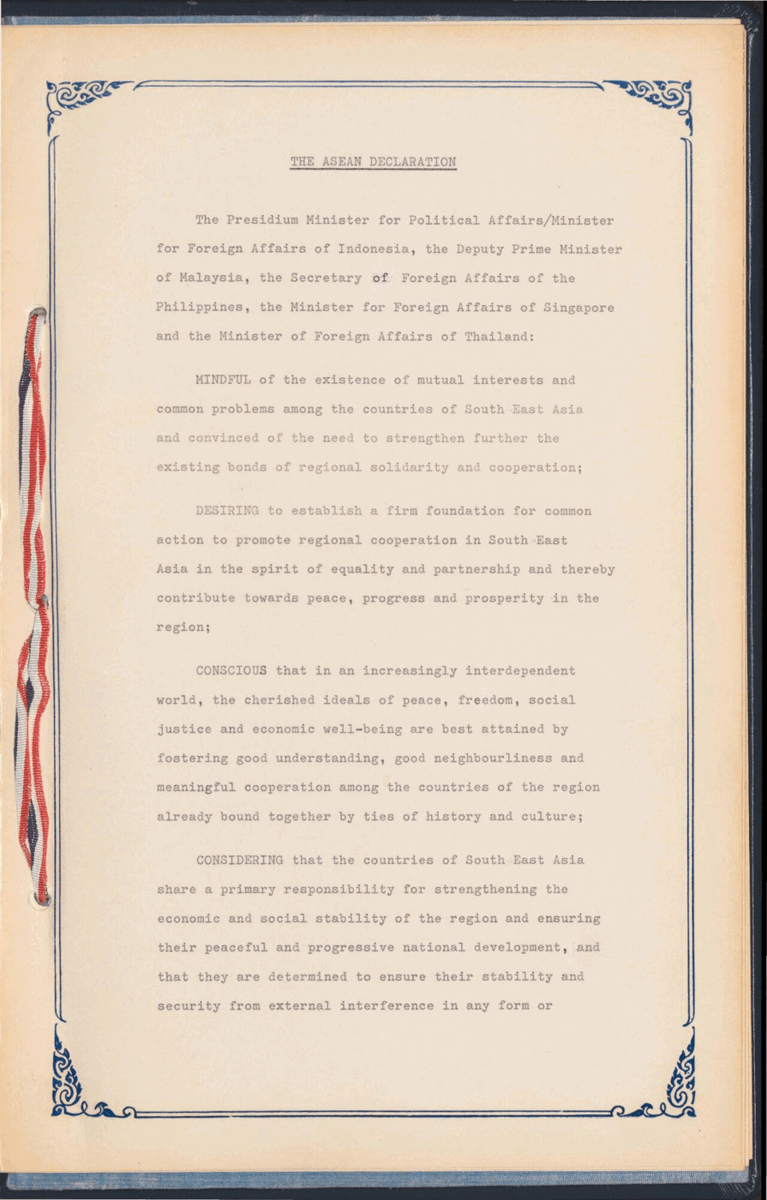
The circumstances were less stately than the venue suggests, and they are relevant because the working method they established is the one the newsgroup would later argue about. In the preceding years the region had been at odds with itself: Indonesia under Sukarno had waged Konfrontasi against the newly formed Federation of Malaysia, and the Philippines had quarrelled with Malaysia over the claim to Sabah. Both disputes were set aside during 1966. Before the formal meeting, Thanat Khoman took the visiting ministers to a seaside guest house at Bang Saen, about a hundred kilometres from Bangkok, where for two days from around 5 August 1967 they played golf, ate together and negotiated out of uniform — an episode remembered as sports-shirt diplomacy. By the time the ministers reconvened in Bangkok, the reference literature records, proposals had been traded so freely in private that it was often no longer possible to identify their original source.
Two details of the founding bear directly on the membership question. The first is the name. The working title had been the South East Asian Association for Regional Cooperation; an alternative, Association of Southeast Asian States, was used informally by the Thai secretariat; it was Adam Malik who proposed the wording that produced the acronym the newsgroup would eventually carry. The second is that the five were not the only candidates. Malik visited Rangoon in May 1967 to discuss the proposal with Burmese leaders, who showed little interest, citing internal difficulties, a policy of neutrality and concern about China's reaction; he then flew to Phnom Penh, where Cambodia also declined, citing strict neutrality and non-alignment. South Vietnam was not invited, the war being in progress. Both of the states that said no in 1967 joined in the 1990s, thirty and thirty-two years later respectively, and both were inside the newsgroup's subject when they did.
The Declaration itself lays down remarkably little. As the reference literature summarises it, it sets no conditions for membership beyond location in Southeast Asia and the usual principles of relations between states: no criterion as to the character of a government, its ideology, its economic policy or its level of development. That omission is usually explained by the diversity of the region — a regional association with such criteria would not have been possible in Southeast Asia — and it is the single most important thing to understand about every admission that followed, and about the arguments the admissions produced.
Ten accessions, and an eleventh
Set out as dates, the enlargement that redefined the newsgroup's subject runs as follows.
- 8 August 1967 — Indonesia, Malaysia, the Philippines, Singapore and Thailand found the association at Bangkok.
- 7 January 1984 — Brunei Darussalam becomes the sixth member, days after becoming fully independent on 1 January 1984. The date is given as 7 January in the reference article on the association and as 8 January in the article on its enlargement; the discrepancy is of one day and is noted here rather than resolved.
- 28 July 1995 — Vietnam becomes the seventh member, more than two years before its own public internet service opened.
- 23 July 1997 — Laos and Myanmar are admitted together as the eighth and ninth.
- 30 April 1999 — Cambodia becomes the tenth. It had been due to join with Laos and Myanmar in 1997; admission was deferred because of the internal political conflict of that year, and took place once the government had stabilised.
- 26 October 2025 — Timor-Leste is admitted at the 47th ASEAN Summit as the eleventh member, completing an accession process that had run since its application of March 2011, and constituting the association's first enlargement since the 1990s.
Four of those accessions fall inside the decade in which such groups were most used and a fifth falls twenty-four years after somebody tried to have the group removed as bogus. The 1990s enlargement doubled the association from five members to ten in four years, and the newsgroup's remit grew with it without a single line of its charter being touched. That is the advantage of naming a group after a treaty organisation: the maintenance is done by diplomats. It is also the disadvantage, for the same reason.
Admissions were argued about, and the argument was not confined to the region. The admission of Myanmar in 1997 attracted objection from Western governments, and opinion within the member states was not uniform either; the association's own answer was the one implied by its founding document, that the Bangkok Declaration prescribes no test of the character of a government. This page records that both positions were held and stated. It does not adjudicate between them, and the ordering of the sentences should not be read as doing so. The ASEAN Charter of 2007 later wrote membership criteria down for the first time: a prospective member must be geographically located in Southeast Asia, must be recognised by all existing member states, must agree to be bound by the Charter, and must be able and willing to carry out the obligations of membership. The requirement of recognition by all members is the one that matters most in practice, and it is a consensus rule.
The ASEAN Way, as its describers and its critics put it
The working method of the association acquired a name of its own, the ASEAN Way, and it supplied the newsgroup with a permanent argument. The reference literature summarises the practice, in a formulation by Masilamani and Peterson, as a working process or style that is informal and personal, in which policymakers constantly use compromise, consensus and consultation in an informal decision-making process, and which above all prioritises a consensus-based, non-conflictual way of addressing problems; quiet diplomacy allows leaders to communicate without bringing the discussion into public view, and members avoid the embarrassment that might lead to further conflict. The underlying vocabulary is Malay and Indonesian: musyawarah, consultation, and mufakat, consensus, terms that Adam Malik is credited with helping to embed in the association's founding tenets, along with the name itself.
The standing objection is equally well documented and is worth stating in the same register. Critics hold that an emphasis on consultation, consensus and non-interference obliges the organisation to adopt only those policies that satisfy the lowest common denominator, since decision by consensus requires every member to see eye to eye before anything can move; and that members do not share a single conception of what the ASEAN Way requires, with Myanmar, Cambodia and Laos placing weight on non-interference while the older members emphasise cooperation and coordination. Some writers have suggested that the method might be usefully applied to conflict management elsewhere; others hold that it depends on regional norms and understandings that do not transfer.
That is the shape of an argument, not the resolution of one, and it is exactly the shape an unmoderated newsgroup can sustain indefinitely. Two documented episodes from the group's own period show why the argument kept restarting. The haze of 1997 was a transboundary problem with an identifiable source inside one member state, arriving in the airspace of several others; non-interference is a difficult principle to apply to smoke. The admission of Myanmar in the same month, over external objection, tested the opposite edge of the same principle. Both are set out below with their dates.
Summits, treaties and a secretariat
The institutional furniture accumulated slowly, and most of it was in place before the newsgroup existed. The Kuala Lumpur Declaration of 1971 committed the members to a Zone of Peace, Freedom and Neutrality. The first ASEAN Summit met at Bali on 23 February 1976 and produced two founding instruments: the Declaration of ASEAN Concord, and the Treaty of Amity and Cooperation in Southeast Asia, signed the following day, 24 February 1976. A protocol of 15 December 1987 opened the Treaty to states outside Southeast Asia, and it has since been acceded to by parties far beyond the region — Papua New Guinea first, in 1989; the United States on 22 July 2009; the European Union on 12 July 2012 — which is a measure of how far the association's instruments travelled.
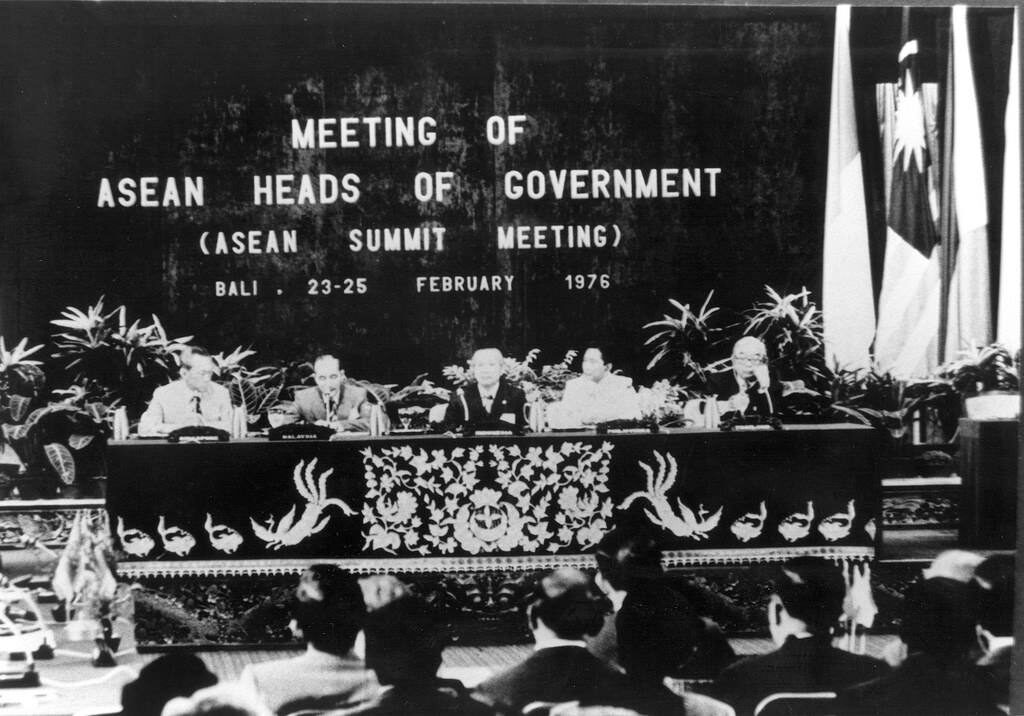

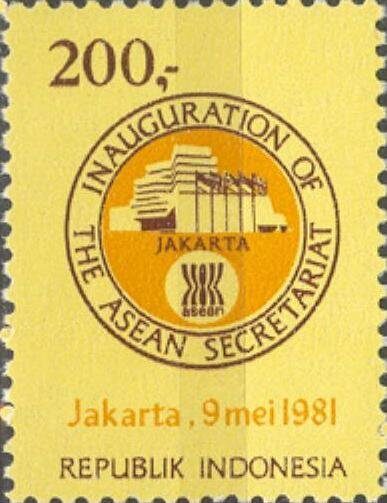
The Bali summit also agreed to create a permanent Secretariat and settled that its seat would be in Jakarta; the agreement establishing it is dated 24 February 1976, and the Secretariat building was inaugurated on 9 May 1981, a date recorded on the Indonesian commemorative stamp issued for the occasion. The ASEAN Regional Forum, a wider security dialogue drawing in the association's partners, met for the first time in 1994 and had twenty-seven participants by July 2007. At the thirtieth anniversary meeting in Kuala Lumpur in 1997 the heads of member states adopted ASEAN Vision 2020, which was formalised through the Bali Concord II of 2003 and became the three-pillar structure — political-security, economic, and socio-cultural — that the association still uses.

Summits have been held twice a year since the Charter came into force. Timor-Leste's admission at the 47th of them, in October 2025, is the most recent event that this page's subject line has silently absorbed.
A free trade area, and the machinery after the crash
The economic instrument that shaped the region during the newsgroup's lifetime was the ASEAN Free Trade Area. The Agreement on the Common Effective Preferential Tariff Scheme was signed at Singapore on 28 January 1992, during the fourth summit, and tariff-reduction schedules under it began on 1 January 1993. It was amended repeatedly — a protocol of 15 December 1995, another of 31 January 2003 for the elimination of import duties, and a further one of 23 August 2007 making special provision for rice and sugar — and was eventually superseded by the ASEAN Trade in Goods Agreement. Every one of those dates falls inside or just after the group's working life, which is one reason economic argument was a dependable seam in it: the rules genuinely were changing while people were posting about them.
Two further mechanisms belong here because they were the region's institutional answer to the crash of 1997. The ASEAN Swap Arrangement predated the crisis, having been set up by the monetary authorities of the five founding members to meet temporary liquidity problems; afterwards it was extended to all ten members with a facility of one billion United States dollars. Around it grew a network of bilateral swap arrangements among the ten members and China, Japan and South Korea — the grouping known as ASEAN Plus Three, created in 1997 — which the finance ministers agreed at Chiang Mai in May 2000 to develop as the Chiang Mai Initiative. Its multilateralised form took effect on 24 March 2010, drawing on a pool of 120 billion dollars, expanded to 240 billion in 2012. Malaysia had proposed a body with much the same membership as early as 1990, as an East Asia Economic Caucus; that proposal failed against opposition from the United States and Japan, and the same combination of countries reappeared seven years later as ASEAN Plus Three.
The working language, in practice and then in law
The group ran in English. So did the association, and for the same reason: it was the one language every participant could be assumed to share, in a room whose members' national languages belonged to several unrelated families. Malay and Indonesian — near enough to one another to be mutually readable — surfaced regularly in the group, as did the occasional passage that changed language partway through an argument, but the working medium was English by default rather than by decision.
The decision came much later, and it is a single sentence. Article 34 of the ASEAN Charter, signed at Singapore on 20 November 2007, reads in its entirety:
The working language of ASEAN is English.
The Charter came into force in December 2008, thirty days after the last of the ten instruments of ratification was deposited on 14 November that year; the member states met in Jakarta on 15 December 2008 to launch it. That codification arrived long after the years in which such groups were busiest and describes what the newsgroup had done from its first surviving article number. It is also, incidentally, part of the reason a modern search of Usenet archives finds this group more readily than it finds its neighbours: an English-language group in a many-language region leaves a record in the character set that indexes cleanly. The section on script below returns to that point, which is less a fact about the region than a fact about seven-bit transport.
1997: the crisis, in dates
Two events defined the group's period, and both were regional rather than national — which is precisely why an umbrella could carry them and a country group could not. The first was the 1997 Asian financial crisis. Its documented chronology, so far as it concerns member states, runs as follows.
- 14 and 15 May 1997 — the Thai baht is hit by massive speculative attacks.
- 30 June 1997 — the Thai prime minister, Chavalit Yongchaiyudh, states that the baht will not be devalued.
- 2 July 1997 — lacking the reserves to hold the peg, Thailand floats the baht. The Bangko Sentral ng Pilipinas intervenes to defend the peso the following day, and raises the overnight rate from 15 to 32 per cent by the middle of the month.
- 11 August 1997 — the International Monetary Fund unveils a rescue package for Thailand of more than 17 billion United States dollars, conditional on bankruptcy legislation and on stronger regulatory frameworks for banks and other financial institutions. A further 2.9 billion dollars is approved on 20 August.
- 14 August 1997 — Indonesia, having widened the rupiah's trading band from 8 to 12 per cent the previous month, replaces the managed float with a free-floating rate. An IMF package of 23 billion dollars follows.
- 9 January 1998 — the rupiah, which had traded at roughly 2,600 to the dollar before the crisis, passes 11,000; spot rates exceed 14,000 between 23 and 26 January. The baht reaches its low of 56 to the dollar in the same month.
- 21 May 1998 — after widespread rioting, President Suharto resigns and is replaced by B. J. Habibie. Indonesia loses 13.5 per cent of its gross domestic product over the year.
- September 1998 — Malaysia refuses IMF assistance, imposes capital controls and fixes the ringgit at 3.80 to the dollar.
The IMF's own role became one of the arguments rather than a neutral backdrop to it. Its conditions, the structural adjustment package, called on the affected states to reduce government spending and deficits, allow insolvent banks and financial institutions to fail, and raise interest rates aggressively; the reasoning offered was that these steps would restore confidence in fiscal solvency, penalise insolvent companies and protect currency values. Critics noted the contractionary nature of the policies, arguing that the conventional response in a recession would have been the opposite. The reference literature also records a general rise in anti-Western sentiment during the period, with the Fund among the named targets. Both characterisations are on the record and both had adherents among the readership.
One consequence deserves separate mention because it is exactly the kind of subject a national group could not host. Malaysia's capital controls fully suspended trading in the Central Limit Order Book counters, indefinitely freezing shares worth approximately 4.47 billion dollars and affecting some 172,000 investors, most of them Singaporeans; the matter became a political issue between the two member states. A dispute of that shape has no home in soc.culture.singapore or in soc.culture.malaysia without a home crowd in either room. The umbrella at least distributed the disadvantage evenly.
The upheavals that followed had the same cross-border character: the fall of Suharto in May 1998; Malaysia's Reformasi movement later that year; the East Timorese independence referendum of 30 August 1999, which originated in the request the Indonesian president made to the United Nations Secretary-General on 27 January that year. These were argued over in the group as they were argued over everywhere Southeast Asians gathered online, and what this page can honestly say about the arguments is that they occurred, not what was said in them.
The haze, and the agreement that followed it
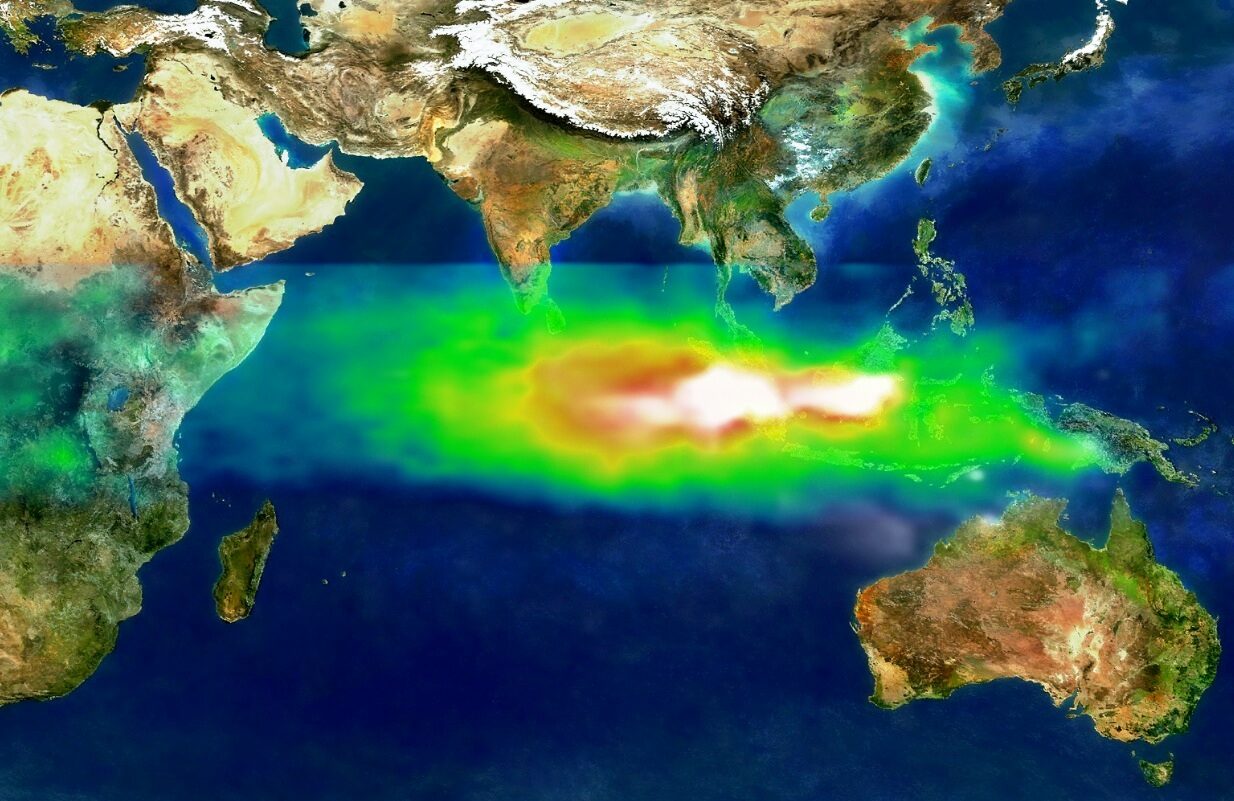
The second defining event was smoke. Transboundary haze in Southeast Asia has been recorded since 1972, it recurs with the dry season, and its worst episodes have coincided with El Niño years. The 1997 episode is considered the most severe on record.
The fires burned in Sumatra and Kalimantan, set largely to clear land, and the 1997–98 El Niño made an already dry season drier. Their effect on air quality was evident by July, peaked in September and October, and weakened in November when the delayed monsoon rains extinguished the fires. At the peak, satellite aerosol index maps from NASA's Total Ozone Mapping Spectrometer showed a haze layer covering more than three million square kilometres, over large parts of Sumatra and Kalimantan, extending north to Malaysia, Singapore, Brunei, Thailand and the Philippines and west as far as Sri Lanka — seven countries affected, six of them ASEAN members. Monthly mean horizontal visibility at most locations in Sumatra and Kalimantan fell below one kilometre in September, and daily maximum visibility was frequently below a hundred metres. Health surveillance in Singapore showed a thirty per cent increase in hospital attendance for symptoms related to air quality. Damage estimates vary with what is counted: an EEPSEA and WWF assessment put haze-related damage to Indonesia at one billion United States dollars and to Malaysia and Singapore together at 0.4 billion, with total fire-related damage around 4.5 billion; the total cost of the episode is estimated at nine billion, due mainly to health care and to disruption of air travel and business activity.

The institutional response had a history behind it — a 1990 undertaking among the association's environment ministers calling for efforts to harmonise the prevention and abatement of transboundary pollution, the ASEAN Cooperation Plan on Transboundary Pollution of 1995, and the Regional Haze Action Plan of 1997 itself — and it produced, in 2002, the ASEAN Agreement on Transboundary Haze Pollution, a legally binding instrument signed by all member states.
What happened next is the clearest documented illustration of consensus decision-making that the period offers, and it needs no commentary beyond its own dates. Ratification or approval proceeded as follows: Malaysia on 3 December 2002; Singapore on 13 January 2003; Brunei on 27 February 2003; Myanmar on 5 March 2003; Vietnam on 24 March 2003; Thailand on 10 September 2003; Laos on 19 December 2004; Cambodia on 24 April 2006; the Philippines on 1 February 2010; and Indonesia — the state within which most of the fires burned, and the last party to ratify — on 16 September 2014, with its instrument deposited on 20 January 2015. Twelve years elapsed between the signature and the tenth ratification, and by the time the agreement bound all its parties the newsgroup's traffic had been gone for a decade. The haze returned annually between 2004 and 2010, and again in 2013, 2014 and 2015.
The critical literature on the agreement is settled enough to summarise without taking a side: it is commonly described as vague, and as lacking enforcement mechanisms or strong instruments for dispute resolution. It is also described as an attempt by the association to depart from its own institutional culture, being a legally binding treaty of a kind it had previously resisted. Both descriptions are held by serious writers.
Who could post, and from where
Connectivity across the association's territory ranged, in the same years, from among the highest rates in the world to very nearly nil. Any account of who was writing has to begin with that spread, and it can be given with dates rather than impressions.
One end of it is exactly datable. IANA's root database records when each member state's country-code top-level domain was delegated, and the record for the eleven current members reads:
- Malaysia,
.my, 8 June 1987; Thailand,.th, 7 September 1988; Singapore,.sg, 19 October 1988. - The Philippines,
.ph, 14 September 1990; Indonesia,.id, 27 February 1993. - Vietnam,
.vn, 14 April 1994; Brunei,.bn, 3 June 1994. - Cambodia,
.kh, 20 February 1996; Laos,.la, 14 May 1996; Myanmar,.mm, 4 February 1997. - Timor-Leste,
.tl, 23 March 2005 — twenty years before the accession that brought it inside the group's subject.
A delegation records a technical or administrative contact, not public access, and the two could be years apart. Thailand's first link ran from 1987 over UUCP to an Australian academic network, becoming full TCP/IP in 1992. The Philippines was connected on 29 March 1994 by a 64 kbit/s line from a network centre in Makati to a SprintLink router at Stockton, California, with the onward gateway by way of NASA Ames Research Center; the engineer who brought the link up posted a short message to soc.culture.filipino shortly afterwards to alert Filipinos overseas, which is a small but exact indication of what the soc.culture.* branch was for. Vietnam had a UUCP link to the Australian National University from about 1992, arranged by a retired academic who wanted to reach his former students, but did not officially launch public internet service until 19 November 1997, more than two years after joining the association.
The distance between members is easiest to see in the penetration series. The World Bank's figures for individuals using the internet as a percentage of population, compiled from International Telecommunication Union returns, give the following for the years in which such groups were busiest:
- 1995 — Singapore 2.9, Brunei 1.0, Malaysia 0.15, Thailand 0.08, the Philippines and Indonesia below 0.03; Vietnam, Laos, Cambodia and Myanmar not yet carried.
- 1997 — Singapore 13.5, Brunei 4.8, Malaysia 2.3, Thailand 0.36, Indonesia 0.20, the Philippines 0.14, Cambodia 0.006, Vietnam 0.004.
- 1999 — Singapore 24.2, Malaysia 12.3, Brunei 7.7, Thailand 2.4, the Philippines 1.4, Indonesia 0.44, Vietnam 0.13, Laos 0.04, Cambodia 0.03.
- 2000 — Singapore 36.0, Malaysia 21.4, Brunei 9.0, Thailand 3.7, the Philippines 2.0, Indonesia 0.93, Vietnam 0.25, Laos 0.11, Cambodia 0.05.
In 1997, the year of the crisis and the haze, the proportion of Singaporeans online was on the order of three thousand times the proportion of Vietnamese. That is not a difference of degree between neighbours; it is the difference between a wired society and one whose national service would not open for another four months. By 2000, a year in which the group was already well past its peak on the evidence above, three member states accounted for essentially all the domestic readership the association could supply. The two best connected have their own pages here, soc.culture.singapore and soc.culture.malaysia, as do soc.culture.thai, soc.culture.laos, soc.culture.cambodia and soc.culture.burma, and none of them is retold on this one.
The readership abroad, and the clock
The rest of the readership was carried abroad, and the diaspora is easier to count than the readership. Usenet reached universities long before it reached households anywhere, and the universities of North America, Australia and Britain held large numbers of students and staff from the region with an account, a terminal and no long-distance telephone bill. The Thai group's own Call for Discussion in February 1991 opens by identifying its authors as a group of Thai students who are abroad, and the surviving proposals bear that out: the Malaysian one was posted from Michigan, the Indonesian one from San Francisco, the Laotian one from Irvine in California, the first Cambodian one from Davis in California and the second from Queen Mary and Westfield College in London.
There is one conspicuous exception, and it is the one the connectivity figures predict. Every surviving document in the soc.culture.singapore proposal — the Request for Discussion of 10 November 1992, both Calls for Votes and the result of 6 January 1993 — was posted from Nanyang Technological University, inside Singapore. The best-connected member state organised its own group from home; the others organised theirs from abroad.
The size of the overseas constituency has a documented history. The United States census counted 614,517 Vietnamese Americans in 1990 and 1,122,528 in 2000 — a near doubling across the decade that spans the period in which such groups were most used and its decline. Comparable communities from the other member states were smaller but followed the same institutional path, through campus accounts first and commercial providers afterwards.
The consequence for the group was that it never had a quiet hour. The association spans four standard time offsets, from UTC+06:30 in Myanmar to UTC+09:00 in eastern Indonesia, with three zones inside Indonesia alone; add campus accounts in North America, Europe and Australia and there was no hour at which everybody was asleep and no single local news cycle to organise the traffic. A story broke somewhere in the group's territory at every hour of the day, and arrived in the group at whatever hour its reader happened to be awake. The Thai Call for Discussion is a small demonstration of the effect: posted on 28 February 1991, five days after the coup in Bangkok of 23 February, it gives as one reason for wanting the group that readers abroad wanted to know about the situation at home.
Script, diacritics and a seven-bit pipe
Usenet was built to carry seven-bit ASCII, and anything else travelled at the sender's risk. On this the group was fortunate in its two working languages and unfortunate in most of the others. Malay, Indonesian and Filipino are written in the Latin alphabet with almost no diacritics, so text in them passed through every gateway intact; the association's own vocabulary of consensus, musyawarah and mufakat, survives a seven-bit pipe without losing a mark. The rest of the region's writing systems did not.
Vietnamese is the extreme case among Latin-script languages, and the primary document says so precisely. RFC 1456, published in May 1993 by the Vietnamese Standardization Working Group, records that apart from the alphabetics already available in ASCII, Vietnamese requires an additional 134 combinations of a letter and diacritical symbols. That is six more than the 128 positions an eight-bit table leaves above ASCII, and the shortfall dictated the design: VISCII, first published by the same group in a bilingual report in September 1992, retained the complete ASCII graphic repertoire and found room for the six least-often-used upper-case letters by encoding them into the six least problematic C0 control positions. The same memo defines VIQR, a mnemonic scheme for writing Vietnamese in plain ASCII on seven-bit systems, in which an acute accent is written as an apostrophe after the letter. Rival encodings existed and were mutually incompatible — VNI, and the national standard TCVN 5712 of 1993, whose encoding VSCII took the same expansion of its name as VISCII and is otherwise unrelated to it — so writers who wanted to be legible everywhere stripped the marks off and left the reader to supply them.


The region's non-Latin scripts entered the universal character set on a schedule that runs alongside the group's life rather than ahead of it:
- Thai and Lao — both present in Unicode 1.0.0 of 1991, the Thai block based on the Thai Industrial Standard 620 series and the Lao block deliberately allocated so that its characters sit at positions equivalent to their Thai counterparts. Five characters were removed from each in version 1.0.1 during unification with ISO 10646.
- Khmer and Burmese — both added in Unicode 3.0, in 1999: two years after Myanmar's accession, and in the same year as Cambodia's.
- Philippine scripts — Baybayin, encoded in a block named Tagalog, together with Buhid, Hanunoo and Tagbanwa, added in version 3.2, whose defining annex is dated 27 March 2002.
- Balinese — Unicode 5.0.0, released 14 July 2006. Javanese — Unicode 5.2.0, released 1 October 2009. Both are scripts of Indonesian languages with tens of millions of speakers; both were encoded years after the group's active life had ended.
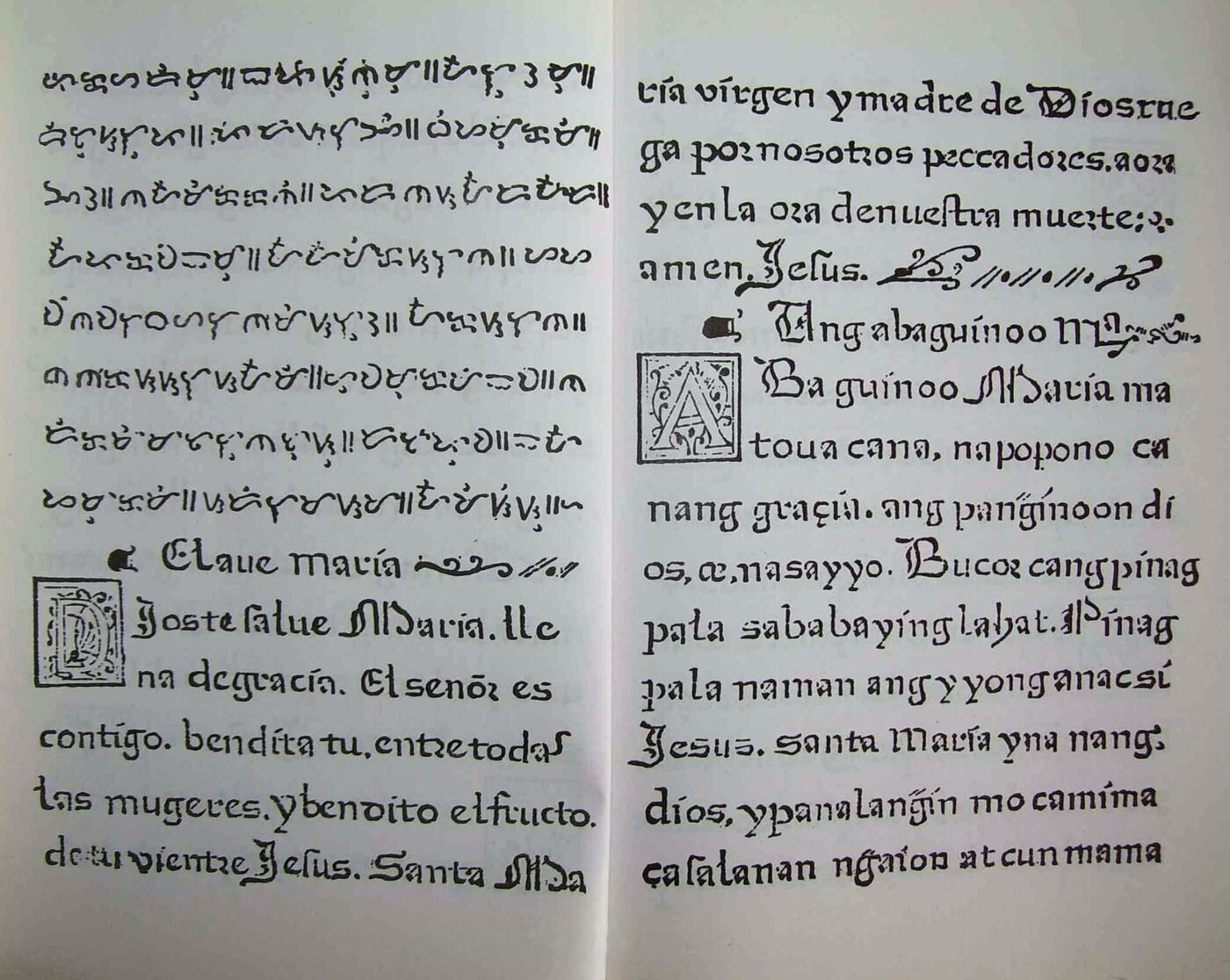

The pattern is not that the standards bodies were slow but that a universal encoding arrived from the wrong direction for this region: the writing systems of its smallest and least-connected member states were among the last to be settled, and their countries were also the last to be connected. Where an encoding did exist before Unicode, it was national and it was not interoperable, and a message written in one and read under another produced the wrong letters rather than an error. The larger version of that story — Han unification, and the argument it generated — belongs to soc.culture.asian and is not retold here.
What all of this decides is what can be found today. A post written in a national code page before the matter was settled survives as a string of wrong letters, matching no query a modern reader would think to type; accent-stripped text matches only if the searcher strips the accents too. What indexes cleanly is the English. That is one reason the surviving record of a region whose member states have more than a dozen national and official languages between them reads as more thoroughly English than the region was, and it is a reason to be careful before drawing any conclusion at all from what happens to be easy to find.
What an umbrella carried that a member group could not
Once every member state had a group of its own, what remained to the umbrella was the traffic that could not be filed under one flag. That residue is describable from the structure of the namespace and the documented character of the period, without inventing a single thread.
The largest part of it was comparative. Comparisons of economies, of school systems, of language policy and of press freedom across member states; migration and work between them; and the shared Malay-world inheritance that Malaysia, Indonesia, Singapore and Brunei by turns celebrate and contest. Questions of that shape have no natural home in any single country's group, because the answer is a relation rather than a fact, and each country's group has a home crowd.
A second part was institutional: what the association was for, whether it worked, what the ASEAN Way delivered and what it excused. That is the subject the group's own name pointed at, and the subject the 1993 Malaysian proposal complained had gone missing from it. Both statements can be true of different years.
A third part was the region's own calendar of shared events, which is more substantial than outsiders expect and which supplied the group with recurring occasions to disagree about rankings. The biennial Southeast Asian Games began at Bangkok from 12 to 17 December 1959 as the South East Asian Peninsular Games, and became the Southeast Asian Games in 1977, when Brunei, Indonesia and the Philippines were admitted to the federation and the federation changed its name. East Timor was admitted to it in 2003, twenty-two years before ASEAN admitted the same country, which is a small demonstration that different regional institutions drew the region's edge in different places. The football championship was first contested at Singapore from 1 to 15 September 1996 under the name Tiger Cup, with all ten Southeast Asian nations taking part at a time when the association itself had seven members. The S.E.A. Write Award has been given annually since 1979, at ceremonies in Bangkok, to writers from the member states.
Food supplied arguments that could not be closed, for the structural reason that dishes travel better than borders. Satay is regarded as a national dish in both Indonesia and Malaysia at once, and is eaten across Singapore, Brunei, Thailand and the southern Philippines besides. Rendang, of Minangkabau origin, is a documented case with dates on it: Malaysia recognised it as a heritage food in 2009, Indonesia granted it cultural heritage status in 2013 and declared it one of the country's national dishes in 2018. A claim of that kind is a public act by a government, and it made the newspapers in more than one member state each time.
The festival calendar had the same shape and the same absence of a settlement. Songkran, the Thai new year, falls on 13 April, with the festivities traditionally running through the 15th; Myanmar's Thingyan spans 13 to 16 April; the Lao new year begins generally on 13 or 14 April and ends generally on 15 or 16 April, and the Cambodian new year runs from 14 to 16 April. The Muslim-majority members observe the Hijri calendar, whose feasts fall about eleven days earlier each solar year; Chinese new year is lunisolar and moves within the winter. Eleven states share no single date on which the group could have greeted itself, and the association's own answer — ASEAN Day, 8 August, the anniversary of the Bangkok Declaration — is an administrative date rather than a festival.
Finally there was crossposting, which shaped umbrella groups more than any other mechanism. A Usenet article addressed at once to soc.culture.asean and to two or three member groups appeared in all of them as one thread, so an argument begun under one flag arrived complete — participants, history and grievances intact — in front of an audience that had missed its opening. The proposal files quoted earlier show the mechanism working in its polite form, with a Request for Discussion posted from a university in Michigan landing simultaneously in ten groups. It worked in its impolite form just as efficiently. A wide group sitting above nine narrow ones is a border town by construction, and a good deal of what passed through it was not addressed to it.
Decline
The group's decline followed the branch's, with local colour. From the early 2000s the discussion drained to web forums and national portals, which offered local-language interfaces, no propagation delay and moderation of a kind an unmoderated newsgroup could not provide at all; the mechanics of moderation in this branch are described on soc.culture.singapore's moderated sibling rather than here. Unmoderated groups filled with spam faster than their regulars could filter it, and had no mechanism whatever for refusing it.
The encoding history compounded the drift. As soon as a national portal could be relied upon to render Thai or Vietnamese correctly, the reason to conduct a conversation in English on a seven-bit network disappeared for everybody except the people who genuinely needed a cross-border room — who were, by construction, a minority. The umbrella lost its readers twice: first to the country groups in the early 1990s, and then to the web.
The attempt to remove the group in November 2001 belongs to this period and failed, as such attempts usually did. The name survives in the consortium's active and newsgroups files, carrying the same one-line description it carried in 1991, and describing an association that has since acquired five more members than it had when the line was written.
What the record does not show
The honest inventory of what is missing is worth stating plainly, because on a page of this kind a carefully described absence is a finding and an invented substitute is a fraud.
There is no founding paperwork: no Request for Discussion, no Call for Votes, no result with a tally, and no charter text longer than the eight words in the newsgroups file. There are no readership or subscriber figures, no message counts in the ordinary sense, and no traffic series beyond the article numbers reconstructed above from other people's Xref headers — which measure one server's intake and nothing else. There are no moderator records, because there was no moderator: the active file's trailing y settles that. No thread titles, poster names or quotations from the group itself are preserved in this directory, and none are supplied here.
Nor is it possible to say from the record who the readers were, in what proportions, or how the balance between diaspora and domestic posting shifted year by year. The connectivity figures above bound the question but do not answer it; a country with a low penetration rate can still supply a loud posting minority, and a large diaspora can be silent. The most that can be said is what the proposal files show directly, which is that most of the people who organised the region's group creations in the early 1990s were writing from universities outside the region, and that the Singaporean exception was organised from inside it.
The archive of Usenet in general is uneven in ways that bear on any attempt to check a group like this one, and the shape of that unevenness — when systematic collection began, what was lost in transitions of ownership, and what has been reconstructed since — is described on the continental page rather than repeated here. None of it guarantees that any particular group and year is represented at all.
One limitation is of a different kind and should be stated separately. What is described here is a newsgroup and the institution it was named after; this page is not a history of Southeast Asia, and it is not an adjudication of anything argued in the group or outside it. Several of the histories this subject touches are contested between states whose citizens both read pages like this one, and some are contested inside single member states. Where a dispute is described — the ASEAN Way and its critics, the admission of Myanmar, the Fund's conditions, the enforceability of the haze agreement — the description records the positions and their sources and stops there, and the ordering of the material should not be read as implying a verdict. Country-level detail belongs to the country pages, which were written from their own sources; the continent above this group belongs to soc.culture.asian, and the machinery of the branch to the soc.culture.* hub.
Reading soc.culture.asean today
- Historical archive: Google Groups — soc.culture.asean (coverage varies by group and era).
- Open in a newsreader:
news:soc.culture.asean— the original site offered exactly this link, and it still works if your system has a newsreader registered for thenews:scheme. - Live access: point an NNTP newsreader at a modern server — see accessing Usenet today.
- The original news2mail e-mail subscription service ended in the mid-2000s and no longer operates.