soc.culture.argentina
All about life in Argentina.
Tango lyrics, Boca–River rivalry, mate etiquette, literature and film, and — always — economics. soc.culture.argentina tracked hyperinflation, convertibility and the 2001 collapse through the eyes of Argentines at home and abroad, in Spanish and English.
On this page
- A latecomer with a congregation already assembled
- The paperwork, in sequence
- The charter, and the line that became the group's permanent description
- The Red de Argentinos: the mailing list the newsgroup came from
- Eight parts, posted on the twentieth of the month
- Getting connected: the academic networks
- A country-code domain administered from a foreign ministry
- Reading the group from Argentina
- An unauthorised removal, November 2001
- Spanish on a seven-bit network
- Rioplatense: voseo, sheísmo and a Neapolitan cadence
- The accountability chronology
- Malvinas, and two bombings
- Convertibility, and how it ended
- The diaspora the collapse made
- Football: an association of 1893, and two World Cups
- Tango, the bookshelf and the table
- The demography behind the accent
- What the record does not show
- Scope and limits
A latecomer with a congregation already assembled
soc.culture.argentina arrived late to a shelf that was already crowded. soc.culture.mexican had been carrying control messages since August 1991 and soc.culture.brazil since December 1991, and by the middle of 1993 a Request for Discussion for an Argentine group had to explain not why anyone would want one but why nobody had asked sooner. The RFD went to news.announce.newgroups on 11 June 1993, cross-posted to news.groups, soc.culture.misc, soc.culture.latin-america, alt.culture.argentina, soc.culture.brazil and soc.culture.spain. Four proponents signed it, writing from a physics department in Utah, an electrical engineering department at McGill in Montreal, the University of Southern California and Ben-Gurion University of the Negev. Not one of the four return addresses was in Argentina, and the charter they proposed was written for a constituency on both sides of that divide: Argentines, in its first sentence, both at home and abroad.
The answer to the question of the delay was in the proposal's own background clause, and it is worth quoting exactly, because it explains what kind of institution the group actually was:
For five years an email list of Argentines both abroad and in Argentina has grown to include more than 1000 subscribers. The daily volume of the list is pretty high. For the last two months the test newsgroup alt.culture.argentina has had a healthy posting rate. It seems natural to attempt to transfer it in the soc.* hierarchy to allow the maximum number of people to have access to it.
So the community existed before the newsgroup by about five years, numbered more than a thousand, ran on e-mail, and had already been given a trial run in the unregulated half of the network. The vote was not a founding. It was a change of address, and a deliberate attempt to relieve a mailing list whose traffic had outgrown the machine carrying it. For a directory maintained by a former mail-to-news gateway there is a certain symmetry in this: the gateway carried newsgroups into mailboxes, and this group had begun in mailboxes and moved out.
The group's active life ran from late 1993 through the 2000s. It opened barely a decade after the restoration of Argentine democracy in December 1983, while the legal reckoning with the preceding military government was still unfinished and reversible, and it was still running when the convertibility regime collapsed in December 2001. Its decline was the ordinary one for the branch: web forums, then social media, absorbed the diaspora conversation that the charter had named. The general shape of that arc, and the branch machinery that produced groups like this one, are set out on the soc.culture.* hub and are not repeated here.
The paperwork, in sequence
The Internet Systems Consortium's mirror of news.announce.newgroups holds the file for this group complete, and the control-message archive holds what happened to it afterwards. Everything in this section is quoted or counted from those files.
- 11 June 1993 — the Request for Discussion, headed Call for Discussion (CFD), proposing an unmoderated soc.culture.argentina, with a discussion period to close on 3 July and a vote to open on 7 July. Copies were sent to two Argentine mailing lists as well as to the newsgroups.
- 9 July 1993 — the first Call for Votes, issued from the Institute for Theoretical Physics at the University of California, Santa Barbara, with ballots to be e-mailed to an address at the University of Southern California.
- 26 July 1993 — the second Call for Votes, superseding the first and acknowledging the votes received so far, as the first call had promised it would.
- 10 August 1993 — the result, posted under the subject line RESULT: soc.culture.argentina passes 296:17.
- 16 August 1993 — the newgroup control message, timed at 12:47:58 GMT and sent by the moderator of news.announce.newgroups from a UUNET machine, instructing every news server that honoured Big-Seven control messages to create the group. A routine re-issue followed on 19 August 1994.
The voting window was stated precisely and observed precisely: from 00:00 UT on Saturday 10 July 1993 to 23:59 UT on Saturday 7 August. The count came to 296 in favour, 17 against and none invalid, and every ballot was published with its address, as the conventions of the day demanded, so that anyone could verify the arithmetic. Under the passing rule then in force a proposal needed at least a hundred more yes votes than no votes and at least two-thirds of all valid votes in favour; 296 against 17 clears the first condition by 179 and the second by a distance, at a little over ninety-four per cent. Between the result and the control message sit six days — the five-day period the rules of the time allowed for allegations of irregularity after a result was posted, plus a day.
One rule in the call for votes is worth pausing on, because of where this particular electorate lived. Alongside the usual prohibitions — no proxies, no anonymous servers, no votes posted to Usenet rather than mailed — the ballot instructions state that mailing list administrators may not collect votes for their members, and that members must vote themselves. For a group whose entire origin story was a mailing list of a thousand subscribers, that is not boilerplate; it is the votetaker closing the most obvious door in the room.
The charter, and the line that became the group's permanent description
The charter that went out with the calls for votes, and that the control message then carried to every server that accepted it, reads in full:
The purpose of the soc.culture.argentina newsgroup is to provide a common meeting place for the discussion of issues and events that concern Argentines both at home and abroad. The creation of this newsgroup will enhance the communication among Argentines from all over the world with access to the internet.
The creation of this newsgroup will also facilitate the access to material by anyone interested in Argentina, its history, its people and its culture.
A list of suggested topics followed, in the deliberately loose register of people who did not want to fence anything off: food and crafts; cultural events (theatre, museums, movies, tv); news from Argentina, including sports; news from the world and their relation to Argentina; travel information; indigenous issues; environmental issues; politics mainly related to Argentina; arts; the life of Argentines away from their country; and — the last item, exactly as typed — and much more . . . The list closed with two indented lines: an informal note calling the group a place for all those interested in Argentina and Argentine issues to chat at leisure, and then, alone on its own line, Everyone is welcome.
Language got a clause of its own, and the clause is unusual enough to quote: Primarily Spanish. Other languages can be used. We write this RFD in Spanish and English to have it open to the largest possible audience. The proposal was duly published twice over, English first and then a full Spanish version — Llamado a discusion — with the charter rendered as a Propuesta de Constitucion and the newsgroup itself called a conferencia. It cost the proponents a second draft, and it told the electorate, before a single vote was cast, which language the room would be run in.
The control message of 16 August 1993 then did the small administrative thing that turns a proposal into a permanent fact. Under the heading For your newsgroups file: it carried one tab-separated line for administrators to paste into their servers:
soc.culture.argentina All about life in Argentina.
That line has never been rewritten. It is still the group's description in the current ISC newsgroups file, thirty-odd years on, and the matching active file still lists the group with a status of y — open for posting. The control message also reproduced the charter and the topic list, adding a sentence of its own that the vote had settled: Articles will be primarily in Spanish, but other languages can be used. A description written once, in a call for votes, propagated by a single control message, and never revised.
The Red de Argentinos: the mailing list the newsgroup came from
The thousand-subscriber list named in the RFD was not a vague antecedent. It was a named, structured institution with a maintainer and a machine, and the group's own FAQ documented it in detail. The FAQ calls it la Red de Argentinos — the Argentine Network — or, informally, El Café, and records that it was maintained from Indiana and lived physically on a mathematics department machine there, beau.math.indiana.edu. (The 1993 RFD, two years earlier, had addressed two of its sub-lists at a companion machine, journal.math.indiana.edu.) The FAQ warns prospective subscribers that some modes of subscription imply a high volume of mail, sometimes fifty messages a day.
What makes it interesting is that it had been subdivided, well before the newsgroup existed, along exactly the lines a diaspora needs. The FAQ prints the routing table:
argentina— messages to all members;argentina-afuera— to members outside Argentina;argentina-adentro— to members inside Argentina.argentina-noticias— news, described as objective, without comment or discussion;argentina-cafe— a bit of everything: life, politics, economics, humour.argentina-deportes— football, and tennis too: news and discussion.argentina-literaria— literary contributions, one's own or other people's.argentina-musical.argentina-charter— a meta-list for organising semi-annual discount flights between the United States and Argentina.argentina-concejo— maintenance and improvement of the wholeargentina-*family, which is to say a list for arguing about the lists.argentina-microsemanario— subscribers who wanted only the weekly bulletin and none of the rest.- Digest versions of most of the above, each prefixed
arg-and suffixedpaq, for paquete: the packaged edition, for people who could not take the traffic message by message.
A community that has built itself an inside list and an outside list, a news channel deliberately stripped of comment, a separate room for the arguing, a standing committee for organising charter flights home, and a digest edition for the overloaded, is not waiting to be given a public square. It already has one. The newsgroup was an annexe, opened to reach the people the list could not — and, as the RFD said plainly, to take some of the load off.
The entanglement never came undone. The community FAQ, when it settled into its mature form, was titled for both: Soc.culture.Argentina & Argentine Mailing List FAQ, filed in the Usenet FAQ archives under the archive-name argentina-faq, and issued in eight parts.
Eight parts, posted on the twentieth of the month
The FAQ is the single most informative surviving document about what this group was for, and unlike almost everything else about the group's daily life it can still be read. Its own header states the schedule — This is posted on the 20th of each month — and its distribution note says it went to soc.culture.argentina, news.answers and soc.answers on that day, through the standard auto-posting machinery of the period. It lists anonymous-FTP mirrors at university sites in Germany, Austria, Canada, Korea, France, Sweden, Taiwan and the United States, and a set of web copies besides. Its fifth edition is dated 23 January 1997. Five maintainers are credited, at institutions in Munich, Pennsylvania, Montreal, Stockholm and Ohio — the same scattered-campus geography as the RFD, four years on.
It is written entirely in Spanish, and it is funny in a specific, dry, local way. Its warranty clause offers a guarantee equal in value to the amount the reader paid for the file, namely zero, and observes that if you have a doubt on which your life depends, resolving it with this document is a painless method of suicide. It apologises in advance for a certain North American bias in some answers, on the reasonable ground that this is where most of the readership happened to be. And it twice invokes a University of Quitilipi — Quitilipi being a small town in Chaco province — as a standing joke against people who ask the network for addresses it is unlikely to hold.
The index is the useful part, because it is a list, made by the community itself, of the questions this group actually got asked. Its seven lettered sections run: (A) e-mail, (B) travel, (C) documentation, (D) sending things to Argentina, (E) buying traditional products abroad, (F) useful addresses in Argentina, (G) other. Under those headings sit questions of a very particular kind. How does one send furniture back to Argentina. How does one avoid paying customs on returning for good, and what if it is only a visit. Whether renewing a passport at a consulate invalidates the recognition of one's qualifications on return. Whether one can vote from abroad, and what has to be done when an election is called. What to do when a foreign country will not recognise an Argentine degree. How to sign a power of attorney so that somebody at home can sell a car. Where to buy yerba, dulce de batata, chorizos. Where to find records by Mercedes Sosa or Piazzolla, Argentine videos, Argentine newspapers and books. How to listen to Argentine radio on short wave. Clothing-size and electrical-appliance conversions. Where, in a foreign city, one can hear or dance tango. Whether a spell-checker exists for Spanish.
That is the anatomy of an emigrant community rendered as a table of contents, and it is a better guide to what the group was for than any impressionistic account could be. It also carries, without comment, the two facts that shaped everything: these were people who had left, and they were people who intended to keep dealing with the country they had left.
Getting connected: the academic networks
Whether the Argentine half of the charter's constituency could take part at all was a question of infrastructure, and Argentina's case is unusually well dated.
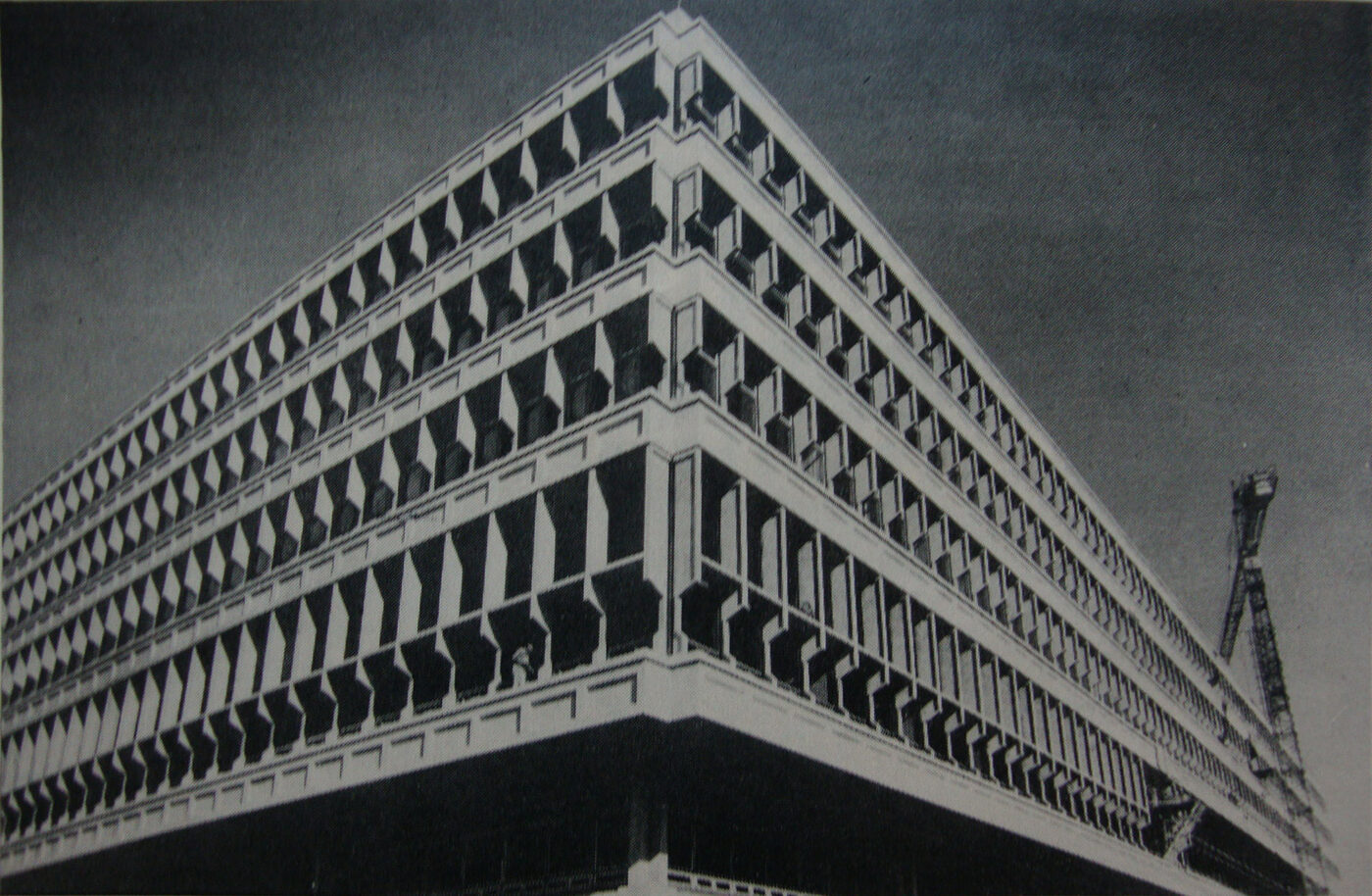
It begins in a university. The Departamento de Computación of the Facultad de Ciencias Exactas y Naturales at the University of Buenos Aires was created in 1985, and a group of staff, graduates and students there began work on networking: the first local trials of the X.25 protocol, and a laboratory built around UUCP. In 1986 the same group started the RAN project — Red Académica Nacional, the national academic network — which from the outset provided electronic mail to members of the university and to other academic institutions across the country.
Early in 1987 that network acquired an international exit. A dial-up UUCP link was established to the University of Toronto: the Argentine node, named atina, called utai, the artificial intelligence group's machine in Toronto, and from there reached the rest of the world. The arrangement had a division of labour that would be unusual anywhere else. RAN handled academic mail inside the country; the Ministry of Foreign Affairs handled what went abroad, and began using the same network for traffic with Argentine embassies. Within the university, the Faculty of Exact and Natural Sciences was connected first, its mail server linked to the ministry for onward international transmission; the Faculty of Engineering followed, then the rest. In parallel, the National Atomic Energy Commission, the National University of La Plata and a systems-science centre at Buenos Aires were pushing a BITNET-based alternative under the RUTA project, running from October 1986, which did not survive the general victory of Internet protocols. By the end of that process, more than eight hundred Argentine institutions had electronic mail.
.jpg)
Public access was another matter entirely, and lagged by years. Commercial Internet connections were first sold to the general public in April 1995 — some twenty months after the newsgroup was created. The first flat-rate accounts followed in 1996 and the first broadband service in 1997. For the whole of the group's first two years, in other words, an Argentine reader was almost by definition an academic one, and the charter's phrase at home and abroad described a ratio heavily weighted to abroad. That is the same starting position the Brazilian and Chilean groups describe for their own countries, with different dates; see soc.culture.brazil and soc.culture.chile.
A country-code domain administered from a foreign ministry
The domain came first, and it came early. The registration date IANA's root zone database records for .ar is 23 September 1987 — the date the delegation was made effective by the NIC of the day. A month earlier, on 20 August 1987, the two-letter code had been claimed through the UUCP zone, with UUNET acting as the principal gateway; and on 13 November 1987 the record for dcfcen, the computing department's machine at the Faculty of Exact and Natural Sciences, was sent to the maintainer of the Argentine UUCP maps, making dcfcen.edu.ar the country's first academic node in the world UUCP map.
The date is early by regional standards, and the comparison is easy to make from the same source. IANA records 15 December 1987 for Chile, 18 April 1989 for Brazil, 10 September 1990 for Uruguay, 26 February 1991 for Bolivia and 9 September 1991 for Paraguay. Argentina's was first in the Southern Cone by under three months, and by years over most of its neighbours.
What is genuinely unusual is who ran it. NIC Argentina was born in 1987 as part of the computerisation project of the Ministry of Foreign Affairs, whose communications with Argentine embassies had until then gone by telex with entirely manual document handling; the registry emerged from that modernisation programme and stayed inside the ministry. The arrangement lasted almost a quarter of a century. Only in 2011, by Decree 2085/2011, was a National Directorate of the Internet Domain Name Registry created inside the Legal and Technical Secretariat of the Presidency, and NIC Argentina moved to it. The IANA record today gives the ccTLD sponsoring organisation as the Presidency of the Nation, Legal and Technical Secretariat, at Balcarce 50 in Buenos Aires. For most of the working life of soc.culture.argentina, the national domain under which its Argentine readers were addressed was administered by the country's diplomatic service — which is, on reflection, a reasonable place to put the address book of a nation with a large part of itself overseas.
Reading the group from Argentina
The FAQ's third and fifth questions in section A are, respectively, how soc.culture.argentina works and whether it is read in Argentina at all. The second of those is answered with a caveat that deserves to be preserved: the maintainers say frankly that they lack help from people inside the country, so the answer is generally out of date. What they then set out is nonetheless the clearest surviving snapshot of how an Argentine reader reached the group in the middle 1990s.
The routes given are five. By UUCP through the node atina.ar. By TCP/IP from one of the institutions that had a genuine Internet connection — the FAQ names the foreign ministry, the National Atomic Energy Commission, the University of Buenos Aires, the National University of La Plata, the national space activities commission, the National University of Cuyo, the National Institute of Industrial Technology, the science and technology secretariat, the Pan American Health Organization and the National University of Córdoba, and then trails off with and one or two others. Through private companies, whose traffic left the country by satellite to the United States from a commercial carrier's node. By BITNET, dialling out to Chile, Brazil or the United States — the FAQ asks, parenthetically, whether any of those are left. And, listed with a straight face as the fifth option, by smoke signals, direct dialling and other herbs, at the consumer's discretion.
The consequential sentence is the one that follows. All of those routes carried e-mail; news, FTP, gopher and the web were available only to the second group. The great majority of Argentine academic institutions were on the first, connecting by modem over an ordinary telephone line a few times a day, and the FAQ is candid that migration to real connectivity would take several years in some places, because it depended on the price of leased lines and the laying of fibre. The group itself, the FAQ adds, was being distributed through local bulletin boards, so that most people with e-mail could get at it somehow.
And for anyone who could not: the FAQ gives an address for posting to the group by electronic mail, through a mail-to-news gateway then running at Yale, with a warning that such services were much abused and were tending to disappear. This directory is the residue of exactly that kind of service. news2mail carried Usenet to e-mail between 2000 and 2004 — the FAQ was still being posted monthly in 2000 — and a subscriber taking soc.culture.argentina that way was doing, from a different machine, what the FAQ had recommended as the fallback of last resort. It is a small point but not a sentimental one: for the Argentine readers the FAQ describes, the group was not a newsreader at all. It was mail.
An unauthorised removal, November 2001
One control message in the archive was not authorised. Shortly after midnight UTC on 4 November 2001 an rmgroup for soc.culture.argentina — timed at 00:27:41 — was injected into the network through a Quebec news server, carrying the name and address of a well-known newsreader maintainer in its From, Sender and Approved headers and a body reading, in its entirety, a request to remove the bogus newsgroup. Beneath it sat a signature line of machine-generated nonsense, of the kind that flagged such forgeries to anyone who read them.
It carried none of the marks of a genuine Big-8 removal: authorised newgroup and rmgroup messages for this hierarchy came from the moderator of news.announce.newgroups and, by 2001, were cryptographically signed. This one was neither. Nor did it travel alone — near-identical messages went out that night, minutes apart, against a run of the branch's South American groups, and the pattern is examined in detail on soc.culture.uruguay, whose own forgery is timed sixteen minutes after this one. It is not retold here.
Two earlier control messages in the same file are curiosities rather than attacks: a stray newgroup from a Swiss server on 27 September 1995 and another from an Italian hospital's proxy on 3 June 1998, each carrying an empty description line, and each apparently the by-product of a misconfigured server rather than anybody's intention. Servers that accepted only signed control messages ignored all three. The proof that the November 2001 run failed is in the configuration files: the group is still listed, still active, still with the description written into the 1993 call for votes.
Spanish on a seven-bit network
Every language written in the Latin alphabet with anything more than the bare twenty-six letters had to negotiate with Usenet's character handling, and Spanish got off comparatively lightly: an eñe, five accented vowels, a diaeresis, and the inverted opening marks of questions and exclamations. Small as that tax was, the group's own documents show it being paid, and they are the reason this page can say anything about it at all without guessing.
The Spanish half of the 1993 proposal is written without a single accent. Discusion, creacion, informacion, politica, artesanias all appear bare. The eñe is handled by substitution: the proposal offers espanhol for español and por cinco anhos for cinco años — the digraph nh standing in for a letter the transport could not be trusted to carry.
The FAQ, a few years later, states the convention explicitly rather than merely using it. Introducing a manual for the associated IRC channel, its authors note that they decided to use neither accents nor eñes, because in many cases these are either invisible or produce strange symbols on some people's screens, and that eñes have accordingly been replaced by nh; a version with accents and eñes, they add, is not currently a priority. Elsewhere in the same document a third workaround appears: p'aginas for páginas, the apostrophe marking the stressed vowel that could not be printed on it.
Three strategies, then, all visible in one small archive: drop the diacritic and let the reader restore it, substitute a digraph, or mark the accent with a spare ASCII character. None was standardised and all three coexisted. The general history of what a seven-bit network did to Latin-script languages, and the much heavier bill it presented to some of them, is told at length on soc.culture.quebec; what belongs here is only the local evidence, which is that the founding documents of this group were written in a Spanish deliberately stripped for transport, and that its authors knew exactly what they were doing and said so.
Rioplatense: voseo, sheísmo and a Neapolitan cadence
The variety the group posted in has a name and a literature. Rioplatense Spanish is the Spanish of the Río de la Plata basin, spoken across most of Argentina and all of Uruguay, and it is widely recognised across the Hispanophone world. Its best-known marker is voseo: the second-person singular pronoun vos in place of tú, with its own verb forms, used in writing as freely as in speech. Rioplatense is the most prominent voseo dialect anywhere, and — unlike several other regions where vos survives, such as Chile and Colombia — it treats the form as standard rather than as a mark of low register. On a text-only network in which everything was writing, that mattered: the pronoun is unmissable in the first line of any post.
Two further features are worth stating. The merged ll and y phoneme is realised as a postalveolar fricative, voiced as in the English measure — zheísmo — or voiceless, like the sh of shine, which is sheísmo; the voiceless variant originated in and around Buenos Aires and has since spread across the rest of Argentina and Uruguay. And the intonation of Buenos Aires has been studied specifically. A study by Colantoni and Gurlekian, published in Bilingualism: Language and Cognition in August 2004 and conducted under Argentina's national scientific and technical research council, found that Buenos Aires and Rosario residents speak with an intonation most closely resembling Neapolitan, and dated the convergence to the beginning of the twentieth century and the main wave of southern Italian immigration; before that, the researchers note, the porteño accent was closer to that of Spain, and to Andalusia in particular.
Lunfardo sits on top of all this. It formed in the Río de la Plata in the late nineteenth and early twentieth centuries out of the same mixture — Italian above all, with Spanish and some French — beginning as an argot of the lower classes and of prisons, so that guards would not follow what prisoners were saying, and spreading outward, not least through tango lyrics, until it was common property across every social stratum. The word itself is a deformation of lombardo, an inhabitant of Lombardy, and around 1870 it simply meant an outlaw. Modern scholarship on it is inclined to the view that it is less a criminal slang than a vernacular vocabulary of Buenos Aires speech, most of whose words have nothing to do with crime, and that it is possibly the only argot anywhere formed chiefly out of immigrant Italian terms. It is shared with the far bank of the river; Montevideo's share of it belongs to soc.culture.uruguay, whose own page sets out the Uruguayan side of the common inheritance.
The accountability chronology
The legal reckoning with the military government of 1976 to 1983 ran underneath the whole life of this group, and the dates matter, because whatever positions the archive holds were taken against a sequence whose outcome was not yet known. What follows is the chronology, with each finding attributed to the body that made it. It is set out here; the arguments about it are in the posts, and this page does not join them.
The commission. The Comisión Nacional sobre la Desaparición de Personas, CONADEP, was created by President Raúl Alfonsín on 15 December 1983, five days after his inauguration, to investigate the fate of the disappeared. Its report, Nunca Más, was delivered to the president on 20 September 1984. The commission recorded 8,961 cases of forced disappearance and stated in the report itself that the list was inevitably an open one, since many disappearances had never been reported; human rights organisations have consistently put the number at around 30,000. The report also documented the network of clandestine detention centres — accounts of the number vary, the English and Spanish encyclopaedic summaries giving figures of roughly three hundred, three hundred and forty and three hundred and eighty — and set out the commission's findings on the disposal of bodies. Published as a book by Eudeba in 1984, it has been reissued repeatedly since, with a substantially revised prologue and expanded annexes in 2006 and a reprint of the original text in 2016.
The trial. Three days after taking office, on 13 December 1983, the president signed Decree 158, ordering proceedings against the nine officers of the first three juntas. After the military court declined to try them, a civilian bench took the case. The Juicio a las Juntas opened before the Cámara Nacional de Apelaciones en lo Criminal y Correccional Federal de la Capital Federal on 22 April 1985, before a tribunal of six judges, and heard 833 witnesses through a cross-examination phase that ran to 14 August; 709 cases were presented by the prosecution and 280 were heard. Sentence was read on 9 December 1985. Jorge Rafael Videla and Emilio Eduardo Massera were sentenced to life imprisonment with perpetual absolute disqualification and dismissal from the service; Roberto Eduardo Viola to seventeen years; Armando Lambruschini to eight; Orlando Ramón Agosti to four years and six months. Four defendants were acquitted, three of them being separately court-martialled over the conduct of the 1982 war. It remains the only case in Latin America of a democratic government trying, at that scale, the former dictatorial government of its own country, and the first such proceeding anywhere to be conducted by a civilian court.
The laws. Law 23.492, universally called the Ley de Punto Final or Full Stop Law, was announced on 5 December 1986, sanctioned on the 23rd and promulgated on the 24th. Its seven articles extinguished criminal actions against anyone not summoned within sixty days of promulgation, expressly excepting cases of the abduction and concealment of minors and the substitution of their civil status. Law 23.521, the Ley de Obediencia Debida or Due Obedience Law, was sanctioned on 4 June 1987 and promulgated on the 8th; also seven articles, it established an irrebuttable presumption that field officers, junior officers, non-commissioned officers and troops of the armed, security, police and prison forces had acted under superior orders and were therefore not punishable, and extended the same presumption to senior officers who had not held command of a force, a zone or a subzone unless a court ruled otherwise within thirty days. Its second article excepted the offences of rape, the abduction and concealment of minors or substitution of their civil status, and the extensive appropriation of real property.
The pardons. President Carlos Menem issued a series of ten pardon decrees, four on 7 October 1989 and six at the end of December 1990. Together they covered more than twelve hundred people: military chiefs prosecuted but not covered by the two laws, the participants in the army mutinies of 1987 and 1988, the officers convicted over the 1982 war, the leaders of the guerrilla organisations, and — by Decree 2741/90 — the five junta members convicted in 1985, along with two further officers convicted of crimes against humanity. A separate decree in the same batch pardoned a former economy minister who had been prosecuted for participation in crimes against humanity.
The reversal. Congress repealed the two laws in 1998 by Law 24.952, without retroactive effect. In August 2003 it declared them null by Law 25.779, in the same session as the grant of constitutional rank to the United Nations convention on the non-applicability of statutory limitations to war crimes and crimes against humanity, which the president had ratified the day before; the vote in the Senate passed 43 to 7 shortly before two in the morning. On 14 June 2005 the Supreme Court held both laws unconstitutional. Courts then began setting aside the pardons where they covered crimes against humanity — the criminal cassation chamber so held on 15 June 2006 — and on 31 August 2010 the Supreme Court upheld those lower-court rulings, holding that the pardons were not constitutional and that the convictions they had overturned were to be enforced.
Afterwards. Prosecutions resumed. The first conviction after the 2003 annulment came on 4 August 2006, when Federal Oral Court No. 5 of the Federal Capital sentenced a former sergeant of the Federal Police to twenty-five years for the illegal detention and torture of a married couple and the concealment of their eight-month-old daughter. Trials have continued in courts across the country since. The third and largest of the trials concerning the Navy Mechanics School opened before the same court on 28 November 2012, covering 789 victims and hearing 830 witnesses; of the 67 originally committed for trial, 54 remained at the judgment of 29 November 2017, which convicted 48 and acquitted 6. Separately, and under Spanish universal-jurisdiction law rather than Argentine law, the former Argentine naval officer Adolfo Scilingo — who had confessed his part in the flights from which prisoners were thrown into the sea, in interviews given to an Argentine journalist and published in 1995 as El Vuelo — was convicted of crimes against humanity by Spain's Audiencia Nacional on 19 April 2005 and sentenced to 640 years, of which Spanish law permits thirty to be served.
Two dated events fell inside the group's first three years, when the subject was unavoidable in Argentine public life generally. In March 1995 that retired naval officer described publicly, for the first time by a participant, what had happened on the death flights; the interviews were published that year and were followed by further confessions. A year later came the twentieth anniversary of the coup of 24 March 1976.
Two features of the sequence bear on the archive directly. The first is that the group opened between the pardons and the annulments: the laws and the decrees were in force throughout its most active years, and the reversals arrived as its traffic was thinning. A reader working through the archive in date order is reading people who did not know which way the sequence would go. The second is that the reckoning was public, documented and contested at every stage — a commission with a published report, a trial with a published judgment, laws with numbers and dates, decrees with numbers and dates, and a supreme court that changed the answer twice. What was said about it in this particular newsgroup is not documented anywhere this page could check, and no characterisation of it is offered here.
Malvinas, and two bombings
Sovereignty over the islands was squarely inside the charter's own topic list, which named politics related to Argentina and news from the world in its relation to Argentina, and the proposal was cross-posted from the start into the regional and neighbouring groups. The bare record: Argentine forces landed on 2 April 1982, South Georgia was taken the following day, a British naval task force sailed on 5 April, and the Argentine surrender came on 14 June after seventy-four days. Six hundred and forty-nine Argentine service personnel, two hundred and fifty-five British service personnel and three islanders were killed. The defeat is generally credited with hastening the collapse of the military government and the elections of 1983. Diplomatic relations were restored in 1989 by the Madrid Joint Declaration, whose first instrument set out to normalise relations while reserving each government's position on sovereignty; the dispute itself is unresolved, and Argentina's 1994 constitutional reform wrote the claim into the constitution as its first transitory provision, ratifying Argentine sovereignty over the islands as legitimate and imprescriptible. That amendment falls inside the group's first year.
Two attacks on Jewish targets in Buenos Aires belong to the same decade. On 17 March 1992 a bombing destroyed the Israeli embassy, killing 29 people and injuring 242. On 18 July 1994 a van bomb destroyed the building of the Asociación Mutual Israelita Argentina, the country's principal Jewish community organisation, killing 85 people and injuring more than three hundred; it remains the deadliest terrorist attack in Argentine history. Argentina then held the largest Jewish community in Latin America, put at around two hundred thousand people. The AMIA investigation has been the subject of judicial findings of serious irregularity — the federal judge originally in charge was removed from the case in 2003 and impeached and removed from the bench on 3 August 2005 for his handling of it — and of subsequent prosecutions and rulings that have continued for decades. This page records the events and their dates and does not characterise the investigations beyond what courts have found.
Alongside these ran a quieter and more permanent question of identity: Argentina's relationship to the rest of Latin America, and to the Europe most of its families had come from. The regional group soc.culture.latin-america, to which the founding proposal had been cross-posted in the first place, was the obvious neighbour for it. The Brazilian, Chilean and Uruguayan groups own their own countries on this site and their own national chronologies; none of them is summarised here.
Convertibility, and how it ended
The economic argument was the one the charter's topic list guaranteed the group would carry — politics and news from Argentina, in a decade when both meant the currency — and it ended in a crisis that can be dated almost to the day.
The background is the reason the fixed exchange rate was politically possible at all. For most of the period between 1975 and 1990 Argentina lived with inflation averaging something on the order of 325 per cent a year, poor or negative growth and repeated currency crises. Figures for 1989 itself differ by index: the national statistics institute's series gives 3,079 per cent for the year, while other accounts put the peak at around 5,000 per cent. Real wages had collapsed to about half their 1974 peak, and income poverty had risen from 27 per cent in 1980 to 47 per cent in 1989. President Alfonsín brought forward the handover of power and left office on 8 July 1989, five months before his term was due to end.
Convertibility was enacted as Law 23.928, sanctioned on 27 March 1991 and in force from 1 April, establishing a currency board that fixed the currency against the United States dollar and guaranteed full convertibility into it; from 1 January 1992 the parity was one convertible peso to one dollar. It worked, at first, on the terms it was set: inflation fell from more than 3,000 per cent in 1989 to 3.4 per cent in 1994, GDP grew at about 8 per cent a year until the Mexican crisis of 1995 and about 6 per cent after it until 1998, imports rose from US$11.6 billion in 1991 to US$32.3 billion in 2000 and exports from US$12.1 billion to US$30.7 billion over the same period. The costs were also on the record: unemployment rose from 6.1 per cent in 1991 to 15 per cent in 2000, the poorest fifth of the population saw its share of national income fall from 4.6 to 4.1 per cent, and the richest fifth saw its share rise from 50.4 to 51.4 per cent.
The depression began in the third quarter of 1998 and ran to the second quarter of 2002. The endgame is a fortnight of dates. Through late 2001 depositors converted pesos into dollars and withdrew them in volume, often sending them abroad, and on 1 December 2001 the government froze bank accounts, initially for ninety days, permitting only small weekly cash withdrawals — initially 250 pesos, later 300 — and only from peso-denominated accounts, while leaving card and cheque payments untouched. The measure acquired the name corralito, the diminutive of the word for a stock pen, and in Argentine usage also a child's playpen. Because most Argentines at that date dealt in cash and many had no bank account at all, the restriction bit hardest on people it had not been designed to reach.
Protests followed on 19 and 20 December. President Fernando de la Rúa gave his resignation to Congress on 20 December 2001 and left the Casa Rosada by helicopter; the succession then ran through four more office-holders in a fortnight. Ramón Puerta, provisional president of the Senate, held the executive from 21 to 23 December. The Legislative Assembly then appointed Adolfo Rodríguez Saá, governor of San Luis province, as interim president; he held office from 23 to 30 December and announced the suspension of payment on the larger part of the public debt — a sum standardly given as US$132 billion, described in the same accounts as a seventh of all the money then borrowed by the developing world, and of which some US$82 billion in bonds eventually entered the restructuring. He resigned on 30 December; Eduardo Camaño, president of the Chamber of Deputies, held the office from 31 December to 2 January; and the Legislative Assembly's choice, the Peronist senator and former governor of Buenos Aires province Eduardo Duhalde, was sworn in on 2 January 2002.
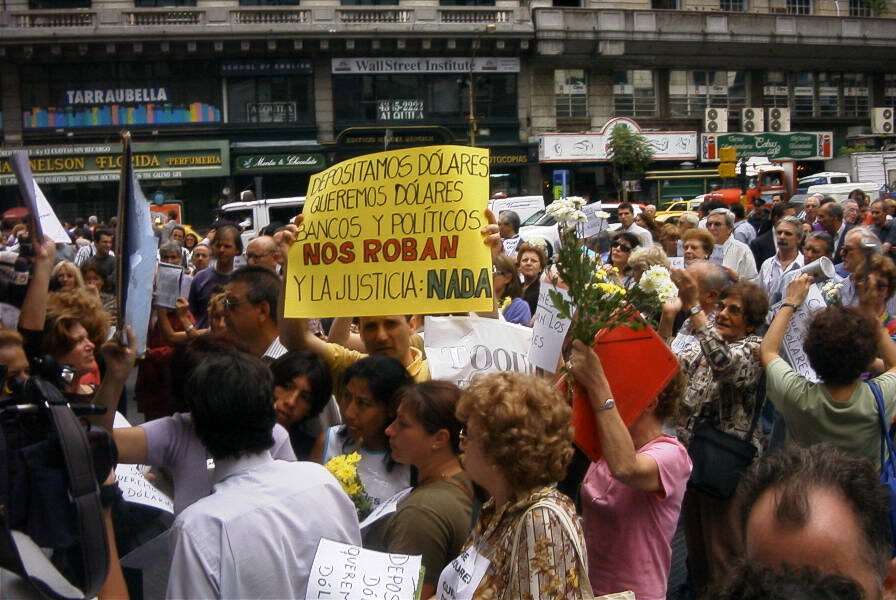

Law 25.561 repealed convertibility on 6 January 2002. Dollar debts and deposits were then converted into pesos at deliberately different rates — 1.4 pesos to the dollar for deposits, 1 to 1 for debts — while the market rate went to nearly four pesos to the dollar, so that a saver's dollar balance came back worth a fraction of what had been put in. The withdrawal restrictions themselves were not lifted until 2 December 2002. The social measurements for that year are the worst in the modern series: by the October 2002 survey, 57.5 per cent of the population was below the poverty line and 27.5 per cent in extreme poverty, against 35.9 and 11.6 per cent in May 2001. Unemployment reached nearly a quarter. Provinces issued their own quasi-currencies to pay wages, and the national government issued one of its own.
The recovery was fast and export-led. A devalued currency, high world prices for primary products and a large trade surplus produced growth of 8.8 per cent in 2003, 9.0 in 2004 and 9.2 in 2005; GDP had exceeded its pre-crisis level by 2005, and the poverty rate fell back below its May 2001 figure by the second half of 2005. A 2005 exchange settled about three-quarters of the defaulted bonds at a heavy discount, and a second in 2010 took the total out of default to 93 per cent; litigation by the remaining holders continued until 2016.
That fortnight in December 2001 falls squarely inside this directory's own years. news2mail carried Usenet to e-mail between 2000 and 2004, so a subscriber taking soc.culture.argentina by mail in December 2001 was reading the group while the succession was happening rather than afterwards. Whatever the archive preserves from those weeks is contemporaneous.
The diaspora the collapse made
Crises make readers of diaspora newsgroups. Argentina had spent the decades around 1900 absorbing Europeans; by the end of the 1990s it was exporting graduates, and after the collapse it exported them faster. The charter's phrase at home and abroad, written in 1993, was doing more work in 2003 than it had been asked to do.
The mechanism was partly a matter of paperwork. Argentine ancestry very often qualifies a person for Italian or Spanish citizenship by descent, and a European passport converts an emigration into a legal residence. That is one reason the recorded destinations of the post-2001 wave run so heavily to Spain and Italy alongside the United States, and it is also why the FAQ's section on documentation — degree recognition, consular procedure, powers of attorney, voting from abroad — reads as a manual for something a great many people were about to do. The questions had been compiled years before the crisis by people who had already done it.
What this did to the group is harder to state honestly than one might wish, because no traffic measurements survive. What can be said is structural rather than statistical: the readership that the charter had described in 1993 — Argentines abroad, in touch with Argentines at home — became, over the group's second decade, a larger and much less unusual category, at exactly the moment when the tools for staying in touch were multiplying beyond Usenet.
Football: an association of 1893, and two World Cups
A soc.culture group for Argentina was going to be a football group part of the time, and the charter had said so in its third bullet: news from Argentina, including sports. The mailing list had gone further and given football, and tennis with it, a channel of its own.
The institutions are old. The governing body was founded on 21 February 1893 as the Argentine Association Football League — the name was in English, as was its founder, the Scottish schoolmaster Alexander Watson Hutton, generally called the father of Argentine football — which makes it the oldest football association in South America and one of the oldest outside Europe. It affiliated to FIFA on 1 July 1912 and was a founder member of the South American confederation on 9 July 1916. The two clubs that dominate the domestic argument, River Plate and Boca Juniors, were founded in 1901 and 1905, and first met officially on 24 August 1913, a match the older of the two won 2–1. Their fixture is the original clásico, in the sense that the Spanish usage of that word for a derby began in Argentina with this match and was exported afterwards; by some estimates the two clubs command more than seventy per cent of Argentine football support between them.
Two World Cups stood behind the group's football material, and both carry more than sport. The 1978 tournament was held in Argentina between 1 and 25 June, under the military government, and won by the hosts, 3–1 after extra time against the Netherlands at River Plate's stadium in Buenos Aires. It is a tournament with a long controversy attached: the government's use of it for nationalist purposes and for international legitimacy is a matter of extensive historical writing, and the second-round match in which Argentina beat Peru 6–0 — two goals more than the four-goal margin they needed to reach the final — has attracted allegations of interference ever since. Nothing has been proved, and this page records the allegation and its status, not a verdict.
The 1986 tournament, in Mexico, was won 3–2 against West Germany in the final at the Estadio Azteca on 29 June 1986. The quarter-final against England on 22 June, four years after the South Atlantic war, produced the two most-replayed goals in the sport, scored four minutes apart by Diego Maradona: one with a hand, in the fifty-first minute, and one that was not. Behind both tournaments sits an older fixture still, the first World Cup final of all, played at the Estadio Centenario in Montevideo on 30 July 1930 and won by Uruguay 4–2 against Argentina; that match belongs as much to soc.culture.uruguay, and the Uruguayan side of it is set out there.
Tango, the bookshelf and the table
Tango is the export the country is best known by, and its history is a Río de la Plata history rather than a purely Argentine one: it originated in the 1880s along the estuary that divides the two countries, out of a combination of milonga, the Spanish-Cuban habanera and Uruguayan candombe, in the port districts of Buenos Aires and Montevideo, played first on portable instruments — flute, guitar and violin — with the bandoneón arriving at the end of the nineteenth century and reshaping the ensemble around itself. On 31 August 2009 UNESCO approved a joint proposal by Argentina and Uruguay to add tango to its intangible cultural heritage lists: a shared inscription for a shared form, which settled the paperwork if not the argument. The Uruguayan share of the story, including the standing disputes over particular tunes and particular biographies, is set out on the soc.culture.uruguay page and is not retold here.
The literary canon behind the group's book material was closed before the group opened, which changes the character of any argument from criticism to inheritance. Julio Cortázar died in Paris on 12 February 1984 and Jorge Luis Borges in Geneva on 14 June 1986 — Borges having appeared, in the last year of his life, as a witness at the 1985 trial. The nineteenth-century foundation stone, José Hernández's Martín Fierro, is a 2,316-line poem published in two parts, in 1872 and 1879, which gave the gaucho a place in the national self-description that he has never lost. What a diaspora group did with this material was rarely purely literary. The FAQ's section on buying things abroad puts Argentine books and newspapers in the same list as yerba and chorizos, which is about right: for a reader in a foreign city the paperback and the packet of yerba were doing the same job.
The table is the other permanent subject. The asado is a social institution before it is a cooking method — beef, pork, chicken, chorizo and morcilla over an open fire or a parrilla, prepared by a designated asador — and the FAQ carries both recipes and, more practically, a guide to Argentine cuts of meat, because the names do not survive translation and an emigrant at a foreign butcher's counter needs a conversion table. Mate, the infusion of dried Ilex paraguariensis that was first drunk by the Guaraní and is now taken across Argentina, Paraguay, Uruguay and southern Brazil, generated the other standing genre in that section: where to buy yerba in a city that did not stock it. Argentina has been the largest producer of the leaf in recent decades; the etiquette that surrounds drinking it, and the question of whose mate is better, is one of the oldest arguments across the river and belongs equally to the group next door. Dulce de leche is claimed by both banks, and the origin stories on each side are anecdotal, which is precisely why it was such durable newsgroup material.
The demography behind the accent
The group's composition inverted a national story, and the national story is on the record in some detail.
Between 1861 and 1920 something like 3.8 million Italians and 1.5 million Spaniards arrived in Argentina, though by no means all of them stayed. The total population rose from 4 million in 1895 to 7.9 million in 1914 and 15.8 million in 1947. At the 1895 census, immigrants were 52 per cent of the population of the capital and 31 per cent of Buenos Aires province, with some littoral provinces around 40 per cent and the Patagonian provinces around 50. At the 1914 census, before the war sent many European immigrants home to join their armies, the overall foreign-born share of the national population reached its all-time peak of almost 30 per cent. By the count of the period, Argentina was the second-largest immigrant destination in the world, with about 8 million arrivals against the United States' 27 million.
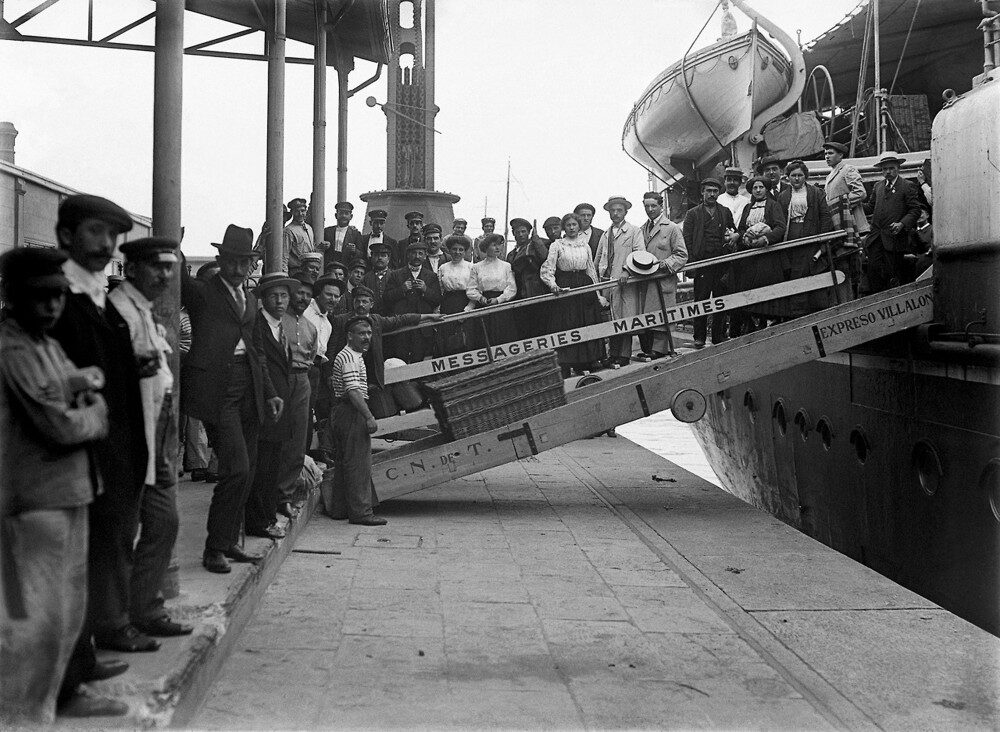

Everything in the language section above descends from that. The Neapolitan cadence of the porteño accent is dated by linguists to the main wave of southern Italian immigration; lunfardo is, on the current scholarly view, an argot formed chiefly out of immigrant Italian words. A newsgroup written in that register is a document of the immigration quite as much as of the emigration.
And that is the inversion worth noticing. A reader browsing this archive meets a diaspora in formation — people writing from North American campuses and European cities to a country their grandparents had once written home from, using an alphabet stripped of the accents both generations needed, and arranging, through a mailing list with a committee for the purpose, the semi-annual discount flights that would take them back for a fortnight.
What the record does not show
This page is well supplied with primary documents about the group's constitution and poorly supplied with evidence about its daily life, and the distinction should be stated plainly rather than smoothed over.
What survives, and is quoted above, is the administrative and community record: one Request for Discussion in two languages, two Calls for Votes, a result with a full ballot roll, two authorised newgroup control messages, one forged rmgroup and two stray newgroups, a description line still current in the ISC configuration files, and an eight-part community FAQ with its index, its mirrors and its dates. Every name, date and number in this article's account of the group's creation, its language conventions, its mailing-list ancestry and its documented preoccupations comes from those files.
What does not survive, or has not been found for this page, is nearly everything else. There are no subscriber or readership figures for the group: the network-wide readership surveys of the early 1990s do not sample reliably at this granularity, and no equivalent measurement has been located. There are no reliable article counts by year, and none is estimated here. The group was unmoderated, so there is no moderator, no submission archive and no editorial record of any kind. No individual thread, subject line, poster or quotation from the group's traffic is cited in this article, and none should be inferred from it: where this page describes what the group was for, it is drawing on the charter's own topic list, on the FAQ's index of questions the community compiled for itself, and on the documented history of the period the group lived through — never on a count of postings, and never on a characterisation of how any argument in it went.
The 313 people who cast a ballot in the summer of 1993 are the only membership-shaped document that exists, and they are a snapshot of who was willing to send one e-mail that July, not a readership. Many of them may never have posted. Many who posted for a decade never voted, because they arrived later. The roll is evidence about the reach of the network in 1993, which it is, and not a roster of the group, which it is not.
Two things carried by an earlier version of this page are not repeated in this one, because no source could be found for them: that rather more than half the residents of Buenos Aires were still foreign-born around 1920, and that the ship in the 1904 photograph below belonged to a named French line. Where a figure differs between reputable sources — the number of clandestine detention centres in the CONADEP report is the clearest case, and the 1989 inflation rate is another — the range is given and attributed rather than one figure being chosen.
Scope and limits
This entry describes one newsgroup and the world it belonged to. It is not a history of Argentina. Where it sets out the national record it does so as a chronology, because the group's charter put that chronology in scope and a reader arriving from a search engine will not have it to hand.
On the contested material — the accountability laws and the rulings about them, the casualty figures for the disappearances, the allegations attaching to a football match in 1978 — this page reports what the responsible body found, states who found it, notes where accounts disagree, and stops. The people who conducted those arguments had standing this page does not, and settling them three decades on is no part of what a directory entry is for. Individuals are named here only in three cases: heads of state and acting heads of state performing dated constitutional acts; people convicted by a named court on a stated date; and figures of record whose institutional role is the fact being reported. Ordinary participants in the group are not named at all.
Neighbouring subjects belong to neighbouring pages. For the hierarchy itself — how its names were formed and how the ballots worked — see the soc.* page and the culture hub beneath it. Uruguay, Chile and Brazil have their own entries, their own connectivity histories and, where applicable, their own national chronologies, none of which is summarised or paralleled here.
Within the branch, this group occupied a particular position. Several of its neighbours were founded around wars that were then in progress. This one was founded around a mailing list, in a country whose hardest public arguments in that decade were about a past that the courts were still deciding — which is a matter of record about the period, not a claim about the temperature of any thread.
The group has not been removed. Unmoderated Big-Eight groups rarely are, and this one survived the only attempt made on it; it is still in the namespace, still carried, still open for posting, and still described by the sentence a call for votes gave it in 1993. What it actually was — the common meeting place the proposal asked for, for a country that had been writing letters across an ocean in both directions for a hundred and fifty years — now belongs to the archive.
Reading soc.culture.argentina today
- Historical archive: Google Groups — soc.culture.argentina (coverage varies by group and era).
- Open in a newsreader:
news:soc.culture.argentina— the original site offered exactly this link, and it still works if your system has a newsreader registered for thenews:scheme. - Live access: point an NNTP newsreader at a modern server — see accessing Usenet today.
- The original news2mail e-mail subscription service ended in the mid-2000s and no longer operates.