soc.culture.arabic
Technical and cultural discussions of the Arab world.
One of the oldest culture groups on Usenet, soc.culture.arabic covered the whole Arabic-speaking world before most countries had their own group. Its early-1990s archive includes some of the first online debates on Arabic text encoding and romanisation.
The group’s scope — 22 countries and a global diaspora — made it noisy and vital in equal measure; moderated offshoots repeatedly formed and dissolved around it.
On this page
- The group's own paperwork, and the part of it that is missing
- A description that ruled out the thing the group is best remembered for
- Why one language got one group and its states got several
- The seven country pages this directory holds
- One language, or many
- Getting Arabic through a seven-bit network
- Arabizi: writing Arabic in Latin letters and digits
- Who could post, and from where
- How much traffic there was, and how we can tell
- What an umbrella carried that a country group did not
- The neighbours, and the media that overtook it
- A removal that did not take
- What the record does not show
- Scope, sources and limits
The group's own paperwork, and the part of it that is missing
A Big-Eight newsgroup normally leaves a complete paper trail. A Request for Discussion goes to the moderated group news.announce.newgroups and is argued out in news.groups; a Call for Votes follows from a neutral votetaker; a RESULT posting gives the tally, name by name; and a newgroup control message finally tells every news server on the network that a group exists. The Internet Systems Consortium mirrors both halves of that record, the announcements and the control messages, and for most groups chartered from the early 1990s onward the mirror is complete enough to date a group to the day.
For soc.culture.arabic it is not. There is no RFD in the archive, no CFV, no RESULT. The group's control-message file holds exactly three messages, and none of them is the creation. The earliest, dated 23 May 1991, was posted from the news account at Compass, Inc. of Wakefield, Massachusetts, carries Control: newgroup soc.culture.arabic and a world distribution, and has a one-line body. The second, dated 26 April 1992, came from a machine in the computer science department at the University of Maine, had an empty body, and carried a distribution covering that campus alone. Both are reissues rather than creations: routine housekeeping of a kind any site performed when its active file had lost a group it wanted back. The third, from November 2001, tried to delete the group and is dealt with near the end of this page.
The conclusion is unavoidable and unglamorous. soc.culture.arabic is older than the surviving administrative record of it. The shelf it sits on was laid out by the Great Renaming of 1987, the restructuring that sorted Usenet into the seven hierarchies comp, misc, news, rec, sci, soc and talk, to which humanities.* was added in April 1995 to make the Big Eight. The group was already in place before the archive that would have dated it began to hold anything for it. Whether it is older than soc.culture.lebanon, whose vote passed in November 1990, cannot be settled from the documents consulted here; what can be said is that it predates the surviving control archive and every other country group in this family whose paperwork survives. Its seniority can be demonstrated in other ways, set out below. Its birthday cannot.
What the 1991 message does preserve is the group's public description. Its single line of body text is the entry for the newsgroups file — the tab-separated list from which every newsreader draws the one-sentence gloss it shows beside a group name. Three and a half decades later, ISC still distributes the same line, unchanged:
soc.culture.arabic Technological & cultural issues, *not* politics.The corresponding entry in ISC's active file is soc.culture.arabic 0000000000 0000000001 y. The trailing flag is the whole of the group's governance: y means posting is permitted, which is the news software's way of saying unmoderated. There is no moderator address, because there was never a moderator.
A description that ruled out the thing the group is best remembered for
It is worth dwelling on that description, because it is the only statement of purpose the group has. A newsgroups-file line is not a charter and enforces nothing; it is a label, written by whoever wrote it, propagated by copying, and revised approximately never. But it is what a reader saw in the group list, and for a group whose founding documents are lost it is the closest thing to an intention that survives. The intention it states is that the group was for technological and cultural matters, and — the emphasis is the line's own, in the asterisks that a plain-text network used for italics — not politics.
Anyone who has read a page of the group's era will recognise the gap between that sentence and what happened. The gap is not evidence of bad faith; it is the standard condition of an unmoderated group whose subject is a region under continuous international attention. The soc.* hierarchy was designed on the assumption that intent could be separated from argument — that the questions a community asks about itself would sit in soc.* while the questions the world argues about it would sit in talk.* — and the branch hub at soc.culture.*, together with the hierarchy page for soc.* itself, sets out how the split was drawn and how well it held. It held better in charters than in threads, and a group covering a language spoken across twenty-two states was not going to be the exception.
The record shows the boundary being probed from the other side too. In February 1994 an RFD was posted for a group to be called soc.culture.muslims, and its rationale describes the surrounding namespace with unusual precision. Articles on the culture, history and politics of Muslim communities, it argued, were at that moment routinely cross-posted to a number of soc.culture.* boards; and the obvious alternative destination would not take them, because the charter of the moderated group soc.religion.islam required that all discussion in it pertain to Islam as a religion, with the result that its moderators generally rejected articles not dealing primarily with religious issues. The proposal asked instead for a group that would be devoted to the interests of a Muslim readership and free of restrictions on subject matter. It was put to a vote and failed on 14 April 1994 by 246 to 156, with six abstentions and thirteen invalid ballots. The RESULT posting states the two thresholds it missed: yes votes had to be at least two-thirds of all valid votes, and there had also to be at least a hundred more yes votes than no. 246 of 402 is a fraction over sixty-one per cent, and the margin was ninety.
Three documents, then, describe the same pressure from three sides: a culture group whose own description disclaimed politics, a religion group whose moderators enforced a narrow subject, and a failed proposal for something in between. Whatever did not fit those definitions had somewhere to go all the same, since talk.politics.mideast existed throughout and a Newsgroups header can name several groups at once.
Why one language got one group and its states got several
This is the question that only this page can answer, and it is the reason an umbrella group is a different kind of object from a country group. Arabic is one written standard across a bloc of states — the League of Arab States, formed in Cairo on 22 March 1945 with seven members, now has twenty-two, three of them (Comoros, Djibouti and Somalia) non-Arab countries. Usenet gave that written standard a single group, and then, over roughly five years in the middle of the 1990s, gave several of the individual states groups of their own. The obvious model is a parent subdividing. The record does not support it.
Here is the sequence, with the dates and tallies as the announcements and control messages give them:
- soc.culture.lebanon — the vote passed on 25 November 1990; the newgroup control message went out on 3 December 1990 quoting a charter about the successive cultural and historical waves that shaped modern Lebanon.
- soc.culture.maghreb — a first RFD on 11 August 1992 lapsed; a second on 20 April 1993 went to a vote which passed 199:28, reported on 4 June 1993. Newsgroups line: North African society and culture.
- soc.culture.palestine — RFD of 14 September 1993, proposed as soc.culture.palestinian and renamed in a second RFD ten days later. The proponent gave the reason himself: widespread demand, and consultation with David Lawrence, the moderator of news.announce.newgroups, on the proprierty of changing a proposed group name in mid-stream — the misspelling is the document's. Passed 211:90, reported 11 November 1993.
- soc.culture.muslim — RFD of 24 February 1994, posted from an alumni account at the California Institute of Technology; failed 246:156 on 14 April 1994.
- soc.culture.kuwait — RFD of 15 September 1994; passed 143:39, reported 3 November 1994.
- soc.culture.jordan — RFD of 2 November 1994; passed 164:21, reported 5 January 1995.
- soc.culture.egyptian — a first RFD on 1 November 1992 lapsed; a second on 3 November 1994 proposed a moderated group, and a revised RFD of 30 November 1994 changed the status to unmoderated, its author reporting that the discussion had shown both that the group was wanted and that it should not be moderated. The Call for Votes of 24 January 1995 was accordingly for an unmoderated group, and it passed 183:17 on 21 February 1995.
- soc.culture.saudi — RFD of 22 November 1994; failed 78:21 on 21 February 1995. A second attempt from 25 August 1995 failed 73:23 on 18 October 1995. The group was never created.
- soc.culture.syria — RFD of 25 January 1995; passed 284:25, reported 18 April 1995.
- soc.culture.iraq — RFD of 30 January 1995; passed 403:55, reported 1 May 1995, the largest turnout of the set at 458 valid votes.
- soc.culture.algeria — RFD of 23 May 1995; a Call for Votes went out on 21 June for a moderated group and was cancelled on 13 July, the votetaker explaining that it was due to a miscommunication regarding the moderated status of the newsgroup, which had been proposed unmoderated and was meant to be voted on that way. The revote passed 197:18 on 8 August 1995.
- soc.culture.kuwait.moderated — RFD of 4 January 1996, posted from a commercial account inside Kuwait; passed 149:40, reported 26 February 1996. It is the one moderated group in the set.
Now the structural point. Not one of these was a subdivision of soc.culture.arabic in any formal sense; there is no reorganisation proposal, no umbrella-wide vote, nothing resembling the bundled restructurings that other parts of soc.culture.* went through. Each was an independent proposal by an independent proponent for a group with its own name and its own charter. And yet none of them was independent of the umbrella either, because in almost every case the RFD, both Calls for Votes and the RESULT were crossposted to soc.culture.arabic. The Iraq proposal went to soc.culture.arabic together with soc.culture.lebanon, soc.culture.jordan, soc.history, soc.culture.maghreb and soc.culture.palestine. The Syria proposal went to soc.culture.arabic, soc.culture.iranian, soc.culture.jordan, soc.culture.kuwait, soc.culture.lebanon, soc.culture.maghreb and soc.culture.palestine. The Kuwait proposal, the Algeria proposal, the Egyptian proposal and both Saudi proposals named soc.culture.arabic in their distribution lists as well.
That is the relationship, and it is a more interesting one than carving. The umbrella was not the parent of the country groups; it was their constituency. It was the room the proposals were read in, the place the arguments about them happened before they moved to news.groups, and — since votes were cast by anyone who read the CFV and cared enough to reply — a large part of the electorate that decided them. The country groups were not taken out of soc.culture.arabic. They were made in it.
The proposals themselves confirm the reading. The Jordan RFD of November 1994 justified itself by listing the alternatives that already existed: many of the neighbouring countries, it said, have their own groups — soc.culture.turkish, soc.culture.israel, soc.culture.arabic, soc.culture.lebanon, and alt.culture.kuwait — but none of them is the place to discuss local issues usually of concern to Jordanians alone. The umbrella appears in that list as one neighbour among several, not as a parent shedding a child. The Iraq RFD put the same case negatively: at that moment, it said, issues regarding Iraqi affairs were scattered among various newsgroups.
One further complication is worth recording, because it shows the namespace growing a middle tier rather than a simple two-level hierarchy. soc.culture.maghreb was itself an umbrella — a regional group beneath a linguistic one. Its first RFD, in August 1992, argued the case explicitly: the Maghreb region, taking in Morocco, Algeria, Tunisia, Mauritania and Libya, had developed in ties with the Arab mashreq, but its history was, in the proponent's phrase, a little bit different, and the worries of its peoples very different from those of the Arab east. That RFD was crossposted not to soc.culture.arabic but to soc.culture.african and soc.culture.misc; the second, in April 1993, went to both soc.culture.african and soc.culture.arabic, along with seven other groups. North Africa sat in two scopes at once, and the paperwork shows people negotiating that fact in real time rather than resolving it.
The seven country pages this directory holds
This site keeps a page for each of the groups below. They are the umbrella's members in the sense that matters here — proposed in its room, voted on by its readers, and afterwards drawing off the share of traffic that belonged to one country rather than to the language. Each page carries that country's own record, and none of it is repeated here.
- soc.culture.lebanon — the oldest of the seven by nearly three years, its vote passed on 25 November 1990.
- soc.culture.palestine — November 1993, renamed from soc.culture.palestinian during the discussion period.
- soc.culture.kuwait — November 1994, and the only one of the seven whose RFD was posted from a machine inside the region.
- soc.culture.jordan — January 1995, whose page also treats a forged control message of the kind discussed below.
- soc.culture.syria — April 1995, the group whose administrative record survives in the fullest state of any in this family.
- soc.culture.iraq — May 1995, and the largest vote of the set at 403:55.
- soc.culture.algeria — August 1995, after a Call for Votes had to be cancelled and rerun.
Other groups sit adjacent to this family and are not treated here. soc.culture.maghreb held the regional tier described above, and soc.culture.berber, chartered by a vote of 247 to 30 reported on 20 July 1994, carries the newsgroups-file line The berber language, history, and culture and held the Tamazight languages and the question of which script to write them in, which is a separate argument with a separate history and has its own page on this site. soc.culture.misc, whose newsgroups-file line reads Group for discussion about other cultures, took what fitted nowhere else. North Africa is claimed by the African continental umbrella as well; this page owns it only as Arabic-speaking, and makes no attempt on the rest.
One language, or many
The umbrella existed because Arabic is written the same way everywhere and spoken differently everywhere, and a text network sits precisely on that seam. The written standard — Modern Standard Arabic, developed in the Arab world in the late nineteenth and early twentieth centuries out of Classical Arabic, and called along with it simply al-fusha, the most eloquent Arabic, by its speakers — is the language of literature, journalism, education, law and formal address across the whole bloc. It is nobody's mother tongue: it is learned by formal education, and in its written form it is substantially uniform from one end of the bloc to the other.
The spoken varieties of Arabic are not. The standard geographic classification groups them into five: Maghrebi, Egyptian (taking in Egyptian and Sudanese), Mesopotamian, Levantine and Peninsular, the last including Gulf, Najdi, Hejazi, Bahrani and Omani among others. Nearby varieties are mostly mutually intelligible and distant ones tend not to be; the varieties west of Egypt are the most disparate of the set, and Egyptian speakers are commonly described as finding North African speech difficult, while the reverse is less often reported — an asymmetry usually attributed to the reach of Egyptian and Levantine popular media. How many languages this amounts to is a live question rather than a settled one. The ISO 639-3 registry, maintained by SIL International, lists thirty individual languages inside the Arabic macrolanguage and treats them as separate languages; the Library of Congress treats them all as dialects of one.
The technical name for the arrangement is diglossia. The Arabist William Marçais used the French term of the Arabic situation in 1930; Charles A. Ferguson introduced the English word in 1959, in the title of an article in the journal Word (volume 15, pages 325 to 340), taking Arabic as one of four defining cases alongside Swiss German, Haitian Creole and the Greek of the Katharevousa era. Ferguson's definition is worth having at its business end: a very divergent, highly codified superposed variety, learned largely by formal education and used for most written and formal spoken purposes, which is not used by any sector of the community for ordinary conversation. He observed of the Arabic case that educated speakers would very often maintain they never used the low variety at all, in spite of direct observation showing that they used it constantly.
For a newsgroup, the consequences run in two directions at once. Because the high variety is shared, a written pan-Arab group is a coherent proposition in a way that a spoken pan-Arab broadcast in 1990 was not: everyone with a secondary education could read everyone else. That is the whole justification for an umbrella. But because the low varieties have no settled orthography, a poster wanting to render how a sentence is actually said — in a joke, a proverb, a line of a song, a piece of reported speech — had to invent a spelling, and the invention differed by writer. Dialect questions on the group therefore had a structural property that dialect questions elsewhere do not: there was frequently no agreed way to write down the thing being argued about.
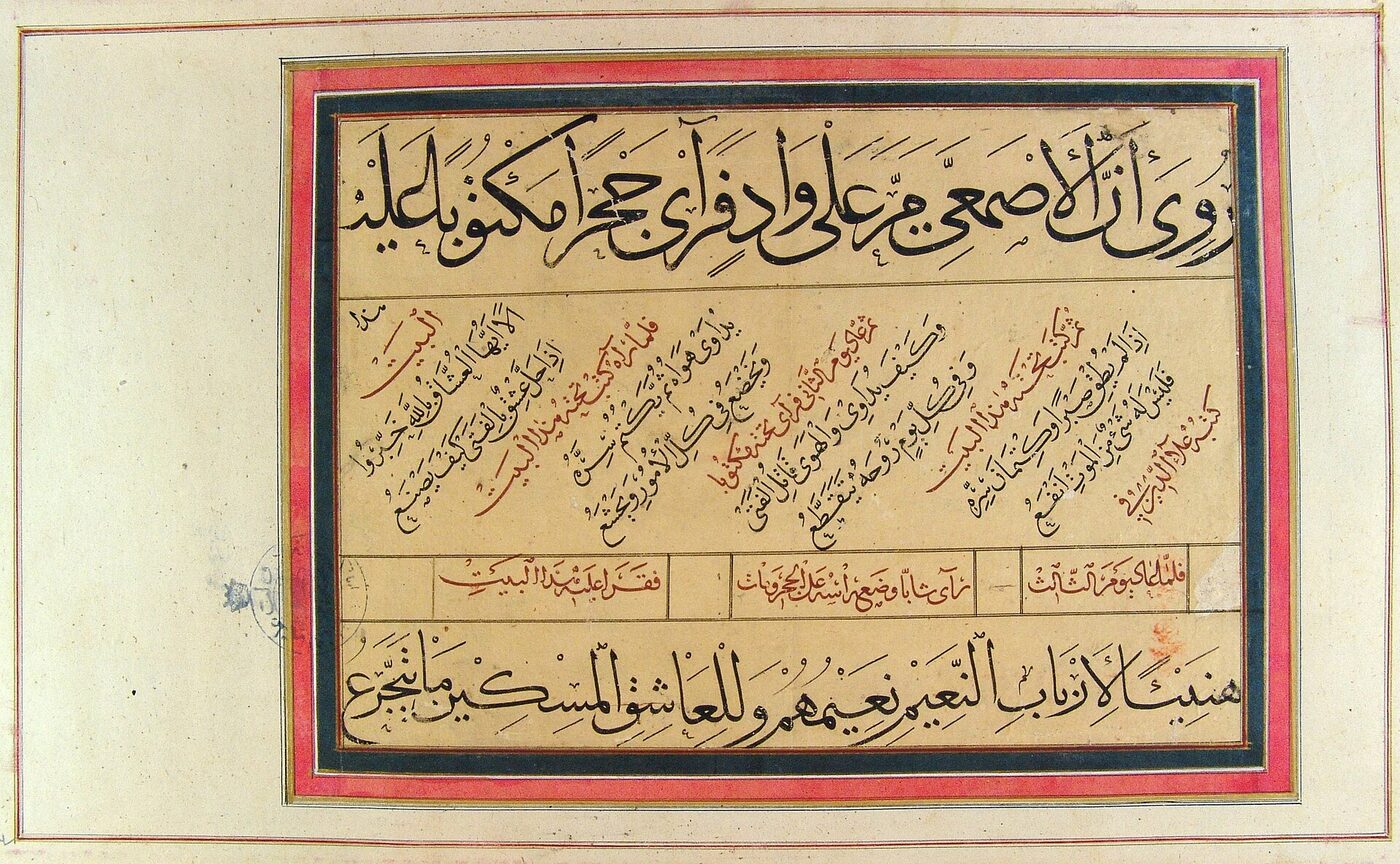
The seam is visible in the administrative record as well as in linguistics. The Maghreb proposal quoted above is one instance. The Algeria charter is another: it listed among the group's topics The Algerian languages (Arabic, Tamazight and the Algerian dialect that is a mixture of French, Turkish, Tamazight and Arabic among others) — three named layers in a single line, in a proposal crossposted to the pan-Arab group, the Berber group and the Maghreb group simultaneously, and it went on to say that discussions would be held in English, French, and transliterated Arabic and Tamazight.

Getting Arabic through a seven-bit network
Usenet was specified for text that a computer of the early 1980s could carry without argument. Its article format is RFC 1036 of December 1987, by Mark Horton of AT&T Bell Laboratories and Rick Adams of the Center for Seismic Studies, built explicitly on the model of Internet mail; and Internet mail's own specification, RFC 822 of 13 August 1982, states that the body is simply a sequence of lines containing ASCII characters, and defines a character as the decimal range 0 to 127. Everything about Arabic sits outside that description.
Start with the script itself, since the encoding problem is downstream of it. The Arabic alphabet is unicameral and written right to left in a cursive style. It has 28 letters, most of which take up to four distinct forms according to position — initial, medial, final and isolated — while six of them join only to the letter before, breaking a word into segments. One combination, lam-alif, is the only mandatory ligature; the unligated form is considered difficult to read. It is an abjad, recording consonants, with vowels marked by optional diacritics that are normally omitted in ordinary writing. That last point is the one mercy in the list: a text without vowel marks is normal Arabic, not degraded Arabic, so the diacritics were one problem the network did not have to solve. Encoding the letters was one problem; getting a display to choose the right form for each was a second; getting the line to run in the right direction was a third.
The standards arrived over roughly twenty years, and the first of them tried to solve the problem inside seven bits. ASMO 449 was devised in 1982 by the Arab Standardization and Metrology Organization, derived from the 1973 version of ISO 646, and put Arabic letters into code points 0x41 to 0x72 — the positions the Latin letters occupy in ASCII. A message could therefore hold one script or the other, never both. Only nominal letters were encoded, with no preshaped forms, so shaping was left to the display. It was not bidirectional: it assumed right-to-left writing throughout, so the symmetrical punctuation pairs appear reversed. It was registered as IR 089 in 1985 and approved internationally as ISO 9036:1987.
The eight-bit successor put Arabic above the ASCII range instead of on top of it. ASMO 708 was devised in 1986, in close cooperation with the European Computer Manufacturers Association, which adopted it the same year as ECMA-114; it was registered as IR 127 on 30 November 1986 and became ISO/IEC 8859-6, informally Latin/Arabic, first published in 1987 and currently in its 1999 edition. Here too only nominal letters are encoded and no preshaped forms, which means the shaping work described above is left entirely to whatever renders the text. Microsoft's arrangement for Windows, code page 1256, put the Arabic letters in alphabetical order through the upper half of the table but interspersed among them some Windows-1252 Latin characters used for French, so that French and Arabic could be mixed without a code-page switch; upper-case accented letters were left out. The consequence is that Windows-1256 is compatible with neither ISO 8859-6 nor the Macintosh Arabic encoding, which mattered a great deal at a gateway.
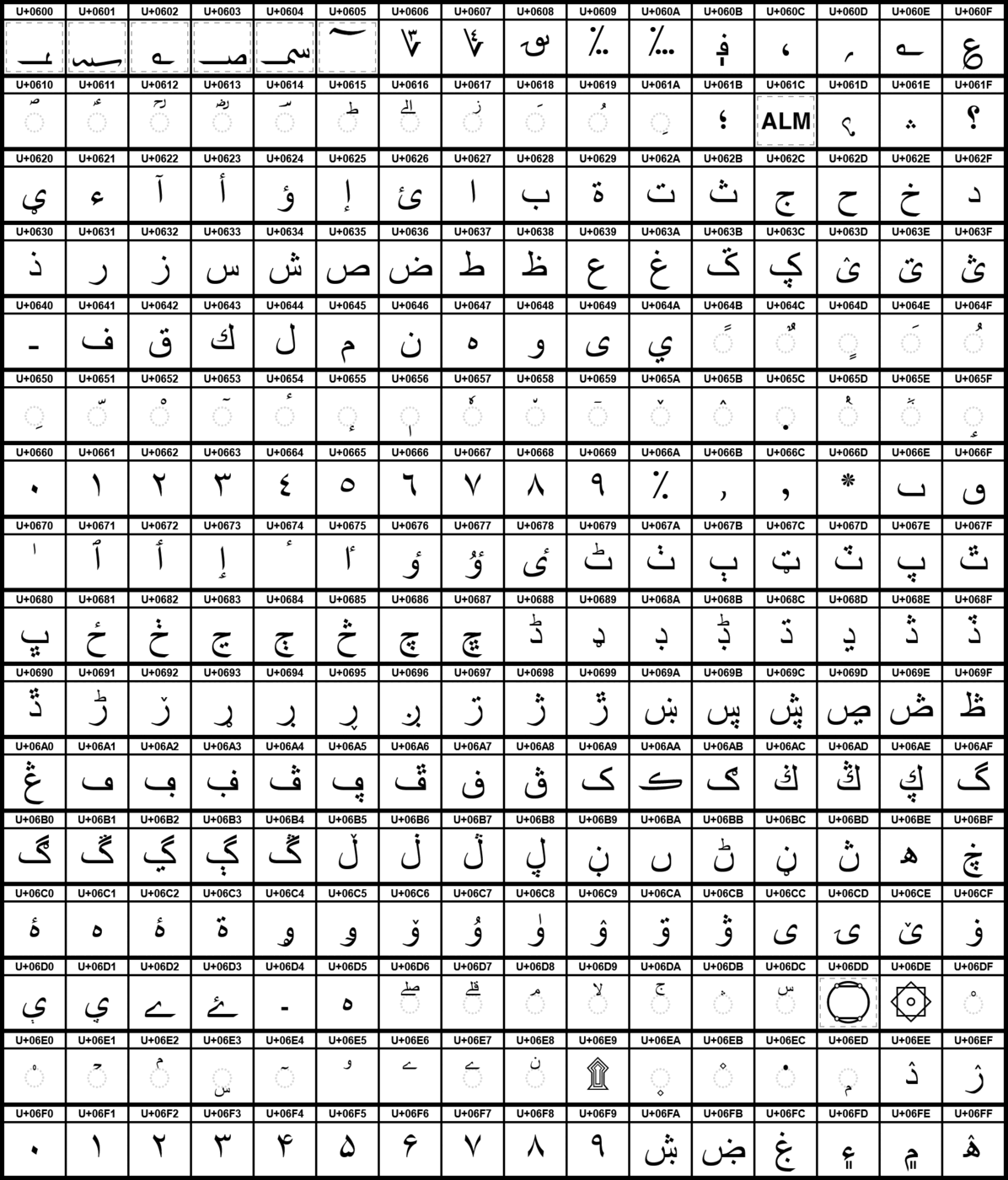
Unicode settled identity in its first release. The Arabic block runs from U+0600 to U+06FF, 256 code points of which 169 were assigned in version 1.0.0 of 1991, with ISO 8859-6 as the reference standard from which the encoding was drawn; the presentation-forms blocks, which do encode the positional shapes, were kept only for compatibility with older systems. Direction needed a specification of its own. The Unicode bidirectional algorithm, which sorts characters into strong, weak, neutral and explicit-formatting types and derives from them the display order of a mixed line, is Unicode Standard Annex #9; its first revision is dated 30 October 1998 and presents the algorithm as of Unicode 2.0 with the Unicode 2.1 corrigenda folded in.

Mail and news gained a way to declare what they were carrying when MIME arrived as RFC 1341 in June 1992, revised as RFC 1521 in September 1993. Bidirectional text got its own footnote in December 1993: RFC 1556, Handling of Bi-directional Texts in MIME, by H. Nussbacher of the Israeli Inter-University Computer Center, added the charset labels ISO-8859-6-E and ISO-8859-6-I, the suffixes standing for explicit and implicit directionality, and noted that the default is visual mode, which requires no special character set at all. The explicit variant went essentially unused.
None of which is the same as working software. A specification tells a program what to do; it does not install the program, the font, or the terminal. For most of this group's life an article could be encoded impeccably and still arrive at the other end as a column of question marks, because the newsreader, the terminal, the font, or one of the gateways between did not know any of it. The record contains a flat statement of the practical position, from the Maghreb RFD of April 1993 explaining why the proposed group's language would be English or French: Due to the variety of students and lack of arabic software. It is one line in a procedural document, written by someone who was not making an argument about encoding at all, and it is worth more than any amount of retrospective inference.
Arabizi: writing Arabic in Latin letters and digits
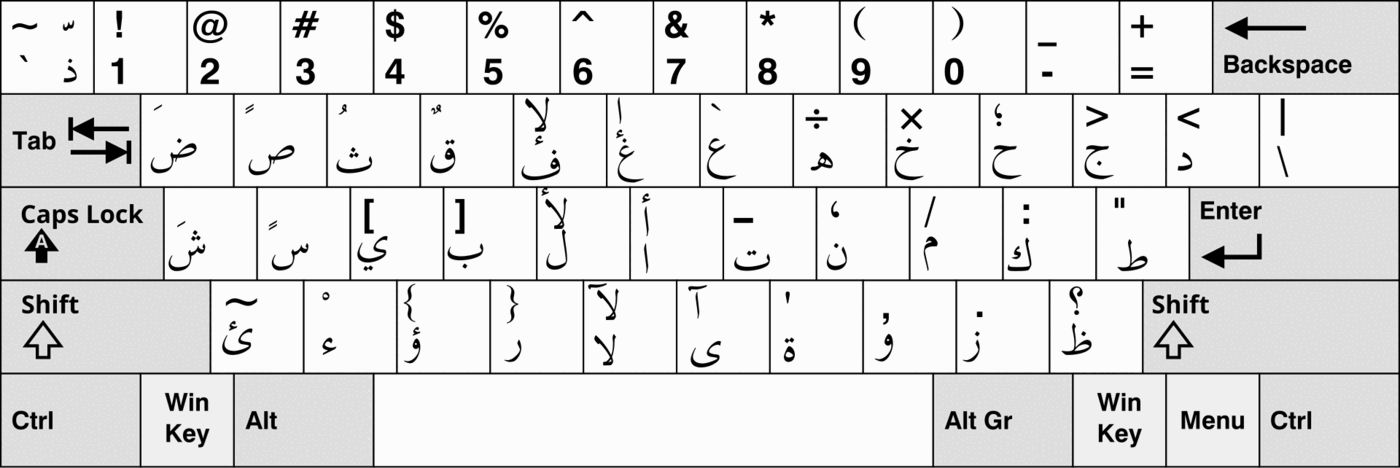
The practical consequence of all of the above is that for most of the group's existence Arabic on Usenet was written in Latin script. Two habits coexisted and never merged. Academic transliteration systems exist and are precise, but they mark the consonants Latin lacks with dots and macrons — characters which are themselves outside plain ASCII, so that the scholarly solution reproduced the original problem one level up. Everyone else improvised, and the improvisation converged on a device that needs nothing but an unmodified keyboard: digits standing in for the sounds the Latin alphabet has no letter for, chosen by shape rather than by sound.
The conventions are well enough attested to be set out plainly, with the caveat that there is no single correct or official usage and that regional variation is heavy. The numeral 3 stands for ayn, because it resembles a mirror image of the letter. The numeral 7 stands for the pharyngeal h, ha. The numeral 2 stands for hamza, the glottal stop — and also for qaf in the dialects where qaf is pronounced as a glottal stop, Cairene Egyptian among them. The numeral 6 stands for the emphatic t, ta, and 9 for the emphatic s, sad. Then comes the elegant part. A great many Arabic letters differ from another letter by a single dot, and the improvisation handled that with an apostrophe: 3 with an apostrophe is ghayn, the dotted counterpart of ayn; 6 with an apostrophe is za; 9 with an apostrophe is dad. Kha, which differs from ha by a dot, is written 7 with an apostrophe — or simply 5. None of these is exclusive; the published tables list plain-letter alternatives beside every one of them.

What this produced is now documented under several names: Arabizi, a portmanteau of the Arabic words for English and Arabic; Arabish; and Franco-Arabic or simply Franco, from the French franco-arabe. Which spelling a writer reached for varied with the writer's own dialect — the letter jim is rendered j by a Levantine speaker and g by an Egyptian one, because that is how each pronounces it — and the Latin characters drawn on are those of English and French, the two European orthographies at hand. The published accounts trace the convention to the spread of Western text technologies that at first admitted the Latin script only: mobile phone text messaging, the World Wide Web, electronic mail, bulletin board systems, IRC and instant messaging. Usenet was a medium of exactly that kind and of exactly that period, but it should be said plainly that those accounts name the other media and not the newsgroups, and this page does not claim a priority the literature does not.
The group's own family of documents does, however, record the practice being treated as normal and even declared formally. The Iraq RFD of January 1995 lists, under a heading for the proposed group's languages, English and transliterated Arabic. The Syria RFD of that same month lists English, French, and transliterated Arabic, and adds in its charter that occasional French and Arabic postings using Latin characters would help attract a wider readership. The Jordan RFD of the previous November says only that the discussions will be in English. Three neighbouring proposals, written within weeks of each other and crossposted to the same umbrella group, and they do not agree on whether romanised Arabic is one of the languages the network can carry — which is a fairly precise picture of where the practice stood in the winter of 1994 to 1995.
The convention long outlived the constraint that produced it. A 2020 study based on a survey in and around Nazareth reported what it called a high degree of normativization or standardisation in Arabizi orthography — that is, an improvisation had become a convention with rules. Google and Microsoft have both built tools that convert text written this way back into Arabic script, which is a curious kind of afterlife for a workaround invented because the script would not go through the wire.
Who could post, and from where
For most of the group's first decade its centre of gravity lay outside the region it discussed, and this can be given numbers rather than left as an impression. The World Bank's indicator for individuals using the Internet as a percentage of population, drawn from International Telecommunication Union data, records the following for 1995 — the year in which four of the seven country groups listed above were created: Saudi Arabia 0.01 per cent, Jordan 0.02, Egypt 0.03, Lebanon 0.07, the United Arab Emirates 0.10, Kuwait 0.20, Tunisia 0.01, and Syria, Algeria and Morocco each below the rounding threshold at 0.00. There is no figure at all for Iraq before 2001.
The proposals reflect that arithmetic almost exactly. Of the RFDs for Arab-world groups in the ISC archive, the great majority were posted from institutions in North America and Europe: Ohio State University and the University of Texas at San Antonio for the two Maghreb proposals, the University of Calgary for both Egyptian ones, Queen's University at Kingston for Palestine, the University of Kansas for Algeria, Hewlett-Packard's Bristol site for Iraq, Caltech for the Muslim proposal, the University of North Carolina for the Saudi proposals' contact addresses, and commercial network accounts at netcom.com and iu.net for the Jordan and Syria proposals, the first of them posted under the organisation name JordanNet. Two came from inside the region, and both were Kuwaiti: the soc.culture.kuwait RFD of 15 September 1994, sent from the mathematics department of Kuwait University, and the soc.culture.kuwait.moderated RFD of 4 January 1996, sent from a commercial account at kuwait.net. Kuwait's 0.20 per cent in 1995 was the highest figure in the table apart from the Emirates, which is the same fact seen from the other end.
The other half of the readership question is what the proponents were already connected to. Usenet was not their only channel, and the documents say so. The 1992 Egyptian RFD noted that the creation of such a group had been discussed on Egypt-net, a mailing list which it described as having over 450 members; the eventual Call for Votes and the RESULT were both reposted to that list at its address at the State University of New York at Stony Brook. The 1993 Maghreb RFD mentioned a mailing list running out of the University of Texas at San Antonio with membership in the hundreds, and another operating from Washington. The Algeria Call for Votes of 1995 was crossposted to five newsgroups — soc.culture.berber, soc.culture.arabic, soc.culture.maghreb, soc.culture.usa and soc.culture.france — and additionally e-mailed to three lists by name: Algeria-Net, APA-Net and Amazigh-Net. Well before the region was online in any quantity, the diaspora had a working correspondence network of academic mailing lists, and the newsgroups grew out of it rather than replacing it.
This is what makes soc.culture.arabic a diaspora institution in its first decade, in the plain sense that the people posting were disproportionately students, academics and professionals at institutions abroad. The Arab diaspora in Europe and the Americas supplied both the readership and the machines. No readership survey of the group exists and none is asserted here; the evidence is the return addresses on the paperwork, which is indirect but is at least first-hand.
The demography shifted, and it can be dated too. By 2000, the same World Bank series records Lebanon at 7.95 per cent, Kuwait at 6.73, Tunisia at 2.75, Jordan at 2.62, Saudi Arabia at 2.21, Morocco at 0.69, Egypt at 0.64, Algeria at 0.49 and Syria at 0.18, with the United Arab Emirates far ahead of the field at 23.63. By 2004 the same countries stood at 9.00, 22.93, 8.53, 11.66, 10.23, 11.61, 11.92, 4.63 and 4.32 respectively, with Iraq at 0.90 and the Emirates at 30.13. Somewhere inside that decade the group stopped being a place where the region was discussed by people outside it and became a place where both were present — by which time it was also no longer the only such place, for reasons taken up further down.
How much traffic there was, and how we can tell
No subscriber count survives for soc.culture.arabic, and none is offered. There is, however, one quantity that can be read directly off the surviving documents, and it is worth explaining because it is easy to over-read.
Every article a news server files into a group is given a sequence number local to that server, and the Xref header records those numbers. RFC 1036 sets out the convention with an example: an Xref line reading seismo news.lists:461 news.groups:6378 means the article is number 461 in news.lists and number 6378 in news.groups, on the host seismo. Because the RFDs, CFVs and RESULTs for the country groups were crossposted to soc.culture.arabic, and because the archived copies retain their Xref headers as written by UUNET's server, the archive contains dozens of readings of that server's article counter for the umbrella group, each stamped with the date of the posting that carried it. Strung together they give a traffic curve.
The counter stands at 13,928 on 1 November 1992 and 14,281 a fortnight later. It reaches 18,874 on 20 April 1993, 21,226 on 4 June, 24,894 on 14 September and 25,854 on 11 November. It passes 27,792 on 24 February 1994, 29,385 in April, 32,433 in September and 33,936 on 3 November. In 1995 it runs 35,914 in January, 37,513 in February, 39,987 in April, 42,050 in May, 45,831 in August and 49,224 in October. The last readings in the set are 53,087 on 3 February 1996 and 54,176 on 26 February 1996.
From end to end that is a rise of about 40,250 in 1,212 days, a little over thirty-nine months: an average near 1,010 articles a month, or about thirty-three a day, at that one server. The rate was not constant. Between late February and mid-September 1994 the counter advanced 4,641 in 203 days, about twenty-three a day; between early January and the beginning of May 1995 it advanced 4,792 in 116 days, about forty-one a day.
The caveats matter as much as the numbers. This is one server's local sequence, not a network-wide total; it counts every article that server accepted into the group, crossposts included, and crossposting to this group was heavy by construction; it counts articles that were subsequently cancelled or expired; and it counts articles, not readers, of whom there is no measure at all. What it does establish, and establishes firmly, is order of magnitude and direction: tens of thousands of articles across the first half of the 1990s, rising.
One header does something the whole series cannot, which is to compare groups at a single instant on a single machine. The Syria RFD of 25 January 1995 carries an Xref line recording, in one breath, soc.culture.arabic at 36,448, soc.culture.lebanon at 22,911, soc.culture.palestine at 8,848, soc.culture.maghreb at 5,369, soc.culture.kuwait at 1,028 and soc.culture.jordan at 105. The last two had existed for about three months and about three weeks respectively. The umbrella stood ahead of every one of them and ahead of the two next largest combined, which is roughly what one would expect of a group that had been running since before the archive began. The same header records soc.culture.iranian at 60,306, a useful corrective to any impression that the Arabic group was the largest thing in its part of the namespace. It was not.
What an umbrella carried that a country group did not
What follows describes kinds of traffic. No thread title, no poster, no message and no count is attributed to this group anywhere on this page, because no such record has been located and inventing one would be worse than saying nothing.
The reliable constant was language, for the structural reason set out above: it was the one subject that belonged to every reader equally and to no country in particular. Questions about the relation between the standard and the dialects, about which variety a learner should start with, about the meaning of a word in one country and another, and about grammar and script from people learning the language from outside it, are the standing genres of any group defined by a language rather than a state, and they are the genres a country group cannot absorb because the answer is never confined to one country.
Around that sat the material the charters of the period name explicitly, and the charters are a legitimate guide to expectation even though they cannot testify to what actually appeared. Two of them are worth putting side by side. The Jordan RFD of November 1994 lists sixteen topics in two columns of eight: Politics, Culture, Music, Language (Local dialect), Food, Tourism, Archiology — the misspelling is the document's — Education, Art, Books, Human Rights, Social values, History, Networking, Research, Water resources. The Iraq RFD of January 1995 lists sixteen topics in two columns of eight: Culture and heritage, Literature, Language (Local dialect), Art & Music, Native dishes, Tourism, Archaeology, Education, Social values, History, Human Rights, Networking, Natural resources, Politics, Research, Sanctions. Nine of the entries are word for word identical: Politics, Language (Local dialect), Tourism, Education, Social values, History, Human Rights, Networking and Research. The entry that ends each list is one the other list does not contain at all — Water resources for Jordan, Sanctions for Iraq.
The borrowing is itself the umbrella's fingerprint. These were separate proposals by separate people three months apart, and the second was crossposted to the first's group as well as to soc.culture.arabic. People writing proposals were reading each other's proposals, in the room where all of them were posted, and reusing the structure. That is what a shared venue looks like from the outside.
Literature, music and food recur across every charter in the family, and they are the categories that read most naturally as pan-Arab: a classical poetic tradition held in common and argued over against the moderns, twentieth-century singers whose audience was the whole bloc rather than one state, a cinema with the same reach, and a calendar of religious observance — Ramadan and the two Eids above all — shared by a majority of the readership. To these an emigrant readership adds a genre of its own that no country group can serve as well: the practical question of where, in a given Western city, one could find Arabic newspapers, groceries, books or cassettes. That is the pan-Arab subject par excellence, precisely because the answer has nothing to do with which country the asker came from.
Religion was ever-present in that same sense: as a cultural fact, a calendar and a body of shared reference rather than as the group's business. The readership of a group defined by a language rather than a faith included Muslims and Christians alike, Arabic being the liturgical and literary language of both. The soc.culture.muslims RFD of 1994 documents the boundary from the other side: sustained doctrinal argument had a moderated venue of its own in soc.religion.islam, whose moderators, by that RFD's account, rejected what was not primarily religious, and the culture groups took what was left.
And politics could not be kept out, whatever the newsgroups-file line said. The group's active life took in the Gulf War of 1990 to 1991 and the sanctions regime that followed in Iraq, the Algerian conflict of the 1990s, the long arc of the Arab-Israeli dispute, and later the aftermath of September 2001 and the invasion of Iraq in 2003. The charters register this without editorial help from anyone: the Algeria charter of 1995 states, in its own words, that because of the bad situation in Algeria nowadays, discussions will be focused on how to make a better Algeria; the Iraq topic list ends with Sanctions; the Syria charter of 1995 lists The Peace Process among its topics of discussion; the Jordan RFD counts among its constituency non-Jordanians interested in the peace process. These were not abstractions for the people writing them, and the traffic they produced ran long and heavily crossposted — talk.politics.mideast being the hierarchy's designated arena for the argument, and a Newsgroups header being able to name both at once. Regulars of any unmoderated group facing that volume had the same three defences available — the killfile, the plea in the subject line, and the appeal to take it to the politics groups — and there is no evidence that they worked better here than anywhere else. What this page records is that such subjects were argued, and in what general terms; it takes no position on any of them, and reaches no verdict.
The lasting division of labour, once the country groups existed, was therefore not a tidy one but it was real. What drained away to the national groups was local news, local institutions, local argument. What stayed in the umbrella was what no single country owned: the language itself, the script and encoding problem, the condition of living abroad, and the disputes too large for any one country's group to contain.
The neighbours, and the media that overtook it
Within Usenet, soc.culture.arabic sat at the centre of a dense crosspost graph rather than at the top of a tree, and the twelve announcement files for this family of groups let the point be counted rather than asserted. They hold 62 postings between them; 57 of those name soc.culture.arabic in their Newsgroups header. The groups those headers name alongside it, in order of how often they appear, are soc.culture.maghreb, soc.culture.lebanon, soc.culture.palestine, soc.culture.kuwait, soc.culture.african, soc.culture.jordan, soc.culture.pakistan, soc.culture.iranian, soc.culture.french, soc.culture.misc, soc.culture.egyptian, sci.archaeology, soc.culture.berber, soc.culture.turkish, soc.culture.europe, talk.politics.mideast, soc.culture.syria, alt.culture.kuwait, soc.culture.jewish, rec.travel.misc, soc.culture.bangladesh, soc.religion.islam, alt.culture.saudi, soc.history, rec.music.arabic, soc.culture.israel, alt.religion.islam, rec.travel, soc.culture.asean, soc.culture.canada, soc.culture.usa, soc.culture.latin-america, sci.anthropology, and singly soc.culture.british, soc.culture.german, soc.culture.greek, soc.culture.magyar, soc.culture.france, talk.politics.soviet and talk.politics.misc. That is a map of who the proponents thought was listening, and it crosses the linguistic boundary in several directions at once.
Outside Usenet, the group's run coincided with the rebuilding of Arab media at large, and the principal dates are firm. Satellite broadcasting arrived first: the Middle East Broadcasting Center was founded in London in 1991 by the Saudi businessman Waleed bin Ibrahim, launching MBC 1, described as the first private Arabic satellite channel; the group expanded to Dubai in 2002 and relocated to Riyadh in 2022. Al Jazeera's Arabic channel followed from Doha — founded by an emiri decree of 8 February 1996 as a state-owned venture under Hamad bin Khalifa Al Thani, then Emir of Qatar, capitalised at 500 million Qatari riyals, and launched on 1 November 1996. It was staffed in part by journalists left without work when the first BBC Arabic television station was pulled off the air on 21 April 1996 after a dispute over censorship with its Saudi-linked backer.
For a readership scattered across a dozen countries this changed what there was to talk about. An audience that had depended on local newspapers, cassettes, letters and whatever a correspondent typed out could now watch pan-Arab broadcasting at home and watch what relatives in the region were watching. Arabic-language web forums multiplied over the same years, and after them the first blogs; each absorbed part of what the newsgroup had done alone. The newsgroup ran alongside that change rather than causing it, and its tenure as the only pan-Arab venue online ended somewhere in the middle of it without anyone recording the date. Traffic persisted regardless. Habits formed over a decade do not dissolve on schedule. What the archives of the period therefore hold is a document with a date on it: a record of how an Arab diaspora talked to itself before satellite television, before the web forums and before the blogs, in plain ASCII, across every border at once.


A removal that did not take
The third and last message in the group's control-message file carries a Date header of 4 November 2001 and reads, in its entirety: please remove the bogus newsgroup soc.culture.arabic. It carries Control: rmgroup soc.culture.arabic, was crossposted to soc.config, soc.control and soc.groups as well as to the group itself, gives an Approved header in the name of the developer of the tin newsreader, was injected through a consumer host in Quebec while quoting a message identifier from a university machine in Karlsruhe, and ends with a two-line signature addressed to somebody named only as Tim. It is, on its face, one of the forged control messages that circulated in some quantity in that period; a comparable forgery aimed at another group in this family is treated on the soc.culture.jordan page.
The description it gave of the group was false on the record as it then stood. ISC's archive of the periodic Bogus Usenet Groups article, the list of names a majority of administrators considered invalid, ends with the issue of 3 July 2000. soc.culture.arabic does not appear in it as a bogus group. It appears three times on the other side of the ledger, as the correct name that three malformed strings — news.admin.culture.arabic, news.groups.culture.arabic and news.misc.culture.arabic — ought to have been.
What is worth extracting from the message is how carriage actually worked. A control message is a request, not an instruction: every news administrator decides, by configuration, whether to honour one. The configuration file that encodes those decisions is control.ctl, distributed with the INN news server and mirrored by ISC, and its entry for the Big Eight is unambiguous. Any newgroup or rmgroup naming a group under comp.*, humanities.*, misc.*, news.*, rec.*, sci.*, soc.* or talk.* is to be dropped outright unless it comes from [email protected] and carries a signature that verifies against the key for news.announce.newgroups. The authority behind that key is the Big-8 Management Board, created in 2005 out of the former moderators of news.announce.newgroups; the file lists its contact address and the fingerprint of its key.
The outcome is checkable in one line. soc.culture.arabic appears in the newsgroups and active files that ISC distributes today, with the same description it carried in 1991. The removal failed, and the mechanism by which it failed — many thousands of administrators independently declining to act on an unsigned request — is the whole practical meaning of a managed hierarchy.
What the record does not show
An honest reference page for a group of this kind spends as much care on the gaps as on the findings, and the gaps here are large.
- The creation. No RFD, no Call for Votes, no RESULT and no original newgroup message for soc.culture.arabic survives in the public administrative archive. There is therefore no creation date, no founding charter text, no proponent's name and no vote tally, and none is given above. The earliest hard evidence of the group's existence located for this page is a site reissue of 23 May 1991; the earliest evidence of its scale is an article counter standing at 13,928 in November 1992.
- Readership. No subscriber count, no reader survey and no site-carriage census exists for the group at any date. The article-counter series above measures articles at one server and nothing else.
- Content. No thread, no poster, no quotation and no message count from the group itself is asserted anywhere on this page. The characterisations of what was discussed are drawn from what the charters and proposals of the surrounding groups say people expected to discuss, from the group's own newsgroups-file description, and from the general properties of an unmoderated group defined by a language — not from an archive census, which has not been performed.
- Moderated offshoots. The administrative record contains no moderated group in the soc.culture.arabic.* namespace. The moderated ventures it does contain sit beside the umbrella rather than beneath it: soc.culture.kuwait.moderated, chartered in February 1996 and no longer present in the active file ISC distributes today, though the unmoderated soc.culture.kuwait still is; the Algeria Call for Votes that briefly went out for a moderated group in June 1995 and was cancelled; and the Egyptian proposal of November 1994, which asked for a moderated group and reached the ballot as an unmoderated one. Moderation on Usenet is a mechanism before it is a policy — RFC 1036 requires an Approved header on any message posted to a moderated group, added by the moderator and consisting of his mail address, and the news software routes submissions to that address by mail — which means a moderated group does not exist until somebody agrees to read everything sent to it, indefinitely and unpaid. That is the standing reason moderated ventures beside a busy unmoderated group are easier to charter than to keep running.
- The gateway years. The precise span over which the news2mail gateway carried this particular group is not established by any document consulted for this page, and no span is asserted.
Scope, sources and limits
This page is about a newsgroup and the world it belonged to. Where it states a date, a tally, a code point or a standard number, that statement has been checked against a primary or reference source: the Internet Systems Consortium's mirrors of news.announce.newgroups and of the Usenet control messages, and of the current newsgroups, active, control.ctl and Bogus Usenet Groups files; the RFC series for RFC 822, RFC 1036, RFC 1341, RFC 1521 and RFC 1556; the Unicode Consortium's Standard Annex #9 for the bidirectional algorithm; the published standards history for ASMO 449, ASMO 708, ECMA-114, ISO/IEC 8859-6 and Windows-1256; the ISO 639-3 registry for the count of Arabic varieties; and the World Bank's indicator for individuals using the Internet, which carries International Telecommunication Union data, for the connectivity figures. Quotations from the Usenet record are given as the documents have them, including their spelling.
Where the material is contested rather than merely uncertain, the method has been to report what was proposed and argued, in the proposers' own words, with attribution, and to stop there. The subject of this group spans states that have been in conflict with one another and a region whose politics remain live. Several of the charters quoted above take positions; quoting a charter is not endorsing it. This page takes no position on any territorial, sectarian or political question raised by the documents it cites, offers no verdict on any of them, and gives no advice.
The country groups have their own pages, listed above, and the branch-level material — how soc.culture.* came to exist, how its votes worked, and what the family had in common — belongs to that hub and to the page for the soc.* hierarchy, and is not repeated here. What is particular to this page, and is not on any of them, is the shape of an umbrella: a group named for a language rather than a state, older than every neighbour whose paperwork survives, which turned out to matter less as a place people were assigned to than as the room in which the places were argued into existence.
Reading soc.culture.arabic today
- Historical archive: Google Groups — soc.culture.arabic (coverage varies by group and era).
- Open in a newsreader:
news:soc.culture.arabic— the original site offered exactly this link, and it still works if your system has a newsreader registered for thenews:scheme. - Live access: point an NNTP newsreader at a modern server — see accessing Usenet today.
- The original news2mail e-mail subscription service ended in the mid-2000s and no longer operates.