soc.culture.algeria
From A to Z about Algeria.
The group’s traffic peaked during Algeria’s dark decade of the 1990s, when it carried eyewitness accounts, emigration advice and fierce debate between secular and Islamist perspectives that print media could not host.
Alongside politics ran the perennials: raï music, Kabyle identity and the Tamazight language question, football, and cooking threads that outlived every political argument.
On this page
- The paperwork, and a vote that had to be run twice
- The charter, and what it promised to do in which language
- What the ballot list shows, and what it cannot
- Arabic: the law, its dates and its deadlines
- Tamazight: from unmentioned to national to official
- French: the language with no legal status
- The dated record
- Casualty figures, and who produced them
- Script and encoding, in Algeria's own case
- Where the readers were
- What a culture group carried between the crises
- A removal that did not take
- What the record does not show
- Scope and limits
The paperwork, and a vote that had to be run twice
soc.culture.algeria is one of the Big-Eight groups whose administrative record survives entire. The Internet Systems Consortium mirrors both halves of it — the announcements posted to the moderated group news.announce.newgroups, and the control messages that told news servers what to do — and for this group the mirror holds the whole sequence, from first proposal to final tally, with dates to the minute.
The Request for Discussion is dated 23 May 1995 and was posted from a university account in the United States. It proposed an unmoderated group, summarised its purpose as information and discussion on the Algerian nation, its history, art, culture and language and its present situation, and was crossposted to the three groups whose readers had the strongest claim on the subject: soc.culture.arabic, soc.culture.berber and soc.culture.maghreb. Discussion, as the rules required, was directed to news.groups. The document also set out the arithmetic the proposal would have to satisfy — a discussion period of twenty-one to thirty-one days, then a vote of the same length, passing only on a two-thirds majority and, as the later Call for Votes spelled out, with at least a hundred more yes votes than no votes — and noted that the ballot would be handled by the Usenet Volunteer Votetakers.
Then the process went wrong, in a way that is preserved in the archive rather than smoothed out of it. The First Call for Votes, issued by the neutral votetaker on 21 June 1995, was headed moderated group soc.culture.algeria, and its newsgroups line ended with the parenthesis that marks a moderated group. On 13 July the votetaker cancelled it. The cancellation notice runs to three sentences and is admirably plain: the vote had been withdrawn because of a miscommunication about the group's moderated status, the group had been proposed unmoderated and had been meant to be voted on that way, and a new Call for Votes was forthcoming. It followed almost immediately — the cancellation carries a timestamp of 00:25 UTC on 14 July 1995 and the replacement ballot 00:28 UTC the same morning, three minutes later — and it carried a note from the moderator of news.announce.newgroups confirming that the earlier ballot was void and that voting was officially restarting for an unmoderated group. A last call went out on 25 July. Votes had to be received by 23:59:59 UTC on 4 August 1995.
The RESULT was posted on 8 August 1995 under the heading RESULT: soc.culture.algeria passes 197:18. There were 197 yes votes and 18 no votes, 215 valid votes in all, with 2 abstentions and 17 ballots rejected as invalid — twelve of the seventeen for carrying no vote statement and five for giving no name, both faults the Call for Votes had warned about in advance. The margin cleared both thresholds comfortably: 179 more yes than no against a requirement of 100, and 91.6 per cent yes against a requirement of two-thirds.
Creation followed the standard five-day waiting period. The newgroup control message went out on 14 August 1995 and was reissued on 21 August and again on 14 September — routine housekeeping, so that servers which had missed the first message would still pick the group up. Each carried the same two things every administrator needed: the line to paste into the newsgroups file, and the charter, described in the message itself as culled from the call for votes. Thirty years later the Internet Systems Consortium still distributes that line unchanged, and the group still stands in the active file:
soc.culture.algeria From A to Z about Algeria.
For the wider question of how a group of this family came to exist at all — why one language got a single umbrella group while its states each got their own — see soc.culture.arabic. The mechanics of Big-Eight group creation, from the Great Renaming onwards, are set out on the soc.* hub page and are not repeated here.
The charter, and what it promised to do in which language
The charter is short, and unusually candid about the circumstances it was written in. It is reproduced here from the control message, which is the version every news server received:
The soc.culture.algeria newsgroup will serve the Algerian community worldwide, and will be open for discussion to all Algerians and interested parties. Discussions will include topics on Algerian history, culture, politics, religion, education and social activities. Because of the bad situation in Algeria nowadays, discussions will be focused on how to make a better Algeria.
Charters of this period are usually bland. This one names the emergency in its third sentence and makes it the group's organising purpose. It then lists the topics, in the wording that the Call for Votes and the control message both carry; the earlier Request for Discussion had written the third item more narrowly, as Algerian religion (Islam).
- Algerian history
- The Algerian languages (Arabic, Tamazight and the Algerian dialect that is a mixture of French, Turkish, Tamazight and Arabic among others)
- Algerian religion(s)
- Algerian literature
- Algerian cuisine
- The latest news from Algeria
- and other topics
Two features of that list are worth pausing on. The first is the second bullet, which is a working sociolinguistic description of the country written by an amateur in a procedural document, and one that holds up: reference works describe the Algerian spoken variety as Arabic carrying Berber, Punic and African Romance influences and loanwords from French, Andalusi Arabic, Ottoman Turkish and Spanish, put the Berber share of its vocabulary at eight to nine per cent, and give it as the native dialect of seventy-five to eighty per cent of Algerians. The proposal simply wrote down what its author heard at home. The general question of what a standard written language and a spoken vernacular are to each other belongs to soc.culture.arabic, which owns it; the point here is that the Algerian case was stated on the group's own founding paper.
The second is the closing line, which is the most consequential sentence in the document: The discussions will be held both in English, French and transliterated Arabic and Tamazight. A newsgroup declaring in 1995 that it would conduct itself in Latin-letter transliterations of Arabic and Tamazight was making a technical concession to the network — but it was also, without meaning to, describing a practice that its own country's law had forbidden in official use four years earlier. Article 3 of the Algerian law of 16 January 1991 on the generalisation of the use of the Arabic language states, flatly, that it is forbidden to transcribe the Arabic language in characters other than Arabic characters. The gap between what the law demanded and what the wire allowed is, in miniature, the whole subject of this page.
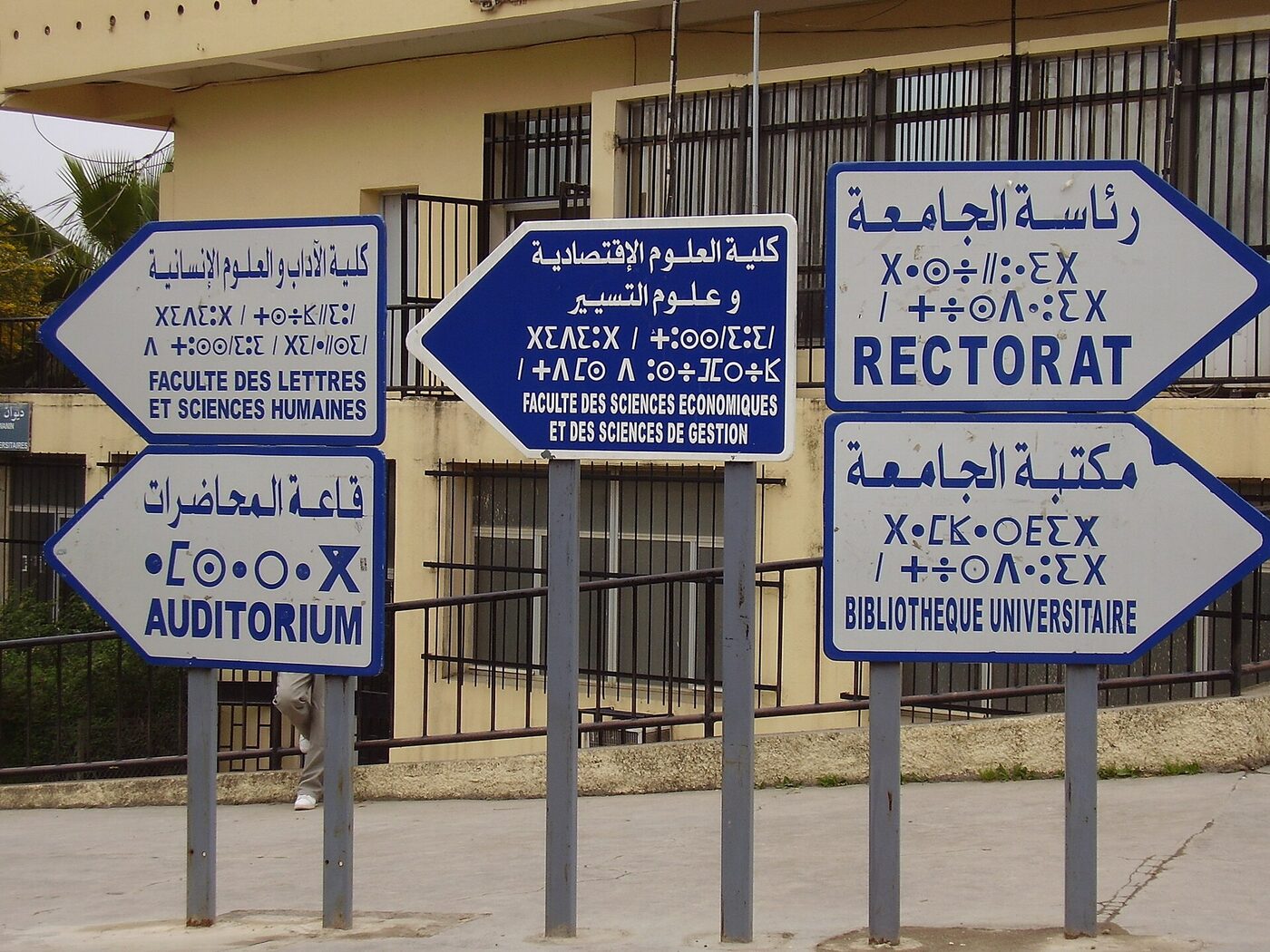

The Call for Votes was also mailed, by name, to three academic mailing lists — Algeria-Net, APA-Net and Amazigh-Net — and crossposted to soc.culture.usa and soc.culture.france as well as to the three groups already named. The diaspora had a working correspondence network before it had a newsgroup.
What the ballot list shows, and what it cannot
Usenet votes were not secret. The RESULT posting published every ballot — address and name, sorted alphabetically, under the headings Voted Yes, Voted No, Abstained and Votes in error — precisely so that the count could be checked by anyone who cared to. That list is the only named population attached to this group anywhere in the surviving record, and it is worth reading as evidence, with its limits stated first.
Sorting the 197 yes ballots by the top-level domain of the address they came from gives, in order: 60 from .edu, 34 from .com, 29 from .ca, 20 from .fr, 17 from .uk, 6 from .net, 5 from .ch, 4 from .org, 3 each from .de and .nl, 2 each from .be, .gov and .jp, and one apiece from .br, .fi, .il, .it, .mil, .no, .pt, .se and .us. That accounts for 196 of the 197; one yes entry in the published list is malformed and carries no address at all. Of the eighteen no votes, nine came from .com addresses and four from .edu, with one each from .fr, .mil, .nl, .no and .us.
The single most telling fact about the list is a negative one. Across all four sections — yes, no, abstentions and rejected ballots, 234 entries in all — there is not one address in the .dz domain. Algeria's own country-code top-level domain had been delegated eighteen months earlier, on 3 January 1994, to CERIST in Algiers, which the IANA root database still records as its manager; but in the summer of 1995 nobody voted on the creation of soc.culture.algeria from an Algerian address, because in practice almost nobody in Algeria could.
The caveats matter and are not small. A .com or .edu address says nothing about a person's nationality, and by inspection a large share of the .edu and .ca ballots carry Algerian names; a great many of the group's future readers were students and academics abroad, exactly as the .edu column suggests. Nor is a vote list a readership survey: it counts the people who cared enough to send an e-mail during a three-week window in 1995, which is a different population from the people who read the group in 1998. No subscriber count, readership estimate or traffic figure for soc.culture.algeria survives, and none is offered here. What the list does establish, first-hand, is where the machines were.
Arabic: the law, its dates and its deadlines
The group's readership lived inside a language policy with a legislative history, and the instruments can be dated exactly. They are set out here as a record; the arguments about them belong to the people who had them.
The constitution of 1963 settled the question at the outset. Its article 5 read that the Arabic language is the national and official language of the State, and its article 76 required that arabisation be effectively achieved as soon as possible throughout the territory of the Republic, adding that by way of derogation the French language could provisionally be used alongside Arabic. The formula proved durable. The constitution of 1976 restated it at article 3, adding that the State would work to generalise the use of the national language at the official level; the constitution of 23 February 1989 kept the first sentence at article 3 and dropped the rest; the constitution of 1996 kept it again.
Below the constitutions came a long series of ordinances and decrees. A decree of 22 May 1964 was the first on the arabisation of the administration, and was followed a week later by one requiring that laws and regulations be drafted in Arabic, with a French edition allowed provisionally; primary education was arabised from the same year. Ordinance 68-92 of 26 April 1968 made knowledge of the national language obligatory for civil servants and public employees, and was extended by a further ordinance of 20 January 1971. Ordinance 73-55 of 1 October 1973 arabised the national stamps and seals; decree 74-70 of 3 April 1974 arabised commercial advertising; ordinance 76-35 of 16 April 1976 reorganised education and training; decree 80-146 of 24 May 1980 imposed Arabic examinations on candidates for the public service; two decrees of 7 March 1981 established a national lexicon of forenames and governed the transcription of surnames into the national language; and decree 81-36 of 14 March 1981 addressed what it called the arabisation of the environment — that is, of public signage, product names and lettering. A government report of 1975 had already concluded that after twenty years of effort only the ministries of defence, education and justice were arabised.
The decisive instrument, and the one contemporaneous with the newsgroup, is law 91-05 of 16 January 1991 on the generalisation of the use of the Arabic language, signed by the president of the day. It is comprehensive in a way that repays quotation of its structure rather than its rhetoric. Public administrations, institutions, enterprises and associations were to use Arabic alone in all their activities (article 4). Official documents, reports and minutes were to be drawn up in Arabic, and the use of any foreign language in the deliberations and debates of official meetings was forbidden (article 5). Legal instruments were to be drafted exclusively in Arabic, and registration or publication of an instrument drafted in another language was prohibited (article 6). Pleadings and judgments were to be in Arabic alone (article 7); recruitment examinations likewise (article 8). Teaching in every sector, cycle and speciality was to be in Arabic, subject only to the arrangements for teaching foreign languages (article 15). Films, broadcasts, advertising and signage were covered by articles 17 to 20; the official journal itself, by article 13. Articles 29 to 34 attached penalties: an official document drafted in another language was null and void, and fines ran from 1,000 to 5,000 dinars for signing a non-Arabic document in the exercise of official functions, 5,000 to 10,000 for breaches of the broadcasting, advertising and signage provisions, and 10,000 to 100,000 for political associations, with temporary or permanent closure of premises for repeat offenders among private firms and traders.
Two of its transitional articles matter for a page about a computer network. Article 36 provided that the law would enter into force on publication and in any case no later than 5 July 1992; article 37 required that teaching in higher education be in Arabic alone from the academic year 1991/1992 and completely arabised no later than 5 July 1997. The choice of date is not incidental: 5 July is Independence Day, and both deadlines were set on the anniversary. Article 39, meanwhile, forbade bodies and enterprises to import computing equipment, telex equipment and any equipment intended for printing or typing if it did not carry Arabic characters. A state that legislates about which characters a keyboard must bear is legislating about the same problem the newsgroup's posters were solving with digits and Latin letters.
The law was then suspended. On 4 July 1992 the chairman of the High Council of State signed two texts on the same day: presidential decree 92-303, declaring the generalisation of Arabic as the national and official language across public administration, institutions, enterprises and associations to be an irreversible fundamental principle, and legislative decree 92-02, which suspended law 91-05 until the necessary conditions were met. The law was revived by ordinance 96-30 of 21 December 1996, which amended and completed it, restated in its article 11 that all exchanges and correspondence of administrations, enterprises and associations must be in Arabic, and instituted a Higher Council of the Arabic Language under the patronage of the president, charged among other things with monitoring the application of the law and reporting on it annually. The fine for signing a non-Arabic official document was carried over unchanged, at 1,000 to 5,000 dinars, and doubled on a second offence. The deadline for arabisation across administration, justice, business, media and education was set at 5 July 1998 — again, Independence Day. Further instruments followed: ordinance 97-09 of 6 March 1997, the organic law on political parties, which required a party to use the national and official language in its official activity, and law 99-05 of 4 April 1999, the orientation law on higher education.
Which Arabic the texts mean is never stated in them. The constitutional formula says only that Arabic is the national and official language; the language of the official journal, the courts and the schools is literary Arabic, while the language spoken in the street is the variety the newsgroup's own charter described. That distinction, and the diglossia it produces across the Arabic-speaking world, is treated on soc.culture.arabic.
Tamazight: from unmentioned to national to official
The Tamazight language, its varieties, its scripts and its own account of itself belong to soc.culture.berber, which is where a reader should go for them. What belongs here is the narrow question of legal status in Algeria, because that status changed twice during the newsgroup's lifetime and its readership argued about both changes.
The starting point is silence. The constitutions of 1963 and 1976 mention neither Tamazight nor French, and the constitution of 1989 carried forward only the single sentence about Arabic. The Permanent Committee on Geographical Names for British Official Use, in a 2003 study of Algerian toponymy, summarised the position in one sentence: official attitudes towards both Berber and French have been largely negative. Presidential decree 95-147 of 27 May 1995 — four days after the newsgroup's Request for Discussion, and in the first months of its existence — created a High Commission for Amazigh affairs, charged with the rehabilitation of amazighity and the promotion of the Amazigh language and attached directly to the presidency; that body's story is told on the Berber page.
The first change came on 10 April 2002, when a constitutional revision inserted an article 3 bis reading that Tamazight is also a national language and that the State works for its promotion and development in all its linguistic varieties in use on the national territory. Ordinance 03-09 of 13 August 2003, amending the education ordinance of 1976, introduced the teaching of Tamazight into the school system.
The second came with the constitutional revision adopted on 7 February 2016 and promulgated the following month, which extended article 3 bis so that Tamazight is also a national and official language, and provided for the creation of an Algerian Academy of the Amazigh Language attached to the presidency, charged with assembling the conditions for promoting Tamazight with a view to realising, in time, its status as an official language. The academy itself was founded on 27 December 2017. The same revision left article 3 to declare that Arabic remains the official language of the State and to create a Higher Council of the Arabic Language beside it.
One asymmetry in the text is worth recording without comment, because it is a matter of what the document says rather than of what anyone thinks about it. Article 178 lists the matters that no constitutional revision may touch — the republican character of the State, the democratic order based on multipartism, Islam as the religion of the State, fundamental liberties and human and citizen rights, the integrity and unity of the national territory, the national emblem and anthem. Its fourth item is Arabic as the national and official language. Tamazight is not in the list.
Both changes fall after the years in which such groups were busiest. The 2002 revision came in the year after the Kabylie protests of 2001, when the group's traffic was already thinning; the 2016 revision came long after it had effectively stopped. What the archive holds is the argument as it stood before either was made.
French: the language with no legal status
French has never had official status in Algeria. The constitutions of 1963 and 1976 do not name it, and no later constitutional text confers a status on it; law 91-05 and the 1996 ordinance both treat it, without naming it, as the foreign language whose use in official life they exist to end. Algeria is also not a member of the Organisation internationale de la Francophonie, and never has been, though President Abdelaziz Bouteflika travelled to Beirut on 18 October 2002 to attend the organisation's ninth summit as the personal guest of his Lebanese counterpart — the first such attendance by an Algerian head of state.
And it is, on any measure, one of the country's principal languages. The 2003 study by the Permanent Committee on Geographical Names put it in eight words: in reality, French is the lingua franca of Algeria. In 1963, of some 1,300,000 literate people in the country about a million read French, and around six million spoke it. Estimates since have made Algeria the second or third largest French-speaking population in the world depending on how speakers are counted — one linguist of language maintenance has written that from a quantitative point of view today's Algeria is the second largest French-speaking community in the world, and that the language policy implemented to displace French altogether failed; other tallies place it third, behind France and the Democratic Republic of the Congo. Almost nobody in Algeria speaks it as a mother tongue: Ethnologue's estimate is about ten thousand people.
The educational record moves in both directions, which is why the argument never settled. French was the first compulsory foreign language, taught from the fourth year of primary school, from the end of the 1970s to the early 1990s; in September 1993 the ministry made French and English two alternatives for that slot, and the great majority of pupils chose French. Two opinion polls, one in 1999 and one in 2001, found more than seventy per cent of Algerians in favour of teaching French from the first year of primary school, and French remained the language of advanced mathematics and science teaching. Meanwhile scientific and medical study at university continued largely in French, and in February 2006 more than forty private francophone schools in Kabylie were closed by the authorities, which accused them of teaching French history in place of Algerian.
One measurable trace of the balance falls squarely in this directory's subject, because it is a measurement of what Algerians read online. In 2016 the French-language edition was the most consulted version of Wikipedia in Algeria, taking 45 per cent of page views against 39 per cent for Arabic and 14 per cent for English. Two years later Arabic had overtaken it, 43 per cent to 38. Whatever the law said, the reading was trilingual and the proportions moved.
The presidents of the period made the point in their own conduct, and the pattern is documented. Houari Boumédiène, the second president, never used French in public. Chadli Bendjedid, the third, spoke publicly in classical Arabic, as did the president who held office for most of the second half of the 1990s. Mohamed Boudiaf and Abdelaziz Bouteflika took a more favourable view of the francophone dimension of the country. A newsgroup whose charter promised English, French and transliterated Arabic and Tamazight was, in that context, making a choice that its readers understood perfectly well.
The dated record
Much of the archive is unreadable without the chronology it reacts to. What follows is a record of dates and instruments. The apportioning of responsibility for the events in it is contested; none is offered here, and where numbers are disputed they are handled in the section that follows rather than in the list.
- 5 July 1830 — the Dey of Algiers signs the act of capitulation to the French expedition. French rule lasts 132 years, and from 1848 Algeria is administered as part of France rather than as a colony.
- 8 May 1945 — French police fire on a demonstration at Setif; rioting follows in the town and surrounding countryside, in which 102 European settlers are killed, and is answered by killings of Algerian Muslims by colonial authorities and settler militias around Setif, Kherrata and Guelma over the following weeks. See the next section for the figures.
- 1 November 1954 — the attacks that open the war of independence; the National Liberation Front issues its declaration the same day.
- 15 March 1962 — the writer Mouloud Feraoun, born 1913, is killed three days before the accords are signed.
- 18 March 1962 — the Evian Accords are signed at Evian-les-Bains after negotiations running from 7 March; a ceasefire takes effect on 19 March. France approves them by referendum on 8 April.
- 1 July 1962 — the independence referendum in Algeria: 5,975,581 votes for and 16,534 against, 99.72 per cent in favour on a turnout of 91.88 per cent. France declares Algeria independent on 3 July; Algerian leaders fix Independence Day as 5 July, the 132nd anniversary of the French arrival in Algiers.
- 1963 to 1989 — the single-party period. Arabic is the sole national and official language from the 1963 constitution onward; the arabisation instruments listed above accumulate through the 1960s and 1970s.
- 5 to 10 October 1988 — riots beginning in Algiers spread to other cities. A state of emergency is decreed on 6 October and a curfew imposed. Casualty figures are disputed; see below.
- 23 February 1989 — a new constitution is approved by referendum: 7,290,760 for and 2,637,678 against on an electorate of 13,170,137, about 73 per cent in favour on a turnout of about 79 per cent. It removes the socialist provisions of its predecessor and permits associations of a political character. The Islamic Salvation Front is founded on 18 February 1989 and registered on 16 September 1989.
- 16 January 1991 — law 91-05 on the generalisation of the use of the Arabic language.
- 26 December 1991 — first round of the first multi-party legislative elections since independence. Of 430 seats, results are announced for 232: the Islamic Salvation Front takes 188 with 3,260,222 votes, the Socialist Forces Front 25 with 510,661, and the ruling National Liberation Front 16 with 1,612,947. Turnout is 59 per cent.
- 11 January 1992 — President Chadli Bendjedid resigns. The second round, due on 16 January, does not take place; a High Council of State is installed.
- February 1992 — a state of emergency is declared. It remains in force until February 2011, nineteen years in all.
- 4 March 1992 — the Islamic Salvation Front is dissolved.
- 29 June 1992 — Mohamed Boudiaf, chairman of the High Council of State, who had returned in January after twenty-seven years out of the country, is assassinated at Annaba.
- 4 July 1992 — presidential decree 92-303 declares the generalisation of Arabic an irreversible fundamental principle; legislative decree 92-02, of the same day, suspends law 91-05.
- 26 May to 2 June 1993 — the writer and journalist Tahar Djaout, born 1954, is shot leaving his home in Algiers and dies a week later, having lain in a coma.
- 29 September 1994 — the singer Cheb Hasni is shot outside his parents' home in the Gambetta district of Oran, the first rai musician to be killed. The producer Rachid Baba Ahmed is killed at Oran on 15 February 1995.
- 27 May 1995 — presidential decree 95-147 creates a High Commission for Amazigh affairs attached to the presidency.
- 23 May to 14 September 1995 — the newsgroup's own paperwork, from Request for Discussion to the last of the three newgroup control messages.
- 21 December 1996 — ordinance 96-30 amends law 91-05; the deadline for arabisation across public life is set at 5 July 1998.
- 22 to 23 September 1997 — the killings at Bentalha, fifteen kilometres south of Algiers. Estimates of the number killed vary by a factor of five; see below.
- 8 July 1999 — the Civil Concord law is adopted by parliament. It is approved by referendum on 16 September 1999: 14,583,075 for, 202,496 against, 105,324 invalid, on an electorate of 17,512,726 — 98.63 per cent in favour on a turnout of 85.03 per cent.
- 20 April to 14 June 2001 — the protests in Kabylie known as the Black Spring, which followed the death in gendarmerie custody of a secondary-school pupil, Massinissa Guermah, and ended with a march on Algiers. The toll is given as 126 killed during the protests, and 128 by April 2002 in the count of the Algerian League for the Defence of Human Rights. Street demonstrations in Algiers were illegal from the 14 June march until 2019. The events are treated on soc.culture.berber.
- 8 February 2002 — the killing of Antar Zouabri, leader of the Armed Islamic Group, from which the conflict is conventionally dated as ended.
- 10 April 2002 — the constitutional revision making Tamazight a national language.
- 29 September 2005 — the Charter for Peace and National Reconciliation is approved by referendum: 97.36 per cent in favour according to official results, amounting to 79.76 per cent of the registered electorate. It is implemented as law on 28 February 2006.
- February 2011 — the state of emergency is lifted amid renewed protests.
- 7 February 2016 — the constitutional revision making Tamazight an official language.
- 16 and 22 February 2019 — the first large demonstration at Kherrata, in the wilaya of Bejaia, followed six days later by protests across the country; the president resigns on 2 April.
Only the middle of that list falls inside the newsgroup's active life. Everything down to 1995 was, for its readers, argued rather than reported: they were contesting the recent past. The items from 1996 to 2002 are contemporaneous with the group at full strength. Everything after 2002 belongs to its long decline, by which time the conversation had moved to web forums and the group carried mostly crossposts and spam.
Casualty figures, and who produced them
Several of the events above carry numbers that are themselves part of the argument. The honest way to give them is to name who produced each, and to state the range as a range.
May 1945. The official French figure, given in the Tubert report shortly afterwards, was 1,020 Algerian Muslims killed, alongside 102 European settlers killed by rioters. Radio Cairo gave 45,000 at the time, and the Algerian government continues to cite that figure. Historians' estimates fall between, and are usually summarised as a range of 3,000 to 30,000: Charles-Robert Ageron put it at 5,000 to 6,000; a group of four other French historians at between 3,000 and 8,000; a study correlating Allied statistics with a contemporary testimony concludes 5,000 to 6,000 around Setif, Kherrata and Bejaia and 1,500 to 2,000 at Guelma, with thousands wounded of whom an unknown number later died, and notes a British General Staff estimate of 6,000 killed and 14,000 wounded. Alistair Horne reported a consensus of historians settling on about 6,000. The overall published range runs from about 1,000 to 45,000, and the event has been argued over for eighty years.
The war of 1954 to 1962. Algerian historians and the National Liberation Front estimated 1.5 million Algerian deaths; Alistair Horne estimated about a million; French officials and historians have generally estimated around 350,000 to 400,000. French military losses are recorded at 23,196 killed and 60,188 wounded. The Algerian Ministry of War Veterans, drawing on French sources, calculates 152,863 deaths among Front fighters. French historians estimate that between 50,000 and 150,000 harkis — Algerians who had served as auxiliaries with the French army — and members of their families were killed after the ceasefire. Around a million Europeans left the country in the months around independence. Every one of these figures is a producer's figure, and the war has no agreed count.
October 1988. Contemporary and later accounts give about 500 killed and a thousand wounded; the official count was 159 killed and 154 protesters injured. Some 15,000 arrests are recorded.
The conflict of the 1990s. The president who took office in 1999 said that year that 100,000 people had died by that point, and in a speech of 25 February 2005 gave a round figure of 150,000 killed. Figures of about 200,000 dead or missing are widely used in later summaries, including in the documentation surrounding the 2005 charter, and one scholar has argued the toll could be as high as 200,000. Lower figures exist: one conflict dataset puts total fatalities at around 44,000, and a study of 2008 arrived at about 26,000 by combining different sources. The honest statement is that published estimates for the conflict range from roughly 26,000 to roughly 200,000, that the two figures most often quoted are the presidential ones of 100,000 and 150,000, and that no independent count was ever completed. On disappearances, the 2005 charter's own terms were described as extending to more than 7,000 people, and associations of families of the disappeared have contested the settlement since.
Bentalha, September 1997. The initial official estimate was 85 killed; Amnesty International reported over 200; The Economist gave 400; independent sources have given 417. That one night's toll is uncertain by a factor of five is a fair summary of the evidentiary problem for the decade as a whole.
Journalists. Standard accounts of the conflict put the number of journalists killed at over seventy. Lists compiled since by Algerian media organisations and press-freedom bodies name around a hundred journalists and media workers killed or disappeared. Over a hundred foreigners were also killed during the period. These are the figures as published; the directory takes no position between them.
Script and encoding, in Algeria's own case
Usenet was specified for seven-bit text, and for most of the period in question its transport could not be relied on to carry anything else intact across every hop between servers. The general consequences of that for Arabic — the code pages, the workarounds, the Latin-and-digits transliteration that later acquired the name Arabizi — are the property of soc.culture.arabic, and the equivalent story for Tamazight and the Tifinagh script belongs to soc.culture.berber. What is specific to Algeria is that the country needed all three scripts at once, and that its own legislature had opinions about two of them.
The mechanical position, briefly. Arabic had two competing eight-bit encodings which were not interchangeable: ISO/IEC 8859-6 and Microsoft's Windows-1256, the latter explicitly not compatible with the former. Windows-1256 also packed in Latin letters used for French, on the reasoning that the language had historic relevance in the former French territories of North Africa and that the two scripts would need to sit in one document without code-page switching — but it left out the capital letters with diacritics, so a poster could write an acute-accented lower-case e and not its capital. In Unicode, the Arabic block at U+0600 to U+06FF was present from version 1.0.0 in 1991 with 169 characters, drawn from ISO 8859-6. The Tifinagh block at U+2D30 to U+2D7F arrived only with version 4.1 in March 2005, with 55 characters — after the group's active life was over. French accented letters lie outside seven-bit ASCII too, and were routinely stripped in transit. A poster who wanted all three of Algeria's languages in one article had, in practice, one option: Latin letters, with digits standing in for the Arabic consonants that have no Latin equivalent — 3 for ayn, 7 for ha, 9 for sad, 2 for the glottal stop — and accents dropped.
Algerian law approached the same problem from the other end, and the two articles already quoted are worth setting side by side with the network's constraints. Article 3 of law 91-05 forbids transcribing Arabic in characters other than Arabic characters — a prohibition on exactly the practice the newsgroup's charter announced it would follow. Article 39 forbids importing computing equipment, telex equipment and any printing or typing equipment that does not carry Arabic characters. Both provisions govern official and commercial life rather than private correspondence, and neither could reach a machine in Lyon or Montreal. But they are evidence that the encoding problem was not merely a hobbyist's irritation in 1990s Algeria: it was a matter on which the state legislated, with fines attached.
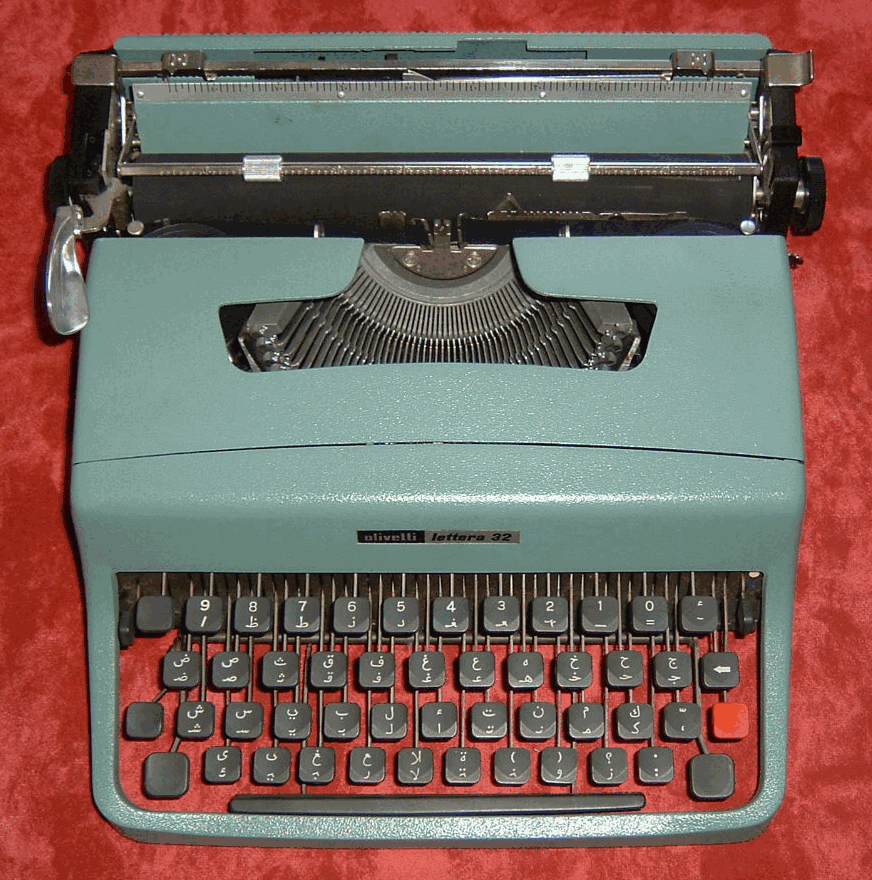

The consequence falls on anyone searching the archive now, and it is worth stating plainly because it makes absence of evidence very cheap to manufacture. A name or a place in this material may appear in Arabic script, in a French romanisation, in an English one, in a Berber Latin orthography and in digit-bearing transliteration, with French accents variously present or stripped. There is no canonical spelling to search for. A query in one form will not return the posts written in another, and a null result proves nothing at all until the same query has been tried several ways.
Where the readers were
France was the centre of gravity, and it is the only part of the readership for which published counts exist. The French statistical series for immigrants born in Algeria and living in France gives 378,000 in 1968, 556,000 in 1990 and 418,884 at the 1999 census — the one figure in the series that falls inside the group's active years — and the 2023 census recorded 892,000 people born in Algeria. Algerians are the largest single foreign nationality represented in the country, and counts of people of Algerian origin, which take in the French-born second generation, run higher again. Movement between the two countries was governed for decades by the Franco-Algerian accord of 27 December 1968 on the circulation, employment and residence of Algerian nationals in France. Only the 1999 figure is contemporaneous with the newsgroup at full strength; the rest give the order of magnitude of the population a French-based readership was drawn from.
The imbalance with the country itself is measurable, and the measurement is unambiguous. The World Bank series for individuals using the internet, compiled from International Telecommunication Union returns, records Algeria at 0.0018 per cent of the population in 1995 — the year of the vote — against 1.64 per cent for France. Algeria stands at 0.01 per cent in 1997, 0.02 in 1998, 0.20 in 1999, 0.49 in 2000 and 0.65 in 2001; it first passes one per cent in 2002, at 1.59, reaching 5.84 in 2005 and 12.5 in 2010. France over the same span runs 4.26 per cent in 1997, 14.31 in 2000, 26.33 in 2001 and 42.87 in 2005. Through the whole of the decade in which such groups were most used a reader inside Algeria came from a fraction of one per cent of his neighbours; a reader in Paris came from a tenth or more of his. By the time Algerian households were online in numbers, the traffic had gone elsewhere — a pattern common to the whole continent, discussed on soc.culture.african.
The rest of the readership can be described only in outline, from the addresses on the vote list and from the general shape of the diaspora: Canada, and Quebec in particular, where a French-speaking Algerian professional could arrive without changing working language — the francophone North American scene has its own page at soc.culture.quebec; the United States, where the university accounts were; Britain; Switzerland; and the Gulf states. No count for any of these is offered because none exists.
A readership spread that way has no shared working day. Algeria keeps a single offset the year round, UTC+01:00, with one zone in the IANA time-zone database; France sits at the same offset in winter and an hour ahead in summer, so the two drift apart for half the year. Montreal is five or six hours behind, the Gulf about three ahead. On a store-and-forward medium this shaped rhythm rather than content: news from home and the reaction to it fell inside the same evening in western Europe, while a thread opened in Algiers after supper was read across the Atlantic in the early afternoon and answered while the Mediterranean slept.
What a culture group carried between the crises
The charter's list of topics is a fair guide to the rest of the traffic, and the perennials are much better documented than the arguments, because they have dates attached to them.
Music
Rai is the popular music of Oran and the Oranie, with origins in the region going back to the 1920s, and it had taken the same road out of the country as much of the readership. Its position at home was for years precarious: the state banned imports of blank cassettes and confiscated performers' passports. The turn came in 1985, when an Algerian colonel and the French minister of culture between them persuaded the Algerian state to accept rai as part of the national heritage, return the passports and permit recording and performance under government sponsorship. The first state-sanctioned rai festival was held in Algeria that year, and a festival at the MC93 theatre in Bobigny, outside Paris, in January 1986 put a full bill of Oran singers in front of a French audience. An album released in 1992 carried the music well beyond either country. In the 1990s censorship and threats returned: Cheb Hasni was shot at Oran on 29 September 1994, the first rai musician to be killed, and Rachid Baba Ahmed, the producer most associated with the genre's international breakthrough, was killed at Oran on 15 February 1995. In 2022 UNESCO inscribed rai as popular folk song of Algeria on its Representative List of the Intangible Cultural Heritage of Humanity, on a nomination by Algeria.
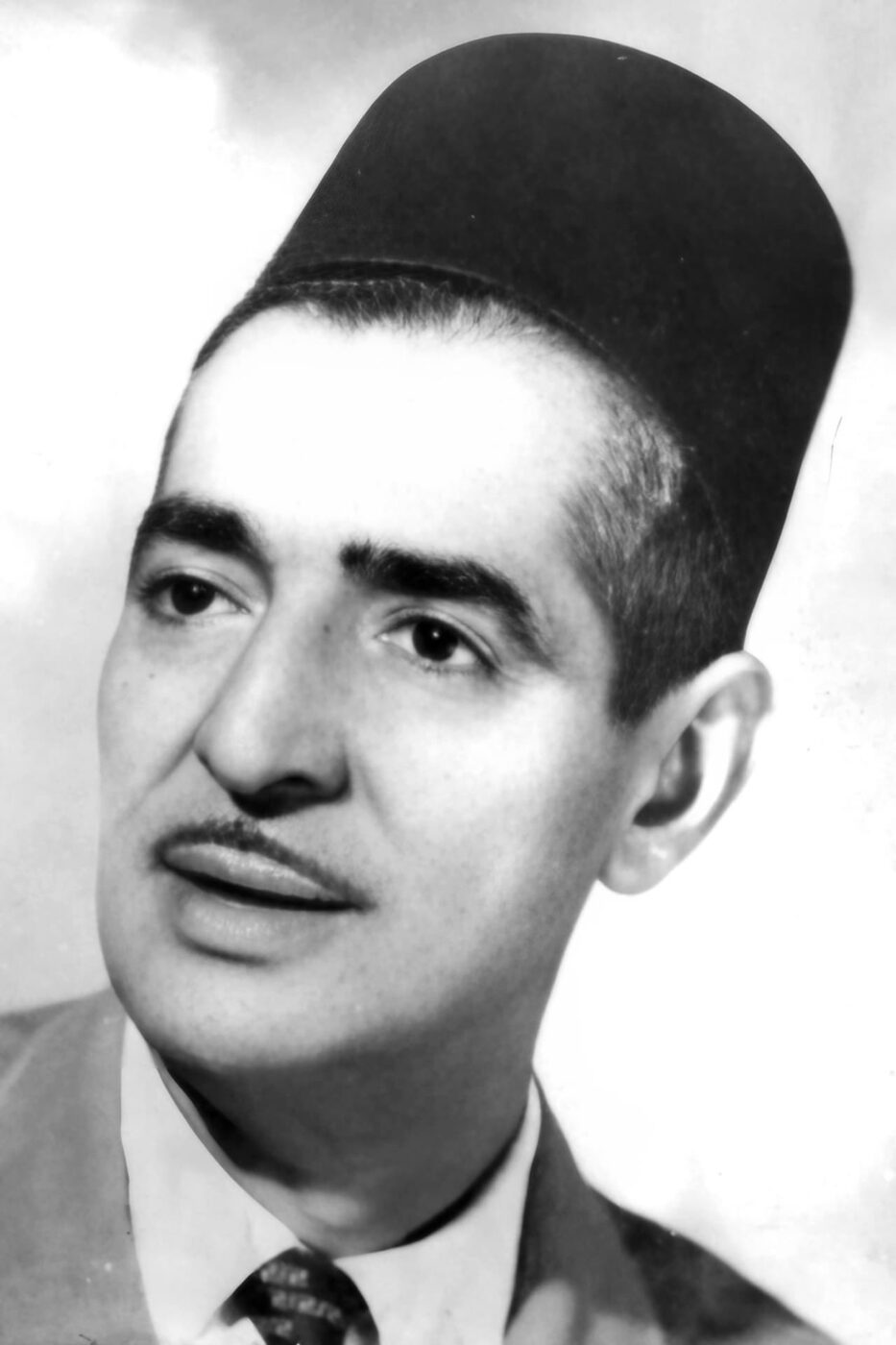
Chaabi is the other half of the musical argument and the older one: a music of the Casbah of Algiers that emerged in the 1930s out of the Andalusi tradition, and was formalised by El Hadj M'Hamed El Anka, born in the Casbah in 1907 and dead in Algiers in 1978, who in 1928 alone recorded twenty-seven discs for Columbia and took part in the inauguration of Radio PTT Algiers. Its emigration song is Ya Rayah — written and performed in 1973 by Dahmane El Harrachi, born at El Biar in 1926, who had moved to France in 1949 and made his name in the Algerian cafes of Paris, and who died in a car accident on an Algiers motorway in 1980. Recorded again in 1993 by Rachid Taha and released as a single on 26 August 1997, it became the standard of the diaspora; a Paris concert in September 1998 at which Taha performed it with two other singers was issued as a live album the following year. A song addressed to the one who is leaving, written by an emigrant, revived by an emigrant's son, is about as exact a soundtrack for a diaspora newsgroup as the record provides.

Literature
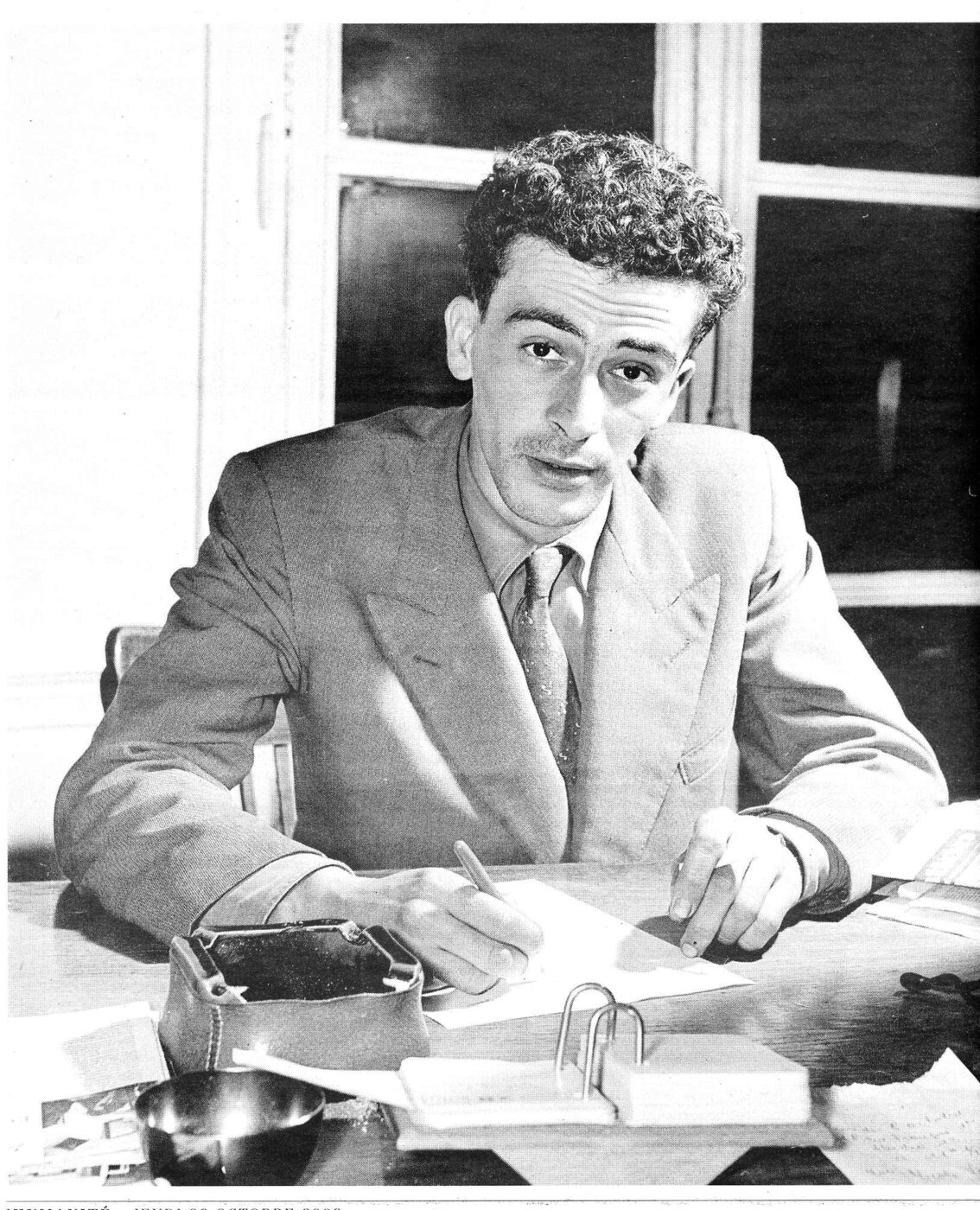
Literature let the language question be argued at one remove, which is part of why it was argued so much. Kateb Yacine, born in Constantine in 1929 into a Chaoui family from the Souk Ahras region, was a boarder at the secondary school in Setif when the demonstrations of 8 May 1945 took place; he was arrested three days later and imprisoned for two months, and published Nedjma, in French, in 1956. He died in 1989. So did the schoolteacher-novelist Mouloud Feraoun, born in Kabylie in 1913 and killed in March 1962, three days before the accords; Rachid Mimouni, born in 1945, who left the country in 1993 and died in Paris in 1995; and Tahar Djaout, the journalist and poet shot in 1993. Assia Djebar, born at Cherchell in 1936, who wrote in French under a pen name, was awarded the Neustadt International Prize for Literature in 1996 and elected to the Academie francaise on 16 June 2005, the first writer from the Maghreb to be elected; she died in 2015. Arabic-language Algerian fiction has its own strong line, and the argument over which language an Algerian novel ought to be written in has outlived every writer named here.

Football and the calendar
Football supplied a fixed calendar of its own, and a curious gap. Algeria reached the World Cup finals in 1982 and 1986 and then not again until 2010 — an absence covering the newsgroup's entire active life — so the standing reference through the 1990s was the 1990 Africa Cup of Nations, the seventeenth edition, hosted in Algeria and won by the home side, beating Nigeria 1-0 in the final. Kabyle and Algiers club football, and the club names that changed with each reorganisation of Algerian sport, supplied the rest.
The calendar was steadier ground than politics. Ramadan begins by observation rather than calculation, so it can begin on different days in different countries in the same year — an annual fact of life for a readership spread across several, and a reliable thread. Yennayer, the Berber new year of 12 January, was unofficial throughout the group's life; it was recognised as an Algerian public holiday on 27 December 2017 and first observed as one on 12 January 2018. It is treated on soc.culture.berber.
Cuisine
Cuisine is a charter bullet in its own right, which is not something every soc.culture.* charter can say, and cooking threads have a way of outlasting political ones. The single documented institutional fact belongs to the period long after: in December 2020 UNESCO inscribed the knowledge, know-how and practices pertaining to the production and consumption of couscous on its Representative List, on a nomination made jointly by Algeria, Mauritania, Morocco and Tunisia — four states obliged to file one paper together about a dish each considers its own. The Berber page treats the linguistic evidence for its origins.
A removal that did not take
The group's control-message file has one more entry, and it is not a creation. At 00:27 GMT on 4 November 2001 a message was injected carrying the header Control: rmgroup soc.culture.algeria and a single line of body asking that the bogus newsgroup be removed. It purported to come from a well-known maintainer of Usenet software in Germany, an attribution its own headers do not support: it was injected through a consumer provider in Quebec, its message identifier is a variant of the identifier it gives as its own reference — the two differ only in the string before the dollar sign — and it ends with the sort of randomly generated signature line that the forged control messages of that period carried by the thousand. Seven seconds earlier, at 00:27:27 against 00:27:34, the identical forgery had been fired at the umbrella group; soc.culture.berber and soc.culture.maghreb were hit within the same quarter of an hour.
It did nothing. Big-Eight news administrators had by then configured their servers to act on control messages only when the hierarchy's own signature verified, and an unsigned rmgroup from a forged address was simply discarded. Three decades on the group is still in the newsgroups file distributed by the Internet Systems Consortium and still marked as accepting posts in the active file. The same run touched other groups in this family, and is treated at more length on the soc.culture.arabic page; the episode is worth recording here only as a reminder that the administrative record of a newsgroup contains other people's forgeries as well as its own history.
What the record does not show
It is worth being explicit about the size of the hole, because the paperwork above is unusually complete and that completeness can mislead.
- No readership figure of any kind. There is no subscriber count, no survey, no estimate. The 197 yes votes of August 1995 are not a readership; they are the people who sent an e-mail during a three-week window.
- No traffic curve. For some groups an article counter can be read off the Xref headers of crossposted announcements over a period of years. That method works for the umbrella group, whose article numbers appear on every country proposal crossposted to it; it does not work here, because soc.culture.algeria did not exist when its own paperwork was being posted, and no later announcement in the archive was crossposted to it.
- No moderator, no FAQ, no periodic posting. The group was unmoderated by deliberate decision, at the cost of a cancelled ballot. Nothing in the news.announce.newgroups archive records a charter revision, a moderation proposal or a removal attempt other than the 2001 forgery.
- No thread titles, no posters, no quotations. This page names none, and invents none. Where the group's contents are characterised above, the characterisation comes from its charter, from the documented state of the world it discussed, or from the general behaviour of unmoderated soc.culture.* groups; it does not come from a reading of threads that the directory cannot produce.
What can be said about the group's arc is what can be said about the branch as a whole: heavy traffic through the second half of the 1990s, a long thinning through the 2000s as web forums and then social networks absorbed the conversation, and a final settling into crossposts and spam. The mechanism of that decline — the commercial gateways, the spam, the withdrawal of news service by large providers — is described on the soc.* hub page.
Scope and limits
The group's own facts on this page — dates, tallies, the charter, the newsgroups line, the control messages, the domain breakdown of the ballot — come from the Internet Systems Consortium's mirror of news.announce.newgroups and of the soc.* control messages, and from the current newsgroups and active files distributed from the same server. Those are primary documents and are quoted or counted directly; the domain breakdown was computed here from the published vote list rather than taken from any source.
The legal instruments are cited from published texts of the laws, ordinances, decrees and constitutional articles concerned, with their numbers and dates as the texts give them; the translations of quoted phrases from the French are informal and the emphasis is on what each instrument required and when. Population, connectivity and casualty figures are attributed in the text to the body that produced them — a census office, a statistical series, a government, a named historian — because in this subject the provenance of a number is part of the number.
The directory reaches no verdict on any of the events described, offers no view on the language question in any of its forms, and takes no position between the competing casualty estimates it reports. It names no living person: the writers and musicians named above are all dead, and the officials, proponents, votetakers and performers who are or may be living are described by role, date and place instead. Where the record is silent — on who read this group, how many, and what they said — the page says so rather than filling the silence.
Reading soc.culture.algeria today
- Historical archive: Google Groups — soc.culture.algeria (coverage varies by group and era).
- Open in a newsreader:
news:soc.culture.algeria— the original site offered exactly this link, and it still works if your system has a newsreader registered for thenews:scheme. - Live access: point an NNTP newsreader at a modern server — see accessing Usenet today.
- The original news2mail e-mail subscription service ended in the mid-2000s and no longer operates.