alt.verizon-sucks
Customer grievances against Verizon.
One of the many alt.company-sucks groups: billing disputes, DSL outage logs, workarounds and occasional replies from employees posting carefully from home accounts.
Collectively these groups were the era’s consumer-review sites, before those existed.
On this page
- The group's own paperwork
- A census of the -sucks namespace
- The company the name pointed at
- Scale, and the bargain of 1996
- What a complaint could actually do
- The copper in the wall
- Trademark law meets the word
- The 1999 settlement: a statute and a policy
- The two Wal-Mart decisions, and the compromise that followed
- Why none of it could touch a newsgroup
- Verizon and the domains
- Subpoenas and subscriber identity
- The standards courts built for unmasking
- What became of the form
- What the record does not show
- Scope and limits
The group's own paperwork
Most of the groups in this directory arrived without documentation. This one arrived with ten lines of it, and they have survived. The Internet Systems Consortium's mirror of Usenet control traffic holds exactly one message for this group: a newgroup control message sent from the address [email protected], carrying an Approved: header in the name of [email protected], dated Monday 14 July 2003 at 10:26:08 Pacific time, injected through news.uswest.net and composed in Forte Agent 1.93/32.576. Its body is the whole of the group's founding record, and it is short enough to reproduce entire.
For your newsgroups file: alt.verizon-sucks — discuss how much verizon sucks — Charter: this newsgroup is for discussing just how heinously verizon sucks ass. this is an unmoderated newsgroup. no advertising will be tolerated. justification: substantial interest, appropriate name, freedom of alt.*
The line breaks have been closed up here and dashes supplied where they fell; no word is altered, including the lower case, which is the poster's own. Twenty-five seconds later the same address sent a newgroup control for alt.verizon-sucks.ass, and thirty-six seconds after that one for alt.verizon-sucks.dick — all three from the same posting host, 4.3.162.236, all three with the same one-line description and near-identical charters. The third differs from the first two by a single deleted word: its charter says the company sucks, without specifying what. Three groups in sixty-one seconds is not a movement; it is one person at a keyboard with an idea and a control-message template.
All three are still there. The consortium's current newsgroups file lists alt.verizon-sucks, alt.verizon-sucks.ass and alt.verizon-sucks.dick, and against each, where a description would go, prints the same five words the control message supplied in 2003: discuss how much verizon sucks. The matching active file carries all three with the flag that marks a group unmoderated and open for posting. That is what a charter amounts to in this hierarchy — not a negotiated document but a description field, typed once by the person who asked for the group and copied ever afterwards by every administrator who agreed.
What is missing is as informative as what survives. There is no Request for Discussion, no Call for Votes, no result posting and no vote tally, because alt.* does not produce any of those things; the consortium's archive of the news.announce.newgroups traffic that records Big-8 group creation has directories for comp, humanities, misc, news, rec, sci, soc and talk, and none at all for this hierarchy. In place of a vote there is that last line of the message — substantial interest, appropriate name, freedom of alt.* — a justification of the kind such proposals carried when they were posted for discussion to alt.config, and one that asserts rather than demonstrates each of the three things it names. There is also no rmgroup. Nobody, in the twenty-three years since, has sent a control message asking for the group to be taken away.
A newgroup control message is a request, not an instruction. It travels the network like any other article, and each news administrator's software decides — by local configuration, and for alt.* usually by local taste — whether to act on it. The group existed on any given machine because that machine's operator did nothing to stop it. This is the whole of the constitutional arrangement, and it matters later in this article, because it is the reason a body of law that grew up around domain names never found anything here to grip.
A census of the -sucks namespace
alt.verizon-sucks belongs to a genre, and the genre is countable. The consortium's newsgroups and active files are the nearest thing Usenet has to a register of what exists; the copies consulted for this article list 45,003 groups, of which 20,466 sit under alt.*. Searching those names for the string sucks returns 113 groups. That is roughly one name in four hundred across the whole namespace, and one in two hundred within alt.* itself. The distribution is lopsided: 105 of the 113 are alt.* groups and the remaining eight are in free.*, a smaller free-for-all hierarchy with the same absence of ceremony. No other hierarchy in the file contains a single one.
Eighty-one of the 113 end with the word, joined to whatever precedes it by a dot or a hyphen — the pure form, subject then verdict — and in fifty-seven of those the word stands alone as the final dotted component. The rest bury it in the middle of longer constructions, some of which are less names than sentences. Forty-eight of the 113 carry no description at all in the newsgroups file, which prints No description. where a charter would go; the other sixty-five carry something, though what they carry is often only the name restated with more conviction.
Where a description does exist it tends to be one line and no more, and the range of registers is narrow. alt.aol-sucks offers Why some people hate AOL and/or its users; alt.disney.sucks, Discussion of how Disney sucks; alt.dare.sucks, Discussion of how DARE (D.A.R.E. America) sucks. Two are more particular than that and are the better for it: alt.epix.sucks promises an uncensored forum to discuss Epix's mismanagement, and alt.ccn.sucks says only discussion of Chebucto Community Net (CCN), naming a Nova Scotian community network and leaving the verdict to the group name. alt.espn.sucks describes itself as Spleen venting in regard to ESPN SportsZone, which is as close as the file comes to a statement of method.
Sorted by what they are aimed at, the census breaks into four uneven piles. Roughly thirty name a company, a brand or a commercial service. A larger number name a private individual — a regular of some other newsgroup, a moderator, an antagonist in a feud whose origins are no longer recoverable — and these are the ones that read worst today, because a name is a permanent thing and the quarrel was not. A third pile names products, franchises, broadcasters and pastimes: television networks, a video game at two specific version numbers, a martial-arts school, bullfighting. The fourth is generic and almost cheerful: alt.life.sucks and its several children, alt.my.job.sucks, alt.this.sucks.
Within the commercial pile one pattern is sharp enough to be worth stating on its own. Fifteen of the 113 names — more than one in eight of the entire genre — are aimed at a company that sold Internet or telephone access. They include alt.aol-sucks, alt.netcom.sucks, alt.epix.sucks, alt.ccn.sucks, alt.providers.iol.sucks, alt.providers.tin.sucks, alt.internet.providers.europe.relcom-sucks, alt.online-service.webtv.sucks, alt.supernews.retention.sucks.sucks.sucks, free.dom.upc.sucks, two groups complaining at length about the same news server provider, and this group with its two siblings. A sixteenth name, alt.aol-sucks.rejects, belongs to the pile only at one remove: its description explains that it is for People who are sick of being flamed by alt.aol-sucks, which makes it a complaint group about a complaint group. No other industry comes close. The reason is not mysterious: the people with a Usenet account to complain from were, by definition, customers of somebody who sold them the connection, and the connection was the one purchase they could not route around by taking their custom elsewhere on a whim.
The namespace also had a native way of shouting. Because a group name is a dotted hierarchy, and because creating another one cost nothing, the form escalates by suffix. One target appears in the file four times over at increasing lengths: the bare name, and then the same name with the word appended once, twice and three times. Five names in all end with the word three times over. This group's own siblings are a variant of the same move — not a longer name but a cruder one. The dot, in this hierarchy, functions as an intensifier. That the resulting names are frequently obscene is a fact about the medium's economics rather than about its users' vocabulary: a name that costs nothing to create is a name nobody has to justify to a committee. The purely comic end of the same tendency has its own page here at alt.idiot.marsrules.
Two cautions about these numbers. They are a snapshot of one file as it stands now, not a historical count: groups created and abandoned before the file settled into its present form may not appear, and a group listed today may have carried nothing for twenty years. And the sorting into four piles is this article's, not the file's; the boundary between a brand and a product, or between a public figure and a private one, is a judgement call in a dozen cases. The 113, the 105, the 81, the 57 and the 48 are checkable against the file. The piles are an argument about the file.
The company the name pointed at
Verizon Communications had just turned three when the control message went out, and the name it bore was younger than most of the copper it ran on. The company was assembled in stages from businesses that were, in every case, older than the network the complaints travelled over.
The oldest layer is the divestiture. The settlement of the United States government's antitrust suit against AT&T broke the Bell System into seven regional Bell operating companies with effect from 1 January 1984. Bell Atlantic was one of them, ran its affairs from Philadelphia, and inherited four operating companies: the Bell Telephone Company of Pennsylvania, New Jersey Bell, Diamond State Telephone in Delaware, and the Chesapeake and Potomac Telephone Company, which traded as C&P and served the District of Columbia, Maryland, Virginia and West Virginia through four separately incorporated arms, the oldest of them founded in June 1883.


The second layer is NYNEX, another of the seven, which had received New York Telephone and New England Telephone in the same break-up and served five New England states and most of New York from 1 January 1984 until 14 August 1997, when Bell Atlantic absorbed it. The combined company moved its headquarters from Philadelphia to New York. Two Baby Bells had become one, which was precisely the arrangement the 1984 judgment had been designed to prevent, and precisely what the regulatory settlement of 1996 — discussed below — had made negotiable.
The third layer was never a Bell company at all. GTE Corporation traced its origins to the Associated Telephone Utilities Company of 1926, which went bankrupt in the Depression and was reorganised as General Telephone in 1934; it grew by acquisition into the largest of the independent telephone companies, the ones that served the parts of the American map the Bell System had not taken, absorbed the third-largest independent, Continental Telephone, in 1991, and ran its affairs from Stamford, Connecticut until it ceased to exist on 30 June 2000. Its Internet arm mattered to the merger out of all proportion to its size, for reasons set out in the next section.
The name arrived last of all, coined from the Latin veritas and the English horizon, and it landed on buildings that had already been relabelled once. When Bell Atlantic renamed all of its operating companies in 1994, C&P became Bell Atlantic – Maryland, Bell Atlantic – Virginia, Bell Atlantic – Washington, D.C. and Bell Atlantic – West Virginia, while Bell of Pennsylvania, New Jersey Bell and Diamond State Telephone were renamed on the same pattern. Six years later the same subsidiaries were renamed again. A householder in Baltimore who had opened a bill from the Chesapeake and Potomac Telephone Company in 1993 was, by the end of 2000, opening one from Verizon Maryland, and the wire in the wall had not moved an inch. Corporate criticism of a utility is very often criticism of continuity wearing a new mark, and the naming convention this group belongs to is unusually well suited to saying so, because the mark is the only part of the arrangement that ever changes.
Scale, and the bargain of 1996
The merger that produced the name was announced in July 1998 and took nearly two years to clear. The Department of Justice signed off first, more than a year before the end, requiring the parties to sell overlapping wireless operations in nine states. The Federal Communications Commission gave the final approval on Friday 16 June 2000, unanimously, and attached twenty-five conditions to it. Contemporary reporting of the approval valued the deal at $64.7 billion, against $52.8 billion when it was struck, and described the result as the largest local telephone company in the United States, with more than 63 million local access lines — narrowly ahead of SBC Communications on 61 million. Reports of the day differ on the footprint: the CNNfn account of the approval puts it at 38 states, the New York Times report the following morning at 40. The transaction closed on 30 June.
The chairman of the Commission, William Kennard, put the bargain in terms worth quoting, because they describe exactly the arrangement that the following years' complaints were about:
There will be those that will claim this merger brings us closer to a re-emergence of Ma Bell; however, my support is predicated on the applicants' enforceable commitments to open its traditional local markets to competitors, invest in new markets, and accelerate deployment of broadband technologies.
The most awkward of the conditions concerned GTE's Internet backbone. A local telephone company could not carry long-distance traffic without permission, and from the Commission's standpoint the traffic crossing a national backbone was long-distance traffic. GTE therefore agreed in April 2000 to spin off about ninety per cent of Genuity, the company holding those operations; Verizon was to be capped below ten per cent, with a route back up to eighty per cent if it opened ninety-five per cent of its local access lines within five years, and was barred from taking economic benefit from Genuity's long-distance services. A public offering expected to raise some $2.3 billion was slated to price the following week.
Alongside the wireline business came a wireless one of matching size. Verizon Wireless had been formed as a joint venture two months before the approval, Bell Atlantic holding fifty-five per cent to Vodafone's forty-five, and the combined company inherited about 25 million mobile customers with it.
All of this sat inside the regime created by the Telecommunications Act of 1996, and the regime is worth setting out plainly because almost every documented grievance of the period is a grievance about one of its moving parts. Section 251(c) obliged an incumbent local carrier to share its network with competitors: to interconnect, to offer individual unbundled network elements, to resell its services at wholesale, and to permit rivals to install equipment on its own premises. Section 271 offered the incumbents something in return — entry to the long-distance market they had been excluded from since 1984 — on condition that they satisfied a fourteen-item checklist, the second item of which was non-discriminatory access to those same network elements. In December 1999 the Commission approved Bell Atlantic's section 271 application for New York, making it the first regional Bell company allowed to sell long distance in its own territory.
The mechanism through which all of this was supposed to work in practice was a set of computer systems called operations support systems. A competitor sent an order for service through an electronic interface into the incumbent's ordering system, and the incumbent sent confirmations back the same way as it completed the steps in filling the order. Without access to those systems a rival could not fill its customers' orders at all. It is a piece of plumbing, and the next section is about what happened when it did not plumb.
What a complaint could actually do
In late 1999 the competitive carriers began telling regulators that many of their orders were going unfilled. The New York Public Service Commission and the Federal Communications Commission opened parallel investigations, and both produced results. Under a consent decree with the Commission, Verizon undertook to make a voluntary contribution of $3 million to the United States Treasury; under the state commission's orders it incurred $10 million of liability to the competitive carriers themselves. Both regulators imposed new performance measurements and new reporting duties, with further penalties for continued failure. The federal consent decree was terminated on 20 June 2000, four days after the merger was approved, and the state commission lifted the heightened reporting requirement the following month.
That is what regulatory recourse looked like when it worked: a docket, an investigation, a measurable remedy and a fixed end date. It is also, on the figures, a remedy of a particular size. Three million dollars set against a $64.7 billion transaction is about one part in twenty thousand, and it was paid to the Treasury rather than to anyone who had waited for a telephone line.
The day after that consent decree was entered, a New York City law firm that bought its local telephone service from AT&T filed suit on behalf of itself and a class of similar customers, alleging that the order failures were an anticompetitive scheme under section 2 of the Sherman Act. The district court dismissed the antitrust claim; the Second Circuit reinstated it; and on review the Supreme Court held, in Verizon Communications Inc. v. Law Offices of Curtis V. Trinko, LLP, 540 U.S. 398, decided on 13 January 2004, that it did not state a claim. Justice Scalia wrote for six members of the Court, with Justice Stevens concurring in the judgment for three more. The reasoning turned on the 1996 Act's antitrust saving clause, which preserves claims meeting established antitrust standards without creating any new ones, and on the Court's unwillingness to extend the essential-facilities doctrine. The practical effect was to send disputes of this kind back where they had started: to the regulators, and to the remedies the regulators had.
A residential subscriber's position was narrower still. The routes available were an informal complaint to a state public utility commission, which had jurisdiction over intrastate service quality; an informal complaint to the federal Commission; a complaint to a Better Business Bureau; and, where the contract said so, arbitration. What none of these produced was a public record. A regulator's informal complaint file is not a publication; a Bureau's investigation can close without a recommendation, which is precisely what happened to the Michigan householder whose landscaping dispute later reached the Sixth Circuit as Lucas Nursery & Landscaping, Inc. v. Grosse — she complained to the Bureau, the Bureau ended its investigation without making a recommendation, and she then registered the firm's name as a domain and built a web page under it. The sequence is documented in the court's own recitation of the facts, and it is one documented instance of a very common progression: not that the web page was more powerful than the Bureau, but that it was the only step in the sequence anybody else could read.
That is the whole of the difference, and it is worth stating without embroidery. A telephone call to a call centre produced a ticket number. A letter to a commission produced a docket entry. An article posted to an unmoderated newsgroup produced a document that propagated to every server carrying the group, could not be edited or withdrawn by its subject, was indexed by whoever indexed Usenet, and remained legible years later to the next person searching for the same fault. Whether that constituted leverage depended entirely on how many people were reading, which for this group cannot now be established. The mechanism, though, is not in doubt; it is the mechanism that the venting groups covered at alt.complainers.bitch-n-moan supplied without any particular target, and that this group supplied with one.
The copper in the wall
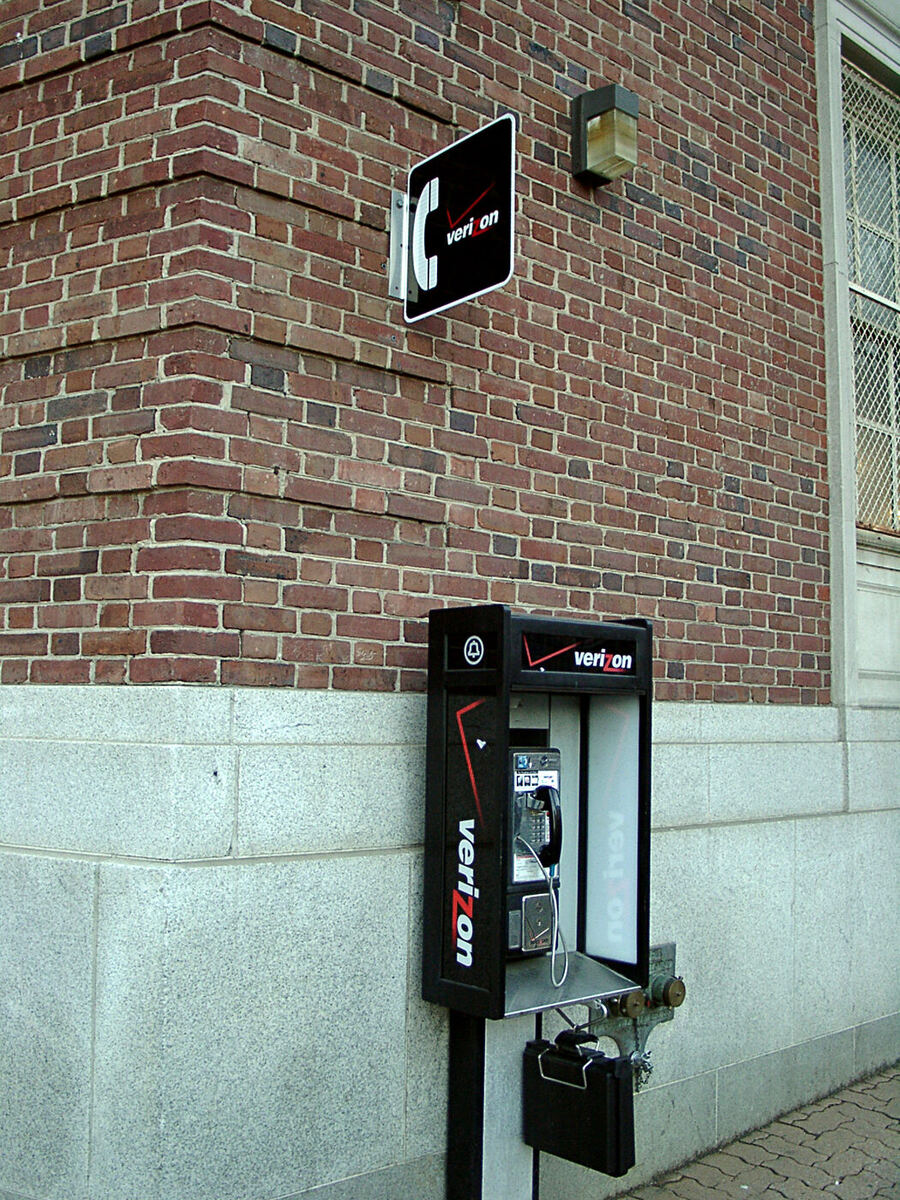
The subject matter of a group named after a telephone company was, in the period, largely a subject about physical plant that the subscriber never saw. Digital subscriber line service rode the same copper pair as the telephone, running from the premises to a central office and terminating there on a distribution frame and a line access multiplexer. Whether it could be delivered at all was a question about that specific pair, and the answers were unforgiving. Attenuation rises with frequency and with length: ADSL was generally installed only over short loops, typically less than four kilometres, though runs of twice that have worked where the wire originally laid was of a generous gauge. Worse, loading coils — inductors fitted at intervals along longer voice circuits to flatten the frequency response and improve speech quality — form a low-pass filter that will not pass a DSL signal at all; where they are present, which for American cables of the period typically meant a subscriber more than about four miles from the central office, they have to be found and removed before the service can work.
None of this was visible from the order form. An address could be sold a service, given an installation date, and then disqualified by a fact about its copper that nobody had checked before the order was taken. Threads about broadband provisioning in this period read like fault reports because that is substantially what they were, and the ones with any diagnostic value in them are the ones that name the distance, the coil or the frame. The same technical territory, treated as engineering rather than grievance, is the standing subject of alt.dcom.telecom.
_pd.3.jpg)
Billing had a comparable substrate. The company that sent the bill in 2001 was running systems inherited from Bell Atlantic, from NYNEX and from GTE, three organisations with different account structures, different tariff histories and different ideas about what a line item was called. A dispute that crossed the seam between two of them was a dispute in which no single representative could see the whole account.
One documented event of the period fell squarely inside the group's nominal remit, although it preceded the group's paperwork by three years. On 5 August 2000, five weeks after the company adopted its name, some 85,000 workers represented by the Communications Workers of America and the International Brotherhood of Electrical Workers walked out. The unions' stated grievances were the merger itself and the company's plan to move shops and factories to non-union areas, which meant employees losing their jobs or moving, and the volume of compulsory overtime being worked on top of that. The stoppage lasted eighteen days and ended in an agreement that trimmed the mandatory overtime requirement, with a floor and a ceiling set on the hours a worker could be required to put in. Its documented effect was not confined to the company: the competitive carriers, who depended on Verizon's own staff to connect the customers they signed up, were hit hardest by it, which is a fair summary of the whole competitive settlement in a sentence.
Trademark law meets the word
Everything above is background to the part of this history that is properly documented, argued at length, and decided in public: the question of what, if anything, the owner of a name can do about someone else attaching a verdict to it. On Usenet the question was academic, for reasons taken up further down. On the web it was litigated for a decade, and the decisions are the best surviving account of what the form was understood to mean.
American trademark law's central question is likelihood of confusion, and the Ninth Circuit's standard formulation is the eight-factor test of AMF Inc. v. Sleekcraft Boats, 599 F.2d 341 (9th Cir. 1979). An early and much-cited application of that test to the construction came on 21 December 1998, in Bally Total Fitness Holding Corp. v. Faber, 29 F. Supp. 2d 1161 (C.D. Cal. 1998), where a fitness chain sued the maker of a page of consumer criticism headed with its mark and the word superimposed over it. The chain argued that appending one word was a minor difference. The court disagreed, in a passage that everything afterwards quotes:
“Sucks” has entered the vernacular as a word loaded with criticism. Faber has superimposed this word over Bally's mark. It is impossible to see Bally's mark without seeing the word “sucks.” Therefore, the attachment cannot be considered a minor change.
The rest of the analysis followed. The two sites were not proximately competitive, because one was a commercial advertisement and the other a consumer commentary. There was no evidence of actual confusion, and the reasonably prudent user would not mistake the critic's site for the company's. Prohibiting the critic from using the mark in machine-readable form would have isolated him from all but the most practised searchers, since criticism cannot be found by people looking for the thing criticised unless it names the thing. And the court added, in a sentence that did a great deal of work over the next five years, that even a domain in the form marksucks.com would not necessarily be a violation as a matter of law. Summary judgment went to the defendant.
Behind that result sits a doctrine with a name. Nominative fair use, first set out by the Ninth Circuit in New Kids on the Block v. News America Publishing, Inc., 971 F.2d 302 (9th Cir. 1992), permits the use of another's mark to refer to the thing the mark denotes, on three conditions: that the thing cannot readily be identified without the mark, that no more of the mark is used than identification requires, and that nothing suggests sponsorship or endorsement. A critic is the paradigm case, because there is no way to criticise a company without naming it, and a name is the only part of a mark a complaint needs.
The question reached a federal court of appeals in Taubman Co. v. Webfeats, 319 F.3d 770, argued on 16 October 2002 and decided on 7 February 2003. A Texas web designer named Henry Mishkoff had registered a domain after a shopping-mall developer's forthcoming mall, put up an unofficial site, and been sued for it; he answered by registering five more domains, one of them taubmansucks.com, and pointing them all at a running account of the litigation. The district court enjoined the first name on 11 October 2001 and the five complaint names that December. The Court of Appeals dissolved both injunctions. On the complaint names it held that there was no possibility of confusion and therefore no violation of the Lanham Act — the developer having conceded in its own brief that Mishkoff was free to shout the phrase from the rooftops — and it drew the obvious conclusion:
We find that the domain name is a type of public expression, no different in scope than a billboard or a pulpit, and Mishkoff has a First Amendment right to express his opinion about Taubman, and as long as his speech is not commercially misleading, the Lanham Act cannot be summoned to prevent it.
The same opinion pauses to gloss the vocabulary: a web name with the word attached to it is a complaint name, and the practice of registering and using such names is cybergriping. Mishkoff was represented on appeal by the Public Citizen Litigation Group, with the American Civil Liberties Union appearing as amicus — which is a fair indication of what the case had turned into by the time it was argued.
Not every critic won, and the losses are as instructive as the wins. In People for the Ethical Treatment of Animals v. Doughney, 263 F.3d 359 (4th Cir. 2001), a defendant who had registered peta.org and filled it with the opposite of the organisation's message lost his parody defence, because the two contradictory messages a parody requires were not delivered simultaneously: a visitor learned the site was not the organisation's only after arriving. Four years later the same court decided Lamparello v. Falwell, 420 F.3d 309 (4th Cir. 2005), and reversed judgments obtained against a critic who had registered a deliberate misspelling of a preacher's name, holding that a court must consider the use in its entirety rather than a fragment of it, and that a non-commercial critical site created neither a likelihood of confusion nor a bad-faith intent to profit. In Bosley Medical Institute, Inc. v. Kremer, 403 F.3d 672 (9th Cir. 2005), a dissatisfied former patient who had registered the company's own name as a domain and used it to criticise the company was held not liable for infringement or dilution. The pattern that emerges is not a rule about the word but a rule about the reader: what mattered was whether the address itself told the visitor where they were going.
The 1999 settlement: a statute and a policy
Two instruments arrived within months of each other at the end of 1999 and between them defined the terrain for everything above.
The first was legislation. The Anticybersquatting Consumer Protection Act, codified at 15 U.S.C. section 1125(d), created a cause of action against registering, trafficking in or using a domain name confusingly similar to, or dilutive of, a mark — but only where the registrant had a bad-faith intent to profit. The statute lists nine non-exclusive factors bearing on that intent, and two provisions point directly at the critic: the fourth factor is the registrant's bona fide non-commercial or fair use of the mark at the site the name reaches, and a separate clause states that bad faith shall not be found where the person believed, and had reasonable grounds to believe, that the use was fair or otherwise lawful. The accompanying House report said in terms that the factors were meant to balance owners' property interests against the legitimate interests of people making lawful use of others' marks — comparative advertising, comment, criticism, parody, news reporting.
The courts read it that way. In Mayflower Transit, LLC v. Prince, 314 F. Supp. 2d 362 (D.N.J.), decided on 30 March 2004, a mark owner cleared the first two elements easily and then lost, because the defendant's motive for registering the names was to express his dissatisfaction as a customer rather than to profit. In Lucas Nursery & Landscaping, Inc. v. Grosse, 359 F.3d 806, decided by the Sixth Circuit on 5 March 2004, the court affirmed summary judgment for the homeowner who had registered a landscaping firm's name and posted an account of her dispute with it. In TMI, Inc. v. Maxwell, 368 F.3d 433, decided by the Fifth Circuit on 21 April 2004, a district court judgment against a would-be house buyer who had registered a near-copy of a builder's mark was reversed outright, on the ground that a non-commercial gripe site violated neither the anti-dilution provision nor the cybersquatting statute. Three decisions in seven weeks, two of them appellate, all the same way.
The second instrument was not law at all but contract. The Uniform Domain-Name Dispute-Resolution Policy grew out of a report by the World Intellectual Property Organization published on 30 April 1999, which recommended a mandatory administrative procedure for abusive registrations. ICANN's board adopted the policy at its meetings in Santiago on 25 and 26 August 1999, adopted the procedural rules on 24 October, and launched the whole thing on 1 December 1999. It binds registrants because their registration agreements say it does. A complainant must establish three things: that the name is identical or confusingly similar to a mark in which it has rights; that the registrant has no rights or legitimate interests in it; and that the name was registered and is being used in bad faith. The only available remedies are transfer and cancellation.
The differences between the two instruments matter. A court proceeding is slow, expensive, adversarial and capable of awarding damages; an administrative panel is fast, cheap, decided on papers, and can do nothing but move a registration. The consequence, entirely predictable, is that the interesting law about the -sucks form was made in both places at once and did not always agree with itself.
The two Wal-Mart decisions, and the compromise that followed
The clearest illustration is a pair of administrative decisions two months apart in the autumn of 2000, brought by the same complainant, against different respondents, and reaching opposite conclusions on what looks like the same question.
In Wal-Mart Stores, Inc. v. Richard MacLeod d/b/a For Sale, WIPO Case No. D2000-0662, the sole panelist David H. Bernstein ordered the transfer of wal-martsucks.com on 19 September 2000. The respondent had registered the name, listed it for sale on a domain marketplace, and only developed a critical site during the pendency of the proceeding itself; he had, the panel noted, registered under the trading name “For Sale”. What makes the decision important is not that result but the route to it. On the merits of confusion Bernstein was emphatic: no reasonable speaker of modern English, he wrote, would find it likely that the retailer would identify itself using that address, and he specifically rejected the argument that consumers are likely to be confused by a famous mark combined with a term casting opprobrium on it. He nonetheless held the name confusingly similar for the purposes of the first element, reasoning that the threshold question is a direct comparison between mark and name rather than an inquiry into source confusion, and that genuine protest sites should be protected instead through the second and third elements, on which the complainant retains the burden of proof.
Two months later, in Wal-Mart Stores, Inc. v. wallmartcanadasucks.com and Kenneth J. Harvey, WIPO Case No. D2000-1104, the sole panelist Henry H. Perritt, Jr. refused a transfer, in a decision dated 23 November 2000 that takes the opposite view of the same threshold. Perritt worked through the Sleekcraft factors as applied in Bally, applied them to the name in front of him, and concluded flatly that he did not see how a domain name including the word could ever be confusingly similar to a trademark to which the word is appended. He was under no illusions about the respondent, who had lost two earlier proceedings to the same complainant and whose site contained little criticism of the retailer beyond its conduct of those proceedings; the panel observed that the quality of criticism is immaterial, and that the Policy should not be used to shut down robust debate and criticism. Among the numbered findings of fact at the end of the decision, and this is the sentence the form is usually cited for, sits the following:
The use of the SUCKS.COM suffix attached to a company name has become a standard formula for Internet sites protesting the business practices of a company.
Behind both stands a third decision, earlier than either, which each of them discusses: Wal-Mart Stores, Inc. v. Walsucks and Walmarket Puerto Rico, WIPO Case No. D2000-0477, in which on 20 July 2000 the sole panelist Frederick M. Abbott ordered five names transferred, four of them ending in the word, on a record showing that the registrant had demanded consulting fees from the retailer and had threatened to disrupt its business if they were not paid. Abbott went out of his way to fence the ruling in, stressing that the decision did not address legitimate freedom-of-expression sites established by critics of trademark holders, noting that numerous websites used the same formative, and closing with a disclaimer that panels rarely bother to write:
This decision is directed to a blatant case of abuse of the domain name registration process — no more, no less.
The compromise that emerged is the one Bernstein proposed, and it is now the settled position, recorded in WIPO's own overview of the case law. A domain name consisting of a trademark and a negative or pejorative term is treated as confusingly similar for the purpose of establishing standing under the first element — the overview notes candidly that the alternative would let a registrant escape the procedure altogether by appending an insult — and the real argument is then had under the second and third elements. There, where the domain is the mark plus a derogatory term, panels tend to find a legitimate interest if the use is, in the overview's words, prima facie non-commercial, genuinely fair, and not misleading or false. The word, in other words, no longer decides anything by itself. It gets the complaint through the door and settles nothing once inside.
Why none of it could touch a newsgroup
Set that apparatus beside alt.verizon-sucks and the mismatch is total.
A domain name has a registrar, a registrant, a registration agreement and a registry entry. Every remedy described above operates on one of those four things: an administrative panel orders a registrar to move a registration; the cybersquatting statute reaches a person who registers, traffics in or uses a domain name; an injunction runs against a named defendant who controls one. A Usenet group has none of these. There is no registry, because the name exists as a line in each administrator's newsgroups file. There is no registrant, because the person who sent the control message in July 2003 acquired nothing by sending it and retained nothing afterwards. There is no contract, because nobody agreed to anything. There is no defendant with the power to comply with an order to stop, because compliance would require every operator carrying the group to edit a configuration file, and no one of them is answerable for what the others do.
The only instrument that even resembles a remedy is the rmgroup control message, and its status is exactly that of the newgroup message that created the group: a request, honoured or ignored per machine, and in alt.* frequently ignored on principle. No such message exists in the archive for this group.
The provider carrying the group was insulated by a second and independent layer. Section 230 of the Communications Decency Act, effective on 8 February 1996, provides that no provider or user of an interactive computer service shall be treated as the publisher or speaker of information provided by another information content provider; the Fourth Circuit read it in Zeran v. America Online, Inc., 129 F.3d 327 (4th Cir. 1997), as creating a federal immunity from any cause of action that would make a service provider liable for information originating with a third party. Even before that, and on facts drawn directly from a Usenet argument, the Northern District of California had held in Religious Technology Center v. Netcom On-Line Communication Services, Inc., 907 F. Supp. 1361 (N.D. Cal. 1995) — a case about postings to alt.religion.scientology, which passed from a bulletin board through Netcom's servers on their way around the network — that the access provider was not directly liable for a subscriber's copies. The machines that carried the traffic were not the authors of it.
The asymmetry explains a good deal about where the form flourished. On the web, every -sucks address was a discrete asset with an owner who could be found, sued or arbitrated against, and the decade of litigation described above is the record of that being tried, roughly one name at a time. In alt.* the equivalent construction was free, instantaneous, unowned and unremovable, which is why 113 of them exist and why almost nothing is known about who made most of them. The genre's other well-documented specimen in this directory, alt.netscape.sucks, was created the same way six years earlier — a newgroup control message in July 1997, a one-line description, no vote — and its subject, a software company in a market with alternatives, is a different argument entirely.
Verizon and the domains
The company's own dealings with the form are documented in the one place such things usually survive, which is the Internet Archive.
The obvious address, verizonsucks.com, was registered early. What the Archive's capture of 2 April 2001 shows at it is not a criticism site but a registrar's placeholder — an “Under Construction” page inviting the visitor to find out whether the name was for sale — which is what a defensively held registration looks like from the outside. The name is widely reported to have been taken by the company itself; that is consistent with what the captures show, but it is not established by them, and no registry record from the period has been consulted for this article.
What is established is what happened next door. The hacker quarterly 2600 held verizonreallysucks.com, and the Archive's capture of 14 February 2001 shows that address serving the magazine's own front page. It also held a name of unusual length — verizonshouldspendmoretimefixingitsnetworkandlessmoneyonlawyers.com — and the Archive's capture of 19 May 2001 shows that one serving the same site. The magazine's account, repeated for a quarter of a century since, is that the long name was an answer to a legal complaint from Verizon about the short one; the complaint itself has not been located for this article, and the sequence of registrations is therefore reported here as the archive shows it rather than as the story tells it. Both addresses were already resolving to the magazine's site when the Archive first captured them in August 2000.


The May 2001 capture carries an incidental detail that says more about the period than the domains do. Down the page, in a news column dated across the preceding fortnight, runs a list of filings in the magazine's litigation with the Ford Motor Company — a hearing adjourned, a rebuttal brief, an affidavit, an appeal for legal costs — a second and simultaneous dispute with a second large corporation over a second domain name. Registering a rude address about a company in 2001 was not a fringe activity; it was, for at least one publisher, a running legal expense.
That second dispute is itself in the reports, and it belongs here because it is the same argument with the polarity reversed. In Ford Motor Co. v. 2600 Enterprises, 177 F. Supp. 2d 661 (E.D. Mich.), decided on 20 December 2001, Ford sought a preliminary injunction against the magazine and its editor, who had registered a domain of frank hostility to a different car manufacturer and pointed it at Ford's own website, so that anyone typing the rude address arrived at ford.com. Ford pleaded dilution, infringement and unfair competition. The court refused the injunction on the statutes alone, holding that Ford had no likelihood of success: the registrants' use was not a commercial use of the Ford mark, and the domain name did not incorporate any of Ford's marks in the first place. The parties had briefed the First Amendment at length; the judge said expressly that he did not need to reach it.
Subpoenas and subscriber identity
While the group's name was propagating, the company it named spent a year and a half on the other side of the argument, in the most consequential piece of litigation about subscriber identity of the decade.
The instrument was section 512(h) of the Digital Millennium Copyright Act. It allows a copyright owner to ask the clerk of any United States district court to issue a subpoena to a service provider for the identification of an alleged infringer. Three items accompany the request: a notification of claimed infringement, the proposed subpoena, and a sworn declaration that the purpose is to obtain the identity of an alleged infringer and that the information will be used only to protect copyright. If those are present, the clerk is directed to issue the subpoena expeditiously. No judge reads it. No lawsuit need exist.
On 24 July 2002 the Recording Industry Association of America served such a subpoena on Verizon, seeking the identity of a subscriber whose network address it had associated with about 800 sound files offered for trading, and asking Verizon to remove or disable access to the files — a request that, as the eventual opinion noted, made no sense addressed to a provider whose equipment held none of them. Verizon refused. The district court in Washington rejected its statutory argument and ordered disclosure, in In re Verizon Internet Services, Inc., 240 F. Supp. 2d 24 (D.D.C. 2003). A second subpoena followed on 4 February 2003; Verizon moved to quash, arguing this time that the court, acting through its clerk, lacked Article III jurisdiction to issue a subpoena with no case or controversy before it, and that the section violated the First Amendment for want of safeguards protecting an Internet user's ability to speak and associate anonymously. The district court rejected both, at 257 F. Supp. 2d 244.
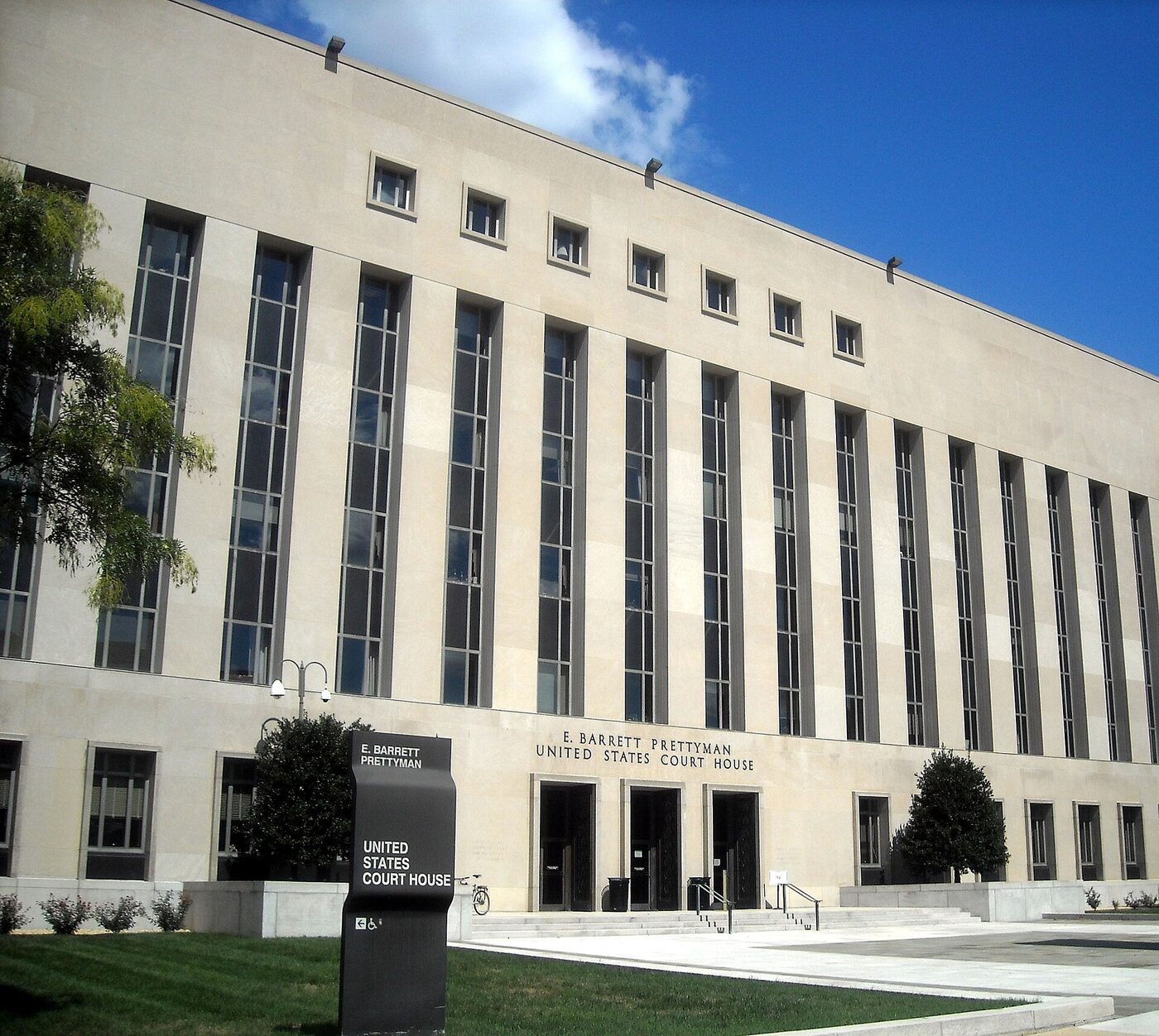
On 19 December 2003 the Court of Appeals for the District of Columbia Circuit reversed, in Recording Industry Association of America, Inc. v. Verizon Internet Services, Inc., 351 F.3d 1229. The opinion was written by Chief Judge Douglas Ginsburg for a panel that also included John G. Roberts, Jr. and Senior Circuit Judge Stephen F. Williams. It decided the case on the statute alone and expressly declined to reach either constitutional argument. Reading section 512 as a whole — four safe harbours, of which the first covers mere transmission and the third covers material stored at a user's direction — the court held that a subpoena may issue only to a provider storing infringing material on its own equipment, not to one acting as a conduit for files moving between two subscribers' own machines. Congress, it observed, had no reason to foresee peer-to-peer file sharing when it wrote the section, and the remedy for that was not judicial:
It is not the province of the courts, however, to rewrite the DMCA in order to make it fit a new and unforeseen internet architecture, no matter how damaging that development has been to the music industry or threatens being to the motion picture and software industries.

The Eighth Circuit reached the same conclusion on the same statute in In re Charter Communications, Inc., Subpoena Enforcement Matter, 393 F.3d 771, filed on 4 January 2005. The Supreme Court declined to review the Verizon decision in 2004.
The consequence was procedural and expensive. Identifying an anonymous subscriber now meant filing an actual lawsuit against an unnamed defendant and persuading a judge to allow discovery of the name — the route taken in Sony Music Entertainment Inc. v. Does 1-40, 326 F. Supp. 2d 556 (S.D.N.Y.), decided on 26 July 2004, where the court weighed the concreteness of the prima facie claim, the specificity of the request, the absence of other means, the need for the information to advance the claim and the defendants' expectation of privacy. A clerk's rubber stamp had become a contested motion.
It is worth being exact about what this episode is and is not evidence of. The company fought a demand for subscriber names, at length and successfully, in the years its complaint group was running. Whether the group discussed the case cannot be established from what survives of it. The case is recorded here because it belongs to the same company in the same years, and because the constitutional argument Verizon raised and the court did not need — that a subpoena procedure without safeguards endangers anonymous speech — is precisely the argument that mattered to anyone posting a complaint under a pseudonym.
The standards courts built for unmasking
That argument was being worked out elsewhere at the same time, in cases with no copyright in them at all: suits by companies against anonymous critics on message boards, in which the whole object of the litigation was frequently the name rather than the damages.
The procedure is a two-step. A plaintiff subpoenas the site to obtain the network address behind a posting, then subpoenas the provider that owns the address for the subscriber's identity. Nothing requires the site to keep such records or to tell anyone it has been asked; a provider may be obliged to notify its subscriber, and the subscriber may then move to quash, but the provider is not obliged to fight on the subscriber's behalf. The whole question is therefore what a court will require of a plaintiff before letting the second subpoena run, and American courts answered it four different ways.
- Columbia Insurance Co. v. Seescandy.com, 185 F.R.D. 573 (N.D. Cal. 1999), one of the earliest, likened pre-service discovery of this kind to the process by which a criminal investigator must show probable cause before a warrant issues, and required among other things that the plaintiff's suit be able to withstand a motion to dismiss.
- A Virginia circuit court, in In re Subpoena Duces Tecum to America Online (2000), applied a good-faith standard, asking only whether the party seeking the subpoena had a legitimate, good-faith basis to contend that it might be the victim of actionable conduct — the most permissive of the tests, the one most often criticised afterwards, and one reversed on other grounds by the Supreme Court of Virginia the following year.
- Dendrite International, Inc. v. Doe No. 3, 342 N.J. Super. 134 (App. Div. 2001), arose from anonymous criticism of a pharmaceutical software company on a Yahoo message board and produced the most demanding framework: the plaintiff must make good-faith efforts to notify the poster and give a reasonable chance to respond; must identify the exact statements complained of; must plead a prima facie cause of action; must support each element with sufficient evidence; and the court must then balance the poster's First Amendment interest in anonymity against the strength of that case and the necessity of the disclosure.
- Doe v. Cahill, 884 A.2d 451 (Del. 2005), a defamation suit by a town council member over two anonymous comments posted to a local news blog, took the first and third of those requirements, called the result a summary-judgment standard, and applied it to reverse the disclosure order and dismiss the claim.
The Dendrite framework was subsequently adopted by the Arizona Court of Appeals in Mobilisa, Inc. v. Doe, decided on 27 November 2007, and by Maryland's highest court in Independent Newspapers, Inc. v. Brodie in 2009, which set out a five-step process of notice, an opportunity to be heard, identification of the exact statements, a prima facie showing and a balancing test. There is still no single federal standard.
The relevance to a room like this one is direct, and it is worth stating without dramatising it. A person posting a billing complaint about a large company under a pseudonym in 2003 was, in law, in exactly the position these cases describe: identifiable only through records held by a third party, protected not by any technical property of Usenet but by whatever standard a court would apply if someone asked. There is no record of anyone ever asking about this group. The general subject of what those records are and who may read them belongs to alt.privacy and is not pursued further here.
What became of the form
The complaint traffic did not stop; it moved, and the destinations it moved to were built on the same statutory footing that had protected the news server. Section 230 is why a site can host a million consumer reviews without becoming the author of any of them, and every general review platform, specialist forum and rating service that absorbed this kind of writing after Usenet thinned out depends on it. What changed was not the legal protection but the shape of the room: a moderated commercial platform with a proprietor, a terms-of-service document and an incentive to keep advertisers, in place of an unowned name propagating between volunteers.
For this group's own subject matter the successor is easy to name. DSLReports, created by Justin Beech in June 1999 and eventually running more than two hundred forums on broadband and telephone service, took in exactly the traffic — provisioning failures, billing disputes, carrier-by-carrier comparison — that a group like this one had carried, and it did so with a proprietor, a moderation policy and a business behind it. It is also a demonstration of the difference. When the site stopped in January 2025 and went fully dark that March, everything in it went with it; the newsgroup name, which nobody owns, is still in the file.
Three later developments changed the law around the form, and all three postdate the 2000–2004 window in which this directory's gateway operated. They are recorded here for completeness rather than as part of the group's own story.
The first cut against complainants. In AT&T Mobility LLC v. Concepcion, 563 U.S. 333, decided on 27 April 2011, the Supreme Court held by five votes to four that California's rule invalidating arbitration agreements containing class-action waivers was pre-empted by the Federal Arbitration Act. Justice Breyer, dissenting for four members of the Court, put the practical objection in a sentence: what rational lawyer, he asked, would have signed on to represent the plaintiffs for the possibility of fees stemming from a claim worth $30.22? The decision is about a mobile carrier's customer contract, and it is the reason a great many small consumer disputes with large telecommunications companies are now individually arbitrated rather than aggregated.
The second cut the other way. The Consumer Review Fairness Act of 2016, passed by the House on a voice vote in September of that year and by the Senate by unanimous consent in November, and signed on 14 December 2016, voids clauses in form contracts that restrict a consumer's ability to write about the goods or services the contract covers. The practice it outlawed — a non-disparagement clause buried in standard terms, enforced against a customer who left a bad review — is the twenty-first-century version of exactly the fight the -sucks cases were about, conducted in contract rather than in trademark, and settled by statute rather than case by case.
The third is bureaucratic and easy to underrate: complaint portals became publications. Federal and state agencies that had received consumer complaints into private files for decades began putting structured complaint data on the web, where anyone could read it and anyone could count it. The largest of them, the Consumer Financial Protection Bureau's complaint database, was established in 2011 and had published more than four million complaints by 2023. It supplied, from an official source, the one thing an informal complaint had never previously produced — a public record that somebody else could read. It took the regulators about a decade longer than it had taken a stranger with a news client and a control message.
What the record does not show
Almost everything about this group as a going concern is missing, and the gaps should be stated rather than filled.
- There is no article count, no subscriber estimate and no traffic figure, for this group or for any of the 113.
- No thread title, posting date, participant or exchange is quoted anywhere in this article, because none has been verified. Whether the group discussed the merger, the strike, the subpoena litigation or anything else cannot be established from the administrative record, which is all that has been consulted.
- Nothing is known about [email protected] or about the address in the approval header beyond what the three control messages say. Whether the same person read the group afterwards, or ever posted to it, is not recorded.
- There is no evidence that the company ever objected to the group, sought its removal, or was aware of it. Given the analysis above — no registrar, no registrant, no contract — there was no obvious step for it to take, but the absence of a record is not proof that nothing happened.
- The two sibling groups are as undocumented as the parent. Whether either ever carried an article is unknown.
- The date of 14 July 2003 is the date of the only surviving control message, which is the best evidence available and not quite the same thing as a creation date. Groups in this hierarchy are sometimes re-created by a fresh newgroup message years after they first appeared, and the archive preserves what it captured rather than everything that was sent.
The honest summary is that this group is documented at its two ends and nowhere in the middle: the paperwork that made it and the register that still lists it are both intact, and the conversation between them is gone. That is the ordinary condition of alt.* groups of this vintage, and inventing colour to cover it would be worth less than saying so.
Scope and limits
A note on what this article is doing, since a good deal of it is law.
Every case named above is reported with its court or panel, its date and its actual holding, and no view is expressed here about whether any of them was rightly decided. Where decisions conflict — and on the central question of the -sucks form two administrative panels reached opposite conclusions within nine weeks — both are set out and the later settlement between them is described as a settlement, not as a vindication. Where a quotation appears it is verbatim, and the text says in each case whose words they are: a regulator announcing a condition, a court stating a holding, a panel recording a numbered finding of fact.
The law described is American, because the company, the courts and all but one of the tribunals are. The domain-name policy is international in reach but is arbitration under a contract, not adjudication by a court, and its panels decide the fate of registrations and nothing else. Nothing here is advice, and none of it should be read as describing the law as it stands today; the most recent developments recorded above are years old at the time of writing, and the field has not stopped moving.
Neighbouring subjects belong to neighbouring pages, each linked above at the point where it first became relevant: the formalities this hierarchy dispensed with to the alt.* hub, the browser company behind the genre's best-documented earlier specimen to alt.netscape.sucks, the engineering of telephone plant to alt.dcom.telecom, the untargeted version of the same impulse to alt.complainers.bitch-n-moan, and the question of what a service provider knows about a subscriber to alt.privacy. What this page owns is the corporate-criticism form itself: a naming convention that cost nothing, said everything before a word was posted, and turned out to be the one version of the complaint that no owner of a mark could take away.
Reading alt.verizon-sucks today
- Historical archive: Google Groups — alt.verizon-sucks (coverage varies by group and era).
- Open in a newsreader:
news:alt.verizon-sucks— the original site offered exactly this link, and it still works if your system has a newsreader registered for thenews:scheme. - Live access: point an NNTP newsreader at a modern server — see accessing Usenet today.
- The original news2mail e-mail subscription service ended in the mid-2000s and no longer operates.