soc.culture.british
Britain and the British.
A general-interest group covering British life. Topics ran from devolution and the NHS to proper tea, regional accents and whether various things were "grim up north".
It coexisted with the uk.* hierarchy; soc.culture.british was the outward-facing address, in the worldwide soc.culture.* tier rather than a national one.
On this page
- The vote of January 1990
- The line in the newsgroups file
- uk.*: a national hierarchy next door
- Paperwork at home: how a uk.* group was made
- Two addresses for one country
- Who could post from Britain, and when
- Addresses that read backwards
- What the record shows was in scope
- Four nations, and what the name covers
- The era in dates: 1992 to 1999
- Northern Ireland in the documents
- After the busiest years: the four results of 2016
- What a culture group carried: institutions and dates
- Accent, class and region, as documented
- What the record does not show
- Scope and limits of this page
The vote of January 1990
The group has paperwork, and it survives. The Internet Systems Consortium mirrors the administrative record of news.announce.newgroups, and its file for soc.culture.british contains exactly one document: the result of the creation vote. It is headed “RESULTS OF VOTING FOR soc.culture.british”, it carries a Date header of Sunday 21 January 1990, and it was posted by a votetaker at the University of Saskatchewan. No Request for Discussion and no Call for Votes were kept alongside it, which is common for proposals of that vintage; the result is the whole surviving file.
There were 205 valid ‘YES’ votes cast. There were 23 valid ‘NO’ votes cast.
The votetaker went on to observe that this “easily” met the two standing requirements: a margin of at least a hundred more yes votes than no votes, and at least two-thirds of all valid votes in favour. The arithmetic bears that out. The margin was 182, and 205 of 228 ballots is a little under ninety per cent. The Big-Eight creation ritual that produced those thresholds is described on the soc.* hierarchy page and is not retold here; what matters for this page is that soc.culture.british entered the world by the ordinary international procedure, in the ordinary international namespace, and that the record proves it.
The result posting also did what the practice of the day expected: it published the full electorate. Every one of the 228 ballots appears with an address, and about a hundred of them with a name as well, so that any reader could check the count. That list is the single richest piece of evidence this group has left about who wanted it, and it resists tidy summary, because a good many entries are bang paths, percent-hacks and relay addresses whose home host is a matter of interpretation rather than of reading a suffix. The shape of it is not in doubt. The great majority are North American: university addresses ending in .edu outnumber company addresses ending in .com, and between them those two suffixes account for well over half the electorate. A dozen ballots came by way of BITNET. Canadian universities are well represented, and there is a scattering from the Netherlands, Sweden, Finland, France, Ireland and Japan, together with United States military and government sites. Twenty-two — about one ballot in ten — carried British addresses.
That proportion is the most important number on this page. A group named for a country was voted into existence by an electorate that was nine parts foreign. The British ballots divide between the two constituencies that had network access at the time. Fifteen came from universities — Cambridge, Essex (two ballots), Warwick, York, Newcastle, Bristol, Cardiff, Glasgow, Strathclyde (two), Heriot-Watt, Swansea, University College London and Birmingham — and seven from commercial addresses under .co.uk, among them two from British Telecom, two from Standard Telephones and Cables, and one from a site bearing the name of the IBM PC User Group. One British ballot was submitted from uk.ac.strath.cs, an address written back to front in the British academic convention explained further down this page; two more arrived by way of NSFnet-Relay.AC.UK, the gateway that stitched the two conventions together.
The archived copy of the result carries a wide crosspost line: besides news.announce.newgroups and news.groups it names soc.culture.misc, soc.culture.celtic, soc.misc, rec.sport.soccer, rec.sport.misc, rec.arts.tv.uk, rec.misc, talk.bizarre and misc.misc. Whether that list was on the original posting or was added when the file was re-mailed into the archive — the copy's mail envelope is dated February 1992, two years after the Date header — cannot be settled from the file itself. It is worth noting either way, because it names, in 1990 or 1992, precisely the neighbourhoods the new group was expected to draw from: the Celtic group, the football group, the British television group.
The line in the newsgroups file
Usenet's equivalent of a catalogue entry is the newsgroups file: one line per group, a name and a short description, distributed with the hierarchy and offered by most newsreaders as a one-line guide. The line for this group has not changed in more than three decades. In the current file, as mirrored by the Internet Systems Consortium, it reads:
soc.culture.british Issues about Britain & those of British descent.
The same sentence appears as the body of the earliest newgroup control message preserved for the group, sent from a site in Wakefield, Massachusetts on 23 May 1991. It is not a charter in the later, formal sense — a paragraph of scope with rulings on advertisements and binaries — because Big-Eight proposals of 1989 and 1990 were not always held to that standard, and no charter document for this group survives in the archive. The newsgroups line is what there is, and it is more revealing than its length suggests.
Read it closely. It does not say “for people in Britain”. It names two audiences: issues about Britain, and those of British descent. The second half is a diaspora clause, written into the group's only line of official description. A reader who wonders why a country with a large and well-organised national hierarchy of its own also sustained a soc.culture group for twenty years can begin with that sentence and with the ninety per cent of the founding electorate who were not in the United Kingdom.
The group's later administrative history is thin and mostly negative, which is itself informative. On 4 November 2001 an rmgroup control message was issued asking news servers to “remove the bogus newsgroup soc.culture.british”. It was not honoured: soc.culture.british is still in the newsgroups file today, one of 139 surviving soc.culture.* groups, and the message did not come from the address that news administrators of the period were configured to trust for the Big Eight. Unauthorised control messages of this kind were a routine hazard of the late 1990s and early 2000s, and the standard defence — ignoring control messages that are not signed by the right party — worked as designed.
uk.*: a national hierarchy next door
Britain's other Usenet address was not a group but a whole tree. The uk.* hierarchy is a full national namespace with its own history, its own written constitution, its own elected committee and its own officer empowered to create and delete groups. It is not part of the Big Eight; its affairs are settled at home, and always have been.
The connection goes back further than the hierarchy. Unix arrived at the University of Kent at Canterbury in 1976, brought in by Peter Collinson; in 1979 the university set up a UUCP test service to Bell Labs in the United States, and the first UUCP mail from America reached Britain later that year. Mail to the Netherlands and Denmark followed in 1980, and became a regular service through EUnet in 1982. Kent also provided the first connections for non-academic users in the early 1980s. The network that grew out of this became known as UKnet, and its name is still fossilised in the hierarchy: the one-line description of uk.misc reads “General interest to everyone on UKnet”, a sentence written for a country whose Usenet had one door.
What grew from that door is substantial. The uk.* checkgroups list — the hierarchy's own authoritative inventory — currently carries 342 groups. For scale, the entire Big Eight in the same snapshot of the newsgroups file runs to about 1,900. One country's hierarchy is roughly a fifth the size of the whole international namespace it sits beside.
The subject coverage is domestic in a way the soc.culture shelf could never be. There is uk.d-i-y for household repairs and uk.legal for the law of the land, with a moderated companion in uk.legal.moderated. There are fourteen groups under uk.politics: one each for censorship, the constitution, crime, drugs, economics, the electoral system, the environment, guns, identity cards, Parliament, political philosophy, rural policy and animals, plus a miscellany. There is uk.current-events.general and, separately, uk.current-events.n-ireland, described simply as “Events in Northern Ireland”. There is a broadcasting sub-tree so finely divided that BBC Radios 1 through 5 and the World Service each have their own group, alongside uk.media.radio.archers for a single radio serial and uk.media.newspapers for the press. And there are thirty-three groups under uk.local, from uk.local.cornwall to uk.local.scot-highlands, uk.local.geordie (“The Culture and Civilisation centred on Newcastle upon Tyne”) and uk.local.teesside.
A national hierarchy with thirty-three local groups is making a claim about what a country is: not one conversation but several dozen, sorted by county. That is the structural fact underneath everything else on this page.
Paperwork at home: how a uk.* group was made
The uk.* hierarchy is governed by three documents, described on its own website, without irony, as “the nearest thing to ‘legal documents’ that you ever get in Usenet”: Guidelines for Group Creation within the UK Hierarchy, Voting Procedures within the UK Hierarchy, and The UK Usenet Committee. All three were adopted on the same day, 7 August 1995, by votes conducted in the newsgroup uk.net.news. The tallies as printed in the documents themselves are 93 in favour to 11 against for the guidelines, 91 to 13 for the voting procedures, and 76 to 23 for the committee's terms of reference. All three have been amended repeatedly since — the guidelines by further votes in 1997, twice in 1998, and again in 1999, 2000 and twice in 2001; the voting procedures as recently as 2003 and the committee document as recently as 2010.
The procedure those documents set out is recognisably a cousin of the Big-Eight one, and pointedly not a copy of it. A proposal begins as a Request for Discussion mailed not to the network at large but to a single address, [email protected], in that officer's capacity as moderator of uk.net.news.announce. Control crossposts it to uk.net.news.announce and uk.net.news.config, and the guidelines are strict about which of those is the record: “Only postings which are cross posted to uk.net.news.config will be considered part of the definitive discussion.” Discussion runs for a minimum of ten days, not thirty.
The RFD should include the name, the charter, whether the group is moderated, the moderator if there is one, a one-line summary of at most 79 characters for the newsgroups file, and the length of the discussion period; anything missing has to be settled during the discussion. The charter requirements are unusually explicit about the things that actually caused trouble: it “shall make clear what the topic of discussion within the group is to be”, it is advised to state whether advertisements and job adverts are welcome, and binaries are forbidden unless a hierarchy charter says otherwise — “In any uk.* hierarchy or group whose charter does not mention binaries, the assumption shall be that binaries are forbidden.” Retromoderation, the practice of moderating a group by cancelling articles after they appear, is banned outright, and an RFD proposing it “will not be accepted”.
Most proposals never reach a vote. If consensus emerges within the discussion period, the proponent may ask for the fast track: Control announces that the group will be created after not less than five days unless valid objections arrive, and six objections are enough to stop it. Where a group template already exists, a group can be created by Quick Creation with no RFD at all — the proponent supplies between eleven and twenty named supporters with valid addresses, Control writes to each of them, and if at least eleven confirm within ten days the group is announced for creation five days after that.
When a vote is genuinely required it is run by UKVoting, an independent pool of volunteer votetakers with their own coordinator and their own address. The voting period is at least 18 and at most 28 days. Only mailed votes count; posted votes and proxies do not. The votetaker must acknowledge every ballot within five days, must publish every voter's name, address and vote so the result can be checked, and must reject all the votes of anyone caught voting from several addresses.
Then comes the rule that most clearly distinguishes the national hierarchy from the international one. In uk.*, a vote succeeds if a majority of valid votes are in favour and the number in favour is at least twelve greater than the number against. Twelve, not a hundred. It is a threshold sized for the electorate a single country can muster, and it is the arithmetic that made a 342-group hierarchy possible. Where a ballot offers several mutually exclusive options, the votetaker compares every pair of options and eliminates those not preferred to the status quo by the required margin — a Condorcet count, which the voting document acknowledges in a closing editorial note as “essentially that devised by the French mathematician the Marquis de Condorcet (1743-94)”. Very few volunteer-run institutions of any kind cite an eighteenth-century mathematician in their rules of procedure.
After a successful result there is a five-day waiting period, and then one person acts. The committee document is unambiguous: Control and Deputy Control, “acting under the name [email protected]”, “will be the only people entitled to issue valid ‘newgroup’, ‘rmgroup’ and ‘checkgroups’ control messages for the uk.* hierarchy”. This is not merely an internal claim. The control.ctl file shipped with the INN news server — the configuration that decides which control messages a machine obeys — drops every newgroup and rmgroup for uk.* from every sender, and then re-admits exactly one: [email protected], with a PGP signature verified against the key for uk.net.news.announce. A national hierarchy's paperwork is only as good as the cryptography behind it, and uk.*'s is signed.
The committee itself has two classes of member: nine Open Members, any of whom need only be a reader of uk.* articles, elected for three-year terms with at least three seats falling vacant at each annual October election; and up to four Appointed Members, who must be people involved in providing or propagating Usenet in the United Kingdom, confirmed annually each January. Rule changes are not discussed in the group where groups are discussed: they go to uk.net.news.management, and that group is “the definitive record of discussion”. A fourth administration group, uk.net.news.moderation, carries discussion of the moderation of uk.* groups. Four newsgroups, in other words, to run one country's newsgroups.
Two addresses for one country
Here, then, is the situation that defines soc.culture.british and separates it from almost every other group on the soc.culture shelf. Most countries in that branch had one address on Usenet and it was the soc.culture one. Britain had two, and they were not duplicates. uk.* served people in Britain discussing anything — the law, the buses, the wiring, the county, the radio serial. soc.culture.british served an international readership discussing Britain. The first is a country talking to itself in forty local rooms; the second is a country being discussed in one room by a membership that, on the only headcount the record provides, was ninety per cent elsewhere.
The distinction is visible in the administrative record rather than inferred from it. When a proposal for soc.culture.british.minorities was filed on 9 January 1993, its Newsgroups line reads: news.announce.newgroups, news.groups, soc.culture.british, rec.arts.tv.uk, uk.politics. The proponent, writing from a mathematics department in Texas with a reply address at King's College London, put the same proposal in front of the international group and the domestic hierarchy at once, because those were two different rooms containing two different sets of people. His charter is worth quoting for what it assumed about both:
As Great Britain becomes increasingly multicultural, there is an increasing need for discussion of race relations and the special concerns of ethnic minorities. This group is intended to be inclusive of all perspectives and ethnicities (including the indigenous British) and will serve as a forum for the examination of the condition and identity of ethnic minorities in the UK, and the encouragement of constructive social dialogue across cultural and racial boundaries.
The rationale that followed it argued that Usenet already had soc.culture.african.american and soc.culture.asian.american, that “minority issues in Britain are often very different from those in America”, and that the proposal “should be considered on its own merits rather than as a derivative of the American approach”. That is an argument about a British subject being conducted, necessarily, in an American-shaped namespace — which is a reasonable one-sentence description of what the soc.culture branch was for and what its members had to work around.
A second proposal, soc.culture.british.asian, was filed on 27 September 2001 with a Newsgroups line of news.announce.newgroups, news.groups and soc.culture.british. Its newsgroups line was to read “Discussion forum for British Asians”; its charter proposed “a meeting place and forum for discussing issues of culture, race and identity that affect many Asian immigrants in the United Kingdom”, and its rationale noted that the nearest existing group, soc.culture.asian.american, was intended for the United States. Neither proposal reached a result: the archive holds the RFD for each and no Call for Votes and no result, and neither name appears in the newsgroups file. Both are nonetheless evidence of what people believed soc.culture.british was and was not covering, filed eight years apart and pointing the same way.
The relationship ran in the other direction too. The 1995 Request for Discussion for soc.culture.welsh — which passed on 11 April that year by 285 votes to 15 — was crossposted to soc.culture.british, soc.culture.celtic and rec.music.celtic, and its charter contains a paragraph about the traffic it expected to share:
It is anticipated that a degree of cross-posting with soc.culture.celtic, soc.culture.british, rec.music.celtic, rec.travel.europe, and other groups is likely to occur. Contributors should ensure that cross-posted material is genuinely relevant to all groups, and be prepared to edit Newsgroups: and Followup-To: fields appropriately.
Crossposting is the mechanism by which two addresses for one country became, in practice, one conversation carried in several places at once — and, when it was done carelessly, the standing grievance of every group involved. Nothing in the surviving record lets anyone say how often it happened here or in what proportions. What the record does establish is that the people writing charters in the 1990s expected it, planned for it, and wrote instructions about it into the founding documents of the neighbouring groups.
Who could post from Britain, and when
The question of who could reach a newsgroup from Britain at all has an unusually well-documented answer, because Britain built its academic network early and built it to its own design.
The Coloured Book protocols — so called because each specification was identified by the colour of its cover — were first defined in 1975 by the Post Office's telecommunications division working with British universities and the computer industry, as a suite of standards for interoperation over X.25. They were in use on SERCnet from 1980 and on the South West Universities Computer Network from 1982. The family covered the ground the Internet suite covers: the Yellow Book transport service, the Green Book for terminal access, the Blue Book for file transfer, the Grey Book for mail, the Red Book for shipping batch jobs between machines and getting the output back. They are credited with providing the first complete X.25 standard, and with giving Britain, in a phrase that recurs in the histories, “several years lead over other countries”.
On 1 April 1984 those networks were consolidated into JANET, the Joint Academic Network. It went live with about fifty sites at line speeds of 9.6 kbit/s, two years before NSFNET began operating in the United States; the backbone was upgraded to 2 Mbit/s in the mid-1980s with 64 kbit/s access links, and JANET connected to NSFNET in 1989. A further upgrade in the early 1990s took the backbone to 8 Mbit/s and the access links to 2 Mbit/s, which made it, at the time, the fastest X.25 network in the world. For most of the 1980s, then, a British Usenet poster was in practice at a university, at a research council laboratory, or at one of the handful of computer and telecommunications companies with a link — which is exactly the pattern the 1990 ballot list shows.
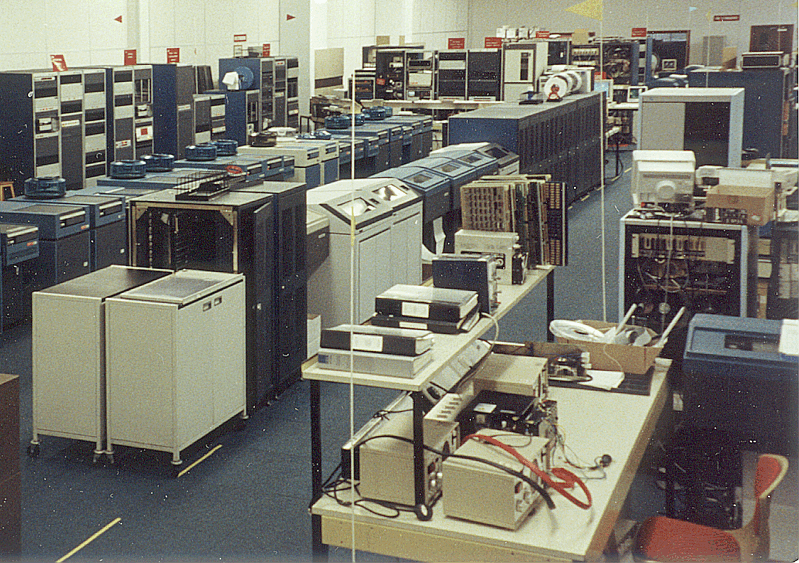

The transition to Internet protocols is dated to the month. Planning for the JANET Internet Protocol Service began in January 1991; it was set up as a pilot in March 1991, carrying Internet Protocol traffic over the existing network; within eight months IP traffic had overtaken X.25 traffic, and IP support became official that November. The two ran side by side for years afterwards. JANET's X.25 service — the transport underneath the Coloured Book protocols — was not closed entirely until August 1997.
Commercial access arrived in parallel. Pipex was formed in 1990 by Unipalm as The Public I.P. Exchange, the United Kingdom's first commercial Internet service provider; it began providing dial-up access in March 1992, and in the middle of that year began operating a 64 kbit/s transatlantic leased line to UUNET and a second link into JANET. One of its first customers was Demon Internet, founded on 1 June 1992 out of a discussion on the CIX conferencing system in which Cliff Stanford proposed that if two hundred people would each put up £120 for a year — ten pounds a month — he would build a home dial-up service on his company's infrastructure. Demon's standard dial-up gave each subscriber full TCP/IP on a static address and a hostname of their own under demon.co.uk, at ten pounds a month plus VAT, described in the company's own sales literature as a “tenner a month”; a subscriber could run services independently or use Demon's mail, news and IRC servers.
The effect on this group can be seen directly in the archive. The proposer's address on the January 1995 Request for Discussion for soc.culture.welsh ends in demon.co.uk: within three years of Demon's founding, Usenet's administrative traffic about a British group was being conducted from a British dial-up line. That is the whole change in a single header. Before 1992, joining an argument about Britain from Britain generally meant having an institutional account. After it, it meant having a telephone. The widening was not a British event but a network-wide one, remembered on Usenet as the Eternal September: from late 1993 and early 1994, service providers opened the network to a stream of newcomers which, unlike the annual September intake of North American students that the name puns on, never subsided.
Addresses that read backwards
British network addresses of the JANET era were written in the opposite order to everyone else's, and the reason is a piece of standards history that left a permanent mark on the Internet.
The JANET Name Registration Scheme was proposed in 1983 and used until the Domain Name System displaced it. It was pseudo-hierarchical and, crucially, big-endian: the most significant component came first. Its second-level names were UK.AC for academic and scientific sites, UK.CO for commercial ones and UK.MOD for the Ministry of Defence, with individual second-level names for organisations that fitted none of those — UK.BL for the British Library, UK.NEL for the National Engineering Laboratory. Every name had a standard long form and an abbreviated form of up to eighteen characters, so that UK.AC.CAMBRIDGE was the formal equivalent of the UK.AC.CAM people actually typed. Names were canonically written in capitals.
The result is that what an Internet address renders as ucl.ac.uk was written UK.AC.UCL, and mail crossing between the two conventions had to be turned round in the middle. That was done by a gateway at University College London, which reconciled Grey Book addressing of the form [email protected] with the ARPA and Usenet form [email protected]. The gateway outlasted the scheme: the Domain Name System had become the de facto standard on JANET by 1994, but the last mail gateway was not withdrawn until the end of 1997.
The collision of the two conventions produced the era's best-loved networking joke. When Czechoslovakia was allocated the country code .cs, and many British academic addresses ended in .CS for the computer science department — as in UK.AC.somewhere.CS — mail intended for British universities was liable to be routed to Prague. The Strathclyde ballot in the 1990 soc.culture.british vote, cast from uk.ac.strath.cs, is a specimen of exactly the address shape involved.
The scheme's lasting legacy is the country code itself. RFC 920, in October 1984, set out the creation of country-code top-level domains using the two-letter codes from ISO 3166, under which the United Kingdom is GB. But the Name Registration Scheme had already fixed UK as its top-level name a few months before that list was compiled, and Britain kept what it had. The .uk domain was registered on 24 July 1985, the first country-code delegation ever made and only the second country code in use after .us; the delegation went to Andrew McDowell at University College London, the same institution that ran the mail gateway. GB was reserved and never came into general use.
The scheme also bequeathed the country its second-level structure, which surprises visitors to this day. Because NRS had sorted organisations into UK.AC, UK.CO and UK.MOD, the DNS namespace inherited ac.uk for universities, further education colleges, research establishments and learned societies, and co.uk for commercial entities — not edu and com, and not names registered directly at the second level. That structure has since grown to include gov.uk, nhs.uk, police.uk, sch.uk, org.uk, me.uk for personal names and ltd.uk and plc.uk, the last two restricted to private and public limited companies incorporated under the Companies Acts, whose registrations must correspond to the registered company name. Registration is administered by Nominet UK, and direct registrations under .uk itself were not accepted until 10 June 2014, nearly thirty years after the domain was created.
None of this is decoration. It explains why the British ballots in the group's founding vote look the way they do, why a British poster's address announced their institution's category before their institution's name, and why the group's readers spent two decades looking at a domain suffix that is, in effect, a fossil of a naming scheme that lost.
What the record shows was in scope
The group's one line of official description gives two headings, Britain and British descent, and both are broad. What can be said with confidence about the subject matter is what can be established from documents: the neighbouring charters, the daughter proposals, the crosspost lines, and the shape of the domestic hierarchy that took the traffic soc.culture.british did not.
The constitutional and political material is attested directly. The 1993 minorities proposal was crossposted to uk.politics; the 1995 Welsh charter anticipated crossposting with soc.culture.british; the 1990 founding result was crossposted to soc.culture.celtic. Northern Ireland, devolution, the monarchy as a constitutional institution, Britain's relationship with the European Union and the question of what the country's name covers were all live public arguments across the group's whole life, and all of them are documented in the section below on dates.
The domestic and cultural material can be read off the uk.* namespace, which was built by the same population and describes what British Usenet users actually wanted rooms for: television and radio programme by programme, newspapers, films, home cinema, do-it-yourself, the law, adoption, real ale, restaurants and — a group that exists and whose newsgroups line reads, in full, “Discussion about sausages” — uk.food+drink.sausages. There is also uk.culture.language.english, described as “English language use and abuse”, and uk.culture.nostalgia.1980s. The soc.culture group carried a version of all of this for an audience that was substantially not resident, which changes the register of the questions without changing the topics.
What cannot be established is anything more granular. No archive of this group's threads is analysed here, no thread titles are quoted, no posting volumes are known, and no participant is named. Where later sections describe subjects, they describe things that were demonstrably matters of public argument in Britain during the group's active life, with dates and figures attached, and leave the question of how they were argued in this particular group to the archives.
Four nations, and what the name covers
“British” is a contested description in parts of the United Kingdom, and a page about a newsgroup called soc.culture.british has to say so carefully, because the group's name necessarily took one form and no single form was available that everybody accepted.
The legal position is settled and can be stated plainly. Great Britain is the island containing England, Scotland and Wales, and became a single state on 1 May 1707 when the Acts of Union gave effect to the Treaty of Union agreed the previous July. The Acts of Union 1800 merged that kingdom with the Kingdom of Ireland from 1 January 1801, creating the United Kingdom of Great Britain and Ireland. After most of Ireland left, the Royal and Parliamentary Titles Act 1927, which received royal assent on 12 April that year, altered the formal name of the state to the United Kingdom of Great Britain and Northern Ireland. So “Great Britain” and “the United Kingdom” are not synonyms, have not been synonyms since 1801, and neither is a synonym for England.
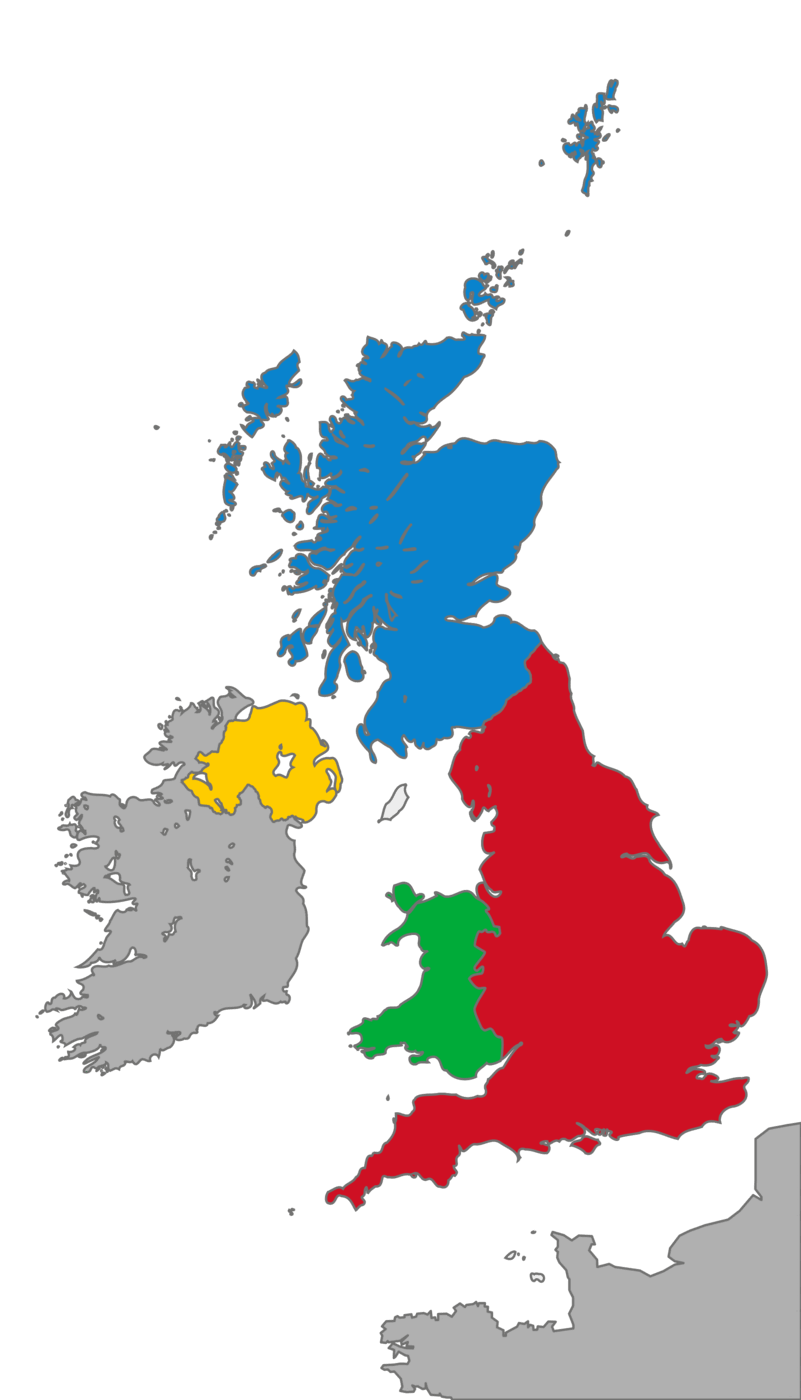

The identity position is not settled, and the state's own statistics say so. In the 2011 census, 60.4 per cent of respondents in England chose an “English only” identity and 19.2 per cent chose “British only”; in Wales the equivalent figures were 57.5 per cent Welsh only and 16.9 per cent British only; in Scotland 62 per cent identified as Scottish only, 18 per cent as Scottish and British, and 8 per cent as British only. In the 2021 census in Northern Ireland, 31.9 per cent chose “British only”, 29.1 per cent “Irish only” and 19.8 per cent “Northern Irish only”. The figures move, sometimes sharply, and the Office for National Statistics has cautioned that a large shift in England between 2011 and 2021 is likely to reflect a change in the order the options were listed on the form rather than a change of mind. The caution is worth repeating: these are answers to a questionnaire, not measurements of a substance.
For Northern Ireland the point is not merely statistical but written into an international agreement. Article 1(vi) of the Good Friday Agreement commits both governments to
Recognise the birthright of all the people of Northern Ireland to identify themselves and be accepted as Irish, or British, or both, as they may so choose, and accordingly confirm that their right to hold both British and Irish citizenship is accepted by both Governments and would not be affected by any future change in the status of Northern Ireland.
A treaty provision that explicitly makes national identity a matter of individual choice is a strong documentary statement that the adjective in this group's name does not attach uniformly to everyone it might be applied to.
Usenet's own namespace registered the same fact in its own way. soc.culture.scottish (“Anything regarding Scotland or things Scots”), soc.culture.welsh (“The people, language and history of Wales”), soc.culture.irish (“Ireland and Irish culture”, which passed on 12 May 1995 by 539 votes to 21) and soc.culture.celtic (“Irish, Scottish, Breton, Cornish, Manx & Welsh”) all exist. There has never been a soc.culture.english. The domestic hierarchies followed the same logic: separate scot.*, wales.*, ni.* and england.* trees were formed at about the same time as uk.*, according to the UK newsadmins' FAQ, though their equivalents of Control and committee had all ceased operation by around 2002 and their groups have run unattended since.
The Welsh proposal of 1995 is instructive about why a nation might want its own room even when a British one already existed. Its background section explains that soc.culture.celtic had covered all the Celtic countries adequately in its early days around 1989 and 1990, but that “the increasing volume of the group and the dominance of Irish affairs has rather tended to discourage potential participants with other interests”. Its charter provided that contributions in English or Welsh would be “equally welcome”, and that Breton or Cornish might be used where appropriate. A namespace question about who shares a room turns out, reliably, to be a question about whose subject gets crowded out.
The group's own name, then, took the only form its founders could plausibly have chosen for a worldwide group about the state and the islands, and it was the form that the census, the Agreement and the neighbouring newsgroups all indicate is not accepted by everyone as a description of themselves. Both of those things are true and neither cancels the other.
The era in dates: 1992 to 1999
The group's active life ran through a period of constitutional change that is entirely a matter of public record, and the dates are worth having in one place because so much of what a group like this carried was commentary on them.
On 16 September 1992, after a day in which the Bank of England bought sterling without effect and the base rate was raised from 10 to 12 per cent with a promise of 15, the Chancellor, Norman Lamont, announced at seven in the evening that Britain would leave the European Exchange Rate Mechanism. The following year the Maastricht Treaty was ratified in circumstances that shaped the next two decades of British politics: the United Kingdom took an opt-out from the Agreement on Social Policy and, separately, from the obligation to enter the single-currency stage of monetary union, and John Major carried ratification through the Commons only by tying it to a vote of confidence in his government on 23 July 1993.
On 1 May 1997 the general election ended eighteen years of Conservative government. Labour won 418 seats and a majority of 177, the largest in its history; the Conservatives were reduced to 165 seats, with no members at all outside England.
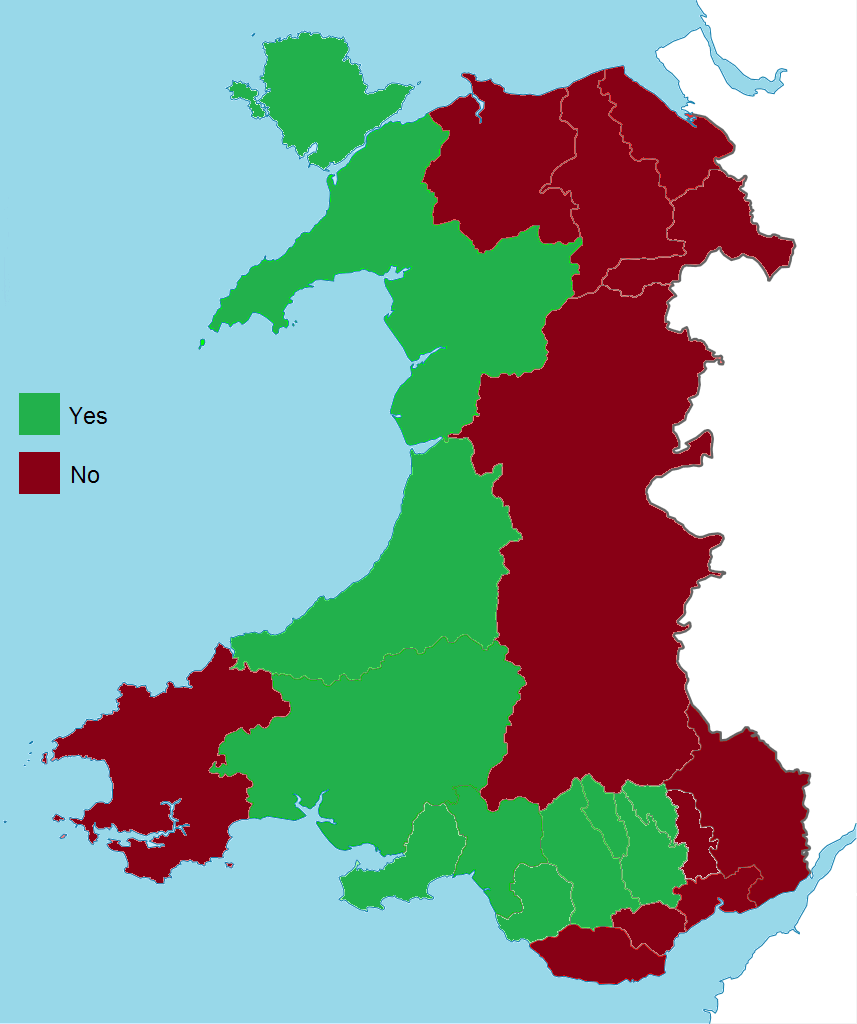
Devolution followed within months. Scotland voted on 11 September 1997 on two questions, approving a Scottish Parliament by 74.3 per cent and tax-varying powers for it by 63.5 per cent — 1,512,889 votes to 870,263 on the second question — on a turnout of 60.4 per cent. Wales voted a week later, on 18 September, and approved a National Assembly by 559,419 votes to 552,698: 50.3 per cent to 49.7, a margin of 6,721 votes on a turnout of about half the electorate, with the outcome resting on the last result to be declared. The Scotland Act 1998 and the Government of Wales Act 1998 followed, and the first elections to both bodies were held on the same day, 6 May 1999, returning 129 members in Edinburgh and 60 in Cardiff.

The European question ran underneath all of it. The euro was introduced on 1 January 1999 without British participation. Gordon Brown and his adviser Ed Balls had set out five economic tests in 1997 — on convergence, flexibility, investment, the financial services industry and growth and employment — that were to be assessed before any decision to join; the Treasury made its first assessment in October 1997 and concluded that the economy was neither sufficiently converged nor sufficiently flexible, and its second, running to some 250 pages with eighteen supporting studies, in June 2003, on the basis of which membership was ruled out for the duration of that Parliament. No decision to adopt the currency was ever taken.
Northern Ireland in the documents
Northern Ireland ran through the group's whole life, and is treated here as the documents treat it: as a sequence of instruments and results with dates attached. More than 3,500 deaths are attributed to the conflict known as the Troubles, which ran for about thirty years from the late 1960s to 1998.
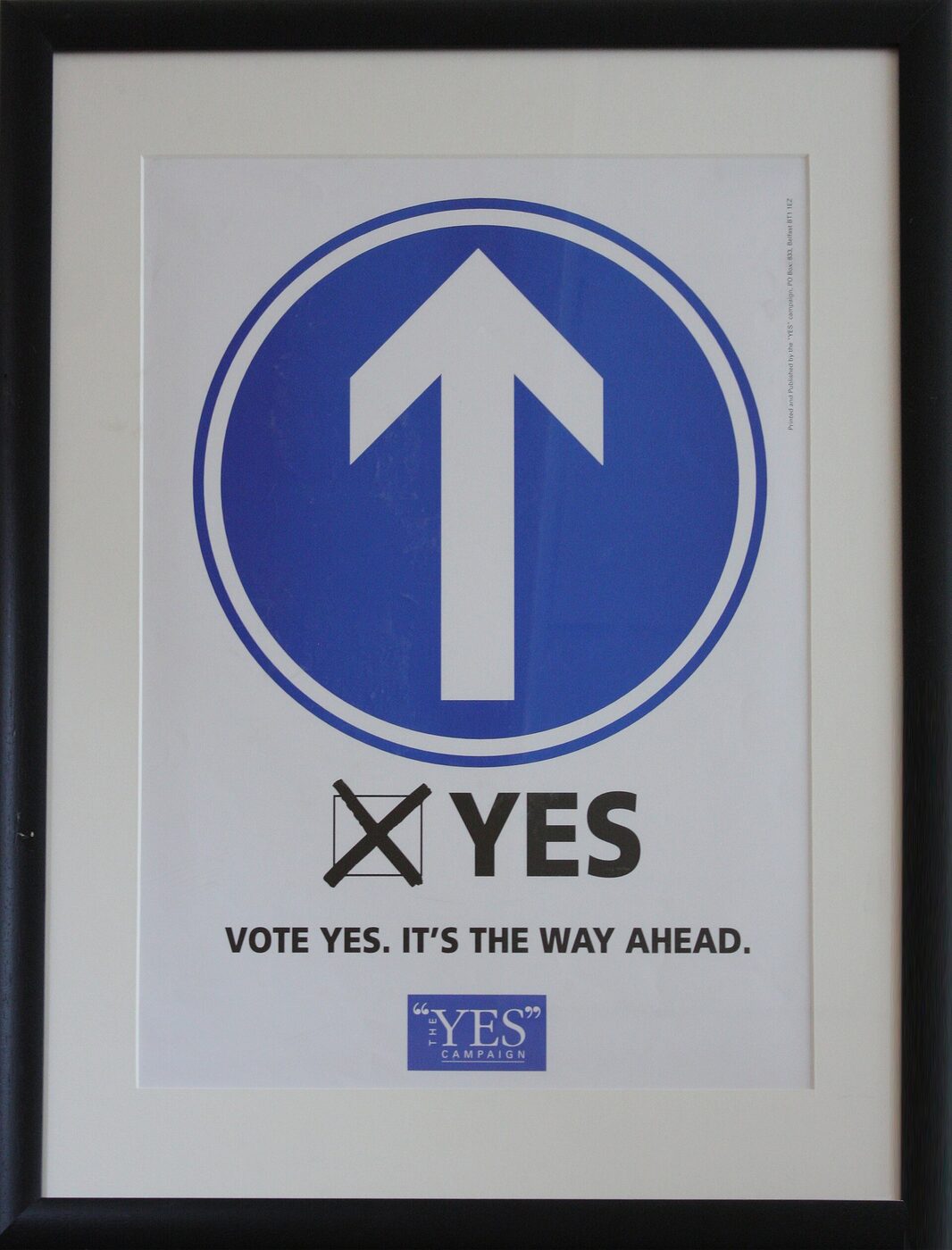
The Good Friday Agreement, also called the Belfast Agreement, is a pair of documents agreed in Belfast on Good Friday, 10 April 1998: a multi-party agreement between most of Northern Ireland's political parties, and an international agreement between the British and Irish governments. It included acceptance of the principle of consent, commitments on civil and political rights and parity of esteem, police reform, paramilitary disarmament, the early release of prisoners and demilitarisation, and it created institutions on a North–South and an East–West axis. The Democratic Unionist Party was the only major political grouping in Northern Ireland to oppose it.
It was put to referendums in both jurisdictions on 22 May 1998. In Northern Ireland 676,966 votes were cast in favour and 274,979 against, on a turnout of 81.1 per cent; in the Republic, the Nineteenth Amendment was carried by 1,442,583 to 85,748 on a turnout of 56.3 per cent. A study of the Northern Ireland vote by Bernadette Hayes found that almost all Catholic voters supported the Agreement, compared with about 57 per cent of Protestant voters, and argued that the fragility of cross-community support for parts of it helps explain the difficulties that followed.
.JPG)
Those difficulties are also a matter of dates. The Assembly was elected on 25 June 1998 and first met on 1 July, but existed only in shadow form until full powers were devolved on 2 December 1999. It has since been suspended six times: from 11 February to 30 May 2000; for twenty-four hours on 10 August 2001 and again on 22 September 2001; from 14 October 2002 to 7 May 2007, the long suspension that followed a police raid on Sinn Féin's offices at Stormont and the withdrawal of unionist parties from the Executive; from 9 January 2017 to 11 January 2020; and from 3 February 2022 to 3 February 2024. During suspensions the Assembly's legislative powers were exercised at Westminster through Orders in Council.
Usenet had rooms for all of this on both sides of the border between hierarchies. uk.current-events.n-ireland carried it domestically; soc.culture.irish, which passed in May 1995, carried it internationally alongside soc.culture.british; and, as the neighbouring charters expected, arguments crossed between them. The record establishes the rooms and the instruments. It does not establish who said what in them, and this page does not guess.
After the busiest years: the four results of 2016
The referendum of 23 June 2016 falls well after the group's high-traffic period, but it belongs on this page for one reason: it produced four different answers in four countries, which is the recurring structural fact this article has been describing in other registers.
Across the United Kingdom, 17,410,742 votes were cast to leave the European Union and 16,141,241 to remain — 51.89 per cent to 48.11 — on a turnout of 72.2 per cent. England voted 53.41 per cent to leave and Wales 52.53 per cent; Scotland voted 62.00 per cent to remain and Northern Ireland 55.78 per cent. Gibraltar, which voted too, returned 95.91 per cent for remain.
Characterisations of what that meant are for others; the arithmetic is the point here. A single state-wide result concealed two majorities running one way and two running the other, and the constituent-country breakdown was published by the same authority that published the aggregate. Whatever else the word in this group's name covers, it has never covered a single electorate voting as one.
What a culture group carried: institutions and dates
Behind any culture group stand the institutions its subject actually has, and Britain's are old, dated and well documented. The British Broadcasting Company was formed on 18 October 1922; the station 2LO was transferred to it and began broadcasting on 14 November, and the company was reconstituted under royal charter as the British Broadcasting Corporation on 1 January 1927. Its external service began on 19 December 1932 as the Empire Service, broadcasting on shortwave from Daventry to English speakers across the empire; it was renamed the Overseas Service in November 1939, supplemented by a European Service from 1941, and is now the BBC World Service. Commercial competition arrived with ITV in 1955. BBC Two followed in 1964, and two further channels launched a day apart in 1982: S4C on 1 November, the first television channel aimed specifically at a Welsh-speaking audience, and Channel 4 on 2 November. Channel 5 launched on 30 March 1997.
The external service matters more than it might seem for a group of this kind. A country that had spent six decades broadcasting itself to listeners abroad was, in the 1990s, acquiring a second and cheaper channel for the same traffic, on which the listeners could answer back and frequently correct the broadcaster. The uk.* hierarchy gave the World Service its own group, uk.media.radio.bbc-world-service, alongside groups for each of the domestic networks.
Literature had the Booker Prize, awarded annually since 1969 for the best single work of sustained fiction written in English. Food and drink had the Campaign for Real Ale, founded on 16 March 1971 — in Kruger's Bar at Dunquin in County Kerry, as it happens, and originally under the name the Campaign for the Revitalisation of Ale — which grew into a national consumer organisation with well over a hundred thousand members and gave uk.food+drink.real-ale its reason to exist.
Sport supplies the four-nations question in its most visible form, and the terminology is itself documented. The collective term is the Home Nations, used in sport for the four countries of the United Kingdom; in sports governed on an all-Ireland basis, such as rugby union under the Irish Rugby Football Union, the term takes in the island of Ireland as a whole alongside England, Scotland and Wales. The Football Association, formed in 1863 and the oldest in the world, governs the game in England and the Crown Dependencies but nowhere else in the United Kingdom; England, Scotland, Wales and Northern Ireland field separate international football teams. Rugby union's championship began in 1883 as the Home Nations Championship, became the Five Nations with France in 1910 and the Six Nations with Italy in 2000, and in it a single Ireland team represents both jurisdictions on the island. Domestic football's commercial reorganisation dates to 20 February 1992, when the Premier League was founded. A group named for the British could not discuss a weekend's results without the constitutional arrangements surfacing, because the constitutional arrangements are printed on the fixture list.
Accent, class and region, as documented
Three long-running British arguments have enough published scholarship attached to be described here without editorialising: accent, class and the north–south divide. All three were live public subjects during the group's active life.
Received Pronunciation is the accent of English regarded as standard in England and carrying high social prestige since the late nineteenth century and especially the early twentieth; the term describes pronunciation only, not vocabulary or grammar. In October 1984 David Rosewarne published a piece in the Times Educational Supplement coining the term Estuary English for a variety he located, as John Wells later summarised him, in the middle of “a continuum that has RP and London speech at either end”. Wells himself, in 2000, proposed defining it as “Standard English spoken with the accent of the southeast of England”, describing it as an emerging standard accent of England while conceding that it was “a social construct rather than a technically well-defined linguistic phenomenon”.
The label was disputed from the start, and the disputes are on the record. Peter Trudgill has written that the term is inappropriate “because it suggests that we are talking about a new variety, which we are not; and because it suggests that it is a variety of English confined to the banks of the Thames estuary, which it is not”, arguing that it actually refers to the lower-middle-class rather than working-class accents of the Home Counties. Peter Roach is blunter: “In reality there is no such accent and the term should be used with care.” He traces the idea to the sociolinguistic observation that public figures who would once have been expected to use RP now find it acceptable to speak with some London-area features, such as glottal stops, “which would in earlier times have caused comment or disapproval”. An argument in which the phoneticians disagree about whether the thing exists is not one this page is going to settle.
Class has an official measuring instrument. The National Statistics Socio-economic Classification, an adaptation of the Goldthorpe schema developed in the 1970s, replaced two earlier official classifications and came into major use with the 2001 census, having been rebased on the Standard Occupational Classification 2000. A country that rebases its official measure of its own class structure for each census is not one in which the subject is likely to be exhausted by conversation.
Region had both a phrase and a namespace. The north–south divide is the standard term for the cultural, economic and social differences between southern and northern England, and its boundaries are themselves contested in the literature. On Usenet the granularity was finer: the uk.local tree gave separate rooms to Cornwall, Devon, Dorset, Somerset, the South West as a bloc, Kent, Surrey, Hampshire, the Isle of Wight, Hertfordshire, London, East Anglia, the Midlands, Warwickshire, Birmingham, Bath, Derbyshire, Cumbria, Manchester, the North West, Yorkshire, Teesside, Sunderland, Newcastle, Ayrshire, Glasgow, the Scottish Highlands and Islands, north, south and west Wales, and the Channel Islands.
One long-running transatlantic argument has an authoritative and thoroughly unhelpful answer. Oxford spelling — the house style of the Oxford University Press and of the Oxford English Dictionary — uses -ize in words derived from the Greek suffix, giving organization and realize alongside analyse and paralyse, on etymological grounds, and affects around two hundred verbs. The -ize form has been used in Britain since the fifteenth century, and Cassell, Collins and Longman also list it first. It is therefore not an Americanism, and pointing this out has never once ended the argument.
What the record does not show
An honest reference page for a group of this kind has to state its gaps, because the gaps are large and the temptation to fill them is exactly what makes such pages untrustworthy.
- There is no surviving charter for soc.culture.british in the formal sense. The newsgroups line quoted above is the group's entire official self-description, and no Request for Discussion is preserved in the ISC archive — only the result.
- No membership figure, subscriber count, posting volume or readership estimate for this group is known to this page, and none is given.
- No thread title, no participant, no quotation from a posting in the group is reproduced here. The only names and addresses cited are those the administrative record itself published, and the only quotations are from charters, guidelines, control messages and vote results.
- The 1990 result posting's mail envelope is dated February 1992, two years after its Date header. Which parts of the archived copy reflect the original posting and which reflect a later re-mailing into the archive cannot be determined from the file.
- The uk.* newsadmins' FAQ gives the 1995 guidelines vote as 93 to 13, while the guidelines document itself gives 93 to 11. This page follows the document. The discrepancy is small, longstanding and unexplained.
- Two daughter groups were proposed — soc.culture.british.minorities in 1993 and soc.culture.british.asian in 2001 — and neither has a Call for Votes or a result in the archive, nor a line in the newsgroups file. What happened to each proposal after its RFD is not recorded there.
What can be said about the group's later years is what can be said about the medium's. Traffic across Usenet thinned through the 2000s as discussion moved to web forums and then elsewhere, and the hierarchy's decline is described on this site's soc.* hierarchy page rather than repeated here. The uk.* committee's own documents record the same contraction in miniature: the constitution provides for nine Open Members, and the committee elected in October 2024 and listed in the current document has two. The hierarchy still has a Control, still issues PGP-signed control messages, and still carries 342 groups.
soc.culture.british, for its part, is still in the newsgroups file, still unmoderated, and still reachable from any server that carries the Big Eight — which is to say that the room voted into existence by 205 people in January 1990 has never actually been closed.
Scope and limits of this page
This page is about one newsgroup and the world it sat in. Three kinds of material have deliberately been left to their proper owners. The soc.culture branch as a whole — its origins, its wartime years, the politics of its creation votes, the general shape of a diaspora group — belongs to the soc.culture hub. The Big-Eight group-creation process, the backbone cabal, moderation as a mechanism and the hierarchy's decline belong to the soc.* page; Usenet's own administration and the rest of the network's governance belong to the news.* page. What this page claims as its own is the specific and documented business of a national hierarchy's procedure, and the equally specific question of what it meant for one country to hold two Usenet addresses at once.
Within its own branch the group's neighbours are set by the alphabet, which shelved it between soc.culture.breton and soc.culture.bulgaria — the first of which is named in the soc.culture.welsh charter as a fellow Brythonic subject, and the second of which is named by nothing except proximity. Its real relations were soc.culture.celtic, soc.culture.irish, soc.culture.scottish and soc.culture.welsh, and the question of which conversation belonged in which of them was, reliably, one of the conversations.
Everything above rests on documents that can be checked: the vote result and control messages in the Internet Systems Consortium's Usenet archive, the newsgroups and control.ctl files distributed with it, the three constitutional documents of the uk.* hierarchy and its newsadmins' FAQ, the neighbouring groups' Requests for Discussion and charters, and published sources for the network history, the constitutional chronology and the sociolinguistics. Where a figure was not verifiable it has been left out, and where two sources disagree the disagreement is recorded above rather than resolved by preference. The Great Renaming of 1987 built the shelf; a vote in January 1990 put this group on it; and the paperwork of a national hierarchy next door explains, better than anything else in the record, what the group was for.
Reading soc.culture.british today
- Historical archive: Google Groups — soc.culture.british (coverage varies by group and era).
- Open in a newsreader:
news:soc.culture.british— the original site offered exactly this link, and it still works if your system has a newsreader registered for thenews:scheme. - Live access: point an NNTP newsreader at a modern server — see accessing Usenet today.
- The original news2mail e-mail subscription service ended in the mid-2000s and no longer operates.