soc.culture.catalan
The Catalan-speaking lands and their culture.
Covering Catalonia, Valencia, the Balearics and beyond, mostly in Catalan — an address that put a minority language to general use on an overwhelmingly English-language network.
The group’s official one-line description was “The Catalan language and the lands where it is spoken”, which takes in the Catalan-vs-Valencian naming dispute, castells, Sant Jordi and FC Barcelona alike.
On this page
The group and its era
It took two attempts to get the group created. A first request for discussion, written in June 1992 by Antoni Lozano, then in the computer-science department at Yale, circulated weeks before Barcelona opened its Olympic Games and came to nothing. A renewed proposal in the autumn of 1995 fared better: that November it passed the Big Eight's formal vote by 532 to 28, and soc.culture.catalan was created on 22 November 1995, with the official one-line description 'The Catalan language and the lands where it is spoken'.
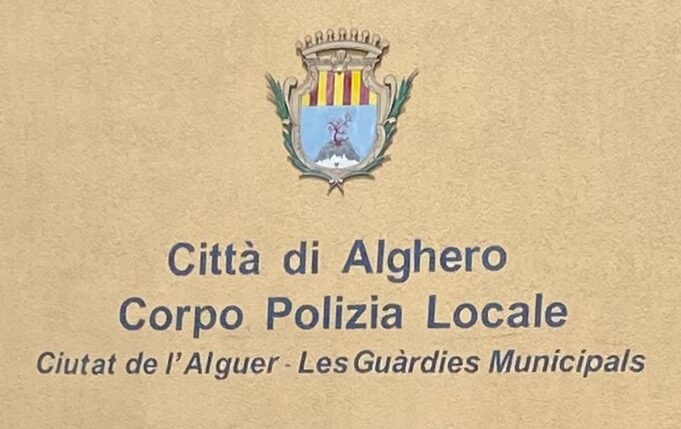
The case set out in the proposal was practical rather than sentimental. The Catalan-speaking lands sit in four states — most of them in Spain, with Northern Catalonia in France, the whole of Andorra, and the town of Alghero in Sardinia — so no state-named group could contain the conversation, and discussion of Catalan matters had meanwhile been accumulating in soc.culture.spain. A group drawn along linguistic rather than national lines was the orthodox Usenet remedy.
Late 1995 was the Big Eight's crowded late period, not its pioneer era, and the early constituency looked accordingly: university accounts, academics and emigrants abroad, joined in growing numbers by posters from the territories themselves as Spanish home dial-up spread over the following years. An older mailing list for Catalan speakers, dating from the BITNET era, kept running alongside; the newsgroup joined an existing Catalan online ecology rather than founding one.
Stated precisely, the territory named in that description comes in seven pieces across four states. In Spain: Catalonia, the Valencian Community, the Balearic Islands, the strip of eastern Aragon known as the Franja, and the small Carxe district of Murcia — with one internal exception, the Val d'Aran in Catalonia's north-western corner, where the local language is Occitan in its Aranese form. Outside Spain: Andorra, where Catalan is the sole official language of the state; Northern Catalonia, corresponding roughly to the French department of the Pyrénées-Orientales; and the Sardinian town of Alghero. Counts of speakers vary with the question asked — a 2011 study put the total above 9.8 million, while Ethnologue's 2021 figures give 4.1 million native speakers and 5.1 million more who have it as a second language.
Who could get online, and from where
Spain's country-code domain was entered in the IANA root database on 14 April 1988, seven and a half years before the group existed; but a delegation record is an administrative fact, not a measure of public access. The network behind it was academic. RedIRIS, the Spanish research and university network, was set up in 1989 as a project of the national research and development plan run by the Ministry of Education and Science, with Telefónica, through the Fundesco foundation. Until the middle of the 1990s a resident of Spain who wanted to read Usenet in practice needed a university or research affiliation — which is another way of saying that the readership available to a Catalan newsgroup at its founding was students, academic staff and people abroad.
Public dial-up in the form most Spanish households first met it arrived on 4 September 1995, eleven weeks before soc.culture.catalan was created. Telefónica launched InfoVía, a TCP/IP network carried over the switched telephone line and reached by dialling 055 — the same number in every province — with service centres in Madrid, Barcelona and València. Retail customers still bought their actual internet service from a provider, Goya, Sarenet and Servicom being among the early ones, and the access call was billed by connection time, which is the detail that governed how long anybody stayed on. InfoVía was switched off on 1 December 1998, a closure ordered on 12 March that year by the Comisión del Mercado de las Telecomunicaciones, the Spanish telecommunications regulator, and succeeded by InfoVía Plus.
The World Bank series for individuals using the internet, compiled from ITU returns, gives the scale plainly. For Spain it records 0.38 per cent of the population in 1995, 1.33 per cent in 1996, 4.36 in 1998, 13.62 in 2000 and 47.88 in 2005. France stood at 1.64 per cent in 1995 and 42.87 in 2005; Italy at 0.52 and 35.00; Andorra, whose own domain .ad was delegated on 9 January 1996, at 1.53 per cent in 1996 and 37.61 in 2005. A group founded in November 1995 for a language spoken in all four states therefore opened to a Spanish population of which fewer than four people in a thousand were online at all, and acquired a genuinely domestic readership only over the five or six years that followed.
That sequence is why the early constituency was carried disproportionately from outside and became less so. Campus network access had been ordinary for longer abroad than at home, and the balance shifted only as metered dial-up spread into houses and broadband followed. The same arithmetic governed the other stateless-language groups of the period — soc.culture.basque and soc.culture.breton among them — whose founding membership was shaped far less by how many people spoke the language than by who happened to hold a network account.
What was discussed
A large share of the traffic was about the language rather than merely in it: usage and orthography questions, learners asking after courses and dictionaries, requests for translations, and comparisons of how the same word fared in Girona, Palma or Alicante. Recurring threads took stock of the language's practical footing — schooling, broadcasting, publishing and, as the decade turned, whether software and the young web would speak Catalan.
Politics was never far away. The standing questions of the period — how much self-government, financed how, what place Catalan and Castilian should each hold in classrooms and public life, and whether the horizon was a better-fitting Spain or an independent state — were argued at length, among Catalans of every persuasion and readers from the rest of Spain. Crossposts to and from soc.culture.spain carried the quarrels over the group boundary, with the usual Usenet results. Underneath the noise these were neighbours, emigrants and students arguing about home, not delegations exchanging positions.
The quieter staples were those of any healthy regional group: festival dates, music old and new, cookery and its fiercely local variants, travel and study questions from curious outsiders, and enquiries from descendants of emigrants tracing a family back to a particular village. The charter admitted several languages while expecting Catalan most often, and in practice threads in Catalan, Castilian and English sat side by side without much ceremony.
Writing Catalan on a seven-bit network
RFC 1036, the December 1987 standard for the interchange of Usenet messages, requires every article to be a valid internet mail message in the sense of RFC 822 — and RFC 822 defines a message body as a sequence of lines containing ASCII characters, the seven-bit set of 128 codes. Catalan needs more than that. It uses the grave and acute accents on vowels (à, è, é, í, ò, ó, ú), the diaeresis on ï and ü, the cedilla in ç, and one mark that belongs to no other major language: the punt volat or raised point, written between two l's in words such as cel·la to show that each l belongs to a separate syllable and that the pair is not the ll digraph.
Two remedies were available in the period. MIME, first published as RFC 1341 in June 1992 and reissued as RFC 2045 in November 1996, let a message declare its character set and encode the eighth bit safely for transport; it worked where both ends honoured it and left quoted-printable debris where they did not. The alternative was to send eight-bit ISO 8859-1 — Latin-1, first standardised in 1987 — and hope. Latin-1 carries every accented letter Catalan needs, and carries the middle dot itself at position 0xB7. What it does not carry is a precomposed Ŀ or ŀ, and the documented workaround is the one Catalan typography uses anyway: write L· and l· as separate characters, so that cel·la is an ordinary l, an ordinary middle dot and an ordinary l.
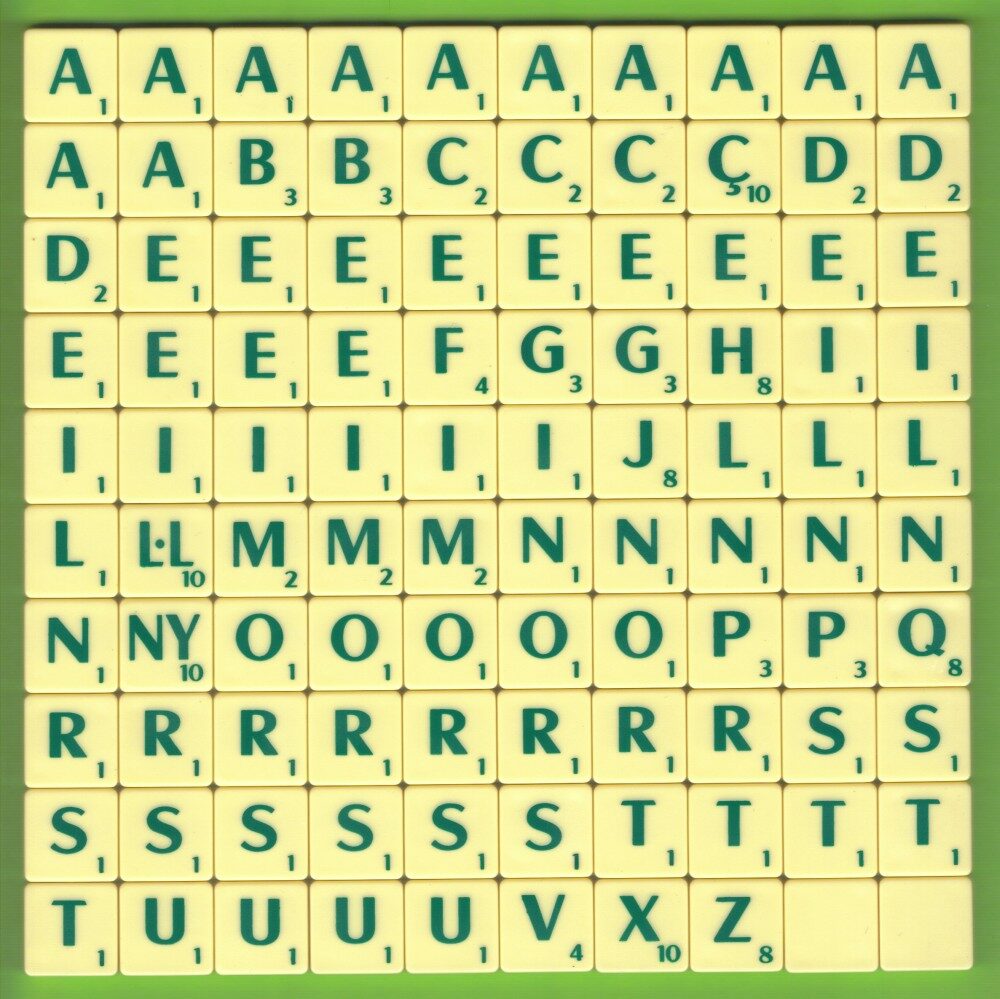

Unicode did admit the precomposed pair. Ŀ at U+013F and ŀ at U+0140 sit in the Latin Extended-A block, U+0100 to U+017F, which has been present since Unicode 1.0.0 in 1991 — four years before the group was created. They have never been the recommended spelling, being classed as compatibility characters; the preferred encoding remains the three-character sequence using U+00B7 MIDDLE DOT. For a language whose entire script fits inside Latin-1 with that single exception, in other words, the technical problem was never the alphabet. It was whether the eighth bit survived the journey.
The consequence for a reader of the archive today is practical rather than dramatic. An article from the late 1990s may carry a correct character-set declaration, an incorrect one, or none at all, so the same Catalan word can appear accented, stripped to plain ASCII, or mangled into the doubled bytes typical of Latin-1 text decoded as something else. A search of the archived copy of the group is worth trying more than one way — with accents and without, and with the geminate written as l.l or ll as well as l·l.
The standard, and who keeps it
The standard those usage threads argued from has a date and an address. The Institut d'Estudis Catalans was founded in Barcelona in June 1907, its founding document signed by Enric Prat de la Riba in his capacity as president of the provincial council of Barcelona. Its Philological Section produced the orthographic norms approved on 24 January 1913, the Diccionari Ortogràfic of 1917 and, in 1932, Pompeu Fabra's Diccionari General de la Llengua Catalana — the three works that turned a literary language carrying several competing spellings into a codified one.
Two later dates matter to a reader of the archive. The institute's own Diccionari de la llengua catalana, universally abbreviated DIEC, appeared in September 1995, two months before the newsgroup was created; a second edition, DIEC2, followed in 2007, long after the group's active years. In the Valencian Community a second body exists — the Acadèmia Valenciana de la Llengua, created by law in 1998 and constituted on 23 July 2001 with twenty-one academicians, charged with determining the normative form of Valencian. Whether Valencian and Catalan are one language under two names has been publicly argued for decades. This page records that both institutions publish standards and that the argument exists; it takes no position on it.
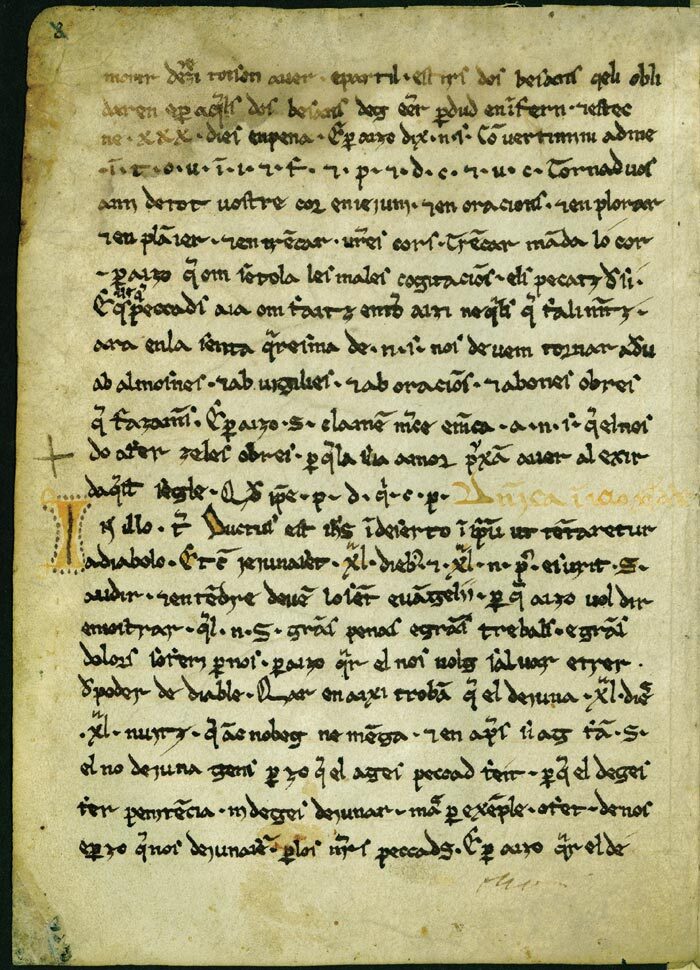
The oldest known literary text in the language predates all of that by seven centuries. The Homilies d'Organyà, six sermons on gospel and epistle passages written at the end of the twelfth century, were found in 1904 by the historian Joaquim Miret i Sans in the vicarage at Organyà, in the Alt Urgell; the manuscript is held by the National Library of Catalonia, and a facsimile is shown in Organyà itself.

Where the readers actually were
The readership was never distributed like the population of a country, because there is no country, and within the territory the proportions differ sharply. In Northern Catalonia the surveys by Média Pluriel Méditerranée found 63 per cent of the population able to understand Catalan and 48 per cent able to speak it in 1993, and 55 and 34 per cent respectively in 1998 — two readings that bracket the group's founding. In Alghero, a town of about 42,000 people, survey work has found 24.1 per cent with Algherese Catalan as a mother tongue, 18.5 per cent using it habitually and 88.2 per cent with some understanding of it. In Andorra a 2022 survey put the use of Catalan outside the home at 63.7 per cent and at home at 44 per cent, against 48.6 and 40.3 per cent for Spanish.

Beyond those lands the network of casals catalans long predates any computer network. The first was founded at Havana in 1840 as the Sociedad de Beneficencia de Naturales de Cataluña; the Cercle Català de Marsella, founded in 1918, is the oldest in Europe; the Casal de Catalunya in Buenos Aires was formed in 1940 by merging a Centre Català of 1886 with a Casal Català of 1908. More than a hundred such associations exist today in some forty countries. The largest single displacement in living memory was the Retirada of 1939, and those who did not return are the origin of much of the Catalan presence in France beyond the Pyrénées-Orientales; later emigration and the postwar exile account for the concentrations in Argentina, Mexico, Venezuela and the United States.
The time-zone effect is the reverse of the one most soc.culture groups experienced. Spain, France, Italy and Andorra all keep Central European Time, so the whole of the language's home territory — Perpignan to Alacant, Palma to Alghero — shares one clock, and the usual problem of a homeland straddling several zones does not arise. The split ran instead between that clock and the Americas, four to nine hours behind, where the older emigration and a good part of the academic readership sat: a membership concentrated in two bands rather than spread evenly gives a group two daily peaks instead of a continuous roll.
The traffic between the arguments
The fixed point of the year is 23 April, Sant Jordi, on which books and roses are exchanged. The rose fair is the old half; the book half is datable. The Valencian publisher Vicente Clavel proposed a day for books in 1923; a royal decree of 1926 set it on 7 October; in 1931 it moved to 23 April, chosen for its association with the deaths of Cervantes and Shakespeare, and the two customs merged into one festival. UNESCO adopted 23 April as World Book Day in 1995. The .cat registry, whose restricted first registration period ran from 13 February to 21 April 2006, opened to everyone on 23 April that year.
Literature is the best-documented traffic of all, because the canon is compact enough to argue over in full. Tirant lo Blanc, Joanot Martorell's chivalric novel, was printed at València on 20 November 1490 by Nicolau Spindeler and again at Barcelona in 1497; it was translated into Castilian in 1511, Italian in 1538, French in 1737 and into English only in the 1980s, and Cervantes has a character spare it from the burning of Don Quixote's library. The Jocs Florals, a poetry competition of medieval Occitan origin, were revived in Barcelona in the nineteenth century and became the machinery of the literary revival. Since 1969 Òmnium Cultural has awarded the Premi d'Honor de les Lletres Catalanes for a body of work in the language. In 2007 the Frankfurt Book Fair took Catalan culture as its guest of honour under the motto Singular i Universal — an occasion that produced its own public argument, reported in both the Spanish and the German press, over whether Catalans who write in Spanish belonged in the programme.
Music, festivals and sport carry the rest of the year. The Nova Cançó movement dates from the founding of Els Setze Jutges in 1961 by Miquel Porter i Moix, Remei Margarit and Josep Maria Espinàs, a circle formed expressly to sing contemporary songs in Catalan; by the 1990s it had a successor in a domestic rock and pop scene working in the language. Human towers — castells — are first documented at Valls, near Tarragona, in 1712, growing out of the Valencian muixeranga of Algemesí, and the biennial Concurs de Castells at Tarragona is their fixed contest. And FC Barcelona, founded on 29 November 1899 after Joan Gamper advertised for players and eleven turned up at the Gimnasio Solé, supplies both a fixture list and a slogan — més que un club — that no group covering these lands was going to be spared.
These are the subjects that filled a culture group between its crises. For what the rest of the hierarchy looked like, see the soc.culture roster.
A dated record
What follows is a chronology and nothing else: dated events a reader of the archive will find referred to, set down without argument about what they meant. The group's own creation is marked in place, so that it is clear which items its posters could have discussed and which they could not.
- June 1907 — the Institut d'Estudis Catalans is created by the provincial council of Barcelona.
- 24 January 1913 — the institute's orthographic norms are approved.
- January and February 1939 — in the exodus known as the Retirada, around half a million people cross the Pyrenees into France; Barcelona had fallen on 26 January. More than half returned within the following months.
- 18 December 1979 — the Statute of Autonomy of Catalonia is promulgated as Organic Law 4/1979 and published in the state gazette on 22 December.
- 6 April 1983 — the Parliament of Catalonia passes the linguistic normalisation law by 105 votes with one abstention; dated 18 April, it is published as Law 7/1983 in the official gazette on 22 April.
- School year 1983-84 — the Catalan immersion programme starts as a pilot in nineteen schools in Santa Coloma de Gramenet.
- 10 September 1983 — TV3 begins trial broadcasts in Catalan; regular broadcasting starts on 16 January 1984.
- 23 November 1983 — the Valencian Corts pass the Law on the Use and Teaching of Valencian, published on 1 December.
- 29 April 1986 — the Parliament of the Balearic Islands passes its own linguistic normalisation law.
- 14 March 1993 — Andorra approves its constitution by referendum; in force from 28 April, it makes Catalan the sole official language of the state.
- 22 November 1995 — soc.culture.catalan is created. Everything above predates the group; everything below falls within or after its life.
- 27 December 1996 — Law 18/1996 puts the Generalitat's relations with Catalan communities abroad on a statutory footing.
- 7 January 1998 — Law 1/1998 on language policy replaces the 1983 law, carried by 102 votes to 25 with one abstention.
- 1 March 1998 — the European Charter for Regional or Minority Languages enters into force generally, following ratification by five states.
- 15 December 1999 — Italian Law 482/1999 lists Catalan among the twelve historic minority languages of the republic.
- 9 April 2001 — Spain ratifies the European Charter for Regional or Minority Languages. France has signed it but has not ratified it.
- 23 July 2001 — the Acadèmia Valenciana de la Llengua is constituted with twenty-one members.
- September 2005 — ICANN approves the .cat top-level domain; the delegation is entered in the IANA root database on 19 December 2005, sponsored by the Fundació puntCAT of Barcelona.
- 2005 — UNESCO proclaims La Patum de Berga a Masterpiece of the Oral and Intangible Heritage of Humanity; it is inscribed on the Representative List in 2008.
- 18 June 2006 — a referendum approves a new Statute of Autonomy of Catalonia, with 73.23 per cent of votes cast in favour on a turnout of 49.41 per cent; it enters into force on 9 August 2006.
- July 2008 — the French Constitution is amended to add Article 75-1, which states that the regional languages belong to the patrimony of France.
- 28 June 2010 — the Spanish Constitutional Court rules on the 2006 Statute, annulling fourteen articles and prescribing the interpretation of twenty-seven more.
- 16 November 2010 — UNESCO inscribes castells on its Representative List of the Intangible Cultural Heritage of Humanity.
The list is one-sided in a formal sense: it records instruments, rulings and inscriptions, because those are the events that carry dates. The arguments they provoked were the group's subject matter, and those are in the archive rather than in this list.
Context
The founding generation had watched Catalan pass from proscription to official status within living memory. Its public use was suppressed under the Franco dictatorship; after 1975 came the transition to democracy, the restored Generalitat, the 1979 Statute of Autonomy that made the language co-official, and the 1983 normalisation law that set about returning it to schools and public life. By the group's creation a school generation had been educated in Catalan; the newsgroup arrived amid a recovery, not a decline.
What eventually thinned the group was what thinned Usenet everywhere — web forums, mailing lists, then social platforms — compounded here by an unusually energetic homegrown internet. Catalan-speaking volunteers were early and prolific online: the Catalan Wikipedia was among the first editions created after the English one, and in 2005 a civic campaign won the .cat domain, the first top-level domain granted to a linguistic and cultural community rather than to a country. The impulse that had filled the newsgroup did not fade; it moved house.
The group remains readable where the archive reaches, and its official one-line description still turns up verbatim in mirrored web directories from the early 2000s — a measure of how thoroughly that generation of internet furniture was copied about. For the decade between the transition's consolidation and the web's takeover, soc.culture.catalan is a plain record of what a language community spread across four states chose to talk about once it finally had a room of its own.
Reading soc.culture.catalan today
- Historical archive: Google Groups — soc.culture.catalan (coverage varies by group and era).
- Open in a newsreader:
news:soc.culture.catalan— the original site offered exactly this link, and it still works if your system has a newsreader registered for thenews:scheme. - Live access: point an NNTP newsreader at a modern server — see accessing Usenet today.
- The original news2mail e-mail subscription service ended in the mid-2000s and no longer operates.