soc.culture.chile
Chile after Pinochet.
The transition years: plebiscite memory, the Pinochet arrest in London argued at full volume, and the growing-pains politics of the Concertación — plus earthquakes, wine and the north-south rivalry.
One of the stronger Latin American groups, with an academic diaspora that cited sources.
On this page
The group and its era
soc.culture.chile was one of the national groups of the soc.culture.* hierarchy, which widened through the late 1980s and early 1990s as the naming scheme worked its way down the atlas, its groups established by public proposal and vote. Two readerships met in it. The first was the exile population formed after 11 September 1973: at least 200,000 Chileans, about two per cent of the 1973 population, left the country during the dictatorship, forming communities in Sweden, Canada, Australia, Mexico and France, with a further concentration next door in Argentina.
The second was at home, and unusually well placed to be there. The .cl domain was created in 1987 and has been administered by the Universidad de Chile, which in the same year established an academic link to BITNET; commercial dial-up followed from 1993, and wider public adoption from about 1997. By regional standards that was early, and the group was never only a conversation among the outside.
The delegation is on the public record. IANA’s root database gives 15 December 1987 as the registration date for .cl and names NIC Chile, at the University of Chile, as the sponsoring organisation, a position it still holds. The groundwork was older: UUCP tests were run in 1986 between the Universidad de Chile and the Universidad de Santiago de Chile over ordinary telephone lines and 300 bit/s modems. The local exchange point, NAP Chile, the country’s first traffic exchange, dates from 1997.
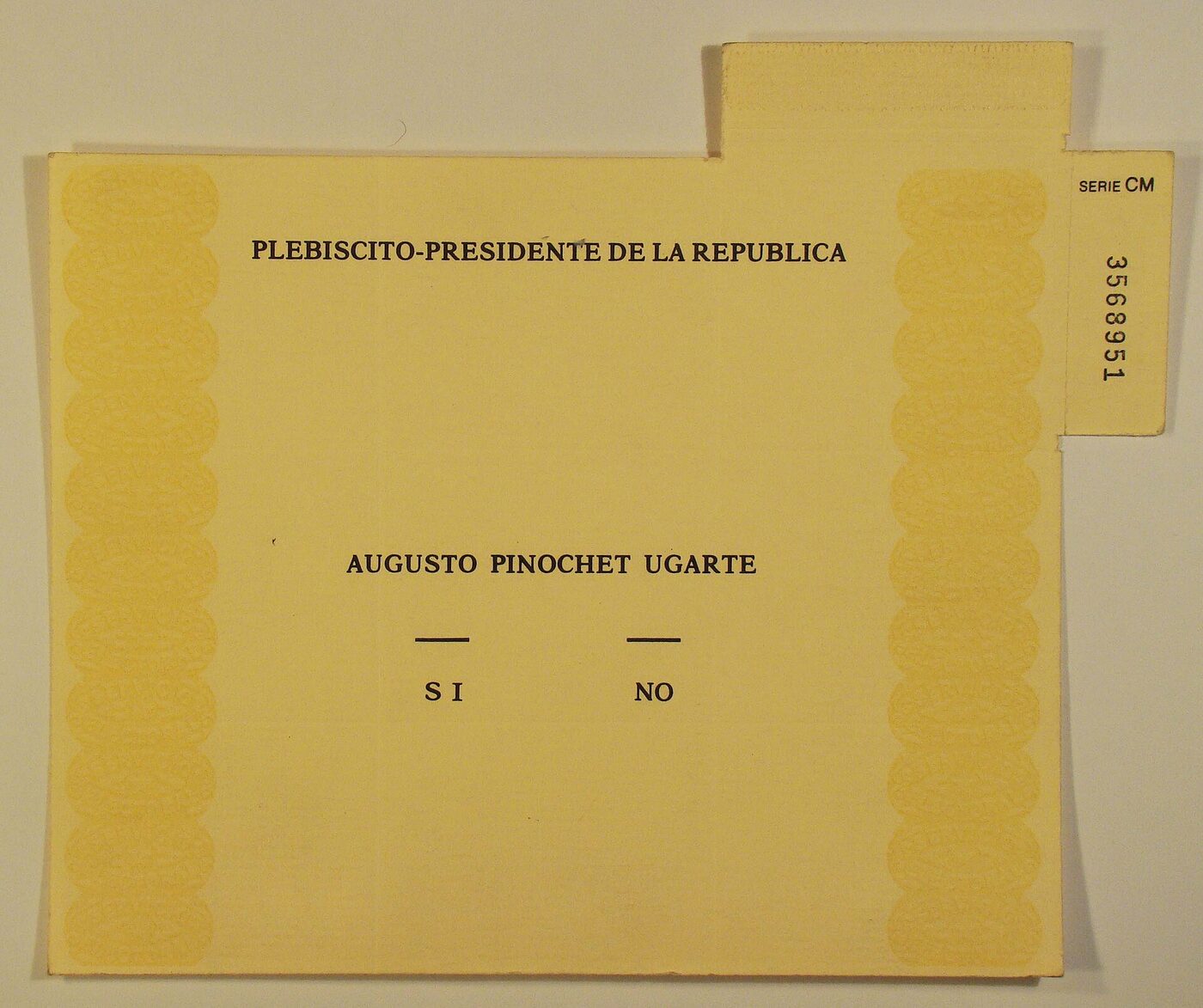
Its span sat squarely inside the transition. Military rule ran from 11 September 1973 to 11 March 1990; the plebiscite of 5 October 1988 returned 55.99 per cent for No against 44.01 for Yes; a presidential election followed on 14 December 1989, and Patricio Aylwin took office on 11 March 1990 at the head of the Concertación de Partidos por la Democracia, which held the presidency until 2010. The news2mail gateway served the group from 2000 to 2004.

What was discussed
The transition’s central unresolved argument was accountability, and it ran through the group for years. At issue were the amnesty decree of 1978 and what the courts could do around it. The first official accounting came from the National Commission for Truth and Reconciliation, created in April 1990 and reporting in February 1991; the Rettig report documented 2,115 victims of human rights violations and 164 further victims of political violence. A second commission, reporting in November 2004, extended the accounting to political imprisonment and torture, on a far larger scale. The question was argued by people who had lived the period from every side, and by their children.
The arrest in London on 16 October 1998, on a warrant issued by a Spanish magistrate, opened sixteen months of legal argument: successive rulings in the House of Lords, an extradition question narrowed to conduct after 1988, when the United Kingdom ratified the convention against torture, and a release on medical grounds in early March 2000, with a return to Chile on 3 March. It was followed in Chile and in the diaspora at the same time, across the readership’s scattered time zones.
Around that ran the rest of the country. The economic model and the distribution of its gains were a standing dispute, as was the Mapuche question in the south, which acquired its modern shape during the group’s own years: the Indigenous Law of 1993 and the development corporation it created, the Ralco dam on the Biobío, and the land conflict in Araucanía that took organised form from December 1997.
The ordinary furniture was there too: the wine industry then finding its export markets, football, and seismology in a country that recorded the strongest earthquake of the instrumental era at Valdivia on 22 May 1960. The rivalries of north against south, and Santiago against the regions, supplied the low-stakes quarrels, as did the literature the diaspora had carried out with it — Gabriela Mistral, Pablo Neruda, and latterly Roberto Bolaño, who had spent his youth in Mexico City and wrote from a Catalan coastal town until his death in 2003.
Seismicity supplied dated entries during the group’s own years and not only in memory: an earthquake of moment magnitude 8.0 off Antofagasta on 30 July 1995, and one of magnitude 7.1 at Punitaqui on 15 October 1997. Tarapacá on 13 June 2005, Tocopilla on 14 November 2007 and the magnitude 8.8 Maule earthquake of 27 February 2010 all fall after the gateway had closed, though well within the life of Usenet itself.
Context
One subject surfaced repeatedly, and painfully: the relationship between those who had left and those who had stayed. After 1990 the return of exiles was an administrative matter and also a personal one, and the group registered both. Those coming back found a country altered in their absence; those who had remained had their own account of the intervening years and of what leaving had cost or spared. No settlement to that question was available, which is part of why the group returned to it.
The neighbouring groups of the hierarchy — soc.culture.argentina and soc.culture.uruguay — were working through transitions of their own, described on their own pages; this group’s frame of reference stayed national, its arguments turning on Chilean law, institutions and memory.
The surviving archive is a record of a national argument conducted across several continents at once, unedited, while its outcomes were still open. Judicial decisions, commission findings and election results arrived as news rather than as history, and were disputed on the spot by people with a direct stake in them. Sources of that kind are uncommon, and here they cover the years in which the terms of the argument were being set.
Connectivity and the shape of the readership
The figures behind that early start are published and checkable. The series the World Bank carries from the International Telecommunication Union, individuals using the internet as a percentage of population, puts Chile at 0.14 per cent in 1994, 0.68 in 1996, 1.06 in 1997 and 1.66 in 1998. It then moves sharply: 4.1 per cent in 1999, 16.6 per cent in 2000 — the year the gateway began carrying the group — 22.1 per cent in 2002, and 28.2 per cent in 2004, the year it stopped.
Against its neighbours that was a lead. On the same series Argentina stood at 7.0 per cent in 2000 and 16.0 per cent in 2004; Brazil at 2.9 and 19.1 per cent over the same pair of years. Chile was ahead of both in every year between, and by 2004 was some twelve percentage points clear of Argentina.
Against the countries of exile it was a lag. Sweden reached 5.1 per cent in 1995, 23.7 per cent in 1997 and 45.7 per cent in 2000; Canada 4.2 per cent in 1995, 15.1 per cent in 1997 and 51.3 per cent in 2000.
The consequence for a national newsgroup founded in that decade is arithmetical rather than cultural. For its first years the readers who could post daily, at length and at no marginal cost were disproportionately those living abroad, in countries where household connection had arrived first, together with the minority at home who reached the network through the universities that had built it. Domestic access was dial-up over the telephone system, and a change in the regulated tariff in May 1999 is credited with cutting the cost of a connection by about 62 per cent against the previous year — twelve months before the penetration figure quadrupled.
The accountability record, by date
What follows is a chronology of the public record on which the transition’s longest-running subject rested. No causal account is offered, no party is characterised, and no view is taken of any of the decisions listed.
- 18 April 1978 — Decree Law 2,191 is promulgated and published in the Diario Oficial the following day, granting amnesty for criminal acts committed under the state of siege between 11 September 1973 and 10 March 1978. This precedes the group by more than a decade.
- 25 April 1990 — Supreme Decree 355 creates the National Commission for Truth and Reconciliation, which reports in February 1991.
- 1998 — the Supreme Court resolves that the 1978 amnesty is not to be applied in cases of human rights violations.
- 25 November 1998 — the House of Lords holds by three votes to two that a former head of state has no immunity in respect of torture.
- 15 January 1999 — that judgment is set aside on the ground of an appearance of bias, one of the judges in the majority having failed to disclose a connection to Amnesty International.
- 24 March 1999 — a freshly constituted committee again rejects immunity, but confines the case to conduct after 8 December 1988.
- January and March 2000 — the Home Secretary indicates, and then decides, that extradition will not be ordered, on medical grounds.
- 23 May 2000 — the Court of Appeal lifts parliamentary immunity in the Caravan of Death case; the Supreme Court confirms on 8 August 2000 by fourteen votes to six.
- 1 December 2000 — Judge Juan Guzmán issues an indictment; it is suspended on 11 December on medical grounds.
- July 2002 — the Supreme Court dismisses the indictment, citing vascular dementia.
- 28 May 2004 — the Court of Appeals reverses that finding by fourteen votes to nine; the Supreme Court upholds the reversal on 26 August 2004 by nine votes to eight.
- 29 November 2004 — the National Commission on Political Imprisonment and Torture reports, having received 35,865 testimonies and recognised 27,255 people as direct victims; a revised version of 1 June 2005 adds 1,204 cases, for a total of 28,459.
- 13 December 2004 — house arrest is ordered in a case concerning disappearances.
- 10 December 2006 — Augusto Pinochet dies, without having been convicted in any of the cases. This postdates the gateway by two years.
- 18 August 2011 — a second phase of the torture commission delivers its findings, published on 26 August 2011: a further 9,795 cases of political imprisonment and torture, and thirty of disappearance or execution, certified. This postdates the gateway by seven years.
The group’s own years fall across the middle of that sequence: for its readers the later items had not yet happened.
Spanish, Mapudungun and a seven-bit network
Written Spanish needs characters that seven-bit ASCII does not carry: the accented vowels á é í ó ú, the dieresis of ü, the tilde of ñ, the capitals of all of these, and the inverted marks ¿ and ¡. Usenet was built for the other kind of text. RFC 1036, the news article format published in December 1987, specifies printing ASCII for the message identifier and for the full name on the From line, and the transports of the period were written to the same assumption.
Eight-bit solutions existed but did not agree with one another. The DOS code pages 437 and 850 placed the Latin letters with diacritics in one arrangement above code point 127; ISO/IEC 8859-1, published in 1987 out of the earlier ECMA-94 of 1985 and universally called Latin-1, placed them in another; Windows-1252 extended Latin-1 again. A byte written on one machine could be read as a different character on the next, and the failure mode was not a blank but a wrong letter. MIME supplied the missing declaration: RFC 1341 of June 1992 introduced the charset parameter of the Content-Type field and registered the ISO-8859 sets for use in mail, and RFC 2047 of November 1996 defined the encoded-word, the =?...?= construction that lets a Subject line carry non-ASCII text as base64 or quoted-printable. In quoted-printable a Latin-1 ó travels as the three characters =F3.
None of this was a shortage of code points. Unicode 1.0 appeared in October 1991 with the Latin-1 Supplement block at U+0080 to U+00FF, taken over wholesale from ISO 8859-1 and containing every character Spanish requires. The difficulty was transport and declaration rather than repertoire, and while it lasted the practical answer was to strip the accents — to write Concepcion for Concepción and Biobio for Biobío. The habit outlived its cause: Chile’s own registry did not open .cl to domain names containing á, é, í, ó, ú, ñ and ü until 2005, the year after the gateway closed.
The consequence for anyone searching the surviving archive is direct. One place name may occur in three forms — correctly accented, stripped of its accents, or mis-decoded into some other set’s characters — so a search of a Spanish-language group from this period is worth repeating in the accent-free spelling. The same years changed how Spanish itself was ordered: in 1994 the tenth congress of the Association of Academies of the Spanish Language agreed that ch and ll should be alphabetised as ordinary sequences of letters rather than as single letters of their own, which altered every index and sorted list compiled afterwards.
Mapudungun poses the harder version of the same problem, because it has no single settled orthography. The Alfabeto Mapuche Unificado, drawn up by the Sociedad Chilena de Lingüística in 1986, uses twenty-seven letters including ü and the line-below letters ḻ, ṉ and ṯ. Those three are not in Latin-1 at all: they belong to Unicode’s Latin Extended Additional block, U+1E00 to U+1EFF, which was added in Unicode 1.1 in 1993. The Grafemario Raguileo, devised by Anselmo Raguileo in 1982, takes the opposite route, giving one letter to each sound across twenty-six letters and using no diacritic beyond the tilde of ñ. A third system, Azümchefe, was produced by the Corporación Nacional de Desarrollo Indígena and is the one the Chilean state promotes; a Mapudungun edition of Windows XP released on 30 October 2006 used it.
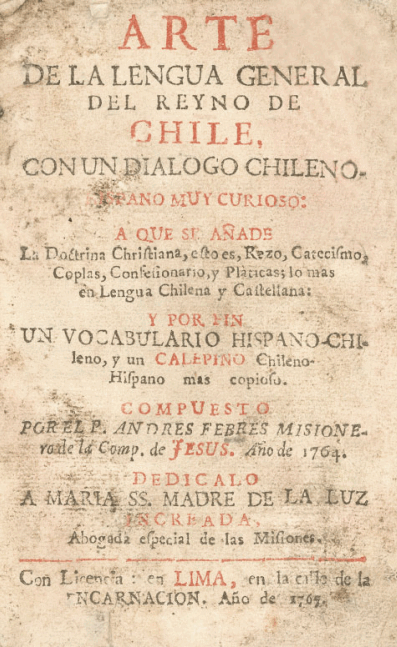

The word for a conversation or a story is accordingly written gvxam, gytram or ngütram depending on the system chosen, and that is before any question of encoding arises. Speaker counts for the group’s own period are given as about 202,000 in Chile in 1982 and about 100,000 in Argentina in 2000. A search of the archive for material in or about the language must therefore allow for at least three spellings of one word before reaching the byte level at all.
Where the readership actually was
The exile figure given above counts departures during the dictatorship. A separate and much later count measures what that emigration, and the ordinary emigration that followed it, had become. The second registry of Chileans abroad, compiled by the Instituto Nacional de Estadísticas in 2016 and published in January 2018, counts 1,037,346 Chileans and their descendants, fourteen years after the gateway closed. The distribution is: Argentina 439,582, or 42.4 per cent of the whole; the United States 226,993, or 21.9 per cent; Spain 106,060; Sweden 56,138; Canada 45,190; Australia 37,608; France 30,325; Brazil 26,039; Venezuela 23,296; Germany 19,702; and Peru 11,313.
The readership abroad was never evenly spread. More than four in ten of it sat immediately across the Andes, within an hour of Chilean time, while the communities that the political exile of the 1970s had created in Sweden, Canada and Australia were an order of magnitude smaller and very much further away. A group drawing on all of them at once had no single working day.
Mainland Chile keeps UTC minus four in winter and UTC minus three in summer; Easter Island runs two hours further behind; since 2017 the Magallanes region has stayed on UTC minus three all year. Because the Chilean summer is the northern winter, the gap to Europe swings rather than holds: Santiago is four hours behind Stockholm in January and six hours behind it in July. Sydney is fourteen hours ahead in both seasons. A message sent from Santiago at breakfast reaches Sweden about midday and Australia late in the evening.
Each dated event above therefore landed at a different local hour for a different part of the readership. That is a property of the geography rather than of the group, and it holds for every dispersed national group in the soc.culture hierarchy; it is pronounced here because Chile is a long way from everywhere its emigration went except Argentina.
Wine, pisco and the table
Between the crises there was a country to talk about, and its everyday subjects are the better documented. Wine is the clearest case. Chilean vineyards have never had phylloxera, so Chilean vines are grown on their own roots rather than grafted. The modernisation is datable: the Spanish producer Miguel Torres opened a Chilean operation in 1979, stainless-steel fermentation and oak ageing came in through the early 1980s, and the number of wineries rose from twelve in 1995 to more than seventy in 2005. By the early 2000s Chile was the third largest exporter of wine to the United States, after France and Italy.
The episode that fell squarely inside the group’s life was Carménère. The variety had been a Bordeaux grape, effectively lost in France after the phylloxera epidemic of the 1860s. In 1994 the French ampelographer Jean Boursiquot identified it growing in Chile, where it had been planted and sold as Merlot, and in 1998 the Chilean agricultural authorities recognised it as a distinct variety.
Pisco is the standing dispute rather than the discovery. Chile fixed its denomination of origin in 1931, restricting the name to the Atacama and Coquimbo regions; Peru established its own in 1991, covering Lima, Ica, Arequipa, Moquegua and part of Tacna. Most large markets, including the European Union and the United States, permit both countries to use the word, so the disagreement has stayed a matter of naming and of history rather than of market access. It belongs equally to the neighbouring page for soc.culture.peru.
The rest of the table is less contested and no less argued: the empanada de pino, with its filling of chopped beef, onion and seasoning; pastel de choclo, beef under a layer of ground fresh corn and basil; cazuela; the completo, the Chilean hot dog under tomato, avocado and sauerkraut; and curanto, the southern preparation in which shellfish and meat are cooked in a pit on heated stones, which comes from Mapuche and Chilote practice. Wheat, pork and wine arrived with the Spanish in the sixteenth century; potatoes, maize, beans and seafood were already there; German, Italian and French immigration supplied much of the rest.
The calendar, the stage and the shelf
Fiestas Patrias falls on 18 and 19 September — the first for the First Governing Body of 18 September 1810, the second for the army — and has been two statutory days since Law 2,977 of 1 February 1915. Fondas and ramadas go up; empanadas, anticuchos, choripanes and sopaipillas are eaten; terremoto, chicha and piscola are drunk. The cueca is danced, and has been the national dance by decree since Decree No. 23 of 6 November 1979. The cueca sola, danced alone by a woman holding a photograph of a disappeared relative, dates from 1978.
February belongs to Viña del Mar. The International Song Festival was first held there in February 1960, in the Quinta Vergara amphitheatre, which seats about fifteen thousand; it runs in the third week of the month. Its audience, known as el monstruo, decides on the night whether an act is accepted or not.
Football supplied its own dates. Chile hosted the World Cup of 1962 and finished third, beating Yugoslavia in the third-place match after losing the semi-final to Brazil. Qualification for 1990 ended in the incident in which the goalkeeper Roberto Rojas claimed injury from a firework thrown from the crowd; investigation established that the firework had not touched him, and FIFA both expelled Chile from the 1990 tournament and barred it from the qualifying competition for 1994. Chile returned at France 1998, drew all three group matches, reached the round of 16 and lost 4–1 to Brazil. France 1998 fell inside the group’s years.
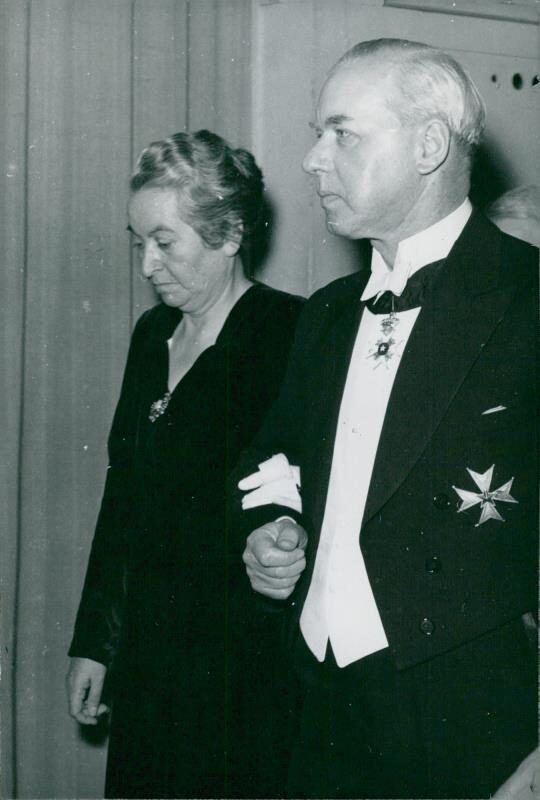
Gabriela Mistral, born at Vicuña in 1889, was the first Latin American writer to receive the Nobel Prize in Literature, in 1945; she was a Chilean consul from 1932 until her death at Hempstead, New York, in 1957. Pablo Neruda, 1904 to 1973, was elected to the Senate on 4 March 1945 and served until February 1950, went into hiding in 1948, left the country in 1949, returned in August 1952, and took the Nobel Prize in 1971. Roberto Bolaño received the Rómulo Gallegos prize in 1999 for Los detectives salvajes, published the year before; 2666 appeared in 2004, the year the gateway closed. All three wrote much of their work outside Chile.

Reading soc.culture.chile today
- Historical archive: Google Groups — soc.culture.chile (coverage varies by group and era).
- Open in a newsreader:
news:soc.culture.chile— the original site offered exactly this link, and it still works if your system has a newsreader registered for thenews:scheme. - Live access: point an NNTP newsreader at a modern server — see accessing Usenet today.
- The original news2mail e-mail subscription service ended in the mid-2000s and no longer operates.