soc.culture.nicaragua
Nicaragua and its people.
Post-revolution, post-Contra Nicaragua discussed by those who stayed and those who left: Sandinista legacy arguments, the 1990 electoral surprise, poetry (a national industry — Darío, Cardenal) and hurricane Mitch relief coordination in 1998.
Unmoderated, like nearly all of soc.culture.*; this directory holds no archive of what was posted to it.
On this page
The group and its era
soc.culture.nicaragua belongs to the soc.culture.* hierarchy, Usenet's country-by-country commons, which filled out through the late 1980s and 1990s until most nations with a diaspora online had a group of their own. Like nearly all of its siblings it was unmoderated — no owner, no membership roll, no editorial line — so whatever order it had came from the habits of its participants rather than from any rulebook.
Timing shaped its voice. Nicaragua in the 1990s was rebuilding after a decade of war and remained one of the poorest countries in the Americas; a home internet connection there was a rarity for most of the group's active life. Traffic accordingly leant outward, towards Nicaraguans studying or working abroad and towards the foreigners the country had accumulated in unusual numbers during the 1980s — aid workers, researchers and solidarity-movement veterans, many of them with durable opinions and long memories.
The group's span tracked the country's electoral calendar: the administrations of Arnoldo Alemán from 1997 and Enrique Bolaños from 2002, then Daniel Ortega's return to the presidency after the 2006 election. By that last turn Usenet as a whole was in decline, and the group thinned along with the rest of the hierarchy as diaspora conversation drifted to web forums and, later, social media.
Within the hierarchy the group sat among a full set of Central American neighbours; the culture roster lists them together, and soc.culture.costa-rica and soc.culture.honduras cover the countries on Nicaragua's two land borders.
Who could actually post
The country-code top-level domain .ni was delegated on 13 October 1989, according to the IANA root zone database, and its sponsoring organisation is the Universidad Nacional de Ingeniería in Managua, which still operates the registry. A delegation record is an administrative act rather than evidence of connectivity: it establishes who may hand out names, not who can reach a network. Registrations under .ni are made beneath second-level names such as com.ni, gob.ni, edu.ni and org.ni, which is why Nicaraguan addresses in old headers usually carry three labels rather than two.
An early and firmly dated network presence in the country was not a commercial provider at all. When the Association for Progressive Communications was founded in 1990 by seven member networks — the Institute for Global Communications in San Francisco, GreenNet in London, IBASE in Rio de Janeiro, Pegasus Networks in Byron Bay, Web Networks in Toronto, NordNet in Sweden and Nicarao in Managua — Nicaragua supplied one of the two Latin American members, the other being IBASE. Nicarao was a non-governmental network service rather than a consumer internet provider: institutional, project-funded, and reached through an organisation rather than bought by a household.
The penetration series supplies the rest. The World Bank's compilation of ITU figures for individuals using the internet in Nicaragua records its first non-zero value in 1994, at 0.01 per cent of the population, then 0.03 per cent in 1995, 0.21 per cent in 1997, 0.30 per cent in 1998 and 0.98 per cent in 2000; the country had five internet service providers in 1999. The figure reached 2.3 per cent in 2004 and 2.8 per cent in 2006 — the year of the election that closes the group's span — and did not pass 13 per cent until 2012, by which time Usenet had long ceased to be where diaspora conversation happened.
The consequence for the group's composition is arithmetical rather than interpretive. Through the 1990s fewer than one Nicaraguan in a hundred used the internet at all, and the share was still under three per cent in 2006, and the access that existed was institutional far more often than domestic. A newsgroup about Nicaragua was therefore written mostly from outside Nicaragua, or from the thin institutional layer inside it; the ordinary household readership that a European or North American culture group could take for granted did not exist here until well after this one had thinned. Anyone reading the archive as a sample of Nicaraguan opinion should hold that filter in mind.
What was discussed
Sport, on soc.culture.nicaragua, meant baseball. Nicaragua's national game is baseball rather than football — it took root there in the late nineteenth century — and it serves as a shared civic language in the way football does for most of the neighbours. Dennis Martínez — the first Nicaraguan to reach the major leagues, and the author of a perfect game in 1991 — was the kind of national reference that needed no introduction, and box scores travel well by newsgroup.
The institutional shape of that baseball talk is easy to misread from outside. Nicaragua's professional league was formed in 1956 with five teams and shut down in 1967; for most of the rest of the century the leading domestic competition was the amateur Germán Pomares Championship, and a professional league was only re-established, as the Liga de Béisbol Profesional Nacional, in 2004. For nearly the whole of the group's life, in other words, the domestic game a poster followed was an amateur one while the professional careers under discussion were being played abroad. Boxing ran second: Alexis Argüello (1952–2009) held world titles at featherweight from 1974 to 1976, at super featherweight from 1978 to 1980 and at lightweight from 1981 to 1983, and carried the flag at the Beijing opening ceremony in 2008.
Alongside it ran the standing repertoire of any diaspora group: food and how to reproduce it abroad — nacatamales, quesillo, and gallo pinto, the rice-and-beans staple whose paternity Nicaragua disputes with Costa Rica in a rivalry conducted mostly in good humour — along with travel advice, telephone and remittance logistics, requests for word of a particular town or barrio, and, once the Managua dailies had websites, pasted news stories offered up for argument.
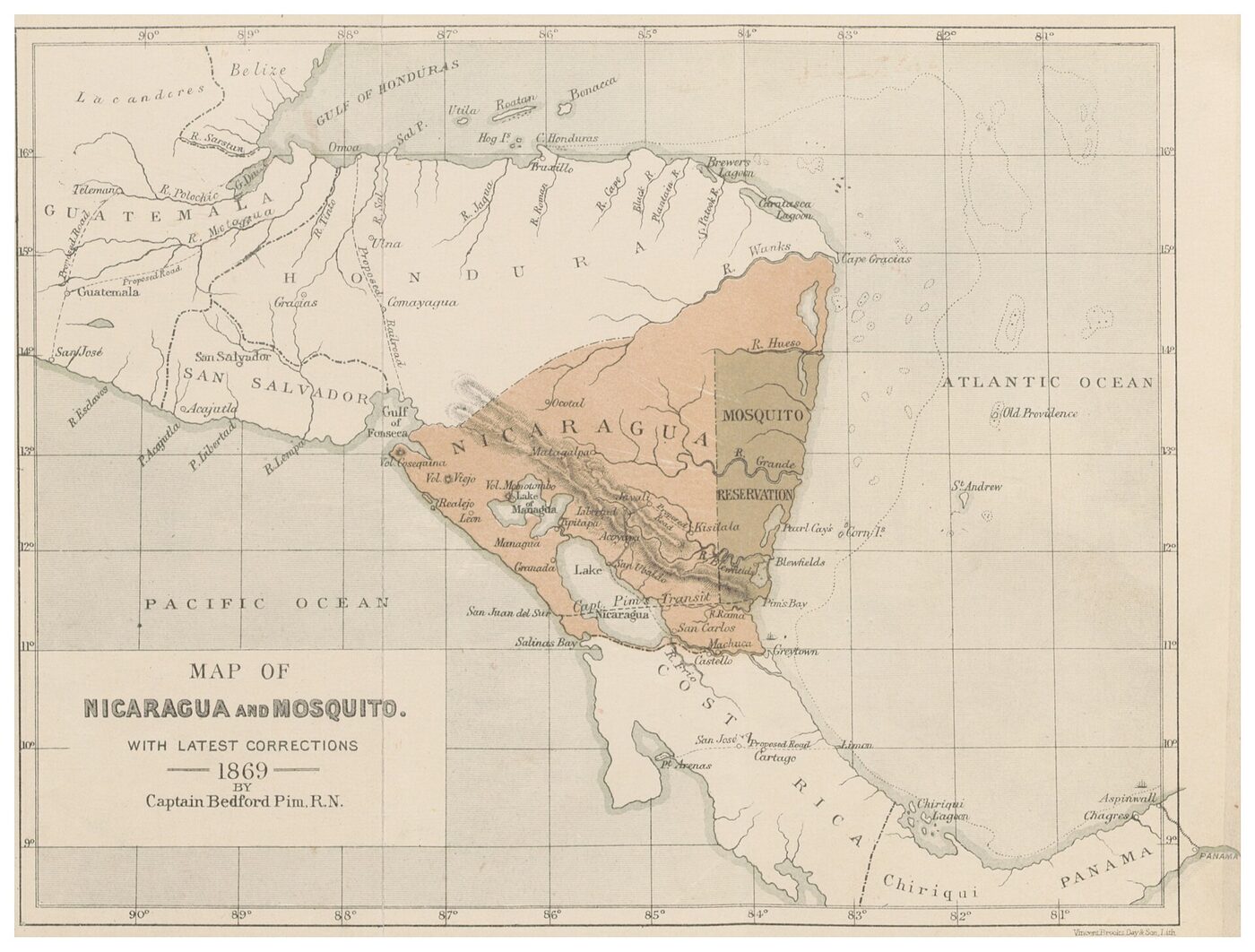
The Caribbean side of the country surfaced as well. Nicaragua's Atlantic coast — home to Miskito, Creole and other communities, where Miskito and an English-based creole are spoken alongside Spanish, and formally autonomous since 1987 — has a history quite distinct from the Pacific mainstream, and threads that touched on it tended to remind everyone that the national culture was plural.
.jpg)
Letters, music and the festival calendar
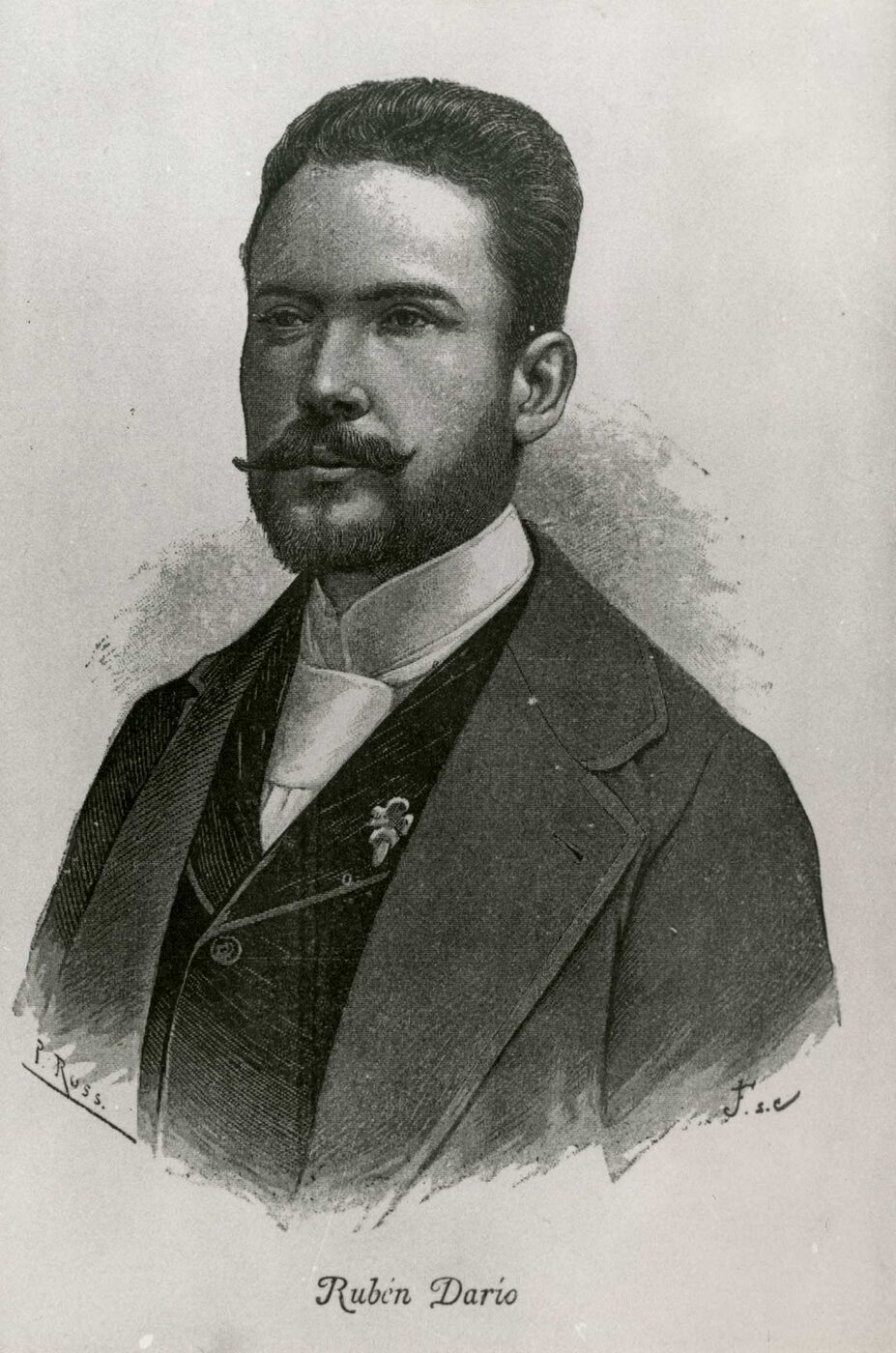
Rubén Darío (Metapa, 18 January 1867 – León, 6 February 1916) stands at the head of the Nicaraguan literary canon. He initiated modernismo, the Spanish-language movement that flourished at the end of the nineteenth century, and the dated spine of his work is short: Azul... in 1888, Prosas profanas y otros poemas in 1896, Cantos de vida y esperanza in 1905. He is buried in León Cathedral; the town of his birth was renamed Ciudad Darío; and the Order of Rubén Darío, a Nicaraguan order of merit established on 16 February 1951 for contributions to art, literature, science and international relations, carries his name.

The line did not stop there, and the twentieth-century names are equally datable. Ernesto Cardenal (Granada, 20 January 1925 – Managua, 1 March 2020), priest and poet, founded the community at Solentiname in 1965 and lived there until 1977; he was named Minister of Culture on 19 July 1979 and held the post until 1987. Sergio Ramírez, born at Masatepe on 5 August 1942, was vice-president from 10 January 1985 to 25 April 1990 and was awarded the Cervantes Prize on 16 November 2017. Gioconda Belli, born 9 December 1948, took the Premio Casa de las Américas in 1978, published La mujer habitada in 1988, and won both the Premio Biblioteca Breve and the Sor Juana Inés de la Cruz prize in 2008.
Older than any of them is El Güegüense, a satirical work of music, dance and theatre written by an anonymous author in the sixteenth century, transmitted orally for centuries and only set down and published as a book in 1942. It mixes Spanish with Nahuat, the language of the Nicarao, and is performed at Diriamba during the feast of San Sebastián from 17 to 27 January each year. UNESCO proclaimed it a Masterpiece of the Oral and Intangible Heritage of Humanity in 2005 — a dated event falling inside the group's own lifetime rather than before it.
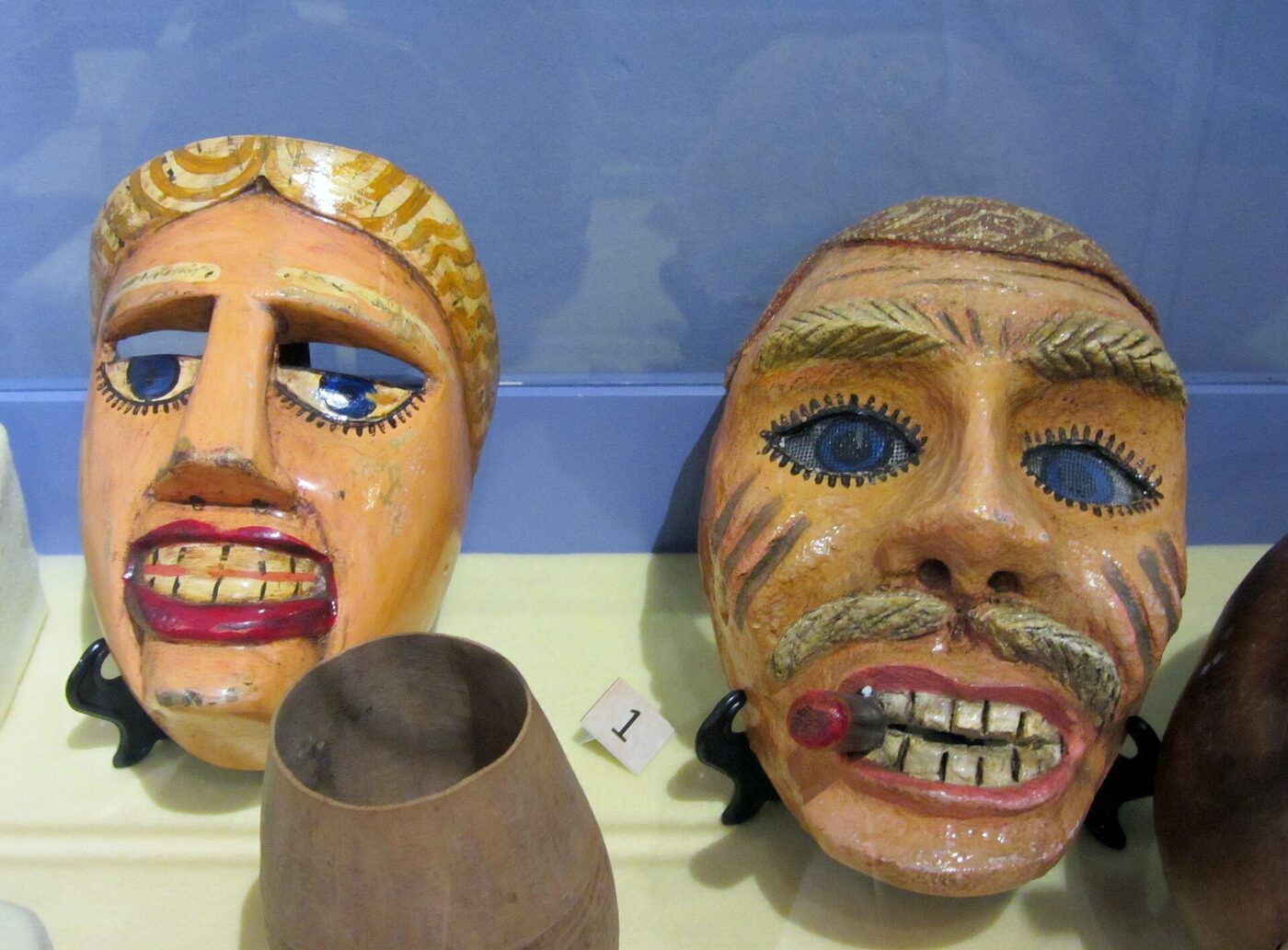

The rest of the calendar is the ordinary furniture of a culture group's year. La Purísima, a week of festivities in early December dedicated to the Immaculate Conception, is the high point of the national religious calendar, ahead of Christmas and Easter; Santo Domingo is honoured in Managua in August with two day-long processions; and on the Caribbean coast the Palo de Mayo, a month-long May festival centred on Bluefields and carrying a dance of the same name, runs on a wholly separate tradition, probably brought by British settlers in the early 1830s, though other accounts trace it indirectly from Jamaica. The marimba, of West African origin, is the country's representative instrument. In popular song the dominant twentieth-century figure is Carlos Mejía Godoy, born at Somoto on 27 June 1943, who with his band los de Palacagüina became one of the main representatives of testimonial song, the Nicaraguan strand of nueva canción, which grew from the 1970s; he and his brother Luis Enrique both hold the Order of Rubén Darío.
Two structural points explain why material of this kind, rather than politics, made up the bulk of most days' traffic. A festival date, a recipe and a set of lyrics are all plain text, and plain text was the only thing a soc.* group carried: sound and pictures travelled, if at all, through the separate binaries hierarchy, so a song could be transcribed and argued over but not played. And a calendar is the one thing a scattered readership can genuinely synchronise on, since nobody has to agree about 1979 in order to argue about how a day is properly kept.
The dated record
What follows is a chronology and not an argument. The items are given as dated events with their sources' own figures attached: no cause is assigned, no participant is characterised, and no judgement is offered on any of them, including on external involvement. Readers of the archive will find these events referred to throughout, and the use of a bare list is that it fixes the dates that are not in dispute. Everything before 1990 predates the group's own life, since soc.culture.* filled out through the late 1980s and 1990s; the final entry postdates its active period altogether.
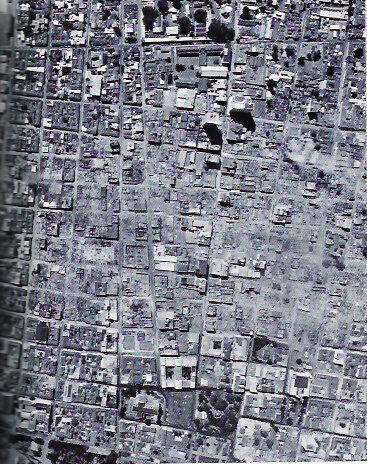
- 23 December 1972, 00:29 local time. An earthquake of magnitude 6.3 Mw near Managua. Death estimates range from 4,000 to 11,000. About 13 square kilometres of the city centre were destroyed and 27 square kilometres severely damaged; some 53,000 homes in the city were damaged.
- 17 July 1979. Anastasio Somoza Debayle resigned. On 19 July 1979 the FSLN entered Managua.
- 17 July 1979 to 25 April 1990. The dates given for the second phase of the Nicaraguan Revolution, the Contra insurgency.
- 3 March to 23 August 1980. The Cruzada Nacional de Alfabetización, the national literacy campaign. About 95,000 people volunteered: nearly 60,000 of high-school and college age and 30,000 adults, trained in two weeks. Illiteracy was estimated at about 50 per cent of the population beforehand, and about 75 per cent among the rural population; afterwards it was reported to have fallen by about 37 per cent overall, to roughly 7 per cent in the industrialised Pacific and 26 per cent in the less developed regions.
- September 1980. UNESCO awarded Nicaragua the Nadezhda K. Krupskaya prize for the campaign. Later campaigns in 1982, 1986, 1987, 1995 and 2000 also received the award.
- 4 November 1984. General election.
- 10 January 1985. Sergio Ramírez took office as vice-president, serving until 25 April 1990.
- 7 August 1987. The Esquipulas II accord was signed in Guatemala City by the five presidents.
- 7 September 1987. The Autonomy Statute created the North and South Caribbean Coast autonomous regions by dividing the former Zelaya department.
- 23 March 1988. The Sapoá accords.
- 25 February 1990. General election. Violeta Chamorro (UNO) 54.74 per cent; Daniel Ortega (FSLN) 40.82 per cent; turnout 86.23 per cent.
- 25 April 1990. Violeta Chamorro took office as president, serving until 10 January 1997.
- Late October 1998. Hurricane Mitch. Its centre never entered Nicaragua, but its circulation brought rainfall estimated at more than 1,300 mm in places. At least 3,800 people were killed in the country, more than 2,000 of them when the flank of the Casita volcano failed as a lahar that covered an area about 16 km long and 8 km wide and buried at least four villages completely.
- 10 April 2014, 17:27 local time. An earthquake of magnitude 6.1 at a depth of 13 km, centred about 50 km north of Managua, killed one person, injured 266 and damaged more than 1,500 houses. This postdates the group's active life.
Two entries carry a note on scale rather than on meaning. The 1972 earthquake destroyed the commercial centre of the capital and the reconstruction that followed did not restore it. Hurricane Mitch in 1998 is the only item on the list that falls squarely inside the group's active period; the 2014 earthquake came years after the hierarchy had emptied out.
Context
Any conversation about late-twentieth-century Nicaragua carried freight. The Somoza family had governed for more than four decades until the revolution of 1979; the earthquake of December 1972 had levelled central Managua, which was never fully rebuilt; the 1980s brought civil war, a United States trade embargo and hyperinflation. Each convulsion sent people abroad — to Costa Rica above all, which hosts the largest Nicaraguan community outside the country, and to the United States, notably Miami and California.

Those departures did not sort neatly by politics. The waves included opponents of the old regime, opponents of the new one, and a majority moved mainly by economics; a newsgroup was one of the few places where all of them, together with relatives who never left, could address one another directly and in public. The results were by turns bruising and generous, often within the same thread, which is roughly what an honest record of a scattered nation talking to itself should look like.
That record survives. The group's posts passed from the Deja News archive into Google Groups, and although the early years are unevenly preserved, what remains is primary source material: Nicaraguans at home and abroad arguing, joking, mourning and organising in their own words, written at the time rather than reconstructed afterwards.
Language, accents and the archive
Spanish is written in the Latin alphabet, which spared this group the transliteration problems that afflicted its Cyrillic, Greek, Arabic and Indic siblings. It did not spare it the diacritics. Written Spanish needs á, é, í, ó, ú, ü and ñ, together with the inverted marks ¿ and ¡, and none of those belongs to the seven-bit ASCII repertoire on which Usenet was built. RFC 1036, the Standard for Interchange of USENET Messages published in December 1987 and the reference document for most of the group's life, specified printing ASCII characters for header fields such as the full name in a From line and the message identifier, and seven-bit ASCII was the safe assumption for bodies as well.
The character sets that did carry Spanish disagreed with one another. Code page 437, the character set of the original IBM PC from 1980, included ñ and Ñ, the lowercase accented vowels and both inverted marks, but lacked the capitals Á, Í, Ó and Ú; code page 850, DOS Latin-1, filled those gaps. ISO/IEC 8859-1, first published as a standard in 1987, covered Spanish completely, and Windows-1252 extended it further. The same accented letter therefore had different byte values depending on whether the writer was at a DOS prompt, in Windows, on a Macintosh or on a university Unix host, and a message that did not declare which it meant was decoded according to whatever the reader's software assumed.
MIME supplied the missing declaration, and supplied it late. RFC 2045, of November 1996, defined the charset parameter and the notion of an eight-bit body; RFC 2047, published the same month, defined the encoded-word form =?charset?encoding?text?= that permits non-ASCII text in a header such as a subject line. Software adopted both unevenly, and a great deal of 1990s newsgroup text was simply emitted as raw eight-bit octets with no character set stated at all.
The habit that developed in response was accent-stripping: writing Dario for Darío, Leon for León, Purisima for Purísima and nino for niño, and dropping the opening ¿ from a question. It was reliable, it was ugly, and it is essential to know when searching the archive. A query for León will not retrieve a post that wrote Leon, and a query for Leon will not retrieve one that spelled the word properly; the older the material, the likelier the stripped form, so both spellings have to be tried. Mojibake — a passage decoded under the wrong character set — is common in the same layers and is worth learning to recognise rather than skipping past. Unicode was never the obstacle here: the Latin-1 Supplement block at U+0080 to U+00FF has been present since Unicode 1.0.0 in 1991, and the first 256 Unicode code points are those of ISO 8859-1. The problem was transport and labelling, not the standard.
One dialect feature is worth flagging for the same reason. Nicaraguan Spanish has the highest frequency of voseo among the Central American varieties — the familiar second-person pronoun vos with its own verb forms, alongside the tuteo that Nicaraguans also understand — so an imperative or a present tense in the archive may be inflected in a way a searcher trained on Peninsular or Mexican Spanish would not think to type. The vocabulary also carries a heavy Nahuatl and Nawat substrate, especially in names for flora, fauna and places.
Nicaragua's other languages had a harder time of it still, and largely stayed off the network. Miskito, spoken in the North Caribbean Coast region and in eastern Honduras, has about 150,000 speakers on Ethnologue's 2015–2021 estimate; its alphabet runs to nineteen letters and marks nasalised vowels with a tilde — ã, ẽ, ĩ, õ and ũ, three of which lie outside ISO 8859-1 altogether — and its orthography is still not settled, printed grammars and Bible translations notwithstanding. Miskito Coast Creole, an English-based creole with roughly 100,000 speakers across Nicaragua and Honduras, is used at Bluefields, Bilwi, Pearl Lagoon, Prinzapolka and the Corn Islands. Nicaraguan Sign Language is a third and unusually well-documented case: it arose among deaf children after a special education centre opened in the San Judas neighbourhood of Managua in 1977 and a vocational school for deaf adolescents opened at Villa Libertad in 1980, with more than four hundred pupils enrolled across the two by 1983 and linguistic study beginning in 1986. None of these is a written language of the internet in the way Spanish is, which is one reason the coast appears in the archive mainly as a subject rather than as a voice.
Where the readership actually was
Costa Rica is the largest destination and the best documented. There were 45,918 Nicaraguan-born people in Costa Rica in 1984; by 2012 the number had grown to around 287,000, nearly three quarters of the entire foreign-born population of the country. At the 2011 Costa Rican census roughly 390,000 immigrants were resident in total, about nine per cent of the population. A land border crossed by bus produces a different migration from an air journey to Florida; soc.culture.costa-rica is the sibling group touched by the same movement of people.
In the United States the census counted 348,202 people of Nicaraguan origin in 2010, and the American Community Survey put the figure at 429,501 in 2019. The concentration is sharp. More than two thirds of Nicaraguan Americans live in California or Florida; the Miami–Fort Lauderdale–West Palm Beach metropolitan area held 118,768 in 2010; and Miami-Dade County alone accounts for about thirty per cent of all Nicaraguans in the country. Sweetwater, Florida, was 22.98 per cent Nicaraguan at the 2010 census, the highest share of any community in that census listing. Counted as cities rather than metropolitan areas, Los Angeles held 15,572 and San Francisco 7,604 at the same census, against 28,618 in the city of Miami.
What a readership distributed like that does to a newsgroup is remove its centre of gravity in time. Nicaragua and Costa Rica both keep UTC−6 all year and do not observe summer time; Miami runs an hour ahead of them for part of the year and two hours ahead for the rest; California is one or two hours behind depending on the season; readers in Spain are seven or eight hours ahead. A thread begun in the Managua morning collected replies through a day that never closed, and no hour of the clock belonged to everybody. Usenet's own propagation compounded this: articles reached different servers at different times, so the order in which a reader saw a thread was not necessarily the order in which it had been written, and reply chains routinely crossed each other in flight.
Reading soc.culture.nicaragua today
- Historical archive: Google Groups — soc.culture.nicaragua (coverage varies by group and era).
- Open in a newsreader:
news:soc.culture.nicaragua— the original site offered exactly this link, and it still works if your system has a newsreader registered for thenews:scheme. - Live access: point an NNTP newsreader at a modern server — see accessing Usenet today.
- The original news2mail e-mail subscription service ended in the mid-2000s and no longer operates.