soc.culture.honduras
Honduras and Hondurans.
A national group in the soc.culture.* tier, created for socio-cultural matters concerning Honduras and Hondurans abroad by a vote of 204 to 24 announced on 11 April 1996.
Its years span Hurricane Mitch (1998) and the reconstruction that followed; this directory holds no archive of what was posted to it.
On this page
The group and its era
soc.culture.honduras arrived late in the soc.culture.* expansion, the phase that handed separate groups to countries of a few million people. Its creation vote passed 204 to 24, announced in news.announce.newgroups on 11 April 1996; the charter asked for an unmoderated group for socio-cultural matters concerning Honduras and, in its own words, Hondurans in foreign countries. There had been a false start: a newgroup forged in David C Lawrence’s name on 1 April was cancelled as bogus before the genuine one followed on 17 April.
Household internet access inside Honduras remained rare through the 1990s, so the people best placed to post were Hondurans studying or working abroad, chiefly in the United States, writing in Spanish.
Then came the storm the archive is organised around. Hurricane Mitch formed on 22 October 1998, reached Category 5 over the western Caribbean and crossed the Honduran coast on 29 October, by then a slow-moving Category 1 system; it dissipated on 9 November. The damage was done by rain rather than wind. About 7,000 people died in Honduras and 11,374 across the region, making Mitch the deadliest Atlantic hurricane since 1780; up to 1.5 million Hondurans were left homeless, about a fifth of the population, and 70 to 80 per cent of the transport network was destroyed, most bridges with it.
The highest official rainfall total in Honduras was 928 mm at Choluteca, of which 466.7 mm fell in a twenty-four-hour period on 31 October, more than double the previous record there, set in 1985; unofficial totals across Central America ran as high as 1,900 mm, the gauges in mountain areas having washed away. The Choluteca river reached 10 m above its banks at Tegucigalpa and afterwards changed course. About 35,000 houses were destroyed and 50,000 damaged; 9,198 m of bridges and 2,045 m of approach road were damaged or destroyed; initial estimates put 70 per cent of crops lost, including 85 per cent of the bananas.
Afterwards the group did work nobody had designed it for. With bridges gone and telephone service disrupted, the ordinary private channels between diaspora and home became unreliable, and an open address in Spanish was one alternative. What a group carries at such a moment is enquiries about particular towns, word relayed by whoever had reached a working line, and pointers to relief agencies and consular notices.
What was discussed
Reconstruction and the politics of aid followed — pledges, debt relief, and the distance between what donors announced and what relatives reported. Recovery was slow: banana exports stood at 57 per cent of their pre-Mitch level in 2000, while remittances rose 28 per cent that year to $410 million.
Donations to the affected countries totalled about $6.3 billion, of which Honduras received nearly $2.8 billion over several years; the economy contracted by 1.9 per cent in 1999 and exports fell 9.4 per cent. In July 2000 Honduras reached its decision point under the Heavily Indebted Poor Countries Initiative, launched by the International Monetary Fund and the World Bank in 1996, and so qualified for interim multilateral debt relief. On the World Bank’s own remittance series — a different measure from the figure above — the flow was $157 million in 1996, $328 million in 1999 and $1.81 billion in 2005.
Emigration was the older subject, and Mitch accelerated it. On 5 January 1999 the United States designated Honduras for Temporary Protected Status; renewed repeatedly over the decades that followed, an emergency measure became the legal footing for a generation of Honduran families there. Renewal deadlines, filing requirements and consular practice are exactly the sort of information a diaspora group circulates — here one settled largely in Texas, Florida, California and New York.
The other engine of the 1990s economy was assembly manufacturing for export: the maquilas of the Sula valley free zones, mostly Asian-owned, sewing clothing for the United States market. They employed some 16,000 workers in 1991 and grew steeply from there, in a country with one of the most strike-prone labour forces in Central America; wages, hours and union recognition were argued over accordingly.
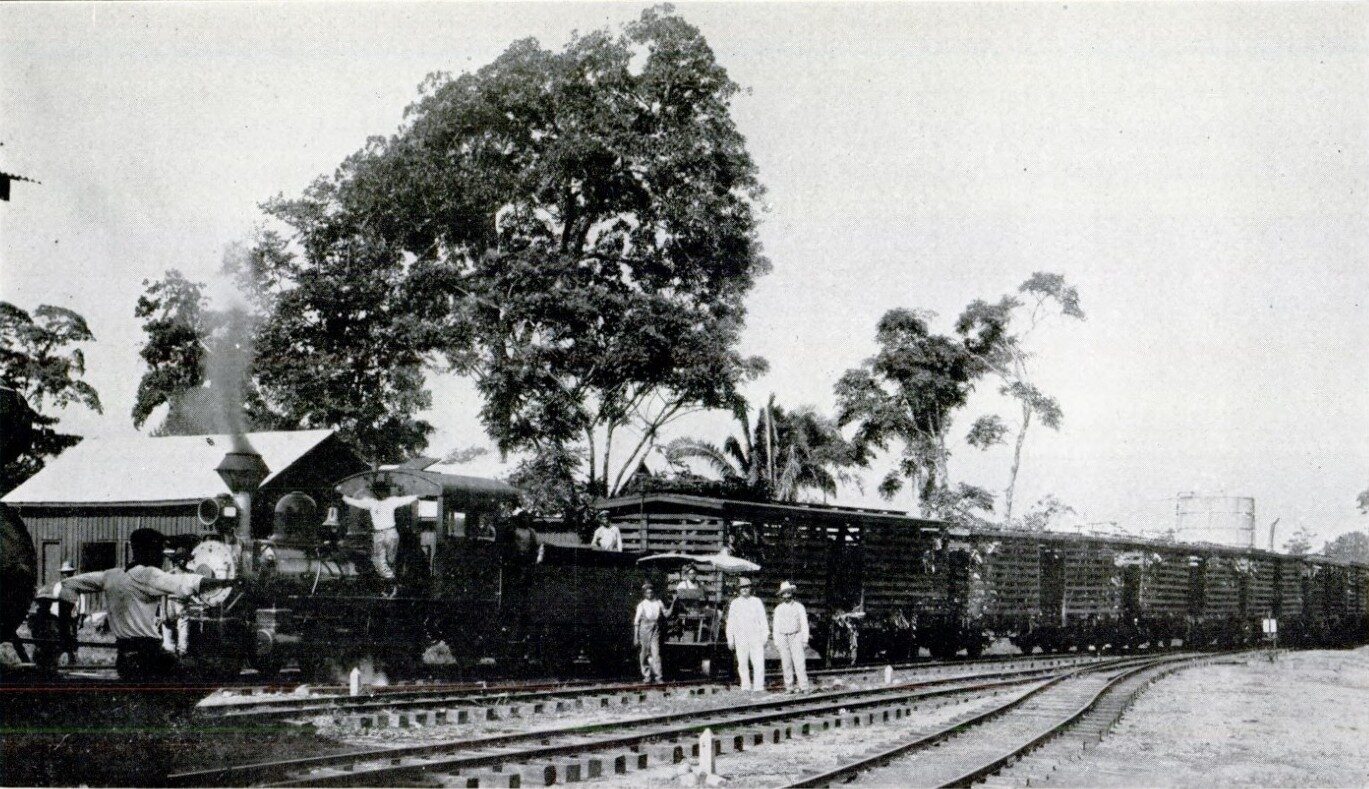
Behind it lay the banana trade. United Fruit and the Cuyamel Fruit Company controlled much of the country’s transport infrastructure in the early twentieth century; United Fruit was known locally as El Pulpo, the octopus, and Cuyamel’s founder Samuel Zemurray helped mount the 1911 overthrow of President Miguel Dávila. O. Henry coined banana republic in Cabbages and Kings (1904), a book drawn from the six months he spent in the country.

Culture came mostly from the Caribbean coast. Garifuna is an Arawakan language spoken along that shore from Belize to Nicaragua, carried there by people the British deported from Saint Vincent in 1797; Honduras holds the largest body of speakers, and Garifuna language, music and dance were later recognised by UNESCO as intangible heritage.
Football supplied the rest, along with the region’s most misleadingly named conflict. Honduras and El Salvador fought a war from 14 to 18 July 1969, remembered in English as the Football War because it followed three World Cup qualifying matches that June; its causes were agrarian, a land reform law enforced against Salvadoran immigrants who numbered some 300,000, more than a tenth of the Honduran population. Between 60,000 and 130,000 Salvadorans were displaced. The nickname travelled much further than the history behind it.
Honduras won the CONCACAF Championship in 1981 as hosts and so qualified for its first World Cup, in Spain in 1982, drawing 1–1 with the hosts and 1–1 with Northern Ireland before losing 1–0 to Yugoslavia — fourteen years before the newsgroup existed. C.D. Olimpia remains the only Honduran club to have won the CONCACAF Champions’ Cup, in 1972 and 1988. The two later qualifications, for 2010 and 2014, fall well after the years in which such groups were busiest.
Between crises the calendar did most of the work. Independence Day falls on 15 September, its festivities starting early in the morning with marching bands, and the Fiesta Catracha the same day serving beans, tamales, baleadas, cassava with chicharrón and tortillas; Día del Niño falls on 10 September, Día de Lempira on 20 July and the Day of the Soldier on 3 October, for the birth of Francisco Morazán. Holy Week brings the sawdust carpets of Comayagua, the alfombras de aserrín; the La Ceiba carnival falls on the third or fourth Saturday of May, for Isidore the Labourer. The word Hondurans use for themselves, catracho, is traced to the Nicaragua campaign of 1856 under General Florencio Xatruch, whose troops were called Xatruches, then Catruches, then Catrachos.
Music and books carried the rest. Punta is the Garifuna dance music of the coast; its amplified form, punta rock, was introduced by Pen Cayetano and the Turtle Shell Band at Dangriga in Belize in 1978. Banda Blanca’s Sopa de Caracol, written by Hernán Chico Ramos and Juan Pompilio Tejeda, entered the Billboard Top Latin Songs chart at fifteen in the week of 19 January 1991, reached number one on 16 March and sold about 1.5 million copies in the United States. Ramón Amaya Amador (1916–1966) wrote Prisión verde in the 1940s out of the banana camps of the Bajo Aguán; it was banned in Honduras for many years.
Who could actually post
The country-code domain is the cleanest anchor available. IANA’s root database records .hn as registered on 16 April 1993, three years before the newsgroup, with the Red de Desarrollo Sostenible Honduras as its sponsoring organisation. A delegation in the root says only that the country had an address, not how many people stood behind it.
The World Bank’s series for individuals using the internet gives the scale. For Honduras the figure was 0.044 per cent of the population in 1996, the year of the creation vote — roughly two and a half thousand people in a country of 5.9 million. It was 0.30 per cent in 1998, the year of Mitch, and 0.57 per cent in 1999. It first passed 1 per cent in 2000, reached 2.6 per cent in 2002, 6.5 per cent in 2005, 11.1 per cent in 2010 and 58.6 per cent in 2024.
Fixed telephone lines stood at 3.2 per 100 people in 1996 and 4.5 per 100 in 2000; mobile subscriptions were 0.04 per 100 in 1996 and 2.4 per 100 in 2000. Hondutel, created on 7 May 1976 as the autonomous state body responsible for modernising the network, held the infrastructure, and the 1995 Framework Law of the Telecommunications Sector authorised the sale of a 51 per cent stake in it.
A country with a few thousand connected people in 1996 could not supply a home-based readership for a text forum, whatever its interest in one; those with a shell account, a university connection or an office line were in the main abroad. The same arithmetic explains why the group mattered most after October 1998, when the connectivity that did exist inside the country was the connectivity that had just been damaged.
The dated record
A chronology and nothing more. Items before 11 April 1996 predate the group; the last two postdate its working years.
- 12 April 1797 — the survivors of the deportation from Saint Vincent land on Roatán: about 2,500 of more than 5,000 deported.
- 1899 — the Vaccaro brothers begin shipping bananas from La Ceiba to New Orleans.
- 1929 — Samuel Zemurray sells the Cuyamel Fruit Company to United Fruit for 300,000 shares, valued at about $31 million.
- April to July 1954 — a banana workers’ strike beginning at Tela runs 69 days and involves some 40,000 workers.
- 8, 15 and 27 June 1969 — the three World Cup qualifying matches with El Salvador, at Tegucigalpa, at San Salvador and, as a play-off, at Mexico City, which El Salvador won 3–2 after extra time; the war follows from 14 to 18 July.
- 16 April 1993 — the
.hncountry-code domain is registered in the IANA root. - 1995 — the Framework Law of the Telecommunications Sector authorises the partial sale of Hondutel.
- 22 October to 9 November 1998 — Hurricane Mitch.
- 5 January 1999 — the United States designates Honduras for Temporary Protected Status.
- July 2000 — Honduras reaches its HIPC decision point.
- 2001 — UNESCO proclaims the language, dance and music of the Garifuna a Masterpiece of the Oral and Intangible Heritage of Humanity; incorporated into the Representative List in 2008.
- 5 August 2004 — a second signing ceremony in Washington completes CAFTA-DR, the Central American signatures having been made on 28 May; Honduras implements it on 1 April 2006.
- 28 June 2009 — President Manuel Zelaya is detained in Tegucigalpa and flown to Costa Rica, on the day a constituent-assembly poll had been scheduled.
- 8 September 2025 — the Honduran Temporary Protected Status designation ends, having run from January 1999.
Spanish on a seven-bit network
Usenet was built for seven-bit US-ASCII. RFC 1036, the standard for the interchange of Usenet messages, dates from December 1987 and inherits the assumptions of RFC 822, requiring printing ASCII in message identifiers and in the full-name field. Spanish needs six accented vowels, ñ and Ñ, ü and Ü, and the inverted marks ¿ and ¡ — none of which exists below code point 128.
The first answer was an eight-bit code page. IBM’s code page 437 carried the lower-case accented vowels, ñ and Ñ, ü and the inverted marks in its upper half, but not the capitals Á, Í, Ó and Ú; code page 850, also called DOS Latin 1, replaced most of 437’s box-drawing characters with accented Latin letters and covers the whole ISO 8859-1 repertoire in a different order. ISO/IEC 8859-1 appeared as ECMA-94 in March 1985 and as an ISO standard in 1987, latest edition 1998, and covers Spanish completely; Windows-1252 began as the same set and diverged from Windows 2.0 by filling the 0x80 to 0x9F range. The difficulty was that a byte carries no label: 0xF1 is ñ in Latin-1 and something else in another table, and a relay that stripped the eighth bit turned 0xF1 into 0x71, the letter q.
The second answer was MIME. RFC 2047 of November 1996 defines the encoded-word, so a header can carry non-ASCII as printable ASCII in the form =?charset?encoding?encoded-text?=; quoted-printable does the equivalent in the body, writing ñ as =F1 under Latin-1. RFC 5536, the Netnews Article Format of November 2009, still requires header text outside ASCII to be encoded this way. All of it works only when the software at both ends agrees.
The third answer was to drop the accents. Writing nino for niño and anos for años was ordinary practice wherever the encoding could not be trusted, even though the second substitution changes the word; some writers marked the tilde separately, as n~ or nh. Unicode had settled the repertoire long before: the C1 Controls and Latin-1 Supplement block, U+0080 to U+00FF, has carried the same character repertoire since version 1.0 of the standard in 1991. What a standard could not do was make every newsreader, transport and archive agree at once.
A word spelled with its accent will not match the same word spelled without it, and a message posted in an unlabelled eight-bit encoding may now render as mojibake whatever the searcher does. Honduran material is worth trying in both spellings, and the same author’s name expected in more than one form.
Where the readers were
The readership had no single home time zone, which is the structural fact that shapes a group like this one. Honduras keeps Central Standard Time, six hours behind UTC, all year, under the tz database identifier America/Tegucigalpa; daylight saving has been used only in 1987, 1988 and from 7 May to 7 August 2006. The clocks therefore moved at the readers’ end and not at home: a reader in Los Angeles was one or two hours behind Tegucigalpa depending on the season, one in New York or Miami one or two hours ahead, one in Madrid seven or eight. A group spread that way has no shared evening: threads move in relays rather than in conversation.
The 2020 United States census recorded 1,061,585 people of Honduran origin. The largest concentrations were Texas with 168,578, Florida with 153,308, California with 102,491, New York with 93,056 and North Carolina with 57,822; Louisiana held 55,915, about 1.2 per cent of that state’s population, and Hondurans are now the largest immigrant group there. The 2010 census had recorded 633,401, and a 2023 estimate gives 1,373,620, or 0.41 per cent of the United States population.
The Louisiana concentration is not an accident of the 1990s: it follows the New Orleans banana trade, the port the Vaccaro shipments from La Ceiba reached from 1899 onwards. And the doubling between 2010 and 2020 means the population the group was written for was much smaller than the population that might now go looking for it.
Temporary Protected Status was created by the Immigration Act of 1990, which gave the Attorney General a procedure for designating a country whose nationals could not safely be returned. The Honduran designation ran from 5 January 1999 to 8 September 2025 and covered about 51,225 people with approved status as of March 2025.
The banana companies and the north coast
In 1899 Joseph, Luca and Felix Vaccaro, with Salvador D’Antoni, began importing bananas to New Orleans from La Ceiba; the firm was established in the United States in 1924 as the Standard Fruit Company and renamed the Standard Fruit and Steamship Company in 1926. Castle and Cooke acquired it between 1964 and 1968 and was itself renamed the Dole Food Company in 1991. The Cuyamel Fruit Company took the other route: founded in the 1890s by William Streich, bought by Samuel Zemurray around 1905, and about 14 per cent of United States banana imports by 1927, before Zemurray sold it to United Fruit in 1929.
What the companies built was transport as an adjunct to the trade: rail lines from plantation to port rather than between the country’s own cities. Honduran agricultural exports rose from $3 million in 1913, of which $2 million was bananas, to $25 million in 1929, of which $21 million was bananas.
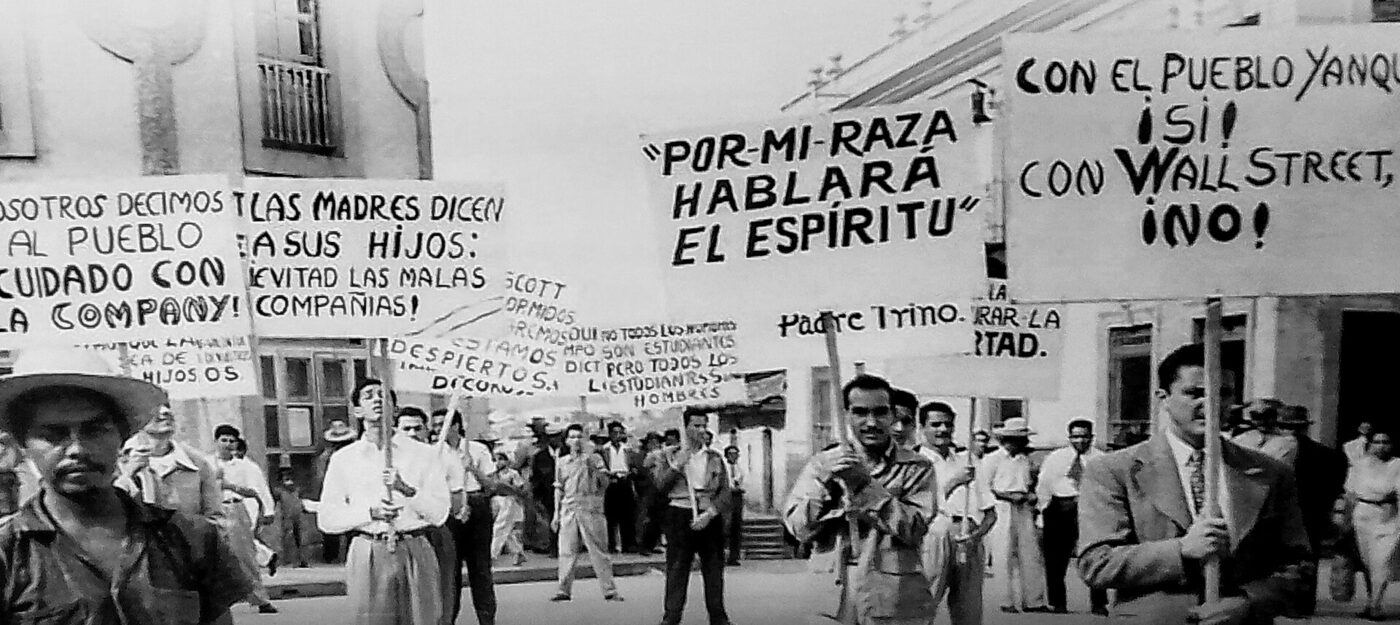
In April 1954 United Fruit banana workers began a wildcat strike at Tela over pay; in May dockworkers at Puerto Cortés struck when their leader was dismissed, and the action spread to some 25,000 United Fruit workers, another 15,000 at Standard Fruit and industrial workers at San Pedro Sula, about 40,000 in all. It ran 69 days and was settled in July with substantial wage increases and recognition of the banana workers’ union; some demands were carried into reform programmes continuing into the 1970s.

The Garifuna record
More than 5,000 Black Caribs were deported from Saint Vincent after their defeat in the Second Carib War; when the deportees landed on Roatán on 12 April 1797, only about 2,500 had survived the passage. From the island the settlements spread along the Caribbean coast, north to Belize and Guatemala and south to Nicaragua. By 1981 around 65,000 Garifuna were living in fifty-four fishing villages across Guatemala, Belize and Nicaragua; in 2011 Garifuna organisations in the United States put the total population at roughly 400,000.
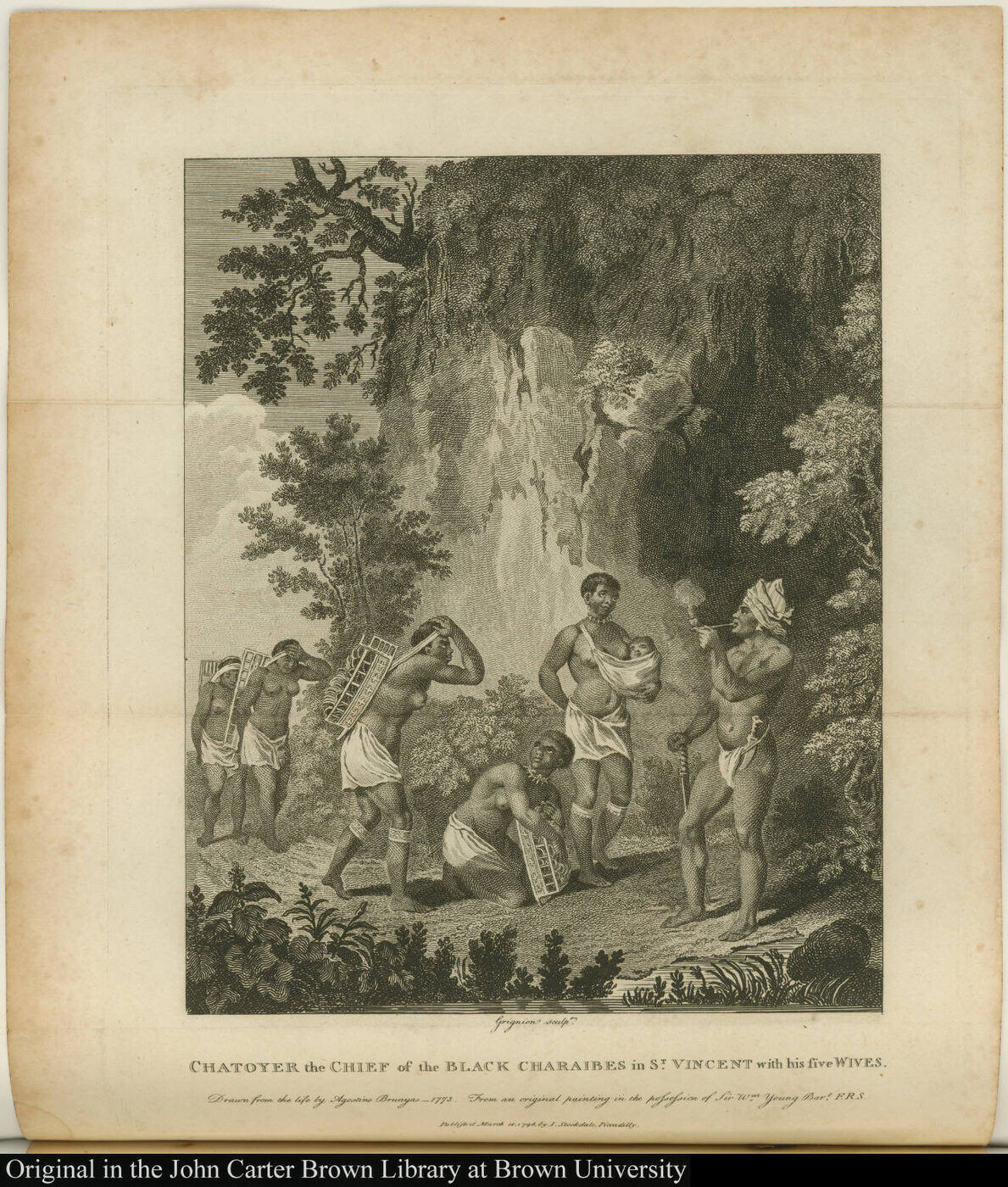

The language is Arawakan, which makes it an outlier: the Arawakan area is otherwise confined to northern South America. Parts of its vocabulary are split between men’s speech and women’s speech, the men’s terms generally loanwords from Carib and the women’s from Arawak. Ethnologue’s cited figure is about 120,000 speakers, from sources dated between 2001 and 2019.
The UNESCO recognition has two dates rather than one. The language, dance and music of the Garifuna were proclaimed a Masterpiece of the Oral and Intangible Heritage of Humanity in 2001, for Belize, Guatemala, Honduras and Nicaragua jointly, and were incorporated into the Representative List of the Intangible Cultural Heritage of Humanity in 2008. The file records that the tradition carries knowledge of cassava growing, fishing, canoe building and the building of baked mud houses, and that the language was by then taught in only one village.
Copán and the western record
The other large body of documented Honduran material is the archaeology of the west. Copán was refounded in 426 as the capital of a new Maya kingdom by K’inich Yax K’uk’ Mo’. Its Hieroglyphic Stairway carries 2,200 glyphs, the longest known Maya text, first built by Uaxaclajuun Ub’aah K’awiil in 710 and reinstalled and expanded in 755. Altar Q, dedicated by Yax Pasaj Chan Yopaat in 776, carries the first sixteen kings of the dynasty around its sides. In 738 Uaxaclajuun Ub’aah K’awiil, the thirteenth ruler, was captured and executed by the king of Quiriguá, until then his vassal, and the city passed through a seventeen-year hiatus.
The first post-conquest mention of the site is a letter of 8 March 1576 by Diego García de Palacio. Juan Galindo led an expedition there in 1834 for the government of Guatemala. John Lloyd Stephens and Frederick Catherwood arrived in 1839 and spent two weeks mapping it; Stephens bought the city for $50, and the description, map and drawings appeared in his Incidents of Travel in Central America, Chiapas and Yucatán in 1841. Alfred Maudslay followed; a carved bench panel he removed in the nineteenth century is in the British Museum.
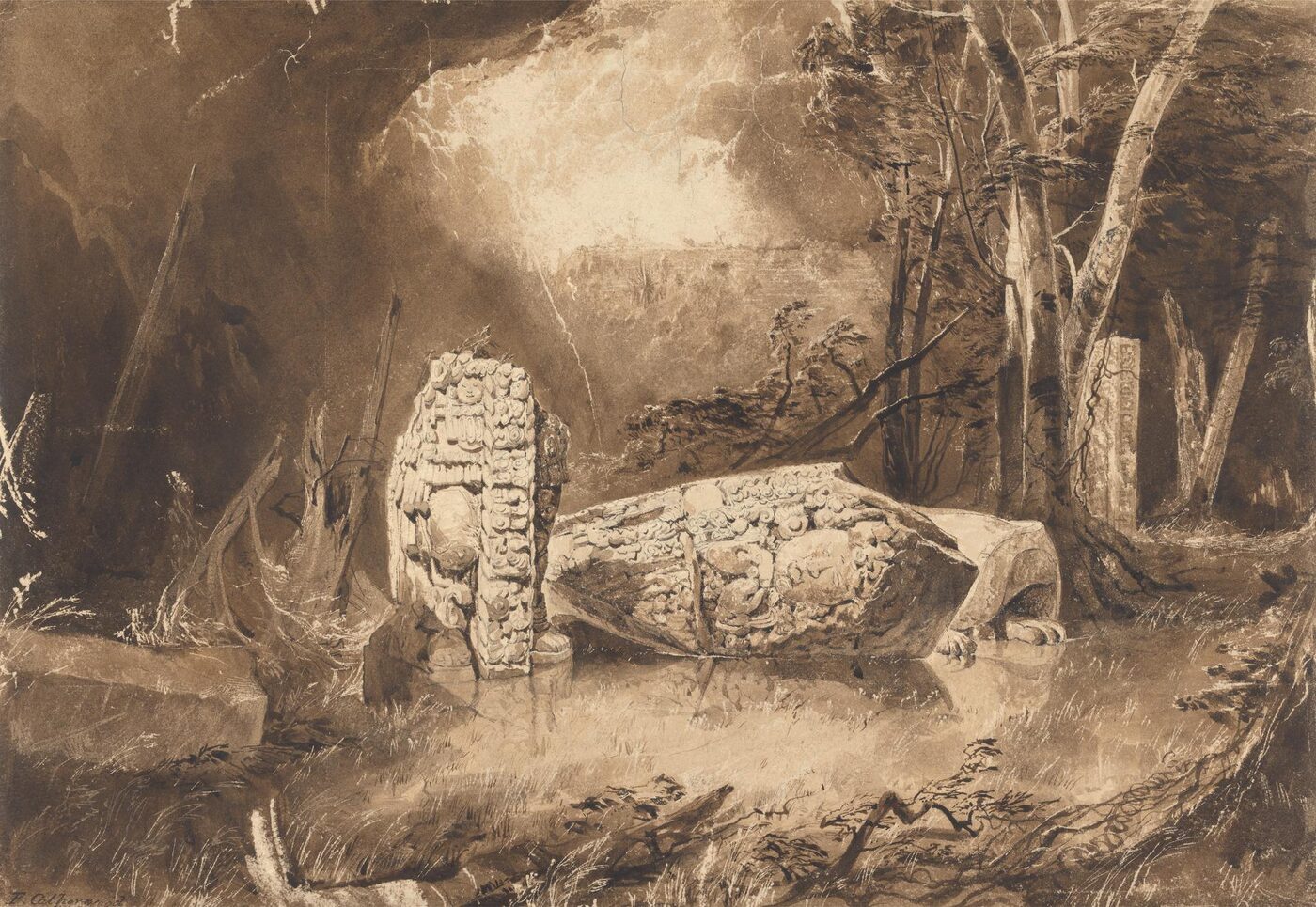

Several Peabody Museum expeditions worked at Copán from the late nineteenth century, including the 1892–1893 excavation of the Hieroglyphic Stairway by John G. Owens and George Byron Gordon. In the 1930s the Carnegie Institution diverted the Copán river southwards to stop it eroding the acropolis; the dry bed was filled in when the cut was consolidated in the 1990s.
Copán was inscribed on the UNESCO World Heritage list in 1980 under cultural criteria iv and vi, over 15.095 hectares, and designated a Honduran cultural monument, covering 66 hectares, in 1982; UNESCO approved $95,825 for works there between 1982 and 1999. A tomb was looted in 1998 while archaeologists were excavating it. The site is administered by the Instituto Hondureño de Antropología e Historia with the Instituto de Conservación Forestal.
Context
The group was small, and its neighbours kept their own addresses — soc.culture.nicaragua and soc.culture.costa-rica. The Salvadoran and Guatemalan diasporas lay alongside it, sharing migration routes, legal categories and home-town networks in the same cities.
The pattern is not particular to Honduras. A group of this size stays quiet for most of its life — results, music, paperwork, homesickness — and then something happens that the ordinary channels cannot absorb, and for a short period it is the most useful address a scattered population has. Traffic rises, the register changes, and afterwards it settles back. Mitch is the kind of event that does that to a culture group.
The coastal material has a second address here: soc.culture.caribbean covered the wider region the Garifuna settlements belong to, and the rest of the roster is on the soc.culture hierarchy page.
Reading soc.culture.honduras today
- Historical archive: Google Groups — soc.culture.honduras (coverage varies by group and era).
- Open in a newsreader:
news:soc.culture.honduras— the original site offered exactly this link, and it still works if your system has a newsreader registered for thenews:scheme. - Live access: point an NNTP newsreader at a modern server — see accessing Usenet today.
- The original news2mail e-mail subscription service ended in the mid-2000s and no longer operates.