soc.culture.costa-rica
Costa Rica and Costa Ricans.
A small group: ecotourism advice, expatriate questions, football and politics.
The news2mail gateway carried the group to e-mail between 2000 and 2004; no message archive is preserved here.
On this page
The group and its era
soc.culture.costa-rica sat in the long national run of the soc.culture.* hierarchy, unmoderated like almost all of its siblings, with a character set entirely by who chose to post. What made it unusual was the mix. Most country groups were written by nationals at home and a diaspora abroad, with a thin outer ring of the merely curious. Here the outer ring was thick and permanent: foreign residents already in the country, retirees who had moved or meant to, and a steady supply of people researching a move they had not yet made.
That composition gave the group two languages and two registers. Spanish and English ran side by side, and the traffic tilted towards practical questions rather than the reminiscence and cultural argument that dominated comparable groups. Costa Ricans at home found themselves fielding a permanent intake of newcomers, which is a different job from talking among themselves.
The arc was the usual one — accumulation through the 1990s, then a drift to web forums and expatriate mailing lists in the 2000s. news2mail carried it to e-mail between 2000 and 2004; the old Deja News archive, absorbed by Google in 2001, preserves part of the earlier run, with the usual gaps.
Who could post, and from where
The dates are checkable and they decide everything else. Costa Rica’s country-code domain, .cr, carries a registration date of 10 September 1990 in IANA’s root database, with the Academia Nacional de Ciencias as sponsoring organisation. Academic networking arrived in the same season: the University of Costa Rica made its first BITNET link in November 1990, to Florida Atlantic University over a digital satellite circuit from PanAmSat, and its first Internet connection in January 1993, through a point of presence the United States National Science Foundation had established at Homestead, Florida. CRNet, the national research network built on TCP/IP by the university with the Ministry of Science and Technology, became operational in April 1993. The same team helped bring the neighbours on under the RedHUCyT programme: Nicaragua and Panama in 1994, Honduras and Guatemala in 1995, El Salvador in 1996, Belize in 1997.
Public access came through the state. The Instituto Costarricense de Electricidad was created by decree-law on 8 April 1949 and has supplied the country’s telecommunications since 1963; its subsidiary Radiográfica Costarricense, RACSA, carried the data side. That arrangement lasted the whole of the newsgroup’s active life: competition in mobile telephony arrived only in 2011, after the free-trade agreement approved by referendum on 7 October 2007 — by 51.6 per cent — entered into force on 1 January 2009.
The penetration series gives the home end its true size. On the figures the International Telecommunication Union supplies to the World Bank, individuals using the Internet stood at 0.08 per cent of the population in 1993, 0.42 per cent in 1995, 1.6 per cent in 1997 and 3.9 per cent in 1999. Fixed telephone lines, which a modem needed, ran at 9.0 per hundred people in 1990 and 13.5 in 1995. Then the curve turns: 5.8 per cent online in 2000, 9.6 in 2001, 19.9 in 2002 and 20.8 in 2004.
Set that against the group’s arc and the composition follows without guesswork. Through the accumulating years of the 1990s the overwhelming majority of Costa Ricans were not on the network at all, and those posting from inside the country came from the small population that was: university-connected, professional, urban. The volume came from outside. The years in which the home population caught up, roughly 2000 to 2004, are precisely the years in which Usenet traffic was draining to the web, so the group never had a period of both wide domestic access and a healthy newsgroup.
What was discussed
Ecotourism ran through the traffic more persistently than any other subject, because by the 1990s it was also the country’s international identity and much of its economic strategy. Protected areas cover roughly a quarter of the national territory, and the group worked over the destinations the guidebooks did — Corcovado, Tortuguero, Manuel Antonio, the Arenal volcano, in eruption from 1968 — and over the logistics beneath them: buses, road conditions, guides, seasons.
The numbers were steep: a boom dating from 1987, arrivals growing at about fourteen per cent a year between 1986 and 1994, from some 329,000 visitors in 1988 to over a million in 1999. Tourism became the largest earner of foreign exchange by 1995 and from 1999 brought in more than bananas, pineapples and coffee combined — an inversion of an economy founded on coffee from the 1820s and bananas from the late nineteenth century, and reshaped again by free-trade-zone manufacturing and electronics: a single Intel microprocessor plant would account for roughly a fifth of national exports by 2006.
Alongside the travel traffic ran the residency questions: visa categories, banking, property titles, schooling and healthcare, answered by residents and Costa Ricans with a mixture of patience and audible exasperation at the hundredth repetition. The abolition of the army was the fact everyone eventually reached for — the 44-day civil war of March and April 1948, José Figueres Ferrer’s junta, the standing army dissolved that December and the prohibition written into Article 12 of the 1949 constitution.
Football brought its own bursts, above all the national team’s World Cup appearances: the 1990 debut, when wins over Scotland and Sweden carried Costa Rica to the second round, and the return in 2002. Politics was a milder subject here than in much of the hierarchy, conducted around a two-party system in which the PLN and the PUSC alternated until the 2002 election forced the country’s first presidential runoff. The regional questions were harder, and Nicaraguan migration hardest — the largest immigrant population in the country, some 45,900 Nicaraguan-born residents at the 1984 census against around 287,000 by 2012, and a main theme of that 2002 campaign. An unmoderated group let the subject be argued with a frankness the printed debate did not. Its other side is documented on the neighbours’ pages: soc.culture.nicaragua and soc.culture.honduras.
The era as a dated record
The politics the group inherited is best set down as dates rather than as narrative. What follows is a record and nothing more. Everything down to 1949 predates the newsgroup by four decades. The items from 1992 onward fall inside the years it was running, and the last two postdate the news2mail gateway entirely.
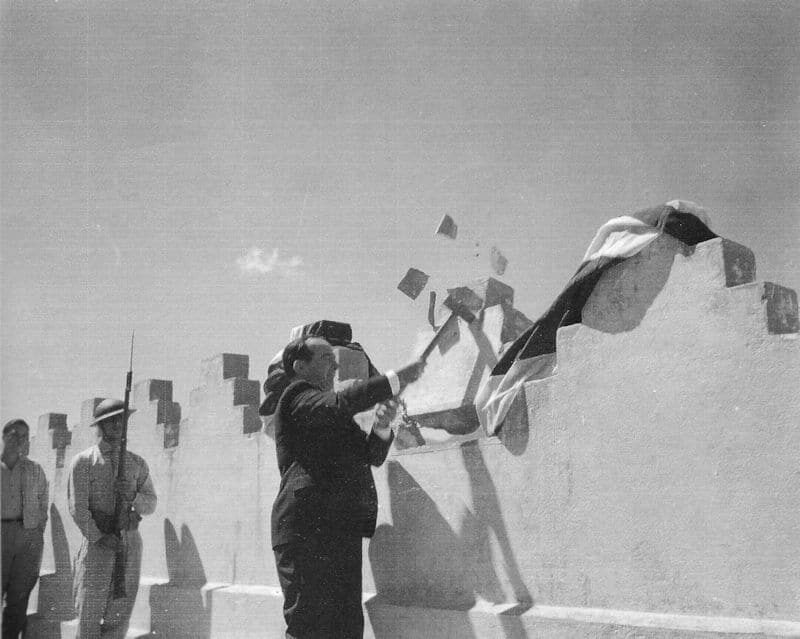

- 11 April 1856 — Juan Santamaría is killed at the battle of Rivas; the date is now a public holiday.
- 8 February 1948 — presidential election.
- 1 March 1948 — the legislature votes to annul the result.
- 12 March to 24 April 1948 — the civil war; forty-four days.
- 19 April 1948 — the Pact of the Mexican Embassy is signed; Teodoro Picado resigns the following day.
- 8 May 1948 — the Founding Junta of the Second Republic, under José Figueres Ferrer, formally takes over the government.
- 1 December 1948 — the military is abolished.
- 7 November 1949 — the constitution now in force is enacted; Article 12 carries the prohibition.
- 27 April 1992 — the Ramsar Convention enters into force for Costa Rica.
- 1994 — SINAC is created, merging the three bodies that had separately administered national parks, wildlife and forestry.
- 20 March 1996 — the north-eastern Caribbean wetland, which takes in Tortuguero, is designated a Ramsar site.
- 1996 — the scheme paying landowners for environmental services begins, at sixty-four US dollars a hectare of forest left standing or replanted.
- 1998 — the eleven conservation areas are constituted.
- 22 October to 9 November 1998 — Hurricane Mitch; about 11,374 dead across Central America, at least 3,800 of them in Nicaragua and seven in Costa Rica.
- 1999 — the Área de Conservación Guanacaste is inscribed on the World Heritage List; extended in 2004.
- 7 October 2007 — a referendum approves the Central American free-trade agreement by 51.6 per cent; it enters into force on 1 January 2009. Both dates postdate the gateway years.
- 2011 — competition begins in the mobile telephony market that ICE had held alone.
Two further series belong in the record rather than in an argument. Costa Rica’s census of 2011 counted about 390,000 immigrants living in the country, roughly nine per cent of the population, of whom Nicaraguans were close to three-quarters; the census of 1984 had counted 45,918 Nicaraguan-born residents. Hurricane Mitch fell in the middle of that growth and inside the group’s own run. The figures are given without comment: what was made of them on an unmoderated newsgroup is not reconstructible from the archive fragments that survive.
Writing Spanish on a seven-bit network
Usenet was built to distribute text encoded in the seven-bit ASCII character set. RFC 850 of June 1983 and its successor RFC 1036 of December 1987 — the standard in force through the whole of this group’s life — specify the header lines in fine detail and do not name a character set for the message body at all.
Spanish needs five accented vowels in upper and lower case, the tilde-n in both, the u-diaeresis and the two inverted marks. Every one is outside ASCII, and the tables that supplied them did not agree. Code page 437, the character set of the original IBM PC, has ñ, Ñ, ¿ and ¡ and the lowercase accented vowels, but lacks Á, Í, Ó and Ú. Code page 850 supplied the full ISO 8859-1 repertoire, but at different byte positions: ñ sits at 0xA4 there, which in Latin-1 is the currency sign, and Ñ at 0xA5, which in Latin-1 is the yen sign. A word typed correctly and transmitted intact could therefore arrive legible on one machine and as nonsense on another.
With nothing in the standards to force a choice, the dependable option was to drop the accents and write unaccented ASCII, the only encoding every reader was certain to share. MIME, first specified in RFC 1341 in June 1992 and restated as RFC 2045 to 2049 in November 1996, eventually let a message declare its own character set and carry eight-bit text as quoted-printable so that it survived a seven-bit hop; newsreaders took it up unevenly and late. Unicode never needed a new block for Spanish at all: version 1.0.0 of October 1991 took its first 256 code points straight from ISO 8859-1, which had covered the Spanish alphabet completely since its first ISO edition in 1987. Spanish was never a script problem; it was a byte-agreement problem.
The residue is what a reader meets in the archive today. A search for a place name with its accent will not match a post that dropped it; a search without the accent will not match a post that kept it; and a post whose eight-bit bytes were read under the wrong table is now stored as the mojibake that misreading produced, matching neither. Searching this group means searching for San Jose as well as San José, and Limon as well as Limón. The same holds for every Spanish-language group in the hierarchy — soc.culture.argentina, soc.culture.chile, soc.culture.peru and the rest.
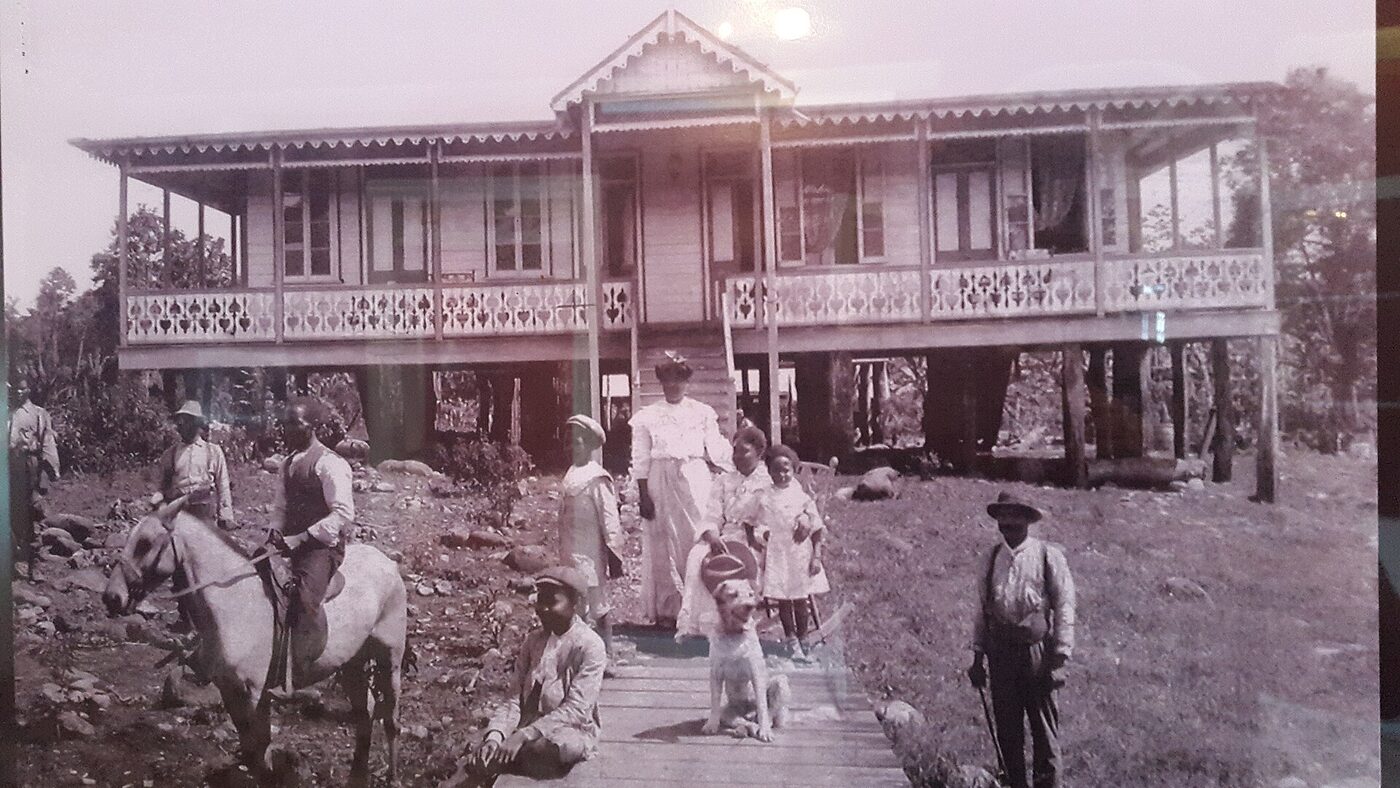
A third written language sat behind both. Limón province on the Caribbean coast speaks an English-lexicon creole, called mekatelyu after the phrase make I tell you, brought by Jamaican and other West Indian workers hired for the Atlantic railway, begun in 1867, and afterwards for the banana plantations. Estimates from 1986 put native and second-language speakers together at fewer than sixty thousand, and linguists divide over whether to treat Limonese Creole as a language of its own or as a point on a continuum running to Jamaican Patois and standard English. A group reading in Spanish and in North American English had a home community whose own language appeared in neither.
How the green identity was assembled
The reputation that filled the group with strangers is recent enough to date park by park. The first protected area was Cabo Blanco, on the Nicoya peninsula: 1,250 hectares bought in 1963 by Olof Wessberg and Karen Mogensen with help from international conservation societies. Santa Rosa was protected by decree 3694 in 1966, around the Casona of the hacienda of the same name, where the fighting of March 1856 had taken place; sources date the national park itself either to that decree or to 27 March 1971. Manuel Antonio was established in 1972, Tortuguero in 1975, and Corcovado on 24 October 1975 across 424 square kilometres. Cocos Island was declared a national park by executive decree in 1978.
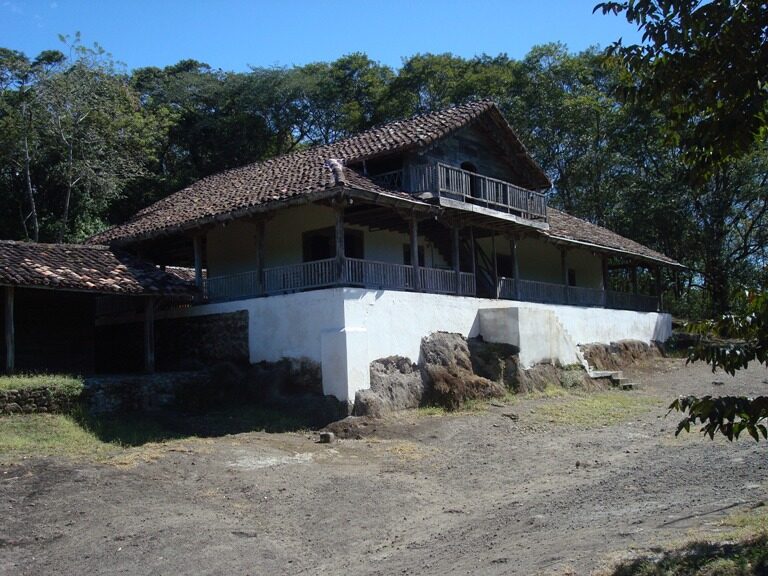

International designation came later and in a rush. The La Amistad reserves on the Talamanca range were inscribed on the World Heritage List in 1983 and the site extended in 1990; the international park itself, shared with Panama, was established on 6 September 1988. The Ramsar Convention entered into force for Costa Rica on 27 April 1992 and the north-eastern Caribbean wetland that takes in Tortuguero was designated under it on 20 March 1996; Cocos Island was inscribed in 1997 and its marine zone extended in 2002, and the Área de Conservación Guanacaste inscribed in 1999 and extended in 2004. Administration was consolidated in 1994, when SINAC was created out of the three agencies that had separately run national parks, wildlife and forestry. Thirty national parks are managed under it today, and protected areas of every kind cover more than a quarter of the land.
The parks exist in those numbers because of what preceded them. Forest cover is given as 67 per cent of the country in 1940, 32 per cent in 1977 and 17 per cent in 1983. The reversal is documented in the same series: annual deforestation fell from 52,000 hectares in 1977 to 4,737 hectares in 2005, and the payments-for-environmental-services scheme launched in 1996 has since paid out some 524 million US dollars to landowners. Both the collapse and the reversal fall within living memory of anyone who posted to the group.
The biodiversity figures that circulate in travel writing are, for once, roughly what the technical sources give: more than 500,000 species, close to five per cent of the world total estimated to exist; 941 bird species recorded including Cocos Island, more than the United States and Canada combined. INBio, the national biodiversity institute, was founded in 1989 and its collection runs to more than three million insect specimens.
Where the readers were
Most soc.culture.* country groups rested on an emigrant population far larger, in the places with network access, than the home population able to reach a newsreader. Costa Rica inverts that. The United States census of 2010 counted Costa Rican-origin populations of 22,469 in California, 20,761 in Florida, 19,993 in New Jersey and 11,576 in New York; the largest metropolitan concentrations were 27,394 in the New York and northern New Jersey area, 11,528 around Miami and 11,371 around Los Angeles. The national total was still only 154,784 in 2018. Against that, Costa Rica’s own census of 2011 counted around 390,000 immigrants living inside the country.
The diaspora writing to this group was therefore small in absolute terms and concentrated in three metropolitan areas of one country. It could not be the centre of gravity that a much larger emigrant population was elsewhere in the hierarchy, and the permanent outer ring of residents, retirees and intending movers did the work emigrants did in other groups.
The clock was correspondingly odd. Costa Rica keeps six hours behind Coordinated Universal Time and does not observe daylight saving, so its offset is the same every day of the year while its readers’ offsets are not. The eastern United States runs one hour ahead of San José in winter and two in summer; the Pacific coast two hours behind in winter and one in summer; central Europe seven hours ahead in winter and eight in summer.
Asynchrony was the medium’s great advantage; the cost is that replies arrive in an order set by time zones rather than by the shape of the argument, so a correction can land after the thread has moved on and a subject can be reopened days later by someone who has only just seen it.
The traffic between the crises
Politics of the kind set down above as dates makes up a small proportion of any culture group’s words. The bulk is calendar, kitchen, team and text, and in this instance those are better documented than the politics.
Coffee is the oldest of the institutions and so the oldest of the subjects. Cultivation began in the Meseta Central in 1779; exports went to Chile from 1832 and directly to Britain from 1843, in ships arranged by the captain William Le Lacheur; the proceeds paid for the Atlantic railway completed in 1890 and for the National Theatre in San José. By the group’s own years the crop had stopped being the economic centre and become part of the country’s self-description: Costa Rica now supplies under one per cent of world production, and in 2015 its coffee exports were worth 305.9 million US dollars against total exports of 12.6 billion.
The kitchen argument documented in the open is gallo pinto, the rice and beans eaten at breakfast on both sides of the northern border. The Costa Rican government’s position dates the dish to San José in the 1930s; the Nicaraguan claim traces it to a dish brought much earlier by enslaved Africans. In 2003 a Costa Rican event cooked around a thousand pounds of it for the Guinness records, Nicaragua answered with twelve hundred, and the exchange settled into an annual Gallo Pinto Day. That dispute was live in public in exactly the years the gateway was running.
Music divides the way the country does. The National Symphony Orchestra was founded in 1940 and reorganised in 1970, during José Figueres Ferrer’s presidency and alongside the new Ministry of Culture, Youth and Sports. On the Caribbean coast the tradition is calypso sung in creole English: Walter Ferguson, born at Guabito in Panama on 7 May 1919, lived almost his whole life in the fishing village of Cahuita in Limón and died there on 25 February 2023 at the age of 103, having written some two hundred songs; his records appeared in 1982, 1986, 1991, 2003 and 2004. The Limón carnival, held in the week of 12 October, was begun in 1949 by Alfred Josiah Henry Smith, known as Mister King. The English-speaking Caribbean had its own group in the hierarchy, soc.culture.caribbean, and the travel traffic another, rec.travel.caribbean.

The festival calendar is short and specific: 11 April for Juan Santamaría, killed at Rivas on that date in 1856; 2 August for the feast of the Virgin of the Angels, when pilgrims walk to the basilica at Cartago, where by the account told locally a statue was found by a girl in 1635; the week of 12 October on the Caribbean coast. In literature the names a Costa Rican reader would expect are Carlos Luis Fallas, author of Mamita Yunai and Marcos Ramírez; Carmen Lyra, whose Cuentos de mi Tía Panchita is the standard national book of folk tales; and Joaquín García Monge, who founded the review Repertorio Americano.
Football supplies the dependable weekly quarrel. Liga Deportiva Alajuelense was founded on 18 June 1919 and Deportivo Saprissa on 16 July 1935; the two first met on 12 October 1949, Alajuelense winning 6–5, and the fixture has been the Clásico ever since. Saprissa finished third at the FIFA Club World Championship in 2005 — a result that postdates the gateway years by a season.
Context
A country’s reputation determines who arrives in its newsgroup, and Costa Rica’s was unusually specific. Two decades of promotion as a destination — stable, green, without an army, cheap to retire to — produced a readership containing many people with no ancestral connection to the place and a concrete intention to go there. Groups for countries known chiefly through emigration acquired the opposite population.
The effect was double-edged. It made the group useful, and useful to strangers: current, unsponsored, contradicted-in-public advice about a country whose printed guidance dated fast. It also meant a national group spent much of its time explaining the nation to visitors, in the visitors’ language. The gap between the marketed country and the lived one — prices, security, bureaucracy, how much of the phrase pura vida was tourism-board shorthand — became a recurring theme, and the people best placed to close it were the ones being asked.
Reading soc.culture.costa-rica today
- Historical archive: Google Groups — soc.culture.costa-rica (coverage varies by group and era).
- Open in a newsreader:
news:soc.culture.costa-rica— the original site offered exactly this link, and it still works if your system has a newsreader registered for thenews:scheme. - Live access: point an NNTP newsreader at a modern server — see accessing Usenet today.
- The original news2mail e-mail subscription service ended in the mid-2000s and no longer operates.