soc.culture.zimbabwe
Zimbabwe and its people.
From post-independence optimism through land reform, hyperinflation and the MDC era, soc.culture.zimbabwe spanned a difficult period in the national story.
Shona and Ndebele language threads, sungura and chimurenga music, and a diaspora increasingly writing home from Johannesburg, London and Perth.
On this page
A country group in the Big Eight
soc.culture.zimbabwe belonged to the soc.culture.* family, the country-by-country arrangement of Usenet's "Big Eight" hierarchies that took shape after the Great Renaming of 1987 sorted the network's groups into broad top-level categories. New country groups were added piecemeal through the 1990s under the hierarchy's formal procedure — a public request for discussion, a discussion, then a vote — and Zimbabwe's was one of them. Like almost every group in the family it was unmoderated: whatever anyone posted, from anywhere, propagated to every news server in the world that chose to carry the group. The wider workings of the family, and what a one-line charter did and did not govern, are covered on the soc.culture.* overview page.
The charter here was as terse as they come — "Zimbabwe and its people" — and that terseness was the point. A soc.culture group was not a publication with an editor but a standing meeting-place with a country's name on the door, owned by nobody and available to anybody with a news feed or, failing that, an e-mail gateway. What the group became was decided entirely by who turned up, and in this case who turned up was shaped by a hard fact of geography and telecommunications: for most of the group's active life, it was far easier to read soc.culture.zimbabwe from London, Johannesburg or Toronto than from Harare.
That asymmetry is the key to the whole archive. The group's subject sat inside Zimbabwe's borders; its readership largely sat outside them. Connectivity at home meant a university account, an office line, or dial-up billed by the minute on tariffs few households could justify, and so the group's centre of gravity settled abroad, with news carried inward and outward across the gap by whoever happened to have a working connection. Most soc.culture groups had a diaspora tilt; this one had a diaspora axis.
Its traffic followed the arc of Usenet at large — growth through the late 1990s, a peak in the early 2000s, then a long thinning as mailing lists, web forums and eventually social media absorbed the same conversations. But because those peak Usenet years coincided almost exactly with the most turbulent period in Zimbabwe's post-independence history, the period in which such groups were most used doubles as a running contemporary record of a national crisis, written mostly by people watching it from a distance and arguing about what it meant.
Zimbabwe of the 1990s, seen from abroad
The Zimbabwe the group first discussed was the Zimbabwe of the post-independence decades. Independence in 1980 had been followed by a period of genuine optimism — rapid expansion of schooling and health care, a functioning agricultural economy, a capital with a reputation for order — and by darker episodes that optimism preferred not to dwell on, above all the mass killings in Matabeleland in the 1980s remembered as Gukurahundi. By the 1990s the picture was mixed: a structural-adjustment programme adopted at the start of the decade brought austerity, retrenchments and rising prices, and a generation of educated Zimbabweans began looking for work abroad.
They went where Zimbabweans have long gone: south to South Africa, especially once its own transition in 1994 reopened it as a destination; to Britain, along ties of language, family and education that dated from the colonial period; and in smaller numbers to North America, Australia and New Zealand, often via universities. Emigration from the territory was not new — there had been waves ever since the Rhodesian declaration of independence in 1965 — but the outflow of the 1990s was the quiet beginning of something much larger. Commonly cited estimates today put the Zimbabwean diaspora at several million people, a substantial fraction of all Zimbabweans alive; most of that growth came after 2000, but the networks it flowed through were being laid down in exactly the years this newsgroup was young.
The early readership looked the way early Usenet readerships everywhere looked: students on university accounts, academics, engineers and medical professionals with workplace connections, plus the odd well-connected enthusiast. A Zimbabwean postgraduate in Leeds or Ann Arbor could reach the group trivially; a cousin in Bulawayo could not. The group accordingly became a place where the scattered checked in with one another, swapped what news they had, and asked the perennial questions of people living between two countries — how to send money home, how visas worked, who had heard anything from home this week.
None of this made the group unusual in kind. Requests for news from home, questions from intending travellers and researchers, recipes, surname and family-history enquiries, notices of community gatherings abroad — the staple thread types of any soc.culture group were all present, along with the flame wars and long-running crossposts shared with neighbouring groups. What made it unusual was degree: as the decade turned, the ordinary diaspora traffic of a small country group was about to acquire the urgency of a crisis line.
Getting online from Harare
Zimbabwe has a modest but genuine claim in African internet history: it was comparatively early among African countries in getting electronic mail moving, and it did so by exactly the kind of improvised, store-and-forward means that a service like news2mail was later built to serve. From the early 1990s, Harare hosted MANGO, a bulletin-board e-mail node for non-governmental organisations, run as a cooperative by a collective of them — a regional news agency, research institutes and church-linked development bodies among the founders. MANGO ran on FidoNet technology and exchanged its post with the wider world in scheduled dial-up sessions, connecting several times a day to a Fidonet gateway in Toronto and to WorkNet in Johannesburg, and giving Zimbabwean organisations working e-mail addresses under mango.zw years before the country had a live internet connection. Nodes like it were scarce enough in the region that Zambia's equivalent NGO network was designed to route its international mail through MANGO.
This was the standard pattern of Africa's first connectivity. Between roughly 1990 and 1997, Fidonet-style store-and-forward gateways — batch up the mail, dial out, transfer, hang up — were in many countries the only affordable electronic link to the outside world, tolerant as they were of poor phone lines, brief sessions and intermittent power. Zimbabwe's academic and health sectors ran links of the same general kind. Full internet service followed in the mid-1990s: the country's first commercial internet service provider was established in 1994, and in 1997 the state Posts and Telecommunication Corporation built a national backbone and began selling bandwidth to private providers, of which Zimbabwe soon had a respectable number.
Early, however, is not the same as widespread. In 2000, by the International Telecommunication Union's reckoning, roughly 0.4 per cent of Zimbabwe's population used the internet. Access clustered in Harare and Bulawayo, in universities, NGOs and company offices; a private dial-up account was a middle-class luxury, and the connections themselves were slow and dropped often. For a newsgroup, those are precisely the conditions under which reading over a live NNTP session is miserable and reading by mailbox is sensible: e-mail is store-and-forward by design, tolerant of slow lines, brief dial-up sessions and overloaded servers, and it queues patiently while the connection does not exist. Gateways that turned newsgroups into mail delivered soc.culture.zimbabwe to some of the people it was nominally about.
The consequence for the group's texture was lasting. Posts genuinely originating inside Zimbabwe were a minority and were treated accordingly — first-hand observation from home carried weight that no amount of pasted wire copy could match. The rest of the traffic circled around that scarce commodity: asking for it, forwarding it, disputing it.
News from home
A large share of the group's traffic was plain news relay: newspaper and wire-service articles pasted in wholesale, usually with a line or two of comment, often with none. The practice was common across the soc.culture groups and sat in a copyright grey zone nobody much policed, but it had unusual value here, because through the years in which such groups were busiest the space for independent journalism inside Zimbabwe was contracting. Relaying the day's stories to a group read across three continents was, in its unglamorous way, a distribution system.
The emblematic case was the Daily News, founded in Harare in 1999 by the editor Geoffrey Nyarota under the motto "Telling it like it is". It quickly became the country's most popular daily and the flagship of the independent press; it also suffered two bombings, including the destruction of its printing presses, attacks widely attributed to state security organs and never satisfactorily prosecuted. In September 2003 the paper was shut down for operating without a licence under the sweeping media-registration law enacted the previous year. Its rise and forced closure bracket the period in which such groups were most used years almost exactly, and the tightening it represented — accreditation requirements for journalists, criminal penalties for publishing "falsehoods", expulsions of foreign correspondents — is the background against which those years should be read.
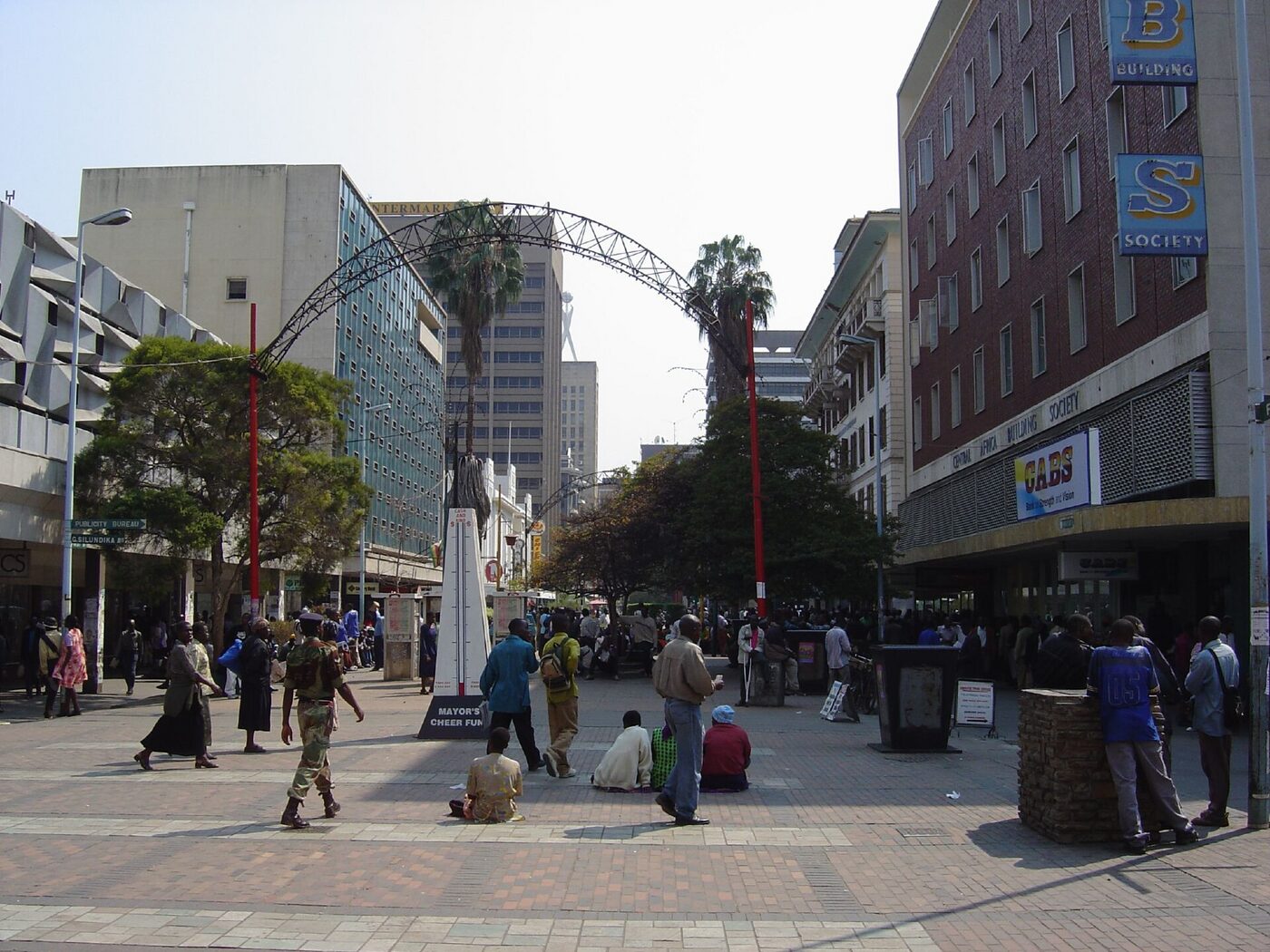

As the domestic press narrowed, the sources being pasted shifted outward: South African papers, the British press, wire services, and in time the websites run by exiled Zimbabwean journalists. Readers inside Zimbabwe could find in the group material that was hard to obtain at home; readers outside it could find the state media's version set alongside everything else, which the group's arguers found endlessly useful for target practice. None of this made the group a reliable digest — it inherited every bias of whatever got pasted, plus the biases of the pasters — but it made it a contemporaneous one, and contemporaneous records of that period, assembled in public, day by day, are not so common that historians can afford to sniff at the format.
Cricket, music and the lighter traffic
Sport supplied the group's most dependable common ground, and in Zimbabwe's case sport meant cricket first and football close behind. Zimbabwe had been a full member of the International Cricket Council since 1992, and the national side of the 1990s — the Flower brothers, Heath Streak, the team that frustrated a touring England in 1996–97, drawing the Tests and sweeping the one-day series amid famous ill-temper — gave the group years of straightforwardly enjoyable material: match threads, selection arguments, the standard pleasures of a small cricketing nation punching upward.
Then cricket stopped being the light relief. The 2003 World Cup had been awarded to South Africa with six of its matches allocated to Zimbabwe, and the question of whether visiting teams should play in Harare at all became international news; England forfeited their fixture there. At Zimbabwe's opening match, the players Andy Flower and Henry Olonga — the side's leading batsman and the first black cricketer to have played for the country — took the field wearing black armbands, having released a statement mourning what they called the death of democracy in their country:
In all the circumstances, we have decided that we will each wear a black armband for the duration of the World Cup. In doing so we are mourning the death of democracy in our beloved Zimbabwe.
Both men's international careers ended with that tournament, and Olonga, facing death threats, went into exile in England. On the group, the affair collapsed the distance between the sports threads and the politics threads permanently: every subsequent cricket story — player walkouts, board disputes, Zimbabwe's withdrawal from Test cricket for a period in the mid-2000s — arrived pre-politicised, and was argued accordingly.
Music travelled better. Threads on Zimbabwean music covered sungura, one of the most popular dance styles in the country, and chimurenga, the mbira-driven genre created and popularised by Thomas Mapfumo — "the Lion of Zimbabwe", whose songs had needled the Rhodesian state and then, from the late 1980s onward, the government that succeeded it. Mapfumo's own trajectory mirrored his listeners': from the late 1990s he lived in exile in the United States, and his homecoming concert in Harare came only in 2018, after Mugabe had left power. For a diaspora audience, music threads were memory work as much as fandom — where to find recordings abroad, what the lyrics meant, and, in the Shona and Ndebele language threads that ran alongside, how to keep the languages themselves in working order in households where the children were growing up in English.
The arguments of 2000 and after
Around the turn of the millennium the group's political traffic changed register. The formation of the Movement for Democratic Change under Morgan Tsvangirai in 1999 gave Zimbabwe its first opposition with a serious prospect of power; the government's defeat in the February 2000 constitutional referendum was followed within weeks by farm occupations and then by the fast-track land-reform programme, under which most of the country's white-owned commercial farms were expropriated over the following years. Elections in 2000, 2002 and after were bitterly disputed, violence against opposition supporters was widely reported, and Zimbabwe became a fixture of international news pages. All of it landed in the group, at length.
The land-reform argument was the centrepiece, and it ran for years because both of its poles rested on things that were true. One side argued from history: that the concentration of prime farmland in a few thousand mostly white hands was the unfinished business of a settler colony, that Britain had promised more than it delivered toward land redistribution, and that no account of Zimbabwe's crisis which began in 2000 was honest. The other argued from consequence: that fast-track reform was lawless in execution, politically directed in its allocations, and catastrophic in its economic results. Between them ranged every intermediate position, plus the sanctions debate — whether the travel bans and asset freezes imposed by Western governments were "targeted measures" or the true author of the collapse — which reliably restarted whenever the economy worsened, which was often.
Older wounds surfaced too. Gukurahundi, officially unspeakable inside Zimbabwe for years, could be discussed on Usenet without a publisher to intimidate, and threads on it exposed the Shona–Ndebele fault line that polite nationalism preferred to smooth over. The liberation war and who could claim its legacy; whether the ruling party had betrayed the revolution or embodied it; whether the MDC was a workers' movement or a Western project — the group argued the whole national argument, in miniature and without referee. And beneath it all ran the emigration question, the one with personal bite in a forum largely populated by people who had left: whether leaving amounted to abandoning the country or subsidising it, given that diaspora remittances were by now holding up household economies at home. Readers of this directory's soc.culture.yugoslavia page will recognise the pattern: a country group whose country hits crisis becomes an argument that happens to have a newsgroup attached.
It should be said plainly that the group took no position, because an unmoderated newsgroup cannot. Every view above, and several worse, appear in the archive in first person. The record's value is precisely that nobody curated it.
One of Africa's few
A structural oddity gave soc.culture.zimbabwe a role beyond its borders. The soc.culture.* hierarchy, having grown up where Usenet's servers and voters were, covered Europe, Asia and the Americas in fine grain — but for Africa, a continent then of fifty-plus states, it offered only a handful of national groups alongside the continent-wide soc.culture.african, whose own story is told on its page in this directory. Most African countries never had a Big-Eight group at all; some acquired groups in the alt.* hierarchy instead, created by the cheaper alt method rather than by vote — neighbouring Zambia's alt.culture.zambia is this directory's example.
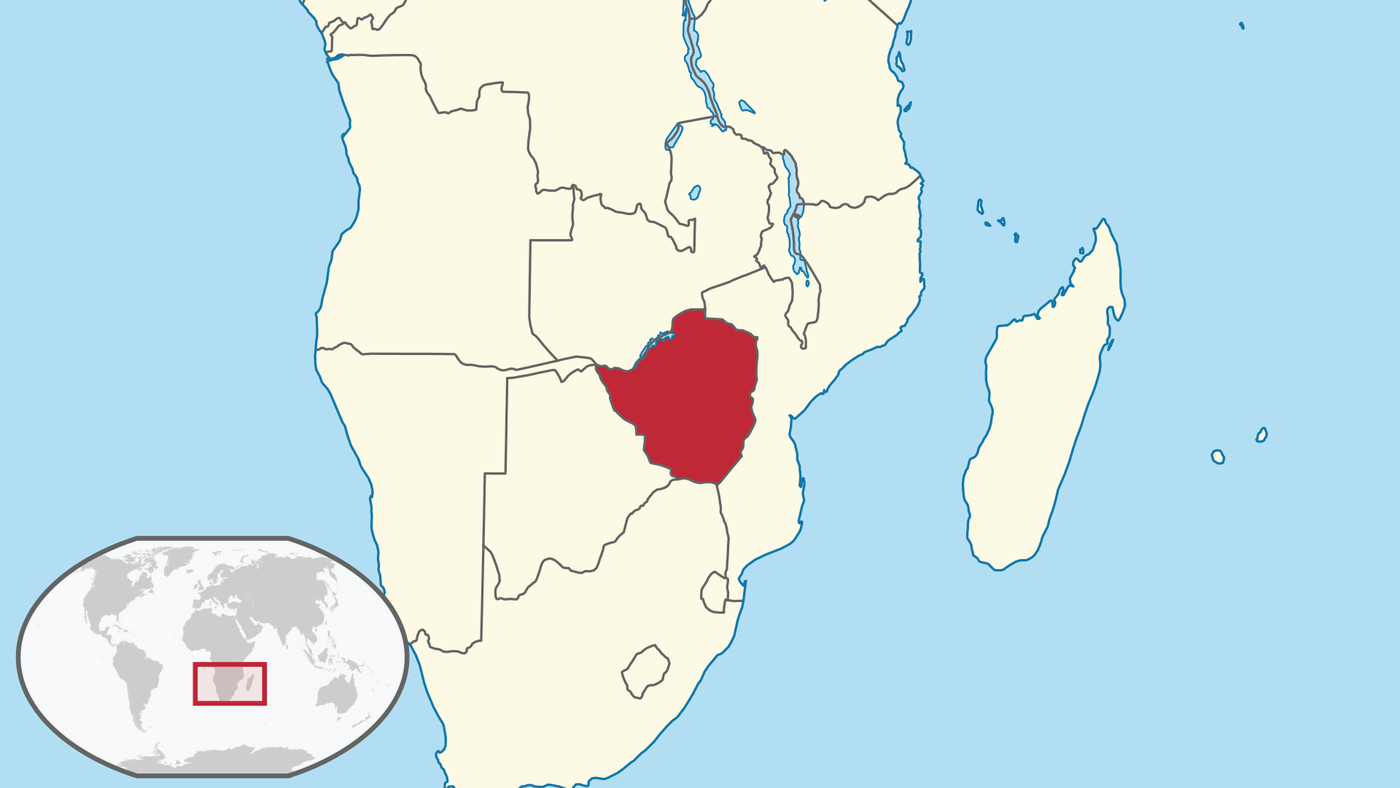

Scarcity concentrated traffic. Discussion with nowhere national to go pooled in the groups that existed, so soc.culture.zimbabwe carried more than Zimbabwe: southern African politics generally, the region's migrations and rivalries, and long crossposted threads shared with soc.culture.african and soc.culture.south-africa in which the same dispute ran simultaneously before three overlapping audiences. Zimbabwe's crisis years amplified the effect, since the country's collapse was a regional story — above all in South Africa, which absorbed the largest share of the exodus and whose government's "quiet diplomacy" toward Harare was itself a standing argument.
The same scarcity made the group legible to outsiders. Journalists, academics and the merely curious who went looking for Zimbabwean discussion online in 1999 did not face a choice of forums; there was, for practical purposes, this one, plus a few mailing lists. That is one reason the hand-compiled web directories of the period — university Africana pages, embassy link lists, Zimbabwe resource pages — listed the newsgroup alongside newspapers and tourism boards, and why a surprising number of those listings survive. Readers still arrive by that route two decades on, which says something for the durability of a plain link on a plain page.
Hyperinflation and the drift to the web
The group's later years played out against an economic collapse with few modern parallels. Zimbabwe's inflation crossed into formal hyperinflation in 2007 and reached its estimated peak in mid-November 2008 at around 79.6 billion per cent month on month — a figure economists cite mainly to show that the figures had stopped meaning anything. The Reserve Bank chased the collapse with ever-larger banknotes, culminating in the hundred-trillion-dollar note of early 2009, by which point the note could not cover a bus fare; within weeks the Zimbabwean dollar was abandoned in favour of foreign currencies.
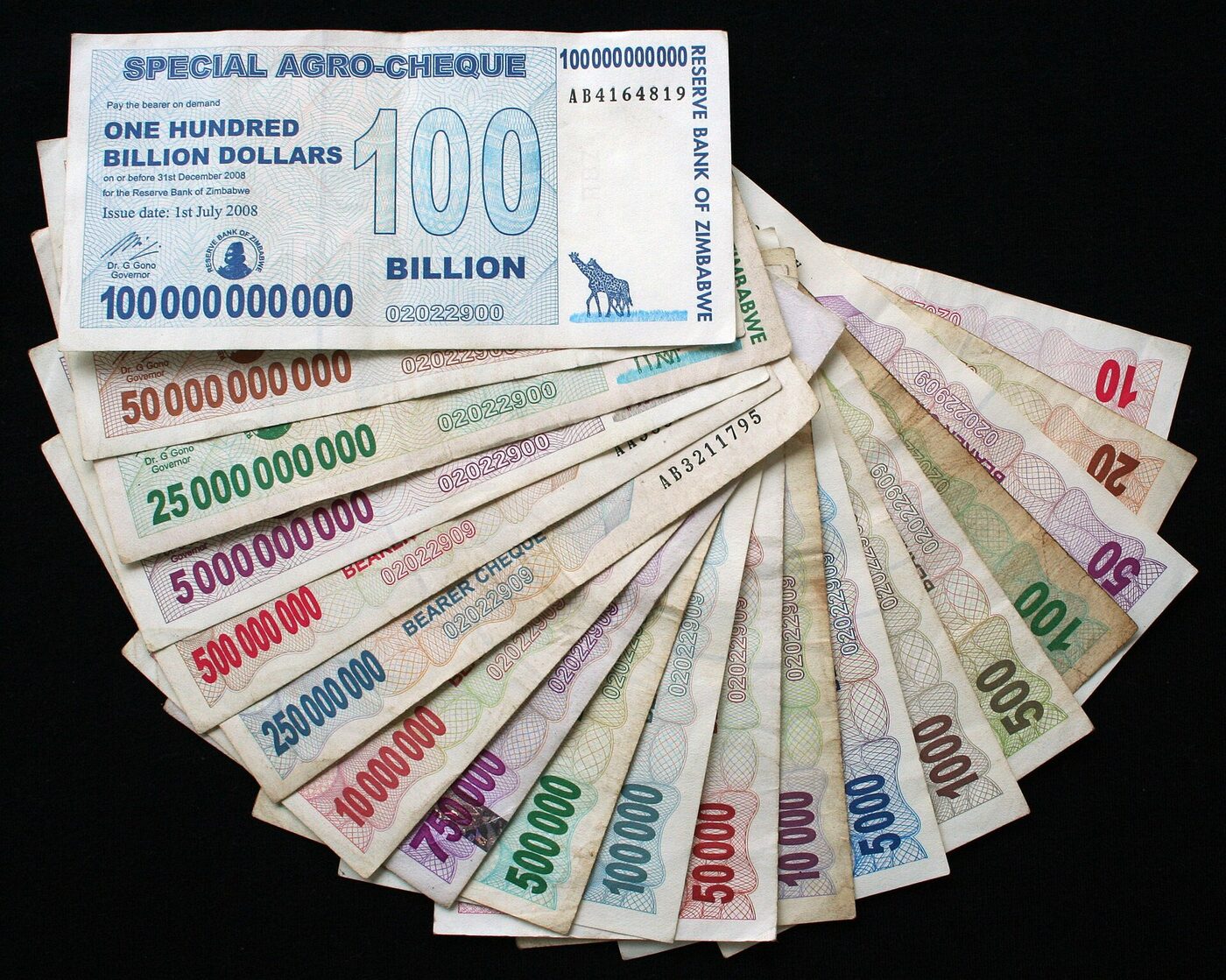

Hyperinflation also completed the demographic inversion the group had always leaned toward. The 2000s exodus — nurses and teachers to Britain, traders and professionals across the Limpopo, families scattered from Harare to Perth — swelled the diaspora into the millions, and with it the potential readership for exactly the conversations the group had hosted for a decade. But by then those conversations had somewhere else to go. Diaspora-run news websites with comment sections, web discussion forums, and then the social platforms offered the same community with friendlier interfaces, editorial front pages and no propagation delay; inside Zimbabwe, such connectivity as households gained arrived web-first and, later, phone-first, skipping Usenet entirely.
So the group thinned the way soc.culture groups everywhere thinned, only with the added irony that the community it served was growing explosively at the time. Being unmoderated, it also accumulated spam at the usual rate, which by the mid-2000s was a formidable one; the signal retreated, the noise did not. What remained by the 2010s was the familiar late-Usenet residue — crossposted political shouting, automated junk, and the occasional genuine enquiry drifting in from an old link, like post still being delivered to a house everyone had moved out of.
What survives
The group's accumulated traffic survives principally in the archive that Deja News built through the 1990s and Google absorbed into Google Groups in 2001. Google stopped carrying new Usenet traffic in February 2024, leaving that archive frozen but, for now, browsable, with coverage that thins the further back one looks. Portions of the same record exist in independent Usenet archives, with the gaps and duplications usual to the form. For the group's subject matter this is not a trivial inheritance: threads written during the land seizures, the 2002 election, the Daily News shutdown and the hyperinflation are primary sources of a kind — unedited, contemporaneous, argumentative — that the period's contested official record makes more valuable rather than less.
The usual archival cautions apply with extra force here. The archive preserves what a self-selected, disproportionately emigrant, disproportionately connected slice of Zimbabwean opinion said, filtered through who could get online in a country where almost nobody could; it preserves pasted newspaper articles whose originals have often vanished from the web along with the papers that printed them; and it preserves the spam too, indiscriminately. It is a record of a conversation about Zimbabwe, not a record of Zimbabwe — though by the group's later years, with the domestic press curtailed, the distinction was thinner than anyone would have liked.
The group itself still exists wherever an NNTP server chooses to carry it, which is Usenet's version of immortality: nothing formally ends, it simply goes quiet. New posts are rare and mostly noise. But the name still resolves, the old directories still point here, and the archive still answers — which, for a forum whose whole purpose was to carry news across a gap that phone lines and politics kept trying to close, is a reasonable way to be remembered.
Reading soc.culture.zimbabwe today
- Historical archive: Google Groups — soc.culture.zimbabwe (coverage varies by group and era).
- Open in a newsreader:
news:soc.culture.zimbabwe— the original site offered exactly this link, and it still works if your system has a newsreader registered for thenews:scheme. - Live access: point an NNTP newsreader at a modern server — see accessing Usenet today.
- The original news2mail e-mail subscription service ended in the mid-2000s and no longer operates.