soc.culture.baltics
The Baltic states: Estonia, Latvia, Lithuania.
One group for three countries — a Soviet-era framing the group itself often debated. It documented the independence restorations of 1991, citizenship-law controversies, and the road to EU and NATO accession in 2004.
Language threads carefully distinguished Estonian (Finno-Ugric) from Latvian and Lithuanian (Baltic) — a correction issued approximately weekly to newcomers.
On this page
- The group's own paperwork
- Created after the fact: the group and 1991
- Three countries, two language families
- Whether the label described one thing
- The dated record
- Three settlements, one argument
- Getting online: three countries, three timetables
- Reading the vote list
- Three languages on a seven-bit pipe
- Where the readers were
- What an umbrella carried that a country group did not
- Neighbours, cross-posting and decline
- A forged rmgroup, and what survived
- What the record does not show
- Scope and limits of this page
The group's own paperwork
Unusually for a soc.culture.* group, the creation record of soc.culture.baltics survives in full and can be read today. The Internet Systems Consortium mirrors the archive of news.announce.newgroups, and for this group the file is complete: a Request for Discussion, two Calls for Votes, and the RESULT posting with its whole tally. The separate control-message archive holds the newgroup message that actually brought the group into being. The group's twenty years of traffic are far less well documented than its first ten weeks.
The Request for Discussion was posted on 11 December 1992 by Erland Sommarskog, writing from Enea Data AB in Stockholm. It proposed the name soc.culture.baltic, unmoderated, and it was cross-posted to news.announce.newgroups, news.groups, talk.politics.soviet, soc.culture.soviet and soc.culture.nordic — a distribution list that says a good deal about where the traffic was expected to come from, and rather more about how slowly a namespace catches up with a map. The Soviet Union had been dissolved for very nearly a year when that article went out, and two of the five groups it was sent to were still named after it.
The name changed during the discussion period. The proposer reported conducting an informal poll and summarised its result plainly: soc.culture.baltic and soc.culture.baltics drew about equal preference, but the singular attracted more votes against, and no other proposal gained much support. The Call for Votes therefore went out for the plural.
The charter is short. The control message that created the group quotes it in the form culled from the call for votes:
The group would be devoted to the countries Estonia, Latvia and Lithuania, often lumped together under the label “The Baltic states”.
Topics would include culture, networking, language, politics, shortly anything you expect from a soc.culture.* group.
The prime language in the group would be English, but the use of local languages should not be condemned.
Three things in that text are worth pausing on. The charter names the label rather than adopting it: often lumped together under is a description of outside usage, not an assertion that the three countries form a unit. The topic list includes networking as a first-class subject, which in December 1992 was neither decoration nor whimsy — getting a usable connection into or out of the three countries was itself a live problem. And the language provision is a settlement rather than a preference: English as the working language, with the local languages explicitly not to be condemned, in a group covering three mutually unintelligible tongues from two unrelated families. English was the one language the three nations and their scattered emigrations could all reach; the second languages of that readership otherwise split by generation and by which side of the Iron Curtain a family's schooling had happened.
The RFD also records a prior institution. A LISTSERV mailing list, BALT-L, already existed with the same subject and was edited by Edis Bevan; the proposer and the list's editor had discussed connecting the two and had concluded that there should be no regular connection to begin with, on the reasoning that unmoderating BALT-L was out of the question and that a moderated soc.culture.* group sat badly with the conventions of the hierarchy. Both Calls for Votes added that people had since expressed interest in at least a one-way gateway from the list, and that some arrangement would probably appear. Whether one ever did is not recorded in the surviving paperwork, and this page does not know.
One aside in the RFD has aged into a period detail. Arguing that the material existed to sustain a group, the proposer observed that a great deal of what concerned the Baltic countries was already appearing in talk.politics.soviet — once, he wrote, you filtered away Mutlu and Argic. Those were two of the names the Turkish–Armenian argument had made notorious across the soc.* and talk.* groups of the period. The second is now documented as one of the first automated newsgroup-spam incidents on the network: a program that scanned for keywords and answered with saved pages of political text, whose provider cut off the host it posted from in April 1994. The RFD's aside predates that documented run by more than a year, which is itself worth noting; the pattern was recognisable to a working Usenet reader well before it was written up. That a group proposal for three small countries had to account for it, in passing, in a single subordinate clause, is a fair measure of what the network felt like in the winter of 1992.
The Call for Votes was posted on 6 January 1993, with voting running to 5 February; a second and final call followed on 18 January, which named a single voter whose acknowledgement the votetaker had failed to deliver. The RESULT was posted at 20:37 US Eastern time on 15 February 1993 — which is why the control message, working in GMT, dates it to 16 February. The votetaker reported receiving 136 yes votes and 19 no votes, then subtracted one yes he had accidentally deleted and one no that was a duplicate, and declared the group passed at 135 in favour, 18 against. That clears both halves of the Big-Seven threshold then in force: a margin of at least 100 votes and at least two-thirds of the valid ones. How that machinery worked, and why it was built that way, is described on this directory's soc.* hierarchy page.
After the regular five-day waiting period the newgroup control message went out on 23 February 1993, timed 18:04 GMT and signed by David C. Lawrence at UUNET, then the moderator of news.announce.newgroups. It carried the line administrators were to paste into their newsgroups files:
soc.culture.baltics People of the Baltic states.
The full list of voters was published with the result, names and addresses included, as the conventions of the period required. It is the only enumeration of anybody connected with this group that exists, and a later section reads what can honestly be read from it.
Created after the fact: the group and 1991
For an umbrella group covering a region whose defining recent event was the restoration of three states, the single most important fact about soc.culture.baltics is when it did not exist. The control message dates its creation to 23 February 1993. The restorations were already complete: Lithuania had declared re-establishment on 11 March 1990, Latvia on 4 May 1990, and Estonia and Latvia had declared independence restored in full on 20 and 21 August 1991 during the Moscow coup attempt. The Soviet Union recognised all three on 6 September 1991 and was itself dissolved that December. All three were admitted to the United Nations on 17 September 1991, on the same day.
The group therefore has no Soviet-era layer at all. It did not carry the Singing Revolution, the January killings in Vilnius, the barricades in Riga, or the declarations themselves; those reached it as memory, argument and anniversary, not as news. What it carried in real time was the aftermath, which turned out to be the longer story: the withdrawal of Russian troops, three different citizenship settlements and the disputes they generated, the building of state institutions, the arrival of the internet in each country, and a decade-long approach to NATO and European Union membership that concluded, inside the group's own life, in the spring of 2004.
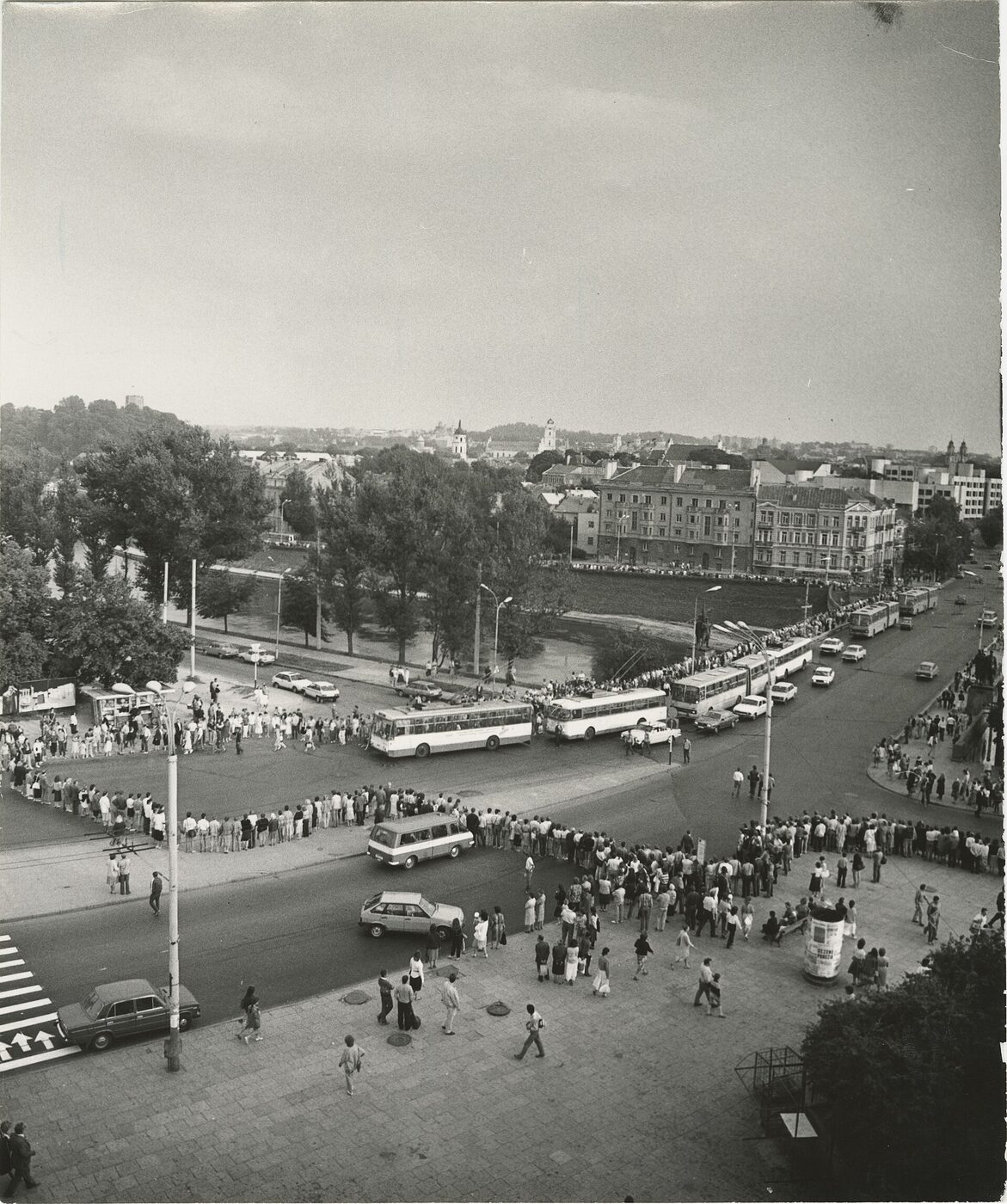

The distinction matters for anyone using the archive as a source. The people posting had witnessed 1991, many of them at first hand and on every side of what happened, and they wrote about it at length; but the group is a record of how the restoration was remembered and contested from 1993 onwards, not a record of the restoration.
One further fact about the namespace shapes everything that follows. The archive of news.announce.newgroups holds no proposal for soc.culture.latvia and none for soc.culture.lithuania — no RFD, no CFV, no result. Neither group was ever put to the network. A single moderated national group, soc.culture.estonia, was proposed on 21 November 1994 and created on 13 March 1995. For its whole existence, therefore, soc.culture.baltics was the only Big-8 address in the world for Latvia and for Lithuania, and shared the namespace with exactly one national neighbour. An umbrella is a compromise when the alternative exists; when it does not, it is simply the address.
The alt hierarchy, which needs no vote, did carry per-country groups, and the Internet Systems Consortium's current active file still lists alt.fan.countries.estonia, alt.fan.countries.latvia and alt.fan.countries.lithuania alongside alt.languages.estonian, alt.languages.latvian and alt.languages.lithuanian. Their presence in a file is not evidence that anyone read them. It does show that the absence of national groups in the Big-8 namespace was a fact about the Big-8 creation process rather than about demand.
One further proposal reached news.announce.newgroups from inside the region, and it was not for a country. On 5 March 1999 Ansis Ataols Berzins, posting from a Latvian address, filed an RFD for soc.culture.latgola, an unmoderated group for Latgalian culture and language, with a newsgroups line reading soc.culture.latgola Latgalian culture and language. and a charter admitting discussion in Latgalian and about Latgalian in Latvian, Russian, Polish and English. A second RFD three days later changed the proposal to moderated, with the proponent as moderator. Both were cross-posted to soc.culture.baltics. No Call for Votes followed, and the group does not appear in the active file. The one attempt to subdivide this corner of the namespace came from a region within a country, not from a country.
Three countries, two language families
The commonest confusion about this group's subject is contained in its own name. Estonian is not related to Latvian and Lithuanian. It belongs to the Finnic branch of the Uralic family, alongside Finnish; Latvian and Lithuanian are the two surviving East Baltic languages, a branch of Indo-European which together with Slavic forms the Balto-Slavic group. The distance between Estonian on one side and Latvian and Lithuanian on the other is not the distance between English and German; it is the distance between English and Finnish, which is to say no genealogical relation at all.
Nor does the surviving Baltic pair form a comfortable unit. Latvian and Lithuanian are closely related and are not mutually intelligible. Latvian has about 1.5 million native speakers in Latvia and roughly 100,000 abroad; Lithuanian about 2.8 million in Lithuania and some 1.5 million elsewhere. Lithuanian carries a particular standing in historical linguistics: some linguists consider it, in certain respects, the most conservative of the living Indo-European languages, retaining features of Proto-Indo-European lost elsewhere, which makes it an important source for reconstruction. Its attestation is late — the earliest Lithuanian texts date from about 1500, whereas Ancient Greek was first written down some three thousand years earlier.
What follows is the group's central structural fact. The word Baltic in soc.culture.baltics is not a linguistic term. It names a political and historical region: three small countries on the eastern shore of the Baltic Sea whose modern histories converged, twice, under external rule and then again in the recovery from it. A group organised on language would have paired Estonian with Finnish and left Latvian with Lithuanian. A group organised on politics and shared twentieth-century experience produced exactly the grouping the charter describes.
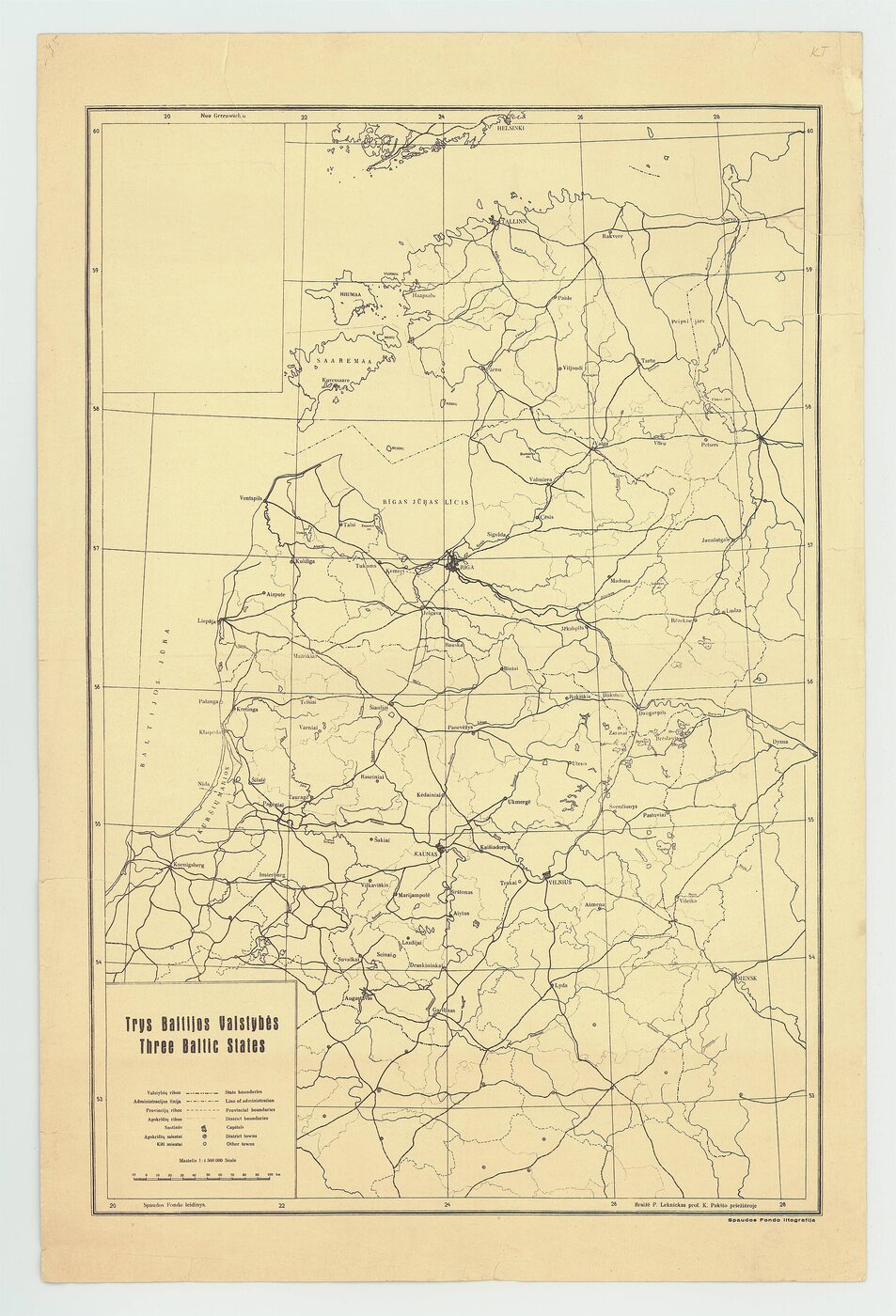

The region's boundary is worth stating as plainly, because it is regularly misdrawn. The Baltic states are Estonia, Latvia and Lithuania. Belarus is not one of them, has no Baltic Sea coast, and is not part of this group's subject; it had its own group, covered on this directory's soc.culture.belarus page. The Baltic Sea littoral is a much larger thing than the Baltic states, and includes Poland, Germany, Denmark, Sweden, Finland and Russia; the group covered none of those as such, though several of them appear constantly in its subject matter. Estonia is treated at length on this directory's own soc.culture.estonia page, which carries the Estonian language, the Estonian citizenship settlement and Estonia's digital state in detail; this page does not repeat that material and points there instead.
Whether the label described one thing
The charter's phrasing — often lumped together — states the standing question in miniature, and unlike most Usenet arguments this one had institutions on both sides of it.
On one side, the three states had built a joint parliamentary body before the group existed. The Baltic Assembly records the decision to establish it as taken in Vilnius on 1 December 1990, its regulations as approved in Tallinn on 8 November 1991, and an agreement on its structure and rules as concluded on 13 June 1994; a Baltic Council of Ministers followed as the governmental counterpart. The three also acted together internationally. Their joint nomination of the song and dance celebrations was proclaimed a Masterpiece of the Oral and Intangible Heritage of Humanity by UNESCO in 2003 and incorporated into the Representative List in 2008 — a trilateral submission for a tradition that is emphatically not one festival: each country runs a separate national series with its own numbering and calendar, normally held every five years in Estonia and Latvia and every four in Lithuania. Estonia's first national celebration was held at Tartu in 1869, Latvia's at Riga in 1873 and Lithuania's at Kaunas in 1924.
On the other side, the region's own politicians periodically declined the label. On 14 December 1999 the Estonian foreign minister, Toomas Hendrik Ilves, delivered a speech to the Swedish Institute for International Affairs titled Estonia as a Nordic Country, which the Estonian foreign ministry publishes under that date; the same ministry hosted an exhibit in 2003 called Estonia: Nordic with a Twist. The argument was about affinity, orientation and which set of comparisons a small state wanted to be judged against. It is not a question with a determinable answer, and this page does not supply one.
There is a footnote here that belongs to the group's own paperwork rather than to the region's politics. The published yes-vote list of February 1993 includes an entry reading, in the votetaker's transcription, Toomas Hendrik Ilves, Estonian Svc., at an address on the Radio Free Europe / Radio Liberty domain. Ilves's published biography records that he worked in Munich for Radio Free Europe from 1985 to 1993 and headed its Estonian desk from 1988, leaving in 1993 to become Estonia's ambassador to the United States, and that he later served as foreign minister and, from 2006 to 2016, as president. This page does not claim to have verified an identity from an electronic mail address; it records that the name and the institution in the vote list match the biography, and leaves the inference where it belongs.
The dated record
The disputes this group carried turned, again and again, on chronology and on legal wording, so the chronology is set down here plainly. The list carries no causal claim and reaches no verdict; where a characterisation is contested, the body that made it is named. The division that matters for reading the archive is marked afterwards.
- 23 August 1939 — the Molotov–Ribbentrop Pact bears this date, and its Secret Additional Protocol allotting Estonia, Latvia and Finland to the Soviet sphere is dated 23 August; the treaty itself was signed in Moscow early on 24 August and backdated. Lithuania was transferred to the Soviet sphere by the Boundary and Friendship Treaty of 28 September 1939.
- June 1940 — Soviet forces occupied the three countries, which were annexed to the Soviet Union later that year. Latvian citizenship as it stood on 17 June 1940 became, half a century later, the reference date for the restored citizenry.
- 23 July 1940 — the Welles Declaration: Sumner Welles, acting United States Secretary of State, condemned the occupation and refused recognition of the annexation, applying the Stimson Doctrine of 1932.
- 14–18 June 1941 — the June deportation: tens of thousands of people were deported from the three countries, and from other territories occupied in 1939–1940, into the interior of the Soviet Union.
- 25–28 March 1949 — Operation Priboi, the March deportation: more than 90,000 Estonians, Latvians and Lithuanians were deported to forced settlements in Siberia; over seventy per cent of them were women or children under sixteen.
- 25 January 1946 — Sweden extradited 146 Estonian, Latvian and Lithuanian soldiers who had been drafted by Germany to the Soviet Union, from the port of Trelleborg aboard the steamer Beloostrov. 130 of the 146 were Latvians.
- 1 September 1989 — the Federal Republic of Germany declared the secret protocols invalid from the moment of signature.
- 23 August 1989 — the Baltic Way: approximately two million people formed a human chain of about 675 kilometres across all three countries, on the fiftieth anniversary of the date the pact bears.
- 24 December 1989 — the Congress of People's Deputies of the Soviet Union, acting on the findings of a commission headed by Alexander Yakovlev, confirmed the existence of the secret protocols and declared them invalid from the moment of signature.
- 11 March 1990 — Lithuania adopted the Act of the Re-Establishment of the State of Lithuania, the first of the fifteen Soviet republics to declare independence, expressly on grounds of restoration and legal continuity with the interwar state and with no transition period.
- 4 May 1990 — the Supreme Soviet of the Latvian SSR adopted the Declaration on the Restoration of Independence, holding that the 1940 annexation had been unconstitutional and that Latvia had remained sovereign in law, and setting a transition running to the first session of a newly elected Saeima.
- 1 December 1990 — the decision to establish the Baltic Assembly was taken in Vilnius.
- 11–13 January 1991 — Soviet military action against civilians in Vilnius and elsewhere in Lithuania; fourteen civilians were killed and more than 140 injured.
- 13–27 January 1991 — the Barricades in Latvia, raised in Riga and nearby Ulbroka and in Kuldīga and Liepāja; six people were killed, most of them shot during the attack on the Latvian Ministry of the Interior on 20 January.
- 20 and 21 August 1991 — Estonia and Latvia declared independence restored in full during the Moscow coup attempt.
- 6 September 1991 — the Soviet Union recognised all three states.
- 17 September 1991 — Estonia, Latvia and Lithuania were admitted to the United Nations on the same day.
- 15 October 1991 — the Supreme Council of Latvia adopted its decision on the renewal of the rights of Republic of Latvia citizens and the fundamental principles of naturalisation.
- 8 November 1991 — the Baltic Assembly's regulations were approved in Tallinn.
- 3 June 1992 — IANA's root database records the registration of the .ee and .lt country-code top-level domains, on the same day.
- 23 February 1993 — soc.culture.baltics was created.
- 29 April 1993 — IANA records the registration of .lv.
- 31 August 1993 — the withdrawal of Russian troops from Lithuania was completed, the first of the three.
- 30 April 1994 — Latvia and Russia signed the agreement on the legal status of the Skrunda radar station during its temporary operation and dismantling, permitting four further years of operation.
- 31 August 1994 — the withdrawal of Russian troops from Estonia and Latvia was completed, the Skrunda station excepted.
- 1 April 1995 — Estonia's Citizenship Act, passed on 19 January, came into force.
- 4 May 1995 — the nineteen-storey tower built at Skrunda for a Daryal radar was razed by American demolition contractors, the work paid for by the United States at a cost of seven million dollars.
- 26 September 1995 — the Russian naval nuclear training reactors at Paldiski in Estonia were shut down and the base handed over.
- 4 September 1998 — an inspection team from the Organization for Security and Co-operation in Europe verified the Skrunda radar closed; the remaining Russian personnel left Latvia that year.
- 1999 — Latvia's Official Language Law was adopted; it came into force in 2000.
- 29 March 2004 — Estonia, Latvia and Lithuania acceded to NATO, together with Bulgaria, Romania, Slovakia and Slovenia.
- 1 May 2004 — the three acceded to the European Union in the largest enlargement in the Union's history.
Everything down to and including 1991 reached the group as history and as family memory, argued over by people for whom it was neither abstract nor settled. Everything from 1993 onwards happened while the group was running, which is the part the archive holds as contemporaneous description rather than retrospect: the troop trains leaving, a radar tower coming down on television, a language law passing, an accession date being fixed. Retrospect tidies that decade into a single arc. The archive keeps the hesitation in it.
Three settlements, one argument
The most sustained political argument in the group's life concerned citizenship, and it is a subject on which an umbrella had an advantage no national group could match: three countries had taken three different decisions from the same legal premise, and the group carried all three in the same threads.
The shared premise was state continuity: the doctrine, which is the prevailing view in international law, that the three republics continued to exist as states under international law throughout the Soviet period, so that 1991 was a restoration rather than a secession or a founding. On that reading the countries had not left the Soviet Union, never having lawfully been part of it. The consequences ran into treaties, into property and, most visibly, into who was a citizen of the restored state.
Lithuania took the broadest course. A nationality act of 1989 granted citizenship automatically to those who could establish their own birth, or that of a parent or grandparent, within Lithuanian borders; permanent residents not covered by those criteria were granted citizenship on signing an oath of loyalty, and no language proficiency was required. A 1991 treaty with Russia extended the definition of residency to people who had moved to Lithuania from Russia between 1989 and the treaty's ratification. Later applicants were subject to ordinary naturalisation requirements, including Lithuanian language testing.
Latvia took the narrower course. The Supreme Council's decision of 15 October 1991 declared the Soviet decree of 7 September 1940 void as regards Latvian citizens and affirmed continuity with the pre-war citizenship law of 23 August 1919: those who had held Latvian citizenship on 17 June 1940, and their descendants, were recognised as citizens again. Residents not covered — very largely people who had arrived during the Soviet decades, and predominantly Russian-speaking — became, in Latvian law, non-citizens: a category with a distinct passport and a defined set of rights, from which naturalisation was possible. The Citizenship Law of 1994 opened naturalisation in stages by birth-year cohort, an arrangement known as the windows system; a referendum in October 1998 eliminated it and admitted children of non-citizens born in Latvia after 21 August 1991 to registration as citizens. The Official Language Law was adopted in 1999 and applied from 2000; from 1992 until then, authorities had had to accept documents in Russian, German and English as well as Latvian.
Estonia's settlement rested on the same continuity doctrine. Its Citizenship Act, passed on 19 January 1995 and in force from 1 April 1995, required residence, an examination on the constitution and the citizenship law, and Estonian-language proficiency. The detail belongs to the soc.culture.estonia page and is told there.
The numbers give the scale of the Latvian case. The figure for people holding non-citizen status was approximately 715,000 in 1991; the census of March 2011 recorded 290,660, or 14.1 per cent of residents. The characterisations of that status are contested, and the honest course is to name who made them. The Latvian government has stated that non-citizens are not stateless persons, being regarded as Latvian nationals under the full protection of the state. The Constitutional Court of Latvia has held that they can be regarded neither as citizens nor as aliens nor as stateless persons, but as persons with a specific legal status. Amnesty International and the Parliamentary Assembly of the OSCE have described the status as tantamount to statelessness. The United Nations Committee on the Elimination of Racial Discrimination described the position as discriminatory in 1999. The EU Network of Independent Experts on Fundamental Rights recorded that the category is unknown in public international law, and that the same applies to non-citizens in Estonia. All of those positions were put in the newsgroup, frequently by people living under the laws in question. This page records that they were argued; it does not adjudicate between them.
The Russian-speaking populations of Latvia and Estonia are a matter of demographic and legal fact and are stated as such here. The Russian-language group and the broader question of Russian identity on Usenet belong to soc.culture.russian, which owns that subject in this directory; cross-posting between the two groups was routine, and so were the arguments that followed it.
Getting online: three countries, three timetables
The claim that the Baltic region was on the internet early is true, widely repeated, and — stated in that form — misleading. The verifiable series separate the three countries sharply, and the honest version of the claim is narrower than the popular one.
The delegation dates are the firmest anchor. IANA's root database records .ee and .lt as registered on the same day, 3 June 1992, and .lv on 29 April 1993 — the last of the three, and two months after the newsgroup itself was created. Who holds the registries is equally telling: IANA's entries for .lt still name Kaunas University of Technology and its Internet Service Centre, and for .lv the University of Latvia's Institute of Mathematics and Computer Science, on Rainis Boulevard in Riga. Both are universities, or university institutes, which is what national internet registries in this region were and in these two cases have remained. One of the name servers still listed for .lv sits in the Swedish university network, a piece of infrastructure genealogy that has outlasted almost everything else in this article.
The Nordic connection was not incidental. NORDUnet, the collaboration between the Nordic national research and education networks, was formed in 1985, and the region's early academic links ran north and west through Scandinavian and Finnish universities. The group's own proposer was posting from Stockholm.
Public access is a different measurement, and here the three countries diverge. The World Bank series for individuals using the internet, which draws on ITU reporting, gives the following for the three, in percentages of population:
- 1996 — Estonia 3.5, Latvia 0.8, Lithuania 0.3
- 1998 — Estonia 10.8, Latvia 3.3, Lithuania 2.0
- 2000 — Estonia 28.6, Latvia 6.3, Lithuania 6.4
- 2002 — Estonia 41.5, Latvia 21.9, Lithuania 17.7
- 2004 — Estonia 53.2, Latvia 38.6, Lithuania 31.2
The shape of that table is the shape of the group. In every year from 1996 to 2000 Estonia's figure is at least two and a half times Latvia's and at least four times Lithuania's, and in 1996 it is more than twelve times Lithuania's; 2004, the accession year, is the first in which all three clear thirty per cent. After a zero recorded for 1990, the series carries no Latvian or Lithuanian observation at all until 1996, while Estonia's resumes in 1992 at 0.07 per cent — a difference that reflects reporting as much as connectivity, but reflects something either way. A poster writing from inside the region during the years in which such groups were busiest was likely to be at a university, and was likelier to be in Estonia than in Latvia or Lithuania.
The specifics of how Estonia achieved that — the Tiger Leap schools programme, the identity card, the digital state that followed — belong to soc.culture.estonia and are told there. What matters for the umbrella group is the asymmetry itself, and the plain statement that goes with it: claims about early Baltic connectivity are, on the numbers, mostly claims about Estonia. Latvia and Lithuania arrived later and then arrived fast, closing most of the gap between 2000 and 2004, which is precisely the period in which Usenet itself was losing its readers to the web.
Reading the vote list
The published yes-vote list of February 1993 is the only enumeration of anybody associated with this group that survives, and it repays careful, limited reading. It contains 135 entries. Counted by the top-level domain of the address given, they fall out as follows.
- .edu — 29, the American universities, from MIT, Stanford, Yale and Columbia down to small colleges
- .fi — 24, of which ten are at a single host in the University of Helsinki's computing centre, with others elsewhere in that university and at the Helsinki University of Technology, Turku, Jyväskylä, Kuopio and the Finnish state technical research centre
- .com — 19, including addresses at Microsoft, IBM, AT&T, Sun, Bellcore, General Electric, Tektronix and several early commercial providers
- .se — 12, at Chalmers, Lund, Uppsala, Stockholm and Ericsson
- .ee — 9, at Tartu, the Institute of Cybernetics, the institute of chemical physics and biophysics and one or two other Estonian hosts
- .ca — 7, at McGill, Ottawa, Dalhousie, British Columbia and Victoria among others
- .au — 7, at the Australian National University, Adelaide, New South Wales, Western Australia, La Trobe and the CSIRO
- .org, .de — 5 each, with a further 5 on BITNET addresses
- .ch — 3; .uk, .us, .fr — 2 each; .no, .nl, .il and one United States military address — 1 each
Two absences do more work than any of the presences. There is no address in .lv and none in .lt: not one, in a list of 135 people voting to create a newsgroup about Estonia, Latvia and Lithuania. Nine were in .ee. The delegation dates explain most of it — .lv did not exist yet — and the World Bank series explains the rest.
Counted by country rather than by domain, the United States is far and away the largest bloc: the twenty-nine .edu addresses alone exceed any other national total, before the .com, .org, .us and military entries are added to them. The largest bloc outside the United States is Finnish, ahead of Sweden and of Canada and Australia together. That is not surprising once stated: Finland was the nearest well-connected neighbour, Finnish and Estonian are closely related, and Finnish universities had been on the network for years. It is, all the same, the kind of thing a general account of a Baltic newsgroup would never guess and would be wrong to invent.
What the list cannot show should be said with equal firmness. An address records where an account was, not where a person was from; the Estonian, Latvian and Lithuanian names scattered through the .edu, .se, .fi and .au entries are the diaspora and the student emigration, not local users. Voters are not readers: 135 people voted yes in a five-week window in early 1993, and the group then ran for roughly two decades. And the list is a snapshot of the network as it was in the weeks before the World Wide Web became a mass medium. It is a good snapshot. It is not a census.
Three languages on a seven-bit pipe
All three languages are written in the Latin alphabet, and all three require letters that ASCII does not carry. This was not a cosmetic problem. For most of the group's life it determined whether a name, a place or a word arrived intact.
Standard Latvian uses 33 letters: 22 unmodified Latin letters and eleven made by diacritics. Macrons mark long vowels; carons, borrowed from Czech orthography, give the three sibilants; and four palatalised consonants carry a comma below, or above in the case of lower-case g. The system was developed by the Knowledge Commission of the Riga Latvian Association in 1908 and approved the same year by an orthography commission under Kārlis Mīlenbahs and Jānis Endzelīns, and it was introduced by law in the Republic of Latvia between 1920 and 1922.
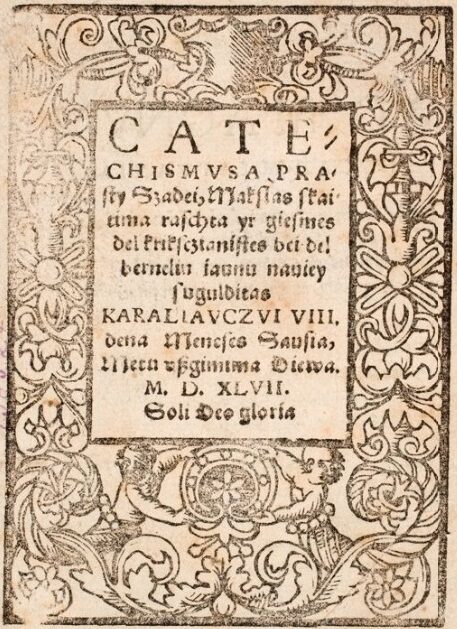
Standard Lithuanian uses 32 letters. The ogonek vowels ą and ę were taken from Polish spelling, with į and ų added by Lithuanian writers for the remaining nasal vowels; the dotted ė goes back to Daniel Klein's Grammatica Litvanica of 1653; the macron ū is the latest addition, credited to Jonas Jablonskis in 1901. The Czech-derived caron letters replaced the Polish-influenced digraphs sz and cz during the national revival, and the record is precise about how slowly: the new letters were used cautiously in publications for educated readers while sz and cz continued in publications for everyone else, and the carons prevailed only from 1906.
_by_Martynas_Ma%C5%BEvydas%2C_published_in_K%C3%B6nigsberg%2C_1547_(cropped).jpg)
Estonian's marked letters, and the history of the Estonian alphabet, are covered on the soc.culture.estonia page. One point about them belongs here, because it is a point about transport rather than about Estonia: õ, ä, ö and ü all sit in the Latin-1 Supplement, the range that eight-bit Western European systems already carried, so Estonian text survived paths that reduced Latvian and Lithuanian to nonsense.
Against this, the network. RFC 1036, the standard for the interchange of Usenet messages, was published in December 1987, and its rules for header fields are unambiguous: a full name, it says, may contain any printing ASCII characters from space through tilde, and the material between the angle brackets of a Message-ID must likewise be printing ASCII. MIME, first defined in RFC 1341 of June 1992, supplied what was missing for message bodies: a way to declare which character set was in use, and encodings that carried eight-bit octets through seven-bit paths intact. Until the posting software, every relaying server on the route, and the reading software at the far end all handled that correctly, a marked letter was a wager rather than a character.
The eight-bit code pages arrived in an order that made the wager worse. ISO/IEC 8859-4, Latin-4 or North European, was first published in 1988 and was designed to cover Estonian, Latvian, Lithuanian, Greenlandic and Sami in a single set. Windows-1257 was registered with IANA in 1996, citing a specification published in 1995 and inclusion with pan-European versions of Windows 95, and is standardised in Lithuania as LST 1590-3. ISO/IEC 8859-13, Latin-7 or Baltic Rim, appeared only in 1998: designed for the Baltic languages, similar to the earlier-published Windows-1257, adding Polish letters that 8859-4 lacked and dropping the Nordic coverage that 8859-4 had; the same set is the Latvian national standard LVS 8, dated 1992 with a 1993 amendment. The crucial point is stated flatly in the standards documentation: Windows-1257 is not compatible with the older ISO 8859-4. Two correct encodings of the same Latvian sentence, each properly labelled, could render each other as nonsense.
Unicode had solved the repertoire problem before any of this mattered. Every accented Latvian and Lithuanian letter sits in the Latin Extended-A block, U+0100 to U+017F, which encodes the letters of the ISO 8859 Latin sets other than Latin-1 and which has been in the standard since version 1.0 in 1991, with its entire repertoire save one letter added at version 1.1. The standard was never the constraint. The transport and the installed base were.
The practical answer, then, was to strip. Writers dropped the marks, or fell back on digraphs — which in Lithuanian simply reinstated the pre-1906 spelling, so that a post written in 1996 by someone whose keyboard would not cooperate looks, in that one respect, like a book printed before the caron reform. A further complication is political and belongs to the archive rather than to the network. Under the Latvian SSR, a regulation of 5 June 1946 removed the letter ŗ from official Latvian and replaced it with r in print, and ō went the same year; the digraph ch was removed in 1957. Emigre publishing kept all three and went on using them throughout the exile. The consequence for anyone searching the archive is concrete and unavoidable: a single name may appear correctly encoded, stripped to bare ASCII, spelled with digraphs, spelled in the pre-1946 emigre orthography, and garbled by a code-page mismatch, all within one thread. A search on any one form finds only part of the record.
Where the readers were
The readership had two layers, formed half a century apart, and the older one is the reason the group had readers at all before the region could reach it.
The older layer dates from 1944, when large numbers of Estonians, Latvians and Lithuanians left westward ahead of the returning Soviet front, and from the displaced-persons camps in Germany that followed. Sweden was the nearest refuge: around 6,000 Latvian nationals fled there after the war, of whom 3,418 were officially registered in 1945. What happened next in Sweden became one of the most durable grievances in the whole diaspora, and it is precisely dated. On 25 January 1946, in the episode Sweden remembers as baltutlämningen, Sweden extradited 146 Estonian, Latvian and Lithuanian soldiers who had been conscripted by Germany to the Soviet Union, from Trelleborg aboard the steamer Beloostrov. 130 were Latvians. Some had mutilated themselves or gone on hunger strike to avoid it and seven took their own lives; a demonstration on 24 November 1945 that emptied nearly the whole town of Eksjö, the largest in its history, had not stopped it. Five of those handed over were sentenced to death: three were executed in 1946 and two sentences were commuted to seventeen years' hard labour. On 20 June 1994, forty of the forty-four survivors accepted an invitation to Sweden and were received by the king; on 15 August 2011 the Swedish prime minister apologised formally to the prime ministers of the three countries. Both of those dates fall inside the group's active years.
From the camps the communities dispersed to four continents, on schemes whose paperwork survives. The United States Displaced Persons Act of 1948 bypassed a national quota that had allowed 384 Lithuanians a year, and ultimately admitted approximately 36,000 Lithuanians; some 40,000 Latvians emigrated to the United States between 1939 and 1951. Australia's programme began with a voyage deliberately composed for public consumption: the first ship under the displaced-persons scheme, the General Stuart Heintzelman in 1947, was chosen to carry only people from the Baltic countries, and the transcribed manifest of its 843 passengers records 442 Lithuanians and 264 Latvians, the remainder being largely Estonian. Between 1947 and 1952, 19,700 Latvian refugees reached Australia under the supervision of the International Refugee Organization. In Canada, the wave that began in 1947 and ended in 1957 accounted for 92 per cent of all Latvian immigration to the country between 1921 and 1965, and shifted the community's centre of gravity from the prairie provinces to Ontario.
Census counts taken during the group's own life measure the result. The 1990 United States census recorded 842,209 people claiming Lithuanian ancestry, of whom 30,344 were foreign-born and 811,865 born in the United States — a community by then three and four generations deep. The 2000 census recorded 87,564 people of Latvian descent in the United States, and Canada's 1991 census 20,445 of Latvian descent. Australia's 2016 census recorded 20,509 residents of Latvian ancestry and its 2021 census 19,430 of Lithuanian ancestry. These are the households that had kept the parishes, schools, choirs, scout troops and newspapers going for half a century, and whose children and grandchildren were the ones with university accounts in 1993.
A readership drawn from Melbourne, Stockholm, Riga, Toronto and California has no common working day and no quiet hour; roughly eighteen hours separate its extremes. An article posted in the evening in one place met the afternoon in another and the following morning in a third, so a thread that would have cooled overnight in a national group ran on instead. Store-and-forward propagation compounded it, since a reply could reach a server before the article it answered. The result was a group whose arguments had unusual momentum and whose participants were frequently answering something they had not yet seen.
The second layer arrived from inside the region as connectivity did, and the group changed character as it grew: emigrants asking what the countries had become, residents discovering what the emigration had preserved, and both discovering that half a century apart had produced two different vocabularies for the same history.
What an umbrella carried that a country group did not
No thread titles from this group are quoted on this page, because none have been verified. What can be described is the kinds of traffic an umbrella structurally made possible, several of which a single-country group could not have held at all.
The comparative thread is the first and most obvious. Three countries had made three different citizenship decisions from one legal premise; three had negotiated troop withdrawals on different timetables, completing in 1993, 1994 and, for the Skrunda station, 1998; three ran language legislation of differing severity; three approached the same accession dates from different starting positions. A national group can describe its own settlement. Only the umbrella could put the three side by side in one thread.
The second is the terminological argument itself — whether the three countries constitute a region, whether Estonia belongs with the Nordic countries, whether the shared history is enough — a thread type that a national group has no reason to run and this one could not avoid.
The third is the correction of outsiders. The distinction between Finnic Estonian and Baltic Latvian and Lithuanian, the difference between the Baltic states and the Balkans, the distinction between the Baltic states and the wider Baltic Sea region, and the fact that Belarus is not among them: for two decades this was the only Big-8 address at which all four of those could be answered in one place.
The fourth is the genealogical and practical traffic, which is the quietest and probably did the most good: queries built on a village name that had survived several orthographies, a border change and a ship's manifest; attempts to trace relatives separated by deportation or flight; questions about which archive held what; language-learning questions; travel advice as the countries opened. This is the traffic that benefits most from an umbrella, because a Latvian village name may be indexed under a Russian, German, Polish or Latvian form, and the person who knows which is as likely to be in the neighbouring country's community as in one's own.
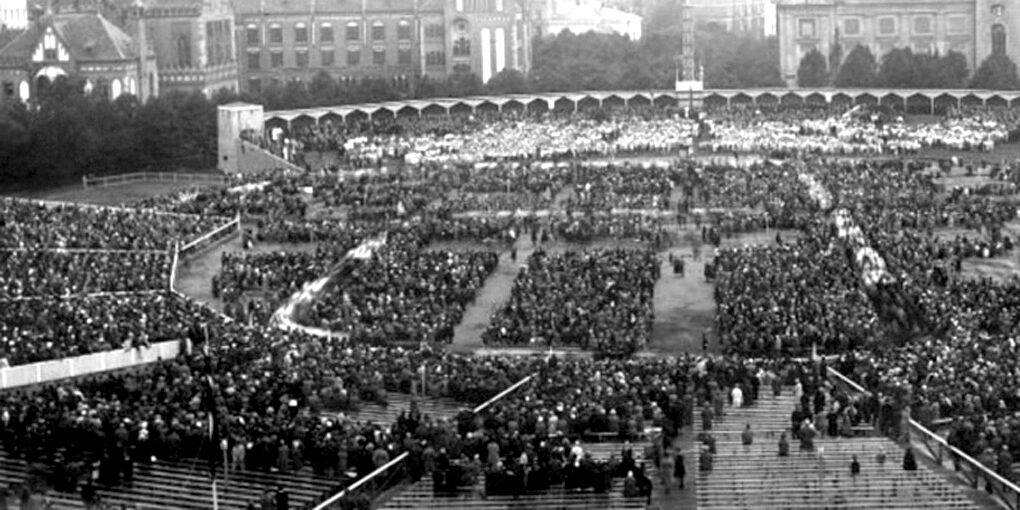
The fifth is the calendar, and here the three countries supplied genuinely shared material. The song and dance celebrations run as three separate national series but were nominated to UNESCO jointly; a comparative study by Guntis Šmidchens inventoried 1,964 works performed at 70 Estonian, Latvian and Lithuanian national song celebrations between 1869 and 2014 and identified twelve songs repeated across different periods in all three national series. Sport did comparable work. Lithuania's basketball team won the last two European championships before the Second World War, in 1937 in Latvia and 1939 in Lithuania; after the annexation, Lithuanian players formed the core of Soviet teams, four of them making up the starting lineup of the side that took Olympic gold in 1988; after the restoration, the resurrected national team won bronze at the first three Olympic tournaments open to NBA players, in 1992, 1996 and 2000, took silver at the European championship in 1995 and won that tournament again in 2003. Every one of those post-1992 results fell inside the group's active years.

Finally, there is a form of traffic that arrived because the umbrella existed at all. On 21 November 1994 a Request for Discussion for a moderated soc.culture.estonia was posted by Tanel Tammet at Chalmers, with Ott Kõstner and Hiski Haapoja as co-proponents; it was cross-posted to soc.culture.baltics, and its stated rationale for wanting a moderated national group was, in its own words, that the existing group discussing the three countries together was plagued by massive crossposting and uninformative political flamewars. Tammet's name also appears on the February 1993 list of people who voted to create soc.culture.baltics. The group proposed in 1994 passed 182 to 32 and was created on 13 March 1995. That sequence — vote for the umbrella, then propose an alternative to it, and cross-post the proposal to the umbrella — comes entirely from the administrative record, and it is the only characterisation of this group's traffic that this page can source at all.
Neighbours, cross-posting and decline
The group's arguments rarely respected group boundaries, and the RFD had anticipated that by cross-posting itself to the groups it expected to draw from. soc.culture.soviet and talk.politics.soviet were the immediate predecessors as venues for this material, and both outlived the state they were named for. soc.culture.nordic mattered for Estonia's northern affinities and for the large Finnish and Swedish contingents visible in the vote list. soc.culture.polish mattered for the long entanglement of Polish and Lithuanian history, including the orthographic inheritance described above. soc.culture.russian mattered for everything to do with relations with Russia and with Russian-speaking residents, and remains the right page in this directory for that subject. The branch's own organisation — how soc.culture.* groups were created, what they were for, and why the hierarchy came out the way it did — is set out on the soc.culture.* hub and on the soc.* page.
One incidental measurement survives in those cross-posts. Archived articles carry an Xref header listing the article number each server assigned in each group; the two soc.culture.latgola proposals of March 1999 were filed by the same server three days apart and carry soc.culture.baltics numbers 34354 and 34400. Forty-six articles were therefore numbered into the group on that one server between 5 and 8 March 1999. That is a floor for the flow at a single moment, recorded by accident, on one machine. It is not a message count for the group, and no message count for the group has been found.
Like the rest of the branch, the group thinned as the web grew. Local-language news portals with busy comment sections arrived in all three countries around the turn of the century, and the work of explaining a region to outsiders — a large share of the group's early purpose — moved to sites that could do it with pictures and in the reader's own language. The connectivity figures make the timing exact: the years in which Latvia and Lithuania went from six per cent to a third of the population online, 2000 to 2004, are the years in which a text-only international newsgroup stopped being the obvious place to hold the conversation. What Usenet retained was persistence, which is the whole reason the archive is worth reading now.
A forged rmgroup, and what survived
The control-message archive holds two further articles for this group after 1993. The first is unremarkable: an administrator at the Geophysical Laboratory of the Carnegie Institution of Washington issued a local newgroup message on 29 March 1996, reading simply that soc.culture.baltics was to be created locally. The second is not. At 00:28 GMT on 4 November 2001 an rmgroup control message for soc.culture.baltics was injected through a consumer host in Quebec, carrying in its From, Sender and Approved headers the name of Urs Janßen, the maintainer of the tin newsreader; it asked administrators to remove what it called a bogus newsgroup and closed with a randomly generated sentence of the kind those forgery campaigns habitually appended. Four minutes later the same host issued the same message against soc.culture.estonia. The plain reading of the record is that both were forgeries, and the plain evidence for that is what happened next: nothing.
soc.culture.baltics is still listed in the Internet Systems Consortium's newsgroups file, with the same one-line description issued in 1993, and still appears in the active file. Its national neighbour did not fare as well. On 29 May 2011 the Big-8 Management Board opened a Moderator Vacancy Investigation into soc.culture.estonia, recording that probe posts to the group produced bounces. Following a Last Call for Comments on 16 August 2011, the board voted to remove twenty-three moderated groups in what it called the Great Downsizing, on the stated grounds that they had carried no on-topic traffic for years; the rmgroup for soc.culture.estonia was issued on 3 September 2011 and repeated through 3 October. The umbrella outlived the country group in the namespace, and outlives it still.
What the record does not show
The honest limits of this page are worth stating in full.
- No readership figures exist. No survey of this group's subscribers has been found, and none is quoted here. The 135 addresses on the 1993 yes-vote list are voters in a five-week ballot, not readers, not subscribers, and not a sample of either.
- No message counts and no peak years. Nothing reliable has been located on how much the group carried or when. The only quantity above is the pair of Xref article numbers from March 1999, which measures three days on one server and nothing else.
- No thread titles, no quotations from posts, no named participants beyond the administrative record. Every person named on this page appears because they signed a public administrative posting or a published vote list, or because a published biography places them where the record also places them. Nothing is quoted from the group's own traffic; the one characterisation of that traffic given above is quoted from a rival group's proposal and attributed to it.
- The BALT-L gateway is unresolved. The paperwork records an intention to arrange something and an expectation that something would appear. Whether a gateway was ever built is not in the surviving record, and this page does not guess.
- The group's later decades are undocumented. Between the 2001 forgery and the present, the administrative archive holds nothing for this group at all. Absence of paperwork is not evidence of absence of traffic; it is evidence of an uneventful namespace.
What is documented is unusually good for a group of this kind: a complete creation record with real dates and a real tally, a charter quotable verbatim, a published voter list that can be counted, a rival national group whose own proposal characterises this one in writing, a failed regional proposal cross-posted here, and a subject whose surrounding history is among the best-dated in modern Europe. That is the material this page is built from, and it is where the page stops.
Scope and limits of this page
This is the umbrella page for a group covering three countries, and it has been written to sit above rather than in front of the national material. Estonia — its language, its citizenship settlement, its early digital state, its own newsgroup — is covered at length on soc.culture.estonia, and this page declines to retell it, noting only the regional asymmetries an umbrella has to explain. Russian-language Usenet and the Russian language question belong to soc.culture.russian. Belarus, which is not a Baltic state, has its own page at soc.culture.belarus and is mentioned here only to mark where this region ends. The organisation of the branch and of the hierarchy above it is on soc.culture.* and soc.*.
On the contested matter, the rule followed throughout is the one the subject requires. The occupation, the annexation, the restorations and the citizenship laws of the 1990s are live politics as well as history. Where a characterisation is contested, the page has named the government, court, assembly, commission or organisation that made it, given the date, and stopped. Where a legal instrument exists, the page has cited its date and its terms rather than paraphrasing its intent. The newsgroup argued all of it, at length, for twenty years, and the value of the archive lies in that argument being preserved rather than resolved. This page documents that it happened. It does not join in.
Reading soc.culture.baltics today
- Historical archive: Google Groups — soc.culture.baltics (coverage varies by group and era).
- Open in a newsreader:
news:soc.culture.baltics— the original site offered exactly this link, and it still works if your system has a newsreader registered for thenews:scheme. - Live access: point an NNTP newsreader at a modern server — see accessing Usenet today.
- The original news2mail e-mail subscription service ended in the mid-2000s and no longer operates.