soc.culture.russian
All things Russian in the broadest sense.
A vast group covering Russia and the Russian-speaking world through the Yeltsin and early Putin years: politics and privatisation, literature threads of genuine erudition, KOI8-R encoding wars, and diaspora life from Brighton Beach to Berlin.
It maintained complicated, active borders with the national groups of former Soviet republics — the crossposts tell that story by themselves.
On this page
The group and its era
soc.culture.russian belonged to the great expansion of the soc.culture.* hierarchy, by which most of the world's nations eventually acquired an unmoderated corner of Usenet. Its situation was odd from the start: for the group's first years, the country under discussion had barely arrived on the network. Connectivity inside Russia remained scarce and expensive well into the 1990s, so the early readership skewed towards émigrés, exchange students and Slavists posting from Western universities — Russia discussed, for the most part, from everywhere except Russia.
History intruded on the plumbing early. The Soviet Union reached the international networks in 1990 through Relcom, and during the coup attempt of August 1991 that network famously stayed up, carrying eyewitness accounts out of Moscow while state television showed Swan Lake. The dissolution of the union that December left the neighbouring group soc.culture.soviet a name without a referent; over the years that followed, conversation dispersed to soc.culture.russian and to the groups of the successor states.
Language drew a second boundary. The group ran mostly in English, with Russian surfacing in transliteration or, where encodings cooperated, in Cyrillic. The bulk of Russian-language netnews lived elsewhere — in the relcom.* hierarchy and in the fido7.* groups gated from FidoNet — vast parallel conversations that remained largely invisible to Anglophone Usenet.
That second boundary was as much technical as linguistic. A Usenet article inherited the mail format of the early ARPANET, which assumed seven-bit US-ASCII — a repertoire containing no Cyrillic letter at all. Writing Russian therefore meant either romanising it into Latin characters or carrying it in one of several mutually incompatible eight-bit code pages, each of which the receiving software had to be told about correctly. An English-language group sidestepped the choice.
Getting a line out
The dates on which Russian connectivity rests are checkable ones. RELCOM was launched on 1 August 1990 at the Kurchatov Institute in Moscow, in collaboration with the DEMOS co-operative, and in the same month established regular electronic-mail routing with a node at Helsinki University over a paid voice line. The Soviet Union's country-code top-level domain, .su, carries a registration date of 19 September 1990 in IANA's root database, where the sponsoring organisation is recorded as the Russian Institute for Development of Public Networks. The Russian Federation's own .ru carries a registration date of 7 April 1994 — a day still marked in Russia as Runet Day. FidoNet arrived on a parallel track: the first Russian node is reported to have started in October 1990 in Novosibirsk.
What those dates conceal is scale. The World Bank's series for individuals using the internet as a share of population puts Russia at 0.05 per cent in 1994, 0.8 per cent in 1998, 2.0 per cent in 2000, 15.2 per cent in 2005, 49 per cent in 2010 and 85 per cent in 2020. Through the years in which the group did most of its arguing, the number of people inside Russia who could have joined it at all was a fraction of one per cent of the country, concentrated in institutes, universities and the first commercial providers of Moscow and St Petersburg.
The reversal, when it came, came fast, and it came after the period in which such groups were most used rather than during it: between 2000 and 2010 Russian internet use went from one person in fifty to one in two. By then the readership a soc.culture group might have recruited at home had somewhere else to go, and the somewhere else was in Russian.
What was discussed
Nothing produced longer threads than the Soviet past. Collectivisation, the terror of the 1930s, the Great Patriotic War, the camps, and the question of who knew what and when: these returned in perennial rounds, argued by professional historians, amateur ones and people rehearsing family memory — usually all in the same thread, and rarely to any conclusion both sides accepted.
The present supplied just as much material. The constitutional crisis of October 1993, which ended with tanks firing on the parliament building, was argued over as it happened; so were the wars in Chechnya, which some participants debated as policy while others wrote about them as grief; so was the rouble default of August 1998, which reached many readers through their relatives' savings. The group was unmoderated and refereed none of it.
Alongside the arguments ran the standing repertoire of any large soc.culture group: grammar and transliteration questions from learners, requests to identify a half-remembered poem or song, recipes, chess, film, genealogy enquiries and the occasional plaintive search for lost relatives, plus the endless practical mechanics of visas, invitations and emigration paperwork. These threads tended to show the group at its best — patient, multilingual and genuinely expert.
Several of the standing arguments belonged as much to the neighbouring groups as to this one, and were routinely crossposted between them. Questions about the Soviet period ran across the boundary into the groups of the successor states — this directory carries soc.culture.belarus and soc.culture.baltics among others — while emigration, language and memory ran into soc.culture.jewish. A thread with four groups in its Newsgroups line belongs to all four archives at once, which is why the surviving record of this group cannot be read as a self-contained corpus. The wider soc.culture hierarchy is described separately.
The dated record
What follows is a chronology and nothing more. The dates are given because a reader coming to the archive years later needs them to place a thread; the arguments made about these events are not adjudicated here.
- 12–13 February 1974 — Aleksandr Solzhenitsyn was arrested in Moscow on 12 February and deported the following day to Frankfurt. This predates Usenet itself, which did not exist until the end of the decade.
- 1 August 1990 — RELCOM launched at the Kurchatov Institute, Moscow.
- 19 September 1990 — the registration date IANA records for the
.sudomain. - 18–22 August 1991 — the coup attempt, during which a State Committee on the State of Emergency declared itself in authority.
- 8 December 1991 — the Belovezha Accords were signed by the leaders of the Russian SFSR, the Ukrainian SSR and the Byelorussian SSR.
- 21 December 1991 — the Alma-Ata Protocol was signed.
- 25 December 1991 — Mikhail Gorbachev resigned and transferred his presidential powers.
- 26 December 1991 — the Soviet of the Republics adopted Declaration No. 142-N.
- 21 September 1993 — a decree declared the Congress of People's Deputies and the Supreme Soviet dissolved.
- 3–4 October 1993 — armed confrontation in Moscow, including the storming of the Ostankino television centre on 3 October and the shelling of the parliament building at dawn on 4 October. The official assessment of the Prosecutor-General of Russia records 147 killed and 437 wounded across the whole ten-day confrontation.
- 12 December 1993 — a constitutional referendum recorded 32,937,630 votes in favour and 23,431,333 against, or 58.43 per cent to 41.57 per cent, on an officially reported turnout of 54.37 per cent.
- 7 April 1994 — the registration date IANA records for the
.rudomain. - 17 August 1998 — an announcement widened the rouble's trading band from 5.3–7.1 to 6.0–9.5 roubles to the dollar, restructured domestic debt and imposed a temporary moratorium on certain bank obligations. The rate stood at 6.29 on 14 August and at about 21 by 21 September; inflation for the year reached 84 per cent.
Only the placement matters for the archive. The 1990 and 1991 entries fall in or before the group's earliest years, when almost nobody inside the country could read it; the 1993 and 1998 entries fall squarely inside its busiest period, when a large part of the readership was following them from abroad and hearing about them from relatives at home. The 1974 entry belongs to a period the group discussed but could not have covered.
Writing Russian on a seven-bit network
The encoding problem governs what the archive looks like today, and is worth setting out properly. Cyrillic has thirty-three letters in its modern Russian form and none of them exists in ASCII. Two exits were available. The first was romanisation: write the Russian in Latin letters and let the reader decode it. The second was an eight-bit code page in which the upper half of the byte range was assigned to Cyrillic — which worked perfectly whenever sender and receiver had chosen the same code page, and produced gibberish whenever they had not.
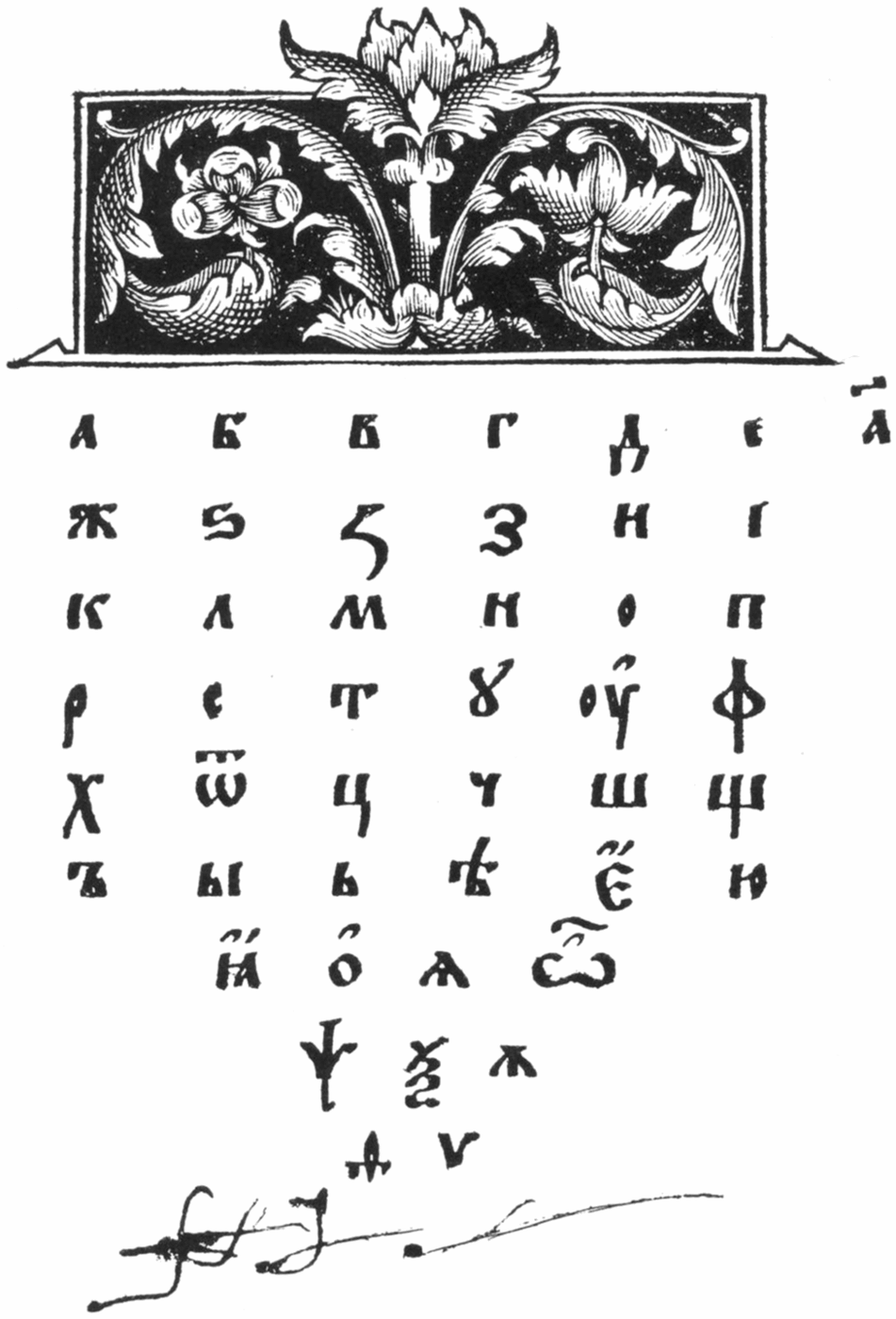

The exit that the network itself chose was KOI8-R. Derived from the older KOI-8, it was created by the programmer Andrei Chernov in 1993 and registered in July 1993 as RFC 1489, Registration of a Cyrillic Character Set, which describes it as the de facto standard for Unix and global network applications in the former Soviet Union. Its design carries a deliberate safeguard: the letters are ordered so that if the eighth bit is stripped — as gateways, mailers and misconfigured software habitually stripped it — the text does not vanish but degrades into a case-reversed Latin transliteration a Russian speaker can still partly read.
It did not have the field to itself. Microsoft Windows shipped Windows-1251, an eight-bit encoding covering Russian, Ukrainian, Belarusian, Bulgarian, Serbian and Macedonian; MS-DOS had used code page 866 before it; the Macintosh had Mac Cyrillic; and the international standard, ISO/IEC 8859-5, whose first edition dates from 1988, was, in the plain assessment of the reference literature, never widely used. A sentence of Russian could therefore leave a machine in any of four or five encodings and arrive at a reader who had guessed a different one.
The result of a wrong guess had a name. Russian speakers called the garble krakozyabry, the local term for what is now generally called mojibake; the same paragraph would arrive as an unbroken run of Latin vowels carrying diacritics, or as a block of capital letters. Diagnosing which encoding had been assumed, and instructing correspondents on how to set their software, was a permanent overhead of writing Russian on the network.
The settlement was Unicode, and it arrived on paper long before it arrived in practice. The main Cyrillic block, U+0400 to U+04FF, was added in October 1991 with version 1.0 of the standard; a Cyrillic Supplement at U+0500 to U+052F followed in March 2002 with version 3.2. Deployment lagged the standard by roughly a decade, and it was UTF-8 that ended the argument: as of January 2024, 94.6 per cent of Russian .ru websites used UTF-8, with Windows-1251 a distant second and KOI8-R down to under 0.004 per cent of websites.
Transliteration, and what it does to the archive
Romanisation had standards, and the standards did not settle it. GOST 16876-71, drawn up by the Soviet administration for geodesy and cartography, had been in service since 1973; ISO 9:1995 superseded ISO/R 9:1968 and was adopted in Russia as GOST 7.79-2000; the United States Board on Geographic Names adopted its Russian system in 1944 and the Permanent Committee on Geographical Names followed in 1947; and the ALA-LC tables have been used in North American libraries, and in the British Library, since 1975. None of these was what people typed: informal transliteration was, as the reference literature puts it, often carried out without any consistent standard at all.
For a discussion group this had consequences that outlast the group. One surname can appear in half a dozen spellings in a single thread, and a name asked after in one romanisation will not match the same name given in another. Where the choice was made to write in Cyrillic instead, the post is legible only if its declared character set survived intact through every hop; where the declared set was wrong or missing, the words are still in the archive but a search for them in Cyrillic will pass straight over them. Anyone working through the surviving record for a person, a place or a book must try both alphabets and several spellings, and accept that some of what is there cannot be found by searching at all.
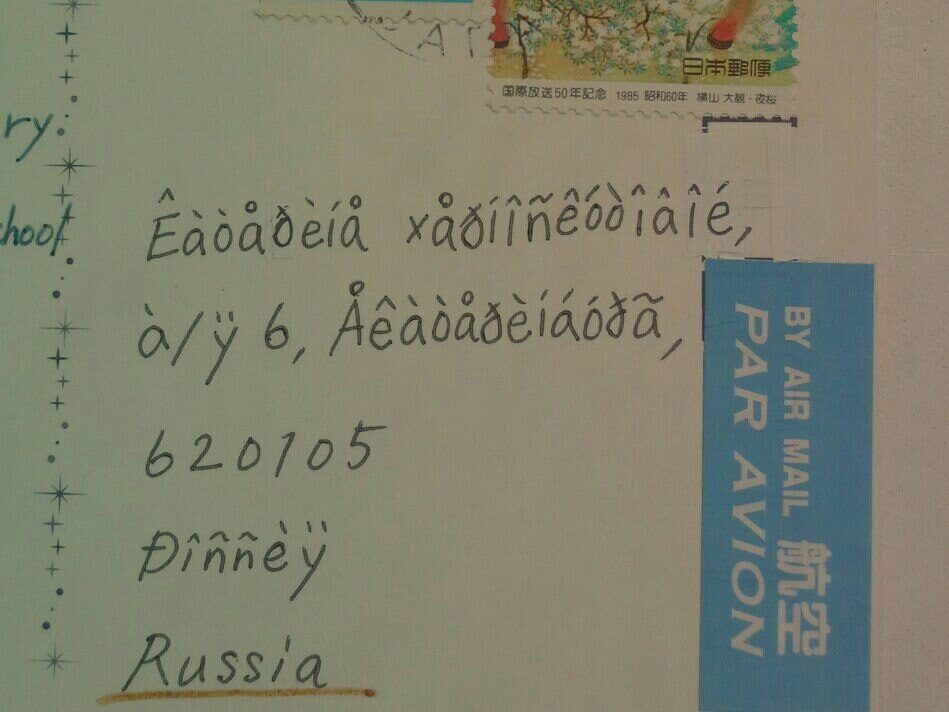

One consequence follows from the mechanics. Transliterated Russian passes through a high-bit-stripping gateway unharmed while encoded Cyrillic does not, so the Russian most likely to have survived legibly is the Russian that was romanised.
Where the readers actually were
A group about Russia read mostly from outside Russia has a geography, and that geography was made by three emigrations, each of which is documented in figures. The first is the wave of the 1970s. Between 1960 and 1970 only some 4,000 people emigrated legally from the USSR; between 1971 and 1980, 347,100 people received exit visas, of whom 245,951 were Jews, the annual figure swinging from 13,000 visas in 1975 to 51,300 in 1979 and back to 9,640 in 1980. The Jackson–Vanik amendment, tying trade terms to freedom of emigration, formed part of the United States Trade Act of 1974. These were the households in which Russian was still spoken abroad, in America and in Israel, by the time the network reached them.
The second wave was much larger and coincided with the group's own life. Between 1989 and 2006 about 1.6 million Soviet Jews and their relatives left; about 979,000 of them, or 61 per cent, were received by Israel. The peak years are stark: 185,227 arrived in Israel in 1990, out of roughly 228,400 who left the Soviet Union that year, and about 148,000 more in 1991. Arrivals then settled to tens of thousands a year, falling to 50,817 in 2000 and 33,601 in 2001.
Germany took a different stream on a comparable scale. Arrivals of ethnic German Aussiedler and Spätaussiedler from the Soviet Union and its successor states totalled 2,334,334 between 1950 and 2005, the largest single origin group of the 4,209,482 who arrived from all countries in those years. Arrivals from all origins peaked at 397,073 in 1990, ran at 221,995 in 1991 and 230,565 in 1992, and had fallen to 35,522 by 2005. In the United States, 391,641 residents were recorded as Russian-born in 2019, and 2,055,088 people reported Russian ancestry in 2024; Brighton Beach in Brooklyn is still described in the reference literature as the most important demographic and cultural centre of the Russian-American experience, though later prosperity dispersed part of that population to the suburbs.
What a readership shaped like that does to a newsgroup is structural rather than sentimental. There is no shared working day. Moscow is seven or eight hours ahead of New York depending on the season, with Israel, central Europe and the American west coast strung out between and beyond them, so a thread begun in a European evening could be picked up in an American afternoon and answered again in a Moscow morning. A readership spread across that many time zones also loses the shared local reference — the broadcast everyone saw, the newspaper everyone read — which is why so much explaining, translating and date-converting had to be done in the open.
The cultural traffic
Between the crises, the material a culture group draws on is in this case unusually well dated. The literary canon carried abroad has fixed points that recur on the calendar. Alexander Pushkin was born on 6 June 1799 — 26 May by the Julian calendar then in use — and died on 10 February 1837; his bicentenary fell in 1999 and was marked in Russia with a one-rouble commemorative coin. Vladimir Nabokov was born on 22 April 1899, left Russia with his family in 1919 and died at Montreux on 2 July 1977; his centenary fell in the same year as Pushkin's bicentenary.
Two émigré careers in particular sat inside living memory for the group's readers. Joseph Brodsky was put on a plane for Vienna on 4 June 1972, received the Nobel Prize in Literature in 1987 as the fifth Russian-born writer to do so, was appointed Poet Laureate of the United States in 1991 and died of a heart attack on 28 January 1996 at the age of fifty-five. Aleksandr Solzhenitsyn, deported in February 1974, had his Soviet citizenship restored in 1990 and returned in 1994, crossing the country from Vladivostok. Both deaths, and Solzhenitsyn's return, fall inside the years the group was active.
Music travelled in a form the network was well suited to argue about. The Soviet bard tradition — avtorskaya pesnya, the author's song, sung to a guitar outside the official cultural apparatus — spread by magnitizdat, the copying and recopying of amateur tape recordings, because its performers were rarely permitted to record commercially. Vladimir Vysotsky, born 25 January 1938 and dead on 25 July 1980, recorded an hour-long reel of his own songs in June 1963 whose copies spread far beyond Moscow; only a small fraction of his work appeared officially in his lifetime, including a four-song wartime EP on Melodiya in 1974, and not one of his performances or interviews was broadcast on Soviet television while he lived. Bulat Okudzhava, born 9 May 1924, died at Clamart outside Paris on 12 June 1997, within the group's own span. Alexander Galich was forced to emigrate, and possession of a tape of his songs could carry a prison term.
Sport and games supplied the other recurring calendar. Chess gave the decade its most-reported fixture: Garry Kasparov beat Deep Blue 4–2 at Philadelphia between 10 and 17 February 1996, and lost the rematch 3½–2½ in New York between 3 and 11 May 1997 — the first defeat of a reigning world chess champion by a computer under tournament conditions. Football supplied a record: on 28 June 1994 Russia beat Cameroon 6–1 in a World Cup group match and Oleg Salenko scored five goals, more than any player had scored in a single World Cup match; he finished as joint top scorer with six, the only player to take that award from a team eliminated in the group stage.
And then there is the calendar itself, which for Russian subjects is never simple. A decree of the Council of People's Commissars dated 24 January 1918 moved the country to the Gregorian reckoning, so that Wednesday 31 January 1918 was followed by Thursday 14 February 1918. The Russian Orthodox Church continued with the Julian calendar, which is why Christmas is kept on 25 December Julian — 7 January Gregorian until 2100 — and why the Old New Year falls thirteen days after the civil one. Every pre-1918 date consequently comes in two forms, as Pushkin's birthday does, and every anniversary thread has to say which one it means.
Context
By the turn of the millennium the group also sat inside crossposting nets that had nothing to do with Russia at all. Balkan and Middle Eastern quarrels swept through under their own momentum, mass-crossposted across half the hierarchy, and a reader could open the group and find an argument that had started several countries away — a fair index of how entangled soc.culture.* as a whole had become.
What eventually thinned it was a second emigration. As access inside Russia became ordinary, Russian-speaking internet life consolidated on the web of the Runet, and above all on LiveJournal, which Russian users adopted in the early 2000s with an enthusiasm matched almost nowhere else — ЖЖ became, for a while, simply where the conversation happened. An English-language newsgroup read mostly from abroad was left with a shrinking constituency, and spam claimed much of what remained.
The archive that survives is therefore something particular: the 1990s argued over in real time, in a second language, by people with an unusual amount at stake in being right. Few decades have been annotated quite so thoroughly while they were still going on.
Reading soc.culture.russian today
- Historical archive: Google Groups — soc.culture.russian (coverage varies by group and era).
- Open in a newsreader:
news:soc.culture.russian— the original site offered exactly this link, and it still works if your system has a newsreader registered for thenews:scheme. - Live access: point an NNTP newsreader at a modern server — see accessing Usenet today.
- The original news2mail e-mail subscription service ended in the mid-2000s and no longer operates.