soc.culture.estonia
Estonia restored.
Independence restored in 1991 and documented here as it happened, followed by the decade of e-government pride, language-law debate and EU/NATO accession — with the Baltic umbrella group preserved alongside.
Estonian-language threads gave the small language early digital footprint.
On this page
The group and its era
soc.culture.estonia sat in the national run of soc.culture.*, and its subject spent the group's first decade rebuilding a state. The restoration of independence fell at the beginning: late on 20 August 1991, with the coup attempt in Moscow still under way, the Supreme Council of the Republic of Estonia resolved to confirm the country's independence and seek the restoration of diplomatic relations. Much of what the group later argued about descended from that decision and the legal theory behind it.
Small-nation groups on Usenet were usually written mostly from abroad; this one less so, because Estonia went online early and on purpose. The Tiigrihüpe or Tiger Leap programme, initiated in 1996, put money into computer and network infrastructure, with an emphasis on education; by 1997 some 97 per cent of Estonian schools had an internet connection, and in 2000 the government declared internet access a human right and helped spread it to rural areas. A country wired on that timetable had readers posting from inside it while events were current, unusually for a group of this size.
The published series bear that out. The World Bank indicator for individuals using the internet, which draws on ITU reporting, puts Estonia at 0.07 per cent of the population in 1992, 2.8 per cent in 1995, 10.8 per cent in 1998, 28.6 per cent in 2000 and 53.2 per cent in 2004. A readership that in the early 1990s could reach almost nobody inside the country was, by 2004, addressing one where more than half the population was online.
The rest of the readership descended from 1944, when large numbers of Estonians left on ships and smaller boats across the Baltic. Sweden and Germany were the first refuge; families moved on from there to Canada, where about 17,000 arrived in the late 1940s and early 1950s, and to the United Kingdom, the United States and Australia. Those communities had kept schools, choirs and societies going for half a century, and a newsgroup gave them somewhere to set what they had preserved against what the restored country was becoming.
Getting online: .ee, EENet and who could post
The checkable anchor for a country's arrival on the network is the delegation of its top-level domain. IANA's root database records the registration date of .ee as 3 June 1992, and names Eesti Interneti Sihtasutus, the Estonian Internet Foundation, as the ccTLD manager today. The first internet connections in the country were made the same year, at academic facilities in Tallinn and Tartu: the domain and the wire arrived together, within a year of the restoration itself.
Who ran the registry matters for who could have an address on it. The Estonian Education and Research Network, EENet, was established in August 1993 by the Ministry of Education as a governmental non-profit body, and ran the .ee domain and its registry from that year. Under its rules a legal entity could hold one domain name only, registration was free of charge, and private individuals could not register at all. That changed when the Estonian Internet Foundation took over the registry functions on 5 July 2010: individuals and foreign entities were admitted, more than one domain per holder was allowed, and registration moved from free to paid. IANA's own report on the redelegation of .ee to the foundation is dated 12 May 2013. For the whole of this group's active life, then, a second-level .ee name in a posting header belonged to an institution, because no private person was permitted to hold one.
Set the national figures beside the countries the exiles lived in and the group's composition explains itself. On the same World Bank series, 1998 gives Sweden 33.5 per cent, Australia 30.8, the United States 30.1 and Canada 24.9, against Estonia's 10.8. By 2004 the gap had narrowed to Sweden 83.9, Canada 66.0, the United States 64.8 and Estonia 53.2. A group of this kind therefore began weighted heavily towards the diaspora, which had been online for years before the homeland was, and shifted during its own middle years as the country caught up.
The milestones that followed are worth dating precisely. A cryptographic signature has been legally equivalent to a manual one in Estonia since 15 December 2000; the identity card was first issued on 28 January 2002, and by March 2007 over 1.08 million cards had been issued against a population of about 1.32 million. The local elections of October 2005 were the first anywhere to offer internet voting nationally in a legally binding election, and 9,317 people used it; at the parliamentary election of 26 to 28 February 2007, the first general election held that way, the figure was 30,275.
What was discussed
The difference between restoration and secession was no technicality to the people arguing it. The 1991 decision rested on the continuity of the Republic of Estonia as a subject of international law, following a resolution of 30 March 1990 holding that the Soviet occupation of 17 June 1940 had not de jure interrupted the republic's existence. On that reading Estonia had not left the Soviet Union, never having lawfully been part of it — with consequences for treaties, property and above all citizenship.
Those consequences were argued here at length. The restored state held citizens of the 1940 republic and their descendants to be citizens still; residents who had arrived during the Soviet decades — ethnic Russians made up 30.3 per cent of the population by 1989 — had instead to naturalise, which under the Citizenship Act in force from 1 April 1995 meant a long residence qualification, familiarity with Estonian and an examination on the constitution. Almost 30 per cent of the population held no citizenship in the first years after 1991. The difficulty of the language testing became a point of international contention, drawing objections from the Russian government and human-rights organisations; the case for the policy rested on the continuity doctrine and on the demographic changes of the occupation years. Both were put here, often by people living under the laws.
Other traffic was more cheerful. Declaring tax online from 2000, the X-Road data exchange of 2001 and the digital identification system built in 2002 on the mandatory ID card followed the schools programme and produced the reputation later sold abroad as e-Estonia. The accession fell inside the gateway's own years: Estonia joined NATO on 29 March 2004 and the European Union on 1 May 2004, having approved membership by referendum in 2003 with 66.8 per cent in favour.
One item of that cheerful traffic became an export in its own right. The first public beta of Skype was released on 29 August 2003, inside the group's years; the software was written by four Estonian developers, Ahti Heinla, Priit Kasesalu, Jaan Tallinn and Toivo Annus, while the company was founded by Niklas Zennström of Sweden and Janus Friis of Denmark. As of 2011 most of the development team was still in Tallinn and Tartu.
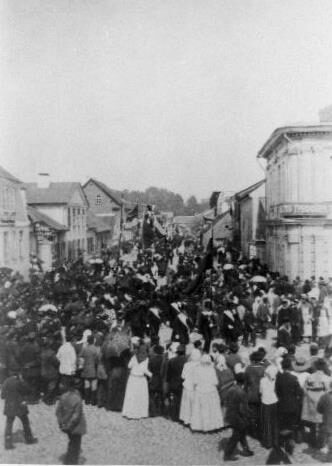
Two corrections recurred. One was linguistic: Estonian belongs to the Finnic branch of the Uralic family, close to Finnish and unrelated to Latvian and Lithuanian, which are Baltic and Indo-European — a point outsiders often got wrong. The other was cultural: the song festival, the laulupidu, first held Estonia-wide at Tartu in 1869 and typically staged every five years since 1923, at the Tallinn Song Festival Grounds since 1928. The spontaneous mass singing at those grounds in June 1988 gave the Singing Revolution its name.

The dated record
Much of what this group argued about was history with dates attached. What follows is a record of verified events only; it carries no causal claim and no verdict.
- 14 June 1941 and the two following days. Between 9,254 and 10,861 people were deported from Estonia, over 5,000 of them women and over 2,500 children under sixteen; 4,331 returned.
- 1944 to 1953. Between 14,000 and 15,000 men took part in the armed resistance known as the Forest Brothers, with 773 armed attacks counted between November 1944 and November 1947.
- 25 to 28 March 1949. In the operation known as Priboi, 20,722 people, some 7,500 families and more than 2.5 per cent of the population, were deported to Siberia over three days.
- 1978. August Sabbe, one of the last of the Forest Brothers, died in the Võhandu river during an attempt by KGB officers to detain him.
- 23 August 1987. The Hirvepark meeting in Tallinn called for publication of the secret protocol of the Molotov–Ribbentrop Pact.
- 10 and 11 June 1988. Evening singing at the Song Festival Grounds, where the activist Heinz Valk coined the phrase that became the Singing Revolution.
- 16 November 1988. The sovereignty declaration was issued.
- 23 August 1989. The Baltic Way human chain was formed across the three countries, with approximately two million participants.
- 3 March 1991. A referendum on restoring the independence and sovereignty of the Republic of Estonia returned 78.41 per cent in favour on a turnout of 82.86 per cent.
- 22 August 1991. Iceland was the first state to recognise the restored independence; the Soviet Union recognised it on 6 September 1991.
- 3 June 1992. The
.eetop-level domain was delegated. - 20 June 1992. The kroon replaced the Soviet rouble at ten roubles to the kroon, pegged at eight kroons to the Deutsche Mark.
- 26 July 1994. Boris Yeltsin and Lennart Meri signed the agreement on the withdrawal of Russian troops.
- 31 August 1994. The last Russian troops left; the base at Paldiski shut the same day, its nuclear training centre passing to Estonian authorities on 30 September 1995.
- 28 January 2002. The first identity cards were issued.
- 27 April 2007. A series of cyberattacks began against the websites of Estonian organisations, among them the parliament, banks, ministries and broadcasters.
- 1 January 2011. The euro replaced the kroon at 15.6466 kroons to the euro.
The division against the group's own life is straightforward. Everything down to 1978 predates it by decades and reached it as family memory and as contested history. The run from 1987 to 2002 fell inside its years, and is the part the archive holds as first-hand description rather than retrospect. The last two entries postdate the years this gateway covers.
Writing Estonian on a seven-bit network
The official Estonian alphabet has 27 letters, and six carry marks: õ, ä, ö and ü among the vowels, š and ž among the consonants, the last two chiefly in loanwords. C, Q, W, X and Y are treated as foreign letters for foreign proper names, bringing the inventory to 32. The letter õ was added in the nineteenth century by Otto Wilhelm Masing; before that the sound it marks was not distinguished in writing from ö. Modern spelling follows the newer orthography devised by Eduard Ahrens on Finnish lines, replacing a seventeenth-century system built on German spelling by Forselius and Hornung. The language has about 1.1 million native speakers, 922,000 in Estonia, with fourteen cases, three degrees of quantity, no grammatical gender and no distinct future tense.
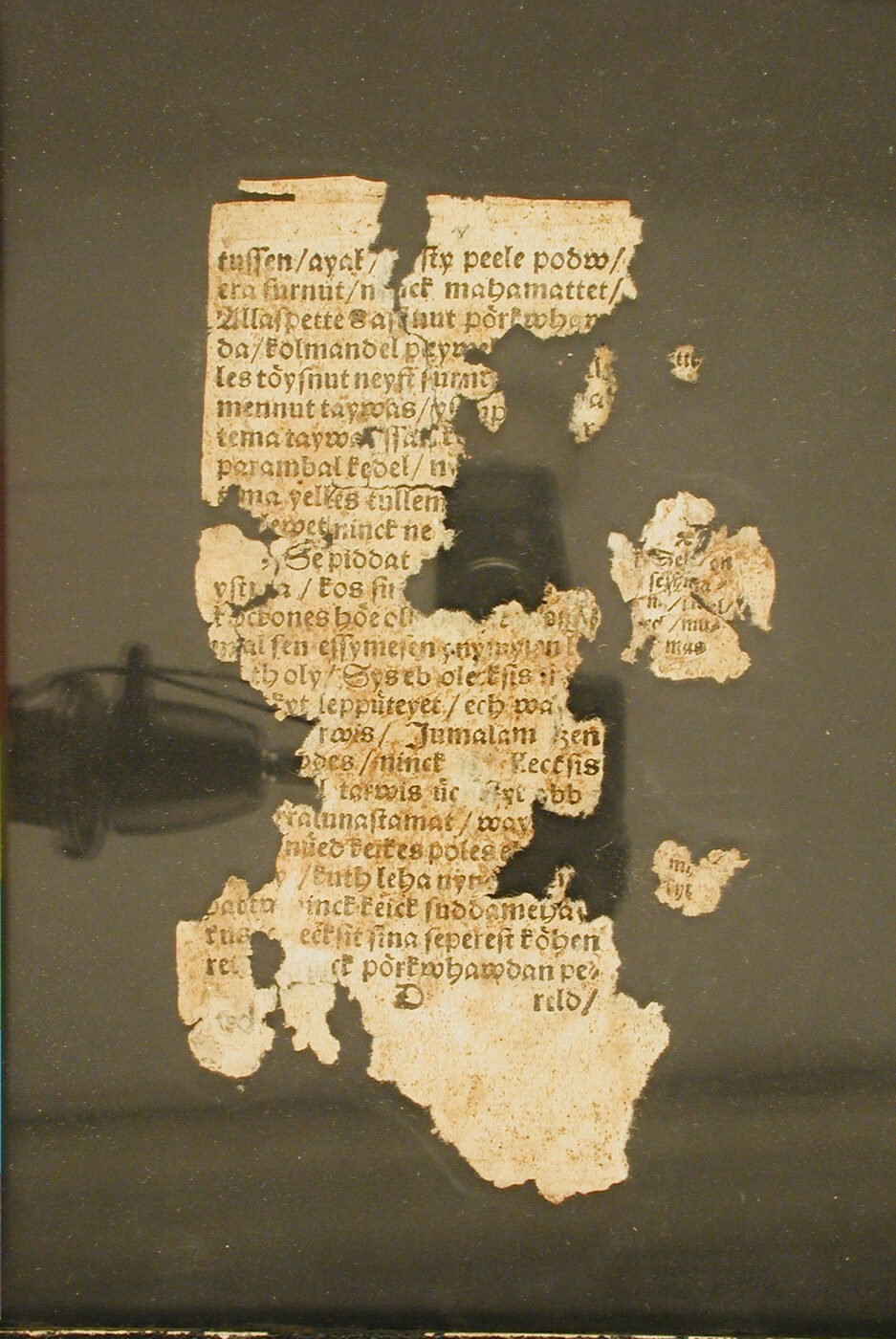

None of that was easy to put on Usenet. RFC 1036, the standard for the interchange of Usenet messages, was published in December 1987 on the lines of RFC 822, and headers under those rules are printing ASCII. MIME, defined in RFC 1341 of June 1992 and revised in the set published in November 1996, supplied the missing pieces: a way to declare which character set a body used, and the quoted-printable and base64 encodings for carrying eight-bit octets through seven-bit paths intact. Until posting software, relaying servers and reading software all handled that, a marked letter was a gamble rather than a character.
The code pages are worth naming because the failures they produced are still visible in the archive. ISO 8859-1, Latin-1, carries õ, ä, ö and ü but has no š and no ž, so a message correctly labelled Latin-1 still cannot spell two of Estonian's 27 letters. ISO 8859-4, Latin-4, first published in 1988, was designed to cover Estonian, Latvian, Lithuanian, Greenlandic and Sami; Windows-1257, registered with IANA in 1996 and shipped with pan-European versions of Windows 95, served the same three Baltic languages. ISO 8859-15, Latin-9, of 1999 added Š, š, Ž and ž to the Latin-1 repertoire precisely because those letters are used in Finnish and Estonian for transliterating Russian names and loanwords. Windows-1252 carries the same four at 0x8A, 0x9A, 0x8E and 0x9E, positions Latin-1 leaves to control codes: a message written in one and labelled as the other renders them illegible.
Unicode had answered the question before the group's traffic began. All six marked letters were present in version 1.0.0 of October 1991: õ, ä, ö and ü in the Latin-1 Supplement block at U+0080 to U+00FF, and Š and š at U+0160 and U+0161 with Ž and ž at U+017D and U+017E in Latin Extended-A, U+0100 to U+017F. Both blocks have been in the standard since that first version. The standard was not the constraint; the deployed software was.
What developed in the meantime was substitution. Estonian usage records the practice of writing sh and zh where š and ž cannot be typed, while regarding it as incorrect and noting that it can create ambiguity. The four marked vowels have no such conventional substitute, so where the marks could not be produced they were dropped, collapsing õ and ö onto plain o and ä onto plain a. A third spelling came from outside. Estonian names quoted in international publications from Soviet sources were often back-transliterations from Russian Cyrillic, which gives Pyarnu for Pärnu, Pylva for Põlva and Pyussi for Püssi. The consequence for searching the archive is concrete: the same word may be stored correctly encoded, mangled by a code-page mismatch, stripped to bare ASCII or spelled through Russian, so a search on the correct spelling alone will find only part of the record. Searching the stripped and transliterated forms as well is the practical remedy.
Where the readers actually were
The 1944 departure is usually given in round numbers; the figure that carries a source is more than 70,000 leaving for the West across the whole period from 1940 to 1944. Sweden's side can be dated exactly. On 8 June 1945 there were 6,554 Estonian Swedes and 21,815 ethnic Estonian refugees in Sweden. The Estonian Swedes were a coastal minority of nearly 10,000 before the war, of whom roughly 9,000 reached Sweden, leaving almost as a whole community.
Onward migration from the camps put the readership on four continents. The United States Displaced Persons Act of 1948 provided that 40 per cent of available visas should go to people from the Baltic countries, and 11,000 Estonians entered under it between 1948 and 1952; Australia's first displaced-persons voyage, in 1947, carried 142 Estonians among its 843 passengers. By 2021 the American Community Survey recorded about 29,000 people of full or partial Estonian ancestry, against 26,762 in 1990.
The present distribution, mostly counted after the group's years rather than during them, runs: Finland between 49,590 and 100,000, the United States 29,128 as of 2021, Sweden 25,509, Canada 24,000, the United Kingdom 10,000 to 15,000, Russia 7,778, Australia 7,543 and Germany 6,286. The Finnish figure changed most after 1991, and is a different kind of community: work migration across a narrow gulf rather than exile.
A readership spread like that has no common evening. Estonia keeps Eastern European Time, two hours ahead of UTC and three in summer; Stockholm is an hour behind Tallinn, Toronto and New York seven hours behind, California ten, while Sydney runs seven to nine hours ahead depending on which hemisphere's summer time is in force. A post made at the end of a Tallinn working day arrives in a North American morning and an Australian night, so a thread in a group spread this way advances in shifts rather than exchanges.
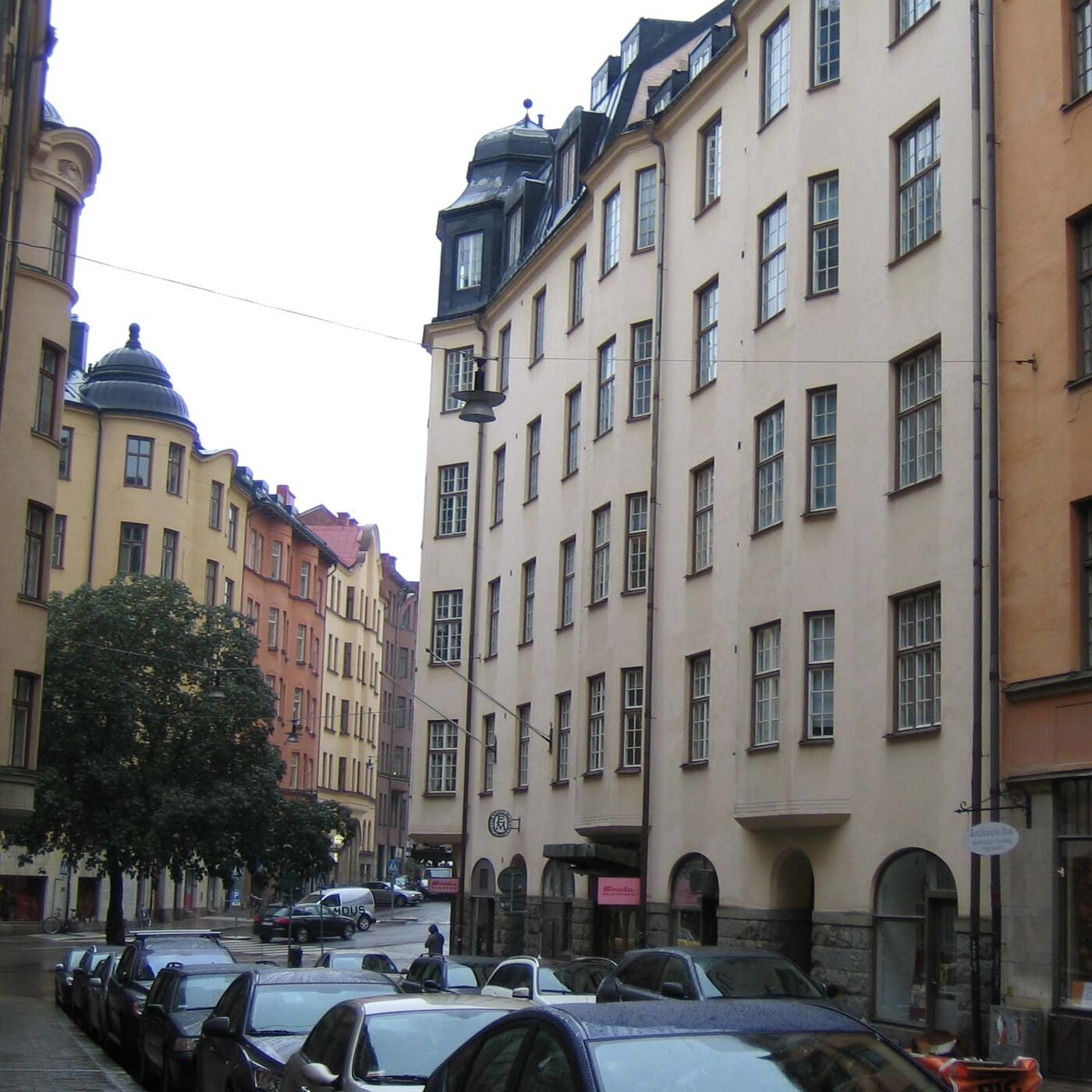
The exile communities had their own calendar long before the network gave them a shared one. The Global Estonian Cultural Days, abbreviated ESTO, have been held roughly every four years since the first gathering in Toronto in 1972, moving through Baltimore, Stockholm, Toronto and Melbourne before New York in 1992, Stockholm and Tallinn jointly in 1996, Toronto in 2000 and Riga in 2004. Those last four fell inside the group's active years, and the 1996 gathering was the first held jointly in Sweden and in Estonia. The buildings are older still: in Stockholm a company called AB Eesti Maja was formed in 1954 and financed by about a thousand Estonians buying shares at 100 Swedish kronor apiece, and its first Estonian House, bought at Regeringsgatan 24 in 1958, was expropriated by the city in 1970 and replaced the same year by the house at Wallingatan 32 and 34.

The cultural traffic
Between the constitutional arguments, a culture group runs on its calendar, and Estonia's is well documented. Within the group's active years the song celebrations record 690 choirs and 28,922 performers in 1990, 811 choirs and 25,802 in 1994, and 850 choirs and 22,759 in 2004; the first celebration, at Tartu in 1869, is recorded with 51 choirs. The dance festival is the younger partner: the first Estonian Games, Dance and Gymnastics festival was held in 1934 with 1,500 participants and the second in 1939 with 1,800, against 11,500 in 2019. Recognition arrived inside the group's own years: UNESCO proclaimed the Baltic song and dance celebrations a Masterpiece of the Oral and Intangible Heritage of Humanity in 2003, and they were incorporated into the Representative List of the Intangible Cultural Heritage of Humanity in 2008.
Underneath the festivals sits a body of collected material larger than outsiders expect from a country of this size. Jakob Hurt's folklore collection amounts to 261,589 items gathered with about 1,400 volunteer correspondents, and the Estonian Folklore Archives were founded on his materials in 1927. The national epic Kalevipoeg was sketched by Friedrich Robert Faehlmann at the Learned Estonian Society in 1839 and written by Friedrich Reinhold Kreutzwald from 1850: a first version of 13,817 verses could not be printed for censorship, a second of 19,087 verses appeared in sequels between 1857 and 1861 with a German translation alongside, and a popular edition was printed at Kuopio in Finland in 1862. The epic runs to twenty cantos, and roughly an eighth of its verses is authentic collected material, the rest Kreutzwald's imitation of it. Print in the language is older than either: the whole Bible was first printed in Estonian in 1739, and the first Estonian-language newspaper, Tarto maa rahva Näddali-Leht, ran from March 1806 until the emperor ordered its printing stopped at the end of the same year.
Music beyond the choirs supplied the other steady thread. Arvo Pärt, born in Paide on 11 September 1935, invented the tintinnabuli technique in the later 1970s, emigrated in 1980 to Vienna and then Berlin, and returned to Estonia around the turn of the century; concert statistics counted him the most performed living composer in the world in each year from 2011 to 2018, and again in 2022 and 2025.
Sport supplied a calendar of its own. Estonia first competed as a nation at the 1920 Summer Olympics; from 1952 to 1988 its athletes competed under the Soviet flag; independent participation resumed in 1992, at Albertville and at Barcelona, where Erika Salumäe won the track sprint and gave the restored republic its first gold. Erki Nool took the decathlon in 2000, Andrus Veerpalu the fifteen-kilometre classical cross-country race in 2002 and 2006, and Kristina Šmigun two cross-country events in 2006.
The rest was food and the vocabulary that goes with it, the ordinary traffic of every culture group and the part that needs no verdict. Rye bread, leib, made from leavened dough, has been baked in Estonia for about a thousand years; sült, the jellied pork, comes from the autumn slaughter; kama, a southern preparation, is milled and roasted pea, barley, rye and oat flour soaked in milk or buttermilk and eaten uncooked. The Christmas table is blood sausage, roast goose, jellied pork, sauerkraut with oven-roasted potatoes and mulled wine, and the Baltic herring, räim, is the national fish with the sprat, kilu, beside it.
Context
The group's nearest relation in this directory is soc.culture.baltics, which kept Estonia, Latvia and Lithuania under a single heading and carries the long argument about whether one heading can hold three countries; that argument belongs to its page. The two ran alongside each other: the umbrella group for regional history, the national group for Estonian law and language.
Further out, the subject matter reached soc.culture.nordic and soc.culture.russian; posts of common interest appeared in more than one.
For a reader arriving from a country resource page rather than from Usenet, the other entries worth knowing are the hierarchy pages, soc.* and soc.culture.*, which carry how the groups were organised, and the national groups of the countries the exiles settled in: soc.culture.canada, soc.culture.australian and soc.culture.british, the local groups of the same households.
Usenet's national groups gave way to the local web during the 2000s. What this one retains is the part hardest to reconstruct afterwards: a restoration, a citizenship settlement and an accession described while they were happening, by people who did not yet know how any of it would come out.
Reading soc.culture.estonia today
- Historical archive: Google Groups — soc.culture.estonia (coverage varies by group and era).
- Open in a newsreader:
news:soc.culture.estonia— the original site offered exactly this link, and it still works if your system has a newsreader registered for thenews:scheme. - Live access: point an NNTP newsreader at a modern server — see accessing Usenet today.
- The original news2mail e-mail subscription service ended in the mid-2000s and no longer operates.