soc.culture.bolivia
Bolivian culture and current events.
Quechua and Aymara heritage, altiplano travel advice, and the political turbulence from the gas wars to the rise of Evo Morales — discussed by a small but persistent community of Bolivians abroad.
One of the quieter Latin American groups, which gave it an unusually civil tone by Usenet standards.
On this page
The group and its era
soc.culture.bolivia belonged to the second wave of soc.culture creations, the country-by-country filling-in that followed the hierarchy's early regional groups. Like most of its Latin American siblings it was unmoderated — no gatekeeper, no enforcement of the charter beyond custom, simply whoever turned up. Its working life coincided with Usenet's broad plateau, the years either side of 2000, before general-audience discussion drained away to the web.
The hierarchy itself is described elsewhere on this site: see soc and soc.culture. What follows here is particular to Bolivia.
Geography shaped it more than it shaped most groups. For much of the 1990s Internet access inside Bolivia was scarce and expensive, concentrated in the largest cities and often institutional, so the group was written disproportionately from outside the country: university accounts in North America and Europe at first, home connections later. The result was the characteristic diaspora inversion — a group about Bolivia in which news from home tended to arrive second-hand, and was asked after as often as it was announced.
The years it covered were not short of material. Before the events noted above came the capitalisation programme of the mid-1990s, which part-privatised the state's largest enterprises; the return of Hugo Banzer to the presidency in 1997, this time by ballot box rather than barracks; and the Cochabamba Water War of 2000, in which the concession of a city's water supply to a private consortium was reversed by sustained street protest. None of this was abstract to the people discussing it, which is worth keeping in mind when reading the archive.
Who could post
The country-code domain came first, and by a wide margin. IANA's root database gives .bo a registration date of 26 February 1991, more than two years before Bolivia had a permanent connection to the internet at all. A delegated domain is an administrative act; it says nothing about whether anybody in the country could reach a news server.
The connection itself came through the universities. BolNet was set up in November 1989 at the Universidad Mayor de San Andrés in La Paz, an experimental academic network supported by the United Nations Development Programme; for its first years it carried e-mail, and only at night. Bolivia's first permanent, twenty-four-hour internet connection dates from 16 July 1993. Commercial provision followed in mid-decade, after the state telecommunications company was capitalised, and arrived largely through the urban telephone cooperatives — Cotel in La Paz, Cotas in Santa Cruz, Comteco in Cochabamba — rather than one national carrier.
The consequence can be counted. The World Bank's series for individuals using the internet puts Bolivia at 0.07 per cent of the population in 1995, 0.98 in 1999, 1.44 in 2000, 3.51 in 2003, 4.44 in 2004 — the last full year of the news2mail gateway — and 6.20 in 2006. Fixed lines, the medium a dial-up account depended on, stood at 3.14 per 100 inhabitants in 1995 and 5.93 in 2000. For the whole of the group's working life, the overwhelming majority of Bolivians in Bolivia had no means of reading it.
Set beside its neighbours the position is starker still. For 2000 the same series gives Chile 16.60 per cent, Uruguay 10.54, Argentina 7.04, Venezuela 3.36, Peru 3.08, Brazil 2.87, Suriname 2.51, Colombia 2.21, Ecuador 1.46, Bolivia 1.44, Paraguay 0.75 and Guyana 0.60. Only two countries on the continent stood below Bolivia. That is the arithmetic behind the diaspora inversion.
What was discussed
Football was the dependable subject. The group's early years overlapped with the high point of the modern Bolivian game: qualification for the 1994 World Cup, in a campaign remembered above all for handing Brazil its first defeat in World Cup qualifying history, at altitude in La Paz. A national team worth arguing about is a gift to any expatriate forum, and selections, results and the standing question of football at 3,600 metres required no encouragement.
The great perennial was the sea. Bolivia's loss of its coastline to Chile in the War of the Pacific (1879–84) has remained a live question in national life ever since — marked annually, pressed diplomatically — and no gathering of Bolivians has ever needed a pretext to raise it. Usenet added something print never offered: the Chilean group was only ever a cross-post away. Where exchanges occurred, participants on both sides had inherited the question rather than chosen it.
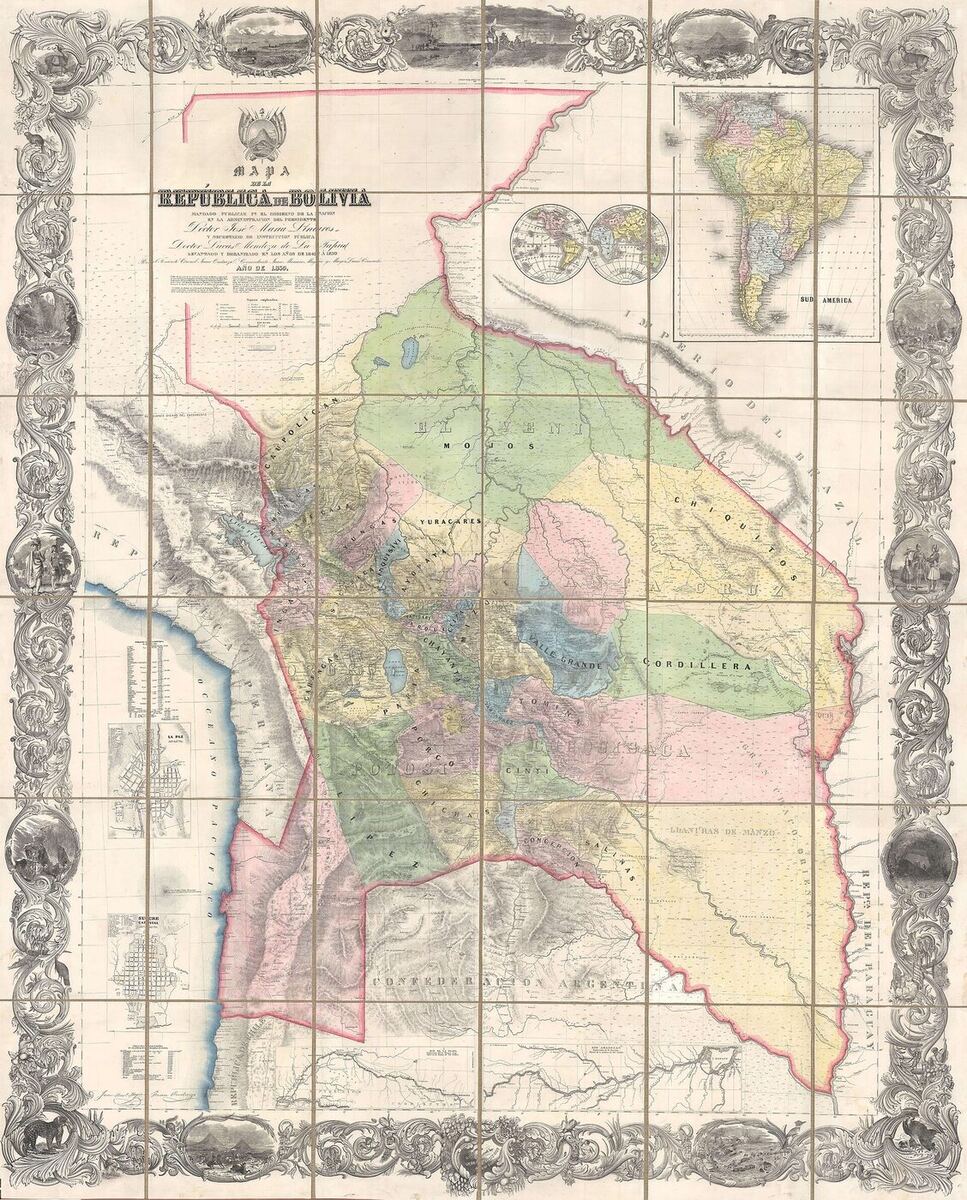

Domestic politics tracked the national argument of the day, coca eradication above all — drug control seen from one direction, the loss of a livelihood and a tradition seen from another, and no more resolved in the group's lifetime than in the country's. Around the arguments ran the ordinary traffic of any soc.culture group: schoolwork questions about the country, surname and genealogy enquiries, expatriates comparing paperwork and homesickness, and the occasional hunt for a city abroad where a decent salteña might be found. Threads moved between Spanish and English freely, sometimes within a single exchange.
The dated record
What follows is the chronology of the period the group covered, set down as a record. Where an item falls outside the group's working life, that is stated. No causal account is offered and no party is characterised.
- 9–11 April 1952 — the National Revolution. Universal suffrage was decreed on 24 June 1952, COMIBOL created on 2 October 1952, the agrarian reform decree signed at Ucureña on 2 August 1953. All of this long predates the group.
- 1977–1987 — recorded coca cultivation rose from 1.63 million kilograms of leaf over 4,100 hectares to at least 45 million kilograms over at least 48,000 hectares. Bolivia committed to a five-year reduction programme in 1983; a bilateral agreement with the United States in 1987 was followed by an allocation of 72.2 million US dollars for 1988 to 1991, covering eradication and rural development in the Chapare.
- 29 August 1985 — Supreme Decree 21060, promulgated by President Víctor Paz Estenssoro: devaluation, removal of subsidies, a public-sector wage freeze, a uniform import duty and the dismissal of about two-thirds of the state tin and oil workforce. Annual inflation, which had peaked above 20,000 per cent, fell to between 10 and 20 per cent within months. This predates the group.
- October 1985 — the International Tin Council could no longer maintain the tin price, and the supported market ended.
- 1988 — coca growing became technically illegal outside a specially mandated area of 12,000 hectares in the Yungas.
- 1995–1996 — the capitalisation programme was applied to the five largest state enterprises.
- 6 August 1997 — Hugo Banzer took office as constitutional president, and a coca eradication programme followed on guidelines set out by the United States. He resigned on 7 August 2001, having been diagnosed with lung cancer that June.
- January–April 2000 — Cochabamba. Mass protest began in early January; on 4 February marchers were met by troops and police brought from Oruro and La Paz, and two days of clashes followed; in April demonstrators again occupied the central plaza; a state of siege was declared on 8 April; agreement to remove the concessionaire Aguas del Tunari came on 10 April; the law was changed on 11 April. A secondary-school student, Víctor Hugo Daza, was killed during the protests.
- September–October 2003 — the gas conflict. On 8 September some 650 Aymara began a hunger strike; on 19 September the National Coordination for the Defence of Gas mobilised 30,000 people in Cochabamba and 50,000 in La Paz; six villagers, one a girl of eight, were killed at Warisata on 20 September; a general strike was called on 29 September; martial law was imposed in El Alto on 12 October; the project was suspended on 13 October; on 17 October Gonzalo Sánchez de Lozada resigned and Carlos Mesa took office the same day. Some sixty people died that October, most of them in El Alto.
- 18 July 2004 — a referendum on gas policy, held in the last year the news2mail gateway carried the group.
- 27 May 2007 — FIFA banned international matches above 2,500 metres; in June 2007 the limit was raised to 3,000 metres, still below La Paz at 3,600 metres, and the ban was revoked in May 2008. This postdates the group's working life.
The group's active years sit on top of the second half of that list, so Cochabamba in 2000 and the events of October 2003 were current news to the people posting, not history. The earlier entries were the shared background the group assumed, referred to rather than explained; a reader arriving twenty years later has to supply them.
Writing the languages on a seven-bit network
Usenet was specified for plain American ASCII. RFC 1036, the December 1987 standard for the interchange of Usenet messages, is written throughout in terms of printing ASCII characters and inherits the message format of the mail standard beneath it. MIME, the mechanism by which text in other character sets was eventually carried, appeared as RFC 1341 in June 1992 and was revised as RFC 2045 to 2049 in November 1996; its quoted-printable encoding exists to squeeze octets above 127 through systems that pass only seven bits. Even after MIME, whether an eight-bit character survived a long path between servers remained a matter of luck.
For Spanish the repertoire was never the difficulty. ISO/IEC 8859-1, published in 1987 and issued two years earlier as ECMA-94, encodes 191 Latin characters and contains everything written Spanish requires: á, é, í, ó, ú, ü, ñ and the inverted marks ¡ and ¿. Windows-1252 is a superset of it, and Unicode's first 256 code points were made identical to it, in the block it calls Latin-1 Supplement. The letters existed; what could not be relied on was their arrival.
What developed instead were the accent-stripping habits familiar from every Latin-script culture group. Diacritics were simply dropped, so that Potosi went unmarked and words were left to be recognised from context; ñ was written as n, as nh, or as n followed by a tilde character; and where an eight-bit message had passed through a machine that guessed the wrong code page, the result was the mangled sequences any reader of period archives knows on sight. The consequence for searching the archive is easily missed: a search for an accented form will not match the unaccented one, and neither will match a mis-decoded rendering of the same word. A thorough search has to be run several times, in several spellings.
The indigenous languages present a different picture. Aymara has had a standard Latin-script orthography since the Alfabeto Unificado was sanctioned in Bolivia by Decree 20227 of 9 May 1984 and in Peru by Ministerial Resolution 1218ED of 18 November 1985: three vowels, twenty-six consonants, a diaeresis for vowel length, an h beside a consonant for aspiration, an apostrophe for ejectives. Of all that, only ä, ï and ü fall outside plain ASCII, and all three sit inside Latin-1. Quechua is much the same: the standard Southern Quechua orthography, accepted by institutions in Peru and Bolivia, writes only three vowels, e and o being treated as predictable variants of i and u beside q, and uses no letter a seven-bit terminal could not produce.
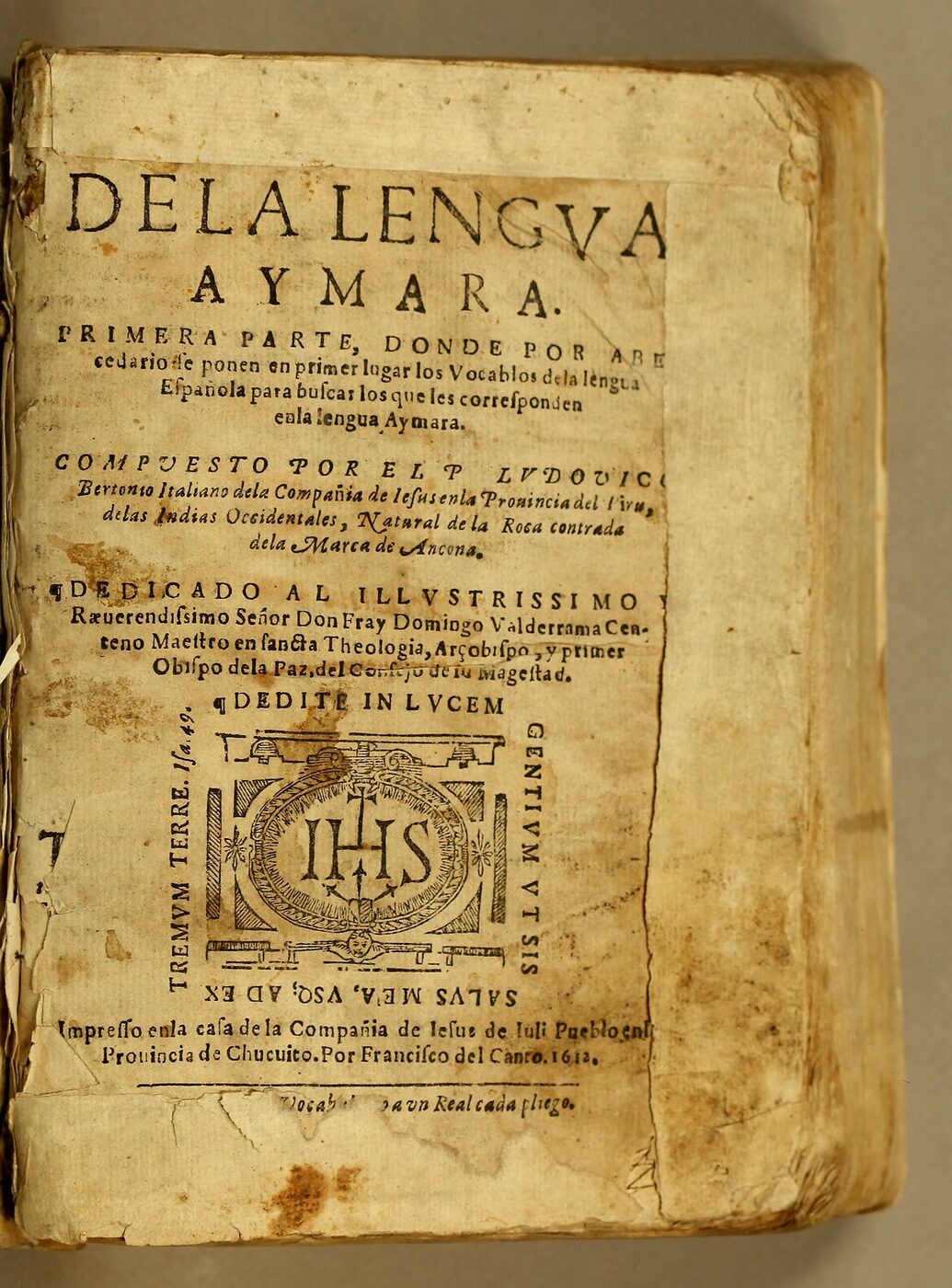

Neither language, then, was kept off Usenet by its script. What kept them nearly absent was arithmetic of a different kind. At the 2001 census 62.05 per cent of Bolivians aged fifteen or over — 4,133,138 people — identified as indigenous; estimates for South Bolivian Quechua, the most spoken indigenous language in the country, run from 2.3 to 2.8 million speakers, and Aymara has roughly two million in Bolivia. Almost none of them held an internet account in the group's working life. A newsgroup about a country with an indigenous majority was therefore written, of necessity, overwhelmingly in Spanish and English, and the languages most of the country spoke at home appear in the archive chiefly as words quoted inside a Spanish sentence.
Where the readers were
A newsgroup has no address, but its readership does. Three concentrations of Bolivians abroad matter here: Argentina, the United States and — late, and largely after the fact — Spain.
Argentina was and remains the largest destination. The Argentine census of 2001 recorded 233,464 Bolivians resident in the country, divided about equally between women and men, concentrated in Greater Buenos Aires — La Matanza, Morón, Tres de Febrero, Escobar — and the city's southern and western barrios, with older communities in Salta, Jujuy and Tucumán and roughly 50,000 people in Neuquén and Río Negro. Whether that population appeared in the newsgroup in anything like its proportion cannot be established from the archive, and is not asserted here.
The United States community is documented in unusual detail because it is unusually concentrated. The 2010 census counted 99,210 people of Bolivian origin, of whom 37,607 — about 38 per cent — lived in the Washington–Arlington–Alexandria metropolitan area, Fairfax County in Virginia being the particular centre; the next clusters are far smaller, at 9,749 in metropolitan New York and northern New Jersey, 7,068 in Los Angeles and 6,697 in Miami. That count postdates the group's working life and is offered as the best-documented picture rather than a contemporaneous one.
Spain is the clearest instance of a migration that arrived too late for Usenet. Spanish figures for foreign nationals resident in the country give 2,117 Bolivians in 2000; by 2005 the figure was 97,947, and by 2010 it was 213,169. That movement happened almost entirely after the news2mail gateway stopped carrying the group in 2004, in years when a new arrival reached the web, and then social media, without passing through anything resembling a newsgroup. A very large community formed without ever using the meeting place that would have been the obvious one a decade earlier.
The effect of that spread is structural. A forum with one home city has a daily rhythm: it fills in the evening and is quiet at four in the morning. A forum whose readers sit in the Andes, on the Río de la Plata, on the eastern seaboard of the United States and later in Spain has no such hour, and no natural closing time for an argument. Threads did not so much settle overnight as hand themselves from one time zone to the next.
Highland, lowland and the mines
Two divisions run underneath almost everything a Bolivian forum argues about. The first is vertical. Bolivia has nine departments, and the difference between the western ones — the altiplano and valleys of La Paz, Oruro, Potosí and Cochabamba — and the eastern lowlands of Santa Cruz, Beni, Pando and Tarija runs through altitude, climate, economy, language and population history alike.
The second division is the one the first was built on. Potosí was founded on 1 April 1545, after silver was found in the Cerro Rico; by 1603 the town held some 6,000 Spaniards and other Europeans, 5,000 Africans and at least 120,000 native Andeans, and the mita was conscripting 13,000 men a year. At the turn of the sixteenth and seventeenth centuries it was, by population, the second largest city in the world after London. It was inscribed on the UNESCO World Heritage list in 1987.
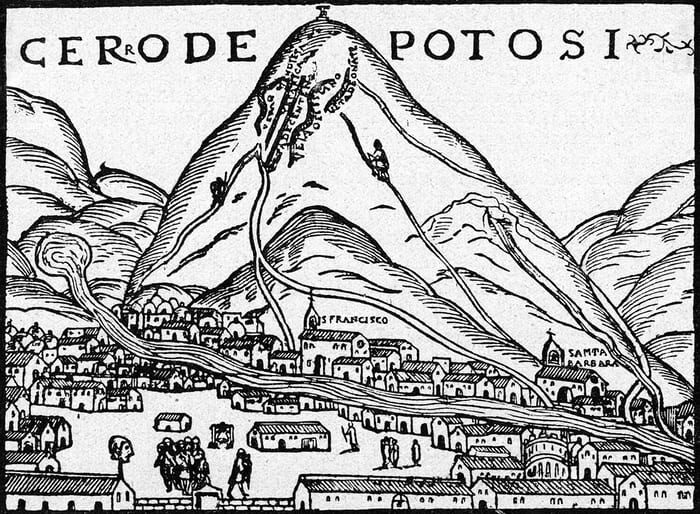

From 1891 low silver prices turned the mountain over to tin, and tin it remained until 1985. The state took the industry over after the revolution, COMIBOL being created on 2 October 1952, and the end of mining as a mass employer can be dated closely: Decree 21060 of 29 August 1985 dismissed about two-thirds of the state tin and oil workforce, the International Tin Council lost control of the price that October, and COMIBOL was effectively paralysed from 1986 until 2005.
The eastern lowlands moved the other way. In the late 1980s about 20 per cent of the country's farmers worked 65 per cent of its farmland there, producing the bulk of agricultural output and virtually all of the sector's exports; in Santa Cruz department landholdings often exceeded 5,000 hectares. Santa Cruz de la Sierra is now the largest city in Bolivia, with 1,606,671 people recorded at the 2024 census. For a reader coming to a Bolivian political thread from outside, the highland–lowland question is the axis a great many of the era's disputes lie along.
The traffic between crises
Politics is the part of a culture group that gets remembered and the smaller part of what it actually carried. The festival calendar alone supplied more argument than any election, and is far better documented.
The Carnival of Oruro was proclaimed a Masterpiece of the Oral and Intangible Heritage of Humanity by UNESCO on 18 May 2001, an event squarely inside the group's active years and exactly the sort of announcement a dispersed community reacts to at length. The carnival runs ten days from the Friday before Ash Wednesday; its centrepiece is a procession of 48 groups of dancers along a four-kilometre route over three days and nights, performing some eighteen folk dances, among them the diablada, the morenada, the llamerada, the tinku and the caporales.
The other fixture is Alasitas, which opens in La Paz on 24 January and runs for a month. Miniature versions of what one hopes for are bought and presented to Ekeko, the Aymara figure of abundance, in expectation of the full-sized article within the year. The date is itself historical: the celebration was moved to 24 January in 1781, during the siege of La Paz.
Music carried more national feeling than any other subject. The urban folk revival of the 1960s produced Los Jairas, formed in La Paz in 1965 by Edgar ‘Yayo’ Jofré, and Los Kjarkas, formed the same year at Capinota in Cochabamba; Savia Andina followed. What is at stake in arguments about that music is shown by one documented case: the Kjarkas song ‘Llorando se fue’, written in the saya rhythm, was adapted without authorisation by the French group Kaoma in 1989 as ‘Lambada’ and registered to a fictitious composer. Los Kjarkas and the Brazilian singer Márcia Ferreira sued; the French courts recognised their authorship and compensation was paid.
Literature supplied the other kind of thread — the recommendation, the argument about the canon, the hunt for an out-of-print copy in a foreign city. The novels that anchor it are easily dated: Alcides Arguedas's Raza de bronce (1919), Óscar Cerruto's Aluvión de fuego (1935), Augusto Céspedes's Sangre de mestizos (1936) and Metal del diablo (1946), Renato Prada Oropeza's Los fundadores del alba (1969) and Jaime Sáenz's Felipe Delgado (1979).
Club football gave the group its weekly material and its safest quarrel. Club Bolívar was founded in La Paz on 12 April 1925 and plays at the Estadio Hernando Siles; its derby with The Strongest, the Clásico Paceño, was first contested on 17 October 1927 and finished goalless. Bolívar remains the only Bolivian club to have reached a Copa Libertadores semi-final, in 1986 and 2014. At national level the fixed reference points are the South American Championship of 1963, won at home with five victories and a draw, and the Copa América of 1997, hosted in Bolivia and lost in the final to Brazil by three goals to one.
Food is the last of the dependable subjects and the most practical. The division is again highland and lowland: the cold, high altiplano cooks with spices, while the Amazonian lowlands cook with the fruit, vegetables, fish and yuca abundant there. Breakfast in the highlands means api, a sweetened drink of morocho corn with cinnamon, milk and sugar, taken with fried buñuelos. Such things are reproducible abroad only by substitution, which is why the recipe question is a fixture of an expatriate forum rather than filler between the serious threads.
Context
Within the hierarchy the group sat in a well-populated neighbourhood: soc.culture.latin-america for the continental conversation, plus a group for every neighbour — Peru, Chile, Argentina, Brazil, Paraguay — each sized by its diaspora's connectivity rather than by its country. Cross-posting stitched the row together, and a subject with a regional dimension rarely stayed in one group for long.
The group's later active years were the ones this site's gateway served, carrying its posts to e-mail subscribers between 2000 and 2004. What followed is the hierarchy's usual story: general readers left for web forums and eventually social media, automated junk rose as human posting fell, and the group now persists on modern servers as a name more than a venue. Where the community reassembled is not recorded here; diasporas reconvene wherever the tools are.
One afterlife deserves a note. The scraped web directories of the mid-2000s filed the group under a one-line description — ‘Bolivian people and culture’ — alphabetically between the Berber language and Bosnia-Herzegovina. Several of those directories were mirrored, abandoned and left standing, and their frozen listings still circulate two decades on, remaining among the routes by which readers reach pages like this one. It is a fitting Usenet ending: outlived by one's own catalogue entry.
The primary material is preserved under the group's own name in Google's Usenet holdings at groups.google.com; nothing on this page should be taken as a summary of any particular thread. The neighbouring national groups have their own pages here — Peru, Chile, Argentina, Brazil — and a subject that crossed a border in 1999 tends to cross these pages too.
Reading soc.culture.bolivia today
- Historical archive: Google Groups — soc.culture.bolivia (coverage varies by group and era).
- Open in a newsreader:
news:soc.culture.bolivia— the original site offered exactly this link, and it still works if your system has a newsreader registered for thenews:scheme. - Live access: point an NNTP newsreader at a modern server — see accessing Usenet today.
- The original news2mail e-mail subscription service ended in the mid-2000s and no longer operates.