soc.culture.rep-of-georgia
The Republic of Georgia (Sakartvelo).
Named to distinguish it from the US state — a disambiguation the group performed weekly — it covered Georgian independence, the Abkhazia and South Ossetia conflicts, the Rose Revolution, and Georgian food and wine.
Georgian-script encoding and transliteration threads made it a small hub for Kartvelian language technology.
On this page
- The paperwork, and what it says
- The charter, in the words that were voted on
- The vote: 130 to 20
- Creation, and the word the control message added
- Which Georgia? The name as an engineering artefact
- The ballot as a census: who could actually post
- The republic, as a dated record
- The economy of the group's years
- An alphabet of its own
- Writing Georgian on a seven-bit network
- Unicode, version by version
- Polyphony, and one song that left the planet
- Wine, and a buried clay vessel
- The church and the buildings
- The table, which the charter listed by name
- The long past as standing repertoire
- The neighbours on the shelf
- What the record does not show
- Scope, sources and limits
The paperwork, and what it says
Most groups in this directory have to be described from the outside, because nothing of their own administrative record survives. soc.culture.rep-of-georgia is an exception. Its creation dossier is preserved in the Internet Systems Consortium's mirror of the moderated group news.announce.newgroups, and it runs to about thirty-one kilobytes: a Request for Discussion, two Calls for Votes, and a result with the full ballot list. A second ISC file, the control-message archive for the group, holds the messages that carried the decision out to the network. Every date in the first four sections below comes from one of those two files; the dates in the later sections are from the outside sources named at the end.
The Request for Discussion was posted on 14 August 1995 by Irene Gabashvili, writing from an account in the freenet.carleton.ca domain and giving a contact address in the uqtr.uquebec.ca domain, and it was approved into news.announce.newgroups by that group's moderator, David C. Lawrence. It was cross-posted to news.groups, where the argument was expected to happen, and to soc.culture.soviet, which in the summer of 1995 was the nearest existing room in the namespace for a post-Soviet subject. The heading of the proposal contains a transposition nobody caught before it went out: it announces an unmoderated group called soc.culture.rep-og-georgia. Every later document in the file spells the name correctly.
The rationale claimed nothing beyond the obvious, and is quoted here in full because it is the group's own statement of why it should exist:
At present there is no newsgroup that deals with Georgian affairs. soc.culture.rep-of-georgia will serve Georgians scattered around the world by providing a forum for exchanging information. This is especially important for Georgians because the Republic of Georgia has recently had great communication, social and political problems.
That last clause is doing a great deal of quiet work. It is August 1995, and the communication problems are literal. The proposal names, as representative supporters who could be contacted directly during the discussion period, one person each in Australia, Canada, Georgia, Japan, Russia and the United States — a six-country list that is itself a small map of where the readership was expected to be found. The RFD adds that it had been circulated for draft review over twenty-four days and by electronic mail to about fifty supporters, and points at a supporting-documents page on a web server at Emory University, a URL that no longer resolves.
The document also proposed something that mattered more in 1995 than it would a decade later: a gateway. If suitable facilities could be arranged, the RFD said, the group would be gated to a mailing list for Georgians without access to Usenet. By the time of the Call for Votes the arrangement had been made and the address was published in the charter itself.
The charter, in the words that were voted on
The charter is short, and its English is the English of a scientist writing in a language that is not her first, which is worth preserving rather than tidying. The text reproduced in the Calls for Votes and again in the result reads:
The soc.culture.rep-of-georgia group is intended for exchange of information between Georgians over the world. This newsgroup will be open for discussion to all Georgians, people leaving or lived in Georgia, and all interested parties.
The earlier draft in the RFD had been narrower — open "to all Georgians and interested parties" — and the widening of the sentence between August and September, to take in people living in Georgia and people who once had, is one of three changes the proposal underwent on its way to the ballot. The rationale was widened in the same direction, gaining the phrase "and all peoples living, lived or interested in Georgia"; and the gateway, which the RFD had left conditional, acquired an actual address. Nothing else in the text moved. Whatever discussion produced the changes happened in news.groups and is not preserved in the dossier.
The charter then set out its scope as a list, given here verbatim, including the stray line break that leaves one item hanging:
- The latest news from the Republic of Georgia; questions, answers and comments on
- Problems of Georgians and their possible solutions
- Georgian history and perspectives
- Georgian language
- Georgian literature
- Politics
- Education
- Social activities
- Georgian cuisine
- other topics
It is an unusually plain charter. Most soc.culture proposals of the period listed the same dozen abstractions; this one puts cuisine on the same footing as politics and then admits, in two words, that it does not intend to police the boundary. The final paragraph before the gateway address is the one that makes this page worth writing:
The discussions will be held both in English and transliterated Georgian. Use of the Georgian alphabet coded with special fonts is also planned.
That is a charter conceding, in advance and in writing, that the network it was joining could not carry the language of the country it was named for. The rest of this article follows both halves of that sentence: what "transliterated Georgian" meant in practice, and what "special fonts" stood in for.
The vote: 130 to 20
The first Call for Votes was posted on 26 September 1995 by Michael Handler, writing as a neutral third party and a member of the Usenet Volunteer Votetakers, the volunteer body that conducted Big-Eight ballots in the mid-1990s. A second and last call followed on 14 October. Voting closed at 23:59:59 UTC on 17 October 1995, and the result was posted at 06:07 UTC on 18 October under the subject line "RESULT: soc.culture.rep-of-georgia passes 130:20".
The arithmetic is recorded exactly. There were 130 YES votes and 20 NO votes, for a total of 150 valid votes; there was one abstention and seven ballots recorded as being in error, each rejected with the same note — no vote statement in the message. Big-Eight creation required both a margin of at least 100 more YES than NO votes and a two-thirds majority of the valid total, a rule the RFD had set out in advance and the result posting restates. The margin here was 110 and the YES share was a little over 86 per cent, so the proposal cleared both tests without the second having to be argued about. The result posting also carries a line the dossier nowhere explains: that the group "passed on Mon Oct 16 11:45:09 1995", a day and a half before the poll closed.
The full tally was published with names and addresses attached, as the Call for Votes had warned in terms: e-mail addresses, names and votes of all voters would appear in the final list, UVV voting was not by secret ballot, and anyone who disliked the policy was told plainly not to vote. The list is prefaced by a copyright notice asserting the votetaker's rights over it and forbidding its use as a mass-mailing list, a precaution that says something about the era's expectations of what a published list of live electronic mail addresses would attract.
Twenty people voted against. The dossier does not record why any of them did, because the votetaker collected votes rather than opinions and the discussion in news.groups is not part of the archived file. No reason can be given here, because none is on the record.
Creation, and the word the control message added
After the five-day period the result posting allowed for objections, the group was created. The newgroup control message went out on 23 October 1995 over the signature of David C. Lawrence, the news.announce.newgroups moderator, and the same message was reissued on 30 October and again on 23 November. Each carried the same body: a statement that the group had passed its vote 130 to 20, the line to add to a site's newsgroups file, and the charter, described as having been "culled from the vote result announcement".
One detail in those messages is the most interesting thing in the whole dossier. The Newsgroups line that was put to the voters, and printed in both Calls for Votes and in the result, reads:
soc.culture.rep-of-georgia The Republic of Georgia and Georgians.
The line that the control message actually told administrators to install, and which propagated to every server that honoured it, reads:
soc.culture.rep-of-georgia The Caucasian Republic of Georgia and Georgians.
One word was added between the ballot and the network: Caucasian. Nobody voted on it and no accompanying note explains it. It is the same word ISC's current newsgroups file carries today, three decades on. Whoever added it was solving a problem the group's name had only half solved, and the next section is about that problem.
Two later control messages are worth recording for completeness. On 29 March 1996 a one-line message from a host at the Geophysical Laboratory of the Carnegie Institution of Washington asked simply to "Create soc.culture.rep-of-georgia locally" — an administrator catching up, not an authority acting. And on 4 November 2001 an rmgroup control message appears in the archive, asking recipients to "please remove the bogus newsgroup soc.culture.rep-of-georgia". It did not come from the news.announce.newgroups moderator. ISC's own control.ctl, the file that tells news servers which control messages to honour, drops every newgroup and rmgroup for the Big Eight except those from the hierarchy's own issuing address, and requires a cryptographic signature even then; a message from any other sender is discarded by a conforming server. The archive shows no effect from this one: the group is still present in ISC's current newsgroups and active files, flagged for posting.
Which Georgia? The name as an engineering artefact
Almost every other room on this shelf is soc.culture.<place>. The neighbours are soc.culture.armenian, soc.culture.azerbaijan, soc.culture.belarus, soc.culture.baltics. This one is soc.culture.rep-of-georgia, and the ambiguity it works around is not obscure: in English, one word does duty for a South Caucasus republic and for a state of the American South, and the largest single body of Usenet readers in 1995 was in the United States. The country's own name for itself, Sakartvelo, collides with nothing; the English exonym collides with a great deal.
The collision was not hypothetical, and it can be demonstrated from the namespace itself. ISC's current listing still records, alongside our group, the regional hierarchy ga.* for the American state, with ga.general, ga.forsale, ga.motss, ga.test and ga.atl-braves; git.*, one hundred and ninety-three groups of it, for the Georgia Institute of Technology; gstv.* for Georgia State Television; ahn.* for Athens, Georgia; and clari.local.georgia and clari.sports.local.south.georgia from the commercial ClariNet feed. In the alt hierarchy both alt.fan.states.georgia and alt.fan.countries.georgia exist — not as a joke about the confusion, but because alt.fan.states.* and alt.fan.countries.* are systematic sets, fifty-three groups and one hundred and eighty-eight groups respectively, one per place; Georgia is simply the name that qualifies for both. The word was heavily overloaded and the network had no way to say which one it meant except by saying so.
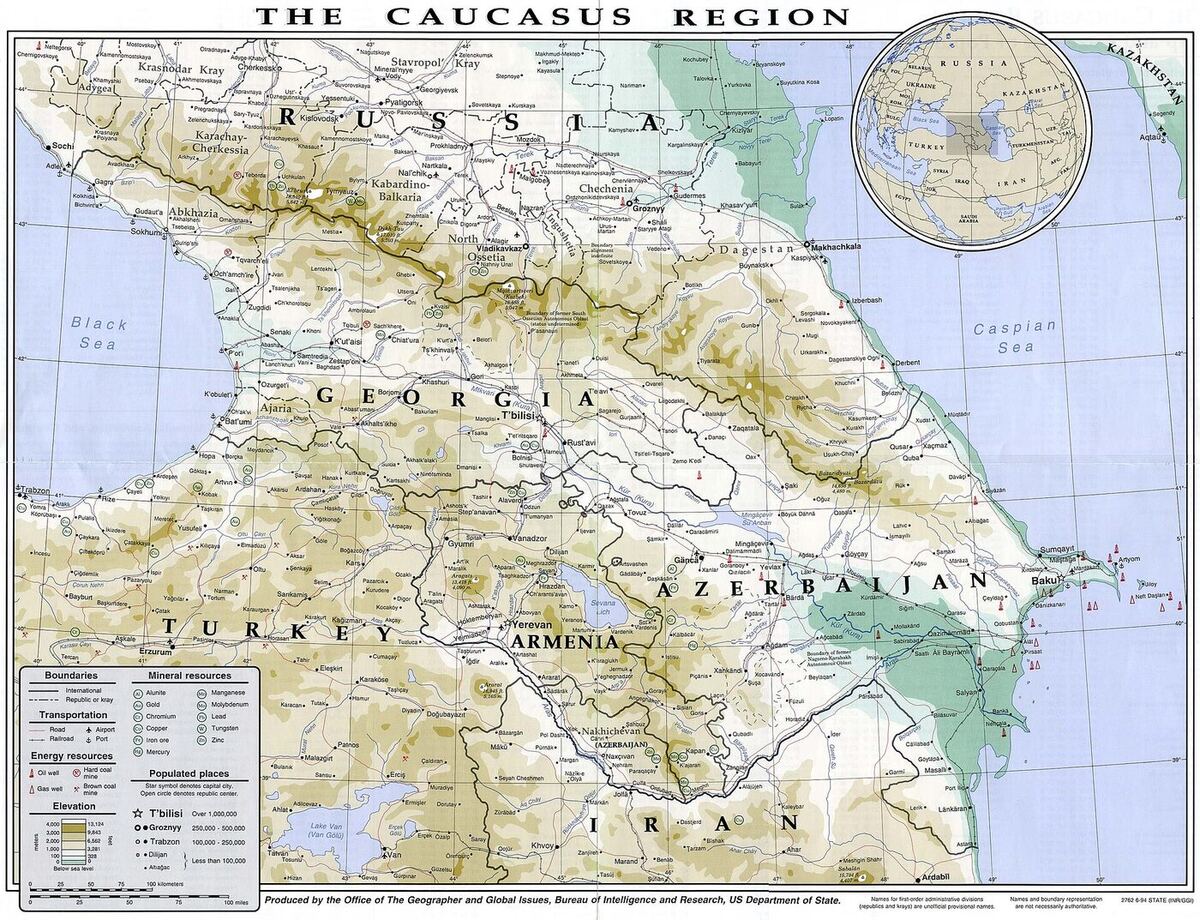

There is also an engineering constraint behind the exact shape of the compromise. The earliest news software stored groups in a flat structure that required the first fourteen characters of a group's name to be unique; the limit was lifted by B News 2.11 in 1986, but the habit of short name components outlived it, which is why Bosnia and Herzegovina trades under soc.culture.bosna-herzgvna. This directory's soc.culture hub makes that general case and it is not repeated here. What is specific to this group is a count: rep-of-georgia is exactly fourteen characters, and so is bosna-herzgvna. Whether that was designed or coincidence cannot be established from the record.
What the record does not contain is any statement by the proponents that ambiguity was the reasoning. The RFD, both Calls for Votes and the result never mention the American state, never mention confusion, and never explain the prefix. The name simply arrives fully formed in the first line of the first document and is never discussed again in anything that was preserved. Whatever was said about it during the twenty-four days of draft review, or the discussion period in news.groups, is not in the dossier. The collision is a fact about the namespace and can be shown from the namespace; the intention behind the name is an inference, and it is honest to label it as one.
What can be shown is that somebody, at the moment of creation, still did not think the name settled the matter. The control message added "Caucasian" to the description line. The disambiguation the group is known for was performed twice: once in the name, by the proponents, and once in the newsgroups file, by whoever typed the control message.
The ballot as a census: who could actually post
Because the Usenet Volunteer Votetakers published every address, the 1995 result is something no other source for this group can offer: a dated, verifiable snapshot of where 150 people interested enough in Georgia to send a vote were sitting in October 1995. It should not be read as a subscriber list — voters in Big-Eight ballots were recruited by campaigning, and there is no evidence about how many of them read the group afterwards — but as evidence of reachability it is hard to beat. The counts below are this page's own tally of the published list.
Of the 130 YES ballots, 45 came from addresses in .edu and a further 11 from .ca; most of those are university hosts, though four of the Canadian addresses are FreeNet community accounts. Eighteen came from .com, of which seven were America Online addresses and three were CompuServe numeric accounts — the consumer on-ramps of the moment. Eight came from .org, seven from .jp, six from .uk, five from .de, four each from .se, .net and .su, three from .au, and one each from Belgium, the Czech Republic, Denmark, Italy, Korea, the Netherlands and a United States government host.
Eight of the 130 came from inside Georgia, in the .ge domain, spread across seven hosts: sanet.ge, which supplied two of them, and cit.ge, giatm.ge, save.ge, mimosi.ge, isargeo.ge and aod.ge. A ninth .ge address, at kheta.ge, appears among the ballots recorded in error. Four more voters wrote from .su, the Soviet Union's country code, which was not withdrawn when the Soviet Union dissolved and was still carrying traffic in 1995; three of those were at a Russian physics institute and the fourth was at kheta.georgia.su, a host name that shares its first component with the .ge address in the error list.
The country code itself had been in place for a while. IANA's root database records the delegation of .ge on 2 December 1992, twenty months after the declaration of independence and in the middle of the worst of what followed. So the answer to "could Georgians post?" is neither yes nor no. A handful could, from a small number of academic and early commercial hosts, and did. The great majority of the group's potential readership could not, which is exactly why the charter promised a mailing-list gateway "for Georgians and all interesting parties who do not have access to Usenet" and gave an address on a host at a Texas medical school — the same machine the proponent was writing from by the time of the Call for Votes.
This is the structural fact about the group and it can be stated plainly: soc.culture.rep-of-georgia was a room named for a country and kept overwhelmingly by people outside it, during the years when the country itself was least able to join in. Like many soc.culture groups it was a diaspora institution that happened to concern a homeland. That was true across the branch, and the hub page makes the general case; here the ratio was starker than most, and the numbers to demonstrate it happen to survive.
The republic, as a dated record
What follows is chronology, not interpretation. The status of Abkhazia and of South Ossetia is disputed, the accounts of what happened in each are contested by the parties to them, and nothing in this section is offered as an adjudication of any of it. Dates and figures are given with their sources named where the sources disagree.
A referendum on the restoration of independence was held on 31 March 1991, and the Act of Restoration of State Independence was adopted on 9 April 1991. Zviad Gamsakhurdia, a writer, literary scholar and Soviet-era dissident, was elected president in May 1991. On 22 December 1991 fighting broke out in central Tbilisi between government forces and armed opposition groups; Gamsakhurdia left the capital on 6 January 1992. Eduard Shevardnadze — a Georgian who had been First Secretary of the republic's Communist Party from 1972 to 1985 and had served as the Soviet Union's last foreign minister from 1985 to 1991 — returned to Georgia, was appointed chairman of the State Council on 10 March 1992, became chairman of the new parliament on 4 November 1992, and was elected president on 5 November 1995, when the office was restored. Armed conflict between his supporters and Gamsakhurdia's continued in western Georgia; Georgia joined the Commonwealth of Independent States in October 1993, and Gamsakhurdia died on 31 December 1993 of a gunshot wound whose circumstances remain disputed.
In South Ossetia, fighting that had begun in January 1991 was halted by the Dagomys agreement signed on 24 June 1992, which established a joint peacekeeping force and a Joint Control Commission and left the territory divided between rival administrations. That framework, with periodic breakdowns, lasted until 2008.
In Abkhazia, hostilities began on 14 August 1992 and continued to the end of September 1993, Abkhaz forces taking Sukhumi on 27 September. The United Nations Observer Mission in Georgia was established by Security Council Resolution 858 on 24 August 1993 to verify compliance with a ceasefire agreed at Sochi on 27 July; a further ceasefire was signed on 1 December 1993, a declaration on measures for a political settlement followed in Moscow on 4 April 1994, and on 14 May 1994 the parties agreed in Moscow to the deployment of a Commonwealth of Independent States peacekeeping force rather than a United Nations one. Casualty and displacement figures are contested. The most frequently cited numbers — approximately 5,000 ethnic Georgians and 4,000 Abkhaz killed or missing, and about 250,000 people displaced — rest on a 1995 Human Rights Watch report and on Council of Europe Recommendation 1305 of 1996; other estimates, including one from the International Committee of the Red Cross, are considerably higher. A United Nations fact-finding mission reported in October 1993 that numerous and serious human rights violations had been committed by both Abkhaz and Georgian forces. This article takes no position on responsibility; readers should note that the standard encyclopaedic account is itself the subject of continuing dispute between the parties.
The group was created between these events and the next ones. Two constitutional dates fall inside its ballot: the constitution restoring the presidency was approved by parliament on 24 August 1995, ten days after the RFD was posted, and entered into force on 17 October 1995, the day the voting period closed. Between those two dates, on 29 August 1995, a bomb attack in Tbilisi was survived by Shevardnadze; he survived a second attempt on 9 February 1998. He was re-elected on 9 April 2000 with 82 per cent of the vote in an election the OSCE observation mission concluded had generally respected fundamental freedoms during the campaign while noting that "further progress is necessary for Georgia to fully meet its commitments as a participating State of the OSCE".
The change of government the group's later years led up to came in November 2003. Parliamentary elections held on 2 November were found by the international observation mission the following day to have fallen short of a number of OSCE commitments and other standards; twenty days of protest followed, from 3 to 23 November. On 22 November demonstrators led by Mikheil Saakashvili entered the parliamentary session carrying roses, which gave the Rose Revolution its name, and Shevardnadze announced his resignation on 23 November. A presidential election was held on 4 January 2004, which Saakashvili won with 96.9 per cent of the vote against five other candidates, and parliamentary elections followed on 28 March 2004.
Beyond the group's active life, and recorded here only because it is where the story of the disputed territories next turns: fighting involving Georgian, South Ossetian and Russian forces took place in August 2008, ended by a six-point ceasefire plan agreed on 12 August and signed by the parties over the following days. On 26 August 2008 Russia recognised Abkhazia and South Ossetia as independent states, and UNOMIG's mandate expired in June 2009. The events of that August are outside the window this page describes, and by then the argument they generated was running on web forums and social platforms rather than on Usenet.
The economy of the group's years
The collapse behind the charter's phrase about "great communication, social and political problems" can be given numbers. The World Bank's country assistance evaluation of its work in Georgia between 1993 and 2007 records that by 1994 gross domestic product had shrunk to a quarter of its 1989 level. In November 1994 the wire services were reporting shortages of bread, water, electricity and heat.
The currency history alone tells the story. Georgia left the Russian rouble on 5 April 1993 for a provisional coupon, the kuponi, which had no subdivisions and no coins, suffered hyperinflation, and was eventually issued in denominations up to a million. On 2 October 1995 — six days after the first Call for Votes went out, and fifteen days before the poll closed — the coupon was withdrawn and replaced by the lari at a rate of one million to one. The lari is still Georgia's currency.
Electricity was the visible symptom. Blackouts were common throughout the country and the transmission network remained in critical condition until 2004; a series of legislative reforms in 1998 and 1999 unbundled the sector and created an independent regulator, and it was after those reforms that distribution became increasingly reliable and began to approach a consistent twenty-four hours a day. For a newsgroup this is not incidental colour. A dial-up connection needs a powered telephone exchange, a powered modem at both ends and a powered machine to run the newsreader, and in the Tbilisi of the group's first years none of those could be assumed on any given evening.
The demographic consequence is the last figure worth recording, because it defines the readership. The 1989 Soviet census counted 5,400,841 people in Georgia; the 2002 census counted 4,371,535. The 2002 census revealed a net migration loss of more than one million people since the early 1990s, about a fifth of the population, and later analysis by the United Nations Population Fund and the national statistics office suggests the 2002 count was itself inflated by eight or nine per cent. A World Bank report in January 2007 named Georgia among the largest emigration countries in the world relative to its population size. The people who left in those years are, in large part, the people who could read the group: students and academics abroad, recent émigrés, and older diaspora communities several generations removed from the place under discussion.
An alphabet of its own
Georgian is the largest of the Kartvelian languages, a family that also contains Mingrelian, Laz and Svan and that is not related to any other language family in the world, which makes it one of the small number of primary language families. It is not Indo-European, not Turkic and not related to the North Caucasian families spoken across the mountains. This is a fact posters in national newsgroups tend to prize, and in this case it is simply true.
It is written in its own scripts, whose exact origin has never been established and whose letterforms resemble no other alphabet, although their alphabetical order largely corresponds to the Greek, with the letters for uniquely Georgian sounds grouped at the end. There are three of them, sharing letter names and order and all written horizontally from left to right. Asomtavruli is the oldest, its earliest surviving inscriptions dating from the fifth century; Nuskhuri first appears in the ninth century as a graphic variant of it, and the two are used together in the ecclesiastical script known as Khutsuri; Mkhedruli, first attested in the tenth century and long the script of royal charters, is the standard script of modern Georgian. Most scholars link the creation of the script to the Christianisation of Kartli, and place its origin between the conversion of the kingdom under Mirian III, conventionally dated to 326 or 337, and the Bir el Qutt inscriptions of about 430. A Georgian tradition attributing the alphabet to King Pharnavaz I in the third century BC is not accepted by scholarly consensus.
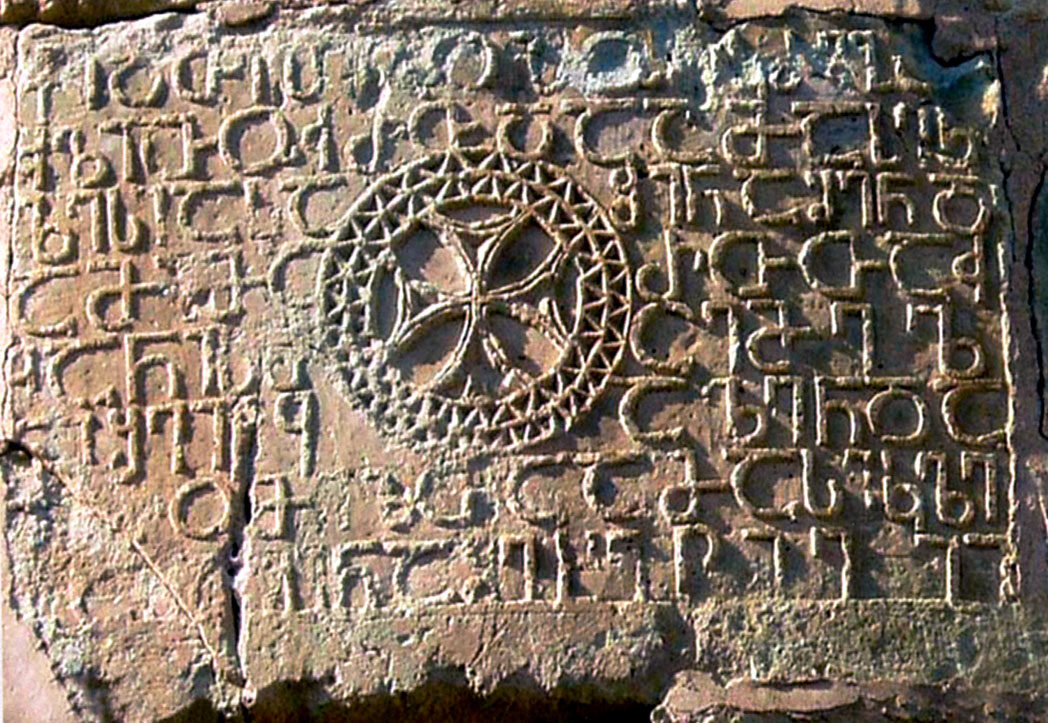

The alphabet originally consisted of 38 letters. Five of them were discarded as redundant in 1879 by the Society for the Spreading of Literacy among Georgians, founded by Prince Ilia Chavchavadze, leaving the 33 letters of the modern alphabet; all but one of the five are still used in the Svan alphabet, and one is used in Mingrelian and Laz as well, which is part of why the encoding problem described below is a little larger than 33 characters. Georgian is functionally unicameral: it has no ordinary distinction between capital and small letters, and the all-capitals form Mtavruli is used today for headings and emphasis rather than for proper nouns, though in the late nineteenth and early twentieth centuries it was occasionally used as Latin and Cyrillic capitals are.
In 2016 the living culture of the three writing systems was inscribed on UNESCO's Representative List of the Intangible Cultural Heritage of Humanity, having been granted national intangible-heritage status in Georgia the year before. That is two decades after this group was created, but it names precisely the thing the group's charter had promised to work around.
Writing Georgian on a seven-bit network
Usenet's message format was standardised in RFC 1036, published in December 1987, which describes headers and bodies in terms of printing ASCII characters throughout. The transports beneath it made the same assumption. Mail and news software of the period could be relied on to move seven-bit US-ASCII intact and could not be relied on to move anything else: eighth bits were stripped by some gateways, mangled by others, and survived the whole path only when every hop happened to be clean.
For most European languages there was a standard escape from this. The ISO/IEC 8859 series defined a family of eight-bit encodings — fifteen parts in the end, the abandoned part twelve excepted — covering Latin alphabets, Cyrillic, Greek, Hebrew, Arabic and Thai. Georgian is in none of them. Nor is there a Georgian entry anywhere in IANA's character-sets registry, which lists hundreds of encodings including obscure and long-superseded ones: there is no registered charset name that a mail or news header could have declared in order to say "this article is in Georgian". That absence is not a small administrative gap. It meant that even a perfectly eight-bit-clean path had no agreed way to say what the bytes were.
What existed instead were private arrangements. Michael Everson devised an extended-ASCII layout called Mac OS Georgian for use in his own fonts, putting Asomtavruli and Mkhedruli letters in the 128 positions from 0x80 to 0xFF; it was never an official Apple character set. More common on personal computers were so-called hacked fonts: ordinary eight-bit text in which the Latin letters had simply been redrawn as Georgian ones. Text in such a font is Georgian only on the screen of a machine that has the same font installed under the same name; to any other reader it is gibberish, and to any search index it is Latin. This is the kind of thing the charter meant by "the Georgian alphabet coded with special fonts". The promise was real and the mechanism was fragile.
MIME, which gave Internet messages a standard way to declare a character set and a content transfer encoding, was defined in RFC 1341 in June 1992, revised in RFC 1521 in September 1993 and reached its present form in RFC 2045 in November 1996 — so the standard existed before this group did. What did not exist was reliable support for it in newsreaders and transports, which took years more to arrive. A group founded in 1995 therefore lived most of its life in the gap between a network that could not carry its script and a standard that could not yet be relied on to describe it.
The practical outcome was the one the charter had predicted: discussion in English and in transliterated Georgian, with the script itself an occasional special occasion. Transliteration solves the transmission problem and creates a different one, since Georgian distinguishes aspirated from ejective consonants in ways Latin letters do not natively make, and the competing romanisation schemes in circulation — the Georgian national system, ISO 9984 and BGN/PCGN among them — handle the distinction with apostrophes, digraphs, doubled letters or not at all. The consequence for anyone reading an archive today is that the same word, the same place and the same surname appear under several spellings, and no full-text search finds all of them. The general shape of that problem, on a much larger corpus, is worked through on the soc.culture.russian page; the Georgian case is the same difficulty with fewer readers and no fallback encoding at all.
Unicode, version by version
The solution existed on paper before the group did. Georgian was in the very first release of Unicode, version 1.0, published in October 1991: the block simply called Georgian, occupying U+10A0 to U+10FF, with 78 characters assigned — Asomtavruli at U+10A0 to U+10C5, Mkhedruli at U+10D0 to U+10F6, and a paragraph separator at U+10FB.
The block was extended over the following two decades: two characters in version 3.2, three in version 4.1, five in version 6.1, bringing it to the 88 assigned positions it holds now. A second block, Georgian Supplement, was added at U+2D00 to U+2D2F in version 4.1, released on 31 March 2005, carrying 38 Nuskhuri letters, with two more added in version 6.1. A third, Georgian Extended, was added at U+1C90 to U+1CBF in version 11.0 on 5 June 2018, carrying 46 Mtavruli capitals; before that, font makers had improvised, some shipping paired upper- and lower-case fonts, some putting Mtavruli forms in the Asomtavruli range or the Private Use Area, and some mapping them onto the ASCII capitals. The documented proposals behind the later additions were written by, among others, Michael Everson and David Tarkhan-Mouravi, the latter writing for the Georgian State Department of Information Technology.
Having code points and being able to use them are different things, and the distance between the two is most of this group's lifetime. Georgian was in the standard from 1991; UTF-8 was designed in September 1992 and first presented publicly at the USENIX conference in San Diego in January 1993. But a Georgian speaker posting to Usenet in 1997 needed a newsreader that would emit a correct charset declaration, a transport that would not strip the high bits, and a reader at the far end with a font covering U+10D0 upwards and an operating system willing to render it. Any one of those failing produced question marks. By the middle of the 2000s the chain generally held, and by then the traffic had largely gone elsewhere. Georgia's internationalised country-code domain in Mkhedruli, .გე, was entered in the IANA root database with a registration date of 11 February 2011 and delegated to its operator in September 2014 — the technical argument settled comprehensively, and long after this group needed it settled.
Polyphony, and one song that left the planet
The charter's list did not mention music, and the group's own traffic on the subject is not recoverable, but the tradition is part of what a Georgian cultural room is a room about, and one of its dates falls squarely inside the group's life. Georgian folk music is predominantly vocal and is widely known for its polyphony, described as arguably the earliest polyphonic tradition of the Christian world. UNESCO's inscription distinguishes three regional kinds: complex polyphony, common in Svaneti; polyphonic dialogue over a bass background, prevalent in Kakheti in the east; and contrasted polyphony with three partially improvised sung parts, characteristic of western Georgia. Alongside the village tradition the country carries urban singing styles that mix native polyphony with Middle Eastern monophony and later European harmony.
UNESCO proclaimed Georgian polyphonic singing a Masterpiece of the Oral and Intangible Heritage of Humanity in 2001, and it was incorporated into the Representative List of the Intangible Cultural Heritage of Humanity in 2008. The 2001 proclamation falls inside the years this directory's own archive covers, which makes it one of the few externally dated events certain to have been news to the group while the group was reading.
One artefact of the tradition had already travelled further than any newsgroup. Chakrulo, a Kakhetian table song of the complex-polyphony kind, was among the recordings placed on the Voyager Golden Record in 1977, in a performance by the Georgian State Merited Ensemble of Folk Song and Dance. It is the sort of fact a diaspora group would have enjoyed, and it is verifiable independently of anything the group may or may not have said about it.
Wine, and a buried clay vessel
Georgia is among the oldest wine-producing countries in the world, and the claim is archaeological rather than promotional: grape cultivation and neolithic wine production in the valleys of the South Caucasus are dated to at least eight thousand years ago, and excavations in Kvemo Kartli have recovered grape pips and buried clay vessels from the sixth millennium BC. Something approaching four hundred indigenous grape varieties are recorded, of which thirty-eight are officially grown for commercial viticulture.
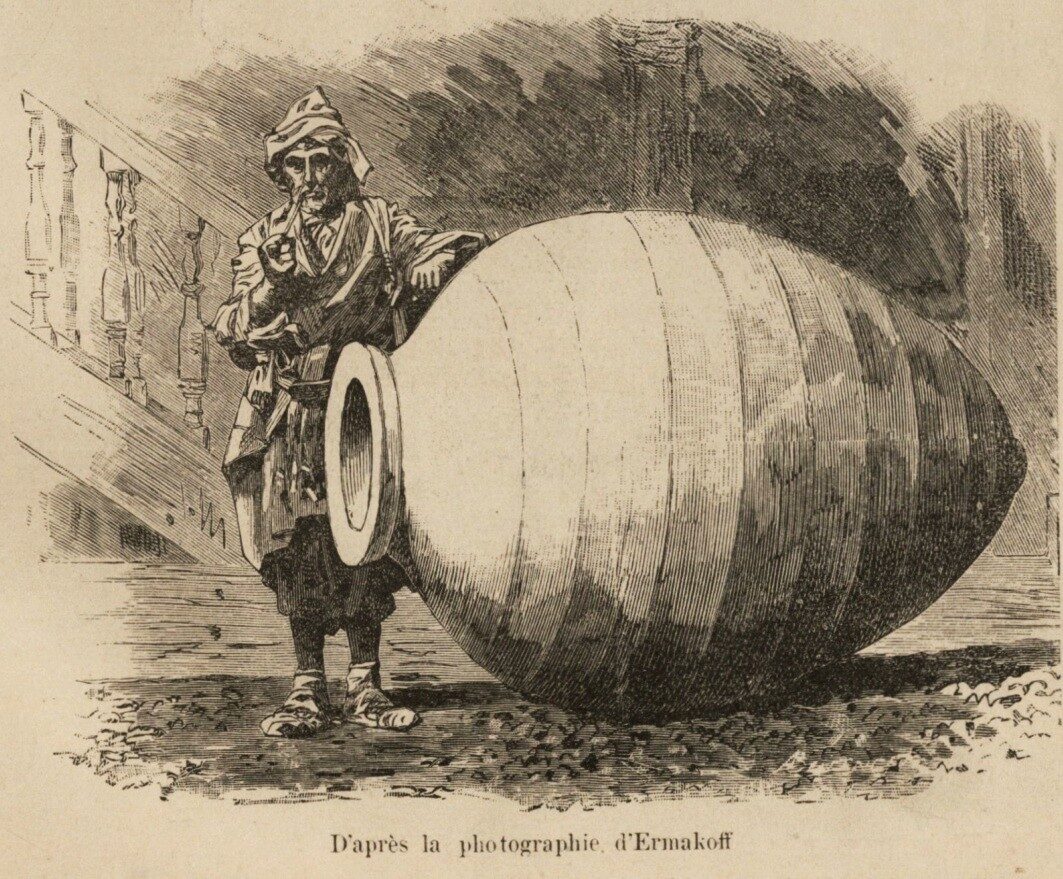
The method is the reason it matters technically. A kvevri — also spelled qvevri, and called ch'uri in western Georgia — is a large egg-shaped earthenware vessel without handles, coated inside with beeswax and either buried below ground or set into the floor of a cellar, in which the wine ferments, is stored and ages at the temperature of the earth around it. Volumes run from 20 to 10,000 litres, with about 800 litres typical. The juice, skins, stalks and pips go in together and the vessel is sealed, the wine being left at least five or six months before it is decanted. UNESCO inscribed the ancient Georgian traditional qvevri wine-making method on the Representative List of the Intangible Cultural Heritage of Humanity in 2013, two years after it had been entered on Georgia's own intangible-heritage registry.
.jpg)
Wine's place in the group's world was also economic. Russia was overwhelmingly the export market: when Russia banned Moldovan and Georgian wine imports in late March 2006, the trade with Russia accounted for between 80 and 90 per cent of both countries' total wine exports. That embargo is after the window this page describes; within it, wine belonged to the charter's line about cuisine.
The church and the buildings
The Apostolic Autocephalous Orthodox Church of Georgia is one of the oldest churches in the world and the country's dominant religious institution. It asserts apostolic foundation, tracing its roots to the Christianisation of Iberia and Colchis by Andrew the Apostle in the first century and by Saint Nino in the fourth; the conversion of the kingdom of Kartli, conventionally dated to 326 or 337, is the event that anchors the historical record and, as noted above, the likely occasion for the creation of the script. The church officially uses Asomtavruli and Nuskhuri alongside Mkhedruli, which is why two of the three scripts are living rather than antiquarian.
Three Georgian sites were inscribed on the UNESCO World Heritage List in the group's own decade. The Historical Monuments of Mtskheta, the old royal capital, were inscribed in 1994; they include Svetitskhoveli Cathedral, built between 1010 and 1029 on a site of much older foundation, and the site both of the coronation of Georgian kings and of their burial. Gelati Monastery, near Kutaisi, was also inscribed in 1994; it was founded in 1106 by King David IV as a monastic and educational centre, and was inscribed together with Bagrati Cathedral in Kutaisi, which was removed from the World Heritage List in 2017 after reconstruction work UNESCO judged detrimental to its integrity and authenticity. Upper Svaneti, the high mountain region whose villages are built around defensive tower-houses raised mainly between the ninth and twelfth centuries, was inscribed in 1996.
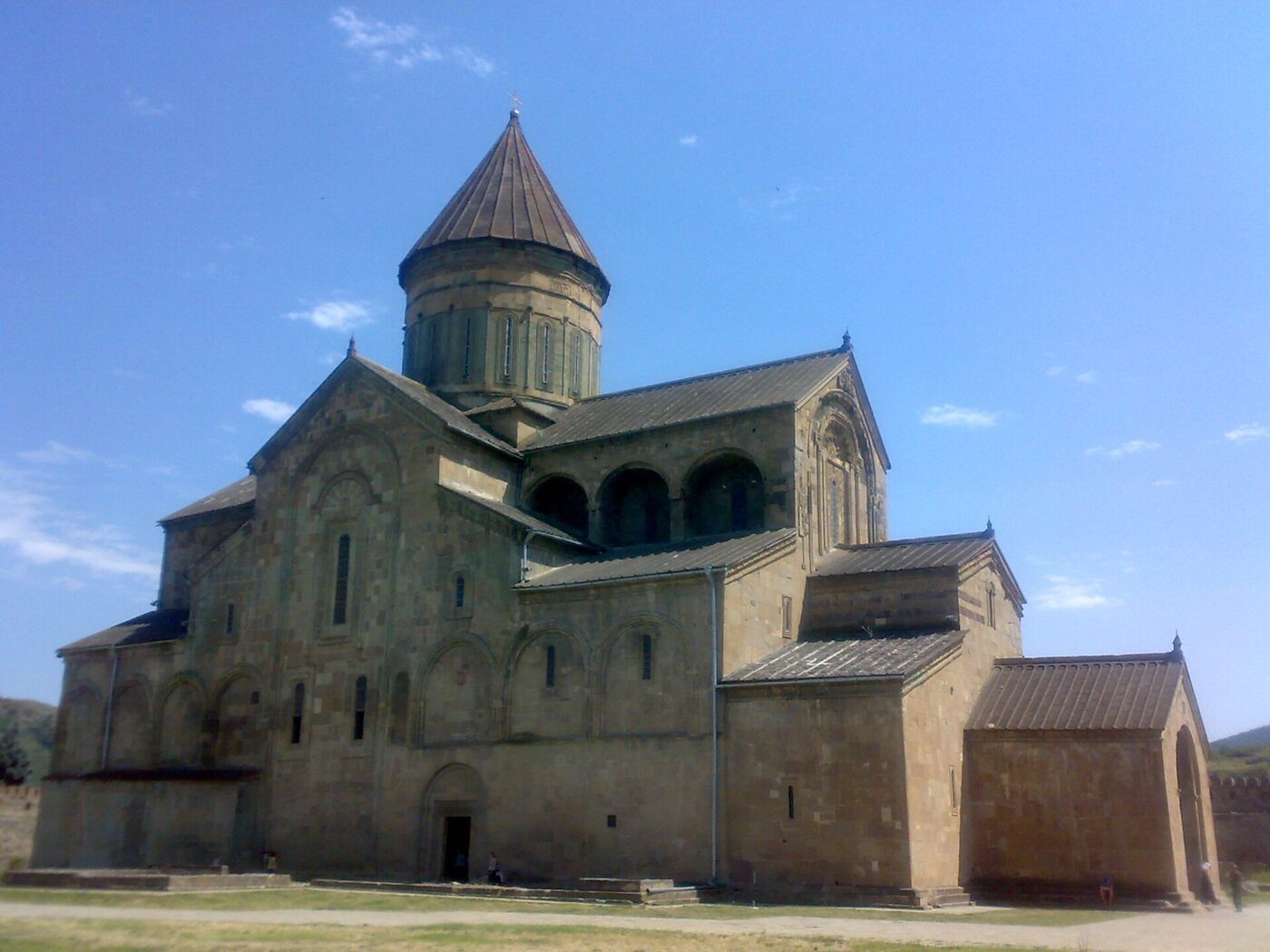

These are the buildings a group with "Georgian history and perspectives" in its charter would have had occasion to name, and the dates are worth recording for a reason beyond tourism: the inscriptions of 1994 and 1996 arrived during the years the group was being proposed and founded.
The table, which the charter listed by name
Of all the items in the charter's scope list, "Georgian cuisine" is the one most likely to survive in the traces of any national newsgroup, because food questions are the ones outsiders ask and insiders enjoy answering. The Georgian version has an unusual amount of structure to explain.
The supra is the traditional Georgian feast, and there are two kinds: the festive supra, called a keipi, and the sombre one always held after a burial, called a kelekhi. It is presided over by a tamada, a toastmaster whose role corresponds to the symposiarch at the Greek symposion, and whose toasts proceed through a customary sequence rather than at random. Explaining the sequence to a newcomer, and disagreeing about the correct order, is the sort of thing a cultural newsgroup exists for.
The dishes travel well as text. Khachapuri is leavened bread moulded into various shapes and filled with cheese, sometimes with egg, in a set of regional forms that are themselves an argument. Khinkali are twisted knobs of dough stuffed with meat, fish or vegetables and spices, originating in the mountainous regions of eastern Georgia and traditionally made with coarsely chopped rather than minced meat. Both are the kind of subject on which a diaspora group is genuinely authoritative, and on which a great deal of the early internet's recipe knowledge was in fact transmitted by people typing out what their families did.
The long past as standing repertoire
The charter listed Georgian history, literature and language before it listed politics, and the deep past is the seam a group like this returns to when the news is unbearable. The material is real. The medieval Georgian Golden Age is conventionally centred on the reign of Tamar, who ruled from 1184 to 1213 and whom medieval Georgian sources style mepe, king, as the first woman to rule the country in her own right. Its literary monument is Shota Rustaveli's The Knight in the Panther's Skin, the national epic, written in the twelfth or thirteenth century and running to more than sixteen hundred quatrains; until the early twentieth century a copy of it was part of the dowry of every bride, which is about as good a measure of a standard reference point as a literature can offer.
The other perennial visitor is less welcome. Stalin was born in Gori, in Shida Kartli, and the town's museum to him stood through the whole of the group's life and stands still; the statue in front of the city hall, one of the few to survive Khrushchev's de-Stalinisation, was removed in 2010. No sustained discussion of Georgia gets far without him arriving, and what his being Georgian does or does not signify has never been agreed. This page records that the question exists and does not answer it.
Alongside the arguments, a group of this kind carries a predictable traffic that leaves little trace in any archive: travel questions as the country became reachable again, genealogy enquiries from the descendants of earlier emigrations, requests for help reading a document, and summaries of Georgian-language news relayed for readers who could not read the original. None of this is documented for soc.culture.rep-of-georgia specifically. It is the ordinary business of every diaspora group on the shelf, and it would be dishonest to present it as a discovery about this one.
The neighbours on the shelf
The RFD was cross-posted to soc.culture.soviet, which is where the audience for a post-Soviet proposal could be found in 1995 and which sat in the namespace as a reminder that the branch's naming had not caught up with the map. The immediate neighbours were the other Caucasus and post-Soviet rooms, and they shared readers, arguments and cross-posts: soc.culture.armenian, whose own story on this site is dominated by a documented campaign of forged postings and by the same script-and-encoding difficulties in an Armenian key; soc.culture.azerbaijan, whose news.announce.newgroups dossier at the Internet Systems Consortium runs to some 239 kilobytes against this group's 31 and soc.culture.armenian's 3; and soc.culture.russian, which had the encoding problem in the opposite form, with several competing eight-bit Cyrillic encodings rather than none at all. Each of those pages tells its own story and this one does not retell them.
The wider machinery — how a Big-Eight group was proposed, voted and created, and who actually decided whether a control message was honoured — belongs to the soc.* hierarchy page, and the branch's collective history to the culture hub. What is specific to this group is the combination: a nation with its own language family, its own script, no registered character set, a tiny domestic online population, a large and scattered diaspora, and unresolved territorial disputes that its own members were living inside. Few rooms on the shelf had all six at once.
What the record does not show
It is worth being exact about the boundary between what is documented and what is not, because the documented part of this group is unusually good and the undocumented part is unusually complete.
Documented, and verifiable by anyone who fetches the same files: the proposal, its date, its author, its rationale and charter in full, the six-country supporter list, the two Calls for Votes, the votetaker, the closing time, the tally of 130 to 20 with one abstention and seven ballots in error, every voter's address, the creation date, the exact wording of both descriptions, the repeat control messages, the 1996 local creation, the 2001 removal attempt, and the group's continued presence in ISC's current namespace files.
Not documented, and not reconstructible from anything consulted for this page: how many people ever subscribed; how many articles were ever posted; whether the mailing-list gateway at the address in the charter was ever actually running, and if so for how long; whether the Georgian-script postings the charter anticipated were ever attempted in numbers; who the regulars were; what the twenty NO voters objected to; who added the word "Caucasian", and why; and what the group's traffic looked like in any given year. No thread titles, no volume figures and no participant names beyond those printed in the administrative record appear on this page, because none can be verified.
Two characterisations on this site are older than this article and are not vouched for by a citation here. The lede above describes the group performing its own disambiguation weekly and hosting encoding and transliteration threads; this directory's earlier text also placed the group, in the news2mail years of 2000 to 2004, as a small nation's newsgroup with a modest core of regulars, quiet stretches and surges when events supplied them, never busy by the standards of the hierarchy's giants. Those descriptions are consistent with everything that can be established about the group's charter and its circumstances, but a reader relying on this page for a specific claim about the group's traffic should treat them as this directory's description rather than as evidence.
What does survive, and can be inspected, is the administrative record itself: an exact account of how a small and scattered nation went about getting a room of its own, written down at the time by the people who were doing it.
Scope, sources and limits
The administrative facts in this article come from two files on the Internet Systems Consortium's Usenet archive: the news.announce.newgroups dossier for soc.culture.rep-of-georgia, which holds the RFD of 14 August 1995, the Calls for Votes of 26 September and 14 October 1995 and the result of 18 October 1995 with its complete ballot list; and the compressed control-message file for the same group, which holds the newgroup messages of 23 October, 30 October and 23 November 1995, the local creation of 29 March 1996 and the rmgroup of 4 November 2001. The current namespace lines, the neighbouring hierarchies and the Big-Eight control-message policy are from ISC's newsgroups, active and control.ctl files. The .ge and .გე delegation dates are from IANA's root database, and the absence of a Georgian character set from IANA's character-sets registry. Unicode block ranges, character counts, version numbers and publication dates are from the Unicode Consortium's own published version list and block documentation. RFC dates are from the RFC Editor. The UNESCO dates are from the inscription records of the World Heritage Centre and the Intangible Cultural Heritage lists. Historical, economic, demographic and biographical dates were checked against standard encyclopaedic accounts and, where those accounts cite them, the underlying reports — the World Bank country assistance evaluation, the OSCE observation missions, the Human Rights Watch report of March 1995, Council of Europe Recommendation 1305 of 1996 and the United Nations Population Fund analysis of the census data.
One discrepancy should be flagged rather than smoothed over. The one-line description at the head of this page reads "The Republic of Georgia (Sakartvelo)." It is neither the voted Newsgroups line nor ISC's: it is the text this directory inherited from the news2mail listing of the early 2000s. The voted line was "The Republic of Georgia and Georgians." The line the control message installed, and the one ISC still carries, is "The Caucasian Republic of Georgia and Georgians." All three describe the same group.
On the disputed territories, this page reports dates, agreements, institutions and the sources of contested figures, and does not evaluate claims. Where numbers are given, the body that produced them is named, because in every case another body has produced different ones. Where a motive or an intention is not in the record — most importantly, the reasoning behind the group's name — this page says so rather than supplying a plausible answer.
Reading soc.culture.rep-of-georgia today
- Historical archive: Google Groups — soc.culture.rep-of-georgia (coverage varies by group and era).
- Open in a newsreader:
news:soc.culture.rep-of-georgia— the original site offered exactly this link, and it still works if your system has a newsreader registered for thenews:scheme. - Live access: point an NNTP newsreader at a modern server — see accessing Usenet today.
- The original news2mail e-mail subscription service ended in the mid-2000s and no longer operates.