soc.culture.sri-lanka
Sri Lanka through its hardest decades.
Created in September 1989, six years into the civil war, and unmoderated: the soc.culture.* address for Sri Lanka, with Sinhala and Tamil perspectives sharing one room.
Sri Lanka won the cricket World Cup in March 1996, inside the group’s lifetime; this directory holds no archive of what was posted to it.
On this page
- A group with no paperwork
- What the control archive holds
- The moderation that was not
- Who could post, and from where
- The readership the war created
- The island as a dated record: tanks and chronicles
- Three European powers, in sequence
- Coffee, blight, and the invention of Ceylon tea
- 1948, and the language question
- The war, as a chronology
- Figures, and the bodies that produced them
- Two languages, two scripts, one wire
- Unicode, and what arrived when
- The practical consequence: a group that ran in English
- Cricket, which is not a digression
- Buddhism, and the other communities of the island
- The kitchen, the calendar, the shelf and the screen
- One list where the presses were two
- What the record does not show
- Scope and limits
A group with no paperwork
Every group in the Big Seven was supposed to leave a paper trail. A Request for Discussion, thirty days of argument in news.groups, a Call for Votes taken by a neutral third party, a published tally with names attached, a result, and a five-day waiting period before the newgroup control message went out — all of it posted to the moderated group news.announce.newgroups, and all of it archived. For most soc.culture.* groups that archive still answers questions. The Internet Systems Consortium's mirror of news.announce.newgroups holds files for more than a hundred and ninety proposals whose names begin soc.culture. There is no file for soc.culture.sri-lanka, under that spelling or any other.
The absence is chronological rather than sinister. The oldest files in that directory are dated 1992, and this group is older than the archive that was meant to describe it. Its charter debate, its votetaker, its tally and the names on it were posted to a newsgroup whose own archive had not yet begun to be kept, and they are gone. What survives instead is the machinery downstream of the vote: the control messages that news servers actually acted on, which the same organisation mirrors in a separate archive, and which for this group runs from 1991 to 2001.
That is a smaller record than a full RFD-and-CFV file, but it is not a silent one. It fixes the group's date of creation, preserves its one-line description verbatim, documents a dispute about its own status that ran for five days in October 1997, and shows an attempt to delete it in 2001 that came to nothing. Read carefully, the control archive turns out to say more about soc.culture.sri-lanka than the missing paperwork would have.
What the control archive holds
The date comes from the Internet Systems Consortium itself. On 30 March 1998, and again on 31 March and 6 April, the group-admin address at isc.org issued PGP-signed newgroup messages for the group as part of the routine re-assertion of the Big-Eight namespace. Their bodies are five lines long and identical, and they state the provenance of the group in the flattest possible terms:
soc.culture.sri-lanka is an unmoderated newsgroup which passed its vote for creation as reported in news.announce.newgroups on 15 Sep 1989.
September 1989, then. That places the group among the earlier arrivals in soc.culture.*, created within about two years of the branch's own existence, at a point when a good deal of the world's national groups had not yet been proposed. It also places it four years before the Eternal September, six years before Sri Lanka had an Internet connection of any kind, and six years into the civil war.
The same messages carry the newsgroups-file line, and it is the line the group still carries today. The current newsgroups file distributed by the Internet Systems Consortium reads:
soc.culture.sri-lanka Things & people from Sri Lanka.
Five words, an ampersand and a full stop. It is not a charter; it is a shelf label, of the kind the 1980s namespace produced by the hundred, and it is worth noticing how little it commits to. The neighbouring entries in the same file are cut from the same cloth — soc.culture.bangladesh is glossed Issues & discussion about Bangladesh, soc.culture.thai Thai people and their culture, soc.culture.indian Group for discussion about India & things Indian. Nothing in the line anticipates what the group would spend twenty years carrying, and nothing in it would have licensed a moderator to intervene, because there was no moderator. The matching entry in the active file ends in the flag y: postable, unmoderated, no gate.
The oldest surviving control message for the group is not from the Big-Eight administration at all. It was sent on 23 May 1991 by the news administrator of Compass, Inc. of Wakefield, Massachusetts, and its entire body is the description quoted above — a local administrator creating the group on his own server, as administrators did, because a reader had asked for it. Two more of the same kind follow: one from IVC Magdeburg in June 1991, carried under the distribution tag UniDo, and one from the Department of Computer Science at the University of Maine in April 1992, tagged umcs. Each is a machine somewhere deciding, independently, that the group was worth carrying. That was the entire practical meaning of a Big-Seven newsgroup: not an entitlement, but an accumulation of individual decisions by people running news servers.
The moderation that was not
In October 1997 the group briefly acquired a moderator who did not exist. On 13 October, and again on 17 October, control messages were injected claiming to come from the soc.culture.sri-lanka moderator at a Hotmail address. They asked administrators to re-flag the group as moderated, offered the same address as both the submission and contact address, and supplied a replacement newsgroups-file line reading Discussions on the culture of Sri Lanka. Their stated justification was that a third party had been sending out unexplained control messages removing and recreating newsgroups, and that the group's moderation flag had been lost in the process.
The rebuttal arrived within hours of the second message. On 17 October Stan Kalisch III posted a PGP-signed message, cross-posted to the control groups, to news.admin.net-abuse.usenet and to the group itself, stating flatly that soc.culture.sri-lanka was an unmoderated newsgroup, that the path in the article being complained of was forged, and that news administrators who had marked the group moderated should change the tag back immediately. It named a person it held responsible, copied the mail to the abuse address of the free-mail provider and to the administrators of the domains it said had been forged, and noted — with the particular indignation of a man whose signature block has been repurposed — that part of the offending message body infringed his copyright.
The episode is worth recording not because it was unusual but because it was ordinary. Usenet control messages were unauthenticated by design; the Big Eight's answer was cryptographic signing, and this is what the transition looked like from below, in the years when a signed message and an unsigned one still competed for the same administrators' attention. It is also the only surviving documentation of anyone at all claiming authority over this group, and the claim did not survive contact with a signature. Four years later, on 4 November 2001, an unsigned rmgroup appeared bearing the name of Urs Janßen, the maintainer of the tin newsreader, with a one-line case for deletion: please remove the bogus newsgroup soc.culture.sri-lanka. Whether it was genuine cannot be settled from the archive. What can be settled is that it had no effect: the group is in the current newsgroups file, unmoderated, with its 1989 description intact.
Who could post, and from where
The most striking fact about the group's early years is that almost nobody in Sri Lanka could have been reading it. The country's top-level domain was delegated early — the IANA root database gives the registration date of .lk as 15 June 1990 — and by regional standards that is genuinely early. India's .in had been delegated in May 1989; Pakistan's .pk would not follow until June 1992, Nepal's .np until January 1995, Bangladesh's .bd until May 1999. Sri Lanka took its place in the root ahead of every South Asian neighbour except India, and it did so with a population of Internet users of approximately zero.
A delegation in the root is not a connection. The academic network that eventually supplied one was proposed to the Sri Lankan government in 1989 by Professor Abhaya Induruwa of the University of Moratuwa, under the name Lanka Experimental Academic and Research Network — LEARN, later re-expanded as Lanka Education and Research Network. It was the country's first IP wide-area network, and the project was carried to completion in 1995, the year Sri Lanka's academic network reached the Internet. Induruwa administered the .lk domain from its first registration in 1990 until 1998, and was inducted into the Internet Society's Internet Hall of Fame in 2014 for the work.
Set those dates against the group's own. The creation vote was reported in September 1989, the same year LEARN was still a proposal on a minister's desk. For roughly the first six years of its life, soc.culture.sri-lanka was a newsgroup about Sri Lanka that essentially nobody in Sri Lanka could reach. Its founding population was necessarily elsewhere: on university machines in North America, Britain, Australia and Western Europe, and on the corporate and research networks that fed them. The group did not begin as a conversation between an island and its diaspora. It began as a conversation among the diaspora, with the island absent from the room — and the island's arrival, in the second half of the 1990s, changed the character of the traffic in a way no vote or charter had provided for.
The readership the war created
That dispersal was not incidental to the group; it was substantially the group. Emigration from Sri Lanka accelerated sharply after July 1983, and the pattern is well documented. The Greater Toronto Area, which the standard account of the Sri Lankan Tamil diaspora describes as holding a population of fewer than two thousand Tamils in 1983, added more than twenty-five thousand between 1984 and 1992; in the 1991 Canadian census, Tamils were the fastest-growing ethnic group in Metropolitan Toronto. Canada holds the largest Sri Lankan Tamil population outside South Asia. The figures usually given for it are a country estimate of roughly two hundred thousand in 2007 — ahead of Britain, Germany and France, the next three — and about a hundred and fifty thousand people reporting Tamil ethnic origin in the 2011 census, the two counting different things and neither superseding the other.
Britain's Sri Lankan Tamil population has been estimated at between one hundred thousand and two hundred thousand, concentrated in Harrow, Redbridge and Tooting; France's at over a hundred thousand, with a visible centre around the Rue du Faubourg Saint-Denis in the tenth arrondissement of Paris that acquired the name Little Jaffna; Germany's at around sixty thousand. Estimates of the total displaced from the island by the conflict run to over eight hundred thousand.
Sinhalese emigration ran to many of the same destinations and, more heavily than Tamil emigration, to Australia, where the 2021 census recorded 153,267 Sri Lankan Australians — the largest Sri Lankan community in Oceania. These were, in the main, the countries whose universities and workplaces had Usenet feeds. The overlap between where Sri Lankans went after 1983 and where Usenet was available in the late 1980s explains the group's existence more economically than any account of demand for a national newsgroup.
It also explains something about the language of the traffic, discussed further below. The first generation in the anglophone destinations was disproportionately drawn from the English-educated professional class — the diaspora literature is explicit that doctors and engineers left first, and poorer emigration followed — and for much of the second generation in Britain, Canada and Australia, English became the first language outright. A newsgroup that recruited from that population was going to run in English whatever anyone's preferences were, and, as the next sections show, the technology of the period gave it no alternative in any case.
The island as a dated record: tanks and chronicles
A culture group about Sri Lanka argues about the island's history because the island's history is one of the things being argued about, and it is unusually well dated. Sri Lanka possesses a continuous written chronicle tradition — the Mahāvaṃsa and its continuation the Cūḷavaṃsa, composed in Pali — which is among the longest unbroken historical records anywhere, and which is also, being a monastic chronicle with a case to make, a document historians read with care rather than a neutral register. It is the source for most of the traditional dates, and it should be attributed rather than simply repeated.
By its account the Anuradhapura kingdom was founded by King Pandukabhaya in 437 BC; it endured until 1017 AD, which makes it one of the longest-lived polities in the recorded history of South Asia. Buddhism was introduced in the third century BC, during the reign of Devanampiya Tissa, by the missionary Mahinda; a sapling of the Bodhi tree was brought to the island at the same time. The Pali Canon, preserved orally until then, was first committed to writing in Sri Lanka in the first century BC, conventionally dated to between 29 and 17 BC. The scale of what the period built is still legible on the ground: the Ruwanwelisaya and Jetavana stupas, the palace and frescoes at Sigiriya raised by King Kashyapa between 477 and 495 AD, and above all the irrigation works.
Those works are the reason historians speak of an irrigation civilisation rather than merely a kingdom. Anuradhapura's dry-zone economy depended on an engineered landscape of reservoirs — wewa in Sinhala, conventionally rendered tanks in English — and the canals that linked them, expanded by successive kings, notably Vasabha and Mahasena. The system reached its greatest extent under the kingdom that followed. The Polonnaruwa period is conventionally dated 1017 to 1232, its Sinhalese kingdom 1055 to 1232, with Vijayabāhu I reuniting the island in 1070; and it produced in Parākramabāhu I, who reigned from 1153 to 1186, a ruler to whom the Cūḷavaṃsa credits the restoration or construction of more than 165 large tanks, along with 163 dams, 3,910 canals and 2,376 minor tanks — figures modern historians read as covering renovation at least as much as new building. His largest work, five reservoirs at Polonnaruwa joined by narrow channels, was called Parakrama Samudra, the sea of Parakrama, and the principle attributed to him for it has been quoted in Sri Lankan public life ever since: that not a drop of rain falling on the country should reach the sea unused.
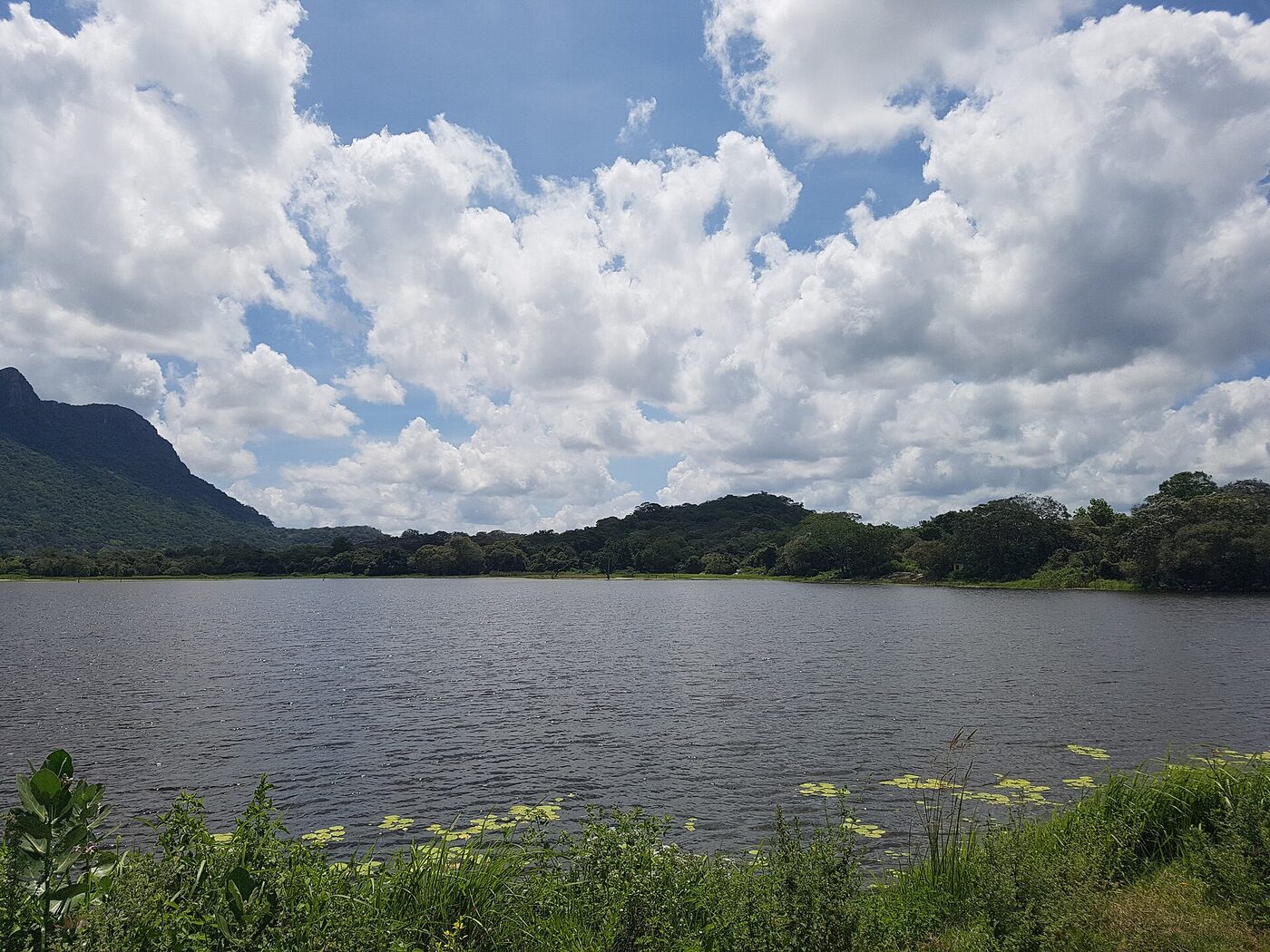

None of this is antiquarian decoration where the newsgroup is concerned. The Anuradhapura and Polonnaruwa periods are load-bearing in modern Sri Lankan argument — about who is indigenous to which part of the island, about what the state is for, about whether the ancient polity was a Sinhala Buddhist one and what follows if it was. The chronology above is what the record supports; the inferences drawn from it were exactly what an unmoderated group full of people who cared spent a great deal of time contesting.
Three European powers, in sequence
The colonial sequence is unusual in having three separate European powers in succession, each of which held a different amount of the island, and none of which held all of it until the last.
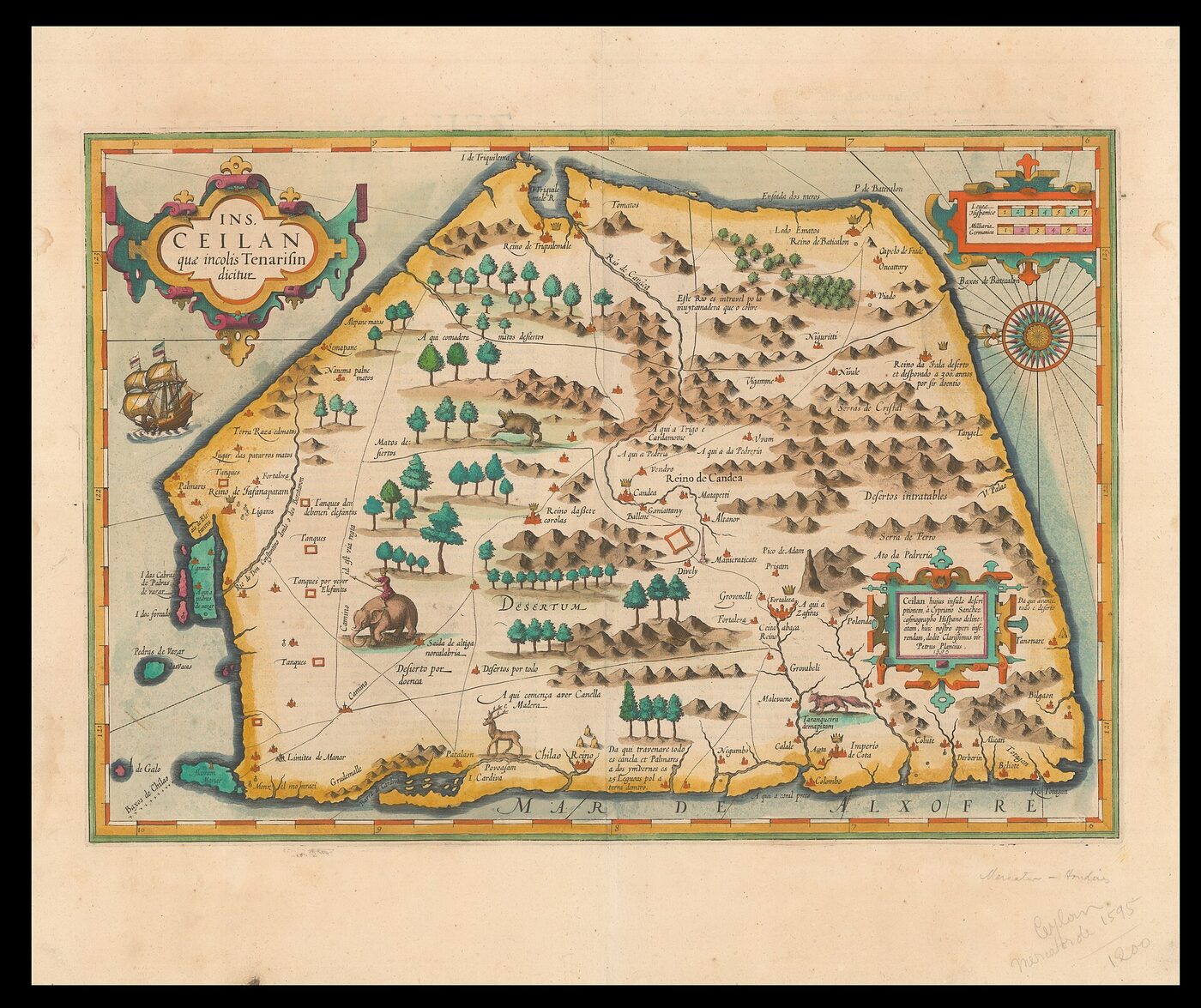
- Portugal, from 1505. The early modern period conventionally opens with the arrival of Lourenço de Almeida in 1505; the Portuguese built a fort at Colombo in 1517 and extended control over the coastal areas. In 1592, after decades of intermittent warfare, Vimaladharmasuriya I moved his capital inland to Kandy, judging it more defensible. The independent Jaffna kingdom in the north ended in 1619.
- The Dutch, from 1638. Rajasinha II signed a treaty with the Dutch East India Company in 1638 to expel the Portuguese; the resulting war ended in Dutch victory, with Colombo falling in 1656. The Company then declined to hand back what it had taken, which was a breach of the treaty and an entirely characteristic one. The Burgher community dates from this period.
- Britain, from 1796. During the French Revolutionary Wars, fearing that French control of the Netherlands would deliver the island to France, Britain occupied the Dutch coastal territories in 1796 with little difficulty. The interior held out for another nineteen years.
.jpg)
The Kingdom of Kandy was the last independent monarchy on the island, and it outlasted both the Portuguese and the Dutch before falling to the third power in the sequence. It fell on 14 February 1815, when Kandy was occupied in the Second Kandyan War; the Kandyan Convention formally ceded the whole country to the British Crown, and Sri Vikrama Rajasinha, the last native monarch, was exiled to India. An attempt by Kandyan noblemen to undo the settlement in 1818, the Uva rebellion, was suppressed. From 1815 the entire island was under a single administration for the first time in centuries, which is a fact with a long afterlife: several of the twentieth century's constitutional arguments turn on whether that unification was a restoration or an imposition.
The Colebrooke–Cameron reforms of 1833 amalgamated the Kandyan and maritime provinces into one unit of government, introduced a political culture based on the rule of law, and established executive and legislative councils, the ancestors of a representative legislature. By the same date the colony's experiments with coffee plantations were largely succeeding, and the plantation economy that followed was built on the administrative settlement the reforms had made.
Coffee, blight, and the invention of Ceylon tea
The plantation story is short, well dated, and consequential out of all proportion to its length. Coffee experiments in the 1830s succeeded, and coffee became the colony's principal export. The collapse of coffee prices in the depression of 1847 stalled the colonial economy and prompted the governor to impose taxes on firearms, dogs, shops and boats, and to revive a form of compulsory labour requiring six days' unpaid work on the roads or a cash payment in lieu — measures which helped provoke a rebellion in 1848. Then, in 1869, the leaf disease Hemileia vastatrix reached the island and destroyed the entire coffee industry within fifteen years.
The replacement was already growing. James Taylor, a Scottish planter who had arrived in Ceylon in 1852, visited India in 1866 to learn plantation tea and began a tea plantation on the Loolecondera estate near Kandy in 1867. He built a fully equipped factory there in 1872 — noting in a letter that he had a rolling machine of his own invention being made in Kandy, which he thought would be successful — and in 1875 sent the first shipment of Ceylon tea to the London Tea Auction. Exports during his tenure rose from twenty-three pounds to eighty-one tonnes, and reached 22,900 tonnes by 1890. Thomas Lipton visited in the 1890s and began buying. Taylor himself was dismissed by the estate's management as larger companies consolidated the industry, and died in 1892; his headstone at Kandy calls him the pioneer of the cinchona and tea enterprise on the island.
The product outlived the empire that created it. Sri Lanka was the world's fourth largest tea producer and third largest exporter in 2019, and the Lion Logo administered by the Sri Lanka Tea Board — registered in ninety-eight countries as of 2016 — still certifies tea grown, and packed, on the island. The plantations also left a population: labour for the estates was recruited from South India across the nineteenth century, and the descendants of those workers form a distinct community, counted separately in the census from Sri Lankan Tamils. Legislation of 1948 and 1949 denied most of them citizenship — something over eleven per cent of the population — and stripped them of the franchise; seven Indian Tamils had been elected to the ninety-five-seat parliament in 1947, and none in 1952. That decision, made before any of the language legislation, sits at the head of the constitutional sequence that follows.
1948, and the language question
Independence came on 4 February 1948, under the Soulbury constitution and as a dominion; D. S. Senanayake became the first prime minister. What happened next is the part of the chronology that soc.culture.sri-lanka returned to more often than any other, and it is best set out as legislation, because legislation is what it was.
- The Official Language Act, No. 33 of 1956 — the Sinhala Only Act. Its long title is unambiguous: an act to prescribe the Sinhala language as the one official language of Ceylon and to enable certain transitory provisions to be made. It replaced English, and excluded Tamil. Sinhala was then the language of about seventy per cent of the population; Tamil was the first language of communities together accounting for around twenty-nine per cent.
- The Tamil Language (Special Provisions) Act, No. 28 of 1958, passed in August 1958 after the anti-Tamil violence of that year, allowing Tamil as a medium of instruction and of examination for the public service, and for administration in the Northern and Eastern provinces. The regulations needed to implement it were not approved until January 1966.
- The Language of the Courts Act, No. 3 of 1961, making Sinhala the sole language of the courts.
- The republican constitution of 22 May 1972, adopted by 119 votes to 16, which changed the country's name from Ceylon to Sri Lanka, declared it a unitary republic, and stated that the provisions relating to the Tamil language could be amended by ordinary legislation while those relating to Sinhala were constitutionally entrenched.
- The constitution of 7 September 1978, still in force and amended twenty-one times, which introduced the executive presidency.
- The Thirteenth Amendment, passed 14 November 1987, which created provincial councils and provided that Tamil should also be an official language alongside Sinhala, with English as the link language — thirty-one years after the Act of 1956.
The arguments made at the time are on the record, and both were made by people who expected to be quoted. The Act's supporters presented it as the correction of a colonial settlement in which English fluency had been the passport to government employment and a disproportionately English-educated Tamil minority had filled the civil service. Its opponents presented it as a linguistic majority legislating a permanent disadvantage. The most quoted intervention against it came from Colvin R. de Silva of the Lanka Sama Samaja Party, arguing in Parliament:
Do we want an independent Ceylon or two bleeding halves of Ceylon…? These are issues that in fact we have been discussing under the form and appearance of the language issue…One language, two nations; two languages, one nation.
Sixteen years later the same Colvin R. de Silva, by then Minister of Plantation Industries and Constitutional Affairs, played a leading part in drafting the republican constitution — a detail that resists tidy summary and is offered here for that reason.
The measurable effects are also documented. The standard figures record that in 1956 Tamils held roughly thirty per cent of the Ceylon administrative service, half the clerical service, sixty per cent of engineers and doctors and forty per cent of the armed forces, and that by 1970 those shares had fallen to about five, five, ten and one per cent respectively. The policy of standardisation of university admissions, introduced in 1971 and extended with district quotas in 1972, set different qualifying marks for candidates sitting in different languages; it was defended as a correction of regional disparities in access to higher education and is described in the standard accounts as discriminatory in effect. The proportion of Tamil students in the universities fell, and the standard accounts treat the policy as one of the immediate provocations behind the rise of militancy. What made the language question the group's permanent subject was that it was simultaneously historical and live: it explained where people's families had gone, why they were reading the group from Toronto or Croydon rather than Colombo or Jaffna, and it was still being legislated during the years the group ran.
The war, as a chronology
The Sri Lankan civil war is conventionally dated from 23 July 1983 to May 2009, which is to say that it began six years before the newsgroup and ended five years after the news2mail gateway shut down. The gateway carried the group from 2000 to 2004, which placed its own years inside the ceasefire period; the group's active life sits almost exactly inside the war. The chronology below states events and dates; it does not attempt to assign causes, which is precisely the question the group could not settle and this page will not.
- 1972–1981. Velupillai Prabhakaran formed the Tamil New Tigers in 1972; the group changed its name to the Liberation Tigers of Tamil Eelam in 1976. The mayor of Jaffna, Alfred Duraiappah, was assassinated in 1975. On the night of 31 May 1981 the Jaffna Public Library was burned; eyewitnesses described police, army and government-sponsored paramilitaries setting the fire, and over 97,000 volumes were destroyed, palm-leaf manuscripts among them. Two cabinet ministers were in the town and saw part of the destruction.
- July 1983. On 23 July an army patrol was ambushed at Thirunelveli in Jaffna and thirteen soldiers were killed. Anti-Tamil rioting began in Colombo on the night of 24 July and spread over seven days. Estimates of the death toll differ sharply and by source: a later presidential commission put it at nearly three hundred, the range most often quoted in the press is four hundred to three thousand, and the Tamil Centre for Human Rights records 5,638. Around 150,000 people were made homeless. The events of that month are the conventional start of the war and the largest single driver of the emigration described above.
- 1983–1987: Eelam War I. An insurgency conducted alongside several other Tamil militant groups, most of which the LTTE later absorbed or eliminated. From August 1983 until May 1987 the Indian government, through its external intelligence service, provided arms, training and money to six of them.
- 1987–1990: Indian intervention. The Indo-Sri Lanka Accord was signed on 29 July 1987 by Rajiv Gandhi and J. R. Jayewardene, providing for devolution to the provinces and official status for Tamil; the Thirteenth Amendment enacted it in November. An Indian Peace Keeping Force deployed to the north and east, and ended in three years of fighting with the LTTE it had come to disarm. The last contingents left in March 1990. India's defence minister told parliament in 1999 that the IPKF had lost 1,165 personnel killed and 3,009 wounded.
- 1990–1995: Eelam War II. Marked by massacres of civilians attributed to both sides, an embargo on goods entering the Jaffna peninsula, the expulsion of the Northern Province's Muslim population by the LTTE in October 1990, and the month-long siege of the army's Elephant Pass base in July 1991, in which more than two thousand died on both sides.
- 1995–2002: Eelam War III. Government forces retook Jaffna in Operation Riviresa in late 1995; the LTTE won the Battle of Mullaitivu on 18 July 1996, took Kilinochchi in 1998, and captured the Elephant Pass complex on 22 April 2000. Bombings in Colombo included the Central Bank attack of January 1996, which killed ninety people, and the attack on Bandaranaike International Airport in July 2001, after which the economy contracted for the first year since independence.
- 2002–2006: the ceasefire. A ceasefire agreement was formalised on 22 February 2002 with Norway as mediator. The Sri Lanka Monitoring Mission was established the same day, staffed principally from Norway, Sweden, Finland, Denmark and Iceland. The A9 highway reopened, allowing civilian traffic through the Vanni for the first time in years, and commercial flights to Jaffna resumed. Talks were held in several countries and broke down on 21 April 2003.
- 2006–2009: Eelam War IV. The ceasefire eroded from late 2005 and the SLMM ceased operations on 16 January 2008. The government declared the LTTE militarily defeated on 16 May 2009; the LTTE admitted defeat on 17 May; President Mahinda Rajapaksa declared the war over in Parliament on 19 May 2009.
Two events fall across that chronology and belong to nobody's side of it. The first is the 1996 cricket World Cup, dealt with below. The second is the Indian Ocean tsunami of 26 December 2004, which reached Sri Lanka about two hours after the earthquake off Sumatra, struck the eastern coast first and then refracted around Dondra Head to inundate the south-west, and killed approximately 35,000 people — a civilian toll second only to Indonesia's. A passenger train on the Maradana–Matara line carrying more than 1,750 people was overturned by the wave, with at least a thousand deaths: the worst single rail disaster on record anywhere. The tsunami fell in the final weeks of the news2mail gateway's operation, and in the middle of the ceasefire.
Figures, and the bodies that produced them
Casualty figures for this war are contested, and the only responsible way to report them is to say who produced each one. The following are the principal published estimates, with their sources.
- The United Nations estimated a total of 80,000 to 100,000 deaths immediately after the war ended, in a statement reported on 20 May 2009.
- The Report of the Secretary-General's Panel of Experts on Accountability in Sri Lanka, handed to the Secretary-General in April 2011 and dealing with the final phase of the fighting in 2009, stated that a number of credible sources had estimated that the number of civilian deaths could have been as much as 40,000; the panel's own arithmetic from surgical and casualty records produced a range of 15,000 to 22,500.
- The Sri Lankan armed forces' own published figures record 28,708 personnel killed and 111,655 wounded, of whom 40,107 were permanently disabled, with a further 5,000 missing.
- Figures for LTTE dead are given as around 27,000.
- The LTTE is estimated to have been responsible for between 3,700 and 4,100 civilian deaths in over two hundred separate attacks.
- Displacement figures include roughly 800,000 internally displaced at the 2001 peak and around 300,000 in the final phase of the war in 2009.
The findings about conduct are likewise divided, and by named bodies rather than by anonymous opinion. The Lessons Learnt and Reconciliation Commission, appointed by President Rajapaksa after the war, concluded that the security forces had not deliberately targeted civilians in the declared no-fire zones, and that the LTTE had repeatedly violated international humanitarian law; it accepted that shells had fallen on hospitals causing damage and civilian casualties, but held that the evidence was equivocal and did not warrant a definitive conclusion about which party was responsible for the shelling. Human rights organisations and the United Nations panel criticised its mandate, its independence and its provision for witness protection. The United Nations panel, for its part, found credible allegations which, if proven, would indicate serious violations of international humanitarian and human rights law by both the Sri Lankan government and the LTTE, some amounting to war crimes and crimes against humanity, and recommended an independent international investigation; the Sri Lankan government rejected the report as fundamentally flawed and patently biased, and opposed any international investigation. On 27 March 2014 the United Nations Human Rights Council passed resolution 25/1, authorising an investigation by the Office of the High Commissioner for Human Rights.
Every one of those findings postdates the end of this newsgroup's active life. That is the single most important thing to understand about reading its archive: the people arguing in it were arguing before any of the authoritative determinations existed, from newspapers, telephone calls, rumour and each other. What the archive preserves is not a verdict and not evidence for one. It is the contemporaneous shape of a disagreement, written down by people who did not know how it would end.
Two languages, two scripts, one wire
Here is the technical fact that distinguishes this group from almost every other in the branch. Sri Lanka's two principal languages are not related to one another, and neither are the scripts they are written in.
Sinhala is an Indo-Aryan language, a distant relative of Hindi and Bengali, with something over eighteen million first-language speakers and no home outside Sri Lanka. Tamil is a Dravidian language, unrelated to the Indo-Aryan family, one of the longest continuously attested literary languages in the world — the attested record begins around 300 BC — and spoken by tens of millions across South Asia and its diasporas. A Sinhala speaker and a Tamil speaker share no more vocabulary by descent than an English speaker and a Finn.
The Sinhala script and the Tamil script both descend ultimately from Brahmi, and both are abugidas: the unit is a consonant carrying an inherent vowel, modified by diacritics placed before, after, above or below the base letter rather than in a single left-to-right stream. Beyond that shared architecture they look markedly different. Sinhala is almost entirely curvilinear, with straight lines rare. The explanation usually offered for the roundness of Brahmic scripts in general — Tamil among them — is that they were incised with a stylus on dried palm leaves, where an angular stroke could tear the leaf; Sinhala carried the tendency furthest. Tamil, which developed on the mainland and was reshaped by the same medium in its own way, keeps a comparatively small consonant inventory, augmented by the supplementary Grantha letters for sounds borrowed from Sanskrit.
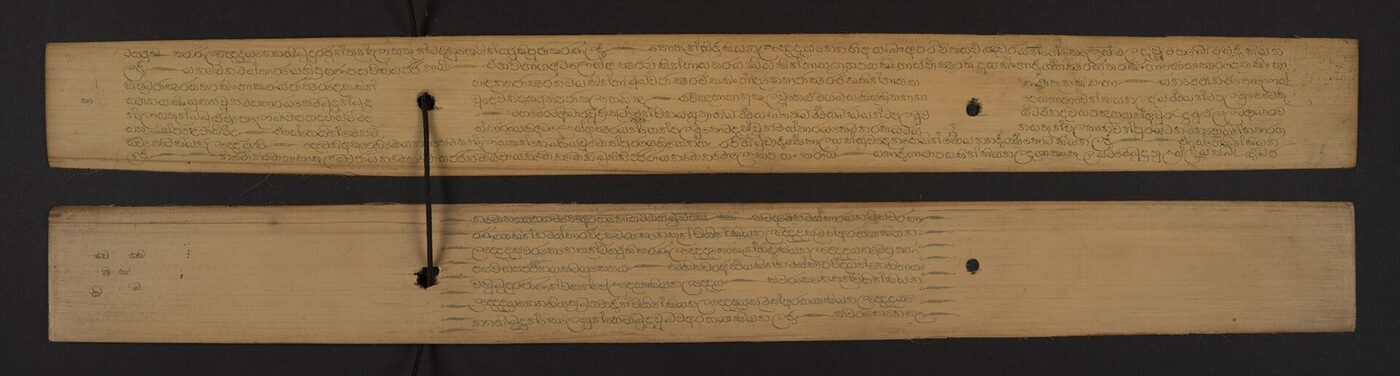

Neither script is in ASCII, and neither fits an eight-bit extension of it comfortably. An abugida needs base letters, vowel signs that attach on multiple sides, and a virama or its equivalent to strip the inherent vowel; the rendering engine must then combine them into ligatures whose shapes are not the sum of their parts. Nothing about that maps onto the seven-bit stream that Usenet articles were transported in, and very little about it mapped onto the display capabilities of the terminals and PCs of the period. The problem is a family resemblance rather than a peculiarity — soc.culture.bengali faced the same class of difficulty with the Bengali script and soc.culture.thai with Thai, and each of those pages tells its own version — but the Sri Lankan case is doubled, because two unrelated non-ASCII scripts had to co-exist in one message list rather than one.
Unicode, and what arrived when
The dates matter, because they explain what the group could and could not have done at any point in its life.
- Tamil entered Unicode in October 1991, with version 1.0.0, in the block
U+0B80–U+0BFF. Its allocation, like the other South Asian blocks, was originally derived from the Indian national standard ISCII. A supplementary block, Tamil Supplement atU+11FC0–U+11FFF, was added with version 12.0 in 2019, for historic Tamil fractions and symbols. - Sinhala entered Unicode in September 1999, with version 3.0, in the block
U+0D80–U+0DFF. Its allocation does not follow the ISCII-derived pattern of the Indian blocks in every particular, in part because Sinhala has prenasalised consonant letters that the Indian scripts do not. A further block, Sinhala Archaic Numbers atU+111E0–U+111FF, followed in version 7.0.0 in June 2014.
Eight years separate those two entries, and they fall on opposite sides of the period in which such groups were most used. Before Unicode there were national and community standards, and they too are asymmetrical. ISCII — the Indian Script Code for Information Interchange, standardised as IS 13194:1991 — is an eight-bit encoding whose lower 128 code points are plain ASCII and whose upper 128 carry an Indic script selected by an attribute code. It covers Bengali-Assamese, Devanagari, Gujarati, Gurmukhi, Kannada, Malayalam, Odia, Tamil and Telugu. It does not cover Sinhala, which is not a script of India.
For Tamil, the community produced its own. TSCII, the Tamil Script Code for Information Interchange, grew out of exactly the kind of forum this directory documents: a mailing list at [email protected], created in 1997 to settle the proliferation of incompatible custom-coded fonts on Tamil-language forums, whose founding correspondence ran between the physicist K. Kalyanasundaram and the writer Sujatha, who headed the committee for standardisation of the Tamil keyboard. TSCII too keeps plain ASCII in the lower 128 positions. Its distinguishing decision is that it encodes characters in visual order, mirroring the Tamil typewriter, whereas Unicode encodes Tamil in logical order — consonant always first — which means that converting between the two is not a code-point substitution but a reordering. It was used by private agreement for a decade before being registered with IANA in 2007. The government of Tamil Nadu meanwhile endorsed its own TAB and TAM eight-bit standards, and older schemes persisted alongside all of them.
For Sinhala the equivalent arrived late and locally. The Wijesekara typewriter layout, first created and approved by the government of Sri Lanka in 1964, was given standards status as the Sri Lanka Sinhala Character Code for Information Interchange, SLS 1134:2004, only in 2004 — the last year the news2mail gateway operated. And support lagged the standard. Sinhala did not ship with Windows XP, unlike Tamil and Hindi, and had to be added through third-party tools such as SIL International's Keyman; it arrived by default only with Windows Vista and later. macOS gained Sinhala font support through Unicode integration from Catalina onwards, with keyboard support supplied by third parties before that.
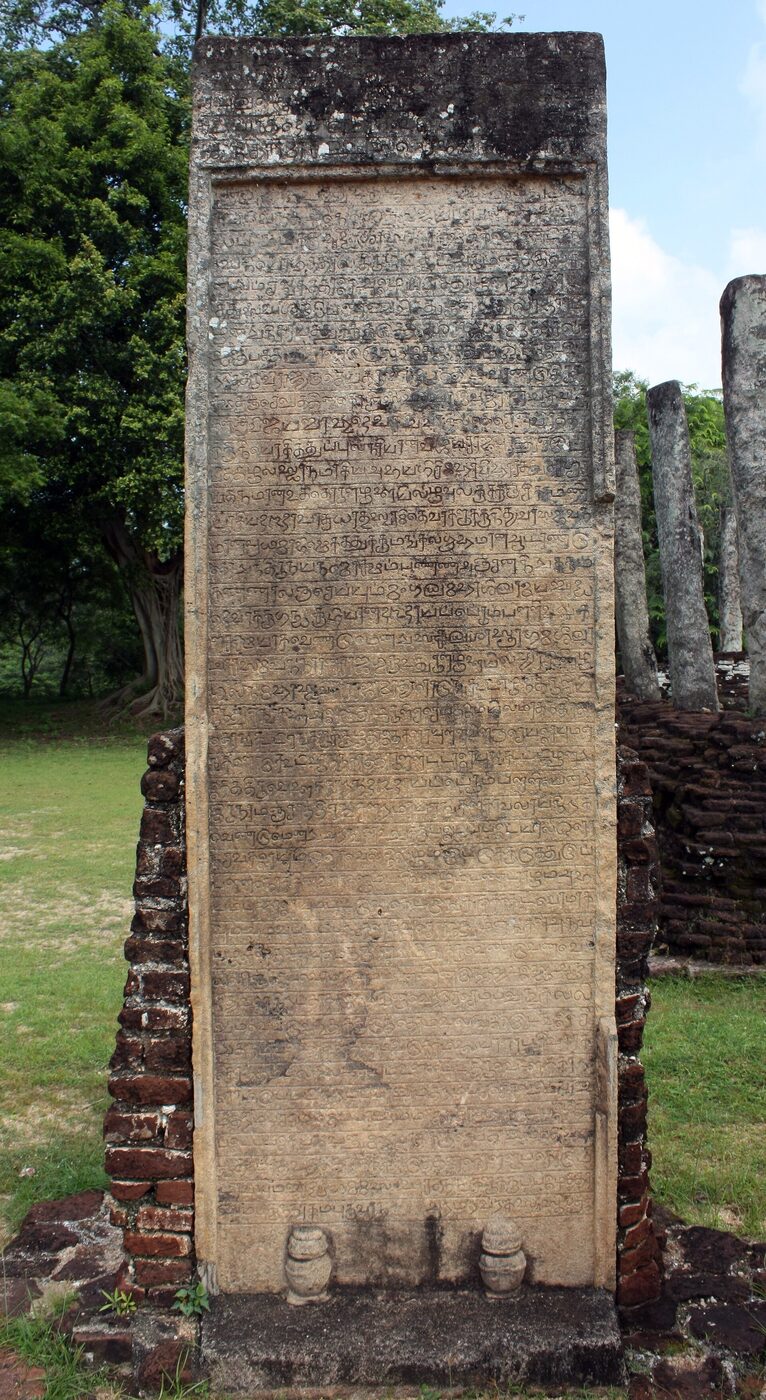

Put plainly: for the whole of the 1990s a Tamil speaker on the network had at least one workable eight-bit option and a Unicode allocation almost nothing could render, while a Sinhala speaker had neither a Unicode allocation nor a national standard nor operating-system support. For the years in which soc.culture.sri-lanka was busiest, writing Sinhala in a Usenet article was not merely inconvenient; there was no interoperable way to do it that a stranger at the other end could be expected to read.
The practical consequence: a group that ran in English
The consequence was not a compromise anyone negotiated. It was arithmetic. A newsgroup shared by two communities whose scripts could not both be transmitted, and one of whose scripts could not reliably be transmitted at all, runs in the third language both communities had been educated in. soc.culture.sri-lanka ran in English, and the English it ran in was the English of the Ceylon Civil Service, the mission schools and the anglophone diaspora.
That the third language was itself a residue of the colonial settlement is not a subtlety that would have escaped anyone in the group. English is not a majority competence on the island: the figure usually cited is that it is fluently spoken by about 23.8 per cent of the population. The constitution describes it as the link language, a status confirmed by the Thirteenth Amendment in 1987 alongside the elevation of Tamil. On the wire it was also the link language in a more literal sense: the only one of the three that survived transmission intact.
Three consequences follow for anyone reading the archive now. First, material originating in Sinhala or Tamil — a newspaper item, a broadcast, a statement — reached the group already translated, by whoever had translated it, which is a layer of interpretation that leaves no trace in the message. Second, proper nouns arrive romanised, and romanisation from two unrelated scripts with no shared convention produces variant spellings of the same place, person and organisation; a full-text search of the archive that assumes one spelling will silently miss the others. Third, and least tractably, several of the island's place names exist in more than one language with more than one form, and which form a poster used carried a meaning of its own. There was no moderator to rule on vocabulary, and the vocabulary was part of the argument.
Cricket, which is not a digression
Cricket is genuinely central here, and the standard reason given — that it was the one subject both communities could enjoy together — is true but incomplete. It was also the subject on which the island's international standing changed fastest, within the group's own lifetime, and the international sporting record intersects with the war more directly than any other part of the culture.
Sri Lanka was admitted to the International Cricket Conference as a full member on 21 July 1981, becoming the eighth Test-playing nation, and played its first Test against England at the P. Saravanamuttu Stadium in Colombo on 17 February 1982 under Bandula Warnapura; England won by seven wickets. The first Test victory came on 11 September 1985, against India at the same ground, by 149 runs, under Duleep Mendis. That is a young Test nation by any measure: the group was created eight years into the country's Test history, and its readers watched most of it happen.
The 1996 World Cup was co-hosted by Pakistan, India and Sri Lanka. Its Sri Lankan leg began badly: after the bombing of the Central Bank in Colombo in January 1996, Australia and the West Indies refused to send their teams to the island, and after extended negotiation the International Cricket Council ruled that Sri Lanka should have both matches. The team then won the tournament. In the final at the Gaddafi Stadium in Lahore on 17 March 1996, Arjuna Ranatunga won the toss and put Australia in; they made 241 for 7 from their fifty overs, and Sri Lanka replied with 245 for 3 in 46.2 overs, with 22 balls to spare. It was the first World Cup final won by the side batting second, all five previous finals having gone to the side batting first, and the first won by a host or co-host. Aravinda de Silva took 3 for 42, made 107 not out, and was named player of the match.
For a newsgroup whose ordinary weather was the hardest argument in South Asia, a month in which the island's cricket team was awarded two matches because touring sides would not come, and then won the World Cup anyway, is about as close to unanimity as the archive gets.
Buddhism, and the other communities of the island
Religion in Sri Lanka is a matter of constitutional text as well as of census returns, and both are worth stating exactly, because both were argued about in the group and neither is disputable as fact.
Article 9 of the 1978 constitution, in Chapter II, provides that the Republic of Sri Lanka shall give to Buddhism the foremost place, and that it shall accordingly be the duty of the State to protect and foster the Buddha Sasana. The same constitution assures freedom of religion. The Buddhism concerned is Theravada, introduced in the third century BC and continuously established since; the island preserved the Pali Canon, first written down there in the first century BC, and many of the oldest surviving Pali manuscripts are in Sinhala script.
The census figures are these. The 2012 census recorded the population as 74.9 per cent Sinhalese, 11.2 per cent Sri Lankan Tamil and 9.3 per cent Sri Lankan Moor, with Indian or Malaiyaha Tamils counted separately at 4.1 per cent; the 2024 census records 74.1, 12.3, 10.5 and 2.8 per cent respectively. The 2024 census recorded Buddhists at 69.78 per cent, Hindus at 12.56 per cent, Muslims at 10.73 per cent and Christians at 6.92 per cent. The Sinhalese are predominantly Buddhist and the majority of Tamils Hindu; Moors and Malays are mostly Muslim; the Burgher community is largely Christian, Catholic, Dutch Reformed and Anglican among them. The Vedda, regarded as the island's original indigenous population, hold traditional animist beliefs alongside Buddhism or Hinduism depending on the region.
Those communities are named here in the terms the census uses and in no other terms. What follows from the constitutional and demographic arrangement was, and remains, contested; this page records the arrangement and stops.
The kitchen, the calendar, the shelf and the screen
Underneath the political traffic ran the ordinary business of a culture group, which in a diaspora is never quite as trivial as it looks. The single most useful thing a national newsgroup did in the 1990s was tell somebody in a strange city where to buy the ingredients.
The kitchen is well documented. Rice and curry is the staple frame; alongside it sit pittu, kiribath, string hoppers and appam, wholemeal roti, kottu, and watalappam — a rich pudding of Malay origin made with coconut milk, jaggery, cashews, eggs and spices including cinnamon and nutmeg. Jackfruit sometimes stands in for rice. Food is traditionally served on a plantain or lotus leaf. The Moor kitchen carries Middle Eastern influences; the Burgher kitchen preserves lamprais, rice cooked in stock and baked in a banana leaf, the Dutch holiday biscuit breudher, and the Portuguese-style layer cake bolo fiado. Every one of those is a diaspora recipe request waiting to happen.
The calendar is plural by construction. The Sinhala and Tamil new year falls in April and is celebrated by Buddhists and Hindus alike. The Esala Perahera, with its dancers and caparisoned elephants, is held at Kandy in July and August. Tamils mark Thai Pongal and Maha Shivaratri; Muslims mark Ramadan and the Hajj; Christians mark Christmas and Easter. A single unmoderated group covering all of that carries at least four festival seasons a year, and the greetings threads of one community are legible to the others, which is not nothing.
The shelf is two shelves and a third. Sinhala prose fiction has its modern founder in Martin Wickramasinghe (1890–1976), a journalist and author often acclaimed as the father of modern Sinhala literature. Sri Lankan Tamil literature reaches back to the Sangam-age academies, dated from around 200 BC, with Īḷattup Pūtaṅtēvaṇār among the earliest named poets of the island, and continued in the courts of the Jaffna kingdom; it has also suffered documented losses, the destruction of the Saraswathy Mahal library of Nallur and the burning of the Jaffna library among them, with much surviving through oral transmission, palm-leaf manuscripts and inscriptions. And then there is the anglophone diaspora shelf, which is disproportionately visible abroad: Michael Ondaatje, born in Colombo in 1943 and Canadian since, took the Booker Prize in 1992 for The English Patient; Romesh Gunesekera, born in Colombo in 1954 and resident in London, was shortlisted for it in 1994 for Reef; Shyam Selvadurai, whose family left for Canada after the 1983 riots when he was nineteen, published Funny Boy in 1994.
The screen has a clean chronology too. Sri Lankan cinema conventionally begins with Kadawunu Poronduwa (The Broken Promise) in 1947, and its first decade was made largely in southern India, to South Indian studio conventions. Rekava (Line of Destiny), released in 1956, is widely credited as the first Sinhala film shot outside the studio — a striking thing to have happened in the same year as the Official Language Act. Its director, Lester James Peries (1919–2018), went on to film Wickramasinghe's novel Gamperaliya in 1963, which won the Golden Peacock at the third International Film Festival of India; his Nidhanaya was later included by the Cinémathèque française among a hundred films of the century.
One list where the presses were two
A conflict conducted through national media is conducted in parallel. Two accounts circulate in two languages, in separate newspapers, read by separate publics who encounter the other version only at second hand and usually only when someone quotes it in order to object to it. Sri Lanka's newspapers were published in Sinhala, Tamil and English to largely separate readerships, and for most of the group's life the island's papers were not readable from abroad at all: there was no web to read them on until the second half of the 1990s. Access on the ground was restricted too — the A9 highway through the Vanni carried no civilian traffic until the ceasefire reopened it in 2002.
Usenet did not work in parallel. One numbered list of messages carried both accounts, in English, threaded together and timestamped, and every article stood where anyone in the group could read it and answer it under their own name. It did not produce agreement. What it produced was a single archive where the separate presses produced two, and news relay became a standing genre in consequence: whoever had a fresh edition, a working line to a relative, or a wire item posted it, sometimes translating as they went.
That is what the archive is worth now, and the reason is exactly the difficulty. Because it was unmoderated and because both communities used it, the record preserves not one position but the contemporaneous shape of the disagreement, written before the outcomes were known and before any commission had reported. It preserves the vocabulary of the disagreement too — the names of places, of the conflict itself, and of its combatants, none of which were agreed, and none of which any moderator was empowered to standardise. And it preserves the parts that were never disagreement at all: the recipes, the fixture lists, the messages asking after a town.
Within the hierarchy the group sat among its neighbours on the subcontinent — soc.culture.bangladesh and soc.culture.pakistan among them, with soc.culture.asian as the broader room and the branch's own history told on the soc.culture.* page — and shared their traffic in food, film, music and family history. What it did not share was the central fact of its own decades, which it carried in public, in one place, for as long as the medium lasted.
What the record does not show
The honest inventory of what is missing is longer than the inventory of what survives, and stating it is part of the point of this page.
- No creation paperwork. The RFD, the CFV, the vote tally and the names of the votetaker and proponents are not in the news.announce.newgroups archive, because the archive does not reach back to September 1989.
- No readership figures. Brian Reid's Usenet readership surveys of the early 1990s produced estimates for some groups; no figure for this one is presented here, because none was verified during this work.
- No traffic statistics, no thread titles, no quoted posts. This page cites no article from the group, because none was read for it. Where a claim about the group's content appears above, it is a statement about what the medium and the circumstances made possible, not a report of a specific message.
- No FAQ. Many soc.culture.* groups maintained periodic postings; if this one did, no copy was located.
- No moderator, ever. The only claim of moderation on the record is the disputed set of control messages of October 1997, and it was contradicted within four days by a signed message and is contradicted today by the active file.
- No account of who left. Usenet groups do not record departures. The thinning of traffic through the 2000s, as diaspora web forums and news sites took the work over, is visible only as an absence.
None of that is unusual. Almost no soc.culture.* group has external documentation of its own; they were infrastructure, and infrastructure is written about only when it fails. The value of a page like this one is not that it can tell you what was said in the group. It is that it can tell you accurately what the group was, when it existed, who could reach it, in what languages it could physically operate, and what was happening in the world it was about — and can be explicit about the boundary between those things and the things it cannot tell you.
Scope and limits
This page documents a newsgroup and the world it belonged to. It reaches no conclusion about the Sri Lankan civil war, its causes, its conduct or its consequences, and it should not be read as evidence in any argument about them. Where figures appear above they are attributed to the body that published them, and where those bodies disagree the disagreement is reported rather than resolved. Where a characterisation is made about a political position, it is a characterisation of what a named person or party is on record as having argued, not an endorsement.
The communities of Sri Lanka are named here in the terms used by the census of Sri Lanka. Place names are given in the forms most commonly found in English-language reference sources, without any implication that those forms are the correct or only ones. Dates in the pre-colonial chronology derive from the Pali chronicle tradition and are given as that tradition gives them, with its authorship noted; they are conventional dates, not archaeologically independent ones.
Finally, a note on the group's own remaining archive. Everything above about the group itself — the creation date, the description, the moderation dispute, the deletion attempt, the current status — comes from primary Usenet administrative records that anyone can fetch and check. Everything above about Sri Lanka comes from published reference sources and is dated so that it can be checked too. The two bodies of material are kept separate on purpose, because the one thing a directory like this can do that nothing else does is say, precisely and without embroidery, what is known.
Reading soc.culture.sri-lanka today
- Historical archive: Google Groups — soc.culture.sri-lanka (coverage varies by group and era).
- Open in a newsreader:
news:soc.culture.sri-lanka— the original site offered exactly this link, and it still works if your system has a newsreader registered for thenews:scheme. - Live access: point an NNTP newsreader at a modern server — see accessing Usenet today.
- The original news2mail e-mail subscription service ended in the mid-2000s and no longer operates.