soc.culture.kenya
Kenya and Kenyans.
The Moi years, the 2002 transition and the diaspora’s running commentary on both — plus Kenyan distance running, matatu culture, and Sheng slang explained to the curious.
One of the livelier African groups, with genuine cross-posting into the continental room.
On this page
- The paperwork, October to December 1995
- The vote, and the margin
- What the ballot roll shows, and what it does not
- The mailing lists the newsgroup came out of
- Who could post: the connectivity record
- The country as a dated record: railway, protectorate, colony
- The emergency, and the findings made afterwards
- Independence, one party, and the 1991 repeal
- Three elections and a transfer of power
- Peoples and languages
- Athletics, taken as settled
- Literature, and the argument about language
- Music, matatus and the texture of the place
- Wildlife, conservation, and the institutions behind them
- The diaspora, and where the readership was
- August 1998
- The neighbours in the namespace, and the press at home
- Afterlife in the control archive
- What the record does not show
- Scope and limits
The paperwork, October to December 1995
The administrative file for this group survives in full. The Internet Systems Consortium’s mirror of the moderated group news.announce.newgroups keeps a single archive under the name soc.culture.kenya, and it contains four postings in sequence — the Request For Discussion, two Calls For Votes, and the result — with the newgroup control messages preserved separately in the same collection. For a soc.culture.* group of the mid-1990s a complete set is not guaranteed. Here it is complete, and it settles nearly everything that can honestly be said about how the group came to exist.
The Request For Discussion was posted on 17 October 1995 at 16:04 GMT by Matunda Nyanchama, writing from csd.uwo.ca — the computer science department at the University of Western Ontario. It proposed an unmoderated group and was cross-posted to news.announce.newgroups, news.groups, soc.culture.african, soc.culture.zimbabwe and soc.culture.south-africa. The rationale set out the gap the proposal meant to fill: mailing lists about Kenya already existed, but there was no newsgroup, and a newsgroup would let people read the conversation without subscribing to every list in turn.
“This newsgroup will therefore provide an open forum where people all over the world can exchange information and discuss issues about Kenya, without having to subscribe to all the existing Kenya-related mailing lists, although it is expected that most of the participants will be Kenyans and friends of Kenya living abroad or at home.”
The expectation stated there — participants “living abroad or at home”, in that order — turned out to describe the group’s electorate accurately, as the ballot roll below shows.
The charter itself opens with a single sentence of scope:
“Soc.culture.kenya is intended to be an unmoderated forum for discussion on issues relevant to the culture, peoples, resources, and politics of Kenya.”
It then enumerates what “all topics for discussion relevant to Kenya” was taken to include. The list is the charter’s own, reproduced here in its order and with its own closing item:
- Kenyan peoples.
- Kenyan laws, political and social issues.
- Kenyan economy, mineral resources, agriculture, and commerce.
- Kenyan literature, music, and art.
- Kenyan educational systems and institutions.
- Kenyan history and geography.
- Kenyan travel information and tourism.
- Kenyan customs, traditions, religions, food, etc.
- Kenyan sports and recreation.
- Kenyan current events.
- Kenyan technological developments.
- etc. but must be related to Kenya.
Two things about that charter are worth noting, because they are unusual rather than boilerplate. The first is that politics is named in the opening sentence and again in the second item of the list. Not every soc.culture.* charter did that. The split the Great Renaming had drawn put social subjects in soc.* and open-ended argument in talk.*, and a number of country charters stayed on the safe side of it, confining themselves to language, food, customs and travel and leaving the constitutional questions to somebody else’s hierarchy. This one did not. It put laws, political and social issues on the list, in writing, before a single article had been posted.
The second is the language clause, which reads as a small piece of policy in its own right:
“The primary language on soc.culture.kenya will be English, Kenya’s official language, but posting in Swahili, the country’s national language, and other Kenyan languages will be allowed. However, we encourage translations into English, where possible, for the benefit of other worldwide netters.”
The charter closes with a clause that anticipates a gateway: the group “may, at an appropriate time, be gatewayed to any of the existing Kenyan mailing lists within and outside Kenya”, following the usual Usenet procedures if it came to that. Nothing in the surviving record indicates that it ever came to that. The wording is worth a footnote of its own: the RFD spells the word “gate-wayed”, and the Call For Votes, the result and the control message all print it “gatewayed”, which is the form quoted here.
The procedural section of the RFD is equally exact: discussion would run for at least 22 days from the date the RFD appeared on news.groups and news.announce.newgroups, a second RFD would follow if the need arose, discussion would be taken off-line if problems remained after 30 days, and if the proposal survived, the vote would be conducted by a neutral third party, the Usenet Volunteer Votetakers.
The vote, and the margin
The first of two Calls For Votes went out on 13 November 1995, posted from [email protected] over the name of Bill Aten, under the organisation line “Usenet Volunteer Votetakers”. The proponent remained Matunda Nyanchama; a mentor, Oguocha at sask.usask.ca, was named alongside him, the University of Saskatchewan address sitting next to the Western Ontario one. The CFV carried the group’s proposed newsgroups line, the one-line description that would go into every site’s newsgroups file if the vote passed:
soc.culture.kenya Kenyan peoples, politics, culture, and affairs.
Ballots were to be extracted from the posting between marked lines, filled in with a real name and one of YES, NO, ABSTAIN or CANCEL, and mailed to [email protected]. Each ballot carried the marker <SCK-0001> and a warning not to alter it, because the counting was automated. Votes had to arrive by 23:59:59 UTC on 4 December 1995. A second Call For Votes went out on 24 November, headed “LAST CALL FOR VOTES (of 2)” and carrying a Supersedes header pointing at the first.
The result was posted on 4 December 1995 at 23:43 United States Eastern time — the small hours of 5 December in Greenwich, which is why the control message later dates the announcement to 5 December — under a subject line that says the whole thing: “RESULT: soc.culture.kenya passes 158:16”. The arithmetic behind that is worth spelling out, because the Big-Eight passing rule was two conditions and not one. A proposal needed at least two-thirds of the valid votes in favour, and at least a hundred more YES votes than NO votes. On 174 valid votes, two-thirds was 116; the group got 158. The margin over the NO votes needed to be 100; it was 142. The result post records three abstaining votes and five invalid ones alongside the tally. By the standards of soc.culture.* group votes, where proposals could and did fail on the hundred-vote margin with a comfortable majority behind them, this was not a close-run thing.
Then the waiting. The result post states the rule plainly: five days in which allegations of voting irregularities could be raised, after which the moderator of news.announce.newgroups would create the group. No such allegation appears in the file. The newgroup control message went out on 11 December 1995 at 15:30:07 GMT over the name of David C Lawrence — [email protected], the moderator of the day — and was sent again a week later, on 18 December, and a third time on 11 January 1996, in the belt-and-braces manner of a network where a control message was a request that every administrator was free to ignore. Its opening lines are the group’s birth certificate:
“soc.culture.kenya is an unmoderated newsgroup which passed its vote for creation by 158:16 as reported in news.announce.newgroups on 5 Dec 1995.”
The same message carried the newsgroups line and the charter, “culled from the vote result announcement”, so that any administrator honouring the newgroup would get the group’s description and its constitution in the same packet. Thirty years later the description has not changed: the newsgroups file distributed by the Internet Systems Consortium still lists soc.culture.kenya as “Kenyan peoples, politics, culture, and affairs.”, and the accompanying active file still carries the group with the flag y — unmoderated, open for posting.
What the ballot roll shows, and what it does not
Usenet votes were counted in public. The result post for soc.culture.kenya ends with the full acknowledgement roll: every voter’s e-mail address, the name they gave, and the way they voted, printed in a single alphabetical column. The column runs to 177 lines — 158 marked YES, 16 marked NO and three marked as abstentions. The 174 YES and NO lines are the valid votes, and they match the published tally exactly, which is the point of publishing the roll at all.
The addresses are a snapshot of where the interested public was reachable by e-mail in November 1995. Sorted by top-level domain, the 174 valid ballots break down as follows:
- .edu — 61, by a wide margin the largest single block: American university accounts.
- .com — 29, including the commercial online services and early access providers of the period.
- .ca — 27, a Canadian share far out of proportion to Canada’s size, and consistent with both the proponent and his mentor writing from Canadian universities.
- .uk — 16, six of them academic .ac.uk addresses.
- .de — 9; .net — 6; .za — 6, half of them .ac.za.
- .no — 4; .au, .fi and .jp — 3 each; .org — 2.
- .be, .gov, .it, .kw and .nl — one each.
Counting only the addresses that announce themselves as academic, 61 ballots came from .edu and a further eleven from .ac.uk, .ac.za and .ac.jp. That undercounts badly: a long tail of the .ca, .de, .no, .fi, .nl and .it ballots came from universities whose domains carry no such marker — York, Toronto, Guelph, Waterloo, Alberta, Saskatchewan, Queen’s, Trent, McMaster and Dalhousie in Canada; Wuppertal, Karlsruhe, Augsburg and Giessen in Germany; Oslo, Bergen, Helsinki and the Helsinki University of Technology in the north. A university electorate is the ordinary shape of a 1995 Usenet vote rather than anything particular to Kenya, and it should not be read as a census: an e-mail address records where an account was, not where a person was, and a great many of the .edu and .ca ballots will have been cast by Kenyan students abroad, which is precisely what the rationale had predicted.
The commercial providers of the moment are visible in the same column. Six ballots came from CIX/Compulink and three from Demon in Britain, five from Netcom and two from America Online in the United States, three from TIAC in Boston and one from CompuServe; two more, from Prodigy and Delphi addresses, appear among the rejected ballots rather than the counted ones. One ballot came from an address at the World Bank.
One absence is worth stating carefully. Not a single ballot was cast from an address in the .ke domain. Nor does any .ke address appear anywhere else in the file — not in the cross-post lists, not among the mailing lists the vote was mailed to, not in the errors. The lists that served the Kenyan public online in 1995 were reached at addresses in .com and .edu; the Kenya Net address itself was a .com domain registered outside the country. This is evidence about routing and about where accounts were held; it is not evidence that nobody in Kenya read the group, and it should not be pressed further than it goes.
Two names in the roll turn up again in the later administrative record of the Kenyan internet, and the match is close enough to record. A ballot is entered under the name Shem Ochuodho, from [email protected]; the IANA file for the 2002 redelegation of the .ke domain lists Hon. Dr. Shem Ochuodho as the administrative point of contact for .ke, at [email protected]. The name and the institution — ARCC — agree. A second ballot is entered under the name jason githeko, from [email protected]; the same 2002 file lists Dr. Jason Githeko of KENET, the Kenyan research and education network, as a member of the committee, at an address at Egerton University. The page notes the correspondence and does not claim more than the two documents say.
A third name is internal to the file. The request address given for the Online List, one of the mailing lists the vote was announced on, was [email protected]; a ballot in the roll is entered from [email protected] under the name Mukiri wa Githendu. The person running one of the lists the CFV was mailed to also voted in the poll, which is exactly what one would expect and is pleasant to be able to check.
The record is candid about its own edges. Five ballots are itemised under “votes in error”, with the reason for each given in the votetaker’s terse shorthand: two marked “No name given”, two marked “No ballot”, one marked “No vote statement in message”. Five is exactly the number of invalid votes reported in the tally above. One of the five came from an address at Intelsat, the satellite operator, which is a small reminder that in 1995 the people who moved bits between continents for a living were also, sometimes, in the audience.
The mailing lists the newsgroup came out of
The most valuable thing in the file is not the tally but the distribution list. Both the RFD and the CFVs name the mailing lists to which the proposal and the vote were mailed, and the names amount to a directory of African diaspora networking in the mid-1990s. The October RFD went to [email protected], [email protected], [email protected], [email protected], [email protected] and [email protected] — six lists spanning Kenya, Nigeria, Ghana, Tanzania, Zimbabwe and a general list at Iowa State.
The November CFVs went to a slightly different set of five: Kenya Net, Naija Net, the Online List, Tanza Net and, newly added, Uganda Net at [email protected]. Zimnet and Okyeame are not in the vote’s list. And the Kenya Net address had changed: five weeks after the RFD it is given as [email protected], not [email protected]. The list had moved house between the proposal and the vote.
Those names have a documented history. KenyaNet was an online community hosted at MIT, one of a small family of Africa-focused lists formed and run by MIT students on MIT servers — the others being Naijanet for Nigeria, Okyeame for Ghana and Salonet for Sierra Leone. In 1994, three Kenyans who had met in Cambridge, Massachusetts — Ayisi Makatiani and Karanja Gakio at MIT, Amolo Ng’weno at Harvard — turned the idea of an online news service for Kenyans, developed out of KenyaNet, into a company: Africa Online. In 1995 it was bought by International Wireless of Boston, which ultimately became Prodigy, and during that period it began operating as the first Kenyan internet service provider, expanding into Côte d’Ivoire the same year and later into Ghana, Tanzania, Uganda, Zambia, Zimbabwe and Swaziland. Prodigy sold it on to the African Lakes Corporation in 1998; Telkom South Africa bought it in 2007.
So the votetaker, mailing his Call For Votes to kenya-net at an AfricaOnline.Com address in October and at afrique.com in November 1995, was mailing a student mailing list that had just become an internet company. That is not a claim about influence in either direction. It is simply what the two records say when read side by side, and it places soc.culture.kenya precisely: a Big-Eight newsgroup proposed on top of an existing, functioning diaspora list culture, by people who already had somewhere to talk and wanted somewhere public to talk instead.
The charter’s gateway clause fits the same picture. Gatewaying a newsgroup to a mailing list was standard practice for exactly this situation — readers on a thin, e-mail-only link could take part without a news feed — and the proponent wrote the possibility into the charter. Whether it was ever built, the surviving record does not say.
Who could post: the connectivity record
Kenya’s place in the early history of African networking is often asserted and less often dated. One part of it is fixed in a primary source that anyone can check. The IANA root zone database gives the registration date of the .ke country-code top-level domain as 29 April 1993. That is two and a half years before the RFD was written.
Set against its neighbours and comparators, the same database gives:
- .za — 7 November 1990, and .eg — 30 November 1990.
- .tn — 17 May 1991; .zw — 6 November 1991.
- .sn — 19 March 1993; .ke — 29 April 1993; .ma — 26 November 1993.
- .dz — 3 January 1994; .zm — 25 March 1994.
- .gh — 19 January 1995; .ci — 14 February 1995; .ug — 8 March 1995; .ng — 15 March 1995; .tz — 14 July 1995; .et — 15 October 1995.
- .rw and .bi — both 21 October 1996; .so — 28 August 1997.
Two of those dates sit almost on top of the RFD. Ethiopia’s delegation was recorded on 15 October 1995, two days before Matunda Nyanchama posted his proposal; Tanzania’s had come through that July, and Uganda’s that March. The file and the root zone were being written in the same months.
What that ordering supports is a narrow claim, and the narrow claim is the honest one: within East Africa, .ke was delegated well ahead of .ug, .tz and .et, and within sub-Saharan Africa as a whole it was among the earlier delegations, behind .za, .zw and .sn. What it does not support is the broader assertion, common in later writing, that Kenya “led” African internet development. A ccTLD delegation records that somebody accepted responsibility for a namespace; it is not the same thing as a working IP link, still less as public access, and the registration date is the only part of that story the root database actually fixes. No source consulted for this page states the broader claim in a form that could be cited, so it is not made here.
Who held that responsibility is documented. Before 2002 the .ke domain was administered by two individuals, Shem Ochuodho in Kenya and Randy Bush in the United States. In 2002 the Kenya Network Information Centre took the domain over, at a point when it carried fewer than a thousand registrations — a figure that says something plain about how small the addressable Kenyan internet still was at the end of the group’s active life. The IANA record for the transfer includes the minutes of the steering committee that arranged it, held on 14 February 2002 in the CCK boardroom on Waiyaki Way in Nairobi. The attendance list is itself a map of who was running the Kenyan internet at that date: the regulator, the Communications Commission of Kenya; TESPOK, the ISP association; the Computer Society of Kenya; an operators’ association; and the East African Internet Association in the chair. KENET, the research network, and the .ke administrative contact were both listed as members and both recorded absent that day. The document the meeting adopted was titled, in its own words, a change of the .ke technical contact from Randy Bush to the Kenya Network Information Centre.
For the population of users, the standard figures are those carried in reference sources from the CIA World Factbook and International Telecommunication Union series: about 500,000 internet users in Kenya in 2002, 3 million in 2008, 4 million in 2009, and 13.8 million by 2012, at which point penetration was 32.1 per cent. In other words, for the whole of the period this directory covers, posting from inside Kenya was possible for a connected minority and no more than that. The bulk of the writing came from elsewhere, which the ballot roll had already suggested in 1995.
The story that made Kenya famous in this field belongs to the following decade and must be dated as such. M-PESA, the mobile money service operated by Safaricom, ran as a pilot from October 2005 and launched commercially in March 2007. That is three years after news2mail stopped carrying the group and more than a decade after the vote. It is mentioned here only to keep the chronology straight: whatever soc.culture.kenya was, it was not a forum for that. What the charter did anticipate, in its own last-but-one line, was “Kenyan technological developments” as a topic — which in 1995 meant, among other things, the arrival of the thing the group was written on.
The country as a dated record: railway, protectorate, colony
The territory the group was named after acquired its modern shape as an administrative by-product of a railway. Construction of the Uganda Railway began at Mombasa in 1896, authorised by an Act of Parliament that received royal assent on 14 August that year, and reached its terminus at Kisumu, on the eastern shore of Lake Victoria, in 1901. The line arrived at the site of Nairobi on 30 May 1899; the depot became a town, then the headquarters of the provincial administration in place of Machakos, then the capital. Almost everything else in the colonial record is downstream of that line.
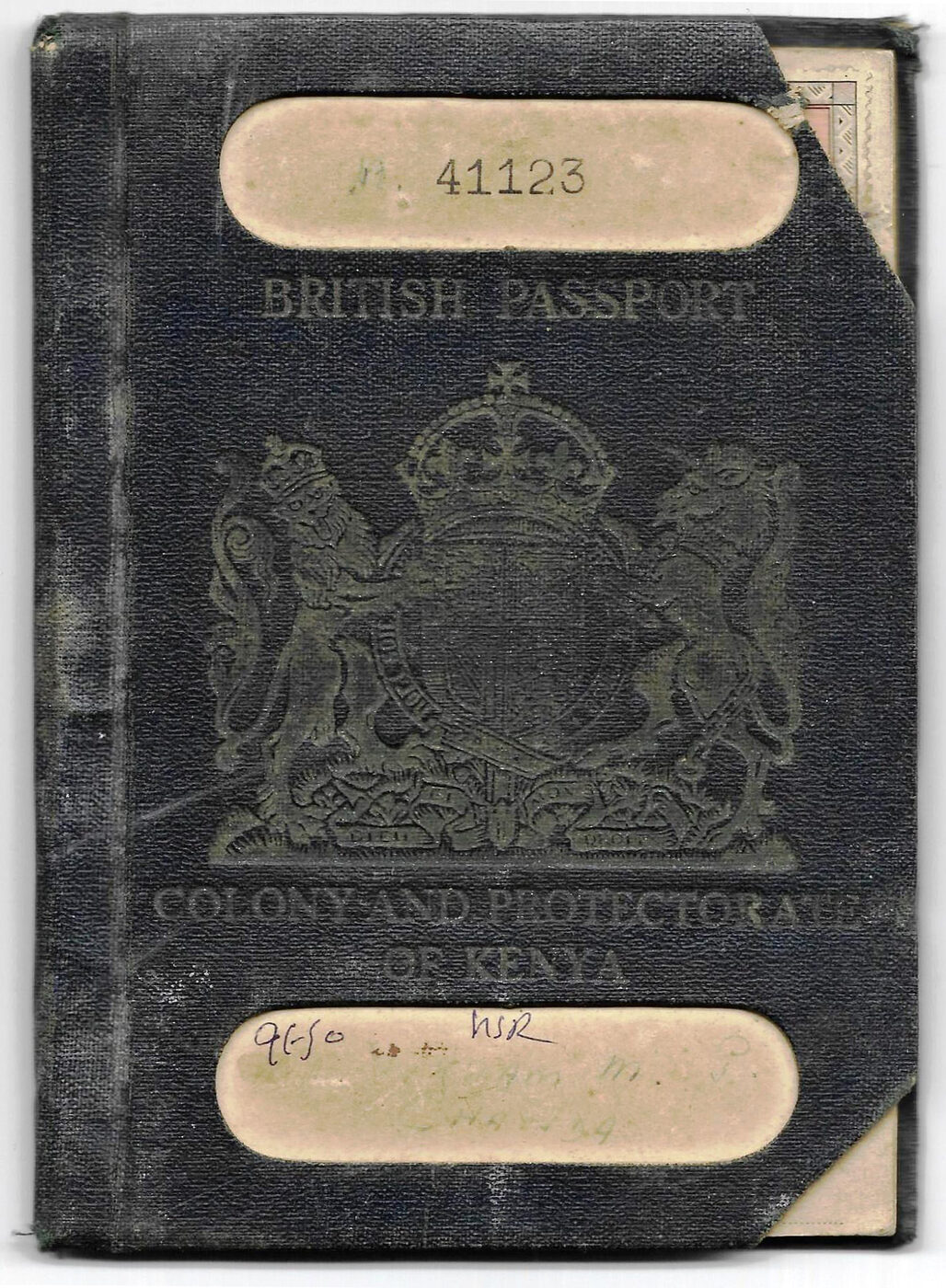
The legal history is precise and easily mangled, so it is worth setting out exactly. The East Africa Protectorate preceded the colony. The Colony of Kenya was established on 23 July 1920, when the territories of the former protectorate were annexed by the United Kingdom, except for those over which the Sultan of Zanzibar held sovereignty. The Protectorate of Kenya was constituted separately on 29 November 1920 from the territories that were not annexed — in practice a coastal strip about sixteen kilometres deep, governed as part of the colony under an agreement with the Sultan dated 14 December 1895. Hence the formal name that appears on the paperwork of the period: the Colony and Protectorate of Kenya. The protectorate kept a separate legal status, its own courts and police, and its inhabitants were protected persons rather than subjects; its governors held the Swahili title Liwali.
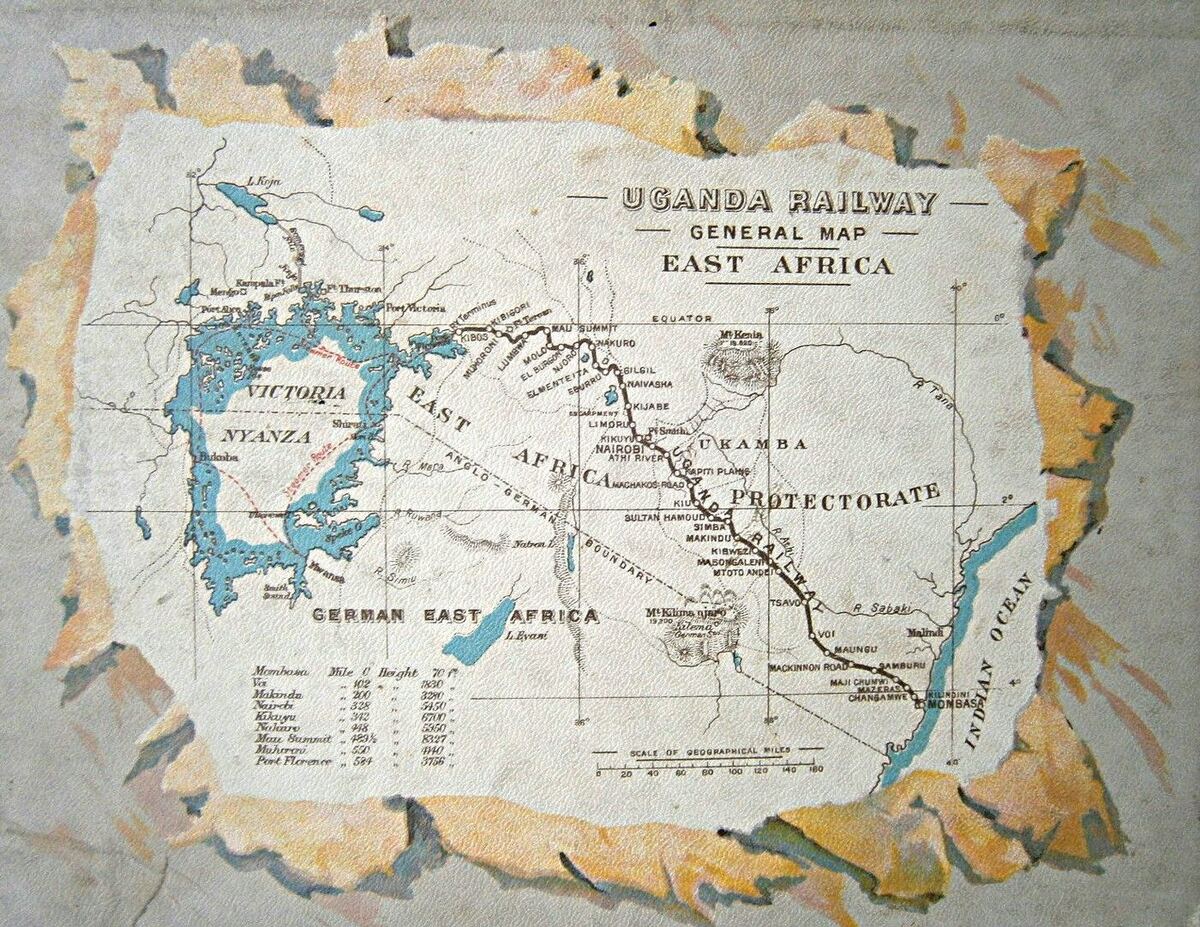

The 1921 population was estimated at 2,376,000, of whom 9,651 were Europeans, 22,822 Indians and 10,102 Arabs. Mombasa, then the largest town, had about 32,000 people. The railway network grew from 1,779 miles in 1920 to 4,004 miles by 1959. During the 1920s Kenyans objected to the reservation of the White Highlands for Europeans, especially British war veterans; W. E. B. Du Bois, describing the period in 1925, wrote about it in an article later incorporated into the Harlem Renaissance collection The New Negro. In Kavirondo, later Nyanza province, a series of mass meetings under the name Piny Owacho — Voice of the People — culminated in December 1921 in demands for individual title deeds, the abolition of the kipande registration system, and fairer taxation.
Both the colony and the protectorate ended on the same day, 12 December 1963.
The emergency, and the findings made afterwards
The 1950s emergency is among the most heavily contested episodes in the modern record of either country involved, and this page documents the dispute rather than settling it. The dates are not in dispute. On 20 October 1952 the governor, Sir Evelyn Baring, declared a State of Emergency in the colony. In the roundup of 20 to 21 October, under the codename Operation Jock Scott, some 180 people identified as leaders were arrested, Jomo Kenyatta among them; Kenyatta was taken to Lokitaung, some four hundred miles north of Nairobi, and six of those detained, the Kapenguria Six, were tried in January 1953. The Mau Mau rebellion, or Kenya Emergency, is conventionally dated 1952 to 1960, with the main military phase ending in the capture of Field Marshal Dedan Kimathi on 21 October 1956. The first Lancaster House Conference, in January 1960, established the principle of majority rule and opened the transition to independence.
The casualty and detention figures are where the attribution matters, and they are given here as claims with owners rather than as settled numbers. Official figures put the number of Kenyans killed by Mau Mau at 1,819; the historian David Anderson regards that as an undercount and gives a figure of about 5,000. Thirty-two European and twenty-six Asian civilians were also killed by Mau Mau; 95 British military personnel died in the conflict, alongside a figure of 3,000 native Kenyan police and soldiers. On the other side, a widely repeated figure puts deaths among the Mau Mau and the forces opposing them at at least 11,000, while Anderson’s estimate for Mau Mau killed is 12,000 to 20,000 or more, including 1,090 executed — more, on his account, than double the number executed by the French in Algeria. On detention, British authorities stated that 80,000 people were interned; Caroline Elkins has estimated between 160,000 and 320,000 held in detention camps, with more than a million Kikuyu additionally confined in the “enclosed villages” of the villagisation programme. Estimates of the total death toll of the Emergency range from Anderson’s 25,000 to the demographer John Blacker’s 50,000, and Elkins’s figures have been disputed in detail by Blacker and others. These numbers are not reconcilable, and this page does not attempt to reconcile them.
What is documentary rather than estimated is the colonial administration’s own correspondence. In June 1957 Eric Griffith-Jones, the attorney general of the Kenyan administration, wrote to Baring describing the mistreatment of detainees as “distressingly reminiscent of conditions in Nazi Germany or Communist Russia”, while setting out how the regime of abuse might be brought within the law — and adding the line for which the letter is now chiefly remembered: “If we are going to sin, we must sin quietly.” The letter surfaced with a large body of colonial-era files whose existence had not previously been acknowledged.

The legal conclusion came half a century later, and it is a matter of public record with a date and a number attached. On 6 June 2013 the foreign secretary, William Hague, told the House of Commons that the United Kingdom government had reached a settlement with claimants, involving, in his words, “payment of a settlement sum in respect of 5,228 claimants, as well as a gross costs sum, to the total value of £19.9 million”, and that the government would also support the construction of a memorial in Nairobi to victims of torture and ill-treatment during the colonial era. The same statement maintained the government’s denial of liability for the actions of the colonial administration. Both halves of that statement belong in the record; neither is a verdict, and neither is offered as one here.
Kenya’s own commemoration of the period is likewise dated. Since 2010 the constitution has fixed 20 October as Mashujaa Day — Heroes’ Day — observed on the anniversary of the day Baring signed the emergency order.
Independence, one party, and the 1991 repeal
Kenya attained independence on 12 December 1963 as a Commonwealth realm, with Jomo Kenyatta as prime minister, and became a republic exactly twelve months later, on 12 December 1964, with Kenyatta as head of state. Constitutional changes agreed in October 1963, over the objections of the opposition KADU, strengthened the central government; further changes in 1964 centralised it again. The Kenya People’s Union was banned in 1969, after which the country was governed as a one-party state in fact if not yet in law.
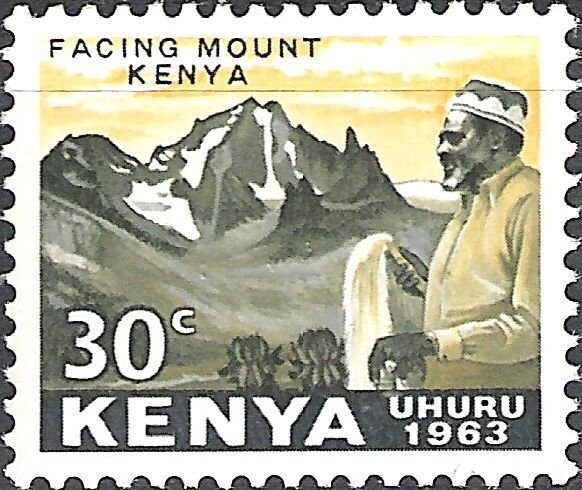

Kenyatta died on 22 August 1978. His vice-president, Daniel arap Moi, became acting president the same day and formally became president on 14 October 1978, after being elected head of KANU and designated its sole nominee. In June 1982 the National Assembly amended the constitution to make Kenya officially a one-party state — the provision commonly referred to afterwards as Section 2A. On 1 August 1982 lower-ranking air force personnel attempted a coup; it was suppressed within a day by forces commanded by the army, and in its aftermath shops owned by Asians in Nairobi were attacked and looted.
The repeal came in December 1991, when a KANU conference at Kasarani passed the motion and parliament removed the one-party section of the constitution. The pressure behind it is variously described in the sources — domestic agitation, the withdrawal of donor tolerance at the end of the Cold War, and, named specifically in several accounts, the United States ambassador Smith Hempstone. Which weighed most is argued about; that the repeal happened in December 1991 is not. From that point Kenya had a multi-party constitution, and everything the newsgroup would later carry about elections was possible because of it.
Three elections and a transfer of power
soc.culture.kenya was created between the first and second of the three general elections that defined the period, and it was still running when the third ended KANU’s hold on the state. The group’s entire useful life sits inside that sequence.
The election of 29 December 1992 was the first multi-party general election since independence, and the first in which the presidency was filled by a direct popular vote rather than by the National Assembly or by uncontested declaration alongside parliamentary elections. Moi was returned with 36.35 per cent on a turnout of 69 per cent, ahead of Kenneth Matiba on 26.00 per cent and Mwai Kibaki. The result was disputed at the time and remains so: contemporary accounts record allegations of large-scale intimidation of opponents, harassment of election officials and ballot-box stuffing, together with targeted ethnic violence in the Rift Valley Province. Human Rights Watch, in a 1993 report titled Divide and Rule: State Sponsored Ethnic Violence in Kenya, accused several prominent politicians, including Moi and the then vice-president George Saitoti, of inciting and co-ordinating that violence. Assessments of what the election meant differ sharply within the scholarship; Joel D. Barkan, writing in the Journal of Democracy in 1993 under the title “Kenya: Lessons From a Flawed Election”, described it as a watershed for the democratic transition and as flawed in the same breath. This page records that these things were alleged and argued; it adjudicates none of them.
On 29 December 1997 Moi was returned again with 40.40 per cent, ahead of Kibaki on 30.89 per cent and Raila Odinga, with KANU taking 107 of the 210 elected seats in the National Assembly, to which Moi then appointed a further twelve members.
On 27 December 2002, with Moi ineligible for a third term under the constitution’s two-term limit, Mwai Kibaki won 62.20 per cent for the National Rainbow Coalition on a turnout of 57.18 per cent, ahead of Uhuru Kenyatta on 31.32 per cent, and NARC took a majority in the National Assembly. It was the first change of governing party since independence: KANU had held power for thirty-nine years, of which the nine and a half years between the June 1982 amendment and the December 1991 repeal were the period when it was the only party permitted in law, and the two decades before that the period when it was the only party in practice. Moi left office on 30 December 2002, having been president since August 1978.
Land, ethnicity and entitlement were therefore not abstractions in the group’s subject matter, and an unmoderated forum handled them with the care and the carelessness that unmoderated forums produce in roughly equal measure. The questions themselves — over land, over ethnicity, over the conduct of elections — remain matters of live political disagreement in Kenya, on which this page takes no position.
Peoples and languages
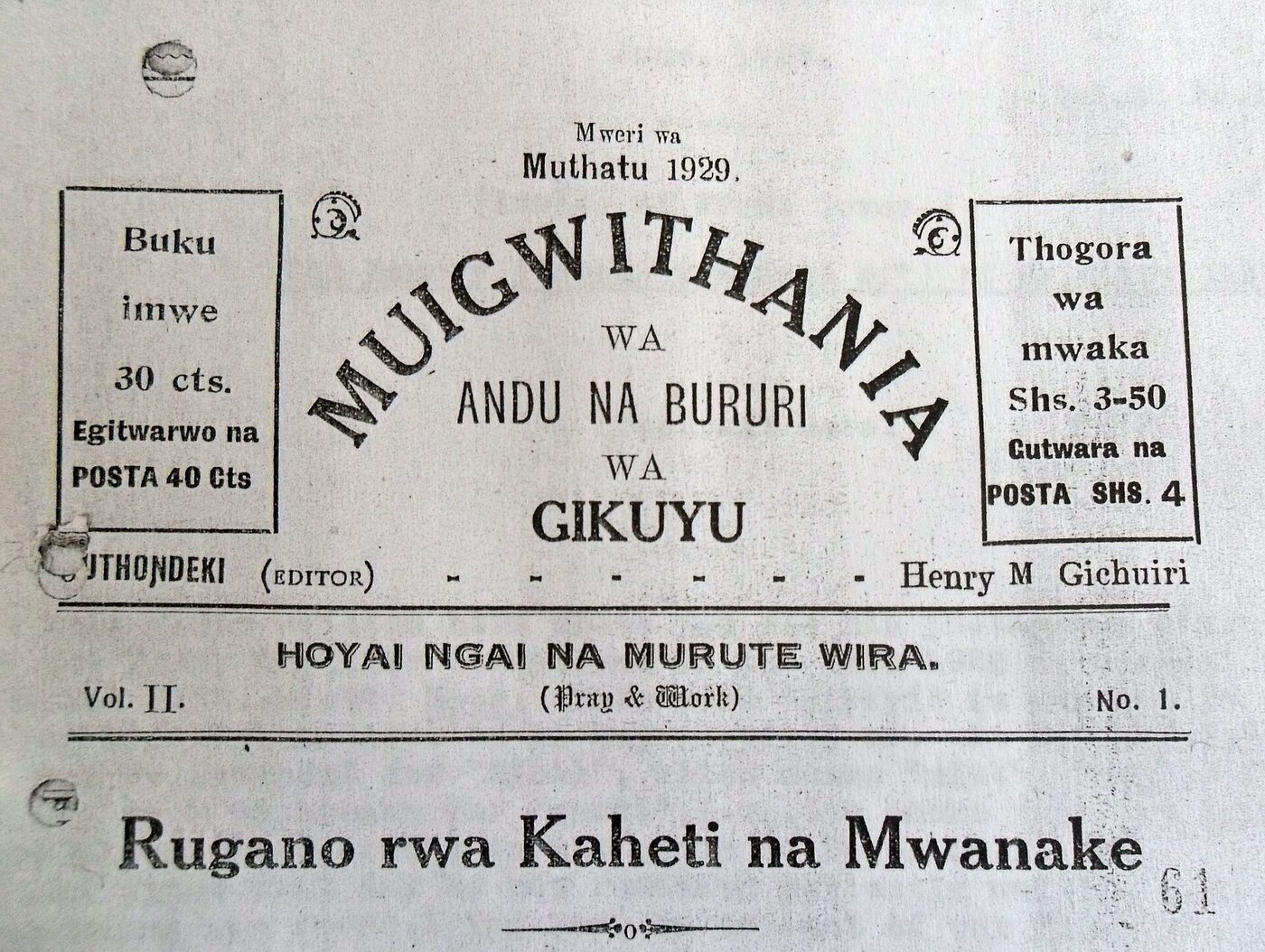
The charter’s language clause, quoted above, describes the position as it stood in 1995: English the official language, Swahili the national language, other Kenyan languages permitted. The constitutional settlement changed after the group’s active life, and the change is precisely dated. A new constitution was approved at a referendum on 4 August 2010 by about 67 per cent of voters and promulgated on 27 August 2010. Under it, Kiswahili is the national language and Kiswahili and English are both official languages. A proponent writing his charter in 1995 got the law of his own day right and was overtaken by the law of 2010, which is the ordinary fate of a charter that names a legal fact.
Beneath the two lingua francas, Ethnologue counts 68 languages spoken in Kenya. They fall into three families: Niger-Congo, represented by its Bantu branch; Nilo-Saharan, represented by its Nilotic branch; and Afroasiatic, represented by its Cushitic branch, with Semitic languages spoken by the Arab minority and Indo-European languages by residents of British and South Asian descent. Reference lists of the largest first-language communities give, among the Bantu languages, Kikuyu, Kamba, Gusii, Meru and the Luhya and Mijikenda clusters; among the Nilotic, Dholuo, the Kalenjin languages, Maasai and Turkana; and among the Cushitic, Somali and Oromo, the latter including Borana and Orma. Smaller Cushitic languages such as Rendille are counted in the tens of thousands of speakers rather than the millions.

The urban variety that outsiders most often asked about was Sheng, whose name is built from Swahili and English with an h borrowed from the middle of the first word, because “Seng” would have sounded wrong. It originated in the early 1950s in the Eastlands area of Nairobi, and the term itself is first recorded in 1965. It is not standardised, not taught and has no official status, which has not stopped it spreading across social classes and into Tanzania and Uganda, nor prevented it appearing in political campaigns and broadcast media. On a newsgroup it did what it does everywhere else: it was explained patiently to people who needed it explained, and used, in the same threads, by people who did not.
One technical point, and then it can be dropped. All of this is written in the Latin alphabet. Swahili, Kikuyu, Dholuo and the rest were legible on a seven-bit wire, in a decade when soc.culture groups for languages written in Cyrillic, Greek, Arabic, Devanagari or Han characters were still negotiating transliteration schemes and rival eight-bit encodings and losing arguments to mail gateways. Kenyan-language posting cost the medium nothing.
Athletics, taken as settled
Distance running was treated on the group less as a topic than as property, and the documentary record behind that attitude is unusually clean. Kenya first competed at the Olympic Games at Melbourne in 1956 and has appeared at every Summer Games since, apart from Montreal in 1976 and Moscow in 1980, both boycotted.
The first medal was Wilson Kiprugut’s bronze over 800 metres at Tokyo in 1964. The breakthrough was Mexico City in 1968, where Kenya took nine medals — three gold, four silver, two bronze. The golds went to Naftali Temu over 10,000 metres, Kipchoge Keino over 1,500 metres and Amos Biwott in the 3,000 metres steeplechase. The silvers went to Benjamin Kogo in the steeplechase, to Keino over 5,000 metres, to Kiprugut over 800, and to the 4 × 400 metres relay quartet of Daniel Rudisha, Munyoro Nyamau, Naftali Bon and Charles Asati. The bronzes went to Temu over 5,000 metres and to Philip Waruinge in the boxing featherweight division.
The totals have a curious shape. As of the Paris Games of 2024 Kenya had won 124 Olympic medals, and every one of them came in athletics or boxing: 38 gold, 43 silver and 36 bronze on the track and the road, and one gold, one silver and five bronze in the ring. The seven boxing medals fall entirely between 1968 and 1988 — Waruinge’s bronze in 1968 and silver in 1972, two more bronzes in 1972, one in 1984, and in 1988 Robert Wangila’s gold alongside Chris Sande’s bronze. No other sport has produced one.
The regional concentration is likewise documented. A disproportionate share of Kenya’s elite distance runners have come from the Kalenjin, a Southern Nilotic grouping of more than twenty related communities — Kipsigis, Nandi, Pokot, Keiyo, Sabaot, Tugen, Marakwet and others — whose homeland is the high country of the Rift Valley and who numbered 6,358,113 at the 2019 census, the third-largest ethnic group in the country. Explanations for the concentration have been offered from physiology, altitude, economics, childhood activity and training culture, and they are not settled; this page notes that the pattern is real and that the accounting for it is contested.
Literature, and the argument about language
The literary tradition the charter gestured at with “Kenyan literature, music, and art” carries an argument that a newsgroup was always going to end up having, because the argument is about which language to have it in.
Ngũgĩ wa Thiong’o was born on 5 January 1938 at Kamiriithu, near Limuru, and baptised James Ngugi. He took his degree at Makerere in 1963. His debut novel Weep Not, Child, published in May 1964, was the first novel in English published by an East African writer. The River Between followed in 1965 and A Grain of Wheat in 1967. He then renounced both writing in English and the name James Ngugi as colonialist, and by 1970 had changed his name.
In 1976 he helped establish the Kamiriithu Community Education and Cultural Centre. The following year brought Petals of Blood and the play Ngaahika Ndeenda (“I Will Marry When I Want”), written with Ngũgĩ wa Mirii, which was a commercial success and was shut down by the authorities six weeks after opening. He was sent to Kamiti Maximum Security Prison and held without trial for nearly a year, and there wrote Caitaani Mũtharaba-Inĩ (Devil on the Cross, published in 1980) on prison-issued toilet paper — the first modern novel in Gikuyu. Adopted as an Amnesty International prisoner of conscience, he was released, was not reinstated at the University of Nairobi, and from 1982 lived in exile, working with the London-based Committee for the Release of Political Prisoners in Kenya. His statement of the position, Decolonising the Mind: The Politics of Language in African Literature, appeared in 1986 and argues that African writers should work in African languages rather than European ones. That is his documented position, reported here as his, not endorsed and not rebutted.
The chronology matters for this directory, because it maps onto the group almost exactly. Ngũgĩ spent the whole of the years this page covers outside the country — at Yale between 1989 and 1992, then at New York University, where he held the Erich Maria Remarque Chair, and from July 2002 at the University of California, Irvine. He returned to Kenya on 8 August 2004 for a month-long tour of East Africa, a visit that ended badly: on 11 August robbers broke into the flat where he and his wife were staying and assaulted them both. He died at Buford, Georgia, in the United States, on 28 May 2025, at the age of 87. In other words, for the group’s whole run, the writer most often described in reference accounts as East Africa’s leading novelist was himself a member of the diaspora that did most of the posting, and the question of writing in English while living abroad was not a theoretical one for anybody involved.
Music, matatus and the texture of the place
Benga, the popular genre most associated with Kenya, evolved in Nairobi between the late 1940s and the late 1960s, out of a mixture that the record describes plainly: in the 1940s the African Broadcasting Service in Nairobi was airing soukous, South African kwela, Congolese finger-style guitar and various kinds of Cuban dance music, and the folk repertoire of the Luo and of Tanzania supplied the base. The characteristic bass line imitates the syncopated melodies of the nyatiti, the eight-string Luo lyre. The first major benga band, Shirati Jazz, was formed in 1967 by Daniel Owino Misiani, and its hits were among East Africa’s biggest through the 1970s and 1980s; its principal rival, Victoria Jazz, was formed in 1972 by Ochieng Nelly Mengo and Collela Mazee and remained popular through the 1970s, when the state broadcaster, then called the Voice of Kenya, was pushing East African pop. The year 1997, which fell in the middle of the newsgroup’s run, saw the deaths of three prominent Luo benga musicians — Okatch Biggy, George Ramogi and Prince Jully.
The food that turns up wherever Kenyans explain themselves to outsiders is not regional in the same way. There is no single dish that represents the whole country, and communities have their own; but ugali, sukuma wiki and nyama choma are eaten across it. Sukuma wiki is greens of the kale or collard sort, and the Swahili phrase means, literally, “to push the week” — it is what stretches the week out. Nyama choma is grilled meat, usually goat or sheep, cooked over an open fire and often called the unofficial national dish; it is eaten with ugali and kachumbari. On the coast the cuisine is distinct and highly regarded elsewhere in the country. Mandazi, the Swahili doughnut, and chai carry the breakfast.
And there were the matatus: privately owned minibuses used as share taxis, carrying much of urban Kenya, the name derived from a Swahili or Kikuyu colloquialism for “three” — one explanation being the three ten-cent coins that made up a typical thirty-cent fare in the 1970s, another the Kikuyu phrase mang’otore matatu, thirty cents. There is no agreed answer. Sheng calls them mathree. They were explicitly deemed legal in 1973, and it was not until 1984 that even the most basic regulatory framework existed, when licensing and inspections were mandated. Their crews, routes, paintwork and sound systems were a reliable subject in any forum where Kenyans described their own cities to each other, which is exactly what a soc.culture group was for.
Wildlife, conservation, and the institutions behind them
The charter listed “Kenyan travel information and tourism” among its topics, and behind that phrase sits a real economy with real institutions and a genuinely contested politics. Tourism contributes around 6 per cent of Kenya’s economy and is the third-largest source of foreign exchange, behind diaspora remittances and agriculture, with some sixty national parks and game reserves in the system.
The institutions are datable, and the record of who was moved to make them is part of the date. Nairobi National Park, opened in 1946, was the first national park established in Kenya; Maasai pastoralists were removed from the land when it was created. Tsavo East followed in April 1948, at which point Orma pastoralists were removed with their livestock and Watha hunter-gatherers relocated to Voi, Mtito Andei and the Taita Hills. The Kenya Wildlife Service was established by the Wildlife Conservation and Management Act of 1989, taking over from the earlier Wildlife Conservation and Management Department, to which Richard Leakey had been appointed in 1989 in response to international pressure over elephant poaching; reference sources date the service’s own establishment to 1990. On a site inside Nairobi National Park in 1989, President Moi burned a stockpile of twelve tons of ivory. Two later burnings are on record and they are not on the same scale as each other: nearly five tonnes, 335 tusks, burned by President Kibaki on 20 July 2011, and 105 tonnes of ivory together with 1.35 tonnes of rhinoceros horn burned by President Kenyatta on 30 April 2016.
The other institution is the one that made conservation a domestic political question rather than an export. The Green Belt Movement began on 5 June 1977, World Environment Day, when the National Council of Women of Kenya marched from the Kenyatta International Conference Centre to Kamukunji Park and planted seven trees in honour of historical community leaders; its founder, Wangarĩ Maathai — by then chair of the Department of Veterinary Anatomy at the University of Nairobi, and the first woman in Nairobi appointed to any of the posts she held there — went on to pay women a small stipend for each seedling raised and planted. Her subsequent record runs alongside the newsgroup’s life almost year for year. In October 1989 she opposed a plan to build a sixty-storey complex in Uhuru Park; parliament denounced her on 8 November, ground was broken on 15 November, her injunction was thrown out on 11 December, and in January 1990 the foreign investors withdrew and the project died. From 28 February to 3 March 1992 she took part in a hunger strike at Freedom Corner in Uhuru Park in support of the release of political prisoners, and was among those knocked unconscious when police cleared it. On 8 January 1999 she and a group including six opposition MPs were attacked while planting a tree in Karura Forest against a plan to allocate the land; on 16 August 1999 the president announced a ban on all allocation of public land. She was elected to parliament at the December 2002 election, served as assistant minister for environment and natural resources from January 2003 to November 2005, and in 2004 became the first African woman to win the Nobel Peace Prize. She died on 25 September 2011.
Nairobi’s standing in this field is also institutional: the United Nations Environment Programme has been headquartered there since its creation in the aftermath of the 1972 Stockholm conference, which put a substantial international scientific and administrative community in the city — a community with, among other things, e-mail.
The diaspora, and where the readership was
The rationale in the RFD expected most participants to be “Kenyans and friends of Kenya living abroad or at home”, and the ballot roll bore it out. The two largest concentrations of that diaspora are documented in national statistics.
In the United Kingdom, the 2001 census recorded 129,633 Kenya-born residents; the 2011 census recorded 140,536, and the 2021/22 census 138,490, with an Office for National Statistics estimate of 121,000 for 2019 in between. Around half of the Kenya-born population in Britain lives in London, with further concentrations in the South East and the East Midlands. That figure needs a qualification which is itself part of the history: the majority of Kenya-born people in the United Kingdom are of South Asian extraction. Under the Kenyan Immigration Act 1967, non-citizens required work permits, and a Trade Licensing Act of the same year limited the areas in which non-citizens could trade; a policy of Africanisation displaced many from public employment. In the late 1960s and early 1970s large numbers used British passports to settle in the United Kingdom, mainly in London and Leicester. The Asian population of Kenya fell from 179,000 in 1962 to 139,000 in 1969 and 78,000 in 1979. A visitor to a Kenyan newsgroup in the 1990s was therefore addressing at least two distinct migrations at once.
In the United States, Kenyan migration grew from the 1980s, and the communities are concentrated in Minneapolis–St Paul, Seattle, Texas, Maryland, Georgia, New York, North Carolina and the greater Washington DC area. The 2021 census estimate put the Kenya-born population of the United States at 94,623; the Migration Policy Institute estimated the total number of immigrants from Kenya at 141,800 for the period 2015 to 2019, with Hennepin County in Minnesota the largest single county of settlement at about 6,900, followed by King County in Washington State at about 4,500.
The permanent business of an emigrant forum ran underneath everything else: student and work visas, the mechanics and obligations of sending money home, and the question of whether and when to return, which no diaspora forum has ever settled. The first two of those are now measurable at national scale — diaspora remittances have become Kenya’s largest single source of foreign exchange, ahead of both agriculture and tourism. The third is not measurable at all.
news2mail carried soc.culture.kenya to e-mail between 2000 and 2004, which put the group within reach of anyone with a mailbox and no news feed — the same problem the charter’s gateway clause had contemplated in 1995, approached from the other end five years later.
August 1998
One event of the group’s middle years needs stating for the record and no more than that. On 7 August 1998, between 10:30 and 10:40 in the morning, East Africa Time, a truck bomb was detonated outside the United States embassy in Nairobi, almost simultaneously with a second at the embassy in Dar es Salaam. The two bombings killed 224 people in all: 213 in Nairobi, of whom twelve were Americans and the overwhelming majority Kenyan, and 11 in Dar es Salaam. More than 4,000 people were injured in Nairobi and 85 in Dar es Salaam. Although the attacks were directed at American facilities, the great majority of the casualties were citizens of the two African countries.
What soc.culture.kenya made of that week is a matter for the archive rather than for this page. There is no surviving summary, index or count of the traffic, and no honest way to characterise it from the outside.
The neighbours in the namespace, and the press at home
The group was born cross-posting and stayed that way. The RFD was aired in soc.culture.african, soc.culture.zimbabwe and soc.culture.south-africa; the two CFVs and the result added soc.culture.african.american and soc.culture.liberia. The continental room is treated on its own page in this directory and its story is not retold here; it is enough to note that when Prema Qadir posted an RFD on 17 January 1997 proposing to reorganise soc.culture.african into a moderated group, regional groups for the Horn and West Africa, an arts group and a talk.politics.african, soc.culture.kenya was one of the newsgroups the proposal was formally distributed to, alongside a mailing-list roll that ran from Naijanet at MIT to the Zambia Network at Mississippi State and a Cameroon network in Italy.
The other East African addresses preserved here, soc.culture.ethiopia and soc.culture.somalia, belonged to countries that passed through war or state collapse during the same years; Kenya’s crises in this period were electoral and constitutional instead, which shaped what its group argued about. For the question of why some African country groups went to the Big Eight with a formal vote and others took the shorter alt.* route, see alt.culture.zambia, which owns that argument in this directory; the general shape of the soc.culture.* family is set out on the branch page.
The second frame is the press. Broadcasting in Kenya began in 1924, when the East African Broadcasting Corporation went on air relaying BBC News — the first radio station in the country, and one whose early broadcasts were aimed at white settlers. Television arrived in 1962, transmitting from a farmhouse at Limuru over a radius of about twenty-four kilometres. The corporation was nationalised as the Voice of Kenya by an Act of Parliament on 1 July 1964, and renamed the Kenya Broadcasting Corporation by a further Act in 1989. Reference accounts of the corporation state that under Moi it became the mouthpiece of the government, and that it took a more objective approach under Kibaki; its long dominance of the market was broken by private television stations and digital satellite services in the early 2000s. A newsgroup was no substitute for a press and its reach was minute by comparison. It was, however, open, immediate and unedited, and for a period in which the domestic broadcaster was what those accounts describe, that combination was not nothing.
Afterlife in the control archive
The Internet Systems Consortium keeps a second archive alongside the newgroup announcements: the control messages themselves, filed by group name. The soc.culture.kenya file in it holds five messages, and the last two are not about creating anything.
The first three are the newgroup messages already described, sent from [email protected] on 11 December 1995, 18 December 1995 and 11 January 1996, each carrying the identical text and the identical charter. The fourth, dated 29 March 1996, is a one-line local newgroup from a news administrator at the Geophysical Laboratory of the Carnegie Institution of Washington: “Create soc.culture.kenya locally.” It is a small and rather charming artefact of how the namespace actually propagated — a site operator making a group real on his own machine, and the record of it surviving for thirty years.
The fifth is an rmgroup, dated 4 November 2001, purporting to come over the name of the tin maintainer and asking, in a single line, that the group be removed as bogus. Its headers are irregular, and it had no effect: soc.culture.kenya is still carried in the newsgroups and active files the Internet Systems Consortium distributes today. Forged and mistaken control messages were a routine feature of the period, and the archive preserves them exactly as it preserves the genuine ones, which is the correct behaviour for an archive and a nuisance for anyone reading it quickly.
One further trace is worth recording because it shows the same machinery misfiring in the other direction. The “Bogus Usenet Groups” list circulated by the moderator of news.announce.newgroups — the issue of 3 July 2000, which runs to more than eight thousand lines — contains three entries derived from this group’s name: news.admin.culture.kenya, news.groups.culture.kenya and news.misc.culture.kenya, each annotated “should be soc.culture.kenya”. Those are not newsgroups anybody proposed. They are the wreckage of cross-posted control messages processed wrongly at some site or other, given enough propagation to be worth telling administrators to ignore. soc.culture.kenya itself never appears on that list.
What the record does not show
It is worth being explicit about the size of the gap, because the temptation to fill it with plausible colour is exactly what would make this page worthless.
- No readership figures. There is no surviving estimate of how many people read or posted to soc.culture.kenya, at any date. The Usenet readership surveys that produced such numbers for a handful of famous groups do not cover it.
- No traffic history. No article counts, no monthly volumes, no record of when the group was busiest or when it fell quiet.
- No thread record. No subject lines, no famous arguments, no regulars, no FAQ. Where an archive exists it must be read; it cannot be summarised from outside, and nothing in this page is a paraphrase of it.
- No moderation record, because there was no moderation: the group was unmoderated from the first line of the RFD to the last control message, and nothing in the file suggests that was ever revisited.
- No gateway. The charter contemplated a link to the Kenyan mailing lists. Whether one was ever built, the record does not say.
- No .ke participation to point at. Zero Kenyan-domain addresses appear anywhere in the creation file. What that means for who was actually reading, it cannot tell us.
What does survive is unusually good for a group of this kind: a complete creation file with real dates, a real tally, a named proponent, a named mentor, a named votetaker, a charter in its author’s own words, the mailing lists it was announced to, the control messages that made it and the later ones that failed to unmake it. That is more than most soc.culture.* pages in this directory can show, and it is the reason this one is worth writing at length.
Scope and limits
Two limits govern everything above. The first is evidential: every specific figure, date and quotation here comes either from the group’s own administrative and control files as mirrored by the Internet Systems Consortium, from the IANA root database and the IANA redelegation record for .ke, or from reference sources checked while writing; and where sources conflict — as they do, sharply, on the 1950s emergency — the conflict is reported with the claim attached to whoever makes it. Nothing about the group’s content has been inferred, reconstructed or imagined.
The second is editorial. Kenyan politics of this period, and the colonial record that precedes it, are contested in courts, in scholarship and in ordinary argument, by people with far more at stake than a directory of preserved newsgroups. What survives in the archives is a stretch of a country’s public argument, conducted by people at home and abroad while the outcomes were still open. It settles nothing, and neither does this page.
Reading soc.culture.kenya today
- Historical archive: Google Groups — soc.culture.kenya (coverage varies by group and era).
- Open in a newsreader:
news:soc.culture.kenya— the original site offered exactly this link, and it still works if your system has a newsreader registered for thenews:scheme. - Live access: point an NNTP newsreader at a modern server — see accessing Usenet today.
- The original news2mail e-mail subscription service ended in the mid-2000s and no longer operates.